A quirky and funny series for fans of a good mystery and compelling characters. Can you solve the crime before our dressmaking duo?
After losing her job at an exclusive London hotel, Penny Slipper is only too happy to help when her grandma asks her to take charge at the Cozy Craft sewing shop in charming rural Suffolk.
With cousin Izzy on hand as the expert dressmaker and Penny’s head for business, what can possibly go wrong?
But Penny’s in town for less than a day when the local librarian is poisoned and Penny fears she might even be accidentally responsible. Penny and Izzy are forced to turn detectives to uncover the true cause of death, while finishing a costume commission for their first customer.
Matters take a further deadly turn when a second body is discovered.
Can Penny and Izzy unpick the mysteries of the past and sew the pieces of this puzzle together before it’s too late?
If you enjoy fast-paced mysteries, charming country towns and characters who you want to spend hours with then you’re going to love the Cozy Craft Mystery series.
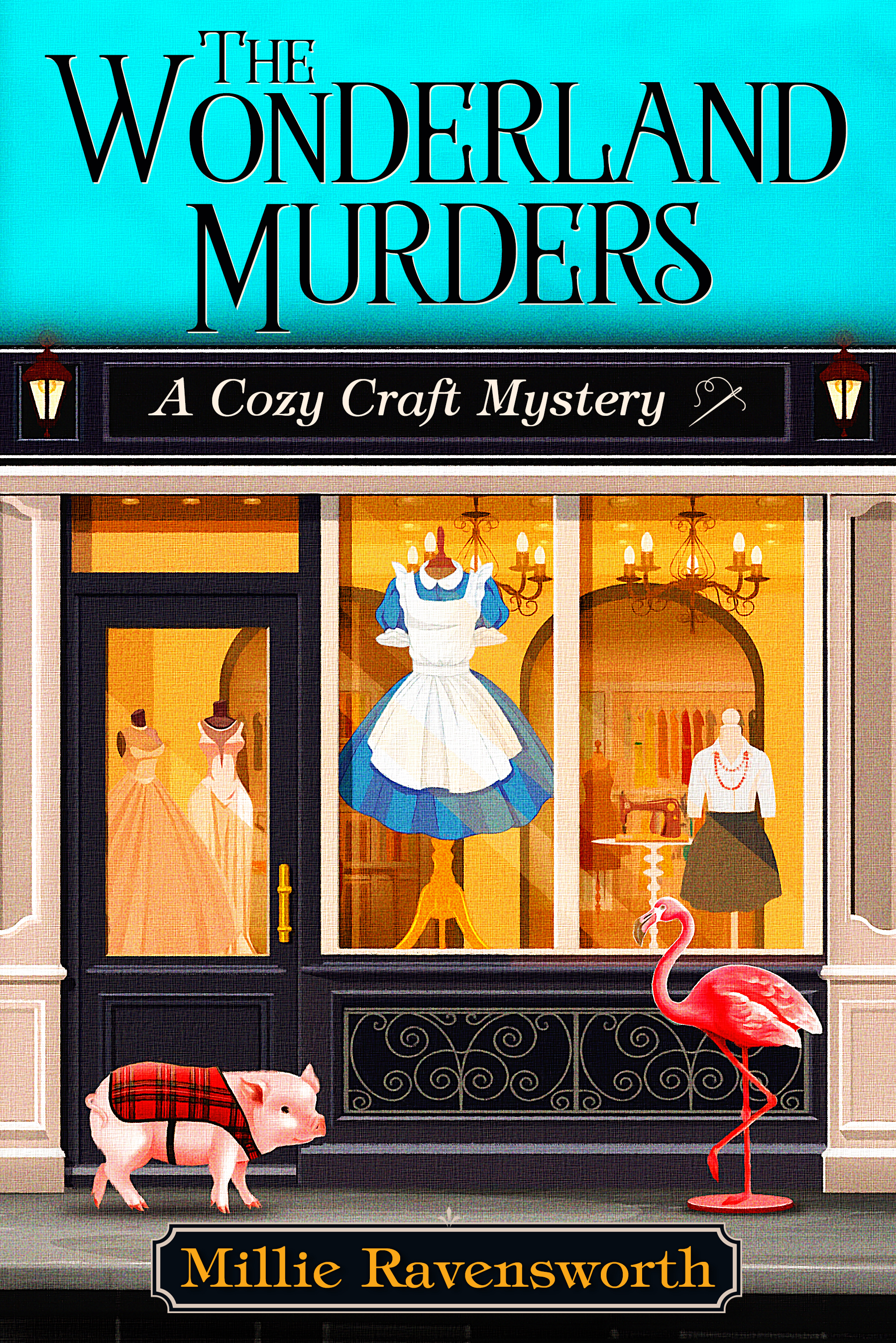
The Wonderland Murders is a delightful and very well-plotted contemporary cozy mystery set in Framingham, the UK.
Penny and Izzy are cousins thrown together by the illness of their mutual grandmother, who normally runs a crafting shop. Izzy is somewhat scatty and filled with new ideas. Penny is more down to earth and determined to make a profit from the shop. But no sooner has Penny arrived than a murder takes place in the local library. While they’re not obsessive about who is responsible, they do begin to consider who might have been to blame as they work on an Alice in Wonderland costume for the upcoming World books day for one of the librarians.
What ensues is so well-plotted and delightful that I genuinely didn’t guess the ending. These stories have a lovely lightness of touch, genuine warmth and humour throughout, and Izzy and Penny really complement each other as main characters.
I loved this first book so much that I’m busy devouring the rest of the series, and the series is consistently as enjoyable and delightful. I’m so glad I took a chance on The Wonderland Murders, and if you love a cozy crime, you won’t be disappointed, either.
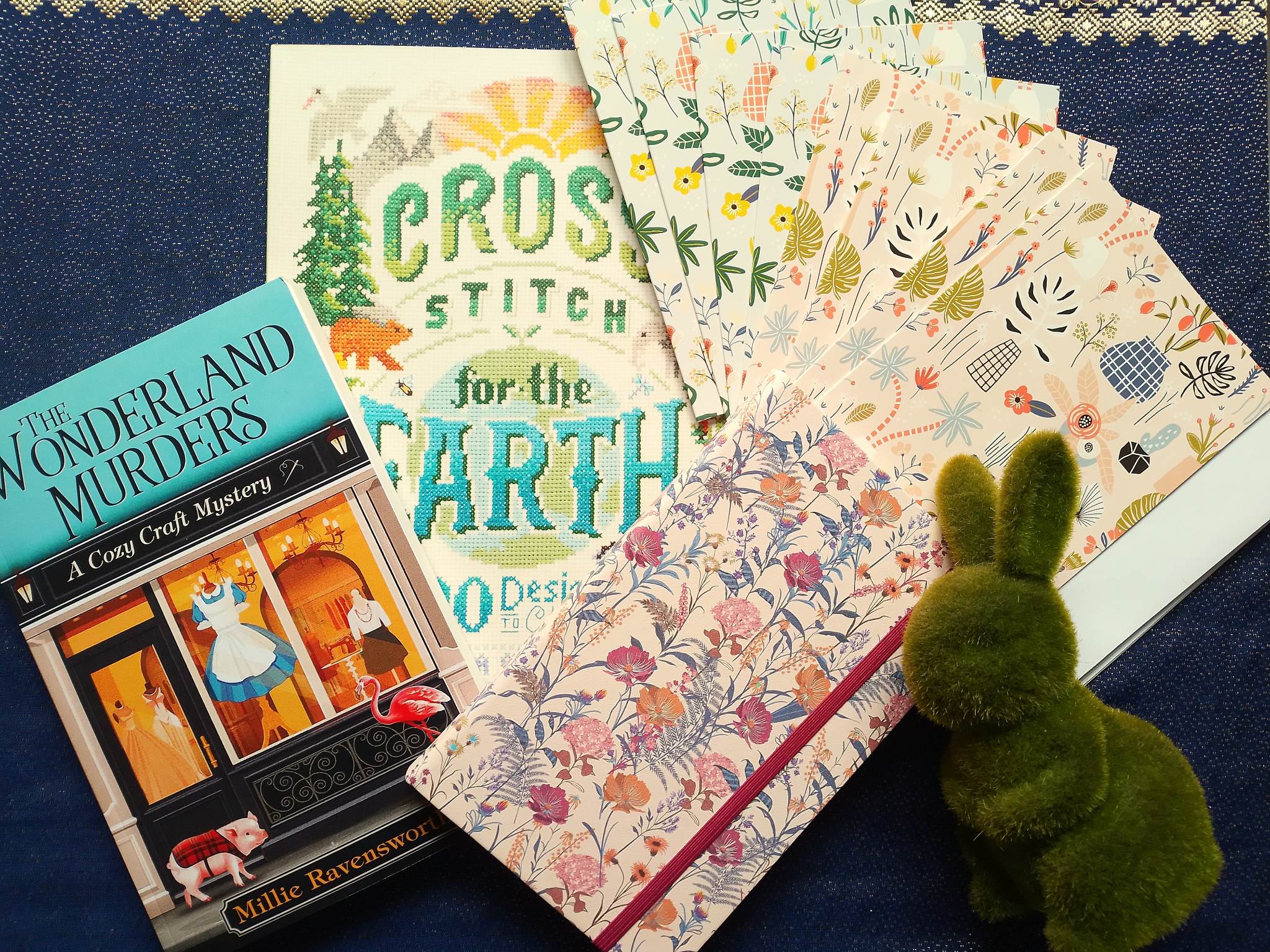
Giveaway Prize – The Wonderland Murders, a cross stitch book, a floral notepad, a note writing set and a grass bunny.
Millie Ravensworth writes the Cozy Craft Mystery series of books. Her love of murder mysteries and passion for dressmaking made her want to write books full of quirky characters and unbelievable murders. Millie lives in central England where children and pets are something of a distraction from the serious business of writing, although dog walking is always a good time to plot the next book.
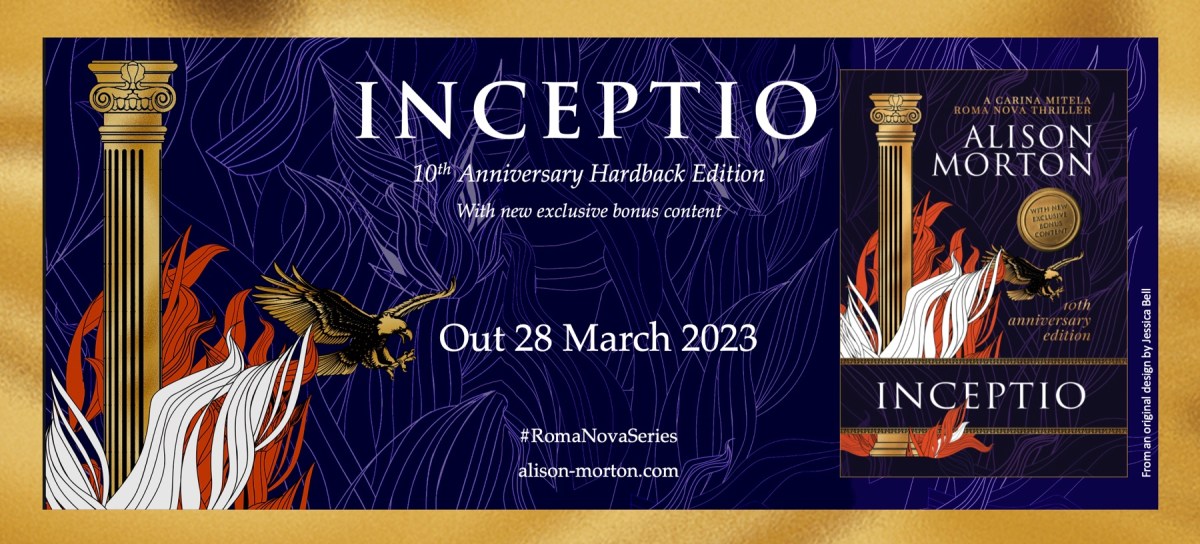
Today, I’m delighted to welcome Alison Morton to the blog to celebrate the 10th Anniversary edition of INCEPTIO.
Why Roman alternative history?
An avid reader of spy, thriller and crime stories from childhood and a life-long devotee of all things Roman, I yearned to write a Roman thriller with a true-hearted heroine imbued with Roman virtue but a tendency to go off-piste. Lindsey Davis does this beautifully with Flavia Albia, Falco’s daughter and to a certain extent with Helena Justina, Falco’s wife. However, I wanted women to run this New Rome. Yes, I had also read a lot of science fiction including wonderful stories by Anne McCaffery where women were equal if not leading their society. But I didn’t want to write space opera.
There was only one solution: I stayed on Planet Earth and brought my Roman stories up to the 21st century.
A fascination with the ‘what if’ idea
Perhaps it’s something all kids speculate about: suppose I have the wrong parents, suppose I’m really a lost princess, what if I could fly, what if we were all rich? Later, as a student of history, I was always fascinated by the possibilities of the tiniest thing turning the huge wheel of history – “For want of a nail,” and so on. Then I learnt about the ‘butterfly of doom’ where one butterfly flapping its wings cascaded events in a different direction.
When I produced my first manuscript, I didn’t know I was writing in a genre called alternative history (“althist” for short). I was inspired by Robert Harris’s Fatherland, a tense, shocking and beautifully written thriller with a heart-wrenching ‘secret’. Twisting history was allowed and used by acclaimed writers such as Michael Chabon and Kingsley Amis as well as Harris!
Of course, a thriller must be exciting, intriguing and full of emotional punch, but althist stories have their own ‘rules’. The most important are to identify the moment where history as we know it veers off onto a different path forever, and to weave into the story to show how the alternative timeline has developed since that point of divergence.
Why Roman alternative history?
‘Rome’ lasted 1229 years in the West, which time span would take us back to AD 794 from today. It changed from a tiny community of tribal farmers to a confident military and trading empire boasting high culture, diversity, power, engineering and rule of law, eventually dwindling to a miserable rump kneeling before barbarians.
Rome had the dark side of all ancient and later cultures: slavery, rampant corruption, patriarchalism and scant regard for disabled and poor people. But Rome gave us systems, values, including civic-mindedness, cultural and engineering genius and literacy that are still firmly embedded in our psyches today. So it shrieked “explore me” very loudly!
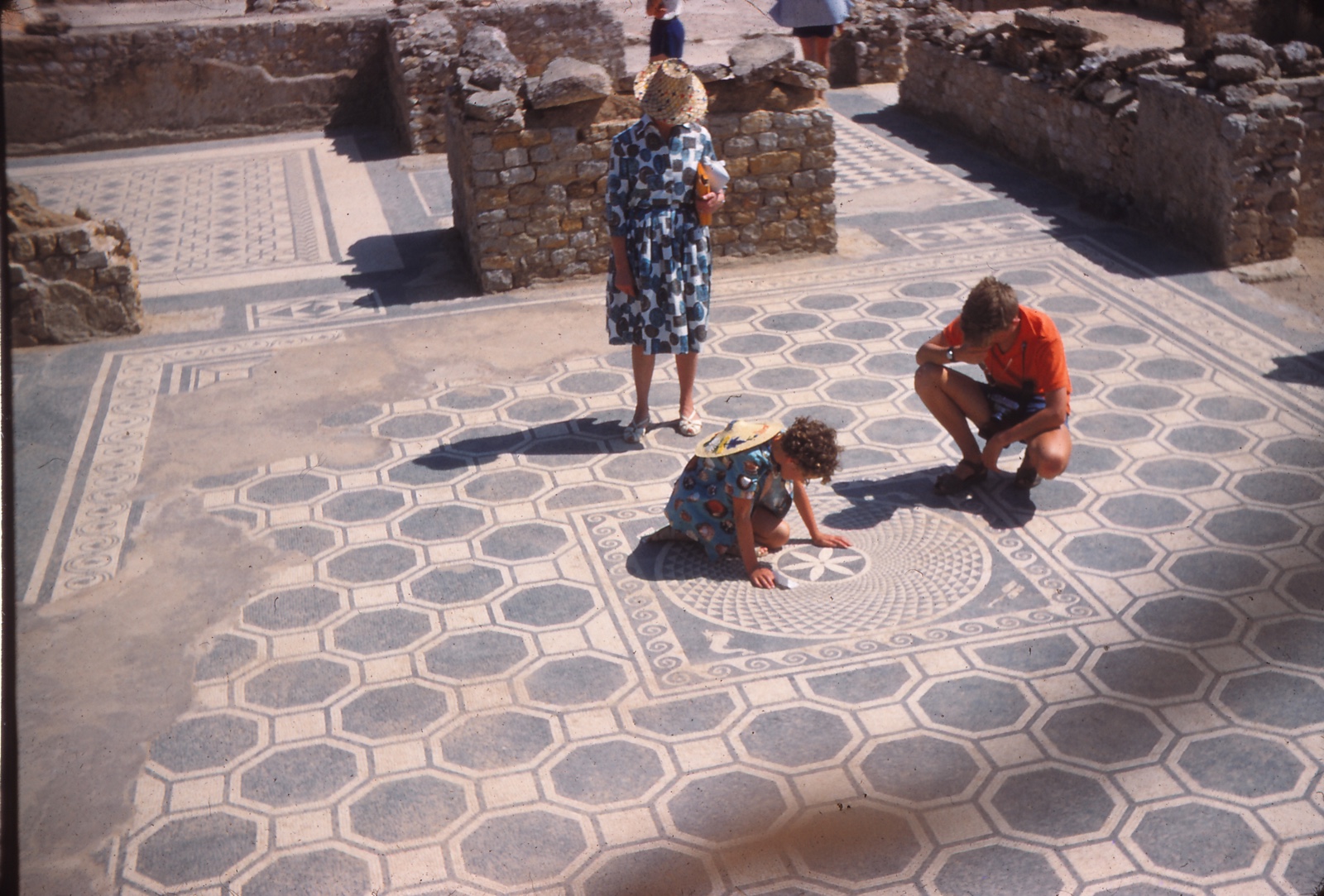
It goes back to a mosaic in Spain Standing on the beautiful floors in Ampurias, I asked my father, “What would it be like if Roman ladies were in charge, instead of the men?” Maybe it was the fierce sun boiling my brain, maybe early feminism peeping out or maybe just a precocious kid asking a smartarse question. But clever man and senior ‘Roman nut’, my father replied, “What do you think it would be like?”
Alison, age 11, and her mosaic
That childish vision grew and grew. When I was older, I realised I had to put in some proper research. The dissolution of the Roman Empire is fascinating and full of ‘what if’ and natural conflict:
The senatorial families at the end of the 4th century fiercely defended their tradition of worshipping the Roman gods despite ever encroaching Christianity. Led by former urban prefect of Rome and consul Quintus Aurelius Symmachus, they pleaded for religious tolerance, but by late 394 AD Emperor Theodosius made any pagan practice, even dropping a pinch of incense on a family altar in a private home, into a capital offence.
In its last fifty to seventy years the Western Roman Empire was dissolving into small enclaves, client states, cut off regions – the Domain of Soissons is one example.
Many former Roman territories retained their Roman administrative systems into the seventh and eighth centuries. Could one remote colony last even longer, say centuries?
Switching from a male Roman ethos to a feminist-lite one
I wanted a strong female character who drove the story, but not a harsh, excluding one, hence my heroine has some very human faults and characteristics. There was and perhaps still is a distinct lack of stories where two women have conversations beyond social or fashion issues and are not dependent on the male characters as wife, girlfriend, colleague. I use a technique called gender mirroring where I reverse the behaviour of the characters of a typical spy or action thriller. Think Jane Reacher or Jamie Bond in modern terms. A fascinating writing exercise!
So, I had to exercise the brain and apply some historical logic for Roma Nova. As the men defended the tiny new state of Roma Nova women worked in the fields, traded, sat on the council and managed the families. Consider the dynamic of only a few hundred men at the front especially during the Great Migrations. They simply ran out of male fighters to defend Roma Nova, so sisters and daughters from these pioneer families had to put on armour and heft weapons to defend their homeland and their way of life.
Fighting danger side-by-side with brothers and fathers reinforced women’s status and roles. And they never allowed the incursion of monotheistic paternalistic religions. In this way, women developed leadership roles in all parts of Roma Novan life over the next sixteen centuries.
Pulling in my own history
I served six years in the UK forces with active assignments all over the NATO area and beyond. It never occurred to me that women couldn’t serve in the military. I loved it! In the forces, you are only as good as your last job and you are promoted only on merit; both appealing ideas. Thus, my heroines serve in the elite forces in Roma Nova which fits in neatly with the traditional Roman military mindset.
Building the world
For credible alternative history (not Inglourious Basterds!), there is no easy ride such as making everything up. You need to research as thoroughly as for standard historical fiction, especially around the point in time when the timeline splits and leaves the standard one. For Roma Nova this was AD 395.
The twin guidelines of alternative history writing are plausibility and internal consistency. No country, real or imagined, can survive without a functioning government, an economic, social and political system, food, law and order and income. The basic skills of historical fiction writing apply in the same way: ability to research, respect for known facts (up to the point of divergence), a sense of historical setting, the avoidance of the information dump, and keeping speech, clothes and manners both consistent with and in the world you are describing. For example, in AD395, solidinot aurei, sestertii or denarii were coins used in the late empire, so Roma Nova Internet banking and credit cards in the 21st century are denoted in solidi.
The sources problem
Much of the historical record is missing from the late fourth century, the springboard for my book world. This complicates research. The big problem of records from antiquity is that they tend to contain the actions and thoughts of the elite and usually only of men. Symmachus, whom I mentioned above, was not only the urban prefect of Rome at one time but also a noted writer in a wide circle of intellectuals. Just under a dozen books of his letters and official dispatches have survived. Such fragments combined with finds from archaeological digs and the physical remains on the landscape help researchers build up a picture of life at the time. I’m always dropping into the British Museum, buying new books and searching online. It’s very much a case of putting the different pieces of a jigsaw together then filling in the gaps intelligently and with historical logic.
“It’s about Roman blood, survival and money. Mostly yours.”
In an alternative New York, Karen Brown is running for her life. She makes a snap decision to flee to Roma Nova – her dead mother’s homeland, the last remnant of the Roman Empire in the 21st century. But can Karen tough it out in such an alien culture? And with a crazy killer determined to terminate her for a very personal reason?
Stifled by the protective cocoon of her Roma Novan family, deceived by her new lover, she propels herself into a dangerous mission. But then the killer sets a trap – she must sacrifice herself for another – and she sees no escape.
A thriller laced with romance and coming of age, this first in series is Roman fiction brought into the 21st century through the lens of alternative history and driven by a female protagonist with heart and courage.
This 10th Anniversary hardback edition includes bonus content: Three character ‘conversations’, two short stories and the story behind INCEPTIO.
Buy links:
INCEPTIO 10th Anniversary special edition hardback:
Alison Morton writes award-winning thrillers featuring tough but compassionate heroines. Her ten-book Roma Nova series is set in an imaginary European country where a remnant of the ancient Roman Empire has survived into the 21stcentury and is ruled by women who face conspiracy, revolution and heartache but with a sharp line in dialogue. INCEPTIO starts the adventure…
She blends her fascination for Ancient Rome with six years’ military service and a life of reading historical, crime and thriller fiction. On the way, she collected a BA in modern languages and an MA in history.
Six full-length Roma Nova novels, including INCEPTIO, have won the BRAG Medallion, the prestigious award for indie fiction. SUCCESSIO, AURELIA and INSURRECTIO were selected as Historical Novel Society’s Indie Editor’s Choices. AURELIA was a finalist in the 2016 HNS Indie Award. The Bookseller selected SUCCESSIO as Editor’s Choice in its inaugural indie review. The Historical Novel Society recently selected JULIA PRIMA, the first Foundation story set in the 4thcentury, the accolade of Editors’ Choice.
Alison lives in Poitou in France, the home of Mélisende, the heroine of her two contemporary thrillers, Double Identityand Double Pursuit. Oh, and she’s writing the next Roma Nova story.
I’m delighted to welcome David Lawrence to the blog to share a guest post with us.
Criminal Records and the Cant Language
by David Lawrence
For me, historical research is like spinning a spider’s web – every fact I find interesting, be it a great political event or simply learning of a small household object no longer in use, is like a sticky thread spinning out into the ether. Eventually, a specific place, time, and event emerge, rather like a web, in which my story is caught.
For my first novel, Hugh, the story was caught in Westminster, 1768, centring around the antics of naughty MP John Wilkes.
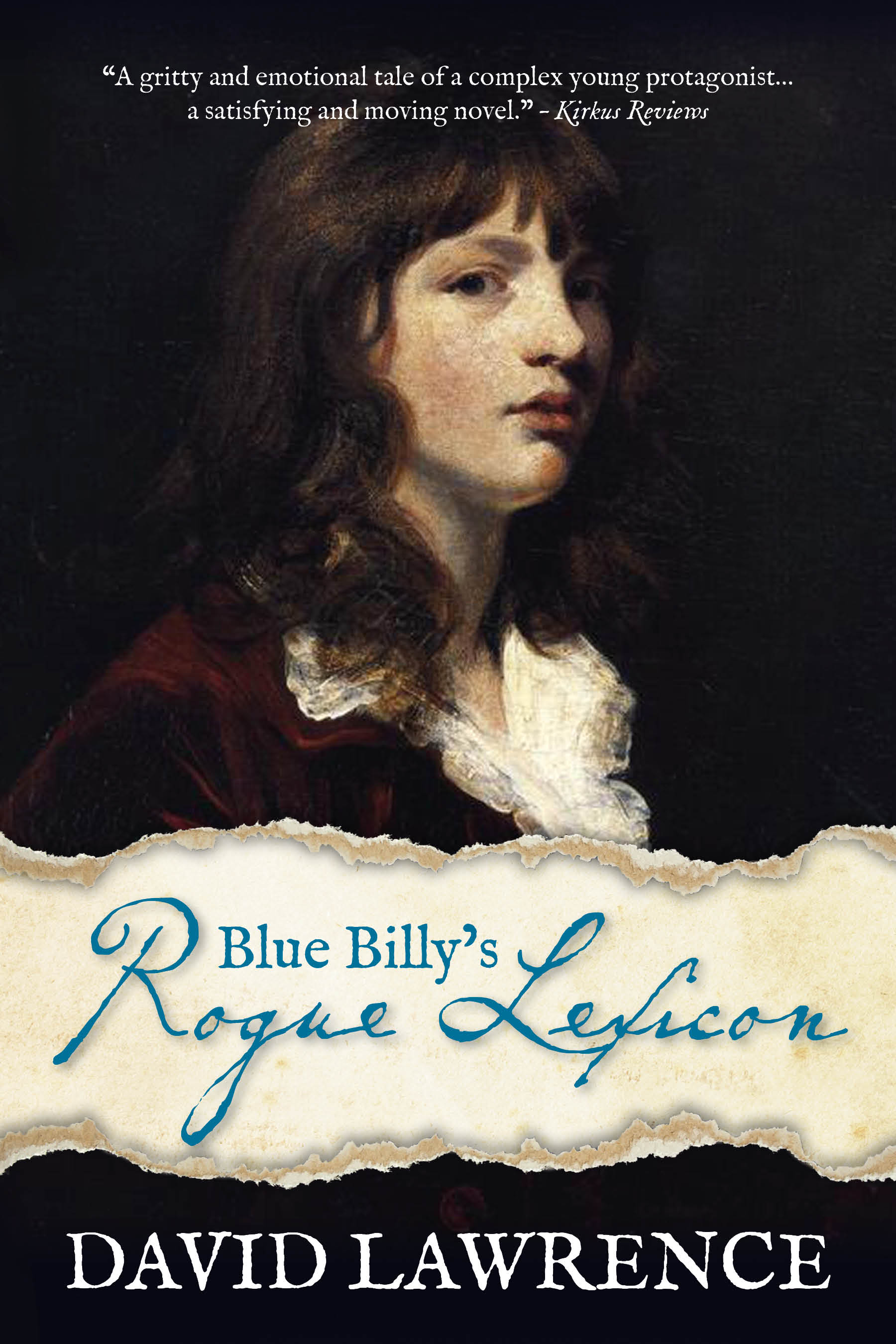
For this novel, Blue Billy’s Rogue Lexicon, the web caught a story in The Mint (in Southwark), 1771, the summer of Captain Cook’s return from his first voyage round the globe.
Just how I arrived at my completed story I couldn’t exactly tell you(!). However, I can say that the initial thread came from a book called Mother Clap’s Molly House: The Gay Subculture in England 1700 – 1830. I had heard this book referenced here and there during various research projects, and by 2021, when I began researching Blue Billy and needed to read it, I discovered a copy was quite difficult to locate. It was one of the first of its kind on the subject, published in 1992 by Rictor Norton. Ebay, however, saved the day, and I secured my lightly-worn, and beloved, copy.
Little is known about the gay subculture in London during the 18th century, but what we do know, and what Mother Clap’s Molly House outlines wonderfully, are the criminal cases in which homosexual activity ended in legal prosecution. From an historical perspective, these criminal records are priceless, preserving glimpses of lives which would otherwise have been lost to history.
I knew my protagonist William Dempsey had a history quite far down the social ladder – raised on the streets by a den of thieves before getting himself into keeping by a Marquess with a taste for deceptively doe-eyed youths. Mother Clap’s Molly House mentioned that the dialect of the molly (gay) subculture might well have had parallels with the rogue’s lexicon used by your run-of-the-mill London criminals, which included female prostitutes. I already knew that William had worked as a male prostitute, and pow! I suddenly understood that his tricking name was Blue Billy, and that a rogue’s lexicon would form the framework for the novel (the chapter names in the novel are terms taken from this street slang).
The early 1770s I had long known was to be my general time period, but Captain Cook’s return to England after his three-year voyage round the globe cemented it as the summer of 1771. Why? I was seeing parallels between his journey of discovery and Billy’s journey of self-discovery. In the summer of 1771, Billy is thrown out of his West End apartment and must not simply start over from nothing but re-examine his life choices. For details on the voyage, Captain Cook by Walter Besant was a 19th century biography I thoroughly enjoyed, as well as The Endeavour Journal of Sir Joseph Banks from 25 August 1768-12 July 1771 – Banks being the botanist who accompanied Cook on his journey.
Wonderful books like London in the 18th Century by Jerry White and The First Bohemians by Vic Gatrell filled in many more details about this glorious era. I also found James Boswell’s diary from the 1760s, relating his experiences as a young man in London, to be a priceless resource, not only in terms of the attitudes at that time, but for those small details of daily life which make a novel so much richer.
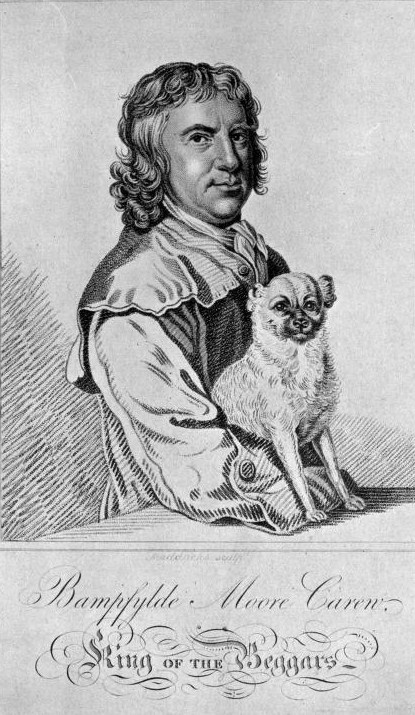
Completing my research were two books detailing the lives of rogues, beggars and thieves of the era. The titles alone tell you how colourful they are: The Surprising Adventures of Bampfylde Moore Carew, King of the Beggars – Containing his Life, a Dictionary of the Cant Language, and many Entertaining Particulars of that Extraordinary Man by Robert Goadby (published 1749) and The English Rogue: Described in the Life of Meriton Latroon, A Witty Extravagant by Richard Head (published 1665)
Research on this project was quite a journey for me, and some wonderful reading along the way. All books (including, er, my own) are highly recommended!
Thank you so much for sharing. I love the titles of these books from the 17th and 18th century.
Here’s the blurb
William Dempsey was a wonder among wonders.
By 18, he had risen from a gang of London street rogues to be the personal plaything of the Marquess of Argyll. Maintained in splendour, celebrated at masquerades – with everything he could wish for.
Now all has come crashing down. He is put out in the rain without patronage, his West End apartment, or a place among the ton.
So on a stormy night, he arrives at a house in Southwark. Marathon Moll’s in the Mint – the bawdyhouse he worked in during his ascent and where he earned the name Blue Billy.
But is Marathon Moll’s a place from which to rise again? For there is one in the crowd, who catches his eye. Who takes his hand and promises something better.
Or does Moll’s signify a return to his roots? For one day, a second and very different young man raps on the door. Takes his hand and asks him to return to his past.
To the cat language of vagabonds. The canting dialect of thieves.
David Lawrence is the author of two queer historical novels – ‘Hugh: A Hero without a Novel’ and ‘Blue Billy’s Rogue Lexicon’. As a writer, he loves taking a deep dive into the politics, social norms, and events of 18th century England while presenting humorous and unique coming-of-age tales.
A native of the American Southwest, David has spent much of his life in Great Britain, France, and Finland. He now lives in the American Northwest – Helena, Montana – with his Finnish partner.
By day he loves hiking under the Big Sky of his beautiful adopted state.
By night, however, he prefers wandering the byways of 18th century London…
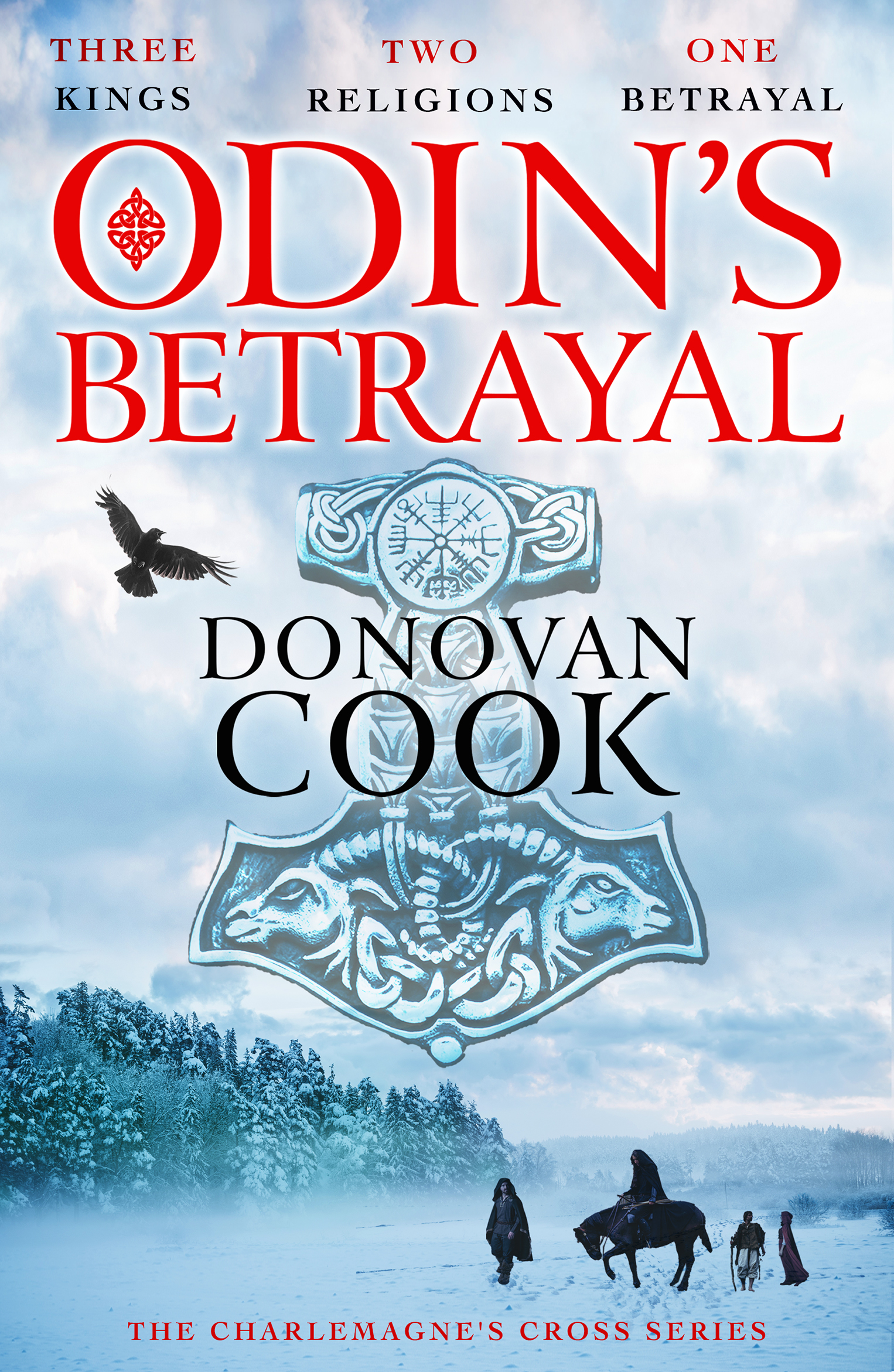
Two kingdoms destined for war, one boy caught in the eye of the storm…
Francia AD853
After a failed Viking raid on the Frankish coast over 20-years-ago, Jarl Sven the Boar is forced to leave his only son, Torkel, as a hostage and warned never to raid Francia again or his son will die.
In Hügelburg, a small town in East Francia, Torkel and his 9-year-old son Charles are ambushed at home.
Before dying, Torkel thrusts a package into young Charles’s hands and tells him to flee Francia for Denmark in search of his grandfather Sven the Boar’s protection.
But the man Charles eventually finds is not who he expects, and Charles must put his fate in the hands of a man betrayed by Odin.
Together they must uncover the significance of the package and why the Kings of Francia want Charles dead.
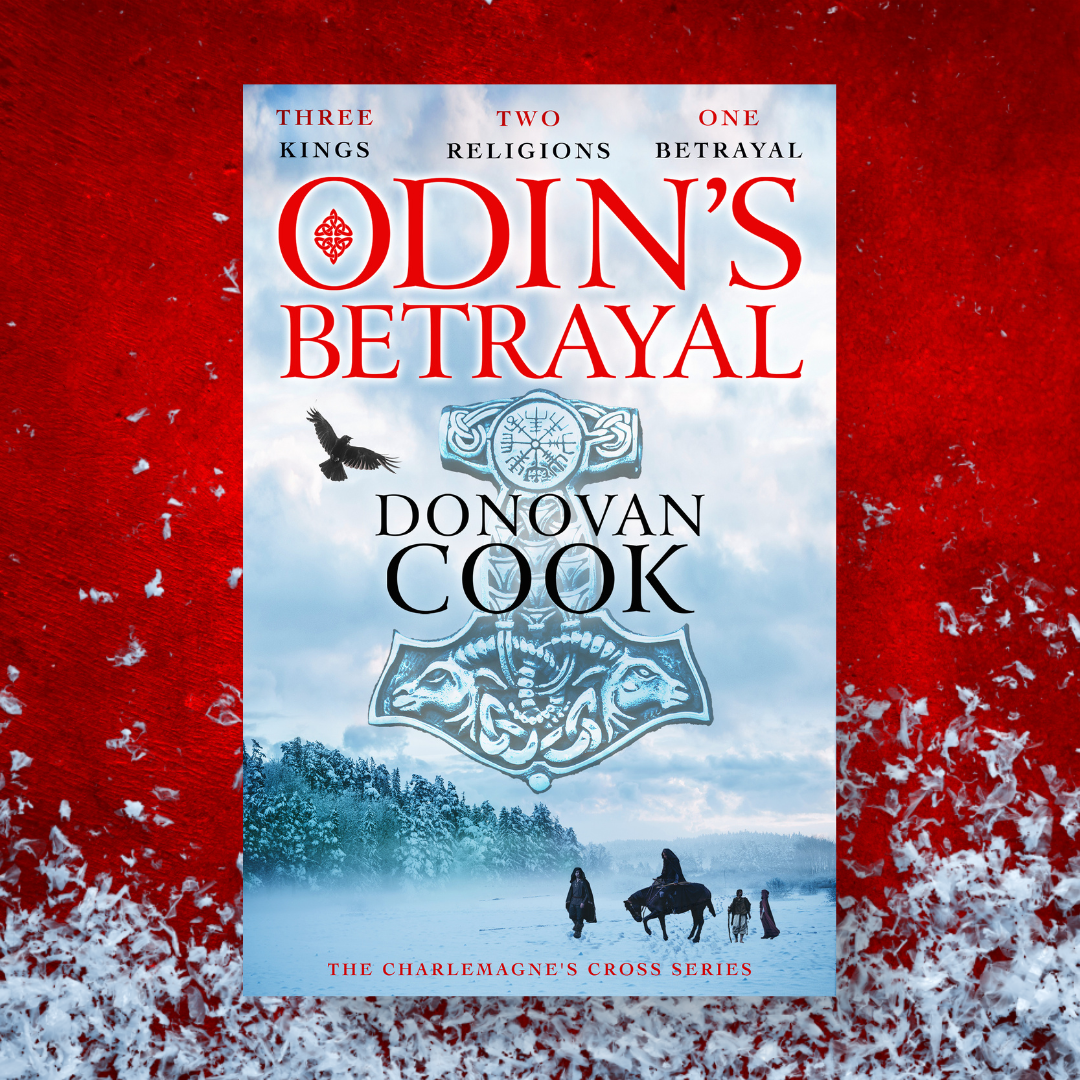
Odin’s Betrayal by Donovan Cook is a fabulous Norse tale of family, betrayal and the conflict between Christianity and the Norse Gods, played out between our two main characters, young Charles, born in Francia, and his grandfather, the disgraced Jarl Sven the Boar of Denmark.
The two characters of Charles and Sven are well portrayed – Charles, young and fearful; his grandfather, old and twisted by his failures and betrayals, with Thora acting as a sort of emissary between the pair of them who are from such different cultures. I thoroughly enjoyed the interplay between the two religions – something that often frustrates me – but which the author handles magnificently. And between the two generations. Charles and Sven, are both unable to truly understand the other. Charles is young and firm in his Christianity. Sven is old and believes he’s been tricked by his Norse Gods.
The secret Charles carries, and his father entrusted to him on his death is intriguing. We get little hints, and yes, we might work out what it all means, but that doesn’t matter because our characters don’t know, and their journey to discovery is well constructed.
There’s plenty of hand-to-hand fighting in this novel and no end of betrayals right up until the last page, as the ‘big reveals’ occur, and it makes for a thoroughly enjoyable, well-crafted Norse tale. I loved it:) I can’t wait for book 2.
Meet the Author
Donovan Cook is the author of the well-received Ormstunga Saga series which combines fast-paced narrative with meticulously researched history of the Viking world, and is inspired by his interest in Norse Mythology. He lives in Lancashire and his first title in a new series for Boldwood will be published in Spring 2023.
A brand-new cozy crime series set in gorgeous Tuscany…It’s murder in paradise!
A glamorous film star…
Life as a private investigator in the suburbs of Florence isn’t always as glamorous as Dan Armstrong imagined it to be, until he is asked to investigate a recent spate of violent attacks on a Hollywood movie set in Florence. The star of the show, movie-star royalty Selena Gardner, fears her life is in imminent danger…
Foul play on set…
As Dan investigates, he discovers secrets and scandals are rife within the cast and crew. But with no actual murder, Dan believes these attacks could simply be warnings to someone…until the first body is found.
A dangerous killer on the loose.
Now Dan and his trusty sidekick Oscar are in a race against time to catch the murderer. But the more Dan uncovers, the more the killer strikes and Dan finds himself caught in the line of fire too! Is this one case Dan and Oscar will regret?
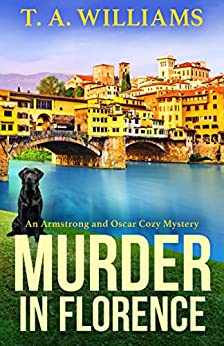
Murder in Florence is the third book in the Armstrong and Oscar series of cosy crime set in Italy, and book 3 is just as enthralling as the first two books in the series.
This time, Dan somehow finds himself forced to wear tights to blend into the film set he works on, where crossbows have been shot at those on set. It is all very perplexing. I loved the use of the movie to enrich the story with historical details of Florence. Always a history buff, it was great to see it put to good use while keeping me entertained.
As with the first two books in the series, there is a twisty plot where Dan gets to venture to many local beauty spots before getting even the sniff at a breakthrough on the case, and of course, none of it would happen without the aid of the always hungry, and always a bit ‘farty’ Oscar the labrador pooch.
A thoroughly entertaining tale.
My thanks to the publisher and Netgalley for my review copy.
T A Williams is the author of over twenty bestselling romances for HQ and Canelo and is now turning his hand to cosy crime, set in his beloved Italy, for Boldwood. The series will introduce us to retired DCI Armstrong and his labrador Oscar and the first book, entitled Murder in Tuscany, will be published in October 2022. Trevor lives in Devon with his Italian wife.
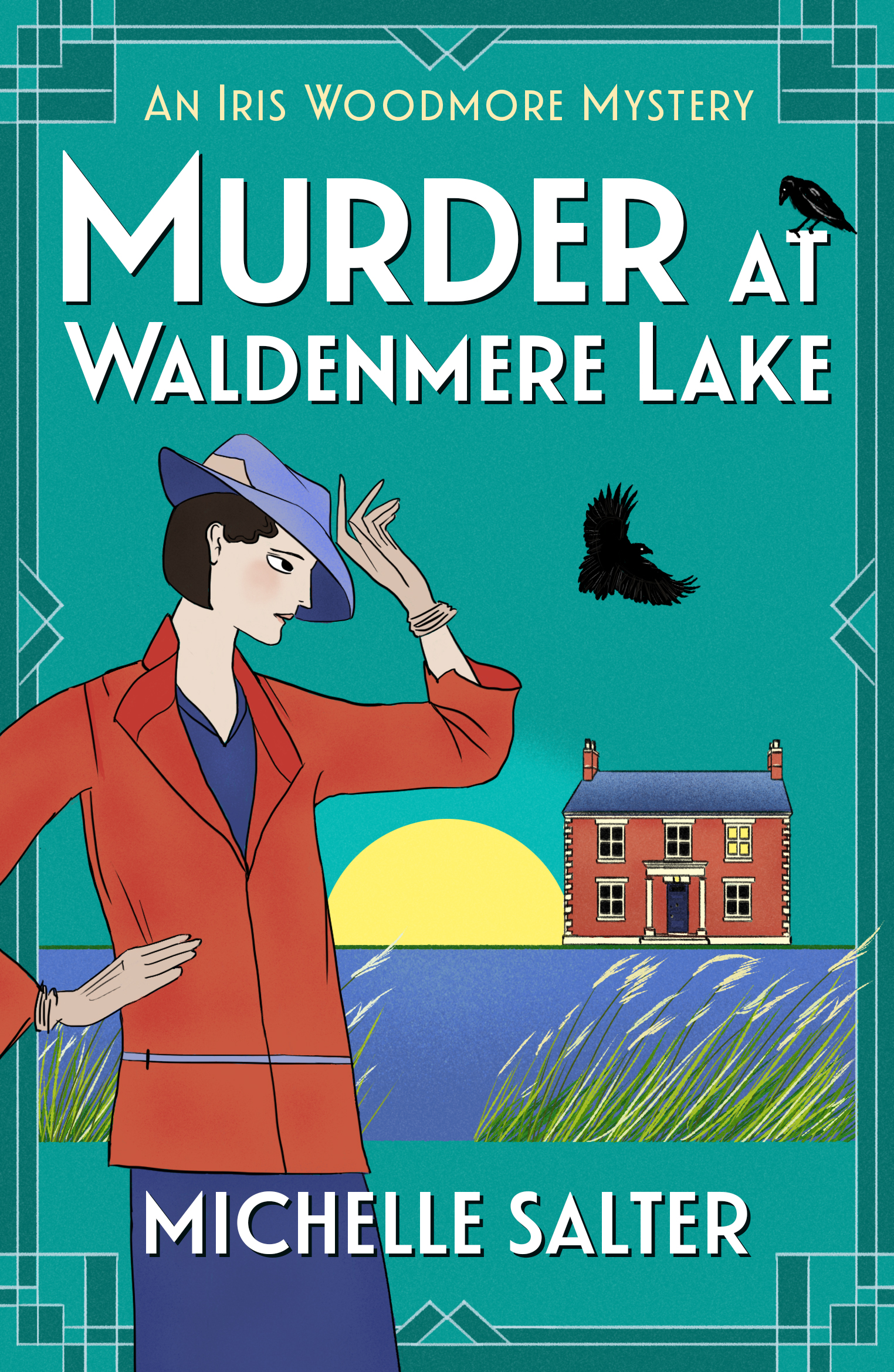
A murder shocks the small town of Walden. And it’s only the beginning…
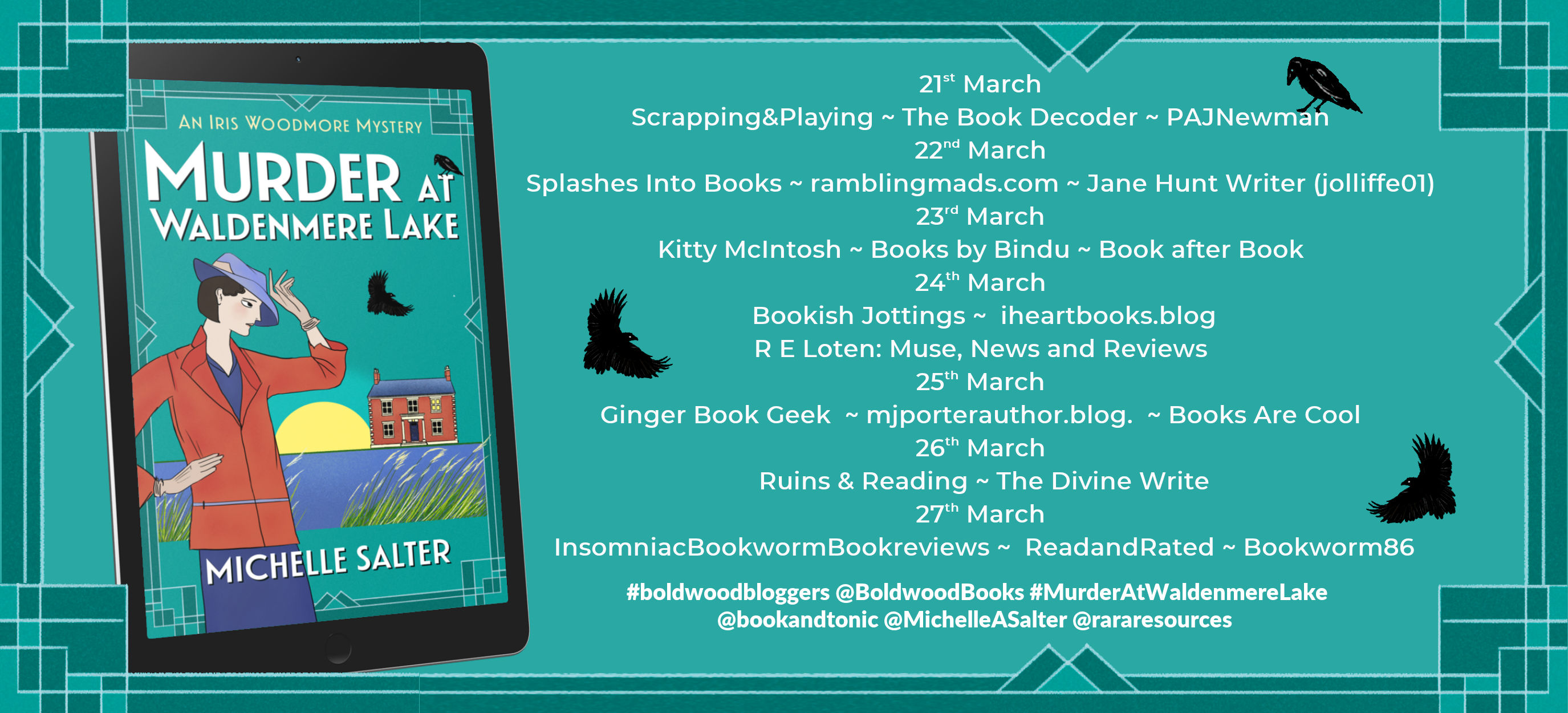
Walden, 1921. Local reporter Iris Woodmore is determined to save her beloved lake, Waldenmere, from destruction.
After a bloody and expensive war, the British Army can’t afford to keep the lake and build a convalescent home on its shores yet they still battle with Walden Council and a railway company for ownership. But an old mansion used as an officer training academy stands where the railway company plans to build a lakeside hotel. It belongs to General Cheverton – and he won’t leave his home.
When the General is found murdered, it appears someone will stop at nothing to win the fight for Waldenmere. Iris thinks she can take on the might of the railway company and find the killer. But nothing prepares her for the devastation that’s to come…
Murder at Waldenmere Lake is book two in the Iris Woodmore Mystery series set in the very early 1920s onwards. Check out my review for Death at Crookham Hall here.
Book 2, Murder at Waldenmere Lake, begins not soon after the events of the first book, and it’s good to see some familiar characters return to Walden. As with book 1, the mystery is firmly rooted in the concerns of the period, recovering from the events of World War 1 while contending with changes in society. I really love how well-researched the two novels are. I love a cosy mystery, but I adore it even more when the author goes that one step further and adds so much more authentic settings to the novel.
As with book 1, there’s a murder fairly early on in the novel, which seems impossible to solve, and events more quite sedately until there is another murder and events really begin to move at pace. And yet, even with the devastation Iris feels at the murder, she can’t seem to work out who was responsible, and indeed, some personal betrayal strikes her low as well.
The mystery, when it is eventually solved, is delightfully nuanced. Looking back, there might have been some hints I should have read more into, but I didn’t, and so, as with book 1, the big reveal is a surprise but a really well-constructed one. I adored this book. Iris is a great character, as is Percy and the people she interacts with.
A fabulously well-researched historical cosy mystery, and I can’t wait for the next book in the series.
Meet the author
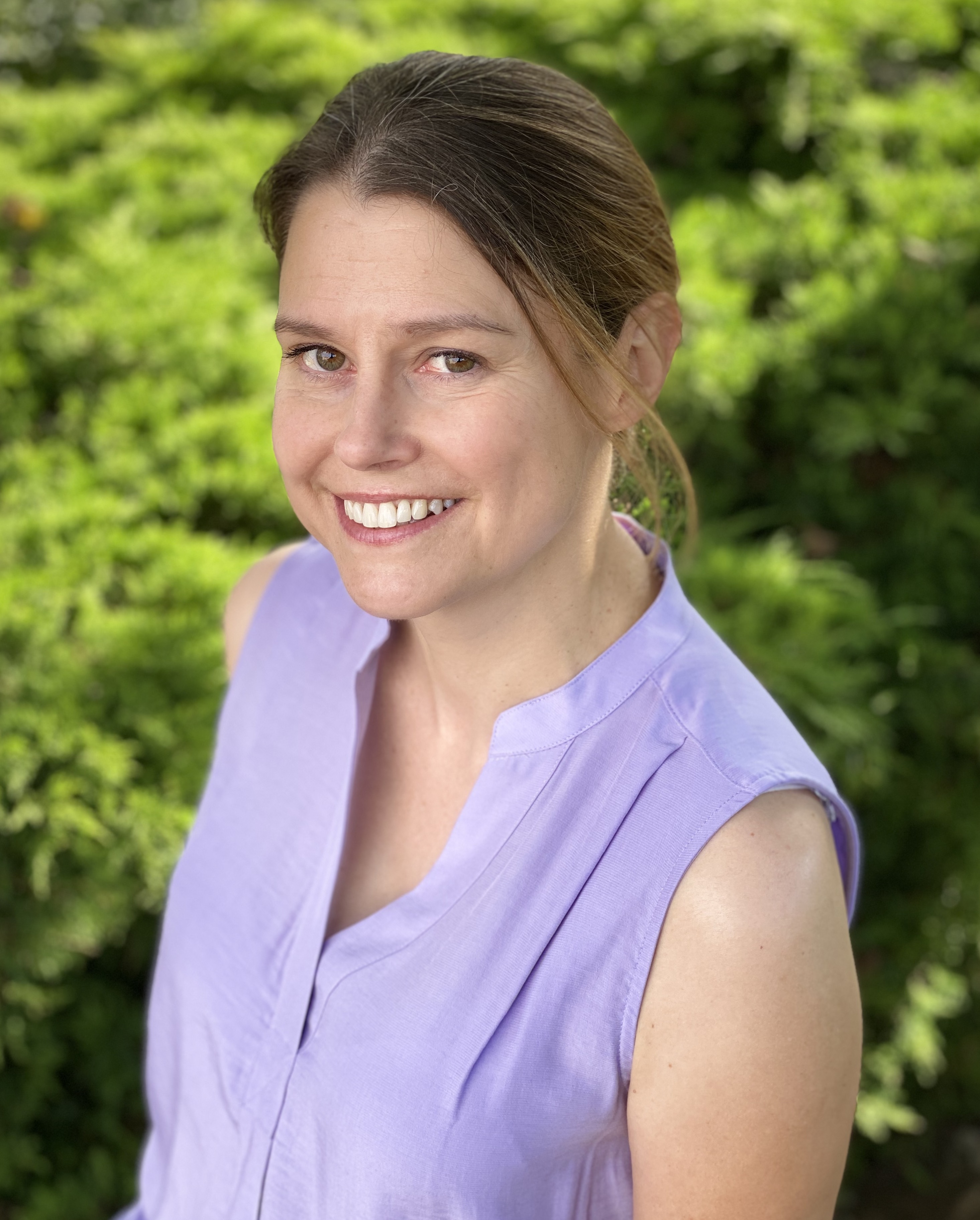
Michelle Salter is a historical crime fiction writer based in northeast Hampshire. Many local locations appear in her mystery novels. She’s also a copywriter and has written features for national magazines. When she’s not writing, Michelle can be found knee-deep in mud at her local nature reserve. She enjoys working with a team of volunteers undertaking conservation activities.
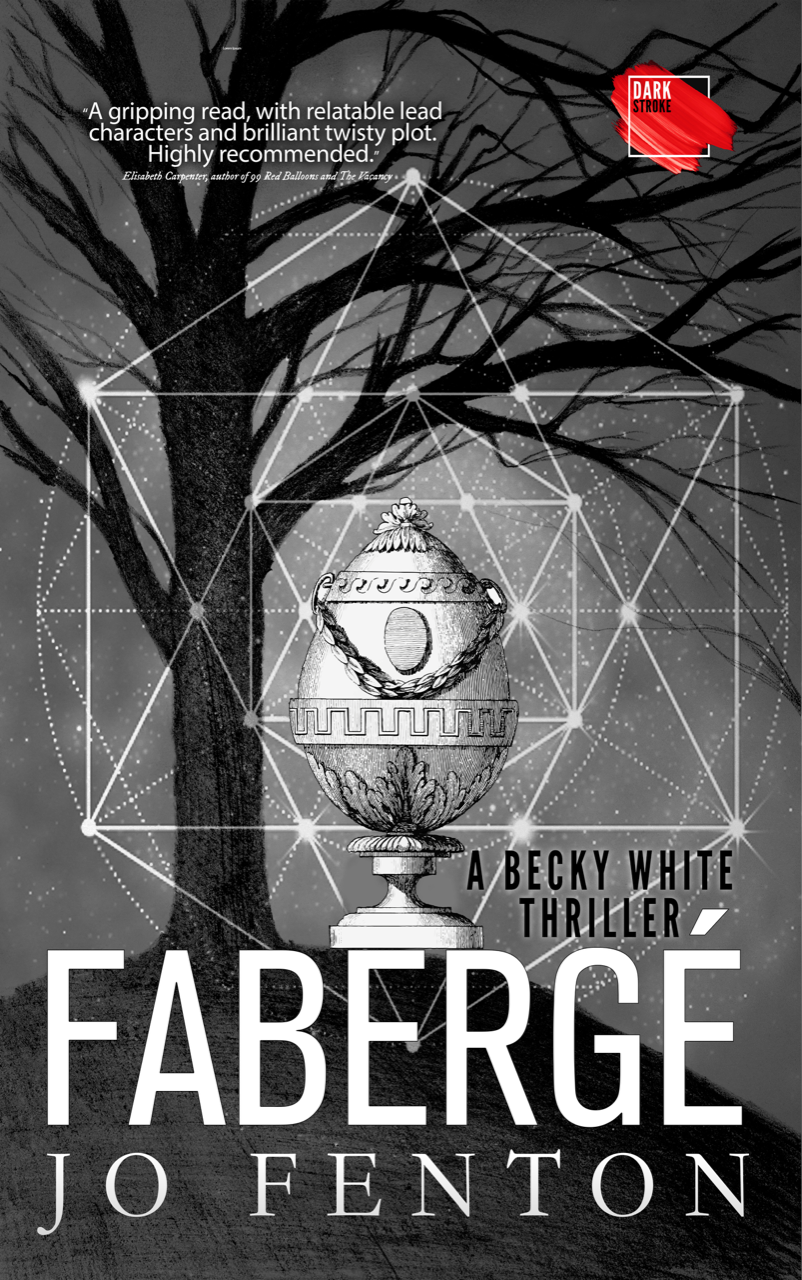
Manchester detective Becky White and her friends at the White Knight Detective Agency take on a case involving the theft of a multi-million-pound Fabergé egg.
Events quickly escalate, and they find themselves dealing with unscrupulous villains who will stop at nothing – not even at kidnapping or murder – to achieve their goals.
Can Becky solve the mystery before her hidden enemies catch up with her?
Faberge is the third book in the Becky White thrillers series. I was compelled to read it by the title. Faberge eggs are certainly something to conjure an image in my mind.
As it’s the first book in the series that I’ve read, it’s taken me a little while to get to know the characters and to work out what’s happening. That said, it’s well worth the effort, for this is a very twisty and tightly woven thriller set in the UK, in the cities of Manchester and Preston, with a brief trip to London.
All three of our main characters, Becky, Will and Joanne, have their backstories, which we could be forgiven for thinking were irrelevant, but they’re not. What seems to be a seemingly random chain of events begins to have more and more relevance. The tension ramps up in the book as it tumbles toward its conclusion. This does have a tight and twisty plot.
A novel that was worth sticking with, and I would recommend that new readers perhaps start with the first book in the series just to give them a firm grounding for the events in Faberge, although the book works very well on its own – once you’ve worked out who all the characters are.
A thrilling thriller.
Meet the Author
Jo Fenton grew up in Hertfordshire, UK. She devoured books from an early age, particularly enjoying adventure books, school stories and fantasy. She wanted to be a scientist from aged six after being given a wonderful book titled “Science Can Be Fun”. At eleven, she discovered Agatha Christie and Georgette Heyer, and now has an eclectic and much loved book collection cluttering her home office.
Jo combines an exciting career in Clinical Research with an equally exciting but very different career as a writer of psychological thrillers.
When not working, she runs (very slowly), and chats to lots of people. She lives in Manchester with her husband, youngest son, a Golden Retriever/Husky cross and a tankful of tropical fish. She is an active and enthusiastic member of two writing groups and a reading group.
Connect with Jo
I can be found at my website www.jofenton137.com or on Facebook, Twitter, Instagram and Pinterest (links below):
Giveaway to Win a Faberge mouse mat and notebook (Open to UK Only)
*Terms and Conditions –UK entries welcome. Please enter using the Rafflecopter box below. The winner will be selected at random via Rafflecopter from all valid entries and will be notified by Twitter and/or email. If no response is received within 7 days then Rachel’s Random Resources reserves the right to select an alternative winner. Open to all entrants aged 18 or over. Any personal data given as part of the competition entry is used for this purpose only and will not be shared with third parties, with the exception of the winners’ information. This will passed to the giveaway organiser and used only for fulfilment of the prize, after which time Rachel’s Random Resources will delete the data. I am not responsible for despatch or delivery of the prize.
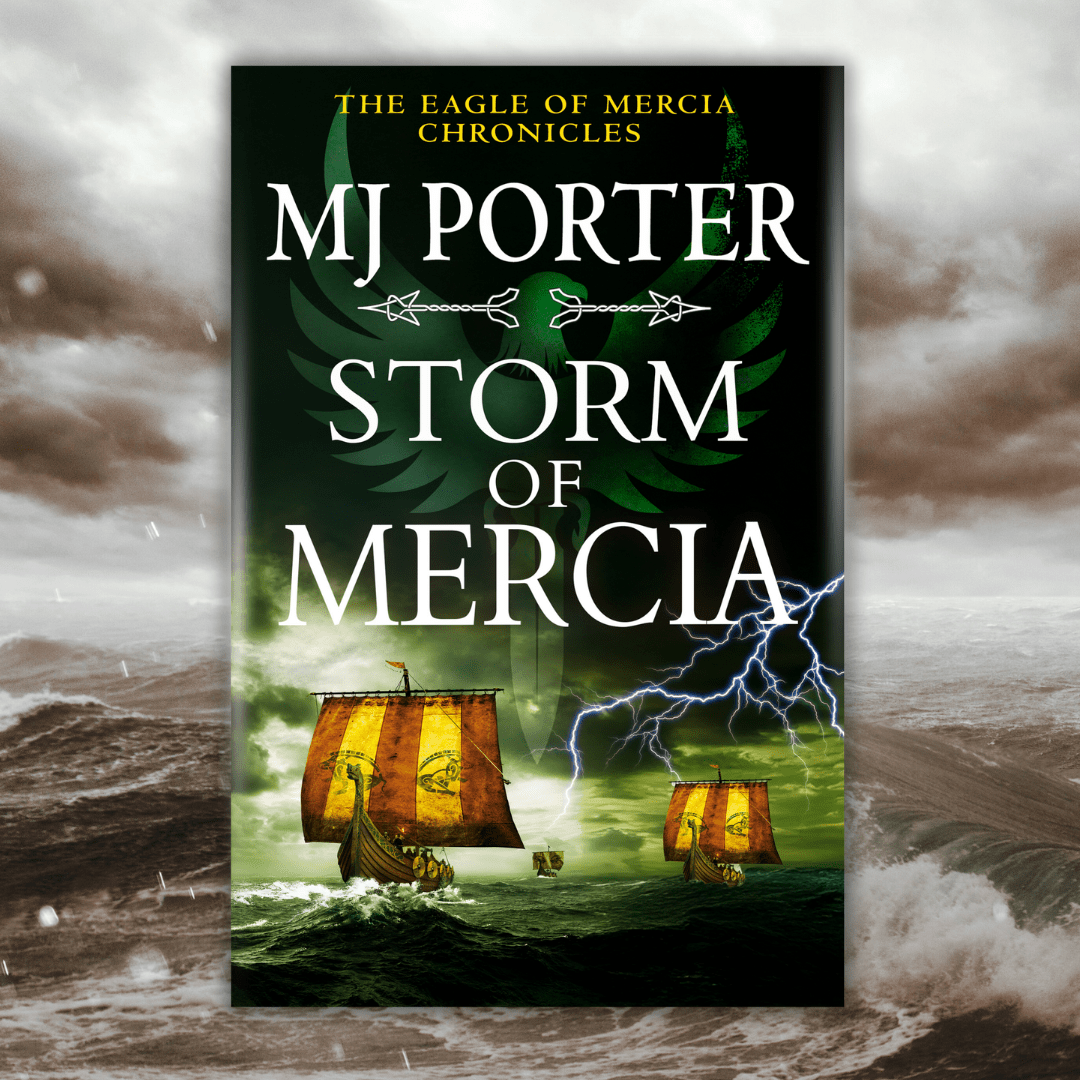
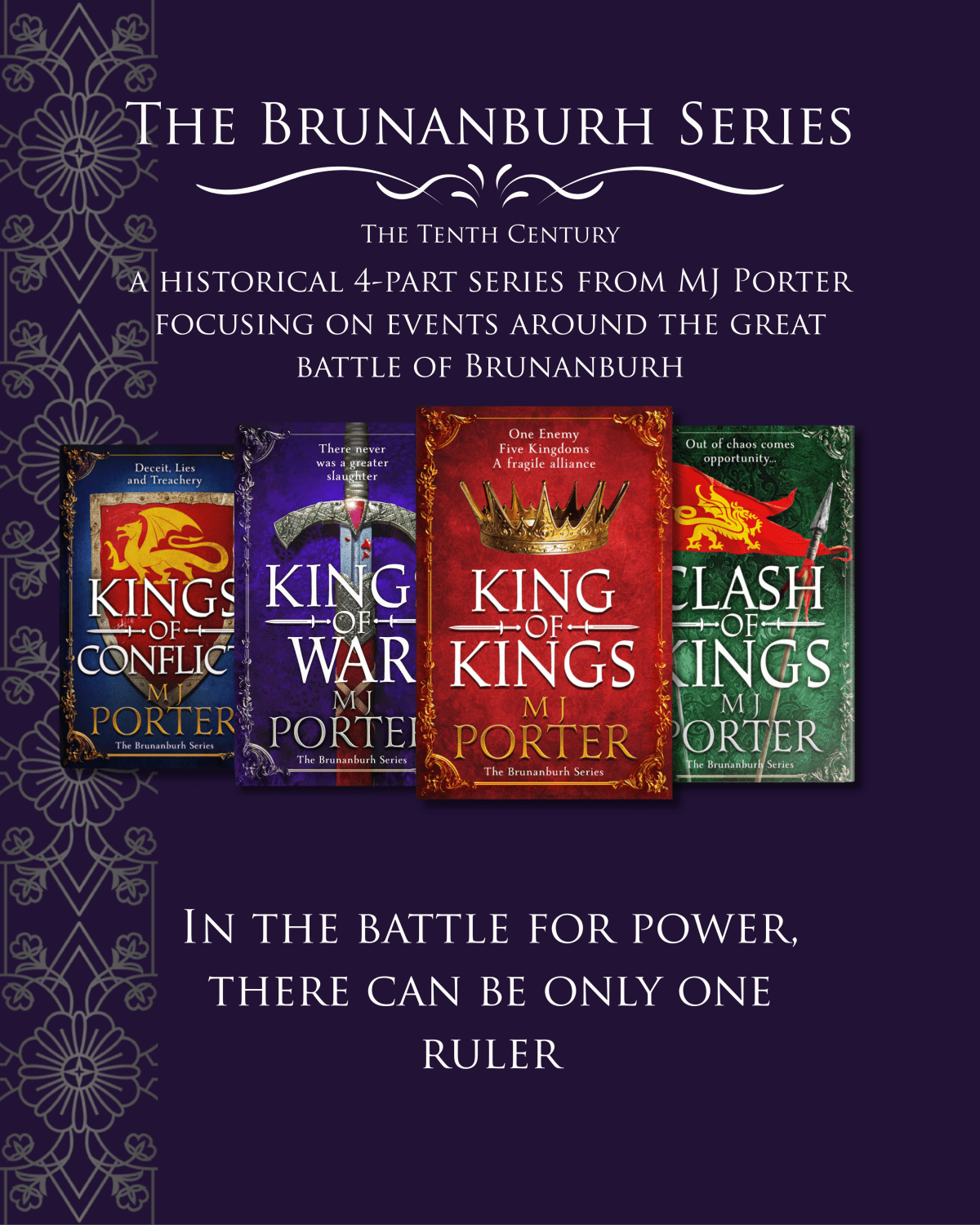
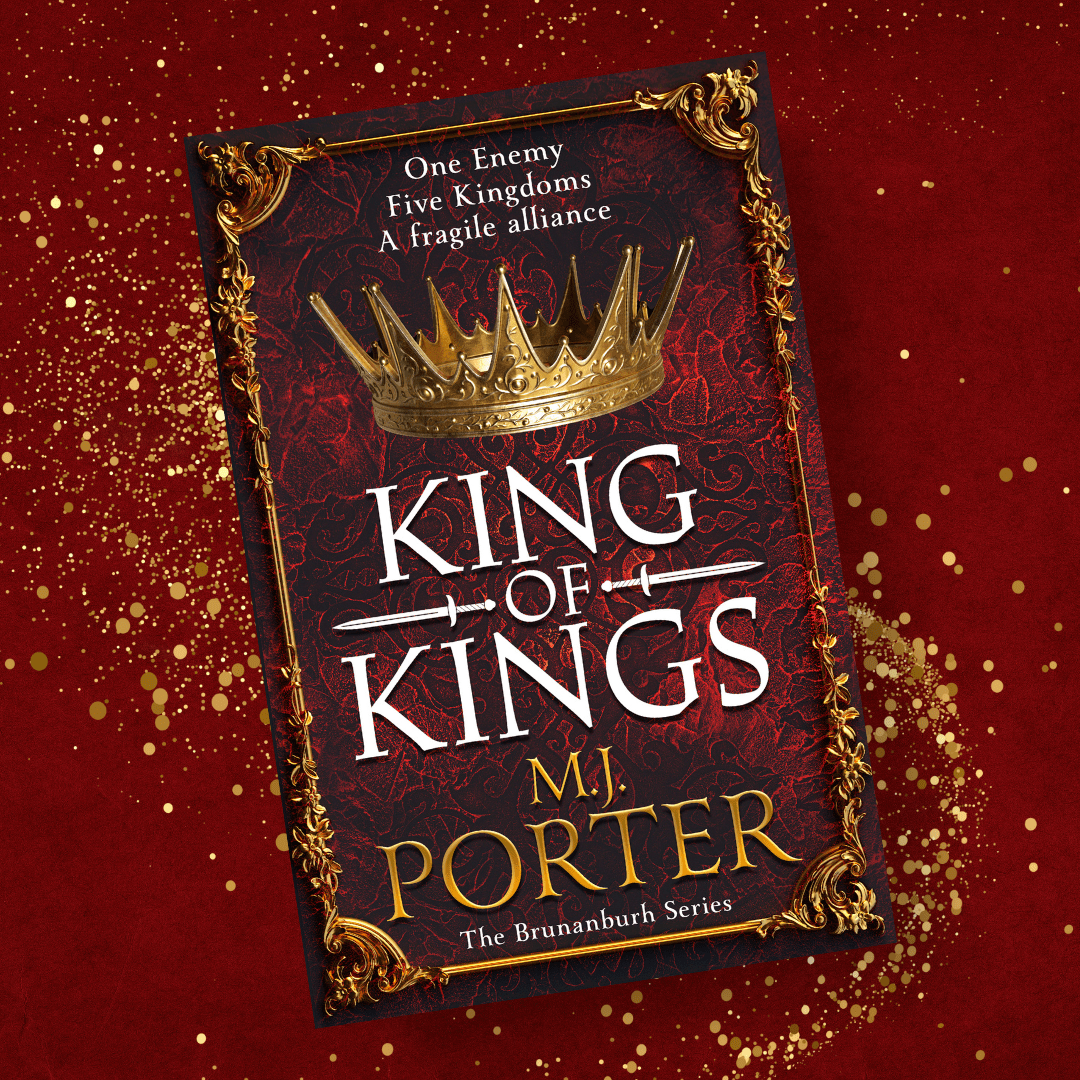
My latest release, King of Kings, is a tale of five kings, and one enemy. But what was the background in what we would now know as England?
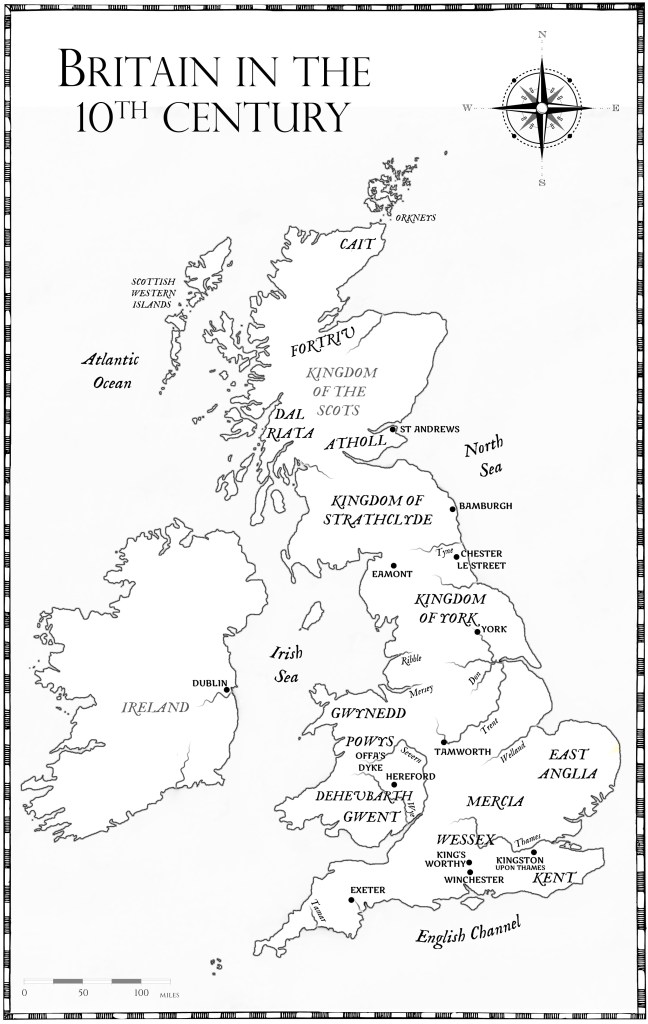
The tenth-century sees the creation of what we would recognise as ‘England’ – the combining of Wessex with Mercia, with the additions of Kent, the kingdom of the East Angles, the Danish Five Boroughs, and the kingdom of York, and also the independent kingdom of Bamburgh. But telling this story is complex. When people think of England, they might not know all these smaller kingdoms. They might not know, particularly, what the Danish Five Boroughs (Leicester, Nottingham, Lincoln, Stamford and Derby), were because if you google the Five Boroughs, you’ll be told about New York (this has happened to me).
Everybody knows about King Alfred of Wessex holding back the tide of the advancing Viking raiders throughout his reign from 874-899. And if everybody didn’t know before, then Uhtred, Bernard Cornwell’s Saxon warrior, has done much to ensure we know about it now.
But again, it’s not quite so simple. The Saxon kingdoms of the seventh century onwards numbered seven, alongside Wessex, there was also Kent, Mercia, the kingdom of the East Angles, Northumbria, Essex and Sussex. These kingdoms eventually merged to give us just Wessex, Mercia, Kent, the kingdom of the East Angles and Northumbria (which itself comprised of two kingdoms, Deira centred on York, and Bernicia, centred on Bamburgh). So, all seems clear there? But no.
When the Viking raiders began their concerted attacks on Britain in the late ninth century, Alfred of Wessex promulgated a treaty with one of their leaders, Guthrum, forging an independent kingdom of the Viking raiders, which stretched along something known as the Alfred-Guthrum line. Loosely, this meant that land to the east was in the control of the Viking raiders. All that survived of those kingdoms south of the Humber was Wessex and the western part of Mercia. The Viking raiders had already overrun Northumbria. The kingdom of Jorvik, centred on York, was part of a Dublin/York kingship, where the kings of York/Jorvik had often already been the king of Dublin, and this kingship was firmly in the hands of a family claiming descent from Ivarr (the Boneless), one of the men who’d led the concerted Viking raider attacks of the 860s and 870s which we might find termed The Great Heathen Army.
Map designed by Flintlock Covers
This, then, reimagined what we think of as England and these Saxon kingdoms weren’t the only ones to face attack from the Viking raiders. The many Welsh kingdoms shared sea borders with the Dublin Norse, and the small kingdom of Manx (the Isle of Man) became incredibly important, as did all of the islands that surround western and northern Scotland. Orkney, at this time, was settled by the Norse.
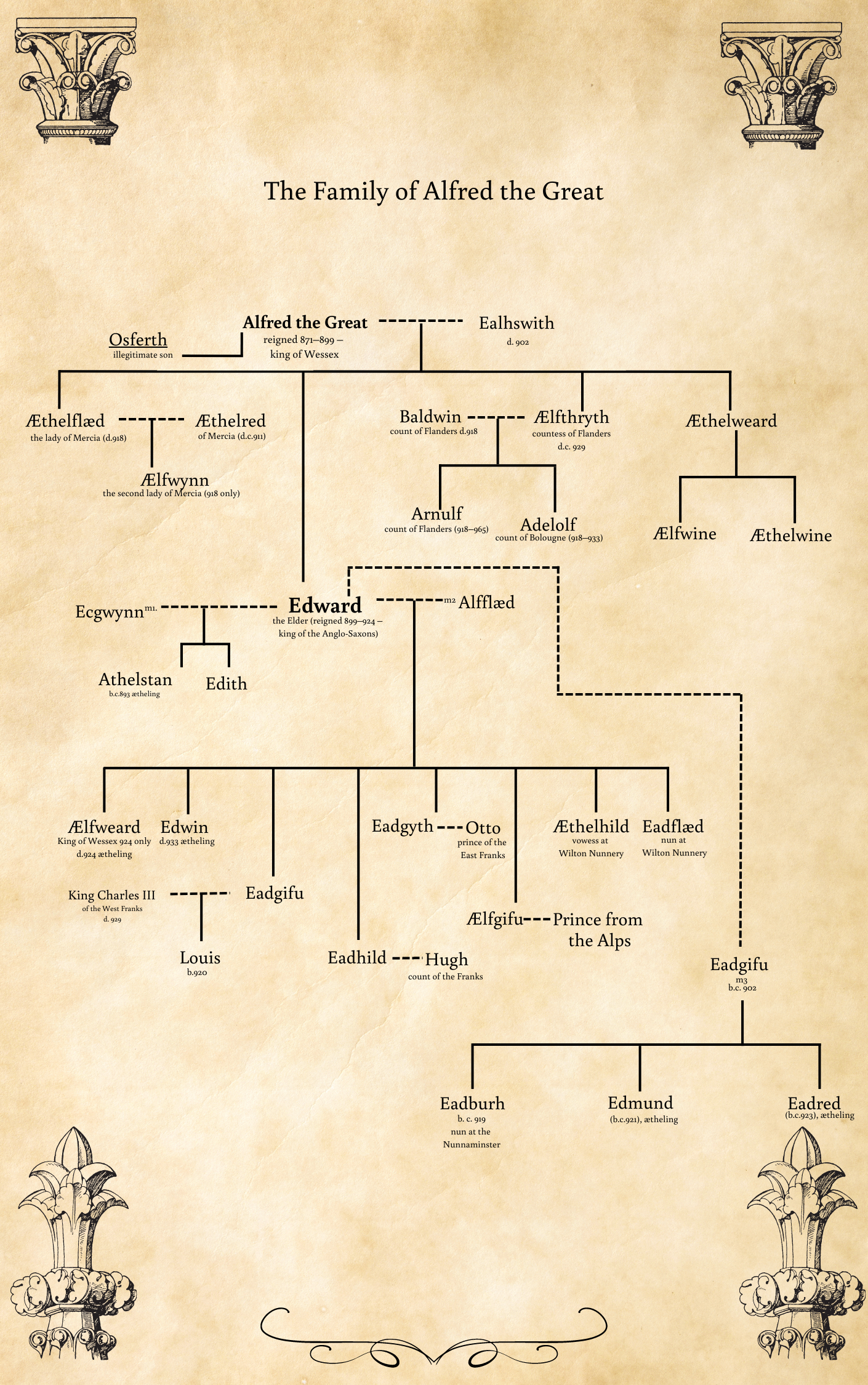
When Alfred died in 899, he was king of Wessex. His son, Edward, would become king of the Anglo-Saxons, ruling over Wessex and Kent, and then after the death of his sister, Æthelflæd, the Lady of Mercia, staking his claim to western Mercia as well as those parts of the Five Boroughs, essentially Norse held lands, known as the Danelaw, which Æthelflæd had ‘won’ back for Mercia.
‘Here in the early part of this year, with God’s help, she [Æthelflæd] peaceably got in her control the stronghold at Leicester and the most part of the raiding-armies that belonged to it were subjected. And also the York-folk had promised her – and some of them granted so by pledge, some confirmed with oaths – that they would be at her disposition.’[i]
This was a time of intense unease, almost constant warfare. And not everyone was happy about the advances the surviving Wessex royal family made. Edward died at Farndon, in Mercia, perhaps putting down a Mercian rebellion or, a Welsh one. Farndon wasn’t far from the border with the Welsh kingdoms.
But Edward’s death, and the subsequent death of his son Ælfweard only sixteen days later, brought about a sea change. Ælfweard wasn’t Edward’s oldest son; that was Athelstan, a youth seemingly banished to live with his aunt in Mercia when Edward remarried (if the later pseudo-historian, William of Malmesbury is to be believed who makes the claim that it was Alfred’s wish that Athelstan be brought up in ‘the court of his daughter Æthelflæd and Æthelred his son in law.’[ii]
Athelstan was immediately recognised as the king of Mercia. Not long afterwards, he also became king of Wessex. And his ambitions didn’t stop there.
‘Here King Edward died at Farndon in Mercia; and very soon, 16 days after, his son Ælfweard died at Oxford; and their bodies lie at Winchester. And Athelstan was chosen as king by the Mercians and consecrated at Kingston.’[iii]
It’s difficult to imagine that Athelstan wasn’t a warrior of fierce renown. His aunt and uncle, the lord and lady of Mercia, had spent much of their rule, both together, and then after Æthelred’s death, Æthelflæd had continued alone, driving back the incursion of the Viking raiders, or the Norse as it might be easier to term them. Athelstan must surely have taken his place in these battles. And yet, while he was eager to hold tightly to the kingdoms of Mercia, Kent and Wessex, he was also prepared to unite people through peace, and this is where the story, King of Kings, begins. With Athelstan, the first crowned king of the English.
[i] Swanton, M. trans and edit The Anglo-Saxon Chronicles, (Orion Publishing Group, 2000), p.105
[ii] Mynors, R.A.B. ed and trans, completed by Thomson, R.M. and Winterbottom, M. Gesta Regvm Anglorvm, The History of the English Kings, William of Malmesbury, (Clarendon Press, 1998), p.211
[iii] Swanton, M. trans and edit The Anglo-Saxon Chronicles, (Orion Publishing Group, 2000), D text p.105
(I’m re-sharing an old post which I’ve amended slightly, and added some new graphics).
England, Wales, Scotland, the smaller kingdoms of Mercia, Wessex, Northumbria, East Anglia, Kent, Powys, Gwynedd, Dal Riada – for the uninitiated (including myself) the sheer number of kingdoms and kings that peopled the period in British history before 1066 can appear as a bewildering display of names, places, times and events, and perhaps never more so than when a historian is trying to sell a book and so makes a statement in their title that applies to that particular king.
Map designed by Flintlock Covers
Phrases such ‘the Golden Age of Northumbria’, ‘the Mercian hegemony’, ‘the rise of Wessex’, they all mask so many events that I find the phrases very unhelpful and perhaps worse, misleading.
I think that Athelstan and his younger half brother, Edmund, probably deserve their titles as Kings of the English. And it’s not just my opinion either. There was, according to Sarah Foot in her book on Athelstan, a concerted effort by the king and his bishops to have him stand apart from his predecessors – to be something ‘different’ to them. They named him king of the English, not king of Mercia (a post he held briefly before another of his younger brothers died) and not king of Wessex, for all that he was both of those things.
They changed his title, they crowned him with a crown, not a helmet. They wanted Athelstan to be something other than his grandfather, King Alfred, and his father, King Edward. It was a bold statement to make, and one they continued when Athelstan died too young and his half-brother, Edmund replaced him. He too was crowned using, it must be supposed, the same Coronation service. (For full details have a peek at Sarah Foot’s book on Athelstan – or read the first few chapters of King of Kings as the service appears in it as well).
So why the change? Essentially the old Saxon kingdoms, for all that they were preserved in the naming of the earls/ealdormens designations, had been swept aside by the Viking raiders. The old kingdoms had become a handy label to apply to certain geographic areas, and the kings of Wessex, whilst keen to hold onto their hereditary titles because of the permanence their own royal line had managed to acquire, were equally as keen to do away with regional boundaries. There was, it can’t be denied, a concerted and almost unrelenting urge to drive any Viking raider or Dane or Norwegian (the Norse) from British soil, and this is what Athelstan and then Edmund were tasked with doing.
Yet the idea of ‘English’ wasn’t a new concept. Why else would Bede have called his great piece of religious historical writing “The Ecclesiastical History of the English people’, if there hadn’t been a shared consciousness that the people in England, all be it in their separate kingdoms, didn’t have a shared heritage? Why the idea suddenly took flight under King Athelstan could be attributed to a new sense of confidence in Wessex and Mercia at the time. They were confident that they could beat the Viking raiders and they were convinced that England belonged to them.
Or perhaps it was more than that? The destruction wrought by the Viking raiders on the separate kingdoms must have been a stark reminder of just how insular the kingdoms had become, and the Viking raiders showed everyone just how easy it was to run roughshod over the individual kingdoms. Only in unity could the Saxon kingdoms of England survive another onslaught; only with unity could the Saxons hold onto their kingdoms they’d claimed about 500 years before.
It was a message that was learned quickly and taken to heart. Athelstan worked to reunite more of the Saxon kingdoms with the growing ‘England’, and he tried to do so by both diplomacy and through war. Yet, the Viking raiders hadn’t finished with England, and nor were they her only enemies. This also lies at the heart of Athelstan’s ‘masterplan’ his treaty of Eamont (if it truly happened – Benjamin Hudson in his Celtic Scotland is not convinced). Athelstan wanted to be a mighty king, but he also wanted England, and the wider Britain (also a concept already understood otherwise why else would that cantankerous monk – Gildas – have called his even earlier work than Bede’s “On the Ruin of Britain?”) to be united in their attempts to repel the Viking raiders. He was a man with a keen vision of the future and it was a vision that his brother continued, with slightly different direction and results.
Family Tree designed by Boldwood Books
The ‘English Kings” saw safety in unity, and of course, an increase in the power they held went hand-in-hand with that.
Yet at no point during the Saxon period can it be said that the emergence of ‘England’ as we know it, was a given certainty. Throughout the period other great kings had tried to claim sovereignty over other kingdoms, but never with any permanence. The earlier, regional kings, were powerful within their own lifetimes and within their own regions. Few, if any, were able to pass on their patrimony complete upon their death. This was a time of personal kingship, and it was only under Athelstan and Edmund that the leap was taken away from this to a more permanent power base.
Not that it was a smooth transition and it did have the side-effect of allowing other men, those not related to the royal family, to evolve their own individual power bases in the old Saxon kingdoms. The ‘English’ kings had to do more than just rule their own kingdom, they had to rule their ealdormen and earls, their warriors, bishops and archbishops. The number of names of kings might start to deplete in the after math of Athelstan and Edmund’s kingship, but in their place spring up more and more powerful men, men that these English kings had to rely on.
Becoming King of the English was very much a mixed blessing, bringing with it new and greater responsibilities and more, it brought with it the need to expand personal government further, to have a greater persona to broadcast.
For Sophie it’s a trip home and for Hector it’s time to meet Sophie’s parents… Though their trip has village tongues wagging about a stop at Scotland’s notorious elopement spot, Gretna Green.
No matter what, it’ll make a nice break from the murder and mayhem that has been plaguing their beautiful Cotswolds village. But Sophie and Hector are barely on the road before they’re being hassled by reckless drivers and at their first rest stop a body is discovered.
Then comes a series of ‘accidents’ that leave poor Hector a little worse for wear. Is someone after Hector? Who could even know he was in the Highlands?
Accidents or not, can they find some way to keep Hector safe?
Murder in the Highlands is the latest book in the Sophie Sayers cosy crime series, usually set in a small Cotswold village, but not on this occasion. Sophie and Hector (who isn’t Scottish) are off to Inverness for a well-deserved holiday with her mother and father.
But as ever, dark going-ons and strange occurrences follow them on the long journey north, and Sophie is left feeling that there’s a mystery to solve, but unsure what it can be about, and even worse, that it somehow involves Hector.
I really enjoy this series of books – Sophie is a fun character, if troubled with an overactive imagination – as a writer, and her character is a writer, I’m right there with her. Hector is usually the more grounded of the two, but this time, even he’s starting to worry about what’s happening.
While there is no sighting of the Loch Ness monster, this is a fun mystery firmly rooted in Inverness, which the author has visited extensively, and the mystery is one of the stronger ones in the series that plays out, perhaps, in a more conventional way to earlier books in the series.
A great addition to the cosy crime series, which is going from strength to strength.
Meet the Author
Debbie Young is the much-loved author of the Sophie Sayers and St Brides cosy crime mysteries. She lives in a Cotswold village where she runs the local literary festival, and has worked at Westonbirt School, both of which provide inspiration for her writing. She is bringing both her series to Boldwood in a 13-book contract. They will be publishing several new titles in each series and republishing the backlist, starting in September 2022.





















 MJ Porter