I’m delighted to be taking part in the cover reveal for The Lost Heir by Jane Cable #blogtour

Here’s the blurb

Cornwall, 2020

At the beginning of lockdown, teacher Carla Burgess needs to make some changes to her life. She no longer loves her job, and it’s certainly time to kick her on-off boyfriend into touch. But then, while walking on the cliffs she meets Mani Dolcoath, a gorgeous American with a dark aura.

Mani is researching his family history, and slowly their lives and their heritage begin to entwine. The discovery of a locked Georgian tea caddy in the barn on her parents’ farm intrigues Carla, but then she starts to see orbs, something that hasn’t happened since her grandmother died. They terrify her and she’ll do anything to outrun them, but will she lose Mani’s friendship in the process?

Cornwall, 1810

Harriet Lemon’s position as companion to Lady Frances Basset (Franny) perfectly conceals the fact they are lovers. But when Franny is raped and falls pregnant their lives are destined to change forever.

The one person who may be able to help them is Franny’s childhood friend, William Burgess, a notorious smuggler. But he has secrets of his own he needs to protect. Will his loyalties be divided, or will he come through?

Pre-order Link

https://getbook.at/LostHeir

Meet the author

Jane Cable writes romance with a twist and its roots firmly in the past, more often than not inspired by a tiny slice of history and a beautiful British setting.

After independently publishing her award-winning debut, The Cheesemaker’s House, Jane was signed by Sapere Books. Her first two novels for them are contemporary romances looking back to World War 2; Another You inspired by a tragic D-Day exercise at Studland Bay in Dorset and Endless Skies by the brave Polish bomber crews who flew from a Lincolnshire airbase.

Jane lives in Cornwall and her current series, Cornish Echoes, are dual timeline adventure romances set in the great houses of the Poldark era and today. She also writes as Eva Glyn.

Connect with Jane

Twitter: @JaneCable

Facebook: https://www.facebook.com/JaneCableAuthor

Website & newsletter sign up: http://www.janecable.com

Happy release day to the new Bradecote and Catchpoll medieval mystery by Sarah Hawkswood, Too Good to Hang

Here’s the blurb

April, 1145. Thorgar the Ploughman is found by the bloodied body of Father Edmund, a village priest in Ripple, and is summarily hanged for being caught in the act, despite his pleas of innocence.

When his sister goes to Worcester to seek justice for Thorgar, the lord Sheriff sends Hugh Bradecote, with Serjeant Catchpoll and Underserjeant Walkelin, to discover the truth. They soon expose strong motives for placing the blame on the ploughman’s shoulders, some unpleasant secrets festering among the villagers, as well as the whisper of a treasure long lost and now rediscovered.

The shadow the noose casts is a long one, but the Sherrif’s men will need to plumb the darkness to uncover the true killer.

Purchase Link

https://amzn.to/3pGxUj3

My Review

A new Bradecote and Catchpoll (and Wakelin) medieval mystery is always a true delight, and Too Good To Hang is a fabulous addition to the series.

This time, our trio are called upon to determine the true culprit when an overzealous village has already hanged a man they deem to be responsible for the murder of the priest without trial or even, any real proof, other than the man’s unfortunate appearance at the side of the dead man.

What transpires, with careful investigation from Bradecote, Catchpoll and Wakelin, is that there is much more going on in the small settlement than first meets the eye. One of the village priests might well be dead, but there is a good reason for that and an even better reason to suspect almost everyone else within the settlement as well. And there’s not just the matter of the dead priest and the hanged man; there are also rumours of old treasure buried close by.

As ever, I love the way the mystery slowly resolves itself. Bradecote is lordly, Catchpoll is more world, and Wakelin is slowly becoming his own man. Added to this, there is a fine cast of strong women ruled by weak men, and the author highlights this in their interactions.

An absolute joy.

Thank you to Netgalley and the publisher for my review copy.

Check out my reviews for previous Bradecote & Catchpoll mysteries.

Wolf at the Door

A Taste for Killing

Today I’m delighted to feature Death in Sensible Circumstances by Riana Everly on the blog #blogtourMissMaryInvestigates #Austenesque #HistoricalMystery #BlogTour #TheCoffeePotBookClub

I’m delighted to share an excerpt from Death in Sensible Circumstances below.

Excerpt

“You must understand our concern.” The red-coated colonel paced up and down Alexander Lyons’ small office. He paused when he reached the offered chair once more, but did not sit down. He glanced down at the stack of cards on the desk that read Alexander Lyons, Investigator, and gave a brief bob of his head, as if reassuring himself he was in the proper place. Then he resumed pacing.

Alexander considered the man who had come calling a few minutes before. He had not written ahead, but had knocked at the door and hoped that the investigator was available. “You come highly recommended by a fellow officer, name of Fitzwilliam,” the colonel had explained. “He said you had done great service to the family. I hope you can help us, too.” 

The colonel had then introduced himself as Nicholas Brandon of Delaford in Dorsetshire. He was requesting Alexander’s services, he said, not on his own behalf but on that of a certain gentleman whom he knew, but who was too uncertain of matters to make the call himself. He took the offered seat and explained the situation, then rose and began pacing as Alexander considered what he had heard.

“Let me repeat this.” Alexander spoke slowly as thoughts swirled in his head. He knew his broad Scots accent would not deter this stalwart colonel, but poorly chosen words and stumbling sentences might. “Your friend had a falling out with his mother three months ago and was disinherited in favour of his younger brother, Robert Ferrars. That brother had a will that he made last year, upon turning twenty-one.” Alexander looked up for confirmation. Seeing Brandon’s nod, he continued. “That document left everything to his brother Edward. This seems reasonable and quite unexceptionable. Very well. Now this is where matters get sticky.

“This same Robert Ferrars was killed three days ago. To all accounts, he was returning home very late through Hyde Park from a rather exclusive gaming establishment. That is of little import right now, although it may become vital later. What does matter at this moment is that he was beaten, robbed, and left dead at the scene. His estate ought, therefore, to have passed to his brother Edward with no concerns raised.

“But…” There was always a ‘but.’ “But on the day that the terms of the will were announced, a certain person, a lady, came forward claiming that she was, in fact, Robert Ferrars’ wife and that Ferrars’ considerable wealth ought rightly to be hers.”

Alexander rose and moved to a shelf of books that sat against the far wall. He selected a tome and brought it to his desk, where he proceeded to open it and turn the pages until he found the one he wanted. Without looking at the words before him, he continued. “But there is no evidence of a marriage, and even if there were, the rule from Lugg v Luggfrom 1696 is that it requires marriage and the birth of children to effect a revocation of a will.”

Here Brandon interrupted him. “On what grounds would the extant will be revoked? Does the state of marriage annul a previous legal document? Yes, I know from Fitzwilliam that you are a lawyer by training. This is one of the considerations that brought me here today.”

Alexander gave a nod and hoped he looked sufficiently scholarly. Not many men took him seriously, what with his strong brogue (that became stronger or weaker, depending on how annoying he found his company) and his mop of coppery-red hair. He knew he appeared and sounded like a kilt-wearing heathen from the braes, and this was an image he rather cultivated, no matter that it might cost him some business. Now, however, he preferred to project the image of a learned and capable man of letters.

“Just so. I read law at Glasgow, where I did my degree. I do not practise that profession, but I follow the latest judgments. My qualifications remain valid.”

Brandon looked satisfied. 

“Marriage,” Alexander returned to the colonel’s question, “is a fundamental change in circumstance. It is assumed that upon taking a wife and having children, a man necessarily wishes to provide for his family. Therefore, the court should take notice of what is—or ought to be—a clear and obvious intent.”

“But that requires marriage and children…”

“And as you have told me, Lucy Steele, or Lucy Ferrars, should her tale be true, claims to be enceinte.”

“Mmmm.” Brandon was a man not given to unnecessary speech.

“And the question arises as to whether an unborn child has the status of a living child. This has been much about the courts these last ten or fifteen years. In Doe v Lancashire, it was ruled that a posthumous child does indeed hold the same status as a living child, on the condition that the father knew of that expectation. It is understood that he would wish to provide for the child, hence the material change in circumstance. But if he did not know…”

“Then the previous will stands.”

“Just so. Just so.”

Blurb:

A Jane Austen-inspired mystery, set in the world of Pride and Prejudice and Sense and Sensibility, being the fourth novel in the Miss Mary Investigates series.

When Mary Bennet befriends Elinor Dashwood, she expects to become part of the young lady’s circle and be introduced to her friends and relations. She does not expect that one of this circle should die, far too young, and in most unfortunate circumstances. Worse, Elinor is secretly in love with one of the suspects, Edward Ferrars, and he is inconveniently engaged to somebody else. When an investigator is called in to assist, Mary is more surprised still.

Alexander Lyons expects to find death and deceit in his line of work, but he does not expect to come face to face with Mary, who hasn’t replied to his letters of late. What is she doing in London? And how is she involved with this sorry business of murder? Still, despite the tension between the two, they make a good team as they seek to unravel the mystery surrounding them. 

From the elegant drawing rooms of Mayfair to the reeking slums of St. Giles, the two must use every bit of wit and logic they possess to uncover a killer, all the while, trying to puzzle out the workings of their own hearts.

Join Mary Bennet, Lizzy’s often overlooked sister from Pride and Prejudice, and her intriguing and handsome friend Alexander Lyons, as they are pulled into the world of Jane Austen’s Sense and Sensibility in this, their latest adventure.

Buy Links:

This title is currently available to read on #KindleUnlimited.

Universal Buy Link

Amazon UK:  Amazon US:  Amazon CAAmazon AU: 
Meet Riana

Riana Everly is an award-winning author of romance, both contemporary and historical, and historical mysteries. 

Born in South Africa, she moved to Canada as a child, bringing with her two parents, two younger sisters, and too many books. Yes, they were mysteries. From those early days of The Secret Seven and The Famous Five, she graduated to Nancy Drew, and then to the Grande Dames of classical English whodunnits, including Agatha Christie and Ngaio Marsh. Others followed, and many sleepless nights ensued.

When not matching wits with Miss Marple and Adam Dalgliesh, Riana keeps busy researching those little, but so-important, details for her next fabulous novel.

Trained as a classical musician, Riana has degrees in Music History and Medieval Studies, and enjoys photography, hiking, travelling, learning obscure languages, and experimenting with new recipes. If they include chocolate, all the better.

Connect with the author

WebsiteFacebook

Instagram: Book BubAmazon Author Page

Follow the Death in Sensible Circumstances blog tour with The Coffee Pot Book Club

I’m delighted to share my review for The Body at Carnival Bridge by Michelle Salter #historicalmystery #cosycrime #highlyrecommended

Here’s the blurb

How deadly is the fight for equality?

It’s 1922, and after spending a year travelling through Europe, Iris Woodmore returns home to find a changed Walden. Wealthy businesswoman Constance Timpson has introduced equal pay in her factories and allows women to retain their jobs after they marry.

But these radical new working practices have made her deadly enemies.

A mysterious sniper fires a single shot at Constance – is it a warning, or did they shoot to kill? When one of her female employees is murdered, it’s clear the threat is all too real – and it’s not just Constance in danger.

As amateur sleuth Iris investigates, she realises the sniper isn’t the only hidden enemy preying on women.

 Purchase Link https://mybook.to/CarnivalBridgesocial

My Review

The Body at Carnival Bridge is the third book in the Iris Woodmore series, and it is going from strength to strength.

Some time has passed since the tragic events of book 2, and Iris is perhaps a little out of sorts with herself, but no sooner has she made contact with her old friends than tragedy strikes, and Iris is compelled to investigate the death of a young girl.

What ensues is a well-reasoned and intriguing mystery, highlighting the social inequalities of women in the aftermath of World War I and also referencing the harsh realities of the lives of women unable to access birth control. The author really excels in placing the reader in the period without overloading the narrative., and always with an eye to moving the mystery onwards.

The Iris Woodmore mysteries are fast becoming some of my favourites. The mystery is always reliable, the author has an eye for detail, and Iris herself is a likeable character, as are those surrounding her.

A fabulous mystery well-grounded in the period’s events without overloading the reader.

Check out my review for Death at Crookham Hall and Murder at Waldenmere Lake.

Meet the author

Michelle Salter is a historical crime fiction writer based in northeast Hampshire. Many local locations appear in her mystery novels. She’s also a copywriter and has written features for national magazines. When she’s not writing, Michelle can be found knee-deep in mud at her local nature reserve. She enjoys working with a team of volunteers undertaking conservation activities.

Connect with Michelle  

Facebook: 

Twitter

Instagram

Bookbub profile

It’s my turn on the blog tour for A Contest to Kill For by E V Hunter #cosycrime #blogtour

Here’s the blurb

The competition is fierce…. Desperate to try and rebuild the reputation of Hopgood Hall, owners Alexi Ellis and Cheryl and Drew Hopgood agree to host a realty TV baking show, spearheaded by their arrogant but enigmatic head chef Marcel Gasquet. Hopefully the ratings will bring in bookings to the struggling hotel and Cosmo, Alexi’s antisocial feral cat, is hoping to get a starring role too!

The temperature is high… Fiery and hot-headed, Marcel’s antics makes for brilliant television, but off-screen trouble is brewing. One of the contestants, femme fatale Juliette Hammond, makes it clear that she will do anything to secure the winning prize – even if it means sweetening up the prima donna chef. The results are deadly!

So when Juliette is found dead, all eyes turn to Marcel. Has his fiery French temper got the better of him or has someone else fallen victim to Juliette’s devious ways? With the reputation of the hotel in tatters and Marcel’s liberty on the line, Alexi needs answers and fast.  And the only person she can turn to for help is her old friend and private eye Jack Maddox.  Jack’s working his own case, but he can’t refuse Alexi and he knows more than anyone that this murder could cost them everything!

Perfect for fans of Faith Martin, Frances Evesham and Emma Davies.

My review

A Contest to Kill For is Book 2 in the Hopgood Hotel mysteries. I have read book 1 and think it helps to have read it when heading into book 2, not for the main part of the mystery, but when the mystery becomes tighter and more twisty.

Alexi and Jack, our ‘will they, won’t they’ couple, find themselves flung back together when one of the stars of the cookery competition is found dead in her bedroom. With everyone being recorded almost 24/7, how could someone have been murdered and it not been witnessed by these cameras?

As events escalate, Marcel, the grumpy chef, becomes the prime suspect while the TV company distances itself from the allegations. Over to Alexi and Jack to clear his name, if they can.

As with Book 1, this is a twisty mystery, and nothing is quite as it seems as it nears its conclusion. This is an engaging read, and once again, I failed to guess the culprit, which is always a sign of a good story.

Check out my review for book 1 and book 5.

Cover image for A Comtest to Kill For by EV Hunter

Meet the author

Evie Hunter has written a great many successful regency romances as Wendy Soliman and is now redirecting her talents to produce dark gritty thrillers for BoldwoodFor the past twenty years she has lived the life of a nomad, roaming the world on interesting forms of transport, but has now settled back in the UK. 

Connect with EV Hunter

Newsletter Sign Up

Bookbub profile

I’m delighted to welcome Charles Moberly and his new book, Try the Leopard’s Mouth to the blog #Thriller #Romance #1970s #BlogTour #TheCoffeePotBookClub

Here’s the blurb

AFRICA. 1970

Briony and Tom, both in their twenties, are very different characters. But opposites attract. In business, as in love, they complement each other.

They buy a farm and discover a rare drug. Tom grows it and Briony markets it. At first, they are oblivious of their responsibilities to the land and its people. But gradually they realise that they have been supporting a racist and colonialist regime.

The onset of the Rhodesian – Zimbabwean War of Independence tears at the couple’s relationship. Misunderstandings arise from their conflicting personalities and from external pressures. Events pull them apart, but also bind them together.

Try the Leopard’s Mouth is a romantic thriller set in Africa. It is also a historical novel, grounded in real events in the period 1970-80.

Buy Links

This title is available to read on #KindleUnlimited.

Universal Link 

Amazon UK  Amazon US  Amazon Canada  Amazon Australia 

Meet the author

Charles Moberly has written three novels to date: The Scrotum Toad, a satirical comedy (Winner of a Chill with a Book Reader Award); The Corncrake, a historical novel set in 1909-10 and 1914-15 (Winner of a Chill with a Book Premier Award).

In The Corncrake, four members of a family share the narration, which passes between them approximately 300 times throughout – this powerful technique allows the reader to enter the minds of the characters as they react to events, so that love, conflicts and misunderstandings are conveyed immediately. This is only possible if the voices of the characters are so strong that they are identifiable the moment they speak. 

Try the Leopard’s Mouth is a romantic thriller with a firm historical base. 

Charles lived and worked in Africa for two years, which explains why two of his novels are set there.

In his writing, he loves tension and how cultural differences can tear people apart, yet unite them through a common humanity. He believes that no two characters should ever have the same voice. He writes in the vernacular of the time and place, using slang where appropriate. 

He now lives in the UK.

Connect with the author

WebsiteAmazon Author PageGoodreads

Follow the Try the Leopard’s Mouth blog tour with The Coffee Pot Book Club

Happy Release Day to Steve Jones and his debut, Call Time. #fantasy #newrelease

Here’s the blurb

The enthralling debut novel from Channel 4 F1 presenter Steve Jones – it’s Sliding Doors meets High Fidelity

Bob Bloomfield is, in the words of his best friend’s wife, a ‘selfish, arrogant a*sehole’, who hasn’t spent a great deal of time making friends in his 49 years on earth.  

But what if he could change? What if Bob could stop the very thing that has made him the man he is, the death of his younger brother, Tom in 1986.

If he could save Tom, could he save himself? 

. . . And what if all it took was a phone call?

Purchase Link

https://amzn.to/42xyTjn

My Review

Call Time by Steve Jones is an entertaining and engaging read. I admit, I was a bit, ‘Oh another celebrity novel,” but I do love Steve Jones as a presenter, and the premise was interesting, so I thought, ‘Why not.’ And I’m so pleased I did.

Our main character, Bob, is not a pleasant individual. His best friend’s wife is correct when she labels him an arsehole, and for much of the first 40% of the book, the reader only knows about Bob ‘the arsehole.’ We don’t really know what makes him tick other than being a bit of a dick. But then, something changes, and from then on, the book is fast-paced and somewhat of a rollercoaster.

I really enjoyed the cultural nods to films I might have watched from the 80s, and while some might argue that the pretext of some of the ripples from changing the past is a bit flimsy, this is a story of redemption in the most unusual of ways. I don’t want to give anything away, so it’s quite hard to explain all the bits I liked, but yes, this is a book for fans of time-altering novels, and I think the last 20% of the novel is unexpected, and all the more enjoyable for that.

A fun novel that contends with that age-old issue of, ‘Would you change the past if you could?’ And if you did change the past, how might that change your present?

My thanks to Netgalley and the publisher for my review copy.

Meet the Author

Steve Jones’ first job was in a petrol station. It was also the first job he was fired from for putting diesel in Dai-The-Milk’s petrol truck.
From there he gained employment in a printing factory before setting off for distant shores to “find himself”. He subsequently found a mediocre career in modelling which thankfully segued into a fairly successful twenty year (to date) career in TV presenting. His cherished accomplishments: He was crowned Welsh Rear Of The year in 2002. His suitcase has come out first at the airport on no less than two occasions, and now, he has written Call Time. Which he very much hopes you will enjoy.

Happy Release day to The Book That Wouldn’t Burn by Mark Lawrence #fantasy #highlyrecommended

Here’s the blurb:

All books, no matter their binding, will fall to dust. The stories they carry may last longer. They might outlive the paper, the library, even the language in which they were first written.

The greatest story can reach the stars . . .

This is the start of an incredible new journey from the internationally bestselling author of Prince of Thorns, in which, though the pen may be mightier than the sword, blood will be spilled and cities burned…

Evar has lived his whole life trapped within a vast library, older than empires and larger than cities.

Livira has spent hers in a tiny settlement out on the Dust where nightmares stalk and no one goes.

The world has never noticed them.

That’s about to change.

As their stories spiral around each other, across worlds and time, each will unlock vast secrets about the world and themselves. This is a tale of truth and lies and hearts, and the blurring of one into another.

https://amzn.to/3LG2q3S

My Review

The Book That Wouldn’t Burn is the beginning of Mark Lawrence’s newest trilogy. Now, he’s said this isn’t related to the previous trilogies, which were all interconnected, but I’m not at all convinced, and perhaps neither will you be when you read some of the chapter headings – which are all taken from made-up books, and perhaps, written by characters from those previous books.

The Book That Wouldn’t Burn, like all Mark’s previous offerings, sucks the reader in almost immediately. It might not quite have Red Sister vibes ‘When killing a nun it’s important to ensure you have…’ but it’s not long before you can’t put the book down.

And yet, as with many of his stories, it can feel as though you’re not entirely sure why you’re enjoying the story so much, and so invested in the two main characters. This isn’t a complaint.

The narrative, skipping between two points of view, moves at odd intervals (again, not a complaint), and just when you might be considering putting the story down, there is a new development, and I warn you all now, without giving away any spoilers, there is one development that will have your jaw dropping in delicious delight.

As with all Mark Lawrence’s books, The Book that Wouldn’t Burn will leave you both satisfied and demanding more. It is a magnificent addition to his already magnificent collection of stories, and I can’t wait for the next instalment. It will also take you some time to reconcile what you’ve read. It’s taken me a good few months to write this review, because to begin with, all I could think was that my mind had been blown.

Thank you to the publisher and Netgalley for my review copy. I have ordered the limited edition hardback as well, and it will go, pride of place, next to my other Mark Lawrence editions.

Check out my previous reviews for Mark Lawrence.

Red Sister, Grey Sister, Holy Sister

The Girl and the Stars, The Girl and the Mountain, The Girl and the Moon

One Word Kill, Limited Wish

For those who don’t know, my obsession with Mark Lawrence’s books began when I was given a free copy of his first book when I preordered the last GRR Martin book in the Game of Thrones series. As of yet, I’ve not finished reading that book, because I want to wait for the next part, but I have read all of Mark Lawrence’s books since then.

Connect with Mark Lawrence

Mark Lawrence was born in Urbana–Champaign, Illinois, to British parents but moved to the UK at the age of one. He went back to the US after taking a PhD in mathematics at Imperial College to work on a variety of research projects including the ‘Star Wars’ missile defence programme. Returning to the UK, he has worked mainly on image processing and decision/reasoning theory. He says he never had any ambition to be a writer so was very surprised when a half-hearted attempt to find an agent turned into a global publishing deal overnight. His first trilogy, THE BROKEN EMPIRE, has been universally acclaimed as a ground-breaking work of fantasy. Following The Broken Empire is the related RED QUEEN’S WAR trilogy. THE BOOK OF THE ANCESTOR trilogy is set on a different world and is followed by the related BOOK OF THE ICE trilogy. There is also THE IMPOSSIBLE TIMES trilogy, a D&D/sci-fi work set in London in the 80s. All of these trilogies can be read in any order. Mark is married, with four children, and lives in Bristol.

Website

Twitter

Patreon

King of Kings, and the coronation of England’s first king

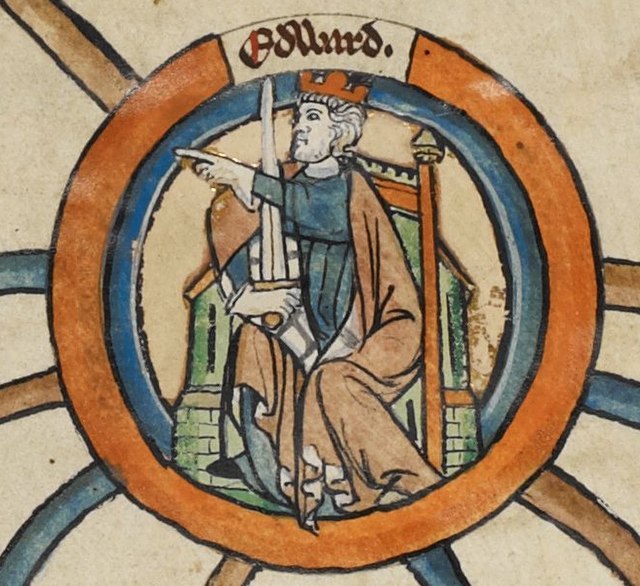
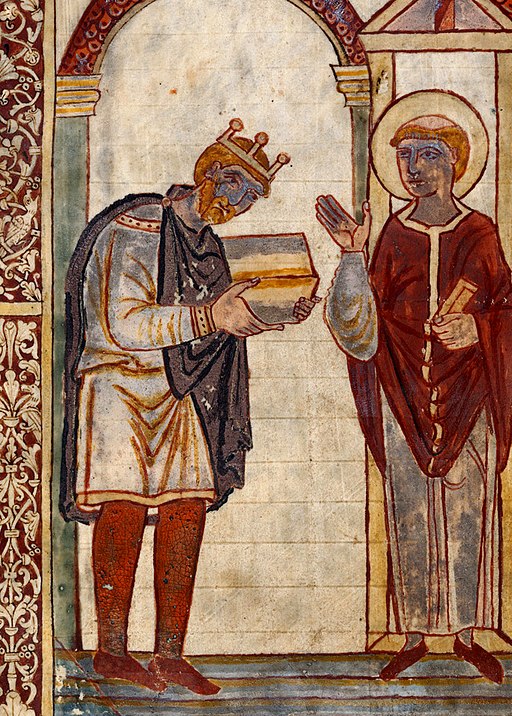
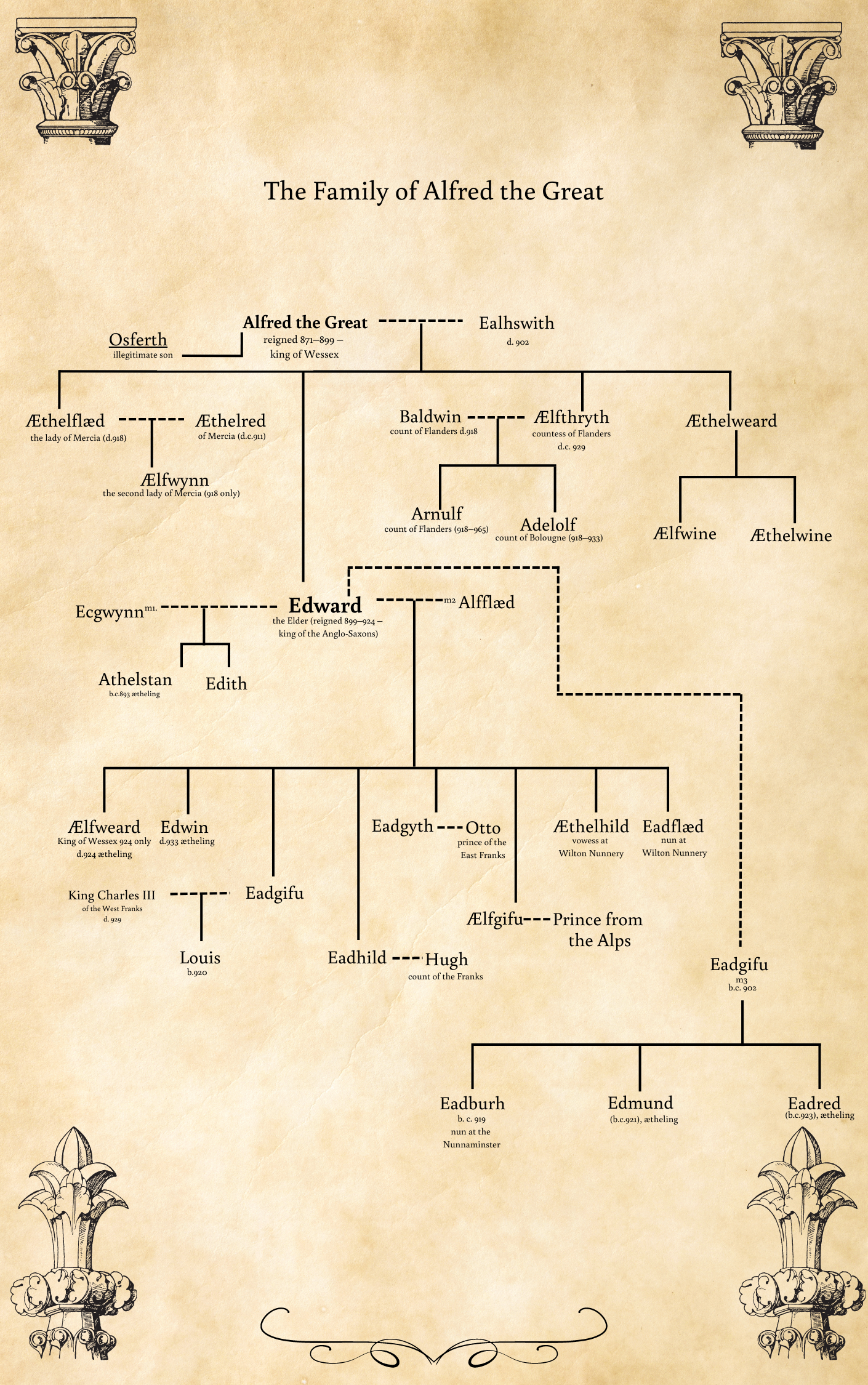
Athelstan, widely regarded as the first king of the ‘English’ or the first king of England, is one of the main characters in King of Kings. And indeed, the book opens with Athelstan undergoing his coronation. Before his reign, the ruling House of Wessex hadn’t been proclaimed as England’s kings. King Alfred (879-899), Athelstan’s grandfather, was termed the king of the Angles and Saxons (in a charter from 889 known as S346[I]). His son, Edward the Elder, was the king of the Anglo-Saxons, and whether this meant Wessex and Mercia combined has been much debated. But Athelstan was king of the English, (and this certainly included Wessex and Mercia, and parts of the Danelaw that had been reclaimed) and in a departure from earlier custom, was consecrated not with a warrior-helm, but instead with a crown.

Debate still rages as to whether the coronation ordo that has survived was written for Athelstan, his father, or even his nephew (Edgar (959-975), and indeed, whether it included provision for the king’s wife to be consecrated beside him, but for King of Kings, I made use of what is known about the service and reimagined the ceremony for my readers. I hope you enjoy it. Read on for a short extract.

‘This means that only a year after my father’s untimely death, the kingdoms of Mercia, those parts of the East Anglian kingdom that my father lately reclaimed, Wessex and Kent, are reunited again under one ruler. The Saxons, or rather, the English, have just one king. And this is my moment of divine glory, when, before the men and women of the Mercian and Wessex witan, I’ll be proclaimed as king over all.

A prayer is intoned by the archbishop of Canterbury, Athelm, appealing to God to endow me with the qualities of the Old Testament kings: Abraham, Moses, Joshua, David and Solomon. As such, I must be faithful, meek, and full of fortitude and humility while also possessing wisdom. I hope I’ll live up to these lofty expectations.

I’m anointed with the holy oil and then given a thick gold ring with a flashing ruby to prove that I accept my role as protector of the one true faith. A finely balanced sword is placed in my hands, the work of a master blacksmith, with which I’m to defend widows and orphans and through which I can restore things left desolated by my foes, and my foes are the Norse.’


[i]  http://www.esawyer.org.uk/,

books2read.com/King-of-Kings

King of Kings is currently available with Prime Reading.

Map design by Flintlock Covers

The River Thames in the Saxon period

In Eagle of Mercia, young Icel and his allies are busily guarding the River Thames against a potential Viking raider attack. The Viking raiders certainly made use of the many rivers running through England at the time (and throughout the British Isles), but the river was also significant as a very definitive and solid boundary between the Saxon kingdoms of Wessex and Mercia, which to the west, where the River Thames doesn’t flow, was continued by the earthworks known as the Wansdyke.

London, now the capital of the United Kingdom, wasn’t always as important as we might assume, and indeed, it wasn’t ever the capital of Wessex or Mercia. These two kingdoms fought most fiercely over the settlement. It wasn’t even overly important to the Romans, either. And this is why I’ve perhaps been remiss in not truly considering its significance. As rivers have changed their course over the years, so has the River Thames. And what’s most fascinating about the River Thames is that, seemingly for long periods during the Saxon era, it wasn’t navigable, as we might expect it to have been. 

Map of Early England by Flintlock Covers

‘During this period, as perhaps as other times, there may well have been a division between use of the Thames in its today reach and use of it above the tidal head. Paleoenvironmental evidence suggests that a relative drop in river levels during the Roman period meant that the tidal head was perhaps as low as Londinium itself, but that it (and thereby the range of easy navigability) generally moved upstream during the Anglo-Saxon period. This trend was not, however, uniform, and there were also brief periods (such as the late tenth to eleventh centuries) when the tidal reach shifted back downstream again.’ p. 271

It seems then, that when considering London, or Londinium/Lundenwic/Londonia, we also need to be mindful of the era in the Saxon period that we’re writing about. For the first Viking age,

‘A combination of the seasonal (and presumably climatic) unreliability of riverine travel and  the need on many occasions to travel upstream cannot have made it easy for the Vikings to use the Thames for shock offensives… and there is no clear example of a Viking force travelling by water up the Thames further than Fulham.’ p.278

Clues to how passable the River Thames might have been can be traced.

‘Without the construction of bridges, the river would have been impassable except by ferry, from its estuary as far as the lowest fording point, perhaps as low as Halliford near Shepperton, and between the various fording points. Even where the middle and upper stretches could be forded, such crossings were not guaranteed to be easy. Lechlade and Cricklade, two potentially treacherous upper Thames crossings, severely affected by flooding in winter were named Old English (ge)lad ‘difficult river crossing.’ p.279

As with all things, we should be wary of assuming that current conditions would have been prevalent in the past. The River Thames certainly falls into that category. So while, yes, it was certainly a decisive boundary between the Saxon kingdoms of Wessex and Mercia, on occasion, it wouldn’t have been as decisive as at others. This, I find fascinating, and just another of those ‘facts’ travellers to the Saxon era should be wary about. While we know (hopefully not a spoiler) that London was attacked in the 840s and 850s, prior to this, it might well have been impossible for the Viking raiders to attack in the way they were used to. This, perhaps, accounts for why they chose more coastal locations, such as the Isle of Sh.

Map by Flintlock Covers for Wolf of Mercia

(Quotes taken from Beyond the Burghal Hidage by Baker and Brookes)

Read Eagle of Mercia now.

https://books2read.com/EagleofMercia