I’m aware that there’s been a bit of a delay in getting everything shipshape over on Amazon, but everything is now where it should be – the ebook, paperback, audio, and hardback, all linked together. Whoo hoo. You can find them with the link below, which also includes other retailers, with links to the large print version.
So, I thought it would be the perfect opportunity to share a few things with you that have happened since release.
As I can’t upload the video here, I’ve done my ‘unboxing’ video and popped it over on TikTok – which I’m trying to learn. You can find it here. The paperback looks amazing:) It’s very smart and the family tree and map are also included. If you’re on TikTok give me a follow, as I’m looking for more content to help me get to grips with it.
I’m also going to share a link for the audiobook, read by the fabulous Matt Coles, which you can also find here, on my website, not my blog. (I can’t upload videos to my blog – who knew).
And, if you missed my blog post yesterday on Historia, you can read it here. It’s an introduction, quite a swift one, into what was happening in the Saxon kingdoms just before the events of King of Kings. And, it’s got some amazing images to go with it. I’m always in awe of someone who knows how all the rules work regarding sharing images on the web. Thank you. (I’ve just been trying to work some of this out for myself, with British Library images – it made my head hurt).
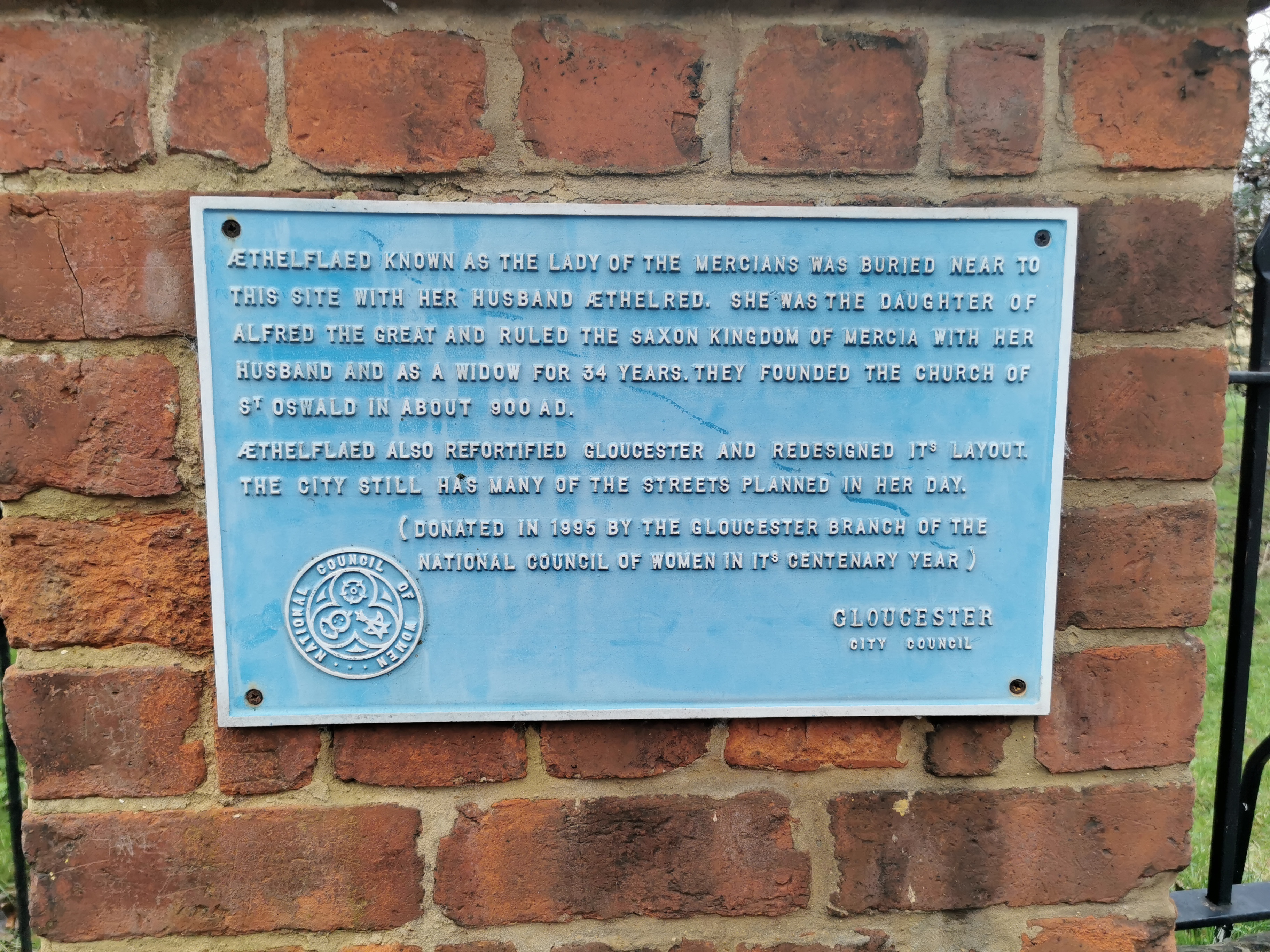
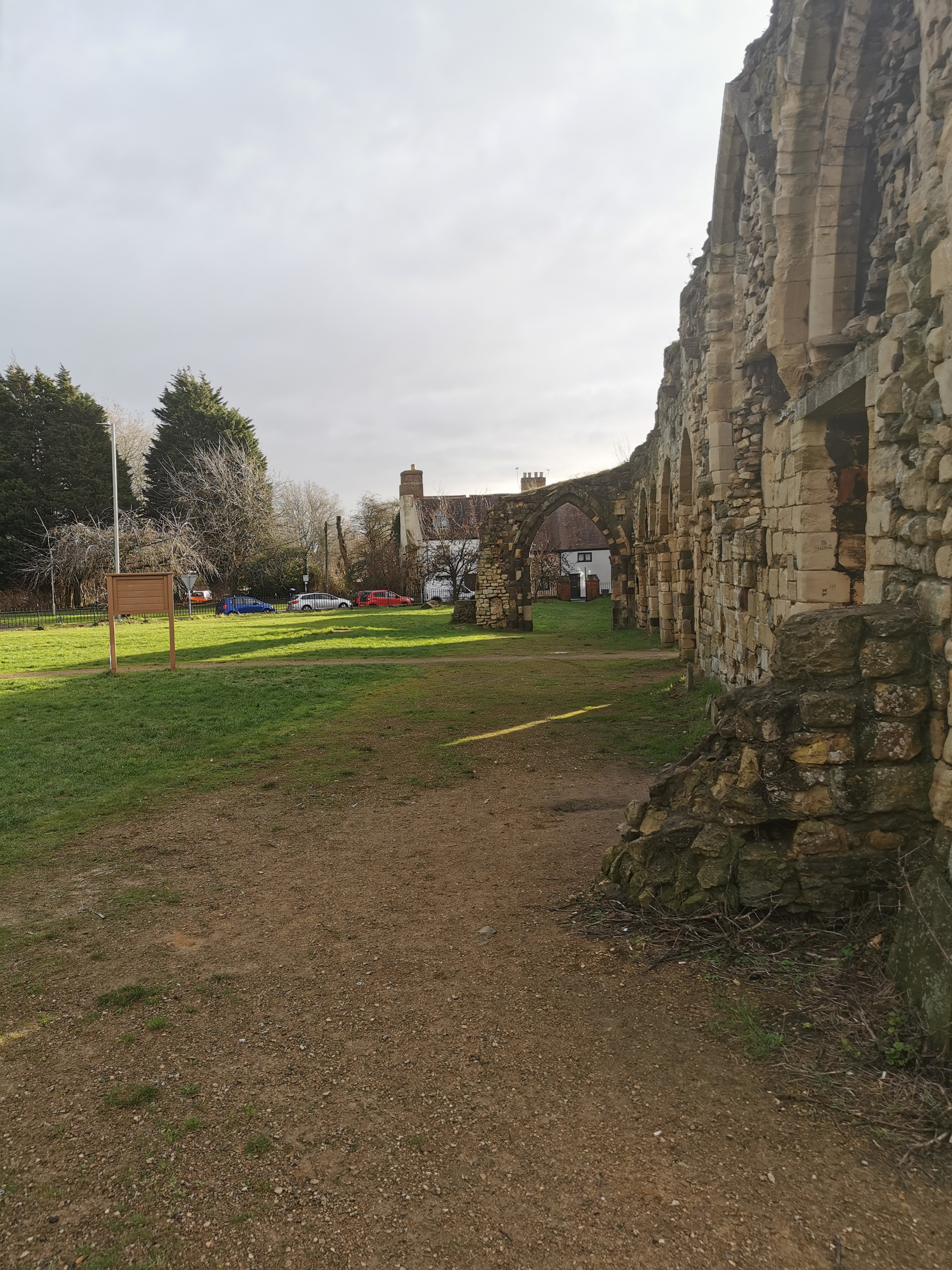
Why, I hear you cry? Well, I was on the trail of the Lady of Mercia, Æthelflæd, and her daughter Ælfwynn. Æthelflæd and her husband were buried in Gloucester, at St Oswald’s Priory, and I’m always writing about Gloucester, and Kingsholm, so I thought it was time I actually visited. Not that St Oswald Priory survives as anything more than a ruin these days.
The plaque telling visitors all about the ruins (I do love an old plaque. They just add to the story of a ruin).
Part of the ruins, with Gloucester Cathedral in the background.
Trying to capture as much of the ruin as possible in one photo.
View of the cathedral through the ruin (a pity about the garden shed)
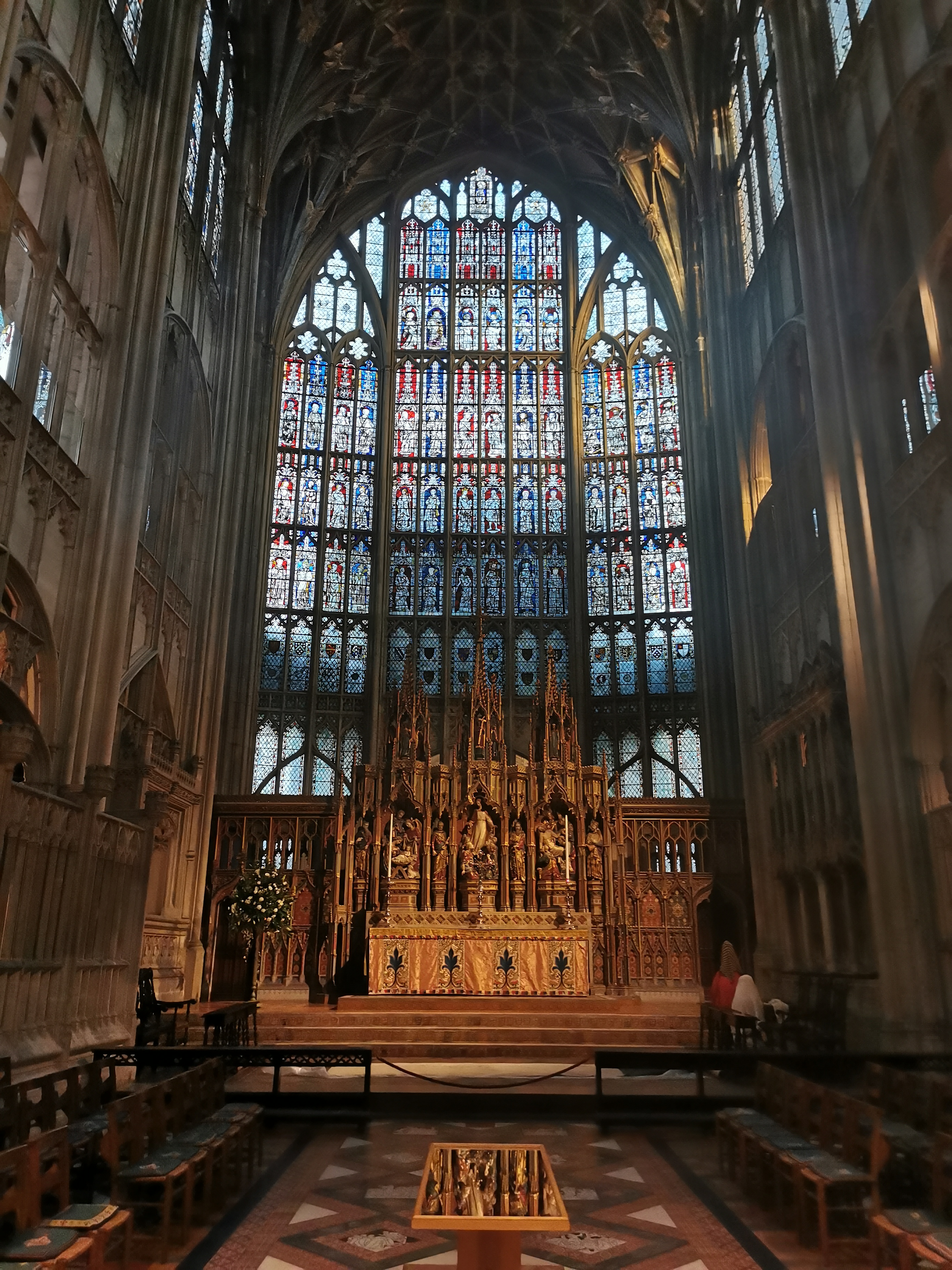
I also visited the Cathedral, and really wish I’d done a bit more research about what they offer, as I didn’t factor in all the fabulous tours they do, including one up the tower to get a view of Gloucester. Maybe next time. But, I did find this delightful pearl, which must remind us all to make sure our notes are up to the task at hand.
The great window in Gloucester Cathedral
Can you imagine trying to put all those pieces back together after they took them down during WW2? Wow. Well done to those who accomplished the task. If you’re not sure of scale, it’s as big as a tennis court.
But to return to the priory. For those who know their history of the period, we might wonder why we have a St Oswald in Gloucester, which would have been very much in the heart of Mercia. Oswald, of course, was a king of Northumbria, a most Christian king, killed in battle against the might of the famous pagan king, Penda. The story goes that after his death, a band of brave Northumbrians retrieved their dead king, and returned him to Northumbria, where he was buried and revered. Why then would a Northumbrian saint, killed in the seventh century, become so closely associated with the Mercian ruling family?
I find this fascinating, and indeed, some years ago, attended a conference where I asked this question. The answer was enlightening. The Mercians, still facing the threat of the Viking raiders, needed a rallying cry. They needed a sainted figure whose cult they could effectively ‘steal’ or align with themselves, or so I was told, and St Oswald was that man, or rather that body, and so they stole him away from Bardney and took his to Gloucester, where his cult continued, and where Lady Æthelflæd and her husband, Ethelred, were later buried.
I’ve written about Oswald while he was alive, and of course, I’ve written about Mercia, Gloucester, Kingsholm, and Lady Ælfwynn. It was inspiring to finally see where the church once was, even if little remains of it, at least something does remain.
My new book, King of Kings, is a multi-viewpoint novel telling the story of events in Britain from 925-934. I thought it would be good to share details of the historical people my main characters are based on.
Owain of Strathclyde is perhaps the most difficult character in King of Kings to find in the historical record. Indeed, his place in the story is contested by historians, as we don’t know if the scribe of the Anglo-Saxon Chronicle of the time meant Owain of Strathclyde, or an Owain of one of the Welsh kingdoms. I decided to adopt the Owain of Strathclyde, but who exactly was he, and what was Strathclyde?
The kingdom of Strathclyde is also known by another name, that of Cumbria, and there is confusion in the sources and amongst historians about where it is and what it was. Alex Woolf suggests that by the events of 927, Strathclyde/Cumbria encompassed, ‘most of part of Lanarkshire, Dunbartonshire, Renfrewshire, Stirlingshire, Peebleshire, West and Mid-Lothian, eastern Dumfriesshire and Cumberland.’ (Woolf, A. From Pictland to Alba, 789-1070, Edinburgh University Press, 2007) p.155)
So who then were it’s kings? This again is far from as easy to state as might be thought. It’s believed that Owain of Strathclyde, succeeded his father, Donald II, to become king of Strathclyde, and in turn was succeeded by his son.
In 924, we are told that ‘the king of the Strathclyde Britons and all the Strathclyde Britons,’ (Swanton p.104) joined the king of Wessex, Edward the Elder’s alliance by the Anglo-Saxon Chronicle, but Owain isn’t named. Indeed, and as said above, when we do get mention of Owain in the Anglo-Saxon Chronicle, he’s named as ‘king of Gwent,’ (Swanton, M. trans and edit The Anglo-Saxon Chronicles, (Orion Publishing Group, 2000) p.107) even though there was no Welsh king of Gwent named as Owain at the time. It’s therefore difficult to get a feel for who he was, and what he did, but that didn’t mean I couldn’t include him in King of Kings. If anything, it made it all the more intriguing.
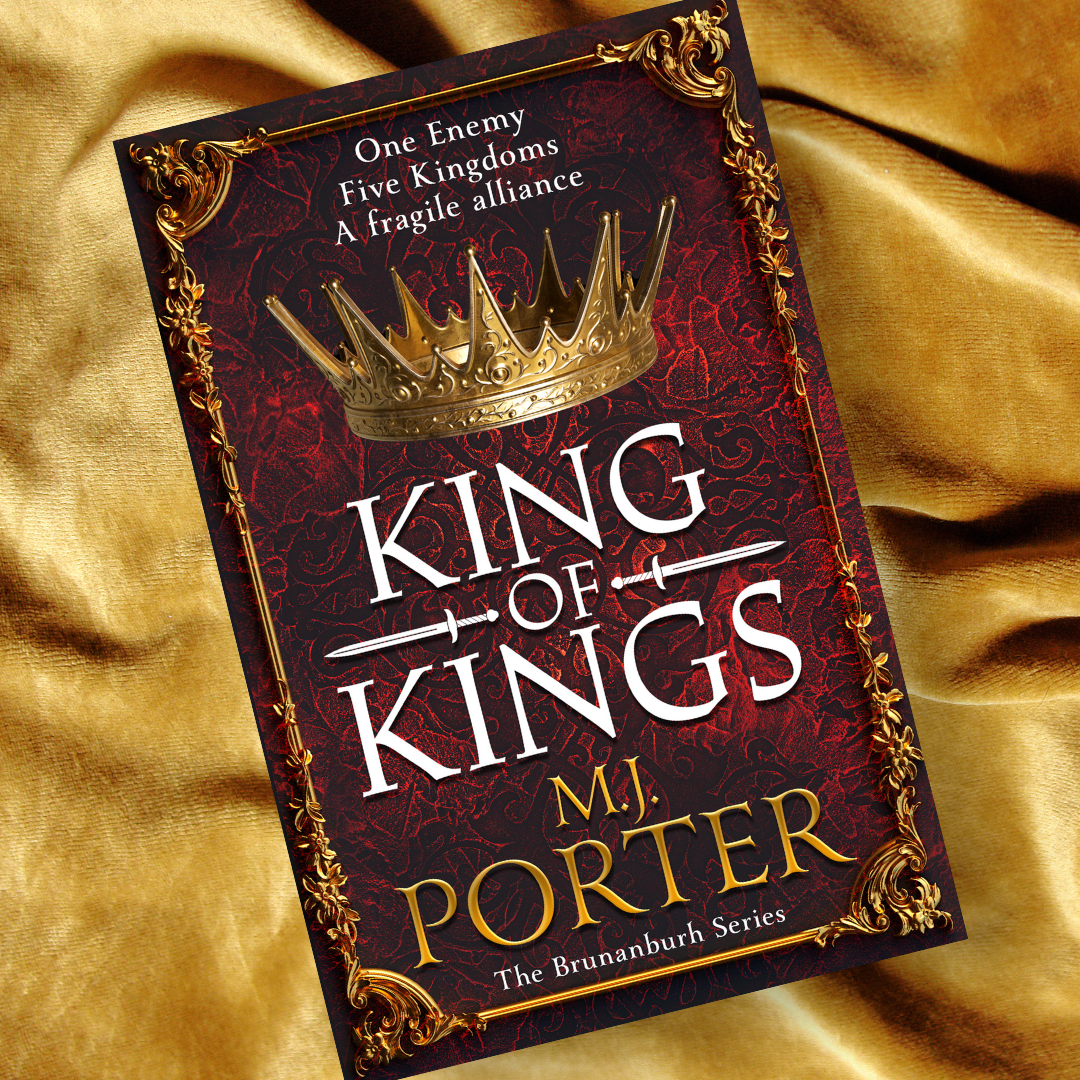
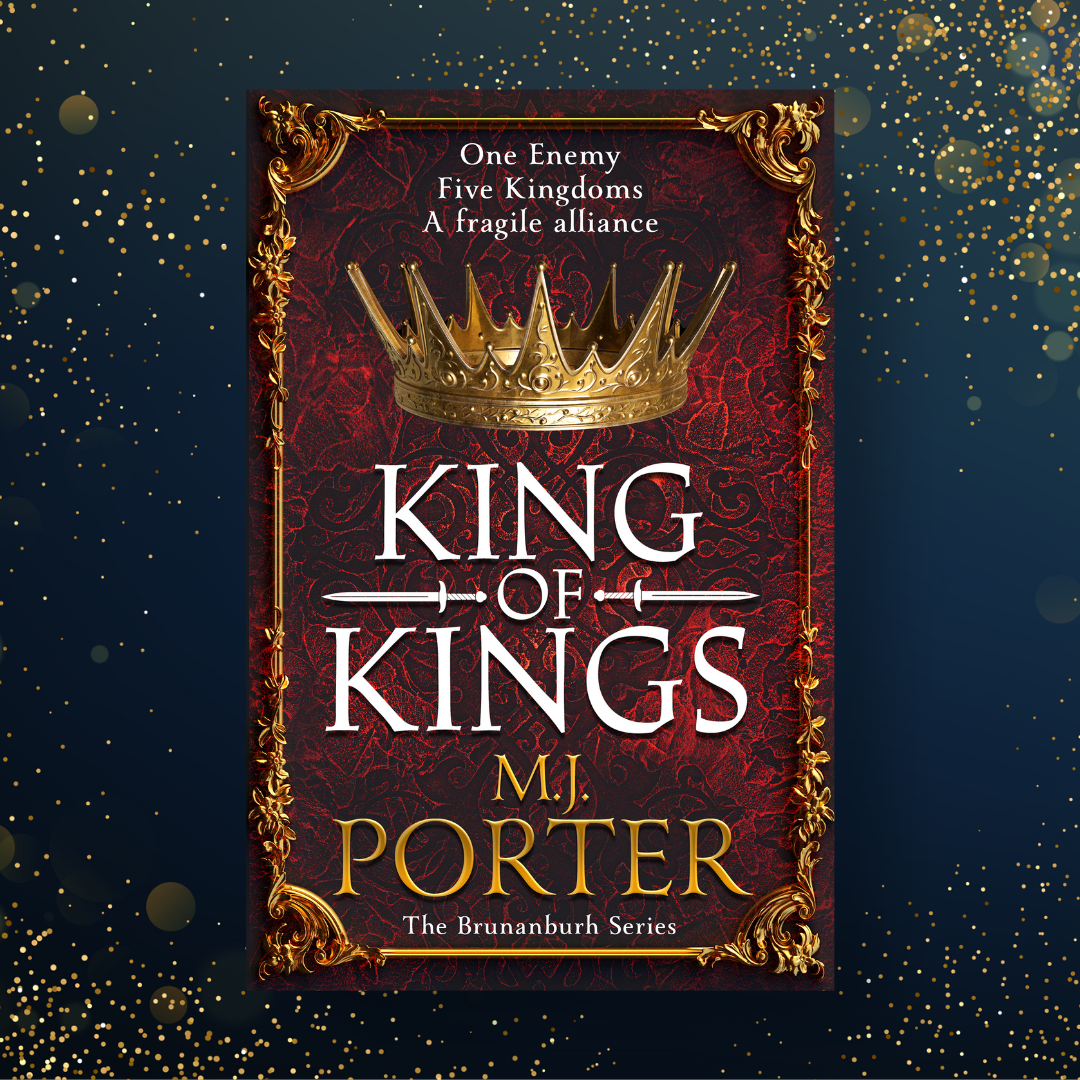
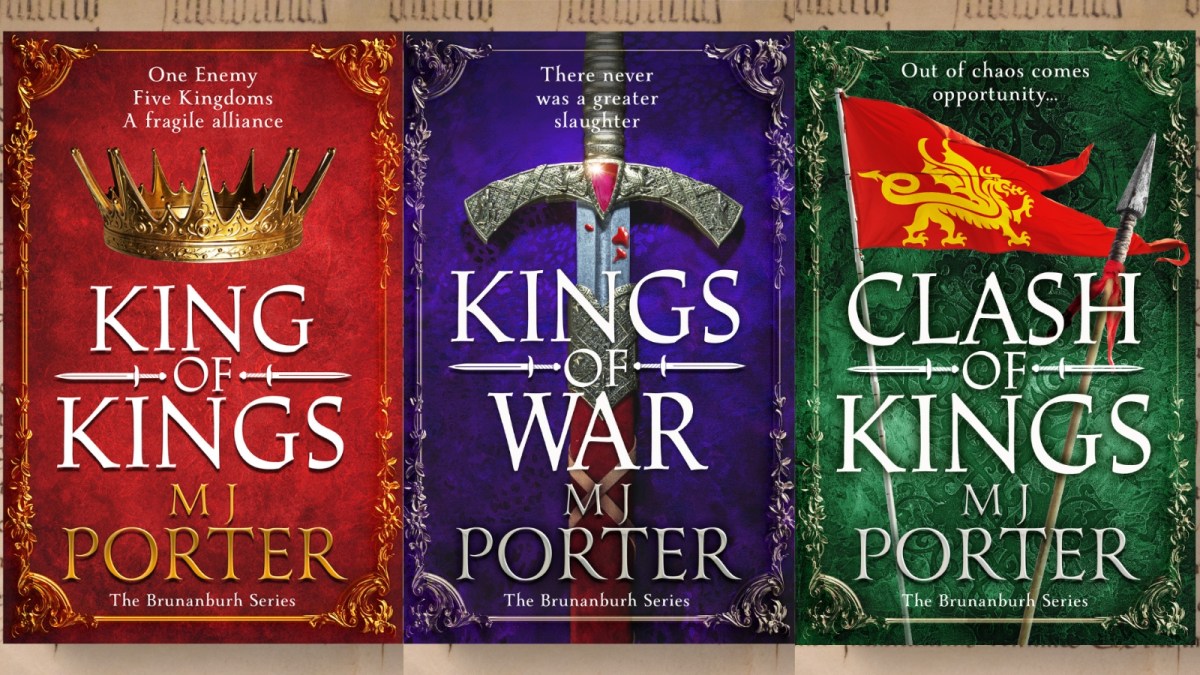
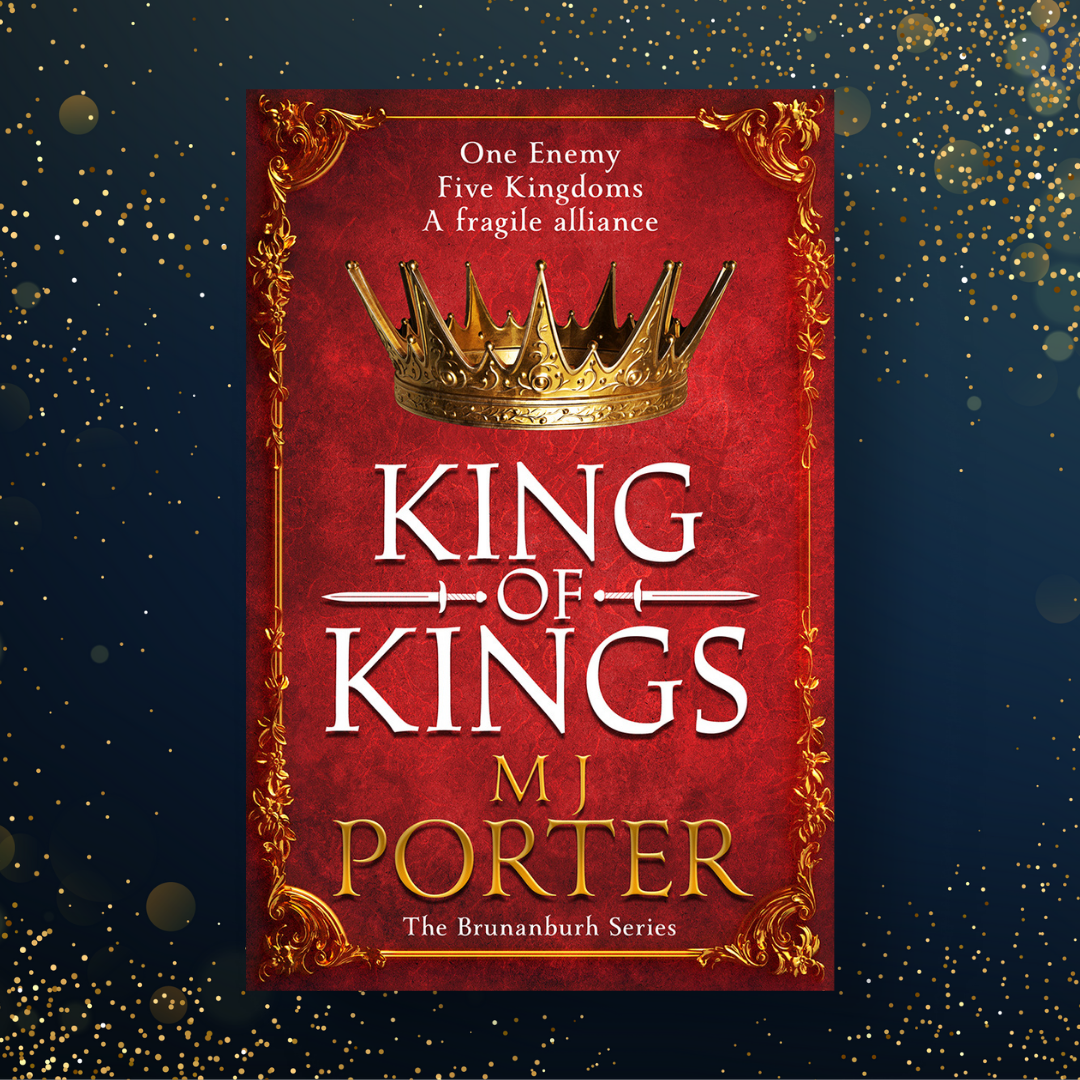
I’m so excited about the release today of King of Kings. This story, the first part in the retelling of the greatest battle on British soil that many have never heard of, Brunanburh, has been long in the making. Building on the original series, begun in 2014, King of Kings is entirely reworked, and it’s so much better:) (I honestly can’t believe how much better it is.)
Here’s the blurb
‘An epic tale of the birth of a nation. Truly mesmerising. Game of Thrones meets The Last Kingdom’ – Gordon Doherty
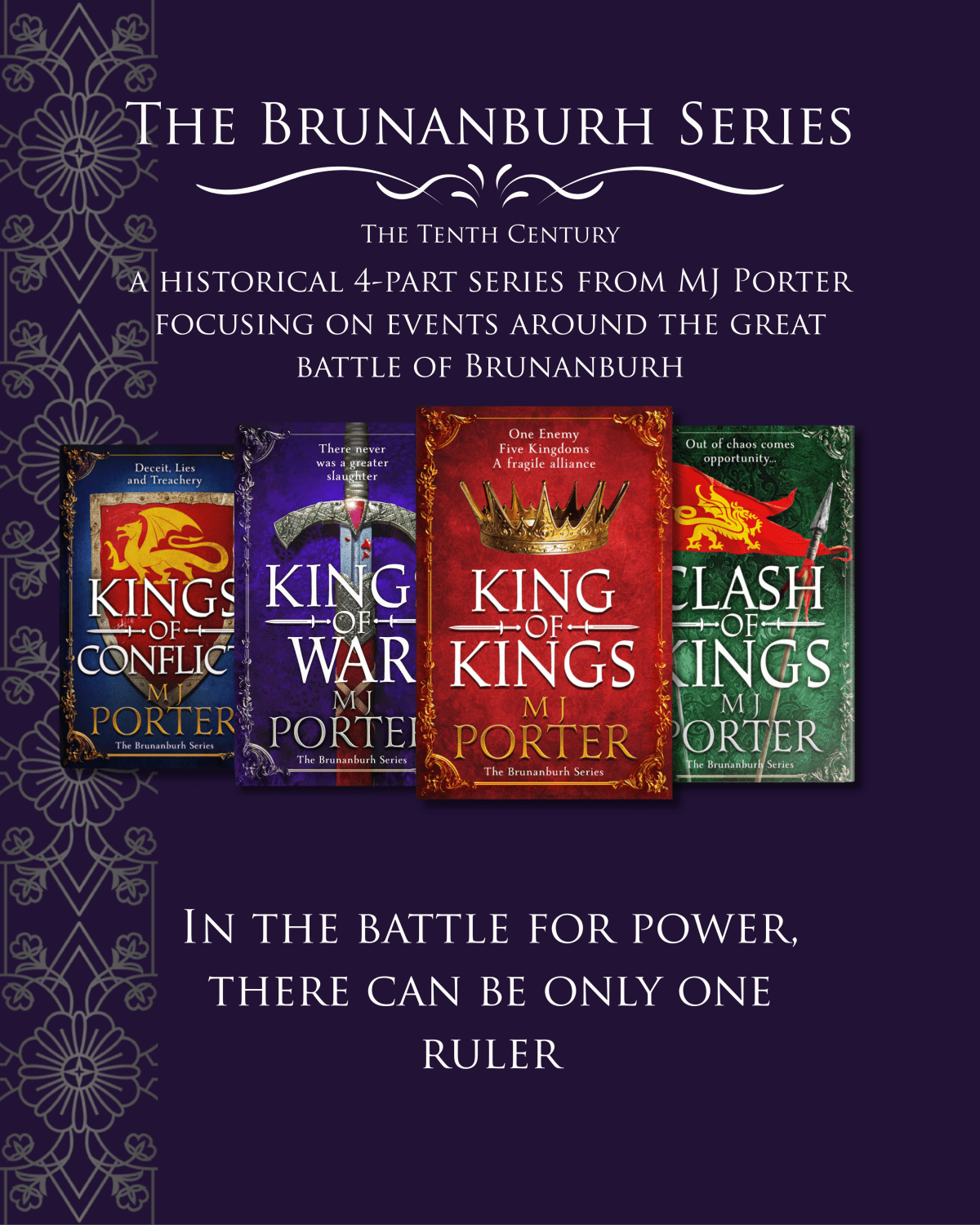
In the battle for power, there can be only one ruler.
AD925
Athelstan is the king of the English, uniting the petty kingdoms of Wessex, Mercia, the Danish-held Five Boroughs and York following the sudden death of his father, King Edward.
His vision is to unite the realms of the Scots and the Welsh in a peace accord that will protect their borders from the marauding threat of the Norse Vikings.
Whilst seemingly craving peace and demanding loyalty with an imperium over every kingdom, Athelstan could dream of a much bigger prize.
But danger and betrayal surround his best intentions, namely from his overlooked stepbrother, Edwin, who conspires and vies for what he deems is his rightful place as England’s king.
As ever, powerful men who wish to rule do not wish to be ruled, and Constantin of the Scots, Owain of Strathclyde, and Ealdred of Bamburgh plot their revenge against the upstart English king, using any means necessary.
An epic story of kingsmanship that will set in motion the pivotal, bloody Battle of Brunanburh where allies have to be chosen wisely…
(available in ebook, paperback, hardback and audio, narrated by the wonderful Matt Coles).
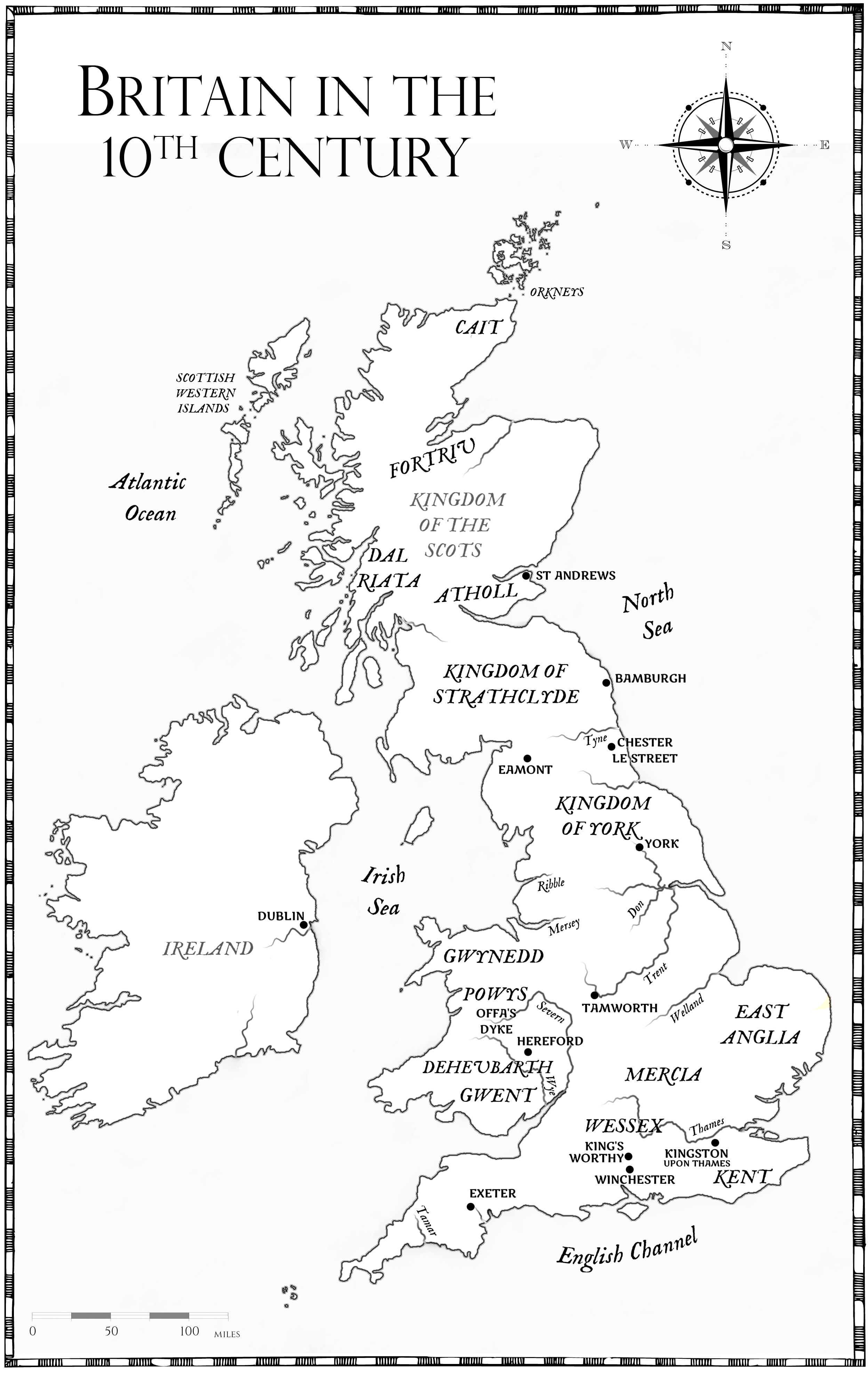
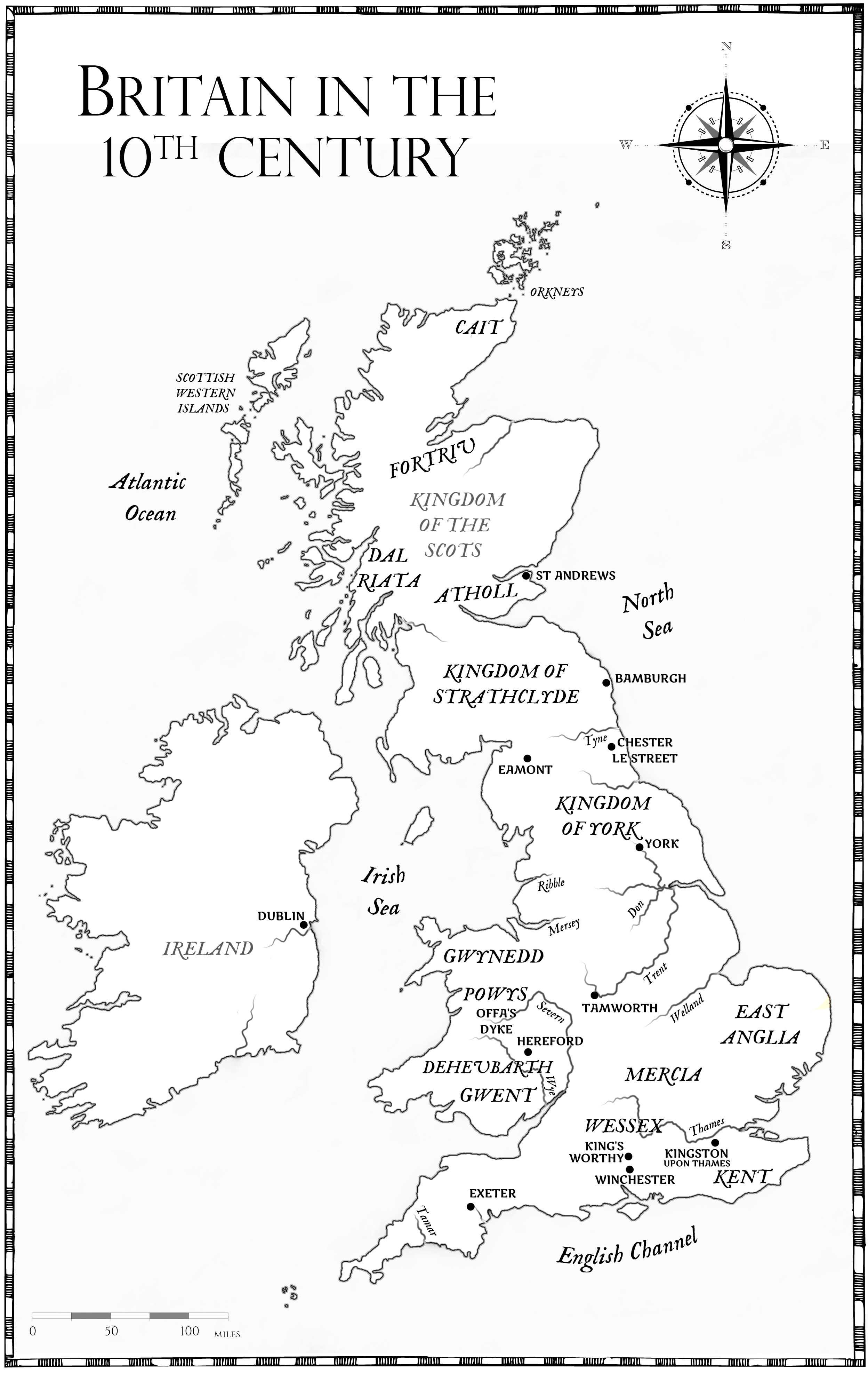
King of Kings. with its five kingdoms, and one alliance, might need some explanation. To help my readers understand who everyone is, and importantly, where everyone is, King of Kings has a map and a genealogical table, as well as a cast of characters.
Map designed by Shaun at Flintlock Covers
And because the family of King Alfred is so important to the story, I also have a genealogical table to share with my readers.
Design by Boldwood Books
I’ve written some brief introductions for the main cast of characters.
And for those who are falling in love with the period as much as I am, I wanted to share some non-fiction recommendations, and cautions.
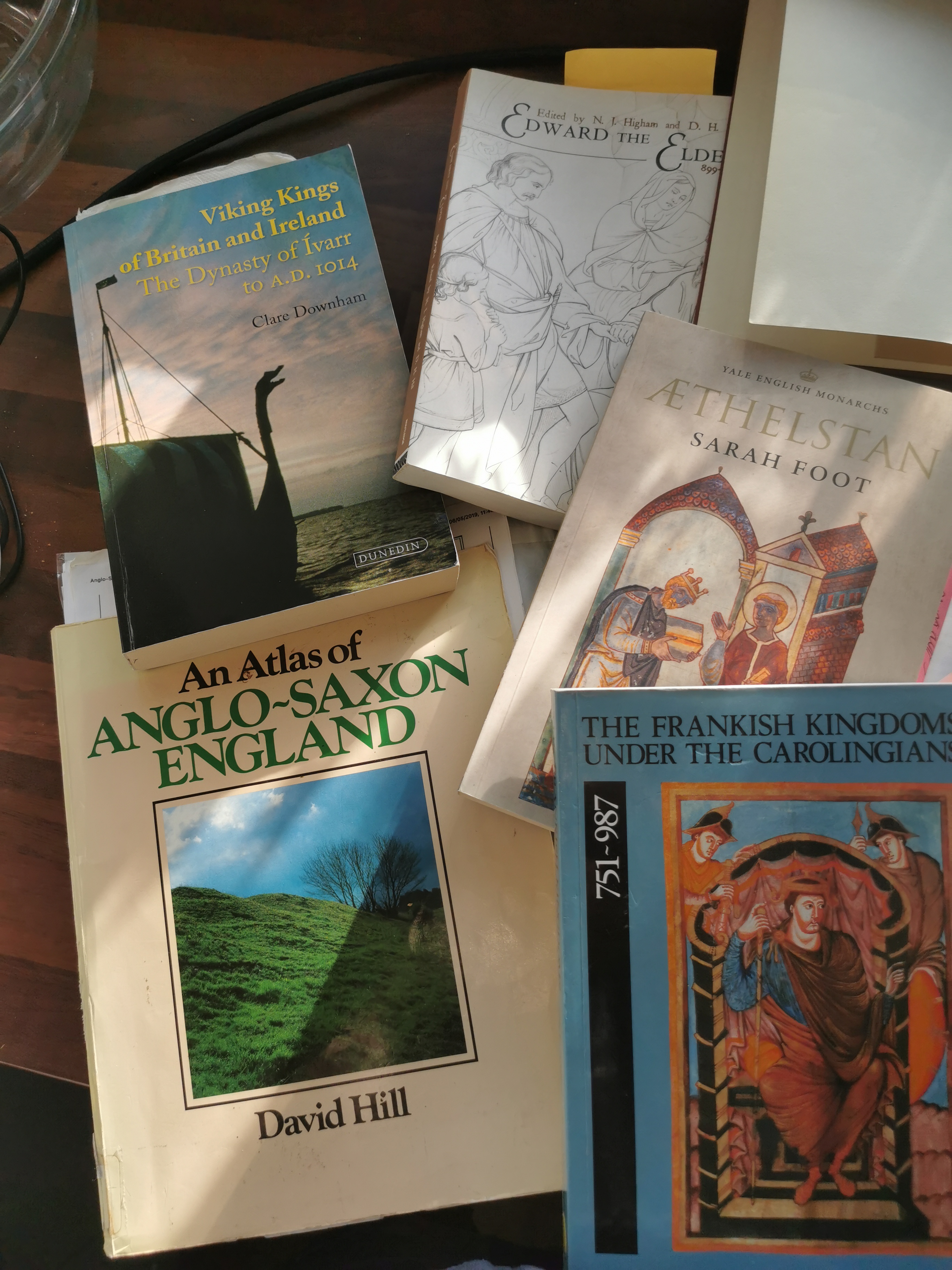
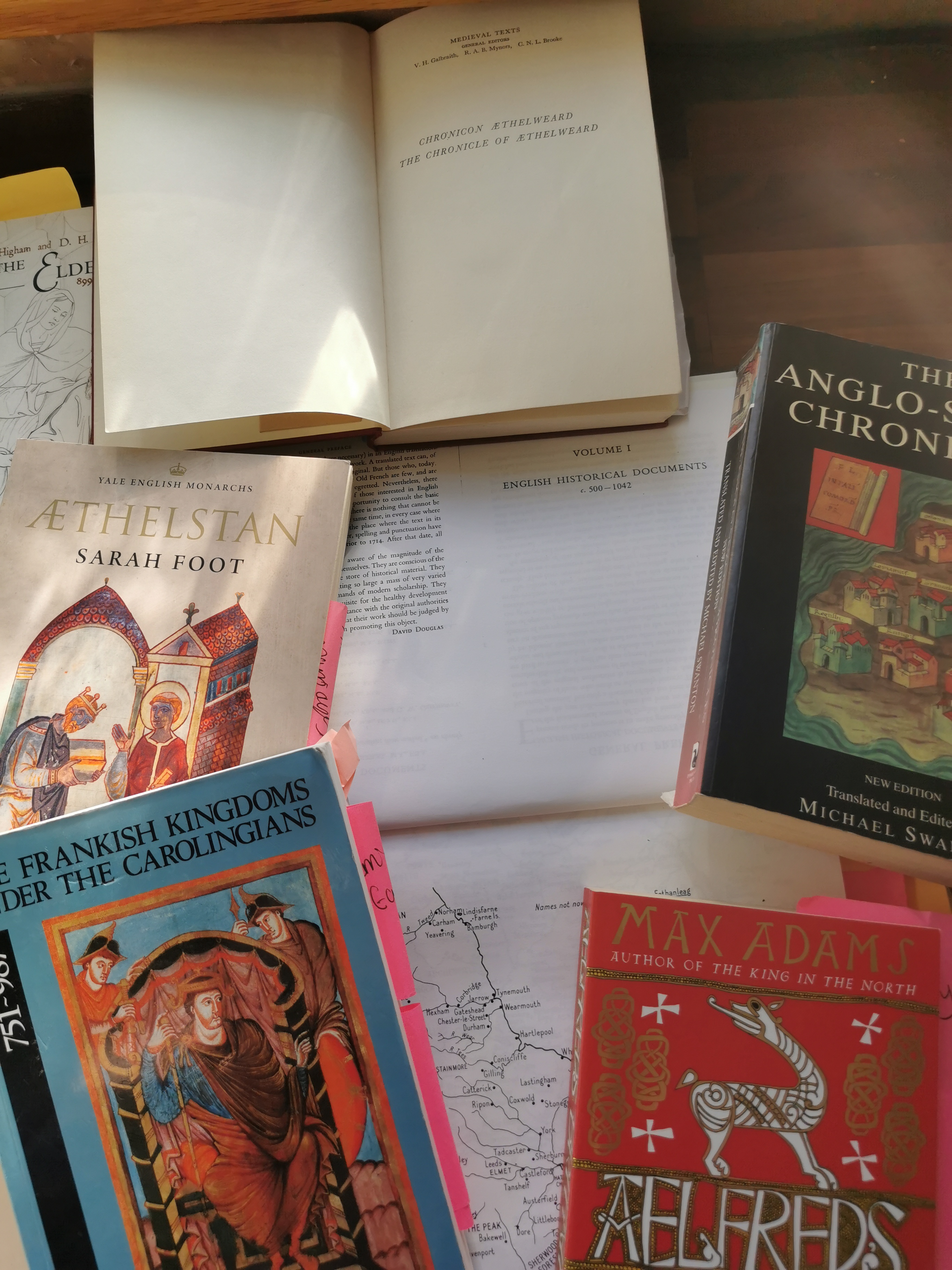
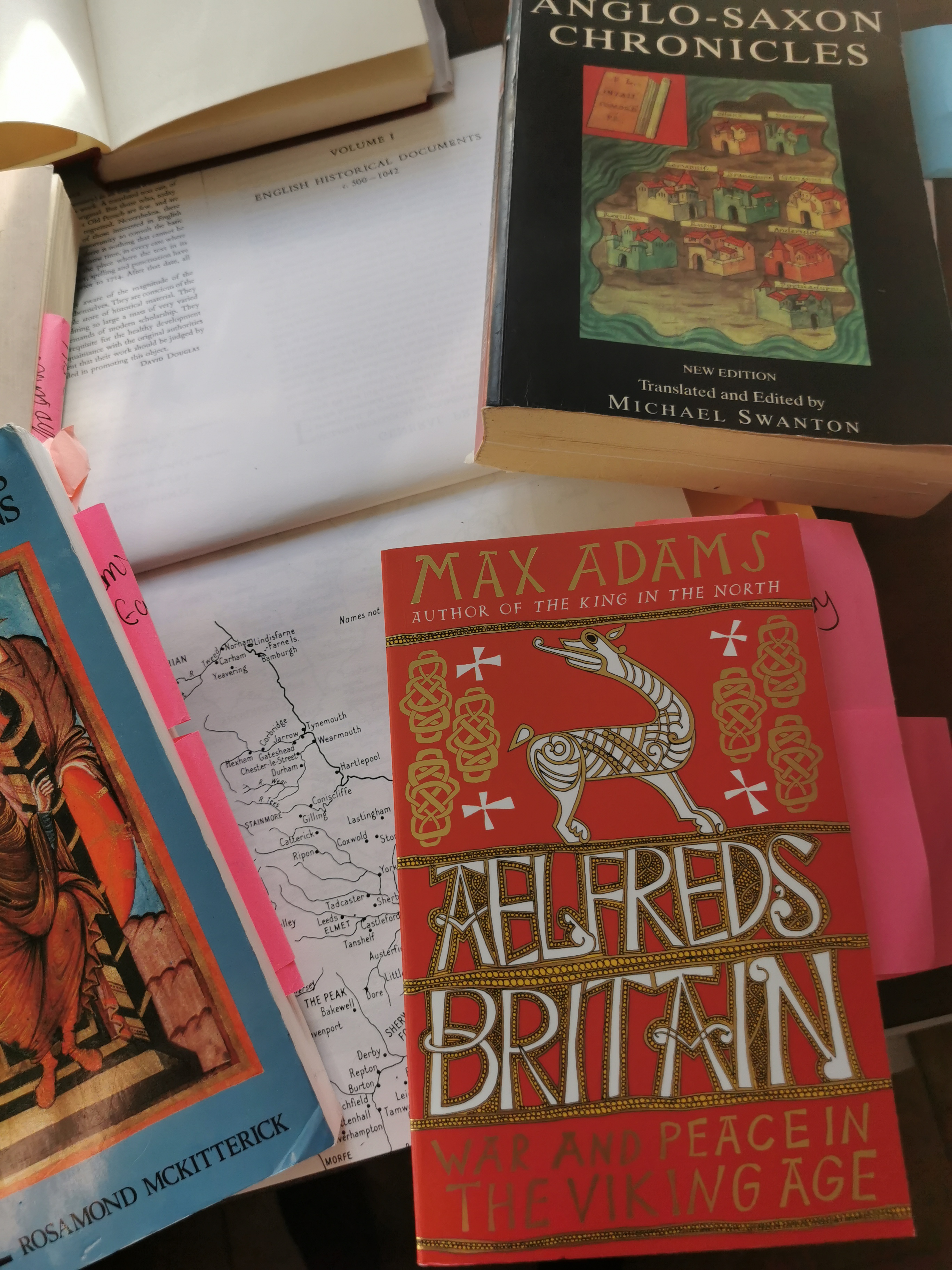
There is no one book that will adequately cover this period (that was one of the reasons that I fictionalised it) but these books (see photos below), along with Dr. Kari Maund’s The Welsh Kings, which I have in ebook, will give you a good grounding of events in Britain and Ireland. So, these are
Alfred’s Britain by Max Adams
Athelstan by Sarah Foot
The Anglo-Saxon Chronicles ed and trans. Michael Swanton (other versions available – I like the formatting of this one -with the different recensions)
The Welsh Kings by Kari Maund
An Atlas of Anglo-Saxon England by David Hill (don’t be put off by the fact this book is from the 1970s – it is invaluable)
From Pictland to Alba 789-1070 by Alex Woolf
Viking Kings of Britain and Ireland by Claire Downham
English Historical Documents ed and trans by Dorothy Whitelock
The Frankish Kingdom under the Carolingians by R McKitterick
Edward the Elder ed. Higham and Hill (not a narrative account, but historians writing papers about their area of interest and expertise).
There are also two very important online resources.
King of Kings has a number of characters, and some might be surprised to find Lady Eadgifu amongst them, but she was an incredibly important historical character, and I couldn’t leave her out of the narrative set at the English court.
Lady Eadgifu was the third wife of Edward the Elder (r.899-924), king of the Anglo-Saxons. Edward the Elder was the father of King Athelstan, and a whole host of daughters, as well as five sons. Lady Eadgifu would, it seems, have been young when she married the aging Edward the Elder, and that meant that she long outlived him, and also, that her three children (possibly four, but I’ve opted for three) were young when their father died. And two of these children were sons, Edmund (born c.921) and Eadred (born c.923). Her daughter, Eadburh, is thought to have been the oldest of the three children, born c.919.
While Lady Eadgifu, from what’s known (and it isn’t much, as there are few surviving charters from the end of Edward’s reign) perhaps had little role to play while her husband lived, other than wife and mother to the king’s children, following his death, she became increasingly significant. She was the daughter of an ealdorman, who perhaps died just before her birth, and her family are said to have had connections with Kent. Indeed, it’s often stated that she brought her husband Kent with their union. By that, what’s often meant, is the loyalty of the Kentish people. Remember, at this time, we’re still just before the creation of ‘England’ as we would now recognise it.
Sadly, very little is known about Lady Eadgifu (and she’s not alone in this – many of the royal women ‘disappear’ at points in the historical record, and on occasion, are entirely lost.) We know about a land dispute she was involved in, and also much more information for after Athelstan’s reign.
Indeed, it has been said that
‘Nor is it surprising that Eadgifu, as the consort of the previous king, served little role in her stepson’s court.[i]
‘the enhanced position [of Lady Eadgifu] may also have been developed specifically for the widowed Eadgifu as part of an alliance with her stepson Æthelstan [Athelstan] in which she supported his position and he recognised her sons as his heirs.’[i]
[i] Yorke, B. ‘The Women in Edgar’s Life,’ in Edgar, King of the English, 959-975 Scragg, D. ed (The Boydell Press, 2008), p.146
And it is this option that I’ve decided to explore in King of Kings. Lady Eadgifu was wife to a king. She would have known her worth, even when faced with a stepson as the king of the English, and another stepson, and stepdaughters, who perhaps didn’t share any love for their, potentially, younger stepmother. Will Lady Eadgifu work with or against Athelstan? Read on to find out.
Freckles, well-earned from working long days in the sun, sprinkled the bridge of the nose and spilled over onto the cheeks of the face of the farm girl, Yan Li.
A badge of honor in her home region, the freckles were looked on as a relic of the agrarian past in certain sectors of modern China. The New China. Industrial China.
“Don’t do this!” whispered Ming Jun, seated beside her. “The bridge bombing has everyone on edge. What if they –”
“Someone has to say something.”
Yan Li’s eyes were clear, her jaw firm, her expression determined. She straightened the barrette holding her hair back.
Yan Li stood up.
“Sit down!” hissed Ming Jun,
“These mathematics are wrong! All wrong!”
Yan Li announced this to the room full of working clerks and book-keeps on the expansive counting floor of Building Two.
Her voice was too loud to be ignored.
Faces turned towards her.
“It’s all bad,” she continued. “Completely phony. The assumptions are fabricated. You know this!”
The calm murmur of adding and multiplying, of calculations and quiet consultations, of pens scratching on paper, the soft clanking of typewriters in the half-walled stations which ringed the floor of low desks offices – all sounds on the counting floor subsided.
“A thousand times ridiculous is still ridiculous. I can’t be the only one who thinks so.”
Two of the red-kerchiefed floor proctors hustled towards Ya Li. After all, she was disrupting the entire society’s forward progress.
“Sit back down, farm girl,” commented one of her tallying peers. But the lone jibe froze in the air. None others joined.
“Look,” said Yan Li evenly. “If anyone believes these so-called forecasts we are producing … well then, their deaths will be on our heads, comrades. It will be our fault if we do not speak up”
By now, even the soft plucking of stringed instruments in the background had fallen silent.
“We-cannot-possibly-endorse-this-charade!” concluded Yan Li.
“It’s the millet,” called out a second fellow scribe, a boy near the middle. “The winter wheat numbers are higher –”
“A FACTOR of FOUR higher?” demanded Yan Li. “The families who sit and wait for those phantom grains will be sorely disappointed, my friend. Empty bowls! They will starve and it will be horrible — ”
“Her work has been strenuous, Shi’lang,” implored Ming Jun to the first proctor, “the hours long. Just let her sit back down.”
“All right,” said the proctor Shi’lang, a handsome older boy dressed in white with a red kerchief around his neck. “That’s quite enough!”
“Who will join me in a new and honest set of calculations?” demanded Yan Li.
A loud knock on the glass walls.
A trio of the skinny soldiers, buck-toothed boys in green suits, rifles slung over shoulders, had paused in their campus patrol. Were they needed, to restore order?
Shi’lang waved them away.
Shi’lang draped an arm around Yan Li’s shoulder and laughed in a most friendly fashion.
“Ah! Yes! Now I see the error you mention, Yan Li. I had noticed it, too. You are a prankster! Charming.” He chuckled.
A little bell was ringing. It emanated from the corner office, raised above the counting floor. The Supervisor’s office.
A second floor-proctor joined Shi’lang and together they ushered Yan Li off the floor.
“‘Charade,’” laughed handsome Shi’lang, shaking his head wryly.
The members of the counting floor disliked this show of force.
Rumblings started up in the back rows …
Across the big open room, another red-bandana youth clapped his hands.
“Back to work, please.”
The morning fruit and cheese platters were quickly circulated, an hour earlier than usual.
The soft plucking of lutes rose once again.
Gradually, unevenly, the Chairman’s work continued.
2. IN THE OFFICE OF THE SUPERVISOR
By the end of the first millennium A.D., China
possessed a sophistication in the technology
of traditional agriculture that has never been surpassed …
the basic contours of this spectacular agricultural system
were laid during the Classical period.
– Agriculture in Ancient China
The Chairman’s summer villa compound in Mei Ling is most pleasant.
Dappled sunlight graces the secluded retreat, a well-manicured place most conducive to quiet contemplation and deep thoughts. Burbling streams and winding paths run through the sylvan grounds of the lakeshore campus. Mountain goats roam the cliffs and munch on grass at the forested margins. Staircases and antique cable cars bring visitors down the sharp inclines leading to Lake Wuhan at the compound’s western edge. Deer stoop to drink from still ponds by Building Four.
Red drapes frame tableaus of blond furniture and upholstered chairs of the lobbies within the glass walls of Building Three. An assembly hall could be glimpsed beyond the plum carpeting.
Among the tall pine and bamboo trees, the young soldiers with their guard dogs walked the paths winding up to bulky Building One. A swimming pool was hidden behind its tinted windows. Building Two, where the agricultural forecasts in support of the coming Great Leap Forward – the bold initiative which would establish and a new China — were taking place, where Yan Li had created such a commotion, was lower and sleeker.
* * *
The star-splashed freckles sprinkled across Yan Li’s nose and cheeks stood out now. Her blood was rising, and the skin of her face was flushed with anger.
The Supervisor, Miss Wang Na, paced the striped rug of the corner office. She paused to look out over the clerks working on their calculations o forecast the coming harvests.
Yan Li stood, defiant. Her hands had been tied.
Cushions in primary colors decorated the white sofas in the glass-walled office. Ivory rugs offset a row of wood-paneled bookshelves behind the large desk.
“We have summoned the Director,” said Miss Wang Na.
“He left for Xinhua an hour ago, but we can get him back.”
She paced behind metal standing lamps.
“Summon Empress Lu Zhi and the Seven Hoardes of Han for all I care,” commented Yan Li.
“This is most serious,” said Shi’lang
Miss Wang Na paused to consider the lake.
The glass corner office was perched on and above sparkling blue Lake Wuhan’s shoreline. Splashing paddle-boats and brightly colored lanterns strung along the lakeside walkways gave no hint as to what might lay beneath the deep waters’ surface.
Miss Wang Na turned, cursing bitterly.
“First the bombing! Then the Yunhe rebels attack our supply lines. Now this! Treason from within!”
“You’re the traitor!” spat Yan Li. “You are complicit in what will be a famine of colossal proportions! Death by starvation. In the millions — ”
“Why are you trying to make me look bad, farm girl?” demanded Miss Wang Na.
“To save tens of thousands of lives,” answered Yan Li.
“The Director will be presenting our tables to the Bureau, in Beijing, in less than a week. If the net present values do not align — ”
“Oh, that part is easy enough,” refuted the girl. “The net present value of next year’s famine is ‘Famine.’ Also known as ‘Zero.’”
“Yes, well, your barn-yard stubbornness, your backward ways, your slavery to tradition, your LACK of VISION are exactly what the Chairman fears most. I was present during his address at the Beijing Palace, and he predicted that these epochal events woul — ”
“Setting bad mathematics in historical context doesn’t change anything,” said Yan Li.
“Reactionary.” Shi’lang shook his head. “Confucian.”
“’Confucian’? It’s not Confucian. The calculations need to be exact. Based on reality. It all must beintentional. Not some empty exercise. If the numbers are compromised even slightly, it’s all worthless. No forecast. How can you not see that?”
“Oh, I see,” said the Supervisor, Miss Wang Na.
“I see, all right.”
“What’s this? Eh?” asked the Supervisor sharply.
She pointed to the equation at the top of one of Yan Li’s pages.
“What is the meaning of this formula?”
Yield in t/ha = (220 × 24 × 3.4) / 10,000 = 1.79
“It’s not a formula,” answered Yan Li, shaking her head. “It’s an equation.
“It shows the crop yield in any given harvest. Every forecaster follows this same model.”
“And why is it incomplete?” demanded the Supervisor.
“It’s waiting for a proper numerator. What you gave me is garbage. Worse than garbage.”
Shi’lang moved as if to strike her. Miss Wang Na stepped between them.
“Let X equal X,” challenged Yan Li, stepping forward —
Here’s the blurb
Young adult fiction featuring gambling, bandits, swordplay, probability and Bayes’ Theorem. An English teacher hopes to engage students with colorful STEM adventures.
“In this outstanding collection, Tom addresses the chronic problem of our young women dropping out of STEM studies. His stories lend adventure to scientific thinking.”
Tom Durwoodis a teacher, writer and editor with an interest in history. Tom most recently taught English Composition and Empire and Literature at Valley Forge Military College, where he won the Teacher of the Year Award five times. Tom has taught Public Speaking and Basic Communications as guest lecturer for the Naval Special Warfare Development Group at the Dam’s Neck Annex of the Naval War College.
Tom’s ebook Empire and Literature matches global works of film and fiction to specific quadrants of empire, finding surprising parallels. Literature, film, art and architecture are viewed against the rise and fall of empire. In a foreword to Empire and Literature, postcolonial scholar Dipesh Chakrabarty of the University of Chicago calls it “imaginative and innovative.” Prof. Chakrabarty writes that “Durwood has given us a thought-provoking introduction to the humanities.” His subsequent book “Kid Lit: An Introduction to Literary Criticism” has been well-reviewed. “My favorite nonfiction book of the year,” writes The Literary Apothecary (Goodreads).
Early reader response to Tom’s historical fiction adventures has been promising. “A true pleasure … the richness of the layers of Tom’s novel is compelling,” writes Fatima Sharrafedine in her foreword to “The Illustrated Boatman’s Daughter.” The Midwest Book Review calls that same adventure “uniformly gripping and educational … pairing action and adventure with social issues.” Adds Prairie Review, “A deeply intriguing, ambitious historical fiction series.”
Tom briefly ran his own children’s book imprint, Calico Books (Contemporary Books, Chicago). Tom’s newspaper column “Shelter” appeared in the North County Times for seven years. Tom earned a Masters in English Literature in San Diego, where he also served as Executive Director of San Diego Habitat for Humanity.
Two of Tom’s books, “Kid Lit” and “The Illustrated Boatman’s Daughter,” were selected “Best of the New” by Julie Sara Porter’s Bookworm Book Alert
King of Kings has a number of characters, and King Ealdred, or Lord Ealdred of Bamburgh is one of them. But who was he, and what was the independent kingdom of Bamburgh?
Now, I think we all ‘think’ we know about Bebbanburg (Bamburgh) thanks to Uhtred of Bebbanburg, Bernard Cornwell’s creation. But events in Bamburgh are complex and not easy to understand, even for someone who might think they know the period quite well.
What was Bamburgh?
So what was Bamburgh? Bamburgh is traditionally associated with the kingdom of Bernicia – the far northern Saxon kingdom, which was particularly prominent during the seventh century, so three hundred years before the events of King of Kings, and which was joined to the kingdom of Deira to form Northumbria. Check out my Gods and Kings trilogy for the some of the events of this period.
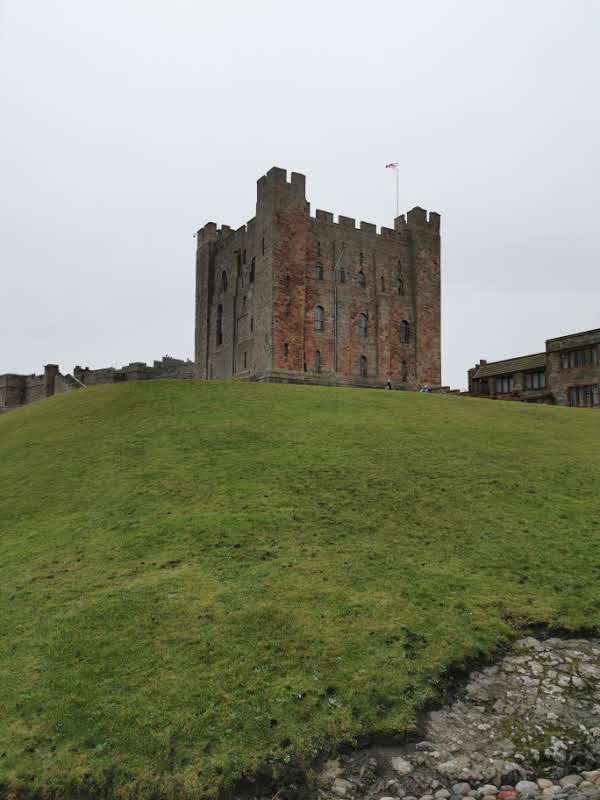
The iconic castle that stands today is a later building, the oldest part, the keep, dating to the end of the Saxon period, while much of what we see today is the later work of Lord Armstrong (who built Cragside), when he significantly repaired the remains. Indeed, the family still own Bamburgh Castle, although not Cragside, which is a National Trust property. (I’ve written a 1930s mystery set at Cragside).
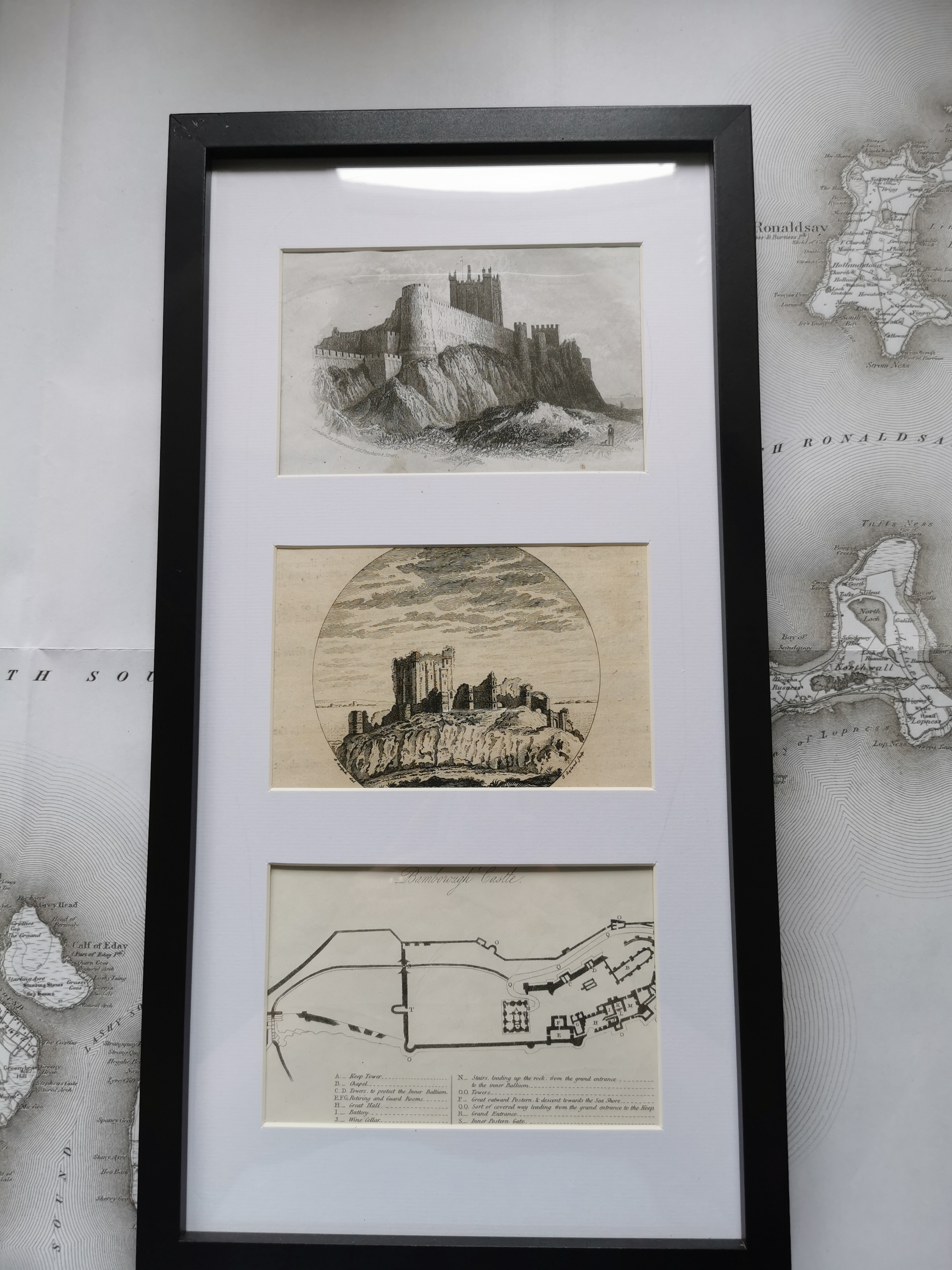
Bamburgh is slightly unusual in that there are old images of the castle before the 19th century work of Armstrong. I enjoy collecting these antique prints. We often find such buildings falling into ruin, not being ruined and the rebuilt.
Antique prints of Bamburgh Castle
And Bamburgh Castle and its environs are stuffed with archaeology. There were some very famous archaeological investigations undertaken in the 1960s, and there’s now a dedicated team unearthing the treasures hidden beneath the current building. You can follow the teams work at Bamburgh Research Project’s Blog. You might know about Bamburgh because of the seventh century bones discovered in the Bole Hole, and there’s a great book about this, Warrior by Edoardo Albert and Paul Gething – available from all good book sellers. You can also learn about where these bones now lie by checking out Bamburgh Bones.
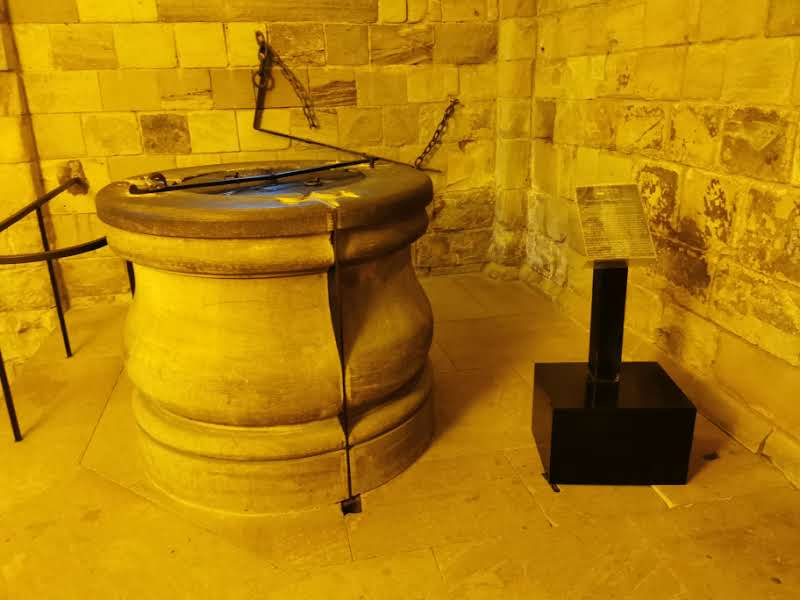
The well
The Tenth Century at Bamburgh
But, all this is before the events of the tenth-century (or after), as fascinating as it is. So, what was happening in the tenth-century? The easiest way I can describe this is that while York, and much of the Saxon kingdom of Northumbria was inundated with the Norse (Viking raiders if you will), Bamburgh was a bastion against this influx, wedged between the growing might of the kingdom of the Scots, ruled by Constantin, and the constantly changing affairs of York, and its string of Norse rulers, often associated with Dublin as well.
Ealdred’s father, Eadwulf is somewhat better attested, with the Annals of Ulster naming him as ‘king of the Saxons of the north.’ He died in c.913 and then Ealdred seems to have had a difficult time of it, his gaze more likely to turn to the Scots kingdom than the known Saxon rulers based in Mercia and Wessex when he was threatened by the Norse Viking raiders.
However, he joined an alliance with Edward the Elder, king of the Anglo-Saxons, in 920 (corrected from 924).
‘And then the king of Scots and all the nation of Scots chose him as father and lord; and [so also did] Reginald and Eadwulf’s sons and all those who live in Northumbria, both English and Danish and Norwegians and others; and also the king of the Strathclyde Britons and all the Strathclyde Britons.’
(Swanton, M. trans and edit The Anglo-Saxon Chronicles, (Orion Publishing Group, 2000 p.104 (A text )
This then takes us to the beginning of King of Kings. Will Ealdred continue his alliance with the new king of the Anglo-Saxons, or will he look elsewhere, especially now that the Viking raider, Sihtric, is lord of York/Jorvik?
What about Uhtred of Bebbanburg?
As to Uhtred himself, of The Last Kingdom fame, he’s even more shadowy than Ealdred, and for that reason, doesn’t feature at all in King of Kings, although there is an ealdorman Uhtred who will appear in subsequent books.
My new book, King of Kings, is a multi-viewpoint novel telling the story of events in Britain from 925-934. I thought it would be good to share details of the historical people my main characters are based on.
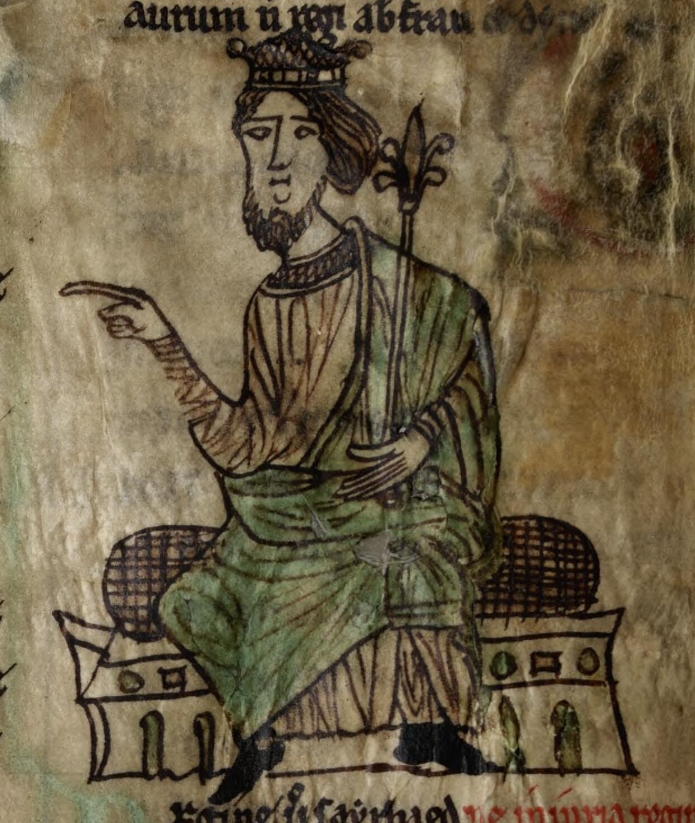
My portrayal of Hywel, better known as Hywel Dda (which autocorrect is determined should say Dad), and which means ‘good’ (a unique epithet in Wales), is of course, fictional, but who was the historical Hywel? Firstly, it should be noted that this epithet is a later invention, not assigned to Hywel until at least the twelfth century, and perhaps, as Dr. Kari Maund has commented in The Welsh Kings: Warriors, Warlords and Princes, a reflection of border events at that period rather than the earlier tenth century. (Dr Maund was one of my university lecturers, so she knows her stuff).
Hywel has no date of birth recorded, and indeed, like Constantin of the Scots, he seems to have ruled for a long time providing much-needed consistency. Hywel ap Cadell was the grandson of the famous Rhodri Mawr, who’d united the kingdoms of the Welsh during his rule. But, this unity fragmented on Rhodri’s death.
To begin with, Hywel ruled Dehuebarth, probably with his brother, Clydog, (who may have been the younger brother) after the death of their father in c.911. He, his brother, and his cousin, Idwal of Gwynedd, submitted to the English king, Edward the Elder in the late 910s.
‘and the kings of Wales: Hywel and Clydog and Idwal and all the race of the Welsh, sought him as their lord [Edward]’. ASC A 922 corrected to 918 (Swanton, M. trans and edit The Anglo-Saxon Chronicles, (Orion Publishing Group, 2000)p.103-4)
Not long after, Clydog died, leaving Hywel as ruler of Dehuebarth. Hywel had also married Elen, the daughter of Llywarch and niece of Rhydderch, the last king of Dyfed, and he was able to use this alliance to eventually claim Dyfed as well.
Hywel’s believed to have been highly educated, and some historians suggest he was particularly fascinated with King Alfred, and all he’d achieved and was therefore keen to emulate many of his actions. This could also be why his name came to be associated with the codification of laws in later traditions. What fascinates me most about Hywel is his decision to ally closely with King Athelstan which will be explored in King of Kings. Certainly, he is a intriguing figure in early tenth-century Britain, and not just because we know he made a pilgrimage to Rome in 928, and still managed to return back to his kingdom and continue ruling it.
My new book, King of Kings, is a multi-viewpoint novel telling the story of events in Britain from 925-934. I thought it would be good to share details of the historical people my character are based on.
My portrayal of Constantin, the king of the Scots, is of course fictional in King of Kings, but he is based on a historical individual, Constantin (e) II, so who exactly was he?
Constantin is a fascinating character. Again, and as with Athelstan, his exact date of birth is unknown, but it must have been, at the latest, by 877/8, when his short-reigned father died.
By 900, Constantin was the king of the Scots (we think – there is some confusion about this). This wasn’t yet quite Scotland, but it was getting there. The ancient kingdoms of Cait, Fortriu, Atholl and Dal Riata, were ruled by one king, Constantin. But, he hadn’t succeeded his father, Aed, but rather a man named Domnall II, his cousin. At this time there were two rival dynasties and they strictly alternated the kingship.
Affairs in the kingdom of the Scots often intermingled with those of the independent kingdom of Bamburgh, Strathclyde, and of course, the Norse, or Viking raiders, if you will. Indeed, the entry recording Constantin’s death in the Annals of Ulster, reads as though there was often strife.
‘Constantinus son of Ed held the kingdom for xl years in whose third year the Northmen plundered Dunkeld and all Albania. In the following year the Northmen were slain in Strath Erenn…And the battle of Tinemore happened in his xviii year between Constantin and Ragnall and the Scotti had the victory. And the battle of Dun Brunde in his xxxiiii year.’ (Alex Woolf, From Pictland to Scotland, 789-1070,p.126)
Constantin, ruling for decades, and I mean decades, seems to have brought much needed stability to the kingdom, as affairs there very much mirrored the emerging ‘England’ to the south.
‘Constantin’s reign has increasingly come to be see as one of the most significant in the history of Scotland. Not only was it very long, at least forty years, but it was also the period during which conflict and diplomatic relations between a kingdom recognisably ancestral to Scotland and one recognisably ancestral to England first occurred.’ (Alex Woolf, From Pictland to Scotland, 789-1070, p.128)
Constantin allied with the rulers of Bamburgh, and York, and also, on occasion, both Æthelflæd of Mercia and Edward the Elder, after her death. But, he seems to have been quite flexible in his thinking, and was prepared to pick and choice as he saw fit.
By the beginning of King of Kings, Constantin would have been in his mid-forties, and he was still to rule for many years to come, and he was certainly a more than adequate counterpart to Athelstan, king of the English, no doubt helped by his sons and grandsons, as his reign continued.
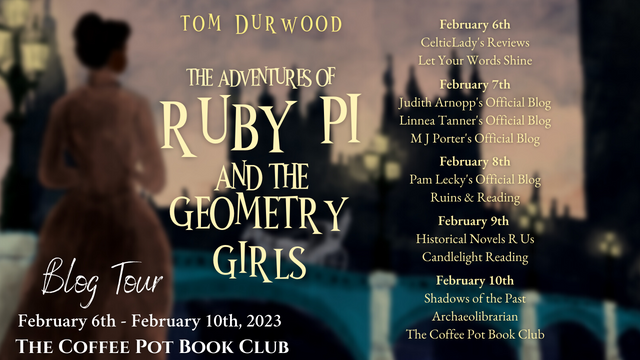
I’m delighted to feature an excerpt from The Adventures of Ruby Pi and the Math Girls by Tom Durwood.
Gunfight in the Mogollons
“These Colorado coaches,” lectured the solicitor, Aynsley, “are a larger, more rugged version of the Kinnear design. Wells Fargo uses them widely.
“This is a Concorde model, if I’m not mistaken,” he added. “Capacious.”
Johnny glared at the talkative lawyer.
“More useless information,” snorted the militia man, Morgan. He rubbed his bandaged hand sullenly.
The stagecoach’s constant motion cast a bad mood within its large interior, but it was more than just the motion. The day had turned to dusk. Only an hour further to Folsom. The mountain trail was clear, the horses making good time.
“Leather-strap suspension,” offered Aynsley to his captive audience, “is what gives the carriage its swinging movemen– ”
It happened so fast.
All in the same moment–
They heard a thunderous crash, followed by three loud gunshots.
The horses whined their objection in a panic –
One of the brake levers snapped.
The stagecoach screeched to a halt.
The stagecoach passengers heard a hard, painful scream from the driver’s seat –
“I’m hit! I’m hit!”
The stage door flew open and half of the passengers spilled falling out onto the trial –
“Shut up,” came a woman’s voice. A pause, and then, “Morgan! You there?”
The passengers stood. Now they could see that a great, bulky deadfall had been placed across the trail to block the stage.
Angie and Drew, from the saloon in Silver City, sat astride two horses, guns drawn.
“Hands up! All of you!” proclaimed Drew. “This here’s a robbery!”
He held his pistol on the stage driver, who had his hands up. Beside him, the rifleman clutched at his arm, where had been shot.
Now Morgan smirked as he trained a gun on Johnny’s stomach.
“What the devil — ” sputtered Aynsley.
“You- you’re bandits?” demanded the startled Mrs. Aynsley.
“The money belts,” commanded Morgan. “That deed! Now!”
One of the drivers groaned for mercy.
Angie stopped placing the saddle on the lead horse, turned and shot him
“Money belts,” spat Drew.
“But you’re such a nice boy — ”
“I’ll shoot you, hey,” shouted Drew, trembling.
“You’ll never get away with it,” warned the lawyer.
“Easy …” said Johnny.
“Sorry, bub,” Morgan said, half-smiling, to Johnny as he raised the weapon. “We can’t leave witnesses now, can we?”
Ma yelled ‘No!’ and lunged for the militia man —
“Hey. Morgan,” said Casey.
Morgan turned in time to see Casey’s hand sweep to her side and emerge with a gleaming pistol, one of the Colt Rainmaker’s, nickel-plated and deadly fast.
In a liquid motion, she raised the Colt and fanned the hammer —
BAMBAMBAM!
Three rounds sunk deep into Morgan’s chest, all at once.
Casey swiveled and sent three more rounds slamming into anxious young Drew, jerking him clean from his saddle —
With a curse, Angie jammed her spurs into her horse and rode off —
Casey dropped the Colt and ran to grab the Enfield rifle from the passenger racks.
She shucked the rifle sheath and ran to the edge of the trail.
She stood on an outcrop facing northeast. She could see the sweep of the basin and range, to her right, where Angie was escaping —
She was galloping unseen, along the high-walled Mogollon limestone.
But there was a break in the wall, very distant …
It was that opening to which Casey devoted her attention.
They could hear the horse’s canter, moving away …
Casey thumbed in three big, heavy cartridges.
“Eleven hundred meters … ” said Johnny.
Johnny held the rangefinder like binoculars.
He counted off a sequence of numbers.
Casey scribbled the calculations.
Distance … curvature …target point … origin point
Now she watched through the Enfield’s telescopic sight, following the horse-and-rider trajectory, as she imagined it.
John called out a second sequence of numbers, distance in meters.
“Twenty …” said Johnny.
“Fifteen,,, ten .. five …”
The Enfield let go a sharp crack —
The firearm echoed in the great solemn quiet along the southern section of the Mogollons …
Angie’s body slumped and fell from the saddle.
What we see are objects in refracted light. A thing itself does not change, just the ways in which we experience it. It is the light which changes.
A blue moon looks blue because of shifts in light, the suspended volcano dust in the air. The way that light refracts can make everything look new, and not as we thought it to be.
It alters how things appear to us, does the immense cloud of fine dust and ash from the Krakatoa Volcano, supplemented by forest fires in Sweden and Canada. When the quality of the air changes, so does the quality of light. On a Blue Moon night, the thing itself does not change, just the ways we experience it.
Casey turned to Ma.
“Why don’t you take the money back to Mister Torgeson, Ma?”
She indicated the currency that had spilled from the lawyer’s satchel onto the trail, when Johnny had shot Morgan.
“Back to Silver City.”
Ma looked long and still at her daughter.
“I’m sure he’d appreciate it,” said Casey.
She slung the Enfield over her shoulder, like it had always been there, like it belonged attached to her.
“Johnny and me can run the clinic in Folsom. Then we’ll head straight for Albuquerque.
“You come join us, soon as you can.”
The horses fell quiet. A silence vast and deep seemed to descend, all along the southeastern section of the Mogollon Rim. The little grouping around the stagecoach listened, as though they could all feel, or somehow hear, the rotation of the earth.
No man or woman could put an adjective to the look that appeared on Ma’s face. It was sad and accepting, almost relieved and almost embarrassed, and several more emotions as well, all at the same time.
“And so the child,” intoned Aynsley, “is father to the man.”
“What, are you the effing chorus now?” Johnny raised his pistol to shoot the lawyer. “You two-faced shill — ”
“No! Please!” Mrs. Aynsley began to cry —
“They were robbing us, too,” she reminded Johnny.
Now Mrs. Aysnley’s cry turned into a scream, a hideous, feral sound, for such a cultured woman —
Johnny lowered the gun. “Just as soon,” he murmured.
“All right, Case,” said Ma. “All good.”
Ma’s face had gone white. She gripped the hem of her skirt tightly
“You two …take …” Ma choked. “Ah! Me! Take good care, Johnny –”
“The Fort Stanton stage should be by here in an hour or so,” said Casey. “That about right, Whip?” she called to the driver.
“Yup,” came the reply.
Casey looked out over the basin lowlands. She closed eyes, for a moment.
“I don’t know what we’ll find in Albuquerque,” Casey said to her brother as she swung into the saddle of the horse Drew had been riding.
“But we got a real-life deed to some damn thing.”
“We got two hundred bucks.”
She patted the horse’s neck.
“And we can make an honest living fixin’ guns.”
“We should be all right,” Johnny nodded.
He finished cinching the saddle of the lead stage horse and checked the horse’s underbelly. The bay was ready to trade all this gunplay and confusion among the humans for an open run along a clear path.
“Let’s light a shuck — “
Here’s the blurb
A collection of adventure stories featuring young heroines at turning points in history who use math to solve colossal problems. Smart girls take on buried secrets, villains, tanks, mysteries, codes, and economics to save their people “Stories, mystery and math go well together… a welcome addition.” (~ Jeannine Atkins, author of “Grasping Mysteries: Girls Who Loved Math”)
Tom Durwoodis a teacher, writer and editor with an interest in history. Tom most recently taught English Composition and Empire and Literature at Valley Forge Military College, where he won the Teacher of the Year Award five times. Tom has taught Public Speaking and Basic Communications as guest lecturer for the Naval Special Warfare Development Group at the Dam’s Neck Annex of the Naval War College.
Tom’s ebook Empire and Literature matches global works of film and fiction to specific quadrants of empire, finding surprising parallels. Literature, film, art and architecture are viewed against the rise and fall of empire. In a foreword to Empire and Literature, postcolonial scholar Dipesh Chakrabarty of the University of Chicago calls it “imaginative and innovative.” Prof. Chakrabarty writes that “Durwood has given us a thought-provoking introduction to the humanities.” His subsequent book “Kid Lit: An Introduction to Literary Criticism” has been well-reviewed. “My favorite nonfiction book of the year,” writes The Literary Apothecary (Goodreads).
Early reader response to Tom’s historical fiction adventures has been promising. “A true pleasure … the richness of the layers of Tom’s novel is compelling,” writes Fatima Sharrafedine in her foreword to “The Illustrated Boatman’s Daughter.” The Midwest Book Review calls that same adventure “uniformly gripping and educational … pairing action and adventure with social issues.” Adds Prairie Review, “A deeply intriguing, ambitious historical fiction series.”
Tom briefly ran his own children’s book imprint, Calico Books (Contemporary Books, Chicago). Tom’s newspaper column “Shelter” appeared in the North County Times for seven years. Tom earned a Masters in English Literature in San Diego, where he also served as Executive Director of San Diego Habitat for Humanity.
Two of Tom’s books, “Kid Lit” and “The Illustrated Boatman’s Daughter,” were selected “Best of the New” by Julie Sara Porter’s Bookworm Book Alert


































 MJ Porter