Charters and Leofwine, Ealdorman of the Hwicce from c.993-1023. Re-sharing an old blog post about Leofwine I first wrote in 2014. It’s a bit nerdy:)

I always think that the characters of Saxon England are a little too ethereal for people to really connect with.  I think it’s difficult to visualise life before the Norman Conquest, but it doesn’t mean we shouldn’t try.

My current obsession, and victim of my historical fiction endeavours is Leofwine, Ealdorman of the Hwicce during the reign of Æthelred II, who I refuse to call ‘Unready’ because I just don’t think he was. I think, he was a victim of his times, treated harshly by later historians. 

My research is going deeper, examining the evidence of the charter attestations that Leofwine made (where he signs, and therefore, it must be assumes, agrees to whatever the charter is concerned with). Charters from before the Norman Conquest are rare, and have only survived in copies because they benefitted someone in some way, normally the monastery or Church that the copy of the original charter has survived in, or a later lay landowner keen to keep hold of the land.
This effectively means that in determining the validity of the charter, historians need to know about what was happening in the world at large, when the COPY of the charter was made. Effectively, to study Saxon history, you have to also study early Anglo-Norman history to work out just what’s going on and why the charter is so important.

In the records of Sherborne, Leofwine’s name can be found attesting two charters. No original copies of the charters survive, and the record as we have it, is in a twelfth century hand. So, should it be trusted? Should it be used as an historical source? Or as with so much history, can it really only be used as a historical record of the time period that produced it? After all, at least a hundred years and probably more like 150 years, separate the copy of the charter and the date of its alleged drafting and attestation.

It’s an interesting dilemma and one I don’t plan on solving today. Would I use it? Yes, I’d but I’d be standing on the shoulders of those giants of academic history who have studied far more charters than me and who’ve decided that the copies are ‘probably’ genuine as they stand. I’d also be wary of this, and all it might mean.

And how relevant are they to Ealdorman Leofwine? I think very, because they appear to show his standing at the royal court. In charter S933 (1015) he signs as the third ‘dux’ (ealdorman) and in S910 from 1005 he also signs as the third ‘dux’. So what does it all mean? Well, as with everything the picture is wider than just Sherborne. In total Leofwine attests 41 charters whilst an ealdorman. So although I think it’s important to examine the validity of the cartularies that the charters survive in, it’s a bit of a painstaking and picky business. But one I’m enjoying. For anyone really keen to look at Leofwine’s charters in more detail, you can start by having a look at the Electronic Sawyer. And you can see an image of S910 it on The British Library Digitised Manuscripts Website ff. 27v-29r and S933 also on The British Library Digitised Manuscripts Website at ff. 4v-6r. The handwriting is amazing.

Check out The Earls of Mercia Series Page for more information.

Posts

A Conspiracy of Kings turns 3 today. #bookbirthday #TheRoyalWomen

It’s a week of book birthdays! Today, it’s the turn of A Conspiracy of Kings, the sequel to The Lady of Mercia’s Daughter.

Here’s the blurb

Mercia, 918.

Lady Ælfwynn has taken her mother’s place as the Lady of Mercia, to the displeasure of her uncle in Wessex, and against his efforts to subvert it.

King Edward, casts his eye longingly over Mercia, and finds a willing accomplice where none should exist. This time, the threat to Lady Ælfwynn is not as easy to defeat.

This is the continuing story of Lady Ælfwynn, the granddaughter of King Alfred, begun in The Lady of Mercia’s Daughter.

It is intended that The Lady of Mercia’s Daughter should be read before A Conspiracy of Kings.

https://amzn.to/421LHRq

https://amzn.to/46DvlA6

A Conspiracy of Kings was the book I wrote immediately before starting the stories of King Coelwulf, Mercia’s last king. If not for these two books, I’d never have wanted to write about Coelwulf, so I feel I owe this book a lot, and indeed, having just reread it, I can see a lot of details that resonate with me.

If you’ve not thought of reading these two books, then please do. I can assure you, my incarnation of Lady Ælfwynn is a bit bad ass. The new covers are also available in paperback.

These two books are part of my Tales of Mercia series of standalone stories charting the rise and fall of the Saxon kingdom of Mercia.

Check out my post on visiting Gloucester, where Lady Ælfwynn’s mother, Lady Æthelflæd, the lady of Mercia, was buried.

Visit The Tenth Century Royal Women Page.

Posts

Happy Book Birthday to Son of Mercia, which turns 1 today. Enter the competition to win a set of signed copies of the first 3 books in the series.

Happy book birthday to the wonderful Son of Mercia, the first book telling the story of young Icel in early ninth-century Mercia (fans of The Last King will have met Icel before, but it’s not necessary to enjoy Son of Mercia).

The series is now a massive four books long, and I’m busy working on book 5, which doesn’t have a title just yet (or does it?)

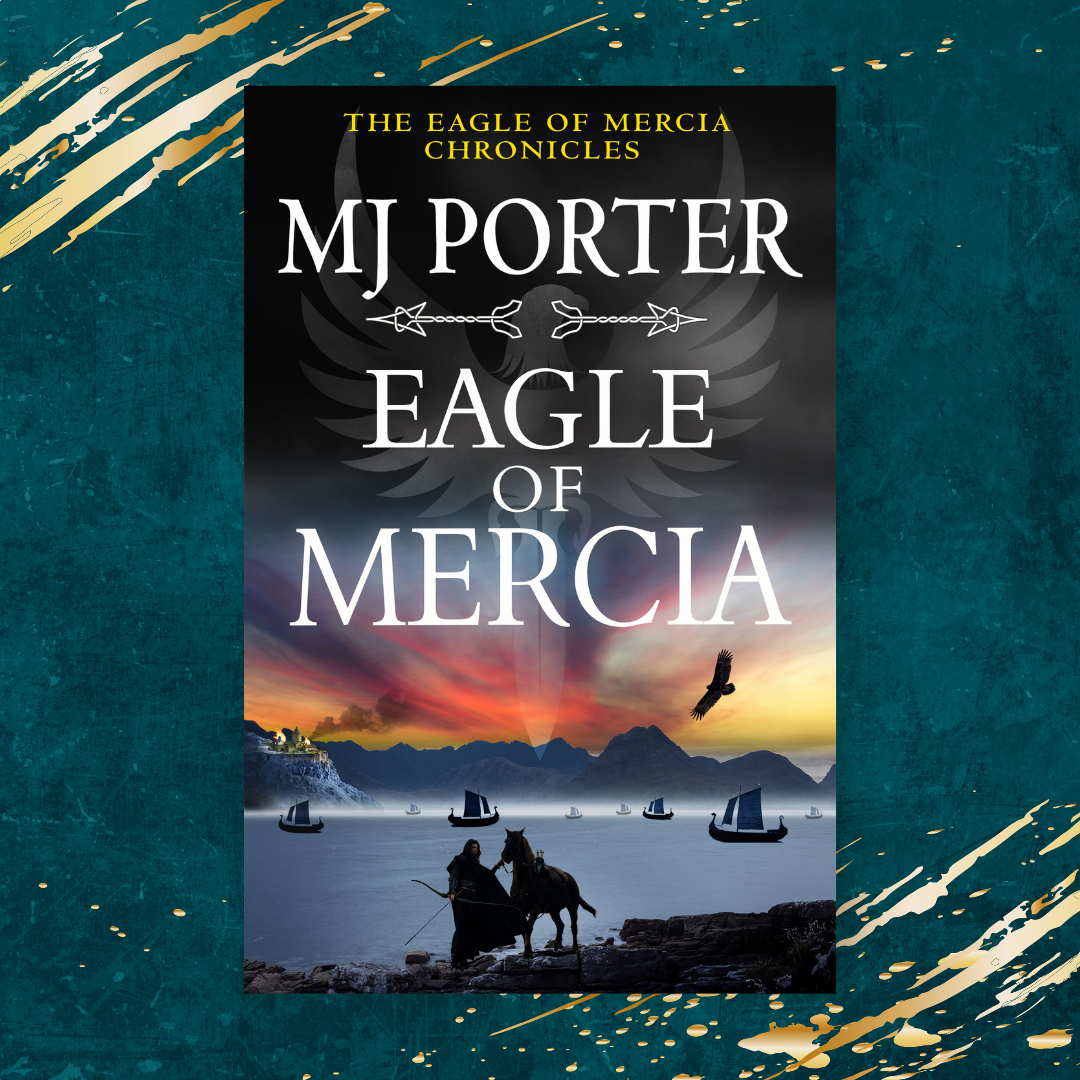
I thought today would be a great day to shine a light on all four books, and don’t worry if you’ve not read book 4 yet, Eagle of Mercia is releasing in May 2023. So here goes.

Tamworth, Mercia AD825.

The once-mighty kingdom of Mercia is in perilous danger.

Their King, Beornwulf lies dead and years of bitter in-fighting between the nobles, and cross border wars have left Mercia exposed to her enemies.

King Ecgberht of Wessex senses now is the time for his warriors to strike and exact his long-awaited bloody revenge on Mercia.

King Wiglaf, has claimed his right to rule Mercia, but can he unite a disparate Kingdom against the might of Wessex who are braying for blood and land?

Can King Wiglaf keep the dragons at bay or is Mercia doomed to disappear beneath the wings of the Wessex wyvern?

Can anyone save Mercia from destruction?

books2read.com/u/3R6x7x

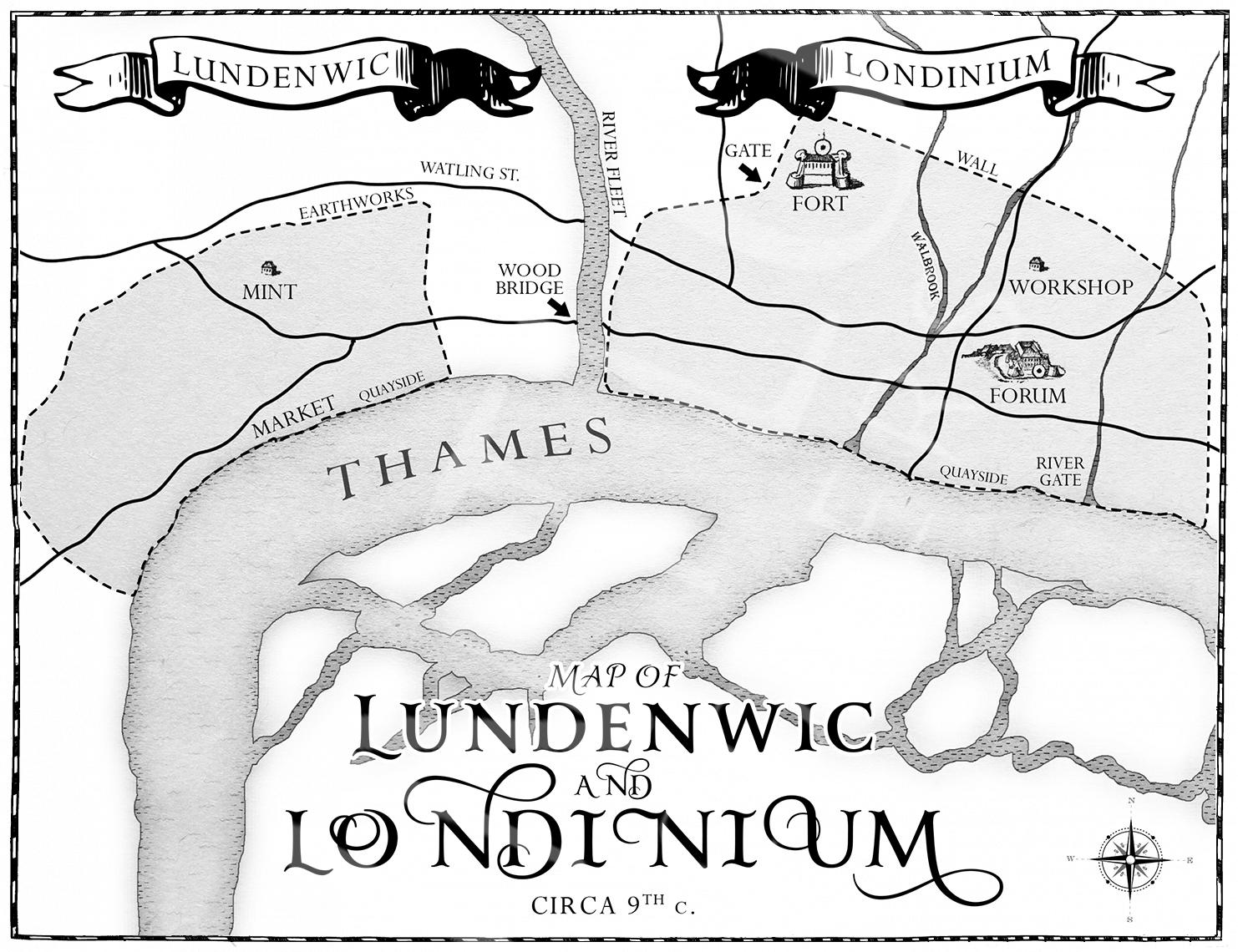
Icel is becoming a warrior of Mercia, but King Ecgberht of Wessex still holds the Mercian settlement of Londonia and its valuable mint.

King Wiglaf of Mercia is determined that the last bulwark be reclaimed from his sworn enemy to complete his rehabilitation as Mercia’s rightful ruler.

In the heart of the shield wall, Icel suddenly finds himself on the wrong side of the battle and thrust into the retreating enemy stronghold where he must take on the pretence of a Wessex warrior to survive and exact a cunning plan to bring down the Wessex force cowering behind the ancient walls.

His allegiances are tested and the temptation to make new allies is overwhelming but Icel must succeed if he’s ever to see Tamworth again and bring about King Wiglaf’s victory, or will he be forced to join the enemy?

books2read.com/Wolf-of-Mercia

Icel is a lone wolf no more…

Oath sworn to Wiglaf, King of Mercia and acknowledged as a member of Ealdorman Ælfstan’s warrior band, Icel
continues to forge his own destiny on the path to becoming the Warrior of Mercia.

With King Ecgberht of Wessex defeated and Londonium back under Mercian control, the Wessex invasion of Mercia is over. 

But the Wessex king was never Mercia’s only enemy. An unknown danger lurks in the form of merciless Viking raiders, who set their sights on infiltrating the waterways of the traitorous breakaway kingdom of the East Angles, within touching distance of Mercia’s eastern borders.

Icel must journey to the kingdom of the East Angles and unite against a common enemy to ensure Mercia’s hard-won freedom prevails.

books2read.com/WarriorofMercia

A mercy mission in the heart of Wessex is beset with deadly, bloody dangers.

Tamworth AD831

Icel’s profile continues to rise. Lord of Budworth and warrior of Mercia, he’s acknowledged by King Wiglaf and his comrades to keep Mercia safe from the ravages of Wessex, the king-slayer of the East Angles, and the Viking raiders.
But, danger looms.  Alongside Spring’s arrival comes the almost certain threat of the Viking raiders return. 

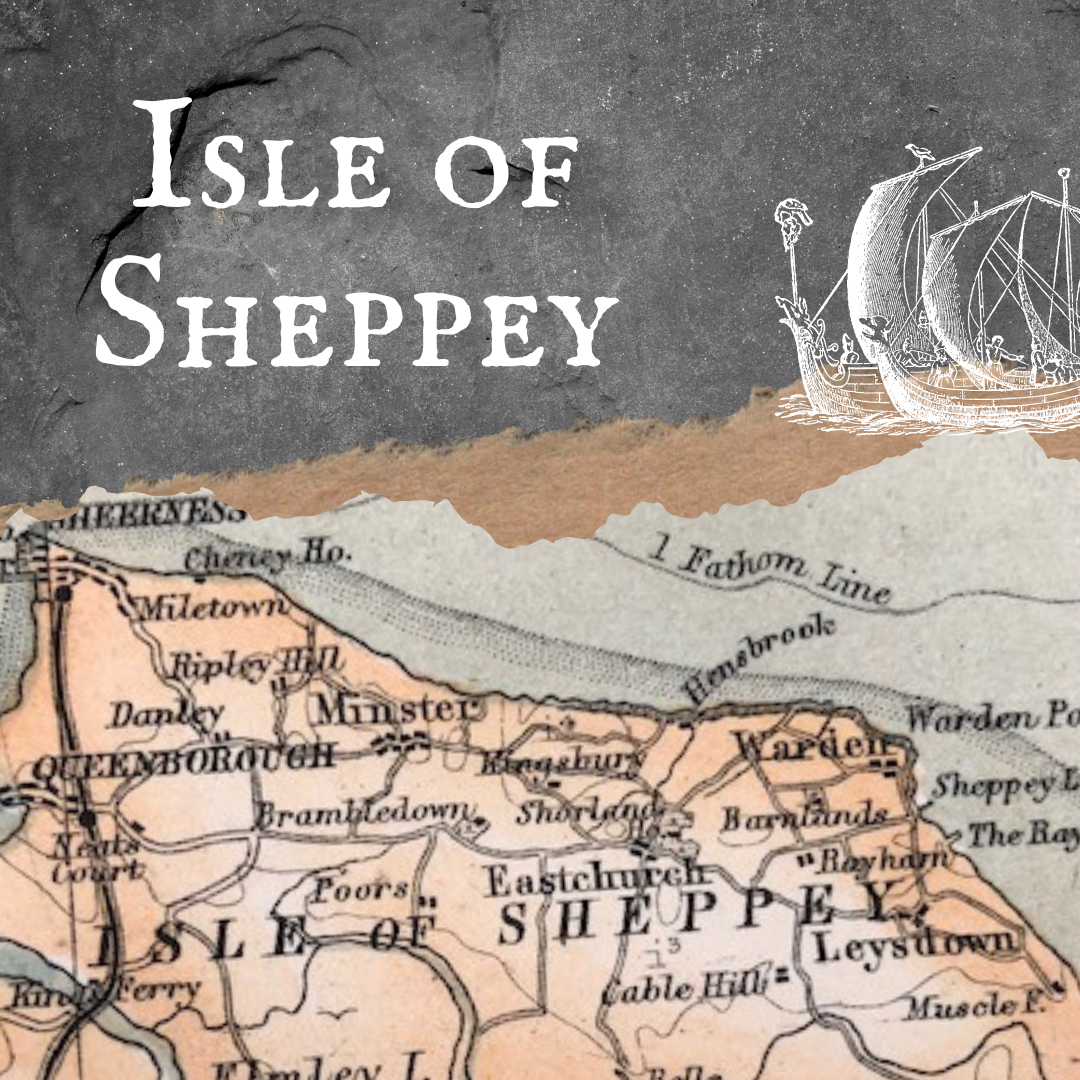
When Lord Coenwulf of Kingsholm is apprehended by a Viking and held captive on the Isle of Sheppey in Wessex held Kent, Icel is implored by Lady Cynehild to rescue her husband.

To rescue Lord Coenwulf, Icel and his fellow warriors must risk themselves twice over, for not only must they overpower the Viking raiders, they must also counter the threat of Mercia’s ancient enemy, the kingdom of Wessex as they travel through their lands.

Far from home and threatened on all sides, have Icel and his fellow warriors sworn to carry out an impossible duty

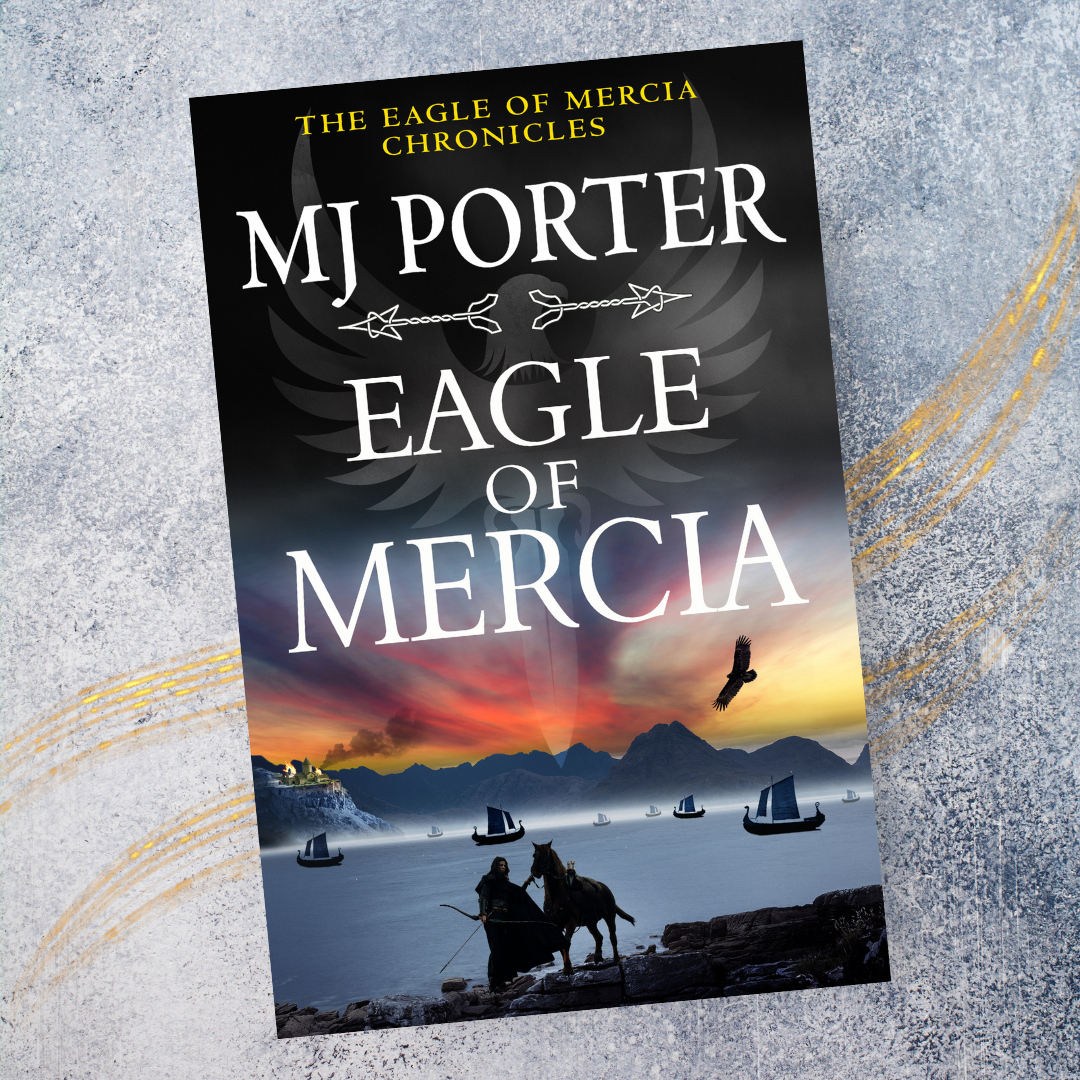
books2read.com/EagleofMercia

Set in the troubled years at the end of the Mercian supremacy, with the advent of the true First Viking Age just around the corner, The Eagle of Mercia Chronicles allow me to explore the kingdoms of Saxon England at the time, while ensuring my focus remains on Mercia, the kingdom in the’Midlands’ of England, with which I’m quite obsessed.

And choosing to write about a very strong character from my The Last King series, also allows me to play with my readers expectations. Icel is a fabulous creation, and one I’m incredibly proud of and pleased that my readers love so much.

Yes, these are bloody and brutal tales, but at the heart of them is a ‘coming of age’ story as young Icel learns about himself, as well as the truth of his heritage and birth.

If you’ve not yet tried The Eagle of Mercia Chronicles, then now is the perfect opportunity. Enjoy.


To win a set of the first three books in paperback – signed and dedicated as you would like, please sign up for my newsletter, or my newsletter with Boldwood Books. (Competition ends on 24th Feb). I send a monthly email. I will contact the winner and arrange postage – I will post worldwide. If you are signed up for both already, then drop me a quick email, and I will enter you into the competition. Good luck.

Happy release day to The Emperor’s Shield by Gordon Doherty #histfic #Romanfiction #NewRelease

Here’s the blurb

Easier to split the sky, than part a soldier from his blade.

386 AD. The Eastern Roman Empire faces a trident of threats. The Gothic truce grows unstable. The standoff with Persia escalates. And the ambitions of the usurper on the Western throne grow dangerously unchecked.

Pavo, a broken veteran of the legions, cares for none of these things. His life is one of pastoral seclusion on his Thracian farm. A life of love, of peace. His wife and young son are his world. Still, every so often, things seen and done in his old life haunt him, like a cold and unwelcome breeze. But that is all they are, echoes of the past…

…until the past rises, like a shade, to rip his world and the Roman Empire apart.

https://amzn.to/3jNrKLi

My Review

The Emperor’s Shield by Gordon Doherty is the ninth book in the Legionary series, and you guessed it, it’s the first book in the series that I’ve read:) (This is somewhat of a theme for me).

That said, I had no problem being gripped by the story. Pavo is a wonderful character, and while to begin with I did think this was ‘his’ story, more characters were quickly introduced, and the world of the late 300s of the Roman Empire sharply come into focus. This isn’t a period I know a great deal about – especially not in the Eastern Empire, but Pavo, his wife, son and Frugilo, make the period come alive. The camaraderie between Pavo and his old friends, add the human touch to the story, which is a complex web of lies and misdirection taking place over vast distances.

This is truly a story on an epic scale. It probably has a cast of thousands, although not all of them are named. There are warriors from all corners of the Roman Empire, East and West, and Pavo is in the thick of it all, as one of the Eastern Emperor’s elite bodyguard.

The tension throughout the final 25% of the book ramps up spectacularly, and I had to stop myself from googling the period to find out what actually happened, before I got to the end.

A thrilling tale of empire and conspiracy, that certainly leaves the reader desperate to go back to book 1, or eagerly waiting for book 10. A true triumph of the genre.

Meet the author

Gordon Doherty is the author of the Legionary and Strategos series, and wrote the Assassin’s Creed tie-in novel Odyssey. He is based in Scotland.

Twitter: @GordonDoherty

Website: https://www.gordondoherty.co.uk/

Check out my reviews for Sons of Rome, Masters of Rome, Gods of Rome written by Gordon Doherty and Simon Turney.

(This post contains an Amazon affiliate link)

King of Kings, the audio is now available, and the large print version too

I’m aware that there’s been a bit of a delay in getting everything shipshape over on Amazon, but everything is now where it should be – the ebook, paperback, audio, and hardback, all linked together. Whoo hoo. You can find them with the link below, which also includes other retailers, with links to the large print version.

books2read.com/King-of-Kings

So, I thought it would be the perfect opportunity to share a few things with you that have happened since release.

As I can’t upload the video here, I’ve done my ‘unboxing’ video and popped it over on TikTok – which I’m trying to learn. You can find it here. The paperback looks amazing:) It’s very smart and the family tree and map are also included. If you’re on TikTok give me a follow, as I’m looking for more content to help me get to grips with it.

I’m also going to share a link for the audiobook, read by the fabulous Matt Coles, which you can also find here, on my website, not my blog. (I can’t upload videos to my blog – who knew).

And, if you missed my blog post yesterday on Historia, you can read it here. It’s an introduction, quite a swift one, into what was happening in the Saxon kingdoms just before the events of King of Kings. And, it’s got some amazing images to go with it. I’m always in awe of someone who knows how all the rules work regarding sharing images on the web. Thank you. (I’ve just been trying to work some of this out for myself, with British Library images – it made my head hurt).

Check out the Brunanburh Series Page for more details.

Posts

MJ Porter went to Gloucester, and it didn’t rain

Why, I hear you cry? Well, I was on the trail of the Lady of Mercia, Æthelflæd, and her daughter Ælfwynn. Æthelflæd and her husband were buried in Gloucester, at St Oswald’s Priory, and I’m always writing about Gloucester, and Kingsholm, so I thought it was time I actually visited. Not that St Oswald Priory survives as anything more than a ruin these days.

The plaque telling visitors all about the ruins (I do love an old plaque. They just add to the story of a ruin).
Part of the ruins, with Gloucester Cathedral in the background.
Trying to capture as much of the ruin as possible in one photo.
View of the cathedral through the ruin (a pity about the garden shed)

I also visited the Cathedral, and really wish I’d done a bit more research about what they offer, as I didn’t factor in all the fabulous tours they do, including one up the tower to get a view of Gloucester. Maybe next time. But, I did find this delightful pearl, which must remind us all to make sure our notes are up to the task at hand.

The great window in Gloucester Cathedral

Can you imagine trying to put all those pieces back together after they took them down during WW2? Wow. Well done to those who accomplished the task. If you’re not sure of scale, it’s as big as a tennis court.

But to return to the priory. For those who know their history of the period, we might wonder why we have a St Oswald in Gloucester, which would have been very much in the heart of Mercia. Oswald, of course, was a king of Northumbria, a most Christian king, killed in battle against the might of the famous pagan king, Penda. The story goes that after his death, a band of brave Northumbrians retrieved their dead king, and returned him to Northumbria, where he was buried and revered. Why then would a Northumbrian saint, killed in the seventh century, become so closely associated with the Mercian ruling family?

I find this fascinating, and indeed, some years ago, attended a conference where I asked this question. The answer was enlightening. The Mercians, still facing the threat of the Viking raiders, needed a rallying cry. They needed a sainted figure whose cult they could effectively ‘steal’ or align with themselves, or so I was told, and St Oswald was that man, or rather that body, and so they stole him away from Bardney and took his to Gloucester, where his cult continued, and where Lady Æthelflæd and her husband, Ethelred, were later buried.

I’ve written about Oswald while he was alive, and of course, I’ve written about Mercia, Gloucester, Kingsholm, and Lady Ælfwynn. It was inspiring to finally see where the church once was, even if little remains of it, at least something does remain.

books2read.com/PaganWarrior

books2read.com/u/31RBva

books2read.com/TheLadyMercia

My new book, King of Kings, has a number of main characters. Meet Owain, the king of Strathclyde.

My new book, King of Kings, is a multi-viewpoint novel telling the story of events in Britain from 925-934. I thought it would be good to share details of the historical people my main characters are based on.

Owain of Strathclyde is perhaps the most difficult character in King of Kings to find in the historical record. Indeed, his place in the story is contested by historians, as we don’t know if the scribe of the Anglo-Saxon Chronicle of the time meant Owain of Strathclyde, or an Owain of one of the Welsh kingdoms. I decided to adopt the Owain of Strathclyde, but who exactly was he, and what was Strathclyde?

The kingdom of Strathclyde is also known by another name, that of Cumbria, and there is confusion in the sources and amongst historians about where it is and what it was. Alex Woolf suggests that by the events of 927, Strathclyde/Cumbria encompassed, ‘most of part of Lanarkshire, Dunbartonshire, Renfrewshire, Stirlingshire, Peebleshire, West and Mid-Lothian, eastern Dumfriesshire and Cumberland.’ (Woolf, A. From Pictland to Alba, 789-1070, Edinburgh University Press, 2007) p.155)

So who then were it’s kings? This again is far from as easy to state as might be thought. It’s believed that Owain of Strathclyde, succeeded his father, Donald II, to become king of Strathclyde, and in turn was succeeded by his son.

In 924, we are told that ‘the king of the Strathclyde Britons and all the Strathclyde Britons,’ (Swanton p.104) joined the king of Wessex, Edward the Elder’s alliance by the Anglo-Saxon Chronicle, but Owain isn’t named. Indeed, and as said above, when we do get mention of Owain in the Anglo-Saxon Chronicle, he’s named as ‘king of Gwent,’ (Swanton, M. trans and edit The Anglo-Saxon Chronicles, (Orion Publishing Group, 2000) p.107) even though there was no Welsh king of Gwent named as Owain at the time. It’s therefore difficult to get a feel for who he was, and what he did, but that didn’t mean I couldn’t include him in King of Kings. If anything, it made it all the more intriguing.

Map design by Shaun at Flintlock Covers

Preorder King of Kings

(released 10th February 2023)

books2read.com/King-of-Kings

Meet the Characters from King of Kings

Athelstan, king of the English

Constantin, king of the Scots

Hywel, king of the West Welsh

Ealdred, king of Bamburgh

Lady Eadgifu, wife of Edward the Elder

Happy release day to King of Kings #histfic

I’m so excited about the release today of King of Kings. This story, the first part in the retelling of the greatest battle on British soil that many have never heard of, Brunanburh, has been long in the making. Building on the original series, begun in 2014, King of Kings is entirely reworked, and it’s so much better:) (I honestly can’t believe how much better it is.)

Here’s the blurb

‘An epic tale of the birth of a nation. Truly mesmerising. Game of Thrones meets The Last Kingdom’ – Gordon Doherty

In the battle for power, there can be only one ruler.

AD925

Athelstan is the king of the English, uniting the petty kingdoms of Wessex, Mercia, the Danish-held Five Boroughs and York following the sudden death of his father, King Edward. 

His vision is to unite the realms of the Scots and the Welsh in a peace accord that will protect their borders from the marauding threat of the Norse Vikings.

Whilst seemingly craving peace and demanding loyalty with an imperium over every kingdom, Athelstan could dream of a much bigger prize.

But danger and betrayal surround his best intentions, namely from his overlooked stepbrother, Edwin, who conspires and vies for what he deems is his rightful place as England’s king. 

As ever, powerful men who wish to rule do not wish to be ruled, and Constantin of the Scots, Owain of Strathclyde, and Ealdred of Bamburgh plot their revenge against the upstart English king, using any means necessary.

An epic story of kingsmanship that will set in motion the pivotal, bloody Battle of Brunanburh where allies have to be chosen wisely…

books2read.com/King-of-Kings

(available in ebook, paperback, hardback and audio, narrated by the wonderful Matt Coles).

King of Kings. with its five kingdoms, and one alliance, might need some explanation. To help my readers understand who everyone is, and importantly, where everyone is, King of Kings has a map and a genealogical table, as well as a cast of characters.

Map designed by Shaun at Flintlock Covers

And because the family of King Alfred is so important to the story, I also have a genealogical table to share with my readers.

Design by Boldwood Books

I’ve written some brief introductions for the main cast of characters.

King Athelstan of the English

King Constantin of the Scots

King Hywel of the West Welsh

King Owain of Strathclyde

King Ealdred of Bamburgh

Lady Eadgifu of Wessex


Follow the blog tour with Rachel’s Random Resources

Bookish Jottings

Amy McElroy

David’s Book Blurg

Colin Garrow Blog

Beyond the Books

Ruins and Reading

Diary of a Wannabe Writer

The Magic of War(l)ds

Nerd Girl Loves Books


And for those who are falling in love with the period as much as I am, I wanted to share some non-fiction recommendations, and cautions.

There is no one book that will adequately cover this period (that was one of the reasons that I fictionalised it) but these books (see photos below), along with Dr. Kari Maund’s The Welsh Kings, which I have in ebook, will give you a good grounding of events in Britain and Ireland. So, these are

Alfred’s Britain by Max Adams

Athelstan by Sarah Foot

The Anglo-Saxon Chronicles ed and trans. Michael Swanton (other versions available – I like the formatting of this one -with the different recensions)

The Welsh Kings by Kari Maund

An Atlas of Anglo-Saxon England by David Hill (don’t be put off by the fact this book is from the 1970s – it is invaluable)

From Pictland to Alba 789-1070 by Alex Woolf

Viking Kings of Britain and Ireland by Claire Downham

English Historical Documents ed and trans by Dorothy Whitelock

The Frankish Kingdom under the Carolingians by R McKitterick

Edward the Elder ed. Higham and Hill (not a narrative account, but historians writing papers about their area of interest and expertise).

There are also two very important online resources.

PASE (The Prospography of Anglo-Saxon England)

Electronic Sawyer

My new book, King of Kings, has a number of main characters. Meet Lady Eadgifu. #histfic #nonfiction #Brunanburh

King of Kings has a number of characters, and some might be surprised to find Lady Eadgifu amongst them, but she was an incredibly important historical character, and I couldn’t leave her out of the narrative set at the English court.

Lady Eadgifu was the third wife of Edward the Elder (r.899-924), king of the Anglo-Saxons. Edward the Elder was the father of King Athelstan, and a whole host of daughters, as well as five sons. Lady Eadgifu would, it seems, have been young when she married the aging Edward the Elder, and that meant that she long outlived him, and also, that her three children (possibly four, but I’ve opted for three) were young when their father died. And two of these children were sons, Edmund (born c.921) and Eadred (born c.923). Her daughter, Eadburh, is thought to have been the oldest of the three children, born c.919.

While Lady Eadgifu, from what’s known (and it isn’t much, as there are few surviving charters from the end of Edward’s reign) perhaps had little role to play while her husband lived, other than wife and mother to the king’s children, following his death, she became increasingly significant. She was the daughter of an ealdorman, who perhaps died just before her birth, and her family are said to have had connections with Kent. Indeed, it’s often stated that she brought her husband Kent with their union. By that, what’s often meant, is the loyalty of the Kentish people. Remember, at this time, we’re still just before the creation of ‘England’ as we would now recognise it.

Sadly, very little is known about Lady Eadgifu (and she’s not alone in this – many of the royal women ‘disappear’ at points in the historical record, and on occasion, are entirely lost.) We know about a land dispute she was involved in, and also much more information for after Athelstan’s reign.

Indeed, it has been said that

‘Nor is it surprising that Eadgifu, as the consort of the previous king, served little role in her stepson’s court.[i]

[i] Firth, M. and Schilling, C. ‘The Lonely Afterlives of Early English Queens’, in Nephilologus September 2022, https://doi.org/10.1007/s11061-022-09739-4p.7

However, Barbara Yorke believes that,

‘the enhanced position [of Lady Eadgifu] may also have been developed specifically for the widowed Eadgifu as part of an alliance with her stepson Æthelstan [Athelstan] in which she supported his position and he recognised her sons as his heirs.’[i]


[i] Yorke, B. ‘The Women in Edgar’s Life,’ in Edgar, King of the English, 959-975 Scragg, D. ed (The Boydell Press, 2008), p.146


And it is this option that I’ve decided to explore in King of Kings. Lady Eadgifu was wife to a king. She would have known her worth, even when faced with a stepson as the king of the English, and another stepson, and stepdaughters, who perhaps didn’t share any love for their, potentially, younger stepmother. Will Lady Eadgifu work with or against Athelstan? Read on to find out.

Map design by Shaun at Flintlock Covers

books2read.com/King-of-Kings

Meet Owain, king of Strathclyde

Meet Athelstan, king of the English

Meet Constantin, king of the Scots

Meet Hywel, king of the West Welsh

Meet Ealdred, king of Bamburgh

Check out the Brunanburh Series Page

Posts

I’m absolutely delighted to share a fabulous post about dressing for success in the 17th century by author, Anna Belfrage, who had to find out all sorts of undergarment related information for A Rip in The Veil #HistoricalFiction #TimeTravelRomance #BlogTour #TheCoffeePotBookClub

Today, I’m absolutely delighted to share a fabulous post from Anna Belfrage about dressing in the seventeenth century. It will make you giggle, I promise.

Dressing for success in the seventeenth century

In a A Rip in the Veil—the first book in The Graham Saga—the unfortunate (or not, depending how one sees it) Alex Lind has the misfortune of falling three centuries backwards in time to land at the feet of Matthew Graham. Matthew Graham is a devout Presbyterian who has fought in the Commonwealth armies in the Civil War. To Alex, he is initially very strange. Heck, the entire situation is strange: no, wait—it’s impossible! 

Matthew is as taken aback as Alex is—perhaps even more, as the only explanation to her sudden appearance in his life must be magic. Or? Besides, what is the woman wearing? Those tight, tight breeches she calls ‘djeens” showcase her every curve, as do her other garments. No, had she been his woman, he’d never have allowed her to set a foot outside dressed like that, all of her exposed, like. 

Alex quickly realises that in this new time she has to adapt. ASAP. And one of the first things she must embrace is an entire new wardrobe. “Yay me,” she mutters as she shakes out shift and petticoats and heavy skirts and bodice and. . .

I must admit that I wasn’t entirely thrilled when Alex landed in 1658. The seventeenth century is not my sartorial favourite – especially when it comes to male fashion. 

This period dress thing is difficult.

First of all, as the writer of historical fiction it is important to understand what people wore, who wore what and how it was worn. In some cases it’s straightforward: stockings cover your feet and the nether part of your legs no matter if you live in the twentieth century or the fifteenth. But take that rather ugly male adornment that Henry VIII was so proud of flaunting – the codpiece – and I am somewhat stumped. How did it work? ( Okay, so I’ve looked this up; strings, buttons or hooks kept this decorative little (hmm) flap of fabric in place.)

Secondly, it helps if the writer in question finds the period attire alluring in some way or other. It’s difficult to write convincingly about handsome men in codpieces and padded breeches when all you see in your head is something resembling a man in a huge diaper.

Finally, there must be a familiarity with how people dress and undress. “He told her to turn around and zipped up her gown,” is not a good description of the intimacy between man and wife in the fourteenth century. (BTW, the modern zipper owes a lot to Swedish inventor Gideon Sundback. It’s nice to know us Swedes have contributed to human development: dynamite, zippers, gauge blocks, the AGA cooker.) Having exploring male fingers encountering panties in the sixteenth century is also something of an anachronism, and should the dashing regency rake pulls down his boxers you’re not reading historical fiction, you’re reading about a masquerade.

To avoid such gaffes, I’ve spent a lot of time researching the period and have accordingly done my fair share of staring at what few clothes survive from the seventeenth century—like James II’s elegant attire exhibited in the Victoria & Albert museum. Okay, so that is later in the century, but all that lace, all those embroideries, and that gigantic wig! Plus, the high heels on the shoes. . . Nope, not at all my cup of tea. 

Earlier in the 1600s, men wore wide breeches, sashes, lace, ribbons—like these young and elegant Stuart brothers in Van Dyke’s portrait. 

To the seventeenth century young girl, they were likely delectable. To Alex, not so much. She’d be hard put not to laugh her head off. So it is fortunate that when she first meets Matthew, he is in a ragged shirt and equally ragged breeches, fleeing from pursuing soldiers. It is also fortunate that Matthew would no more adorn himself with ribbons than he would dance attendance on the king—he is a man of Parliamentarian convictions. No, Matthew wears plain and well-made clothes, now and then adorned with a ruffled cuff or an elegant collar.  

Obviously, Matthew expects this new female companion of his to dress sedately, which is how Alex finds herself obliged to re-learn just how to dress.

In the seventeenth century, there were no bras, no panties. Instead, the undergarment is a shapeless elongated linen shirt that comes to just below the knees. This shift is worn over stockings that come to just above the knee and are fastened by garters.
“I can help you with those,” Matthew suggests, and there is a twinkle in his eyes as he helps Alex fasten the stockings with pink ribbons. Just because he doesn’t wear ribbons, it doesn’t mean she can’t, he says. In fact, he rather likes the fact that she is wearing them—and that he tied them into place. 
Over the shift—which also doubles as nightgown—Alex now dons a corset. 
“Ugh!” she groans as she tightens into place. The corset she has ties in front—only people who can afford a ladies maid have corsets that tie in the back. She has to struggle a bit to get it to sit right, and then there are the petticoats, tied into place at her waist and falling to mid-calf. Only the very, very rich have garments that fall all the way to the floor. Most women have skirts high enough to allow them to work and walk without dragging the hem in the dirt. 

“Here.” Matthew hands her the heavy skirts. And yes, they are heavy, making it hard to, for example, run. Or jump a fence. Once Alex has stepped into them, he helps her tighten them into place. A bodice, a shawl to cover what may remain exposed of her chest and then Matthew holds out a cap.
“No way!” She backs away, staring at the embroidered linen coif. 
“You must cover your hair,” he says.
She refuses. 
There is a slight. . . er . . . argument. Things end in a compromise: she will not cover her hair indoors, but otherwise she will either wear a coif or a hat. Matthew would prefer both, but he is pragmatic enough to realise this isn’t a battle he will win. Besides, Alex is having to handle a lot of change as it is.
“Tell me about it,” she mutters. She isn’t overly impressed with the food. Or the lack of chocolate. Or of tea. “I thought they had tea in the seventeenth century,” she groans. 
“They do,” I tell her, “but it is very, very expensive.” 
“Oh.” She gnaws her lip, her shoulders slumping. Which is probably why Matthew expends a ridiculous amount on a ridiculous small quantity of tea next time he goes to Edinburgh, pleased by the way she lights up from within when he hands the precious package over. 

Over time, Alex will become accustomed to her new clothes, even if she will quite often think longingly of jeans and sweatshirts, of Converse and shop-bought socks. (She hates to knit) 

But while she adapts to her new life on the outside, she remains a woman of modern conviction and outlook, which will now and then cause her quite some problems in her new time. It is fortunate that she has Matthew to guide her. On the other hand, there will be countless of occasions when Matthew will owe his life and sanity to her, the strange lass he found concussed and burned on an empty Scottish moor. Two halves made whole are my Alex and Matthew, no matter such details as sartorial arguments!

Thank you so much for such a fabulous post. I just can’t imagine all the lace:)

Here’s the blurb

On a muggy August day in 2002 Alex Lind disappears. On an equally stifling August day in 1658, Matthew Graham finds her on a Scottish moor.  Life will never be the same for Alex – or for Matthew. 

Alexandra Lind is thrown three centuries backwards in time to land at the feet of escaped convict Matthew Graham. 

Matthew doesn’t know what to make of this strange woman who has seemingly fallen from the skies—what is she, a witch? 

Alex is convinced the tall, gaunt man is some sort of hermit, an oddball, but she quickly realises the odd one out is she, not he. 

Catapulted from a life of modern comfort, Alex grapples with her new existence, further complicated by the dawning realization that someone from her time has followed her here—and not exactly to extend a helping hand. 

Potential compensation for this brutal shift in fate comes in the shape of Matthew, a man she should never have met, not when she was born three centuries after him. But Matthew comes with baggage of his own and on occasion his past threatens them both. At times Alex finds it all excessively exciting, longing for the structured life she used to have. 

How will she ever get back? And more importantly, does she really want to?

Buy Links

This title is available to read on #KindleUnlimited.

Universal Link

Amazon UKAmazon USAmazon CAAmazon AU

Meet the author

Had Anna been allowed to choose, she’d have become a time-traveller. As this was impossible, she became a financial professional with two absorbing interests: history and writing. Anna has authored the acclaimed time travelling series The Graham Saga, set in 17th century Scotland and Maryland, as well as the equally acclaimed medieval series The King’s Greatest Enemy which is set in 14th century England.  

Anna has also published The Wanderer, a fast-paced contemporary romantic suspense trilogy with paranormal and time-slip ingredients. 

Her Castilian Heart is the third in her “Castilian” series, a stand-alone sequel to her September 2020 release, His Castilian Hawk. Set against the complications of Edward I’s invasion of Wales, His Castilian Hawk is a story of loyalty, integrity—and love. In the second instalment, The Castilian Pomegranate, we travel with the protagonists to the complex political world of medieval Spain. This latest release finds our protagonists back in England—not necessarily any safer than the wilds of Spain!

Anna has also authored The Whirlpools of Time in which she returns to the world of time travel. Join Duncan and the somewhat reluctant time-traveller Erin on their adventures through the Scottish Highlands just as the first Jacobite rebellion is about to explode! 

All of Anna’s books have been awarded the IndieBRAG Medallion, she has several Historical Novel Society Editor’s Choices, and one of her books won the HNS Indie Award in 2015. She is also the proud recipient of various Reader’s Favorite medals as well as having won various Gold, Silver and Bronze Coffee Pot Book Club awards.

Find out more about Anna, her books and enjoy her eclectic historical blog on her website, www.annabelfrage.com  

Connect with Anna:

WebsiteTwitterFacebookInstagram

Book BubAmazon Author PageGoodreads

Follow the A Rip in The Veil blog tour with The Coffee Pot Book Club