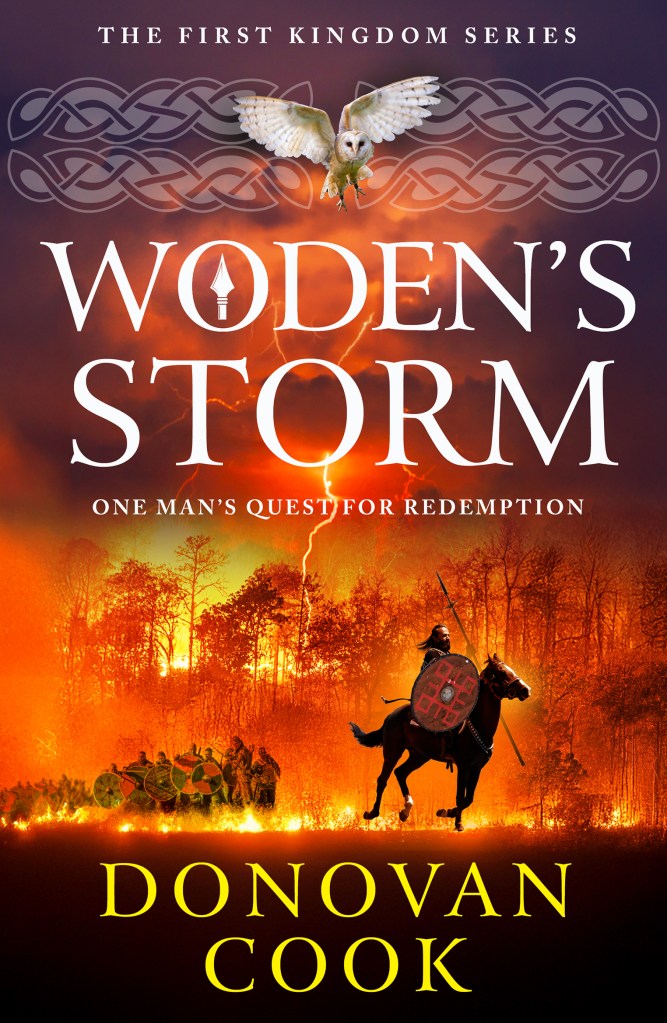
I’m reviewing Woden’s Storm by Donovan Cook #blogtour #newrelease #historicalfiction the second book in the First Kingdom series
Here’s the blurb
A storm is coming. A storm that will banish the old and deliver the new.
450AD Britain
Octa has the spear of Woden, but the redemption he sought is out of his grasp. With his banishment and the death of his father, he can no longer return to his Saxon homelands. His only salvation is to join forces with Hengist and Horsa, and their Jutish army that beaches itself on Brittania’s shores. But can he trust their motivation or are there greater plans afoot?
The Gods have their own plans, though, and Octa’s fate is not his own to control as Friga, the mother of the Saxon gods, battles to avoid a war with the gods of the Britons and Saxons using Octa as her weapon.
Prince Vortimer, the son of High King Vortigern, is angered by his father’s agreement with Hengist and Horsa as they remain unchecked and their numbers swell. He suspects treachery and encouraged by some well-placed words of a stranger, he rebels against his father and gathers his army to attack the unwelcome visitors.
War is coming to Britannia and as Octa struggles to understand his role and fate, he knows he has one question to answer. Will he run or will he stand and fight?
Woden’s Storm is the second book in The First Kingdom series by Donovan Cook. We’re once more in a recreated Britain of the middle fifth century, where everyone’s actions are guided by their Gods. And there are a lot of Gods who want to have a say in what’s happening, and not all of them, on the ‘same side’ as it were, hope to achieve the same ends. Octa, Vortimor, and the rest of the characters are constantly being tested by their deities, told half the story and left to work the rest out for themselves. Will they interpret their meetings with the Gods correctly, or will they make everything more chaotic by muddying these messages with their own intentions?
I do enjoy the element of the Gods walking amongst the characters and interfering in what’s happening. I mean, I doubt it would be peaceful without them, but with them, it certainly isn’t:) It adds a new dimension to this period and perhaps helps to account for some of the more eccentric decisions the characters make as they all endeavour to accomplish their goals. There is still much to play for and the series will continue.
An entertaining and intriguing series with a whole host of ‘named’ characters, people who love the era will recognise.
Donovan Cook is the author of the well-received Ormstunga Saga series which combines fast-paced narrative with meticulously researched history of the Viking world, and is inspired by his interest in Norse Mythology. He was born in South Africa and currently lives in Lancashire, UK.
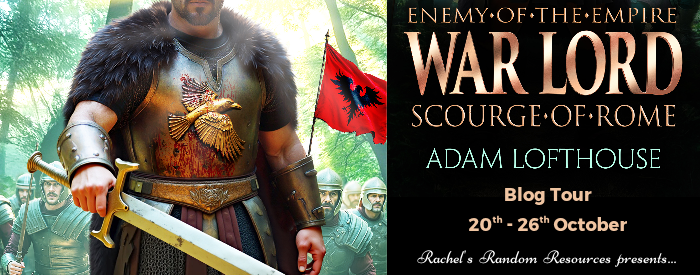
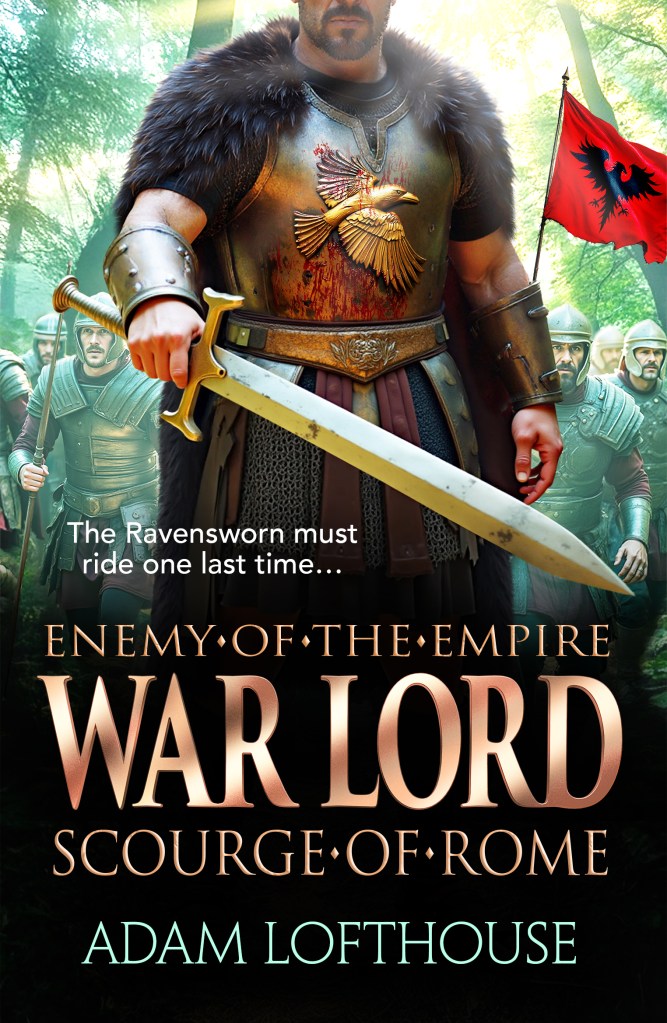
I’m delighted to share my review for Adam Lofthouse’s War Lord: Scourge of Rome #historicalfiction #blogtour #Roman
Here’s the blurb
And so we have reached the end of my tale. But what are endings if not new beginnings?
Alaric has been home for a year. He went north and saved the Cimbri, just as he said he would. But the cost has been higher than he ever thought. A shadow of the War Lord he once was, he now trades in amber and dotes on his children.
A simple life. And with it, contentment. But he knew this couldn’t last forever; peace isn’t for someone like him, and sure enough trouble finds him once again. A routine journey south turns into a new and unknown wave of danger as red-cloaked legionaries attack, causing confusion and carnage.
Warriors dressed as Romans have been scouring the country, slaughtering innocent people, and leaving Roman footprints wherever they march. But things are not what they seem, and it falls to Alaric to don his armour once more, and march his Ravensworn in pursuit of a mysterious enemy that could destabilise his world beyond repair.
War Lord, as the blurb states, is the end of Alaric, or is it a beginning for him?
Once more, we’re thrust straight back into the action, and Alaric, while accepting he’s an old man these days, does indeed not seem to have ‘grown up’ at all, as he’s so fond of reminding himself. From one hairbrained scheme to another, Alaric realises that perhaps, after all, there is a great deal at stake, and he is, of course, the man to solve everyone else’s problems, for all he likes to pretend he doesn’t care about anyone but himself, his children and his wife.
Adam writes fabulous books. I do love Alaric. He’s a bad egg, and yet, we all can’t help liking him, as indeed, does everyone who comes into contact with him. There’s no end of action and adventure, no end of peril, and through it all, Alaric sails with his usual charm and determination. But, is this one quest too much for our epic second-century hero, living on the outskirts of the Roman empire, but admiring them all the same? Has he finally found an enemy he can’t hope to beat, even if he unites the tribes? Or will he have to prove as quick-thinking as ever?
While all this is happening, there is also an intriguing backstory, reliving a moment in Alaric’s life when everything changed for him. It adds a certain poignancy to our character, making his wild ways more understandable.
This is a cracking finale for Alaric’s story. Enjoy it. I know I did.
Adam Lofthouse is the author of action-packed historical thrillers. His brand new series for Boldwood, ‘Enemies of Rome’, will focus on the boundaries at the edge of the Roman Empire. The first book Raven, will be published in February 2025.
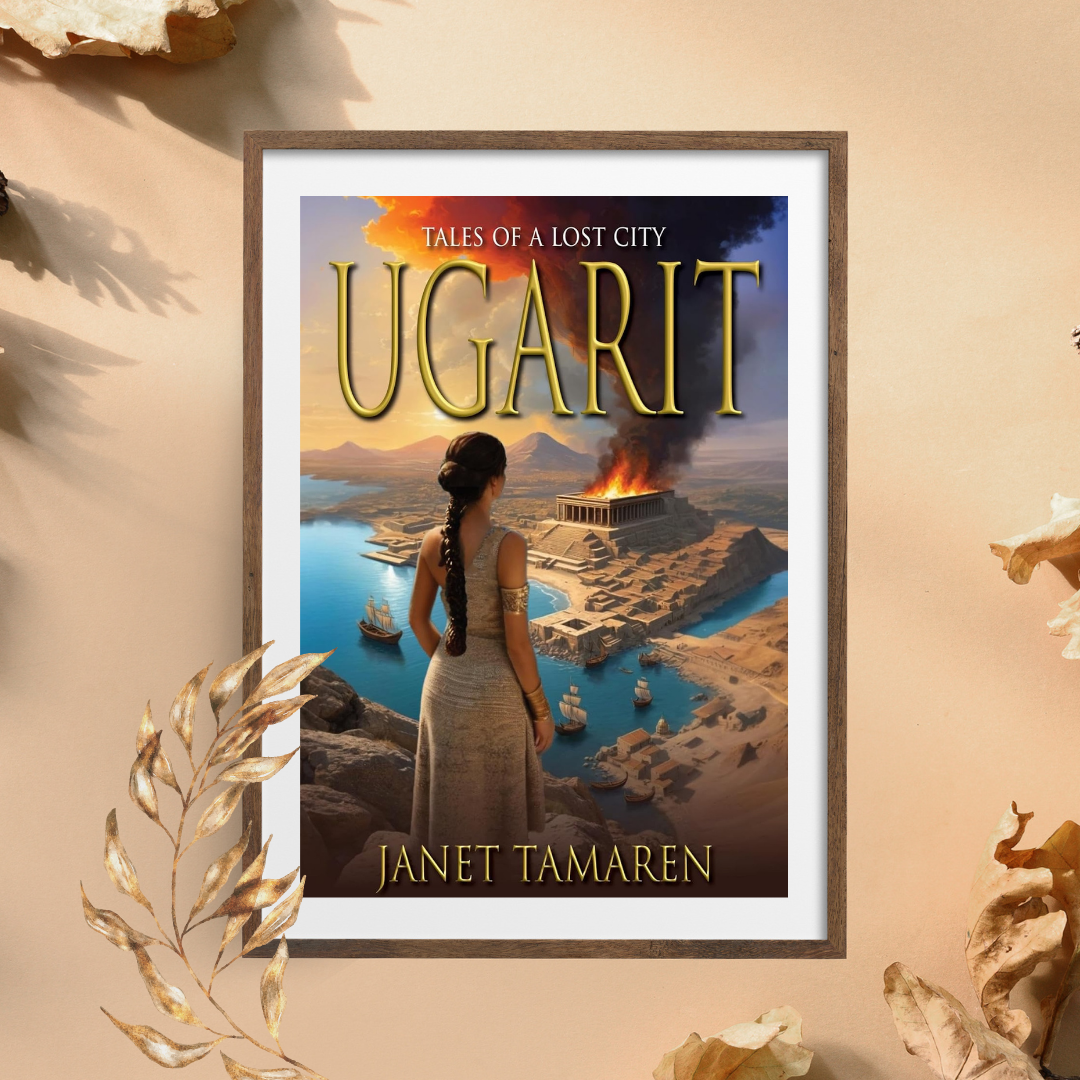
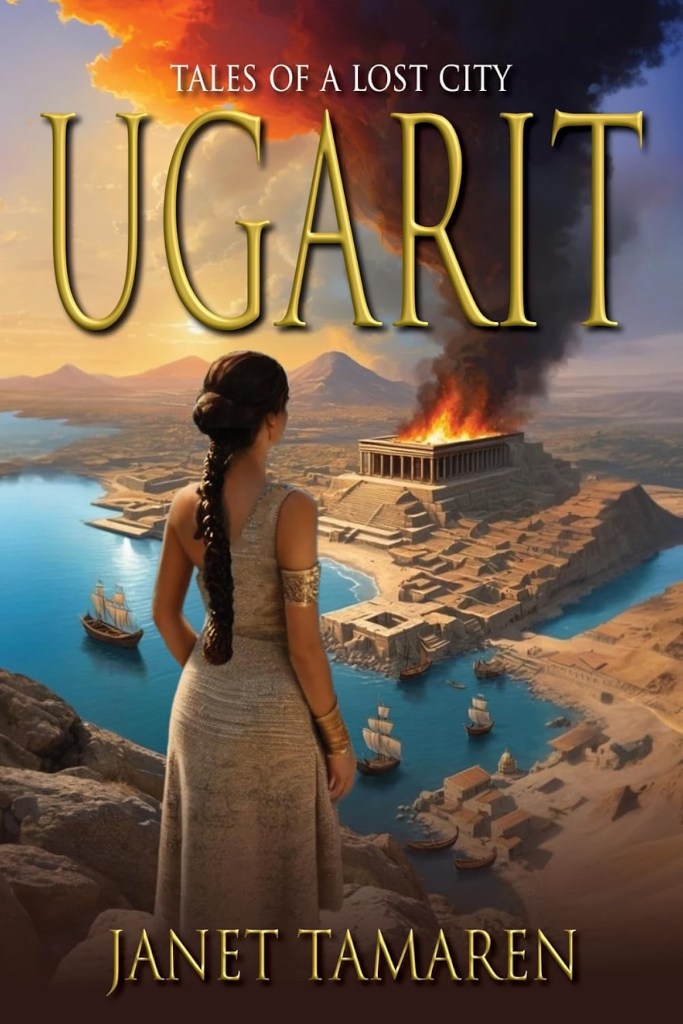
I’m delighted to welcome Janet Tamaren and her book, Ugarit: Tales of a Lost City, to the blog #HistoricalFiction #AncientNearEast #BronzeAge #Ugarit #BlogTour #TheCoffeePotBookClub
I’m delighted to welcome Janet Tamaren and her book, Ugarit: Tales of a Lost City, to the blog with an excerpt.
Excerpt
CHAPTER 4: AT THE HEALER’S SHOP
Yoninah’s house had the classic sign of the healer outside the door: a snake entwined around a pole.
Hearing a firm knock at the door from the street, Yoninah went to answer it. A middle-aged man stood there, nursing his left arm. The arm was clearly crooked.
“I broke my arm. Can you fix it?” he said with a slight accent.
“Yes, I can splint your arm for you,” she said. “And I have pain meds for you as well.”
“That would be most welcome.” He grimaced with the pain.
Showing him to the front room, where she kept her herbs and supplies, she got him situated on a comfortable bench. She was skilled at setting broken bones. Every month or so, someone from the docks appeared at her door with an injury to an arm or leg. The men did heavy work: unloading cargo from the ships.
“I have silver to pay you. I am told you are good at your work. I’ve broken bones before. I know it will lay me up for a while.” The man attempted a smile, but it didn’t quite work.
Looking more closely at him, she saw that he had the cheekbones, chin, and beard of the Aegean. His hair was black, mixed with a sprinkling of gray. The skin of his face and arms was heavily tanned, with creases across the face, courtesy of the harsh sun of the Great Sea. A handsome face except for the grimace.
Probably a refugee from the war in the north, from Troy, she thought. A war that had been over and done with for a good twenty years.
She picked up a salve of poppy seed extract and myrrh and returned to the bench where the Mycenean sat. She washed the area and applied the numbing ointment as a compress. As she worked, she made small talk to distract him from his pain: “I’m guessing you are Mycenaean. Not much accent there, but you look like you’re from the Aegean. How did you break your arm?”
“I was carrying wine jars on a cart drawn by an ox. The cursed animal took a tumble,” said the Mycenean. “I tried to catch the jars before they hit the ground. The jars survived but my arm broke. Heard the thing snap. Hurts like the sting of a thousand bees.”
“Well, let the compress work for a bit. Should feel better in a short time,” said Yoninah. “Let me find a splint to fit you.”
“And maybe a cup of honeyed wine to take the edge off?” he asked.
“Certainly,” she said. Yoninah called for her daughter Laylah to fetch a flask with honeyed wine.
“How did you end up in Ugarit?” asked Yoninah. “This is a distance from the Aegean Sea.”
“The war,” he said flatly. “I mean the Trojan War. I joined the fleet in Mycenae when I was seventeen because I thought it would be a grand adventure. They paid a good bonus as well. Ten stinking years later – most of it spent outside the grand walls of Troy, in a siege that was going nowhere –we somehow broke through the walls, looted the city, and burnt it.”
“I was sick of the whole adventure by then. And sick of the sea: too many storms, too many shipwrecks. Never wanted to go back across the Great Sea.” He paused for a beat and said, “Is my arm almost ready? I can’t feel the pain as much anymore.”
“Good,” she said. “Lay your arm flat on the table. And here is that wine for you.”
Taking a cup of wine from Laylah with his right arm, he drank it down in one fell swoop.
Yoninah had him lay his misshapen left arm on the table, and manipulated the broken bone back into position. She splinted it with a plank of cedar wood and wrapped it in clean cloths. “How does it feel?” she asked.
“Not bad,” the man said. The man’s attempt at a smile proved a bit more successful.
“You fought at Troy. That’s a goodly distance from Ugarit,” Yoninah said as she gathered up a sling. “How did you wind up here?”
“Never wanted to go back to the open sea. Took passage on a ship bound for Ugarit. As you know, these ships travel along the coast. That took a scant ten days, what with favorable winds and currents. Been here a good twenty tears now,” he said.
She gave him a sling, to keep his elbow bent and the arm held close against his chest. She tied the sling herself. As she bent over him, he stared at her chest.
“That’s a pretty necklace you are wearing.” His eyes were fixed on the pendant she wore, a painted terracotta figure of a naked woman.
Yoninah bit her lip as she tried to hold back a smile. Her patient was a bit tipsy now.
“Thank you. It is Asherah, the Queen of Heaven.” She was momentarily distracted by the intensity of his gaze. She reverted quickly to her healer persona.
“There you go. No using the arm! For at least four weeks. Do you have a wife or daughter to keep an eye on you?” Yoninah couldn’t meet his eyes as she asked this question.
“No,” he said. “My wife died. I have a friend who can help. I’ll be all right.”
“My husband died five years ago,” Yoninah said before she could catch herself. She didn’t really need to tell him this information. She turned away and busied herself for a moment.
“I’ll need you to come back in two weeks,” she said. I’ll need to make sure the arm is healing.”
“My name is Menelaus. And yours is?”
“You can call me Yoninah” she said.
Giving her a silver shekel for the arm repair, he swore he would be careful with the arm and agreed to return in two weeks. He gave her a lopsided grin at that point. Possibly due to the excess of wine, she thought.
After he left, she felt uplifted. That had been an unusually pleasant interaction. The bone had gone smoothly back into place.
Laylah had remained respectful while the Mycenean was there. After he left, she looked at her mother’s flushed face and laughed. “You like him.” she said.
Yoninah agreed: “He is handsome enough. He kept us amused.” She thought, “It is true, I am looking to forward to seeing him again.”
Here’s the Blurb
A captivating tale of bravery in the face of heartbreak and upheaval.
IN THE SPRING OF 1190 BC, on the sun-drenched shores of the eastern Mediterranean, the thriving city of Ugarit pulses with life, trade, and courtly intrigues. But danger brews beyond its walls.
Yoninah, a gifted healer, offers herbs and amulets to ease her neighbours’ suffering. When a Mycenaean – an ex-soldier from the Trojan War—stumbles into her life, he reawakens memories she thought long buried. Just as whispers of war echo ever closer.
Meanwhile, in the royal court, Thut-Moses is a scribe who was trained in the temples of Egypt. The king is paralyzed by ominous messages: foreign invaders are razing one coastal city after another. As the tide of destruction nears, Ugarit’s fate hangs in the balance.
Torn between loyalty and survival, love and duty, Yoninah and Thut-Moses must each decide: what will they risk to protect what the hold most dear?
Rich with historical detail and inspired by newly-translated cuneiform tablets unearthed form Ugarit’s ashes, UGARIT brings to life the final days of a cosmopolitan world on the brink of collapse – a sweeping tale of courage and resilience at the twilight of the Bronze Age.
Praise for Ugarit:
“A masterfully told tale-rich, riveting, and utterly transporting. I couldn’t put it down.”
Janet Tamaren is a retired physician who practiced for two decades in rural Kentucky. Now living in Denver with her husband, she enjoys writing and is the author of a medical memoir and a guide to Hebrew Bible stories. She began writing UGARIT during the COVID lockdown.
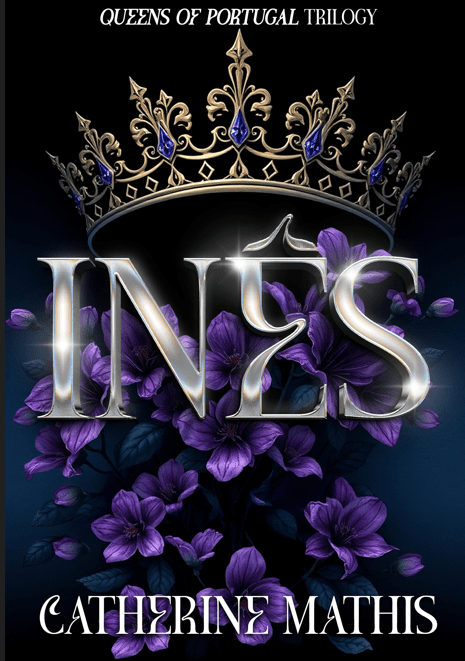
I’m delighted to welcome Catherine Mathis and her new book Inês to the blog, with a fascinating guest post #HistoricalFiction #MedievalFiction #BlogTour #TheCoffeePotBookClub @cathiedunn
@thecoffeepotbookclub @cmathisauthor
In Candide Voltaire describes the great earthquake of All Saints Day 1755 which hit during Sunday church services resulting in the destruction of most of Lisboa and surrounding villages for miles and miles. Then Lisboa burned and was hit by a tsunami. Records and documents not destroyed in 1755 were ravaged by Napoleon’s troops. Records for the early fourteenth century were never as plentiful for Portugal as they are for France or England, and these two seminal events did not help. The larger hurdle is I do not speak or read Portuguese or the earlier spellings of medieval Portuguese, nor Spanish for that matter.
Most histories of Portugal will mention the Pedro and Inês affair in passing, not depth. The prominent chronicle surviving to this day was written by Fernão Lopes in the early fifteenth century. The extant Lopes work starts with the reign of King Pedro. Lopes’s chronicles for earlier kings are lost. Lopes proclaims an intent for historical accuracy and does a good job of balancing characters and events despite writing for the Avis dynasty. These chronicles were not available in English until 2023, and I did not trip across them until mid-2024 when my novel was already with the publisher.
There are references to other documents long lost to time. There are some records in archives and other Portuguese and Spanish cities. Professor Rita Costa Gomes wrote The Making of Court Society, a scholarly Portuguese book translated into English, though it provides some information only in Portuguese. Other useful books include: de Oliveira Marques’s Daily Life in Portugal in the Late Middle Ages, A.R. Disney’s History of Portugal and the Portuguese Empire, and Oliver Sacks’s Hallucinations.
For good or ill, my primary source was Edward McMurdo’s The History of Portugal, Volume II published in 1889. McMurdo takes a bit of getting used to; his opinions are well stirred into the history presented. Likely Portuguese/Spanish documents of recent years have updated information.
I found this legend on a trip to Portugal. Then several years later I returned to Portugal, specifically to visit the locations central to the story along with visiting museums. There is little extant material in museums from this period. I walked the grounds of a convent now in ruins in Coimbra that is central to the story. While geography changes with time, walking narrow streets and the buildings that remain from the fourteenth century helped when creating scenes.
It is in the gaps of written documents that novels unfold. It does not mean that accuracy is not important. It absolutely is. Did Pedro marry Inês? Not in the legal sense of marriage arranged for an heir to the throne. Did Pedro believe he wed her? Did Inês believe she was married? I chose to answer yes to both questions. Inês – from what we believe we know – exhibited loyalty to her friend Constanza, Pedro’s wife, and cared deeply for all of Pedro’s children. Inês did not have a child until at least a year after the death of Pedro’s first wife. Then she bears Pedro children regularly. Others suppose the love affair began before Pedro was widowed. Pedro refused to marry suitable women his father proposed after his first wife’s death. He had clergy attest to the marriage with Inês. And he never marries again, though he has a consequential affair.
There are lots of technical practices in the lives of medieval royals that are not common in our world. Technically Pedro was married before he wed Constanza. It was a marriage never consummated before it was dissolved. Often marriage agreements are bargaining tools of a king in managing relationships with other countries or inside his own country. The key is what is important to the story being told, what is critical in the history of the time, yet not a turning point for the story being told. For example, the Battle of Salado was huge in Pedro’s lifetime as was the Great Pestilence. Neither of these events is a driving factor in the legend. They are included but not critical.
The other key issue is names. Men named Pedro or João or women named Maria litter the landscape. I made a decision to use a name per person and not confuse the reader by overly focusing on titles or full proper names. It is easier if there is one central Pedro not to be confused with Pedro’s in the nobility or neighboring countries. The point is the story. For the novel, this means a Pedro in a neighboring country becomes Peter or more plainly Castile’s king. All readers know Portugal existed in the medieval period. Their likely earliest recollection is of Prince Henry the Navigator, still a century away from Pedro. Those seeking a good story are less concerned with the rabbit holes and details of history some of us find fascinating. This is the writer’s balancing act.
Let’s close with a final thought on sources and information. For many dates there is not an agreement as different sources will offer different dates for the same event. And between then and now, the calendar changed. Many birth dates and thus ages were not recorded in sources, especially for women and also children who die young. Often this is not critical to the story, the legend.
The fun part of research is falling down the rabbit holes. As I chase a fact or information about a location I can get sidetracked into reading articles on the nature of queenship, the trade between Portugal and England or the Netherlands, life on board a ship, etc. Most of the research is never used, and always worth the time to study.
Here’s the blurb
An heir to the throne, a gorgeous blonde lady-in-waiting, the king’s trusted advisor. When a father and son don’t understand each other, the son pays an outrageous price.
Love, jealousy, loyalty, and revenge roil the court of 14th century Portugal.
In this engrossing launch to the Queens of Portugal trilogy, Catherine Mathis gives a fresh take on the tale of Pedro and Inês, Portugal’s real-life Romeo and Juliet. Pedro’s father would not have been king if not for his trusted advisor, Gonçalves. Once king, he wants no part in neighboring Castile’s royal convulsions though his son, Pedro, befriends powerful Castilians.
The all-consuming drive of the king is to ensure his line rules Portugal for centuries to come. He needs legitimate, strong heirs. The Infante Pedro loves a woman not deemed worthy to wear the crown as queen. Between father and son is Gonçalves, the king’s powerful, unquestioned counselor who is mentor to the son. Both Gonçalves and Pedro seek the attention of Inês.
There is a horrific cost to winning the love of Inês. She will not release her grip on Pedro until he keeps the two sworn oaths he made to her. Can Pedro do the impossible to satisfy Inês?
Inês is based on real people and events, exploring a cultural touchstone of Portuguese history.
Praise for Inês:
“Mathis masterfully weaves emotional depth into the narrative, creating a deeply engaging experience that leaves a lasting impression and invites readers on an unforgettable journey through the grandeur and intrigue of Portugal’s past.” ~ Mary Anne Yarde, The Coffee Pot Book Club 5* Review
“This exciting start to the Queens of Portugal trilogy describes the legendary love story of Pedro and Inês, and I was amazed at the excellent storytelling and how the author brings the courts to life. There is a lot of drama and intrigue, and the characters’ emotions are beautifully captured in this engrossing tale.” ~ Readers Favorite 5* Review
Catherine Mathis was born in Berlin, the daughter of an American spy. As she grew up in Washington, D.C., her spy father turned into a drug enforcement agent. His career change wrecked any chance at high school popularity. She graduated from Sewanee | The University of the South with a degree in history focused on the medieval period. After a career in finance, she returned to her first love of medieval history to ‘Share Iberian Tales.’ Outside of writing, spare time joys are family, friends, reading, collecting folk/outsider art, and travel.
I’m sharing my review The Wordsmith’s Guide to Planning the Perfect Plot by Elizabeth M Hurst #blogtour #nonfiction #writingadvice
The Wordsmith’s Guide to Planning the Perfect Plot
* DO YOU STRUGGLE TO FINISH WRITING A NOVEL? * DO YOU RUN OUT OF MOMENTUM BECAUSE YOU DON’T KNOW WHERE YOUR STORY IS GOING?
The Wordsmith’s Guide to Planning the Perfect Plot is your trusted companion for turning story ideas into structured, compelling narratives. In this fourth instalment of the Wordsmith’s Guides series, Elizabeth M. Hurst takes you through popular plotting methods—including the Snowflake Method, Save the Cat Beat Sheet, and The Inside Outline—helping you choose the right approach for your writing style. You’ll also find practical advice on troubleshooting common pitfalls, crafting satisfying endings, and keeping your plan adaptable as your story evolves.
Inside, you’ll discover:
Clear explanations of proven plotting methods
Guidance on choosing the right structure for your novel
Tips for overcoming plot issues and staying on track
Advice on writing satisfying, well-rounded endings
A practical appendix full of tools and templates to support your planning process
Whether you’re a planner, a pantser, or somewhere in between, Planning the Perfect Plot will help you shape your novel with clarity and confidence.
Planning isn’t something I really do as a writer. But I was certainly curious to see how others might go about writing their stories. Elizabeth M Hurst gathers together many different techniques for planning a novel, and it is interesting to discover how I could be writing a novel, if my mind worked in that way. Mine, alas, does not. It thrives on the chaos. But, I do think the book is an excellent resource for those who plan before writing, and perhaps worry too much about sticking to their plan and the plot they thought they’d be writing when it goes awry and things starts to misbehave. I found it intriguing to read how people use ‘beats’ to craft their story as well as arcs and other techniques. I’m in awe of anyone who can think that far ahead:) I’m not a planner because I ‘feel’ my way through a story – but the author certainly nails my writing style in her explanations.
The author readily acknowledges that most people will use a variety of these techniques, and I was pleased to see that through it all, the delightful chaos of characters and plot misbehaving was never far from her thoughts.
The idea behind writing the novel, was, the author says, to encourage writers to finish their drafts using whatever techniques work for them. This is a worthy endeavour. Many people start writing a story and falter when things start to feel ‘off.’ This should provide opportunities to get writers writing again by thinking of their plot in different ways. I suspect it could be used as an effective diagnostic tool to discover where a plot is faltering, and once that’s been done, writers will learn what works and doesn’t work for them and in future, potentially, avoid the traps waiting to choke off the creativity.
A concise and interesting summary of the way writers write, providing suggestions for breaking free from processes that might not be working. I’m sure all writers will find their ‘type’ in the explanations.
Meet the author
Elizabeth was born and bred in the picturesque harbour town of Whitehaven in the northwest of England, where the long, wet winters moulded her into a voracious reader of fiction to escape the dismal weather.
She graduated with a degree in Business Studies and a string of jobs followed, after which she finally settled in the automotive industry, where she spent twelve happy years.
Having already started writing around the age of 40, she had begun to dream of a more creative lifestyle and set about creating her freelance editing and proofreading business, EMH Editorial Services. In 2018, she quit the corporate world and concentrated her energy full-time towards her love of the written word.
Elizabeth now lives with her husband in the warm and sunny south of France, where the wine is cheaper than the water, and the cats spend their days hunting lizards and dreaming of the birds that roost on the roof.
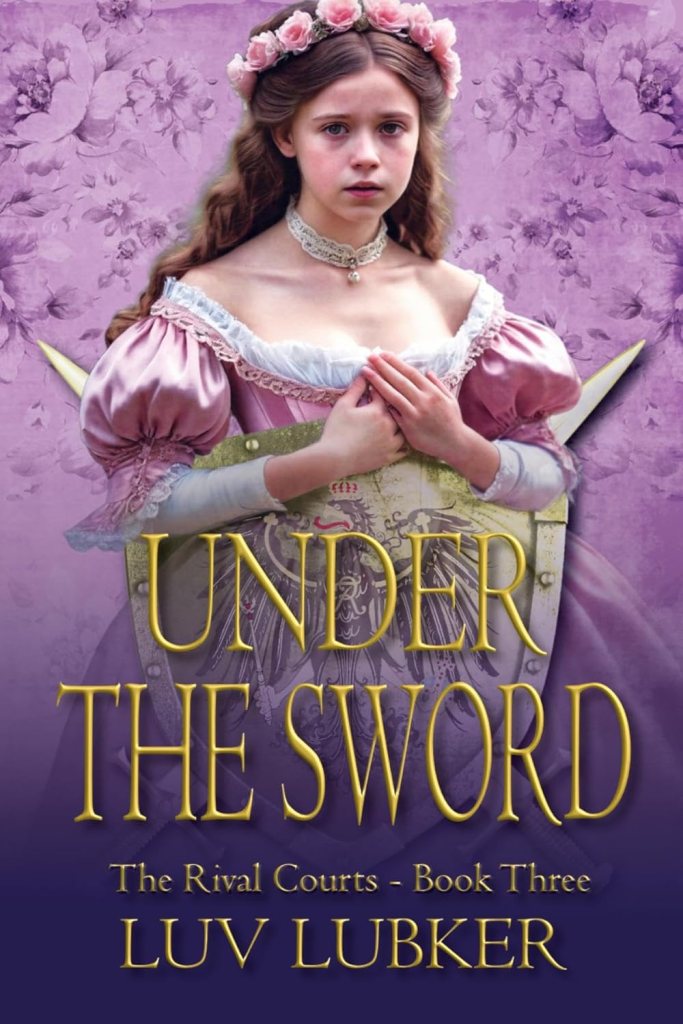
I’m delighted to welcome Luv Lubker and her new book, Under The Sword, to the blog #HistoricalFiction #VictorianEra #KaiserWilhelm #QueenVictoria #Anti-Trafficking #BlogTour #TheCoffeePotBookClub
I’m delighted to welcome Luv Lubker and her new book, Under The Sword, from The Rival Courts series, to the blog, with an excerpt.
Louischen sat on the broken branch of a tree which leaned over a little stream, gazing down into the water at the round face and big eyes of the little girl who seemed to look back up at her. Her face, too, was streaked with tears.
“Oh, Charlotta, I’m so glad I found you here,” she whispered. “You are Charlotta, but I must call you Charlotta the second, as Charlotta – the first – is gone forever. Papa – Papa killed her. I never thought he would do such a thing, but I saw her shatter into pieces with such a look of anguish! Oh, I can tell you everything, Charlotta.” She looked away and sighed. “Only, I can’t see you indoors. I can only see you here. Charlotta – the first – was with me so often. She was in the little glass over my bed. And – oh, Charlotta, I was so afraid. I couldn’t move, because there were bits of glass all over my bed, and I was afraid. But he can’t smash you. The wind can blow you away, into little bits, but you will still be there,” she whispered, as the wind blew and the face in the water rippled away for a moment.
Her little yellow voice seemed to float around Charlotta’s face, instead of hers. At first there had been waves of blue around the sides, but now, shimmering stars of deep, piney green fell over it. She sighed happily.
“I feel so peaceful here. But I wouldn’t dare to go to sleep here – the wind might blow me down and I wouldn’t want to sleep in your bed. No – I would rather sleep in the orchard, if I slept outside – in, or under, the cherry trees. It would be so nice to be buried in their petals, I think. But you will never know that, unless –” Louischen took a cherry pit out of her pocket, and looked at it. “Unless I planted one here, but the gardener says it would take years before it could rain down its pretty petals. But perhaps…” Louischen slipped carefully down from the branch, dug a little spot in the ground, next to the water, and covered it over. She bent down and kissed the spot. “Make a blanket for Charlotta, please,” she whispered.
She turned round and threw her arms around the pine tree, kissing it. “I have something for you, too,” she whispered. She took a bunch of pressed cherry blossoms from her pocket, and tucked it under the pine needles. “You belong together,” she whispered, turning her head on its side to look at the flowers peeking up, and smiled at them.
“Goodbye,” she whispered, and ran across the little island, carefully stepping across the fallen tree.
Here’s the blurb
From acclaimed Victorian historical author, Luv Lubker, the author of “Under His Spell” comes the continuing romance of the Princess Royal Victoria and Frederick III of Prussia.
Join Queen Victoria’s eldest daughter and her husband, future German Emperor Frederick III in this third installment of The Rival Courts family saga, as they climb the treacherous path to their dream of German unification in the Franco-Prussian war of 1870.
In the calm after the storm, Vicky and Fritz have it all: a devoted marriage, a growing family, and the promise of a bright future. But Fritz’s Uncle Karl lies in wait behind the scenes, hatching his newest plot. A shocking outcome of Vicky’s Royal duties will bring fresh doubts to Fritz’s heart, and his fatherhood.
As personal tragedy strikes and shakes them to their core, Fritz is forced to lead the largest battle history has ever seen. One which could change the face of Europe forever.
Vicky’s best friend struggles to shield her daughters from the sinister force that seeks to control them. The youngest shares her grandfather’s uncanny ability to know the truth behind others’ motives. But can she see the truth in him? In such a dangerous world, what heroic role will this small child play?
Can they escape the danger and betrayal that lurks in every corner as they travel to the icy expanse of Russia, the peaceful Mediterranean shores, and the vast Eastern deserts?
Will Vicky and Fritz’s love and marriage survive a mysterious illness, or will Uncle Karl’s conspiracies tear them apart for good?
Fans of Clare McHugh’s A Most English Princess, Mary Hart Perry’s The Shadow Princess, and Daisy Goodwin’s Victoria will be swept away by this gripping tale of love, war, and intrigue. With rich historical detail and deeply human struggles, Under the Sword, the third installment of The Rival Courts saga, brings to life the triumphs and tragedies in a fight against a nefarious trade which flourished in the shadows of the Royal court. A must-read for lovers of Victorian-era royal fiction.
Trigger Warnings: All non-graphic:
Sex trafficking/prostitution encouraged by villain (but anti-trafficking is a strong theme); Rape, drugged gang-rape (off-the-page); Implied (off-the-page) child abuse (physical, sexual); Childhood pregnancy; Trauma processing/PTSD in historical setting; Death of child, grief; Occasional racist remark (strongly DISapproved by main character); Coerced marriage; War/battle scenes; ED/sexual disfunction (Discreet/non-explicit discussion and frustration of spouse); Implied death of pet cat; Historical views expressed by characters about homosexuality
Luv Lubker began life in the Animal World, researching creatures great and small since before she can remember, and earning her degree in chicken psychology by age twelve. Not long after, she immigrated to the Victorian era, where she has lived half her life in close company with the Brontë sisters and made friends with Queen Victoria’s extended family, whom she now knows quite as well as her own kin.
Born in a cattle trough in the Appalachian Mountains, Luv currently resides in Texas’ Great Plains when visiting the modern world. When she isn’t writing or reading, she delights in preparing and savoring gourmet raw food with her family and exploring nature on long bike rides. Her special abilities include researching in seven languages and riding a unicycle since age seven.
Luv’s research delves into the unwritten stories that history left behind. Through unpublished letters, altered manuscripts, and deeply buried secrets, she reveals emotional truths concealed beneath the era’s refined exterior. Her novels give voice to the silenced, reveal what Victorians were taught to suppress and what their biographers chose to omit, tracing invisible scars that shaped lives, choices, and history itself.
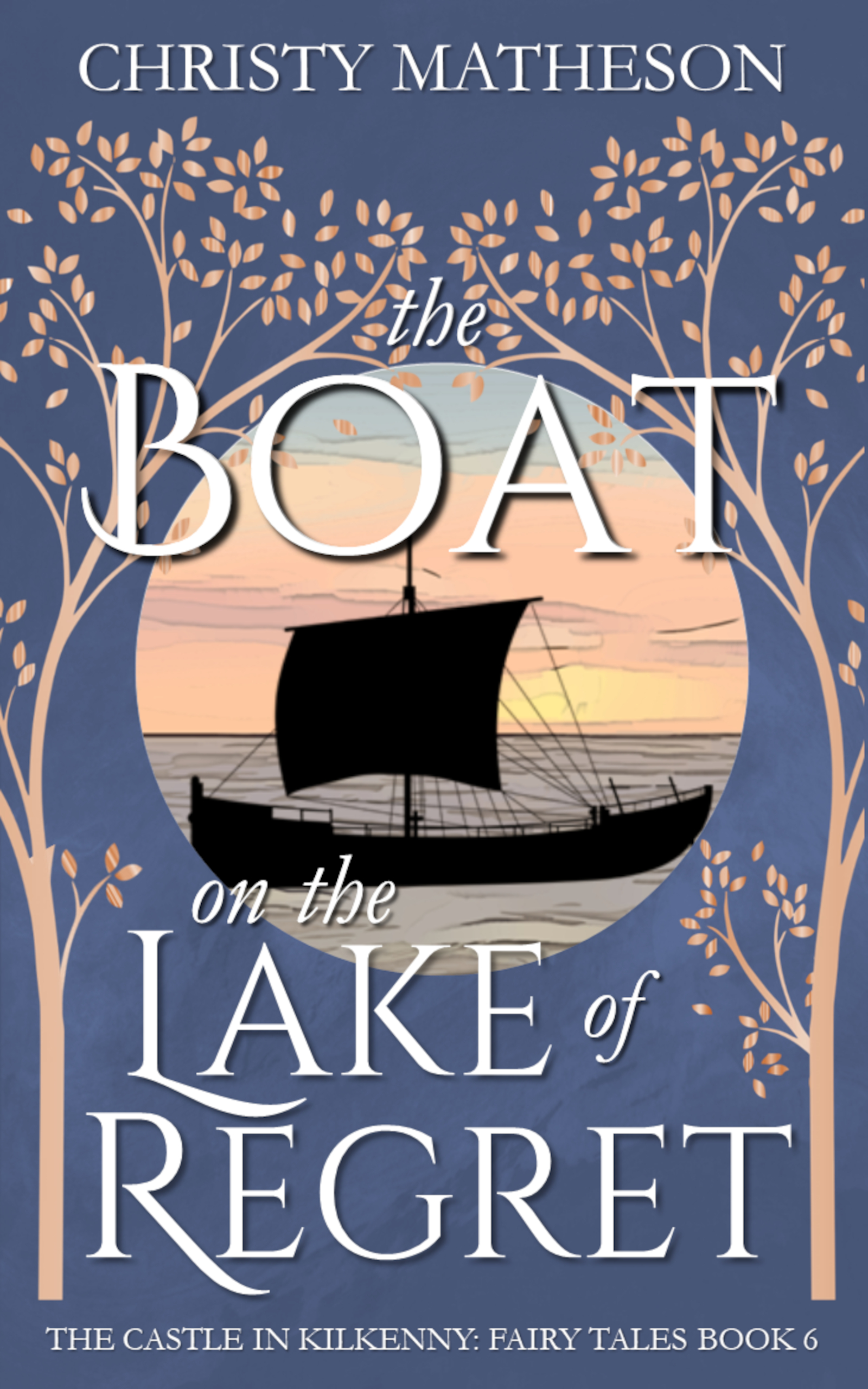
I’m delighted to welcome Chritsy Matheson and her book, The Boat on the Lake of Regret, The Castle in Kilkenny: Fairy Tales, to the blog with a snippet.
Snippet
Opening:
“Hannah!” Dylan calls. “Hannah?”
A shiver of worry runs up my spine. He never uses my real name.
“Here! I’m in the parlor!” Footsteps thunder down the hallway and Dylan bursts in. His hair is all mussed, his face is wild, and his jeans are in deplorable shape.
“What on earth happened? Come in and—”
“I’m fine. It’s yourself who needs to be careful.”
Fancy that, after barely making time for me for weeks, he bursts into my own home and orders me around!
He sees his mistake immediately. “I didn’t mean—look, I brought you this, Henny luv.”
Well, that’s a little better. He holds out his palm and I move close to look. He smells of campfire and sweat and rain, and I rest my hand on his arm just to feel the steady solid warmth of him.
“Oh, you didn’t have to buy me a ring! I’ve told you already that I’ll marry you, and we’re trying to save up.”
Despite my protests, the ring is lovely, and I reach for it, but Dylan closes his fist before I can touch it.
“It’s not that…I mean, of course we are. It’s just”—he takes my hand, his fingers cool and gentle—“there’s a whole story, but”—he slides the skin-warmed metal over my first knuckle—“first I want to —”
Here’s the Blurb
He has one last chance to be a fairy tale hero.
But she didn’t agree to be the damsel in distress.
When her longtime boyfriend unexpectedly slides a ring on her finger, Hannah is whisked from her everyday bedroom to a medieval ball. Hannah knew that Dylan would do anything to prove to her parents that he’s husband material, including going into the Fae world—but she never agreed to go through the Veil herself.
Now one of three princess sisters, Hannah is paired with now-Prince Dylan. But, homesick and blindsided, she pretends the Veil has wiped him from her memory.
As her prince scrambles in vain to be the right kind of hero, Hannah ignores her instincts and follows her new sisters onto a mysterious boat—which promptly sails them into a land of giants, magical traps, and enchanted pianos…and away from Dylan.
Read now to journey back to medieval Ireland, complete with the Fae and mythological monsters, in this fairy tale adventure and sweet “it was always you” romance.
Characters you connect with. Adventure. Love. Family… And endings that are more than a sugar rush.
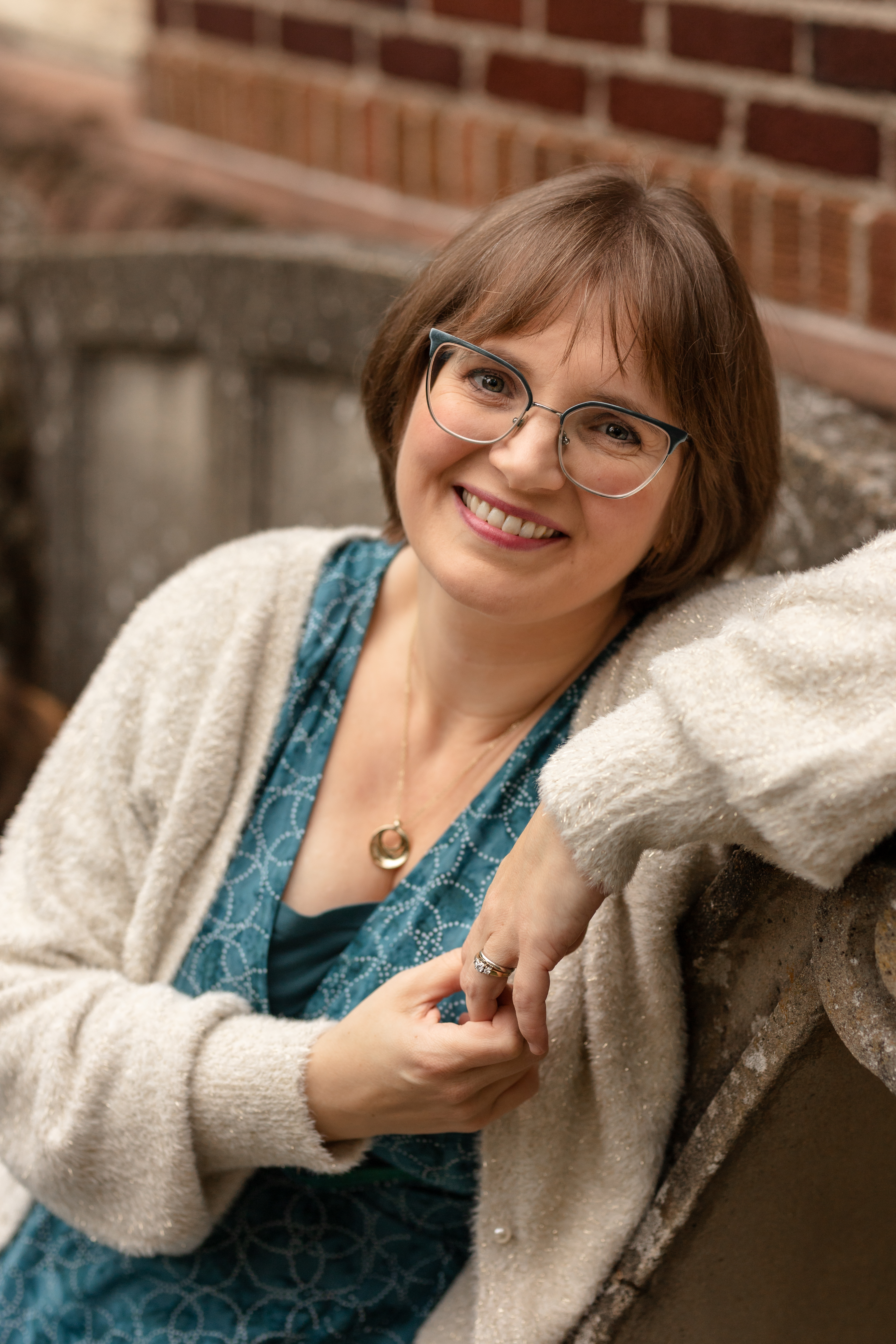
When Christy Matheson is not throwing ordinary characters into fairy tales, she is busy raising five children. (Very busy.) She writes character-driven historical fiction with and without fantasy elements, and her “fresh, smart, and totally charming” stories have won multiple awards.
Christy is also an embroidery artist, classically trained pianist, and sews all of her own clothes. She lives in Oregon, on a country property that fondly reminds her of a Regency estate (except with a swing set instead of faux Greek ruins), with her husband, five children, three Shelties, one bunny, and an improbable quantity of art supplies.
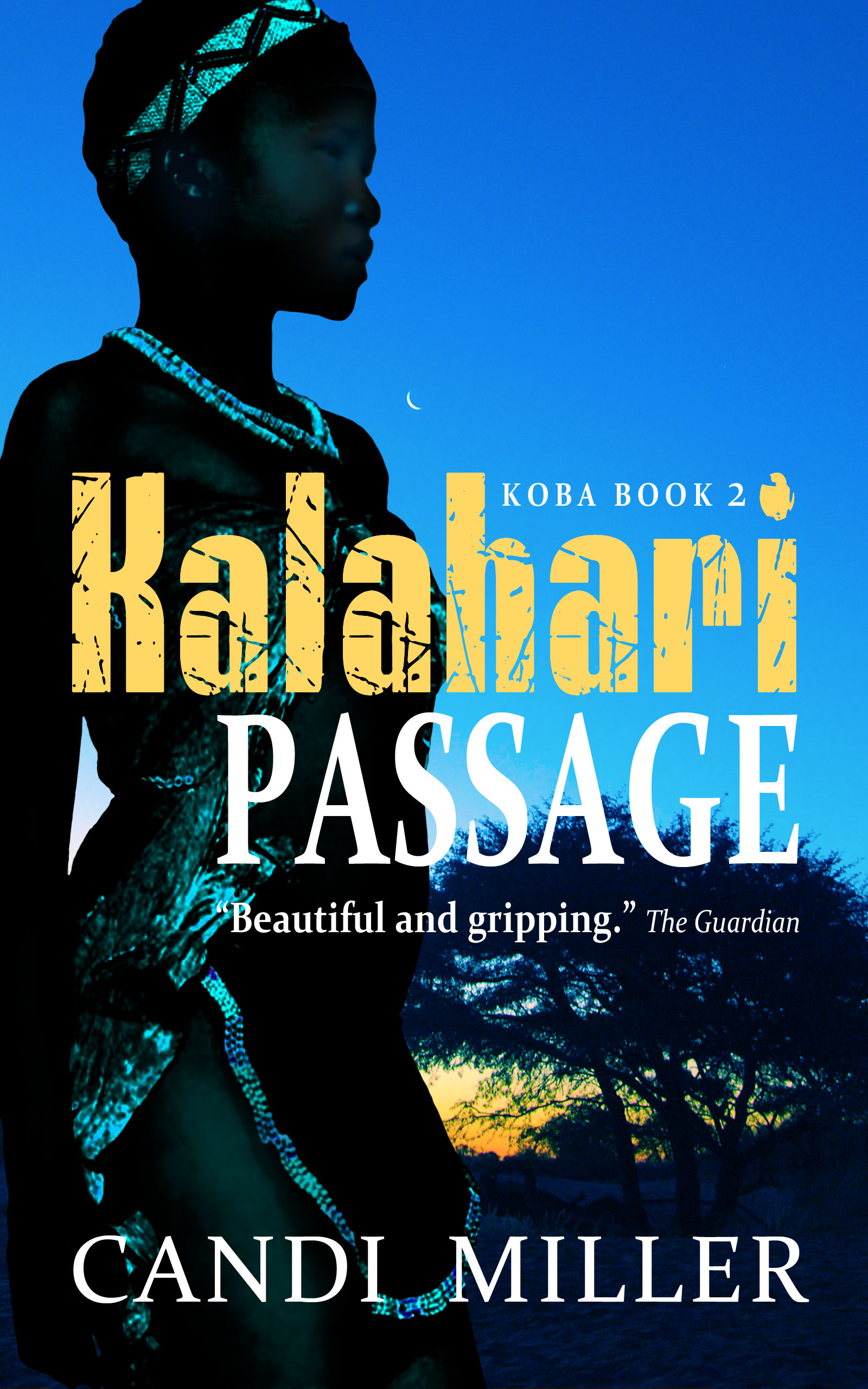
I’m delighted to share my review for Kalahari Passage by Candi Miller #histfic #blogtour #bookreview
Here’s the blurb
Koba and Mannie have been in jail. Their crime, loving each other across the Apartheid colour bar in southern Africa. Koba escapes her captors and using her bush skills, finds her way across the semi-desert to her former tribal home. But adapting to a hunter-gatherer lifestyle after a decade away, has challenges. And her mortal enemy is on her trail.
Meanwhile Mannie absconds during his parole and sets off on a sub-continental road trip to find his beloved Koba. But will his new comrades persuade him to join them across the border for training in deadly guerrilla warfare? And what will that mean for his future with Koba?
Under tragic circumstances the lovers meet, but the danger they are in means they face heart-breaking choices.
Kalahari Passage is an action-packed story of a search for identity and love. Readers will be spellbound by Koba’s world where an ancient culture dances, trances and lives in harmony with the land.
Key ideas
● Unique FMC from world’s oldest living culture, largely unknown outside anthropology. The lineage of Koba’s people goes back to the dawn of humankind.
● Dispossession – ancestral land, cultural identity, freedom
● Interracial love – romantic and family
● Racial discrimination and defiance
● Recent black history – Apartheid South Africa 1960s
Kalahari Passage is the second book in the Koba books. I confess, I was a little perplexed to begin with. But, I took myself into another room, and just sat and read, and I’m so pleased I did (perhaps, my friends, start with the first book). It is a beautiful book, telling the story of people caught up in events they have little control over. It describes a time we should still be horrified to read about, yet it accurately reflects the beliefs of people at that time. It is a richly imagined and intricately recreated world that most of us in the Western world would fail to understand and comprehend, but we should.
The story is both complex and straightforward – will our divided lovers ever meet again, or will people, events and politics play their part in keeping them apart, as well as societal constraints? But all that pales into insignificance as we journey into the Kalahari with Koba. You can taste the sand, feel the heat and grow very thirsty reading this story.
While half of the cast are worrying about being overheard saying something they shouldn’t on ‘party telephone lines’, the other half are simply trying to find drinking water and enough food to eat. The contrast is stark, but essentially, concerns surviving in a harsh world where politics or the environment could see you in a great deal of trouble.
I loved this book. It opened my eyes, it made me think, and it taught me about a past I know very little about. Go read it.
Meet the author
Candi Miller was born in southern Africa and has spent more than twenty years researching the first peoples of the region, a group who have now adopted the exonym of San or Bushmen. She taught creative writing at UK universities. She now lives in Cornwall where she is writing the last book of the Koba trilogy. She is republishing her novels to support a school feeding scheme she co-founded for San children in 2017.
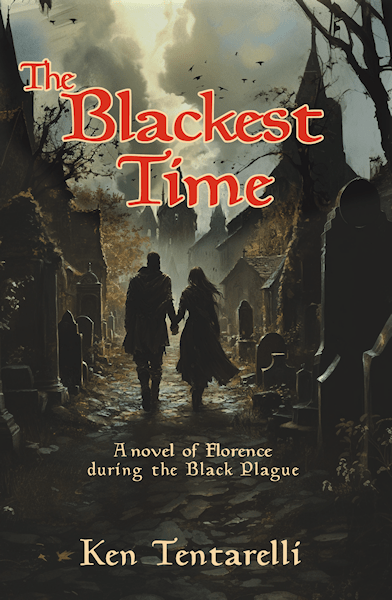
I’m delighted to welcome Ken Tentarelli and his new book, The Blackest Time, to the blog with an excerpt.
Excerpt
Parishioners rise up in anger when a priest declares the Black Plague a divine punishment fortheir sins
.Those attending the morning mass included families living in the parish, lumbermen who had been logging forests in the nearby hills, The lumbermen clustered together near the front of the church, close to the altar. They formed the single largest group. Everyone, Gino included, studied the people nearby, fearful someone close by might show symptoms of the sickness: flushed faces, lumps, or darkened areas on the neck or arms.
While waiting for mass to begin, Gino listened to snatches of conversation. Men raised their voices enough to speak with other men, probably neighbors with whom they had sat elbow-to-elbow in a crowded tavern months ago, and now wouldn’t get within an arm’s length of each other. Women felt it imprudent to speak above a whisper in church, so they merely smiled at each other across the void.
Gino heard some families were absent from mass because they were mourning the death of family members. In one family, it was said, both the mother and father had succumbed, leaving behind three youngsters. No one knew what had become of those children. Stories circulated of entire families having been claimed by the sickness. Most surprising were reports of families fleeing the city to escape the pestilence. For the past two years, people had streamed into Florence from the countryside to seek salvation from the famine. Did the departure of these families mark a turnaround, the beginning of an exodus?
Although the lumbermen were far from him, he sensed hostility in their guttural outbursts. Many had left wives and children in the city while they logged in the hills, so death rampaging unchecked though the city threatened their families and they reacted with anger. They wanted something more tangible than bad air—possibly someone—to blame for the misery.
A small bell sounded when the sacristy door opened, and a priest emerged, followed by two altarboys. When they reached the altar, the priest spread his upraised arms and delivered the opening blessing. Near the midpoint of the service, the priest stepped to the pulpit to deliver his sermon.“We are all God’s children,” he began. “God loves us … all of us. He wants us to love Him, to heed His word, and to obey Him. Our Lord would not cause His children to suffer without reason.” Shifting from a tempered tone, the priest boomed, “This pestilence has been inflicted upon us because we have offended Him. There can be no other explanation.”
Shaken by the indictment, people glanced furtively at those around them as if they were all co-conspirators in a plot against God. “What could we have done to deserve this punishment?” they asked themselves.
Pleased his words had stunned his flock as he had intended, he continued, “We have sinned against God, and only by ending our sinful ways can we expect Him to end this scourge. You may not be an adulterer or a fornicator, but ask yourself, are you committing the sins of envy and pride?”
One lumberman’s face reddened. He bellowed, “My wife was a good, holy, God-fearing woman. She committed no sin worthy of this damnation; yet she suffered a horrible death. She cannot beheld to account for this misery.”
The outcry froze everyone. The priest gripped the lectern so tightly his knuckles turned white; his fingernails dug into the wood. Another lumberman shouted, “My son was barely old enough to walk. He was an innocent child. What sin could he have committed? But he was struck down.”
Family groups moved farther away from the bellicose woodsmen, who began grumbling in support of their comrades. A third man called out, “I wear my best smock when I come to church.” He pointed to its threadbare sleeve and its soiled shoulder. “This is my best! Look at it !It’s frayed and spotted. How could anyone who dresses like this be accused of being prideful?
“Do you know who is prideful?” he asked and raised an arm angled toward the priest. “Thepriests! Look at them. They don’t wear frayed vestments. Before the new bishop came, the priests in this diocese wore plain linen vestments. But now, linen isn’t good enough for them. They all wear expensive silk.” The eyes of all the parishioners shifted to the priest.
The man continued, “The bishop refused to serve communion from a pewter chalice. Now all chalices in the diocese are silver … all except the one used by the bishop. His is gold.” He spread his arms wide. “My wife spends nights in the dark to preserve her lone candle, while this church and others are lit up like brothels.”
He swept his gaze around the church to make eye contact with everyone. “For two years, when rain destroyed the crops, we all struggled to find food for our families. Beggars starved in the streets. But do you know of any priest who went hungry? None of them went to sleep with pangs of hunger. They made sure their bellies were filled.”
“If this terrible disease has been unleashed upon us by the sin of pride, it is the bishop and his minions who brought it upon us.” He ended his tirade in a booming voice, saying, “We need to make the bishop stop his prideful ways and walk in the humble shoes of Saint Francis. I say we go to him now.” He strode the length of the nave and out the door, followed by the other lumbermen.
Here’s the Blurb
Set in the 1300s during the devastating black plague, The Blackest Time is a powerful tale of compassion, love, and the human spirit’s ability to endure immense adversity.
Gino, the central character, is a young man who leaves his family’s farm to find work in a pharmacy in Florence. His experiences show us how people coped in the most horrific time in history.
Shortly after Gino arrived in the city, two years of incessant rain destroyed crops in the countryside, leading to famine and despair in the city. Gino offers hope and help to the suffering— he secures shelter for a woman forced to leave her flooded farm, rescues a young girl orphaned by the plague, and aids others who have lost everything.
The rains had barely ended when the plague hit the city, exposing the true character of its people. While some blamed others for the devastation, the story focuses on the compassionate acts of neighbors helping each other overcome fear and suffering. Doctors bravely risk infection to care for their patients. A woman healer, wrongly accused of witchcraft and driven from the city, finds a new beginning in a village where her skills were appreciated.
Despite the hardships, love blossoms between Gino and a young woman he met at the apothecary. Together they survive, finding strength in each other and hope in a world teetering on the edge.
The Blackest Time is a testament to the strength of the human spirit in overcoming unimaginable tragedy.
Ken Tentarelli is a frequent visitor to Italy. In travels from the Alps to the southern coast of Sicily, he developed a love for its history and its people.
He has studied Italian culture and language in Rome and Perugia, background he used in his award-winning series of historical thrillers set in the Italian Renaissance. He has taught courses in Italian history spanning time from the Etruscans to the Renaissance, and he’s a strong advocate of libraries and has served as a trustee of his local library and officer of the library foundation.
When not traveling, Ken and his wife live in beautiful New Hampshire.
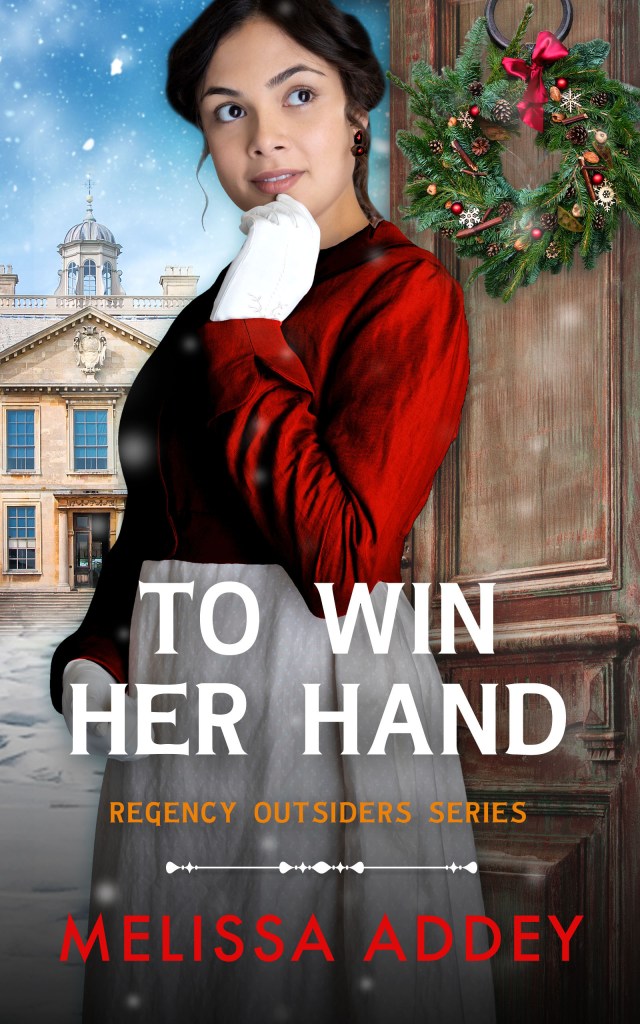
I’m sharing my review for To Win Her Hand by Melissa Addey #regencyromance #blogtour #bookreview #festiveread
Here’s the blurb
They’ve been engaged since they were children, so he sees no need to woo her. She wants a love match and is determined to find an alternative suitor. Perhaps a Christmas trapped together in snowy London will change both their minds.
Lord Comerford has returned from the navy to claim his title, but ton life appears shallow after active service and the woman he has been promised to since birth seems a frivolous child, only interested in parties and clothes.
Lady Celia is hoping her betrothed will make her heart skip a beat – but dour Lord Comerford hardly fits the bill, so she’s planning to call off the wedding just as soon as she can find a better suitor.
Trapped in snow-covered London, the two patch together Christmas celebrations and in so doing find that actions speak louder than words and that an arranged marriage may turn out to contain a spark of romance.
A seasonal Regency romance, full of historical detail and festive fun, as a couple find out that a dutiful promise might be joyful after all. The Season has begun, the ton is gathered… will Christmas work its magic for Alexander and Celia?
To Win Her Hand adopts the old Regency romance storyline of both main characters being unable to speak their minds to one another. Instead, we hear their thoughts as they both manage to completely misunderstand the other, leading to Lady Celia deciding she can’t possibly marry the man she’s been engaged to since she was a child. This is a nice set-up for what comes next (although, I do find myself gnashing my teeth at these people. Grrr. Why can’t they just speak their minds:))
But, all this is to change when Celia and Lord Comerford find themselves ‘thrown’ together and unable to escape one another over the Christmas season. What follows are a charming collection of scenes where both begin to realise they’ve been too hasty. But, of course, it wouldn’t be a Regency romance without more miscommunication between our pair.
To Win Her Hand is another charming Regency romance from Melissa Addey. In her Regency Outsiders series, she offers readers something a little different, with her main characters constrained by a society that misunderstands them. It is quite refreshing, and I’ve thoroughly enjoyed all of the books in the series (although they are standalone novels – you don’t need to read the previous books as each one has new characters – but you would be missing out).
Melissa Addey writes richly researched historical fiction inspired by what she calls “the footnotes of history” – forgotten stories and intriguing lives from the past. Her novels span Ancient Rome, medieval Morocco, 18th-century China, and Regency England. She has a PhD in Creative Writing, was Writer in Residence at the British Library, and lives in London with her family. Discover her books (and get a free novella) at www.melissaaddey.com
Check out my review for From The Ashes, Melissa Addey’s Roman-era historical fiction set around the events of Vesuvius and the building of the Colosseum.



































 MJ Porter