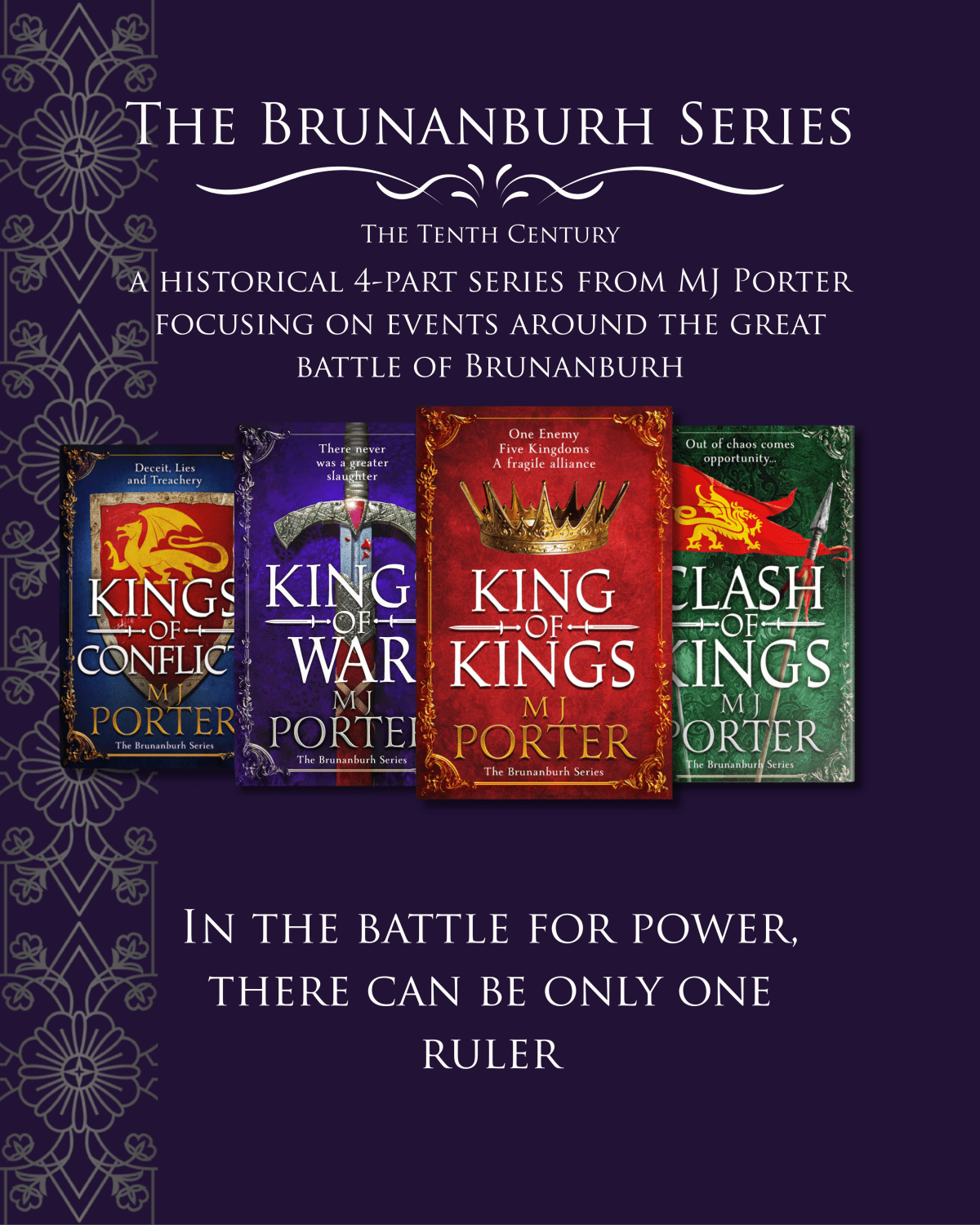
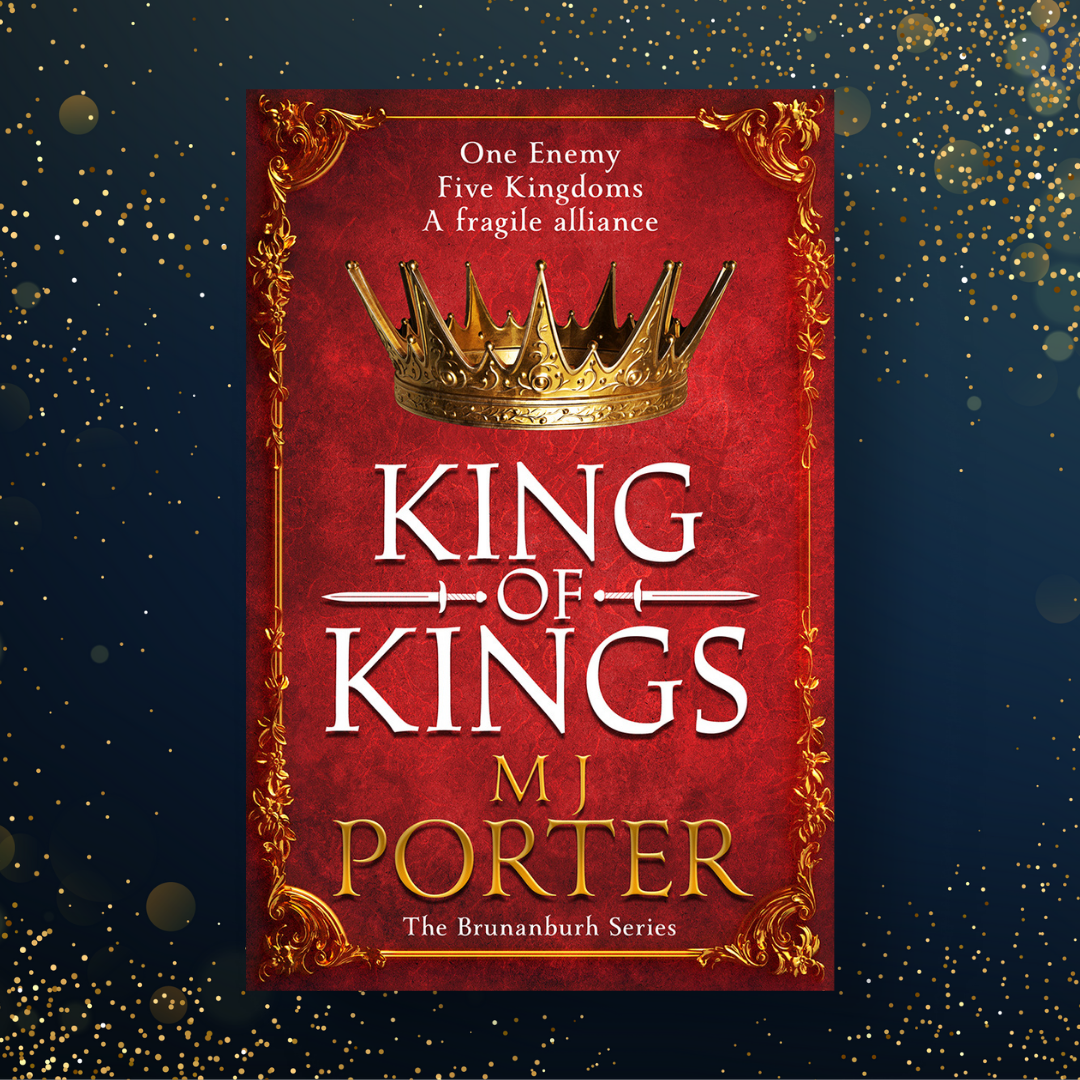
King of Kings has a number of characters, and some might be surprised to find Lady Eadgifu amongst them, but she was an incredibly important historical character, and I couldn’t leave her out of the narrative set at the English court.
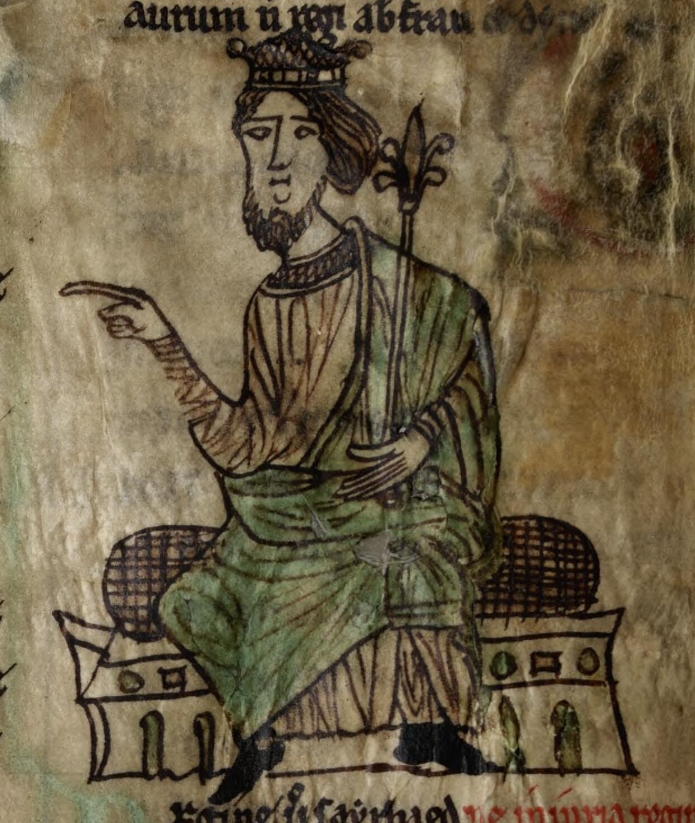
Lady Eadgifu was the third wife of Edward the Elder (r.899-924), king of the Anglo-Saxons. Edward the Elder was the father of King Athelstan, and a whole host of daughters, as well as five sons. Lady Eadgifu would, it seems, have been young when she married the aging Edward the Elder, and that meant that she long outlived him, and also, that her three children (possibly four, but I’ve opted for three) were young when their father died. And two of these children were sons, Edmund (born c.921) and Eadred (born c.923). Her daughter, Eadburh, is thought to have been the oldest of the three children, born c.919.
While Lady Eadgifu, from what’s known (and it isn’t much, as there are few surviving charters from the end of Edward’s reign) perhaps had little role to play while her husband lived, other than wife and mother to the king’s children, following his death, she became increasingly significant. She was the daughter of an ealdorman, who perhaps died just before her birth, and her family are said to have had connections with Kent. Indeed, it’s often stated that she brought her husband Kent with their union. By that, what’s often meant, is the loyalty of the Kentish people. Remember, at this time, we’re still just before the creation of ‘England’ as we would now recognise it.
Sadly, very little is known about Lady Eadgifu (and she’s not alone in this – many of the royal women ‘disappear’ at points in the historical record, and on occasion, are entirely lost.) We know about a land dispute she was involved in, and also much more information for after Athelstan’s reign.
Indeed, it has been said that
‘Nor is it surprising that Eadgifu, as the consort of the previous king, served little role in her stepson’s court.[i]
‘the enhanced position [of Lady Eadgifu] may also have been developed specifically for the widowed Eadgifu as part of an alliance with her stepson Æthelstan [Athelstan] in which she supported his position and he recognised her sons as his heirs.’[i]
[i] Yorke, B. ‘The Women in Edgar’s Life,’ in Edgar, King of the English, 959-975 Scragg, D. ed (The Boydell Press, 2008), p.146
And it is this option that I’ve decided to explore in King of Kings. Lady Eadgifu was wife to a king. She would have known her worth, even when faced with a stepson as the king of the English, and another stepson, and stepdaughters, who perhaps didn’t share any love for their, potentially, younger stepmother. Will Lady Eadgifu work with or against Athelstan? Read on to find out.
Today, I’m absolutely delighted to share a fabulous post from Anna Belfrage about dressing in the seventeenth century. It will make you giggle, I promise.
Dressing for success in the seventeenth century
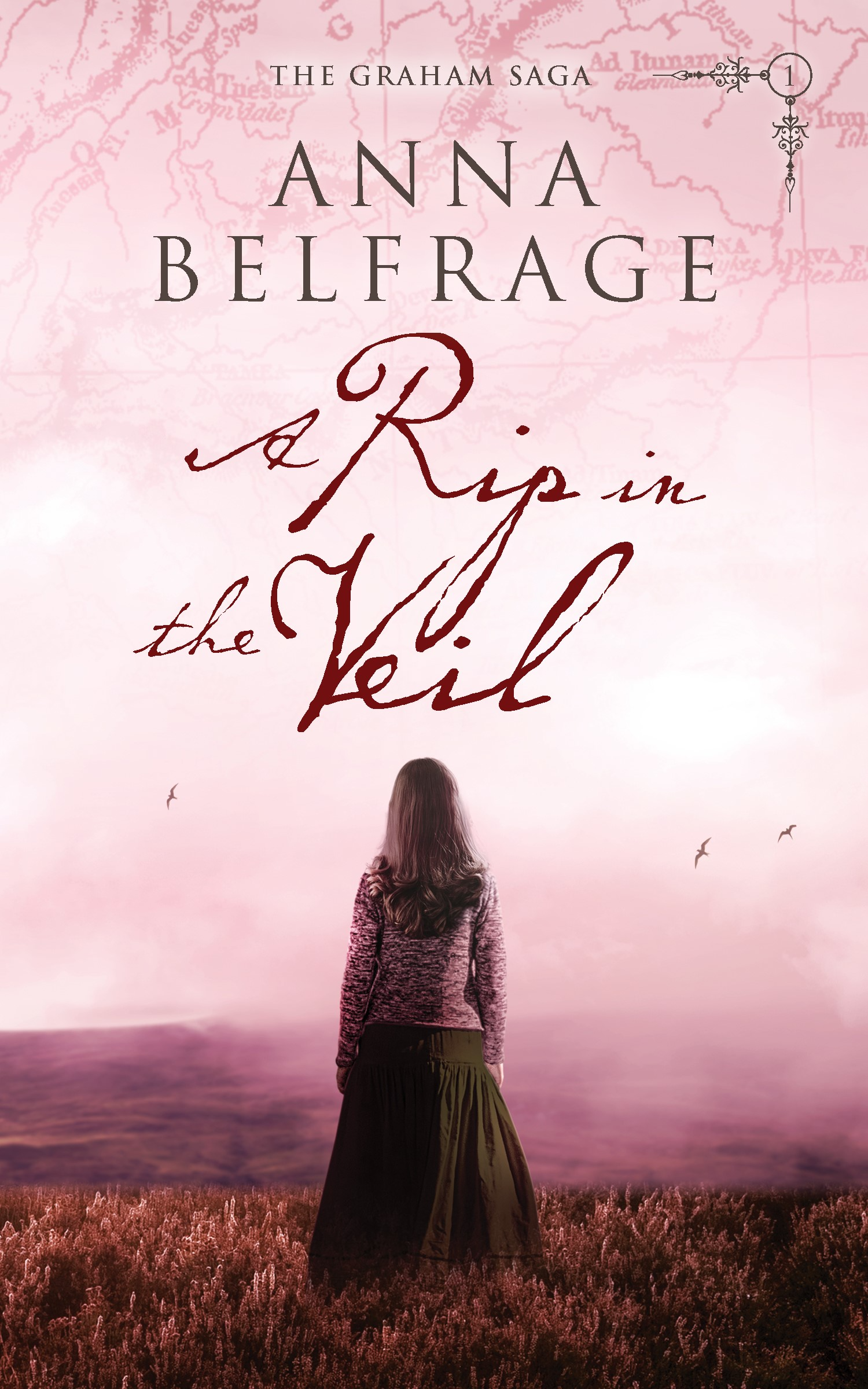
In a A Rip in the Veil—the first book in The Graham Saga—the unfortunate (or not, depending how one sees it) Alex Lind has the misfortune of falling three centuries backwards in time to land at the feet of Matthew Graham. Matthew Graham is a devout Presbyterian who has fought in the Commonwealth armies in the Civil War. To Alex, he is initially very strange. Heck, the entire situation is strange: no, wait—it’s impossible!
Matthew is as taken aback as Alex is—perhaps even more, as the only explanation to her sudden appearance in his life must be magic. Or? Besides, what is the woman wearing? Those tight, tight breeches she calls ‘djeens” showcase her every curve, as do her other garments. No, had she been his woman, he’d never have allowed her to set a foot outside dressed like that, all of her exposed, like.
Alex quickly realises that in this new time she has to adapt. ASAP. And one of the first things she must embrace is an entire new wardrobe. “Yay me,” she mutters as she shakes out shift and petticoats and heavy skirts and bodice and. . .
I must admit that I wasn’t entirely thrilled when Alex landed in 1658. The seventeenth century is not my sartorial favourite – especially when it comes to male fashion.
This period dress thing is difficult.
First of all, as the writer of historical fiction it is important to understand what people wore, who wore what and how it was worn. In some cases it’s straightforward: stockings cover your feet and the nether part of your legs no matter if you live in the twentieth century or the fifteenth. But take that rather ugly male adornment that Henry VIII was so proud of flaunting – the codpiece – and I am somewhat stumped. How did it work? ( Okay, so I’ve looked this up; strings, buttons or hooks kept this decorative little (hmm) flap of fabric in place.)
Secondly, it helps if the writer in question finds the period attire alluring in some way or other. It’s difficult to write convincingly about handsome men in codpieces and padded breeches when all you see in your head is something resembling a man in a huge diaper.
Finally, there must be a familiarity with how people dress and undress. “He told her to turn around and zipped up her gown,” is not a good description of the intimacy between man and wife in the fourteenth century. (BTW, the modern zipper owes a lot to Swedish inventor Gideon Sundback. It’s nice to know us Swedes have contributed to human development: dynamite, zippers, gauge blocks, the AGA cooker.) Having exploring male fingers encountering panties in the sixteenth century is also something of an anachronism, and should the dashing regency rake pulls down his boxers you’re not reading historical fiction, you’re reading about a masquerade.
To avoid such gaffes, I’ve spent a lot of time researching the period and have accordingly done my fair share of staring at what few clothes survive from the seventeenth century—like James II’s elegant attire exhibited in the Victoria & Albert museum. Okay, so that is later in the century, but all that lace, all those embroideries, and that gigantic wig! Plus, the high heels on the shoes. . . Nope, not at all my cup of tea.
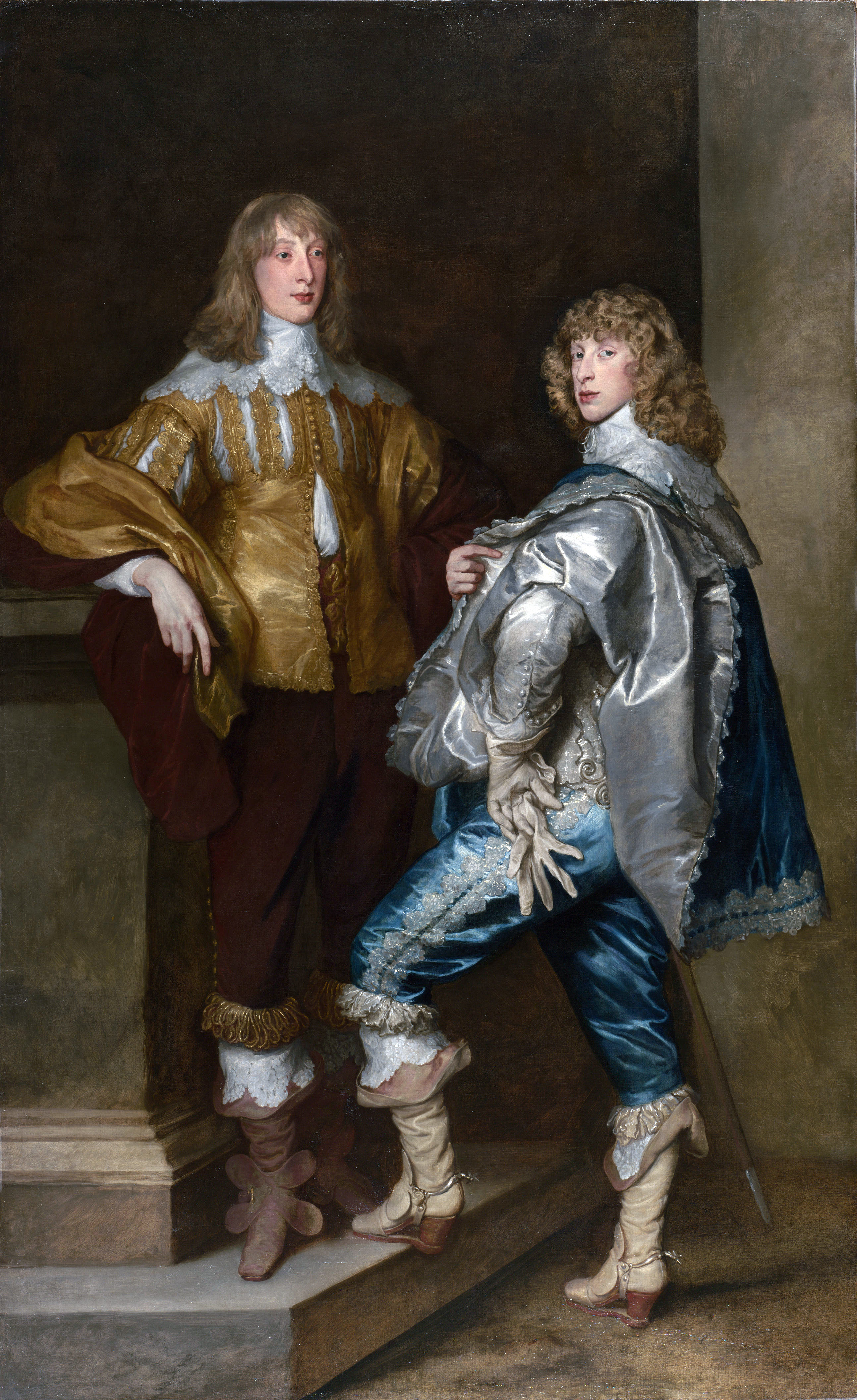
Earlier in the 1600s, men wore wide breeches, sashes, lace, ribbons—like these young and elegant Stuart brothers in Van Dyke’s portrait.
To the seventeenth century young girl, they were likely delectable. To Alex, not so much. She’d be hard put not to laugh her head off. So it is fortunate that when she first meets Matthew, he is in a ragged shirt and equally ragged breeches, fleeing from pursuing soldiers. It is also fortunate that Matthew would no more adorn himself with ribbons than he would dance attendance on the king—he is a man of Parliamentarian convictions. No, Matthew wears plain and well-made clothes, now and then adorned with a ruffled cuff or an elegant collar.
Obviously, Matthew expects this new female companion of his to dress sedately, which is how Alex finds herself obliged to re-learn just how to dress.
In the seventeenth century, there were no bras, no panties. Instead, the undergarment is a shapeless elongated linen shirt that comes to just below the knees. This shift is worn over stockings that come to just above the knee and are fastened by garters. “I can help you with those,” Matthew suggests, and there is a twinkle in his eyes as he helps Alex fasten the stockings with pink ribbons. Just because he doesn’t wear ribbons, it doesn’t mean she can’t, he says. In fact, he rather likes the fact that she is wearing them—and that he tied them into place. Over the shift—which also doubles as nightgown—Alex now dons a corset. “Ugh!” she groans as she tightens into place. The corset she has ties in front—only people who can afford a ladies maid have corsets that tie in the back. She has to struggle a bit to get it to sit right, and then there are the petticoats, tied into place at her waist and falling to mid-calf. Only the very, very rich have garments that fall all the way to the floor. Most women have skirts high enough to allow them to work and walk without dragging the hem in the dirt.
“Here.” Matthew hands her the heavy skirts. And yes, they are heavy, making it hard to, for example, run. Or jump a fence. Once Alex has stepped into them, he helps her tighten them into place. A bodice, a shawl to cover what may remain exposed of her chest and then Matthew holds out a cap. “No way!” She backs away, staring at the embroidered linen coif. “You must cover your hair,” he says. She refuses. There is a slight. . . er . . . argument. Things end in a compromise: she will not cover her hair indoors, but otherwise she will either wear a coif or a hat. Matthew would prefer both, but he is pragmatic enough to realise this isn’t a battle he will win. Besides, Alex is having to handle a lot of change as it is. “Tell me about it,” she mutters. She isn’t overly impressed with the food. Or the lack of chocolate. Or of tea. “I thought they had tea in the seventeenth century,” she groans. “They do,” I tell her, “but it is very, very expensive.” “Oh.” She gnaws her lip, her shoulders slumping. Which is probably why Matthew expends a ridiculous amount on a ridiculous small quantity of tea next time he goes to Edinburgh, pleased by the way she lights up from within when he hands the precious package over.
Over time, Alex will become accustomed to her new clothes, even if she will quite often think longingly of jeans and sweatshirts, of Converse and shop-bought socks. (She hates to knit)
But while she adapts to her new life on the outside, she remains a woman of modern conviction and outlook, which will now and then cause her quite some problems in her new time. It is fortunate that she has Matthew to guide her. On the other hand, there will be countless of occasions when Matthew will owe his life and sanity to her, the strange lass he found concussed and burned on an empty Scottish moor. Two halves made whole are my Alex and Matthew, no matter such details as sartorial arguments!
Thank you so much for such a fabulous post. I just can’t imagine all the lace:)
Here’s the blurb
On a muggy August day in 2002 Alex Lind disappears. On an equally stifling August day in 1658, Matthew Graham finds her on a Scottish moor. Life will never be the same for Alex – or for Matthew.
Alexandra Lind is thrown three centuries backwards in time to land at the feet of escaped convict Matthew Graham.
Matthew doesn’t know what to make of this strange woman who has seemingly fallen from the skies—what is she, a witch?
Alex is convinced the tall, gaunt man is some sort of hermit, an oddball, but she quickly realises the odd one out is she, not he.
Catapulted from a life of modern comfort, Alex grapples with her new existence, further complicated by the dawning realization that someone from her time has followed her here—and not exactly to extend a helping hand.
Potential compensation for this brutal shift in fate comes in the shape of Matthew, a man she should never have met, not when she was born three centuries after him. But Matthew comes with baggage of his own and on occasion his past threatens them both. At times Alex finds it all excessively exciting, longing for the structured life she used to have.
How will she ever get back? And more importantly, does she really want to?
Buy Links
This title is available to read on #KindleUnlimited.
Had Anna been allowed to choose, she’d have become a time-traveller. As this was impossible, she became a financial professional with two absorbing interests: history and writing. Anna has authored the acclaimed time travelling series The Graham Saga, set in 17th century Scotland and Maryland, as well as the equally acclaimed medieval series The King’s Greatest Enemy which is set in 14th century England.
Anna has also published The Wanderer, a fast-paced contemporary romantic suspense trilogy with paranormal and time-slip ingredients.
Her Castilian Heart is the third in her “Castilian” series, a stand-alone sequel to her September 2020 release, His Castilian Hawk. Set against the complications of Edward I’s invasion of Wales, His Castilian Hawk is a story of loyalty, integrity—and love. In the second instalment, The Castilian Pomegranate, we travel with the protagonists to the complex political world of medieval Spain. This latest release finds our protagonists back in England—not necessarily any safer than the wilds of Spain!
All of Anna’s books have been awarded the IndieBRAG Medallion, she has several Historical Novel Society Editor’s Choices, and one of her books won the HNS Indie Award in 2015. She is also the proud recipient of various Reader’s Favorite medals as well as having won various Gold, Silver and Bronze Coffee Pot Book Club awards.
Find out more about Anna, her books and enjoy her eclectic historical blog on her website, www.annabelfrage.com
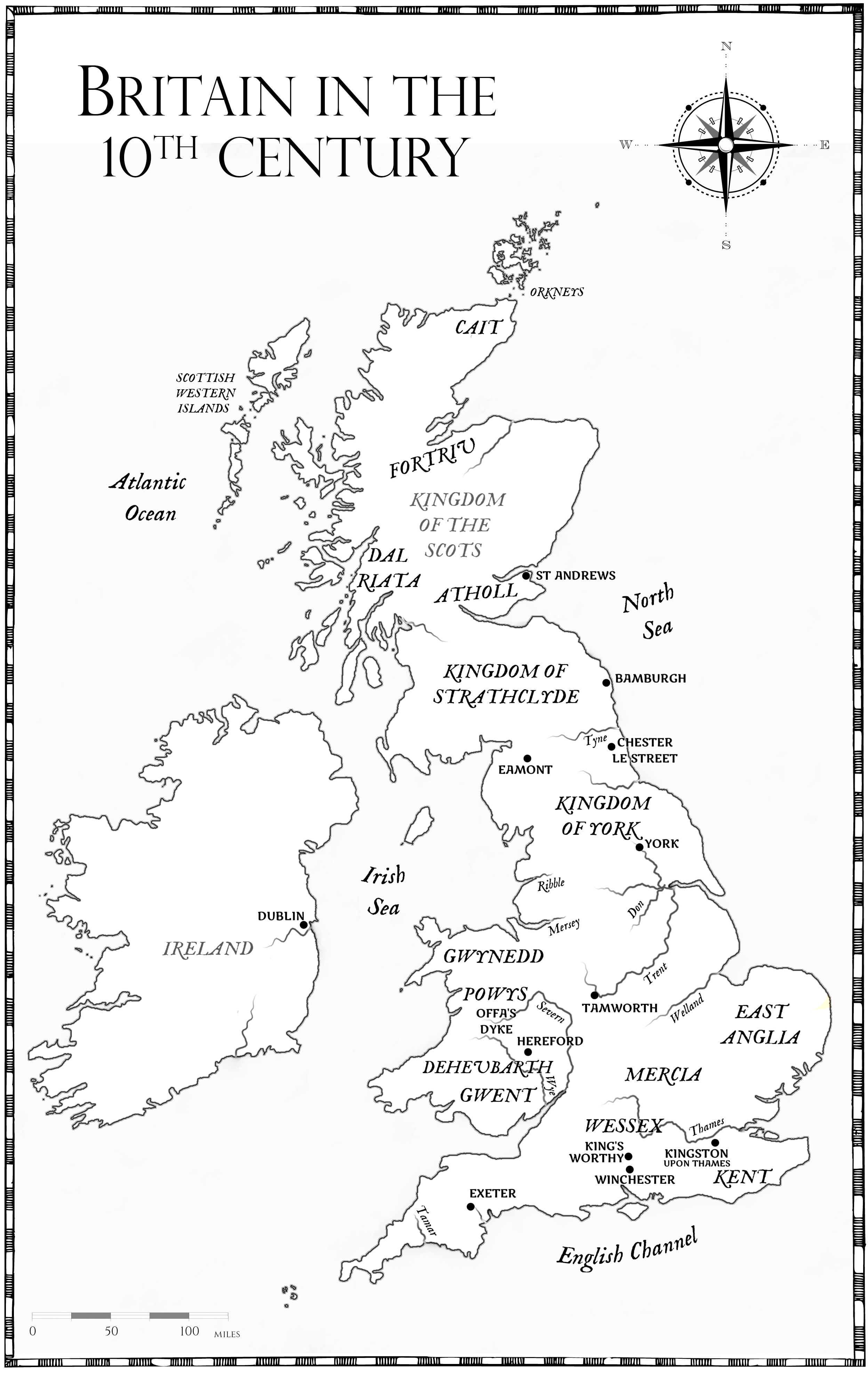
King of Kings has a number of characters, and King Ealdred, or Lord Ealdred of Bamburgh is one of them. But who was he, and what was the independent kingdom of Bamburgh?
Now, I think we all ‘think’ we know about Bebbanburg (Bamburgh) thanks to Uhtred of Bebbanburg, Bernard Cornwell’s creation. But events in Bamburgh are complex and not easy to understand, even for someone who might think they know the period quite well.
What was Bamburgh?
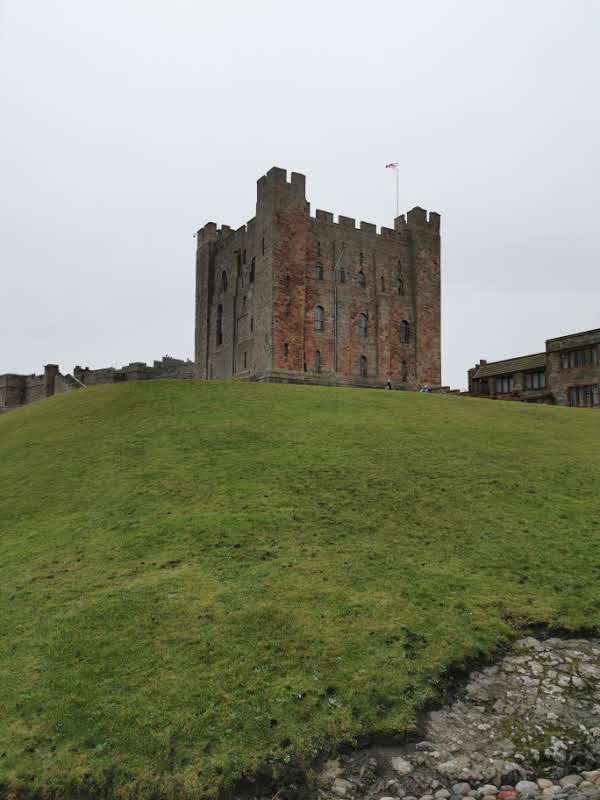
So what was Bamburgh? Bamburgh is traditionally associated with the kingdom of Bernicia – the far northern Saxon kingdom, which was particularly prominent during the seventh century, so three hundred years before the events of King of Kings, and which was joined to the kingdom of Deira to form Northumbria. Check out my Gods and Kings trilogy for the some of the events of this period.
The iconic castle that stands today is a later building, the oldest part, the keep, dating to the end of the Saxon period, while much of what we see today is the later work of Lord Armstrong (who built Cragside), when he significantly repaired the remains. Indeed, the family still own Bamburgh Castle, although not Cragside, which is a National Trust property. (I’ve written a 1930s mystery set at Cragside).
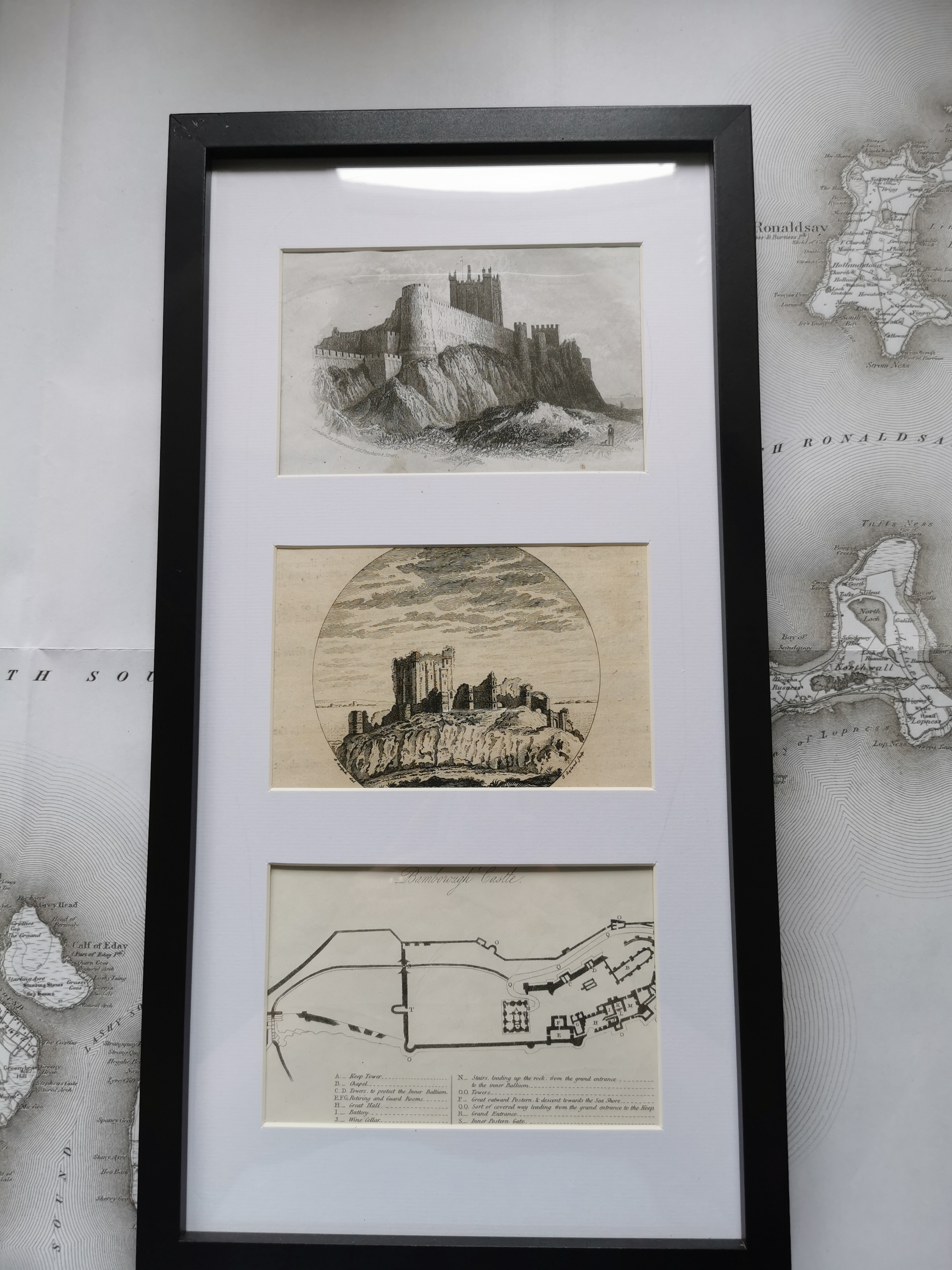
Bamburgh is slightly unusual in that there are old images of the castle before the 19th century work of Armstrong. I enjoy collecting these antique prints. We often find such buildings falling into ruin, not being ruined and the rebuilt.
Antique prints of Bamburgh Castle
And Bamburgh Castle and its environs are stuffed with archaeology. There were some very famous archaeological investigations undertaken in the 1960s, and there’s now a dedicated team unearthing the treasures hidden beneath the current building. You can follow the teams work at Bamburgh Research Project’s Blog. You might know about Bamburgh because of the seventh century bones discovered in the Bole Hole, and there’s a great book about this, Warrior by Edoardo Albert and Paul Gething – available from all good book sellers. You can also learn about where these bones now lie by checking out Bamburgh Bones.
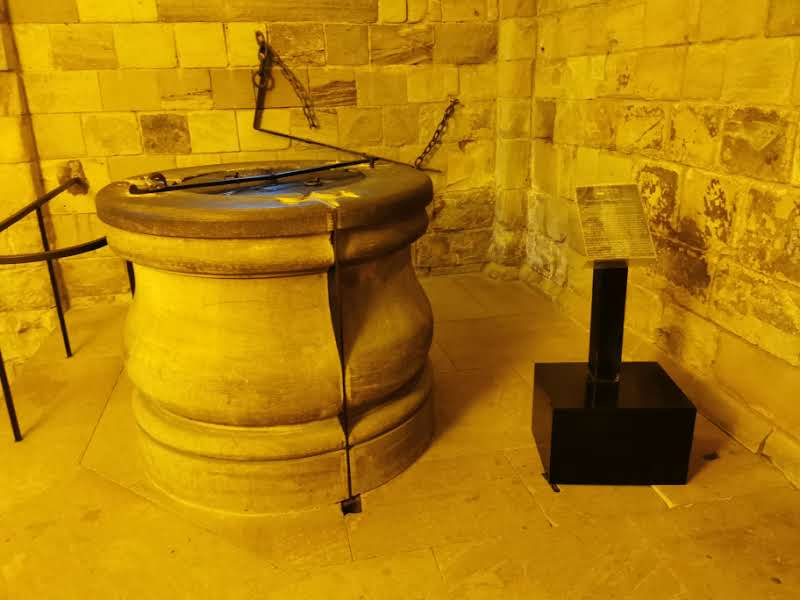
The well
The Tenth Century at Bamburgh
But, all this is before the events of the tenth-century (or after), as fascinating as it is. So, what was happening in the tenth-century? The easiest way I can describe this is that while York, and much of the Saxon kingdom of Northumbria was inundated with the Norse (Viking raiders if you will), Bamburgh was a bastion against this influx, wedged between the growing might of the kingdom of the Scots, ruled by Constantin, and the constantly changing affairs of York, and its string of Norse rulers, often associated with Dublin as well.
Ealdred’s father, Eadwulf is somewhat better attested, with the Annals of Ulster naming him as ‘king of the Saxons of the north.’ He died in c.913 and then Ealdred seems to have had a difficult time of it, his gaze more likely to turn to the Scots kingdom than the known Saxon rulers based in Mercia and Wessex when he was threatened by the Norse Viking raiders.
However, he joined an alliance with Edward the Elder, king of the Anglo-Saxons, in 920 (corrected from 924).
‘And then the king of Scots and all the nation of Scots chose him as father and lord; and [so also did] Reginald and Eadwulf’s sons and all those who live in Northumbria, both English and Danish and Norwegians and others; and also the king of the Strathclyde Britons and all the Strathclyde Britons.’
(Swanton, M. trans and edit The Anglo-Saxon Chronicles, (Orion Publishing Group, 2000 p.104 (A text )
This then takes us to the beginning of King of Kings. Will Ealdred continue his alliance with the new king of the Anglo-Saxons, or will he look elsewhere, especially now that the Viking raider, Sihtric, is lord of York/Jorvik?
What about Uhtred of Bebbanburg?
As to Uhtred himself, of The Last Kingdom fame, he’s even more shadowy than Ealdred, and for that reason, doesn’t feature at all in King of Kings, although there is an ealdorman Uhtred who will appear in subsequent books.
My new book, King of Kings, is a multi-viewpoint novel telling the story of events in Britain from 925-934. I thought it would be good to share details of the historical people my main characters are based on.
My portrayal of Hywel, better known as Hywel Dda (which autocorrect is determined should say Dad), and which means ‘good’ (a unique epithet in Wales), is of course, fictional, but who was the historical Hywel? Firstly, it should be noted that this epithet is a later invention, not assigned to Hywel until at least the twelfth century, and perhaps, as Dr. Kari Maund has commented in The Welsh Kings: Warriors, Warlords and Princes, a reflection of border events at that period rather than the earlier tenth century. (Dr Maund was one of my university lecturers, so she knows her stuff).
Hywel has no date of birth recorded, and indeed, like Constantin of the Scots, he seems to have ruled for a long time providing much-needed consistency. Hywel ap Cadell was the grandson of the famous Rhodri Mawr, who’d united the kingdoms of the Welsh during his rule. But, this unity fragmented on Rhodri’s death.
To begin with, Hywel ruled Dehuebarth, probably with his brother, Clydog, (who may have been the younger brother) after the death of their father in c.911. He, his brother, and his cousin, Idwal of Gwynedd, submitted to the English king, Edward the Elder in the late 910s.
‘and the kings of Wales: Hywel and Clydog and Idwal and all the race of the Welsh, sought him as their lord [Edward]’. ASC A 922 corrected to 918 (Swanton, M. trans and edit The Anglo-Saxon Chronicles, (Orion Publishing Group, 2000)p.103-4)
Not long after, Clydog died, leaving Hywel as ruler of Dehuebarth. Hywel had also married Elen, the daughter of Llywarch and niece of Rhydderch, the last king of Dyfed, and he was able to use this alliance to eventually claim Dyfed as well.
Hywel’s believed to have been highly educated, and some historians suggest he was particularly fascinated with King Alfred, and all he’d achieved and was therefore keen to emulate many of his actions. This could also be why his name came to be associated with the codification of laws in later traditions. What fascinates me most about Hywel is his decision to ally closely with King Athelstan which will be explored in King of Kings. Certainly, he is a intriguing figure in early tenth-century Britain, and not just because we know he made a pilgrimage to Rome in 928, and still managed to return back to his kingdom and continue ruling it.
My new book, King of Kings, is a multi-viewpoint novel telling the story of events in Britain from 925-934. I thought it would be good to share details of the historical people my character are based on.
My portrayal of Constantin, the king of the Scots, is of course fictional in King of Kings, but he is based on a historical individual, Constantin (e) II, so who exactly was he?
Constantin is a fascinating character. Again, and as with Athelstan, his exact date of birth is unknown, but it must have been, at the latest, by 877/8, when his short-reigned father died.
By 900, Constantin was the king of the Scots (we think – there is some confusion about this). This wasn’t yet quite Scotland, but it was getting there. The ancient kingdoms of Cait, Fortriu, Atholl and Dal Riata, were ruled by one king, Constantin. But, he hadn’t succeeded his father, Aed, but rather a man named Domnall II, his cousin. At this time there were two rival dynasties and they strictly alternated the kingship.
Affairs in the kingdom of the Scots often intermingled with those of the independent kingdom of Bamburgh, Strathclyde, and of course, the Norse, or Viking raiders, if you will. Indeed, the entry recording Constantin’s death in the Annals of Ulster, reads as though there was often strife.
‘Constantinus son of Ed held the kingdom for xl years in whose third year the Northmen plundered Dunkeld and all Albania. In the following year the Northmen were slain in Strath Erenn…And the battle of Tinemore happened in his xviii year between Constantin and Ragnall and the Scotti had the victory. And the battle of Dun Brunde in his xxxiiii year.’ (Alex Woolf, From Pictland to Scotland, 789-1070,p.126)
Constantin, ruling for decades, and I mean decades, seems to have brought much needed stability to the kingdom, as affairs there very much mirrored the emerging ‘England’ to the south.
‘Constantin’s reign has increasingly come to be see as one of the most significant in the history of Scotland. Not only was it very long, at least forty years, but it was also the period during which conflict and diplomatic relations between a kingdom recognisably ancestral to Scotland and one recognisably ancestral to England first occurred.’ (Alex Woolf, From Pictland to Scotland, 789-1070, p.128)
Constantin allied with the rulers of Bamburgh, and York, and also, on occasion, both Æthelflæd of Mercia and Edward the Elder, after her death. But, he seems to have been quite flexible in his thinking, and was prepared to pick and choice as he saw fit.
By the beginning of King of Kings, Constantin would have been in his mid-forties, and he was still to rule for many years to come, and he was certainly a more than adequate counterpart to Athelstan, king of the English, no doubt helped by his sons and grandsons, as his reign continued.
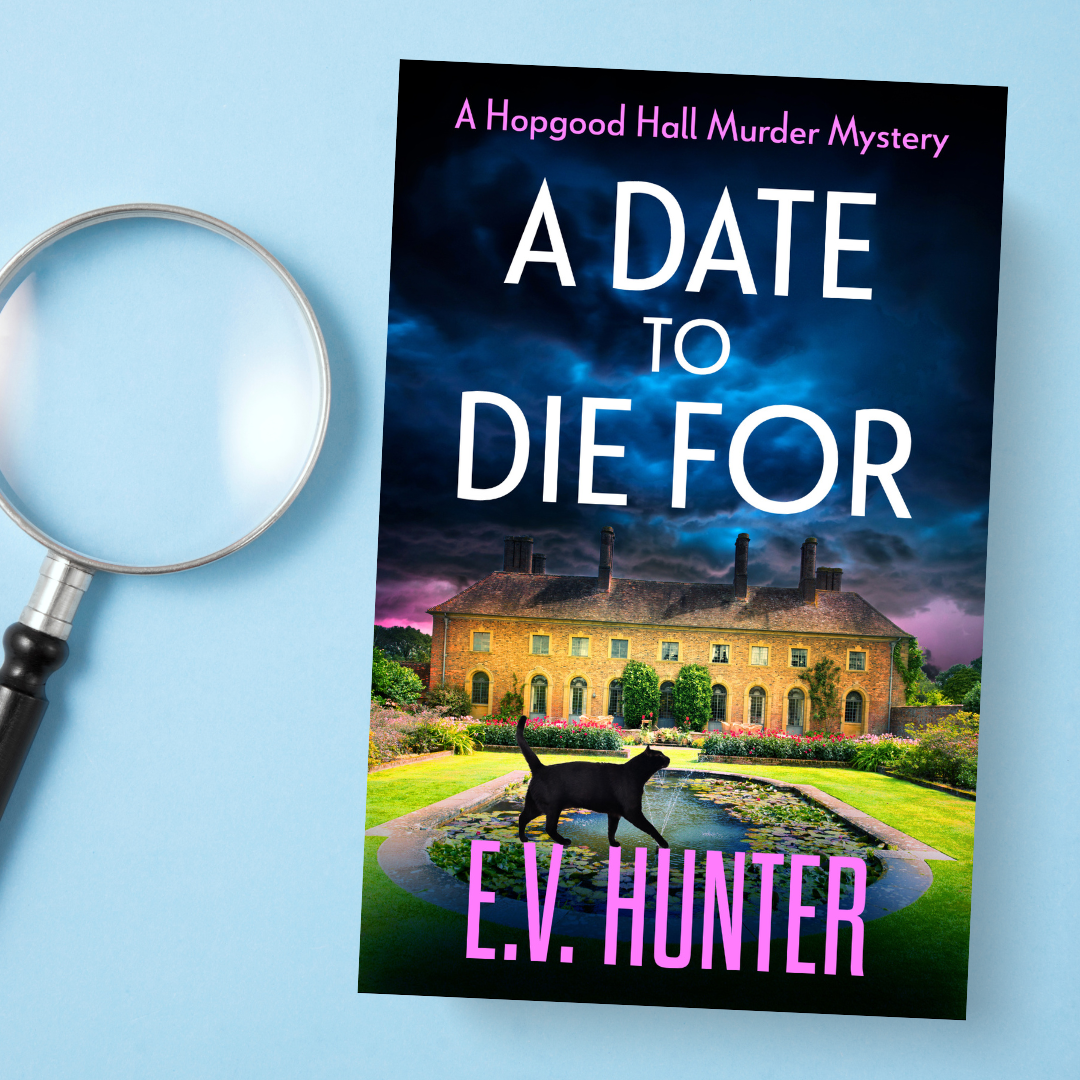
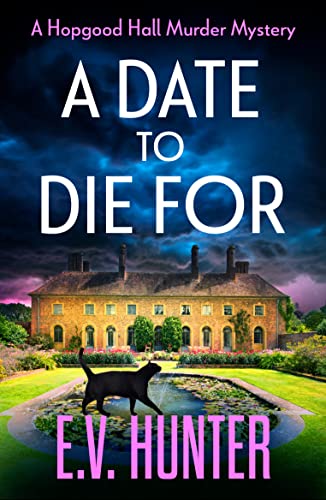
The start of a brand-new Cozy Crime series! Welcome to Hopgood Hall.
An unlikely duo…
When investigative journalist, Alexi Ellis, falls victim to cutbacks, she and Cosmo, her anti-social feral cat, head for beautiful Hopgood Hall, where they plan to lick their wounds in the boutique hotel run by her old friends, Cheryl and Drew Hopgood.
A missing woman…
But when she arrives Alexi discovers Cheryl and Drew both distraught. Their close friend, Natalie Parker, who recently settled in the area, has gone missing. Alexi’s sure the woman has just taken a trip somewhere, but she still has a nose for a story and agrees to look into it.
A case to solve!
So too does ex-Met Police detective turned private eye, Jack Maddox. Natalie Parker had been using his sister’s online dating agency and Jack needs to find her before his sister’s business is ruined.
Reluctantly, Alexi, Jack – and Cosmo! – join forces to find out what happened to Natalie. But soon they discover secrets that someone desperately wants to make sure are never revealed!
A Date to Die For by E V Hunter is a fast-paced, modern-day cosy mystery.
The two main characters, well three if we include our side-kick, Cosmo, the cat, are well-sketched. Alexi has run away from her old life in the city to her friends in the country. Jack already has a new life in the country. They’re both city bods, suddenly faced with the world of equestrian shenanigans; one a journalist and one an ex-police officer working as a private investigator. And Cosmo, is well, Cosmo. He’s an unusual cat who likes to travel and has no problem being on a leash.
The author has such an engaging writing style. I actually couldn’t believe how quickly I read the pages, the mystery burbling away as the point of view switches between the two main characters so that the reader gets to know them and begins to unravel the mystery of the disappearance of Natalie, the woman who ran a local flower delivery company, but who hasn’t been seen for days.
Events take a slightly darker turn as the story progresses. The mystery itself is well-developed, and while there is one particular scene that might have every reader shouting, ‘No, don’t do that,’ I found the resolution to be satisfying and twisty enough that I’d never have guessed it.
A twisty, tightly-plotted cosy mystery, with a fabulous writing style. Very enjoyable.
Meet the Author
E.V. Hunter has written a great many successful regency romances as Wendy Soliman and revenge thrillers as Evie Hunter. She is now redirecting her talents to produce cosy murder mysteries. For the past twenty years she has lived the life of a nomad, roaming the world on interesting forms of transport, but has now settled back in the UK.
I’m delighted to feature an excerpt from The Adventures of Ruby Pi and the Math Girls by Tom Durwood.
Gunfight in the Mogollons
“These Colorado coaches,” lectured the solicitor, Aynsley, “are a larger, more rugged version of the Kinnear design. Wells Fargo uses them widely.
“This is a Concorde model, if I’m not mistaken,” he added. “Capacious.”
Johnny glared at the talkative lawyer.
“More useless information,” snorted the militia man, Morgan. He rubbed his bandaged hand sullenly.
The stagecoach’s constant motion cast a bad mood within its large interior, but it was more than just the motion. The day had turned to dusk. Only an hour further to Folsom. The mountain trail was clear, the horses making good time.
“Leather-strap suspension,” offered Aynsley to his captive audience, “is what gives the carriage its swinging movemen– ”
It happened so fast.
All in the same moment–
They heard a thunderous crash, followed by three loud gunshots.
The horses whined their objection in a panic –
One of the brake levers snapped.
The stagecoach screeched to a halt.
The stagecoach passengers heard a hard, painful scream from the driver’s seat –
“I’m hit! I’m hit!”
The stage door flew open and half of the passengers spilled falling out onto the trial –
“Shut up,” came a woman’s voice. A pause, and then, “Morgan! You there?”
The passengers stood. Now they could see that a great, bulky deadfall had been placed across the trail to block the stage.
Angie and Drew, from the saloon in Silver City, sat astride two horses, guns drawn.
“Hands up! All of you!” proclaimed Drew. “This here’s a robbery!”
He held his pistol on the stage driver, who had his hands up. Beside him, the rifleman clutched at his arm, where had been shot.
Now Morgan smirked as he trained a gun on Johnny’s stomach.
“What the devil — ” sputtered Aynsley.
“You- you’re bandits?” demanded the startled Mrs. Aynsley.
“The money belts,” commanded Morgan. “That deed! Now!”
One of the drivers groaned for mercy.
Angie stopped placing the saddle on the lead horse, turned and shot him
“Money belts,” spat Drew.
“But you’re such a nice boy — ”
“I’ll shoot you, hey,” shouted Drew, trembling.
“You’ll never get away with it,” warned the lawyer.
“Easy …” said Johnny.
“Sorry, bub,” Morgan said, half-smiling, to Johnny as he raised the weapon. “We can’t leave witnesses now, can we?”
Ma yelled ‘No!’ and lunged for the militia man —
“Hey. Morgan,” said Casey.
Morgan turned in time to see Casey’s hand sweep to her side and emerge with a gleaming pistol, one of the Colt Rainmaker’s, nickel-plated and deadly fast.
In a liquid motion, she raised the Colt and fanned the hammer —
BAMBAMBAM!
Three rounds sunk deep into Morgan’s chest, all at once.
Casey swiveled and sent three more rounds slamming into anxious young Drew, jerking him clean from his saddle —
With a curse, Angie jammed her spurs into her horse and rode off —
Casey dropped the Colt and ran to grab the Enfield rifle from the passenger racks.
She shucked the rifle sheath and ran to the edge of the trail.
She stood on an outcrop facing northeast. She could see the sweep of the basin and range, to her right, where Angie was escaping —
She was galloping unseen, along the high-walled Mogollon limestone.
But there was a break in the wall, very distant …
It was that opening to which Casey devoted her attention.
They could hear the horse’s canter, moving away …
Casey thumbed in three big, heavy cartridges.
“Eleven hundred meters … ” said Johnny.
Johnny held the rangefinder like binoculars.
He counted off a sequence of numbers.
Casey scribbled the calculations.
Distance … curvature …target point … origin point
Now she watched through the Enfield’s telescopic sight, following the horse-and-rider trajectory, as she imagined it.
John called out a second sequence of numbers, distance in meters.
“Twenty …” said Johnny.
“Fifteen,,, ten .. five …”
The Enfield let go a sharp crack —
The firearm echoed in the great solemn quiet along the southern section of the Mogollons …
Angie’s body slumped and fell from the saddle.
What we see are objects in refracted light. A thing itself does not change, just the ways in which we experience it. It is the light which changes.
A blue moon looks blue because of shifts in light, the suspended volcano dust in the air. The way that light refracts can make everything look new, and not as we thought it to be.
It alters how things appear to us, does the immense cloud of fine dust and ash from the Krakatoa Volcano, supplemented by forest fires in Sweden and Canada. When the quality of the air changes, so does the quality of light. On a Blue Moon night, the thing itself does not change, just the ways we experience it.
Casey turned to Ma.
“Why don’t you take the money back to Mister Torgeson, Ma?”
She indicated the currency that had spilled from the lawyer’s satchel onto the trail, when Johnny had shot Morgan.
“Back to Silver City.”
Ma looked long and still at her daughter.
“I’m sure he’d appreciate it,” said Casey.
She slung the Enfield over her shoulder, like it had always been there, like it belonged attached to her.
“Johnny and me can run the clinic in Folsom. Then we’ll head straight for Albuquerque.
“You come join us, soon as you can.”
The horses fell quiet. A silence vast and deep seemed to descend, all along the southeastern section of the Mogollon Rim. The little grouping around the stagecoach listened, as though they could all feel, or somehow hear, the rotation of the earth.
No man or woman could put an adjective to the look that appeared on Ma’s face. It was sad and accepting, almost relieved and almost embarrassed, and several more emotions as well, all at the same time.
“And so the child,” intoned Aynsley, “is father to the man.”
“What, are you the effing chorus now?” Johnny raised his pistol to shoot the lawyer. “You two-faced shill — ”
“No! Please!” Mrs. Aynsley began to cry —
“They were robbing us, too,” she reminded Johnny.
Now Mrs. Aysnley’s cry turned into a scream, a hideous, feral sound, for such a cultured woman —
Johnny lowered the gun. “Just as soon,” he murmured.
“All right, Case,” said Ma. “All good.”
Ma’s face had gone white. She gripped the hem of her skirt tightly
“You two …take …” Ma choked. “Ah! Me! Take good care, Johnny –”
“The Fort Stanton stage should be by here in an hour or so,” said Casey. “That about right, Whip?” she called to the driver.
“Yup,” came the reply.
Casey looked out over the basin lowlands. She closed eyes, for a moment.
“I don’t know what we’ll find in Albuquerque,” Casey said to her brother as she swung into the saddle of the horse Drew had been riding.
“But we got a real-life deed to some damn thing.”
“We got two hundred bucks.”
She patted the horse’s neck.
“And we can make an honest living fixin’ guns.”
“We should be all right,” Johnny nodded.
He finished cinching the saddle of the lead stage horse and checked the horse’s underbelly. The bay was ready to trade all this gunplay and confusion among the humans for an open run along a clear path.
“Let’s light a shuck — “
Here’s the blurb
A collection of adventure stories featuring young heroines at turning points in history who use math to solve colossal problems. Smart girls take on buried secrets, villains, tanks, mysteries, codes, and economics to save their people “Stories, mystery and math go well together… a welcome addition.” (~ Jeannine Atkins, author of “Grasping Mysteries: Girls Who Loved Math”)
Tom Durwoodis a teacher, writer and editor with an interest in history. Tom most recently taught English Composition and Empire and Literature at Valley Forge Military College, where he won the Teacher of the Year Award five times. Tom has taught Public Speaking and Basic Communications as guest lecturer for the Naval Special Warfare Development Group at the Dam’s Neck Annex of the Naval War College.
Tom’s ebook Empire and Literature matches global works of film and fiction to specific quadrants of empire, finding surprising parallels. Literature, film, art and architecture are viewed against the rise and fall of empire. In a foreword to Empire and Literature, postcolonial scholar Dipesh Chakrabarty of the University of Chicago calls it “imaginative and innovative.” Prof. Chakrabarty writes that “Durwood has given us a thought-provoking introduction to the humanities.” His subsequent book “Kid Lit: An Introduction to Literary Criticism” has been well-reviewed. “My favorite nonfiction book of the year,” writes The Literary Apothecary (Goodreads).
Early reader response to Tom’s historical fiction adventures has been promising. “A true pleasure … the richness of the layers of Tom’s novel is compelling,” writes Fatima Sharrafedine in her foreword to “The Illustrated Boatman’s Daughter.” The Midwest Book Review calls that same adventure “uniformly gripping and educational … pairing action and adventure with social issues.” Adds Prairie Review, “A deeply intriguing, ambitious historical fiction series.”
Tom briefly ran his own children’s book imprint, Calico Books (Contemporary Books, Chicago). Tom’s newspaper column “Shelter” appeared in the North County Times for seven years. Tom earned a Masters in English Literature in San Diego, where he also served as Executive Director of San Diego Habitat for Humanity.
Two of Tom’s books, “Kid Lit” and “The Illustrated Boatman’s Daughter,” were selected “Best of the New” by Julie Sara Porter’s Bookworm Book Alert
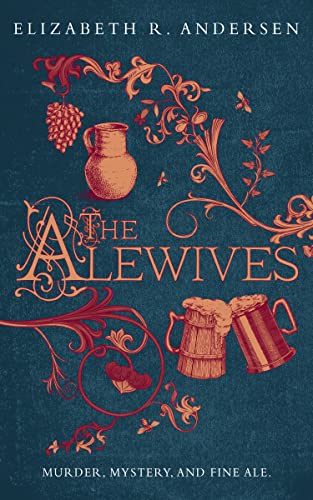
Gritta, Appel, and Efi managed to survive the Black Death, only to find that they are in desperate need of money. With limited options and lots of obstacles, they band together to become alewives – brewing and selling ale in the free Alsatian town of Colmar. But when an elderly neighbor is discovered dead in her house, the alewives cannot convince the sheriff and the town council that her death wasn’t an accident, it was murder. As the body count piles up, the ale flows and mystery is afoot!
Set in the tumultuous years after the most devastating pandemic the world has ever experienced, The Alewives is a playful romp through a dark time, when society was reeling from loss and a grieving population attempted to return to normal, proving that with the bonds of love, friendship, and humor, the human spirit will always continue to shine.
The Alewives is a fantastically well-written murder mystery set in the immediate aftermath of the Black Death, with delightful characters and a sinister murderer and thief, at the heart of all the problems. Set in the tannery area of Colmar, something smells bad.
The three main characters of Gritta, Appel, and Efi are all glorious creations – Grita with her useless husband and horde of children (she had 12, you see), Appel with her mysterious nighttime activities, and young Efi, who has the sense of a young kid goat at the beginning of the tale.
This story is immersive and filled with just enough tension and humour to make even a story about those who survived the Black Death an absolute delight to read. The humour is well constructed, the antics of the three women, acting a little outside the ‘law’ in a deeply patriarchal society that doesn’t allow women to brew their own ale for profit, artfully created, and even the Friar, Wikerus, is a sympathetic character, in the end. The three women are put upon. Society is against them, as is the sheriff (all the male characters are dismissive of the women, but they get on with it, doing all they can to circumnavigate the obstacles placed in their path), and the church, and just about everyone else, but they triumph.
The mystery itself is really well constructed, as are the red herrings. I didn’t know who the culprit(s) (no spoilers here) were until the big reveal.
A short, sharp, snappy, hugely entertaining, medieval mystery that portrays the realities of life at the time, with just the right amount of humour to make it thoroughly entertaining. A well-deserved 5/5 from me!
Meet the Author
Elizabeth R. Andersen’s debut novel, The Scribe, launched in July of 2021. Although she spent many years of her life as a journalist, independent fashion designer, and overworked tech employee, there have always been two consistent loves in her life: writing and history. She finally decided to do something about this and put them both together.
Elizabeth lives in the Seattle area with her long-suffering husband and young son. On the weekends she usually hikes in the stunning Cascade mountains to hide from people and dream up new plotlines and characters.
– Join Elizabeth’s monthly newsletter and receive the first two chapters of The Scribe for free. Sign up at https://www.elizabethrandersen.com
– Find photos of hikes and daily author life at Elizabeth’s Instagram: @elizabethrandersen
– Follow Elizabeth on Twitter for nerdy medieval history facts: @E_R_A_writes
Casual antique dealer Jake Patch picks up an unusual object and can’t put it down. Literally. His find is a time travel device, and he hatches a bold plan to acquire objects from the past and sell them at modern day prices. But when the mysterious Infinity Glass leaves Patch stranded in a dangerous past, it falls to his teen daughter Cass to save him.
With hints of The Time Traveller’s Wife and Back to the Future and a smattering of Lovejoy, Patches through Time will send you spinning headlong into the past, then spit you back into the twenty-first century.
This book contains occasional profanities. Trigger warning: bereavement (parent, spouse).
Patches Through Time is a really enjoyable novel. It hooked me from the beginning, with its premise of limited and location-specific time travel.
Patch is a great character, but the story really comes to life with the point of view switch to Cass, and having visited a handful of places in the distant past, much of the narrative revolves around events in war-torn Hastings in the early 1940s. The author does an excellent job of reconstructing the past locations, and the characters that Patch and Cass meet there are believable and all bring something new to the story.
I’m not sure if the plan is to write a sequel, but if it is, then, I’ll happily read it, as I think there’s much more that Cass and Patch can do with their time travelling device.
A thoroughly enjoyable novel.
Meet the author
Sian Turner was born in Wales, but lives in East Sussex. She has recently started learning Welsh (and can categorically testify that Welsh is difficult).
She works as a part-time volunteer in her local RSPCA cat re-homing centre, from where she keeps adopting new family members (only one or two at a time).
Sian enjoys reading and reviewing some of the many truly amazing novels by Independent Authors, and she is secretary of her local writers’ group, Shorelink Writers.
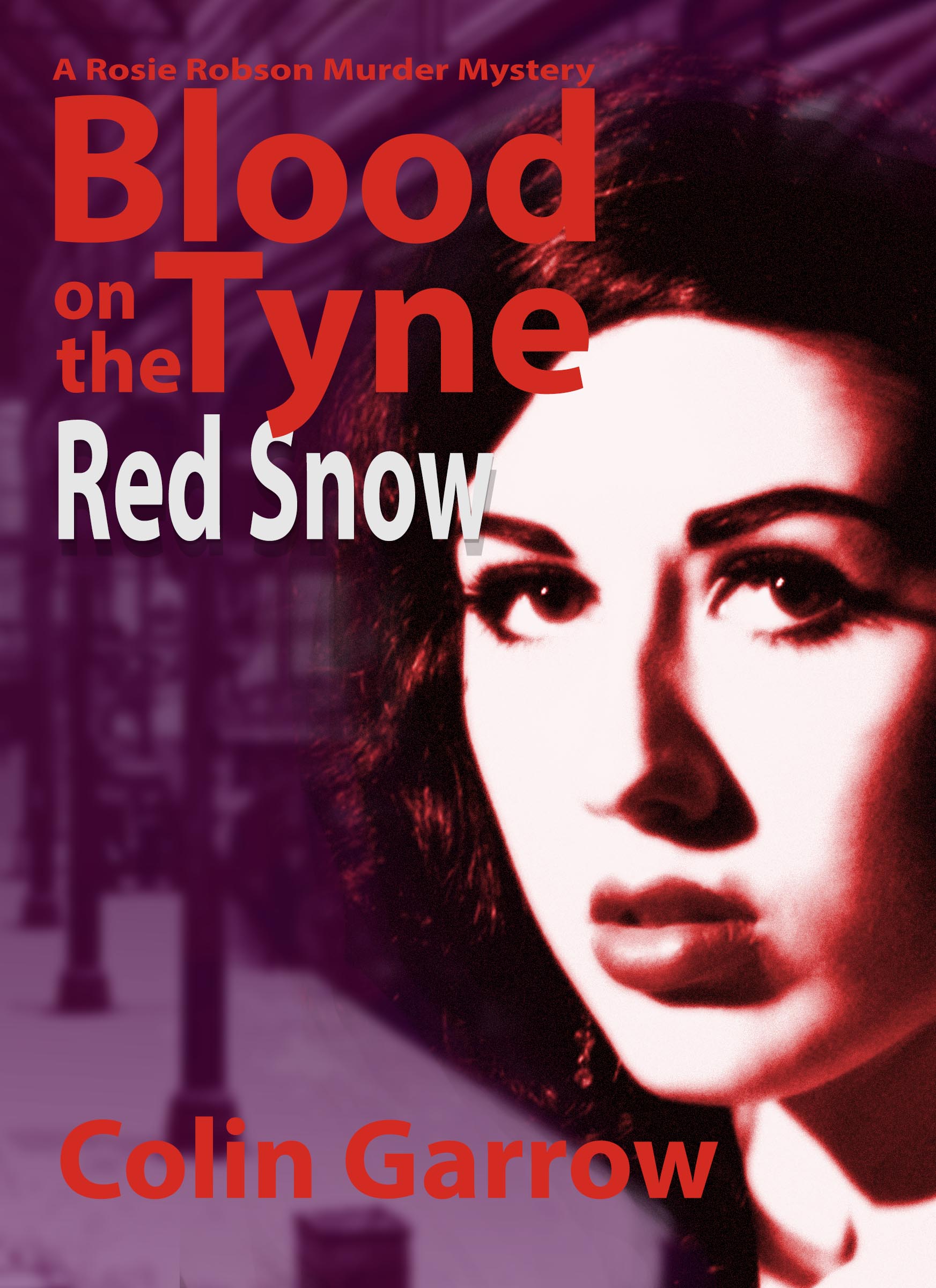
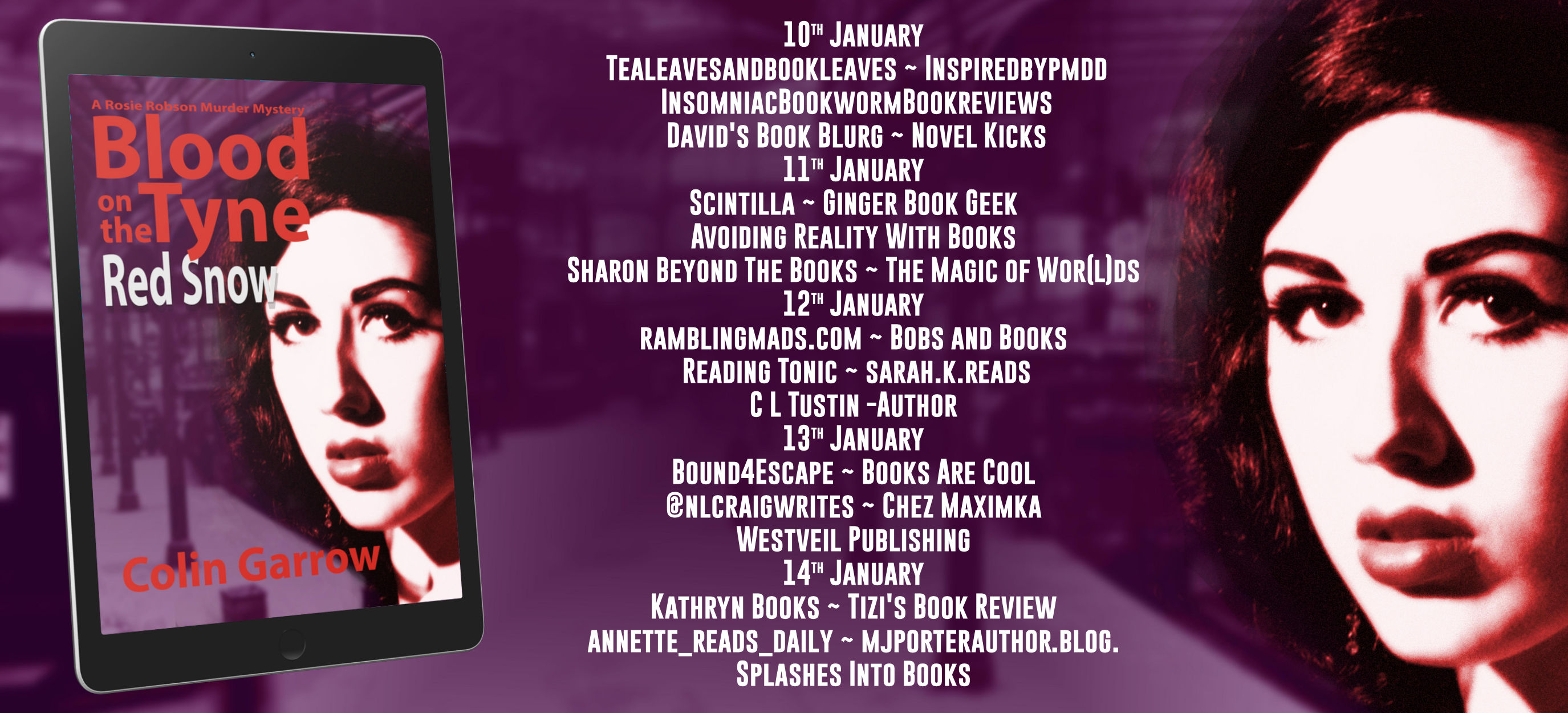
A dead body. A hoard of forged banknotes. A gangster out for blood.
Newcastle, December 1955. Returning home after a weekend away, singer and amateur sleuth Rosie Robson discovers a man lying on a baggage trolley with his throat cut. After the police get involved, an attack on Rosie and her boss prompts Inspector Vic Walton to find a safe house for the pair. But the bad guys seem to be one step ahead of them and Rosie is forced to track down a possible witness to the murder in a bid to learn the truth. Can the canny crooner solve the mystery before a Newcastle gang boss catches up with her?
Set on Tyneside, Blood on the Tyne: Red Snow is book #3 in the Rosie Robson Murder Mysteries series.
Extract from: Blood on the Tyne: Red Snow by Colin Garrow (contains some strong language)
Having tracked down the train station porter to a Gateshead apartment, Rosie and Frankie question him about money he stole from the dead man’s pocket. Finally admitting his crime, the porter hands over the money. But a man in a trench coat is watching the building:
Frankie wandered into the kitchen while I counted the notes. Three hundred and thirty pounds. I looked up at the porter. ‘Not worth getting killed over, is it?’
He worked his mouth for a minute. ‘Ye’re sayin it belongs to that Danny Fisher, are ye?’
I nodded.
‘Fuck.’
‘Know him, do you?’
‘Only by reputation.’ He pointed to the money. ‘So are yous gonna give it him back?’
I laughed. ‘Don’t be daft. This’ll go to the police.’
Martin’s eyes widened. He stared at me. ‘But what if Fisher thinks Ah’ve still got it?’
I hadn’t considered what the consequences might be for Martin if Fisher did track him down. I studied the carpet for a moment, thinking. ‘If he didn’t suspect you’d nicked it, he’d have no reason to come visiting, would he?’
He glared at me. ‘But ye said,’ stabbing the air with a grubby finger, ‘ye said if Ah didn’t talk to yous, Ah’d have to deal with Fisher.’
I shook my head. ‘I implied that if we were able to find you, sooner or later he would too.’
His eyes almost popped out of his head. ‘Jezaz Christ. So, he might still turn up here, eh?’
‘He might. But if no-one saw you take the cash, there’s nothing to worry about.’ I looked hard at him. ‘No-one didsee you, did they?’ I’d dismissed the idea that Fisher might’ve seen something while he’d been standing by the bridge on the station platform. If he had seen the porter messing with the body, he’d have been here already, and we’d likely have another dead body to deal with.
‘Oh, Christ, man.’ Martin threw his hands up in the air. ‘When Ah found the money, Ah shook so much Ah could hardly walk. Ye could’ve driven a steam train up me arse and Ah’d not have noticed.’
I tried not to laugh. Resting a hand on his arm, I said, ‘Look. We’ll tell the police where we got it and they’ll probably come round to speak to you. If you’re worried about anything—’
Frank grabbed my shoulder. ‘We’ve got a problem, bonny lass.’
I followed him back into the kitchen. The man in the trench coat stood in the lane, looking up at the flat. Now though, he had two more men with him. Behind him, Maurice’s car had been pushed out of its hiding place.
‘Is that who I think it is?’
‘It’s not the fuckin Pied Piper, that’s for sure,’ said Frankie.
Back in the living room, I caught sight of Martin making for the front door.
‘I wouldn’t do that, Mr Sutherland,’ I called.
He turned and stared at me. ‘Well Ah’m not bloody stayin here to get me neck sliced open.’
‘No, and neither are we. Is there a fire escape?’
He paused. ‘Not from this building.’ He came back into the room. ‘If we could get onto the roof…’
‘The roof?’
‘Aye. The warehouse next door has a fire escape.’
Frankie pushed past me and opened the flat door. Me and Martin followed him. Gazing over the banister into the stairwell below, we peered into darkness. Everything seemed quiet.
‘D’you think—’
Frankie shushed me. Lowering his voice, he murmured, ‘There’s someone there.’
Turning to the porter, I whispered, ‘How do we get to the roof?’
I didn’t hear what Martin said, my attention focused on the shadowy figures sliding up the first flight of stairs towards us.
My Review
Blood on the Tyne: Red Snow by Colin Garrow is an exciting murder mystery set in and around Newcastle, Gateshead, Sunderland and Northumberland in 1955.
Many of the locations are familiar to me, and I could quite happily trace Rosie’s journey upon discovering a body at Newcastle train station on her return from York.
This really is a fast-paced tale of murder, mayhem, forgery and gangsters. Rosie is headstrong even when embroiled in something far beyond her control. She’s resourceful and determined to find out the truth and stay alive.
Surrounding her is a great cast of supporting characters, and the story takes some quite unexpected twists and turns before reaching its conclusion.
As might be expected, there is some foul language throughout the book, and the author has also done a great job of ensuring the Geordie accent is prevalent throughout. Readers will quickly come to ‘hear’ the characters as well as read about them.
An entertaining read.
Meet the Author
True-born Geordie Colin Garrow grew up in a former mining town in Northumberland and has worked in a plethora of professions including taxi driver, antiques dealer, drama facilitator, theatre director and fish processor. He has also occasionally masqueraded as a pirate. Colin’s published books include the Watson Letters series, the Terry Bell Mysteries and the Rosie Robson Murder Mysteries. His short stories have appeared in several literary mags, including: SN Review, Flash Fiction Magazine, The Grind, A3 Review, Inkapture and Scribble Magazine. These days he lives in a humble cottage in Northeast Scotland.









































 MJ Porter