I think we all know that I’m really not very good at remembering book birthdays, but I have remembered this one and so, happy book birthday to The English Earl. (This is the book that I always forget when writing out the series – so I think it needs some love – I even managed to give it an ISBN that was out of sync with the rest of the series).
Intrigued? Here’s the blurb.
England, November AD1035.
Cnut, the Danish king of England, is dead, his son and chosen heir, Harthacnut, fighting for the survival of Denmark against Magnus, usurper of Cnut’s eldest son’s rule of Norway. Cnut’s Northern Empire of England, Denmark, Norway and Sweden is fragmented and in turmoil, and that’s before news of his death even spreads.
The queen dowager, Lady Emma, has the support of Earl Godwine to rule until her son, Harthacnut, can come to England to claim his inheritance. But there are problems. No one knows how long it will take Harthacnut to regain control of his father’s Viking Empire, and the English will not allow themselves to be left abandoned in the meantime.
Earl Leofric of Mercia, has long been an ally of Cnut’s, but not always an ally of his wife, the queen dowager. And more, Cnut made concessions for his other surviving son, the result of his union with Lady Ælfgifu of Northampton in Mercia, and Earl Leofric must honour those, despite the queen dowager’s determination to ignore the son’s existence.
As England once more faces the threat of external attack, should Magnus prevail in Denmark, Earl Leofric has important decisions to make. He has a long held grudge to settle with Earl Godwine of Wessex, Cnut’s much-favoured earl, while ensuring his own family’s survival. Earl Leofric is the only truly English Earl within England and Mercia is his to command.
And the queen dowager should never be overlooked. In power for her entire adult life, she is desperate to retain her hold on the network of prestige she controls, little caring who she endangers along the way. The queen dowager has twice been England’s queen. She has always had more than the one son she shared with Cnut, and her older sons are keen to exercise their own claim to wear England’s crown.
Harald, son of Cnut and Ælfgifu, Harthacnut, son of Cnut and Lady Emma, Edward and Alfred, sons of Lady Emma and King Æthelred II; four men with an equal, and valid claim to the English kingdom, but there is only one kingdom available. Who will prevail?
Available in ebook, paperback, large print/hardback and with Kindle Unlimited.
Check out the Earls of Mercia series page on my blog for more details.
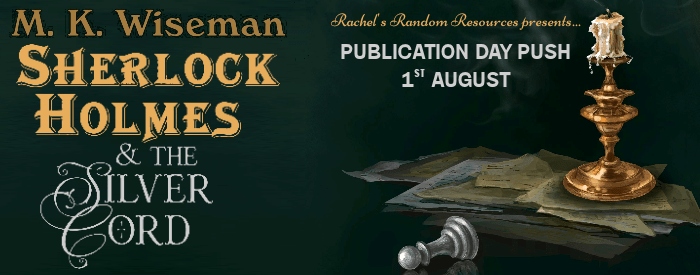
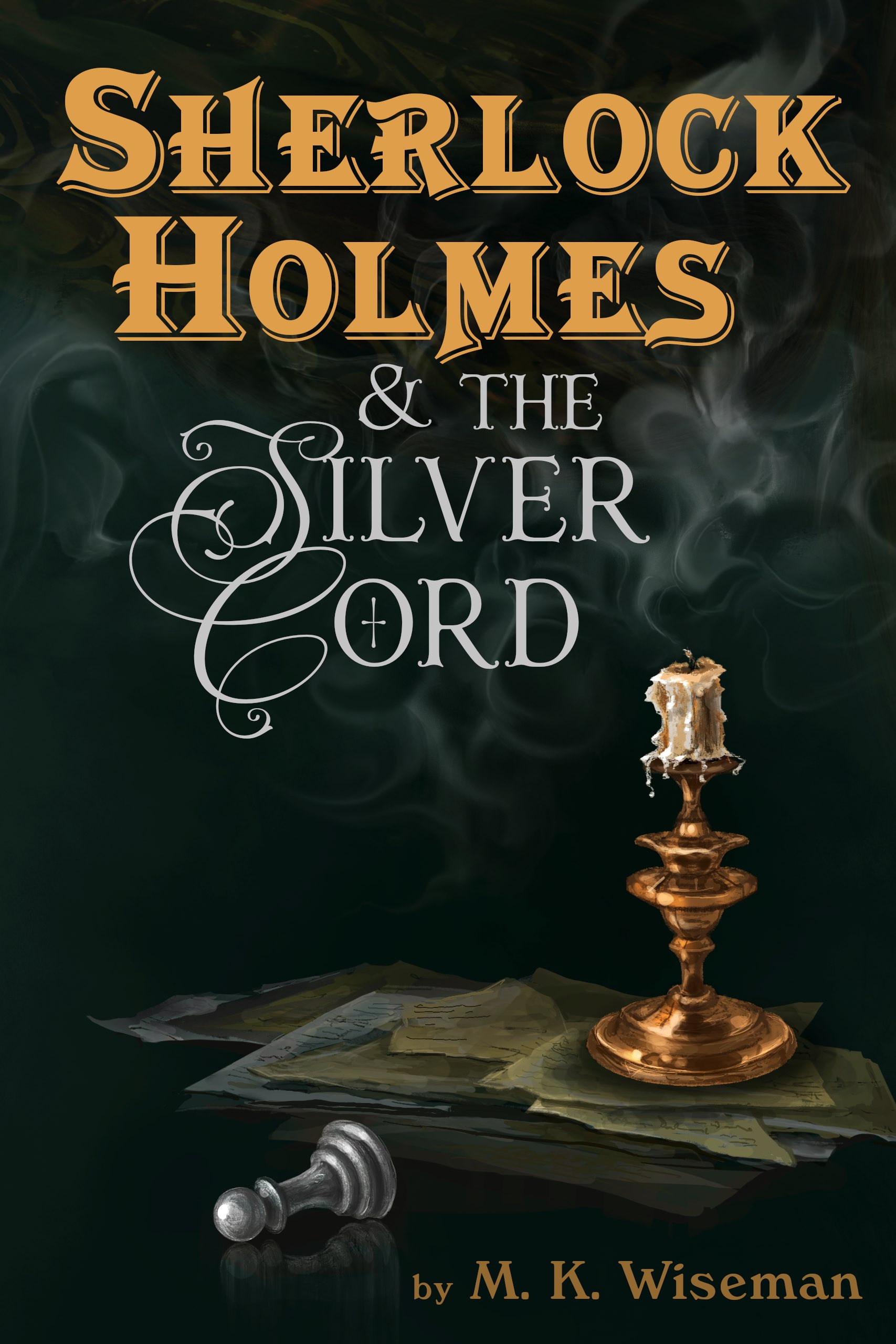
Mr. Percy Simmons, leader of London’s Theosophical Order of Odic Forces, is fully aware that his is not a case which Mr. Sherlock Holmes would ordinarily take up.
These are not ordinary times, however.
For something, some unquiet demon within Holmes stirs into discomfiting wakefulness under the occultist’s words. The unassuming Mr. Simmons has spoken of good and evil with the sort of certainty of soul that Sherlock yearns for. A certainty which has eluded Holmes for the three years in which the world thought him dead. While, for all intents, constructions, and purposes, he was dead.
But six months ago, Sherlock Holmes returned to Baker Street, declared himself alive to friend and foe alike, took up his old rooms, his profession, and his partnership with Dr. J. Watson—only to find himself haunted still by questions which had followed him out of the dreadful chasm of Reichenbach Falls:
Why? Why had he survived when his enemy had not? To what end? And had there ever, truly, been such a thing as justice? Such a thing as good or evil?
Sherlock Holmes and the Silver Cord takes place in the aftermath of the events that see Holmes thought dead, alongside Moriarty. Restless after his three years away from Baker Street, Holmes takes every case coming his way until two seem to collide – the one certainly involving magic, the other, perhaps doing the same.
As with all good Holmes stories, the impossible slowly attains some explanation, in these perplexing cases, with Watson on hand to provide some much needed perspective for the ‘ordinary’ reader, as opposed to the brilliance of Holmes. And yet Holmes is bedevilled by his own demons – he has his own questions to ask and perhaps seek answers for – about good and evil and how he fits in the grand scheme of things.
This is perhaps a more perceptive Holmes than we might expect, and yet still very much fitting our expectations of how he acts and thinks, and this novel is, as the author admits, their attempt to answer some of the unsolved questions about Holmes that have bedevilled her about what happened to Holmes after the events with Moriarty.
A really enjoyable read – sure to appeal to fans of Holmes – and while Holmes might be struggling with his inner demons, he’s still able to conclude the mysteries presented to him in Sherlock Holmes and the Silver Cord.
M. K. Wiseman has degrees in Interarts & Technology and Library & Information Studies from the University of Wisconsin-Madison. Her office, therefore, is a curious mix of storyboards and reference materials. Both help immensely in the writing of historical novels. She currently resides in Cedarburg, Wisconsin.
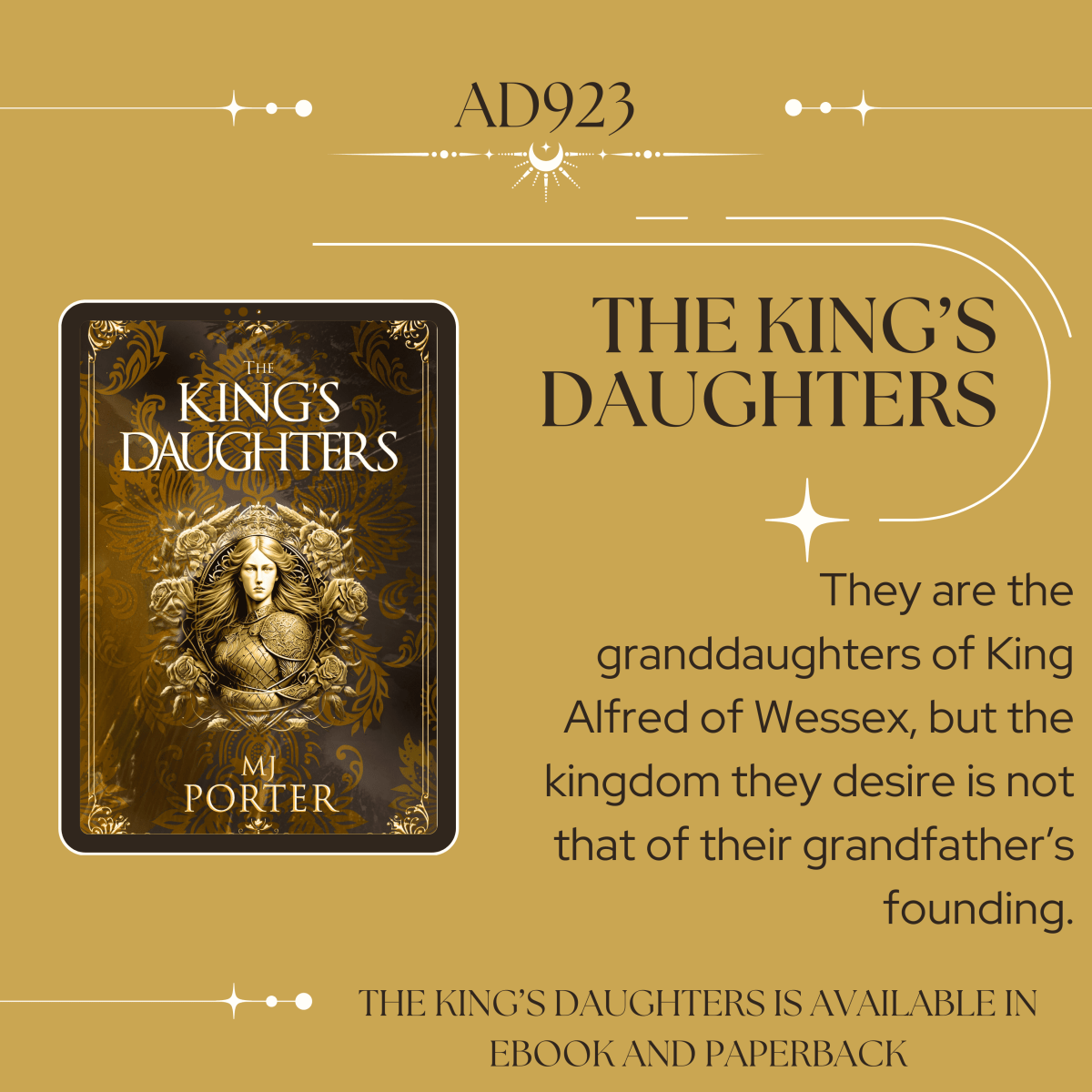
Who were the many daughters of Edward the Elder who married into the ruling families in East and West Frankia?
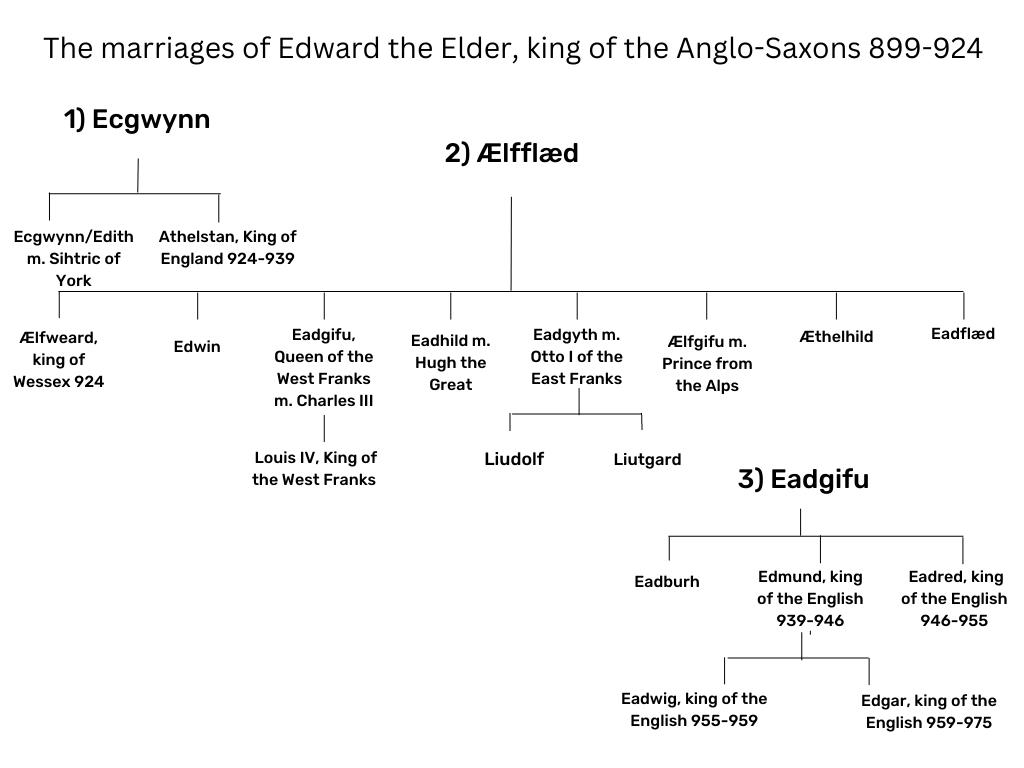
Edward the Elder was married three times, to an unknown woman- who was the mother of the future King Athelstan, to Lady Ælfflæd – who was the mother of the future, and short-lived King Ælfweard, and finally to Lady Eadgifu – who was the mother of the future kings Edmund and Eadred. But, while each woman was mother to a future kings, this story focuses on the daughters. And there were a lot of them, and their lives were either spent in making prestigious marriages, or as veiled women – whether professed religious, or merely lay women living in a nunnery or an isolated estate.
Eadgifu[i], was perhaps the oldest daughter of King Edward the Elder, and his second wife, Lady Ælfflæd. She was the first to marry, to Charles III, King of West Frankia (879-929), who ruled the kingdom from 898-922. This union is written about by the near-contemporary writer Æthelweard in the prologue to his Chronicon.
‘Eadgyfu [Eadgifu] was the name of the daughter of King Eadweard [Edward], the son of Ælfred…and she was your great-aunt and was sent into the country of Gaul to marry the younger Charles.’[ii]
This was a marriage of some prestige for the granddaughter of King Alfred and one which saw her become the Queen of the West Franks.
Charles was much her senior, and one with many illegitimate sons, born to Charles’ concubines,[iii] as well as six daughters with his first wife, Frederuna.[iv] But, on the death of his first wife in 917, Charles had no legitimate heir to rule after him.
Eadgifu isn’t mentioned in The Anglo-Saxon Chronicle, but she does feature in The Annals of Flodoard of Reims 919-966. historian Sarah Foot maintains that as Eadgifu’s marriage isn’t mentioned in the work of Flodoard, it must have occurred before he began writing and, therefore before 919.[v]
Yet, Charles III didn’t rule a quiet kingdom, far from it, in fact. Louis, Eadgifu and Charles’ son was born in 921-922, and his birth seems to have coincided with Charles losing control of his kingdom to an overpowerful nobleman, who ruled as Robert, King of the West Franks from 922-923 when Charles III was briefly reinstated before being deposed once more and imprisoned, where he wound remain until his death in 929.
It is known that Louis was sent to the Wessex royal court, to be fostered firstly by her father and then by her half-brother, Athelstan.[vii] It’s likely that Louis was a similar age to Edward the Elder’s younger children. If Eadgifu returned to Wessex in 923 as well, she would have been in Wessex when her father died, her full-brother became king, albeit briefly, only for Athelstan, her half-brother, to become king.
On Charles’ death, in 929, Eadgifu was certainly once more living in England with her son Louis. And she would do so until 936 when Louis regained his kingship, and Eadgifu returned to West Frankia as the king’s mother.
Louis’ reinstatement does seem to have had much to do with his uncle by marriage, Hugh of the Franks (c.895-956), married to his aunt Eadhild.
We’re told by Flodoard,
‘Louis’s uncle, King Athelstan, sent him to Frankia along with bishops and others of his fideles after oaths had been given by the legates of the Franks. Hugh and the rest of the nobles of the Franks set out to meet Louis when he left the ship, and they committed themselves to him on the beach at Boulogne-sur-Mer just as both sides had previously agreed. They then conducted Louis to Laon and he was consecrated king, anointed and crowned by Lord Archbishop Artoldus (of Rheims) in the presence of the leading men of the kingdom and more than twenty bishops.’[viii]
But all might not be quite as bland as Flodoard states. Hugh might have been married to Eadhild, Louis’ aunt, but he was also an extremely powerful nobleman, brother to the previous king, Ralph. As McKitterick states, ‘No doubt Hugh calculated that he would be able to exert effective power within the kingdom as the young monarch’s uncle, chief advisor and supporter.’[ix]
Young Louis would only have been about sixteen when he was proclaimed king of West Frankia. He was also a virtual stranger to those he now ruled, having been fostered at the Wessex/English court since 923.
Louis was consecrated on 19th June 936. What happened during the early years of his rule is explored in The King’s Daughters, through the eyes of his mother.
(Read on below the references to find out about the other daughters).
[ii] Campbell, A. ed The Chronicle of Æthelweard: Chronicon Æthelweardi, (Thomas Nelson and Sons Ltd, 1962), Prologue p.2
[iii] The matter of marriages, and concubinage is gathering increasing levels of interest. It is becoming apparent that the need for legitimate marriages was a matter laid down by the Church as a means to garner legitimacy. Before this, unions of concubinage may have held as firmly as church recognised marriages.
[iv] Details taken from McKitterick, R. The Frankish Kingdoms Under The Carolingians, 751-987, (Longman, 1983), p. 365 Genealogical table
[v] Foot, S Athelstan (Yale University Press, 2011), p.46
[vi] Bachrach, B.S. and Fanning, S ed and trans, The Annals of Flodoard of Reims, 916-966 (University of Toronto Press, 2004), 20A
[vii] William of Jumieges in his Gesta Normannorum Ducum III.4 (PASE)
[viii] Bachrach, B.S. and Fanning, S ed and trans, The Annals of Flodoard of Reims, 916-966 (University of Toronto Press, 2004), 18A (936). Foot, S Athelstan (Yale University Press, 2011), p.168
[ix] McKitterick, R. The Frankish Kingdoms Under The Carolingians, 751-987, (Longman, 1983), p.315
[x] Van Houts, E. M. C., trans. The Gesta Normannorum Ducum of William of Jumieges, Orderic Vitalic, and Robert of Torigni, (Clarenden Press, Oxford, 1992) pp82-83 Book III.4
[xi] Bachrach, B.S. and Fanning, S ed and trans, The Annals of Flodoard of Reims, 916-966 (University of Toronto Press, 2004), 33G
[xii] PASE Greater Domesday Book 353 (Lincolnshire 18:25)
Eadhild[i], perhaps the second daughter of Edward the Elder and his second wife, Lady Ælfflæd, marriage Hugh the Great, later known as dux Francorum, in another continental dynastic marriage similar to that of her sister. Under 926, Flodoard of Reims states, ‘Hugh, son of Robert, married a daughter of Edward the Elder, the king of the English, and the sister of the wife of Charles.’[ii] This wasn’t Hugh’s first marriage, but that union was childless.
There’s no record of the marriage in The Anglo-Saxon Chronicle. However, once more, it is mentioned in Æthelweard’s Chronicon, ‘Eadhild, furthermore, was sent to be the wife of Hugo, son of Robert.’[iii] And also in Flodoard’s Annals, as mentioned above.
There is a later, really quite detailed account in the twelfth-century source of William of Malmesbury’s Gesta Regum Anglorum. He describes Eadhild as ‘in whom the whole mass of beauty, which other women have only a share, had flowed into one by nature,’ was demanded in marriage from her brother by Hugh of the Franks.’[v]
Hugh was a very wealthy individual. His family, ‘commanded the region corresponding to ancient Neustria between the Loire and the Seine, except for the portions ceded to the Vikings between 911 and 933. Hugh also possessed land in the Touraine, Orleanais, Berry, Autunois, Maine and north of the Seine as far as Meaux, and held the countships of Tours, Anjou and Paris. Many powerful viscounts and counts were his vassals and deputies…a number of wealthy monasteries were also in Robertian [the family named after his father] hands. Hugh himself was lay abbot of St Martin of Tours, Marmoutier, St Germain of Auxerre (after 937), St Denis, Morienval, St Riquier, St Valéry and possibly St Aignan of Orleans, St Germain-des-Pres and St Maur des Fosses.’[viii]
Eadhild, sadly died in 937, childless, and in The King’s Daughters her death sets in motion some quite catastophic family feuding.
(Read on below the references to learn more about The King’s Daughters)
[ii] Foot, S Athelstan (Yale University Press, 2011), p.47. Bachrach, B.S. and Fanning, S ed and trans, The Annals of Flodoard of Reims, 916-966 (University of Toronto Press, 2004), 926
[iii] Campbell, A. ed The Chronicle of Æthelweard: Chronicon Æthelweardi, (Thomas Nelson and Sons Ltd, 1962), Prologue p.2
[iv] Bachrach, B.S. and Fanning, S ed and trans, The Annals of Flodoard of Reims, 916-966 (University of Toronto Press, 2004), 8E
[v] Foot, S Athelstan (Yale University Press, 2011), p.47. Mynors, R.A.B. ed and trans, completed by Thomson, R.M. and Winterbottom, M. Gesta Regvm Anglorvm, The History of the English Kings, William of Malmesbury, (Clarendon Press, 1998),ii,135,pp218-9
[vi] McKitterick, R. The Frankish Kingdoms Under The Carolingians, 751-987, (Longman, 1983), p.314
[vii] Foot, S Athelstan (Yale University Press, 2011), p.47
[viii] McKitterick, R. The Frankish Kingdoms Under The Carolingians, 751-987, (Longman, 1983), p.314
Eadgyth,[i] has her marriage mentioned in the entry for the D text of the Anglo-Saxon Chronicle under the year 924. Alongside Athelstan’s unnamed biological sister, she’s the only one of Edward’s daughters to be mentioned in The Anglo-Saxon Chronicle. ‘..and he gave his sister across the sea to the son of the King of the Old Saxons (Henry).’[ii]Sarah Foot notes that in the Mercian Register section of The Anglo-Saxon Chronicle, this sentence in 924 is unfinished. The D text chooses to complete this sentence differently, referencing the union of Eadgyth to Otto, as opposed to the union of Athelstan’s unnamed sister to Sihtric of York. This then explains why the reference occurs in the annal entry for 924, whereas the union took place in 929/30, following a Saxon military triumph over the Slavs in the late summer of 929.[iii]
Æthelweard’s Chronicon again adds to our knowledge by informing his readers that Athelstan sent two of his sisters for Otto to choose the one he found most agreeable to be his wife.
‘King Athelstan sent another two [of his sisters] to Otho, the plan being that he should choose as his wife the one who pleased him. He chose Eadgyth.’[v] This story is also told in Hrotsvitha’s Gesta Ottonis. ‘he bestowed great honour upon Otto, the loving son of the illustrious king, by sending two girls of eminent birth, that he might lawfully espouse whichever one of them he wished.’[vi]
Bishop Cenwald of Worcester accompanied both sisters to Saxony. The account of his visit can be witnessed in a confraternity book from St Galen, where he signed his name. Eadgyth was certainly the mother of a son and a daughter, Liudolf and Liudgar.
Read The King’s Daughters to discover more about her story.
[ii] Swanton, M. trans and edit The Anglo-Saxon Chronicles, (Orion Publishing Group, 2000), p105. And Foot, S Athelstan (Yale University Press, 2011), p.49 n69
[iii] Foot, S Athelstan (Yale University Press, 2011), p.48
[iv] Foot, S Athelstan (Yale University Press, 2011), p.48
[v] Campbell, A. ed The Chronicle of Æthelweard: Chronicon Æthelweardi, (Thomas Nelson and Sons Ltd, 1962), Prologue p.2
[vi] Foot, S Athelstan (Yale University Press, 2011), p.49, but Hrotsvitha, Gesta Ottonis, lines 79-82 and 95-8 ed. Berchin 278-9
[vii] Swanton, M. trans and edit The Anglo-Saxon Chronicles, (Orion Publishing Group, 2000), C p.124
King Athelstan is said to have sent two sisters to the court of Otto of Saxony, for him to determine which he would marry. This sister has vexed historians, even Æthelweard in his Chronion is unsure of her name,[i] and he wrote his text much earlier than other sources available, by c.978 at the latest. It would be hoped that a woman who left England only forty years earlier might have been remembered. Æthelweard believed she had married, ‘a certain king near the Alps, concerning whose family we have no information, because of both distance and the not inconsiderable lapse of time.’[ii] He held out hopes that Matilda, to whom he dedicated his work, might be able to tell him more.
‘Louis, brother of Rudolf of Burgundy, and his English wife were influential figures in that region when Rudolf died young, leaving only a child, Conrad, as heir.’[vi]
More than this, it is impossible to say. It is unsettling to realise that the daughter of one of the House of Wessex’s kings could so easily be ‘lost’ to our understanding today, and indeed, to that of her descendants only forty years later. This raises the awareness that if noble women could disappear from the written records, then so to could almost anyone.
[i] This sister may appear as Anonymous 921 on PASE
[ii] Campbell, A. ed The Chronicle of Æthelweard: Chronicon Æthelweardi, (Thomas Nelson and Sons Ltd, 1962), Prologue p.2
[iii] Mynors, R.A.B. ed and trans, completed by Thomson, R.M. and Winterbottom, M. Gesta Regvm Anglorvm, The History of the English Kings, William of Malmesbury, (Clarendon Press, 1998), pp.199-201
[iv] Foot, S Athelstan (Yale University Press, 2011) p.51
[v] Please see Foot, S Athelstan (Yale University Press, 2011), p.51 for this fascinating discussion in its entirety.
[vi] Foot, S ‘Dynastic Strategies: The West Saxon royal family in Europe,’ in England and the Continent in the Tenth Century: Studies in Honour of Wilhelm Levison (1876-1947) (Brepols, 2012), p.250
The King’s Daughter is the story of these women and their lives (mostly) in Continental Europe, and I hope you’ll enjoy it.
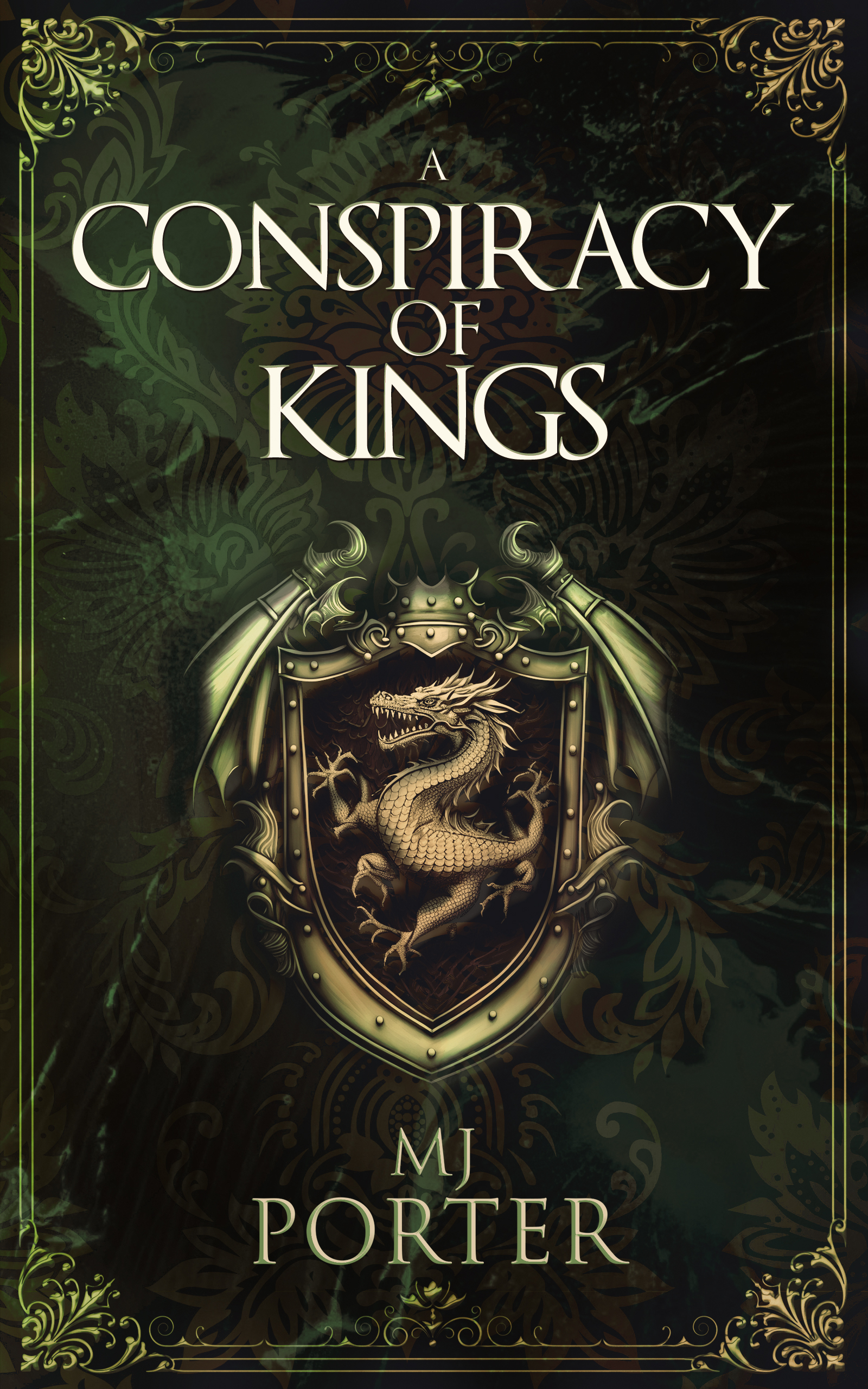
Here’s the beginning from A Conspiracy of Kings (there might be spoilers if you’ve not read The Lady of Mercia’s Daughter)
Chapter 1
Tamworth, the kingdom of Mercia, 918
We feast that night. There are smiles and tears on everyone’s faces as Tamworth’s great hall is swept clear of the men and women from Wessex. My armed guard ensures no one hurts them as the Mercians pull tables and benches to fill the vast space left behind. My servants, taken only somewhat by surprise as they were expecting a feast one way or another after the witan, rush to ensure everyone has a drink, if not food.
Cousin Ecgwynn hurries to me as I watch the activity, questions on her lips and I throw my arms around her, unheeding her sumptuous gown while I wear the clothes of a warrior. Usually, she would protest. But not today.
‘Enough of that,’ Cousin Ecgwynn complains, batting my embrace away, and not delicately. She holds my arms away from her, glaring at me.
I can see the flicker of rage in her blue eyes and the tightness of her stance.
‘You let me believe you were dead! I’ve been mourning for you, as I would a sister, and coming so soon after the death of Lady Æthelflæd….’ Her normally serene face floods with tears as her words trail off. I thrust my arms around her again, holding her tighter, hoping to make her understand, using my strength gained on the training field to overpower hers. I absorb her scent, the familiarity of home, the reminder of all that my uncle and Archbishop Plegmund tried to take from me.
‘I’m sorry, dear Ecgwynn. It was.’ I pause, unsure what to say, speaking into her ear as I continue to hold her tight. ‘Well, in all honesty, it was all we could think of to ensure that Uncle Edward’s treachery was exposed.’
I don’t call King Edward of Wessex her father. That would be too cruel. I think that, like me, Lady Ecgwynn could happily forget that a man was even involved in her conception and birth. Certainly, he’s done little enough for her since he became the king of Wessex when she was no more than a child and banished her to Mercia alongside Cousin Athelstan.
But Cousin Ecgwynn’s not finished yet. Once more, she pulls her way clear of my embrace, determined to argue with me.
‘But my brother knew and still didn’t tell me. That’s too cruel,’ her angry voice is gaining force. I know there’s nothing to do but try and explain. I could make excuses all night long, but she’s almost my sister, and she deserves the truth.
‘He knew. But only because he came to me and saw that I still lived after the attack in the north. Admittedly, cousin Athelstan could have told you that I wasn’t dead, but then, how would you have greeted King Edward when he came to Mercia to stake his claim for it? He couldn’t know that I yet lived.’
‘I’m not a woman to have her head turned by the arrival of a man whose only call on her affection is to claim to be her father. I wouldn’t have put your scheme in peril!’ Her voice is shrill with outrage, all tears forgotten, as she chastises me, her words coming almost too fast to decipher.
To the side, cousin Athelstan hovers, and I know why. He’s not scared of facing any man on the battlefield, but his sister? Well, he’d sooner not see her angry, and certainly, he’s content for me to be the one to soothe her.
I realise then that we erred when we made our plans.
‘No, I know you’re not. Apologies, cousin Ecgwynn. It wasn’t done because of a lack of trust. It was just better if as few as possible knew the truth.’ I can see that being so brutally honest at least pleases her, even if her forehead remains lined with anger and her lips purse tightly.
I hold my arms out once more. This time she steps into them willingly, a faint wrinkle on her nose because I smell of horse and sweat. I feel her shoulders sag, and her body trembles as though she’s going to cry. But she steps away from my embrace mere moments later, a watery smile on her face.
‘If only everyone I ever loved who died could come back to life, as you have. It would make my heart ache less.’ I nod. Abruptly, my thoughts focus on my mother, and despite my warrior’s prowess, my grief is fresh. I’d gladly step into my mother’s arms and cry away all my sorrows and disappointments at my uncle’s actions.
‘What would your mother think?’ Lady Ecgwynn asks, her thoughts following mine as she loops her arm through mine to walk amongst the people toasting my good health and the future of Mercia. Their voices range from soft to the roar of a battle cry. I chuckle at the exuberance, aware that cousin Athelstan stays close. He and cousin Ecgwynn will need to make peace with each other at some point. But not yet.
‘I hardly know what my mother would think or do. She and Edward were never close; at least, I don’t think they were. But, I believe she understood his ambitions well, all the same.’
‘Your mother was an excellent judge of character,’ cousin Ecgwynn confirms. ‘Although she did trust Archbishop Plegmund, the poisonous snake.’
My voice ripples with laughter as I picture Plegmund’s face too easily as the head of a snake.
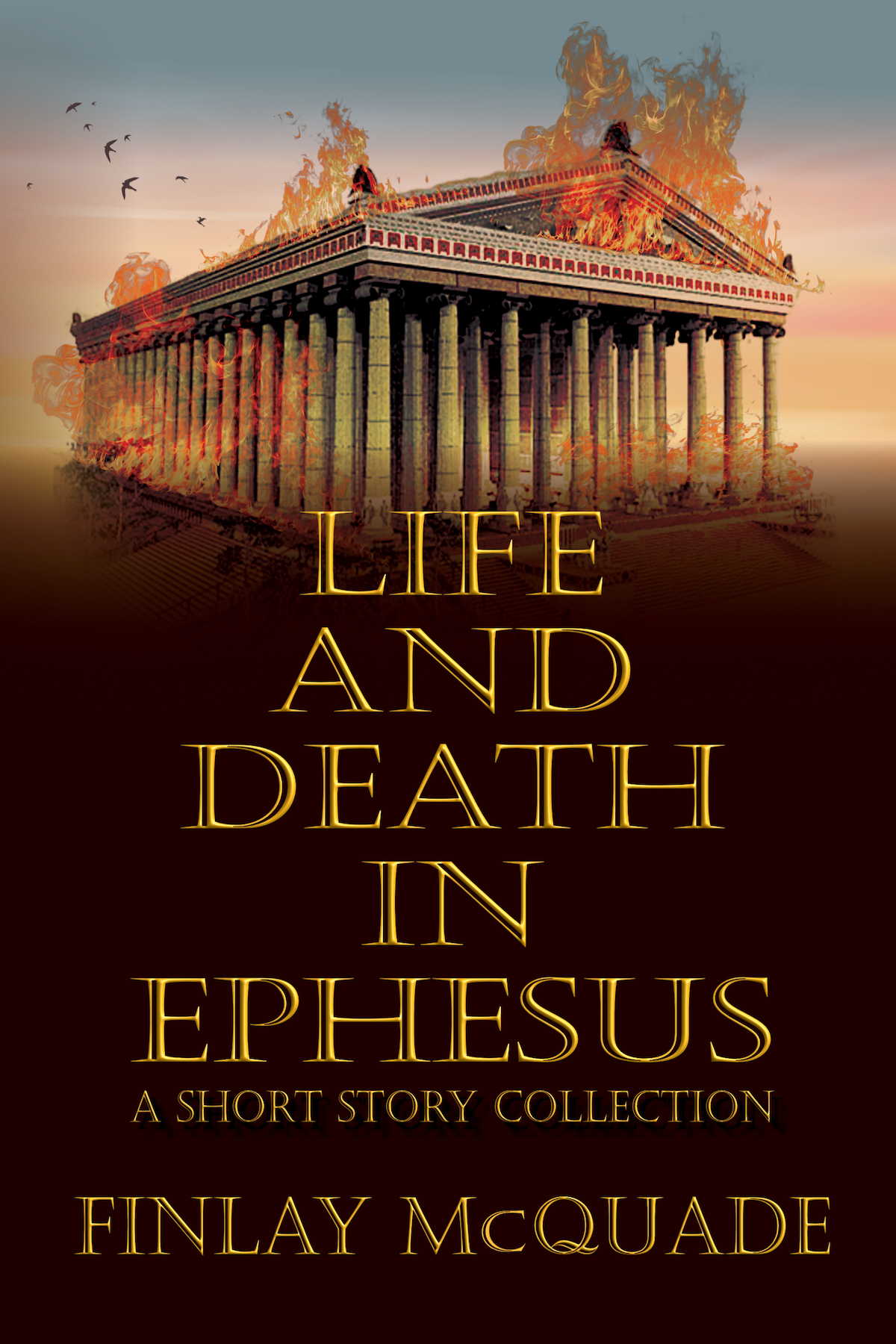
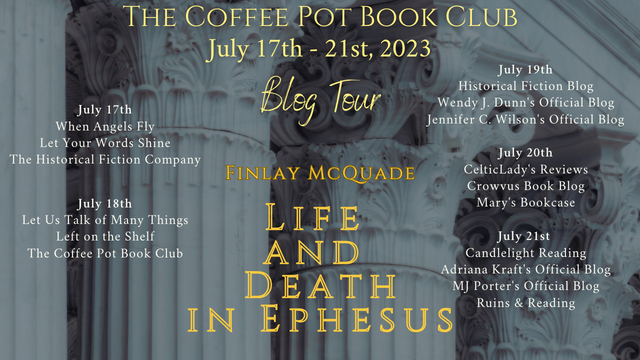
I’m delighted to feature an excerpt from Finlay McQuade’s new book, Life and Death in Ephesus, a short story collection.
From “Nestorius.”
The next day, sure enough, the church of the Evangelist was half empty, but the murmurs of protest were twice as loud as the hissing and whispering of the day before. Even so, Nestorius persisted. Desperate to demonstrate the simple logic of his argument, he introduced a new metaphor into his sermon: “Ferment the grape and what do you get? You get a sublime wine that buoys your spirit and lifts you heavenward. Squeeze the olive and what do you get? You get a taste of ancient earth, a hint of delight first tasted in the Garden by our earliest ancestors. But when you mix the two, what do you get? The sublime headiness of wine? No. The rich earthiness of Eden? No. You get a noxious mixture that retains the qualities of neither. Such is not the nature of Jesus Christ. “Jesus was a man and had all the qualities of a man, including the capacity to suffer and die. And he was also and always will be a God, who did not die and did not fear the pains of death as you and I inevitably will. Our Lord Jesus Christ had two natures, the one human and the other divine. The blessed Virgin gave birth to the one, but she did not give birth to the other, because the Son of God already existed and had always existed. That is why I have said and I say again that the blessed Virgin was the Christ-bearer, not the God-bearer. And yet, from that miraculous moment of Incarnation, the God and the man were united as one: human and divine in perfect union.” It seemed at first to have made an impression on his audience, for they were quiet. Later, on reflection, he thought that perhaps they were dazzled by the clarity of his argument, but no closer to accepting its truth. Then a scrawny little monk with a red clean-shaven face in the pew nearest to the altar stood and shouted in a deep bass voice, “HERETIC! HERETIC!” and continued to shout it until he was joined by a scattering of others in the dim interior of the church, and gradually by just about everyone present, “HERETIC! HERETIC! HERETIC!”
Here’s the blurb:
For over a thousand years, Ephesus, on the Aegean coast of what is now Turkey, was a thriving city. It was the site of the Temple of Artemis, one of the Wonders of the World, and a destination for religious pilgrimage long before the advent of Christianity. In the first century CE, St. John and St. Paul introduced Christianity to Ephesus, where it survived its turbulent beginnings and, in the fifth century CE, hosted the God-defining Council of Ephesus.
Life and Death in Ephesus is a collection of stories about major events in the history of Ephesus. Characters appearing in these stories include Herostratus, first to commit a “herostratic crime”; Alexander, the warrior king; Julius Caesar and Mark Antony, both lovers of Cleopatra; Heraclitus, the philosopher who said, “You can’t put your foot in the same river twice”; St. Paul, persona non grata in Ephesus; Nestorius, whose characterization of Jesus split the Eastern and Western church, and others, also important, whose names I have had to make up.
Hilke Thür, a leading archeologist, has said of these stories, “Life and Death in Ephesus will be a delightful and enjoyable accompaniment to the many available guidebooks. Not just tourists, but anyone interested in history will benefit from reading them.”
Finlay McQuade is a retired educator. He was born in Ireland, went to high school in England, and university in the USA. He has a BA in English from Pomona College, an MA in British and American literature from Harvard University, and a PhD in education from the University of Pittsburgh, where he also taught writing courses in the English department. He spent some happy years as a high school English teacher and soccer coach, but after co-authoring the book How to Make a Better School he found himself in demand as a consultant to schools and school improvement projects in the USA and often, also, abroad. He ended his career in education when he retired from Bogazici University in Istanbul, where he had mentored young teachers in the school of education.
For eight years after retirement, he lived in Selcuk, Turkey, among the ruins of the ancient city of Ephesus. The streets and squares of Ephesus became his neighborhood. His companions included archeologists, tour guides, and souvenir sellers. His curiosity about the people who had lived in those empty buildings for over a thousand years resulted in Life and Death in Ephesus, a collection of stories chronicling major events in the city’s history.
Now, back in the USA with time on his hands, he finds himself returning again and again to memories of his boyhood on the coast of Northern Ireland. The result of these forays into his past will be another collection of stories, part memoir, part fiction, called Growing Up in Ulster.
Ælfwynn, the daughter of Æthelflæd of Mercia and her husband, Æthelred was born at some point in the late 880s or early 890s. It’s believed that she was an only child, although it does appear (in the later accounts of William of Malmesbury – an Anglo-Norman writer from centuries later) that her cousins, Athelstan, and his unnamed sister, were sent to Mercia to be raised by their aunt when Edward remarried on becoming king in 899. There is a suggestion that it might have been Alfred’s decision to do this and that Athelstan was being groomed to become king of Mercia, not Wessex.
Ælfwynn is mentioned in three charters. S367, surviving in one manuscript, dates to 903, where she witnesses without a title. S1280, survives in two manuscripts, dates to 904 and reads in translation.
‘Wærferth, bishop, and the community at Worcester, to Æthelred and Æthelflæd, their lords; lease, for their lives and that of Ælfwynn, their daughter, of a messuage (haga) in Worcester and land at Barbourne in North Claines, Worcs., with reversion to the bishop. Bounds of appurtentant meadow west of the [River] Severn.’[i]
[i] Sawyer, P. H. (Ed.), Anglo-Saxon charters: An annotated list and bibliography, rev. Kelly, S. E., Rushforth, R., (2022). http://www.esawyer.org.uk/ S1280. See above for the full details under Æthelflæd
Historians have reconstructed this haga in Worcester in ‘The city of Worcester in the tenth century’ by N Baker and R Holt.
In S225, surviving in one manuscript, dated to 915, Ælfwynn witnesses below her mother. Hers is the second name on the document. This could be significant, as she would certainly have been an adult by now, was she already being prepared as the heir to Mercia on her mother’s death?
Ælfwynn is named in the Anglo-Saxon Chronicle in the C text under 919. ‘Here also the daughter of Æthelred lord of the Mercians, was deprived of all control in Mercia, and was led into Wessex three weeks before Christmas; she was called Ælfwynn.’[i]
[i] Swanton, M. trans and edit The Anglo-Saxon Chronicles, (Orion Publishing Group, 2000), p.105
And from there, we hear nothing more of Lady Ælfwynn, the second lady of the Mercians. Even though this is the first record of a ruling woman being succeeded by her daughter.
There’s no further mention of Ælfwynn in The Anglo-Saxon Chronicle. It’s been assumed that she became a nun, and she might well be referenced in charter S535, surviving in one manuscript, and which Eadred granted at the request of his mother, dated to 948, reading,
‘King Eadred to Ælfwyn, a religious woman; grant of 6 hides (mansae), equated with 6 sulungs, at Wickhambreux, Kent, in return for 2 pounds of purest gold.’[i]
[i] Sawyer, P. H. (Ed.), Anglo-Saxon charters: An annotated list and bibliography, rev. Kelly, S. E., Rushforth, R., (2022). http://www.esawyer.org.uk/ S535
Bailey has suggested that, ‘In view of its close association with the women of the royal family, and of Eadgifu’s patronage of Ælfwynn (in S535), I would venture to suggest that it is possible she too may have ended her days at Wilton.’[i]
[i] Bailey. M, ‘Ælfwynn, Second Lady of the Mercians’, Edward the Elder, 899-924 Higham, N.J. and Hill, D. H. ed (Routledge, 2001), p.125
This would mean that rather than ruling as her mother would have wanted her to, Ælfwynn was overruled by her uncle, who essentially stole her right to rule Mercia as soon as he possibly could on her mother’s death. It must be said that he might have later paid for this with his life if he was indeed putting down a Mercian rebellion in Farndon when he died in 924.
Alternatively, there is another beguiling theory that Ælfwynn might not have become a nun but was, in fact, married to Athelstan, an ealdorman of East Anglia, known as the ‘Half-King,’ because of the vast control he had in East Anglia. It’s long been believed that this label might well have resulted from the fact that Athelstan was an extremely powerful and well-landed nobleman who was much beloved by the Wessex royal family and its kings. However, it might well be because he was indeed married to the king’s cousin (under Athelstan, Edmund and Eadred). If this is the case, and it’s impossible to prove, then Ælfwynn, as the wife of Ealdorman Athelstan, had four sons, Æthelwold, Æthelwine, Æthelsige and Ælfwold, and these sons would be friends and enemies of the kings of England in later years. She might also have been given the fostering of the orphaned, and future King Edgar, which would also have made these men the future king’s foster brothers.
‘he [Athelstan Half-King] bestowed marriage upon a wife, one Ælfwynn by name, suitable for his marriage bed as much as by the nobility of her birth as by the grace of her unchurlish appearance. Afterwards she nursed and brought up with maternal devotion the glorious King Edgar, a tender boy as yet in the cradle. When Edgar afterwards attained the rule of all England, which was due to him by hereditary destiny, he was not ungrateful for the benefits he had received from his nurse. He bestowed on her, with regal munificence, the manor of Weston, which her son, the Ealdorman, afterwards granted to the church of Ramsey in perpetual alms for her soul, when his mother was taken from our midst in the natural course of events.’
Edington, S and Others, Ramsey Abbey’s Book of Benefactors Part One: The Abbey’s Foundation, (Hakedes, 1998) pp.9-10
If this identification is correct, ‘This would explain why she was considered suitable to be a foster-mother to the ætheling Edgar. It may even explain why Edgar was considered in 957 suitable to rule Mercia.’[i]
[i] Jayakumar, S. ‘Eadwig and Edgar’, in Edgar, King of the English, 959-975, ed. D Scragg (Boydell Press, 2014), p.94
If Lady Ælfwynn did survive beyond the events of 919, it seems highly likely she would have continued her friendship with her cousin, Athelstan, when he became king of Mercia, and then Wessex and then England. It’s also highly likely that she might have rallied support for him in Mercia.
Certainly, the first known occurrence of a woman succeeding a woman in Saxon England ended in obscurity for Lady Ælfwynn.
So, who is my Lady Ælfwynn?
Well, she’s a warrior woman, reeling from the unexpected death of her mother. She is her mother’s daughter. She knows what’s expected of her, and she has no problem contending with the men of the witan, her uncle, Edward king of Wessex, or indeed, the Viking raiders. She and Rognvaldr Sigfrodrsson have a particularly intriguing relationship.
Here’s the beginning of The Lady of Mercia’s Daughter
‘The men of the witan stand before me in my hall at Tamworth, the ancient capital of the kingdom of Mercia. The aged oak beams bear the brunt of centuries of smoking fires. Some are hard men, glaring at me as though this predicament is of my making. They are the beleaguered Mercians, the men from the disputed borders to the north, the east, and the west, if not the south. They’re the men who know the cost of my mother’s unexpected death. And strangely, for all their hard stares and uncompromising attitudes, their crossed arms and tight shoulders, they’re the men I trust the most in this vast hall. It’s filled with people I know by name and reputation, if not by sight.
Those with sympathy etched onto their faces are my uncle’s allies. These men might once have understood the dangers that Mercia faces, but they’ve grown too comfortable hidden away in Wessex and Kent. Mercia has suffered the brunt of the continual encroachments while they’ve been safe from Viking attack for nearly twenty years. Some are too young to have been born when Wessex was almost extinguished under the onslaught of the northern warriors.
Even the clothes of the sympathetic are different from those with hard stares. Not for them, the warriors’ garb. There are no gaping spaces on warrior belts where seaxes and swords should hang, but don’t, as weapons must not be worn in my presence.
No, they wear the luxurious clothing of royalty, even if they’re not members of the House of Wessex. They have the time, and the wealth, to ensure their attire is as opulent as it can be. They don’t fear a middle-of-the-night call to arms. They don’t need to maintain vigilance or continuously be battle-ready. They don’t have to fight for their kingdom and their family at a moment’s notice or be ready to lose a loved one or face a fight to the death.’
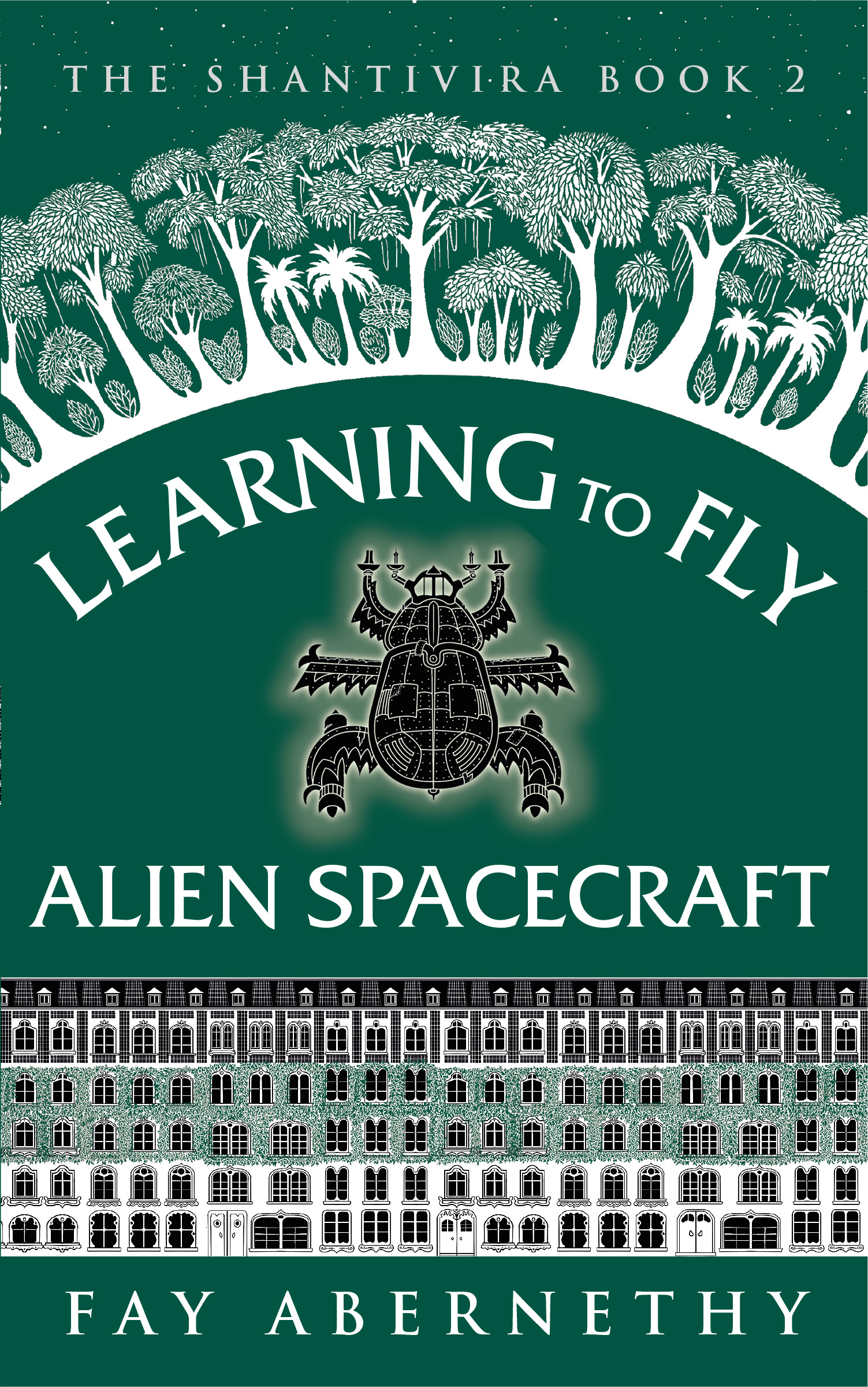
What if the secret alien space station protecting the Earth went PUBLIC?
Hanna Abebe has come far since leaving Ethiopia. All the way to the other end of the galaxy, in fact. And although her course at the Essoona Pilots’ Academy is tough, it’s not as tough as maintaining the ultimate long-distance relationship . . .
Astronaut Dan Simpson is furious. The Galaksi Alliance have exiled him on a remote planet to stop him telling NASA about them before they’re ready. But by the time they come to take him home, Dan has fallen in love with an enigmatic alien and decides to stay. Only then does he discover what a perilous business his new girlfriend is involved in . . .
At last! Captain Joe Llewellyn has permission to initiate first contact via the UN. But if he messes it up, the Galaksi Alliance could cancel the Shantivira’s funding, leaving the Earth defenceless. So, no pressure. All goes well until a rogue Samaritan flies a cargo ship through months of painstaking negotiations . . .
This character-driven eco science fantasy is a must-read for fans of Becky Chambers, Ursula Le Guin, Douglas Adams and Doctor Who.
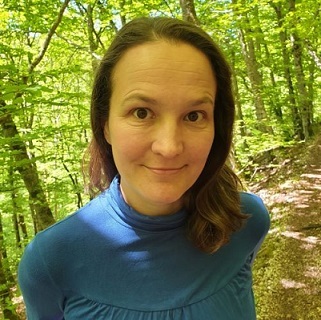
Fay Abernethy left the UK more than twenty years ago, seeking adventure.
When not diving with sharks or falling off horses, she worked as an engineer in the automotive industry. Later, she started her own translating business and settled down in Germany with the man of her dreams.
Pre-children, they explored the Alps together – on foot in summer and on skis or snowshoes in winter. She now lives the life of a respectable citizen, having discovered that being a parent is the greatest adventure of them all.
Why does she write? To find out what happens next, of course!
Lady Eadgifu was the third wife of Edward the Elder (r.899-924), king of the Anglo-Saxons. Edward the Elder was the father of King Athelstan, and a whole host of daughters, as well as five sons. Lady Eadgifu would, it seems, have been young when she married the aging Edward the Elder, and that meant that she long outlived him, and also, that her three children (possibly four, but I’ve opted for three) were young when their father died. And two of these children were sons, Edmund (born c.921) and Eadred (born c.923). Her daughter, Eadburh, is thought to have been the oldest of the three children, born c.919.
While Lady Eadgifu, from what’s known (and it isn’t much, as there are few surviving charters from the end of Edward’s reign) perhaps had little role to play while her husband lived, other than wife and mother to the king’s children, following his death, she became increasingly significant. She was the daughter of an ealdorman, who perhaps died just before her birth, and her family are said to have had connections with Kent. Indeed, it’s often stated that she brought her husband Kent with their union. By that, what’s often meant, is the loyalty of the Kentish people. Remember, at this time, we’re still just before the creation of ‘England’ as we would now recognise it.
Sadly, very little is known about Lady Eadgifu (and she’s not alone in this – many of the royal women ‘disappear’ at points in the historical record, and on occasion, are entirely lost.) We know about a land dispute she was involved in, and also much more information for after King Athelstan’s reign (her step-son, who was quite likely older than she was).
Indeed, it has been said that
‘Nor is it surprising that Eadgifu, as the consort of the previous king, served little role in her stepson’s court.[i]
‘the enhanced position [of Lady Eadgifu] may also have been developed specifically for the widowed Eadgifu as part of an alliance with her stepson Æthelstan [Athelstan] in which she supported his position and he recognised her sons as his heirs.’[i]
[i] Yorke, B. ‘The Women in Edgar’s Life,’ in Edgar, King of the English, 959-975 Scragg, D. ed (The Boydell Press, 2008), p.146
And it is this option that I’ve decided to explore in Kingmaker. Lady Eadgifu was wife to a king. She would have known her worth, even when faced with a stepson as the king of the English, and another stepson, and stepdaughters, who perhaps didn’t share any love for their, potentially, younger stepmother.
But the story doesn’t stop there. In later years, during the reigns of her sons, and her grandsons, Eadgifu would have been a powerhouse at the centre of English politics. Read her story, for it is, the story of England between the reigns of King Alfred, and King Æthelred II – allegedly, a century of peace between the English and the Norse. Read on to find out the truth of that assertion.
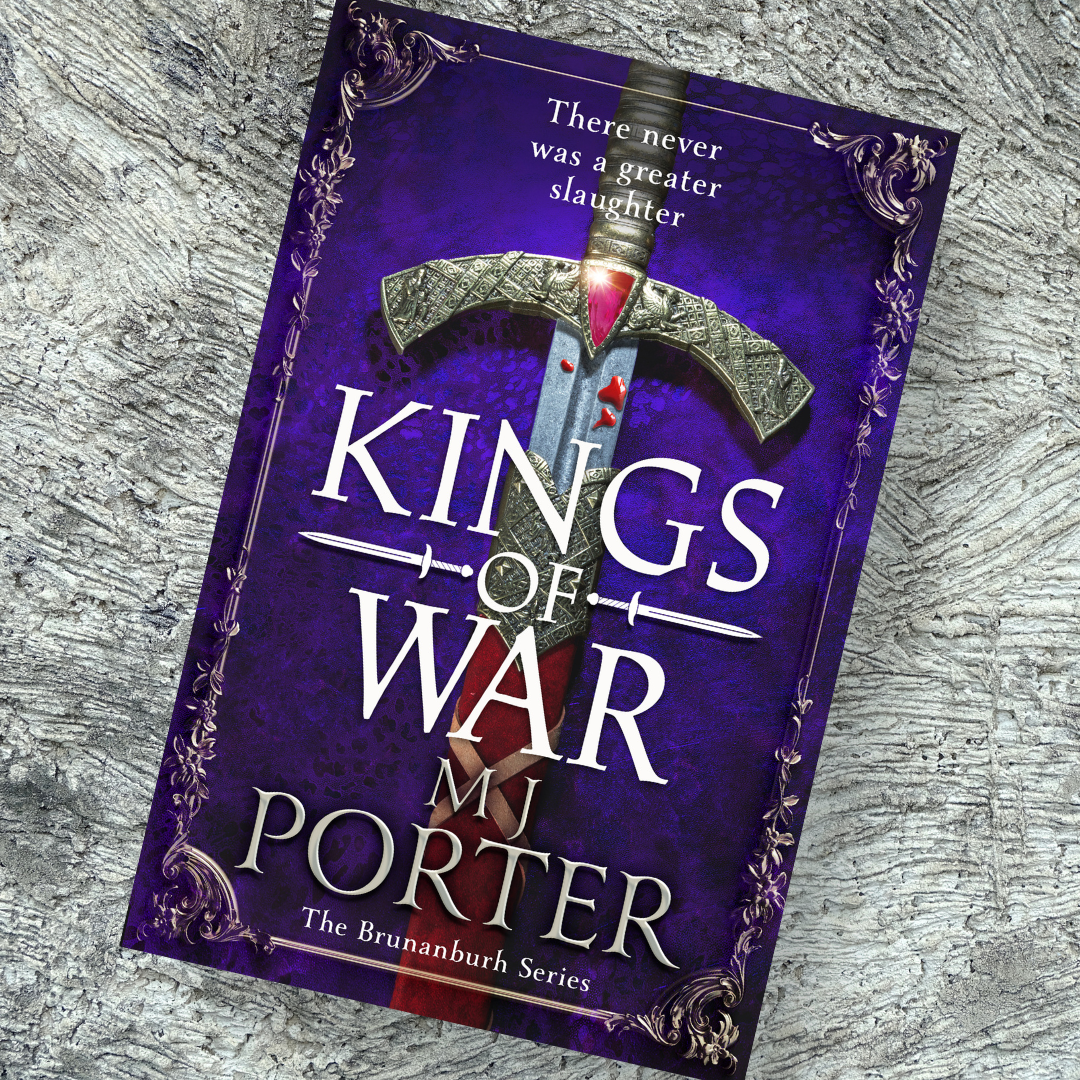
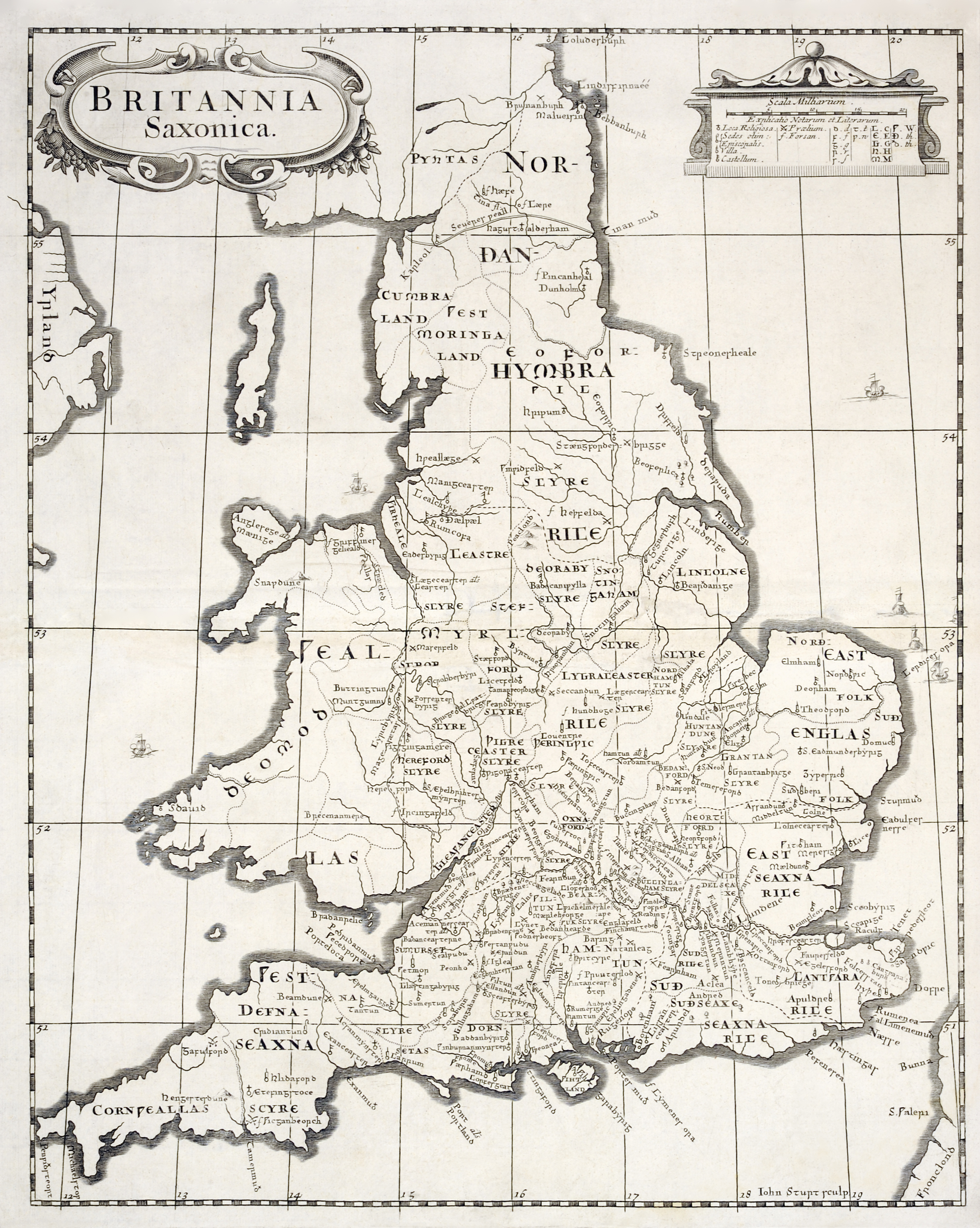
First things first, no one actually knows where the battle of Brunanburh took place. No one. There are a number of different sites that historians have suggested from the one I’ve chosen in Kings of War, indeed, upwards of forty of them, although Bromborough in Cheshire, Brinsworth in South Yorkshire and Burnswark in Dumfries and Galloway are the most well-known. It’s worth noting that these different locations range all over Britain, from Devon to Scotland from the east coast to the west.
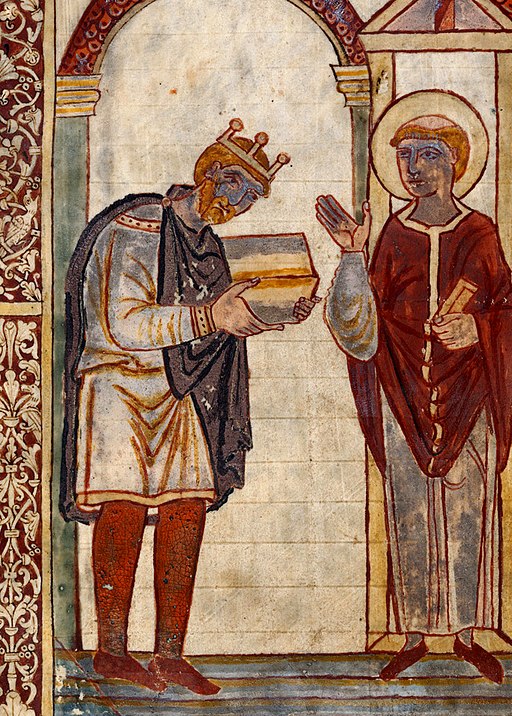
Frontispiece of Bede’s Life of St Cuthbert, showing King Æthelstan (924–39) presenting a copy of the book to the saint himself. 29.2 x 20cm (11 1/2 x 7 7/8″). Originally from MS 183, f.1v at Corpus Christi College, Cambridge. (Wikimedia Commons)
As one historian has commented, more discussion has taken place about where Brunanburh was located than about its actual historical significance, which is often seen as much less important in the grand scheme of later events. Much of these difficulties arise because of the variety of names given to the location of the battle. Brunandun, in Æthelweard’s Chronicon (a later tenth century Latin copy of the Anglo-Saxon Chronicle), Symeon of Durham suggested Weondune, although known by the name Brunnaneerc or Brunnanbyrig, while Geoffrey Gaimar (another post Conquest source) names it as Bruneswerce. To add to the confusion, are some of the descriptions given about the battle. John of Worcester ( a later source) asserts that Olaf and Constantin entered the mouth of the River Humber something that Symeon of Durham echoes. It’s been suggested that John of Worcester (an Anglo-Norman writing long after the events of 937 took place) took the knowledge that the River Humber was where Harald Hardrada landed in 1066 and Svein Forkbeard in 1069 and extrapolated from it.
As part of the discussion about where the battle took place, another problem needs to be addressed, that of the belief that the English rode down the Norse as they were fleeing from the battlefield to reach their ships. A word, eorodcistum, has been taken to be a reference to horses. Paul Cavill has shown that this word actually refers to gatherings of men and need not mean that horses were involved . This therefore does away with the argument that the Norse ships were far from where the battle took place.
As well as the various sources mentioned above, the battle is also referenced in Welsh, Scottish and Irish sources. It was deemed to be significant. The Chronicles of the Kings of Alba gives a very brief account: ‘And the battle of Dun Brunde in his xxxiii year in which was slain the son of Constantin.’ While the Annals of Ulster tell us: ‘AU 937.6. A great, lamentable and horrible battle was cruelly fought between the Saxons and the Northmen, in which several thousands of Northmen, who are uncounted, fell, but their king, Amlaib, escaped with a few followers. A large number of Saxons fell on the other side, but Æ∂elstan, king of the Saxons, enjoyed a great victory.’ (Alex Woolf, From Pictland to Alba, 789-1070, p.169) (Amlaib was an Irish version of the name Olaf). A later source, that of the Historia Regum Anglorum by Symeon of Durham, tells that ‘Onlaf’ came with 615 ships. There are also many later sources that tell of the battle of Brunanburh, the distance in time to them being written, tending to add more and more details which can’t be confirmed with any accuracy.
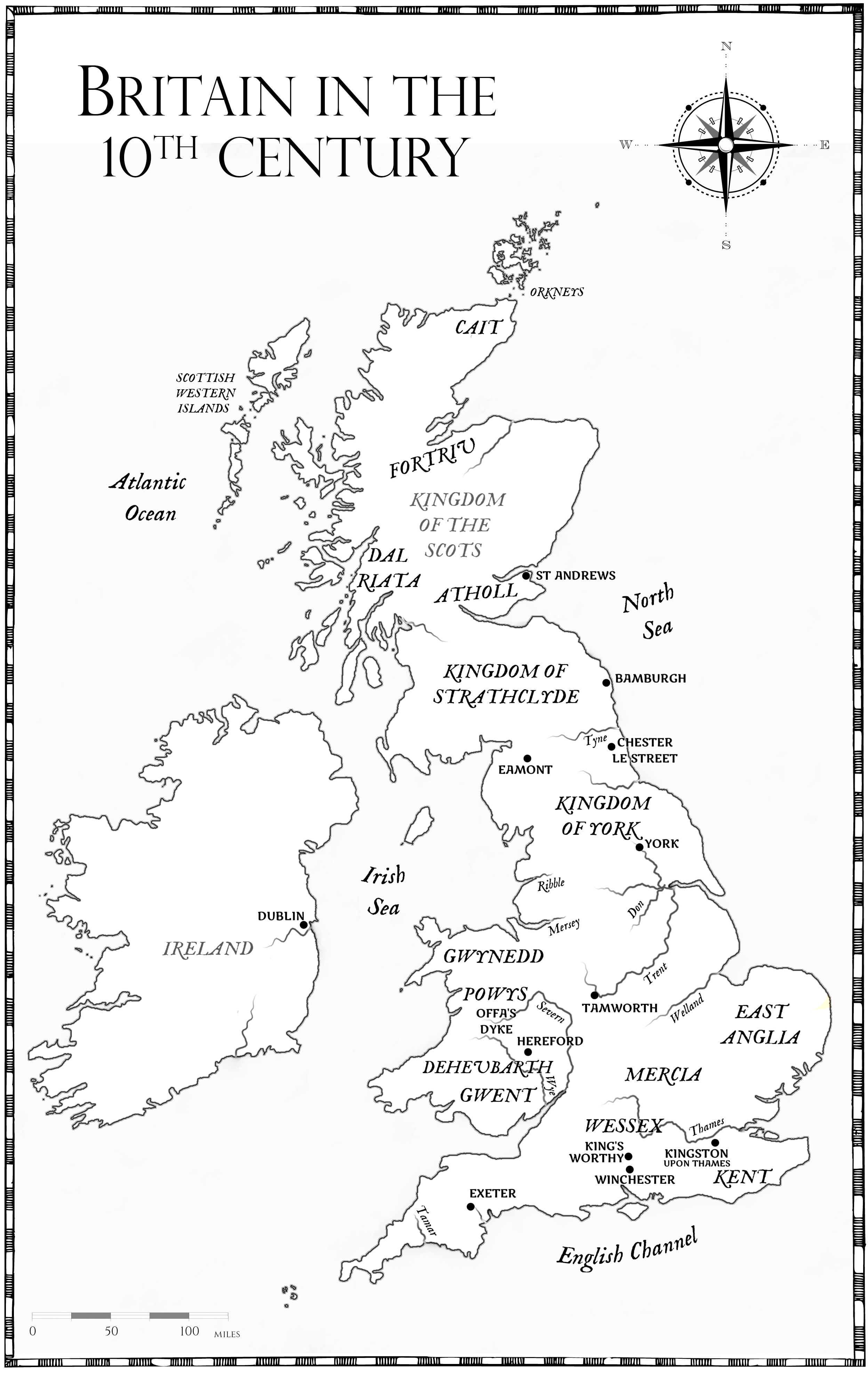
Map design by Flintlock Covers
Pauline Stafford, who has written an extensive account of the actual writing of what we know as The Anglo-Saxon Chronicle, After Alfred:Anglo-Saxon Chronicles and Chroniclers 900-1150, (which survives in nine recensions/or versions, all with slightly different details and emphasis) states that perhaps the most famous account of the battle, the Brunanburh poem, was a retrospective addition, probably written in the twenty years after Athelstan’s death, and certainly before the death of the last son of King Edward the Elder, Eadred, in 955. Some have suggested that Edmund may not actually have been present at the battle but that it was deemed expedient to assign him a part in it, perhaps after his death, to show the sons of King Edward the Elder working together for England.
And there is one final source, which I’ve made no use of, but which many may be aware of, that of the accounting of the battle, named as Vinhei∂r in Egil’s Saga, a thirteenth-century Icelandic saga, which of course, is a tale of Egil’s involvement in the battle and tells us very little about the battle itself.
In recent years, and indeed, before I wrote the initial drafts of this book and its predecessor, there has been a move to accept the Wirral as the possible location. Bernard Cornwell has been instrumental, as has an archaeology group based in Wirral, in trying to find corroborating evidence for this. The results of the work can be found in Never Greater Slaughter by Michael Livingstone. Even now, I find it amusing that it wasn’t until Bernard Cornwell made Brunanburh one of the burhs built by the House of Wessex that I quite realized the significance of that element of the name.
In my role as writer of historical fiction, I chose the site that I thought offered the best opportunity to develop the storyline and the one that intrigued me the most. After all, it does sort of make sense that any battle for York would have taken place close to York, but equally, why would the Dublin Norse have sailed all the way around the tip of Scotland to get to York from the East Coast? If they used one of the portage routes overland then again, we must ask why. And so, I opted for the position which would be the closest way of them stepping foot on English soil.
Britania Saxonica, 17th Century Map, showing Brunanburh north of Bamburgh
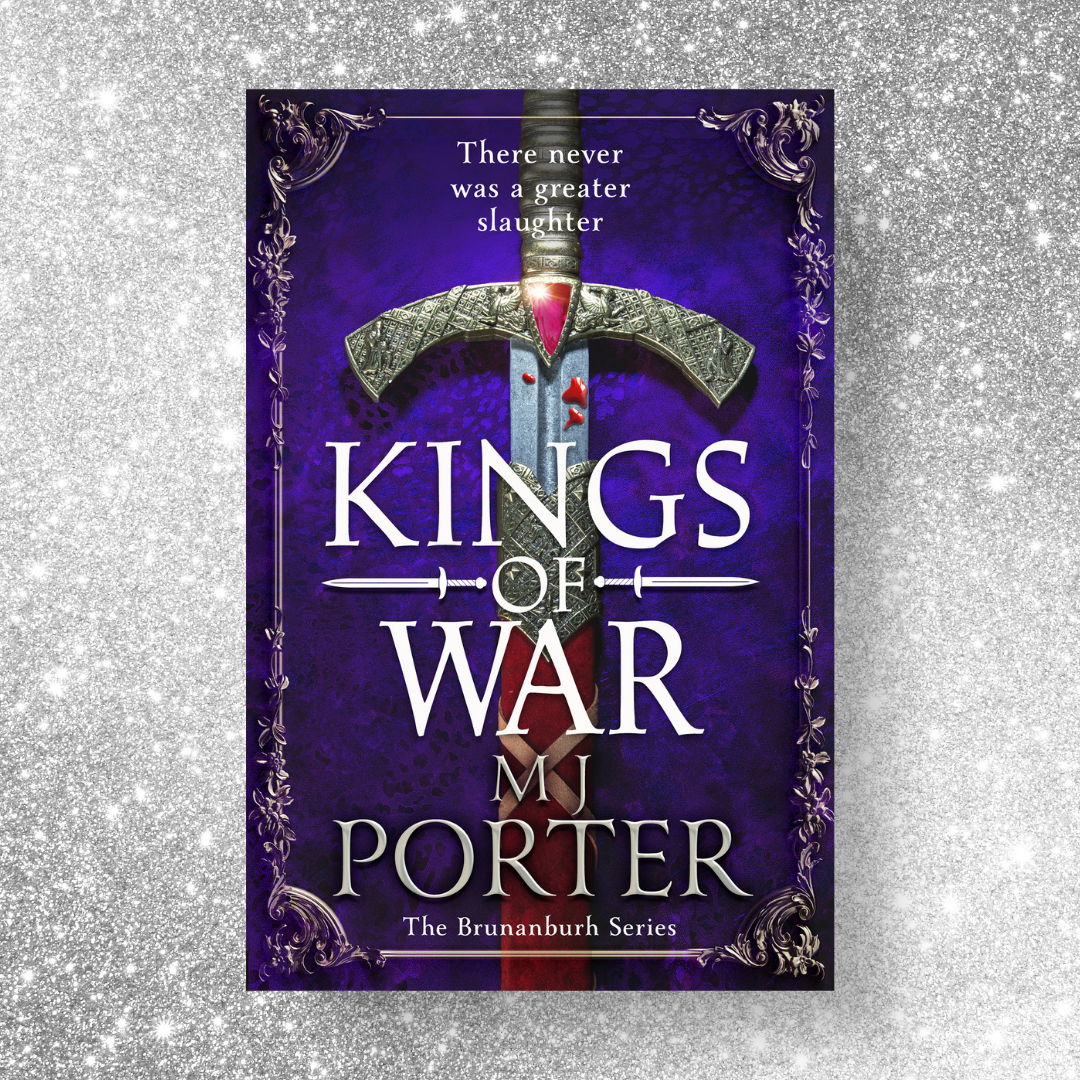
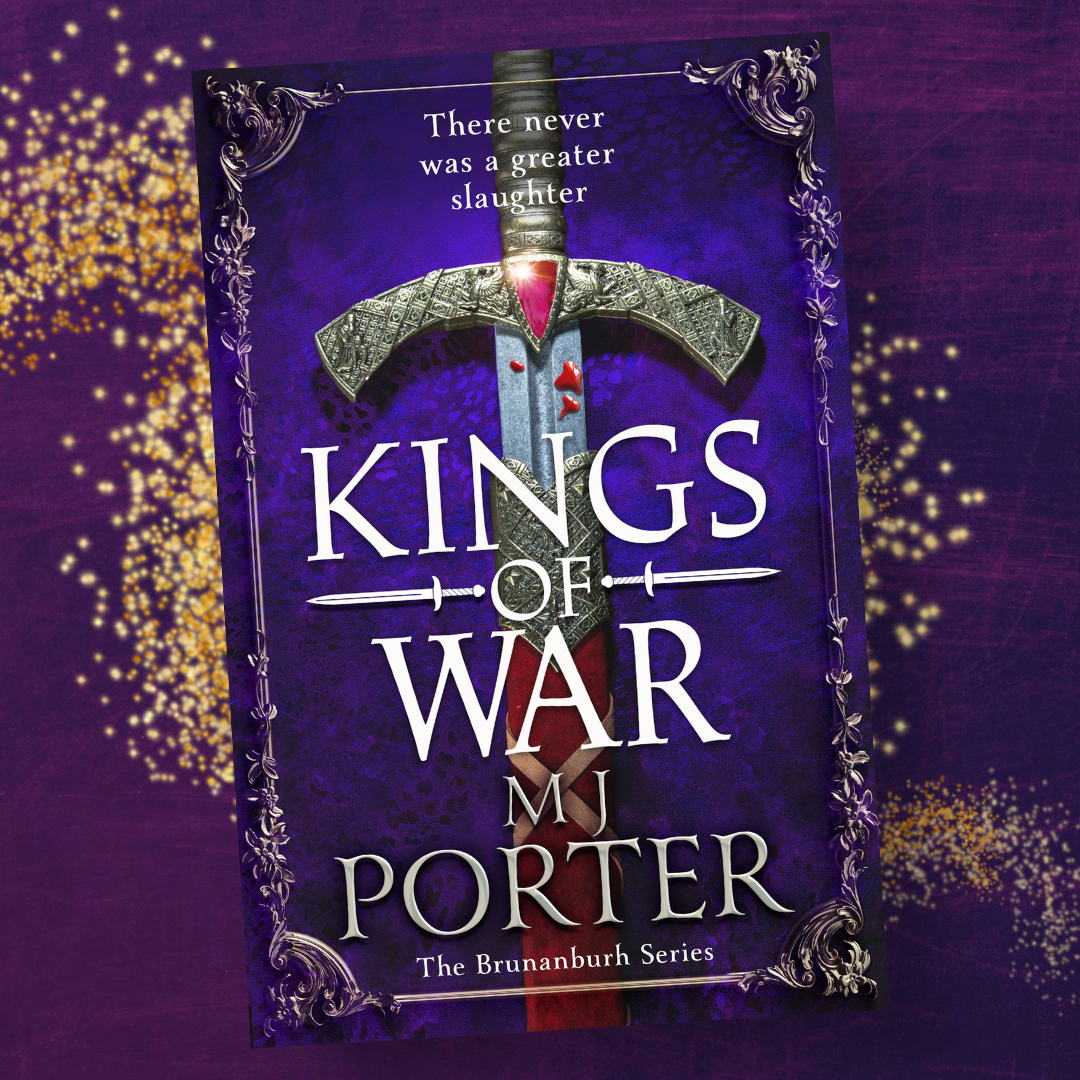
Kings of War is available now in ebook, paperback, audio and hardback.
My new book, Kings of War, is a multi-viewpoint novel telling the story of events in Britain from 925-934. I thought it would be good to share details of the historical people my character are based on.
My portrayal of Constantin, the king of the Scots, is of course fictional in King of Kings, but he is based on a historical individual, Constantin (e) II, so who exactly was he?
Constantin is a fascinating character. Again, and as with Athelstan, his exact date of birth is unknown, but it must have been, at the latest, by 877/8, when his short-reigned father died.
By 900, Constantin was the king of the Scots (we think – there is some confusion about this). This wasn’t yet quite Scotland, but it was getting there. The ancient kingdoms of Cait, Fortriu, Atholl and Dal Riata, were ruled by one king, Constantin. But, he hadn’t succeeded his father, Aed, but rather a man named Domnall II, his cousin. At this time there were two rival dynasties and they strictly alternated the kingship.
Affairs in the kingdom of the Scots often intermingled with those of the independent kingdom of Bamburgh, Strathclyde, and of course, the Norse, or Viking raiders, if you will. Indeed, the entry recording Constantin’s death in the Annals of Ulster, reads as though there was often strife.
‘Constantinus son of Ed held the kingdom for xl years in whose third year the Northmen plundered Dunkeld and all Albania. In the following year the Northmen were slain in Strath Erenn…And the battle of Tinemore happened in his xviii year between Constantin and Ragnall and the Scotti had the victory. And the battle of Dun Brunde in his xxxiiii year.’ (Alex Woolf, From Pictland to Scotland, 789-1070,p.126)
Constantin, ruling for decades, and I mean decades, seems to have brought much needed stability to the kingdom, as affairs there very much mirrored the emerging ‘England’ to the south.
‘Constantin’s reign has increasingly come to be see as one of the most significant in the history of Scotland. Not only was it very long, at least forty years, but it was also the period during which conflict and diplomatic relations between a kingdom recognisably ancestral to Scotland and one recognisably ancestral to England first occurred.’ (Alex Woolf, From Pictland to Scotland, 789-1070, p.128)
Constantin allied with the rulers of Bamburgh, and York, and also, on occasion, both Æthelflæd of Mercia and Edward the Elder, after her death. But, he seems to have been quite flexible in his thinking, and was prepared to pick and choice as he saw fit.
By the beginning of King of Kings, Constantin would have been in his mid-forties, and he was still to rule for many years to come, and he was certainly a more than adequate counterpart to Athelstan, king of the English, no doubt helped by his sons and grandsons, as his reign continued.
































 MJ Porter