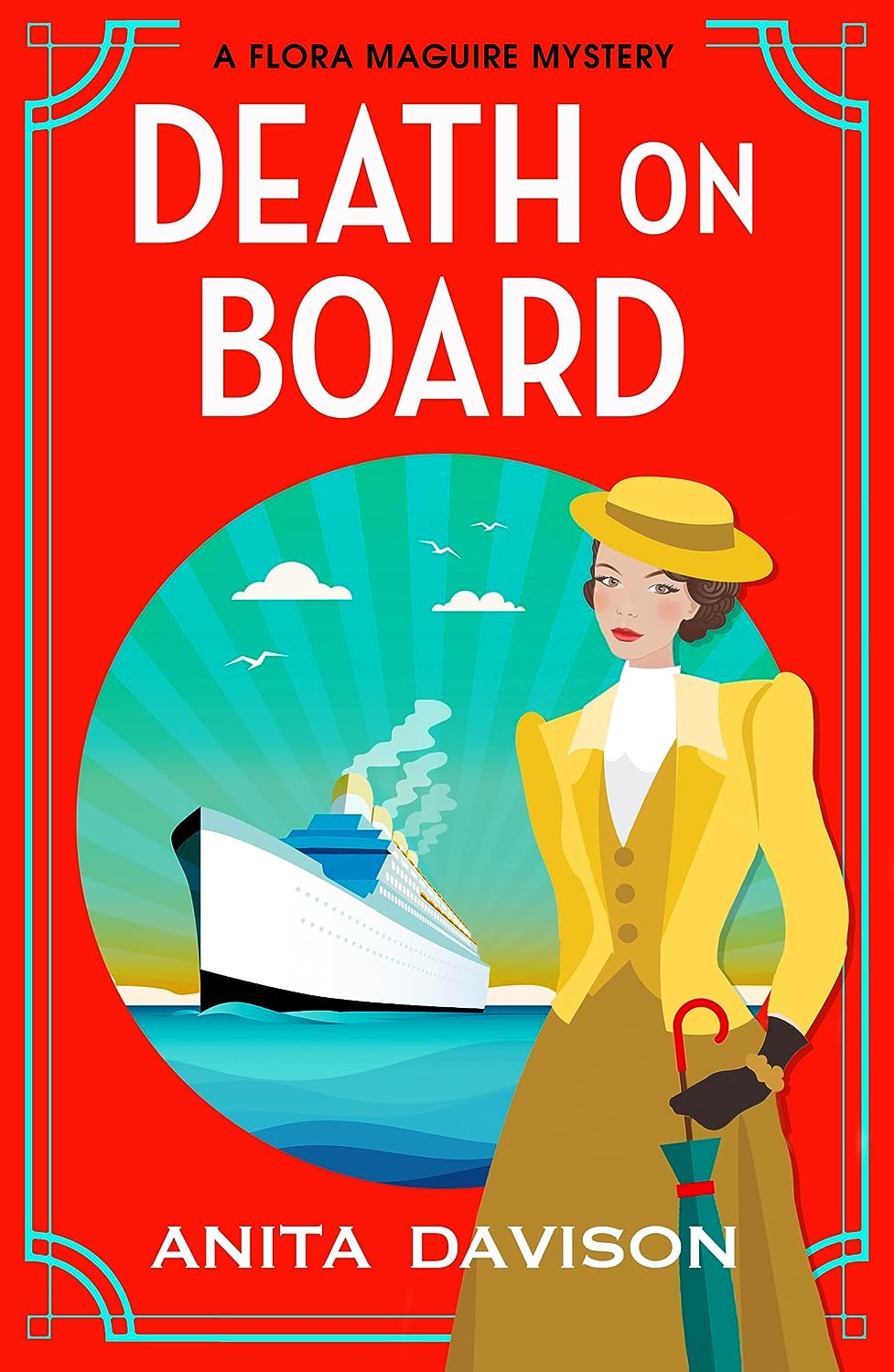
NEW YORK,1900: A captivating cozy crime novel set on-board the maiden voyage of the S.S. Minneapolis, featuring series character Flora Maguire. Perfect for fans of Downton Abbey.
Young governess Flora Maguire is on her way home from America on the maiden voyage of the S.S. Minneapolis with her young charge Eddy, Viscount Trent, when she discovers a dead body.
Unconvinced when the death is pronounced an accident, Flora starts asking questions, but following threats, a near drowning and a second murder, the hunt is on for a killer. Time is running out as the Minneapolis approaches the English coast.
Will Flora be able to protect Eddy, as well as herself?
Is her burgeoning relationship with the handsome Bunny Harrington only a shipboard dalliance, or something more? And what secrets must Flora keep in order to stay safe?
Death on Board is a historical mystery set onboard a transatlantic crossing in the year 1900.
Our main character, Flora, is a governess escorting her young charge home to begin school. Unsure of herself, as her employer has purchased her a First Class ticket, Flora avoids meeting many of them until the unexpected death of a member of her table, whose body she’s unfortunate to discover early one morning.
What ensues is a twisted tale of secrets and half-truths as Flora finds herself drawn into the reason behind the man’s death, proclaimed as an accident, but which Flora sees in a very different light. She mingles with all those on board, from the snooty upper-class dam and her companion to the actress seeking a new life in England, as well as the handsome Bunny, and his motorcar, Matilda, as she attempts to get to the bottom of the mystery surrounding the murder.
Death on Board is stuffed with period details, and the mystery itself is well-constructed, with a very satisfying resolution. Fiona is a fantastic creation, as is Bunny, and while I’m not unconvinced they wouldn’t have sunk the ship with the quantity of tea consumed, I thoroughly enjoyed it, and look forward to reading more of the series.
The Winds of Change is a story of love, loyalty and betrayal on the eve of the Spanish Civil War, when the country is political turmoil with strikes and demonstrations, unemployment is high and the people are starving.
In this complicated love triangle we meet Ramon, a member of the Republican Left, who has accidentally killed a policeman and is on the run from the Guardia Civil and Hugo, the son of the wealthy owner of a local sherry bodega. Both men are in love with Clementina, the beautiful daughter of a well-known gypsy horse trader but there are obstacles in both their paths.
Hugo finds that when he tries to see Clementina again, both his parents and hers do everything they can to stop him.
Meanwhile Ramon’s brother, Pedro, is arrested and imprisoned because he will not reveal his brother’s whereabouts to the Guardia Civil. Now Ramon has to choose between his brother and the woman he loves.
This fast moving historical novel is a story of love, politics, class prejudice, intrigue and betrayal in the year leading up to the Spanish Civil War.
Buy Links:
This title is available to read on #KindleUnlimited.
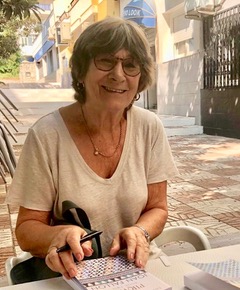
Teacher, management trainer and business woman, the Scottish-born novelist, Joan Fallon moved from the UK to Spain in 1998 and dedicated herself to full-time writing. She is now the self-published author of eighteen books, many of which are historical novels set in southern Spain, and focus on two distinct periods in the country’s history, the Spanish Civil War and Moorish Spain.
More recently she had turned her attention to writing contemporary crime fiction, with a series of novels entitled The Jacaranda Dunne Mysteries but her love of historical fiction has lured her back to writing about Spain in the 20th century in her latest novel The Winds of Change.
Penda of Mercia is famous for many things, including killing two Northumbrian kings throughout his life. He’s also famous for being a pagan at a time when Roman Christianity was asserting itself from the southern kingdom of Kent. But who was he?
Who was Penda of Mercia?
Penda’s origins are unclear. We don’t know when he was born or where he came from, although it must be assumed he was a member of a family from which the growing kingdom of Mercia might look for its kings. He’s often associated with the subkingdom of the Hwicce, centered around Gloucester. The later source, the Anglo-Saxon Chronicle, written at least two hundred and fifty years after his life records,
626 ‘And Penda had the kingdom for 30 years; and he was 50 years old when he succeeded to the kingdom.’ ASC A p24
626 ‘And here Penda succeeded to the kingdom, and ruled 30 years.’ ASC E p25
Knowing, as we do, that he died in 655, this would have made Penda over eighty years old at his death, a fact that is much debated. Was his age just part of the allure of the legend? A mighty pagan warrior, fighting well into his eighties? Sadly, we may never know the truth of that, but it is disputed, and there are intricate problems with the sources that boggle the brain.
Hædfeld, Maserfeld and Winwæd
Suffice it to say, we don’t know Penda’s age or origins clearly, but we do know that he was involved in three very famous battles throughout the middle years of the seventh century, that at Hædfeld in 632/33 fought somewhere close to the River Don, in which King Edwin of Northumbria was killed. That of Maserfeld, in 641/2 in which King Oswald of Northumbria was killed, close to Oswestry, not far from today’s Welsh border. And Penda’s final battle, that of Winwæd in 655 in which he was killed while fighting in the north, perhaps close to Leeds. While these are the battles we know a great deal about, thanks to the writings of Bede and his Ecclesiastical History of the English People, a Northumbrian monk, with an interest in Northumbria’s religious conversion, who completed his work in 731, Penda was a warrior through and through. He fought the kingdoms to the south, the West Saxons, or Wessex as we might know it. He fought in the kingdom of the East Angles. He allied with Welsh kings. He meddled in affairs in Northumbria, and had he not died in 655, it is possible that Northumbria’s Golden Age would have ended much sooner than it did. His son married a Northumbrian princess. His daughter married a Northumbrian prince. Penda was either brokering an alliance with Northumbria or perhaps using marriage as a means of assimilating a kingdom that he was clear to overrun.
Bede
Our narrator of Penda’s reign, is sadly a Christian monk writing up to seventy years after his death. His commentary is biased, and his story is focused on the triumph of religion and Northumbria, probably in that order. And yet, as Bede’s work was coming to its conclusion, even he understood that the Golden Age of Northumbria was coming to an end. A later king, Æthelbald, related not to Penda, but to his brother, Eowa, killed at the battle of Maserfeld, although whether fighting beside his brother or for the enemy is unknown, was the force in Saxon England at the time. How those words must have burned to write when Bede couldn’t skewer the contemporary narrative as he might have liked.
But while Penda’s reign is so closely tied to the words of Bede, our only real source from the period in Saxon England, although there are sources that exist from Wales and Ireland, Penda’s achievements aren’t to be ignored.
Penda’s reputation
Recent historians cast Penda in a complimentary light. D.P. Kirby calls him ‘without question the most powerful Mercian ruler so far to have emerged in the Midlands.’ Frank Stenton has gone further, ‘the most formidable king in England.’ While N J Higham accords him ‘a pre-eminent reputation as a god-protected, warrior king.’ These aren’t hastily given words from men who’ve studied Saxon England to a much greater degree than I have. Penda and his reputation need a thorough reassessment.
After his death, his children ruled after him, but in time, it was to his brother’s side of the family that later kings claimed their descent, both King Æthelbald and King Offa of the eighth-century Mercian supremacy are said to have descended from Eowa.
I’m delighted to be sharing an excerpt from War Sonnets by Susannah Willey.
ASSAULT FORCE
The sea is calm; upon its boundless deep
Our troopship glides, lost in infinity.
Beneath her decks two thousand soldiers sleep,
Or, waking, wonder what their fate will be.
From my assigned position here on high
I peer ahead, and in the east I see
The dawn’s pale fingers clawing at the sky,
And then, a speck of land. The enemy
Will not be sleeping.
Now the troops are out
And stand in little groups beside each boat.
The gunship’s roar drowns out the sergeant’s shout.
Rope ladders fall, the LCIs, afloat,
Receive two thousand men in war array.
Each boat, full loaded, quickly moves away.
CHAPTER 18
PHILIPPINE SEA—JANUARY 31, 1945
Leo sat against a pile of life rafts, his knees bent to support the letter he was writing. Dooley perched on a pile of rafts next to him with a handful of Aussie sailors. Their ship, the Australian transport Westralia, was part of a large convoy escorted by agile destroyers. …
“I could spend the rest of the war right here.” Dooley patted the life raft. “Whatcha think, Yankee boy?” Ever since they’d left New Guinea, Dooley had acted like his outburst at Leo’s promotion had never happened.
Leo set down his pen and took a moment to stretch his arms. “I think I’d rather be almost anywhere but on a ship.”
Dooley took a last, deep drag on his cigarette. “With our luck,” he said, exhaling smoke through his nostrils, “we’ll get sunk by a submarine before we get to Luzon.” He flicked his cigarette into the water.
“Not funny.” Leo growled.
“More likely some crazy kamikaze,” an Aussie sailor said, “locked into a bomb-loaded plane they call an Okha. But Baka is more like it: a bloody fool.” His fellow seamen snickered.
“Those mates are crazy.” The sailor propped himself up on one elbow. “One of ’em nearly sent us to kingdom come a couple months ago.” He glanced at his fellow Aussies. “Ain’t that right, mates?”
“Yeah, up in Leyte,” said another. “Missed us by a wallaby’s tail.” He held up his thumb and forefinger, an inch apart.
“About eight of them just dropped from the clouds.” The Aussie launched into his story. “Before you could blink, one of them crashed head-on into one of our carriers. Our mates couldn’t do anything but watch.”
Sitting on the open deck, Leo felt exposed. He subconsciously scanned the sky for enemy planes, strained to hear their engines. His brain struggled with an indistinct image of planes impacting with ships—something he’d really rather not imagine.
“Instead of cats and dogs, it was raining planes and bodies, machine-gun fire and bombs. Seemed like those bloody bastards were hell-bent on dying.”
One of his mates picked up the story. “The ship next to us got clobbered. Bloody Baka took out half the crew. Men flyin’ through the air like rag dolls, others stuck with shrapnel. They said the deck was covered with Jap guts and brains, all kinds of body parts and plane wreckage.”
That was something Leo couldn’t begin to imagine, and he was grateful for that. He dang sure didn’t want to get obsessed about being split into pieces by a kamikaze. “Sitting ducks” was a perfect description of their situation out here in the middle of the ocean. Except a duck was a lot harder to hit than a troopship.
The Aussie storyteller looked at Dooley. “You should’ve seen it, Yank. Helluva mess.”
Dooley bristled at that last remark. “Don’t call me a Yank.”
One of the Australian soldiers snickered. “Well, that accent of yours sure ain’t Brit.”
Dooley jumped to the deck, fists clenched at his sides. “You can call Sergeant Baldwin here a Yank cause he’s a northerner. But I’m from Loo-siana, and where I come from, calling a southern boy a Yank is fightin’ words.”
The Aussie held up a hand. “Don’t go getting your civvies wrinkled, mate. It’s just what we call Americans.”
“American’s full of goddamned mongrels, and I ain’t one of them,” Dooley growled. “We got Russkies and Polacks, Wops—and Yankees.” He spat out the word as if it was the sourest bit of vomit. “We got so many Nips they had to build prison camps to keep ’em outta our hair. And that don’t even count the spics and ni—”
Leo had about enough of Dooley’s bragging and bigotry. He held his hand out for Dooley to stop. “Yeah, we get it. You southern boys are some kind of special all right.”
Dooley glared at Leo and started pacing. “All’s I’m sayin’”—his deep southern drawl thickened as he stopped and pointed an accusing finger at the Aussie—”is don’t put me in the same kennel with the mutts.”
The sailor put up his hands in a defensive gesture. “Slow down and speak English, mate. Whatever language you’re talkin’ sounds more like Chinese.”
“Ain’t no goddamned Chink, mate.”Dooley put up his fists, took a step toward the rafts.
The Aussie jumped off the raft, ready to fight. “You ain’t winnin’ this fight, Yank.”
Dooley snarled and lunged toward the Aussie sailor, who raised his fists and took a step toward Dooley.
“Come on, fellas.” Leo didn’t want any part of this fight. Dooley was being a jerk, and it embarrassed Leo. He stepped between the two men, cautiously put a hand on Dooley’s chest. “You’re making this a bigger deal than it oughta be. Step back and cool off a minute.”
Dooley glared, but what Leo noticed was beyond Dooley: a cloud of smoke bursting from a destroyer escort in the near distance. In seconds, the air boomed with the report of multiple firing K-guns.
The harsh tones of the General Quarters alarm sent the men on the life rafts scrambling. As troops en route to the front lines, they weren’t much more than cargo—there was nothing for them to do but hide.
Adrenaline surged through Leo’s body as his brain went to work. K-guns fired depth charges. Depth charges meant enemy subs. Enemy subs meant torpedoes—likely the ones the Japs called kaitens, manned suicide bombs not unlike the kamikaze planes. They were notoriously inaccurate, but how accurate did a danged torpedo have to be? His mind was spinning out of control even as he fought to stay calm.
“Leo!” Dooley shouted from under the pile of life rafts and gestured for Leo to join him.
Dooley’s shout got his attention.
Leo’s instincts took over. He looked across the ship’s deck, crowded with frantic soldiers trying to find their way, being pushed and shoved by the ship’s crew trying to do their jobs.
“Come on, Yank.” Dooley’s voice was strained and insistent. “Get in here.”
Leo scrambled under the life rafts, pushing his way well back into the pile.
All sound was muffled now, the incessant alarm, the boom of exploding missiles, the shouts of men who hadn’t yet found cover. The skirmish sounded deceptively far away.
Leo’s heart pounded. Every breath took effort in the suffocating enclosure created by the life rafts. Was that a plane he’d heard? He struggled to shut out the noise and concentrate. His body tensed, waiting for the explosion that would collapse the deck underneath him. He struggled to breathe.
This was too soon. They weren’t supposed to fight until Luzon.
Leo thought about his future, his belief that hard work and ethics were all it took to be a success. He hadn’t counted on random things like kamikaze and kaiten. He hadn’t faced the fact that life and death didn’t take sides. He wiped the sweat from his forehead, forced himself to slow his breathing.
I’m not ready to die. Not yet.
At last, the battleships went quiet, the General Quarters alarm stilled, and the order came to stand down.
Leo pulled himself from his hiding place, watching as soldiers slowly emerged from where they had taken cover. Many of them had merely lain prone on deck with their hands covering their head.
“Holy shit.” Dooley slipped out from under the life rafts. “What in hell was that?”
Leo’s hands still trembled as he brushed off his fatigues. “Too close is what that was.” He scanned the ships in the convoy. “Doesn’t look like anyone took any damage.”
Dooley stood and turned in a slow circle as he surveyed the ships. Leo noticed that Dooley’s hands trembled almost as much as his own. The sea was quiet now, the sun bright on the water as each ship sailed on its own reflection. Neither Leo nor Dooley felt compelled to disrupt the calm.
At last, Dooley completed his rounds and turned to Leo. “Yankee boy, I think we’re at war.”
Here’s the blurb
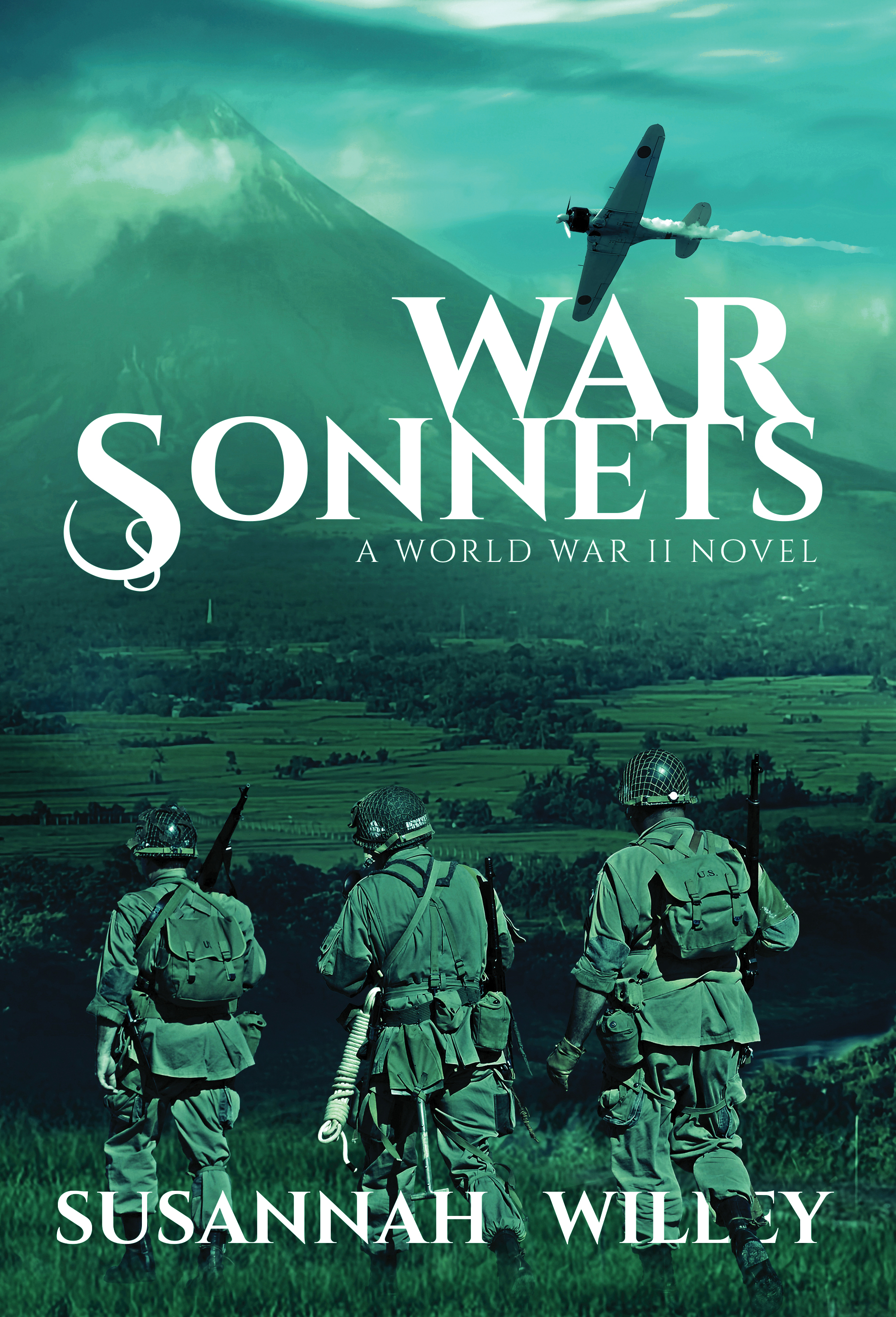
1942: In the war-torn jungles of Luzon, two soldiers scout the landscape. Under ordinary circumstances they might be friends, but in the hostile environment of World War II, they are mortal enemies.
Leal Baldwin, a US Army sergeant, writes sonnets. His sights are set on serving his country honorably and returning home in one piece. But the enemy is not always Japanese…Dooley wants Leo’s job, and he’ll do whatever it takes to get it…Leo finds himself fighting for his reputation and freedom.
Lieutenant Tadashi Abukara prefers haiku. He has vowed to serve his emperor honorably, but finds himself fighting a losing battle. Through combat, starvation, and the threat of cannibalism, Tadashi’s only thought is of survival and return to his beloved wife and son. As Leo and Tadashi discover the humanity of the other side and the questionable moral acts committed by their own, they begin to ask themselves why they are here at all. When they at last meet in the jungles of Luzon, only one will survive, but their poetry will live forever.
Susannah Willey is a baby boomer, mother of four, grandmother of three, and a recovering nerd. To facilitate her healing, she writes novels. In past lives, she has been an office assistant, stay-at-home-mom, Special Education Teaching Assistant, School Technology Coordinator, and Emergency Medical Technician. She holds a Bachelor’s Degree in Instructional Computing from S.U.N.Y. Empire State College, and a Master’s Degree in Instructional Design from Boise State University.
Susannah grew up in the New York boondocks and currently lives in Central New York with her companion, Charlie, their dogs, Magenta and Georgie, and Jelly Bean the cat.
A twenty-year-old cold case unearths dark secrets in the scorching-hot destination thriller from Emily Freud.
Twenty years ago, Mari vanished while backpacking through Thailand with her boyfriend, Luke. He was accused of murder, but has always insisted he’s innocent. Besides, her body was never found.
Now, he’s finally ready to talk. And filmmaker Cassidy Chambers wants to be the one to uncover what really happened, back then, in the dark of the jungle.
But as she delves deeper into the past, Cassidy begins to fear what lies ahead, and the secrets buried along the way.
Emily Freud is the author of My Best Friend’s Secret and What She Left Behind. She has worked on Emmy and BAFTA award winning television series including Educating Yorkshire and First Dates. Emily lives in North London, with her husband and two children. She is currently working on her next novel.
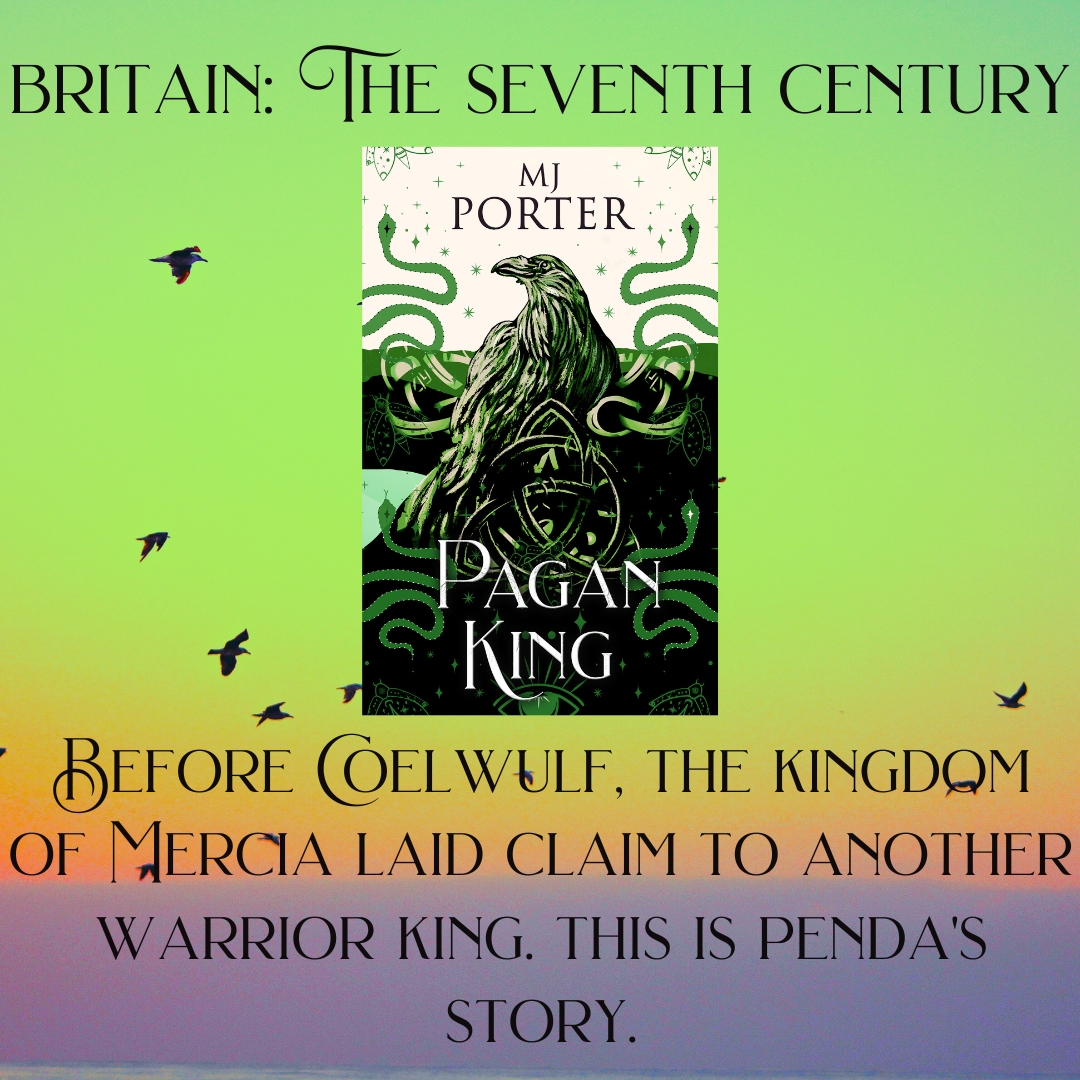
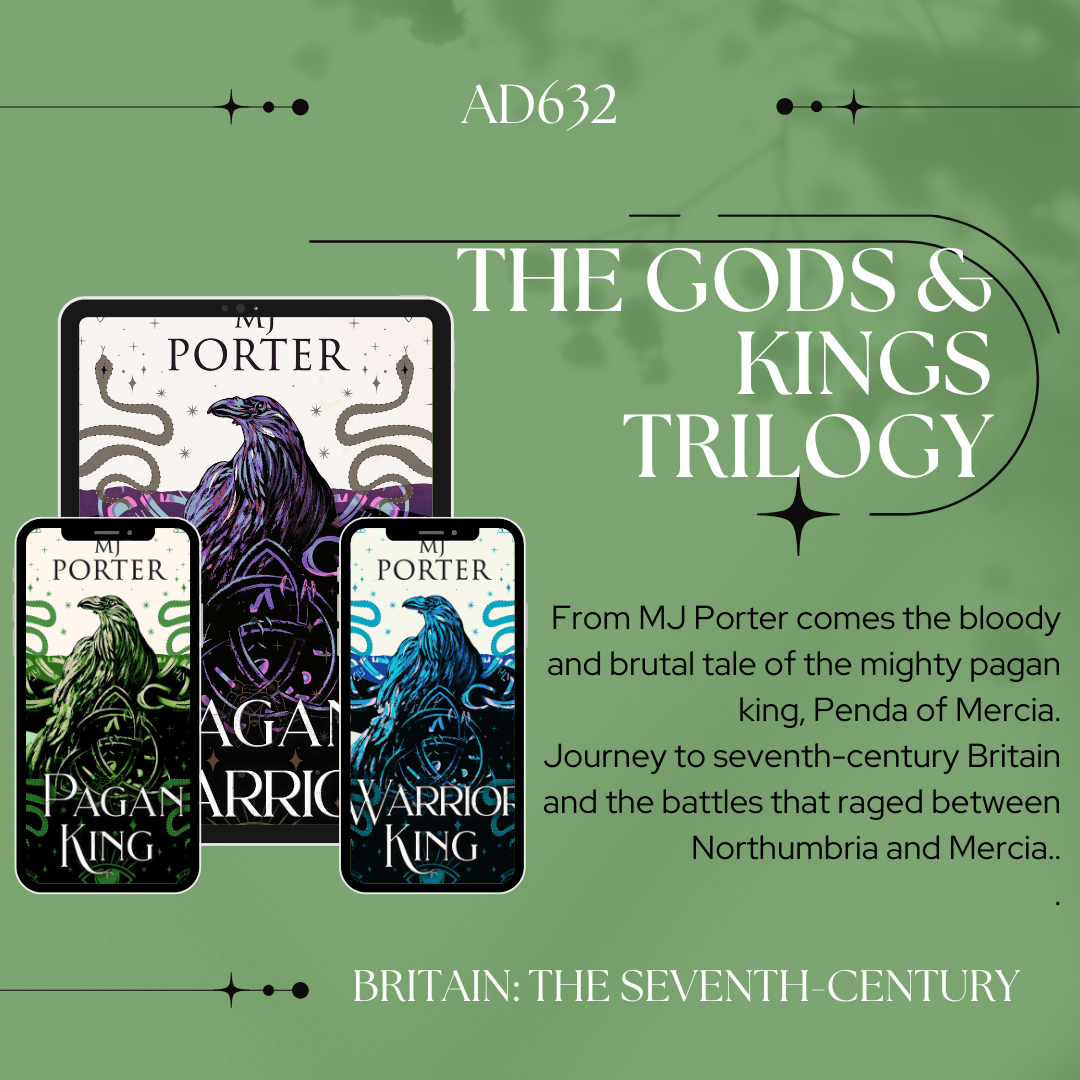
I’m sharing a blog post about what we do and don’t know about warfare in the Saxon era. #GodsAndKingsTrilogy #histfic #PaganKing
Here’s the blurb for Pagan King
Britain. AD641.
The year is AD641, and the great Oswald of Northumbria, bretwalda over England, must battle against an alliance of the old Britons and the Saxons led by Penda of the Hwicce, the victor of Hæ∂feld nine years before, the only Saxon leader seemingly immune to Oswald’s beguiling talk of the new Christianity spreading through England from both the north and the south.
Alliances will be made and broken, and the victory will go to the man most skilled in warcraft and statecraft.
The ebb and flow of battle will once more redraw the lines of the petty kingdoms stretching across the British Isles.
There will be another victor and another bloody loser.
Warfare during the Saxon period. What we know and what we don’t know about the battle of Hædfeld.
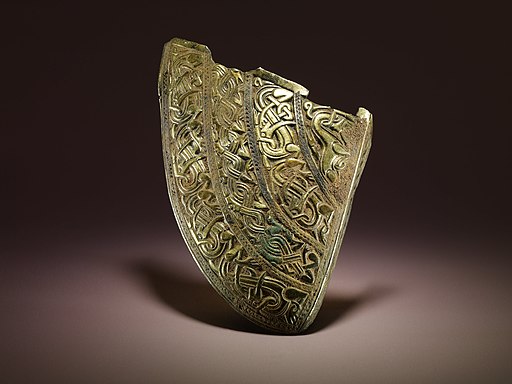
Thanks to some spectacular archaeological finds, we can visualise how a Saxon warrior might have looked. The reconstructions of the Sutton Hoo helm, and that found with the Staffordshire Horde (as well as a few others), present us with elaborate helmets crested with dyed-horse hair in a way very reminiscent of the Roman era. They glitter, and they seem to be festooned in gold and silver work, but whether these were actually worn in battle or not is debatable. Firstly, they would have made the kings or noblemen very noticeable to their enemy. Secondly, they were so valuable it’s impossible to consider the loss of one of them should they fall and their goods be taken by their enemy. Bad enough for their king and leader to die in battle, but to also lose such precious wealth as well seems unlikely. That said, of course, the Sutton Hoo helm was buried, and the fragments of the Staffordshire Hoard helmet were buried and lost. An image of the Staffordshire Helmet can be found here: https://www.stokemuseums.org.uk/pmag/collections/archaeology/the-staffordshire-hoard/
But there is another reason why these helmets might have existed, and that’s because they were for ceremonial purposes. Kings, before the reign of Athelstan (925-937) are not known to have undergone consecration with a crown but rather with a helmet. After all, they were warrior kings. Perhaps then, these survivals are more akin to that worn by a warrior-king when appearing before his people or for ceremonial reasons.
What then might have been the more usual garb for a warrior of the Saxon era, which at nearly six hundred years is bound to offer some variations? Shield, spear, seax, sword and byrnie. We get a feel for these items and how valuable they were from wills that survive from the later Saxon era, hundreds of years after the events of Pagan Warrior. Ealdormen had horses, both saddled and unsaddled, shields, spears, swords, helmets, byrnies, seax, scabbards and spears. The will of Æthelmær, an ealdorman in the later tenth century, records that he’s granting his king, ‘four swords and eight horses, four with trappings and four without, and four helmets and four coats of mail and eight spears and eight shields,’[1] as part of his heriot, a contentious term for something that some argue was an eleventh-century development, and others argue, is merely reflecting earlier practice on the death of a man.
There would also have been thegns and king thegns, who had their own weapons, as well as the men of the fyrd, the free-men who could be called upon to perform military service each year, as and when required. It’s often assumed they would have been less well-armed, although this begs the question of whether kings and their warrior nobility were prepared to sacrifice those they relied on to provide them with food to gain more wealth. They might have found themselves with the money to pay for food but without the opportunity to do so.
There are very few representations of warriors, but the surviving strands of the Gododdin, a sixth-century lament to the fallen of Catraeth gives an idea of how these warrior men thought of one another. There is much talk of killing many enemies, drinking mead, and being mourned by those they leave behind.
Battle tactics from the period are impossible to determine fully. Before writing my books which are blood-filled and violent, I read a fascinating account, by a military historian, on how he thought the Battle of Hastings might have been won or lost. The overwhelming sense I came away from the book with was that local features, hillocks, streams, field boundaries even perhaps the path of a sheep track might well be the very thing that won or lost a battle for these opposing sides. The land that kings chose to go to war on was incredibly important,
When trying to reconstruct the battlefield for the battle of Hædfeld, which concludes Pagan Warrior, I encountered a problem that will be familiar to writers of the Saxon era. The place where the battle is believed to have taken place, on the south bank of the River Don (although this has been disputed and work continues to discover whether the other location could be the correct one), has been much changed by later developments. It was drained in the 1600s and therefore, it doesn’t look today as it would have done when the battle took place.
I had very little information to work on. The River Don, the River Idle, the River Ouse, the belief that the ground would have been marshy, and that many men fell in the battle. And the words of Bede in his Ecclesiastical History, ‘A great battle being fought in the plain that is called Heathfield.’[2] Much of the rest is my imagination.
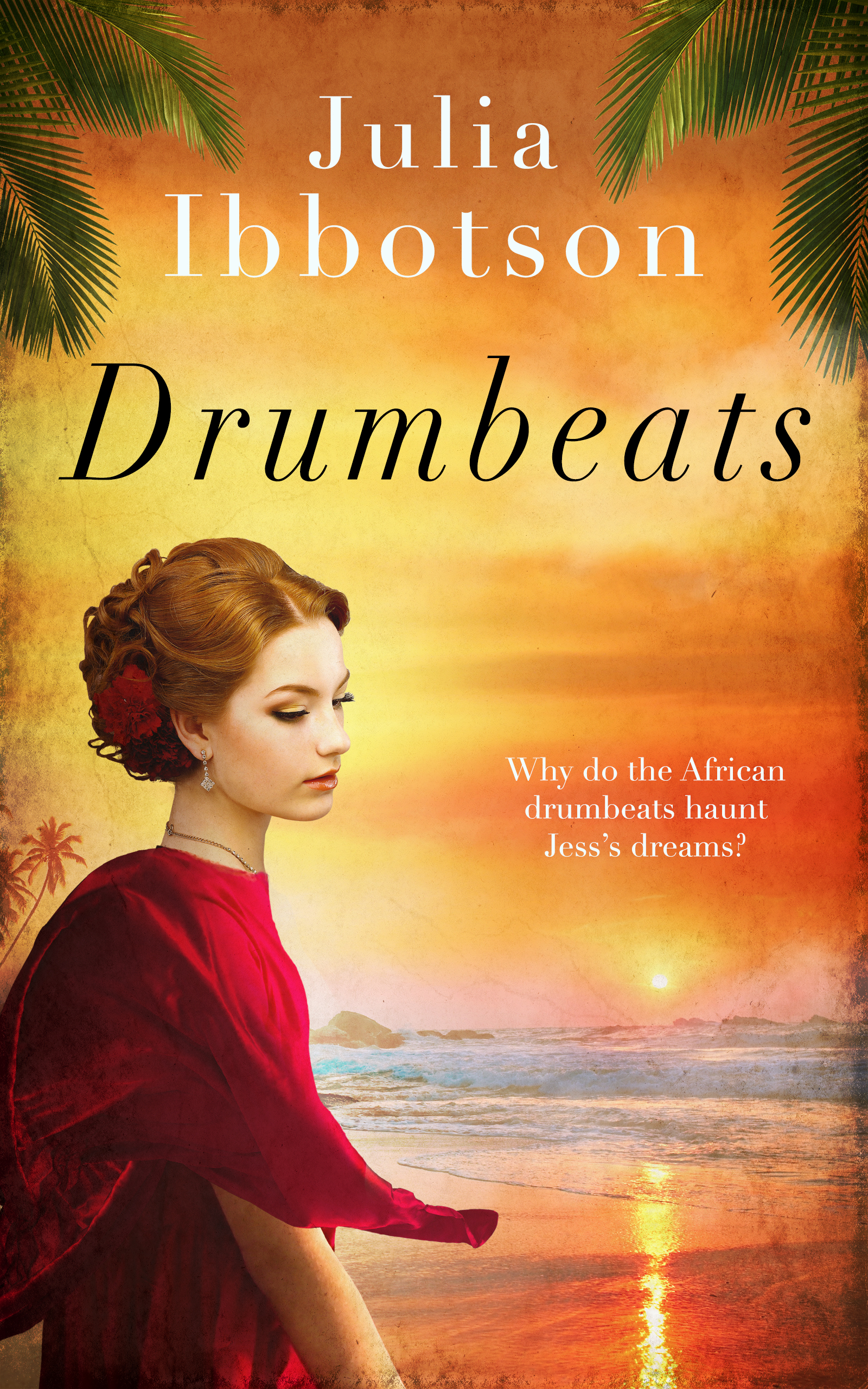
I’m delighted to welcome Julia Ibbotson to the blog with her book, Drumbeats
Here’s the blurb
It’s 1965, and 18 year old Jess escapes her stifling English home for a gap year in Ghana, West Africa. But it’s a time of political turbulence across the region. Fighting to keep her young love who waits back in England, she’s thrown into the physical and emotional dangers of civil war, tragedy and the conflict of a disturbing new relationship. And why do the drumbeats haunt her dreams?
This is a rite of passage story which takes the reader hand in hand with Jess on her journey towards the complexities and mysteries of a disconcerting adult world.
This is the first novel in the acclaimed Drumbeats trilogy: Drumbeats, Walking in the Rain, Finding Jess.
For fans of Dinah Jefferies, Kate Morton, Rachel Hore, Jenny Ashcroft
Buy Links
This title is available to read on #KindleUnlimited.
Award-winning author Julia Ibbotson herself spent an exciting time in Ghana, West Africa, teaching and nursing (like Jess in her books), and always vowed to write about the country and its past. And so, the Drumbeats Trilogy was born. She’s also fascinated by history, especially by the medieval world, and concepts of time travel, and has written haunting time-slips of romance and mystery partly set in the Anglo-Saxon period.
She studied English at Keele University, England, specialising in medieval language, literature and history, and has a PhD in linguistics. She wrote her first novel at age 10, but became a school teacher, then university lecturer and researcher. Her love of writing never left her and to date she’s written 9 books, with a 10th on the way.
Julia is a member of the Romantic Novelists Association, Society of Authors and the Historical Novel Society.
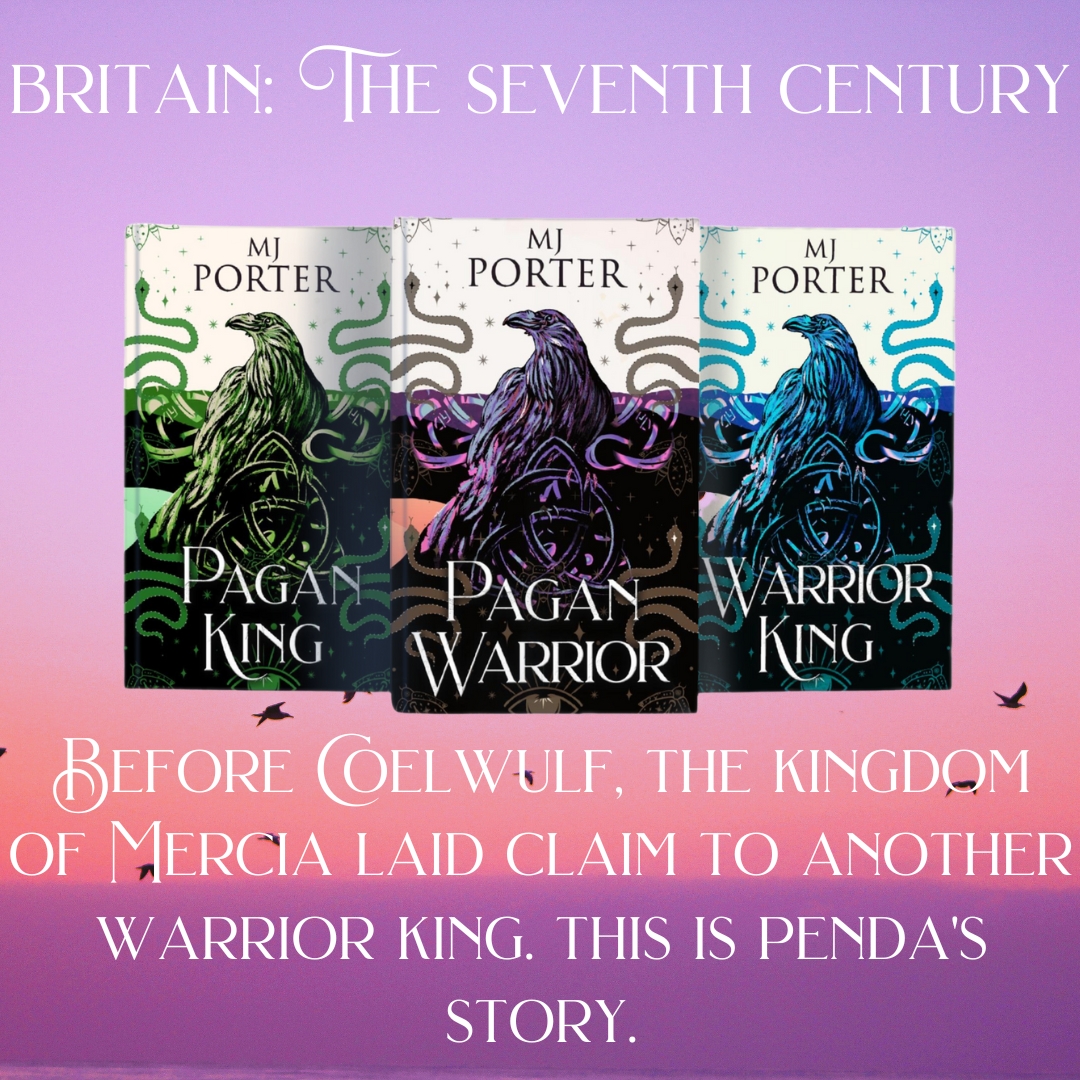
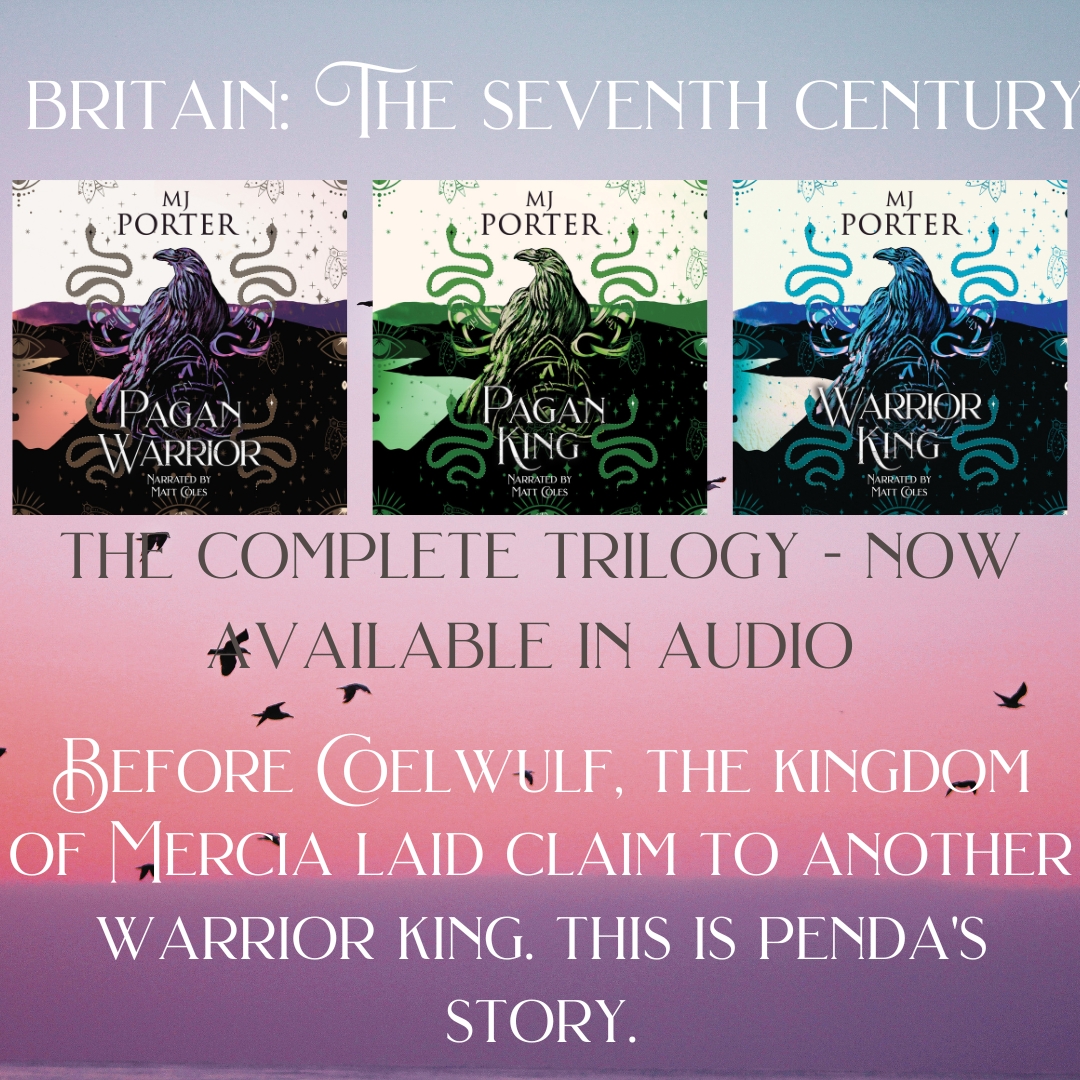
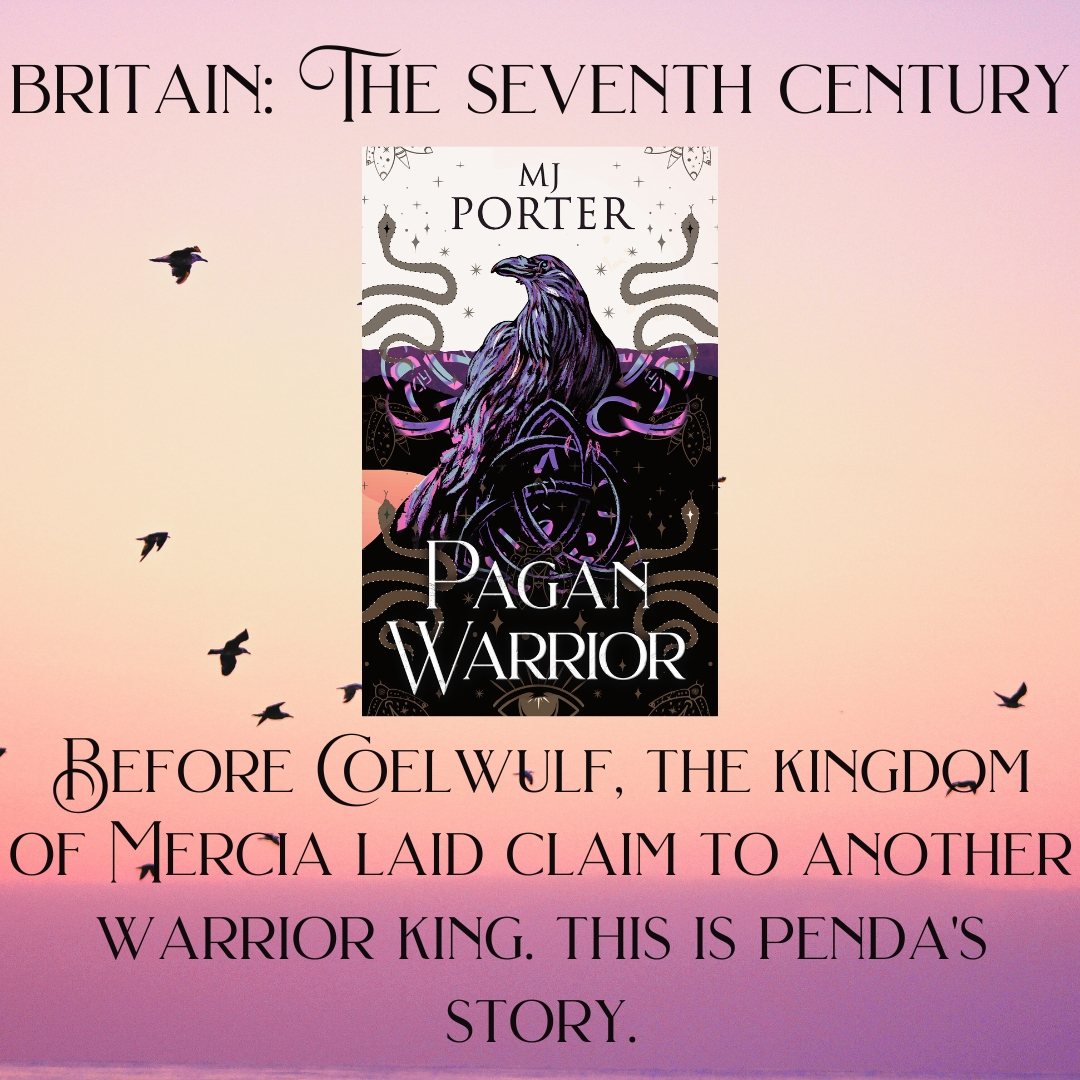
Penda, a warrior of immense renown, has much to prove if he is to rule the Mercian kingdom of his dead father and prevent the neighbouring king of Northumbria from claiming it.
Unexpectedly allying with the British kings, Penda races to battle the alliance of the Northumbrian king, unsure if his brother stands with him or against him as they seek battle glory for themselves, and the right to rule gained through bloody conquest.
There will be a victor and a bloody loser, and a king will rise from the ashes of the great and terrible battle of Hædfeld.
(Nook readers, use code BNPWARRIOR75 to get 75% off the ebook cost)
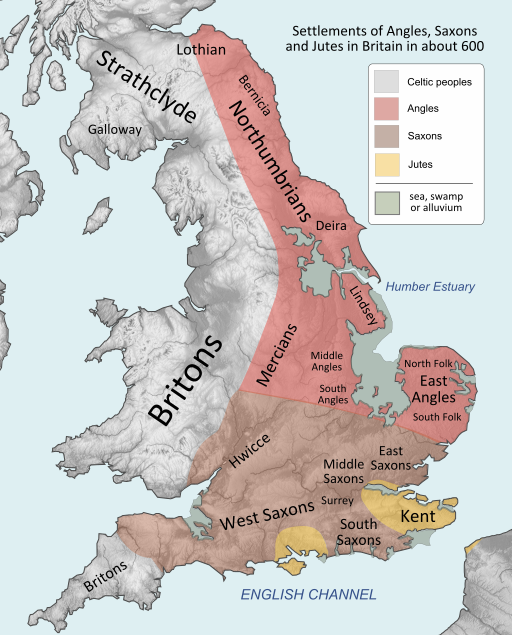
Britain in the Seventh Century – a patchwork of kingdoms
One of the hardest processes when writing about this very early period of Britain is to get an idea of what the kingdoms might have looked like and to explain this to the reader. The seventh century is often seen as the period when the Heptarchy, the seven very well-known kingdoms of the Saxon period, emerged and formed, ultimately derived from potentially very many much smaller kingdoms, the names of which are only rarely still known.
The Heptarchy consisted of the kingdoms of Northumbria (itself derived from the uniting of Deira and Bernicia), Mercia, the kingdom of the East Angles, Wessex, Sussex, Kent, and Essex. In later centuries, these kingdoms would merge until only four main kingdoms remained, and then, from the early middle of the tenth century, England emerged. But the battle of Hædfeld with which Pagan Warrior concludes was a British-wide battle set as this process was formalising in the seventh century, and there are yet more kingdoms that must be mentioned which didn’t form part of Saxon England.
Scotland didn’t yet exist, but Dal Riata, Pictland and Alt Clut (sometimes called Strathclyde) did. Wales didn’t exist, although the kingdoms of Gwynedd, Deheubarth, Ceredigion and Powys did, The kingdom of Dumnonia (modern-day Cornwall), was also in existence and very much not part of Saxon England. Indeed, these kingdoms are often termed British, as opposed to Saxon. As someone woeful at geography – I purposefully don’t adopt the names of places from this period because it confuses me – I’m only too well aware of how much I’m asking from my reader as it is without adding weird place names to already strange sounding personal names, and yet it was necessary to add a whole host of strange names, which often, have no relation to the current names of counties, let alone kingdoms.
All of these different kingdoms, we’re told, were involved in some way in the battle of Hædfeld. Some of the kingdoms joined the alliance, spear-headed by Cadwallon of Gwynedd, Edwin’s foster-brother. Others joined that of Edwin of Northumbria. Almost all of them took one side or another in the mighty battle of Hædfeld fought in 632 or 633 (there is some confusion about the exact date) between the two sides. To ensure my readers have some idea of who’s who, I’ve termed all of the character’s as being ‘of’ their kingdom, although I’m unsure if that’s actually how they might have been named.
I was surprised by how many individuals could be named from the seventh century, particularly for the build-up to the battle of Hædfeld. The cast is not Game of Thrones huge, but it was larger than I expected. Not just Penda of the Hwicce, only later could he be termed of Mercia, and Cadwallon of Gwynedd in the British ‘alliance’, but also Cloten of Deheubarth, Clydog of Ceredigion, Eiludd of Powys, Clemen of Dumnonia, Domnall Brecc of Dal Riata, Beli of Alt Clut and Eanfrith of Bernicia. While on the Northumbrian led alliance were Edwin of Northumbria, alongside his children, Osfrith and Eadfrith, as well as Eowa of the Hwicce, Osric of Deira – Edwin’s cousin, Cynegils of Wessex, Sigeberht of the East Angles and Oswald of Bernicia – Edwin’s nephew. At least, that’s how I stack the two sides as the battle is about to commence. In later periods, it is sometimes a struggle to find who was king of where and when that might have been, so to find so many characters, even if it can seem a little overwhelming, was fantastic and ensured that the British-wide battle of Hædfeld could be retold in Pagan Warrior with a nod to each of these kings, and the part they might, or might not, have played in the events that played out on that fateful day in October 632 or 633.
Sign up to my monthly newsletter to learn more about my writing journey, new releases and special offers, and receive a free short story collection featuring many stories of Saxon England.
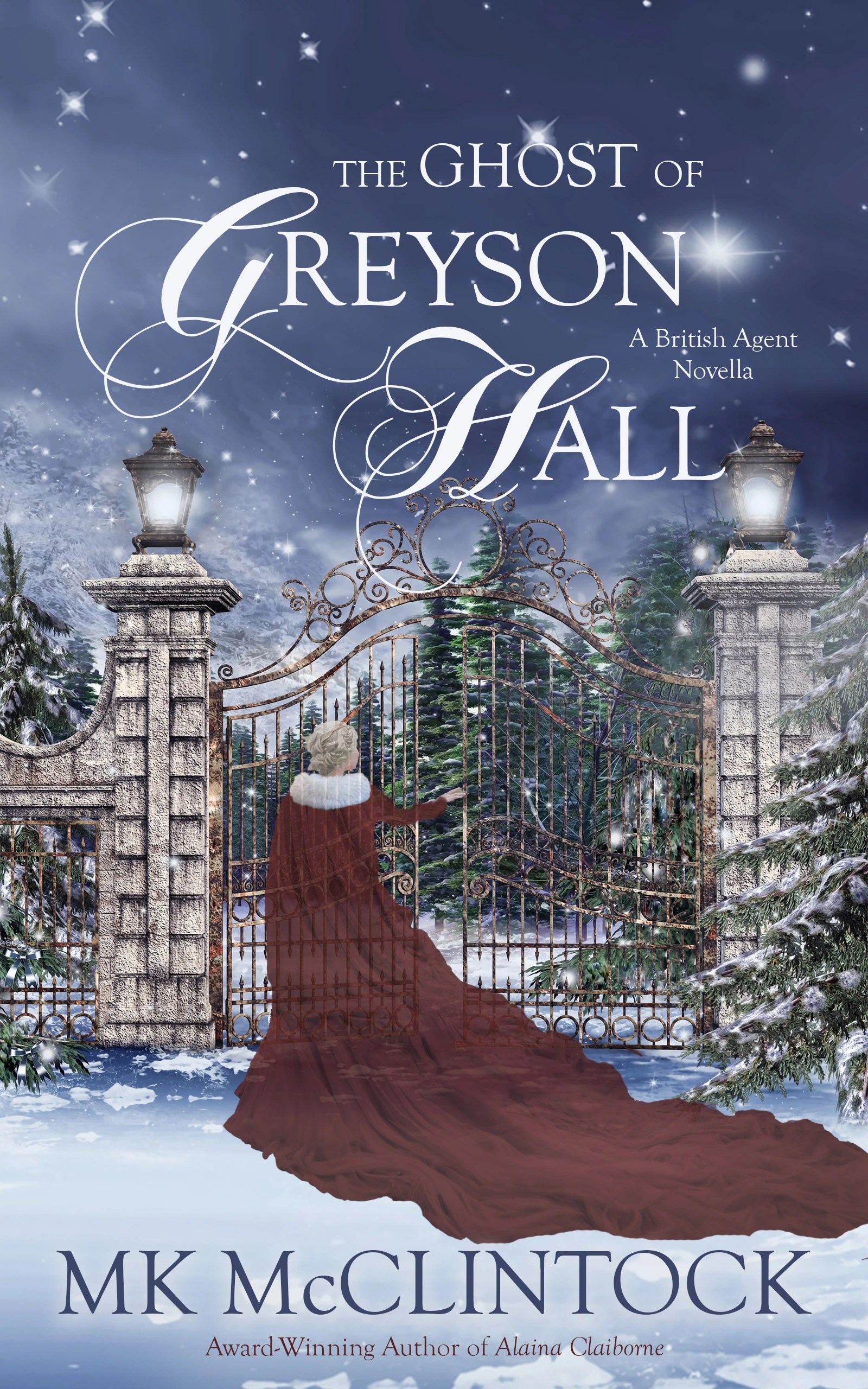
I’m delighted to be sharing an excerpt from The Ghost of Greyson Hall by MK McClintock
PROLOGUE
In the year of 1782, among the snow-dusted hills of Northumberland, Lady Grace Canterbury of Greyson Hall disappeared.
Rumors abounded. She ran away with her Highland lover, leaving her husband and son behind. Others speculated on her declining health, claiming she’d gone away to die in solitude when the fever and pain overcame her body and mind. Those who knew her never believed the gossip and resolved through the years that ruffians kidnapped her at the command of her jealous husband.
No one ever learned the truth. Lady Canterbury vanished.
She’d left behind an infant son, who had barely found comfort in his mother’s arms. A fair-haired and handsome boy who resembled his mother in coloring, including the eyes, ice blue and startling cold if it had not been for the spray of thick, black lashes.
Before the birth, Lord Spencer Canterbury had shared with her how he longed for a fair-haired daughter who looked like her mother. However, when their son made his first appearance, she saw her husband’s joy in knowing it was a strong and healthy boy who would one day inherit the title and become master of their vast estate.
How does such a lady vanish without leaving a remnant of evidence?
For more than a century, the truth remained a mystery. Lady Canterbury became a faded memory, a story to entertain and bewilder at celebrations and gatherings. For generations, speculation continued. Descendants of the family attempted to unravel the mystery of the eighteenth-century puzzle, alas to no avail. Few took the matter seriously—after all, it was long before their time—and the image of a graceful beauty with hair as pale as the risen moon and eyes the color of waves on the sea faded into history.
Once a year, an ancient secret walks the corridors of Greyson Hall, a place shrouded in mystery and whispered legend. When Devon Clayton inherited the stately mansion in England’s wild north from his uncle, he never imagined what secrets lurked within its walls, hidden for centuries. When his friends and brothers join him for the holiday, the British Agents and their families discover that their most unusual case will bring new meaning to Christmas spirit.
They must now unravel a century-old mystery if they are to break the curse and save a love that transcends time.
A long novella set in Northumberland in December 1782 and 1892. Also Available:
Alaina Claiborne
Blackwood Crossing
Clayton’s Honor
Note: The British Agent series books are written to be read as stand-alone novels. However, they each have cross-over characters, meaning characters from each book will appear in the others. The only reading order is chronological, but each title can still be read as stand-alone.
Praise for the British Agent Series:
“Ms. McClintock succeeds in masterfully weaving both genres meticulously together until mystery lovers are sold on romance and romance lovers love the mystery!”
—InD’Tale Magazine on Alaina Claiborne
“This book was perfectly-paced with mystery, romance, adventure, and so much more. I am definitely recommending that everyone who loves historical fiction in general read this book. I cannot wait to start reading the next book in this series.” —Dreams Come True Through Reading on Blackwood Crossing
“MK McClintock has spun an enchanting tale deeply entrenched in the lands of Scotland and England that will leave you riveted to your chair until you turn the last page.” —My Life, One Story at a Time on Blackwood Crossing
“Clayton’s Honor by MK McClintock is a clean historical romance that will keep your heart beating and your palms sweating. This is definitely a novel that is going on my ‘read again’ shelf! A really good and smooth read!” —Readers’ Favorite
MK McClintock is an award-winning author who writes historical romantic fiction about chivalrous men and strong women who appreciate chivalry. Her stories of romance, mystery, and adventure sweep across the American West to the Victorian British Isles with places and times between and beyond.
Her works include the following series: Montana Gallaghers, Crooked Creek, British Agents, Whitcomb Springs, and the stand-alone collection, A Home for Christmas. She is also the co-author of the McKenzie Sisters Mysteries.
MK enjoys a quiet life in the northern Rocky Mountains. Visit her online home at www.mkmcclintock.com, where you can learn more about her books, explore extras, and subscribe to receive news.
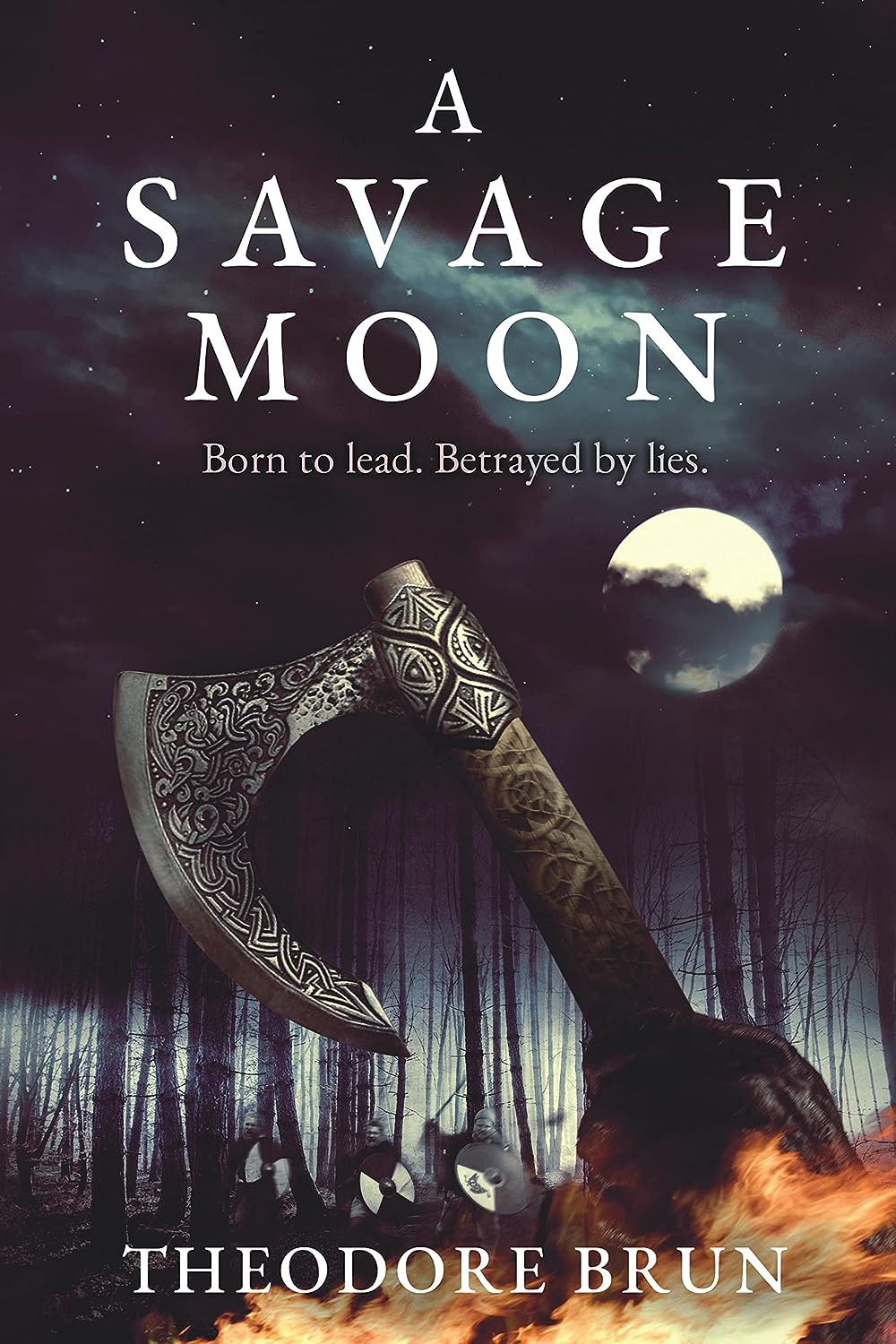
Byzantium, 718AD The great siege is over. Crippled warrior, Erlan Aurvandil, is weary of war. But he must rally his strength to lead a band of misfit adventurers back to the North, to reclaim the stolen kingdom of his lover, Lilla Sviggarsdottir. For this, they need an army. To raise an army, they need gold. Together they plot a daring heist to steal the Emperor’s tribute to his ally. Barely escaping with their lives, they voyage north, ready for the fight. But when fate strands them in a foreign land already riven by war, Erlan and Lilla are drawn inexorably into the web of a dark and gruesome foe. As blades fall and shadows close in, only one thing for them is certain; a savage moon is rising. And it demands an ocean of blood.
A Savage Moon is the fourth book in The Wanderer Chronicles. I’ve read book 1 (You can find the review here), but it was a while ago (2017), and so I can remember some elements of it, but not all of them. I do remember the character of Erlan, or Hakon as I knew him.
A Savage Moon feels very different from how I remember the first book – but this might be more to do with the complete culture shift – we’re no longer in Scandinavia, but Byzantium, and clearly Erlan has been put through the ringer since I last read about him. So I’m going to review this with no reference to the first book.
I love a story of the early eighth century, which takes the reader to complex times and places, all in great flux.
Byzantium always feels extremely exotic and also well documented. The stories I’ve read set in Byzantium have a familiar feel, and A Savage Moon is as well-researched. The events that befall our collection of characters – there are three main POVs, Erlan, Lilla and Kataros – are really well portrayed. The first part of the book is very exciting for Erlan and Lilla, while Kataros finds his way to another major location, that of Rome, on the cusp of being claimed by the Lombards and increasingly becoming a Christian centre. Again, Rome is well documented, and I loved the recreation of it for this story.
The author doesn’t stop there but takes us to Austrasia and Neustria, place names that might perplex but which are again enduring significant change as they become the kingdom known by the more familiar name of Frankia. Our characters’ journey is enormous, from Byzantium to Austrasia – a grand tour of Europe at this time.
Not just the locations are varied, but our three characters are all grappling with major life decisions. I really enjoyed the way the stories wound around one another and that there are many incidental characters encountered along the way who all add essential details to the narrative. The climactic reunion between the three, when it comes, because we all know IT IS coming, feels very natural. And I think the scene has been set for a fabulous book 5.
There are still some more fantastical elements to this story – it’s not all history, although we do encounter many ‘real’ historical figures – and the final encounter – A Savage Moon – builds towards a crescendo where the reader is never truly sure who will triumph in the dark woodlands. While the first action scene builds slowly, and as readers, we all wonder how they’ll triumph, the final action scene is the opposite, almost too sudden, too spur of the moment, and the reader can’t help but expect our stranded characters to fail.
A Savage Moon is vast in scope, but the ending is personal and climactic, a tale of friendship, love, trust and, for one of the characters, renewal, set against a backdrop of almost indescribable savagery. It’s sure to appeal to fans of historical fiction and historical fantasy.
Meet the author
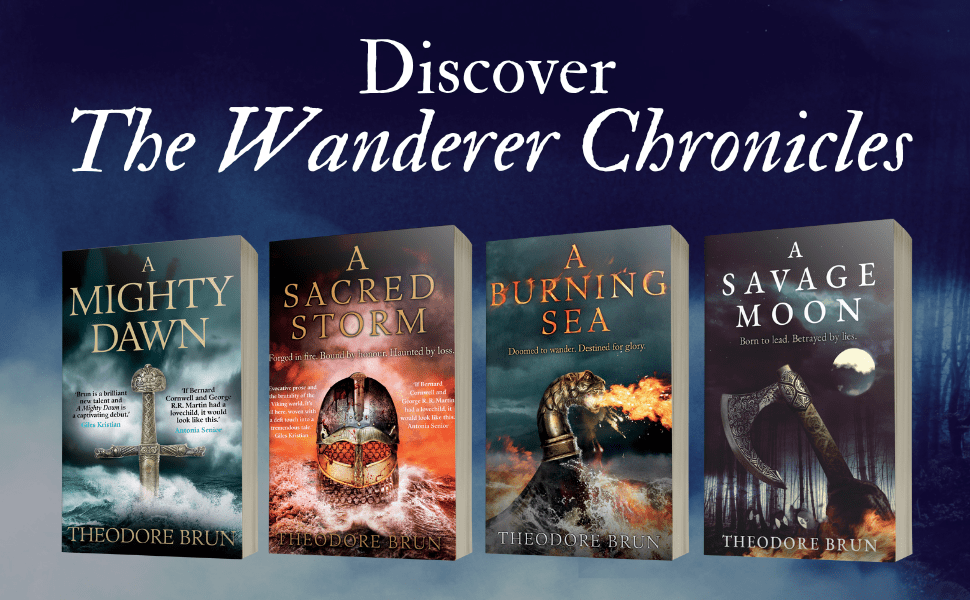
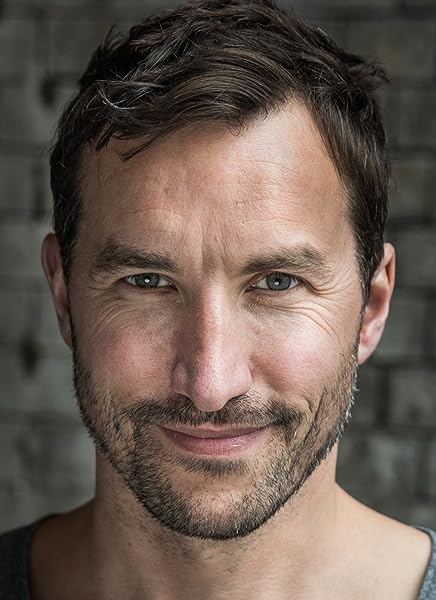
Theodore Brun is author of the critically-acclaimed historical fiction series, THE WANDERER CHRONICLES. He studied Dark Age archaeology at Cambridge and afterwards worked for several years in international arbitration law – first in London, then Moscow, Paris, and finally Hong Kong. In 2010, with the germ of an idea for a novel in his head, he quit his legal job in Hong Kong, jumped on a bicycle and pedalled 10,685 miles across Asia and Europe to his home in Norfolk. There, he sat down in a spider-infested cottage to write the first volume in his epic historical fiction series, THE WANDERER CHRONICLES. Four years later, Corvus Atlantic published his debut novel, A Mighty Dawn. The sequel, A Sacred Storm, was released in June 2018. The third book in the series, A Burning Sea, was out in September 2020.
Theo is a third generation Viking immigrant, his Danish grandfather having settled in England in 1932. You might say Viking stories are in his blood. Yet it was only through the unlikely portal of Wagner’s Ring Cycle that he discovered the hoard of ancient Scandinavian and Germanic stories which underlie the works of authors like Tolkein, CS Lewis, George RR Martin, Neil Gaiman, Giles Kristian and Bernard Cornwell to name a few. It was this material that provided the inspiration for THE WANDERER CHRONICLES. Theo is married to Natasha. They live in London, together with their girls, Ella, Talitha & Colette, and a wild dog named Wilmo.


















 MJ Porter