The pitfalls and perils of writing about Saxon England

Sometimes, it seems to me, that fiction and non-fiction authors of the Saxon era believe the stories they’re told about Saxon England which are actually the result of much later sources. This of course, means that the later stories, more often than not the work of Norman pseudo-historians writing in the 1100s and later, grow in popularity while fewer people understand that the stories are not only not contemporary, they might have been written down hundreds of years after the events they allegedly describe and discuss.

I make no bones of the fact that understanding the sources of the Saxon period is complex and difficult. Much of it depends on what a scholar, or a reader, might take as the ‘level of credibility.’ Some people will take saints lives at face value, others will not. Some will find value in poems and some will not. Some, and I include myself in this, will misconstrue the Anglo-Saxon Chronicle and realise they were reading it all wrong.

There are really very few sources available for the modern reader. The Anglo-Saxon Chronicle is very well known, but perhaps not the bones of how it was constructed (please see Pauline Stafford’s book After Alfred for a comprehensive, and frankly, mind-blowing discussion). The words of Bede are often cited. There are charters, wills, legal documents, some poetry and saints lives, as mentioned above. This is not a huge amount to build a narrative upon, and yet historians have done this for many years – to some the increasing amount of archaeological information (often contradictory) is an annoyance, but for others, it has made the merits of the surviving written word more questionable. We should be asking, ‘why do we know what we know,’ as opposed to lapping it up and assuming its authenticity.

Another problem is the scarcity of the surviving documents, and the fact that very, very few of them survive in contemporary formats. With the best will in the world, what is copied isn’t always correct and equally, the temptation to embellish mustn’t be ignored, and that’s before we return to the heart of the problem. What was written was written for a purpose. As today, everything contains bias, it exhibits their intentions (Bede wrote an ecclesiastical history – the clue is in the name), while the Anglo-Saxon Chronicle was a Wessex based endeavour, at least in the beginning. The surviving nine recensions changed hands on more than one occasion, and the bias subsequently changed with it. We imagine monks labouriously copying out the texts, letter by letter, but what if the words were written by female religious? Or not by the religious at all? What if they were a state-sponsored endeavour to present their patron in the best possible light? Who was that patron? Was that patron always the same one? We don’t, it appears, have the ‘original’ version of the Anglo-Saxon Chronicle. The versions available to us are all copies – written out at various points from the tenth to the twelfth century, and then again, heavily annotated during the Tudor era.

And this is merely another step along the way. Few can read these precious sources in their original format or even in their original language. We rely on translations, which allow a fresh wave of bias, and also, understanding. Our world is different to the world the Saxons lived within. They had different contexts for some words. While researching for my non-fiction book, I was amazed to discover the work of Sarah Foot and the Veiled Women of England, and her assertion that the word ‘nonne‘ might not have meant a cloistered nun, as we assume from the similarity of the two words.

We don’t know far more than we do know. There is a temptation to ‘plug’ the gaps with any available knowledge. And that’s not a problem, providing the author confirms it is fiction, not non-fiction. I write fiction, but I know the non-fiction the stories are built upon (hopefully). I write extensive historical notes for all of my books. I play with the possibilities, and purposefully reinterpret the ‘gaps’ but I don’t pretend that what I write is factual.

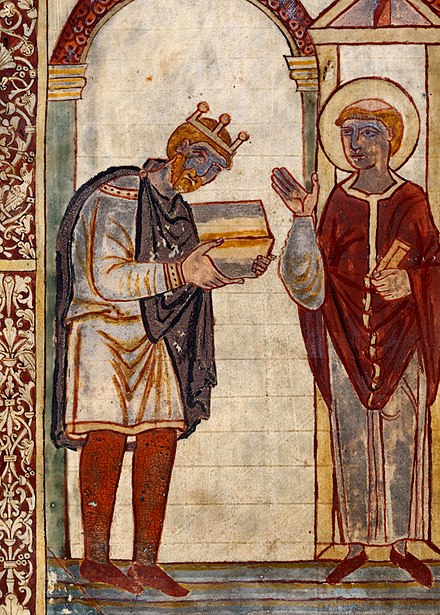
We have almost no images of anyone who lived in Saxon England. There are contemporary images of King Athelstan and his nephew, King Edgar. I can’t think of a single contemporary image of a woman. The Bayeuax Tapestry dates to after the end of Saxon England. We might have something which was held, or commissioned by a Saxon woman, and a queen, if the embroideries found in St Cuthbert’s tomb were indeed made by Lady Ælflæd, the second wife of King Edward the Elder.

We do have coins, more often than not from archaeological or metal-detecting finds. They do allow us a tangible hold on this part of history, and increasingly are adding to the need to rewrite the written words that have survived. We also have increasing archaeological finds, but again, and as no expert in archaeology, there is also a thin line. Archaeologists often set out to ‘find’ something. What they find often isn’t that ‘thing’ but in the past, the temptation to present only limited information has allowed certain narratives to stand, which are only now being understood, just as with increasing study on the written sources.

When writing about Saxon England, we must be wary of all of these things – we need to be aware that very rarely is something what we expect it to be, and equally, we must remember that the people of Saxon England were just that, people. They would have been irrational, selfish, violent, horrible, brutal, honest, religious, fervent, foolish, intelligent or not.

And so, writing Saxon England is far from a simple task. It is very rare to be able to categorically state that something is ‘wrong’. It is even rarer to be able to categorically state that something is ‘correct.’ The work of a fiction writer might be easier than that of a non-fiction writer, but the fiction writer has to recreate people as well as a coherent narrative, and there are always people who will be happy to argue with those interpretations. And that is all they are, interpretations – but so, if non-fiction writers are honest enough to admit – is much of their work as well.

(I’ve not even discussed the problems of trying to write a coherent piece on the history of the British Isles at this time – contending with Old Norse, Old Irish, Old English, Old Welsh, Latin and no doubt, other languages that I’ve failed to mention).

That said, the era is fascinating. It’s worth investing in it, and taking the time to understand the complexities.

Looking to read about Saxon England? Here are some of the primary and secondary works that I highly recommend.

PRIMARY SOURCES

The Anglo-Saxon Chronicles – translated and edited by Michael Swanton

English Historical Documents Vol 1 500-1042 – Dorothy Whitelock (a very expensive resource – perhaps best found in a library or online)

English Historical Documents Vol 2 1042-1189 – David C Douglas (as above. I was lucky to find some reasonably inexpensive copies but it took years)

An Atlas of Anglo-Saxon England – David Hill (It took me years but I eventually found a copy on Abebooks that didn’t break the bank)

The Electronic Sawyer – online catalogue of Anglo-Saxon Charters – an amazing resource once you feel confident to explore the primary sources. Used to be part of the KEMBLE online resource but this seems to have disappeared, which is a great shame.

The Prospography of Anglo Saxon England – this is a new one for me, but I wanted to share as it looks like it’s going to be extremely useful.

https://oepoetryfacsimile.org – Old English poetry collection, showing different translations, and reprints – fascinating – and revealing I’m not the only one with these concerns:)
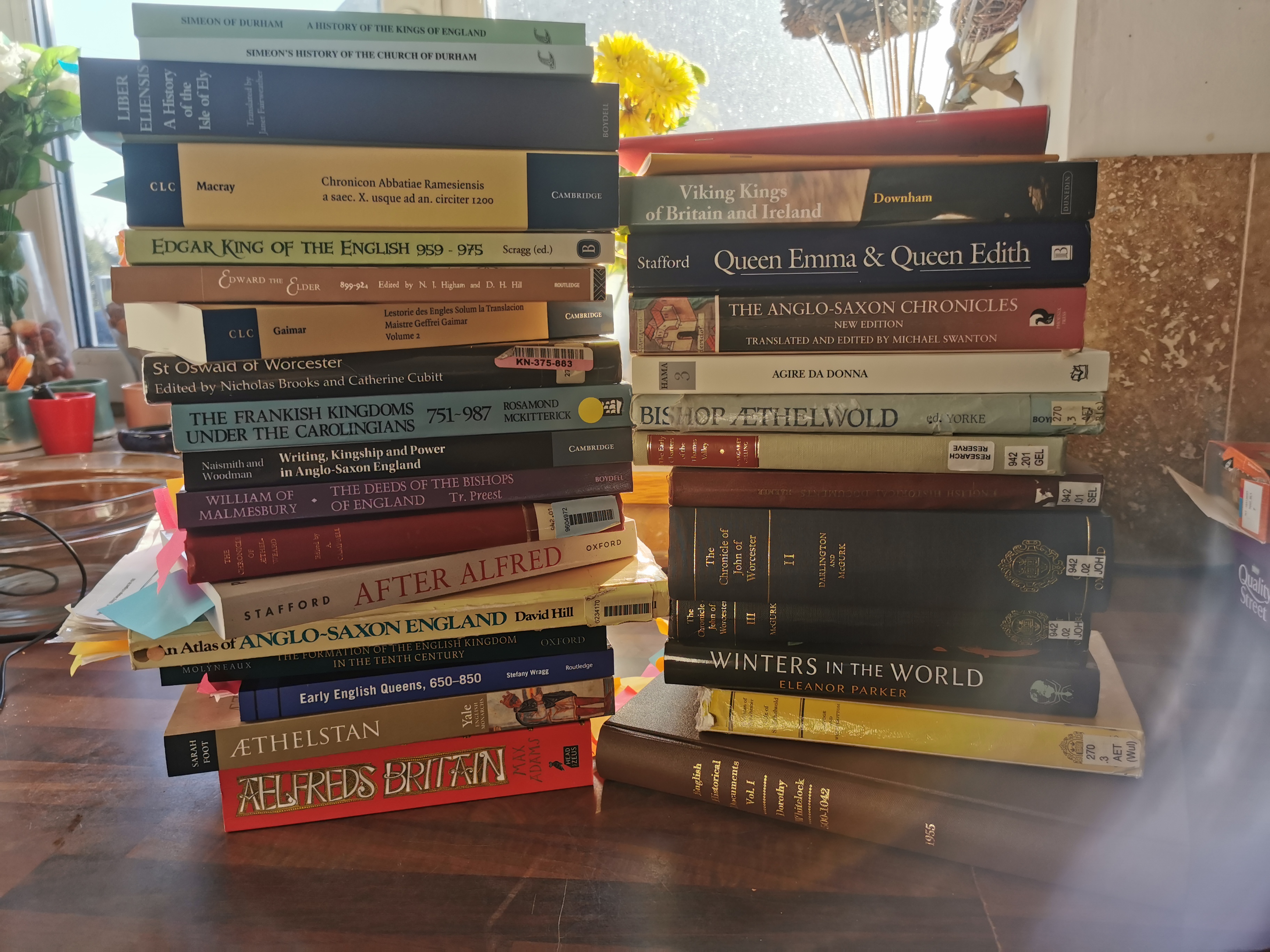
Just a few of my Saxon books (some were from the local library)

SECONDARY SOURCES

Anglo-Saxon Kingdoms by Claire Breay and Joanna Story

The First Kingdom by Max Adams

Aelfred’s Britain by Max Adams

After Alfred, Anglo-Saxon Chronicles and Chroniclers 900-1150 by Pauline Stafford, an absolute must to understand one of the most important sources for the period.

The Death of Anglo-Saxon England by N J Higham

The Diplomas of King Æthelred the Unready 978-1016 by Simon Keynes (if you can get a first edition do so, as the reprint doesn’t include the tables which is very frustrating).

Æthelred the Unready by Levi Roach

Æthelred the Unready, the ill-counselled king by Ann Williams

Cnut, England’s Viking King by M K Lawson

The Reign of Cnut: King of England, Denmark and Norway by Alexander Rumble

Cnut the Great by Timothy Bolton

Queen Emma and Queen Edith by Pauline Stafford

Edward the Confessor by Frank Barlow

Edward the Confessor by Tom Licence 

Godwins: The Rise and Fall of a Noble Dynasty by Frank Barlow

Harold The Last Anglo Saxon King by Ian W Walker

Conquered: The Last Children of Anglo-Saxon England by Eleanor Parker

As a rule of thumb, and it’s not always right – the more expensive a resource- the more academic the contents.

I recommend anything written by Max Adams, Nick Higham (sometimes uses his initials), Pauline Stafford, Ann Williams, Levi Roach and Simon Keynes, amongst many others. Once you’ve got to grips with the period/person/event you’re interested in, start to dig a little deeper with more academic articles.
This post contains Amazon affiliate links.
I’m sharing the first chapter from A Conspiracy of Kings #histfic #TheRoyalWomen

Here’s the beginning from A Conspiracy of Kings (there might be spoilers if you’ve not read The Lady of Mercia’s Daughter)

Chapter 1

Tamworth, the kingdom of Mercia, 918

We feast that night. There are smiles and tears on everyone’s faces as Tamworth’s great hall is swept clear of the men and women from Wessex. My armed guard ensures no one hurts them as the Mercians pull tables and benches to fill the vast space left behind. My servants, taken only somewhat by surprise as they were expecting a feast one way or another after the witan, rush to ensure everyone has a drink, if not food. 

Cousin Ecgwynn hurries to me as I watch the activity, questions on her lips and I throw my arms around her, unheeding her sumptuous gown while I wear the clothes of a warrior. Usually, she would protest. But not today.

‘Enough of that,’ Cousin Ecgwynn complains, batting my embrace away, and not delicately. She holds my arms away from her, glaring at me.

I can see the flicker of rage in her blue eyes and the tightness of her stance.

‘You let me believe you were dead! I’ve been mourning for you, as I would a sister, and coming so soon after the death of Lady Æthelflæd….’ Her normally serene face floods with tears as her words trail off. I thrust my arms around her again, holding her tighter, hoping to make her understand, using my strength gained on the training field to overpower hers. I absorb her scent, the familiarity of home, the reminder of all that my uncle and Archbishop Plegmund tried to take from me.
‘I’m sorry, dear Ecgwynn. It was.’ I pause, unsure what to say, speaking into her ear as I continue to hold her tight. ‘Well, in all honesty, it was all we could think of to ensure that Uncle Edward’s treachery was exposed.’

I don’t call King Edward of Wessex her father. That would be too cruel. I think that, like me, Lady Ecgwynn could happily forget that a man was even involved in her conception and birth. Certainly, he’s done little enough for her since he became the king of Wessex when she was no more than a child and banished her to Mercia alongside Cousin Athelstan.

But Cousin Ecgwynn’s not finished yet. Once more, she pulls her way clear of my embrace, determined to argue with me.

‘But my brother knew and still didn’t tell me. That’s too cruel,’ her angry voice is gaining force. I know there’s nothing to do but try and explain. I could make excuses all night long, but she’s almost my sister, and she deserves the truth.

‘He knew. But only because he came to me and saw that I still lived after the attack in the north. Admittedly, cousin Athelstan could have told you that I wasn’t dead, but then, how would you have greeted King Edward when he came to Mercia to stake his claim for it? He couldn’t know that I yet lived.’

‘I’m not a woman to have her head turned by the arrival of a man whose only call on her affection is to claim to be her father. I wouldn’t have put your scheme in peril!’ Her voice is shrill with outrage, all tears forgotten, as she chastises me, her words coming almost too fast to decipher.

To the side, cousin Athelstan hovers, and I know why. He’s not scared of facing any man on the battlefield, but his sister? Well, he’d sooner not see her angry, and certainly, he’s content for me to be the one to soothe her. 

I realise then that we erred when we made our plans.

‘No, I know you’re not. Apologies, cousin Ecgwynn. It wasn’t done because of a lack of trust. It was just better if as few as possible knew the truth.’ I can see that being so brutally honest at least pleases her, even if her forehead remains lined with anger and her lips purse tightly.

I hold my arms out once more. This time she steps into them willingly, a faint wrinkle on her nose because I smell of horse and sweat. I feel her shoulders sag, and her body trembles as though she’s going to cry. But she steps away from my embrace mere moments later, a watery smile on her face.

‘If only everyone I ever loved who died could come back to life, as you have. It would make my heart ache less.’ I nod. Abruptly, my thoughts focus on my mother, and despite my warrior’s prowess, my grief is fresh. I’d gladly step into my mother’s arms and cry away all my sorrows and disappointments at my uncle’s actions. 

‘What would your mother think?’ Lady Ecgwynn asks, her thoughts following mine as she loops her arm through mine to walk amongst the people toasting my good health and the future of Mercia. Their voices range from soft to the roar of a battle cry. I chuckle at the exuberance, aware that cousin Athelstan stays close. He and cousin Ecgwynn will need to make peace with each other at some point. But not yet.

‘I hardly know what my mother would think or do. She and Edward were never close; at least, I don’t think they were. But, I believe she understood his ambitions well, all the same.’

‘Your mother was an excellent judge of character,’ cousin Ecgwynn confirms. ‘Although she did trust Archbishop Plegmund, the poisonous snake.’ 

My voice ripples with laughter as I picture Plegmund’s face too easily as the head of a snake.

https://amzn.to/46DvlA6

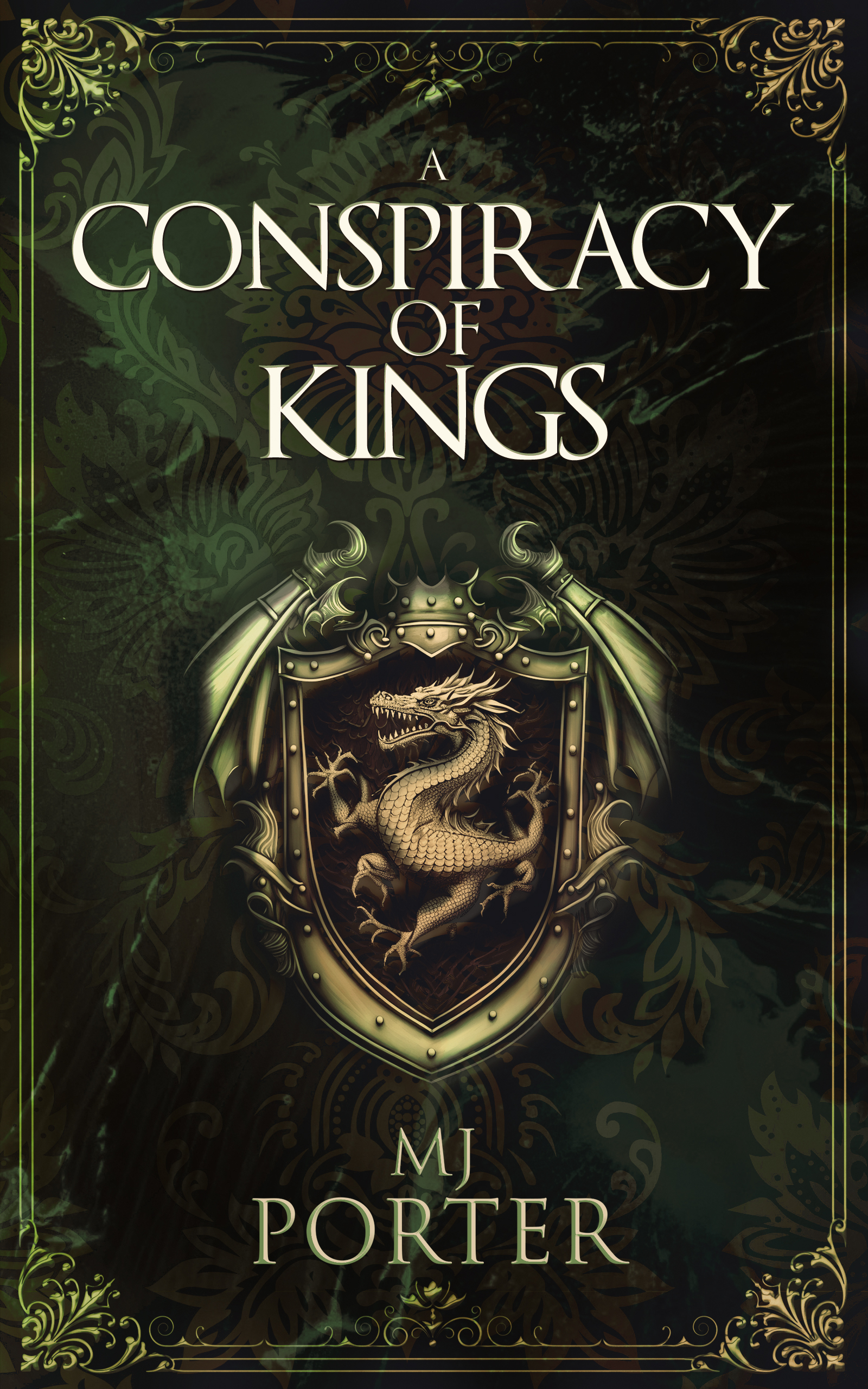
The cover for A Conspiracy of Kings

Find out who the historical Ælfwynn was here.

Visit The Tenth Century Royal Women page here.

Posts

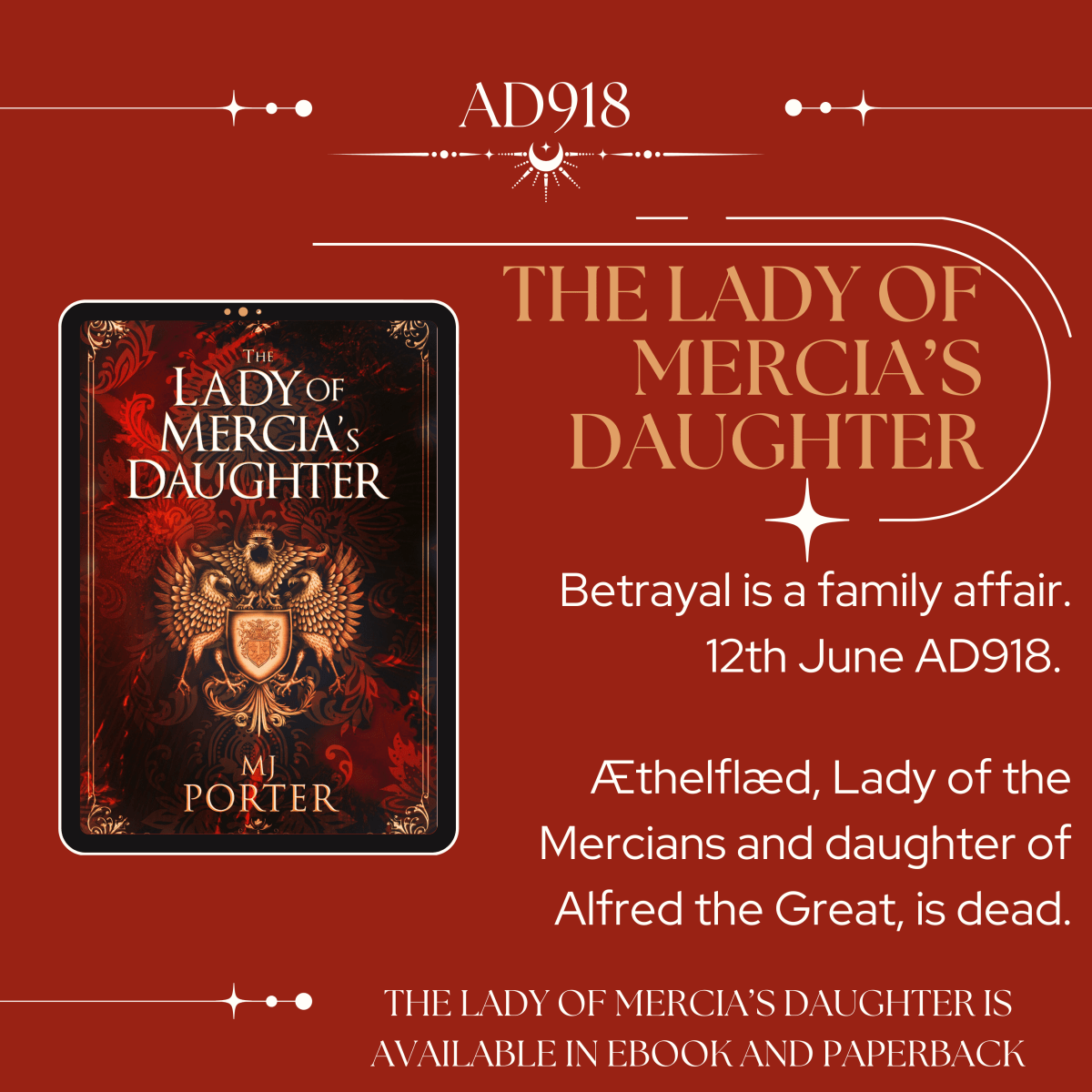
Who was the historical Ælfwynn, the main character in The Lady of Mercia’s Daughter duology?

Ælfwynn, the daughter of Æthelflæd of Mercia and her husband, Æthelred was born at some point in the late 880s or early 890s. It’s believed that she was an only child, although it does appear (in the later accounts of William of Malmesbury – an Anglo-Norman writer from centuries later) that her cousins, Athelstan, and his unnamed sister, were sent to Mercia to be raised by their aunt when Edward remarried on becoming king in 899. There is a suggestion that it might have been Alfred’s decision to do this and that Athelstan was being groomed to become king of Mercia, not Wessex.

The Family Tree of Alfred the Great, king of Wessex

Ælfwynn is mentioned in three charters. S367, surviving in one manuscript, dates to 903, where she witnesses without a title. S1280, survives in two manuscripts, dates to 904 and reads in translation.

‘Wærferth, bishop, and the community at Worcester, to Æthelred and Æthelflæd, their lords; lease, for their lives and that of Ælfwynn, their daughter, of a messuage (haga) in Worcester and land at Barbourne in North Claines, Worcs., with reversion to the bishop. Bounds of appurtentant meadow west of the [River] Severn.’[i]


[i] Sawyer, P. H. (Ed.), Anglo-Saxon charters: An annotated list and bibliography, rev. Kelly, S. E., Rushforth, R., (2022). http://www.esawyer.org.uk/ S1280. See above for the full details under Æthelflæd

Historians have reconstructed this haga in Worcester in ‘The city of Worcester in the tenth century’ by N Baker and R Holt.

In S225, surviving in one manuscript, dated to 915, Ælfwynn witnesses below her mother. Hers is the second name on the document. This could be significant, as she would certainly have been an adult by now, was she already being prepared as the heir to Mercia on her mother’s death? 

Ælfwynn is named in the Anglo-Saxon Chronicle in the C text under 919. ‘Here also the daughter of Æthelred lord of the Mercians, was deprived of all control in Mercia, and was led into Wessex three weeks before Christmas; she was called Ælfwynn.’[i]


[i] Swanton, M. trans and edit The Anglo-Saxon Chronicles, (Orion Publishing Group, 2000), p.105

And from there, we hear nothing more of Lady Ælfwynn, the second lady of the Mercians. Even though this is the first record of a ruling woman being succeeded by her daughter. 

There’s no further mention of Ælfwynn in The Anglo-Saxon Chronicle. It’s been assumed that she became a nun, and she might well be referenced in charter S535, surviving in one manuscript, and which Eadred granted at the request of his mother, dated to 948, reading,

‘King Eadred to Ælfwyn, a religious woman; grant of 6 hides (mansae), equated with 6 sulungs, at Wickhambreux, Kent, in return for 2 pounds of purest gold.’[i]


[i] Sawyer, P. H. (Ed.), Anglo-Saxon charters: An annotated list and bibliography, rev. Kelly, S. E., Rushforth, R., (2022). http://www.esawyer.org.uk/ S535

Bailey has suggested that, ‘In view of its close association with the women of the royal family, and of Eadgifu’s patronage of Ælfwynn (in S535), I would venture to suggest that it is possible she too may have ended her days at Wilton.’[i]


[i] Bailey. M, ‘Ælfwynn, Second Lady of the Mercians’, Edward the Elder, 899-924 Higham, N.J. and Hill, D. H. ed (Routledge, 2001), p.125

This would mean that rather than ruling as her mother would have wanted her to, Ælfwynn was overruled by her uncle, who essentially stole her right to rule Mercia as soon as he possibly could on her mother’s death. It must be said that he might have later paid for this with his life if he was indeed putting down a Mercian rebellion in Farndon when he died in 924.

Alternatively, there is another beguiling theory that Ælfwynn might not have become a nun but was, in fact, married to Athelstan, an ealdorman of East Anglia, known as the ‘Half-King,’ because of the vast control he had in East Anglia. It’s long been believed that this label might well have resulted from the fact that Athelstan was an extremely powerful and well-landed nobleman who was much beloved by the Wessex royal family and its kings. However, it might well be because he was indeed married to the king’s cousin (under Athelstan, Edmund and Eadred). If this is the case, and it’s impossible to prove, then Ælfwynn, as the wife of Ealdorman Athelstan, had four sons, Æthelwold, Æthelwine, Æthelsige and Ælfwold, and these sons would be friends and enemies of the kings of England in later years. She might also have been given the fostering of the orphaned, and future King Edgar, which would also have made these men the future king’s foster brothers.

‘he [Athelstan Half-King] bestowed marriage upon a wife, one Ælfwynn by name, suitable for his marriage bed as much as by the nobility of her birth as by the grace of her unchurlish appearance. Afterwards she nursed and brought up with maternal devotion the glorious King Edgar, a tender boy as yet in the cradle. When Edgar afterwards attained the rule of all England, which was due to him by hereditary destiny, he was not ungrateful for the benefits he had received from his nurse. He bestowed on her, with regal munificence, the manor of Weston, which her son, the Ealdorman, afterwards granted to the church of Ramsey in perpetual alms for her soul, when his mother was taken from our midst in the natural course of events.’

Edington, S and Others, Ramsey Abbey’s Book of Benefactors Part One: The Abbey’s Foundation, (Hakedes, 1998) pp.9-10


If this identification is correct, ‘This would explain why she was considered suitable to be a foster-mother to the ætheling Edgar. It may even explain why Edgar was considered in 957 suitable to rule Mercia.’[i]


[i] Jayakumar, S. ‘Eadwig and Edgar’, in Edgar, King of the English, 959-975, ed. D Scragg (Boydell Press, 2014), p.94 

If Lady Ælfwynn did survive beyond the events of 919, it seems highly likely she would have continued her friendship with her cousin, Athelstan, when he became king of Mercia, and then Wessex and then England. It’s also highly likely that she might have rallied support for him in Mercia. 

Certainly, the first known occurrence of a woman succeeding a woman in Saxon England ended in obscurity for Lady Ælfwynn.

So, who is my Lady Ælfwynn?

Well, she’s a warrior woman, reeling from the unexpected death of her mother. She is her mother’s daughter. She knows what’s expected of her, and she has no problem contending with the men of the witan, her uncle, Edward king of Wessex, or indeed, the Viking raiders. She and Rognvaldr Sigfrodrsson have a particularly intriguing relationship.

Here’s the beginning of The Lady of Mercia’s Daughter

‘The men of the witan stand before me in my hall at Tamworth, the ancient capital of the kingdom of Mercia. The aged oak beams bear the brunt of centuries of smoking fires. Some are hard men, glaring at me as though this predicament is of my making. They are the beleaguered Mercians, the men from the disputed borders to the north, the east, and the west, if not the south. They’re the men who know the cost of my mother’s unexpected death. And strangely, for all their hard stares and uncompromising attitudes, their crossed arms and tight shoulders, they’re the men I trust the most in this vast hall. It’s filled with people I know by name and reputation, if not by sight.

Those with sympathy etched onto their faces are my uncle’s allies. These men might once have understood the dangers that Mercia faces, but they’ve grown too comfortable hidden away in Wessex and Kent. Mercia has suffered the brunt of the continual encroachments while they’ve been safe from Viking attack for nearly twenty years. Some are too young to have been born when Wessex was almost extinguished under the onslaught of the northern warriors.

Even the clothes of the sympathetic are different from those with hard stares. Not for them, the warriors’ garb. There are no gaping spaces on warrior belts where seaxes and swords should hang, but don’t, as weapons must not be worn in my presence. 

No, they wear the luxurious clothing of royalty, even if they’re not members of the House of Wessex. They have the time, and the wealth, to ensure their attire is as opulent as it can be. They don’t fear a middle-of-the-night call to arms. They don’t need to maintain vigilance or continuously be battle-ready. They don’t have to fight for their kingdom and their family at a moment’s notice or be ready to lose a loved one or face a fight to the death.’

https://amzn.to/3JnZoDC

(available with Kindle Unlimited)

To read more about the women of the tenth century in Saxon England, check out The Royal Women Who Made England, now available.

The Royal Women Who Made England cover

Posts

Who was Lady Eadgifu, the main character in Kingmaker?

Who was Lady Eadgifu?

Lady Eadgifu was the third wife of Edward the Elder (r.899-924), king of the Anglo-Saxons. Edward the Elder was the father of King Athelstan, and a whole host of daughters, as well as five sons. Lady Eadgifu would, it seems, have been young when she married the aging Edward the Elder, and that meant that she long outlived him, and also, that her three children (possibly four, but I’ve opted for three) were young when their father died. And two of these children were sons, Edmund (born c.921) and Eadred (born c.923). Her daughter, Eadburh, is thought to have been the oldest of the three children, born c.919.

The family of Alfred the Great

While Lady Eadgifu, from what’s known (and it isn’t much, as there are few surviving charters from the end of Edward’s reign) perhaps had little role to play while her husband lived, other than wife and mother to the king’s children, following his death, she became increasingly significant. She was the daughter of an ealdorman, who perhaps died just before her birth, and her family are said to have had connections with Kent. Indeed, it’s often stated that she brought her husband Kent with their union. By that, what’s often meant, is the loyalty of the Kentish people. Remember, at this time, we’re still just before the creation of ‘England’ as we would now recognise it.

Sadly, very little is known about Lady Eadgifu (and she’s not alone in this – many of the royal women ‘disappear’ at points in the historical record, and on occasion, are entirely lost.) We know about a land dispute she was involved in, and also much more information for after King Athelstan’s reign (her step-son, who was quite likely older than she was).

Indeed, it has been said that

‘Nor is it surprising that Eadgifu, as the consort of the previous king, served little role in her stepson’s court.[i]

[i] Firth, M. and Schilling, C. ‘The Lonely Afterlives of Early English Queens’, in Nephilologus September 2022, https://doi.org/10.1007/s11061-022-09739-4p.7

However, Barbara Yorke believes that,

‘the enhanced position [of Lady Eadgifu] may also have been developed specifically for the widowed Eadgifu as part of an alliance with her stepson Æthelstan [Athelstan] in which she supported his position and he recognised her sons as his heirs.’[i]


[i] Yorke, B. ‘The Women in Edgar’s Life,’ in Edgar, King of the English, 959-975 Scragg, D. ed (The Boydell Press, 2008), p.146


And it is this option that I’ve decided to explore in Kingmaker. Lady Eadgifu was wife to a king. She would have known her worth, even when faced with a stepson as the king of the English, and another stepson, and stepdaughters, who perhaps didn’t share any love for their, potentially, younger stepmother.

But the story doesn’t stop there. In later years, during the reigns of her sons, and her grandsons, Eadgifu would have been a powerhouse at the centre of English politics. Read her story, for it is, the story of England between the reigns of King Alfred, and King Æthelred II – allegedly, a century of peace between the English and the Norse. Read on to find out the truth of that assertion.

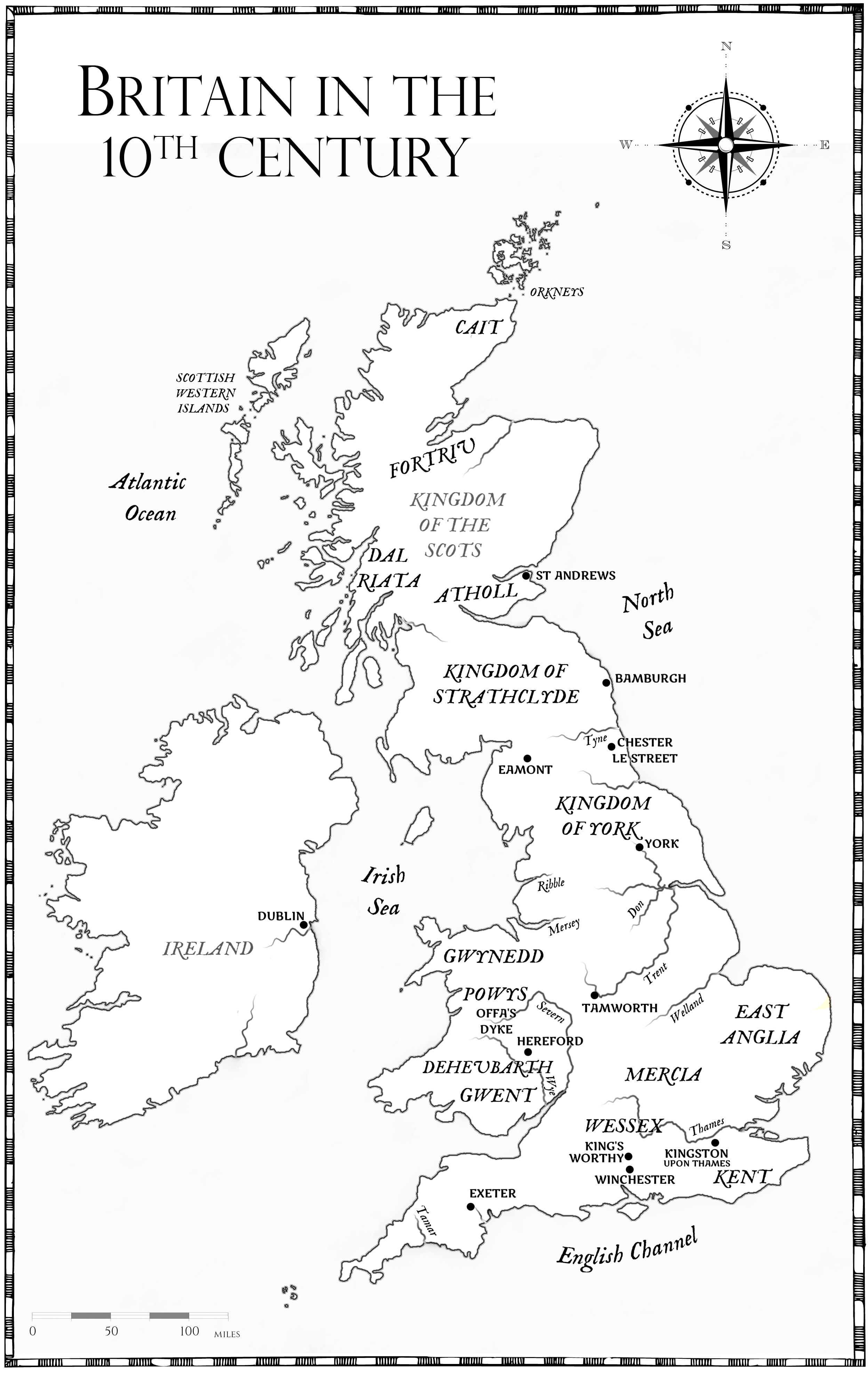
Map design by Shaun at Flintlock Covers

Check out The Tenth Century Royal Women page on the blog.

Curious? Read about the Royal Women of The Tenth Century in my nonfiction title.

The Royal Women Who Made England cover

Posts

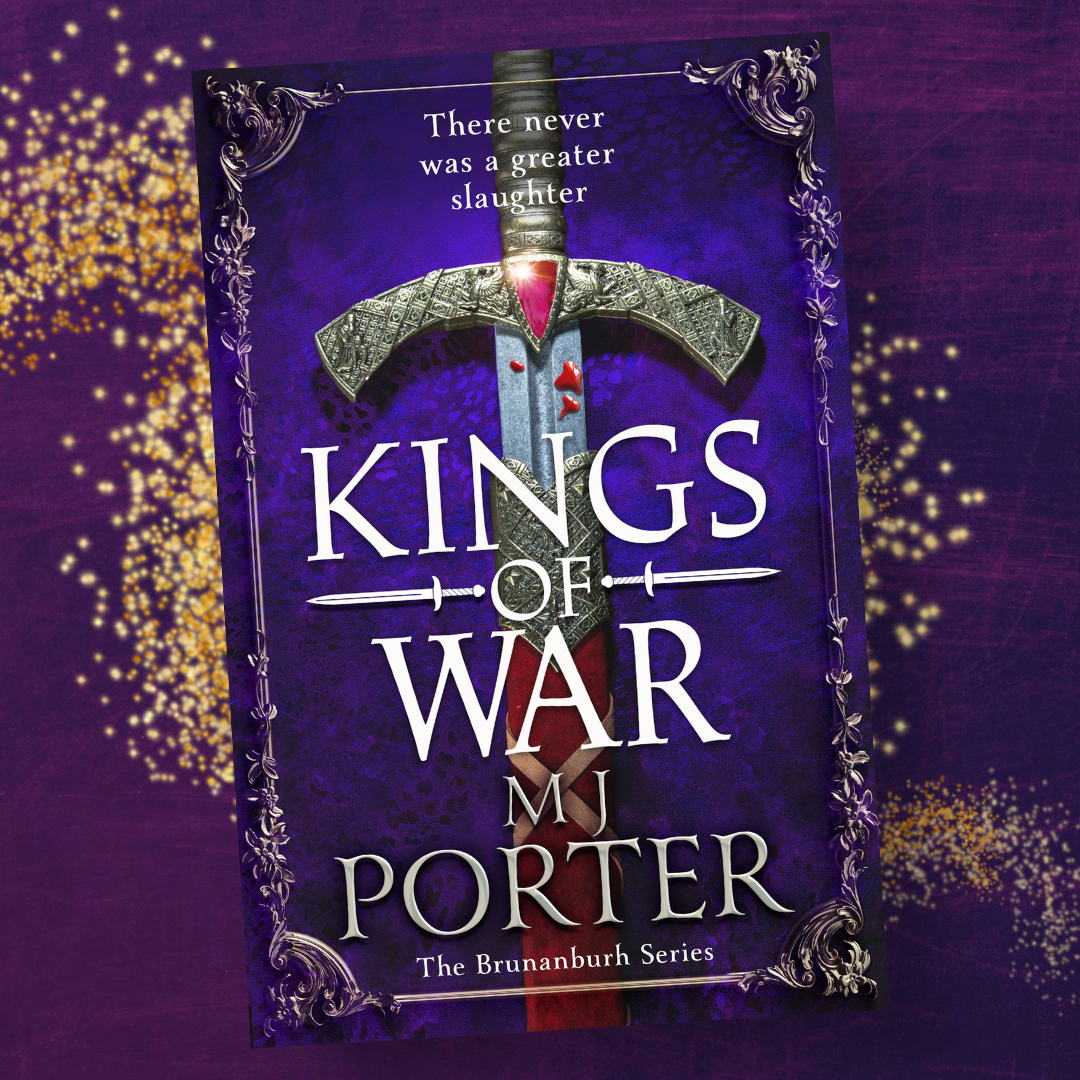
The audiobook for #KingsofWar is available now #histfic #history #Saxons #NewRelease

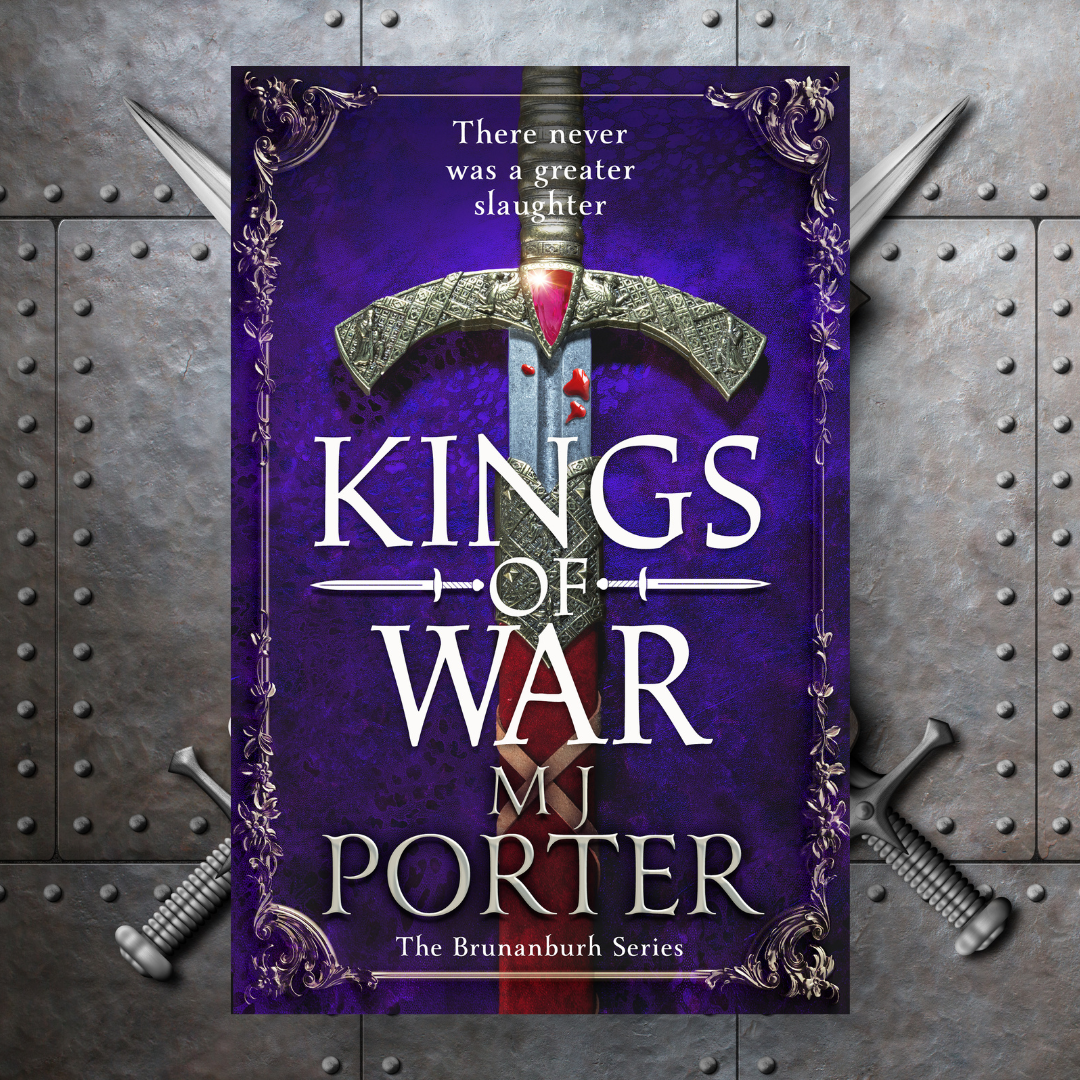
Kings of War, the sequel to King of Kings, is now available in audio, narrated by the fabulous Matt Coles. This is the story of the battle of Brunanburh fought in 937. (Check out my post on where exactly Brunanburh was fought).

Here’s the blurb:

Can the King of the Scots and the Dublin Norse triumph against a united England?

AD934

King Athelstan of the English has been successful in uniting the many kingdoms of Britain against one enemy, the Viking raiders.

But men who are kings don’t wish to be ruled. 

Constantin, King of the Scots, rebelled against the Imperium and was forcibly brought to bend the knee to Athelstan and England at Cirencester.

His son Ildulb seeks bloody vengeance from Athelstan following the battle at Cait and the death of his son.

Olaf Gothfrithson, king of the Dublin Norse, having asserted his power following his father’s death has his sights set on reclaiming Jorvik. 

Can the united might of the Scots and the violence of the Dublin Norse, descendants of the infamous Viking raiders, bring King Athelstan and his vision of the united Saxon English to her knees?

An epic story of kingsmanship that will result in the pivotal, bloody Battle of Brunanburh, where only one side can be victorious.

Check out a snippet for the audiobook from all good audio retailers (I can’t add a media file here – sorry) and on Boldwood Books Facebook account.

Kings of War is also available in large print format from all good book sellers.

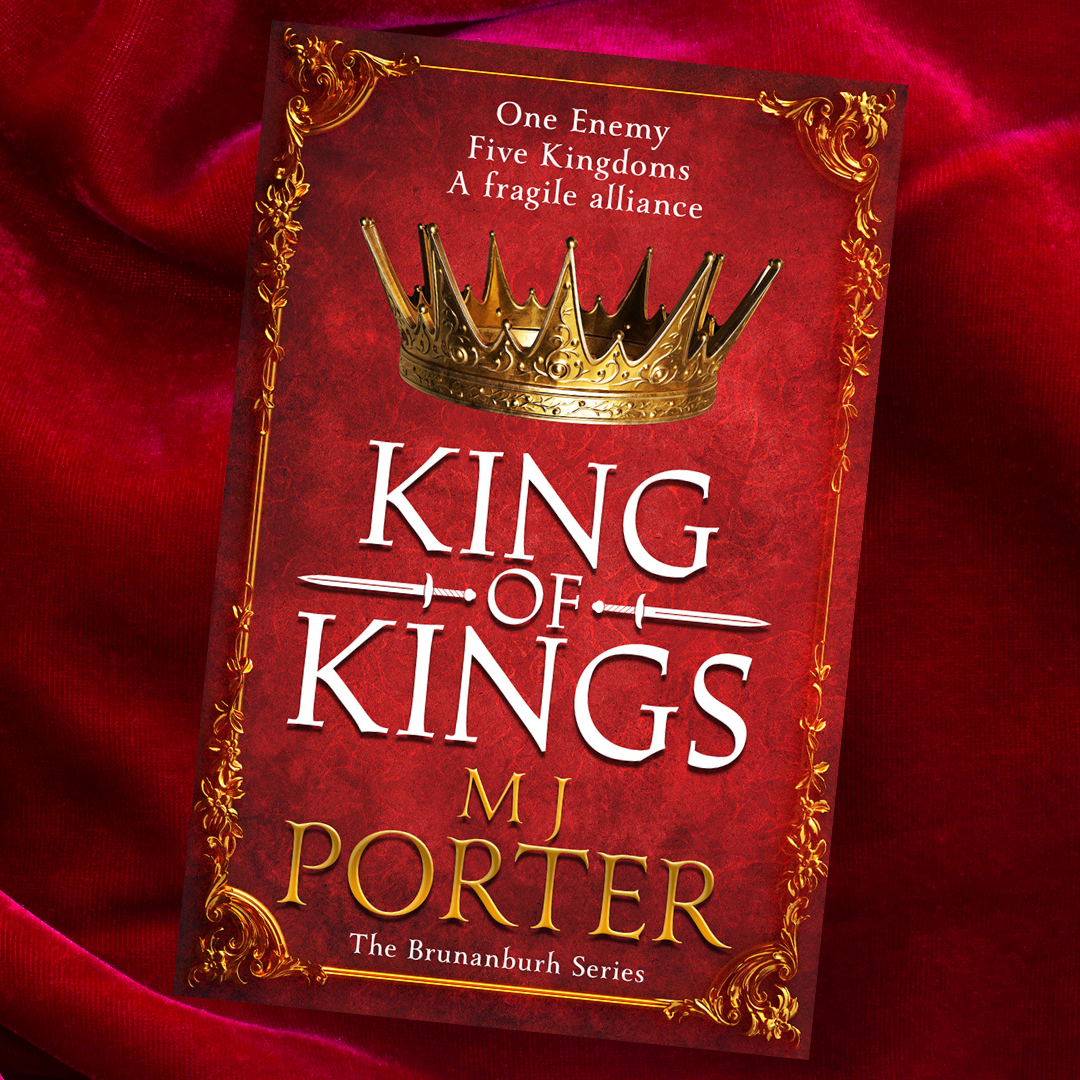
King of Kings

Kings of War

Check out the Brunanburh Series page for more information on the books and the historical characters involved.

Meet Olaf Gothfrithson, king of Dublin

Meet Edmund, ætheling of the English

Meet Ealdorman Athelstan

The scop song in King of Kings and Kings of War #histfic #history #Saxons #NewRelease

The scop song that is so important to events in both King of Kings and Kings of War existed, although I have manipulated it to my purposes and changed some of the more obscure references within it. That said, the poem, Armes Prydein (The Prophecy of Britain) is itself fascinating and is believed to have been a Welsh response to the imperium of King Athelstan of the English, and Hywel’s, of the South Welsh, close connection to the English and Athelstan. It has been dated to about 940, although it might be slightly earlier or later.

In King of Kings and Kings of War, my version reads,

‘And after peace, commotion everywhere,

Brave, mighty men, in battle tumult.

Swift to attack, stubborn in defence.

Warriors will scatter the interlopers as far as Cait

The Welsh and the men of Dublin, the Scots and the Norsemen,

Those of Cornwall and Strathclyde will reconcile as one.

Kings and nobles will subdue the interlopers, drive them into exile

Bring an end to the dominion, and make them food for the wild beasts.

There will be no return for the tribes of the Saxons.’

In its entirety, it foretells a uniting of the Welsh, with all the other kingdoms then in Britain, against the English, or Saxons, those people who had run roughshod over the island at some point between 400-600, when the Saxon kingdoms emerge with more clarity.

Somewhat similar to the legendary figures of Welsh literature, (although not Arthur at this stage) – Cynan and Cadwalladr ap Cadwallan are named – it was a call to arms to defeat the Saxons/English. (I’m going to share a post about Cynan as well).

The poem survives in the Book of Taliesin, a fourteenth-century manuscript, although it’s believed the contents have an origination in the tenth century. The manuscript can be viewed online here https://www.library.wales/discover-learn/digital-exhibitions/manuscripts/the-middle-ages/book-of-taliesin#?c=&m=&s=&cv=7&xywh=-852%2C-1%2C3896%2C3020

You can find the poem in its entirety, in Welsh, here https://web.archive.org/web/20180130062458/http://www.maryjones.us/ctexts/t06w.html

And here, in translation into English.

http://www.maryjones.us/ctexts/t06.html#1

It’s been nearly a decade since I first conceived of this storyline, but reading it all over again, and adding a whole host of new details, I confess, I feel pretty proud of myself for weaving the poem into my story of Britain in the 920s and 930s, and appreciate that the suggestion the poem dates from this period does indeed make perfect sense, even if there are also other suggestions about its origins.

King of Kings and Kings of War are now available, telling the story of the greatest battle on British soil that many have never heard from (or at least hadn’t before Seven Kings Must Die was filmed), Brunanburh.

King of Kings

Kings of War

Check out the Brunanburh Series page for more information on the books and the historical characters involved.

Happy Release day to Kings of War #histfic #history #Saxons #NewRelease

It’s release day for Kings of War, the sequel to King of Kings. This is the story of the battle of Brunanburh fought in 937. (Check out my post on where exactly Brunanburh was fought).

I’m so excited to share this story with my readers, and the cover is fantastic.

Here’s the blurb:

Can the King of the Scots and the Dublin Norse triumph against a united England?

AD934

King Athelstan of the English has been successful in uniting the many kingdoms of Britain against one enemy, the Viking raiders.

But men who are kings don’t wish to be ruled. 

Constantin, King of the Scots, rebelled against the Imperium and was forcibly brought to bend the knee to Athelstan and England at Cirencester.

His son Ildulb seeks bloody vengeance from Athelstan following the battle at Cait and the death of his son.

Olaf Gothfrithson, king of the Dublin Norse, having asserted his power following his father’s death has his sights set on reclaiming Jorvik. 

Can the united might of the Scots and the violence of the Dublin Norse, descendants of the infamous Viking raiders, bring King Athelstan and his vision of the united Saxon English to her knees?

An epic story of kingsmanship that will result in the pivotal, bloody Battle of Brunanburh, where only one side can be victorious.

King of Kings

Kings of War

Check out the Brunanburh Series page for more information on the books and the historical characters involved.

Meet Olaf Gothfrithson, king of Dublin

Meet Edmund, ætheling of the English

Meet Ealdorman Athelstan

Read the release day posts on Boldwood Books Facebook account

Kings of War is on blog tour with the fabulous hosts of Rachel’s Random Resources. I’ll be sharing their reviews throughout the next week. A huge thank you to Rachel, and the hosts.

Leanne bookstagram

Sharon Beyond the Books

Seriesbooklover

David’s Book Blurg

Bookish Jottings

Ruins & Reading

Scrapping and Playing


And it’s not just the blog hosts sharing reviews either:) Thank you.

Amy McElroy

Terry Rudge

My new book, Kings of War, has a number of main characters. Meet Constantin, the king of the Scots.

My new book, Kings of War, is a multi-viewpoint novel telling the story of events in Britain from 925-934. I thought it would be good to share details of the historical people my character are based on.

My portrayal of Constantin, the king of the Scots, is of course fictional in King of Kings, but he is based on a historical individual, Constantin (e) II, so who exactly was he?

Constantin is a fascinating character. Again, and as with Athelstan, his exact date of birth is unknown, but it must have been, at the latest, by 877/8, when his short-reigned father died.

By 900, Constantin was the king of the Scots (we think – there is some confusion about this). This wasn’t yet quite Scotland, but it was getting there. The ancient kingdoms of Cait, Fortriu, Atholl and Dal Riata, were ruled by one king, Constantin. But, he hadn’t succeeded his father, Aed, but rather a man named Domnall II, his cousin. At this time there were two rival dynasties and they strictly alternated the kingship.

Affairs in the kingdom of the Scots often intermingled with those of the independent kingdom of Bamburgh, Strathclyde, and of course, the Norse, or Viking raiders, if you will. Indeed, the entry recording Constantin’s death in the Annals of Ulster, reads as though there was often strife.

Constantinus son of Ed held the kingdom for xl years in whose third year the Northmen plundered Dunkeld and all Albania. In the following year the Northmen were slain in Strath Erenn…And the battle of Tinemore happened in his xviii year between Constantin and Ragnall and the Scotti had the victory. And the battle of Dun Brunde in his xxxiiii year.’ (Alex Woolf, From Pictland to Scotland, 789-1070,p.126)

Constantin, ruling for decades, and I mean decades, seems to have brought much needed stability to the kingdom, as affairs there very much mirrored the emerging ‘England’ to the south.

‘Constantin’s reign has increasingly come to be see as one of the most significant in the history of Scotland. Not only was it very long, at least forty years, but it was also the period during which conflict and diplomatic relations between a kingdom recognisably ancestral to Scotland and one recognisably ancestral to England first occurred.’ (Alex Woolf, From Pictland to Scotland, 789-1070, p.128)

Constantin allied with the rulers of Bamburgh, and York, and also, on occasion, both Æthelflæd of Mercia and Edward the Elder, after her death. But, he seems to have been quite flexible in his thinking, and was prepared to pick and choice as he saw fit.

By the beginning of King of Kings, Constantin would have been in his mid-forties, and he was still to rule for many years to come, and he was certainly a more than adequate counterpart to Athelstan, king of the English, no doubt helped by his sons and grandsons, as his reign continued.

Map design by Shaun at Flintlock Covers

books2read.com/kingsofwar

Meet Athelstan, the king of the English

Meet Hywel, the king of the West Welsh

Meet Ealdred, the king of Bamburgh

Meet Lady Eadgifu, queen of the Anglo-Saxons

Meet Owain, the king of Strathclyde

My new book, Kings of War, has a number of main characters. Meet Athelstan, the King of the English.

Athelstan is one of the main characters in my new book, Kings of War, a multiple point of view story, recounting affairs in Britain from 925-934. Here’s a post about Athelstan I wrote for the release of King of Kings.

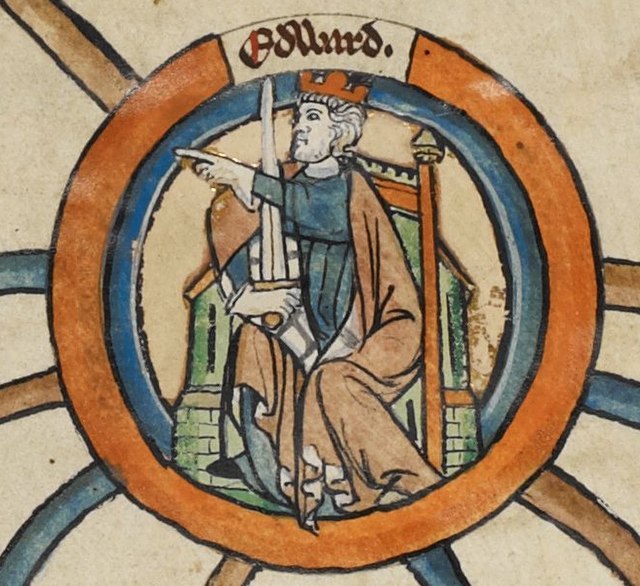
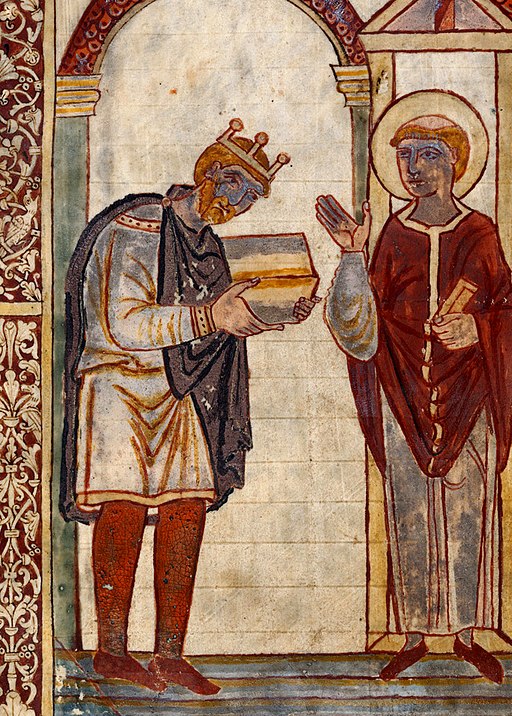
Based on a historical person, my portrayal of him, is of course, fictitious, but there are many details known about him. However, we don’t know for sure who his mother was, it’s believed she might have been called Ecgwynn, and we don’t know, for certain, the name of his sister, but it’s believed she might have been named Edith. What is known is that his father was Edward, the son of King Alfred, and known to us today as Edward the Elder. Athelstan is also rare in that he is one of only two Saxon kings for who a contemporary image is available. (The other is Edgar, who would have been his step-nephew)

Edward the Elder
Edward the Elder – MS Royal 14 B VI.jpg
Miniature d’Édouard l’Ancien dans une généalogie royale du XIVe siècle. WikiCommons

It must be supposed that Athelstan was born sometime in the late 890s. And according to a later source, that written by William of Malmesbury in the 1100s (so over two hundred years later), Athelstan was raised at the court of his aunt, Æthelflæd of Mercia. David Dumville has questioned the truth of this, but to many, this has simply become accepted as fact.

‘he [Alfred] arranged for the boy’s education at the court of his daughter, Æthelflæd and Æthelred his son in law, where he was brought up with great care by his aunt and the eminent ealdorman for the throne that seemed to await him.’[i]


[i] Mynors, R.A.B. ed and trans, completed by Thomson, R.M. and Winterbottom, M. Gesta Regvm AnglorvmThe History of the English Kings, William of Malmesbury, (Clarendon Press, 1998), p.211 Book II.133

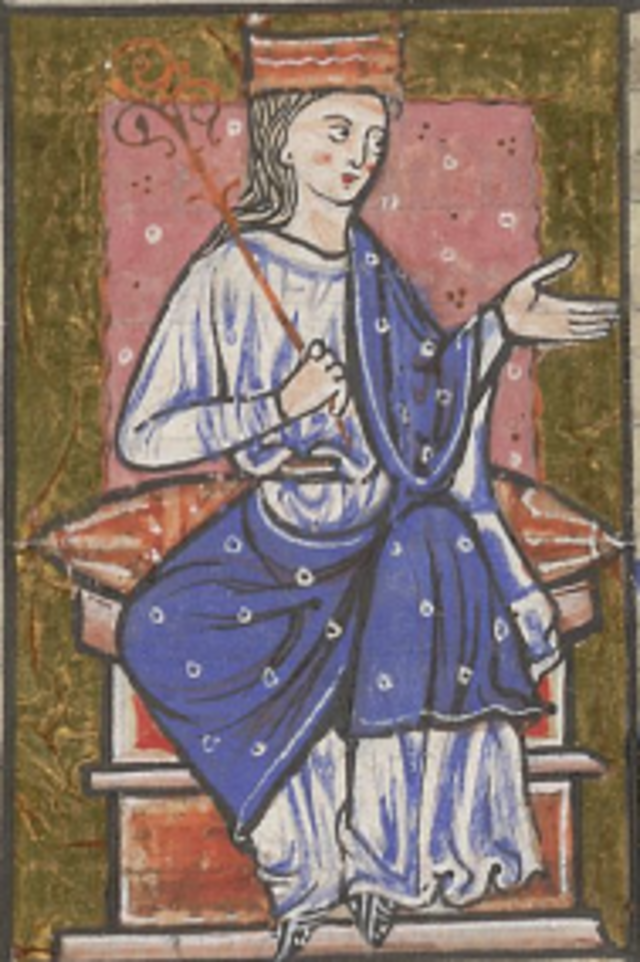
Æthelflæd image
Æthelflæd as depicted in the cartulary of Abingdon Abbey (British Library Cotton MS Claudius B VI, f.14).
https://commons.wikimedia.org/wiki/File:Æthelflæd_as_depicted_in_the_cartulary_of_Abingdon_Abbey.png
AnonymousUnknown author, Public domain, via Wikimedia Commons

Why then might this have happened? Edward became king on the death of his father, Alfred, and either remarried at that time, or just before. Edward’s second wife (if indeed, he was actually married to Athelstan’s mother, which again, some doubt), Lady Ælfflæd is believed to have been the daughter of an ealdorman and produced a hefty number of children for Edward. Perhaps then, Athelstan and his unnamed sister, were an unwelcome reminder of the king’s first wife, or perhaps, as has been suggested, Alfred intended for Athelstan to succeed in Mercia after the death of Æthelflæd, and her husband, Æthelred, for that union produced one child, a daughter named Ælfwynn.

There is an acknowledged dearth of information surrounding King Edward the Elder’s rule of Wessex. He’s acknowledged as the king of the Anglo-Saxons. His father had been the king of Wessex. Historians normally use the surviving charters to unpick the political machinations of the Saxon kings, but for Edward, there’s a twenty year gap between the beginning and end of his reign, where almost no known genuine charters have survived. What isn’t known for sure, is how much control, if any, he had in Mercia. Was Mercia subservient to Wessex or was it ruled independently? It’s impossible to tell. And this makes it difficult to determine what Athelstan might have been doing, and also what his father’s intentions were towards him.

Frontispiece of Bede’s Life of St Cuthbert, showing King Æthelstan (924–39) presenting a copy of the book to the saint himself. 29.2 x 20cm (11 1/2 x 7 7/8″). Originally from MS 183, f.1v at Corpus Christi College, Cambridge. (Wikimedia Commons)

What is known is that following the death of King Edward in 924, Athelstan was acknowledged as the king of Mercia; his stepbrother, Ælfweard was proclaimed king in Wessex. As with all events at this time, it shouldn’t be assumed that just because this is what happened, this is what was always intended.

‘Here King Edward died at Farndon in Mercia; and very soon, 16 days after, his son Ælfweard died at Oxford; and their bodies lie at Winchester. And Athelstan was chosen as king by the Mercians and consecrated at Kingston.’[i]


[i] Swanton, M. trans and edit The Anglo-Saxon Chronicles, (Orion Publishing Group, 2000), D text p.105

But, if Athelstan was raised in Mercia, it’s highly likely he was a warrior from a young age, helping the Mercians defeat the Viking raiders who still had control of the Danish Five Boroughs of Lincoln, Nottingham, Derby, Nottingham and Leicester.

And the events of 924 are where King of Kings begins, and so I will leave him there. By now, he would have been perhaps thirty years old, give or take a few years. What sort of man was he? What sort of king might he be? Do please read King of Kings to find out. And, if this intrigues you, then do please have a look at Sarah Foot’s wonderful monograph on him, Athelstan, from Yale Publishing.

Design by Boldwood Books

books2read.com/kingsofwar

Meet Hywel, king of the West Welsh

Meet Constantin, king of the Scots

Meet Lady Eadgifu, queen of the Anglo-Saxons

Meet Ealdred, king of Bamburgh

Meet Owain, king of Strathclyde

Meet Olaf Gothfrithson, king of Dublin

The King’s Brother Research book dump

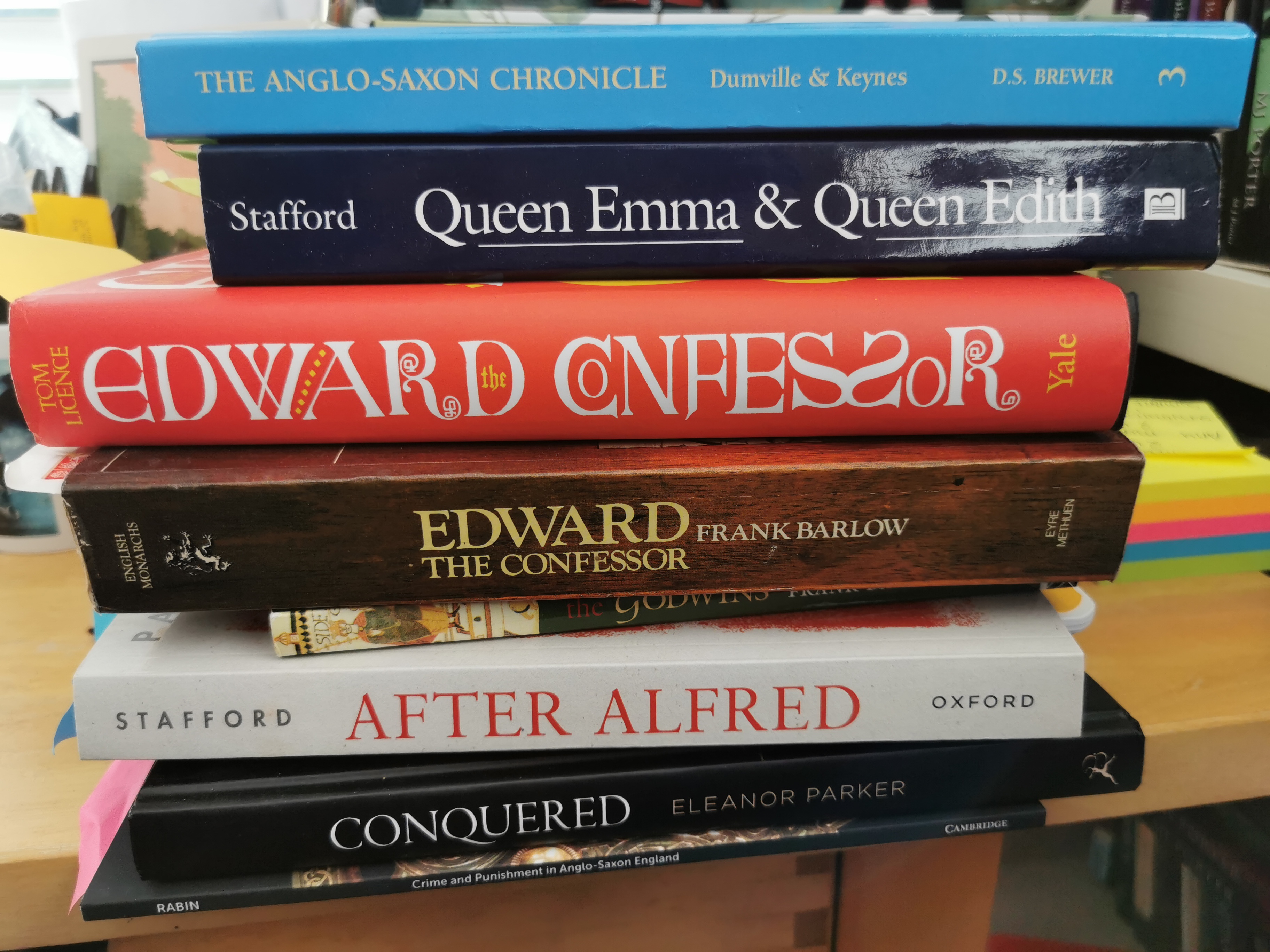
I always like to share my research with my readers. Here’s a small pile of the books that I’ve specifically used in the last few weeks while finalising the little details in The King’s Brother.

As always, there are resources not shown here. The two primary online resources that I will NEVER tire of sharing are

PASE https://pase.ac.uk

Electronic Sawyer https://esawyer.lib.cam.ac.uk/about/index.html

My two versions of The Anglo-Saxon Chronicle not shown here have also proved invaluable, my preferred version by Michael Swanton, and the version found in English Historical Documents Vol. 1 by Dorothy Whitlock, although I’ve discovered I have a first edition, and there was a subsequent second edition, which is the one most often used – mind my first edition was substantially cheaper than a second edition. (I dare you to click on the link and see how much it costs:))

Of course, I would never have started this mad, crazy journey of chronicling the lives of the earls of Mercia without the work of Stephen Baxter, The Earls of Mercia, Lordship and Power in Late Anglo-Saxon England.

Some of these books are more academic than others. For those looking for an introduction to the period, I highly recommend The Death of Anglo-Saxon England by Nick Higham which is stuffed with images and can be found quite cheaply second-hand.

books2read.com/TheKingsBrother