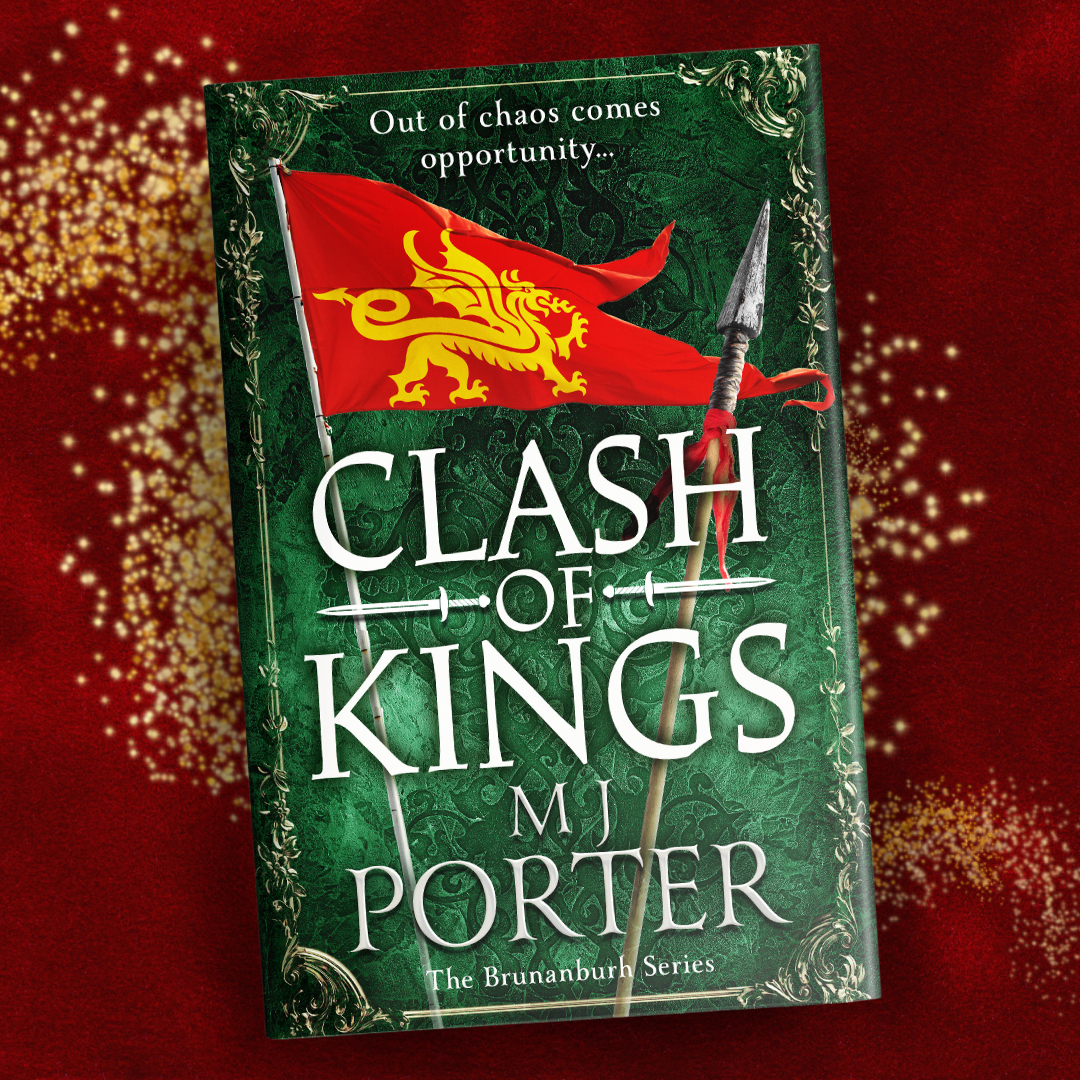
My new book, Clash of Kings, is a multi-viewpoint novel telling the story of events in Britain from 937-942. I thought it would be good to share details of the historical people my main characters are based on.
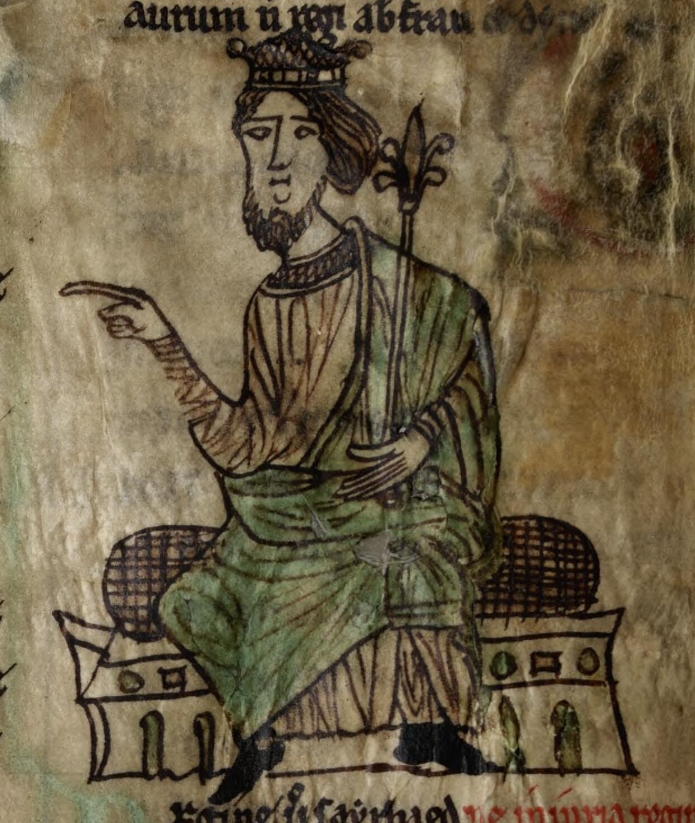
My portrayal of Hywel, better known as Hywel Dda (which autocorrect is determined should say Dad), and which means ‘good’ (a unique epithet in Wales), is of course, fictional, but who was the historical Hywel? Firstly, it should be noted that this epithet is a later invention, not assigned to Hywel until at least the twelfth century, and perhaps, as Dr. Kari Maund has commented in The Welsh Kings: Warriors, Warlords and Princes, a reflection of border events at that period rather than the earlier tenth century. (Dr Maund was one of my university lecturers, so she knows her stuff).
Hywel has no date of birth recorded, and indeed, like Constantin of the Scots, he seems to have ruled for a long time providing much-needed consistency. Hywel ap Cadell was the grandson of the famous Rhodri Mawr, who’d united the kingdoms of the Welsh during his rule. But, this unity fragmented on Rhodri’s death.
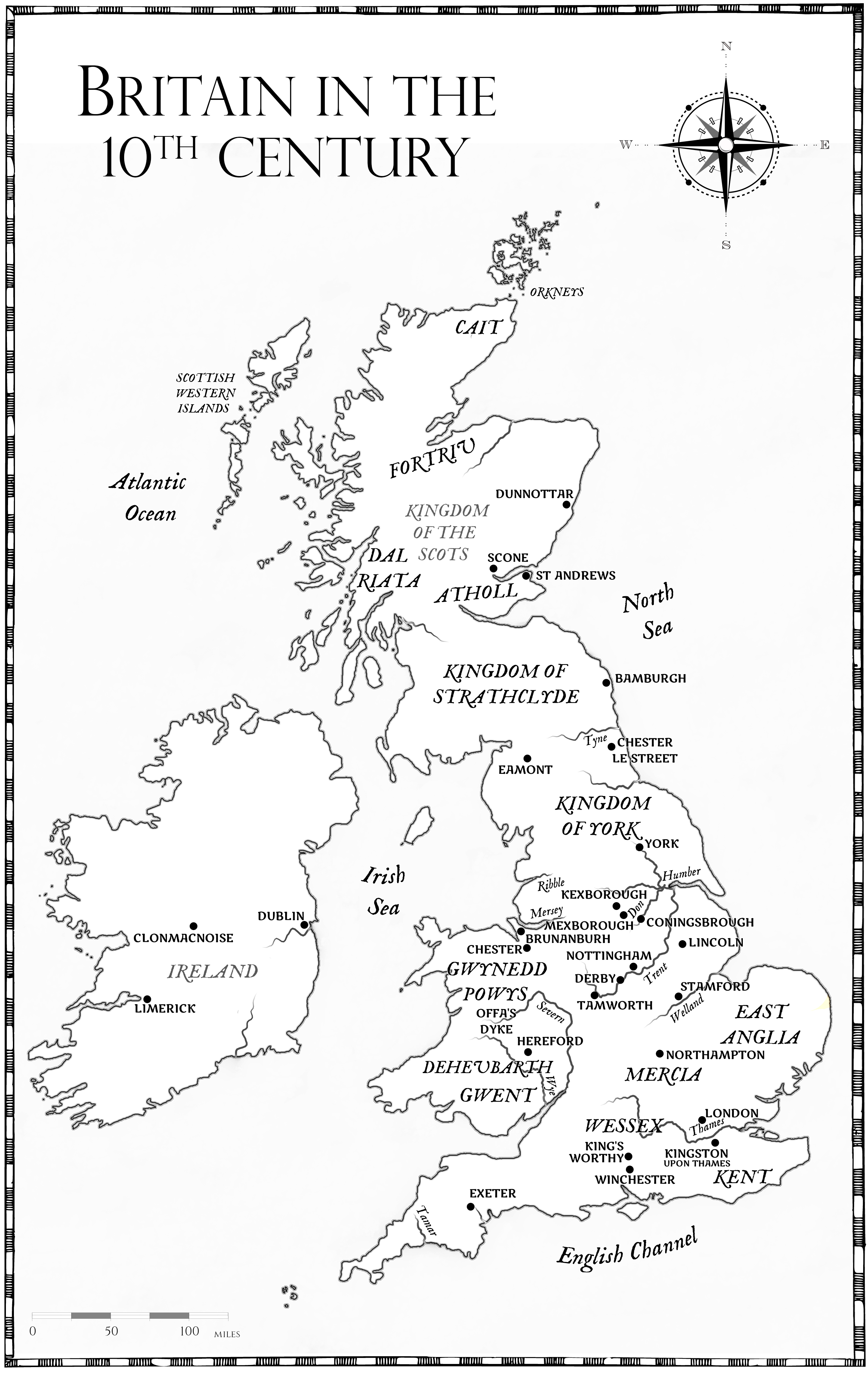
To begin with, Hywel ruled Dehuebarth, probably with his brother, Clydog, (who may have been the younger brother) after the death of their father in c.911. He, his brother, and his cousin, Idwal of Gwynedd, submitted to the English king, Edward the Elder in the late 910s.
‘and the kings of Wales: Hywel and Clydog and Idwal and all the race of the Welsh, sought him as their lord [Edward]’. ASC A 922 corrected to 918 (Swanton, M. trans and edit The Anglo-Saxon Chronicles, (Orion Publishing Group, 2000)p.103-4)
Not long after, Clydog died, leaving Hywel as ruler of Dehuebarth. Hywel had also married Elen, the daughter of Llywarch and niece of Rhydderch, the last king of Dyfed, and he was able to use this alliance to eventually claim Dyfed as well.
Hywel’s believed to have been highly educated, and some historians suggest he was particularly fascinated with King Alfred, and all he’d achieved and was therefore keen to emulate many of his actions. This could also be why his name came to be associated with the codification of laws in later traditions. What fascinates me most about Hywel is his decision to ally closely with King Athelstan. Certainly, he’s a intriguing figure in early tenth-century Britain, and not just because we know he made a pilgrimage to Rome in 928, and still managed to return back to his kingdom and continue ruling it.
Hywel seems to have distanced himself from events which led to the battle of Brunanburh in 937, but in my portrayal of him, he still classifies himself as very much Athelstan’s ally. Events in Clash of Kings might well test that allegiance.
Today sees the release of Clash of Kings, the third book in the Brunanburh series. But who was Athelstan, king of the English?
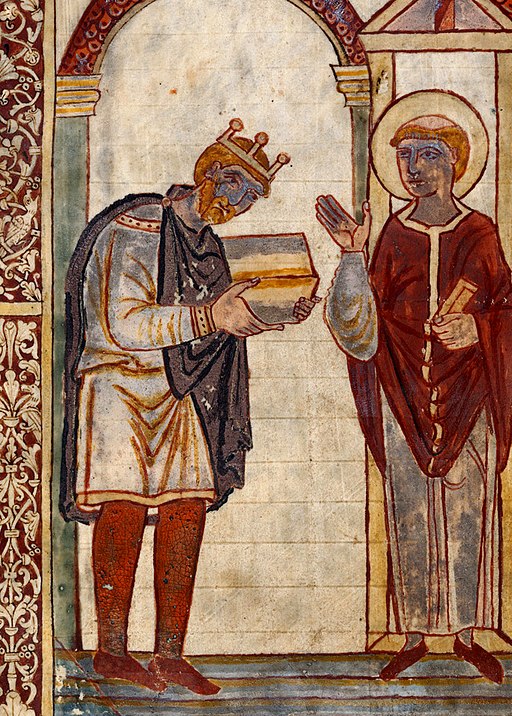
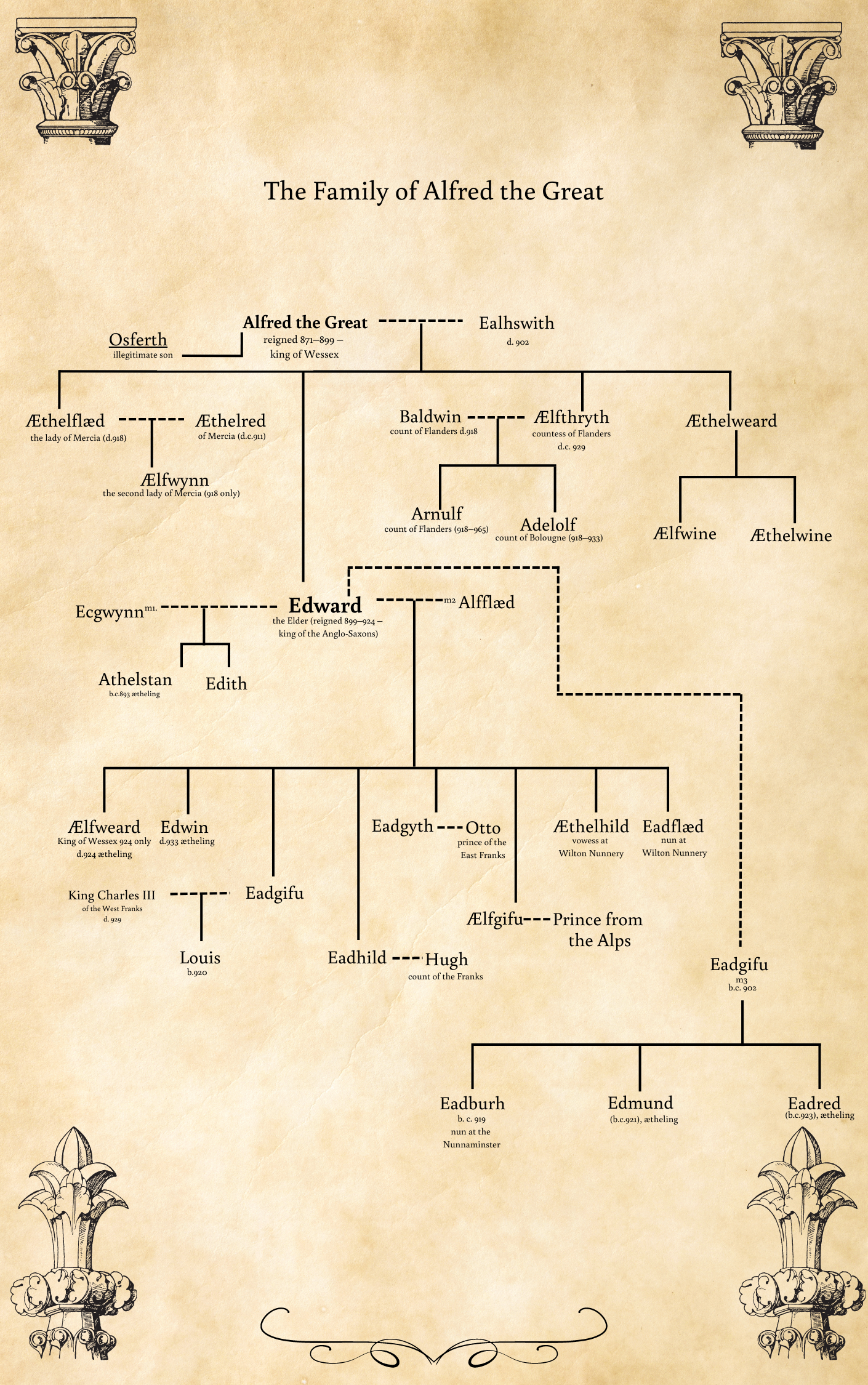
Based on a historical person, my portrayal of him, is of course, fictitious, but there are many historical details known about him. However, we don’t know for sure who his mother was, it’s believed she might have been called Ecgwynn, and we don’t know, for certain, the name of his sister, but it’s believed she might have been named Edith. What is known is that his father was Edward, the son of King Alfred, and known to us today as Edward the Elder. Athelstan is also rare in that he is one of only two Saxon kings for who a contemporary image is available. (The other is Edgar, who would have been his nephew)
It must be supposed that Athelstan was born sometime in the late 890s. And according to a later source, that written by William of Malmesbury in the 1100s (so over two hundred years later), Athelstan was raised at the court of his aunt, Æthelflæd of Mercia. The historian, David Dumville, has questioned the truth of this, but to many, this has simply become accepted as fact.
‘he [Alfred] arranged for the boy’s education at the court of his daughter, Æthelflæd and Æthelred his son in law, where he was brought up with great care by his aunt and the eminent ealdorman for the throne that seemed to await him.’[i]
[i] Mynors, R.A.B. ed and trans, completed by Thomson, R.M. and Winterbottom, M. Gesta Regvm Anglorvm, The History of the English Kings, William of Malmesbury, (Clarendon Press, 1998), p.211 Book II.133
Why then might this have happened? Edward became king on the death of his father, Alfred, and either remarried at that time, or just before. Edward’s second wife (if indeed, he was actually married to Athelstan’s mother, which again, some doubt), Lady Ælfflæd is believed to have been the daughter of an ealdorman and produced a hefty number of children for Edward. Perhaps then, Athelstan and his unnamed sister, were an unwelcome reminder of the king’s first wife, or perhaps, as has been suggested, Alfred intended for Athelstan to succeed in Mercia after the death of Æthelflæd, and her husband, Æthelred, for that union produced one child, a daughter named Ælfwynn.
There is an acknowledged dearth of information surrounding King Edward the Elder’s rule of Wessex. He’s acknowledged as the king of the Anglo-Saxons. His father had been the king of Wessex. Historians normally use the surviving charters to unpick the political machinations of the Saxon kings, but for Edward, there’s a twenty year gap between the beginning and end of his reign, where almost no known genuine charters have survived. What isn’t known for sure, is how much control, if any, he had in Mercia. Was Mercia subservient to Wessex or was it ruled independently? It’s impossible to tell. And this makes it difficult to determine what Athelstan might have been doing, and also what his father’s intentions were towards him.
Frontispiece of Bede’s Life of St Cuthbert, showing King Æthelstan (924–39) presenting a copy of the book to the saint himself. 29.2 x 20cm (11 1/2 x 7 7/8″). Originally from MS 183, f.1v at Corpus Christi College, Cambridge. (Wikimedia Commons)
What is known is that following the death of King Edward in 924, Athelstan was acknowledged as the king of Mercia; his half-brother, Ælfweard was proclaimed king in Wessex. As with all events at this time, it shouldn’t be assumed that just because this is what happened, this is what was always intended.
‘Here King Edward died at Farndon in Mercia; and very soon, 16 days after, his son Ælfweard died at Oxford; and their bodies lie at Winchester. And Athelstan was chosen as king by the Mercians and consecrated at Kingston.’[i]
[i] Swanton, M. trans and edit The Anglo-Saxon Chronicles, (Orion Publishing Group, 2000), D text p.105
But, if Athelstan was raised in Mercia, it’s highly likely he was a warrior from a young age, helping the Mercians defeat the Viking raiders who still had control of the Danish Five Boroughs of Lincoln, Nottingham, Derby, Nottingham and Leicester.
Throughout King of Kings and Kings of War, my character, Athelstan, has proven himself to be amendable to peace as well as prepared to fight for his kingdom. He’s had to contend with some very unruly family members (it’s no wonder he never married), and also some aggressive neighbours. It’s perhaps his relationship with his brother, Edmund, and Hywel, king of the Welsh, that has revealed Athelstan as the man he might like to be remembered, but it is his victory at Brunanburh, against the Norse and the Scots, which he now has to contend with. Has Athelstan finally freed the English from the Viking raider/Norse menace?
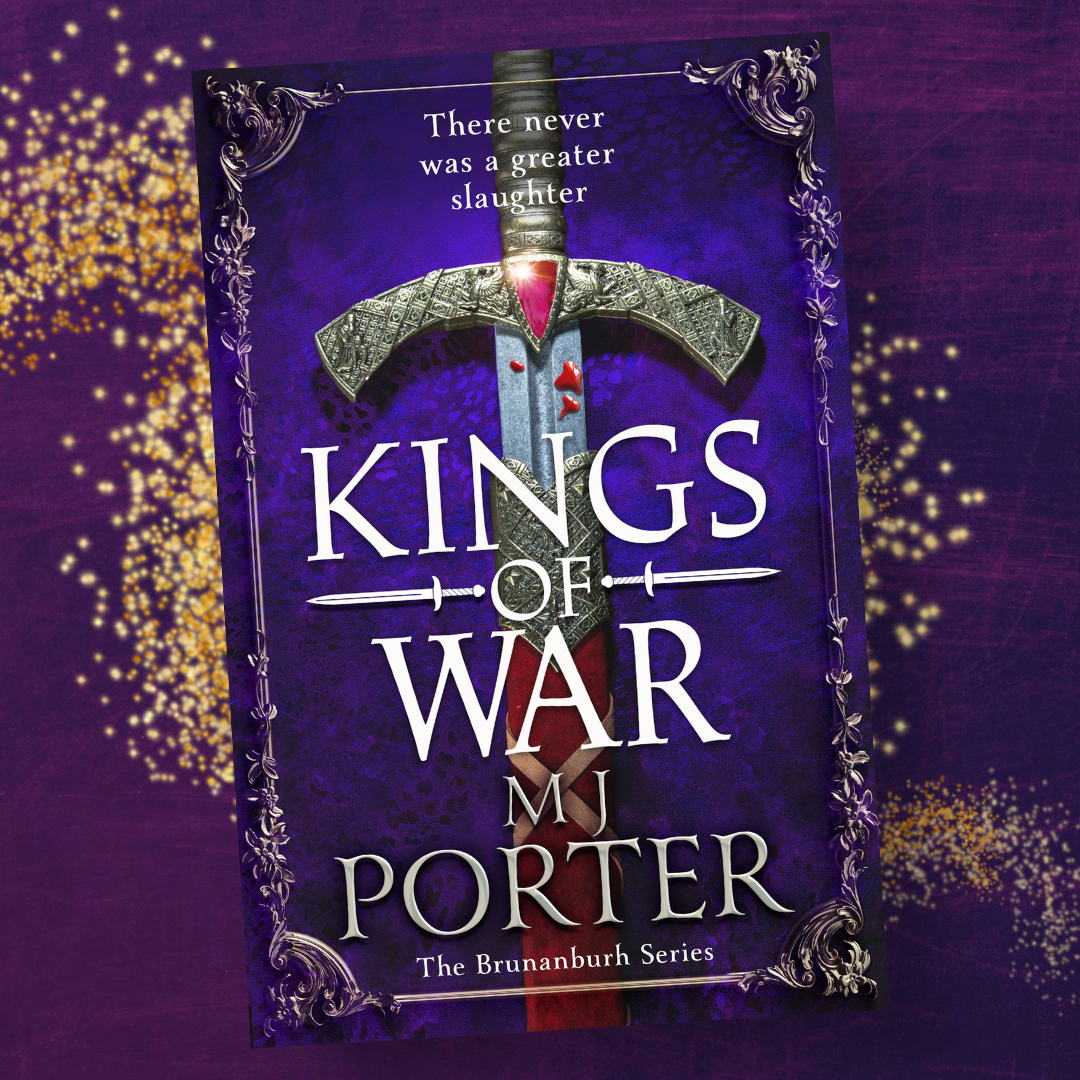
With Clash of Kings being released on 13th January 2024, I thought I’d reintroduce my readers to the main characters.
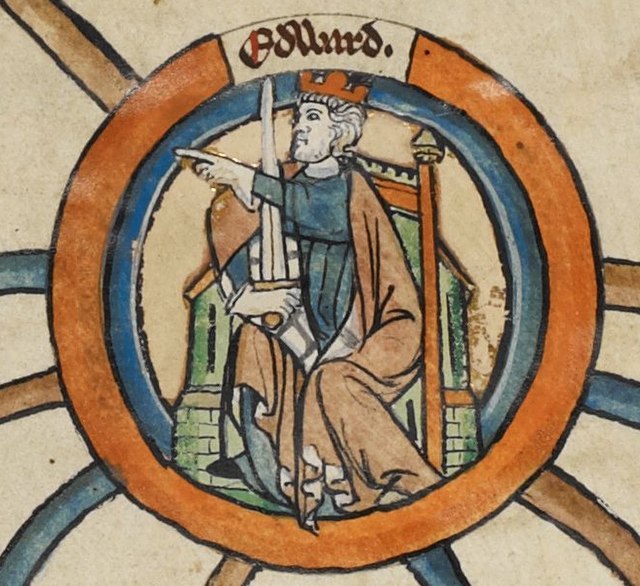
Here’s Edmund, ætheling and Prince of the English.
Edmund, of the House of Wessex, is the second-youngest halfbrother of the king of the English, Athelstan. His date of birth is not known for sure, but it’s believed to have been in about 921, as he’s said to have been 18 when he became king on Athelstan’s death. His mother is Lady Eadgifu, the third wife of Edward the Elder. He has a full brother, Eadred, even younger than him, and a sister who may have been older than him, and who became a cloistered woman.
Family tree by Boldwood Books
‘And the Ætheling succeeded to the kingdom; and he was then 18 years old.’ (ASC A)
Edmund would only have been very young when his father, Edward the Elder, died in 924. It’s doubtful whether he had any memory of him at all. It’s long been believed that his mother, Lady Eadgifu, was responsible for raising him and his younger brother. What precisely Edmund was doing during the reign of his older half-brother isn’t known for sure. He is said to have fought beside him at the Battle of Brunanburh, but some historians cast doubt on this.
As a character in Kings of War and Clash of Kings, Edmund has become a man throughout the previous books, and developed a close relationship with Athelstan. But, he’s still young. He’s riven with indecision, and while delighted to have been involved in the success of the battle of Brunanburh, he’s happy to let his older brother rule England. There is also an on-going thread which pitches Edmund against the family of Constantin, the king of the Scots. Events in Clash of Kings will have a profound effect on young Edmund.
My portrayal of Constantin, the king of the Scots, is of course fictional in the Brunanburh series, but he is based on a historical individual, Constantin (e) II, so who exactly was he?
Constantin is a fascinating character. Again, and as with Athelstan, his exact date of birth is unknown, but it must have been, at the latest, by 877/8, when his short-reigned father died.
By 900, Constantin was the king of the Scots (we think – there is some confusion about this). This wasn’t yet quite Scotland, but it was getting there. The ancient kingdoms of Cait, Fortriu, Atholl and Dal Riata, were ruled by one king, Constantin. But, he hadn’t succeeded his father, Aed, but rather a man named Domnall II, his cousin. At this time there were two rival dynasties and they strictly alternated the kingship.
Affairs in the kingdom of the Scots often intermingled with those of the independent kingdom of Bamburgh, Strathclyde, and of course, the Norse, or Viking raiders, if you will. Indeed, the entry recording Constantin’s death in the Annals of Ulster, reads as though there was often strife.
‘Constantinus son of Ed held the kingdom for xl years in whose third year the Northmen plundered Dunkeld and all Albania. In the following year the Northmen were slain in Strath Erenn…And the battle of Tinemore happened in his xviii year between Constantin and Ragnall and the Scotti had the victory. And the battle of Dun Brunde in his xxxiiii year.’ (Alex Woolf, From Pictland to Scotland, 789-1070,p.126)
Constantin, ruling for decades, and I mean decades, seems to have brought much needed stability to the kingdom, as affairs there very much mirrored the emerging ‘England’ to the south.
‘Constantin’s reign has increasingly come to be see as one of the most significant in the history of Scotland. Not only was it very long, at least forty years, but it was also the period during which conflict and diplomatic relations between a kingdom recognisably ancestral to Scotland and one recognisably ancestral to England first occurred.’ (Alex Woolf, From Pictland to Scotland, 789-1070, p.128)
Constantin allied with the rulers of Bamburgh, and York, and also, on occasion, both Æthelflæd of Mercia and Edward the Elder, after her death. But, he seems to have been quite flexible in his thinking, and was prepared to pick and choice as he saw fit.
By the beginning of Clash of Kings, Constantin would have been in his mid-sixties. He was certainly a more than adequate counterpart to Athelstan, king of the English, no doubt helped by his sons and grandsons, as his reign continued, but his participation at the battle of Brunanburh, and its subsequent failure, might well have severely undermined him.
With a successor, Mael Column, desperate to succeed him, and his son, Ildulb, just as keen to succeed Mael, it seems that Constantin is about to enter one of the most turbulent periods of his kingship.
Read Clash of Kings to discover what happens in the kingdom of the Scots.
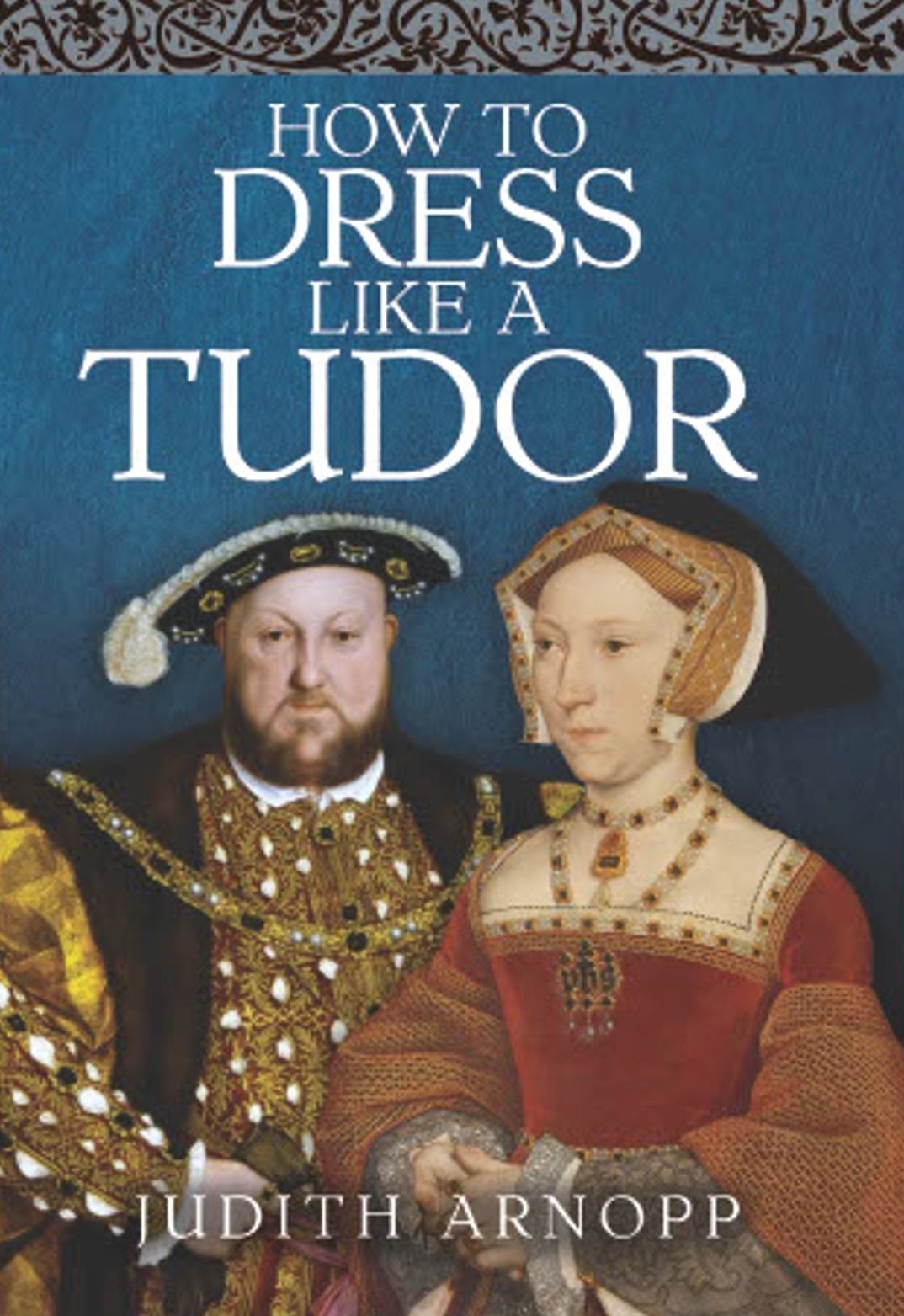
Have you ever hankered to dress like a Tudor lord or lady, or perhaps you prefer the status of goodwife, or costermonger, or even a bawd?
For beginner historical reenactors, the path to authenticity can be bewildering and sometimes intimidating. Judith Arnopp uses her own experience, both as a historian and a medieval/Tudor lady, to make your own journey a little easier.
The author traces the transition of fashion from the relatively subtle styles popular at the court of Henry VII, through the carefully constructed royal grandeur of Henry VIII, Edward VI, and Mary I to the pinnacle of majesty and splendid iconography of Elizabeth I.
In contrast to the magnificence of court come the ordinary folk who, subject to sumptuary laws and regulations, wore garments of a simpler cut and cloth – a strata of society that formed the back bone of Tudor England.
This brief history of 16th century fashion examines clothing for both rich and poor, adult and child, and offers tips and tricks on how to begin to sew your first historically inspired garment, this book is aimed at helping the beginner learn How to Dress like a Tudor.
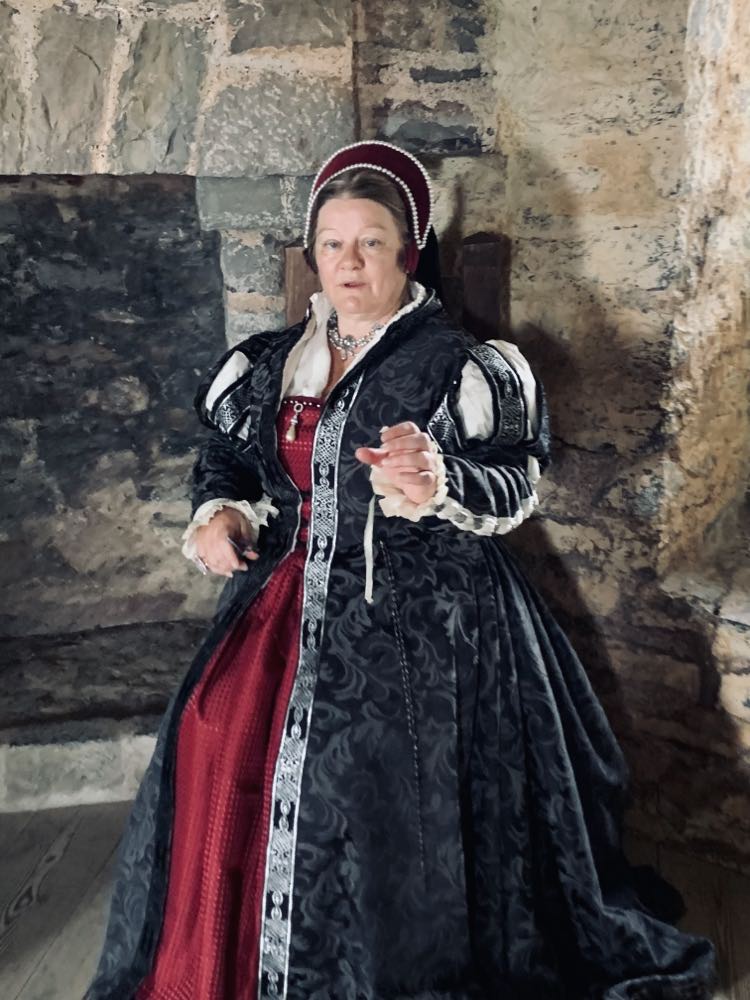
Judith writes historical fiction set during the late medieval and Tudor period. Her usual focus is on the women who lived close to the monarch, women like Margaret Beaufort, Elizabeth of York and Mary Tudor but more recently has been writing from the perspective of Henry VIII himself. Her books are on Kindle, Audible and Paperback.
She also writes non-fiction, her work featuring in many anthologies and online magazines. Her latest non-fiction, How to Dress like a Tudor published by Pen & Sword Books is available now.
Judith is a founder member of a reenactment group The Fyne Company of Cambria, and began making Tudor costumes for herself, her husband, John, and other members of the group. It was this that inspired How to Dress like a Tudor and she hopes to write more non-fiction Tudor history in the future.
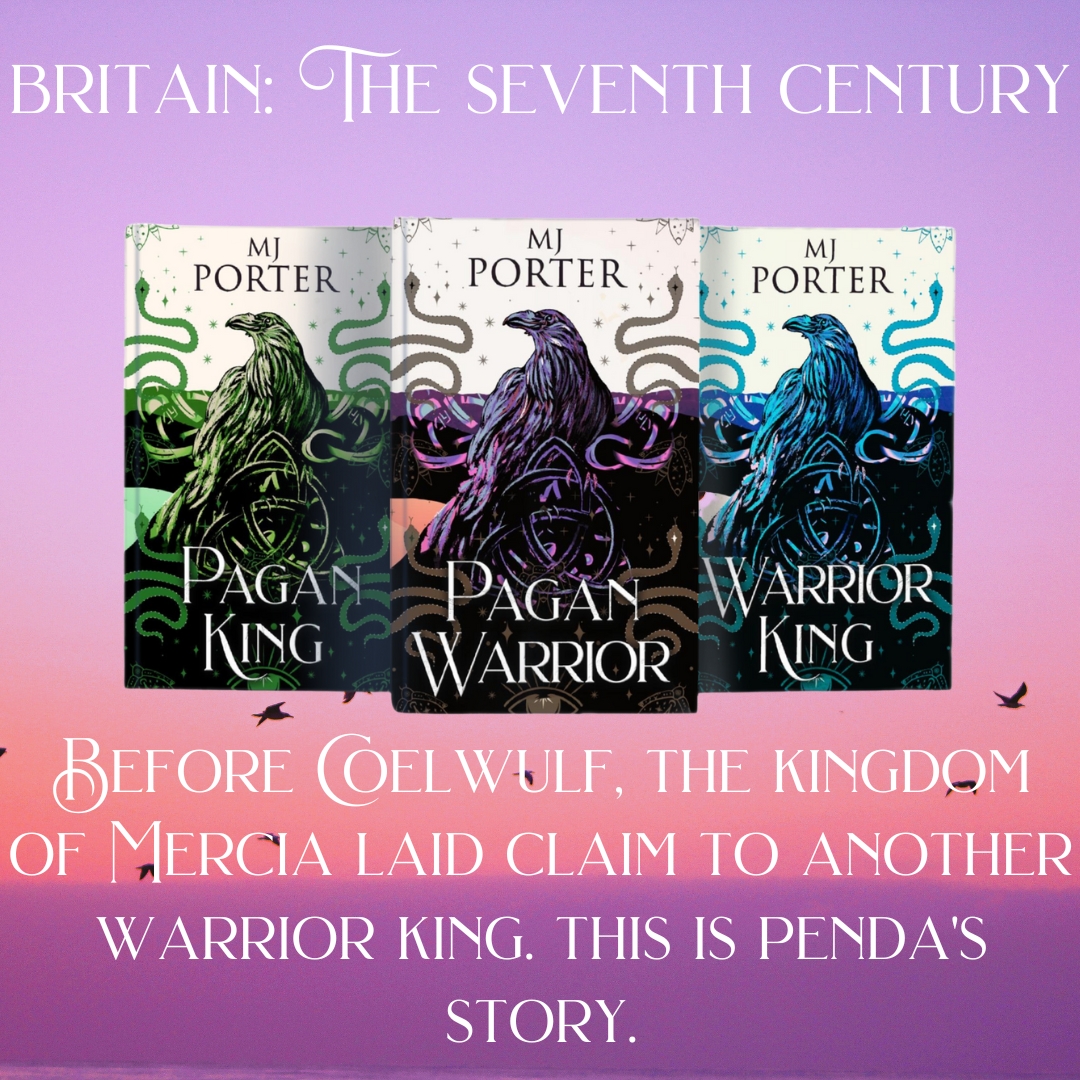
Penda, a warrior of immense renown, has much to prove if he is to rule the Mercian kingdom of his dead father and prevent the neighbouring king of Northumbria from claiming it.
Unexpectedly allying with the British kings, Penda races to battle the alliance of the Northumbrian king, unsure if his brother stands with him or against him as they seek battle glory for themselves, and the right to rule gained through bloody conquest.
There will be a victor and a bloody loser, and a king will rise from the ashes of the great and terrible battle of Hædfeld.
Britain in the Seventh Century – a patchwork of kingdoms
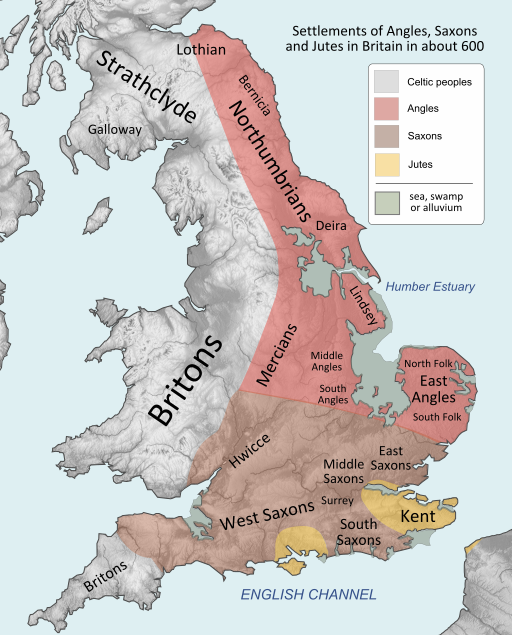
One of the hardest processes when writing about this very early period of Britain is to get an idea of what the kingdoms might have looked like and to explain this to the reader. The seventh century is often seen as the period when the Heptarchy, the seven very well-known kingdoms of the Saxon period, emerged and formed, ultimately derived from potentially very many much smaller kingdoms, the names of which are only rarely still known.
The Heptarchy consisted of the kingdoms of Northumbria (itself derived from the uniting of Deira and Bernicia), Mercia, the kingdom of the East Angles, Wessex, Sussex, Kent, and Essex. In later centuries, these kingdoms would merge until only four main kingdoms remained, and then, from the early middle of the tenth century, England emerged. But the battle of Hædfeld with which Pagan Warrior concludes was a British-wide battle set as this process was formalising in the seventh century, and there are yet more kingdoms that must be mentioned which didn’t form part of Saxon England.
Scotland didn’t yet exist, but Dal Riata, Pictland and Alt Clut (sometimes called Strathclyde) did. Wales didn’t exist, although the kingdoms of Gwynedd, Deheubarth, Ceredigion and Powys did, The kingdom of Dumnonia (modern-day Cornwall), was also in existence and very much not part of Saxon England. Indeed, these kingdoms are often termed British, as opposed to Saxon. As someone woeful at geography – I purposefully don’t adopt the names of places from this period because it confuses me – I’m only too well aware of how much I’m asking from my reader as it is without adding weird place names to already strange sounding personal names, and yet it was necessary to add a whole host of strange names, which often, have no relation to the current names of counties, let alone kingdoms.
All of these different kingdoms, we’re told, were involved in some way in the battle of Hædfeld. Some of the kingdoms joined the alliance, spear-headed by Cadwallon of Gwynedd, Edwin’s foster-brother. Others joined that of Edwin of Northumbria. Almost all of them took one side or another in the mighty battle of Hædfeld fought in 632 or 633 (there is some confusion about the exact date) between the two sides. To ensure my readers have some idea of who’s who, I’ve termed all of the character’s as being ‘of’ their kingdom, although I’m unsure if that’s actually how they might have been named.
I was surprised by how many individuals could be named from the seventh century, particularly for the build-up to the battle of Hædfeld. The cast is not Game of Thrones huge, but it was larger than I expected. Not just Penda of the Hwicce, only later could he be termed of Mercia, and Cadwallon of Gwynedd in the British ‘alliance’, but also Cloten of Deheubarth, Clydog of Ceredigion, Eiludd of Powys, Clemen of Dumnonia, Domnall Brecc of Dal Riata, Beli of Alt Clut and Eanfrith of Bernicia. While on the Northumbrian led alliance were Edwin of Northumbria, alongside his children, Osfrith and Eadfrith, as well as Eowa of the Hwicce, Osric of Deira – Edwin’s cousin, Cynegils of Wessex, Sigeberht of the East Angles and Oswald of Bernicia – Edwin’s nephew. At least, that’s how I stack the two sides as the battle is about to commence. In later periods, it is sometimes a struggle to find who was king of where and when that might have been, so to find so many characters, even if it can seem a little overwhelming, was fantastic and ensured that the British-wide battle of Hædfeld could be retold in Pagan Warrior with a nod to each of these kings, and the part they might, or might not, have played in the events that played out on that fateful day in October 632 or 633.
I thought I’d share some of my frustrations with writing about the lives of the ‘lost women’ of the tenth century.
The Tenth Century in Saxon England is often seen as heralding the triumph of Wessex to form England and to drive the Viking raiders far from England’s shores. That is both right and wrong, but it does mean that the names of the kings of the House of Wessex are well-known (comparatively speaking). The same can’t be said for the women who were wives, daughters and mothers of these kings. We can debate why this is but it doesn’t solve the problem of who these women were. For some of them, we don’t even know their names. We don’t know the name of King Athelstan’s mother, which astounds me. Equally, some of his half-sisters are quickly ‘lost’ in Continental Europe. Much of this is because they didn’t create huge dynasties to revere them after their death (apart from perhaps Eadgyth, who married Otto of the East Franks and whose sudden death deeply affected her husband). Of course, this problem is also compounded by the few surviving contemporary records.
Even those sources which do survive are not easy to access. Language barriers are a huge problem. The Anglo-Saxon Chronicles have been studied and translated into easily accessible volumes, but alas, only Ealhswith, wife of King Alfred, Æthelflæd of Mercia, her daughter Ælfwynn, and two unnamed sisters of Athelstan are actually mentioned in the ASC. We can find more names in Æthelweard’s Latin translation of the ASC known as the Chronicon but it is still not an exhaustive list of his own relatives. Æthelweard claimed descent from King Alfred’s brother, Æthelred I.
This situation doesn’t just apply to the tenth-century. The online resource, The Prosopography of Anglo-Saxon England (PASE), has a database of 33,981 male names listed for the entire period of Saxon England. Only 1460 female names are listed. As such, we know much more about the male members of Saxon England, than we do the females.
And, these women have received very little study. While there are academic books about the much better known eleventh-century queens, Emma of Normandy and Edith, the wife of Edward the Confessor, it’s not been possible to pick up a single title and learn about these lost women, aside from Elizabeth Norton’s monograph on Lady Elfrdia.
To begin with, I wished to fictionalise the life of Lady Elfrida, wife of King Edgar, thanks to the work by Elizabeth Norton. I then turned my mind to other women of the tenth century and, indeed, even to Lady Estrid, the sister of King Cnut. Time and again, I found that so little information had survived, the majority of it only a reference in relation to male members of the family, that much of their lives had to be reconstructed based on what is documented as happening at the time. There was certainly no tangible way to connect with these women, other than a possible surviving piece of embroidery which might have been stitched by King Edward the Elder’s second wife, and if not by her hand, then at her command, and which was found inside the tomb of St Cuthbert when it was opened in the early nineteenth century (1827).
I can’t help feeling this is how Æthelweard felt when he wrote his Chronicon. The passage of time has not made it any easier to uncover the names of the women, let alone their personalities.
I have now written a non-fiction account of this period, and it is now available from Pen and Sword books – The Royal Women Who Made England. I hope, alongside the fictionalised accounts of their lives, that this will inspire more interest in them.
I’m reading the beginning from A Conspiracy of Kings. Hopefully, you’ll enjoy listening below. Just click on the image. This does contain spoilers if you’ve not yet read book 1, The Lady of Mercia’s Daughter.
On the 27th October 939, the death of Athelstan, the first king of the English, at Gloucester. The symmetry of the death of King Athelstan and King Alfred, his grandfather, is noted in the Anglo-Saxon Chronicle A text, ‘40 years all but a day after King Alfred passed away’.[i]
[i] Swanton, M. ed. and trans. The Anglo-Saxon Chronicles, (Orion Publishing Group, 2000), p.110
We don’t know for sure who Athelstan’s mother was, it’s believed she might have been called Ecgwynn. We don’t know, for certain, the name of his full sister, but it’s believed she might have been named Edith or Ecgwynn after her mother. What is known is that his father was Edward, the son of King Alfred, and known to us today as Edward the Elder. Athelstan is rare in that he is one of only two Saxon kings for whom a contemporary image is available. (The other is Edgar, who would have been his nephew)
It must be supposed that Athelstan was born sometime in the late 890s. And according to a later source written by William of Malmesbury in the 1100s (so over two hundred years later), was raised at the court of his aunt, Æthelflæd of Mercia. David Dumville has questioned the truth of this, but to many, this has simply become accepted as fact.
‘he [Alfred] arranged for the boy’s education at the court of his daughter, Æthelflæd and Æthelred his son in law, where he was brought up with great care by his aunt and the eminent ealdorman for the throne that seemed to await him.’[i]
[i] Mynors, R.A.B. ed and trans, completed by Thomson, R.M. and Winterbottom, M. Gesta Regvm Anglorvm, The History of the English Kings, William of Malmesbury, (Clarendon Press, 1998), p.211 Book II.133
Why then might this have happened? Edward became king on the death of his father, Alfred, and either remarried at that time, or just before. Edward’s second wife (if indeed, he was actually married to Athelstan’s mother, which again, some doubt), Lady Ælfflæd is believed to have been the daughter of an ealdorman and produced a hefty number of children for Edward. Perhaps then, Athelstan and his unnamed sister, were an unwelcome reminder of the king’s first wife, or perhaps, as has been suggested, Alfred intended for Athelstan to succeed in Mercia after the death of Æthelflæd, and her husband, Æthelred, for that union produced one child, a daughter named Ælfwynn.
Frontispiece of Bede’s Life of St Cuthbert, showing King Æthelstan (924–39) presenting a copy of the book to the saint himself. 29.2 x 20cm (11 1/2 x 7 7/8″). Originally from MS 183, f.1v at Corpus Christi College, Cambridge. (Wikimedia Commons)
What is known is that following the death of King Edward in 924, Athelstan was acknowledged as the king of Mercia; his half-brother, Ælfweard was proclaimed king in Wessex for a very short period.
‘Here King Edward died at Farndon in Mercia; and very soon, 16 days after, his son Ælfweard died at Oxford; and their bodies lie at Winchester. And Athelstan was chosen as king by the Mercians and consecrated at Kingston.’[i]
[i] Swanton, M. trans and edit The Anglo-Saxon Chronicles, (Orion Publishing Group, 2000), D text p.105
Design by Boldwood Books
But Ælfweard’s reign was short-lived and Athelstan was eventually proclaimed king of Wessex, as well as Mercia, and then, in time, as the king of the English, although his acceptance by the Wessex witan has been seen as very grudgingly given.
Whatever the exact details of the beginning of his kingship, Athelstan was consecrated in September 925, and the words of the ceremony are believed to survive (there is an argument as to whether the ceremony was written for his father or for him), and during the ceremony Athelstan was proclaimed as king not with the placement of a warrior helm on his head, but instead, with a crown, the first known occurrence of this in England.
Here’s my reimagining of the ceremony in King of Kings,
Athelstan, Kingston upon Thames, September AD925
‘This means that only a year after my father’s untimely death, the kingdoms of Mercia, those parts of the East Anglian kingdom that my father lately reclaimed, Wessex and Kent, are reunited again under one ruler. The Saxons, or rather, the English, have just one king. And this is my moment of divine glory, when, before the men and women of the Mercian and Wessex witan, I’ll be proclaimed as king over all.
A prayer is intoned by the archbishop of Canterbury, Athelm, appealing to God to endow me with the qualities of the Old Testament kings: Abraham, Moses, Joshua, David and Solomon. As such, I must be faithful, meek, and full of fortitude and humility while also possessing wisdom. I hope I’ll live up to these lofty expectations.
I’m anointed with the holy oil and then given a thick gold ring with a flashing ruby to prove that I accept my role as protector of the one true faith. A finely balanced sword is placed in my hands, the work of a master blacksmith, with which I’m to defend widows and orphans and through which I can restore things left desolated by my foes, and my foes are the Norse.
Further, I’m given a golden sceptre, fashioned from gold as mellow as the sunset, with which to protect the Holy Church, and a silver rod to help me understand how to soothe the righteous and terrify the reprobate, help any who stray from the Church’s teachings and welcome back any who have fallen outside the laws of the Church.
With each item added to my person, I feel the weight of kingship settle on me more fully. I may have been the king of Mercia for over a year now, the king of Wessex and Kent for slightly less time, but this is the confirmation of all I’ve done before and all I’ll be in the future.
It’s a responsibility I’m gratified to take, but a responsibility all the same. From this day forward, every decision I make, no matter how trivial, will impact someone I now rule over.
*******
And I? I’m the king, as my archbishop, Athelm of Canterbury, proclaims to rousing cheers from all within the heavily decorated church at Kingston upon Thames, a place just inside the boundaries of Wessex but not far from Mercia. It’s festooned with bright flowers and all the wealth this church owns. Gold and silver glitter from every recess, reflecting the glow of the hundreds of candles.
I’m more than my father, Edward, was and I’m more than my grandfather, Alfred, was. I’m the king of a people, not a petty kingdom, or two petty kingdoms, with Kent and the kingdom of the East Angles attached.
It’s done. I’m the anointed king of the English, the first to own such a title. I’ll protect my united kingdom, and with God’s wishes, I’ll extend its boundaries yet further, clawing back the land from the Five Boroughs and bringing the kingdom of the Northumbrians, and even the independent realm of Bamburgh, under my command.’
And Athelstan’s life is one of vast events. His reach extended far beyond the confines of England, or even the British Isles, his step-sisters making political unions in East and West Frankia, and his nephew becoming king of the West Franks. But he is perhaps best known for his victory at Brunanburh, over a coalition of the Scots and the Dublin Norse, and it is the tale of this great battle, and the events both before and afterwards, that I retell in the Brunanburh Series.
His death, on 27th October 939, can arguably be stated to have reset the gains made after Brunanburh, and set the creation of ‘England’ back, as his much younger step-brother battled to hold onto his brother’s gains, but for now, it is Athelstan and his triumphs which much be remembered, and not what happened after his untimely death.
Penda of Mercia is famous for many things, including killing two Northumbrian kings throughout his life. He’s also famous for being a pagan at a time when Roman Christianity was asserting itself from the southern kingdom of Kent. But who was he?
Who was Penda of Mercia?
Penda’s origins are unclear. We don’t know when he was born or where he came from, although it must be assumed he was a member of a family from which the growing kingdom of Mercia might look for its kings. He’s often associated with the subkingdom of the Hwicce, centered around Gloucester. The later source, the Anglo-Saxon Chronicle, written at least two hundred and fifty years after his life records,
626 ‘And Penda had the kingdom for 30 years; and he was 50 years old when he succeeded to the kingdom.’ ASC A p24
626 ‘And here Penda succeeded to the kingdom, and ruled 30 years.’ ASC E p25
Knowing, as we do, that he died in 655, this would have made Penda over eighty years old at his death, a fact that is much debated. Was his age just part of the allure of the legend? A mighty pagan warrior, fighting well into his eighties? Sadly, we may never know the truth of that, but it is disputed, and there are intricate problems with the sources that boggle the brain.
Hædfeld, Maserfeld and Winwæd
Suffice it to say, we don’t know Penda’s age or origins clearly, but we do know that he was involved in three very famous battles throughout the middle years of the seventh century, that at Hædfeld in 632/33 fought somewhere close to the River Don, in which King Edwin of Northumbria was killed. That of Maserfeld, in 641/2 in which King Oswald of Northumbria was killed, close to Oswestry, not far from today’s Welsh border. And Penda’s final battle, that of Winwæd in 655 in which he was killed while fighting in the north, perhaps close to Leeds. While these are the battles we know a great deal about, thanks to the writings of Bede and his Ecclesiastical History of the English People, a Northumbrian monk, with an interest in Northumbria’s religious conversion, who completed his work in 731, Penda was a warrior through and through. He fought the kingdoms to the south, the West Saxons, or Wessex as we might know it. He fought in the kingdom of the East Angles. He allied with Welsh kings. He meddled in affairs in Northumbria, and had he not died in 655, it is possible that Northumbria’s Golden Age would have ended much sooner than it did. His son married a Northumbrian princess. His daughter married a Northumbrian prince. Penda was either brokering an alliance with Northumbria or perhaps using marriage as a means of assimilating a kingdom that he was clear to overrun.
Bede
Our narrator of Penda’s reign, is sadly a Christian monk writing up to seventy years after his death. His commentary is biased, and his story is focused on the triumph of religion and Northumbria, probably in that order. And yet, as Bede’s work was coming to its conclusion, even he understood that the Golden Age of Northumbria was coming to an end. A later king, Æthelbald, related not to Penda, but to his brother, Eowa, killed at the battle of Maserfeld, although whether fighting beside his brother or for the enemy is unknown, was the force in Saxon England at the time. How those words must have burned to write when Bede couldn’t skewer the contemporary narrative as he might have liked.
But while Penda’s reign is so closely tied to the words of Bede, our only real source from the period in Saxon England, although there are sources that exist from Wales and Ireland, Penda’s achievements aren’t to be ignored.
Penda’s reputation
Recent historians cast Penda in a complimentary light. D.P. Kirby calls him ‘without question the most powerful Mercian ruler so far to have emerged in the Midlands.’ Frank Stenton has gone further, ‘the most formidable king in England.’ While N J Higham accords him ‘a pre-eminent reputation as a god-protected, warrior king.’ These aren’t hastily given words from men who’ve studied Saxon England to a much greater degree than I have. Penda and his reputation need a thorough reassessment.
After his death, his children ruled after him, but in time, it was to his brother’s side of the family that later kings claimed their descent, both King Æthelbald and King Offa of the eighth-century Mercian supremacy are said to have descended from Eowa.

































 MJ Porter

