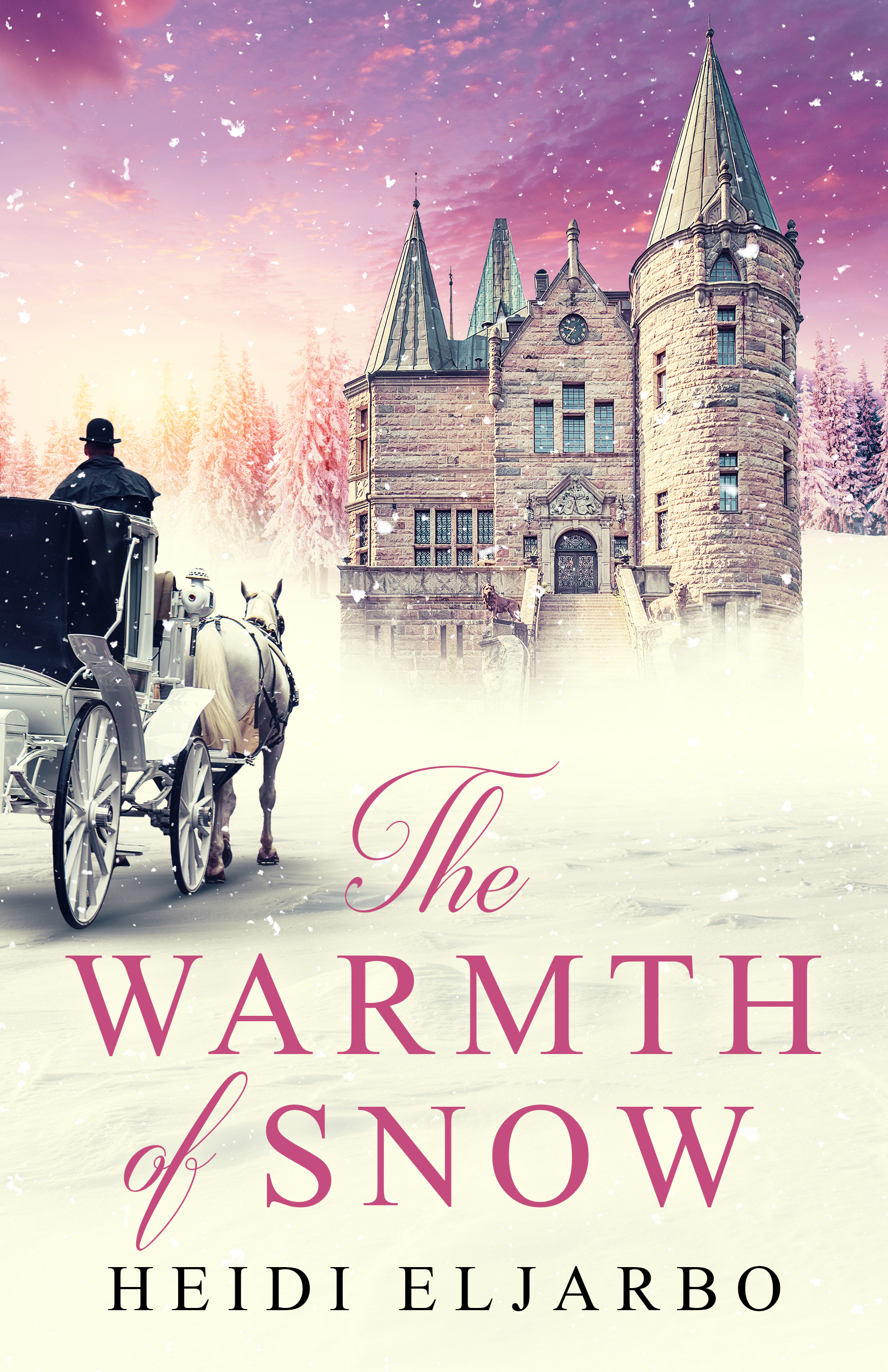
I’m delighted to share my review for A Killing at Smugglers Cove by Michelle Salter #historicalmystery #cosycrime #highlyrecommended

Here’s the blurb

Wartime secrets, smugglers’ caves, skeletal remains. And the holiday’s only just begun…

July 1923 – Iris Woodmore travels to Devon with her friends Percy Baverstock and Millicent Nightingale for her father’s wedding to Katherine Keats.

But when Millicent uncovers skeletal remains hidden on the private beach of Katherine’s former home, Iris begins to suspect her future stepmother is not what she seems.

The police reveal the dead man is a smuggler who went missing in 1918, and when a new murder occurs, they realise a killer is in their midst. The link between both murders is Katherine. Could Iris’s own father be in danger?

 Purchase Link

 https://mybook.to/Killingsmugglerssocial

My Review

I adore the Iris Woodmore mystery series, and A Killing at Smugglers Cove does not disappoint.

Moving away from Walden, where many of the previous adventures have taken place, Iris is on holiday, if you can call it a holiday, when it’s for her father’s remarriage. But no sooner does she arrive than a body is discovered, or rather, the skeletal remains of a body.

Iris, of course, can’t help but involve herself, especially as it’s possible her soon-to-be stepmother might somehow be involved, and that might just prevent her father from marrying again – not that she ever quite says as much.

What ensues is a delightfully twisty tale, interwoven with what a holiday in the 1920s might have been like and featuring her trusty sidekicks alongside her.

A Killing At Smugglers Cove is filled with rich period drama, including a lesson in smuggling and avoiding the excise men, and the mystery, as in the first three books, is perfectly staged and well-developed, poignant and unexpected.

I’ve said it before, and I’ll say it again, the Iris Woodmore Mysteries are a firm favourite of mine – rich with period detail but with a damn fine mystery as well. Highly recommended.

Check out my review for Death at Crookham Hall, Murder at Waldenmere Lake, The Body at Carnival Bridge.

Meet the author

Michelle Salter is a historical crime fiction writer based in northeast Hampshire. Many local locations appear in her mystery novels. She’s also a copywriter and has written features for national magazines. When she’s not writing, Michelle can be found knee-deep in mud at her local nature reserve. She enjoys working with a team of volunteers undertaking conservation activities.

Connect with Michelle  

Facebook: 

Twitter

Instagram

Bookbub profile

Newsletter Sign Up

Posts

Today, I’m delighted to welcome a returning Alan Bardos to the blog, with a post inspired by his book about the assassination of Archduke Franz Ferdinand and his wife Sophie.#histfic #TheAssassins

Today, I’m delighted to welcome a returning Alan Bardos to the blog, with a post about A Comedy of Errors inspired by his book about the assassination of Archduke Franz Ferdinand and his wife Sophie.

The assassination of Archduke Franz Ferdinand was one of history’s greatest turning points, but it happened by accident. Everyone knows the story ends with the death of the Archduke and his wife, Sophie, putting into play the diplomatic crisis that lead to the First World War. It is perhaps less well known that the events leading up to the assassination were a terrible comedy of errors that culminated in a world changing tragedy.

It was this combination of tragedy and comedy that first drew me to the story and, I hope will draw people to a novel about the assassination, despite knowing the ending! The assassination of Franz Ferdinand happened as a result of a whole series of mistakes and missed opportunities right from the beginning.

When the assassins travelled from Belgrade to Sarajevo, Nedeljko Cabrinovic the biggest liability of the conspirators, met a police detective from Sarajevo on the train in Bosnia. The detective was a friend of his father’s, who was a businessman and pillar of the community, which had created a lot of conflict with his radical son.

The policeman had recently seen Nedeljko’s father and struck up a conversation with Nedeljko to catch him up on family news. This made Gavrilo Princip, who was traveling separately, but by accident sitting in the same train carriage, nervous. Cabrinovic’s easy going nature had already endangered the other assassins during the journey. The Policeman noticed and asked Cabrinovic who Gavrilo was and why he was staring at them, but his suspicions were not raised any further. A simple request to see Gavrilo Princip’s papers would have revealed that he was travelling illegally and put pay to the whole plot before the assassins reached Sarajevo.

This reflects the Austro-Hungarian Government’s attitude to the threat placed by the nationalist movements in their Balkan provinces. No attempt was made to counter them because the security services did not believe they existed, let alone posed a threat. The repeated warnings of a possible assassination were ignored by the local military governor, General Potiorek, the Archduke himself and the Austro-Hungarian Government. The idea that half starved schoolboys could be any kind of a threat was too ridiculous to contemplate.

This is the main theme I wanted to explore in The Assassins, through my two lead fictional characters: Johnny Swift, a feckless British diplomat and Lazlo Breitner, a methodical Hungarian official.

Breitner is well aware of the threat from the assassins and does everything he can to persuade the authorities of the danger posed by the nationalist movements, bringing him into conflict with his superiors.

He is forced to take drastic measures to convince them and coerces Johnny into joining the conspirators. Johnny manages to ingratiate himself with the assassins and joins in their reckless behaviour that should have got them caught. Somehow they remain undetected and Johnny’s licentious nature frustrates Breitner’s plan.

On the morning of the Archduke’s visit Johnny realises the enormity of his error and tries to foil the assassination plot. Then the tragedies of 28th June 1914 come into play.

They say that the side that makes the least amount of mistakes wins a war. It also seems to be the case for the side who starts them.

Here’s the blurb

1914.

Tensions are reaching boiling point in Europe and the threat of war is imminent. 

Johnny Swift, a young and brash diplomatic clerk employed by the British embassy is sent to infiltrate the ‘Young Bosnians’, a group of idealistic conspirators planning to murder Franz Ferdinand. The heir to the Austro-Hungarian throne, in a bid to liberate their country from the monarchy’s grip.

Swift has been having an affair with his employer’s wife, Lady Elizabeth Smyth. Sir George Smyth dispatches the agent on the dangerous mission, believing that it will be the last he will see of his young rival.

The agent manages to infiltrate the Young Bosnian conspirators’ cell, helped by Lazlo Breitner, a Hungarian Civil Servant.
However, Swift soon realises that he may be in over his head. His gambling debts and taste for beautiful women prove the least of his problems as he struggles to survive on his wits in the increasingly complex – and perilous – world of politics and espionage.

Desperate to advance himself and with the lives of a royal couple unexpectedly in his hands, Swift tries to avert catastrophe. 

Amazon Purchase Links

UK USA

Meet the author

Writing historical fiction combines the first great love of Alan Bardos’s life, making up stories, with the second, researching historical events and characters. He currently lives in Oxfordshire with his wife… the other great love of his life.

There is still a great deal of mystery and debate surrounding many of the events of the First World War, which he explores in his historical fiction series. Through the eyes of Johnny Swift, a disgraced and degenerate diplomat and soldier.

The series starts with the pivotal event of the twentieth century. The Assassination of Archduke Franz Ferdinand. The second book ‘The Dardanelles Conspiracy’ is based on an attempt by Naval Intelligence to bribe Turkey out of the First World War. In the third book Johnny will be employed as a useful idiot to flush out a traitor working to undermine the Allies.

Connect with Alan

Instagram: Facebook: Twitter:

YouTube Channel

Goodreads: BookBub: Amazon Author Page:
See previous posts here, here and here.

Today, I’m excited to be taking part in the cover reveal for Jenny O’Brien’s new book, The Puppet Maker

Here’s the blurb

The scrap of paper looked as if it had been torn from a diary. The words written in faint pencil. The letters rounded, almost childlike: Please look after her. Her life and mine depend on you not trying to find me

When Detective Alana Mack arrives at Clonabee police station, in a small Irish seaside town on the outskirts of Dublin, she doesn’t expect to find a distressed two-year-old girl sobbing on the floor. Abandoned in a local supermarket, the child tells them her name is Casey. All Alana and her team have to go on is a crumpled note begging for someone to look after her little girl. This mother doesn’t want to be found. 

Still recovering from a terrible accident that has left Alana navigating a new life as a wheelchair user, Alana finds herself suddenly responsible for Casey while trying to track down the missing mother and solve another missing person’s case… a retired newsagent who has seemingly vanished from his home.

Forced to ask her ex-husband and child psychiatrist Colm for help, through Forensic Art Therapy, Alana discovers that whatever darkness lies behind the black windows in Casey’s crayon drawing, the little girl was terrified of the house she lived in. 

Then a bag of human remains is found in a bin, and a chilling link is made – the DNA matches Casey’s. 

Alana and her team must find the body and make the connection with the missing newsagent fast if she is to prevent another life from being taken. But with someone in her department leaking confidential details of the investigation to the media, can Alana set aside her emotional involvement in this case and find Casey’s mother and the killer before it’s too late? 

Heart-pounding and totally addictive, The Puppet Maker is the first in the Detective Alana Mack series that will have fans of Ann Cleeves, Angela Marsons and LJ Ross racing through the pages late into the night. 

Publication Date: 17th October

Pre-order Link

https://www.amazon.co.uk/dp/B0C9JJ5XYB/

https://www.amazon.com/dp/B0C9JJ5XYB/

Meet the author

Born in Dublin, Jenny O’Brien moved to Wales and then Guernsey, where she tries to find time to write in between working as a nurse and ferrying around 3 teenagers. 

In her spare time she can be found frowning at her wonky cakes and even wonkier breads. You’ll be pleased to note she won’t be entering Bake-Off. She’s also an all-year-round sea swimmer.

Jenny is represented by Nicola Barr of The Bent Agency and published by Storm Publishing and HQ Digital (Harper Collins).

Connect with Jenny

Twitter https://twitter.com/ScribblerJB

Instagram https://www.instagram.com/scribblerjb/

Today, I’m reviewing Terminal Black by Colin Garrow on the blog #blogtour #review #thriller

Here’s the blurb:

A stolen identity. A hitman. A bent cop.

Relic Black takes things that don’t belong to him—credit cards, golf clubs, toothbrushes. But when a hitman mistakes him for someone else, Relic lands himself in a difficult situation. With a dead man on his hands and a guilty conscience, he sets off to save the life of the man whose identity he has stolen. And that’s when the real trouble starts…

Purchase Link

https://geni.us/m2Ax

My Review

Terminal Black is a tight and twisty thriller set in Scotland, complete with accents (for some of the characters) and a cast of increasingly nasty individuals.

The story is really well constructed. There is much going on in this book, and a lot of people are up to no good and in it only for themselves. The bent copper, the angry wife, Relic himself, as well as a couple of bad ‘uns as well.

The plot moves quickly, taking the reader around much of Inverness and Nairn, with a little sidestep to Dundee. If you don’t know the area, don’t worry. If you do know the area, you’ll enjoy hearing the names of places you perhaps visit often. I certainly felt as though I knew the layout of the story, and that helped me, but I don’t think it’s necessary to enjoy this tale of a ‘hit’ gone wrong and the wrong man, in the wrong place, at very much the wrong time.

A thoroughly enjoyable thriller with a fast pace and a few characters you’re going to love to hate, and with a delightful twist in the closing pages. Another fabulous read from Colin Garrow – do be aware of the adult content and strong language.

Meet the Author

 Colin Garrow grew up in a former mining town in Northumberland. He has worked in a plethora of professions including: taxi driver, antiques dealer, drama facilitator, theatre director and fish processor, and has occasionally masqueraded as a pirate. All Colin’s books are available as eBooks and paperback.

His short stories have appeared in several literary mags, including: SN Review, Flash Fiction Magazine, Word Bohemia, Every Day Fiction, The Grind, A3 Review, 1,000 Words, Inkapture and Scribble Magazine. He currently lives in a humble cottage in North East Scotland where he writes novels, stories, poems and the occasional song.

He also makes rather nice cakes.

Connect with Colin

Website  Amazon Author Page 

Twitter  Smashwords  Facebook  Bookbub 

The Watson Letters

Check out my reviews for Colin Garrow’s books

Blood on the Tyne

The Watson Letters

I’m welcoming I. M. Foster and her new book, Murder on Oak Street, to the blog with a fascinating post about forensics in the early 20th century historicalmystery #cozymystery #BlogTour #TheCoffeePotBookClub

I’m delighted to welcome I.M. Foster to the blog, to share a fascinating post on Forensics at the Turn of the Century.

To start off with, I guess I should give a very basic definition of what exactly forensics is. Basically, it is the use of different scientific disciplines, such as biology, chemistry, physics, etc., to investigate crimes or examine evidence that can be used to present in court. That being the case, the techniques available at any given period in history would depend largely on the stage of scientific development that was available to the investigator at the time. 

Today a multitude of investigative tools are available to detectives and medical examiners, from ballistics to DNA. Most large police departments even have their own forensics labs, as Suffolk County, New York now does. But forensic science in the day of Dr. Daniel O’Halleran was quite a bit different than it is today.   

To begin with, there was no such thing as forensic science, per se, even though the use of science to determine the cause of death actually goes back to ancient Rome and Egypt. For example, it was a physician, Antisius, who determined that of the twenty-three blows Julius Caesar received it was the one below his left arm that actually killed him. Alas, after the fall of the Roman Empire, the use of science to detect the cause of death seemed to stagnate for the next thousand or so years.

Fast forward to the sixteenth century, and things began to pick up again. Interest in determining reasons for a person’s demise increased, the French and Italians studied the result of violent death on internal organs, and once again, science was being used to assist in determining the cause of death. During the nineteenth century, scientific advances produced a number of breakthroughs that aided in criminal investigations. 

By the dawn of the twentieth century, poison could be detected in body tissue, handwriting analysis and the study of documents were being employed, and toxicology was being presented as evidence in jury trials. In addition, scientific tools, such as the polarized light microscope had been invented, enabling physicians to study fibers. And photography had made its appearance, making it easier to study the crime scene in detail.  

Fingerprints were still relatively new on the scene however. Though a system of classifying fingerprints had been developed by the 1880s, don’t expect Daniel to be incorporating it into his investigative tool kit right away. The system used by most of Europe and North America didn’t come about until 1896 and wasn’t employed in the United States until 1903, when it was used by the New York State Prison system for criminal identification. The first use of the technique at a criminal case in the United States didn’t occur until 1910. 

Before fingerprinting, something called anthropometry was used for identification, which was the measurement of body parts and their proportions to one another, not exactly foolproof. As for the twelve matching points of a fingerprint, that didn’t come along until 1918, so while Daniel might eventually play around with it, fingerprinting certainly not something he’s going to base his cases on.   

The turn of the century did present some extremely helpful investigative tools however. Biologists were able to determine not only if a stain was blood, but whether it was human or animal. Ballistics was becoming more refined, though the tracing of a bullet to a specific gun wouldn’t come about until 1910. And geology was first used in 1904 by a German scientist when he identified a killer from the dirt on his pants and under his fingernails, as well as the coal soot found on a handkerchief he’d left at the crime scene. Now, that is something that Daniel might eventually employ.

Other advances were just on the horizon. The use of a microscope to compare strands of hair didn’t come along until 1910, and the study of botanicals such as plant fibers and pollen in relation to a crime scene wasn’t widely used until the 1920s, though I’m sure there were local residents who might be able to point out where a certain plant was more prevalent.

In spite of all the advances, however, using scientific principles in criminal investigations still wasn’t seen as its own discipline. But in 1904, Edmond Locard was to write a passage that one might point to as the beginning of modern forensic science. Every contact leaves a trace. Shortly after, in 1909, the first school was opened for the sole purpose of studying how to use science to determine the cause and method of death, and thus the seeds were planted for the modern study of forensic science. 

Thank you for sharing such a fascinating post.

Here’s the blurb 

New York, 1904. After two years as a coroner’s physician for the city of New York, Daniel O’Halleran is more frustrated than ever. What’s the point when the authorities consistently brush aside his findings for the sake of expediency? So when his fiancée leaves him standing at the altar on their wedding day, he takes it as a sign that it’s time to move on and eagerly accepts an offer to assist the local coroner in the small Long Island village of Patchogue.

Though the coroner advises him that life on Long Island is far more subdued than that of the city, Daniel hasn’t been there a month when the pretty librarian, Kathleen Brissedon, asks him to look into a two-year-old murder case that took place in the city. Oddly enough, the case she’s referring to was the first one he ever worked on, and the verdict never sat right with him.

Eager for the chance to investigate it anew, Daniel agrees to look into it in his spare time, but when a fresh murder occurs in his own backyard, he can’t shake his gut feeling that the two cases are connected. Can he discover the link before another life is taken, or will murder shake the peaceful South Shore village once again?

Buy Links  

This title is available to read with #KindleUnlimited. 

Universal Link 

Amazon UK   Amazon US  Amazon CA Amazon AU

Meet the author

I. M. Foster is the pen name author Inez Foster uses to write her South Shore Mystery series, set on Edwardian Long Island. Inez also writes historical romances under the pseudonym Andrea Matthews, and has so far published two series in that genre: the Thunder on the Moor series, a time-travel romance set on the 16th century Anglo-Scottish Borders, and the Cross of Ciaran series, which follows the adventures of a fifth century Celt who finds himself in love with a twentieth century archaeologist. 

Inez is a historian and librarian, who love to read and write and search around for her roots, genealogically speaking. She has a BA in History and an MLS in Library Science and enjoys the research almost as much as she does writing the story. In fact, many of her ideas come to her while doing casual research or digging into her family history. Inez is a member of the Long Island Romance Writers, the Historical Novel Society, and Sisters in Crime.

Connect with IM Foster

Website

Twitter Facebook Instagram

Book Bub   Amazon Author Page Goodreads

Follow the Murder on Oak Street by IM Foster blog tour with The Coffee Pot Book Club

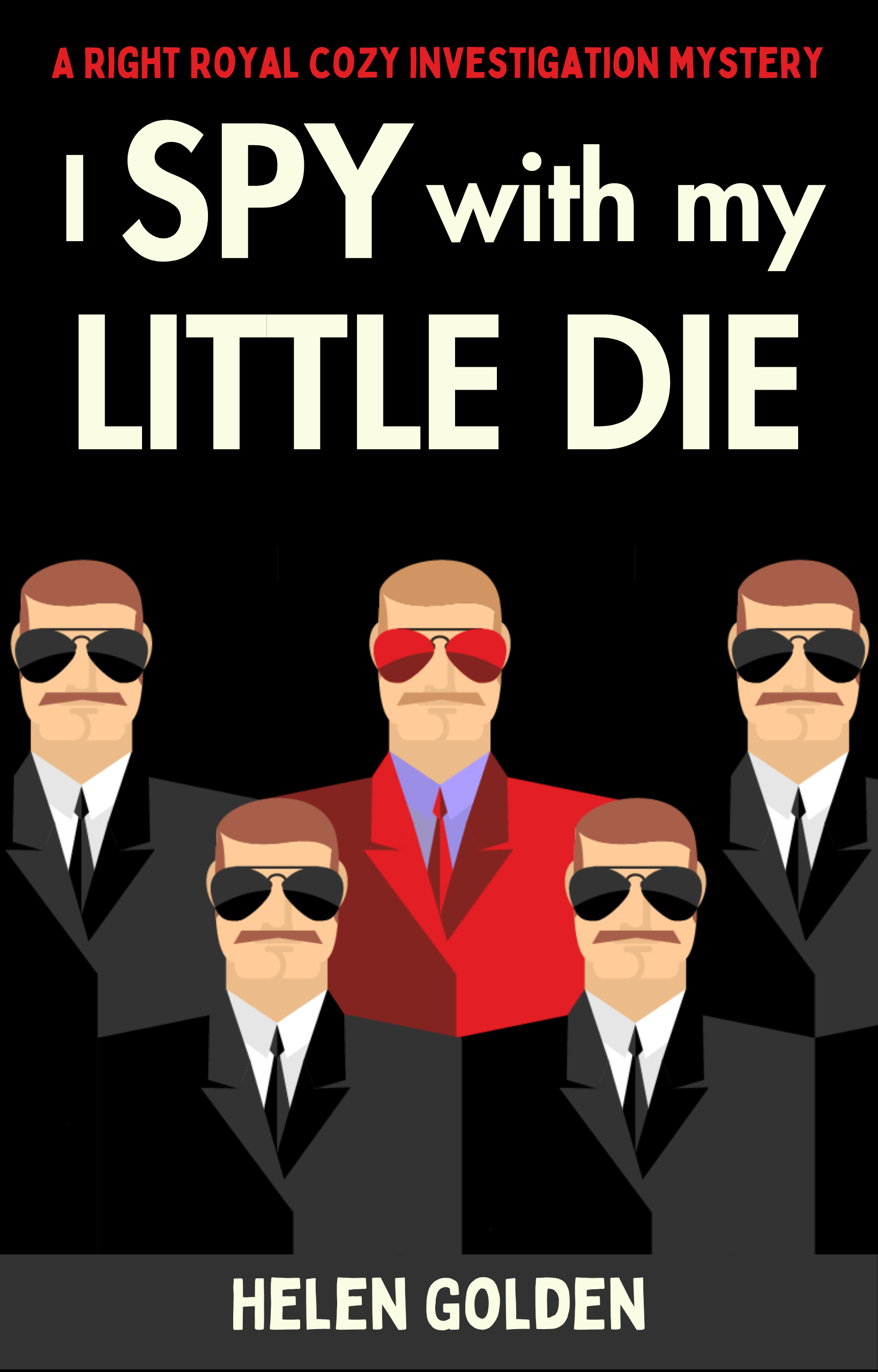
Today, I’m excited to share my review for Helen Golden’s new cozy mystery, A Dead Herring #blogtour

Here’s the blurb

BREAKING NEWS Urshall United FC Owner Dies at Drew Castle

 Details are sketchy at this stage, but it is believed businessman Ben Rhodes (38) was found dead in his bathroom at the king’s Scottish home by his twin brother Max, where the pair were guests at a shooting party hosted by Lord Frederick Astley (39), brother of Lady Beatrice (36). The cause of Mr Rhodes’ death is not known, but he started receiving death threats from football fans after his controversial takeover of the club and had recently employed his own personal security.

How unlucky can a girl get? Is fate playing a cruel trick on her for boorish Detective Chief Inspector Richard Fitzwilliam to be the only person who can get to the snowed-in castle to investigate Ben Rhodes’s death? And with no other external resources available to him, he now needs her, her smart dog, and her best friends’ help to catch the killer. Can they put their issues behind them and work together to find the murderer before the weather improves and the perpetrator is free to leave?

Another page-turning cozy British whodunnit with a hint of humour from author Helen Golden.

Purchase Link

 https://books2read.com/u/3GWBZ8

My Review

If you don’t know that I adore this series, then you’ve been hiding under a rock:)

The Right Royal Cozy Investigations, of which the fabulously titled, A Dead Herring is the latest release, are a fantastic series of stories (with a thread running through them all that I will not be alone in being desperate to see the resolution for) which are just that bit elevated from other books of the genre.

The plotting is tight, the characters have great and very human interactions, the crimes are shocking, the investigations are robust, and the stories all have a great little twist where the reader has an ‘I know who did it moment,’ even if the characters haven’t quite reached it yet.

A Dead Herring is no different. Lady Bea and Perry, alongside Simon, find themselves being asked to help Pairs with this one, which makes a nice change, and the true moment of peril also has a great twist.

I find this series to be dependably great. That might not sound like praise, but it is. I know if I read one of these books, I’m going to be entertained and amused, and I’m always eager for the next book in the series. If you enjoy cosy crime, you must check out this series, and I recommend reading them in order.

Check out my reviews for the books in the series:

Spruced up for Murder

For Richer, For Deader

Not Mushroom for Death

An Early Death

Meet the author

Hello. I’m Helen Golden. I write British contemporary cozy whodunnits with a hint of humour. I live in small village in Lincolnshire in the UK with my husband, my step-daughter, her two cats, our two dogs, sometimes my step-son, and our tortoise.

I used to work in senior management, but after my recent job came to a natural end I had the opportunity to follow my dreams and start writing. It’s very early in my life as an author, but so far I’m loving it.

It’s crazy busy at our house, so when I’m writing I retreat to our caravan (an impulsive lockdown purchase) which is mostly parked on our drive. When I really need total peace and quiet, I take it to a lovely site about 15 minutes away and hide there until my family runs out of food or clean clothes

Connect with Helen

Website – https://helengoldenauthor.com/

Happy release day to the new Bradecote and Catchpoll medieval mystery by Sarah Hawkswood, Too Good to Hang

Here’s the blurb

April, 1145. Thorgar the Ploughman is found by the bloodied body of Father Edmund, a village priest in Ripple, and is summarily hanged for being caught in the act, despite his pleas of innocence.

When his sister goes to Worcester to seek justice for Thorgar, the lord Sheriff sends Hugh Bradecote, with Serjeant Catchpoll and Underserjeant Walkelin, to discover the truth. They soon expose strong motives for placing the blame on the ploughman’s shoulders, some unpleasant secrets festering among the villagers, as well as the whisper of a treasure long lost and now rediscovered.

The shadow the noose casts is a long one, but the Sherrif’s men will need to plumb the darkness to uncover the true killer.

Purchase Link

https://amzn.to/3pGxUj3

My Review

A new Bradecote and Catchpoll (and Wakelin) medieval mystery is always a true delight, and Too Good To Hang is a fabulous addition to the series.

This time, our trio are called upon to determine the true culprit when an overzealous village has already hanged a man they deem to be responsible for the murder of the priest without trial or even, any real proof, other than the man’s unfortunate appearance at the side of the dead man.

What transpires, with careful investigation from Bradecote, Catchpoll and Wakelin, is that there is much more going on in the small settlement than first meets the eye. One of the village priests might well be dead, but there is a good reason for that and an even better reason to suspect almost everyone else within the settlement as well. And there’s not just the matter of the dead priest and the hanged man; there are also rumours of old treasure buried close by.

As ever, I love the way the mystery slowly resolves itself. Bradecote is lordly, Catchpoll is more world, and Wakelin is slowly becoming his own man. Added to this, there is a fine cast of strong women ruled by weak men, and the author highlights this in their interactions.

An absolute joy.

Thank you to Netgalley and the publisher for my review copy.

Check out my reviews for previous Bradecote & Catchpoll mysteries.

Wolf at the Door

A Taste for Killing

Today I’m delighted to feature Death in Sensible Circumstances by Riana Everly on the blog #blogtourMissMaryInvestigates #Austenesque #HistoricalMystery #BlogTour #TheCoffeePotBookClub

I’m delighted to share an excerpt from Death in Sensible Circumstances below.

Excerpt

“You must understand our concern.” The red-coated colonel paced up and down Alexander Lyons’ small office. He paused when he reached the offered chair once more, but did not sit down. He glanced down at the stack of cards on the desk that read Alexander Lyons, Investigator, and gave a brief bob of his head, as if reassuring himself he was in the proper place. Then he resumed pacing.

Alexander considered the man who had come calling a few minutes before. He had not written ahead, but had knocked at the door and hoped that the investigator was available. “You come highly recommended by a fellow officer, name of Fitzwilliam,” the colonel had explained. “He said you had done great service to the family. I hope you can help us, too.” 

The colonel had then introduced himself as Nicholas Brandon of Delaford in Dorsetshire. He was requesting Alexander’s services, he said, not on his own behalf but on that of a certain gentleman whom he knew, but who was too uncertain of matters to make the call himself. He took the offered seat and explained the situation, then rose and began pacing as Alexander considered what he had heard.

“Let me repeat this.” Alexander spoke slowly as thoughts swirled in his head. He knew his broad Scots accent would not deter this stalwart colonel, but poorly chosen words and stumbling sentences might. “Your friend had a falling out with his mother three months ago and was disinherited in favour of his younger brother, Robert Ferrars. That brother had a will that he made last year, upon turning twenty-one.” Alexander looked up for confirmation. Seeing Brandon’s nod, he continued. “That document left everything to his brother Edward. This seems reasonable and quite unexceptionable. Very well. Now this is where matters get sticky.

“This same Robert Ferrars was killed three days ago. To all accounts, he was returning home very late through Hyde Park from a rather exclusive gaming establishment. That is of little import right now, although it may become vital later. What does matter at this moment is that he was beaten, robbed, and left dead at the scene. His estate ought, therefore, to have passed to his brother Edward with no concerns raised.

“But…” There was always a ‘but.’ “But on the day that the terms of the will were announced, a certain person, a lady, came forward claiming that she was, in fact, Robert Ferrars’ wife and that Ferrars’ considerable wealth ought rightly to be hers.”

Alexander rose and moved to a shelf of books that sat against the far wall. He selected a tome and brought it to his desk, where he proceeded to open it and turn the pages until he found the one he wanted. Without looking at the words before him, he continued. “But there is no evidence of a marriage, and even if there were, the rule from Lugg v Luggfrom 1696 is that it requires marriage and the birth of children to effect a revocation of a will.”

Here Brandon interrupted him. “On what grounds would the extant will be revoked? Does the state of marriage annul a previous legal document? Yes, I know from Fitzwilliam that you are a lawyer by training. This is one of the considerations that brought me here today.”

Alexander gave a nod and hoped he looked sufficiently scholarly. Not many men took him seriously, what with his strong brogue (that became stronger or weaker, depending on how annoying he found his company) and his mop of coppery-red hair. He knew he appeared and sounded like a kilt-wearing heathen from the braes, and this was an image he rather cultivated, no matter that it might cost him some business. Now, however, he preferred to project the image of a learned and capable man of letters.

“Just so. I read law at Glasgow, where I did my degree. I do not practise that profession, but I follow the latest judgments. My qualifications remain valid.”

Brandon looked satisfied. 

“Marriage,” Alexander returned to the colonel’s question, “is a fundamental change in circumstance. It is assumed that upon taking a wife and having children, a man necessarily wishes to provide for his family. Therefore, the court should take notice of what is—or ought to be—a clear and obvious intent.”

“But that requires marriage and children…”

“And as you have told me, Lucy Steele, or Lucy Ferrars, should her tale be true, claims to be enceinte.”

“Mmmm.” Brandon was a man not given to unnecessary speech.

“And the question arises as to whether an unborn child has the status of a living child. This has been much about the courts these last ten or fifteen years. In Doe v Lancashire, it was ruled that a posthumous child does indeed hold the same status as a living child, on the condition that the father knew of that expectation. It is understood that he would wish to provide for the child, hence the material change in circumstance. But if he did not know…”

“Then the previous will stands.”

“Just so. Just so.”

Blurb:

A Jane Austen-inspired mystery, set in the world of Pride and Prejudice and Sense and Sensibility, being the fourth novel in the Miss Mary Investigates series.

When Mary Bennet befriends Elinor Dashwood, she expects to become part of the young lady’s circle and be introduced to her friends and relations. She does not expect that one of this circle should die, far too young, and in most unfortunate circumstances. Worse, Elinor is secretly in love with one of the suspects, Edward Ferrars, and he is inconveniently engaged to somebody else. When an investigator is called in to assist, Mary is more surprised still.

Alexander Lyons expects to find death and deceit in his line of work, but he does not expect to come face to face with Mary, who hasn’t replied to his letters of late. What is she doing in London? And how is she involved with this sorry business of murder? Still, despite the tension between the two, they make a good team as they seek to unravel the mystery surrounding them. 

From the elegant drawing rooms of Mayfair to the reeking slums of St. Giles, the two must use every bit of wit and logic they possess to uncover a killer, all the while, trying to puzzle out the workings of their own hearts.

Join Mary Bennet, Lizzy’s often overlooked sister from Pride and Prejudice, and her intriguing and handsome friend Alexander Lyons, as they are pulled into the world of Jane Austen’s Sense and Sensibility in this, their latest adventure.

Buy Links:

This title is currently available to read on #KindleUnlimited.

Universal Buy Link

Amazon UK:  Amazon US:  Amazon CAAmazon AU: 

Meet Riana

Riana Everly is an award-winning author of romance, both contemporary and historical, and historical mysteries. 

Born in South Africa, she moved to Canada as a child, bringing with her two parents, two younger sisters, and too many books. Yes, they were mysteries. From those early days of The Secret Seven and The Famous Five, she graduated to Nancy Drew, and then to the Grande Dames of classical English whodunnits, including Agatha Christie and Ngaio Marsh. Others followed, and many sleepless nights ensued.

When not matching wits with Miss Marple and Adam Dalgliesh, Riana keeps busy researching those little, but so-important, details for her next fabulous novel.

Trained as a classical musician, Riana has degrees in Music History and Medieval Studies, and enjoys photography, hiking, travelling, learning obscure languages, and experimenting with new recipes. If they include chocolate, all the better.

Connect with the author

WebsiteFacebook

Instagram: Book BubAmazon Author Page

Follow the Death in Sensible Circumstances blog tour with The Coffee Pot Book Club

I’m delighted to share my review for The Body at Carnival Bridge by Michelle Salter #historicalmystery #cosycrime #highlyrecommended

Here’s the blurb

How deadly is the fight for equality?

It’s 1922, and after spending a year travelling through Europe, Iris Woodmore returns home to find a changed Walden. Wealthy businesswoman Constance Timpson has introduced equal pay in her factories and allows women to retain their jobs after they marry.

But these radical new working practices have made her deadly enemies.

A mysterious sniper fires a single shot at Constance – is it a warning, or did they shoot to kill? When one of her female employees is murdered, it’s clear the threat is all too real – and it’s not just Constance in danger.

As amateur sleuth Iris investigates, she realises the sniper isn’t the only hidden enemy preying on women.

 Purchase Link https://mybook.to/CarnivalBridgesocial

My Review

The Body at Carnival Bridge is the third book in the Iris Woodmore series, and it is going from strength to strength.

Some time has passed since the tragic events of book 2, and Iris is perhaps a little out of sorts with herself, but no sooner has she made contact with her old friends than tragedy strikes, and Iris is compelled to investigate the death of a young girl.

What ensues is a well-reasoned and intriguing mystery, highlighting the social inequalities of women in the aftermath of World War I and also referencing the harsh realities of the lives of women unable to access birth control. The author really excels in placing the reader in the period without overloading the narrative., and always with an eye to moving the mystery onwards.

The Iris Woodmore mysteries are fast becoming some of my favourites. The mystery is always reliable, the author has an eye for detail, and Iris herself is a likeable character, as are those surrounding her.

A fabulous mystery well-grounded in the period’s events without overloading the reader.

Check out my review for Death at Crookham Hall and Murder at Waldenmere Lake.

Meet the author

Michelle Salter is a historical crime fiction writer based in northeast Hampshire. Many local locations appear in her mystery novels. She’s also a copywriter and has written features for national magazines. When she’s not writing, Michelle can be found knee-deep in mud at her local nature reserve. She enjoys working with a team of volunteers undertaking conservation activities.

Connect with Michelle  

Facebook: 

Twitter

Instagram

Bookbub profile

It’s my turn on the blog tour for A Contest to Kill For by E V Hunter #cosycrime #blogtour

Here’s the blurb

The competition is fierce…. Desperate to try and rebuild the reputation of Hopgood Hall, owners Alexi Ellis and Cheryl and Drew Hopgood agree to host a realty TV baking show, spearheaded by their arrogant but enigmatic head chef Marcel Gasquet. Hopefully the ratings will bring in bookings to the struggling hotel and Cosmo, Alexi’s antisocial feral cat, is hoping to get a starring role too!

The temperature is high… Fiery and hot-headed, Marcel’s antics makes for brilliant television, but off-screen trouble is brewing. One of the contestants, femme fatale Juliette Hammond, makes it clear that she will do anything to secure the winning prize – even if it means sweetening up the prima donna chef. The results are deadly!

So when Juliette is found dead, all eyes turn to Marcel. Has his fiery French temper got the better of him or has someone else fallen victim to Juliette’s devious ways? With the reputation of the hotel in tatters and Marcel’s liberty on the line, Alexi needs answers and fast.  And the only person she can turn to for help is her old friend and private eye Jack Maddox.  Jack’s working his own case, but he can’t refuse Alexi and he knows more than anyone that this murder could cost them everything!

Perfect for fans of Faith Martin, Frances Evesham and Emma Davies.

My review

A Contest to Kill For is Book 2 in the Hopgood Hotel mysteries. I have read book 1 and think it helps to have read it when heading into book 2, not for the main part of the mystery, but when the mystery becomes tighter and more twisty.

Alexi and Jack, our ‘will they, won’t they’ couple, find themselves flung back together when one of the stars of the cookery competition is found dead in her bedroom. With everyone being recorded almost 24/7, how could someone have been murdered and it not been witnessed by these cameras?

As events escalate, Marcel, the grumpy chef, becomes the prime suspect while the TV company distances itself from the allegations. Over to Alexi and Jack to clear his name, if they can.

As with Book 1, this is a twisty mystery, and nothing is quite as it seems as it nears its conclusion. This is an engaging read, and once again, I failed to guess the culprit, which is always a sign of a good story.

Check out my review for book 1 and book 5.

Cover image for A Comtest to Kill For by EV Hunter

Meet the author

Evie Hunter has written a great many successful regency romances as Wendy Soliman and is now redirecting her talents to produce dark gritty thrillers for BoldwoodFor the past twenty years she has lived the life of a nomad, roaming the world on interesting forms of transport, but has now settled back in the UK. 

Connect with EV Hunter

Newsletter Sign Up

Bookbub profile