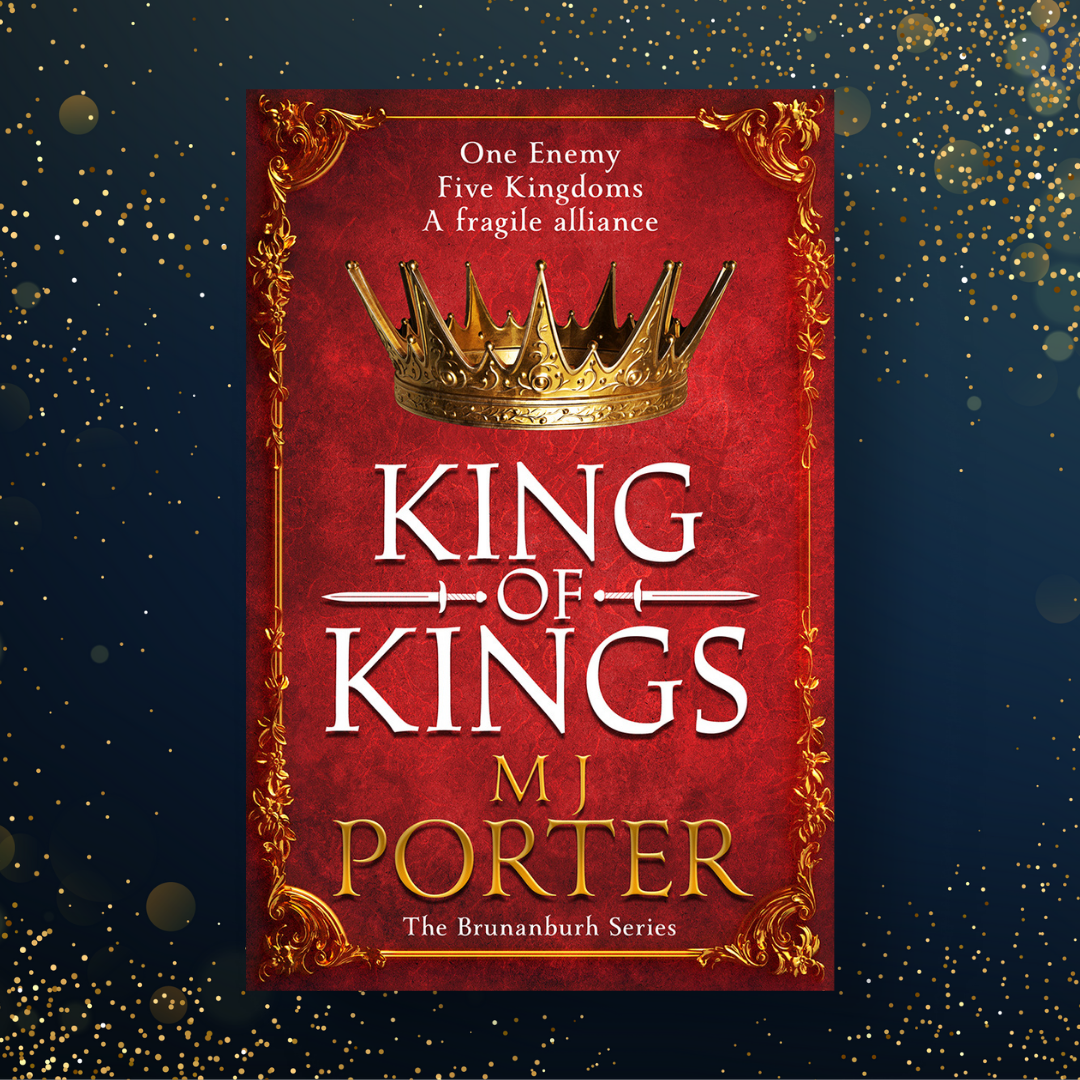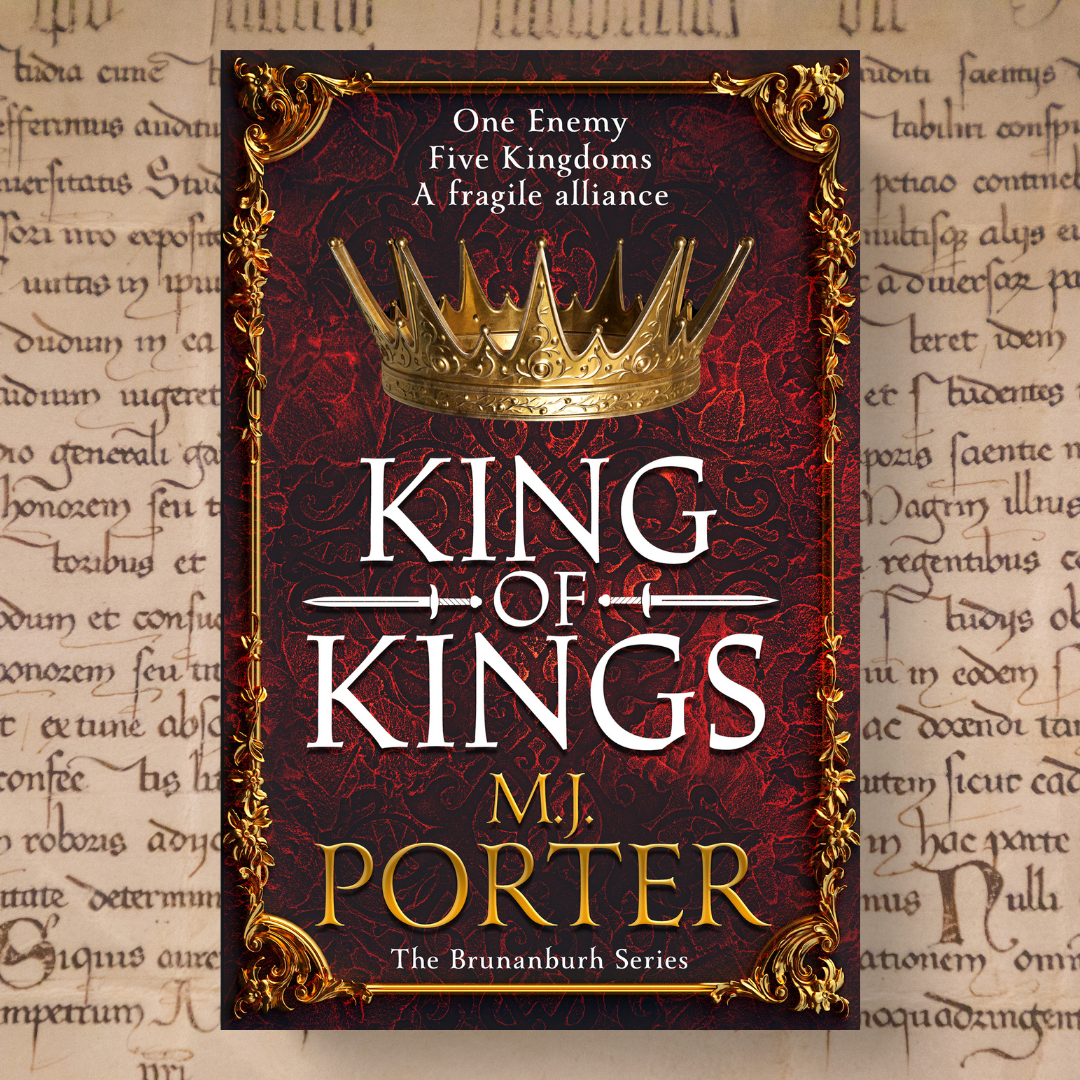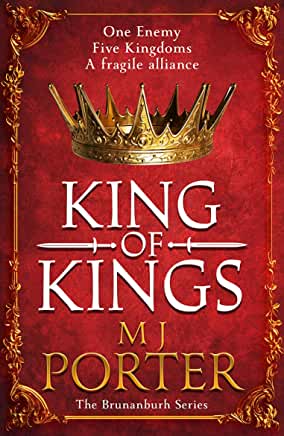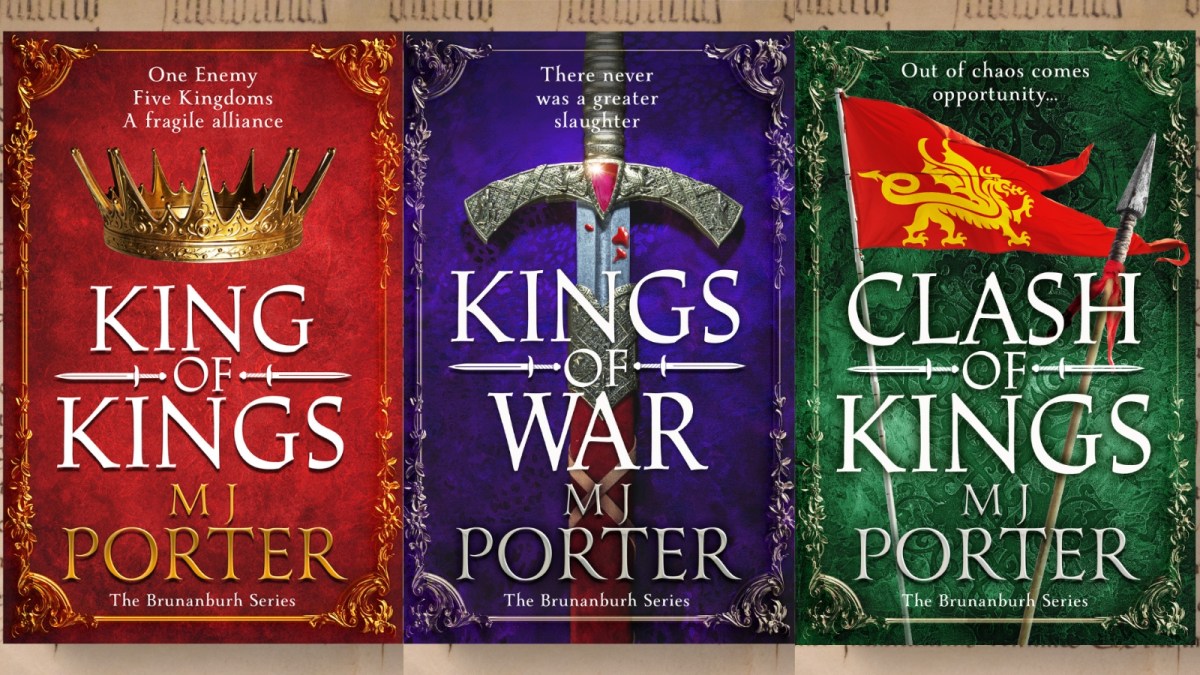
My new book, King of Kings, is a multi-viewpoint novel telling the story of events in Britain from 925-934. I thought it would be good to share details of the historical people my main characters are based on.
Owain of Strathclyde is perhaps the most difficult character in King of Kings to find in the historical record. Indeed, his place in the story is contested by historians, as we don’t know if the scribe of the Anglo-Saxon Chronicle of the time meant Owain of Strathclyde, or an Owain of one of the Welsh kingdoms. I decided to adopt the Owain of Strathclyde, but who exactly was he, and what was Strathclyde?
The kingdom of Strathclyde is also known by another name, that of Cumbria, and there is confusion in the sources and amongst historians about where it is and what it was. Alex Woolf suggests that by the events of 927, Strathclyde/Cumbria encompassed, ‘most of part of Lanarkshire, Dunbartonshire, Renfrewshire, Stirlingshire, Peebleshire, West and Mid-Lothian, eastern Dumfriesshire and Cumberland.’ (Woolf, A. From Pictland to Alba, 789-1070, Edinburgh University Press, 2007) p.155)
So who then were it’s kings? This again is far from as easy to state as might be thought. It’s believed that Owain of Strathclyde, succeeded his father, Donald II, to become king of Strathclyde, and in turn was succeeded by his son.
In 924, we are told that ‘the king of the Strathclyde Britons and all the Strathclyde Britons,’ (Swanton p.104) joined the king of Wessex, Edward the Elder’s alliance by the Anglo-Saxon Chronicle, but Owain isn’t named. Indeed, and as said above, when we do get mention of Owain in the Anglo-Saxon Chronicle, he’s named as ‘king of Gwent,’ (Swanton, M. trans and edit The Anglo-Saxon Chronicles, (Orion Publishing Group, 2000) p.107) even though there was no Welsh king of Gwent named as Owain at the time. It’s therefore difficult to get a feel for who he was, and what he did, but that didn’t mean I couldn’t include him in King of Kings. If anything, it made it all the more intriguing.
I’m so excited about the release today of King of Kings. This story, the first part in the retelling of the greatest battle on British soil that many have never heard of, Brunanburh, has been long in the making. Building on the original series, begun in 2014, King of Kings is entirely reworked, and it’s so much better:) (I honestly can’t believe how much better it is.)
Here’s the blurb
‘An epic tale of the birth of a nation. Truly mesmerising. Game of Thrones meets The Last Kingdom’ – Gordon Doherty
In the battle for power, there can be only one ruler.
AD925
Athelstan is the king of the English, uniting the petty kingdoms of Wessex, Mercia, the Danish-held Five Boroughs and York following the sudden death of his father, King Edward.
His vision is to unite the realms of the Scots and the Welsh in a peace accord that will protect their borders from the marauding threat of the Norse Vikings.
Whilst seemingly craving peace and demanding loyalty with an imperium over every kingdom, Athelstan could dream of a much bigger prize.
But danger and betrayal surround his best intentions, namely from his overlooked stepbrother, Edwin, who conspires and vies for what he deems is his rightful place as England’s king.
As ever, powerful men who wish to rule do not wish to be ruled, and Constantin of the Scots, Owain of Strathclyde, and Ealdred of Bamburgh plot their revenge against the upstart English king, using any means necessary.
An epic story of kingsmanship that will set in motion the pivotal, bloody Battle of Brunanburh where allies have to be chosen wisely…
(available in ebook, paperback, hardback and audio, narrated by the wonderful Matt Coles).
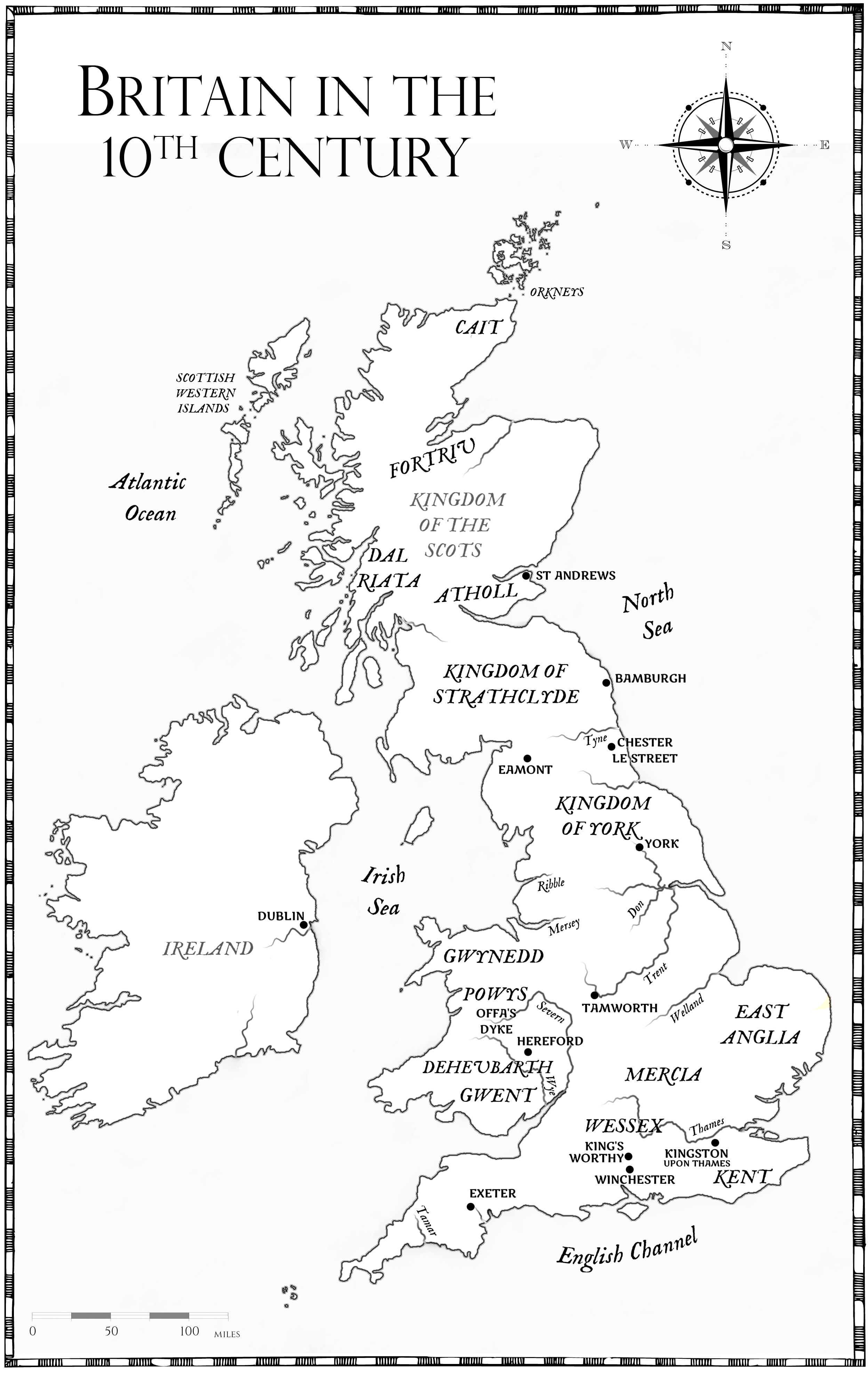
King of Kings. with its five kingdoms, and one alliance, might need some explanation. To help my readers understand who everyone is, and importantly, where everyone is, King of Kings has a map and a genealogical table, as well as a cast of characters.
Map designed by Shaun at Flintlock Covers
And because the family of King Alfred is so important to the story, I also have a genealogical table to share with my readers.
Design by Boldwood Books
I’ve written some brief introductions for the main cast of characters.
And for those who are falling in love with the period as much as I am, I wanted to share some non-fiction recommendations, and cautions.
There is no one book that will adequately cover this period (that was one of the reasons that I fictionalised it) but these books (see photos below), along with Dr. Kari Maund’s The Welsh Kings, which I have in ebook, will give you a good grounding of events in Britain and Ireland. So, these are
Alfred’s Britain by Max Adams
Athelstan by Sarah Foot
The Anglo-Saxon Chronicles ed and trans. Michael Swanton (other versions available – I like the formatting of this one -with the different recensions)
The Welsh Kings by Kari Maund
An Atlas of Anglo-Saxon England by David Hill (don’t be put off by the fact this book is from the 1970s – it is invaluable)
From Pictland to Alba 789-1070 by Alex Woolf
Viking Kings of Britain and Ireland by Claire Downham
English Historical Documents ed and trans by Dorothy Whitelock
The Frankish Kingdom under the Carolingians by R McKitterick
Edward the Elder ed. Higham and Hill (not a narrative account, but historians writing papers about their area of interest and expertise).
There are also two very important online resources.
King of Kings has a number of characters, and some might be surprised to find Lady Eadgifu amongst them, but she was an incredibly important historical character, and I couldn’t leave her out of the narrative set at the English court.
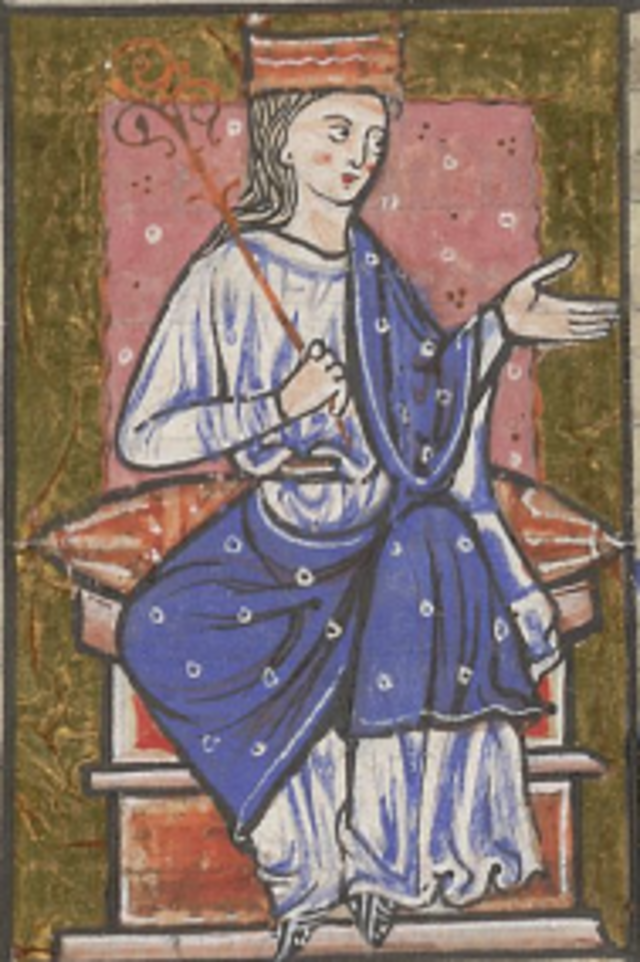
Lady Eadgifu was the third wife of Edward the Elder (r.899-924), king of the Anglo-Saxons. Edward the Elder was the father of King Athelstan, and a whole host of daughters, as well as five sons. Lady Eadgifu would, it seems, have been young when she married the aging Edward the Elder, and that meant that she long outlived him, and also, that her three children (possibly four, but I’ve opted for three) were young when their father died. And two of these children were sons, Edmund (born c.921) and Eadred (born c.923). Her daughter, Eadburh, is thought to have been the oldest of the three children, born c.919.
While Lady Eadgifu, from what’s known (and it isn’t much, as there are few surviving charters from the end of Edward’s reign) perhaps had little role to play while her husband lived, other than wife and mother to the king’s children, following his death, she became increasingly significant. She was the daughter of an ealdorman, who perhaps died just before her birth, and her family are said to have had connections with Kent. Indeed, it’s often stated that she brought her husband Kent with their union. By that, what’s often meant, is the loyalty of the Kentish people. Remember, at this time, we’re still just before the creation of ‘England’ as we would now recognise it.
Sadly, very little is known about Lady Eadgifu (and she’s not alone in this – many of the royal women ‘disappear’ at points in the historical record, and on occasion, are entirely lost.) We know about a land dispute she was involved in, and also much more information for after Athelstan’s reign.
Indeed, it has been said that
‘Nor is it surprising that Eadgifu, as the consort of the previous king, served little role in her stepson’s court.[i]
‘the enhanced position [of Lady Eadgifu] may also have been developed specifically for the widowed Eadgifu as part of an alliance with her stepson Æthelstan [Athelstan] in which she supported his position and he recognised her sons as his heirs.’[i]
[i] Yorke, B. ‘The Women in Edgar’s Life,’ in Edgar, King of the English, 959-975 Scragg, D. ed (The Boydell Press, 2008), p.146
And it is this option that I’ve decided to explore in King of Kings. Lady Eadgifu was wife to a king. She would have known her worth, even when faced with a stepson as the king of the English, and another stepson, and stepdaughters, who perhaps didn’t share any love for their, potentially, younger stepmother. Will Lady Eadgifu work with or against Athelstan? Read on to find out.
King of Kings has a number of characters, and King Ealdred, or Lord Ealdred of Bamburgh is one of them. But who was he, and what was the independent kingdom of Bamburgh?
Now, I think we all ‘think’ we know about Bebbanburg (Bamburgh) thanks to Uhtred of Bebbanburg, Bernard Cornwell’s creation. But events in Bamburgh are complex and not easy to understand, even for someone who might think they know the period quite well.
What was Bamburgh?
So what was Bamburgh? Bamburgh is traditionally associated with the kingdom of Bernicia – the far northern Saxon kingdom, which was particularly prominent during the seventh century, so three hundred years before the events of King of Kings, and which was joined to the kingdom of Deira to form Northumbria. Check out my Gods and Kings trilogy for the some of the events of this period.
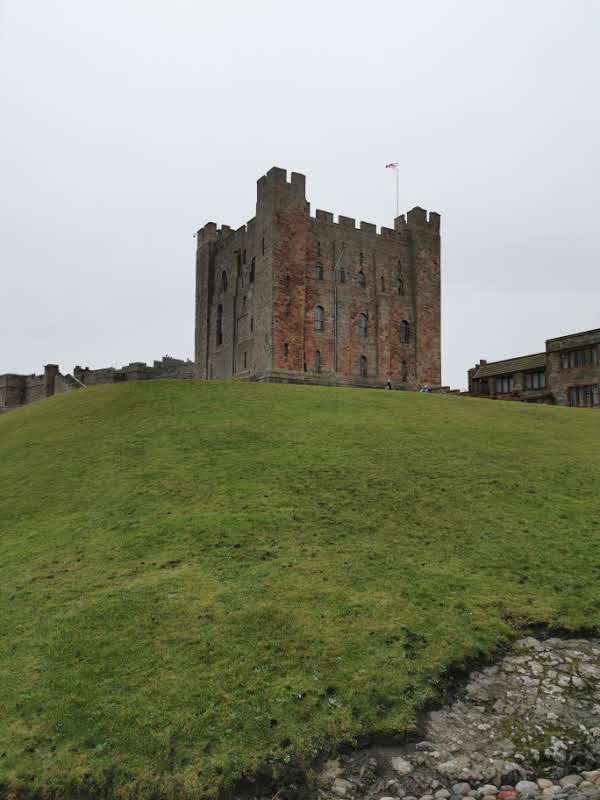
The iconic castle that stands today is a later building, the oldest part, the keep, dating to the end of the Saxon period, while much of what we see today is the later work of Lord Armstrong (who built Cragside), when he significantly repaired the remains. Indeed, the family still own Bamburgh Castle, although not Cragside, which is a National Trust property. (I’ve written a 1930s mystery set at Cragside).
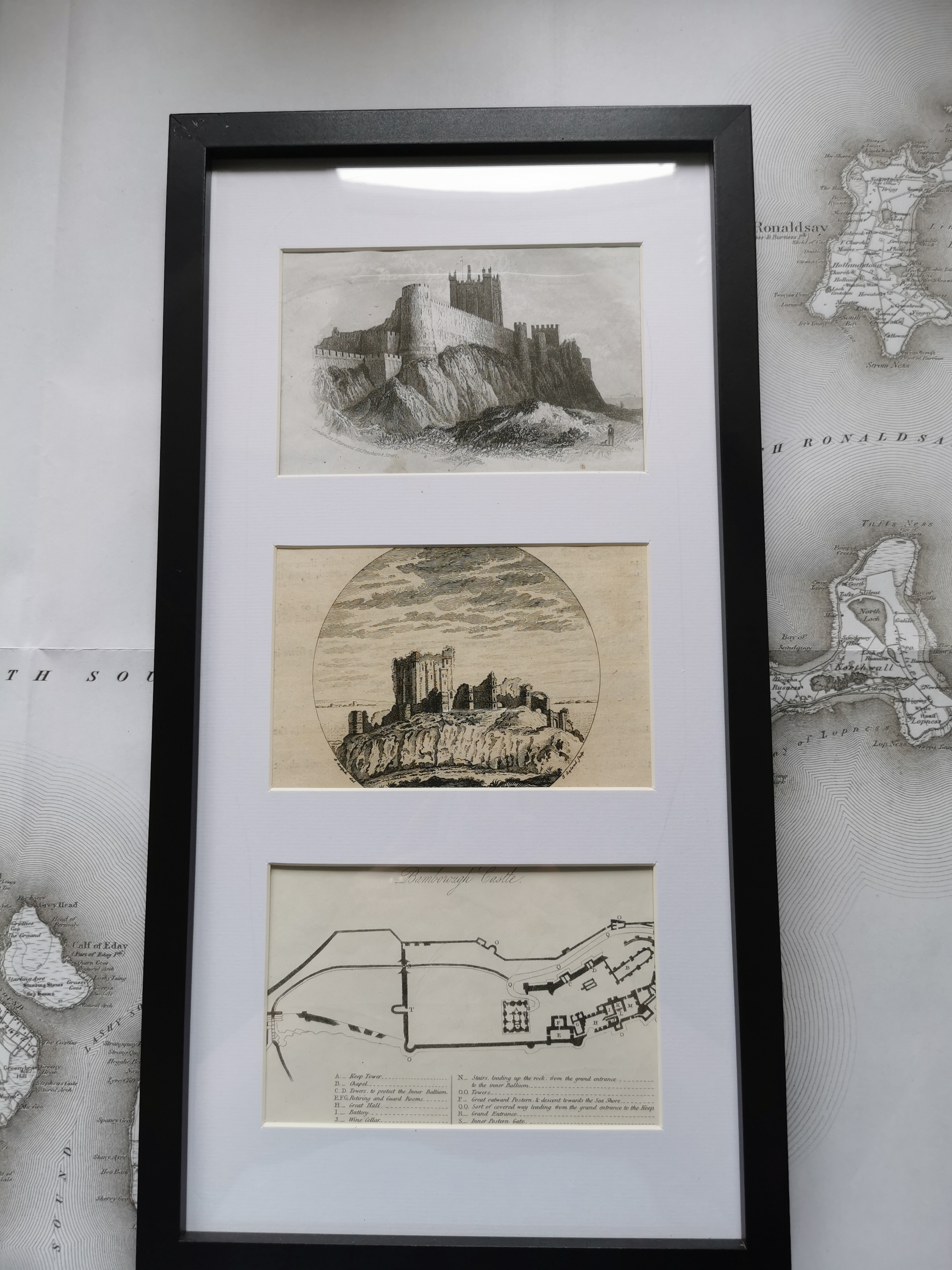
Bamburgh is slightly unusual in that there are old images of the castle before the 19th century work of Armstrong. I enjoy collecting these antique prints. We often find such buildings falling into ruin, not being ruined and the rebuilt.
Antique prints of Bamburgh Castle
And Bamburgh Castle and its environs are stuffed with archaeology. There were some very famous archaeological investigations undertaken in the 1960s, and there’s now a dedicated team unearthing the treasures hidden beneath the current building. You can follow the teams work at Bamburgh Research Project’s Blog. You might know about Bamburgh because of the seventh century bones discovered in the Bole Hole, and there’s a great book about this, Warrior by Edoardo Albert and Paul Gething – available from all good book sellers. You can also learn about where these bones now lie by checking out Bamburgh Bones.
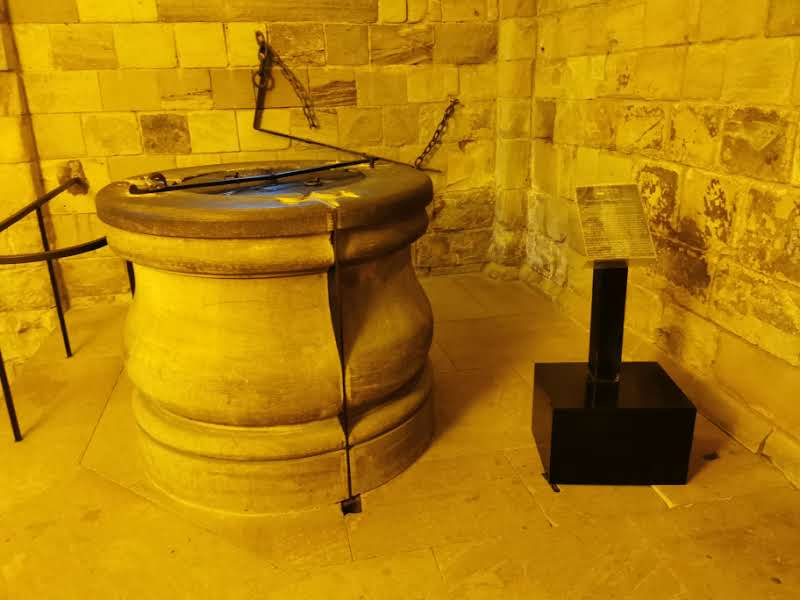
The well
The Tenth Century at Bamburgh
But, all this is before the events of the tenth-century (or after), as fascinating as it is. So, what was happening in the tenth-century? The easiest way I can describe this is that while York, and much of the Saxon kingdom of Northumbria was inundated with the Norse (Viking raiders if you will), Bamburgh was a bastion against this influx, wedged between the growing might of the kingdom of the Scots, ruled by Constantin, and the constantly changing affairs of York, and its string of Norse rulers, often associated with Dublin as well.
Ealdred’s father, Eadwulf is somewhat better attested, with the Annals of Ulster naming him as ‘king of the Saxons of the north.’ He died in c.913 and then Ealdred seems to have had a difficult time of it, his gaze more likely to turn to the Scots kingdom than the known Saxon rulers based in Mercia and Wessex when he was threatened by the Norse Viking raiders.
However, he joined an alliance with Edward the Elder, king of the Anglo-Saxons, in 920 (corrected from 924).
‘And then the king of Scots and all the nation of Scots chose him as father and lord; and [so also did] Reginald and Eadwulf’s sons and all those who live in Northumbria, both English and Danish and Norwegians and others; and also the king of the Strathclyde Britons and all the Strathclyde Britons.’
(Swanton, M. trans and edit The Anglo-Saxon Chronicles, (Orion Publishing Group, 2000 p.104 (A text )
This then takes us to the beginning of King of Kings. Will Ealdred continue his alliance with the new king of the Anglo-Saxons, or will he look elsewhere, especially now that the Viking raider, Sihtric, is lord of York/Jorvik?
What about Uhtred of Bebbanburg?
As to Uhtred himself, of The Last Kingdom fame, he’s even more shadowy than Ealdred, and for that reason, doesn’t feature at all in King of Kings, although there is an ealdorman Uhtred who will appear in subsequent books.
My new book, King of Kings, is a multi-viewpoint novel telling the story of events in Britain from 925-934. I thought it would be good to share details of the historical people my main characters are based on.
My portrayal of Hywel, better known as Hywel Dda (which autocorrect is determined should say Dad), and which means ‘good’ (a unique epithet in Wales), is of course, fictional, but who was the historical Hywel? Firstly, it should be noted that this epithet is a later invention, not assigned to Hywel until at least the twelfth century, and perhaps, as Dr. Kari Maund has commented in The Welsh Kings: Warriors, Warlords and Princes, a reflection of border events at that period rather than the earlier tenth century. (Dr Maund was one of my university lecturers, so she knows her stuff).
Hywel has no date of birth recorded, and indeed, like Constantin of the Scots, he seems to have ruled for a long time providing much-needed consistency. Hywel ap Cadell was the grandson of the famous Rhodri Mawr, who’d united the kingdoms of the Welsh during his rule. But, this unity fragmented on Rhodri’s death.
To begin with, Hywel ruled Dehuebarth, probably with his brother, Clydog, (who may have been the younger brother) after the death of their father in c.911. He, his brother, and his cousin, Idwal of Gwynedd, submitted to the English king, Edward the Elder in the late 910s.
‘and the kings of Wales: Hywel and Clydog and Idwal and all the race of the Welsh, sought him as their lord [Edward]’. ASC A 922 corrected to 918 (Swanton, M. trans and edit The Anglo-Saxon Chronicles, (Orion Publishing Group, 2000)p.103-4)
Not long after, Clydog died, leaving Hywel as ruler of Dehuebarth. Hywel had also married Elen, the daughter of Llywarch and niece of Rhydderch, the last king of Dyfed, and he was able to use this alliance to eventually claim Dyfed as well.
Hywel’s believed to have been highly educated, and some historians suggest he was particularly fascinated with King Alfred, and all he’d achieved and was therefore keen to emulate many of his actions. This could also be why his name came to be associated with the codification of laws in later traditions. What fascinates me most about Hywel is his decision to ally closely with King Athelstan which will be explored in King of Kings. Certainly, he is a intriguing figure in early tenth-century Britain, and not just because we know he made a pilgrimage to Rome in 928, and still managed to return back to his kingdom and continue ruling it.
My new book, King of Kings, is a multi-viewpoint novel telling the story of events in Britain from 925-934. I thought it would be good to share details of the historical people my character are based on.
My portrayal of Constantin, the king of the Scots, is of course fictional in King of Kings, but he is based on a historical individual, Constantin (e) II, so who exactly was he?
Constantin is a fascinating character. Again, and as with Athelstan, his exact date of birth is unknown, but it must have been, at the latest, by 877/8, when his short-reigned father died.
By 900, Constantin was the king of the Scots (we think – there is some confusion about this). This wasn’t yet quite Scotland, but it was getting there. The ancient kingdoms of Cait, Fortriu, Atholl and Dal Riata, were ruled by one king, Constantin. But, he hadn’t succeeded his father, Aed, but rather a man named Domnall II, his cousin. At this time there were two rival dynasties and they strictly alternated the kingship.
Affairs in the kingdom of the Scots often intermingled with those of the independent kingdom of Bamburgh, Strathclyde, and of course, the Norse, or Viking raiders, if you will. Indeed, the entry recording Constantin’s death in the Annals of Ulster, reads as though there was often strife.
‘Constantinus son of Ed held the kingdom for xl years in whose third year the Northmen plundered Dunkeld and all Albania. In the following year the Northmen were slain in Strath Erenn…And the battle of Tinemore happened in his xviii year between Constantin and Ragnall and the Scotti had the victory. And the battle of Dun Brunde in his xxxiiii year.’ (Alex Woolf, From Pictland to Scotland, 789-1070,p.126)
Constantin, ruling for decades, and I mean decades, seems to have brought much needed stability to the kingdom, as affairs there very much mirrored the emerging ‘England’ to the south.
‘Constantin’s reign has increasingly come to be see as one of the most significant in the history of Scotland. Not only was it very long, at least forty years, but it was also the period during which conflict and diplomatic relations between a kingdom recognisably ancestral to Scotland and one recognisably ancestral to England first occurred.’ (Alex Woolf, From Pictland to Scotland, 789-1070, p.128)
Constantin allied with the rulers of Bamburgh, and York, and also, on occasion, both Æthelflæd of Mercia and Edward the Elder, after her death. But, he seems to have been quite flexible in his thinking, and was prepared to pick and choice as he saw fit.
By the beginning of King of Kings, Constantin would have been in his mid-forties, and he was still to rule for many years to come, and he was certainly a more than adequate counterpart to Athelstan, king of the English, no doubt helped by his sons and grandsons, as his reign continued.
Athelstan is one of the main characters in my new book, King of Kings, a multiple point of view story, recounting affairs in Britain from 925-934.
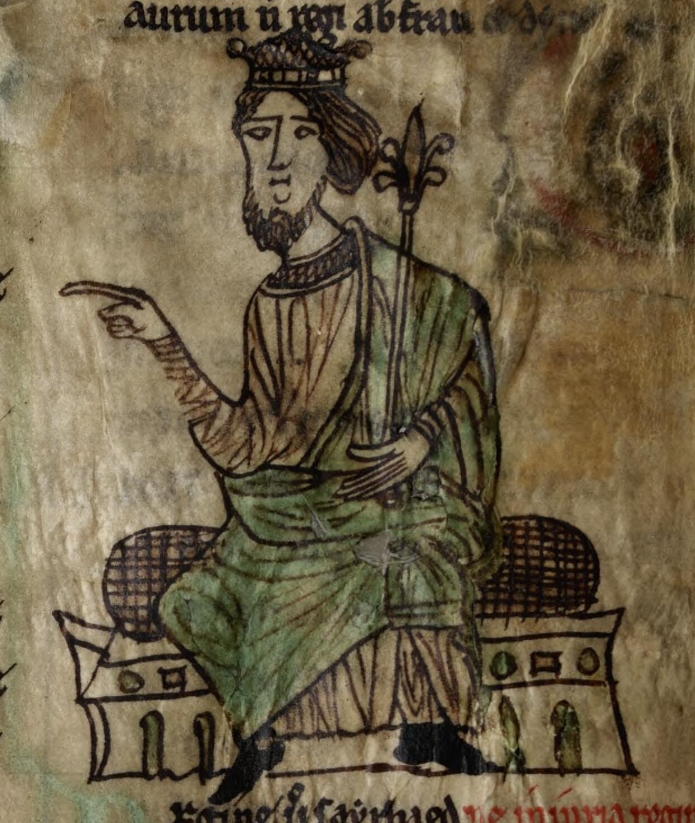
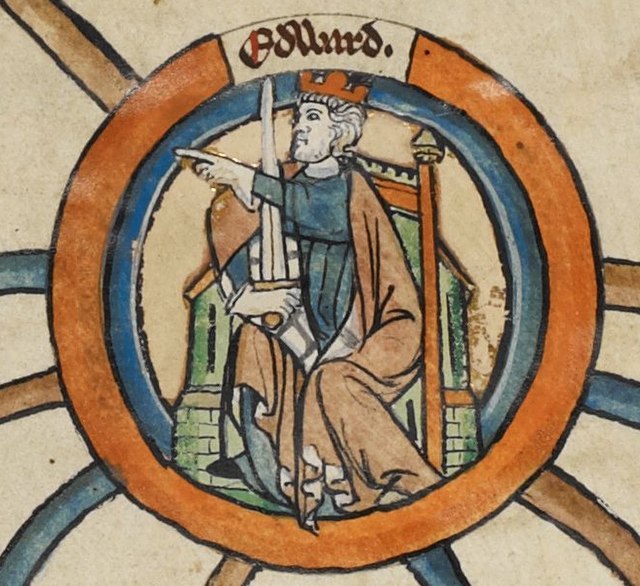
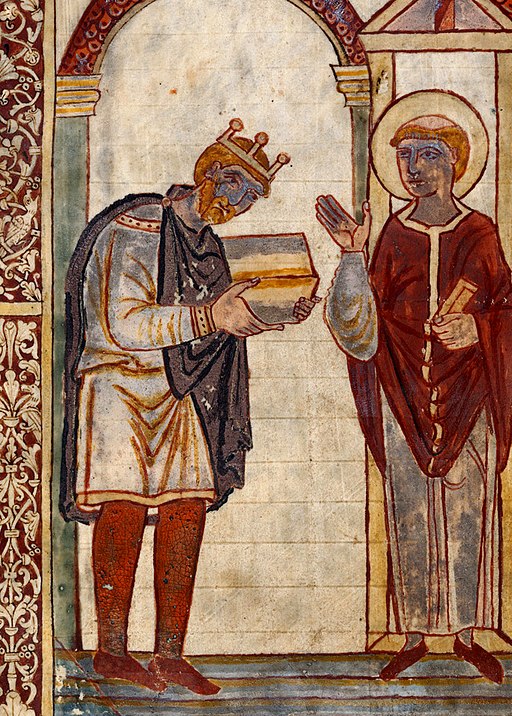
Based on a historical person, my portrayal of him, is of course, fictitious, but there are many details known about him. However, we don’t know for sure who his mother was, it’s believed she might have been called Ecgwynn, and we don’t know, for certain, the name of his sister, but it’s believed she might have been named Edith. What is known is that his father was Edward, the son of King Alfred, and known to us today as Edward the Elder. Athelstan is also rare in that he is one of only two Saxon kings for who a contemporary image is available. (The other is Edgar, who would have been his step-nephew)
It must be supposed that Athelstan was born sometime in the late 890s. And according to a later source, that written by William of Malmesbury in the 1100s (so over two hundred years later), Athelstan was raised at the court of his aunt, Æthelflæd of Mercia. David Dumville has questioned the truth of this, but to many, this has simply become accepted as fact.
‘he [Alfred] arranged for the boy’s education at the court of his daughter, Æthelflæd and Æthelred his son in law, where he was brought up with great care by his aunt and the eminent ealdorman for the throne that seemed to await him.’[i]
[i] Mynors, R.A.B. ed and trans, completed by Thomson, R.M. and Winterbottom, M. Gesta Regvm Anglorvm, The History of the English Kings, William of Malmesbury, (Clarendon Press, 1998), p.211 Book II.133
Why then might this have happened? Edward became king on the death of his father, Alfred, and either remarried at that time, or just before. Edward’s second wife (if indeed, he was actually married to Athelstan’s mother, which again, some doubt), Lady Ælfflæd is believed to have been the daughter of an ealdorman and produced a hefty number of children for Edward. Perhaps then, Athelstan and his unnamed sister, were an unwelcome reminder of the king’s first wife, or perhaps, as has been suggested, Alfred intended for Athelstan to succeed in Mercia after the death of Æthelflæd, and her husband, Æthelred, for that union produced one child, a daughter named Ælfwynn.
There is an acknowledged dearth of information surrounding King Edward the Elder’s rule of Wessex. He’s acknowledged as the king of the Anglo-Saxons. His father had been the king of Wessex. Historians normally use the surviving charters to unpick the political machinations of the Saxon kings, but for Edward, there’s a twenty year gap between the beginning and end of his reign, where almost no known genuine charters have survived. What isn’t known for sure, is how much control, if any, he had in Mercia. Was Mercia subservient to Wessex or was it ruled independently? It’s impossible to tell. And this makes it difficult to determine what Athelstan might have been doing, and also what his father’s intentions were towards him.
Frontispiece of Bede’s Life of St Cuthbert, showing King Æthelstan (924–39) presenting a copy of the book to the saint himself. 29.2 x 20cm (11 1/2 x 7 7/8″). Originally from MS 183, f.1v at Corpus Christi College, Cambridge. (Wikimedia Commons)
What is known is that following the death of King Edward in 924, Athelstan was acknowledged as the king of Mercia; his stepbrother, Ælfweard was proclaimed king in Wessex. As with all events at this time, it shouldn’t be assumed that just because this is what happened, this is what was always intended.
‘Here King Edward died at Farndon in Mercia; and very soon, 16 days after, his son Ælfweard died at Oxford; and their bodies lie at Winchester. And Athelstan was chosen as king by the Mercians and consecrated at Kingston.’[i]
[i] Swanton, M. trans and edit The Anglo-Saxon Chronicles, (Orion Publishing Group, 2000), D text p.105
But, if Athelstan was raised in Mercia, it’s highly likely he was a warrior from a young age, helping the Mercians defeat the Viking raiders who still had control of the Danish Five Boroughs of Lincoln, Nottingham, Derby, Nottingham and Leicester.
And the events of 924 are where King of Kings begins, and so I will leave him there. By now, he would have been perhaps thirty years old, give or take a few years. What sort of man was he? What sort of king might he be? Do please read King of Kings to find out. And, if this intrigues you, then do please have a look at Sarah Foot’s wonderful monograph on him, Athelstan, from Yale Publishing.
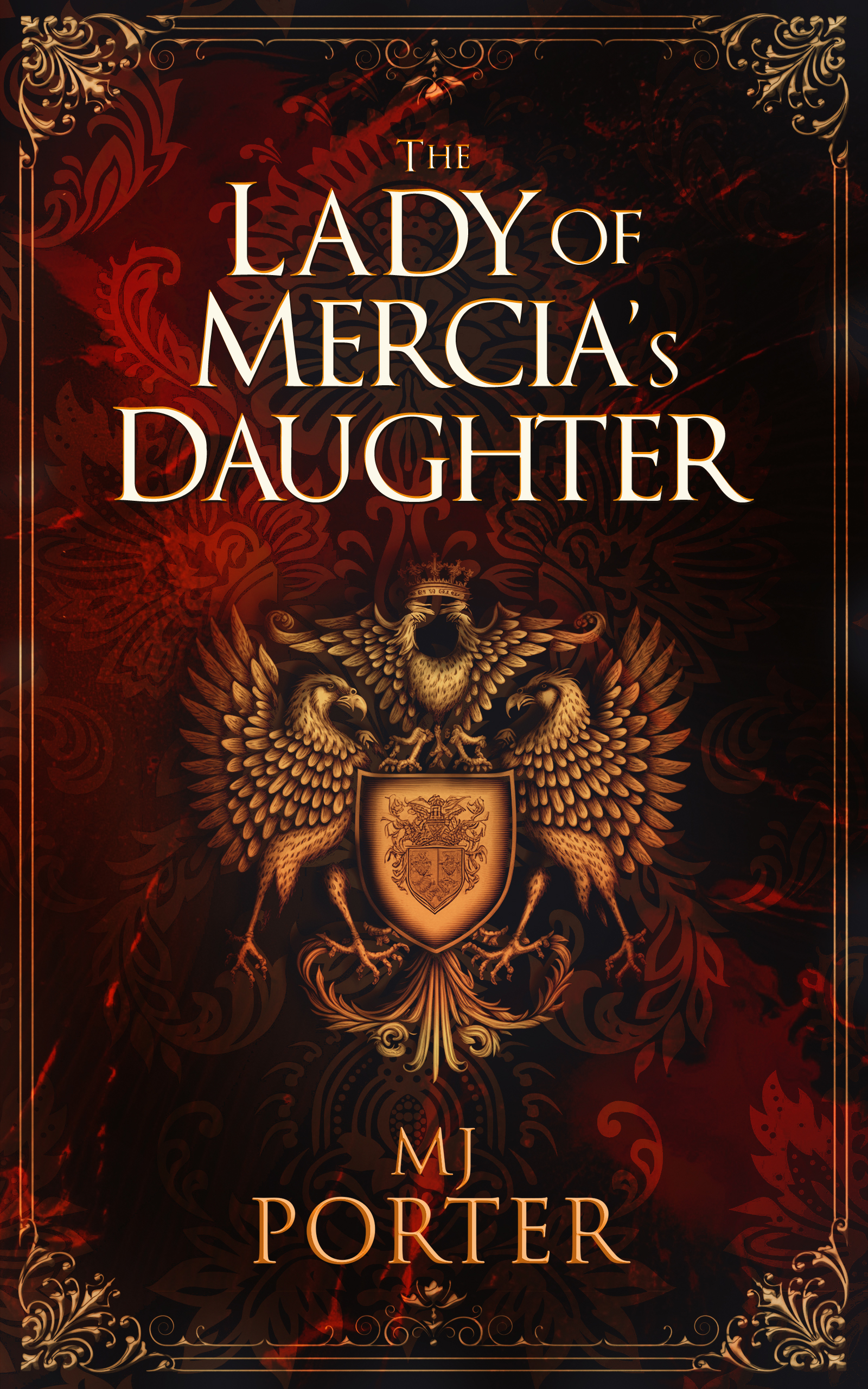
Here it is. The new cover for A Conspiracy of Kings, the sequel to The Lady of Mercia’s Daughter.
Here’s the blurb
Mercia, 918.
Lady Ælfwynn has taken her mother’s place as the Lady of Mercia, to the displeasure of her uncle in Wessex, and against his efforts to subvert it.
King Edward, casts his eye longingly over Mercia, and finds a willing accomplice where none should exist. This time, the threat to Lady Ælfwynn is not as easy to defeat.
This is the continuing story of Lady Ælfwynn, the granddaughter of King Alfred, begun in The Lady of Mercia’s Daughter.
It is intended that The Lady of Mercia’s Daughter should be read before A Conspiracy of Kings.
2022 has been a busy writing year. Routine has been important, as has setting firm deadlines and also having some well-deserved time off. I’ve also distracted myself from my constant need to write by taking a few weeks away from the keyboard to work my very part-time job. People think I’m nuts, but the only way to dampen down my mind is to fill it with something else! It helps that I can trust myself to get things done and knuckle down when I need to. I’m adopting the same approach to 2023. I’ve already got the first six months mapped out writing-wise.
In February, I edited Cragside and started work simultaneously on Warrior of Mercia and The Last Seven while also editing Pagan King. I worked myself hard because I knew what was coming later in the year.
I continued to work on Warrior of Mercia and The Last Seven throughout March, and finished my first draft of Warrior of Mercia in April. This allowed me to start work on my first non-fiction book, due out sometime in 2024 with Pen and Sword books.
During May and June, I had a bit of a hiatus as I was on a wonderful holiday in Orkney and also working my part-time job. But I did complete an edit on Warrior of Mercia during the late May half-term, so I did a bit of writing:)
When I finally got back to my writing in July, I was back to working on The Last Seven, having completed my copyedits for Warrior of Mercia.
Throughout August, I worked on what is now King of Kings, and also devoted the month to my non-fiction project.
During September, I wrote a lot more for King of Kings, having decided to play around with the original book, and began work on Icel 4, which I finished the first draft of in October. I also worked on a short story that precedes the events in King of Kings.
And then, I spent November working on the next book in the Earls of Mercia series, The King’s Brother, while during December, I returned to my non-fiction project, did some editing on Icel 4, now entitled Eagle of Mercia, and worked on my non-fiction book. I also completed an edit on The Lady of Mercia’s Daughter to go with the fabulous new cover.
For all my careful planning, December was a very full-on month, and I worked right up until 6pm on 23rd December because I needed to get some editing done. Next year, I need to be a bit more wary of just how short December can feel.
In terms of words written this year, I don’t keep a strict record, but I would place it at about 500,000. I don’t think it’s my biggest tally to date, but it’s still been very busy. For anyone curious about my writing routine, I’ll be presenting on it for The History Quill masterclass in April 2023. You can find the details on the link. I think a good daily routine is so important for writers, and so I’m going to be talking about how I do what I do:)
I also took the time to attend several conventions, virtually (The History Quill Convention, The HNSNA one-day convention, and the IMC in Leeds – which feeds my non-fiction needs) as well as in-person (The HNS Conference in Durham, and one on the Bamburgh Bones). I tried my hand at Saxon-era embroidery and of course, spent more time making mugs at the local pottery. I might have shared photos of my slightly wonky attempts.
I can’t see that I did a post on my writing throughout 2021, but I have found my 2020 post about my writing during Lockdown.
If you want to see what I was reading during 2022, then check it out here.
I’m really excited to share the new cover for The Lady of Mercia’s Daughter with my readers. (The text has also had a thorough refresh as well).
The Lady of Mercia’s Daughter is the story of Lady Ælfwynn, daughter of Lady Æthelflæd of Mercia (yes, Mercia again:)).
Following the death of her mother in June 918, Lady Ælfwynn is the first known woman to have succeeded her mother as the ruler of one of the Saxon kingdoms. Yet depressingly little is known about her. And that was all the excuse I needed to craft a narrative of her time as Mercia’s leader.

Rereading the book, which is one I credit with helping me create the wonderful King Coelwulf, I was surprised by how many kernels I recognised from The Last King. Indeed, Coelwulf even gets a very brief mention.
Here’s the blurb
Betrayal is a family affair.
12th June AD918.
Æthelflæd, Lady of the Mercians and daughter of Alfred the Great, is dead.
Ælfwynn, the niece of Edward, King of Wessex, has been bequeathed her mother’s power and status by the men of the Mercian witan. But she knows Mercia is vulnerable to the north, exposed to the retreating world of the Viking raiders from her mother’s generation.
With her cousin Athelstan, Ealdorman Æthelfrith and his sons, Archbishop Plegmund and her band of trusted warriors, Ælfwynn must act decisively to subvert the threat from the Norse. Led by Lord Rognavaldr, the grandson of the infamous Viking raider, Ivarr of Dublin, they’ve turned their gaze toward the desolate lands of northern Saxon England and the jewel of York.
Inexplicably she’s also exposed to the south, where her detested cousin, Ælfweard, and uncle, King Edward, eye her position covetously, their ambitions clear to see.
This is the unknown story of Ælfwynn, the daughter of the Lady of the Mercians and the startling events of late 918 when family loyalty and betrayal marched hand in hand across lands only recently reclaimed by the Mercians. Kingdoms could be won or lost through treachery and fidelity, and there was little love and even less honesty. And the words of a sword were heard far more loudly than those of a king or churchman, noble lady’s daughter or Viking raider.