Check out the full post as part of the Pagan Warrior blog tour https://ofhistoryandkings.blogspot.com/2023/03/my-coffee-pot-book-club-guest-mj-porter.html

Author of Saxon historical fiction and non-fiction, 20th-century historical mysteries, and Norse-inspired historical romantasy. Book reviewer and blog host.

Check out the full post as part of the Pagan Warrior blog tour https://ofhistoryandkings.blogspot.com/2023/03/my-coffee-pot-book-club-guest-mj-porter.html
I’m really excited to share the details of the Pagan Warrior blog tour with The Coffee Pot Book Club.
Pagan Warrior is the story of the battle of Hædfeld, fought in the seventh century between the Northumbrians, and you got it, the Mercians – or rather, Cadwallon of Gwynedd but with Penda of Mercia as his firm ally. You can find more details here.
I might have written this book many years ago, but it’s had a refresh, and is now available in audio, narrated by the fabulous, Matt Coles, as is the second book, Pagan King. Warrior King will be coming later this year in audio. For this second week, 20th March-25th March, the ebook of Pagan King (book 2) is reduced globally to 99p/99c and equivalent. Follow the link below.
I’ve also, finally, managed to get book three, Warrior King, uploaded to all good ebook platforms, and they will be going live during this week. Kobo have so far won the competition. Use this link, which I will be updating, or try the one above, and hopefully, Warrior King will be linked to Pagan King as well. It means Warrior King is also available in hardcover from Amazon.
You can follow the blog tour, and I’ll be sharing posts here as well. A quick shout out to thank all the blog hosts and Cathie at The Coffee Pot Book Club for organising.
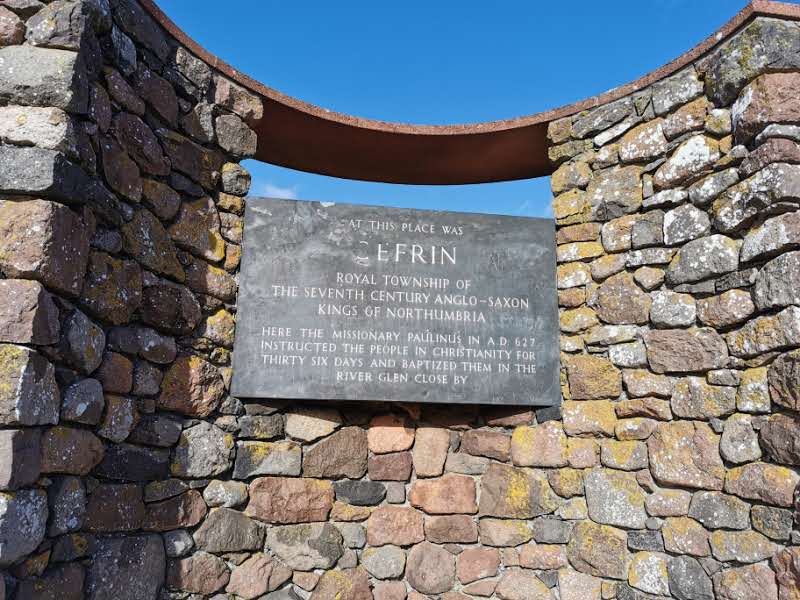
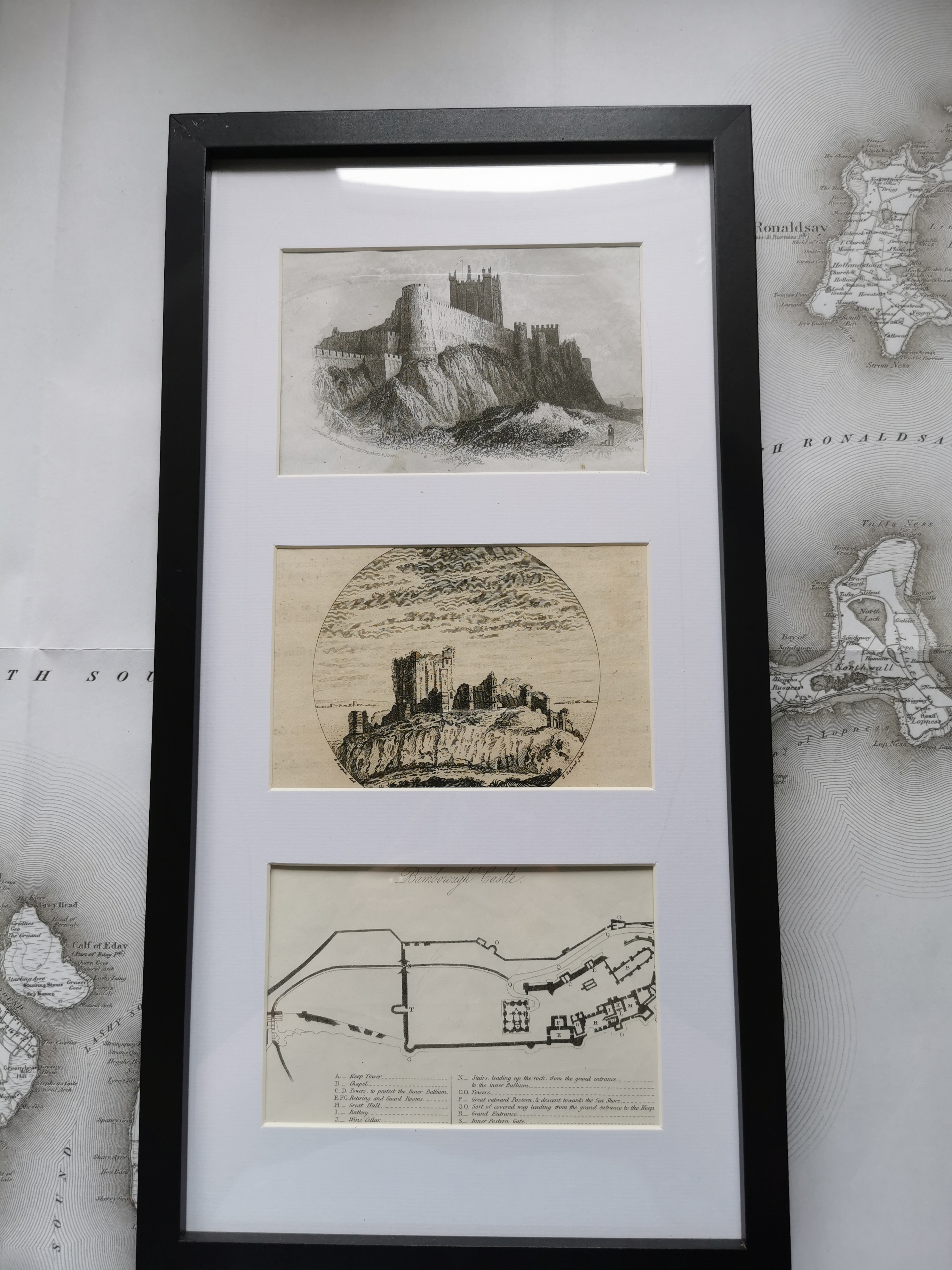
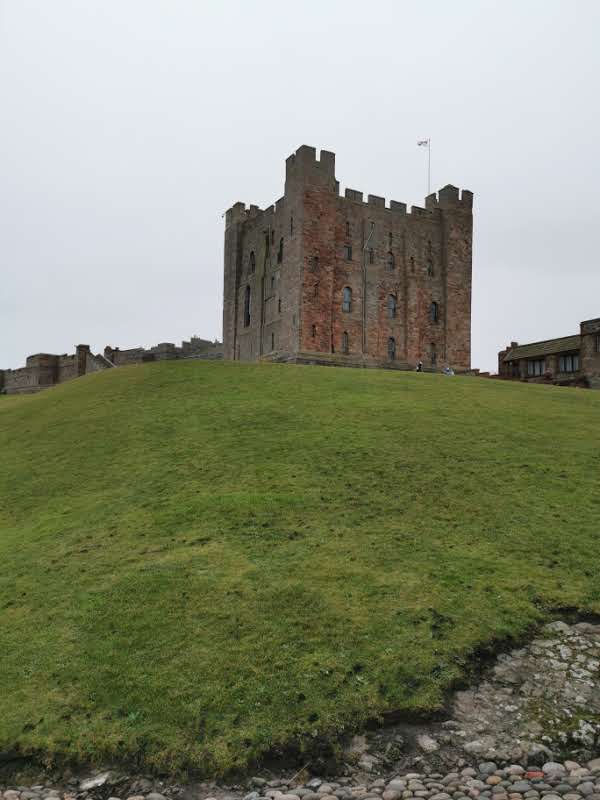
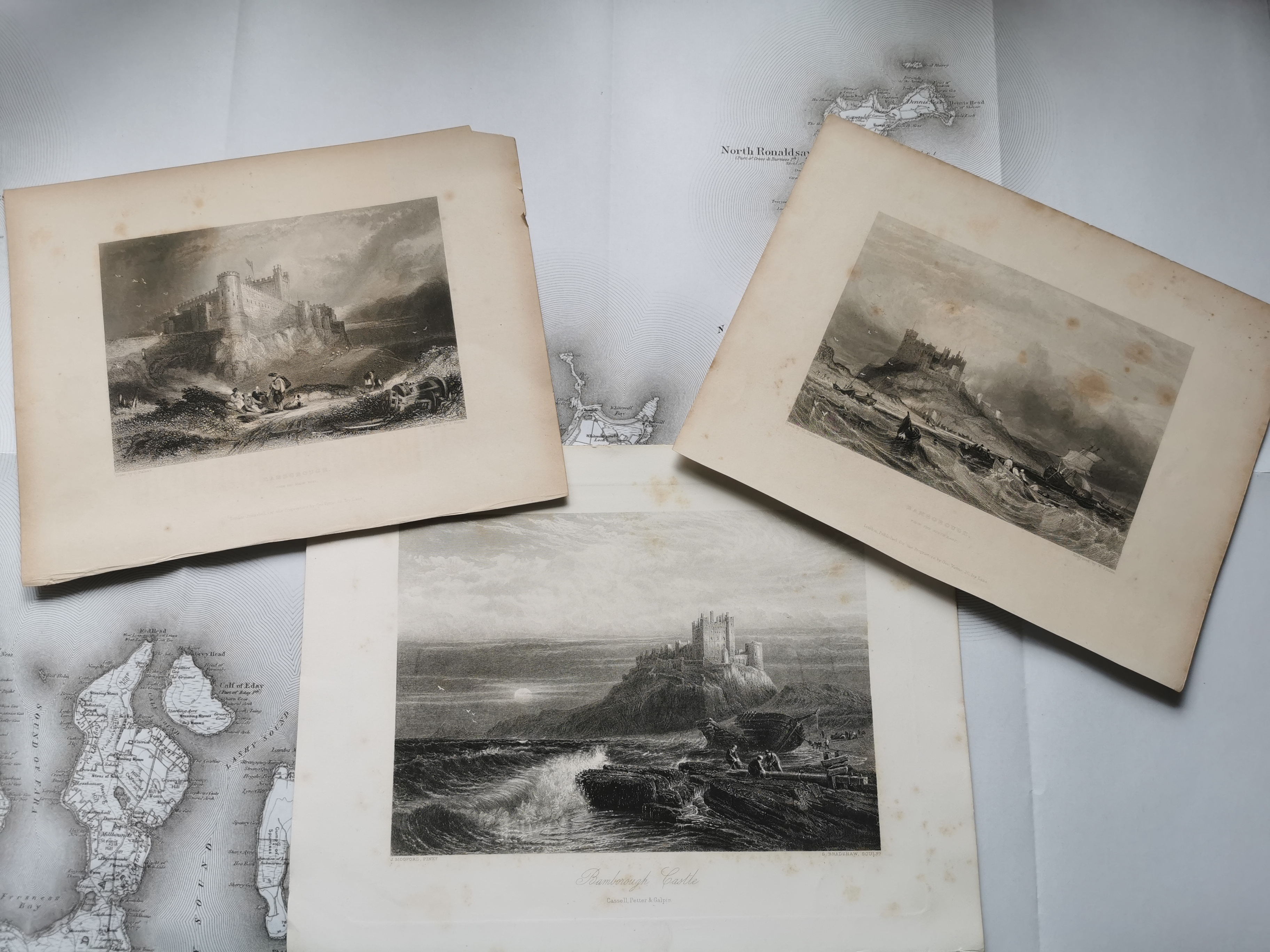
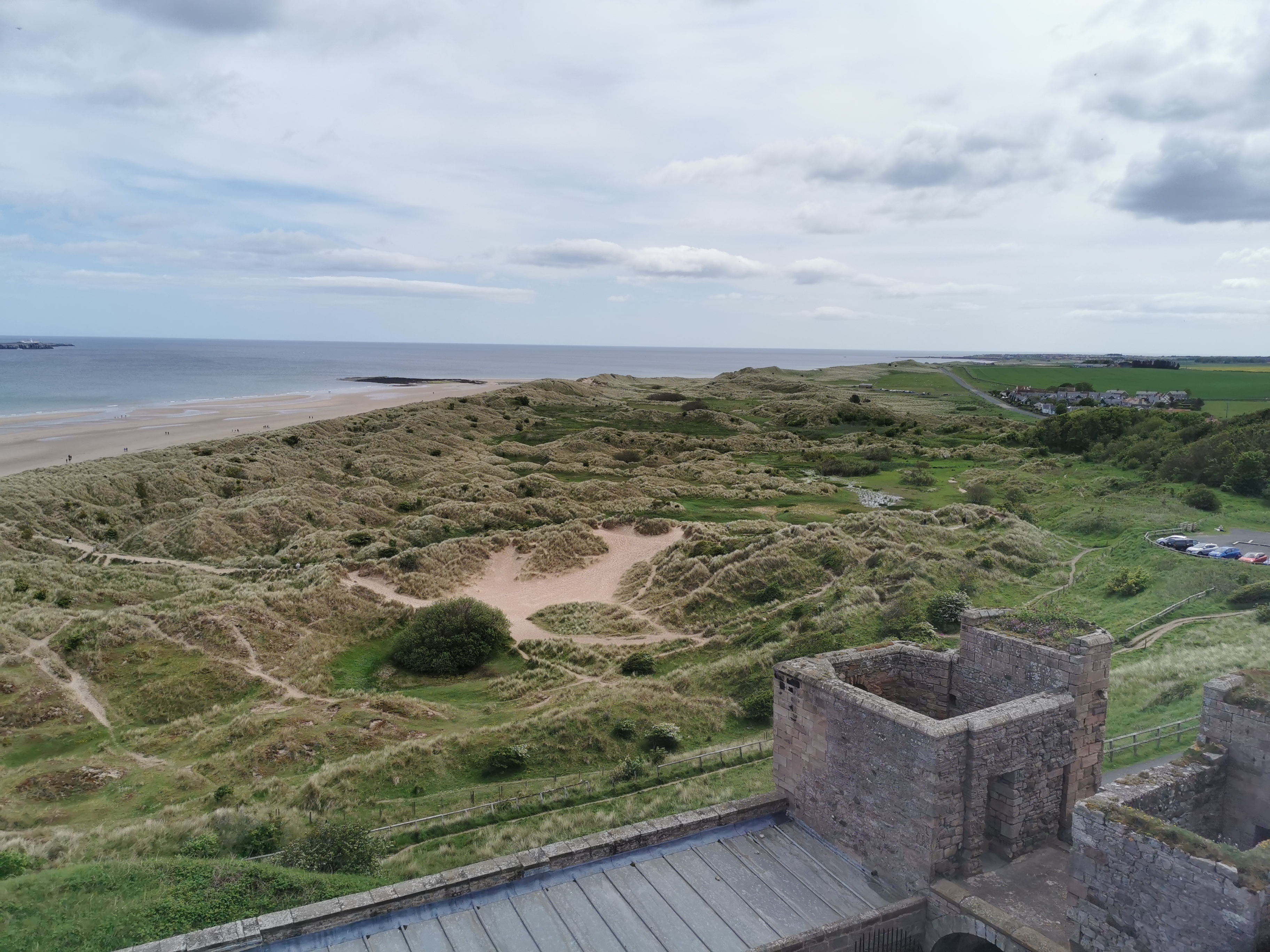
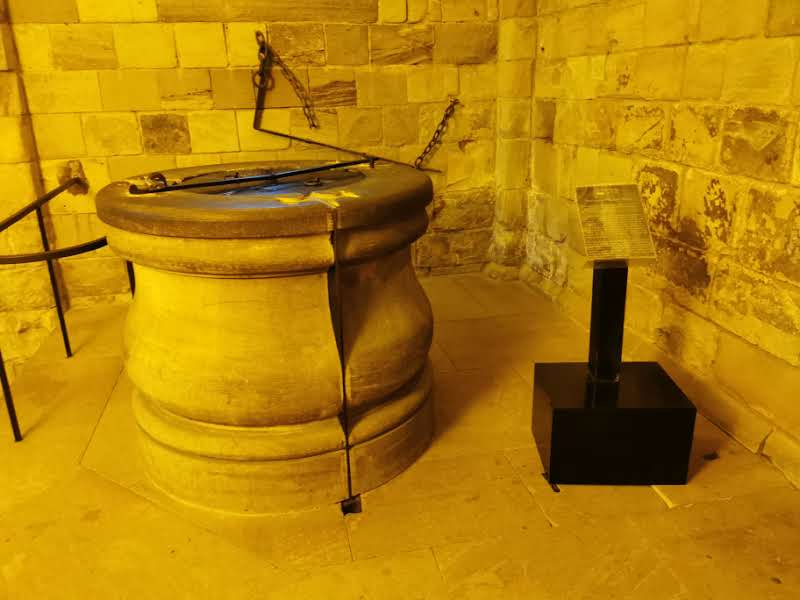
For today (March 21st) check out a post about two of the royal residences of Bernicia at the time, Bamburgh and Ad Gefrin (Yeavering). (There are lots of photos, thank you to Helen Hollick for uploading them all).
And a review from
From March 14th, check out my author interview over on Archaeolibrarian.
I’m sharing an excerpt over on The Historical Fiction Company.
The Historical Fiction Company
I’ve written a piece about the historical background on Pam Lecky’s official blog.
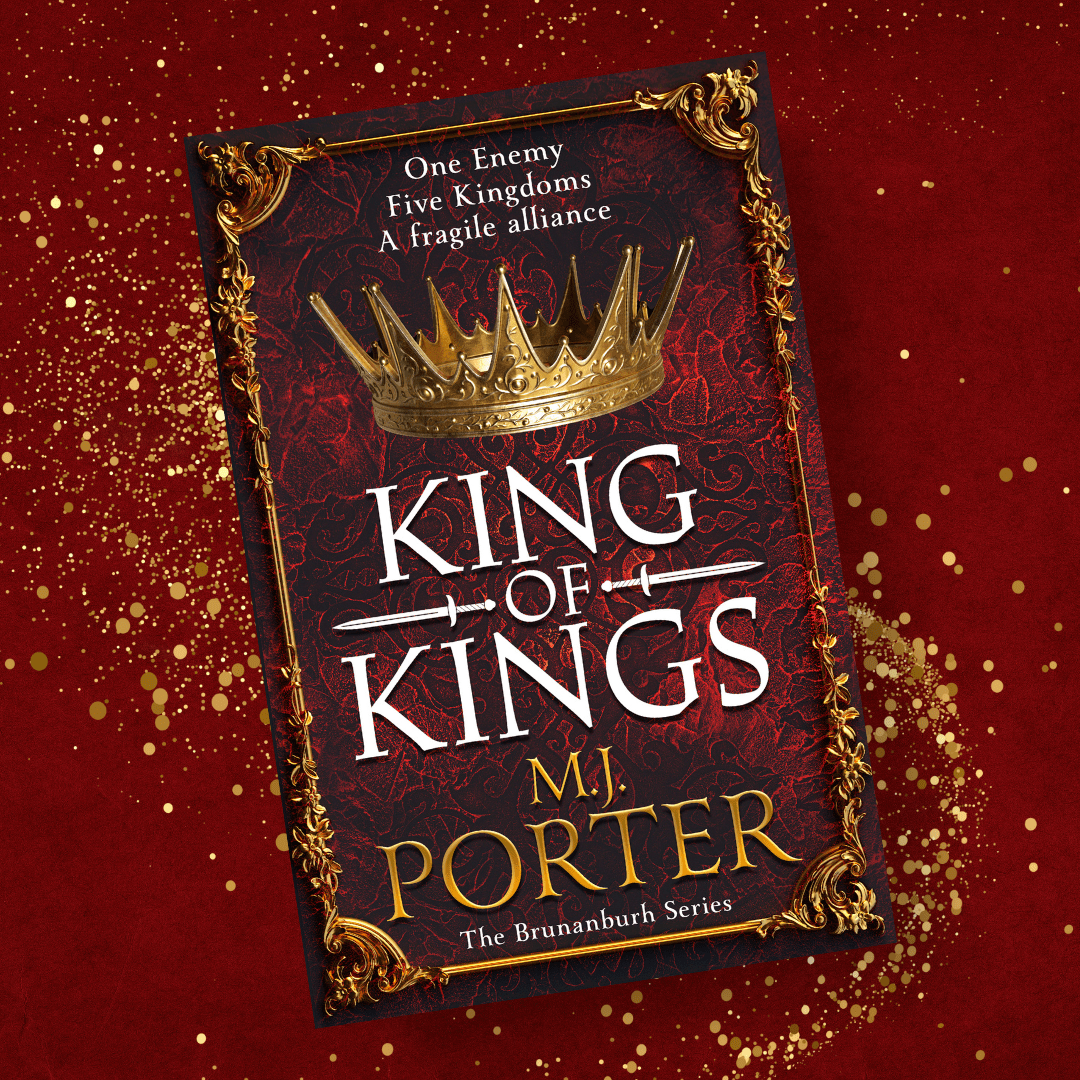
My latest release, King of Kings, is a tale of five kings, and one enemy. But what was the background in what we would now know as England?
The tenth-century sees the creation of what we would recognise as ‘England’ – the combining of Wessex with Mercia, with the additions of Kent, the kingdom of the East Angles, the Danish Five Boroughs, and the kingdom of York, and also the independent kingdom of Bamburgh. But telling this story is complex. When people think of England, they might not know all these smaller kingdoms. They might not know, particularly, what the Danish Five Boroughs (Leicester, Nottingham, Lincoln, Stamford and Derby), were because if you google the Five Boroughs, you’ll be told about New York (this has happened to me).
Everybody knows about King Alfred of Wessex holding back the tide of the advancing Viking raiders throughout his reign from 874-899. And if everybody didn’t know before, then Uhtred, Bernard Cornwell’s Saxon warrior, has done much to ensure we know about it now.
But again, it’s not quite so simple. The Saxon kingdoms of the seventh century onwards numbered seven, alongside Wessex, there was also Kent, Mercia, the kingdom of the East Angles, Northumbria, Essex and Sussex. These kingdoms eventually merged to give us just Wessex, Mercia, Kent, the kingdom of the East Angles and Northumbria (which itself comprised of two kingdoms, Deira centred on York, and Bernicia, centred on Bamburgh). So, all seems clear there? But no.
When the Viking raiders began their concerted attacks on Britain in the late ninth century, Alfred of Wessex promulgated a treaty with one of their leaders, Guthrum, forging an independent kingdom of the Viking raiders, which stretched along something known as the Alfred-Guthrum line. Loosely, this meant that land to the east was in the control of the Viking raiders. All that survived of those kingdoms south of the Humber was Wessex and the western part of Mercia. The Viking raiders had already overrun Northumbria. The kingdom of Jorvik, centred on York, was part of a Dublin/York kingship, where the kings of York/Jorvik had often already been the king of Dublin, and this kingship was firmly in the hands of a family claiming descent from Ivarr (the Boneless), one of the men who’d led the concerted Viking raider attacks of the 860s and 870s which we might find termed The Great Heathen Army.
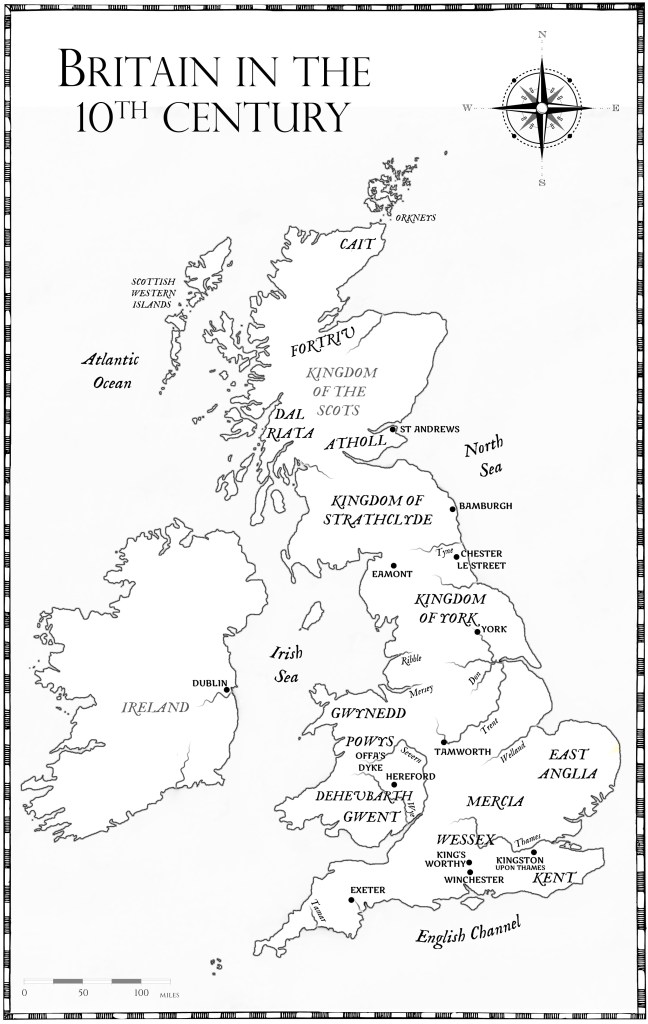
This, then, reimagined what we think of as England and these Saxon kingdoms weren’t the only ones to face attack from the Viking raiders. The many Welsh kingdoms shared sea borders with the Dublin Norse, and the small kingdom of Manx (the Isle of Man) became incredibly important, as did all of the islands that surround western and northern Scotland. Orkney, at this time, was settled by the Norse.
When Alfred died in 899, he was king of Wessex. His son, Edward, would become king of the Anglo-Saxons, ruling over Wessex and Kent, and then after the death of his sister, Æthelflæd, the Lady of Mercia, staking his claim to western Mercia as well as those parts of the Five Boroughs, essentially Norse held lands, known as the Danelaw, which Æthelflæd had ‘won’ back for Mercia.
‘Here in the early part of this year, with God’s help, she [Æthelflæd] peaceably got in her control the stronghold at Leicester and the most part of the raiding-armies that belonged to it were subjected. And also the York-folk had promised her – and some of them granted so by pledge, some confirmed with oaths – that they would be at her disposition.’[i]
This was a time of intense unease, almost constant warfare. And not everyone was happy about the advances the surviving Wessex royal family made. Edward died at Farndon, in Mercia, perhaps putting down a Mercian rebellion or, a Welsh one. Farndon wasn’t far from the border with the Welsh kingdoms.
But Edward’s death, and the subsequent death of his son Ælfweard only sixteen days later, brought about a sea change. Ælfweard wasn’t Edward’s oldest son; that was Athelstan, a youth seemingly banished to live with his aunt in Mercia when Edward remarried (if the later pseudo-historian, William of Malmesbury is to be believed who makes the claim that it was Alfred’s wish that Athelstan be brought up in ‘the court of his daughter Æthelflæd and Æthelred his son in law.’[ii]
Athelstan was immediately recognised as the king of Mercia. Not long afterwards, he also became king of Wessex. And his ambitions didn’t stop there.
‘Here King Edward died at Farndon in Mercia; and very soon, 16 days after, his son Ælfweard died at Oxford; and their bodies lie at Winchester. And Athelstan was chosen as king by the Mercians and consecrated at Kingston.’[iii]
It’s difficult to imagine that Athelstan wasn’t a warrior of fierce renown. His aunt and uncle, the lord and lady of Mercia, had spent much of their rule, both together, and then after Æthelred’s death, Æthelflæd had continued alone, driving back the incursion of the Viking raiders, or the Norse as it might be easier to term them. Athelstan must surely have taken his place in these battles. And yet, while he was eager to hold tightly to the kingdoms of Mercia, Kent and Wessex, he was also prepared to unite people through peace, and this is where the story, King of Kings, begins. With Athelstan, the first crowned king of the English.
[i] Swanton, M. trans and edit The Anglo-Saxon Chronicles, (Orion Publishing Group, 2000), p.105
[ii] Mynors, R.A.B. ed and trans, completed by Thomson, R.M. and Winterbottom, M. Gesta Regvm Anglorvm, The History of the English Kings, William of Malmesbury, (Clarendon Press, 1998), p.211
[iii] Swanton, M. trans and edit The Anglo-Saxon Chronicles, (Orion Publishing Group, 2000), D text p.105
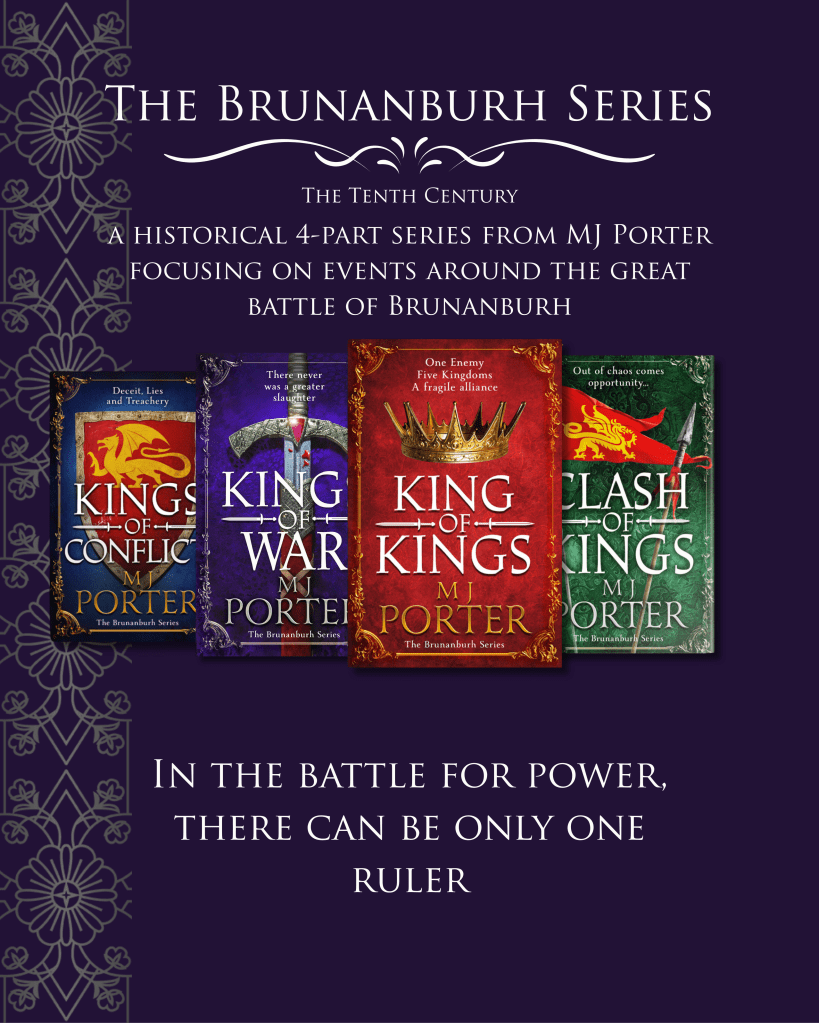
I’ve also written about the kings (and an almost queen) of these kingdoms in Britain at the time.
Meet Athelstan, king of the English
Meet Constantin, king of the Scots
Meet Hywel, king of the West Welsh
Meet Ealdred, king of Bamburgh
Meet Owain, king of Strathclyde
Meet Eadgifu, the lady of Wessex
(I’m re-sharing an old post which I’ve amended slightly, and added some new graphics).
England, Wales, Scotland, the smaller kingdoms of Mercia, Wessex, Northumbria, East Anglia, Kent, Powys, Gwynedd, Dal Riada – for the uninitiated (including myself) the sheer number of kingdoms and kings that peopled the period in British history before 1066 can appear as a bewildering display of names, places, times and events, and perhaps never more so than when a historian is trying to sell a book and so makes a statement in their title that applies to that particular king.

Phrases such ‘the Golden Age of Northumbria’, ‘the Mercian hegemony’, ‘the rise of Wessex’, they all mask so many events that I find the phrases very unhelpful and perhaps worse, misleading.
I think that Athelstan and his younger half brother, Edmund, probably deserve their titles as Kings of the English. And it’s not just my opinion either. There was, according to Sarah Foot in her book on Athelstan, a concerted effort by the king and his bishops to have him stand apart from his predecessors – to be something ‘different’ to them. They named him king of the English, not king of Mercia (a post he held briefly before another of his younger brothers died) and not king of Wessex, for all that he was both of those things.
They changed his title, they crowned him with a crown, not a helmet. They wanted Athelstan to be something other than his grandfather, King Alfred, and his father, King Edward. It was a bold statement to make, and one they continued when Athelstan died too young and his half-brother, Edmund replaced him. He too was crowned using, it must be supposed, the same Coronation service. (For full details have a peek at Sarah Foot’s book on Athelstan – or read the first few chapters of King of Kings as the service appears in it as well).
So why the change? Essentially the old Saxon kingdoms, for all that they were preserved in the naming of the earls/ealdormens designations, had been swept aside by the Viking raiders. The old kingdoms had become a handy label to apply to certain geographic areas, and the kings of Wessex, whilst keen to hold onto their hereditary titles because of the permanence their own royal line had managed to acquire, were equally as keen to do away with regional boundaries. There was, it can’t be denied, a concerted and almost unrelenting urge to drive any Viking raider or Dane or Norwegian (the Norse) from British soil, and this is what Athelstan and then Edmund were tasked with doing.

Yet the idea of ‘English’ wasn’t a new concept. Why else would Bede have called his great piece of religious historical writing “The Ecclesiastical History of the English people’, if there hadn’t been a shared consciousness that the people in England, all be it in their separate kingdoms, didn’t have a shared heritage? Why the idea suddenly took flight under King Athelstan could be attributed to a new sense of confidence in Wessex and Mercia at the time. They were confident that they could beat the Viking raiders and they were convinced that England belonged to them.
Or perhaps it was more than that? The destruction wrought by the Viking raiders on the separate kingdoms must have been a stark reminder of just how insular the kingdoms had become, and the Viking raiders showed everyone just how easy it was to run roughshod over the individual kingdoms. Only in unity could the Saxon kingdoms of England survive another onslaught; only with unity could the Saxons hold onto their kingdoms they’d claimed about 500 years before.
It was a message that was learned quickly and taken to heart. Athelstan worked to reunite more of the Saxon kingdoms with the growing ‘England’, and he tried to do so by both diplomacy and through war. Yet, the Viking raiders hadn’t finished with England, and nor were they her only enemies. This also lies at the heart of Athelstan’s ‘masterplan’ his treaty of Eamont (if it truly happened – Benjamin Hudson in his Celtic Scotland is not convinced). Athelstan wanted to be a mighty king, but he also wanted England, and the wider Britain (also a concept already understood otherwise why else would that cantankerous monk – Gildas – have called his even earlier work than Bede’s “On the Ruin of Britain?”) to be united in their attempts to repel the Viking raiders. He was a man with a keen vision of the future and it was a vision that his brother continued, with slightly different direction and results.
The ‘English Kings” saw safety in unity, and of course, an increase in the power they held went hand-in-hand with that.
Yet at no point during the Saxon period can it be said that the emergence of ‘England’ as we know it, was a given certainty. Throughout the period other great kings had tried to claim sovereignty over other kingdoms, but never with any permanence. The earlier, regional kings, were powerful within their own lifetimes and within their own regions. Few, if any, were able to pass on their patrimony complete upon their death. This was a time of personal kingship, and it was only under Athelstan and Edmund that the leap was taken away from this to a more permanent power base.
Not that it was a smooth transition and it did have the side-effect of allowing other men, those not related to the royal family, to evolve their own individual power bases in the old Saxon kingdoms. The ‘English’ kings had to do more than just rule their own kingdom, they had to rule their ealdormen and earls, their warriors, bishops and archbishops. The number of names of kings might start to deplete in the after math of Athelstan and Edmund’s kingship, but in their place spring up more and more powerful men, men that these English kings had to rely on.
Becoming King of the English was very much a mixed blessing, bringing with it new and greater responsibilities and more, it brought with it the need to expand personal government further, to have a greater persona to broadcast.
King of Kings is available now, and Kings of War is coming in July 2023.
I’m really excited to share the details of the Pagan Warrior blog tour with The Coffee Pot Book Club.
Pagan Warrior is the story of the battle of Hædfeld, fought in the seventh century between the Northumbrians, and you got it, the Mercians – or rather, Cadwallon of Gwynedd but with Penda of Mercia as his firm ally. You can find more details here.
I might have written this book many years ago, but it’s had a refresh, and is now available in audio, narrated by the fabulous, Matt Coles, as is the second book, Pagan King. Warrior King will be coming later this year in audio. For this first week, 13th March-19th March, the ebook of Pagan Warrior is reduced globally. Follow the link below.
You can follow the blog tour, and I’ll be sharing posts here as well. A quick shout out to thank all the blog hosts and Cathie at The Coffee Pot Book Club for organising.
For today, March 14th, check out my author interview over on Archaeolibrarian.
I’m sharing an excerpt over on The Historical Fiction Company.
The Historical Fiction Company
I’ve written a piece about the historical background on Pam Lecky’s official blog.
I always think that the characters of Saxon England are a little too ethereal for people to really connect with. I think it’s difficult to visualise life before the Norman Conquest, but it doesn’t mean we shouldn’t try.
My current obsession, and victim of my historical fiction endeavours is Leofwine, Ealdorman of the Hwicce during the reign of Æthelred II, who I refuse to call ‘Unready’ because I just don’t think he was. I think, he was a victim of his times, treated harshly by later historians.
My research is going deeper, examining the evidence of the charter attestations that Leofwine made (where he signs, and therefore, it must be assumes, agrees to whatever the charter is concerned with). Charters from before the Norman Conquest are rare, and have only survived in copies because they benefitted someone in some way, normally the monastery or Church that the copy of the original charter has survived in, or a later lay landowner keen to keep hold of the land.
This effectively means that in determining the validity of the charter, historians need to know about what was happening in the world at large, when the COPY of the charter was made. Effectively, to study Saxon history, you have to also study early Anglo-Norman history to work out just what’s going on and why the charter is so important.
In the records of Sherborne, Leofwine’s name can be found attesting two charters. No original copies of the charters survive, and the record as we have it, is in a twelfth century hand. So, should it be trusted? Should it be used as an historical source? Or as with so much history, can it really only be used as a historical record of the time period that produced it? After all, at least a hundred years and probably more like 150 years, separate the copy of the charter and the date of its alleged drafting and attestation.
It’s an interesting dilemma and one I don’t plan on solving today. Would I use it? Yes, I’d but I’d be standing on the shoulders of those giants of academic history who have studied far more charters than me and who’ve decided that the copies are ‘probably’ genuine as they stand. I’d also be wary of this, and all it might mean.
And how relevant are they to Ealdorman Leofwine? I think very, because they appear to show his standing at the royal court. In charter S933 (1015) he signs as the third ‘dux’ (ealdorman) and in S910 from 1005 he also signs as the third ‘dux’. So what does it all mean? Well, as with everything the picture is wider than just Sherborne. In total Leofwine attests 41 charters whilst an ealdorman. So although I think it’s important to examine the validity of the cartularies that the charters survive in, it’s a bit of a painstaking and picky business. But one I’m enjoying. For anyone really keen to look at Leofwine’s charters in more detail, you can start by having a look at the Electronic Sawyer. And you can see an image of S910 it on The British Library Digitised Manuscripts Website ff. 27v-29r and S933 also on The British Library Digitised Manuscripts Website at ff. 4v-6r. The handwriting is amazing.
Why, I hear you cry? Well, I was on the trail of the Lady of Mercia, Æthelflæd, and her daughter Ælfwynn. Æthelflæd and her husband were buried in Gloucester, at St Oswald’s Priory, and I’m always writing about Gloucester, and Kingsholm, so I thought it was time I actually visited. Not that St Oswald Priory survives as anything more than a ruin these days.
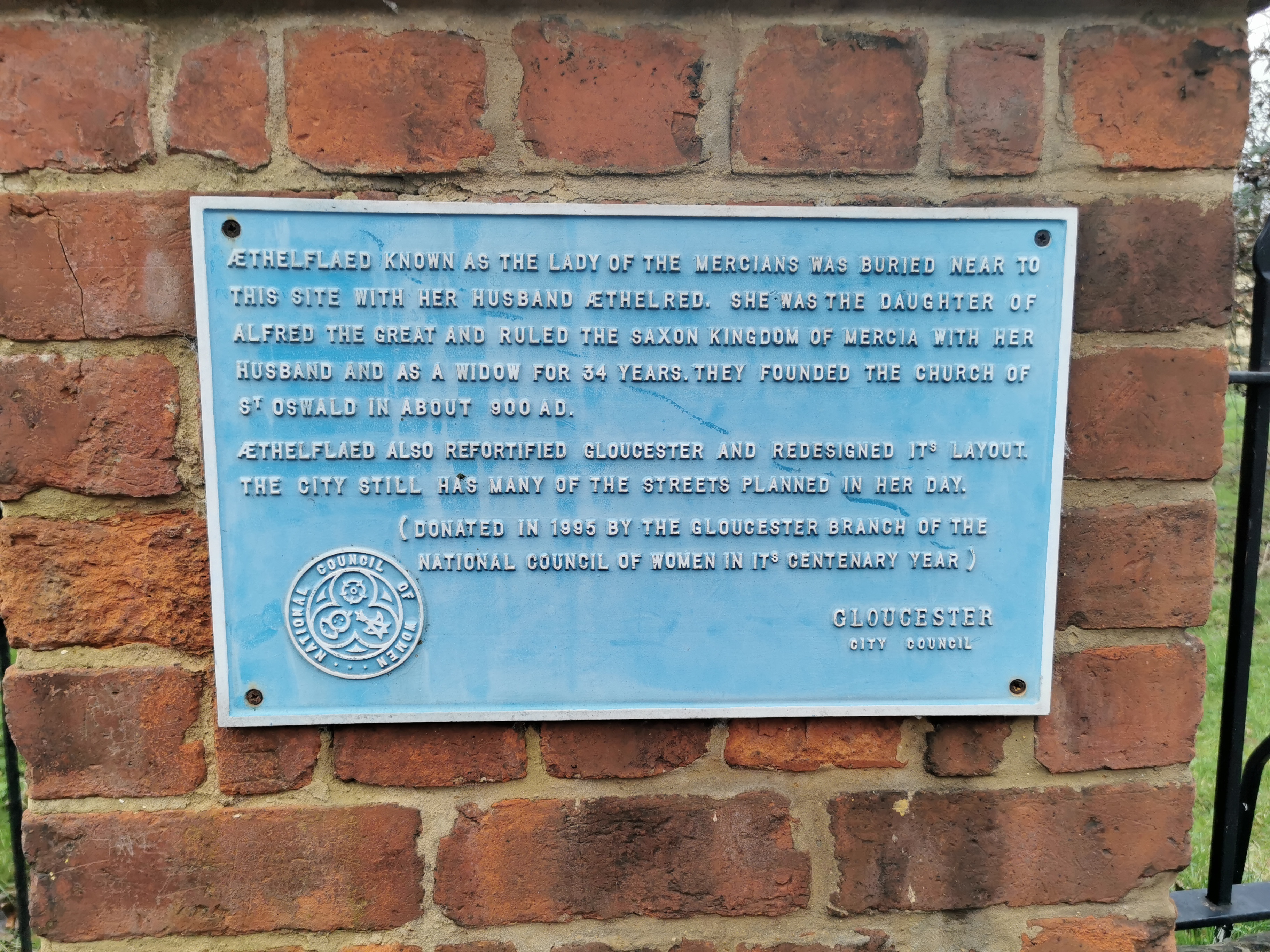

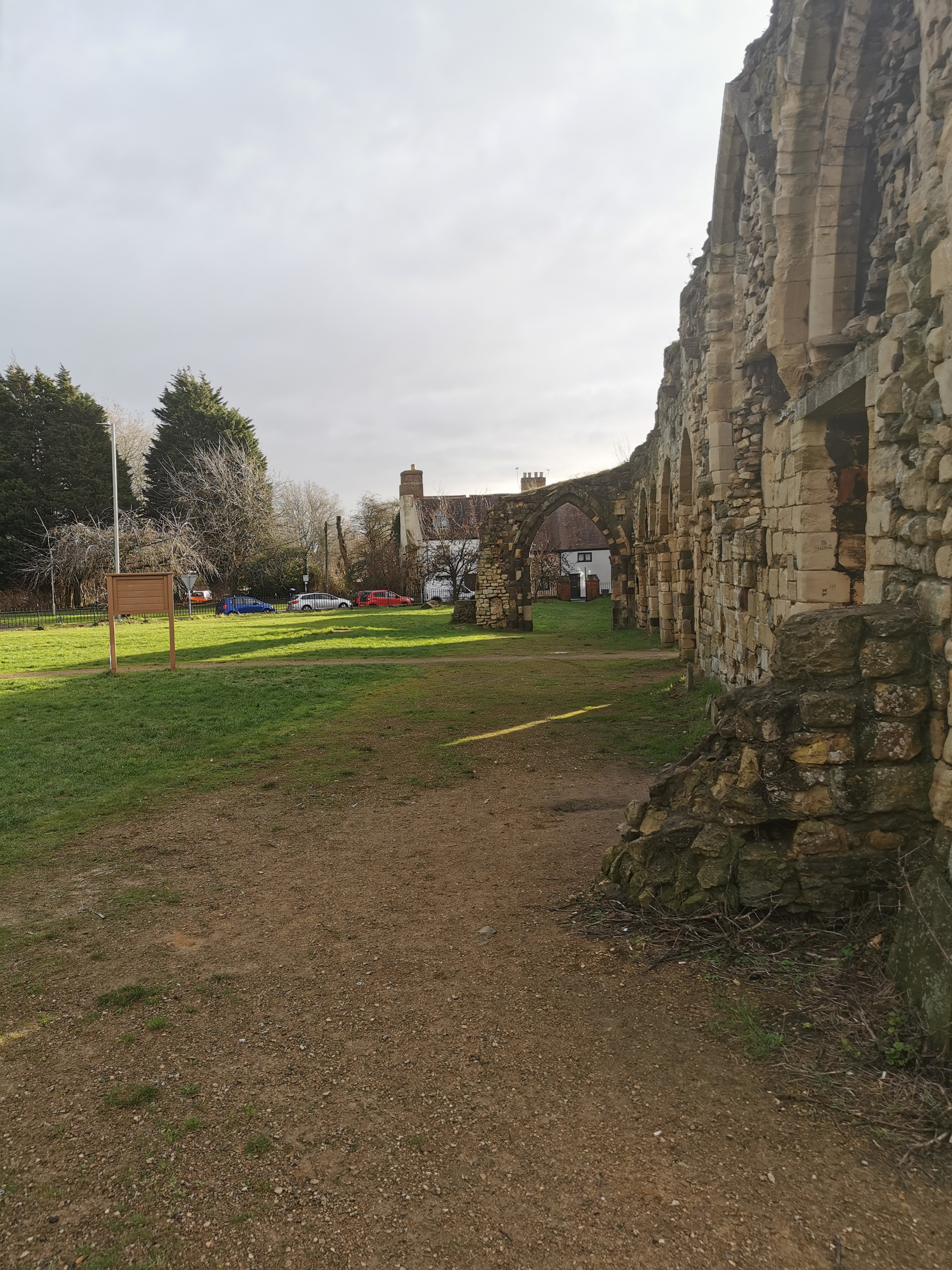


I also visited the Cathedral, and really wish I’d done a bit more research about what they offer, as I didn’t factor in all the fabulous tours they do, including one up the tower to get a view of Gloucester. Maybe next time. But, I did find this delightful pearl, which must remind us all to make sure our notes are up to the task at hand.

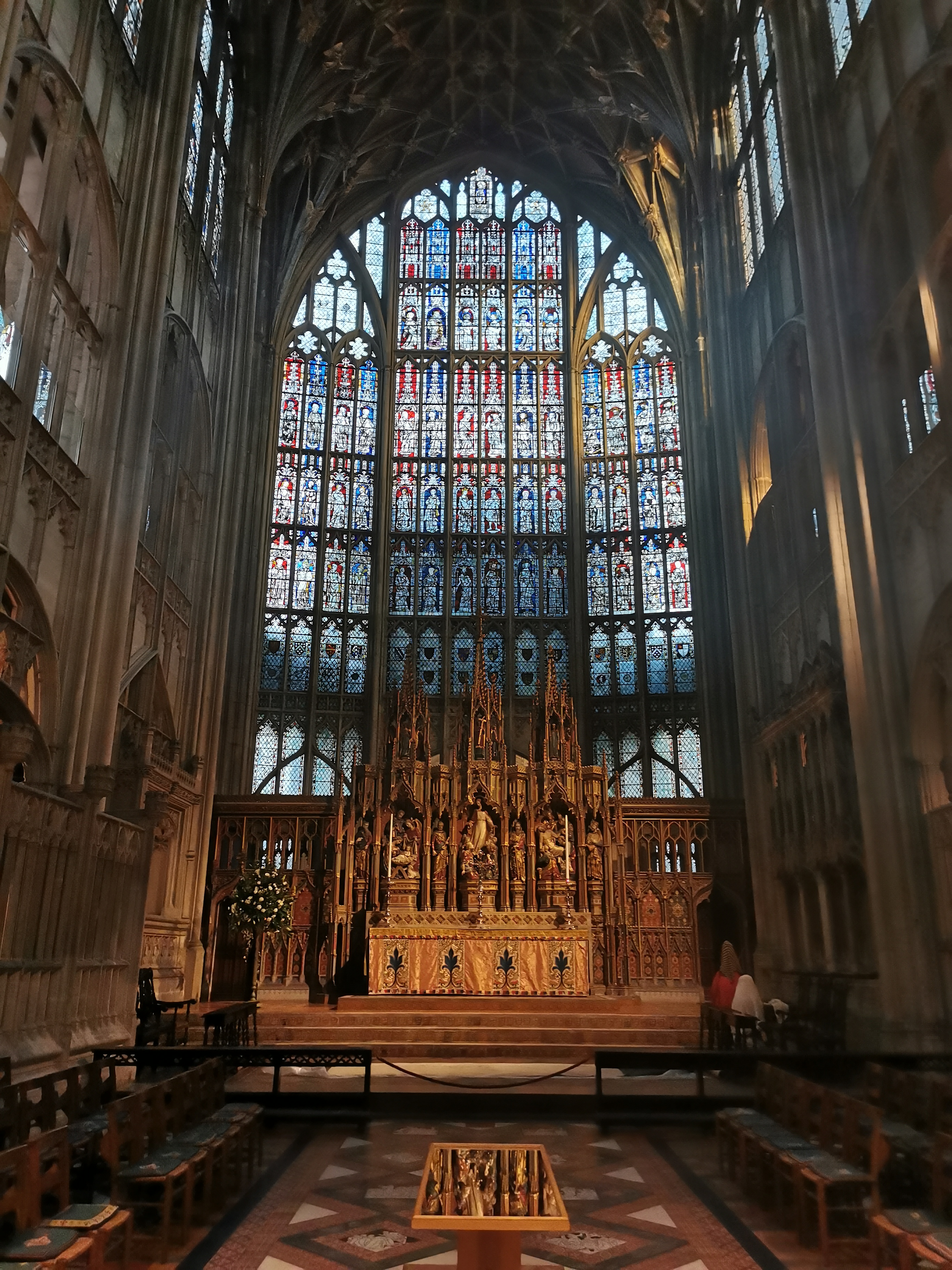
Can you imagine trying to put all those pieces back together after they took them down during WW2? Wow. Well done to those who accomplished the task. If you’re not sure of scale, it’s as big as a tennis court.
But to return to the priory. For those who know their history of the period, we might wonder why we have a St Oswald in Gloucester, which would have been very much in the heart of Mercia. Oswald, of course, was a king of Northumbria, a most Christian king, killed in battle against the might of the famous pagan king, Penda. The story goes that after his death, a band of brave Northumbrians retrieved their dead king, and returned him to Northumbria, where he was buried and revered. Why then would a Northumbrian saint, killed in the seventh century, become so closely associated with the Mercian ruling family?
I find this fascinating, and indeed, some years ago, attended a conference where I asked this question. The answer was enlightening. The Mercians, still facing the threat of the Viking raiders, needed a rallying cry. They needed a sainted figure whose cult they could effectively ‘steal’ or align with themselves, or so I was told, and St Oswald was that man, or rather that body, and so they stole him away from Bardney and took his to Gloucester, where his cult continued, and where Lady Æthelflæd and her husband, Ethelred, were later buried.
I’ve written about Oswald while he was alive, and of course, I’ve written about Mercia, Gloucester, Kingsholm, and Lady Ælfwynn. It was inspiring to finally see where the church once was, even if little remains of it, at least something does remain.
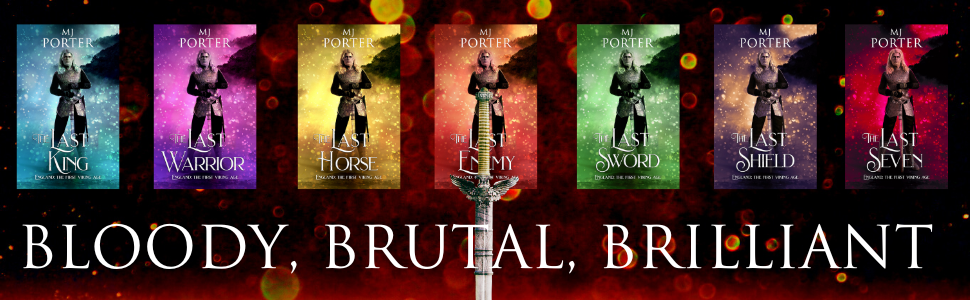

My new book, King of Kings, is a multi-viewpoint novel telling the story of events in Britain from 925-934. I thought it would be good to share details of the historical people my main characters are based on.
Owain of Strathclyde is perhaps the most difficult character in King of Kings to find in the historical record. Indeed, his place in the story is contested by historians, as we don’t know if the scribe of the Anglo-Saxon Chronicle of the time meant Owain of Strathclyde, or an Owain of one of the Welsh kingdoms. I decided to adopt the Owain of Strathclyde, but who exactly was he, and what was Strathclyde?
The kingdom of Strathclyde is also known by another name, that of Cumbria, and there is confusion in the sources and amongst historians about where it is and what it was. Alex Woolf suggests that by the events of 927, Strathclyde/Cumbria encompassed, ‘most of part of Lanarkshire, Dunbartonshire, Renfrewshire, Stirlingshire, Peebleshire, West and Mid-Lothian, eastern Dumfriesshire and Cumberland.’ (Woolf, A. From Pictland to Alba, 789-1070, Edinburgh University Press, 2007) p.155)
So who then were it’s kings? This again is far from as easy to state as might be thought. It’s believed that Owain of Strathclyde, succeeded his father, Donald II, to become king of Strathclyde, and in turn was succeeded by his son.
In 924, we are told that ‘the king of the Strathclyde Britons and all the Strathclyde Britons,’ (Swanton p.104) joined the king of Wessex, Edward the Elder’s alliance by the Anglo-Saxon Chronicle, but Owain isn’t named. Indeed, and as said above, when we do get mention of Owain in the Anglo-Saxon Chronicle, he’s named as ‘king of Gwent,’ (Swanton, M. trans and edit The Anglo-Saxon Chronicles, (Orion Publishing Group, 2000) p.107) even though there was no Welsh king of Gwent named as Owain at the time. It’s therefore difficult to get a feel for who he was, and what he did, but that didn’t mean I couldn’t include him in King of Kings. If anything, it made it all the more intriguing.
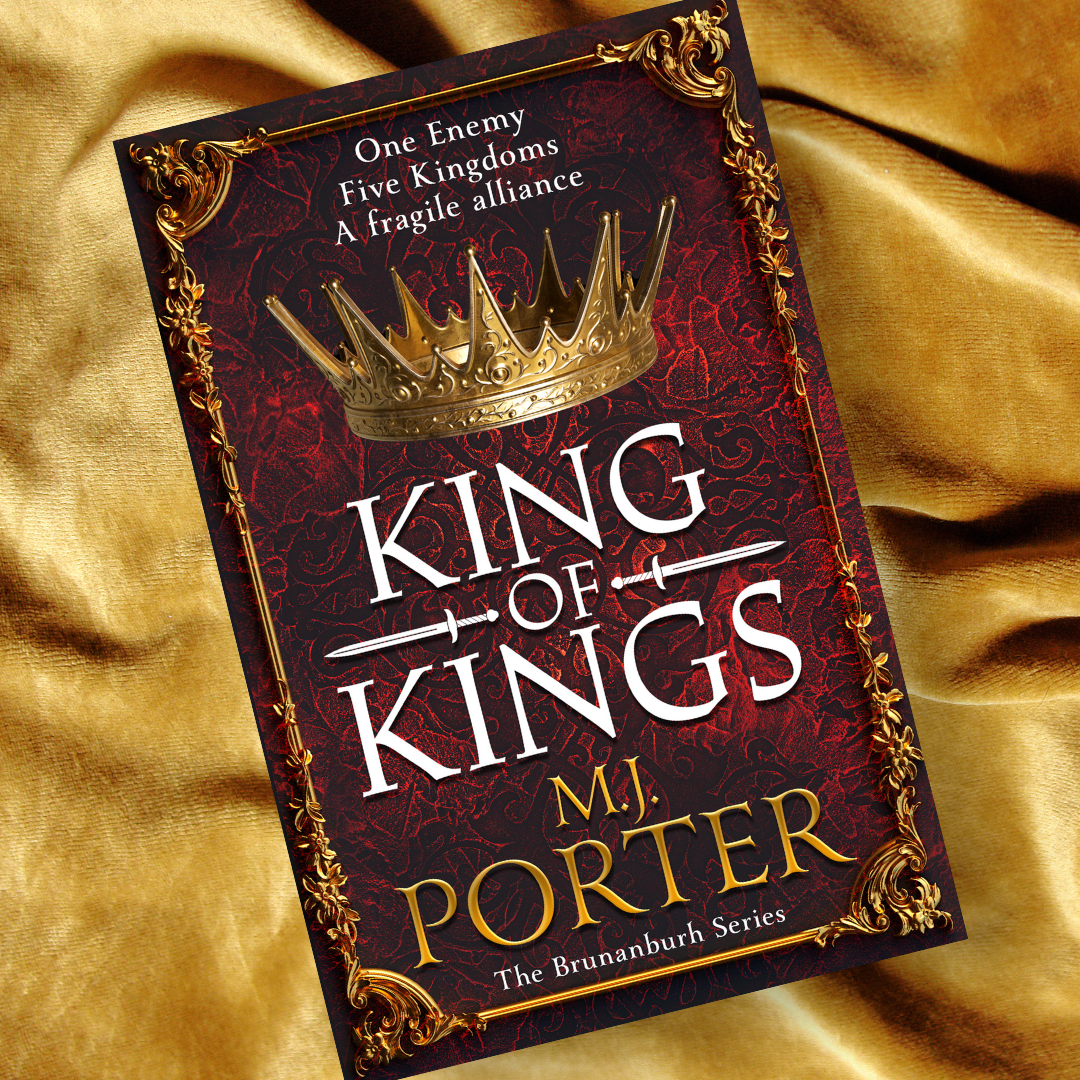
Preorder King of Kings
(released 10th February 2023)
Meet the Characters from King of Kings
Athelstan, king of the English
Ealdred, king of Bamburgh
Lady Eadgifu, wife of Edward the Elder
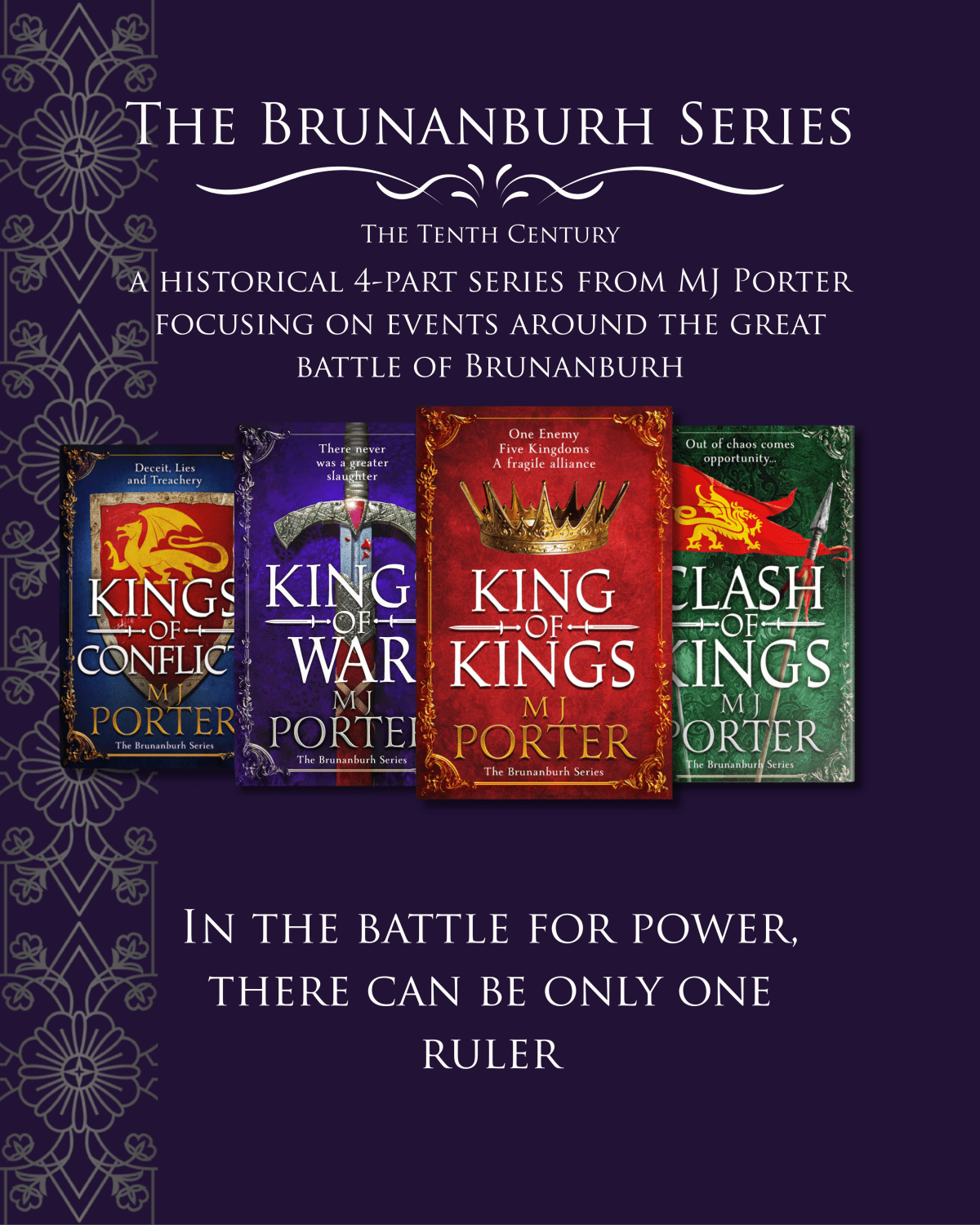
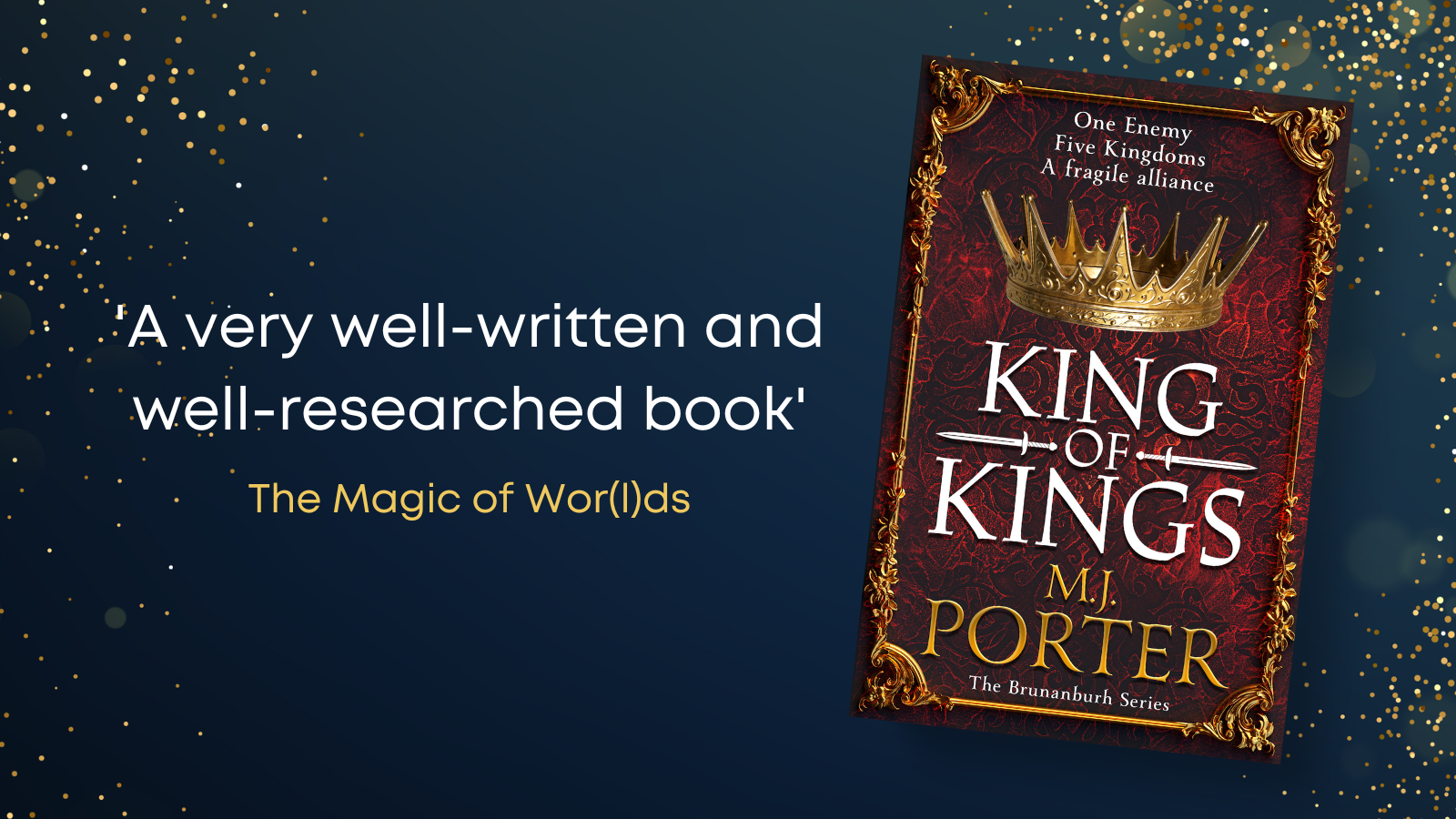
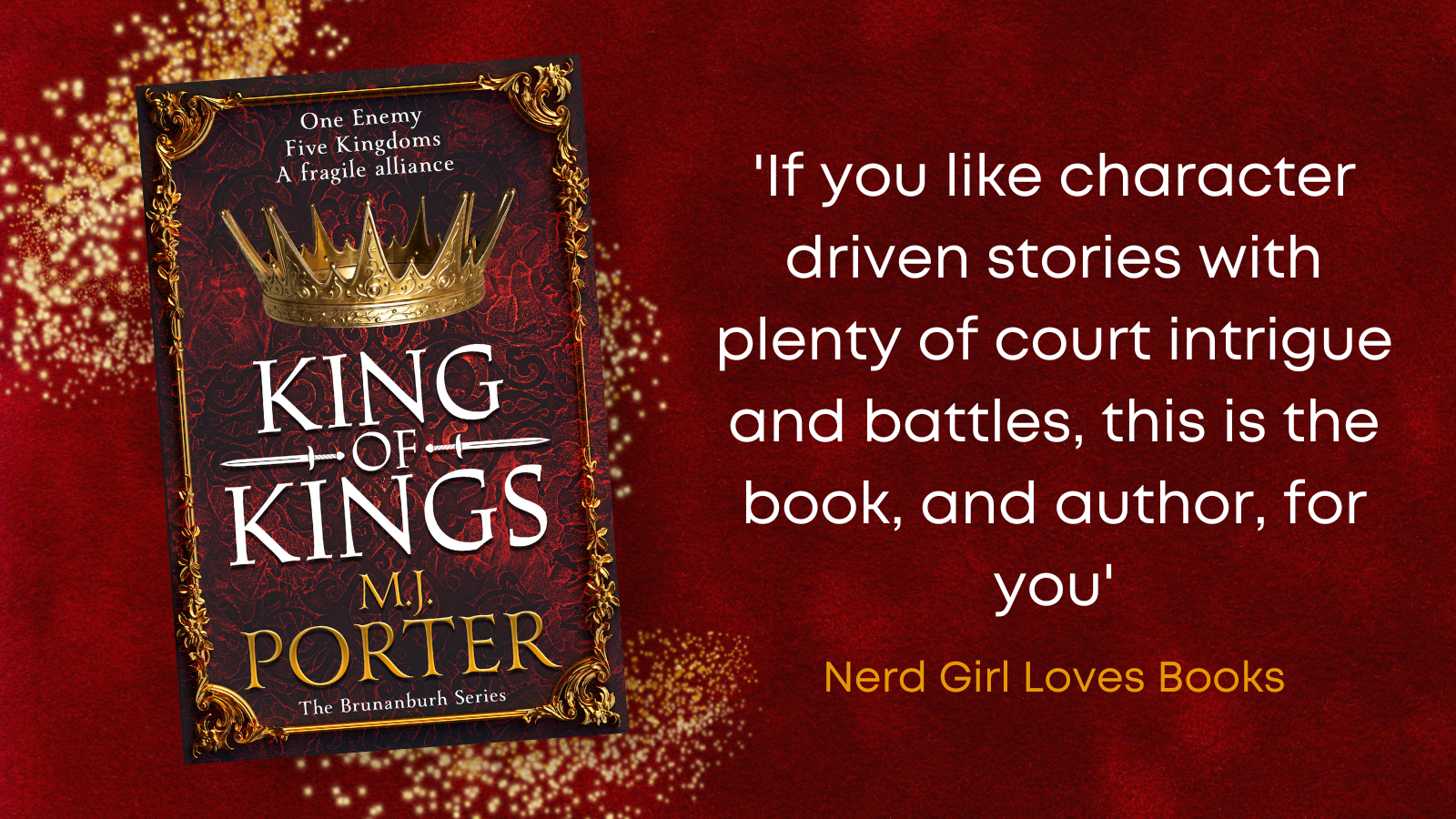
I’m so excited about the release today of King of Kings. This story, the first part in the retelling of the greatest battle on British soil that many have never heard of, Brunanburh, has been long in the making. Building on the original series, begun in 2014, King of Kings is entirely reworked, and it’s so much better:) (I honestly can’t believe how much better it is.)
Here’s the blurb
‘An epic tale of the birth of a nation. Truly mesmerising. Game of Thrones meets The Last Kingdom’ – Gordon Doherty
AD925
Athelstan is the king of the English, uniting the petty kingdoms of Wessex, Mercia, the Danish-held Five Boroughs and York following the sudden death of his father, King Edward.
His vision is to unite the realms of the Scots and the Welsh in a peace accord that will protect their borders from the marauding threat of the Norse Vikings.
Whilst seemingly craving peace and demanding loyalty with an imperium over every kingdom, Athelstan could dream of a much bigger prize.
But danger and betrayal surround his best intentions, namely from his overlooked stepbrother, Edwin, who conspires and vies for what he deems is his rightful place as England’s king.
As ever, powerful men who wish to rule do not wish to be ruled, and Constantin of the Scots, Owain of Strathclyde, and Ealdred of Bamburgh plot their revenge against the upstart English king, using any means necessary.
An epic story of kingsmanship that will set in motion the pivotal, bloody Battle of Brunanburh where allies have to be chosen wisely…
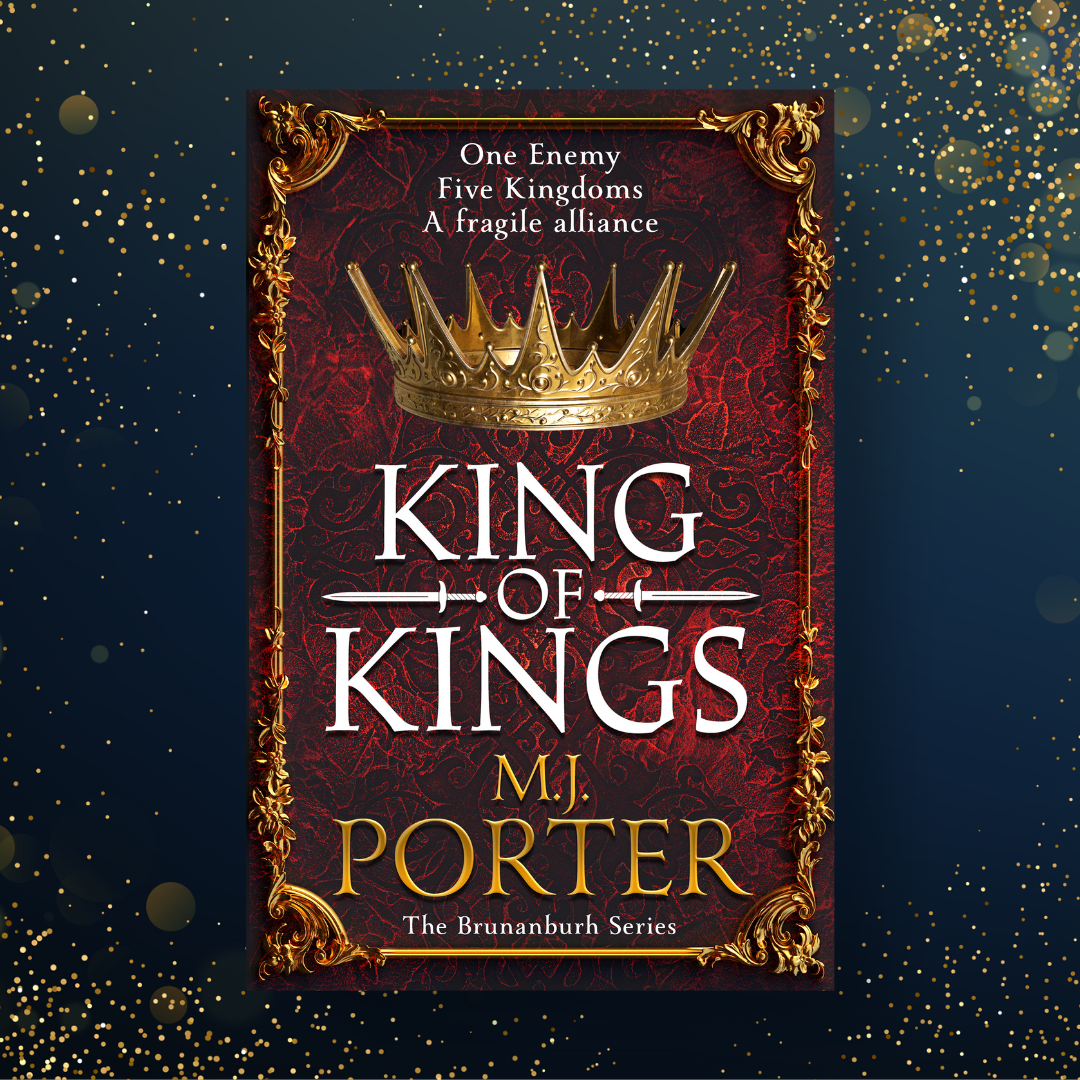
(available in ebook, paperback, hardback and audio, narrated by the wonderful Matt Coles).
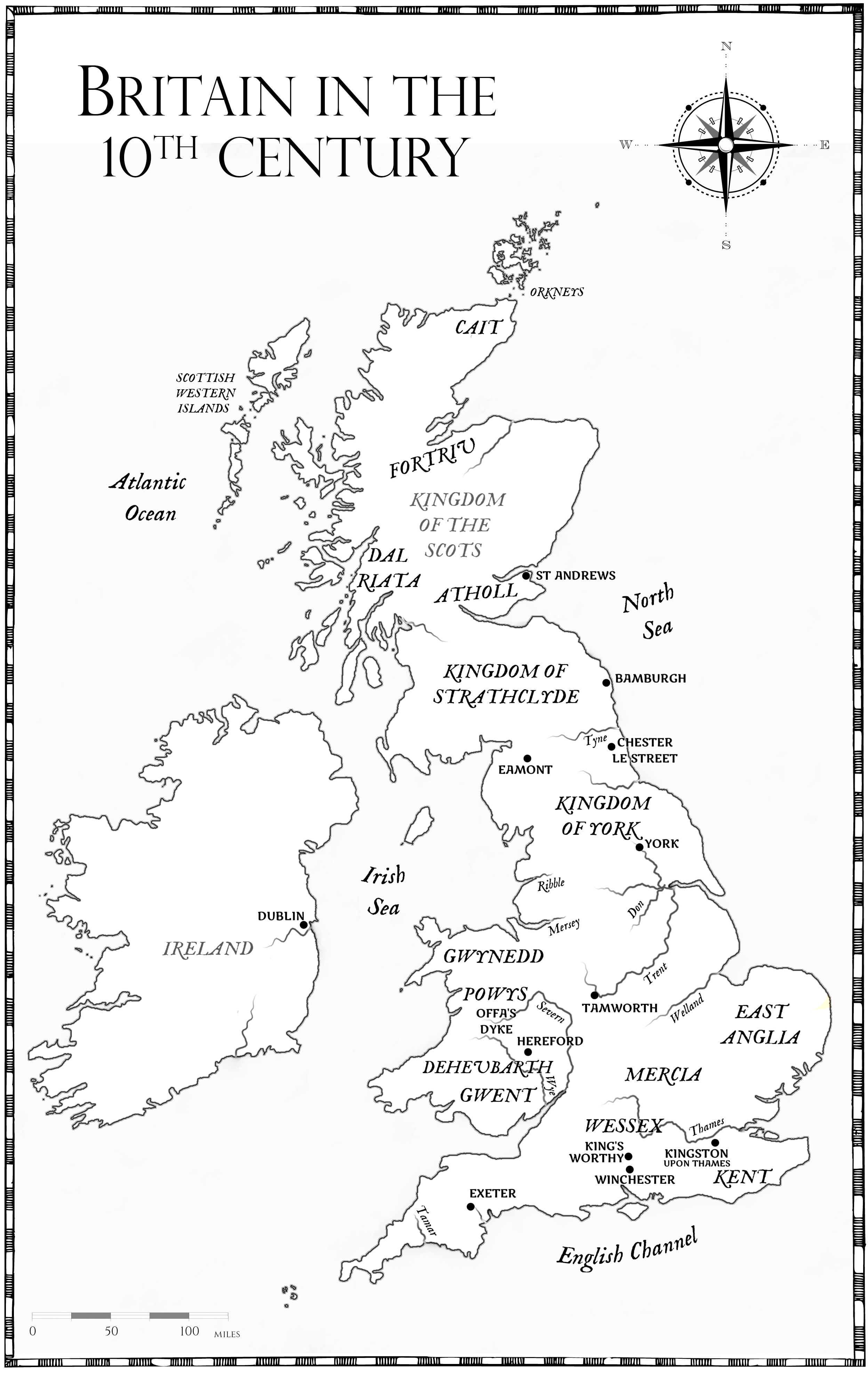
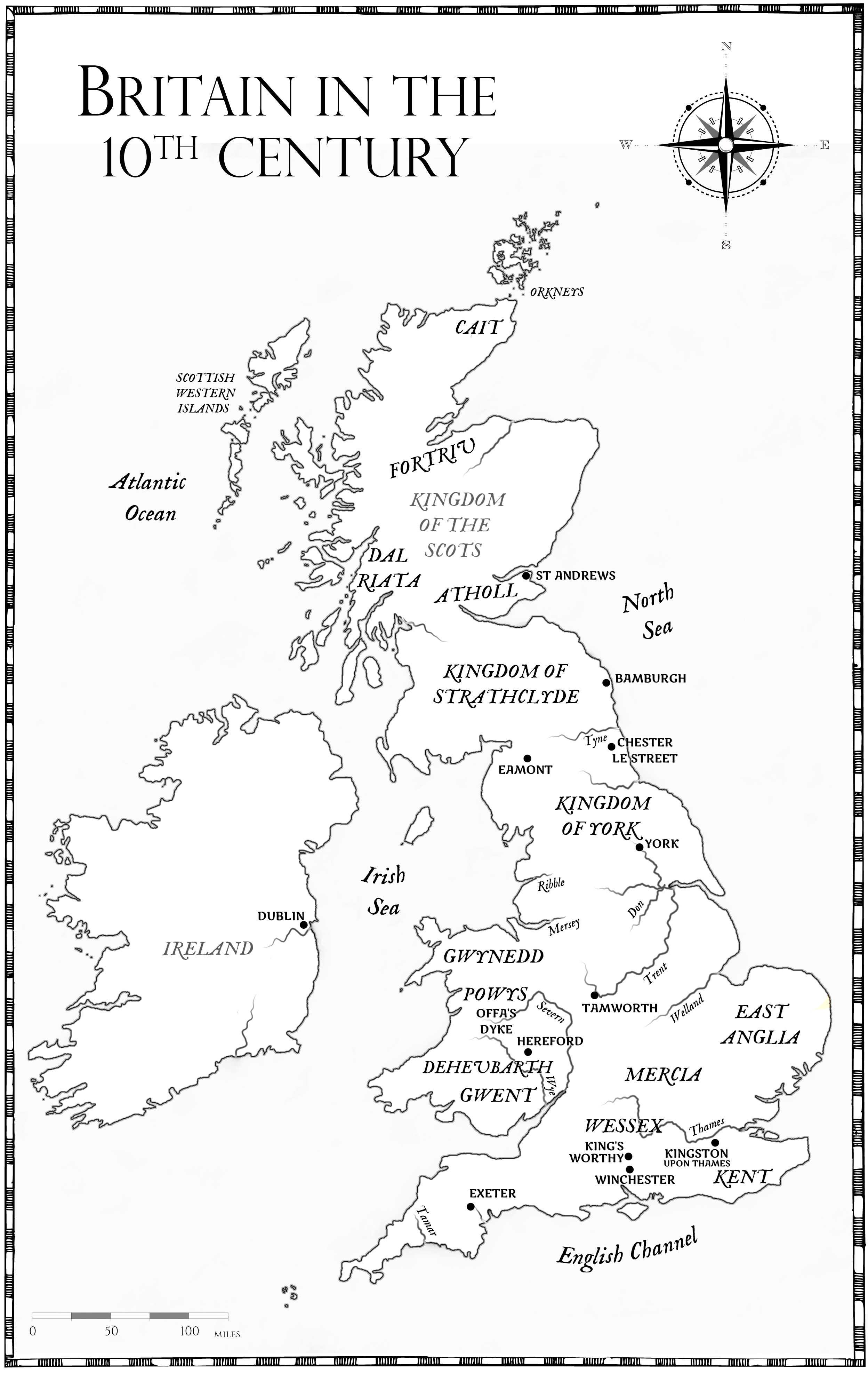
King of Kings. with its five kingdoms, and one alliance, might need some explanation. To help my readers understand who everyone is, and importantly, where everyone is, King of Kings has a map and a genealogical table, as well as a cast of characters.
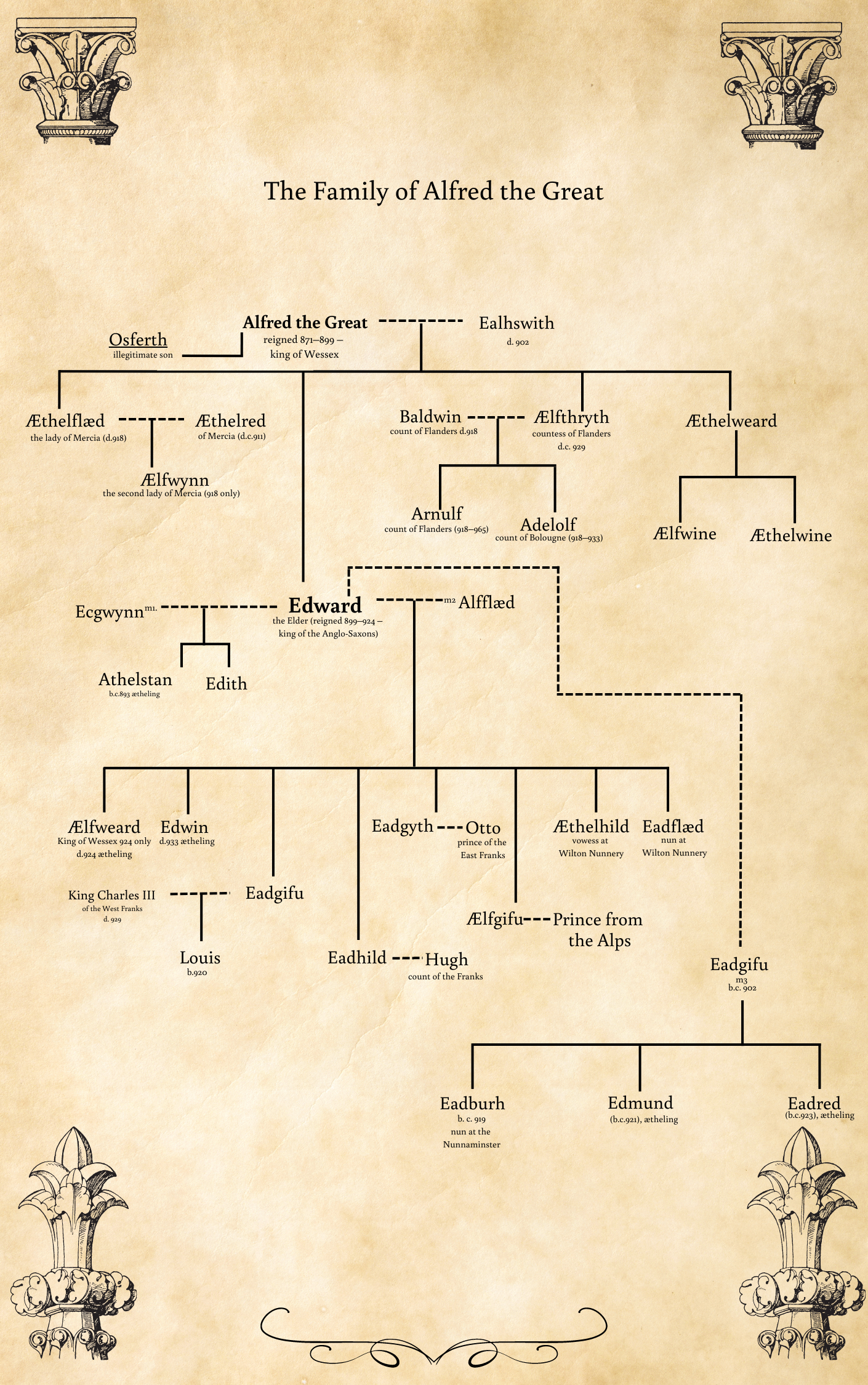
And because the family of King Alfred is so important to the story, I also have a genealogical table to share with my readers.

I’ve written some brief introductions for the main cast of characters.
Follow the blog tour with Rachel’s Random Resources

And for those who are falling in love with the period as much as I am, I wanted to share some non-fiction recommendations, and cautions.
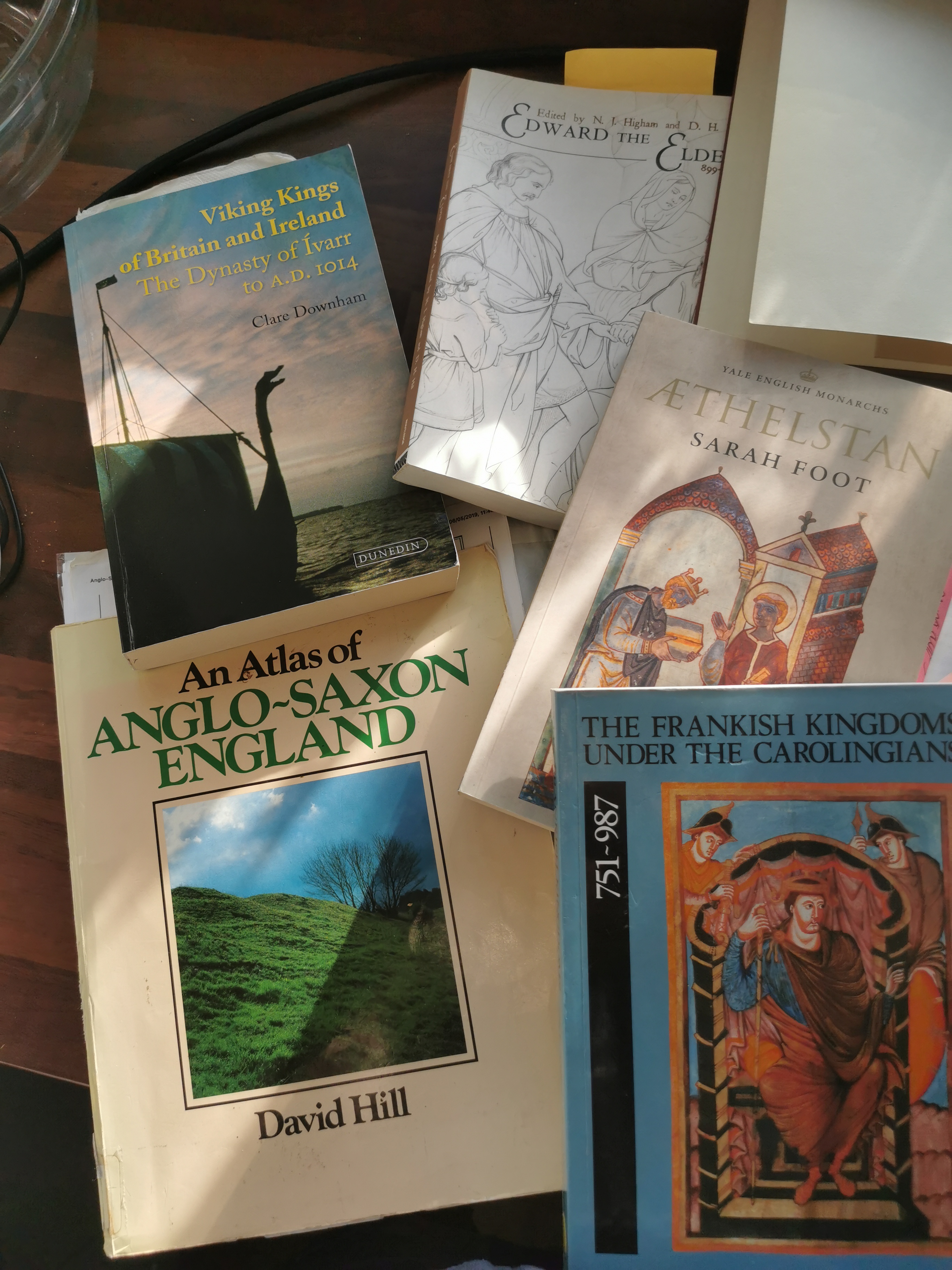
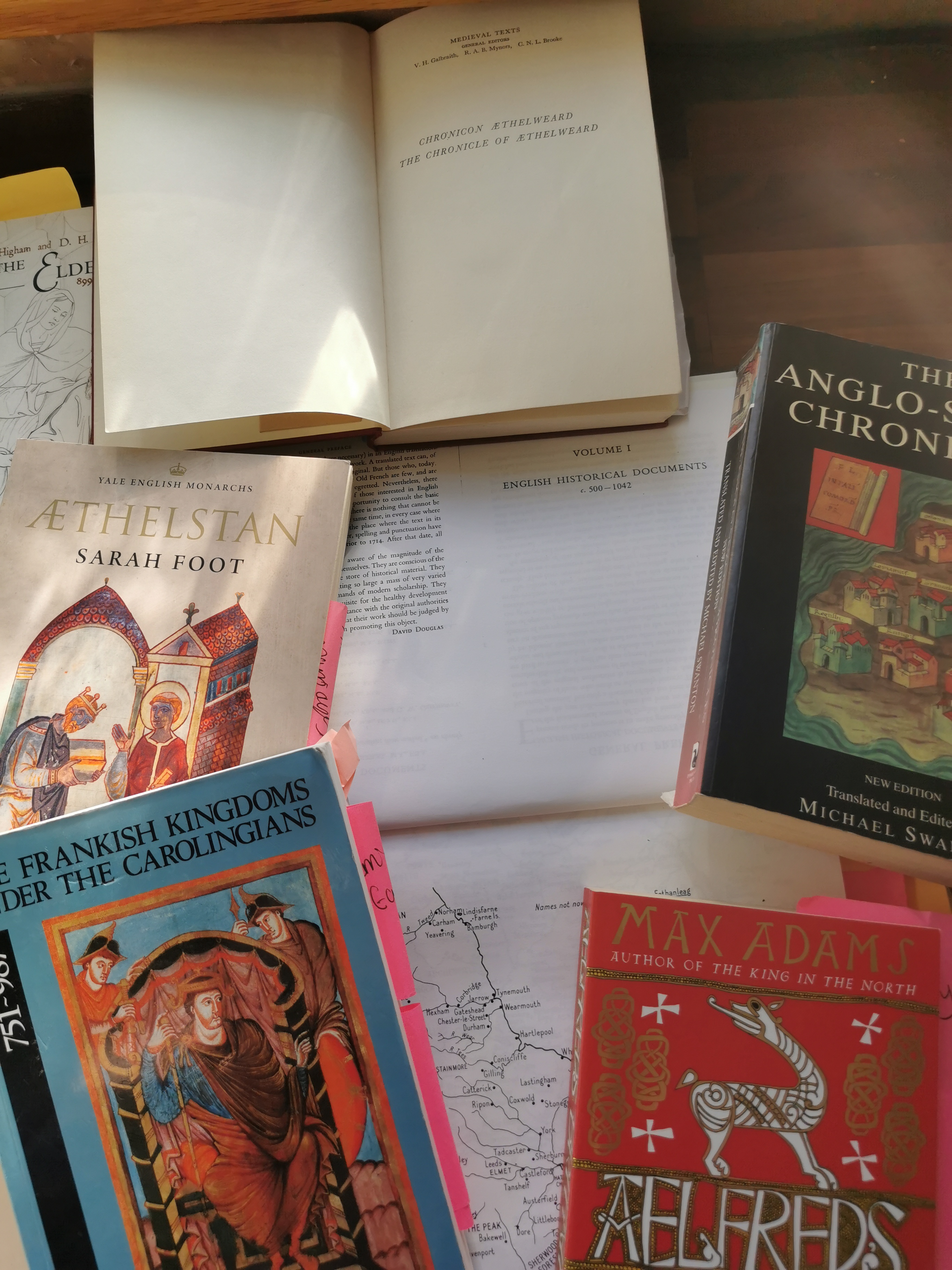
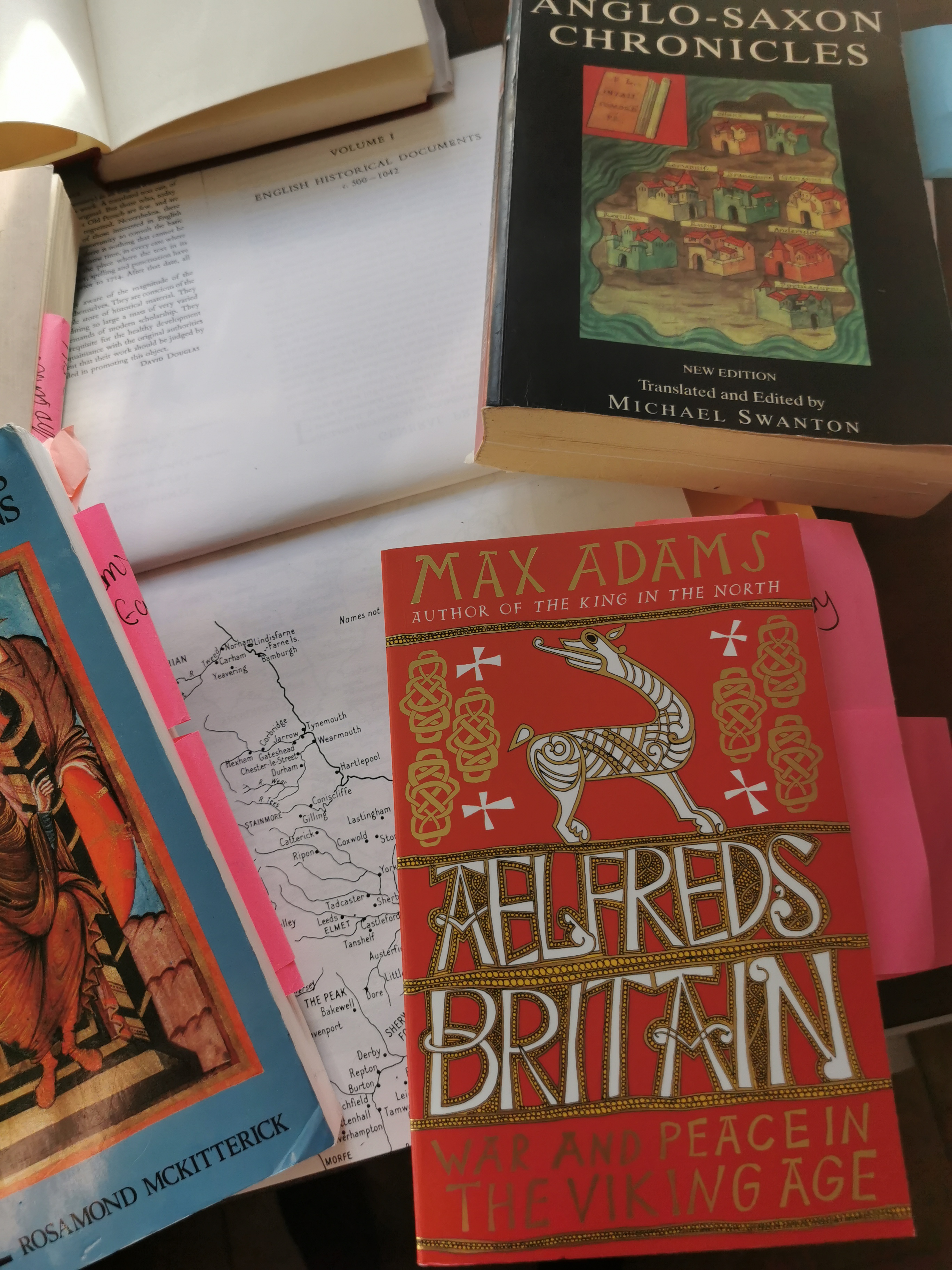
There is no one book that will adequately cover this period (that was one of the reasons that I fictionalised it) but these books (see photos below), along with Dr. Kari Maund’s The Welsh Kings, which I have in ebook, will give you a good grounding of events in Britain and Ireland. So, these are
Alfred’s Britain by Max Adams
Athelstan by Sarah Foot
The Anglo-Saxon Chronicles ed and trans. Michael Swanton (other versions available – I like the formatting of this one -with the different recensions)
The Welsh Kings by Kari Maund
An Atlas of Anglo-Saxon England by David Hill (don’t be put off by the fact this book is from the 1970s – it is invaluable)
From Pictland to Alba 789-1070 by Alex Woolf
Viking Kings of Britain and Ireland by Claire Downham
English Historical Documents ed and trans by Dorothy Whitelock
The Frankish Kingdom under the Carolingians by R McKitterick
Edward the Elder ed. Higham and Hill (not a narrative account, but historians writing papers about their area of interest and expertise).
There are also two very important online resources.
PASE (The Prospography of Anglo-Saxon England)
King of Kings has a number of characters, and some might be surprised to find Lady Eadgifu amongst them, but she was an incredibly important historical character, and I couldn’t leave her out of the narrative set at the English court.
Lady Eadgifu was the third wife of Edward the Elder (r.899-924), king of the Anglo-Saxons. Edward the Elder was the father of King Athelstan, and a whole host of daughters, as well as five sons. Lady Eadgifu would, it seems, have been young when she married the aging Edward the Elder, and that meant that she long outlived him, and also, that her three children (possibly four, but I’ve opted for three) were young when their father died. And two of these children were sons, Edmund (born c.921) and Eadred (born c.923). Her daughter, Eadburh, is thought to have been the oldest of the three children, born c.919.
While Lady Eadgifu, from what’s known (and it isn’t much, as there are few surviving charters from the end of Edward’s reign) perhaps had little role to play while her husband lived, other than wife and mother to the king’s children, following his death, she became increasingly significant. She was the daughter of an ealdorman, who perhaps died just before her birth, and her family are said to have had connections with Kent. Indeed, it’s often stated that she brought her husband Kent with their union. By that, what’s often meant, is the loyalty of the Kentish people. Remember, at this time, we’re still just before the creation of ‘England’ as we would now recognise it.
Sadly, very little is known about Lady Eadgifu (and she’s not alone in this – many of the royal women ‘disappear’ at points in the historical record, and on occasion, are entirely lost.) We know about a land dispute she was involved in, and also much more information for after Athelstan’s reign.
Indeed, it has been said that
‘Nor is it surprising that Eadgifu, as the consort of the previous king, served little role in her stepson’s court.[i]
[i] Firth, M. and Schilling, C. ‘The Lonely Afterlives of Early English Queens’, in Nephilologus September 2022, https://doi.org/10.1007/s11061-022-09739-4, p.7
However, Barbara Yorke believes that,
‘the enhanced position [of Lady Eadgifu] may also have been developed specifically for the widowed Eadgifu as part of an alliance with her stepson Æthelstan [Athelstan] in which she supported his position and he recognised her sons as his heirs.’[i]
[i] Yorke, B. ‘The Women in Edgar’s Life,’ in Edgar, King of the English, 959-975 Scragg, D. ed (The Boydell Press, 2008), p.146
And it is this option that I’ve decided to explore in King of Kings. Lady Eadgifu was wife to a king. She would have known her worth, even when faced with a stepson as the king of the English, and another stepson, and stepdaughters, who perhaps didn’t share any love for their, potentially, younger stepmother. Will Lady Eadgifu work with or against Athelstan? Read on to find out.
Meet Owain, king of Strathclyde
Meet Athelstan, king of the English
Meet Constantin, king of the Scots
Meet Hywel, king of the West Welsh
Meet Ealdred, king of Bamburgh