It’s my turn on the Poison at the Village Show by Catherine Coles New Release Blog Tour

I’ve been reading Catherine Coles previous series for a while now. I do love a Golden Age mystery novel, so I was really pleased to see she was becoming a fellow Boldwood Books author, and that there was going to be a new series as well.

Here’s the blurb:

With the war finally over the residents of Westleham village are trying to reclaim a sense of normality and the upcoming village show is proving to be a popular event!

Newcomer, Martha Miller, has high hopes for the village show. Since her husband Stan left for work one day and never returned, some of the villagers have treated Martha with suspicion – why would a good man like Stan simply up and leave? Was it something Martha did?

All Martha knows is that she’s hoping that she can win people over and hopefully they’ll but her delicious homemade plum gin, too and she’ll be able to make ends meet.

But as glasses of Martha’s gin are passed around, disaster strikes. Alice Warren, Chairwoman of the village show slumps to the ground after taking a sip. It’s clear she’s been poisoned!

Martha is shocked, but not surprised, when fingers of suspicion once again point her way. Determined to prove her innocence, Martha sets about trying to find the real culprit. But who would kill Alice and why?

Ably helped by the new vicar, Luke Walker, Martha quickly tries to get to the bottom of this mystery. But with the villagers closing ranks it quickly becomes apparent that the only person with a motive is Martha herself….

Will Luke and Martha discover who is behind the poisoning before it’s too late?

Here’s my review

Poison at the Village Show is a charming mystery set in a small village in the years after the Second World War, featuring Martha Miller, her sister Ruby, and the new vicar, Luke Walker.

I’ve already read all of Catherine Coles Tommy and Evelyn books set in the aftermath of World War I and love the depictions and the characters of Tommy and Evelyn. Fans of those books will not be disappointed with Martha, Luke and Ruby. They are all excellent creations and make for an engaging read.

The story really gathers pace as it continues, and the ending is both satisfying, and I confess, slightly unexpected for me. It’s always good not to guess who the real perpetrator was.

I really look forward to reading more of this series and returning to the charming village of Westleham with its cast of eclectic busy-bodies in the years after the war when a sweet cup of tea is the solution to everything.

Thank you to the publisher and Netgalley for my review copy.

Purchase Link – https://amzn.to/3freNRj  

Meet the author

The daughter of a military father, Catherine was born in Germany and lived most of the first 14 years of her life abroad. She spent her school years devouring everything her school library had to offer! Catherine writes cosy mysteries that take place in the English countryside. Her extremely popular Tommy & Evelyn Christie mysteries are set in 1920s North Yorkshire. Catherine lives in northeast England with her two spoiled dogs who have no idea they are not human!

Facebook 

Twitter  

Instagram  

Newsletter Sign Up: 

Bookbub profile

Don’t forget to check out the other stops on the Poison at the Village Show Blog Tour with Rachel’s Random Resources

The Last King is on blog tour with The Coffee Pot Book Club

What better way to celebrate, nearly, two years of Coelwulf and his pals, than with a blog tour to showcase all of the books in the series (to date – I’m currently working on book 7).

What started as a bit of mad idea in The Last King has become a series featuring a cast of warriors (and horses) that my readers love reading about, and about who I love to write. Not to mention inspiring the prequel series – which begins with Son of Mercia – and tells the story of a very young Icel.

To celebrate all of this, I have three, yes three, paperback copies of the short story collection, Coelwulf’s Company, to giveaway to readers. They’ll come signed and dated, and to anywhere in the world. To enter, just follow this link to Rafflecopter, where it’ll ask you to follow me on Twitter, and you should be entered. I’ll get in touch with the winners at the end of the giveaway, which I hope is midnight on 18th March 2022 (if I’ve set it up correctly). Good luck with the prize draw and do let me know if there are any problems.

a Rafflecopter giveaway

Enjoy the blog tour, with The Coffee Pot Book Club, and a huge thanks to all the hosts for featuring the series.

The historical setting of the Gods and Kings trilogy #histfic #SeventhCentury

The historical setting of the Gods and Kings trilogy

It’s often assumed that we know very little about the men and women of seventh century Britain, and that’s not wrong, however, what is known makes for a compelling narrative.

The Golden Age of Northumbria

The seventh century in Britain is more often than not, lauded as the Golden Age of Northumbria, the northernmost Saxon kingdom of England. Many will have heard of the magnificent fortress on Northumberland’s coast, Bamburgh, or as some will know it Bebbanburg (even though must of what stands to this day is a late nineteenth century addition). Many may have heard of the names Edwin, Oswald Whiteblade, and his brother, Oswiu. Many may know of their Celtic Christianity, of Bishop Aidan from Iona beginning his monastery on Lindisfarne and the explosion in art which seems to come to natural fruition with the works of Bede in the later eighth century. But there is much, much more than that.

The Anglo-Saxon Chronicle tells us of a series of great battles fought on the island of Britain during the seventh century, most, if not all of them, great victories for Northumbria’s royal family, or if not victories, then terrible tragedies. Edwin, the uncle of Oswald Whiteblade, slew his nephew’s father, and Oswald was forced to flee into exile, where he was introduced to Celtic Christianity. And yet, this was only a mirror of Edwin’s own life, when he too had been forced to flee into exile when Oswald’s father claimed the kingdom of Northumbria. And all of this is fascinating, but what of the other kingdoms, and their leaders?

Penda of Mercia

And here, we encounter, Penda of Mercia, a pagan king, at a time when the Saxon kingdoms were slowly becoming converted to Christianity, either from the north and Iona (Bishop Aidan), or from Rome, with Bishop Paulinus. These two religions were to set up their own conflict for supremacy but for the three battles I’ve written about, it’s Penda and his paganism that creates the conflict.

Penda and his brother, Eowa, were to claim Mercia as there’s to rule. They seem to have originated from a royal family with their power base in the kingdom of the Hwicce, a part of Mercia centred around Gloucester and they were not happy with events in Northumbria.

Not once, not twice, but three times, Penda took on the might of Northumbria, in battles taking place at Hædfeld, Maserfeld and Winwæd, spanning a twenty year period.

Hædfeld, Maserfeld and Winwæd

It’s these three battles I offer a retelling of in the Gods and Kings series, and not just because there are these two kingdoms at loggerheads, Mercia and Northumbria, but because these battles brought into play every kingdom within Britain at the time; from Dal Riata and the kingdom of the Picts to the North, to that of the West Saxons and Dumnonia to the south and south-west. These battles were monumental. Great swathes of warriors facing one another with everything to play for, much to lose and even more to gain.

Who could resist battlegrounds such as these?

Pagan Warrior

Pagan King

Warrior King

(For anyone who is confused, these books were previously released under the titles of the battles, Hædfeld, Maserfeld and Winwæd.)

Check out the Gods and Kings page on the blog

I’m sharing my review for The Bear of Byzantium by S J A Turney #histfic #bookreview

Here’s the blurb

The wolves of Odin sail to the centre of the world: Constantinople.

AD 1041. After successfully avenging the death of his father, Halfdan and the crew of the Sea Wolf seek adventure in strange new lands, far from their Scandinavian home.

They join the fleet of Harald Hardrada, the legendary Viking commander, sailing back to Constantinople from the battlefields of Georgia. There they join the Varangians, the personal bodyguard of the Byzantine Emperors populated almost exclusively by Viking warriors. But Constantinople has changed during Hardrada’s long absence.

The Emperor, Michael IV, is ailing visibly, and powerful factions in his court are setting their plans in motion ahead of his inevitable demise. While courtiers scheme, elements even within the Varangian Guard are picking sides.

Gunnhild, the seer among the Sea Wolf crew, has struck out on her own in the big city. Unable to join the all-male Guard alongside her friends, she establishes herself in a small side-street near the port as a healer and soothsayer, offering cures to the sick and glimpses of the future to the desperate, or the conspiratorial. But in all her visions she sees a wolf, a boar and a golden bear fighting together to support the Byzantine throne. The Norns aren’t finished with them yet…

The epic second instalment in the Wolves of Odin series, taking us to the heart of power in Constantinople and the desperate machinations of the Byzantine emperors. Perfect for fans of Bernard Cornwell, Giles Kristian and Angus Donald.

Cover image forThe Bear of Byzantium by SJA Turney

My Review

The Bear of Byzantium is a fabulous book.

From the opening chapter, which focuses on Harald Hardrada, I knew this was my kind of book – if not just because of the occasional – and it is occasional for anyone who doesn’t appreciate it quite as much as me – use of a little bit of fruity language.

What follows is a journey through Constantinople at a particularly perilous time for emperors and impresses.

The two characters of Gunnhild and Halfdan, who are the main POV throughout the story, are intriguing and have very eventful stories, and the ending is exciting. I thoroughly enjoyed the way the author brought the city of Constantinople to life – something he’s extremely good at in his Roman-era books as well – as well as the customs, regulations, and also, all the paperwork (it’s much more exciting than it sounds:))

A firm favourite for me now and I look forward to continuing the story of Gunnhild and Halfdan – and I will assume Harald Hardrada at some point in the next few books in the series.

My thanks to the publisher and Netgalley for my review copy. The Bear of Byzantium is available now from Amazon and all good booksellers. Just a note that while this might be book 2, I haven’t read book 1, although I have it to read. If you want to jump right in, as I did, it won’t be a struggle to engage with the characters.

Connect with the author

Website Twitter

Check out my other reviews for Simon Turney/SJA Turney’s books

Commodus

Domitian

Sons of Rome

Loki Unbound

Today, I’m delighted to welcome Mercedes Rochelle to the blog with her new book, A King Under Siege.

Your book, A King Under Siege, sounds fascinating. Can you share with me what the first idea was that made you decide to write this story? It might be very different from how the story ended up being, but I am curious, if you don’t mind sharing. And, if the story is very different, would you mind sharing the process by which you ended up with your current novel?

Shakespeare and A King Under Siege

Back in my college days, I watched the new BBC Shakespeare Production of Richard II with Derek Jacobi. I had never heard of Richard, but I watched this play with growing fascination and by the end, when he sat in prison bemoaning the fate of kings, I was smitten. You know, I carried him around with me for over forty years, intending to write his story someday. 

At the time, I didn’t realize that Shakespeare only covered the last three years of Richard’s life in the play. I had no idea what I was in for: first the Peasants’ Revolt then the Lords Appellant (and the Merciless Parliament) putting Richard’s friends and advisors to death. His story was much more complicated than I ever imagined. And of course, it helped explain the events in Shakespeare’s play—especially the exile of Henry Bolingbroke, which was kind of “out of left field” to me. In fact, I would say that events during Richard’s reign deserved more than one play, but there’s a possibility that Shakespeare might have upset the queen if he had done so. He barely managed to stay out of jail as it was—especially after the Earl of Essex used his play to promote his ill-fated rebellion.

But I digress. Suffice it to say that Shakespeare’s play actually depicted events in my next book, THE KING’S RETRIBUTION. So I had to go back and start from the beginning. At first, I was going to gloss over the Peasants’ Revolt, but frankly I found it too interesting to ignore. Wat Tyler and John Ball were giant personalities, and their revolt shook medieval society to its core. And indeed, I think Richard’s actions revealed his courage under fire—a trait so important to kingship. Too bad he was only fourteen and under the thumb of his elders who were quick to downplay his accomplishments. 

Froissart-JohnBall-BL-Royal 18 E I f. 165v

But it wasn’t until I unearthed the whole Lords Appellant episode that I understood how Richard’s personality got warped. He lost everyone who was important to him—except for his wife—and was humiliated to the point of almost losing his crown. No wonder he felt the need to wreak revenge. It’s a marvel he waited so long. I believe the untimely death of Queen Anne removed the most effective brake on his unwholesome tendencies. 

So Shakespeare, who began his play with the famous scene where Bolingbroke and Mowbray accused each other of treason, showed us the beginning of the end. Their unfortunate quarrel gave Richard the opportunity to get rid of the last two Appellants who almost destroyed his kingship. He had already taken his revenge on the other three, the Duke of Gloucester (whose unavenged murder is referenced several times in the play without explanation), the Earl of Arundel (who was executed) and the Earl of Warwick (who was degraded and imprisoned). Exiling Bolingbroke and Mowbray gave Richard great satisfaction, and Gaunt’s death shortly thereafter clinched his triumph when he confiscated Bolingbroke’s inheritance. 

I always wondered whether the Elizabethans knew the history behind Shakespeare’s plays (for instance, did they know Banquo in Macbeth was the ancestor of the Stewarts?). In Richard II’s case, the play works as it is very well, but a knowledge of its background makes it even more comprehensible. I watched the play often while writing this book (and afterwards), and each time I saw it I caught something new. Needless to say, the same qualifies for Henry IV, as I was soon to discover!

Thank you so much for sharing. I think Shakespeare has a lot to be blamed for. His tendency to play around with details of the past is as fascinating as the events he depicts. Good luck with the new book.

Here’s the blurb:


Richard II found himself under siege not once, but twice in his minority. Crowned king at age ten, he was only fourteen when the Peasants’ Revolt terrorized London. But he proved himself every bit the Plantagenet successor, facing Wat Tyler and the rebels when all seemed lost. Alas, his triumph was short-lived, and for the next ten years he struggled to assert himself against his uncles and increasingly hostile nobles. Just like in the days of his great-grandfather Edward II, vengeful magnates strove to separate him from his friends and advisors, and even threatened to depose him if he refused to do their bidding. The Lords Appellant, as they came to be known, purged the royal household with the help of the Merciless Parliament. They murdered his closest allies, leaving the King alone and defenseless. He would never forget his humiliation at the hands of his subjects. Richard’s inability to protect his adherents would haunt him for the rest of his life, and he vowed that next time, retribution would be his.

Buy Links:

Universal Link

Amazon UKAmazon USAmazon CAAmazon AU

Barnes and Noble: 

Meet the Author

Mercedes Rochelle is an ardent lover of medieval history, and has channeled this interest into fiction writing. Her first four books cover eleventh-century Britain and events surrounding the Norman Conquest of England. The next series is called The Plantagenet Legacy about the struggles and abdication of Richard II, leading to the troubled reigns of the Lancastrian Kings. She also writes a blog: HistoricalBritainBlog.com to explore the history behind the story. Born in St. Louis, MO, she received by BA in Literature at the Univ. of Missouri St.Louis in 1979 then moved to New York in 1982 while in her mid-20s to “see the world”. The search hasn’t ended! Today she lives in Sergeantsville, NJ with her husband in a log home they had built themselves.

Connect with Mercedes

WebsiteTwitterFacebook

BookBubAmazon Author PageGoodreads:
 

Don’t forget to check out the other stops on the A King Under Siege blog tour with The Coffee Pot Book Club

Today, I’m reviewing A Night of Flames by Matthew Harffy as part of the new release #Blog Tour #Aries

Here’s the blurb

In the wild lands of Norway, Hunlaf must quell a vicious slave uprising in Matthew Harffy’s new historical adventure.

A wild land. A lethal fanatic. A violent revolt.

Northumbria, AD 794. Those who rule the seas, rule the land. None know the truth of this more than the Vikings. To compete with the seafaring raiders, the king of Northumbria orders the construction of his own longships under the command of oath-sworn Norseman, Runolf.

When the Vikings attack again, the king sends cleric turned warrior, Hunlaf, on a mission to persuade the king of Rogaland into an alliance. But Hunlaf and Runolf have other plans; kin to seek out, old scores to settle, and a heretical tome to find in the wild lands of the Norse.

Their voyage takes them into the centre of a violent uprising. A slave has broken free of his captors and, with religious fervour, is leading his fanatical followers on a rampage – burning all in his path. Hunlaf must brave the Norse wilderness, and overcome deadly foes, to stop this madman. Can he prevent a night of flames and slaughter?

Review

A Night of Flames returns fans to the world of Hunlaf and Runolf. While book 1 focused on the initial raids against Lindisfarne, book 2, eventually, takes the reader further away to seek out the home of the Raiders. An intriguing idea, and an interesting way of keeping with the same characters, when there’s such a huge historical gap between those first raids, and the later, more sustained ones.

Throughout the book, Hunlaf constantly questions himself – is he a warrior or is he a man of God? There are some illusions, through foreshadowing in the narrative, to possible future adventures for Hunlaf, far from the shores of Northumbria. But for now, we have Hunlaf’s accounting of the building of a ship to brave the Whale Road, and the journey he subsequently takes, via Orkney to Norway. It’s a slow burner. Not until nearly halfway through the book does Hunlaf reach his destination. And even there, his journey isn’t at an end, and nor are the perils he must face.

The author, admits, in the endnotes, that this book is big on the fiction. This is understandable. There’s so little information about events at this time, and I confess to feeling a little sorry for him having to pick a new thread for this story of the late eighth century. It would be ‘easier’ to choose a later period when more is known, and yet, equally, it allows for much wider scope. Hunlaf and his fellow warriors aren’t constrained by history to perform certain tasks.

Fans of the author are sure to enjoy book 2 in Hunlaf’s story. Book 3 promises to take readers even further afield, and I look forward to it.

A Night of Flames is released tomorrow, March 3rd 2022. Preorder now. Unless you’re reading this after March 3rd and then it will be available anyway:)

About the author

Matthew Harffy grew up in Northumberland where the rugged terrain, ruined castles and rocky coastline had a huge impact on him. He now lives in Wiltshire, England, with his wife and their two daughters. 

Pre-order links

Amazon UK: https://amzn.to/3sOTmAe

Follow Matthew

Twitter: @MatthewHarffy

Website: www.matthewharffy.com

Follow Aries

Twitter: @AriesFiction

Facebook: Aries Fiction

Website: http://www.headofzeus.com

Today, I’m delighted to welcome Alan Bardos back to the blog, with a post about his latest book, The Dardanelles Conspiracy

Writing a Conspiracy

Captain Reginald ‘Blinker’ Hall, the Director of British Naval Intelligence, launched an operation to bribe members of the Ottoman Government into making peace during the First World War. Hall hoped that would open the Dardanelles Strait to the Allies. Allowing them to supply Russia and bypass the stalemate on the Western front. It was however superseded by the Allies attempt to open the Straits by force. The ensuing naval and land campaigns resulted in a second stalemate in the East.

My novel ‘The Dardanelles Conspiracy’ charts these missed opportunities through the eyes of Johnny Swift, a disgraced soldier and diplomat. Swift finds himself in the middle of the attempts to open the Straits, by both negotiation and force.

It was the attempt at a negotiated peace that attracted me to the story and caused the greatest amount of difficulty in researching the novel. This was because it’s a fairly obscure footnote to what is largely considered to be a disastrous ‘side show’ to the Western Front.

It was in the footnotes of ‘Gallipoli’ by James Robert Rhodes that I got the first big break in my research. He made reference to two articles in the Royal United Service Institution Journal, from 1963. The first was called ‘A Ghost from Gallipoli’ by Captain G.R.G. Allen. The second was a response to this article written by Admiral Sir William James. My other break was that a friend of mine could actually get hold of the articles for me.

These articles gave a detailed overview of the negotiations and why they failed, but did not give a great deal of colour about the ins and outs of the discussions. I was able to find further details in books about naval intelligence in the First World War, most notably in two biographies of Hall written by Admiral James and David Ramsay.

However, they did not contain any further information about the negotiations themselves, which appear to have been conducted rather vicariously. ‘Blinker’ Hall sent two emissaries to bribe Talat Pasha, the Ottoman Minister of the Interior. The delegation was unable to gain entry to Turkey and had to use the Grand Rabbi of Constantinople as an intermediary, corresponding via messengers.

I had hoped to read this correspondence and gain a greater insight into the negotiations by studying the old Admiralty files. I spent a day or so at the National Archive in Kew, searching the old Foreign Office FO37 card index, which was where the Admiralty files had been archived.

I found a number of references on the index cards, but when I searched the actual files they related to, the documents had been removed. When I queried this I was told that files are often subject to ‘weeding’, where documents not thought to be of value are removed.

Unable to gather any firsthand material I invented the scenes where the Grand Rabbi and Talat Pasha negotiate, dropping my lead character into the mix. While doing this I located another firsthand source in the memoir of Henry Morgenthau. Morgenthau was the American Ambassador in Constantinople in 1915 and had negotiated with Talat Pasha. His descriptions of this and of Talat’s home really helped enrich these scenes. Geoff Berridge’s biography, ‘Gerald Fitzmaurice (1865-1939), Chief Dragoman of the British Embassy in Turkey’, also had details of the negotiation strategies employed by British diplomats when dealing with Ottoman officials, which helped build tension in these scenes.

Ultimately the negotiations failed, because of promises made to Russia about the future of Constantinople (Istanbul). This was where my trip to the National Archive came into its own. I was able to find some interesting cabinet papers around the future of Constantinople and War Council minutes, about the decision to open the Dardanelles Strait by force. This is when Johnny Swift’s troubles really begin.

Alan’s new book is available now.

And you can check out his previous post here.

Find Alan on Twitter and on his Aspects of History author platform.

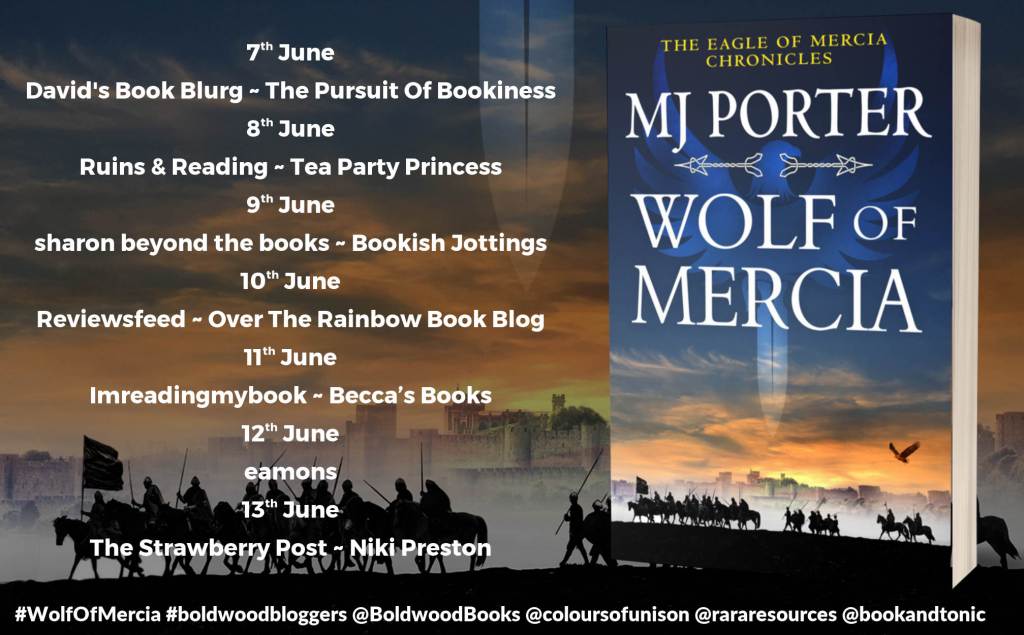
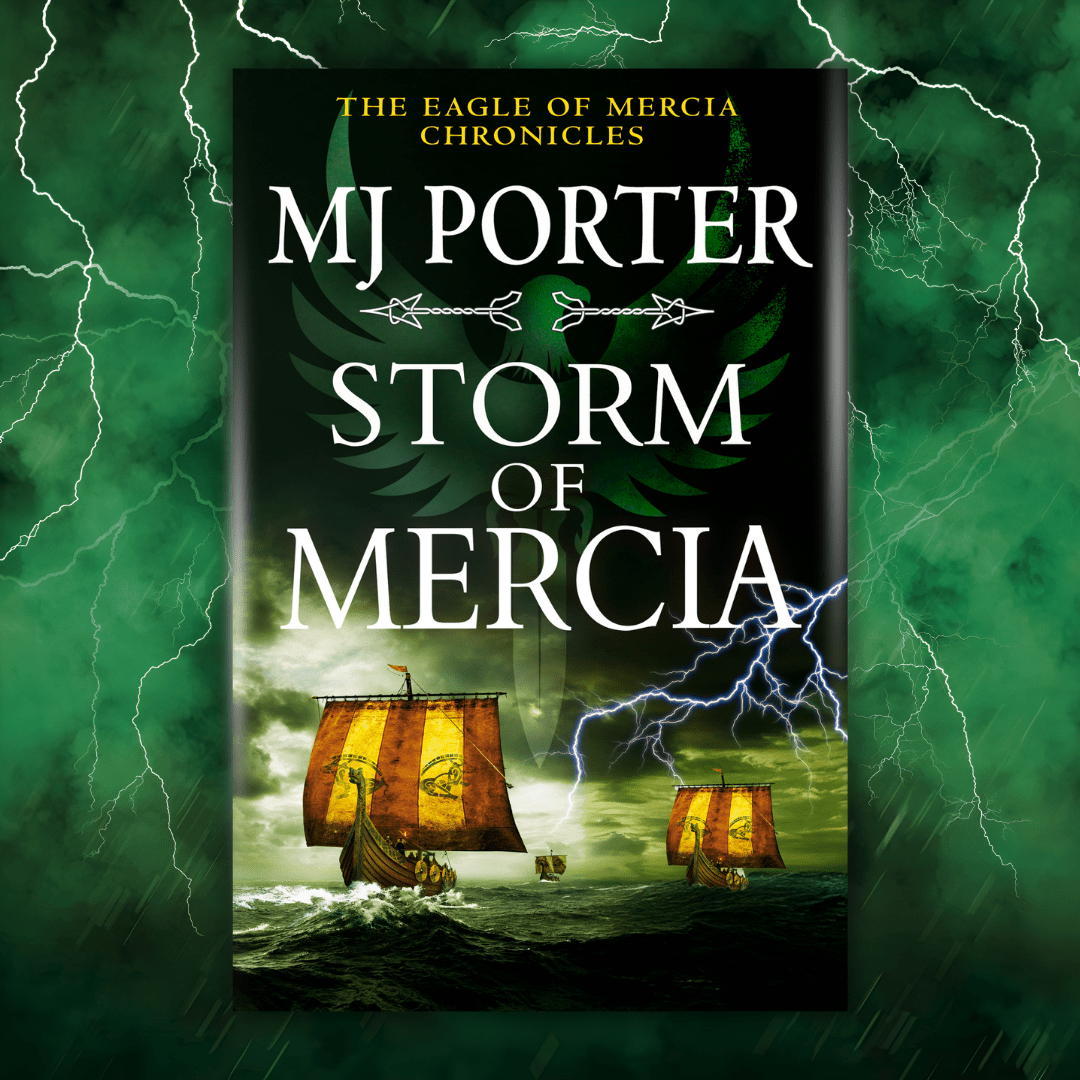
Happy Release Day to Son of Mercia

Today is the day. Son of Mercia is FINALLY released (I know it hasn’t actually been that long, it just feels like it).

I’m so excited to share it with fans and new readers alike.

If you’ve not yet heard about my new book (where have you been:)) then here’s the blurb:

Tamworth, Mercia AD825.

The once-mighty kingdom of Mercia is in perilous danger.

Their King, Beornwulf lies dead and years of bitter in-fighting between the nobles, and cross border wars have left Mercia exposed to her enemies.

King Ecgberht of Wessex senses now is the time for his warriors to strike and exact his long-awaited bloody revenge on Mercia.

King Wiglaf, has claimed his right to rule Mercia, but can he unite a disparate Kingdom against the might of Wessex who are braying for blood and land?

Can King Wiglaf keep the dragons at bay or is Mercia doomed to disappear beneath the wings of the Wessex wyvern?

Can anyone save Mercia from destruction?

And what’s so exciting about Son of Mercia is that it’s released in all the formats and over many, many platforms, today. Find the ebook, paperback, hardback, large print and audio version at your retailer of choice via this link.

books2read.com/u/3R6x7x

Join the blog tour for Son of Mercia by following #SonOfMercia on twitter, or check back here, as I will be posting links to the blogs. Thank you to all the bloggers and to Rachel for organising such a fantastic tour to celebrate release week.

David’s Book Blurg

NIKI PRESTON

The Writing Desk

Melisende’s Library

Chicks, Rogues and Scandals

Bookish Jottings

Ruins and Reading

Snowphiethebookworm

The Strawberry Post

The Paige Ladies

Over The Rainbow

Reviewsfeed

The Very Bookish

Donna’s Book Blog

@enjoyingbooksagain

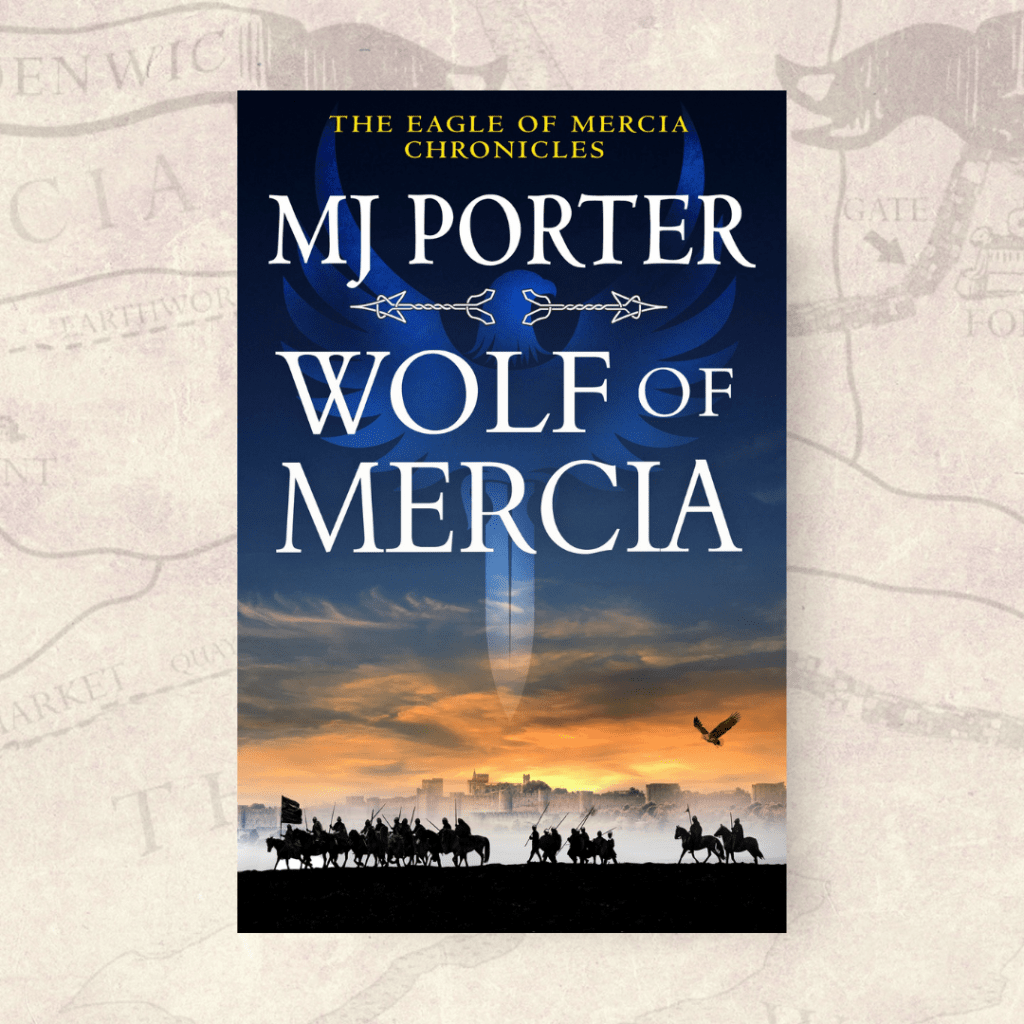
To keep up to date with news and information about book 2 in The Eagle of Mercia Chronicles, please sign up to my newsletter or the Boldwood Books newsletter. Thank you. I can confirm that book 2 is already up for preorder on some sites. )I’ll add more links as it appears elsewhere.)

Today, I’m welcoming Rob Samborn to the blog with his new book, The Prisoner of Paradise

Your book, The Prisoner of Paradise, sounds fascinating. Can you share with me what the first idea was that made you decide to write this story? It might be very different from how the story ended up being, but I am curious, if you don’t mind sharing. And, if the story is very different, would you mind sharing the process by which you ended up with your current novel?

Thank you for having me on your blog, MJ. I love this question. To answer, I need to provide some background on my book. 

The Prisoner of Paradise is a thriller blended with historical fiction and magical realism, about Nick and Julia O’Connor, an American couple who travel to Venice, Italy. 

After experiencing a traumatic head injury, Nick comes to believe that his true soul mate is not his wife, but a woman who has been trapped in Paradise, the world’s largest oil painting, created by Jacopo Tintoretto in 1592. 

Though Julia is understandably concerned for Nick’s welfare and wants to return home, Nick is adamant he has a connection with the woman in Paradise. He discovers an ancient secret society that developed a method of extracting people’s souls from their bodies. They trap the souls—which they claim are evil—in the two-dimensional prison.

Nick will do anything to free his soul mate, but freeing her means freeing all the souls—and the secret society will never let that happen.

So, where did the idea come from?

The kernel of the idea for The Prisoner of Paradise sprouted in Venice itself. If you’ve never been there, Venice is one of the most magical cities on the planet, even when it’s the height of summer and inundated with tourists. In low season, it’s not only magical but mysterious. 

The city is one thousand years old and built in a lagoon. Marble buildings, sidewalks, squares (piazzas) and everything else are resting on top of millions of petrified wooden pylons. 

Cars and any wheeled vehicles are prohibited.

The only mode of transportation is by boat or foot. There are dozens of bridges and the winding, maze-like streets are often just a few feet wide. 

Add to that a remarkably colorful history filled with legendary artists, architects, and events, and you have a story around every corner. 

One of these artists was Renaissance master Jacopo Tintoretto. So prolific, he was known as “The Furious Painter.”

His work is all over Venice but the best places to see it are The Palazzo Ducale (Doge’s Palace) and Scuola Grande di San Rocco (School of St. Roch). 

The Scuola features dozens of Tintoretto paintings and many of them are mammoth in scale, including The Crucifixion, which includes nearly one hundred individuals of all ages, genders and races. While researching, I later discovered Paradise, a painting that includes thousands of people. The images are so lifelike, each could be an individual portrait.

It’s no secret that artists use models but I started wondering to what extent. Did Tintoretto have a line of people outside his studio? Unlikely. 

Did he create each one from his head?

Who were these people? Why were they chosen to be immortalized?

These questions led to an idea… 

Perhaps their souls were in the painting and their likenesses painted over their ethereal selves. And they were immortalized not for veneration, but rather imprisoned for all the world to see. 

And a story was born…

To learn more about The Prisoner of Paradise or to find purchase locations, visit www.robsamborn.com

Here’s the blurb:

The world’s largest oil painting. A 400-year-old murder. A disembodied whisper: “Amore mio.” My love.

Nick and Julia O’Connor’s dream trip to Venice collapses when a haunting voice reaches out to Nick from Tintoretto’s Paradise, a monumental depiction of Heaven. Convinced his delusions are the result of a concussion, Julia insists her husband see a doctor, though Nick is adamant the voice was real.

Blacking out in the museum, Nick flashes back to a life as a 16th century Venetian peasant swordsman. He recalls precisely who the voice belongs to: Isabella Scalfini, a married aristocrat he was tasked to seduce but with whom he instead found true love. A love stolen from them hundreds of years prior.

She implores Nick to liberate her from a powerful order of religious vigilantes who judge and sentence souls to the canvas for eternity. Releasing Isabella also means unleashing thousands of other imprisoned souls, all of which the order claims are evil.

As infatuation with a possible hallucination clouds his commitment to a present-day wife, Nick’s past self takes over. Wracked with guilt, he can no longer allow Isabella to remain tormented, despite the consequences. He must right an age-old wrong – destroy the painting and free his soul mate. But the order will eradicate anyone who threatens their ethereal prison and their control over Venice.

Trigger Warnings.

Violence, a rape scene, a torture scene.

Buy links:
Amazon UKAmazon USAmazon CAAmazon AU

KoboApple BooksBarnes & Noble

Meet the author

In addition to being a novelist, Rob Samborn is a screenwriter, entrepreneur and avid traveler. He’s been to forty countries, lived in five of them and studied nine languages. As a restless spirit who can’t remember the last time he was bored, Rob is on a quest to explore the intricacies of our world and try his hand at a multitude of crafts; he’s also an accomplished artist and musician, as well as a budding furniture maker. A native New Yorker who lived in Los Angeles for twenty years, he now makes his home in Denver with his wife, daughter and dog. 

Connect with Rob

Website:  TwitterFacebookLinkedInInstagram
PinterestBookBubAmazon Author PageGoodreads

Don’t forget to check out the other stops on The Prisoner of Paradise blog tour with The Coffee Pot Book Club

Today, I’m so excited to share my review for Foraging For Murder by Simon Whaley (I loved this book)

Here’s the blurb:

Foraging for Murder

MORTIFORDE’S FOOD FESTIVAL IS A RECIPE FOR MURDER.

Three butchers. Two deaths. One four-hundred-year-old grudge.

It’s Aldermaston’s first food festival as the Eighth Marquess of Mortiforde and it’s not going well. One butcher is missing. Another has been threatened. And the Vegetarian Society has been sent a meaty ultimatum. 

Meanwhile, Lady Mortiforde desperately needs her husband to find some wild boar meat for her savoury pie entry into the festival’s Bake Off competition.

When the Council’s Chief Archivist disappears, along with the Food History Marquee’s star attraction, a seventeenth-century recipe book, Aldermaston has all the ingredients of a murder mystery that’s been marinating for over four hundred years.

Can he find the missing butchers before it’s too late? Will Lady Mortiforde avoid a soggy bottom in the Bake Off competition? And why do all the butchers take their pet pigs for a walk in the woods at night?

Review

Wow. Foraging for Murder is a fantastic book. It’s stuffed with some very British quirkiness, rival butchers, an obnoxious new Chief Executive for the local Council, and a slightly bumbling, but good-hearted, member of the nobility, his wife, his eminently competent butler, as well as his extremely eccentric brother.

Genuinely, I can’t recommend this book enough. It made me laugh out loud and was a joy to read.

The story is told from multiple perspectives, and each character is well sketched, and unique. It’s filled with all the sorts of little details that I love – it has a strong historical element running through it, and of course, an ancient manuscript. It’s also filled with quirky little details, the sort of eccentric characters that make up a small community and yet none of it feels overcooked. And the mystery is both complex enough, and realistic enough, that you’re not going to quibble with the eventual resolution, even if we, as the readers, get there before the cast do.

I have book 1 in the series ready to read and I really hope we get more books featuring this wonderful cast. And wow, book 1 has an amazing opening chapter. Thank you, thank you, thank you.

(I would just like to reassure that this book is not stuffed with animal butchery – in fact a few of the animals do get to star in it. There is some reference to parts of an animal when they’re no longer on that animal – if that makes sense. I don’t want to give anything away, but also, don’t want someone to stumble into the book unawares.)

For fellow readers, if you’ve read Skeltons Guide to Suitcase Murders then this will definitely appeal, even if it has a more modern setting. I’m so pleased I signed up for this book tour and had the opportunity to discover a wonderful book, and series, like this. As you can tell, I’m wildly excited about it.

Amazon Purchase Links 

UK  US  

Meet the Author

Simon Whaley is an author, writer and photographer who lives in the hilly bit of Shropshire. Foraging for Murder is the second in his Marquess of Mortiforde Mysteries, set in the idyllic Welsh Borders – a place many people struggle to locate on a map (including by some of those who live here). He’s written several non-fiction books, many if which contain his humorous take on the world, including the bestselling One Hundred Ways For A Dog To Train Its Human and two editions in the hugely popular Bluffer’s Guide series (The Bluffer’s Guide to Dogs and The Bluffer’s Guide to Hiking). His short stories have appeared in Take A Break, Woman’s Weekly Fiction Special, The Weekly News and The People’s Friend. Meanwhile his magazine articles have delighted readers in a variety of publications including BBC Countryfile, The People’s Friend, Coast, The Simple Things and Country Walking.

Simon lives in Shropshire (which just happens to be a Welsh Border county) and, when he gets stuck with his writing, he tramps the Shropshire hills looking for inspiration and something to photograph. Some of his photographs appear on the national and regional BBC weather broadcasts under his BBC WeatherWatcher nickname of Snapper Simon. (For those of you who don’t know, they get a lot of weather in Shropshire.)

Connect with Simon

Twitter Facebook

Don’t forget to check out the other stops on the Foraging For Murder Blog Tour with Rachel’s Random Resources