Pagan Warrior is on blog tour with The Coffee Pot Book Club #blogtour – check out the posts for day 4

I’m really excited to share the details of the Pagan Warrior blog tour with The Coffee Pot Book Club.

Pagan Warrior is the story of the battle of Hædfeld, fought in the seventh century between the Northumbrians, and you got it, the Mercians – or rather, Cadwallon of Gwynedd but with Penda of Mercia as his firm ally. You can find more details here.

I might have written this book many years ago, but it’s had a refresh, and is now available in audio, narrated by the fabulous, Matt Coles, as is the second book, Pagan King. Warrior King will be coming later this year in audio.

And, if you read on Nook, I’ve created a special discount code just for Nook readers. Using code BNPPAGAN at checkout will get you 50% off all three titles, for a limited time.

You can follow the blog tour, and I’ll be sharing posts here as well. A quick shout out to thank all the blog hosts and Cathie at The Coffee Pot Book Club for organising.

For April 4th, read an excerpt on

Elizabeth St John’s Official Blog

And read about warfare in the Saxon period on

Brook Allan’s Official Blog

For March 28th, check out a fabulous review on

https://gwendalynbooks.wordpress.com/2023/03/28/pagan-warrior/

A guest post about Mercia in the later eighth century on the Historical Fiction Blog.

https://historicalfictionblog.com/pagan-warrior-guest-post/

And, the post that perhaps gave me the most fear to begin will but which was fun when I remembered all the little details, five fun facts about writing the trilogy.

maryannbernal.blogspot.com

For March 21st check out a post about two of the royal residences of Bernicia at the time, Bamburgh and Ad Gefrin (Yeavering). (There are lots of photos, thank you to Helen Hollick for uploading them all).

Let Us Talk of Many Things

And a review from

Candlelight Reading

From March 14th, check out my author interview over on Archaeolibrarian.

Archaeolibrarian

I’m sharing an excerpt over on The Historical Fiction Company.

The Historical Fiction Company

I’ve written a piece about the historical background on Pam Lecky’s official blog.

Pam Lecky’s Official Blog

Today, Pagan King is on a spotlight one day blog tour with The Coffee Pot Book Club #blogtour #PaganKing

Not content with highlighting Pagan Warrior, Pagan King gets its own blog tour today. A huge thank you to Cathie at The Coffee Pot Book Club for organising, and to all the hosts for showcasing the second book in the Gods and Kings trilogy/ also known as The Seventh Century trilogy, on their blogs today.

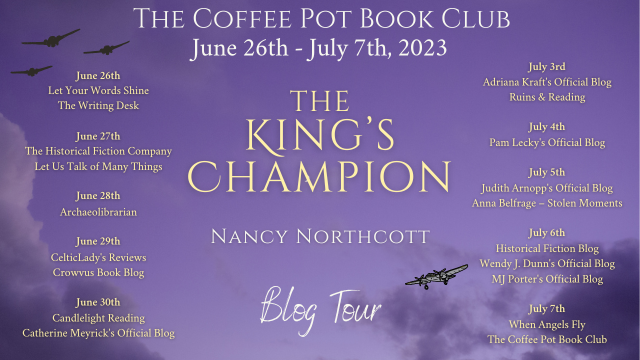
You can follow the tour below.

And, you can find Pagan King on your retailer of choice here. It’s also available in audio format from Audible, Amazon and iTunes. Check it out below. Narrated by the fabulous Matt Coles.

Of History and Kings

Paul Walker’s Official Blog

The Magic of Wor(l)ds

Jennifer C Wilson’s Official Blog

Ruins and Reading

The Writing Desk

Linnea Tanner’s Official Blog

Gwendolyn’s Books

Let Your Words Shine

Stuart Rudge’s Official Blog

Anna Belfrage’s Official Blog

Let Us Talk Of Many Things

Historical Fiction Blog

The Historical Fiction Company

Adventures of a Tudor Nerd

Judith Arnopp’s Official Blog

The Coffee Pot Book Club

Pagan Warrior is on blog tour with The Coffee Pot Book Club #blogtour – check out the posts for day 3

I’m really excited to share the details of the Pagan Warrior blog tour with The Coffee Pot Book Club.

Pagan Warrior is the story of the battle of Hædfeld, fought in the seventh century between the Northumbrians, and you got it, the Mercians – or rather, Cadwallon of Gwynedd but with Penda of Mercia as his firm ally. You can find more details here.

I might have written this book many years ago, but it’s had a refresh, and is now available in audio, narrated by the fabulous, Matt Coles, as is the second book, Pagan King. Warrior King will be coming later this year in audio. For this third week, 27th March-2nd April, the ebook of Warrior King (book 3) is reduced globally to 99p/99c and equivalent. Follow the link below.

https://books2read.com/Warrior-King-Britain-The-Seventh-Century

And, if you read on Nook, I’ve created a special discount code just for Nook readers. Using code BNPPAGAN at checkout will get you 50% off all three titles, for a limited time.

You can follow the blog tour, and I’ll be sharing posts here as well. A quick shout out to thank all the blog hosts and Cathie at The Coffee Pot Book Club for organising.

For today, March 28th, check out a fabulous review on

https://gwendalynbooks.wordpress.com/2023/03/28/pagan-warrior/

A guest post about Mercia in the later eighth century on the Historical Fiction Blog.

https://historicalfictionblog.com/pagan-warrior-guest-post/

And, the post that perhaps gave me the most fear to begin will but which was fun when I remembered all the little details, five fun facts about writing the trilogy.

maryannbernal.blogspot.com

For March 21st check out a post about two of the royal residences of Bernicia at the time, Bamburgh and Ad Gefrin (Yeavering). (There are lots of photos, thank you to Helen Hollick for uploading them all).

Let Us Talk of Many Things

And a review from

Candlelight Reading

From March 14th, check out my author interview over on Archaeolibrarian.

Archaeolibrarian

I’m sharing an excerpt over on The Historical Fiction Company.

The Historical Fiction Company

I’ve written a piece about the historical background on Pam Lecky’s official blog.

Pam Lecky’s Official Blog

I’m welcoming Marcia Clayton and her series, The Hartford Manor, to the blog today #romance #FamilySaga #BlogTour #TheCoffeePotBookClub

I’m delighted to share an excerpt from The Mazzard Tree by Marcia Clayton.

Excerpt

The matron marched Amelia and her twin brothers down the long corridor and into a washroom, where she handed them over to a large woman. 

“Here you go then, Nellie, three new arrivals for you to see to.”

Nellie took in their foreign appearance with a disapproving glance. Pursing her lips, she mumbled something to herself, about there being enough poor in the country already, without half-castes adding to the problem. 

“Now, I have to cut your hair, and give you a wash, and then you’ll put on some new clothes. Don’t give me any trouble, because I haven’t the time for it. Come here, lad, you can be first.”

She sat Joe firmly on a chair and began cutting off his long curls. Tears shone brightly in his eyes, but he did not complain. When most of his hair was on the floor, Nellie took a razor and shaved his head. Matthew and Amelia stood close together and watched in horror. Their mother had loved their thick curly hair. Nellie then beckoned Matthew.

“Come on then, lad, you next. Show your little sister there’s nothing to be frightened about.”

She pulled Matthew onto the chair and he received the same treatment as his brother. By this time, Amelia’s eyes were round with fear.

“Please don’t cut off my hair. I’m a little girl, and girls don’t have short hair. Please don’t cut off my hair. My daddy loved my curly hair.”

“Now, it’s no use you making a fuss. Your daddy’s gone, and you must do as you’re told. Your hair will soon grow again, but this is the only way I can be sure you don’t have nits. We have enough trouble with them as it is, so sit still, and be a good girl.”

“I don’t have nits! I don’t have nits! My hair is clean.”

Amelia had no intention of being a good girl, and she struggled and refused to sit on the chair. Nellie smacked her legs and tried to sit her on the chair, but Amelia was having none of it and she kicked Nellie hard in the shins and bit her hand.

“Ouch, now look what you’ve done, you little devil; you’ve drawn blood.”  

Nellie slapped Amelia hard across the side of the head, and she fell to the floor, stunned.

At this, Matthew and Joe leapt up and ran to her. 

“Come on, Meely. It will be all right. Let her cut your hair off, then you’ll look just like us. It’s not so bad.”

Nellie was furious. She dragged the dazed child to the chair and tied her to it with a bandage.

“Right then, madam, now you just sit still and let me cut your hair, or I’ll give you such a hiding you won’t sit down for a week.”

Amelia sat still, tears rolling down her face, and decided she would hate this woman for as long as she lived. When their hair was cut, the children were taken to the pump and made to stand underneath the stream of cold water. By the time Nellie allowed Amelia to get dried, she was shaking with the cold and fright. The new clothes that their daddy had bought them were taken away, and in their place, the boys were given rough grey tweed shorts and a coarse shirt and jersey. Amelia was given a grey woollen dress with a white apron to put on. Amelia’s doll lay on the floor next to her clothes, and she eyed it wistfully, debating whether to risk picking it up. Just as she was plucking up the courage to grab the doll, another maid appeared.

“Ah, there you are, Lizzie, just in time. Take these three to the refectory will you; though this little madam is not to have any tea. Bit me, she did. She’s lucky I don’t have her beaten. Put their clothes in the storeroom; fine quality they are and should fetch a few bob. That doll too.”

Lizzie gathered up their clothes and the doll and led the children away. Amelia pulled at Lizzie’s arm.

“Please, may I have my dolly?  I always sleep with her. Please, may I have my dolly?  My aunty made her for me.”

Lizzie looked down at the small, tear-stained face, the bright red finger marks still vivid across her bald head and cheek, and could see what had happened.

“Well, now, little girl. You won’t be able to keep your dolly. Even if I let you keep her, the bigger girls would take her off you in no time, and you’d never see her again. I’ll tell you what though, how about if I keep her for you, and maybe, just maybe, I might be able to let you see her sometimes?”

Sadly, Amelia nodded. “Yes, please, she’s called Evie after my aunty who made her.”

“All right, now, if I do that, will you behave yourself for me?  It’s not easy living here, but you’ll get on better if you do as you’re told. Here, give your dolly one last cuddle, and say goodbye.”

They entered a large room, with long tables surrounded by seemingly hundreds of children, all dressed in the same clothes as themselves. The children were sitting silently, waiting for permission to start their meal of bread and dripping with a mug of water. A few looked up when Matthew, Joe, and Amelia were shepherded to the nearest table, but most showed little interest, for they were too intent on the food in front of them.

“Sit here for today, but tomorrow you boys will sit on that side of the room, and you, young lady, will sit with the girls.”

Amelia, miserable and hungry, reached for her thin slice of bread, but Lizzie swiftly took the plate away.

“There’s none for you today, little girl. Nellie will check I don’t give you anything, so you’ll have to go hungry. The sooner you learn not to cross Nellie, the better, and don’t you two even think of giving your little sister any of yours, or you’ll be in trouble too.”

Here’s the blurb

1880 North Devon, England

Annie Carter is a farm labourer’s daughter, and life is a continual struggle for survival. When her father dies of consumption, her mother, Sabina, is left with seven hungry mouths to feed and another child on the way. To save them from the workhouse or starvation, Annie steals vegetables from the Manor House garden, risking jail or transportation.  Unknown to her, she is watched by Robert, the wealthy heir to the Hartford Estate, but far from turning her in, he befriends her.

Despite their different social backgrounds, Annie and Robert develop feelings they know can have no future.  Harry Rudd, the village blacksmith, has long admired Annie, and when he proposes, her mother urges her to accept.  She reminds Annie, that as a kitchen maid, she will never be allowed to marry Robert.  Harry is a good man, and Annie is fond of him.  Her head knows what she should do, but will her heart listen?

Set against the harsh background of the rough, class-divided society of Victorian England, this heart-warming and captivating novel portrays a young woman who uses her determination and willpower to defy the circumstances of her birth in her search for happiness.

Buy Links

This title is available to read on #KindleUnlimited

Universal Link:          

Amazon UK. Amazon US Amazon CA Amazon AU              

Barnes and Noble      Allauthor                   

All the books in The Hartford Manor Series can be ordered from any bookshop.

Meet the Author

Marcia Clayton was born in North Devon, a rural and picturesque area in the far South West of England. She is a farmer’s daughter and often helped to milk the cows and clean out the shippens in her younger days.

When Marcia left school she worked in a bank for several years until she married her husband, Bryan, and then stayed at home for a few years to care for her three sons, Stuart, Paul and David. As the children grew older, Marcia worked as a Marie Curie nurse caring for the terminally ill, and later for the local authority managing school transport.

Now a grandmother, Marcia enjoys spending time with her family and friends. She’s a keen researcher of family history, and it was this hobby that inspired some of the characters in her books. A keen gardener, Marcia grows many of her own vegetables. She is also an avid reader and mainly enjoys historical fiction, romance and crime books.

Connect with Marcia

https://marciaclayton.co.uk/

https://twitter.com/MarciaC89111861

Marcia Clayton – Author | Facebook

https://www.instagram.com/marciaclayton97/

Bookbub: Marcia Clayton

Amazon: Marcia Clayton

Marcia Clayton: Goodreads

Follow The Hartford Manor Series blog tour with The Coffee Pot Book club

I’m delighted to share my review for Murder at Waldenmere Lake by Michelle Salter #historicalmystery #cosycrime #highlyrecommended

Here’s the blurb

A murder shocks the small town of Walden. And it’s only the beginning…

Walden, 1921. Local reporter Iris Woodmore is determined to save her beloved lake, Waldenmere, from destruction.

After a bloody and expensive war, the British Army can’t afford to keep the lake and build a convalescent home on its shores yet they still battle with Walden Council and a railway company for ownership. But an old mansion used as an officer training academy stands where the railway company plans to build a lakeside hotel. It belongs to General Cheverton – and he won’t leave his home.

When the General is found murdered, it appears someone will stop at nothing to win the fight for Waldenmere. Iris thinks she can take on the might of the railway company and find the killer. But nothing prepares her for the devastation that’s to come…

Purchase Link

 https://amzn.to/3vDssgr

My Review

Murder at Waldenmere Lake is book two in the Iris Woodmore Mystery series set in the very early 1920s onwards. Check out my review for Death at Crookham Hall here.

Book 2, Murder at Waldenmere Lake, begins not soon after the events of the first book, and it’s good to see some familiar characters return to Walden. As with book 1, the mystery is firmly rooted in the concerns of the period, recovering from the events of World War 1 while contending with changes in society. I really love how well-researched the two novels are. I love a cosy mystery, but I adore it even more when the author goes that one step further and adds so much more authentic settings to the novel.

As with book 1, there’s a murder fairly early on in the novel, which seems impossible to solve, and events more quite sedately until there is another murder and events really begin to move at pace. And yet, even with the devastation Iris feels at the murder, she can’t seem to work out who was responsible, and indeed, some personal betrayal strikes her low as well.

The mystery, when it is eventually solved, is delightfully nuanced. Looking back, there might have been some hints I should have read more into, but I didn’t, and so, as with book 1, the big reveal is a surprise but a really well-constructed one. I adored this book. Iris is a great character, as is Percy and the people she interacts with.

A fabulously well-researched historical cosy mystery, and I can’t wait for the next book in the series.

Meet the author

Michelle Salter is a historical crime fiction writer based in northeast Hampshire. Many local locations appear in her mystery novels. She’s also a copywriter and has written features for national magazines. When she’s not writing, Michelle can be found knee-deep in mud at her local nature reserve. She enjoys working with a team of volunteers undertaking conservation activities.


Connect with Michelle 

Facebook: 

Twitter

Instagram

Bookbub profile

Posts

A few photos of Bamburgh Castle and Ad Gefrin (Yeavering) that helped me write the Gods and Kings trilogy

books2read.com/PaganWarrior

Check out the full post as part of the Pagan Warrior blog tour https://ofhistoryandkings.blogspot.com/2023/03/my-coffee-pot-book-club-guest-mj-porter.html

Pagan Warrior is on blog tour with The Coffee Pot Book Club #blogtour – check out the posts for day 2

I’m really excited to share the details of the Pagan Warrior blog tour with The Coffee Pot Book Club.

Pagan Warrior is the story of the battle of Hædfeld, fought in the seventh century between the Northumbrians, and you got it, the Mercians – or rather, Cadwallon of Gwynedd but with Penda of Mercia as his firm ally. You can find more details here.

I might have written this book many years ago, but it’s had a refresh, and is now available in audio, narrated by the fabulous, Matt Coles, as is the second book, Pagan King. Warrior King will be coming later this year in audio. For this second week, 20th March-25th March, the ebook of Pagan King (book 2) is reduced globally to 99p/99c and equivalent. Follow the link below.

books2read.com/PaganKing

I’ve also, finally, managed to get book three, Warrior King, uploaded to all good ebook platforms, and they will be going live during this week. Kobo have so far won the competition. Use this link, which I will be updating, or try the one above, and hopefully, Warrior King will be linked to Pagan King as well. It means Warrior King is also available in hardcover from Amazon.

You can follow the blog tour, and I’ll be sharing posts here as well. A quick shout out to thank all the blog hosts and Cathie at The Coffee Pot Book Club for organising.

For today (March 21st) check out a post about two of the royal residences of Bernicia at the time, Bamburgh and Ad Gefrin (Yeavering). (There are lots of photos, thank you to Helen Hollick for uploading them all).

Let Us Talk of Many Things

And a review from

Candlelight Reading

From March 14th, check out my author interview over on Archaeolibrarian.

Archaeolibrarian

I’m sharing an excerpt over on The Historical Fiction Company.

The Historical Fiction Company

I’ve written a piece about the historical background on Pam Lecky’s official blog.

Pam Lecky’s Official Blog

The historical background to King of Kings: ‘England’ in the 10th Century

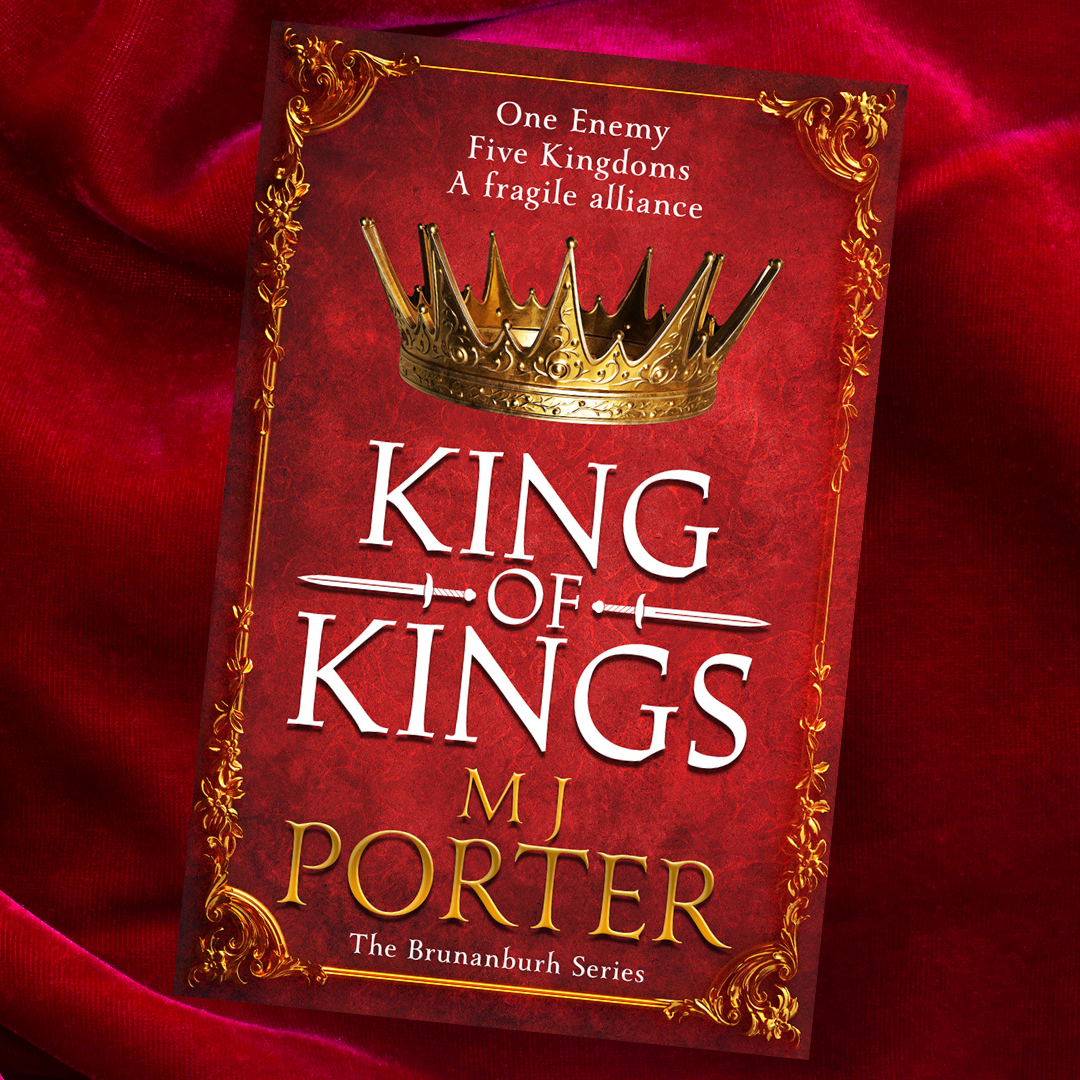
My latest release, King of Kings, is a tale of five kings, and one enemy. But what was the background in what we would now know as England?

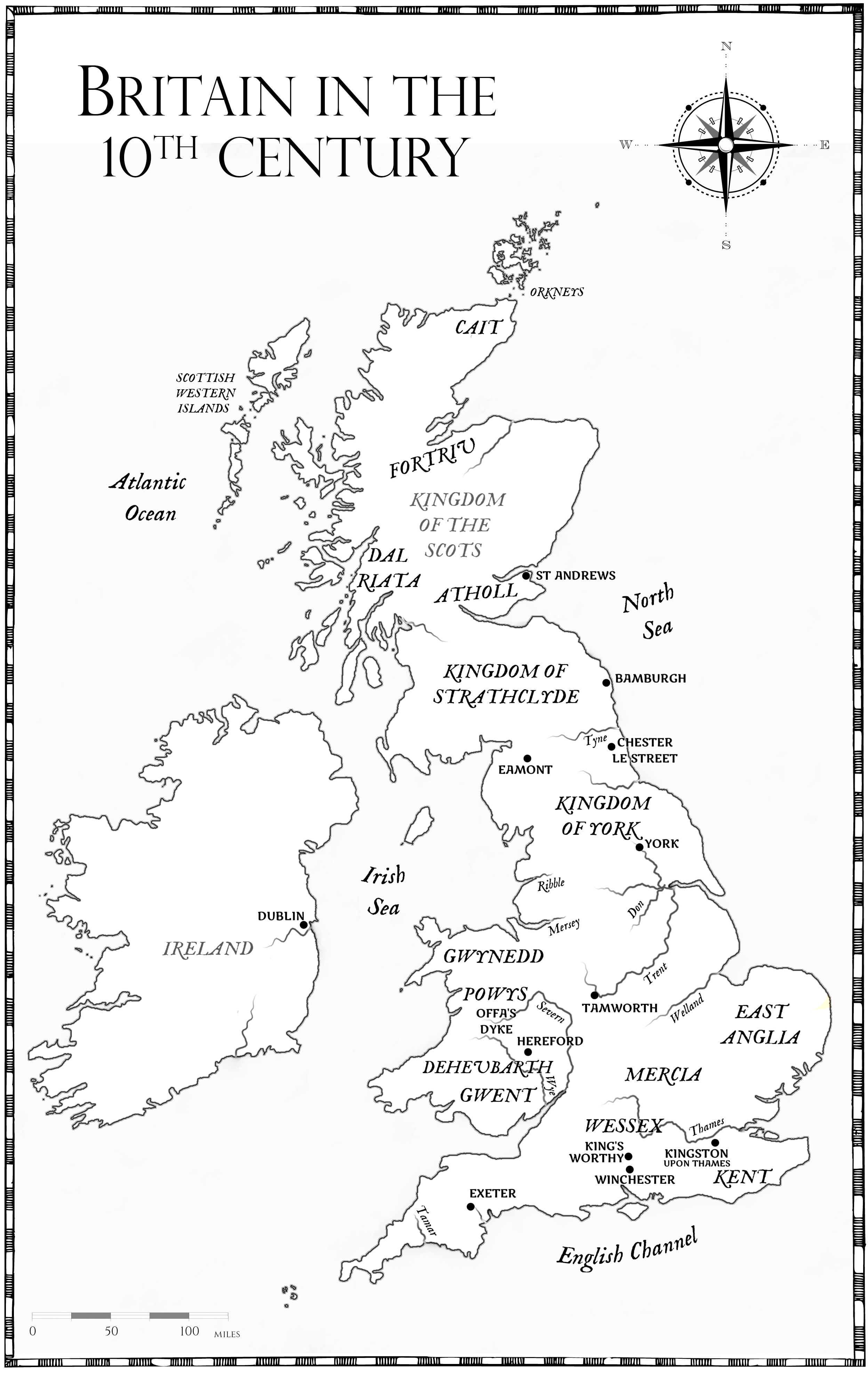
The tenth-century sees the creation of what we would recognise as ‘England’ – the combining of Wessex with Mercia, with the additions of Kent, the kingdom of the East Angles, the Danish Five Boroughs, and the kingdom of York, and also the independent kingdom of Bamburgh. But telling this story is complex. When people think of England, they might not know all these smaller kingdoms. They might not know, particularly, what the Danish Five Boroughs (Leicester, Nottingham, Lincoln, Stamford and Derby), were because if you google the Five Boroughs, you’ll be told about New York (this has happened to me). 

Everybody knows about King Alfred of Wessex holding back the tide of the advancing Viking raiders throughout his reign from 874-899. And if everybody didn’t know before, then Uhtred, Bernard Cornwell’s Saxon warrior, has done much to ensure we know about it now. 

But again, it’s not quite so simple. The Saxon kingdoms of the seventh century onwards numbered seven, alongside Wessex, there was also Kent, Mercia, the kingdom of the East Angles, Northumbria, Essex and Sussex. These kingdoms eventually merged to give us just Wessex, Mercia, Kent, the kingdom of the East Angles and Northumbria (which itself comprised of two kingdoms, Deira centred on York, and Bernicia, centred on Bamburgh). So, all seems clear there? But no.

When the Viking raiders began their concerted attacks on Britain in the late ninth century, Alfred of Wessex promulgated a treaty with one of their leaders, Guthrum, forging an independent kingdom of the Viking raiders, which stretched along something known as the Alfred-Guthrum line. Loosely, this meant that land to the east was in the control of the Viking raiders. All that survived of those kingdoms south of the Humber was Wessex and the western part of Mercia. The Viking raiders had already overrun Northumbria. The kingdom of Jorvik, centred on York, was part of a Dublin/York kingship, where the kings of York/Jorvik had often already been the king of Dublin, and this kingship was firmly in the hands of a family claiming descent from Ivarr (the Boneless), one of the men who’d led the concerted Viking raider attacks of the 860s and 870s which we might find termed The Great Heathen Army. 

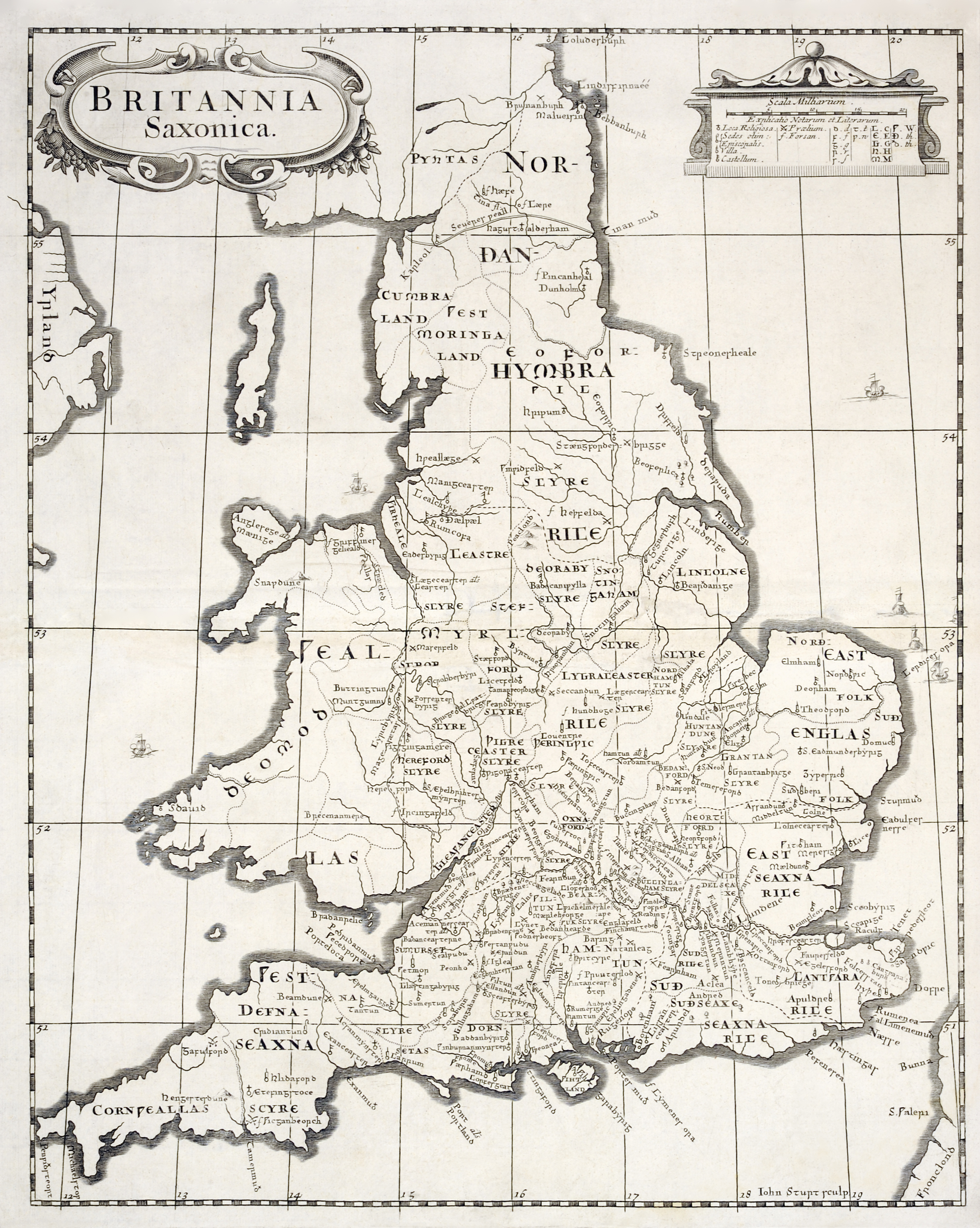
Map designed by Flintlock Covers

This, then, reimagined what we think of as England and these Saxon kingdoms weren’t the only ones to face attack from the Viking raiders. The many Welsh kingdoms shared sea borders with the Dublin Norse, and the small kingdom of Manx (the Isle of Man) became incredibly important, as did all of the islands that surround western and northern Scotland. Orkney, at this time, was settled by the Norse. 

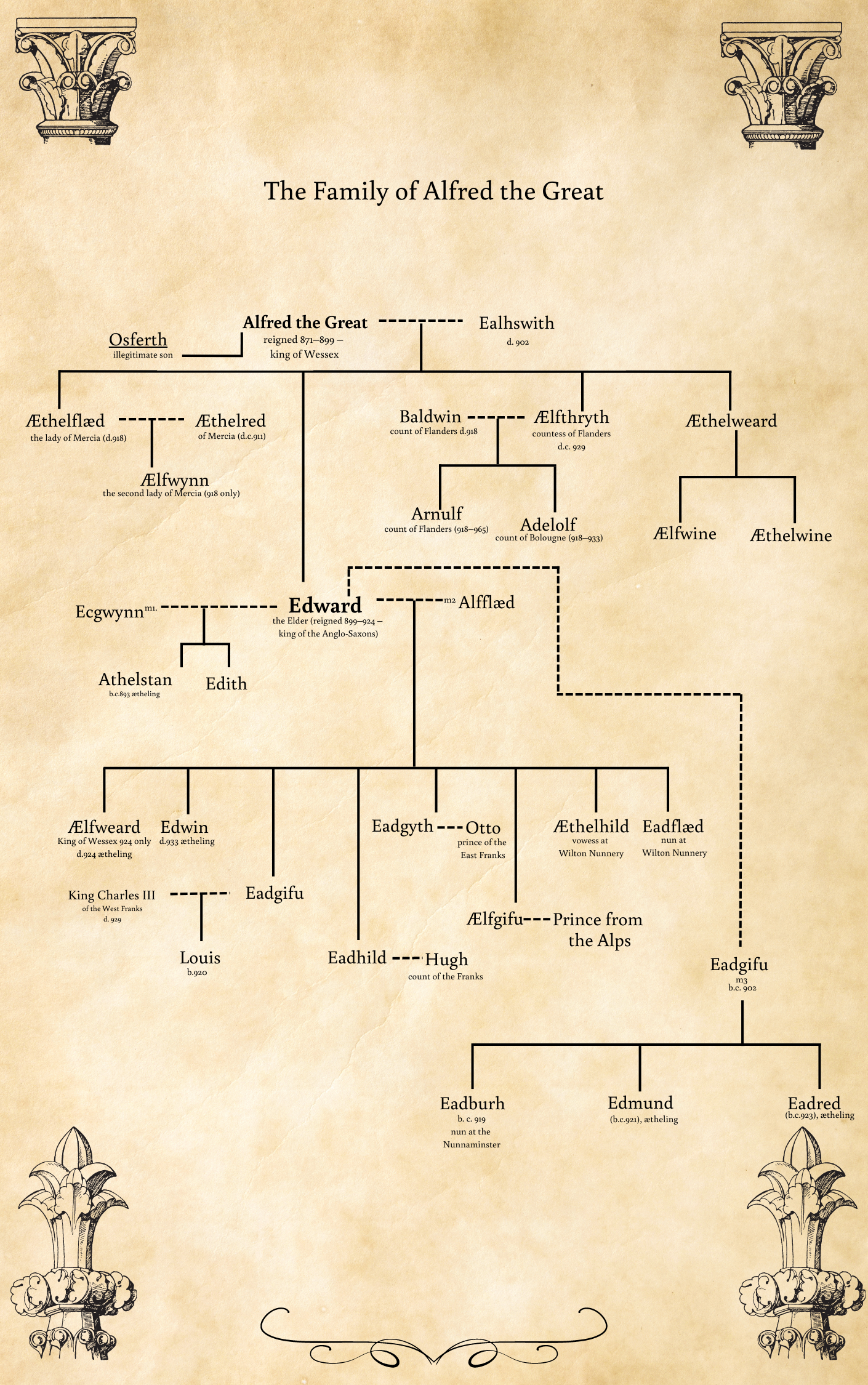
When Alfred died in 899, he was king of Wessex. His son, Edward, would become king of the Anglo-Saxons, ruling over Wessex and Kent, and then after the death of his sister, Æthelflæd, the Lady of Mercia, staking his claim to western Mercia as well as those parts of the Five Boroughs, essentially Norse held lands, known as the Danelaw, which Æthelflæd had ‘won’ back for Mercia.

‘Here in the early part of this year, with God’s help, she [Æthelflæd] peaceably got in her control the stronghold at Leicester and the most part of the raiding-armies that belonged to it were subjected. And also the York-folk had promised her – and some of them granted so by pledge, some confirmed with oaths – that they would be at her disposition.’[i]  

This was a time of intense unease, almost constant warfare. And not everyone was happy about the advances the surviving Wessex royal family made. Edward died at Farndon, in Mercia, perhaps putting down a Mercian rebellion or, a Welsh one. Farndon wasn’t far from the border with the Welsh kingdoms. 

But Edward’s death, and the subsequent death of his son Ælfweard only sixteen days later, brought about a sea change. Ælfweard wasn’t Edward’s oldest son; that was Athelstan, a youth seemingly banished to live with his aunt in Mercia when Edward remarried (if the later pseudo-historian, William of Malmesbury is to be believed who makes the claim that it was Alfred’s wish that Athelstan be brought up in ‘the court of his daughter Æthelflæd and Æthelred his son in law.’[ii]

Athelstan was immediately recognised as the king of Mercia. Not long afterwards, he also became king of Wessex. And his ambitions didn’t stop there.

‘Here King Edward died at Farndon in Mercia; and very soon, 16 days after, his son Ælfweard died at Oxford; and their bodies lie at Winchester. And Athelstan was chosen as king by the Mercians and consecrated at Kingston.’[iii]

It’s difficult to imagine that Athelstan wasn’t a warrior of fierce renown. His aunt and uncle, the lord and lady of Mercia, had spent much of their rule, both together, and then after Æthelred’s death, Æthelflæd had continued alone, driving back the incursion of the Viking raiders, or the Norse as it might be easier to term them. Athelstan must surely have taken his place in these battles. And yet, while he was eager to hold tightly to the kingdoms of Mercia, Kent and Wessex, he was also prepared to unite people through peace, and this is where the story, King of Kings, begins. With Athelstan, the first crowned king of the English. 


[i] Swanton, M. trans and edit The Anglo-Saxon Chronicles, (Orion Publishing Group, 2000), p.105

[ii] Mynors, R.A.B. ed and trans, completed by Thomson, R.M. and Winterbottom, M. Gesta Regvm AnglorvmThe History of the English Kings, William of Malmesbury, (Clarendon Press, 1998), p.211

[iii] Swanton, M. trans and edit The Anglo-Saxon Chronicles, (Orion Publishing Group, 2000), D text p.105

books2read.com/King-of-Kings

I’ve also written about the kings (and an almost queen) of these kingdoms in Britain at the time.

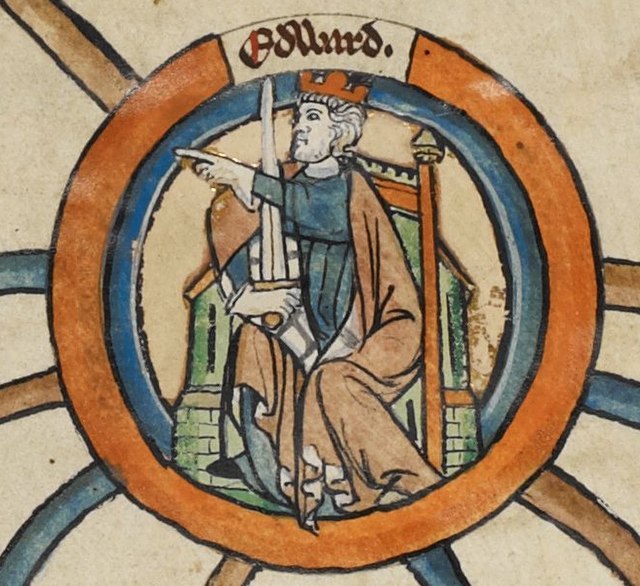
Meet Athelstan, king of the English

Meet Constantin, king of the Scots

Meet Hywel, king of the West Welsh

Meet Ealdred, king of Bamburgh

Meet Owain, king of Strathclyde

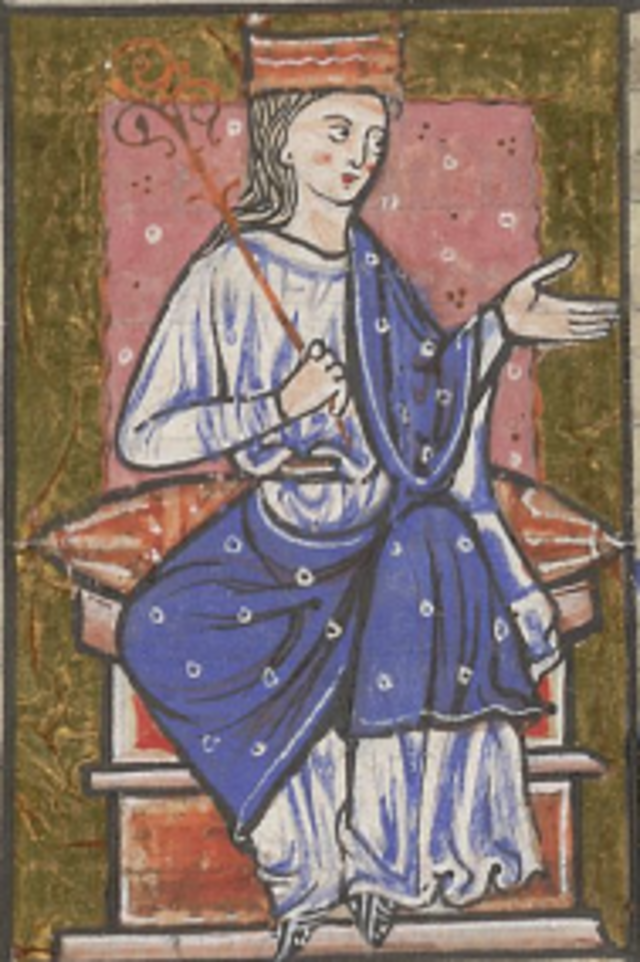
Meet Eadgifu, the lady of Wessex

Posts

The first kings of the ‘English’ – Athelstan and Edmund

(I’m re-sharing an old post which I’ve amended slightly, and added some new graphics).

England, Wales, Scotland, the smaller kingdoms of Mercia, Wessex, Northumbria, East Anglia, Kent, Powys, Gwynedd, Dal Riada – for the uninitiated (including myself) the sheer number of kingdoms and kings that peopled the period in British history before 1066 can appear as a bewildering display of names, places, times and events, and perhaps never more so than when a historian is trying to sell a book and so makes a statement in their title that applies to that particular king.

Map designed by Flintlock Covers

Phrases such ‘the Golden Age of Northumbria’, ‘the Mercian hegemony’, ‘the rise of Wessex’, they all mask so many events that I find the phrases very unhelpful and perhaps worse, misleading.

I think that Athelstan and his younger half brother, Edmund, probably deserve their titles as Kings of the English. And it’s not just my opinion either. There was, according to Sarah Foot in her book on Athelstan, a concerted effort by the king and his bishops to have him stand apart from his predecessors – to be something ‘different’ to them. They named him king of the English, not king of Mercia (a post he held briefly before another of his younger brothers died) and not king of Wessex, for all that he was both of those things.

They changed his title, they crowned him with a crown, not a helmet. They wanted Athelstan to be something other than his grandfather, King Alfred, and his father, King Edward. It was a bold statement to make, and one they continued when Athelstan died too young and his half-brother, Edmund replaced him. He too was crowned using, it must be supposed, the same Coronation service. (For full details have a peek at Sarah Foot’s book on Athelstan – or read the first few chapters of King of Kings as the service appears in it as well).

So why the change? Essentially the old Saxon kingdoms, for all that they were preserved in the naming of the earls/ealdormens designations, had been swept aside by the Viking raiders. The old kingdoms had become a handy label to apply to certain geographic areas, and the kings of Wessex, whilst keen to hold onto their hereditary titles because of the permanence their own royal line had managed to acquire, were equally as keen to do away with regional boundaries. There was, it can’t be denied, a concerted and almost unrelenting urge to drive any Viking raider or Dane or Norwegian (the Norse) from British soil, and this is what Athelstan and then Edmund were tasked with doing.

Yet the idea of ‘English’ wasn’t a new concept. Why else would Bede have called his great piece of religious historical writing “The Ecclesiastical History of the English people’, if there hadn’t been a shared consciousness that the people in England, all be it in their separate kingdoms, didn’t have a shared heritage? Why the idea suddenly took flight under King Athelstan could be attributed to a new sense of confidence in Wessex and Mercia at the time. They were confident that they could beat the Viking raiders and they were convinced that England belonged to them.

Or perhaps it was more than that? The destruction wrought by the Viking raiders on the separate kingdoms must have been a stark reminder of just how insular the kingdoms had become, and the Viking raiders showed everyone just how easy it was to run roughshod over the individual kingdoms. Only in unity could the Saxon kingdoms of England survive another onslaught; only with unity could the Saxons hold onto their kingdoms they’d claimed about 500 years before.

It was a message that was learned quickly and taken to heart. Athelstan worked to reunite more of the Saxon kingdoms with the growing ‘England’, and he tried to do so by both diplomacy and through war. Yet, the Viking raiders hadn’t finished with England, and nor were they her only enemies. This also lies at the heart of Athelstan’s ‘masterplan’ his treaty of Eamont (if it truly happened – Benjamin Hudson in his Celtic Scotland is not convinced). Athelstan wanted to be a mighty king, but he also wanted England, and the wider Britain (also a concept already understood otherwise why else would that cantankerous monk – Gildas – have called his even earlier work than Bede’s “On the Ruin of Britain?”) to be united in their attempts to repel the Viking raiders. He was a man with a keen vision of the future and it was a vision that his brother continued, with slightly different direction and results.

Family Tree designed by Boldwood Books

The ‘English Kings” saw safety in unity, and of course, an increase in the power they held went hand-in-hand with that.

Yet at no point during the Saxon period can it be said that the emergence of ‘England’ as we know it, was a given certainty. Throughout the period other great kings had tried to claim sovereignty over other kingdoms, but never with any permanence. The earlier, regional kings, were powerful within their own lifetimes and within their own regions. Few, if any, were able to pass on their patrimony complete upon their death. This was a time of personal kingship, and it was only under Athelstan and Edmund that the leap was taken away from this to a more permanent power base.

Not that it was a smooth transition and it did have the side-effect of allowing other men, those not related to the royal family, to evolve their own individual power bases in the old Saxon kingdoms. The ‘English’ kings had to do more than just rule their own kingdom, they had to rule their ealdormen and earls, their warriors, bishops and archbishops. The number of names of kings might start to deplete in the after math of Athelstan and Edmund’s kingship, but in their place spring up more and more powerful men, men that these English kings  had to rely on.

Becoming King of the English was very much a mixed blessing, bringing with it new and greater responsibilities and more, it brought with it the need to expand personal government further, to have a greater persona to broadcast.

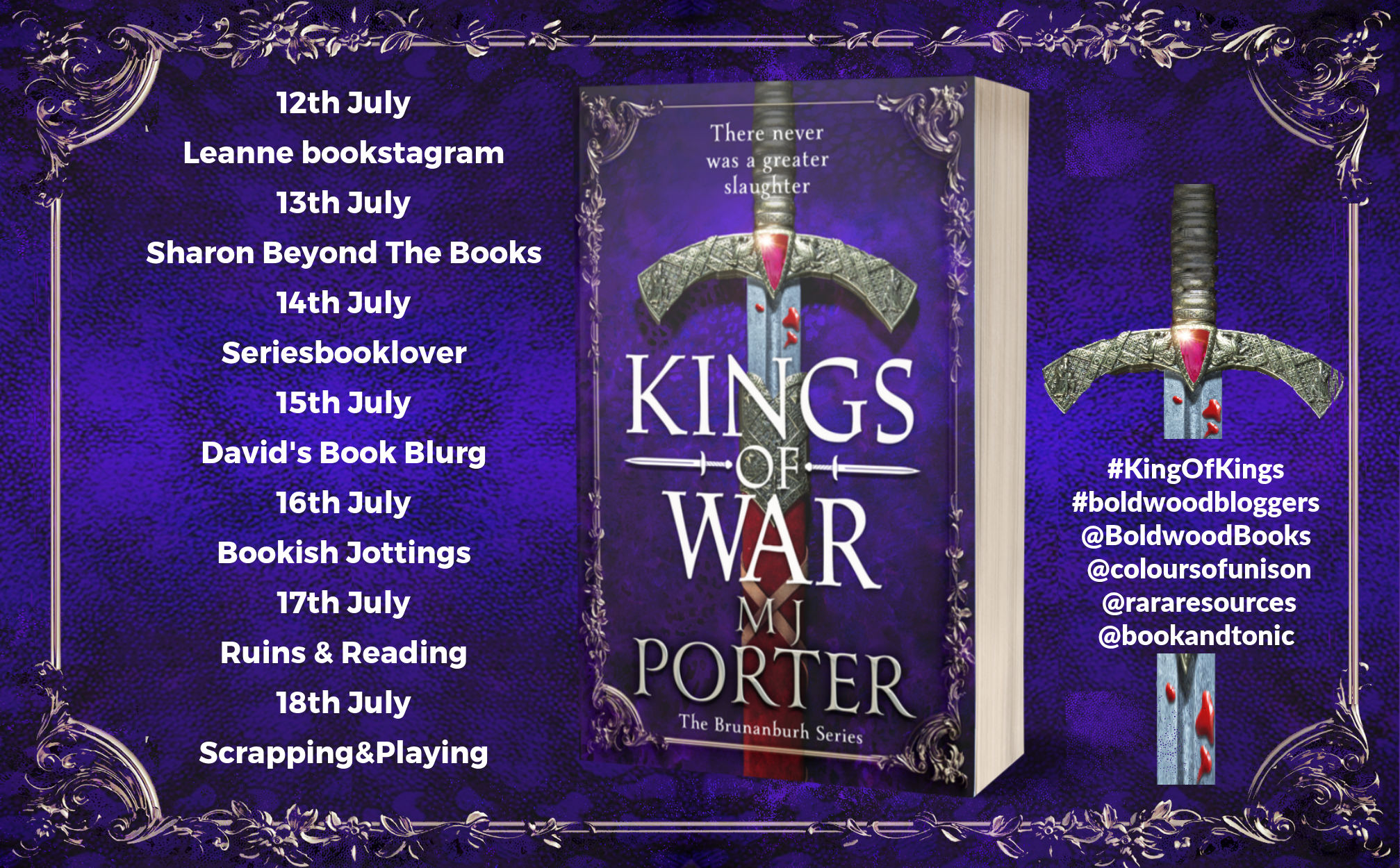
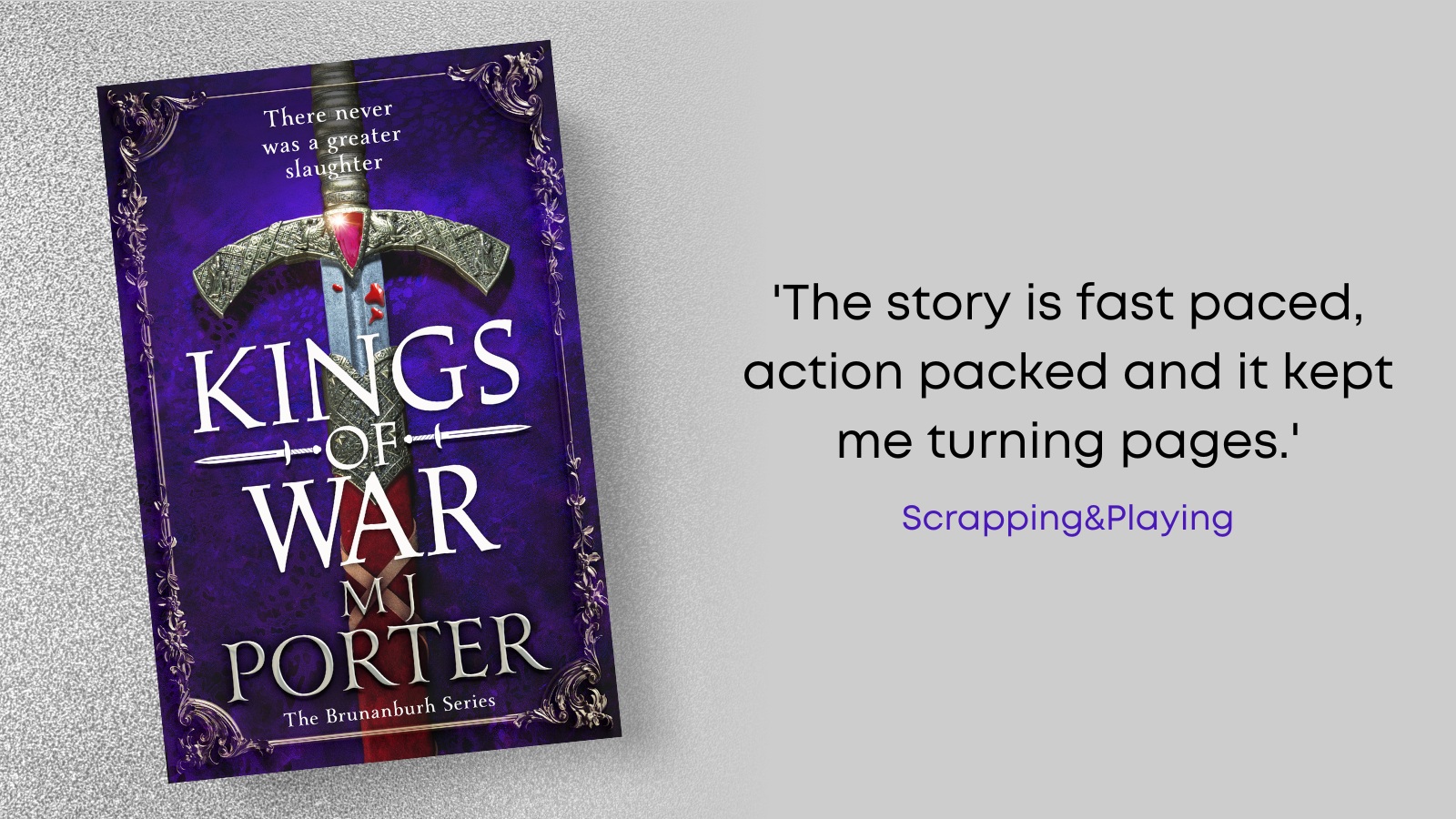
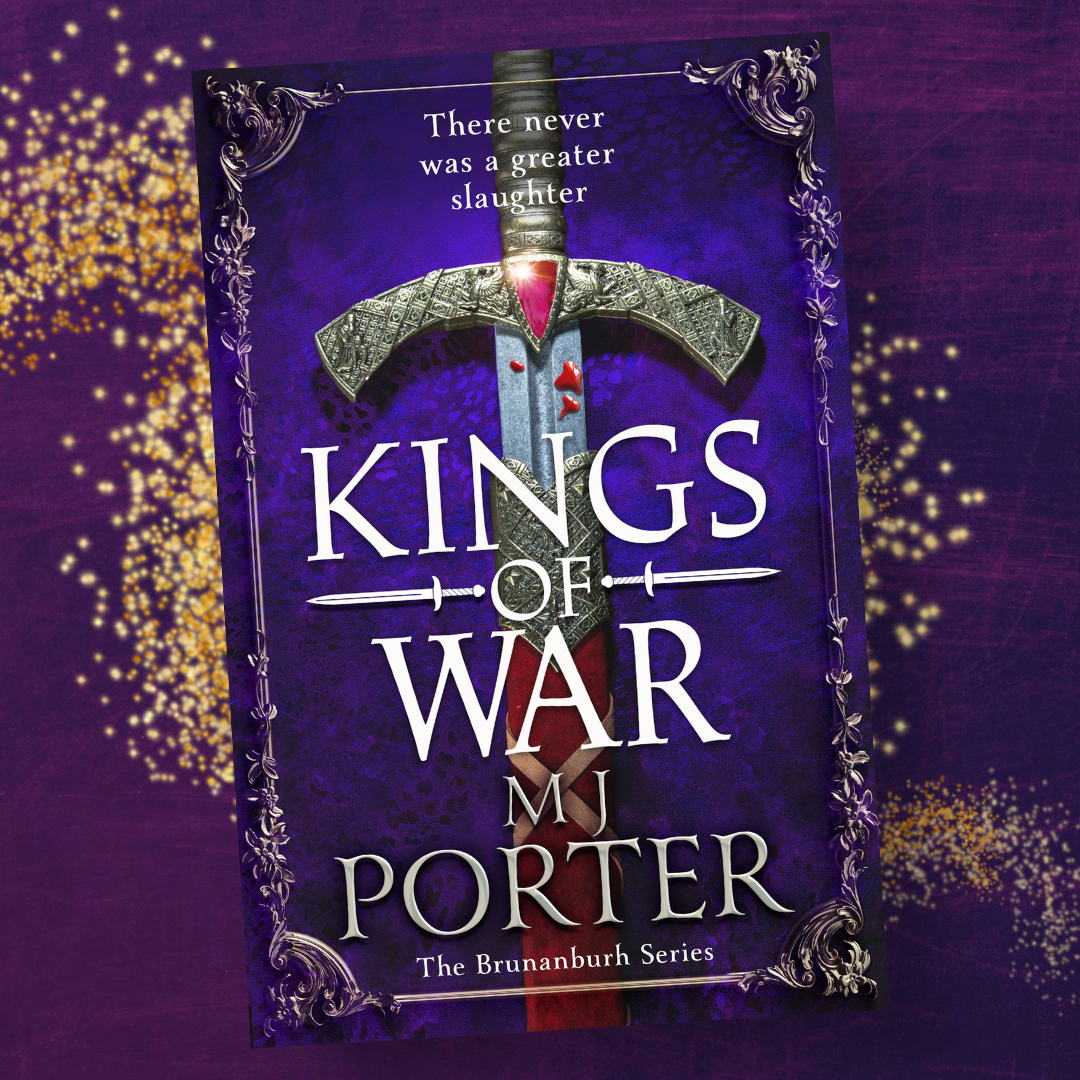
King of Kings is available now, and Kings of War is coming in July 2023.

I’m delighted to welcome Run with the Hare, Hunt with the Hound by Paul Duffy to the blog #HistoricalFiction #IrishFiction #BlogTour #TheCoffeePotBookClub

I’m sharing an excerpt from Run with the Hare, Hunt with the Hound by Paul Duffy.

Underworld

I was still young when the fulcrum began its pitch. Fortune’s wheel clanking around in its inscrutable way. It was the year that the sky ships were seen in Ard Macha. A silver host, spectral and gold illuminated the heavens, emerging from the cloud with their glistening sails and their ghostly hosts peering down, blazing with light on the men below who shrank from them in terror. And in that year also, the crozier of the bishop of Cluin Ioraird spoke to its owner, words of radiance and doom setting the kingdom alight. 

Though we saw no such miracles to presage coming things, the Tiarna had a dream. He saw a great light rise from the mound on Cnuc Bán. A sídhe mound guarding the high pass over the valley and below – a stag belling, a wild dog of two colours devouring a heron’s nest and above, a sun rising in the west, spreading brightness over a darkened east. A weapon shining at the heart of the mound. A weapon of immense power.

The Tiarna ignored the words of his wife and councillors, he disregarded his ollamh, he closed his house to the monk and chewed his thumb long into the night. Night after night ruminating beside ashen fires, forging his resolve. Until, one darkening day, he sat on his horse commanding the unthinkable. Watching us scrabble and shift moss-thick stones from the ancient cairn. We worked in silence, frantic in our task, working to quieten the dread that rang out in each of our heads. To stave off the flesh-creep as hour after hour, we watched the sun pass its peak and begin to drop away westwards over the shoulder of the cairn. The mound’s passive bulk thrumming with threat, and the geis-breaking sound of stones rolling free, rising to swallow everything else. Swallowing the champ of the standing horses, the rare lilts of the wind through the woodland below, the keening of buzzards circling. We cast the stones out beyond the kerbing into the heather, hoping they would land soft. Flinching at each cracking strike as they collided with hidden rock among the furze. Dread and skeletal hands clenching slowly within our skulls as the darkness thickened in the east.

‘Ho,’ Lochru cried out – the first human sound in hours and he came around the curve of the mound, his palsied face white, his hands trembling. He motioned to the Tiarna who urged his horse onwards. Tuar, his ollamh and the monk, Milesius cantering on also. We all followed to where the youth Fiacra stood, unnaturally still, his eyes fixed upon something in the scree. With great reluctance, he raised his hand and pointed at an opening which showed amongst the loose stone. Two rough pillars leaning towards each other, forming a narrow doorway as wide as the span between fist and elbow.

We stood steaming in the cold. Shudders passed among us and Milesius, hand on the psalter hanging in a satchel at his side, mumbled Latin incantations. The Tiarna gazed coldly. He looked to where his son, Conn stood by, leaning on a spear. I saw the subtle question in the Tiarna’s eye. I saw Conn’s face lowering to the ground, refusing the wordless request and, to disguise Conn’s refusal, the Tiarna’s voice came sudden and barking.

‘Send in the Sasanach,’ he said without looking in my direction and my bowels dropped within me. I stared ahead at the terrible and absolute blackness, a blackness that inhaled the failing light, and did not move. Lochru came towards me, grabbing my arm and pulling me past him with a blow that cupped the back of my skull. I staggered forward, feet twisting among the stones, and fell to my knees before the doorway, backing instantly, as if from a wild beast. I looked to the Tiarna on his horse and Milesius at his side. Their faces as hard as the stone of the hill. I breathed through my nose, a forceful breath. Another. And another. I made the sign of the cross, rose, commending myself to God and the Saints Patricius, Féichin, Lasair and stepped forward.

I moved towards the dragging blackness. Towards the mouth of the underworld. Towards the realm of the sídhe. I approached as if approaching cold water, step by step, clenching something deep within. My hand reached out to touch a pillar and its frigid surface drew the warmth from me. I turned side-on, a welling panic, though I did not stop. I slid my shoulder into the gap and pushed my chest through, feeling the pillars scrape at once along my spine and breastbone. I dipped my head, without looking back and entered the dark.

The space within forced me to crawl and I advanced blindly, my bulk blocking the light from the opening. The stones pressed in all around so that I could neither stand nor turn. Pools of water splashed beneath me, a dead air, stale in my lungs. My eyes moved wildly around, though nothing changed in the depthless dark. Hands slipped and scraped and I struck my head frequently on the uneven roof. Yet I moved, and in moving there was hope. 

Here’s the blurb

On a remote Gaelic farmstead in medieval Ireland, word reaches Alberic of conquering Norman knights arriving from England. Oppressed by the social order that enslaved his Norman father, he yearns for the reckoning he believes the invaders will bring—but his world is about to burn. Captured by the Norman knight Hugo de Lacy and installed at Dublin Castle as a translator, Alberic’s confused loyalties are tested at every turn. When de Lacy marches inland, Alberic is set on a collision course with his former masters amidst rumours of a great Gaelic army rising in the west. Can Alberic navigate safely through revenge, lust and betrayal to find his place amidst the birth of a kingdom in a land of war?

Buy Links:

Universal Link

Amazon UKAmazon USAmazon CAAmazon AU

Publisher websiteBarnes and NobleWaterstones

WalmartKoboiBooksBook Depository

Meet the author

Paul Duffy, author of Run with the Hare, Hunt with the Hound (2022), is one of Ireland’s leading field archaeologists and has directed numerous landmark excavations in Dublin as well as leading projects in Australia, France and the United Kingdom. 

He has published and lectured widely on this work, and his books include From Carrickfergus to Carcassonne—the Epic Deeds of Hugh de Lacy during the Cathar Crusade (2018) and Ireland and the Crusades (2021). He has given many talks and interviews on national and international television and radio (RTÉ, BBC, NPR, EuroNews). 

Paul has also published several works of short fiction (Irish Times, Causeway/Cathsair, Outburst, Birkbeck Writer’s Hub) and in 2015 won the Over the Edge New Writer of the Year Award. He has been shortlisted for numerous Irish and international writing prizes and was awarded a writing bursary in 2017–2018 by Words Ireland.

Connect with the author

WebsiteTwitter

FacebookLinkedInGoodreads:

Follow the Run with the Hare, Hunt with the Hound blog tour with The Coffee Pot Book Club