Author of Saxon historical fiction and non-fiction, 20th-century historical mysteries, and Norse-inspired historical romantasy. Book reviewer and blog host.
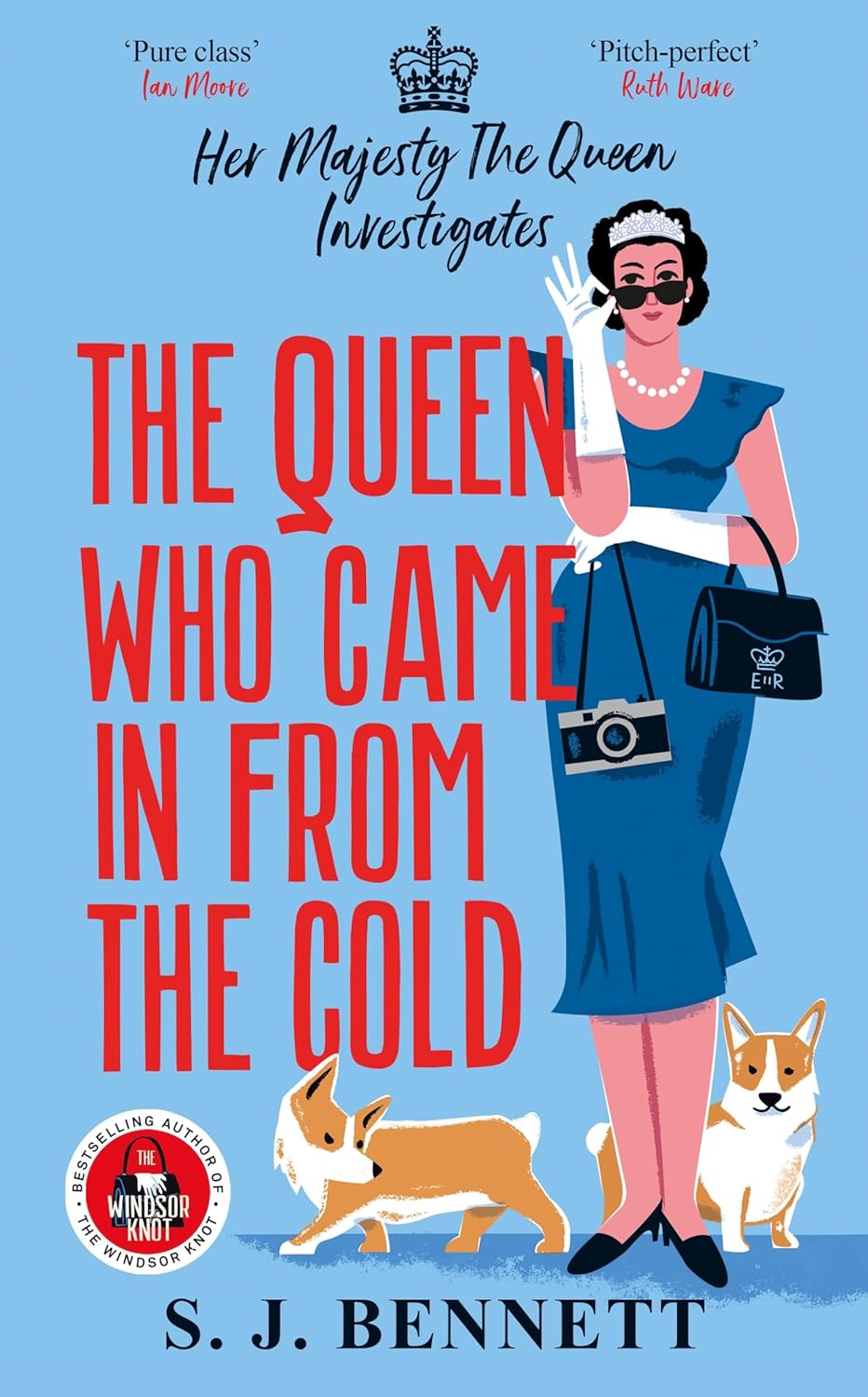
I’m sharing my review for The Queen Who Came in From the Cold by SJ Bennett, released today #bookreview #newrelease #mystery
Here’s the blurb
It’s 1961 and the Queen is planning her state visit to Italy aboard Britannia. But before she goes, an unreliable witness claims to have seen a brutal murder from the royal train. Did it really happen, and could the victim be a missing friend of Princess Margaret’s new husband, Tony Armstrong Jones?
The Queen and her assistant private secretary, Joan McGraw, get to work on their second joint investigation, little imagining that this time it will take them all the way to Venice in a tale of spies, lies and Cold War skulduggery.
The Queen Who Came in from the Cold is my second foray into the Queen mystery series.
I was intrigued by the set up for this one, the Cold War, the Queen, spies etc. And it is a very good mystery, with an unexpected couple of twists.
The story is told with wonderful humour and there are some fabulous characters (as well as a lot of men who say inappropraite but period-specific comments about women) that really made me chuckle, and the mystery is delightfully simple and complicated, all at the same time involving a lot of people who don’t really speak to other people, and who can’t be seen speaking with other people. If this is how MI5 and MI6 really worked in the 1960s then it’s unsurprising that they missed so much. I did love all the historical research elements as well.
A fun, well-crafted mystery with a high level of peril for those involved.
Check out my review for The Windsor Knot (the first book in the series, although our Queen character is in her 90s in this one).
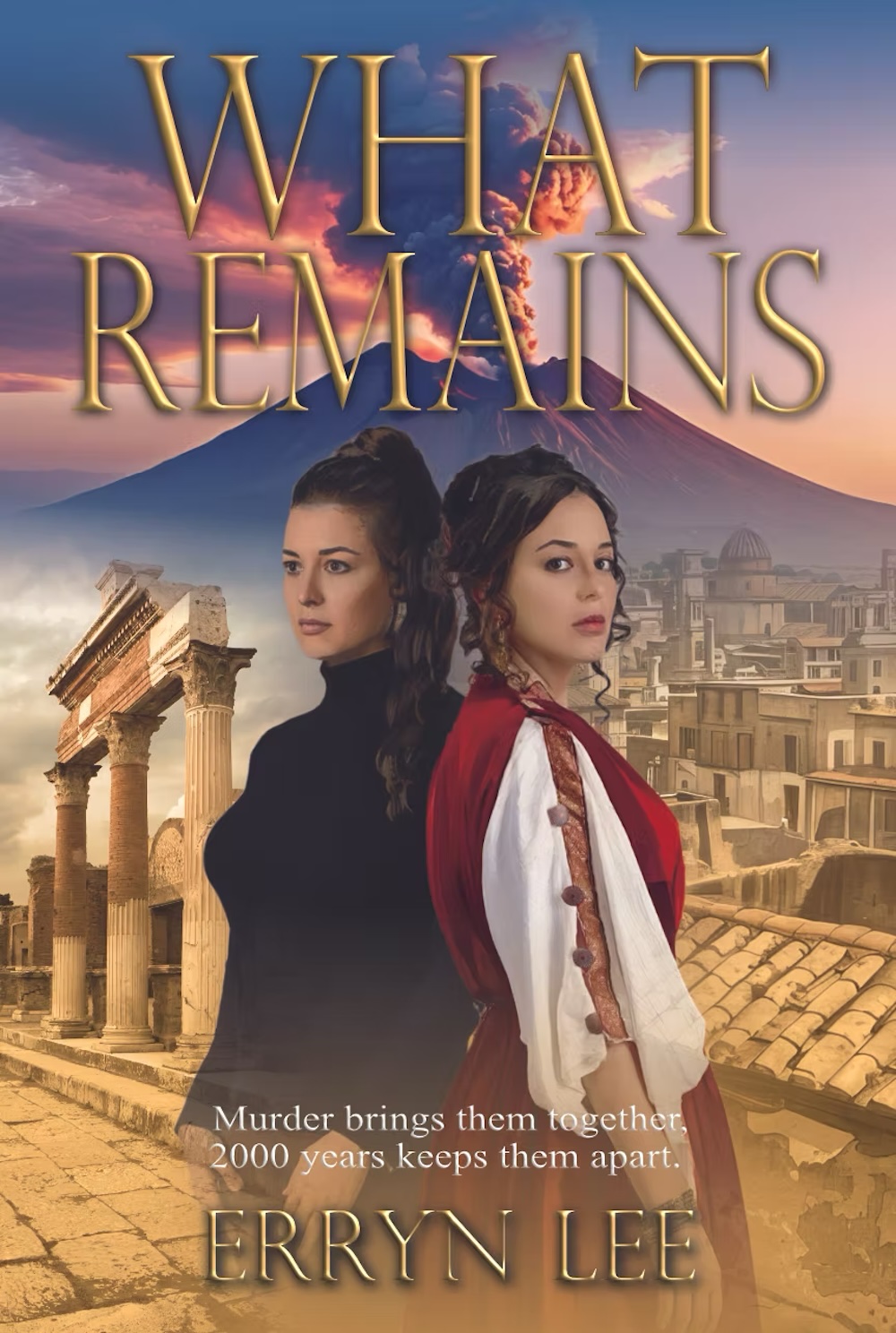
I’m delighted to welcome Erryn Lee and her book, What Remains, to the blog with an extract.
Extract
As I held the weapon in my right hand I imagined using my left to take hold of the Praetorian’s hair to pull it back towards me, leaning over the prone body as I had in my nightmare to press the pugio to the man’s throat and slice from left to right, digging the blade in so deeply at the right that it shaved the mandible and jarred against the bone of the mastoid process, almost sticking. In my mind, I could see the bright gush of blood and feel its heat as it washed over my fingers, while the body jerked beneath my left hand and then subsided.
I dropped the pugio on the bench beside the skull and had enough time to lean across the sink before the scalding burn in my throat became gut-wrenching spasms as all that was inside me poured outwards. When the heaving subsided I hung over the sink, a single trail of thick saliva dripping from my chin, making its way towards the mess at the bottom. My throat scalded and my eyes flooded with tears. It took two hands, one on each side of the sink to push me upright. When I did, the room swam as though underwater.
Here’s the Blurb
What Remains is a haunting dual-timeline mystery that bridges centuries-and secrets-between ancient Rome and the modern world.
Forensic anthropologist Tori Benino has just landed the opportunity of a lifetime: leading a dig at a long-buried Roman village lost to the eruption of Vesuvius. But when she uncovers the remains of a Praetorian guard hidden in an ancient latrine-clearly murdered-Tori realizes she’s stumbled onto something far more sinister than a routine excavation. As she digs deeper into the past, her own carefully ordered life begins to fall apart.
Nearly two thousand years earlier, Thalia, the daughter of a wealthy merchant, is desperate to escape an arranged marriage to a brutal and politically powerful senator. Her only hope lies with a Praetorian soldier assigned to guard her-but trusting him could cost her everything.
As past and present collide, What Remains asks: When history is buried, what truths refuse to stay hidden?
Perfect for fans of Kathy Reichs and Kate Quinn, this novel is inspired by true events and delivers a compelling blend of suspense, history, and heart.
Erryn Lee has spent most of her life between the covers of books, her love for historical fiction drew her to a career as an English and History teacher, where she enjoys sharing her passion for both language and the past with young adults (at least until she needs to give it up to write full time).
When not teaching or writing she is deeply immersed in research and studying her Masters in History. Erryn lives with her husband, a fluctuating number of horses and three bossy cavoodles on a horse farm in the picturesque central west of NSW, Australia.
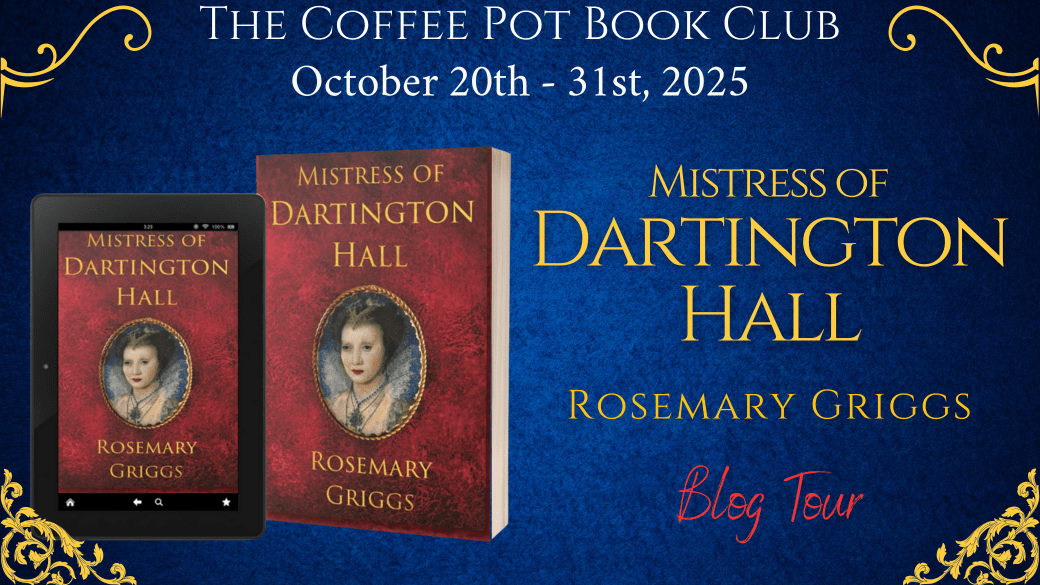
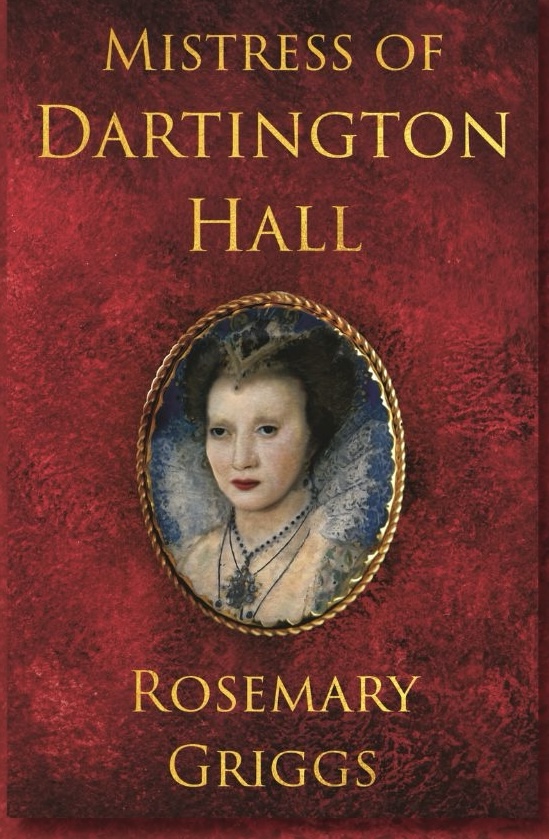
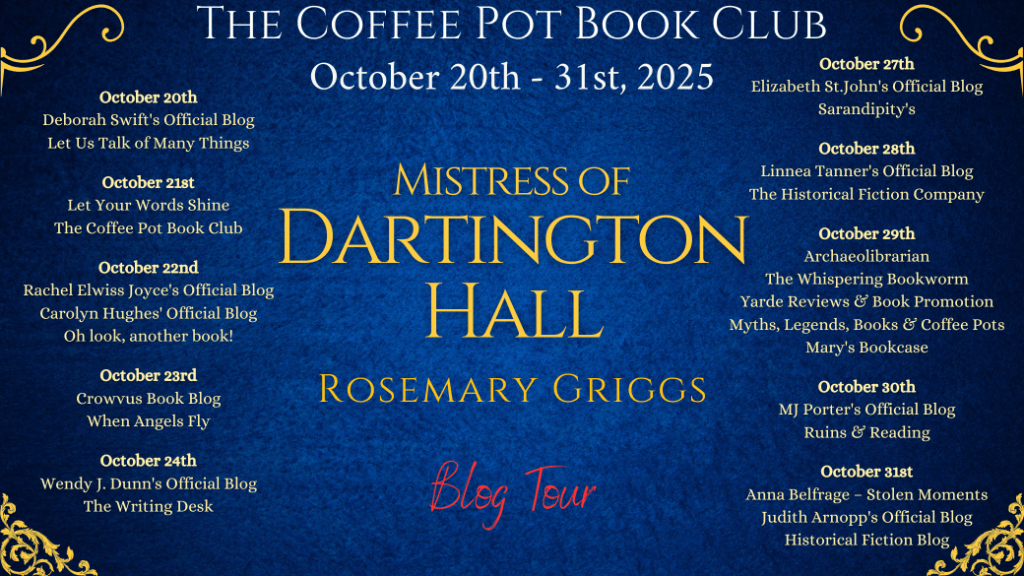
I’m delighted to welcome Rosemary Griggs and her book, Mistress of Dartington Hall, Book 3 in the Daughters of Devon series, to the blog with a guest post.
Guest Post – historical background
Mistress of Dartington Hall continues the story of a French Huguenot noblewoman, Lady Gabrielle Roberda Montgomery. Roberda’s father, Gabriel de Lorges, was a prominent Huguenot general. He gained notoriety as the man who accidentally killed King Henry II of France in a jousting accident.
Roberda married into one of Devon’s most prominent families. Her husband, Gawen Champernowne’s was the son of Sir Arthur Champernowne, a staunch Protestant. Sir Arthur was Queen Elizabeth’s Vice-Admiral of the Fleet of the West, and he had connections at court.
We followed Roberda’s traumatic childhood in war-torn France and her catastrophic marriage to Gawen in The Dartington Bride. In Mistress of Dartington Hall we join her in the autumn of 1587. Roberda has been managing Dartington Hall while her estranged husband, Gawen, has been away on the Queen’s business.
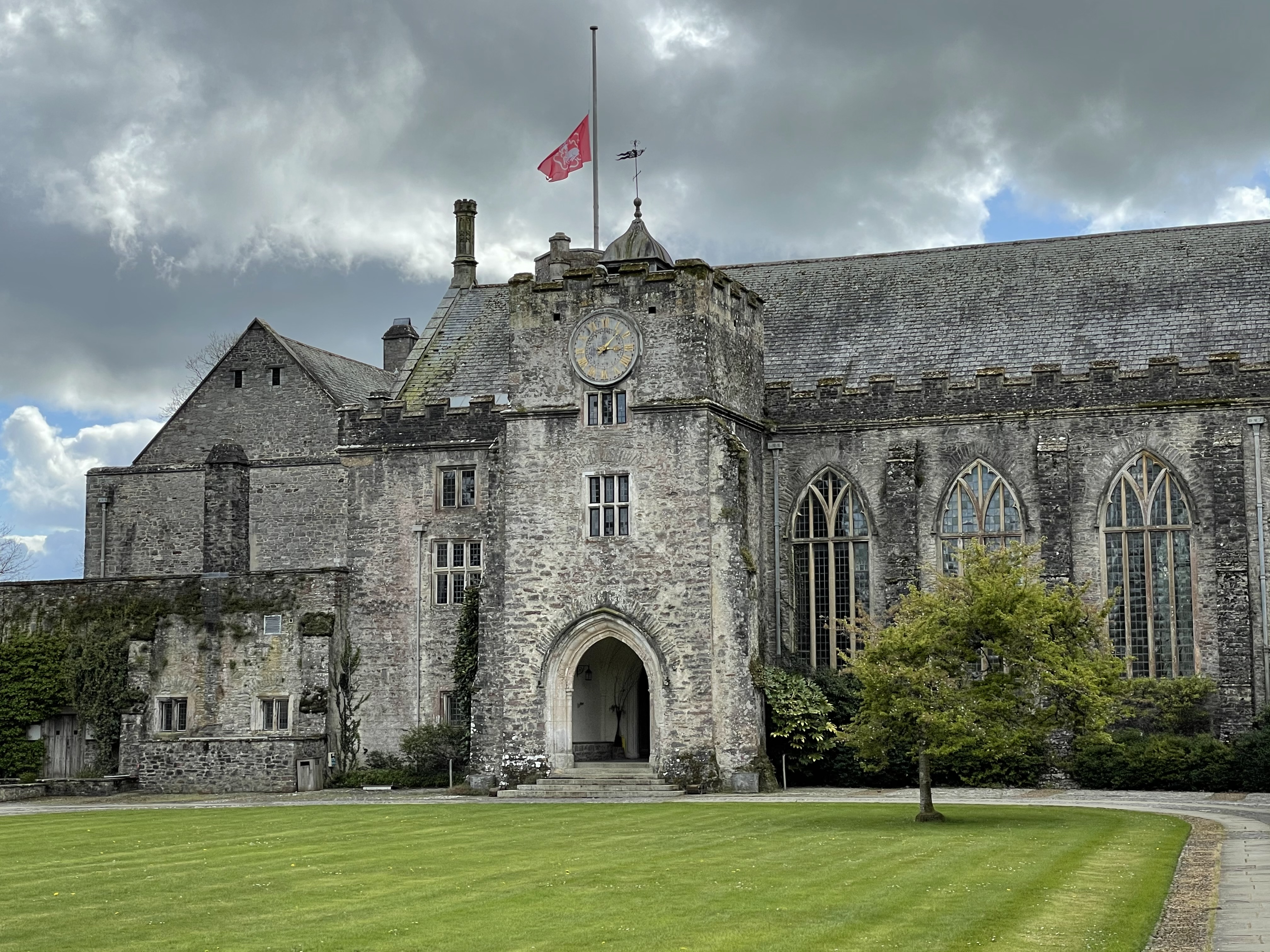
Dartington Hall, Devon, England
England has been at war with Spain for over two years. The Spanish king is preparing a formidable fleet of warships to launch an invasion. In 1587, everyone expected them to land at Falmouth, Plymouth or Dartmouth to establish a foothold on English soil. Thousands of Spanish soldiers would then disembark and rampage through the countryside. It must have been a terrifying time for the people of Dartington, only sixteen miles upriver from the port of Dartmouth. Many panic-inducing false alarms disturbed the people of Devon before the Spanish Armada’s arrival in July 1588.
Relations between England and Spain had been tense for a long time. After his wife, Queen Mary, died childless in 1558, Philip of Spain proposed to her sister, the new Queen Elizabeth. Elizabeth declined the offer, and Philip married elsewhere.
King Philip’s marriage to Elisabeth of Valois, the daughter of King Henry II of France, cemented the end of a long war between France and the Habsburgs. It was during the joust that accompanied the celebrations in Paris in the summer of 1559 that Roberda’s father’s lance shattered. His opponent, King Henry, had not put down his visor. A splinter of wood entered the king’s eye, and he died 11 days later. That accident changed the course of Gabriel’s life. It also set off the chain of events that brought Roberda to Dartington Hall.
After Queen Elizabeth I established a Protestant church in England, King Philip considered it his duty to return England to the Catholic faith. That, combined with political rivalry and economic competition, stoked his ambition to conquer England. He amassed a massive fleet of warships and gathered supplies.
In 1570, Pope Pius V excommunicated Elizabeth. The Pope supported Philip’s plan by promising forgiveness to those who took part in the invasion. Audacious English privateering raids on Spanish ships led by people like Sir Francis Drake made King Philip even more determined. The frequent attacks on Spanish ships and colonies disrupted Spanish trade and wealth. After the Treaty of Nonsuch, signed in 1585, confirmed England’s support for the Protestant Dutch rebels against Spanish rule, Philip put his plans in motion.
Sir Francis Drake’s audacious raid on Cadiz, known as ‘singeing the King of Spain’s beard’, destroyed around 30 Spanish ships and supplies, delaying the Armada’s launch by over a year. But everyone knew they would come.
England prepared, hoping the new English ships, faster and more manoeuvrable than the cumbersome Spanish galleons, would give them an advantage. However, Queen Elizabeth was notoriously parsimonious, leaving the English fleet short of powder and shot. Her reluctance to spend money frustrated her advisors, including the commander of the English fleet, Charles Howard.
Drake gathered ships at Plymouth, ready to meet the Spanish. However, many of his sailors fell ill and died from lack of food and cramped, unsanitary conditions on board. More men had to be conscripted from the surrounding area to replace them.
Sir Walter Raleigh’s network of warning beacons would signal the approach of the Spanish fleet. The Lord Lieutenant and his deputies mustered a militia — a sort of ‘Dad’s Army’ of poorly equipped, untrained militia-men. Roberda’s husband, Gawen Champernowne, was to lead cavalrymen drawn from the local nobility. These last-minute preparations would likely have proved inadequate had the invaders stuck to their initial plan.
Luckily, the Spanish commander decided to rendezvous with the Duke of Parma rather than first landing in the southwest. The Armada sailed on up the English Channel, pursued by Drake’s ships. At Gravelines, Drake sent in fire-ships to disrupt their formation. But it was bad weather that finally defeated King Philip’s attempt on England. The ‘Protestant Wind’ scattered them, driving them around the coast of Scotland. Some foundered on rocks; a few limped home to Spain. On land, Gawen Champernowne, who was to have led a cavalry troop against the expected attack, went home having seen no action.
The Armada failed in 1588, but the conflict continued for another sixteen years. In August 1595, the Spanish raided and burned villages in Cornwall. They attempted two more full-scale expeditions in 1596 and 1597. Roberda and the people of Devon continued to live with the threat of invasion. The war finally ended with the Treaty of London in 1604.
Meanwhile, in France, Roberda’s brothers sought to reclaim the estates they lost when their father died on the executioner’s block in Paris in 1574. The French Wars of Religion escalated into the War of the Three Henrys. Henry of Navarre became King Henry IV after both the Duke of Guise, leader of the Catholic League, and King Henry III, were assassinated.
During the 1590s Roberda’s brothers supported Henry IV in his campaigns to assert his authority. He faced opposition from the Catholic League, which Spain supported. Eventually, Henry IV publicly converted to Catholicism, and in 1594 he entered Paris, weakening the Catholic League. A year later. Henry IV formally declared war on Spain. The Edict of Nantes, issued in 1598, ended the religious wars in France. Catholicism became the state religion, but the Huguenots had substantial rights and religious freedoms. Roberda’s family reclaimed their lands. After her mother’s death, Roberda received her share, and her younger brother, Gabriel, eventually rebuilt the family home at Ducey.
Roberda’s life as Mistress of Dartington Hall, played out against an uncertain background. England was at war with Spain, and Devon was on the ‘front line’. Religion continued to divide her home country, France. Like many women of her time, she successfully managed a vast estate while Gawen was away. She overcame the hostility that met her in England as an incomer. Roberda gained the respect and trust of her estate workers, tenants and servants. Gawen’s return jeopardised her hard-won authority and put her in a difficult position. Should she trust him? Later, Roberda takes decisive action to secure her children’s inheritance. But can she eventually grasp the chance of happiness for herself?
Here’s the Blurb
1587. England is at war with Spain. The people of Devon wait in terror for King Philip of Spain’s mighty armada to unleash untold devastation on their land.
Roberda, daughter of a French Huguenot leader, has been managing the Dartington estate in her estranged husband Gawen’s absence. She has gained the respect of the staff and tenants who now look to her to lead them through these dark times.
Gawen’s unexpected return from Ireland, where he has been serving Queen Elizabeth, throws her world into turmoil. He joins the men of the west country, including his cousin, Sir Walter Raleigh, and his friend Sir Francis Drake, as they prepare to repel a Spanish invasion. Amidst musters and alarms, determined and resourceful Roberda rallies the women of Dartington. But, after their earlier differences, can she trust Gawen? Or should she heed the advice of her faithful French maid, Clotilde?
Later Roberda will have to fight if she is to remain Mistress of Dartington Hall, and secure her children’s inheritance. Can she ever truly find fulfilment for herself?
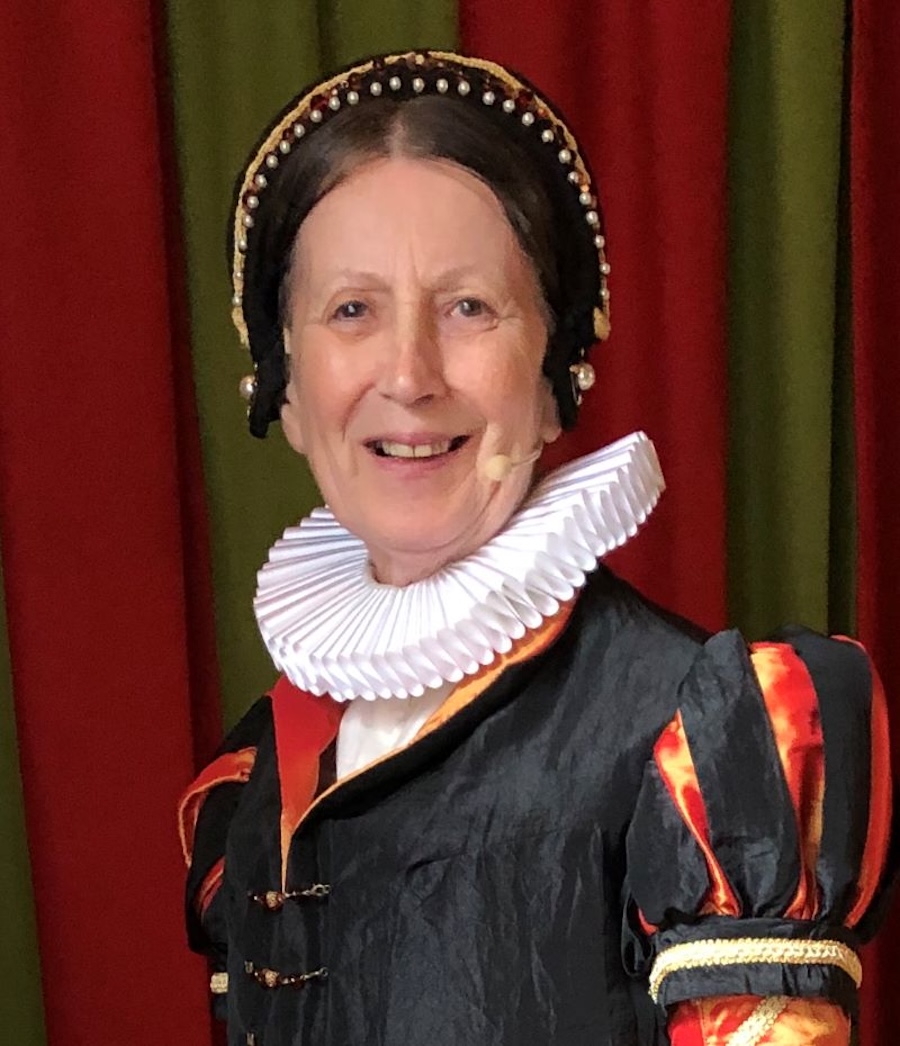
Author and speaker Rosemary Griggs has been researching Devon’s sixteenth-century history for years. She has discovered a cast of fascinating characters and an intriguing network of families whose influence stretched far beyond the West Country. She loves telling the stories of the forgotten women of history — the women beyond the royal court; wives, sisters, daughters and mothers who played their part during those tumultuous Tudor years: the Daughters of Devon.
Her novel,A Woman of Noble Wit, set in Tudor Devon, is the story of the life of Katherine Champernowne, Sir Walter Raleigh’s mother. The Dartington Bride, follows Lady Gabrielle Roberda Montgomery, a young Huguenot noblewoman, as she travels from war-torn France to Elizabethan England to marry into the prominent Champernowne family. Mistress of Dartington Hall, set in the time of the Spanish Armada, continues Roberda’s story.
Rosemary is currently working on her first work of non-fiction — a biography of Kate Astley, childhood governess to Queen Elizabeth I, due for publication in 2026.
Rosemary creates and wears sixteenth-century clothing, and brings the past to life through a unique blend of theatre, history and re-enactment at events all over the West Country. Out of costume, Rosemary leads heritage tours at Dartington Hall, a fourteenth-century manor house that was home of the Champernowne family for 366 years.
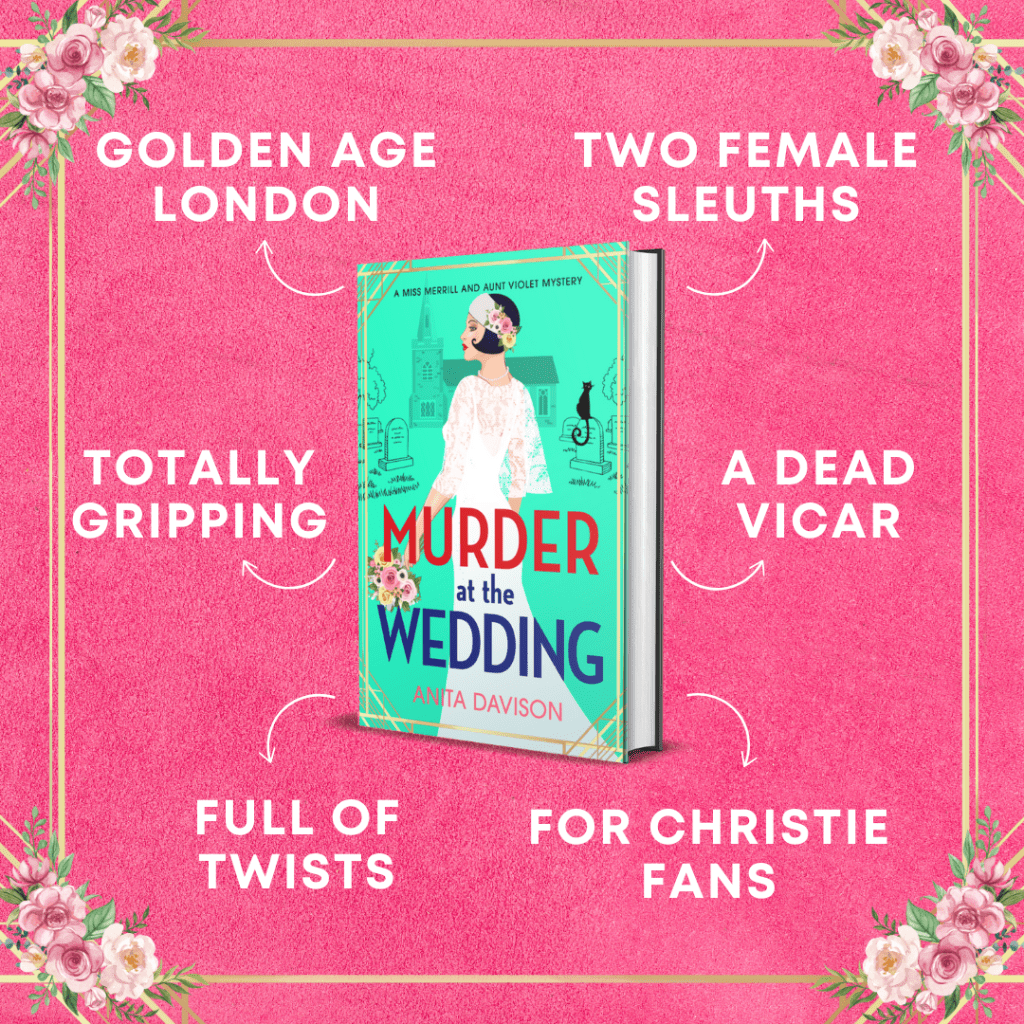
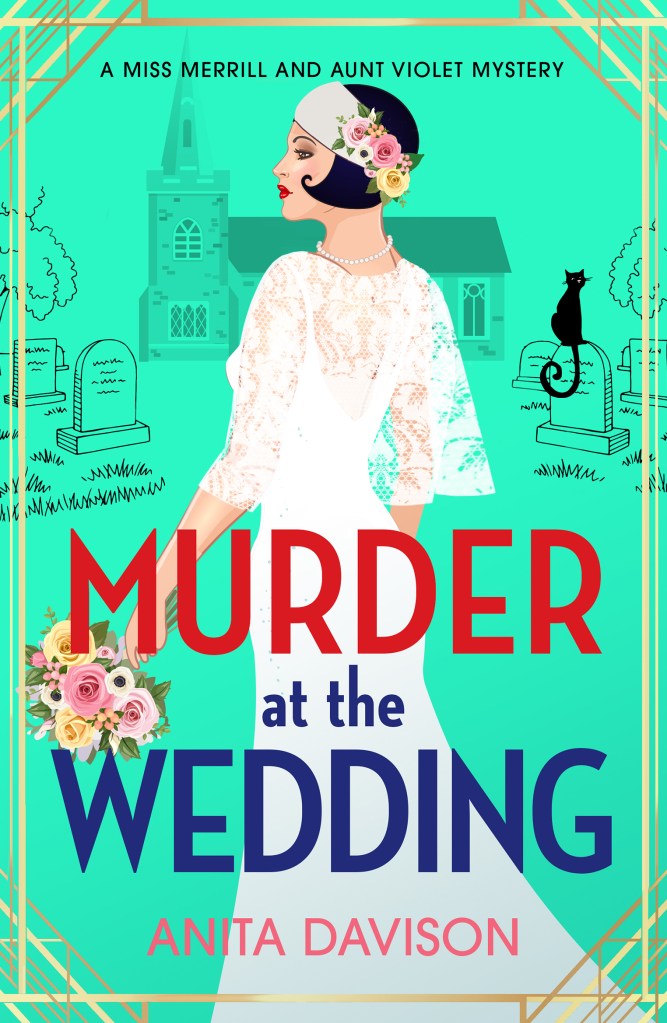
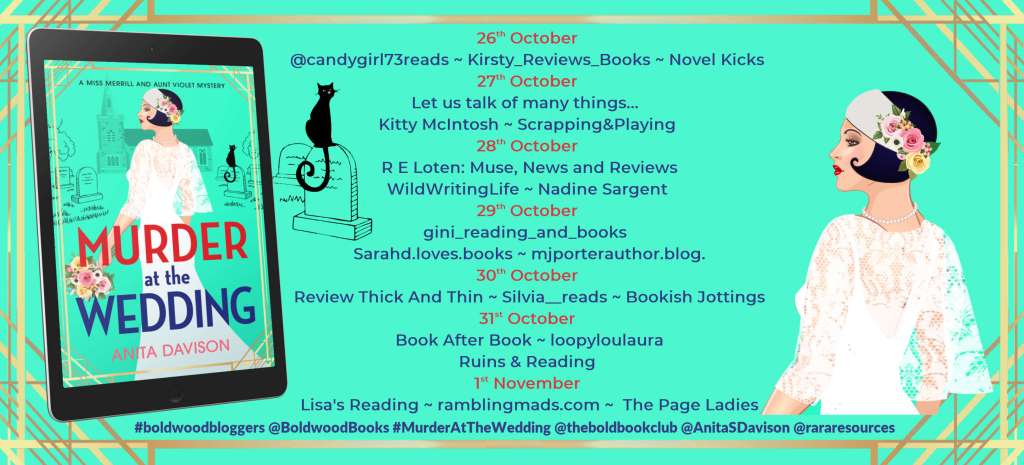
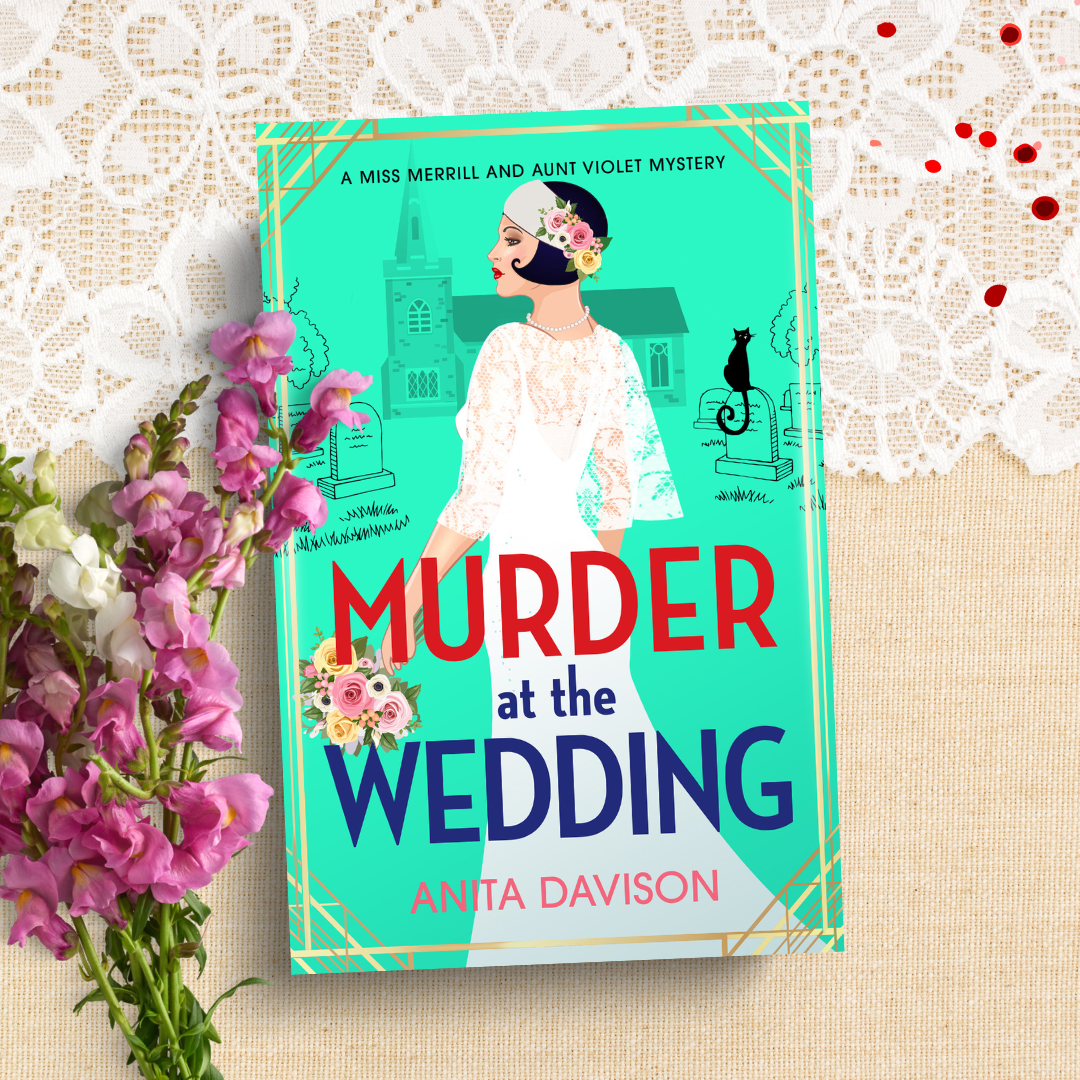
I’m delighted to share my review for Murder at the Wedding by Anita Davison #bookreview #blogtour #historicalmystery #newrelease
Here’s the blurb
Hannah Merrill is about to marry the love of her life…
The couple are determined their low-key celebration will go without a hitch, but there can’t be an ‘I do’ while the vicar is missing. And when he’s found dead – a victim of a poisoning – in the crypt behind the church, Hannah knows only she and Aunt Violet can find out who did it.
Hannah’s beloved thinks she shouldn’t interfere. But if he fails to remember that an independent woman in 1918 doesn’t do what she’s told to by a man, the dead vicar may be the least of his worries…
Then the vicar’s own fiancé appears on the scene, even though nobody knew he was engaged. And suddenly it becomes clear someone has a secret, one shocking enough to kill for.
Will the intrepid pair of amateur sleuths catch the murderer before they kill again? Or will it be til death parts them all?
Murder at the Wedding is a fabulous new mystery in the Miss Merill and Aunt Violet mystery series.
Hannah is finally married but no sooner has she said, ‘I do,’ than she finds a body. (What a horror on her wedding day). What they determine is a matter of suicide becomes something much worse as murder is soon suspected. Hannah and her aunt determine to find the solution because the new police inspector isn’t up to the task.
It’s good to see Hannah and Violet working together in this book. They’re a great team (I felt in the previous book that there wasn’t quite enough of Aunt Violet). The mystery is well structured, seemingly impossible to solve for much of the novel and I didn’t guess the resolution, which I always appreciate.
This is another enjoyable read in the on-going historical mystery series.
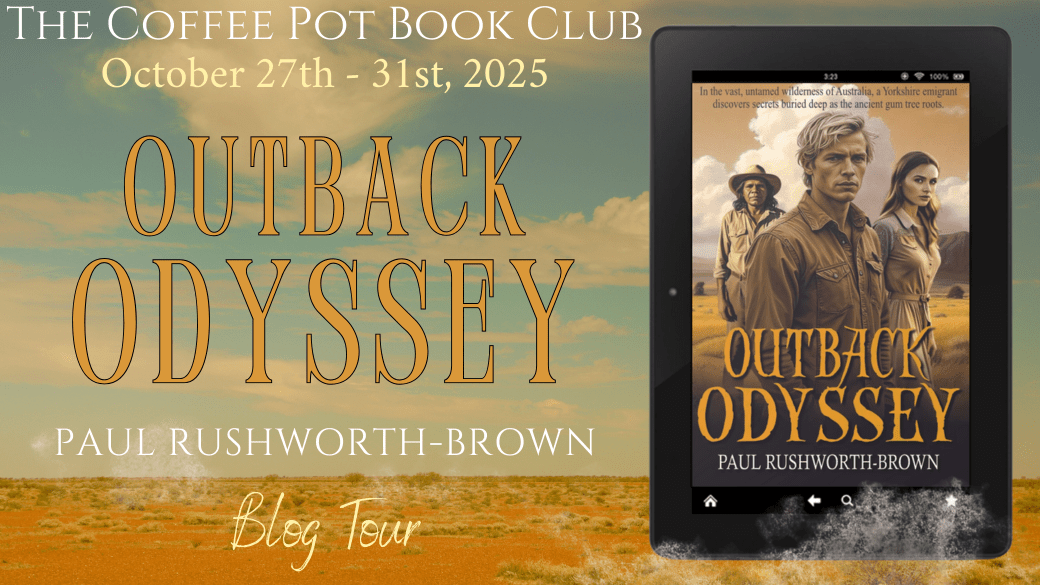
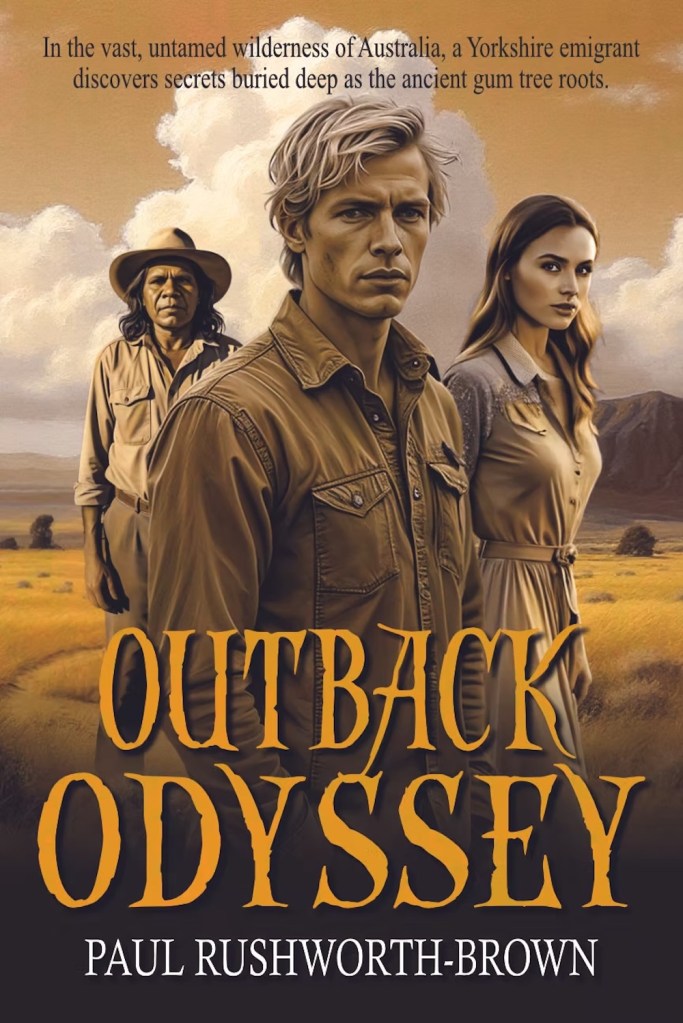
I’m delighted to welcome Paul Rushworth-Brown and his book, Outback Odyssey, to the blog with an excerpt.
Excerpt – Cultural Encounter with Jarrah
“I ask your permission to teach him our ways and show him our culture and Country.”
The Elders exchanged glances, the firelight catching the lines of their faces. The eldest of them, Jarrah, was the first to speak. His voice was deep, and his eyes carried the weight of generations.
“This is not a decision that should be made lightly.”
Kullindi leaned forward, her gaze unwavering. “What is it that you see in this whitefella? You think he is worthy of this — why?” Her words hung in the air, as heavy as the night.
Dhirrari’s reply came steady. “Jimmy has walked a hard road, not so different from my own. He has known loss and loneliness. He was raised without family or a place to call home, but he has chosen to connect, to understand, to belong. I have watched him — not for days, but for moons. He listens, not just with his ears, but with his heart. He doesn’t take from the Land without thought; he walks it with care.”
The silence stretched long, broken only by the crackle of the fire. Finally, Jarrah gave a slow nod. “Then let it be so. But remember — to walk this path is not to borrow. It is to carry. It will change him.”
Jimmy bowed his head, understanding without needing every word. For the first time in his life, he felt the weight of acceptance settle on his shoulders like a mantle he was willing to bear.
Here’s the Blurb
1950s Australia. In the wake of war and dislocation, young Yorkshireman Jimmy journeys to the outback, chasing escape but finding something far more dangerous: the truth of himself and the land he now calls home.
What begins as a story of survival becomes a profound allegory of belonging, silence, and identity. As Jimmy collides with love and betrayal, he also encounters the enduring wisdom of the First Peoples — knowledge that most outsiders are too frightened to face, let alone write about.Outback Odyssey is sweeping and cinematic, a novel of resilience threaded with unexpected twists and allegorical depth. Already under consideration for a screenplay adaptation, it peels back the myths of Australia’s past to reveal what lies beneath: the unspoken histories
Paul Rushworth-Brown was born in England and raised in Canada before emigrating to Australia at eighteen, where he became a citizen. By twenty, he had already travelled the world twice, hitchhiked across Australia, and worked as a navvy in outback Queensland — experiences that gave him an enduring respect for resilience, culture, and the landscapes that shape human character.
He later completed a Master’s degree at Charles Sturt University, honing the research skills that underpin his richly detailed novels. A high school teacher and former professional football coach, Paul draws on a lifetime of experience to bring authenticity and depth to his writing.
His novels are known for their cinematic sweep, allegorical undercurrents, and unexpected twists. Outback Odyssey, his fourth book, is a tale of survival and belonging set against the vast backdrop of 1950s Australia. Beneath its page-turning adventure lie questions of identity, silence, and reconciliation — themes that echo long after the final page.
Paul lives in Sydney, where he writes, teaches, and continues to explore the intersections of history and identity.