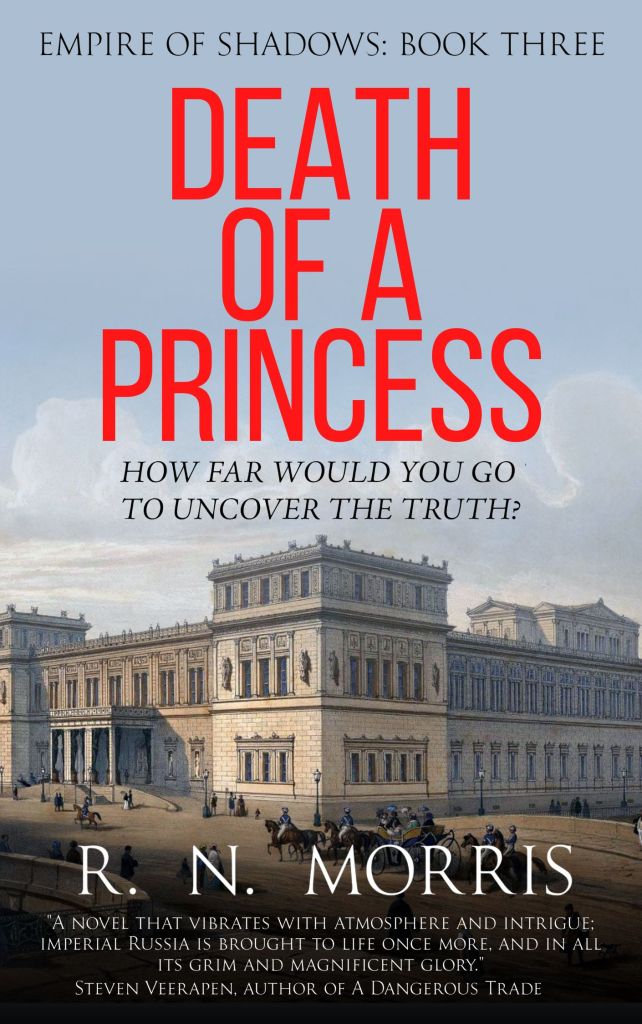
I’m delighted to welcome R.N. Morris and his book, Death of a Princess, Empire of Shadows Book 3, to the blog.
Here’s the blurb
Summer 1880.
Lipetsk, a spa town in Russia.
The elderly and cantankerous Princess Belskaya suffers a violent reaction while taking a mud bath at the famous Lipetsk Sanatorium. Soon after, she dies.
Dr Roldugin, the medical director of the sanatorium, is at a loss to explain the sudden and shocking death.
He points the finger at Anna Zhdanova, a medical assistant who was supervising the princess’s treatment.
Suspicion also falls on the princess’s nephew Belsky, who appears far from grief-stricken at his aunt’s death.
Meanwhile, investigating magistrate Pavel Pavlovich Virginsky arrives in Lipetsk from St Petersburg, seeking treatment after a nervous breakdown.
Against his better judgement, Virginsky is drawn in to the investigation. But is he getting closer to the truth or walking straight into a deadly trap?
This title is available to read on #KindleUnlimited
My Review
Death of a Princess is an intriguing and quite complex mystery set in the 1880s in Russia. It is the third book in the series, and I’ve not read the earlier two, but it didn’t diminish my enjoyment, and readers will easily be able to start with this title.
It has a wide cast of characters and follows them as they interact with one another and resolve other issues before fully resolving how the princess’s death came about.
It feels very ‘Russian.’ All the characters have delightful Russian names and attitudes, and the story well depicts the social structure of society. It’s an engaging read, pulling the reader along with some very tense moments until reaching the grand finale.
I very much enjoyed the mystery and look forward to reading more in the series.
Meet the Author
Roger (R.N) Morris is the author of 18 books, including a quartet of historical crime novels set in St Petersburg featuring Porfiry Petrovich, the investigating magistrate from Dostoevsky’s great novel Crime and Punishment. These were followed by the Silas Quinn series set in London in 1914. He has been shortlisted for the CWA Duncan Lawrie Gold Dagger and the CWA Historical Dagger.
A former advertising copywriter, Roger has written the libretto for an opera, modern retellings of Frankenstein and Macbeth for French school children. He’s also a scriptwriter for an award winning audio producer, working on true crime and history podcasts including The Curious History of your Home.
His work has been published in 16 countries.
Married with two grown-up children, Roger lives in Chichester where he keeps an eye out for seagulls.
In an idyllic Norfolk village, a stunning Roman mosaic floor has been discovered. It’s the archaeological find of the decade – complete with peacock design, intricate patterns and… a dead body?
Georgina Drake is thrilled to photograph the ancient mosaic uncovered at Little Wenborough Manor. But her excitement turns to shock when she finds the lead archaeologist dead on the floor. Instead of ancient secrets, Georgina is soon caught up in a very modern murder.
Comforting the other distressed archaeologists, Georgina discovers this isn’t the first time tragedy has struck this site. Over a century ago, a young Victorian scholar vanished without trace during the original dig, leaving behind a devastated fiancée and a trail of unanswered questions.
As Georgina delves into both mysteries, she discovers surprising connections between past and present. With help from her friends, Georgina pieces together a story of forbidden love, blackmail and betrayal. But someone in the village would prefer these secrets stay buried, and she’ll need all her wits to catch a killer before they strike again…
Perfect for fans of Faith Martin, M.C. Beaton and Midsomer Murders, this charming cozy mystery will have you digging for clues until the very last page.
The Body at the Roman Baths is the first book by the author I’ve read. I was drawn to it because of the title.
Our two main characters are quite fun, but starting with book 5 in a series does mean a lot has gone on that I don’t know about. However, I was happy to accept they were a couple and move on with the resolution to the mystery, or rather the two mysteries.
The two plots are quite fun, drawing together on occasion, and I found the addition of ‘Doris’ to be quite quirky and not at all what I was expecting. It certainly helps solve some of the more difficult parts of solving old crimes.
Overall, it was a fun read. It was a little quirky and a little repetitive in places, and the ending was never really in doubt. Still, Roman-era archaeology and a Victorian mystery—what’s not to love?
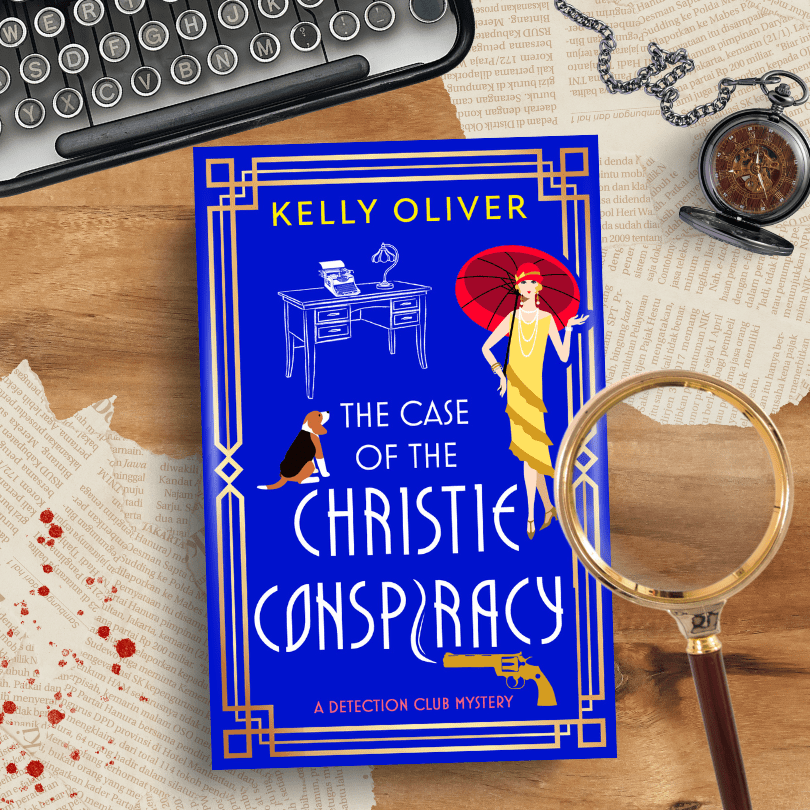
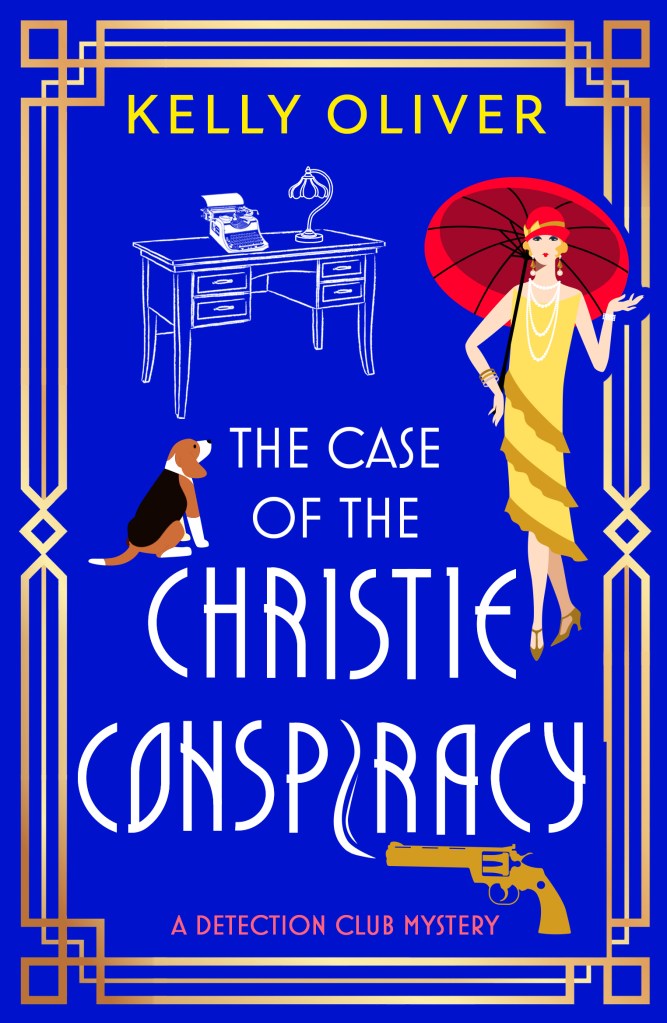
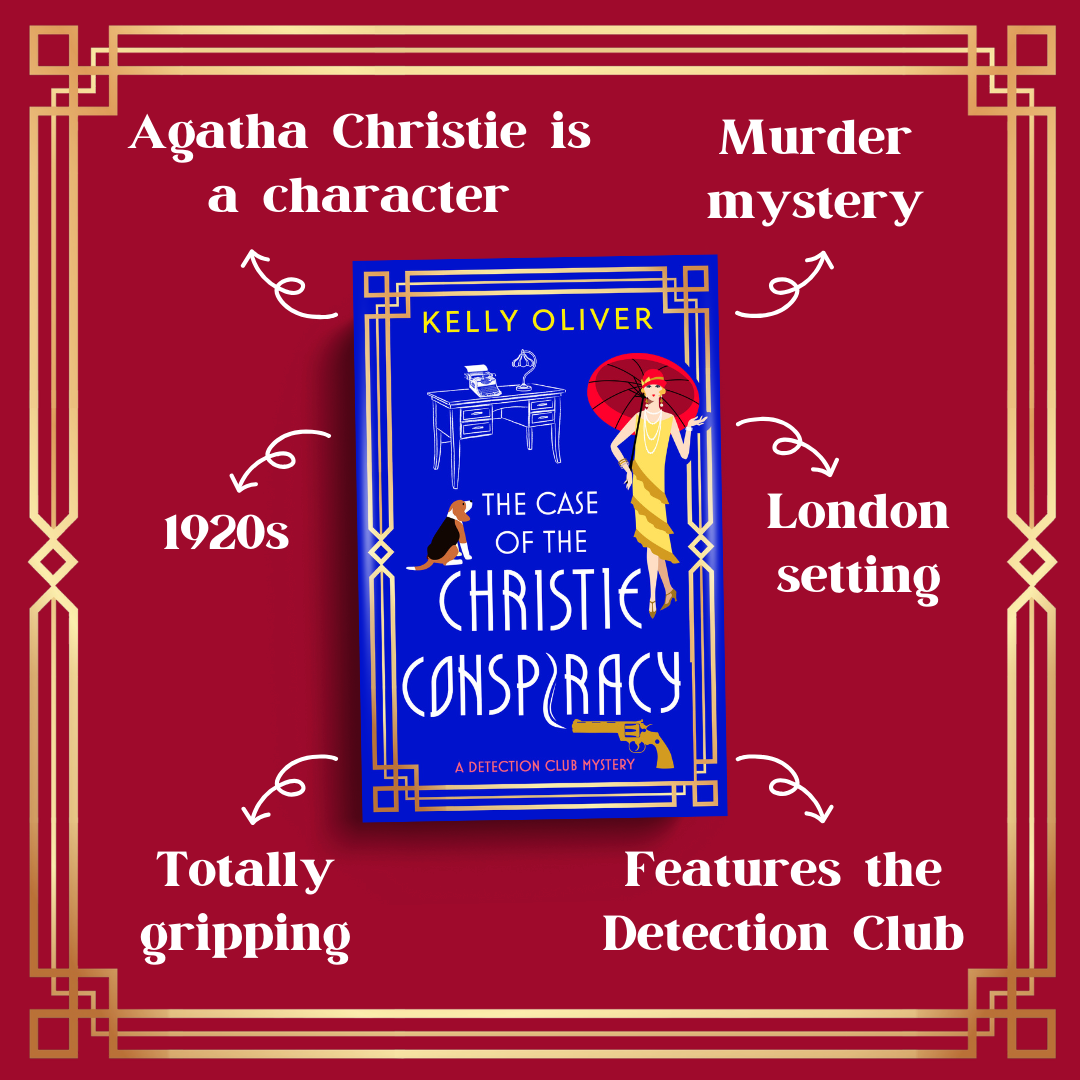
Discover the delightfully gripping new historical mystery series that’s perfect for fans of Helena Dixon, Verity Bright and T E Kinsey.
Agatha Christie is about to embark on a new, gripping murder case. But this time, she’s not the author – she’s a suspect…
1926 – Christie is a darling of the literary circuit and the most desired guest in London’s glittering social scene. She can often be found at meetings of the Detection Club – where mystery writers come together to share ideas, swap secrets and drink copiously. But then a fellow author’s initiation ceremony takes a gruesome turn, and one of the group ends up dead. Now, Agatha is no longer just the creator of great mystery plots – she’s a player in one.
And when Agatha disappears the day after the murder, she’s widely assumed to be guilty. Only Eliza Baker, assistant to the Club’s enigmatic secretary, Dorothy Sayers, is interested in investigating the case. But in a world where murder is the ultimate plot device, can Eliza piece together the evidence and find the killer before it’s too late?
The Case of the Christie Conspiracy is an entertaining and well-plotted Golden Age crime mystery, with the addition of many of our favourite Golden Age Crime authors as suspects.
The set-up for the murder mystery is excellent, and our two main characters, Eliza and Theo, are both fierce chess players (thank goodness I learned a bit about chess last year, although it isn’t necessary) and love solving mysteries. Luckily, one such mystery occurs right before them: the murder of one of the Detection Club writers. Eliza, fiercely independent but with a real soft spot for Theo, determines he can help her solve the puzzle but that it must be a competition, the prize being that he will play her at chess.
What ensues is quite a wonderful tale set during the infamous period of Agatha Christie’s disappearance. Eliza and Theo battle to uncover what happened, employing all their detection skills and occasionally getting a little muddled along the way.
A fabulously entertaining novel. I enjoyed the references to the Fiona Figg series and imagine readers of Kelly Oliver’s books will devour this new endeavour with delight.
Kelly Oliver is the award-winning, bestselling author of three mysteries series: The Jessica James Mysteries, The Pet Detective Mysteries, and the historical cozies The Fiona Figg Mysteries, set in WW1. She is also the Distinguished Professor of Philosophy at Vanderbilt University and lives in Nashville, Tennessee
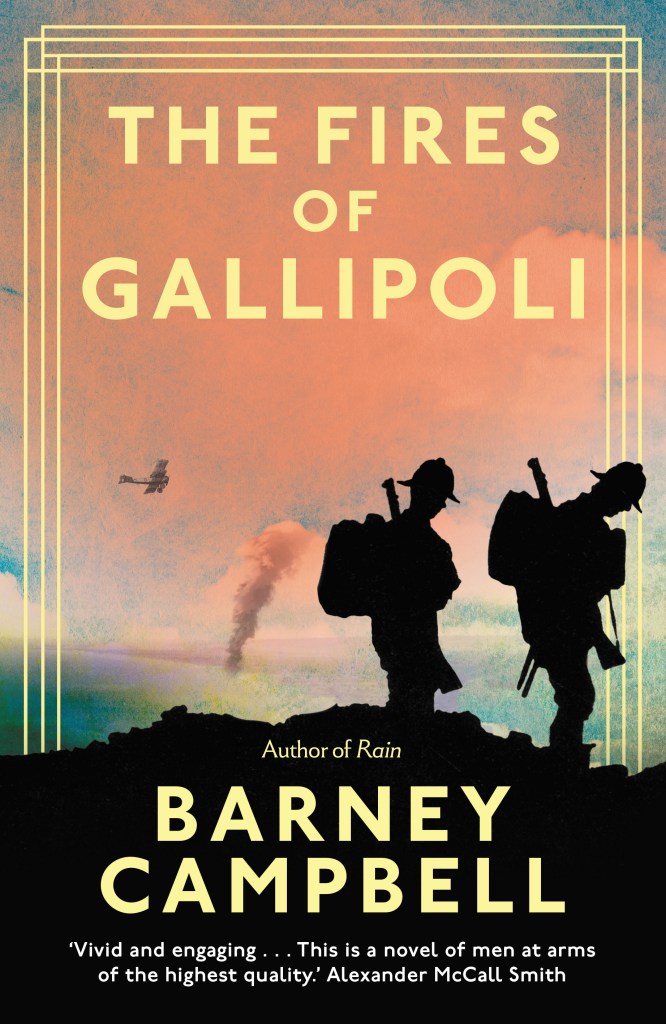
I’m delighted to welcome Barney Campbell and his new book, The Fires of Gallipoli, to the blog with an excerpt.
Excerpt
Edward’s thick jumper proved its mettle and he slept soundly, stirring only around midnight as a snuffling deer broke nearby branches around the edge of the tree. He was awake for a few minutes while memories of nights on the front came to him, staring out into a dark night or peeping fearfully over the parapet when a baleful alabaster shone over the Peninsula in a sniper’s moon. He remembered nights on the line as he and Thorne tried desperately to suppress their chuckles into yelps of breathing. He was sure that he let out a giggle into the night before nothingness then fell over him, dreamless and warm.
He woke with his thighs damp from dew and drew away the groundsheet to see the million droplets on the cow parsley sparkle gold and rainbow colours from the low sun breaching the underside of the tree. A ghostly network of spiders’ webs hung above his head, made fuller by the dew, more ossified. He felt an awful pang, as Thorne stirred beside him, that he wasn’t able to see any of it.
They wormed out from under the tree and creaked limbs back to life, shaking away the residue of sleep and rubbing their sandpaper chins, teeth chattering at the morning’s chill. They got ready to go, the imprint of their bodies in the cow parsley already disappearing as the crushed stalks started to lean up again, and they rejoined the path and carried on.
The route took them over miles of gentle fields and woods, folds in the ground offering one of the most beautiful mornings Edward could remember; folds that, on a battlefield, would become must-take ridges and valleys raked by machine gun fire. Here though was a perfect land, unpoisoned by such snaky heads. The rising sun, still yet to gain its heat, uncovered spring’s half-built hedgerows as nearby woodpeckers saluted their arrival. So infrequent was any sign of habitation, with only a couple of soft yellow stone farmhouses nestling nearly invisibly into their surroundings, that it seemed for a time that they were walking through a zero-humaned world.
They moved so softly, boots tracing their way noiselessly over the grass and the soft earth, that at every wood or new field animals failed to notice them and carried on their activities unalarmed. In one small clump of trees were a cock and hen pheasant, he strutting and boastful with his neck thrust out in grandiose stupidity and she following along behind him picking up the food and grubs that he, in his magnificent self-regard, missed on his morning passeggiata.
Edward stopped for a while to watch them, and then started to describe the scene to Thorne, but not going on as long as he thought he might, seeing writ across his face a sheer exultation in the day and being where they were. Not the sights, of course, but the scents and the touch of the air on his skin seemed to be elevating him to the same sense of contented rapture as Edward felt. The gap between them may not be quite as unbridgeable as he had feared, then. Perhaps.
Here’s the Blurb
The Fires of Gallipoli is a heartbreaking portrayal of friendship forged in the trenches of the First World War.
‘In this vivid and engaging novel of war and friendship, Barney Campbell shows us once again that he is a natural writer. This is a novel of men at arms of the highest quality.’ ~ Alexander McCall Smith
Edward Salter is a shy, reserved lawyer whose life is transformed by the outbreak of war in 1914. On his way to fight in the Gallipoli campaign, he befriends the charming and quietly courageous Theodore Thorne. Together they face the carnage and slaughter, stripped bare to their souls by the hellscape and only sustained by each other and the moments of quiet they catch together.
Thorne becomes the crutch whom Edward relies on throughout the war. When their precious leave from the frontline coincides, Theo invites Edward to his late parents’ idyllic estate in Northamptonshire. Here Edward meets Thorne’s sister Miranda and becomes entranced by her.
Edward escapes the broiling, fetid charnel-house of Gallipoli to work on the staff of Lord Kitchener, then on to the Western Front and post-war espionage in Constantinople. An odd coolness has descended between Edward and Theo. Can their connection and friendship survive the overwhelming sense of loss at the end of the war when everything around them is corrupted and destroyed?
The Fires of Gallipoli is a heartbreaking, sweeping portrayal of friendship and its fragility at the very limits of humanity.
Barney Campbell, author of The Fires of Gallipoli, was brought up in the Scottish Borders and studied Classics at university. He then joined the British Army where he commanded soldiers on a tour of Helmand Province, Afghanistan at the height of the war there.
That experience inspired him to write his first novel Rain, a novel about the war, which was published by Michael Joseph in 2015. The Times called it ‘the greatest book about the experience of soldiering since Robert Graves’s First World War classic Goodbye To All That’.
Barney has walked the length of the Iron Curtain, from Szczecin in Poland to Trieste in Italy. He currently works and lives in London.
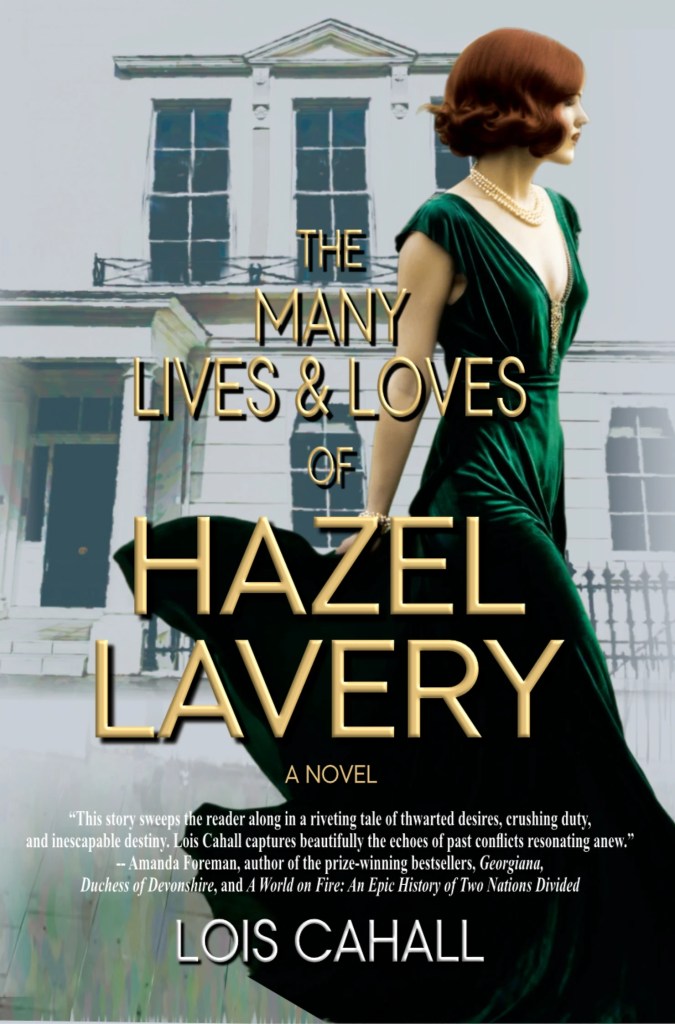
I’m delighted to welcome Lois Cahall and her new book, The Many Lives & Loves of Hazel Lavery to the blog with an excerpt.
Excerpt
Alice was out on Regent Street for drinks at the Café Royal, a thriving Victorian restaurant known to cater to the upper crust and apparently British spies. And then she was off to the Savoy for dinner with her international crowd. Like mother like daughter, I suppose. Christmas eve she’d be traveling to Ireland, spending more and more time in Kilkenny. She even had dreams of living there. I suspect my Irish bug bit her, too. And she even expressed it to me in a letter:
Dearest Mommy,
The Irish are such delightfully kind and amusing people. It is nothing like English hunting, either field or country, everyone helps everyone else, and no one swears at anyone and you’re always welcome in the country if you’re a stranger…. I think Ireland is the freshest, simplest, nicest country and people I have ever met, and I love every inch of it, so you can say ‘I told you so’ and crow over me to your heart’s content now. You were right! And I love you!
My stepdaughter, Eileen, wrapped gifts in the parlor. Nearby were her daughters, Ann Moira and June Mary, which now made John and I official grandparents.
Winston and John were in the library deep into cigars, gin and political talk with our son-in-law, William, while Clementine and I sat sipping sherry in the drawing room, the doors closed. My newest friend, Jessie Louisa “Louie” Rickard, an Irish writer, whose romantic novels we all devoured, joined us, listening on as Clementine cackled about some latest fashion.
My eyes watered up for the tenth time that day. I didn’t intend for her to notice but she instantly figured it out as I turned the other way to avoid eye contact.
“Hazel,” said Clementine, leaning in, her voice full of pity, “Hazel, look at me.” I turned as she gained my full attention. “You must gather yourself, darling girl.”
“Oh Clemmie, I don’t know how to…”
“Of course, you don’t. You’re American,” she said, patting my hand. “But try you must.”
“He was the love of…”
“…your life, yes, I know. But he’s gone. It’s been years,” said Clementine. “Those chapters of life are best left unpublished.”
Then she eyed my wardrobe, black from head to toe, compared to her layers of lapis and pitch blue – a bias-cut dress with belted waist and large yoke collar. “And Hazel, dearest, you’re not in mourning, you’re married…”
“Well, I suppose marriage is a form of mourning.” The three of us women shared a look.
“Fer sure,” said Louie with her Irish brogue. She was sporty. Wearing high waisted sailor pants and striped blouse.
As I admired their zest for life in the present, I longed to tell them right then and there that I mourned not only for Michael, but for our unborn child, and the recent loss of yet another one of Michael’s friends.
“It’s been so difficult, ladies. You’re the only ones I can confide in except for Michael’s sister, Hannie. We’ve stayed close. My love for him is always with me. He once said we were like swans who mate for life.”
“Pain comes from always wanting…” said Louie, trailing off and turning the other way, like a true romantic writer, gazing out the window. Whenever she spoke, rain practically fell on cue.
Clementine began pinching the puffed sleeves on her dress and then gazed up at me, clearing her throat to speak. “I have five tips for any woman where the living men are concerned, not the dead ones.”
“Oh?” I sat up, eager.
“Firstly,” said Clementine, “it is important that a man hires you a skilled staff and has an admirable career. Second, that he makes you laugh. Third, it is important to find a man you can count on who doesn’t lie to you. And that this man loves you and spoils you. And, finally,” she added, “it is most important that these four men don’t know each other!” A pause, and then Clementine burst out laughing.
“Oh Clemmie, you’re wretched! Is this your way of saying I should have an affair?”
“It’s time dear. It’s time.”
“I concur!” said Louie.
“But I’m a Catholic now,” I declared, “I don’t believe in divorce.”
“Nobody is saying to divorce, just have a good ole roll in the hay with a man more your age,”
said Louie, tipping her head to suggest John was very old.
I regretted the way that I segued into the next words that fell from my mouth since rumors had already begun circulating about me. “And Kevin O’Higgins is dead, too. Michael’s friend.”
“Another one?” asked Clementine. “Dead?”
“Yes, back in July, didn’t I tell you then… though it feels like yesterday. The assassins poured lead into his body just like they did to Michael except they murdered him on his way to Mass.”
“Disgraceful!” said Clementine.
“Sometimes, I just feel frozen in misery,” I added.
“So, you were close, yeah?” asked Louie.
Trying to avoid the question instead reframing with a different answer. “I was watching polo at Ranelagh when I was told the news. The first thing I thought was the same thing I always think
when I hear of the death of a man close to me. It’s always the men close to my life who die.”
Leaning forward I poured more sherry, and topped Clementine’s off, too. “O’Higgins so much wanted to see Michael’s achievements and endeavors for the country. They’re saying he was perhaps the greatest diplomat of them all. You know, he wrote me the most charming note. Ended it by saying he wished I could be there as his Parliament meets again. And then he went on about how much the Irish appreciate my help and sympathy.”
Clementine studied her sherry glass, took a sip, and then spoke, “Hazel, I suspect that your views of Ireland are unsuited to the harsh reality of sectarian strife.”
“But I love Ireland so. It was purely by accident of birth that America claimed me. Although,” I said, easing back into the chair and pouting, “Perhaps John was right. He once said that ‘Hazel’s Ireland is as unreal as a mirage in the desert.’”
Here’s the Blurb
In the heart of tumultuous times, amidst the grandeur of Victorian opulence, there existed an American socialite whose influence altered the course of the Anglo-Irish treaty: Lady Hazel Lavery
Boston-born Hazel ascended from her Irish roots to become the quintessential Society Queen of Chicago, and later London, where she lived a delicate dance between two worlds: one with her esteemed husband, Sir John Lavery, a portrait artist to royalty, and the other with Michael Collins, the daring Irish rebel whose fiery spirit ignited her heart. Together, they formed a love triangle that echoed through the corridors of power at 10 Downing Street, London.
Hazel’s wit and charm touched on the lives of the who’s-who of England, including Winston Churchill, George Bernard Shaw and Evelyn Waugh. The image of her memorable face graced the Irish note for close to half-a-century.
Lois Cahall began her writing career as a columnist for Cape Cod newspapers and local periodicals, including Cape Cod Life. She spent a decade writing for national magazines (Conde Nast/Hearst). Her articles have been published in Cosmo Girl, Seventeen, SELF, Marie Claire, Redbook, Ladies Home Journal, Reader’s Digest, Men’s Journal, and Bon Appetit. In the UK she wrote for RED, GQ, Psychologies, and for The Times. In addition, Lois wrote profiles for The Palm Beach Post.
Lois’s first novel, Plan C: Just in Case, was a #1 bestseller in the UK, where it remained in the top three fiction for the year before selling into foreign translation markets. In July of 2014, her novel hit #1 on the Nook “Daily Deal” in America. Her second novel, Court of the Myrtles, was hailed as “Tuesdays with Morrie on estrogen” by the Ladies Home Journal. Her newest book, The Many Lives of Hazel Lavery, is a work of historical fiction and will be published in 2025.
Lois is the former Creative Director of Development for James Patterson Entertainment. She credits her friend, Jim Patterson, the world’s most successful bestselling author, with teaching her about the importance of children’s reading and literacy. As a result, she founded the Palm Beach Book Festival in 2015, an annual event bringing in NYT bestselling and celebrity authors. The event is for book lovers, nurturing the written word for the children and adults of southern Florida.
In 2024 Lois also founded The Cape Cod Book Festival, an annual autumn event that promises to be a new cultural footprint in Massachusetts. It will be for locals and ‘washashores’ alike – a magical place where charitably minded readers can rub elbows with great writers and thinkers.
Lois divides her life between New York and Cape Cod, although her spiritual home is London. But most importantly, Lois can do the Hula Hoop for an hour non-stop and clear a Thanksgiving table in just under ten minutes.
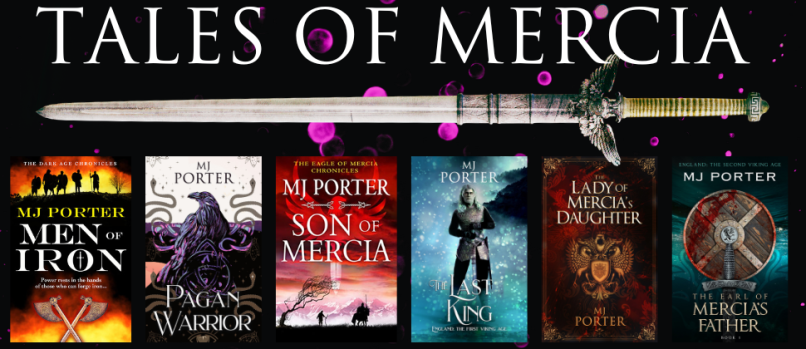
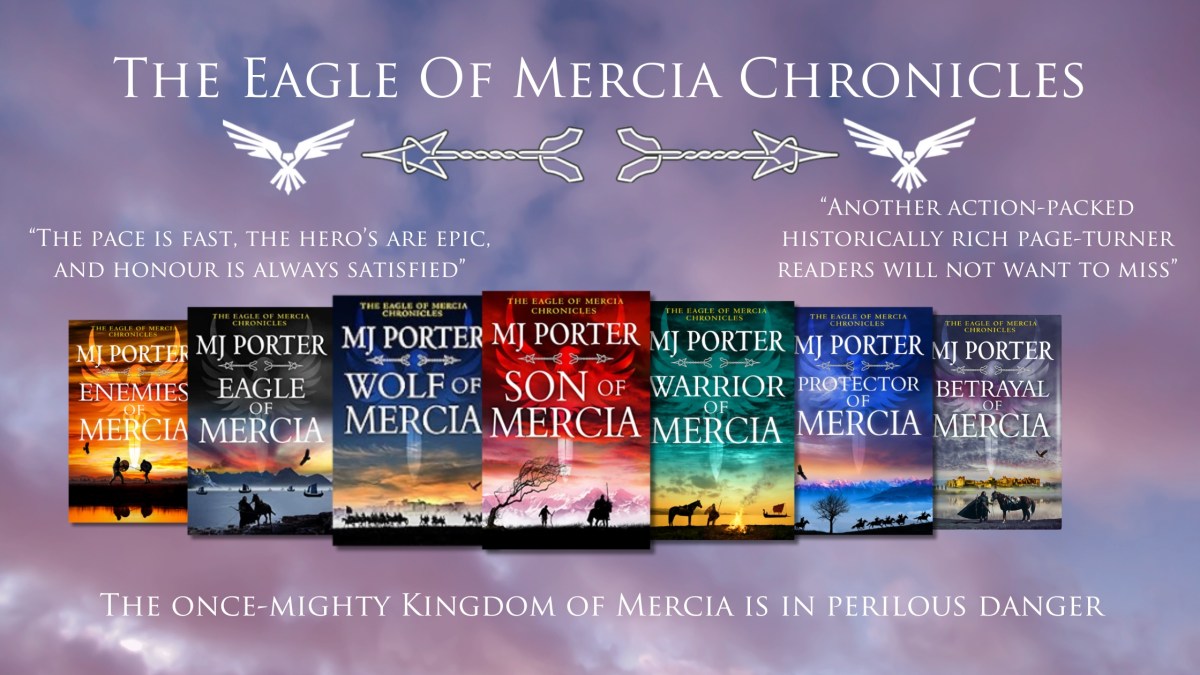
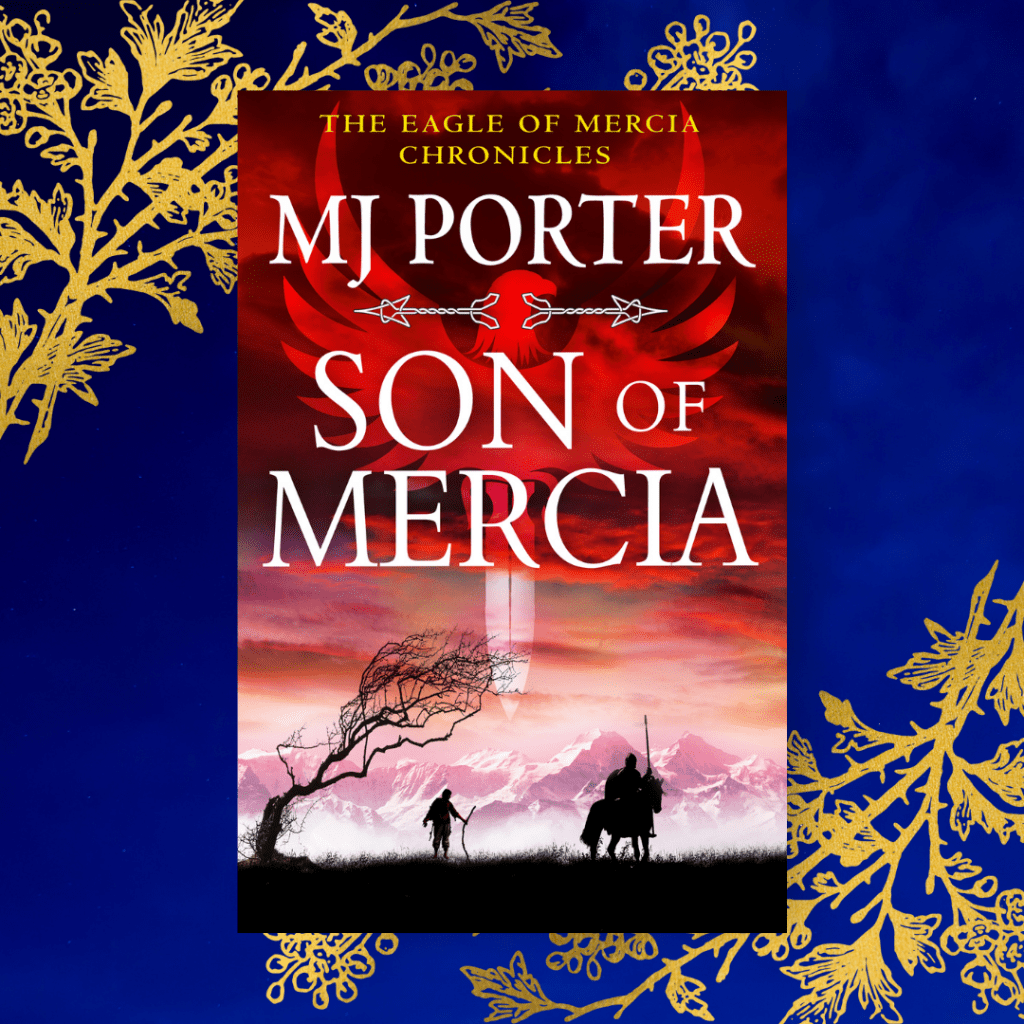
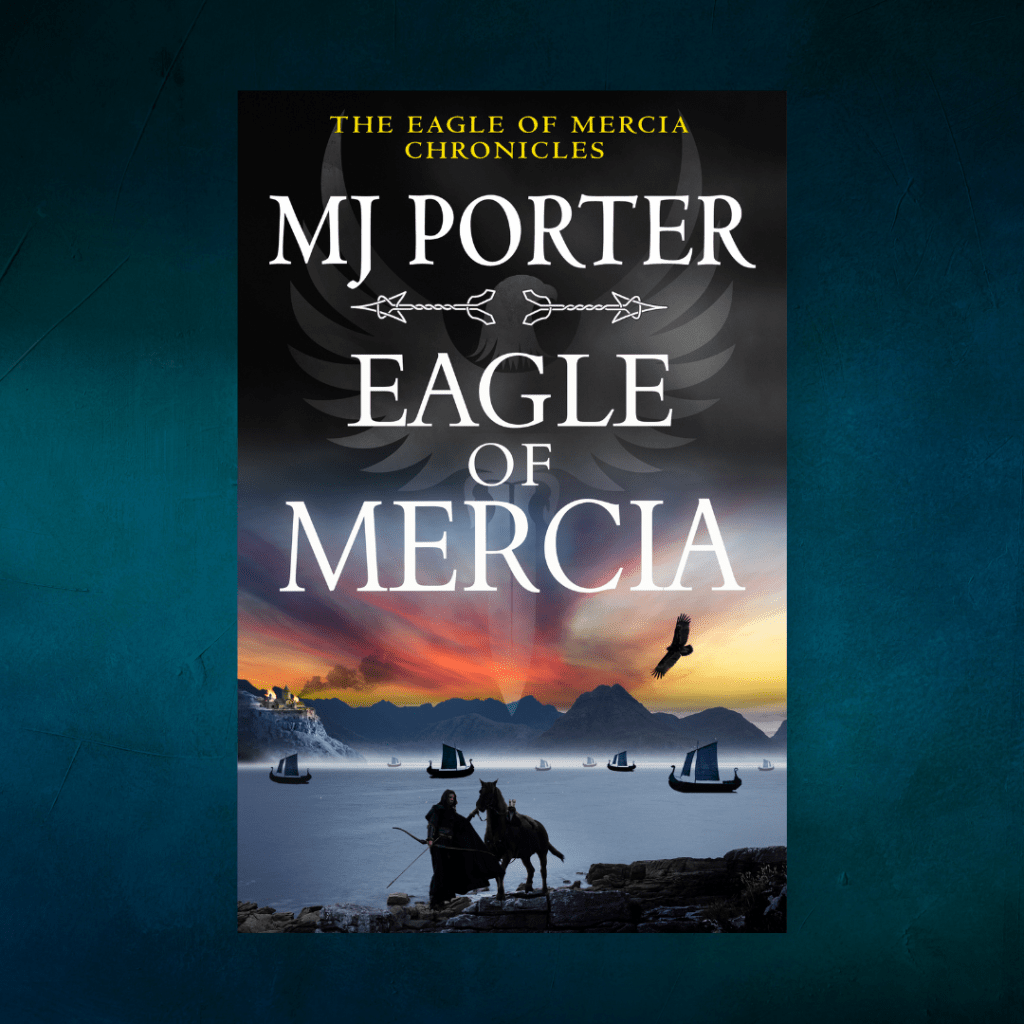
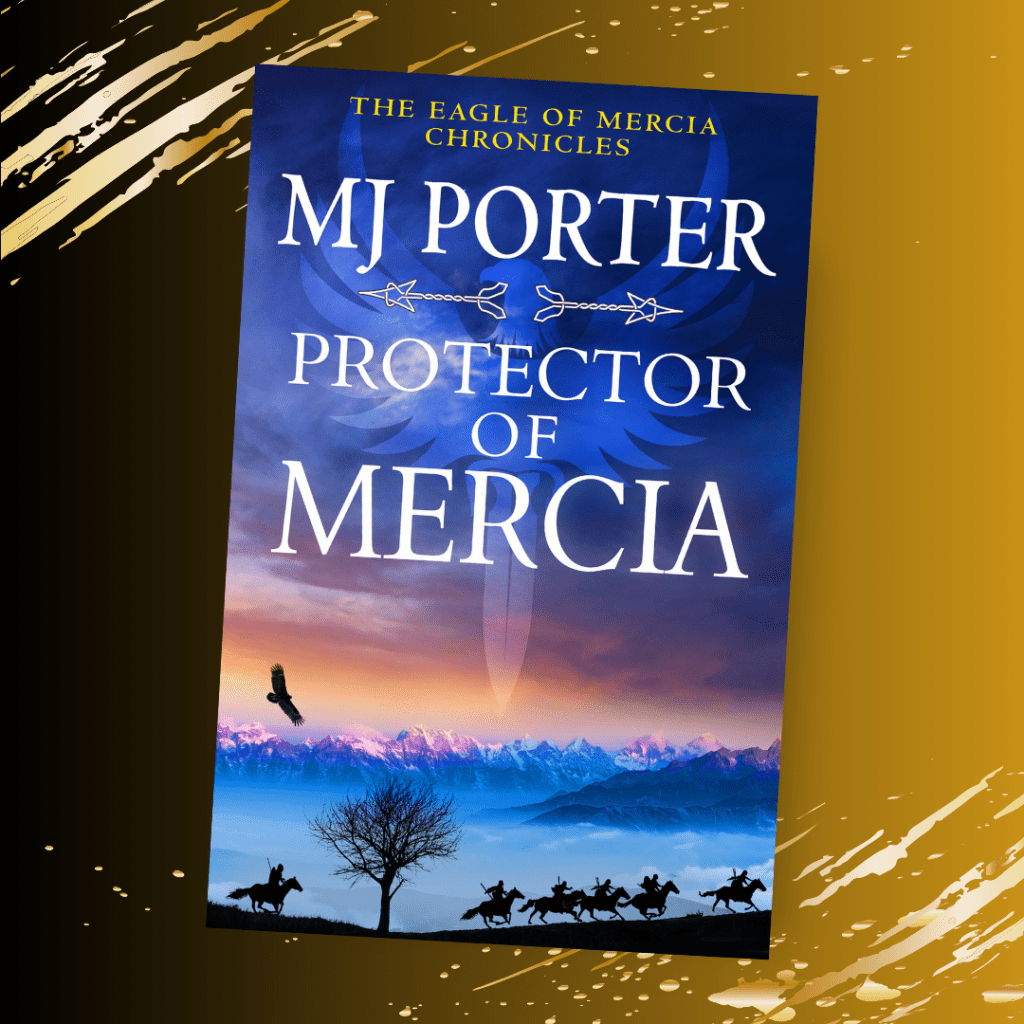
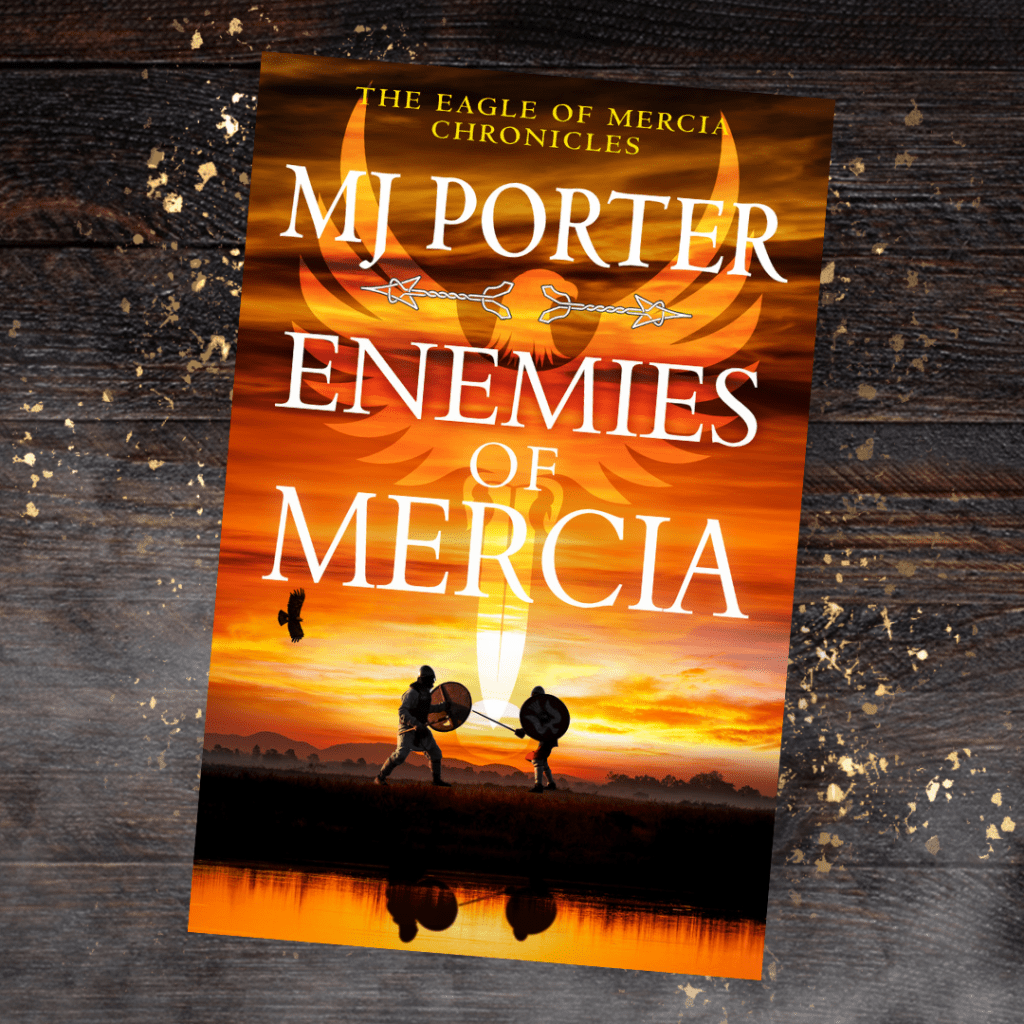
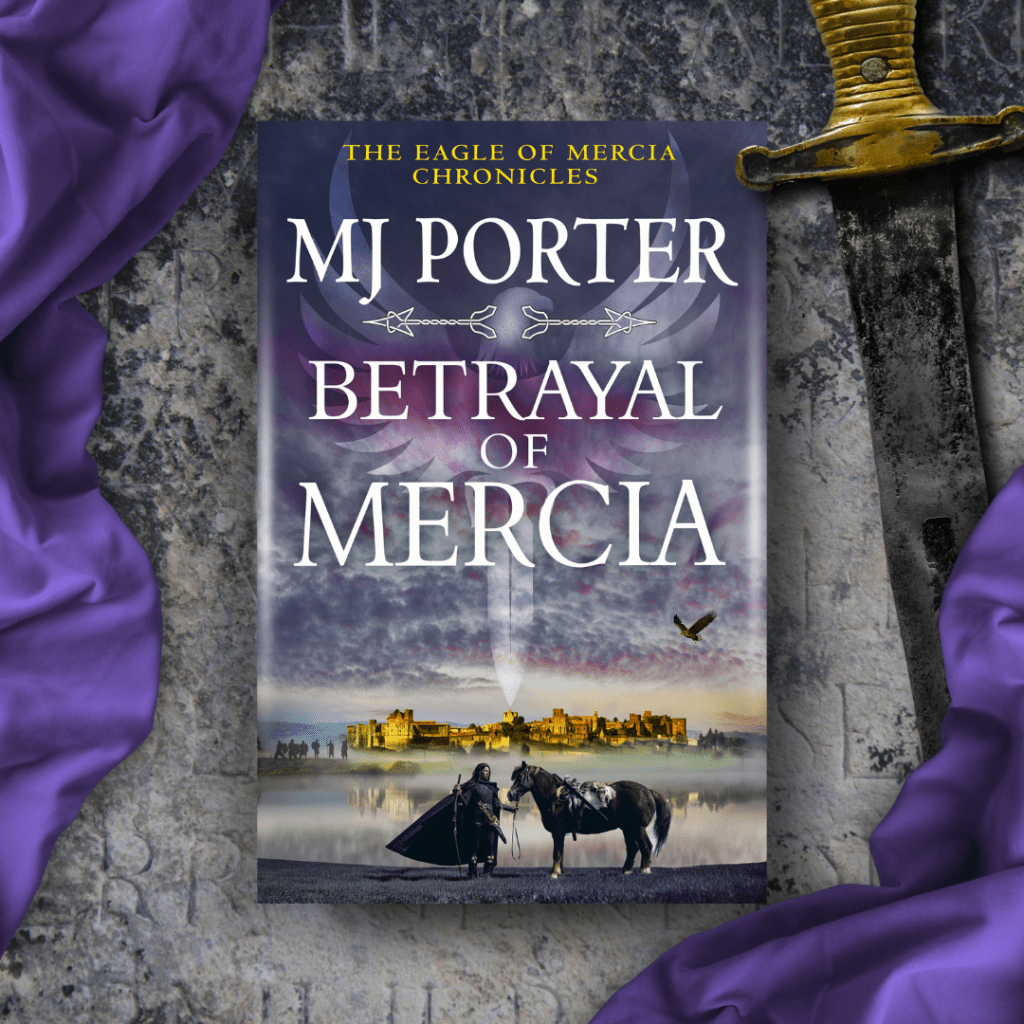
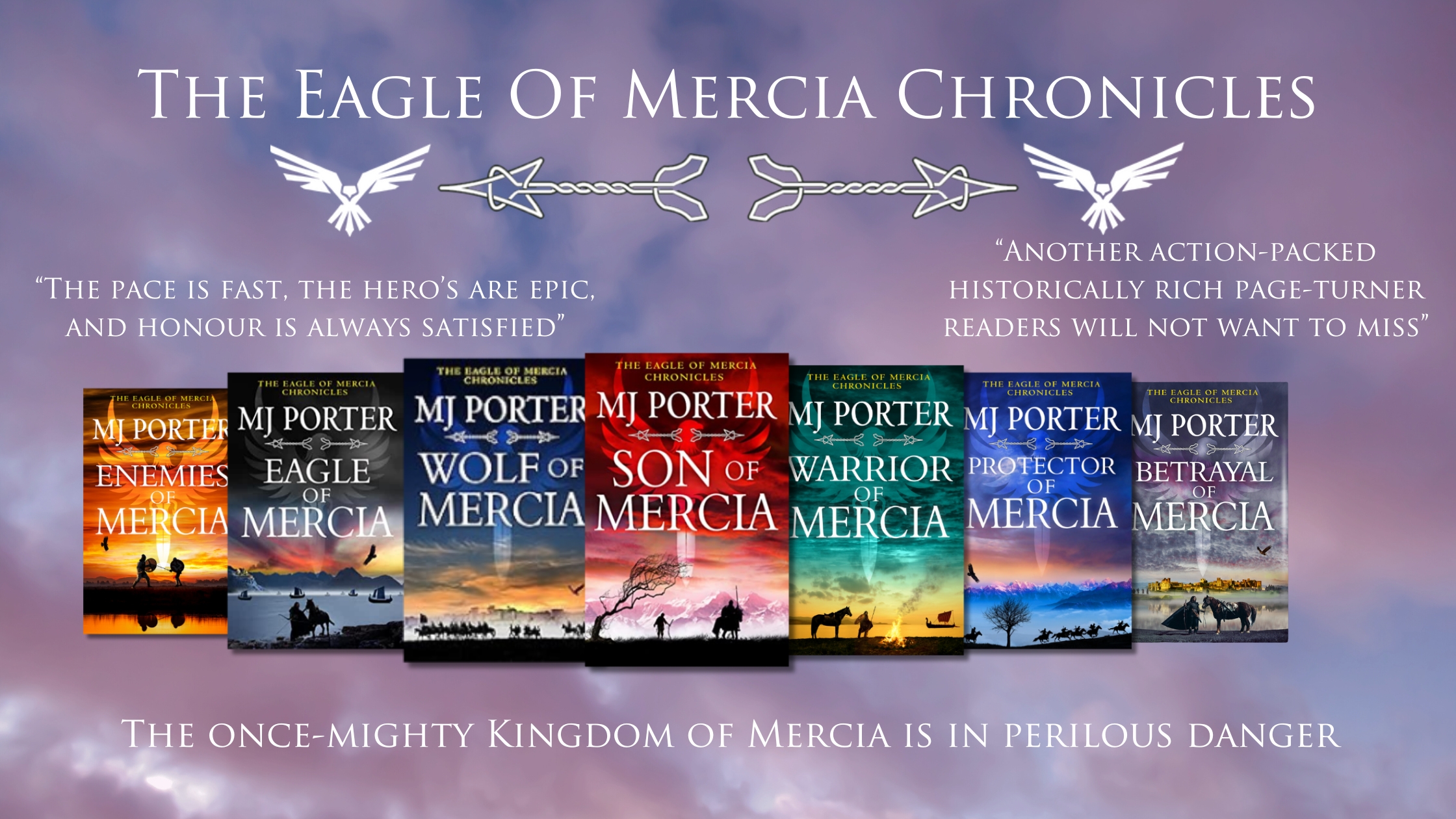
Happy book birthday to the wonderful Son of Mercia, the first book telling the story of young Icel in early ninth-century Mercia (fans of The Last King will have met Icel before, but it’s not necessary to have read the later series to enjoy Son of Mercia).
If you’re signed up to my newsletter, I’m giving subscribers the chance to win a complete signed set of the series to date in paperback. If you’ve not yet subscribed, then you can do so now and I’ll enter you into the competition. You’ll also receive a free short story collection. Enjoy. (Competition closes on 23rd Feb 2025)
The series is now a massive seven books long for readers, and for me, it’s eight books long because I’ve just finished the first draft.
I thought today would be a great day to shine a light on all seven books featuring young Icel. He’s endured a lot. He’s grown into a young man, but it’s good to remember how we first met Icel – scared, hungry and desperate to evade Lady Cynehild. How times have changed for him.
I love writing the stories of young Icel. He’s a fabulous character, and indeed, the more I write him, the better he becomes. And those with ‘eagle’ eyes (did you see what I did there), will have started to notice more and more Icel appearing in the later, The Last King books, and I’m going to start asking the question, what came first for both series? I think readers might be surprised:)
Do check out The Eagle of Mercia Chronicles page on the blog, stuffed with links to blog posts and more information about the series.
Tamworth, Mercia AD825.
The once-mighty kingdom of Mercia is in perilous danger.
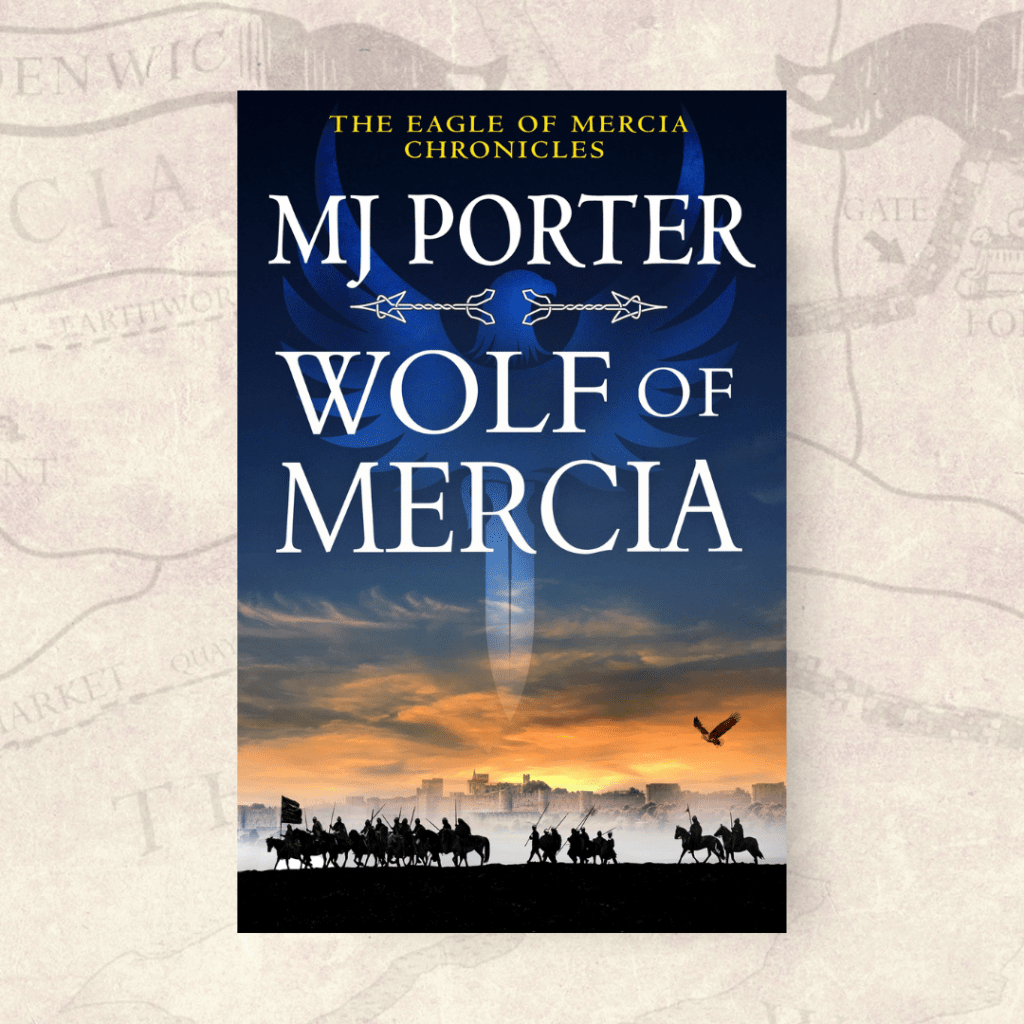
Their King, Beornwulf lies dead and years of bitter in-fighting between the nobles, and cross border wars have left Mercia exposed to her enemies.
King Ecgberht of Wessex senses now is the time for his warriors to strike and exact his long-awaited bloody revenge on Mercia.
King Wiglaf, has claimed his right to rule Mercia, but can he unite a disparate Kingdom against the might of Wessex who are braying for blood and land?
Can King Wiglaf keep the dragons at bay or is Mercia doomed to disappear beneath the wings of the Wessex wyvern?
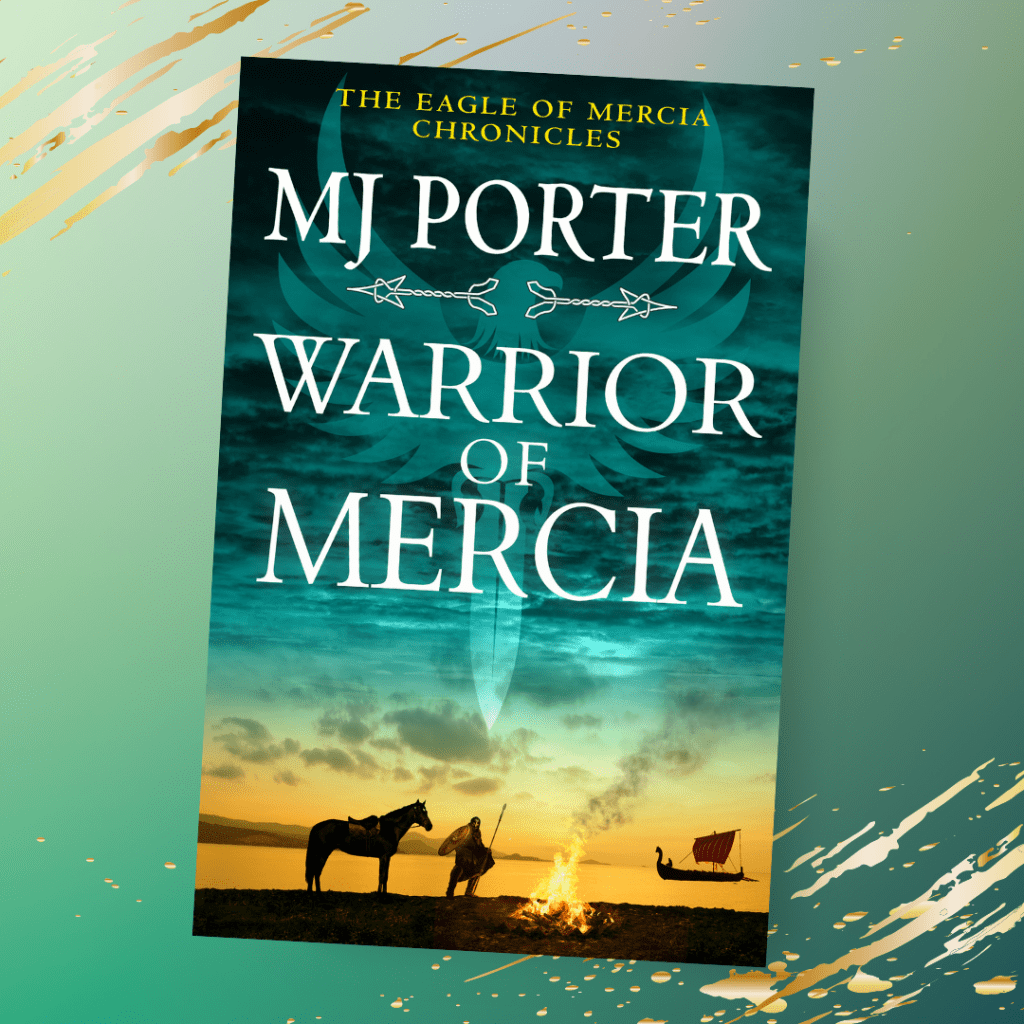
Icel is becoming a warrior of Mercia, but King Ecgberht of Wessex still holds the Mercian settlement of Londonia and its valuable mint.
King Wiglaf of Mercia is determined that the last bulwark be reclaimed from his sworn enemy to complete his rehabilitation as Mercia’s rightful ruler.
In the heart of the shield wall, Icel suddenly finds himself on the wrong side of the battle and thrust into the retreating enemy stronghold where he must take on the pretence of a Wessex warrior to survive and exact a cunning plan to bring down the Wessex force cowering behind the ancient walls.
His allegiances are tested and the temptation to make new allies is overwhelming but Icel must succeed if he’s ever to see Tamworth again and bring about King Wiglaf’s victory, or will he be forced to join the enemy?
Oath sworn to Wiglaf, King of Mercia and acknowledged as a member of Ealdorman Ælfstan’s warrior band, Icel continues to forge his own destiny on the path to becoming the Warrior of Mercia.
With King Ecgberht of Wessex defeated and Londonium back under Mercian control, the Wessex invasion of Mercia is over.
But the Wessex king was never Mercia’s only enemy. An unknown danger lurks in the form of merciless Viking raiders, who set their sights on infiltrating the waterways of the traitorous breakaway kingdom of the East Angles, within touching distance of Mercia’s eastern borders.
Icel must journey to the kingdom of the East Angles and unite against a common enemy to ensure Mercia’s hard-won freedom prevails.
A mercy mission in the heart of Wessex is beset with deadly, bloody dangers.
Tamworth AD831
Icel’s profile continues to rise. Lord of Budworth and warrior of Mercia, he’s acknowledged by King Wiglaf and his comrades to keep Mercia safe from the ravages of Wessex, the king-slayer of the East Angles, and the Viking raiders. But, danger looms. Alongside Spring’s arrival comes the almost certain threat of the Viking raiders return.
When Lord Coenwulf of Kingsholm is apprehended by a Viking and held captive on the Isle of Sheppey in Wessex held Kent, Icel is implored by Lady Cynehild to rescue her husband.
To rescue Lord Coenwulf, Icel and his fellow warriors must risk themselves twice over, for not only must they overpower the Viking raiders, they must also counter the threat of Mercia’s ancient enemy, the kingdom of Wessex as they travel through their lands.
Far from home and threatened on all sides, have Icel and his fellow warriors sworn to carry out an impossible duty
A deathbed oath leaves the lives of two infants hanging in the balance… Tamworth AD833
After successfully rescuing her husband Lord Coenwulf from the Isle of Sheppey, Icel hears the deathbed confession of Lady Cynehild which leaves him questioning what he knows about his past, as well as his future.
In the unenviable position of being oath sworn to protect their two atheling sons when Lord Coenwulf is banished for his treason against the Mercian ruler, King Wiglaf, Icel is once more torn between his oaths and the life changing secret he now knows.
When the two children are kidnapped, Icel, good to his word, and fearing for their safety, pursues their abductors into the dangerous Northern lands.
He fears whose powerful and deadly royal gamesmanship is behind the audacious attempt on their young and innocent lives.
Alone in the Northern lands, Icel finds himself facing his worse fears.
Can he rescue the children from their captor, or will he fail and lose his own life in the process?
A King’s command. A warrior’s quest for the truth… Tamworth AD835
Following Icel’s epic rescue of Lord Coenwulf’s children from their almost certain death, King Wiglaf is forced to call upon Icel’s loyal services once more.
Furious that the conspirators behind the audacious move to snatch the children have yet to face justice, he despatches Icel to hunt down the enemy of Mercia and discover who seeks to conspire against the throne.
The dangerous mission will take Icel into the heartland of enemy-held Wessex to Winchester and onto Canterbury. As the web of lies and deceit grows, Icel must battle to discover the truth whilst keeping himself and his allies safe.
But those who conspire against the King have much to lose and will stop at nothing to prevent Icel discovering the truth. Once more, Icel’s life is endangered as he tries to protect Mercia from her enemies who threaten Mercia’s kingly line.
A King in crisis, a Queen on trial, a Kingdom’s survival hangs in the balance.
Londonia, AD835 The deadly conspiracy against the children of Ealdorman Coenwulf is to be resolved. Those involved have been unmasked and arrested. But will justice prevail?
While the court convenes to determine the conspirator’s fate, King Wiglaf’s position is precarious. His wife, Queen Cynethryth, has been implicated in the plot and while Wiglaf must remain impartial, enemies of the Mercia still conspire to prevent the full truth from ever being known.
As Merica weeps from the betrayal of those close to the King, the greedy eyes of Lord Æthelwulf, King Ecgberht of Wessex’s son, pivot once more towards Mercia. He will stop at nothing to accomplish his goal of ending Mercia’s ruling bloodline.
Mercia once more stands poised to be invaded, but this time not by the Viking raiders they so fear.
Can Icel and his fellow warriors’ triumph as Mercia once more faces betrayal from within?
Set in the troubled years at the end of the Mercian supremacy, with the advent of the true First Viking Age just around the corner, The Eagle of Mercia Chronicles allow me to explore the kingdoms of Saxon England at the time, while ensuring my focus remains on Mercia, the kingdom in the’Midlands’ of England, with which I’m quite obsessed.
And choosing to write about a very strong character from my The Last King series, also allows me to play with my readers expectations. Icel is a fabulous creation, and one I’m incredibly proud of and pleased my readers love so much.
Yes, these are bloody and brutal tales, but at the heart of them is a ‘coming of age’ story as young Icel learns about himself, as well as the truth of his heritage and birth.
If you’ve not yet tried The Eagle of Mercia Chronicles, then now is the perfect opportunity. Enjoy.
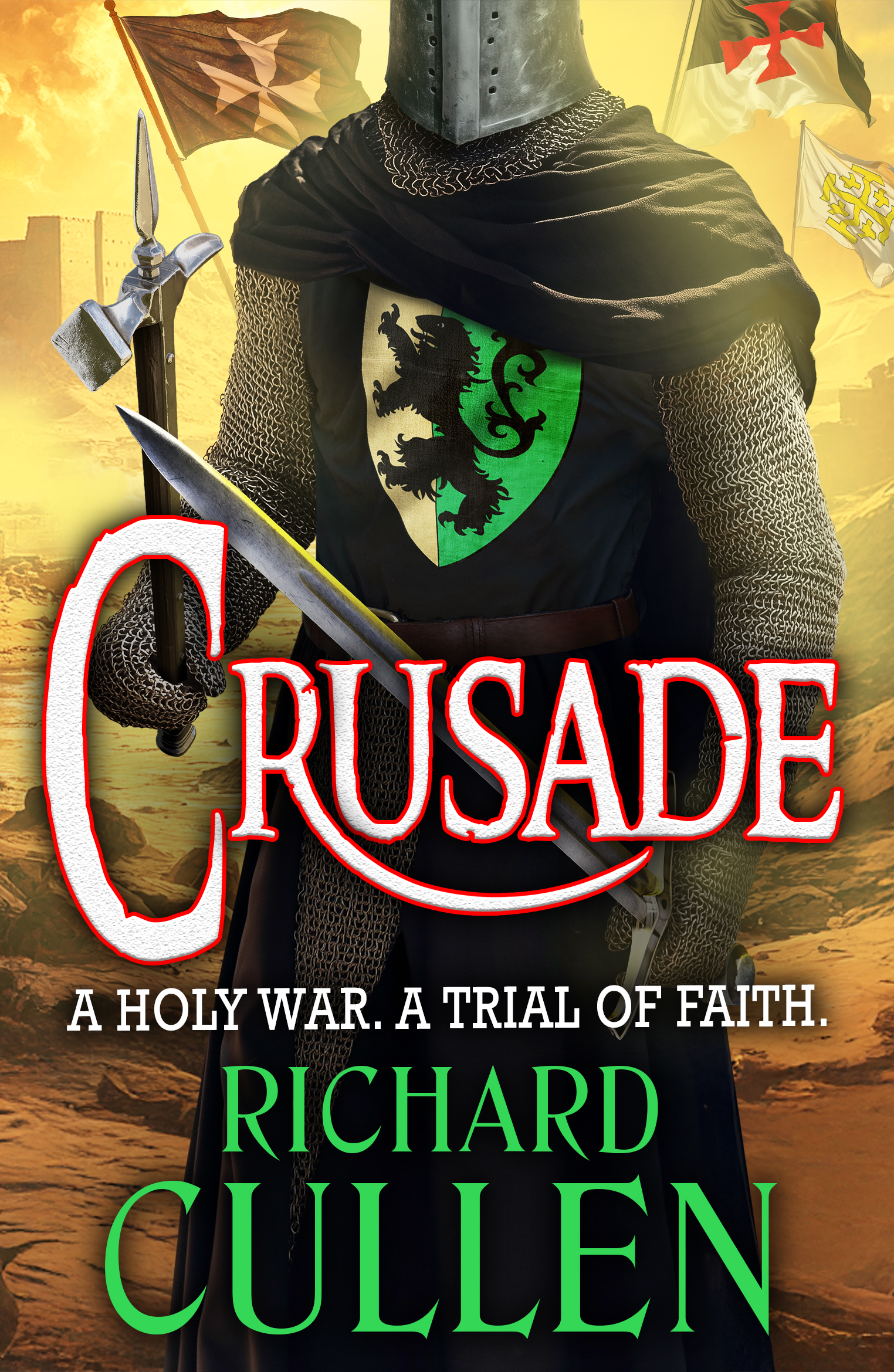
Continuing the epic historical adventure series from Richard Cullen, featuring The Black Lion…
Stripped of his birthright, Estienne Wace seeks to prove his worth in the deserts of Outremer!
Egypt 1219AD.
Abandoning the safety of England for the perilous shores of the Levant, Estienne Wace is thrust into the turmoil of the Fifth Crusade. Burning with righteous purpose, he is determined to reclaim the Holy Land in the name of Christ.
War rages along the banks of the Nile as a crusading army besieges the Saracen city of Damietta, certain that the price they pay in blood will return the glory and treasures they crave. But as the Black Lion roars, and the siege grinds on, Estienne’s unwavering faith is tested more and more by the grim reality of this brutal conflict.
As the siege turns on a knife edge, Estienne finds himself thrust upon a journey across the merciless desert. Stripped of everything, and forced into a dangerous alliance, he will grapple with the true meaning of faith, honour, and the price of salvation, in a land where nothing is as he once believed.
Perfect for the fans of Bernard Cornwell, Ben Kane and Conn Iggulden.
Crusade by Richard Cullen continues the story of Estienne Wace as he decides to join the Fifth Crusade. You can taste the heat and the sand in this one as he steps foot in the Holy Land.
It’s a very busy story. Estienne, quickly realising the rhetoric he’s been told regarding the Holy Land isn’t quite as it seems, begins to question his place there, even as he interacts with people from the local area who call it home. His understanding would perhaps seem a little too ‘modern’ if not for our new POV, that of one of the enemy. Kashta adds a new dynamic to the tale, even though his chapters are only occasionally inserted into Estienne’s tale. But he also comes to question whether the war is worth the cost.
It takes Estienne a long time to see beyond the heat and the sand and appreciate the beauty of the landscape and the people who live there. He certainly has a rough time, as Kashta, his new enemy, dogs his every step as do a few others who would rather see Estienne dead.
The story flows well, and I enjoyed the depiction of the landscape and people. I also appreciated the frank portrayal of the Fifth Crusade and the bickering and infighting between those supposedly in charge of it all. Having recently watched the first series of Rogue Heroes, I could see Egypt and its vast sand and dunes.
I’m curious to see what will happen to Estienne next. Perhaps he needs an easier time of it in the third book:)
Check out my review for Rebellion, the first book in the series.
Meet the author
Richard Cullen is a writer of historical adventure and epic fantasy. Previously published by Head of Zeus and Orbit Books, his new historical adventure series for Boldwood, Chronicles of the Black Lion, set in thirteenth-century England, will launch in October 2024.
A scream shattered the tranquil air, echoing off the ice-covered lake, and Daniel’s heart froze. He knew that voice all too well.
After a pleasant afternoon of ice skating on the frozen waters of West Lake, local librarian Kathleen Brissedon stumbles across a gruesome sight in the nearby gazebo. It only takes a moment for her beau, assistant coroner Doctor Daniel O’Halleran, to determine that the victim was murdered.
To protect Kathleen from the ghastly sight of the man’s slashed throat, Daniel insists she return home while he examines the body further. Though the immediate cause of death appears obvious, he fears the subsequent autopsy will uncover more questions than answers, and it’s clear that he has his work cut out for him if he’s going to find the person responsible.
Kathleen has no intention of remaining demurely at home, not when there’s a murder to solve. Slipping back to the scene, she conducts her own investigation. Though her discoveries prove interesting, Daniel is too concerned about her safety to stifle his annoyance, especially after the killer makes a second attempt closer to home. But as the puzzle pieces begin to fall into place and Daniel starts closing in on the truth, the killer sets their sights on him.
With the danger increasing, Kathleen intent on assisting in the investigation, and his family descending on Patchogue to spend the Christmas holidays, Daniel has his hands full.
Will he and Kathleen be able to put their heads together and discover who is behind the attacks, or will the killer continue to plague the tranquil South Shore village unhindered?
This title is available to read on #KindleUnlimited.
Meet the author
I. M. Foster is the pen name author Inez Foster uses to write her South Shore Mystery series, set on Edwardian Long Island. Inez also writes historical romances under the pseudonym Andrea Matthews and has so far published two series in that genre: the Thunder on the Moor series, a time-travel romance set on the 16th century Anglo-Scottish Borders, and the Cross of Ciaran series, which follows the adventures of a fifth century Celt who finds himself in love with a twentieth-century archaeologist.
Inez is a historian and librarian, who loves to read and write and search around for her roots, genealogically speaking. She has a BA in History and an MLS in Library Science and enjoys doing the research almost as much as she does the actual writing of the story. In fact, many of her ideas come to her while doing casual research or digging into her family history. Inez is a member of the Long Island Romance Writers, the Historical Novel Society, and Sisters in Crime.
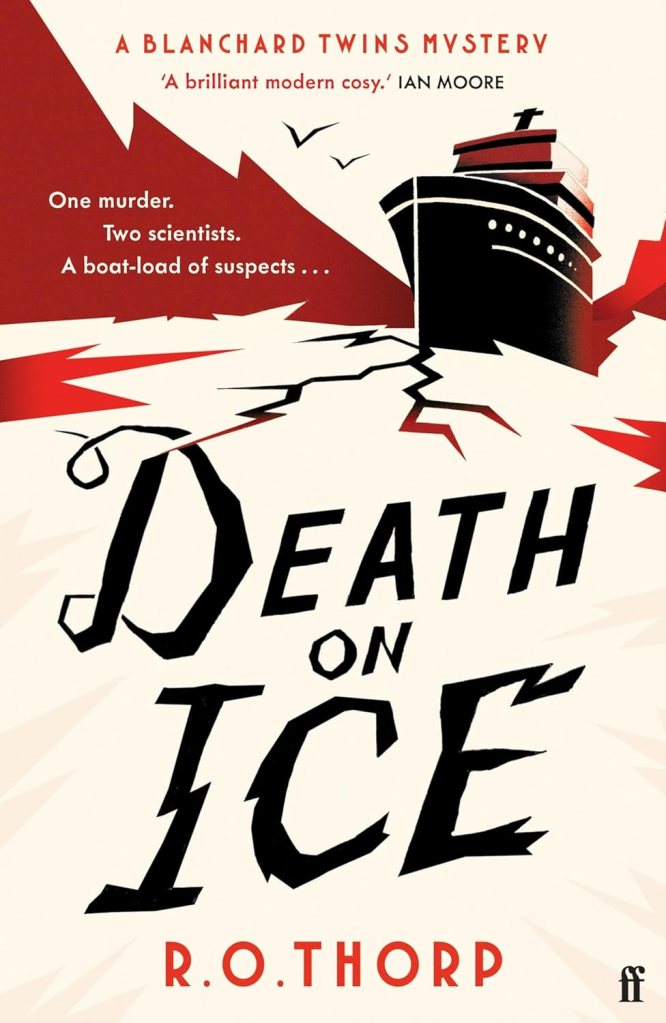
A scientist nobody liked has been murdered on the Arctic ice . .
Meet the Blanchard twins: Rose is practical, sharp, and protective. Specialty: manta rays. Finn is too sweet and kind for his own good. Specialty: sharks.
Rose and Finn are looking for sharks on the sea bed. When they return to the Dauphin they make a terrible discovery: their colleague has been murdered on the ice –with a harpoon that should never have been there. Everyone else on the luxury cruise ship – the wealthy passengers, the researchers hard at work, the tight-knit crew and their strangely calm Captain – were all aboard at the time, so they are all under suspicion. Rose and Finn were the only two at sea, and they’re miles from anywhere, so it’s up to them to investigate.
On scientific problems, they are a brilliant team – but can the Blanchard twins solve a murder?
Death on Ice has such a good premise, and indeed, the book is very enjoyable, but it does take a little while to get going. For those unsure about it, I would recommend ploughing on through the first 25% until we get to the crux of the matter.
This isn’t really a story about a crime-fighting duo, or if it is, it’s not the twins who are our crime fighters, but rather the two police characters who are flown to the ship and asked to disentangle the complex murder while also trying to solve the crime that has them in the Arctic Circle in the first place.
I enjoyed the author’s writing style, but it took a little bit of getting used to it. This is ‘a busy book’ as in, every word counts. That might sound strange, but often, especially with cosy mysteries, there are some elements that are story-filler and not story-related. This, to me, felt a little bit like The West Wing of old and other TV shows that are conversation and plot-heavy, i.e. you actually have to pay attention throughout the whole episode, and you need to do this with Death on Ice. It’s not a bad thing once you realise it.
And it is a cleverly spun tale, and by the end of it, I was entirely enthralled with our four main characters and some of the others besides (our lovely sleepy shark). I certainly did not guess the resolution.
Bestselling author Nicola Cornick’s brand-new heart-breaking historical tale of unforgettable courage, hidden secrets and lasting love, perfect for fans of Barbara Erskine, Philippa Gregory and Christina Courtenay.
1715: With the country on the brink of rebellion, Dorothy Forster’s life at Bamburgh Hall is ruled by the men in her life – her feckless brothers stirring up trouble at court, her elderly father with his dangerous secrets and the man she loves who the world seems determined to keep her apart from. As tensions grow, Dorothy finds herself caught between the warring factions, danger everywhere. Then Dorothy discovers her family are the keepers of the legendary Rose, the talisman both sides believe will guarantee them victory in this deadly conflict. Now Dorothy will have to risk everything to keep the Rose safe; the fate of the country and the men she loves rests in her hands.
Present Day: Hannah Armstrong has returned home to Bamburgh Hall for work but when she discovers that her stepmother Diana has been keeping worrying secrets, her focus shifts to getting to the truth. Their family home once belonged to heroic Dorothy Forster, whose portrait graces the walls and whose spirit lingers in her home, but soon Hannah learns that there was much more to this formidable woman. Because Dorothy left behind a mysterious legacy and it’s not long before Hannah realises it’s one people are willing to kill for. Now Hannah is in a race against time to unravel the secrets of the past before danger arrives at their door.
Two women divided by time but bound by a centuries’ old mystery. Bestseller Nicola Cornick is back with a brand-new thrilling adventure, a heartbreaking love story and the unforgettable story of how the courage of one woman can save a family and even save a nation.
The Secrets of the Rose is a dual-timeline novel set in the present day and 1715, and much more importantly, it’s located about 10 minutes from where I live. Just like when someone writes a historical novel featuring one of ‘my’ historical characters, I felt a little uneasy about it all. Thankfully, I needn’t have worried, and that allowed me to enjoy the story and local scenery very much.
Dorothy Forster is a local legend to the area and someone I’ve heard quite a bit about. It was lovely to put some ‘flesh’ on those stories and see her come to life as a real person. While the story has some slightly mystical qualities, it was still very enjoyable.
As always, I prefer the historical timelines to the modern-day ones, but Hannah was an engaging character with a lot going on in her life. I appreciated the parallels between the two main characters. The conclusions for both of our characters are thrilling and swept me along with them.
A delightful, easy read, I devoured in a couple of sittings.
(If you want to see some photos of Bamburgh then check out my blog post here).
Nicola Cornick is a historian and author who works as a researcher and guide for the National Trust in one of the most beautiful 17th century houses in England. She writes dual time novels that illustrate her love of history, mystery and the supernatural, and focus on women from the footnotes of history. Her books have appeared in over twenty five languages, sold over half a million copies worldwide and been described as “perfect for Outlander fans.” Nicola also gives writing and history talks, works as a consultant for TV and radio, and is a trustee of the Wantage Literary Festival and the Friends of Lydiard Park.


















































 MJ Porter