Author of Saxon historical fiction and non-fiction, 20th-century historical mysteries, and Norse-inspired historical romantasy. Book reviewer and blog host.
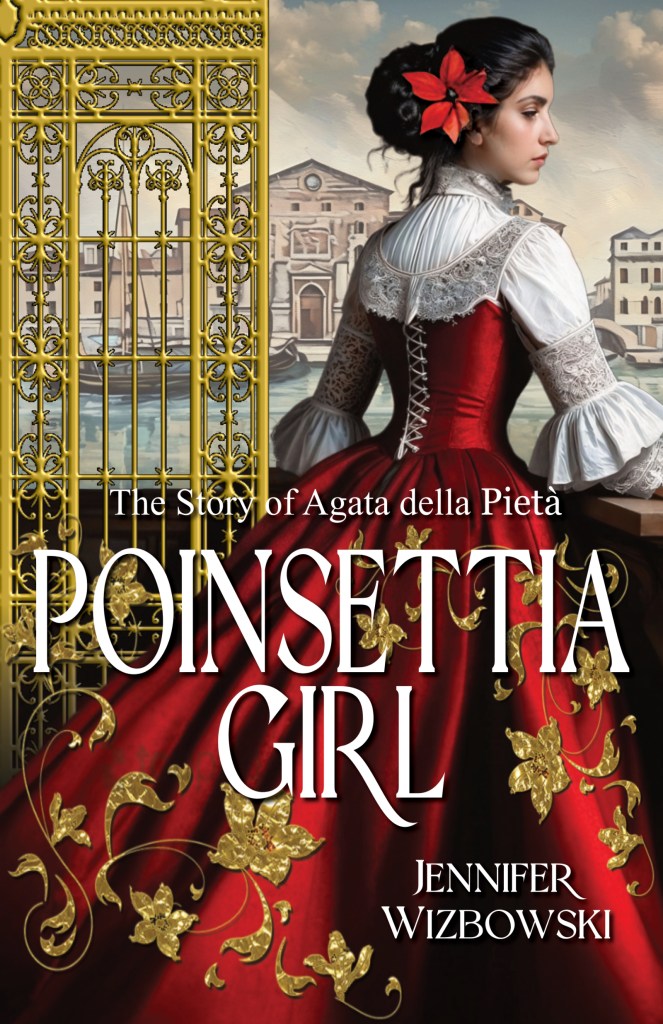
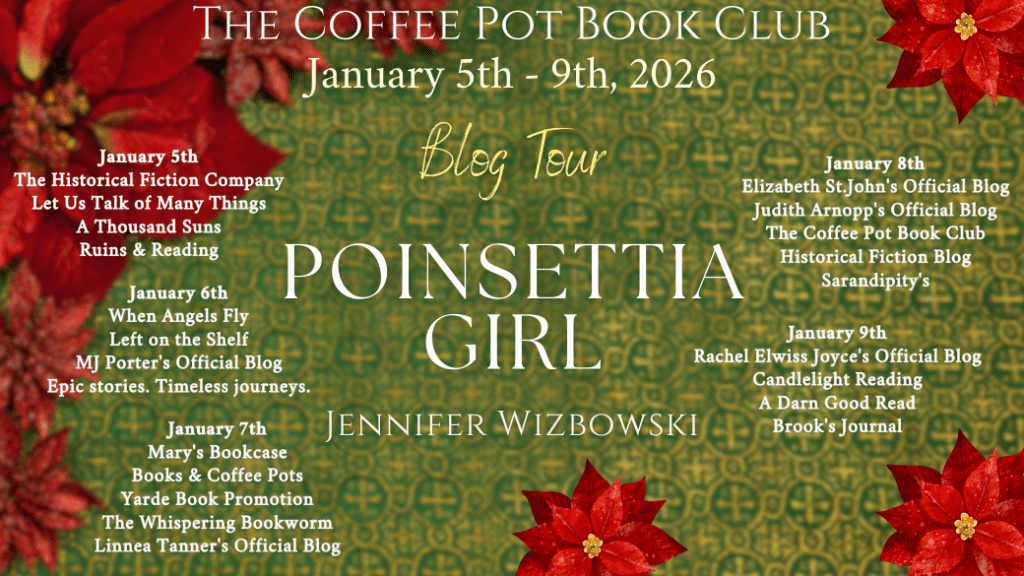
I’m delighted to welcome Jennifer Wizbowski and her book, Poinsettia Girl, to the blog with an excerpt.
Excerpt
Margarita closed the door to her bedroom and entered the hall with some of her spunk back in her step. She needed those afternoon naps more than she had in all her years in the Pietà. Every day, when early afternoon came, she’d feel her shoulders slumping and her patience waning, ready to shut out the worries around her and blow her bedside candle out.
She would never admit that to anyone. It would make her sound old, and then there would be all their fussing. While her schedule no longer consisted of classes, private lessons, or choral rehearsals, it was as full as the girls in new lace collars. She still had hers, that lacy shawl, a little more cream than stark white- one could never stop the cycle of aging. She would wear it when special occasions called for it: a full choir for a dignified guest or a celebration, but mostly, it hung in her closet, a trophy of her femininity, not the public image of virginal and ethereal but the honest image: persevering, unruffled and wise.
The Pietà took careful measures in recording the names, titles, entrances, and exits of every woman who spent any time behind its protective walls. Some listings were short, poor, sick babes that only lasted a night or diseased women who spent their final days cared for with the dignity society did not give them—others, like herself, whose decades were sub- marked by all her different roles in the Pietà. The path was different for everyone. Some women did not possess the musical predisposition to train for the Coro, which is why they tested every foundling’s aptitude by the age of eight.
The less musically inclined girls trained in textile arts or medicine, with the potential of working in the Pietà’s ground-floor ventures in their later years. The hospital administered vaccines and cared for the unwanted, while the textiles area had a successful laundering and hat-making business.
In her current assignment, she was listed as Discrete, a nice way of inferring: a retiree with no more obligations to the Coro—and as Margarita internally joked, whom they decided to keep around a bit longer instead of shipping off to a convent. Indeed, she was worth more than the average old woman slippering around.
Here’s the Blurb
Poinsettia Girl is based on the story of Agata de la Pieta, an orphan musician of the Ospedale de la Pieta.
Ten-year-old Agata’s world is shaken at the sudden death of her mother. Left only with her egregious father, a working musician in Venice, her ailing grandmother sends her to the well-known orphanage, hidden from everything she’s ever known.
Agata auditions for the conservatory style music school where music is both salvation and spectacle. Hidden behind ornate metal grates, adorned with poinsettias in their hair, the singers are veiled in mystery, their ethereal music drawing noble audiences, including gilded young men who see them as treasures-not only for their sound but as coveted marriage prizes.
Just as she reaches the height of her musical journey, a marriage proposal from someone outside the audience tempts her with the promise of a new life-a return to the old neighborhood she’s longed for and a home she barely remembers.
Torn between the music that has defined her and the hope of belonging to a family, Agata must confront the most profound question of her life: is her purpose rooted in the music that shaped her, or in the love that might free her?
Jennifer Wizbowski spent her childhood days lost among the spines of her favorite books. Inspired by the daffodil fields of Wordsworth and the babbling brooks of Shakespeare, she earned her bachelor’s in English literature, a minor in music, and a secondary teaching credential, then wrote freelance for local business journals, taught in classrooms, and authored a Teen and Tween column for a parent magazine—all while raising her family.
As those years ended, she knew it was the right time to pursue her lifelong aspiration of bringing her own books to life. She now devotes herself to illuminating everyday women’s stories often lost in the shadows of history, revealing how they became heroines of their own time and place.
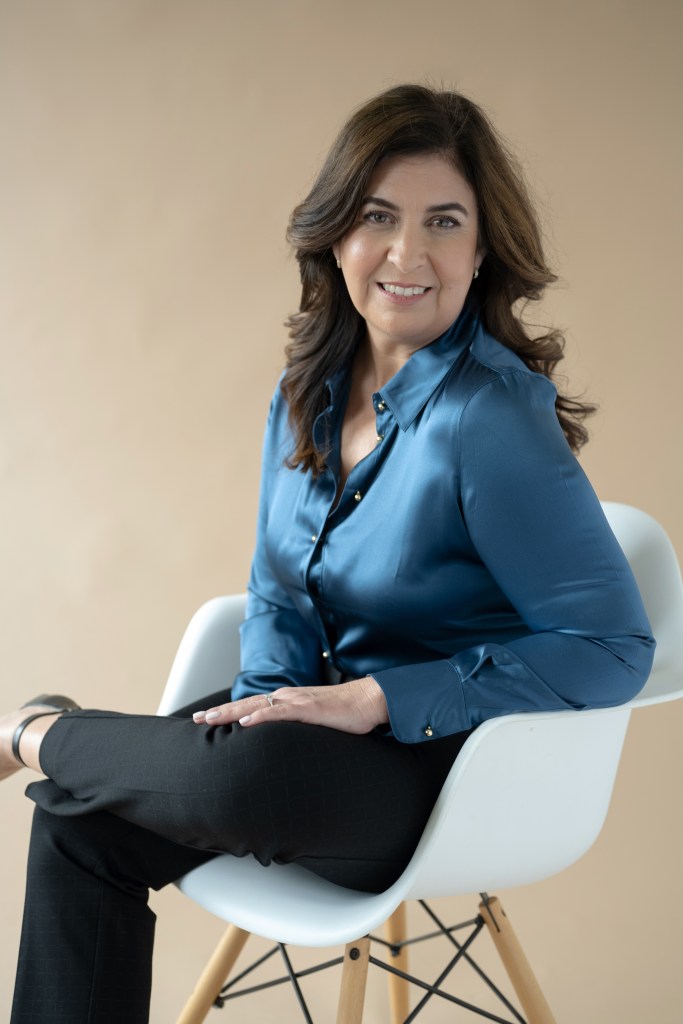
Portrait by Valentina Photography at Macardi Images
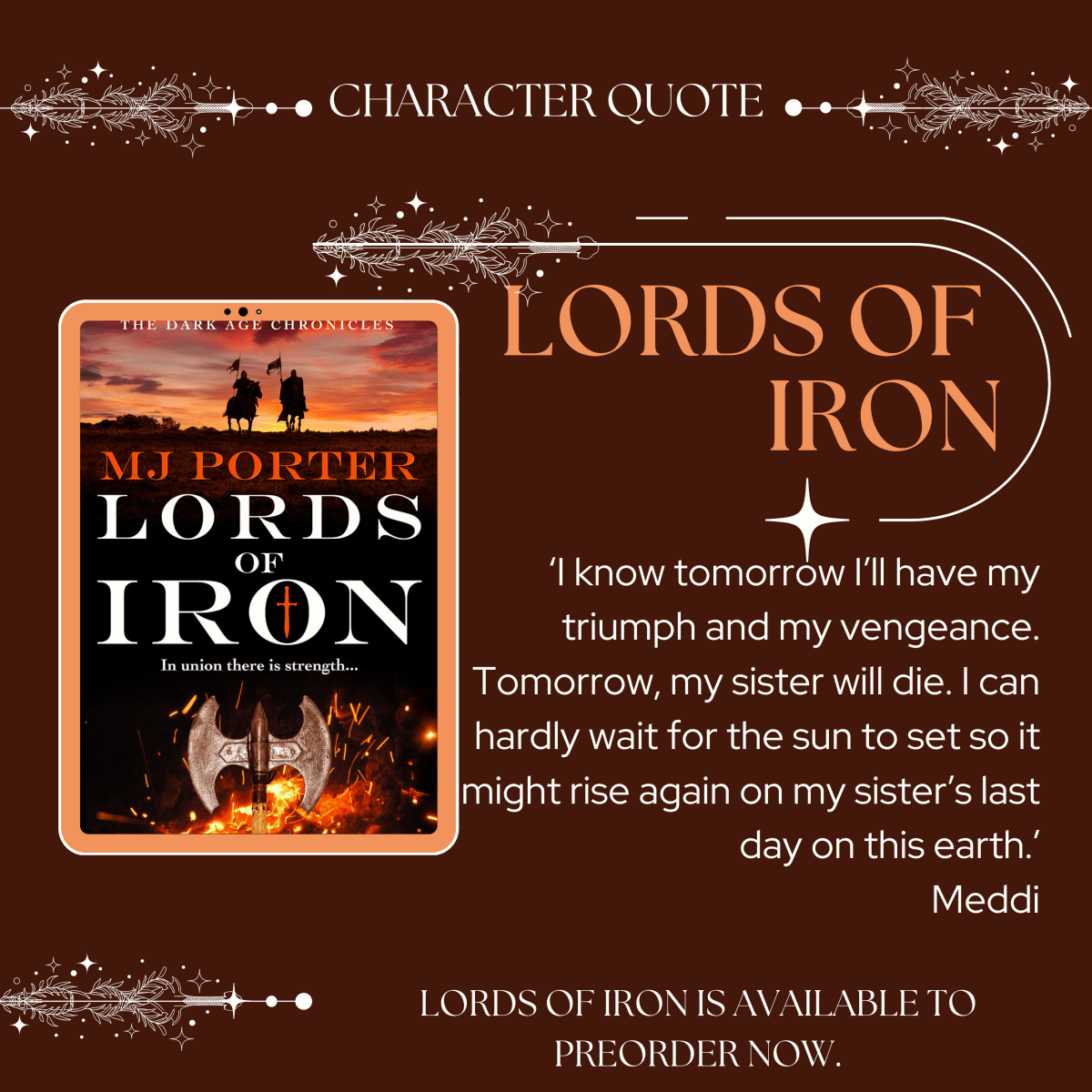
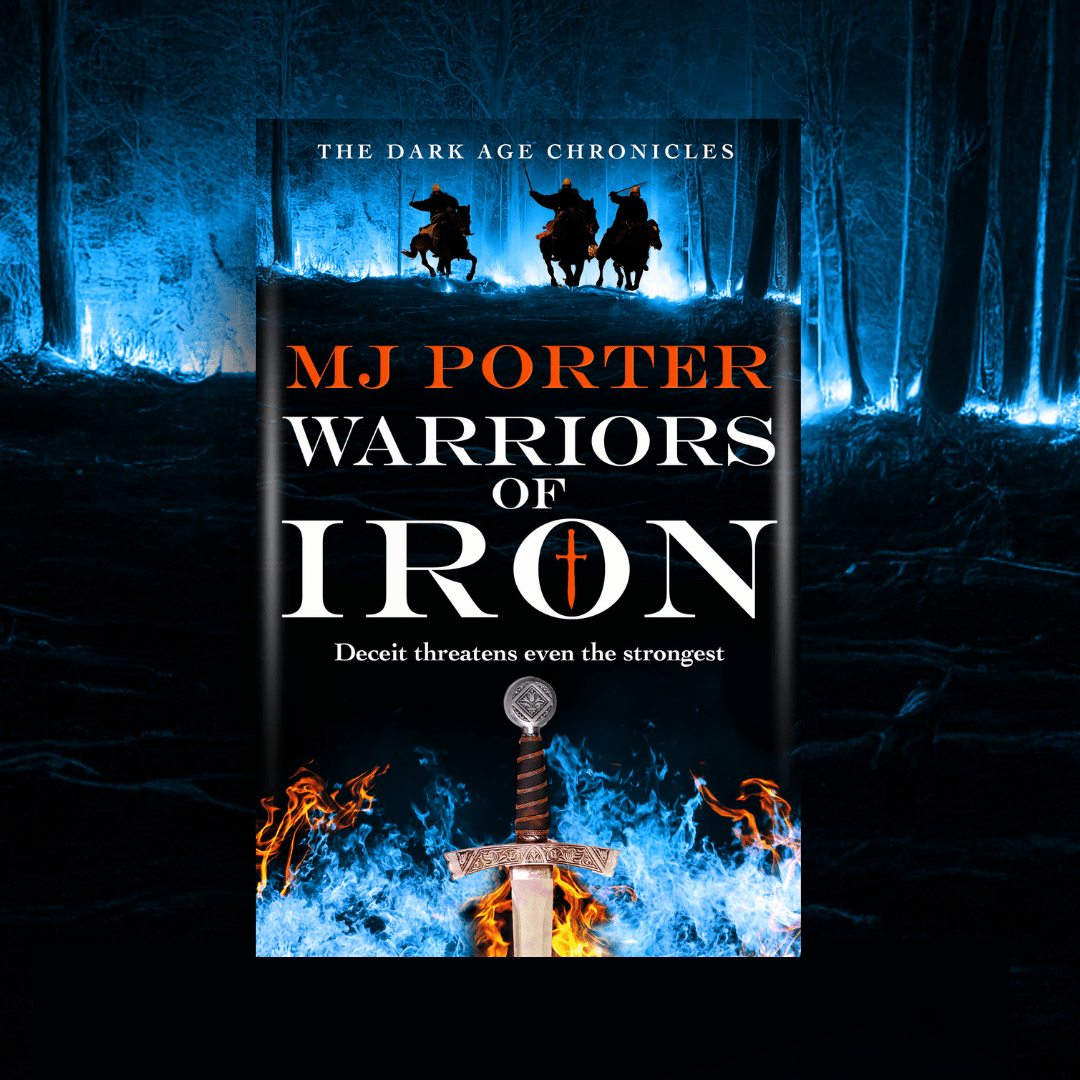
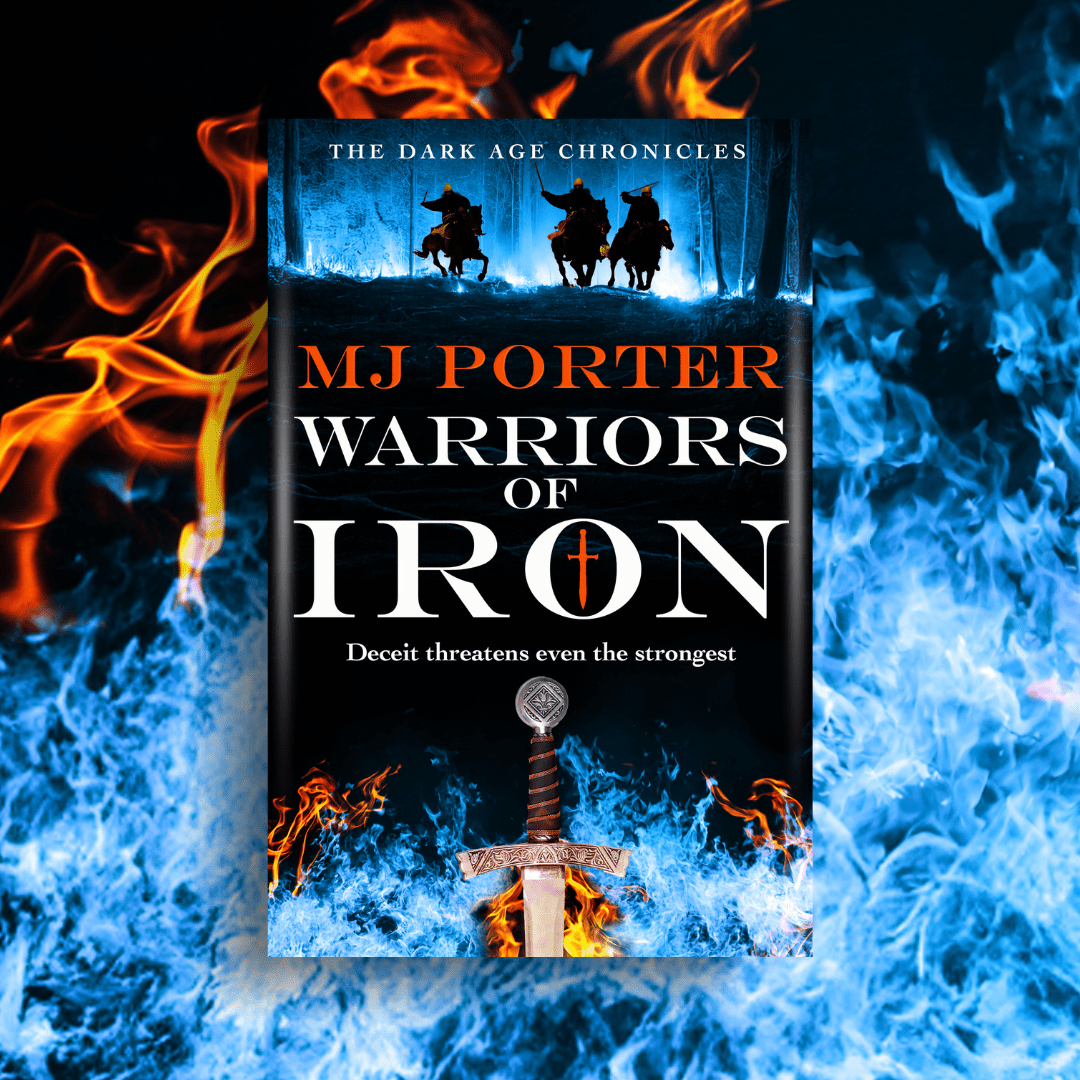
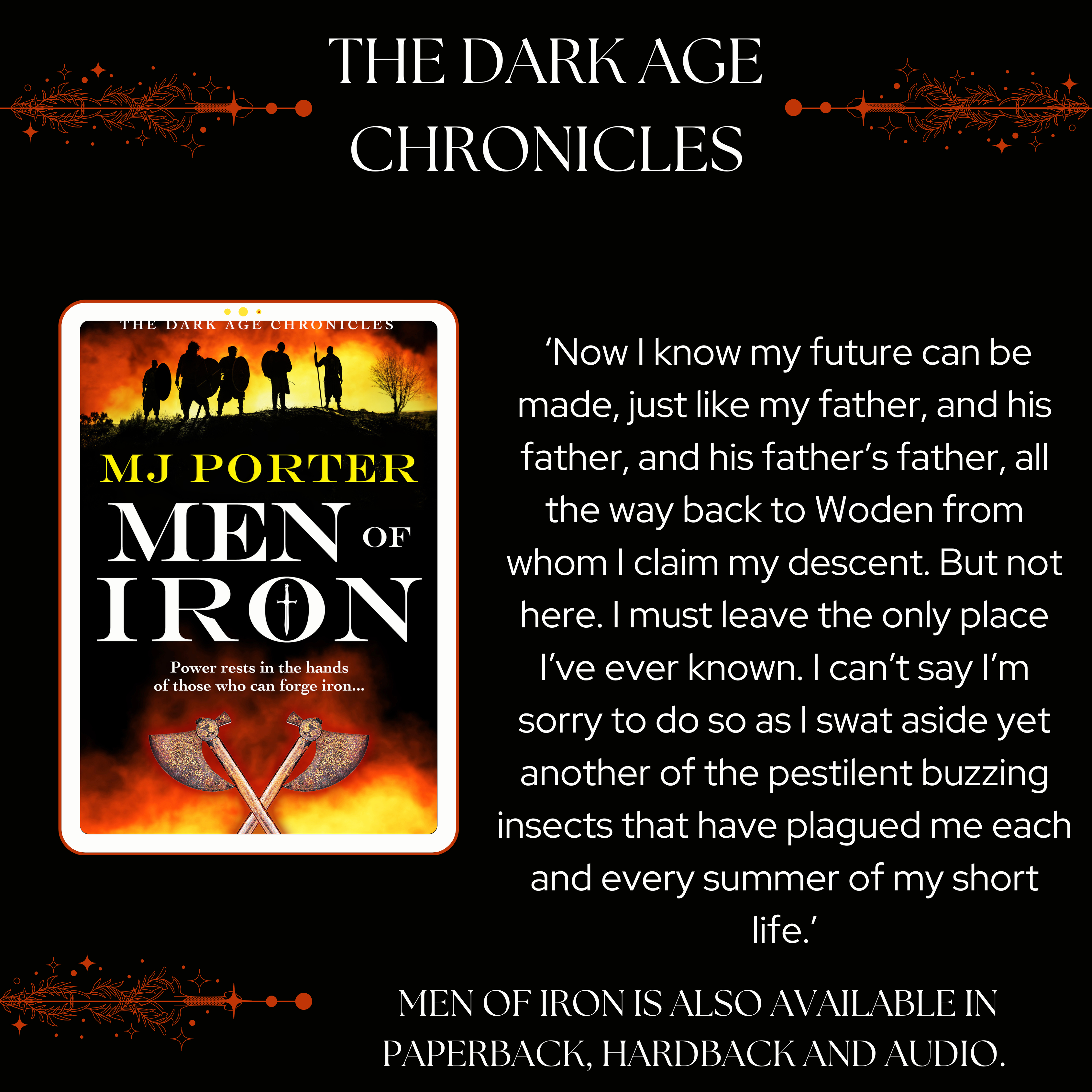
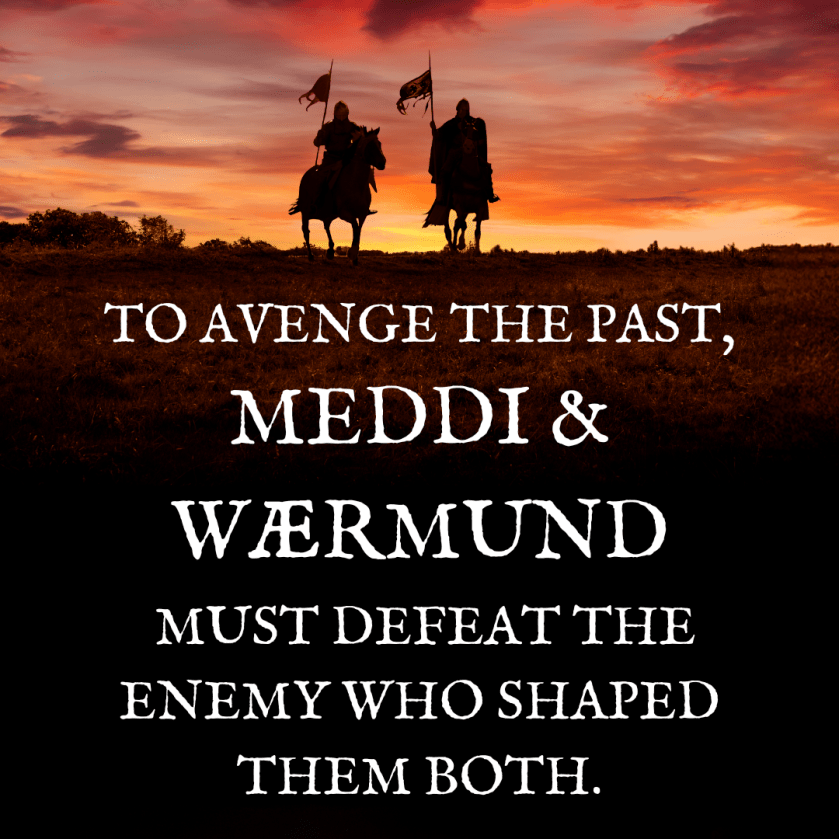
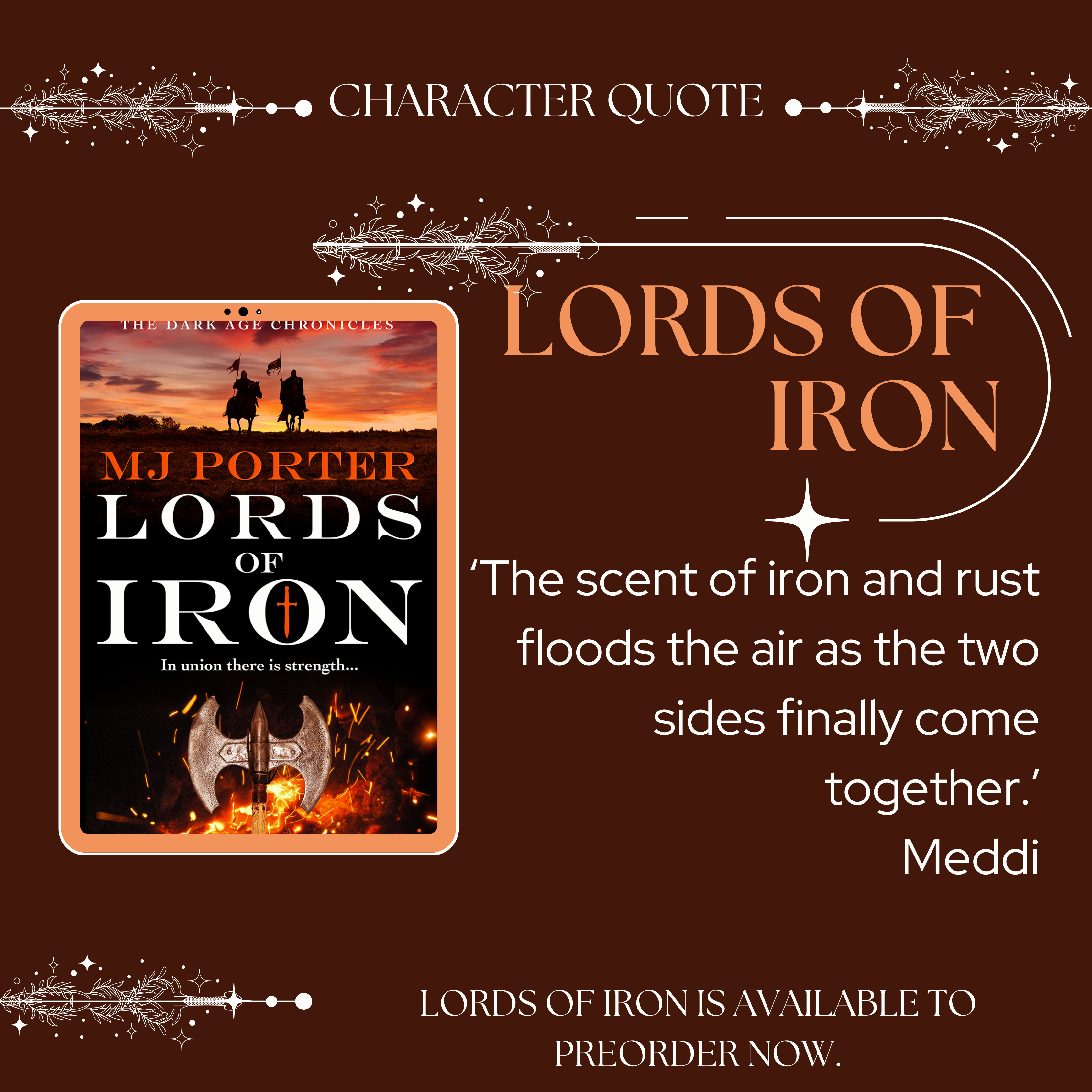
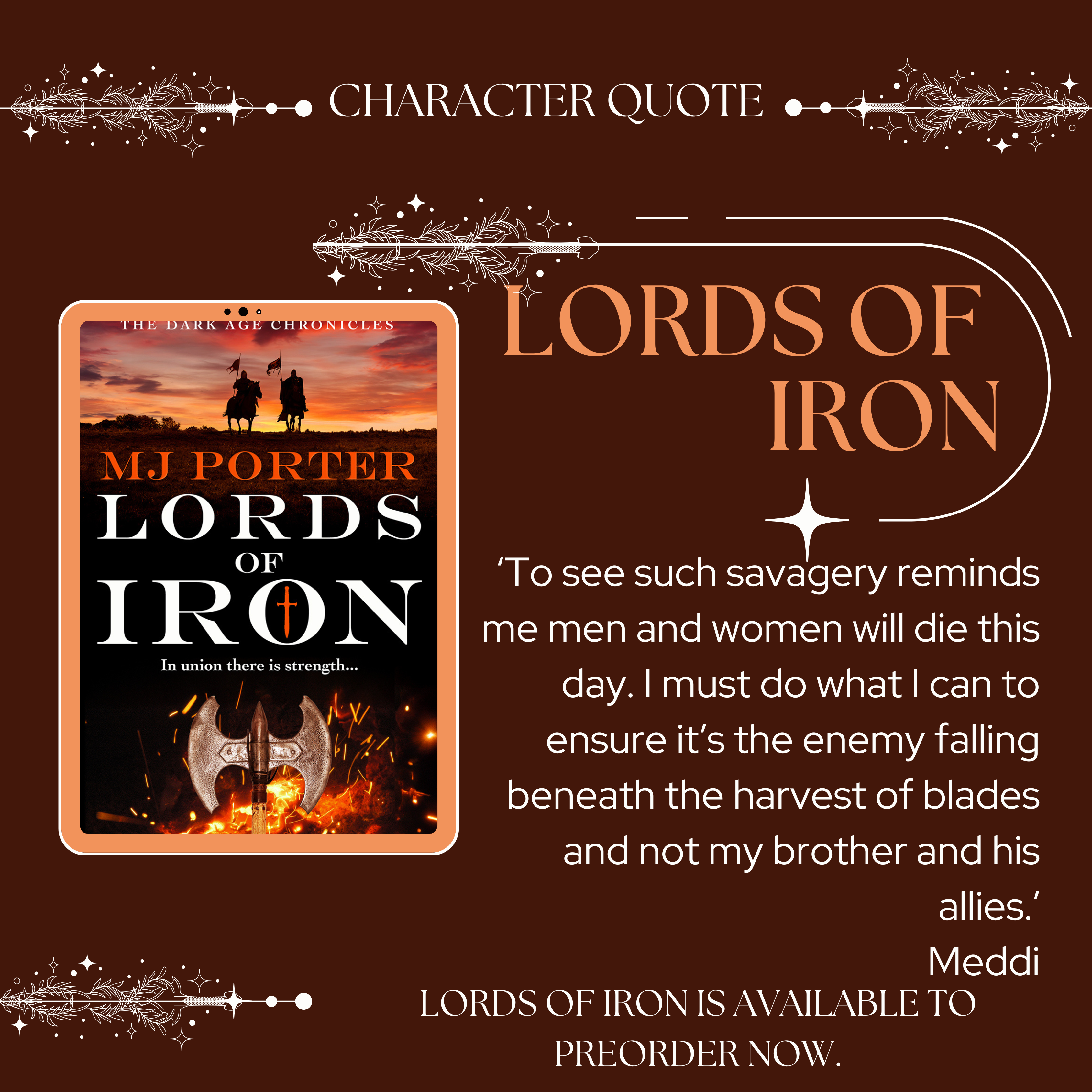
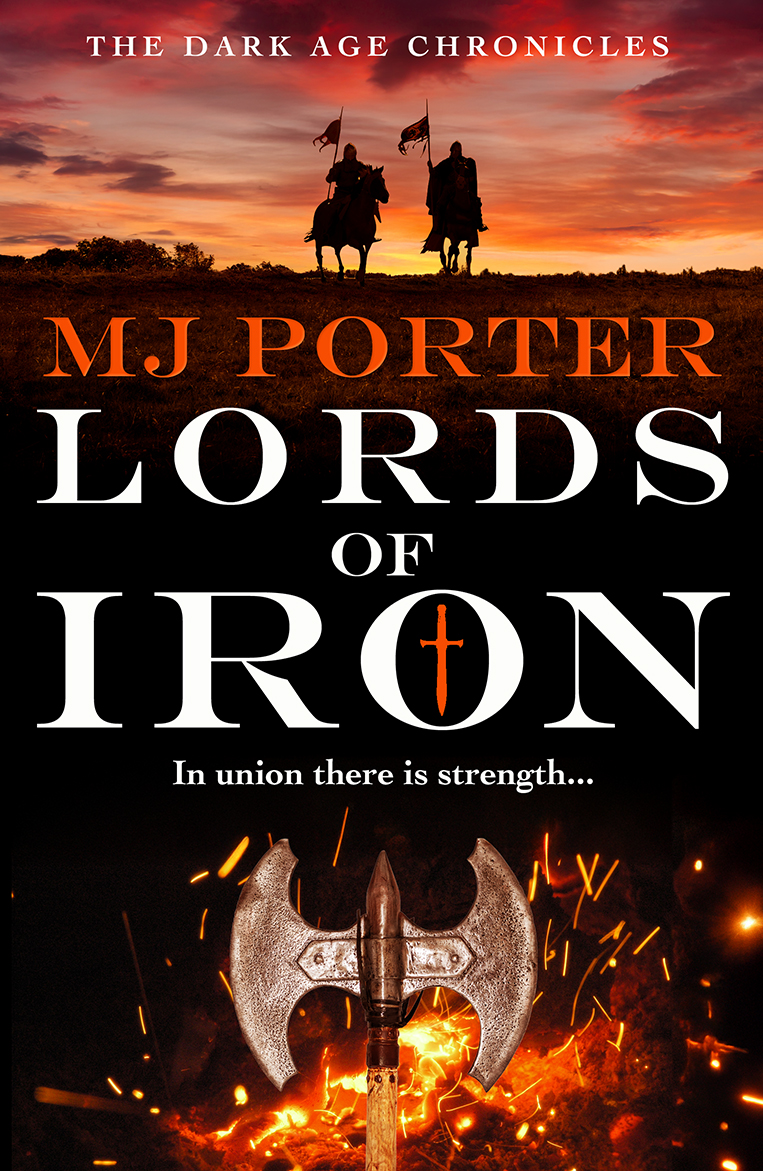
It’s happy release day to Lords of Iron, the third and concluding book in the Dark Age Chronicles Trilogy. Let’s talk about battle standards #newrelease #MenOfIron #WarriorsOfIron #LordsofIron #histfic
Battle standards
Well, here we are my friends, book 3 in the Dark Age Chronicles concludes this foray to the ‘Dark Ages’ (a term I don’t like but is correct for this time period). I thought I’d address the idea of battle standards.
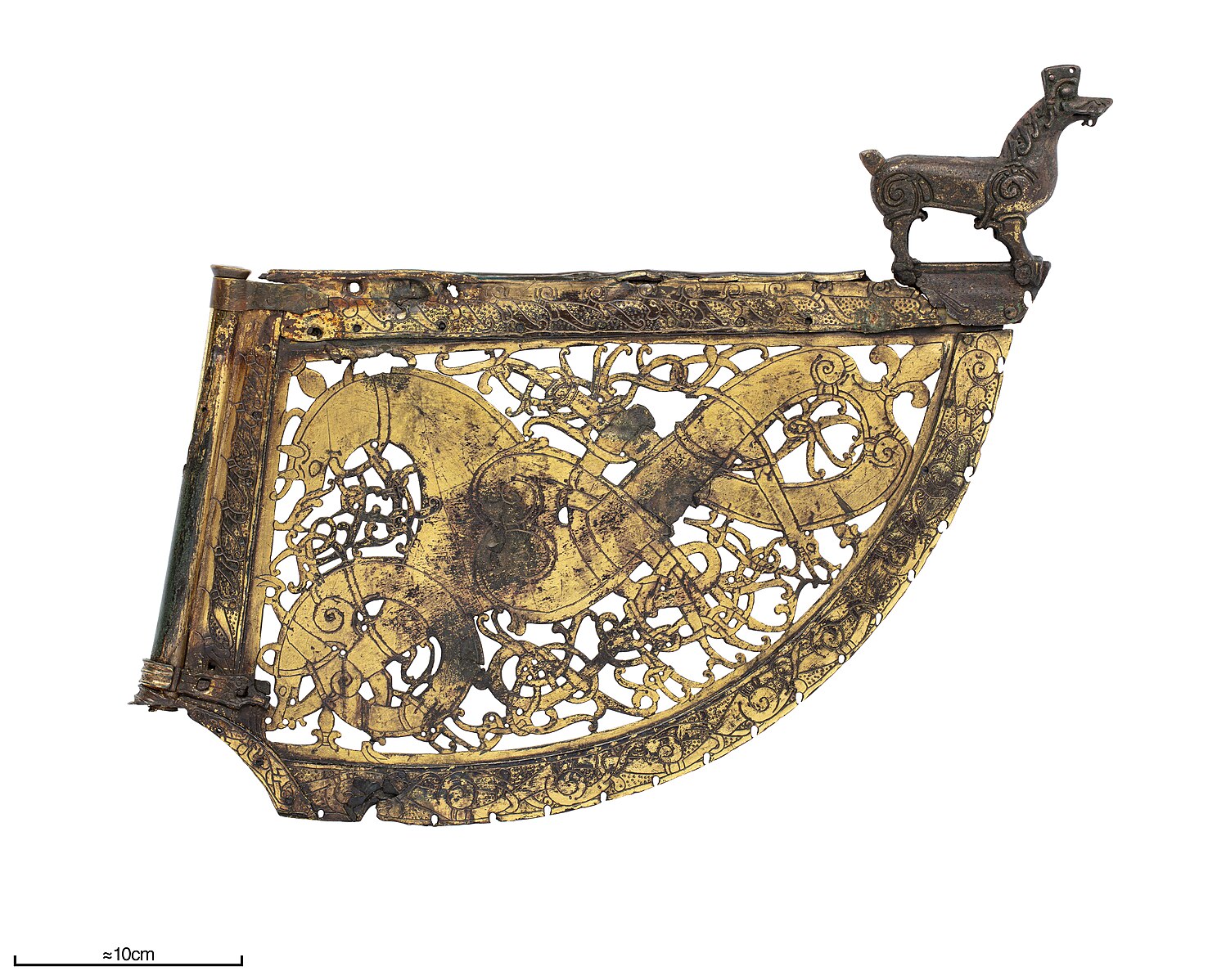
As many stories as I’ve written about war, I’d never considered the battle standard. My editor mentioned to me that ‘they make for great cover ideas,’ and so I did a little bit of research and discovered some information about them, but it was actually in an ‘ask the historian’ section with Mike Everest hosted by the History Quill that I discovered battle standards might not have been fabric at all, but rather perhaps made from metal and more hollow depictions of whatever the battle standard was to be (so perhaps more similar to the Romans and their eagle standards).
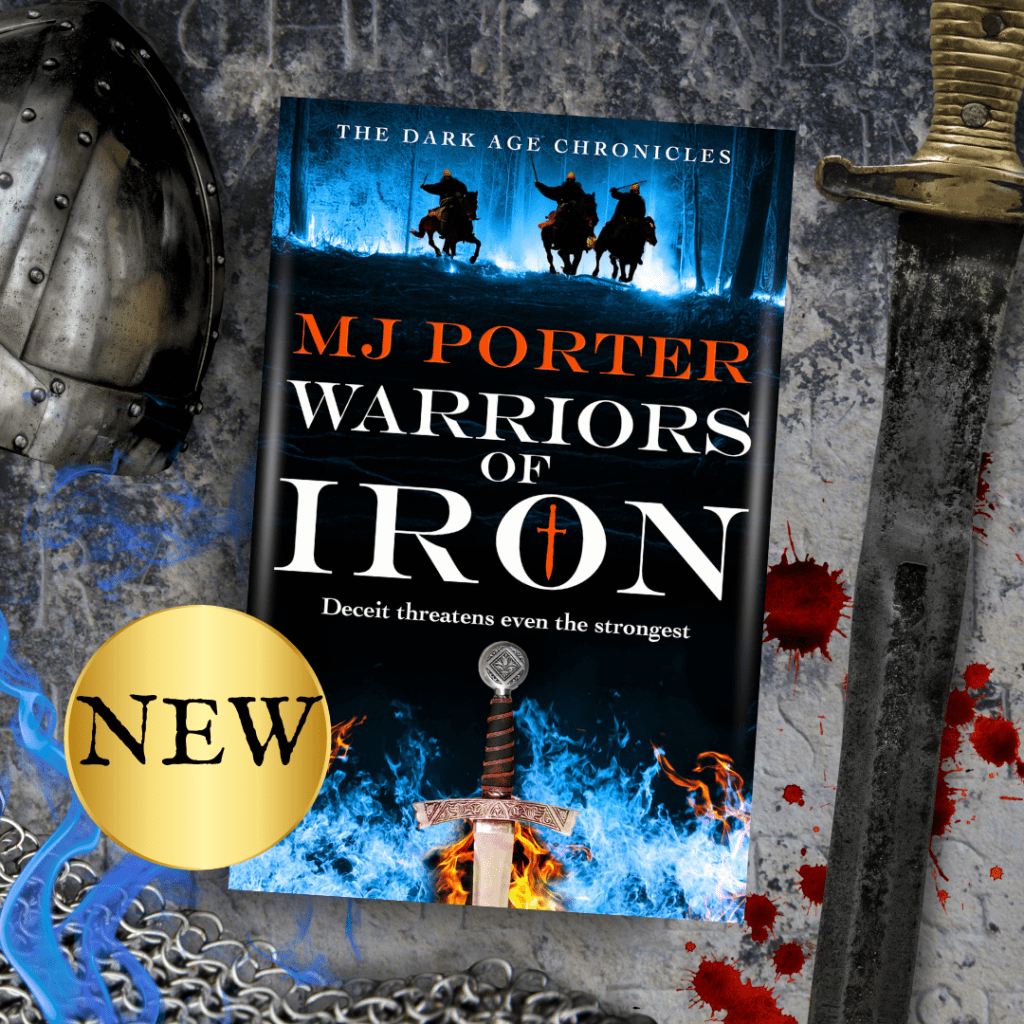
As such, I have touched on this idea in Lords of Iron. As often as I’ve tried to place myself in my characters’ boots, I’ve perhaps overlooked how difficult it might be to find your fellow warrior in the middle of a battle. Below are two images which might have served as an idea of what a battle standard might have looked liked. As you can see, these are very far from being huge banners made of fabric. They are much more intricate, or so it appears. In Warriors of Iron, Wærmund encounters such a battle standard and then hungers to have one constructed for himself. I can see why.
It’s happy release day to Lords of Iron, the third and concluding book in the Dark Age Chronicles Trilogy. Watch and listen to a short recording about the research books I used #newrelease #MenOfIron #WarriorsOfIron #LordsofIron #histfic
A whizz through the research books I used when writing the Dark Age Chronicles
Join my newsletter to follow my writing journey, get access to my exclusive Subscriber area on the blog, and receive a copy of Mercia – A Companion Guide to the Tales of Mercia.
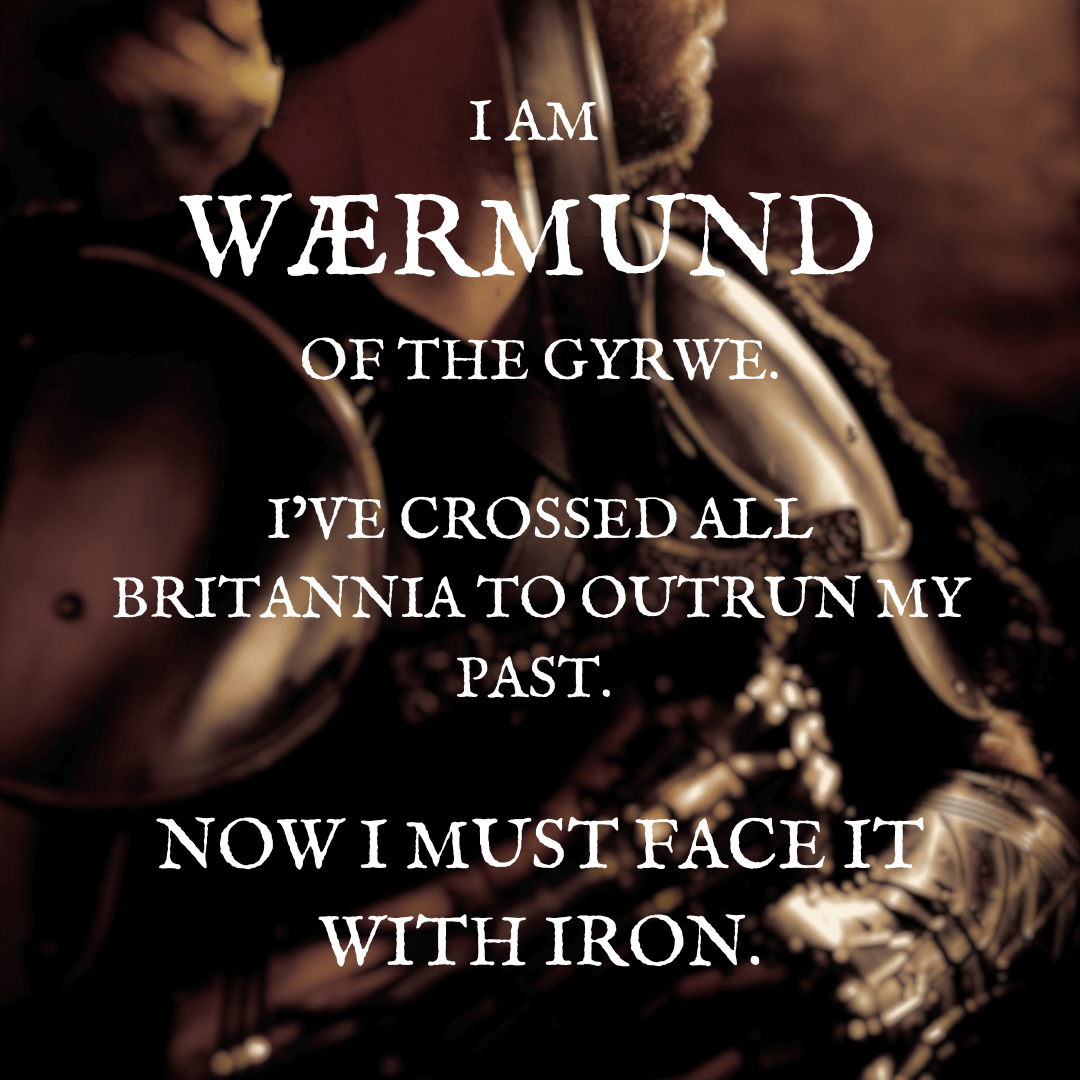
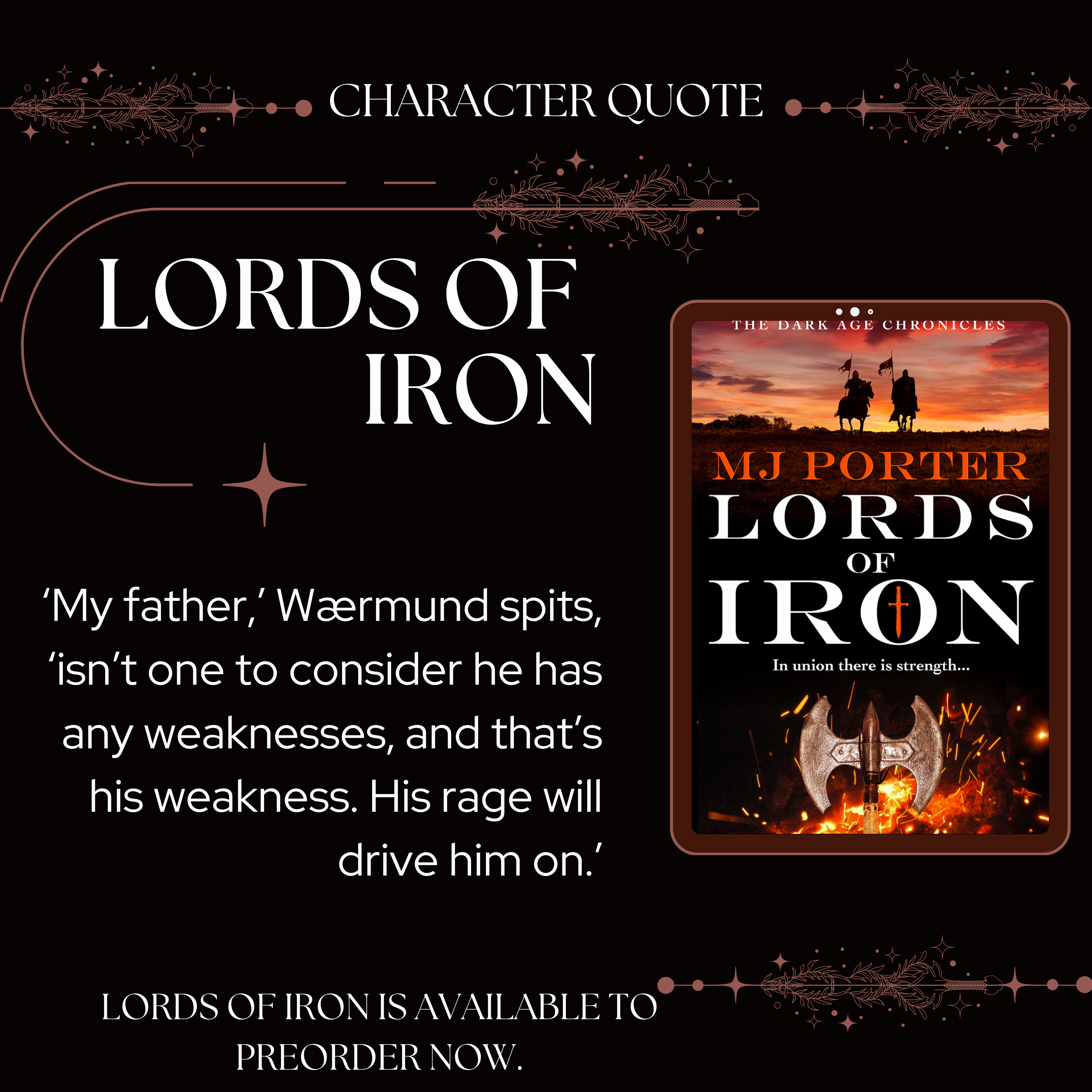
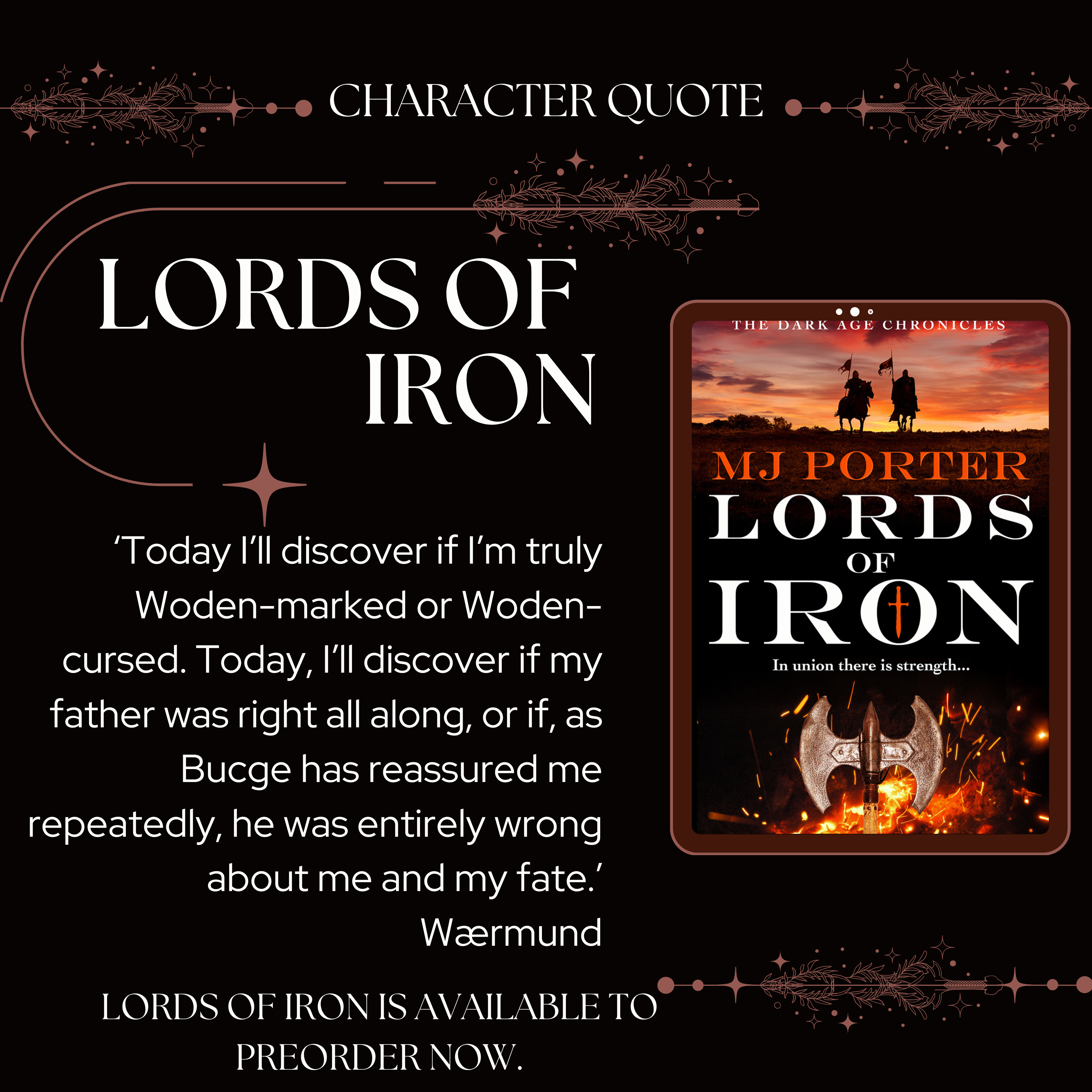
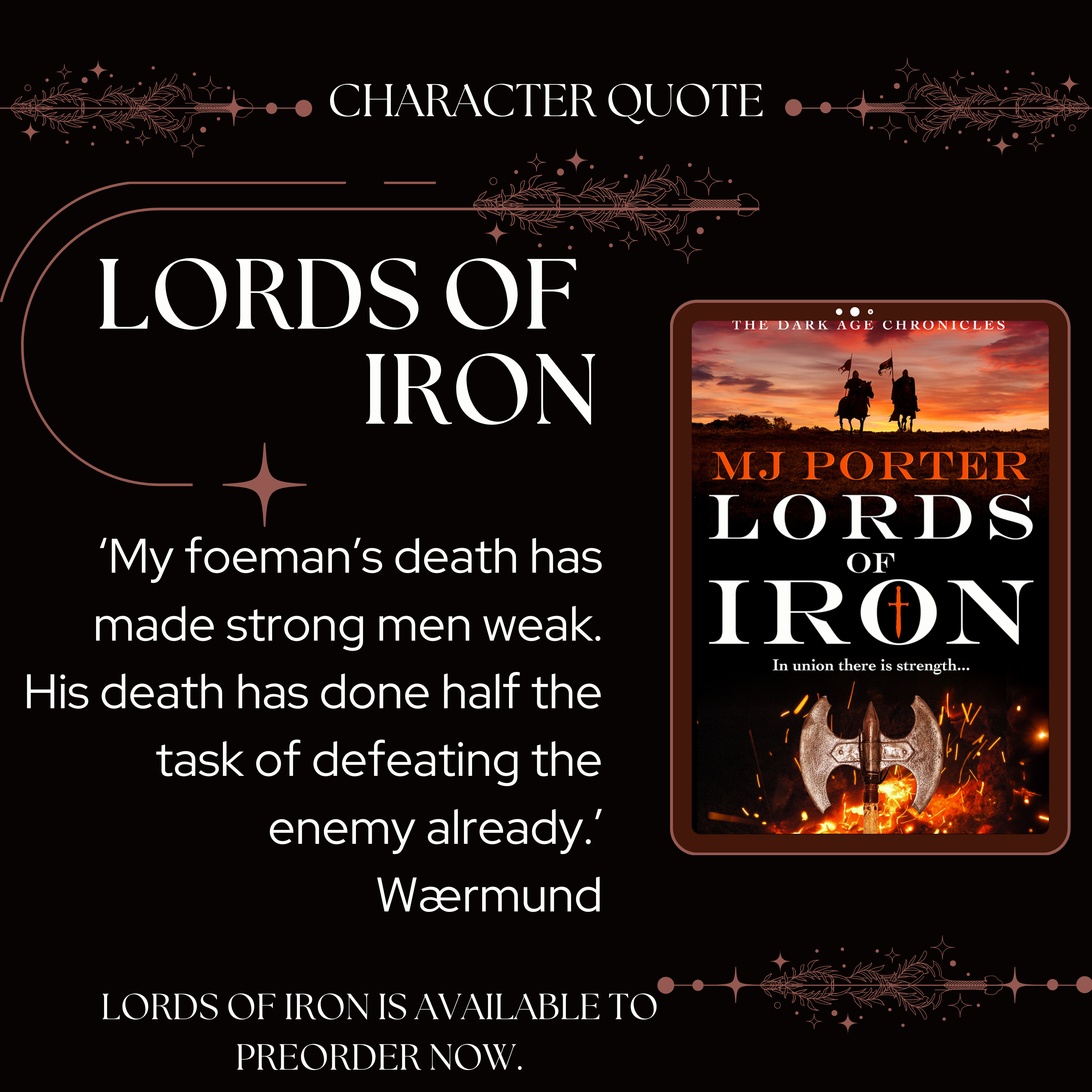
It’s nearly happy release day to Lords of Iron, the third and concluding book in the Dark Age Chronicles Trilogy. Let’s talk about Wærmund, warrior of the Gyrwe #newrelease #MenOfIron #WarriorsOfIron #LordsofIron #histfic
Wærmund, warrior of the Gyre
Wærmund, the lead male point of view in the Dark Age Chronicles, has come a long way since our first encounter with him, when he was young, angry, reckless and unable to assure himself of the loyalty of others. (I’m not saying he didn’t have cause to be angry).
While I’ve written novels in this era where the main male lead is strong and fiercesome (as well as treating everyone to young Icel), I’ve not really written a character like Wærmund before. One early reviewer complained he was ‘annoying’ and that was intentional. For him to become the character I needed him to become, he couldn’t start the novels ‘fully formed.’ I needed him to learn, grow, and become someone more thoughtful than his angry young self allowed.
Along the way, he’s had much cause to doubt himself, and really, it was Heafoc, his loyal warrior, who was the most fully formed of the warriors who pledged their often dubious loyalty to Wærmund. Heafoc, perhaps very much cast in the shadow of the rather wonderful Wulfstan from the Earls of Mercia series, and potentially, also the older Icel from The Last King books, was the epitome of a Saxon warrior, whereas Wærmund wasn’t. Indeed, in deciding to run away from his home, Wærmund hoped to outrun his past, which was never really going to be possible for him.
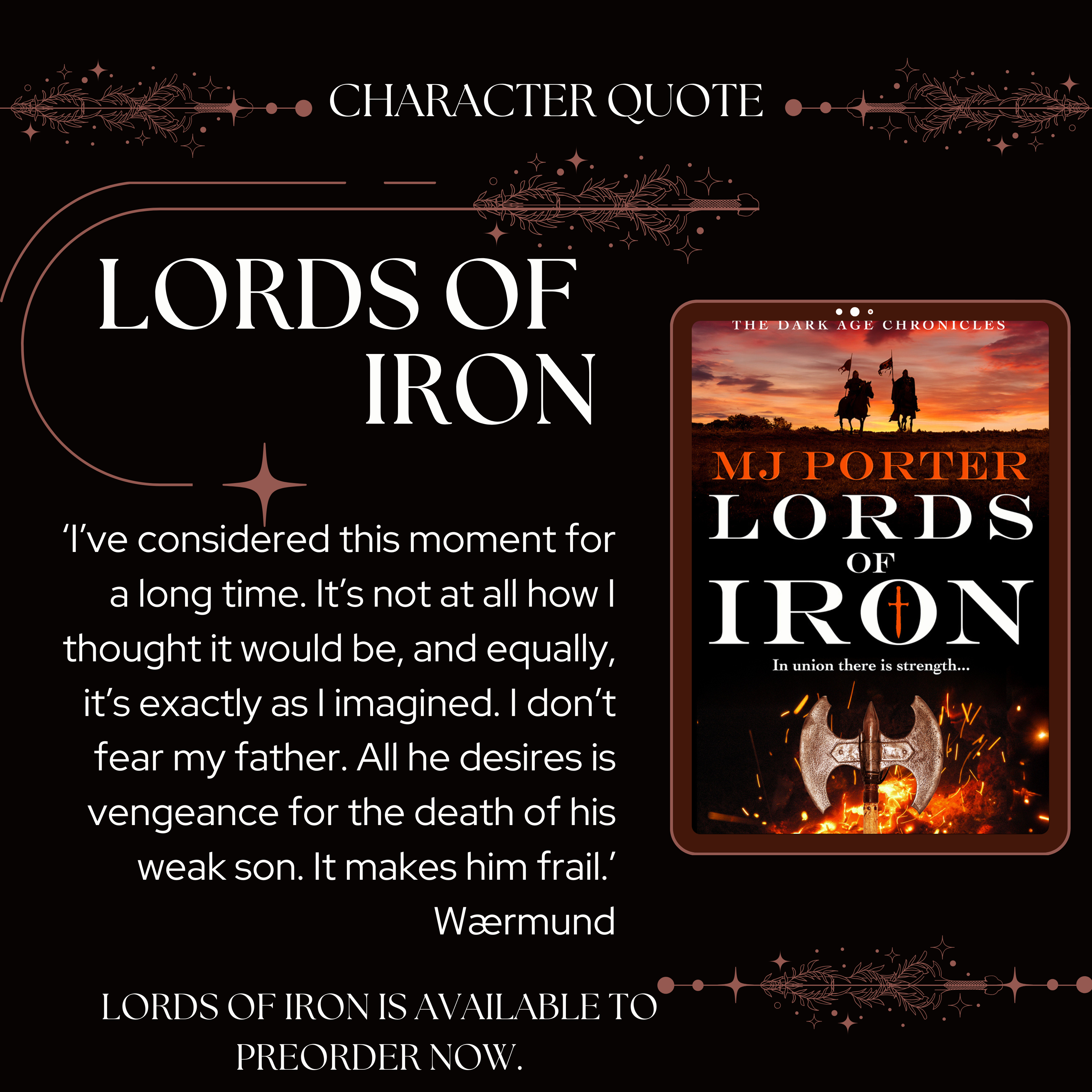
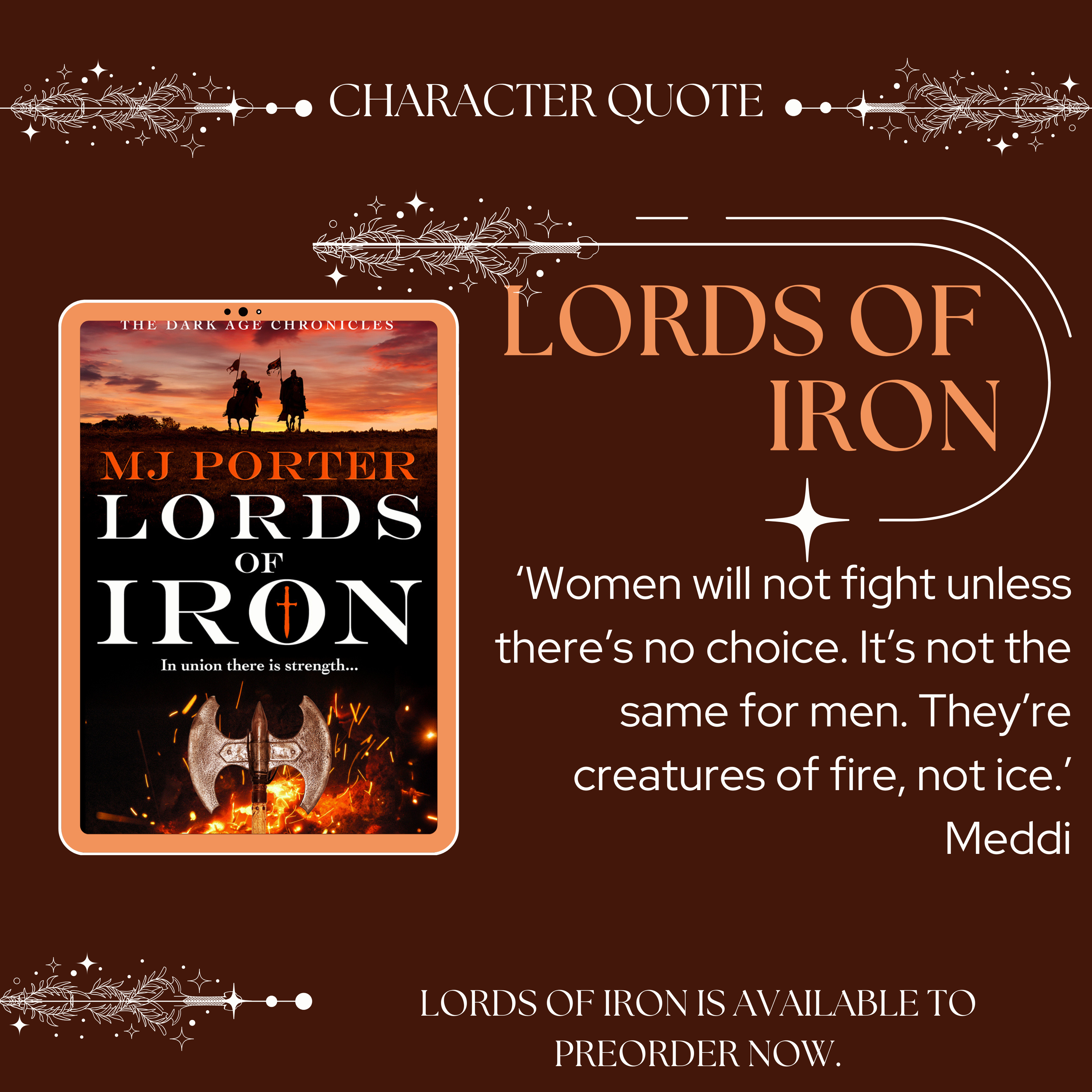
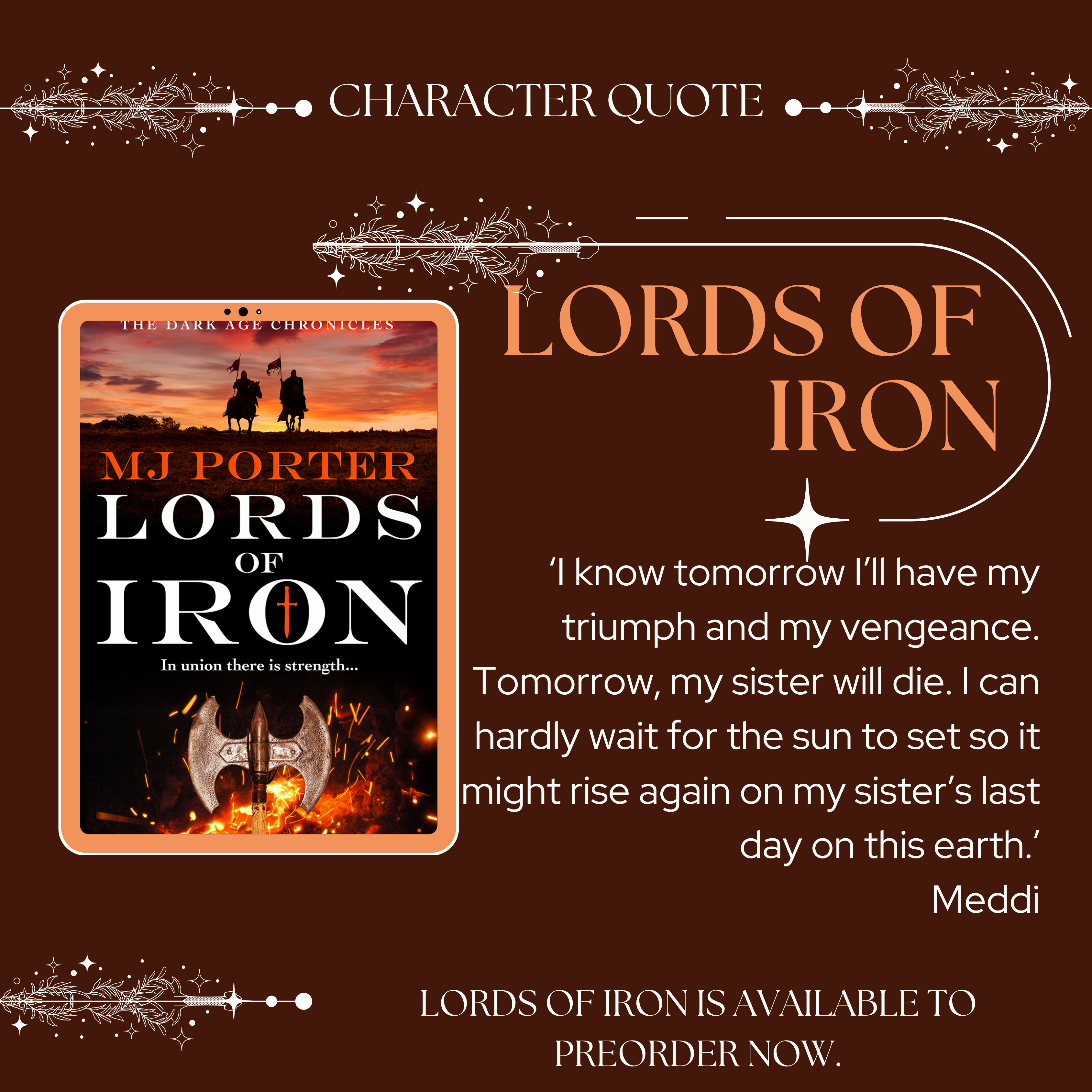
Now, as we turn to the concluding book in the trilogy, I feel Wærmund has come full circle. Is he, perhaps, now a better man than his father? Or, is he still driven by the desire to show his father he is the ‘better’ man? These are some of my favourite quotes from Wærmund in the final book.
You will need to read Lords of Iron (available from 5th January 2026) to discover whether Wærmund enacts his vengeance against his father. Enjoy.
Join my newsletter to follow my writing journey, get access to my exclusive Subscriber area on the blog, and receive a copy of Mercia – A Companion Guide to the Tales of Mercia.
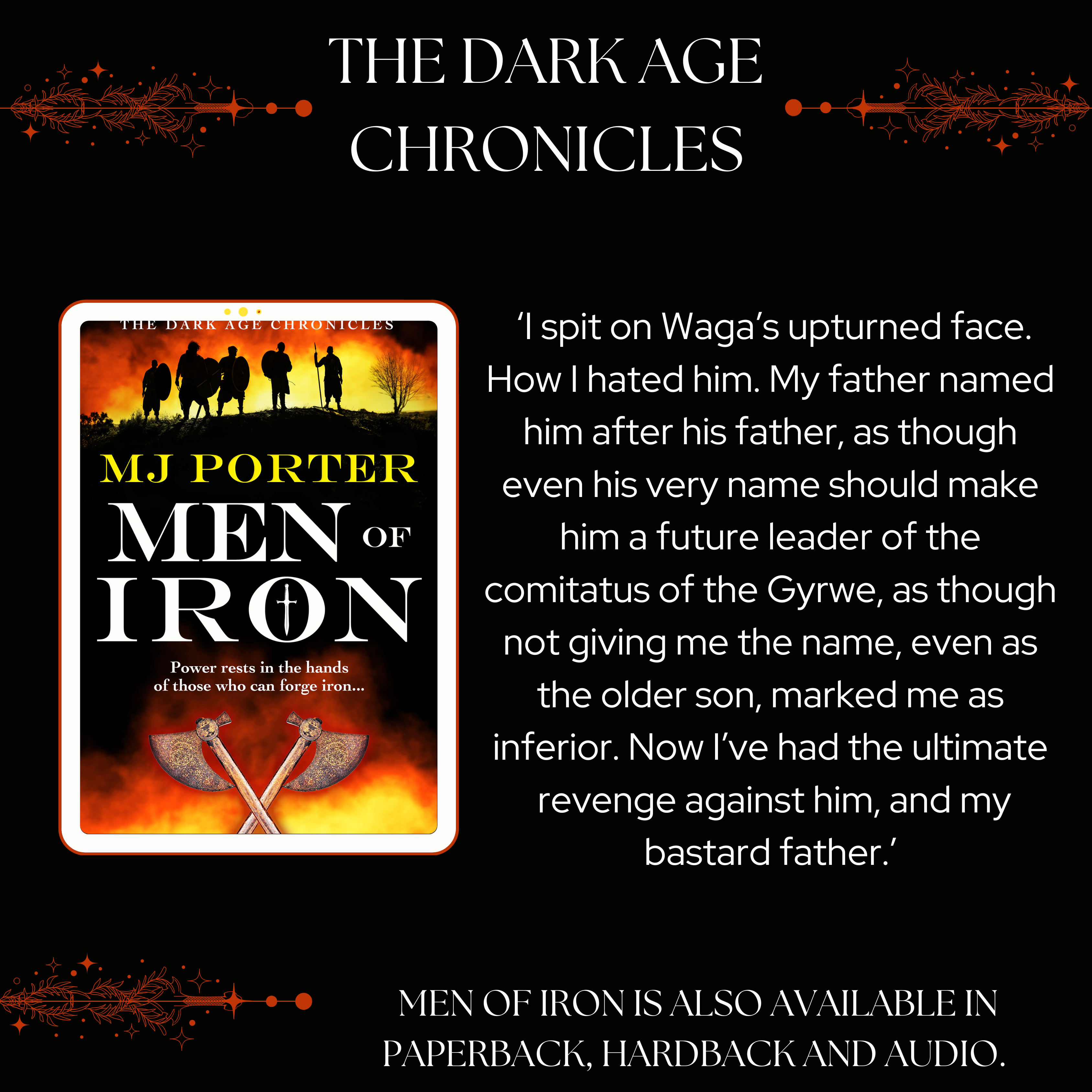
It’s nearly happy release day to Lords of Iron, the third and concluding book in the Dark Age Chronicles Trilogy. Here are the original (very long) historical notes for Men of Iron #newrelease #MenOfIron #WarriorsOfIron #LordsofIron #histfic
The original historical notes for Men of Iron (they were so long I rewrote them)
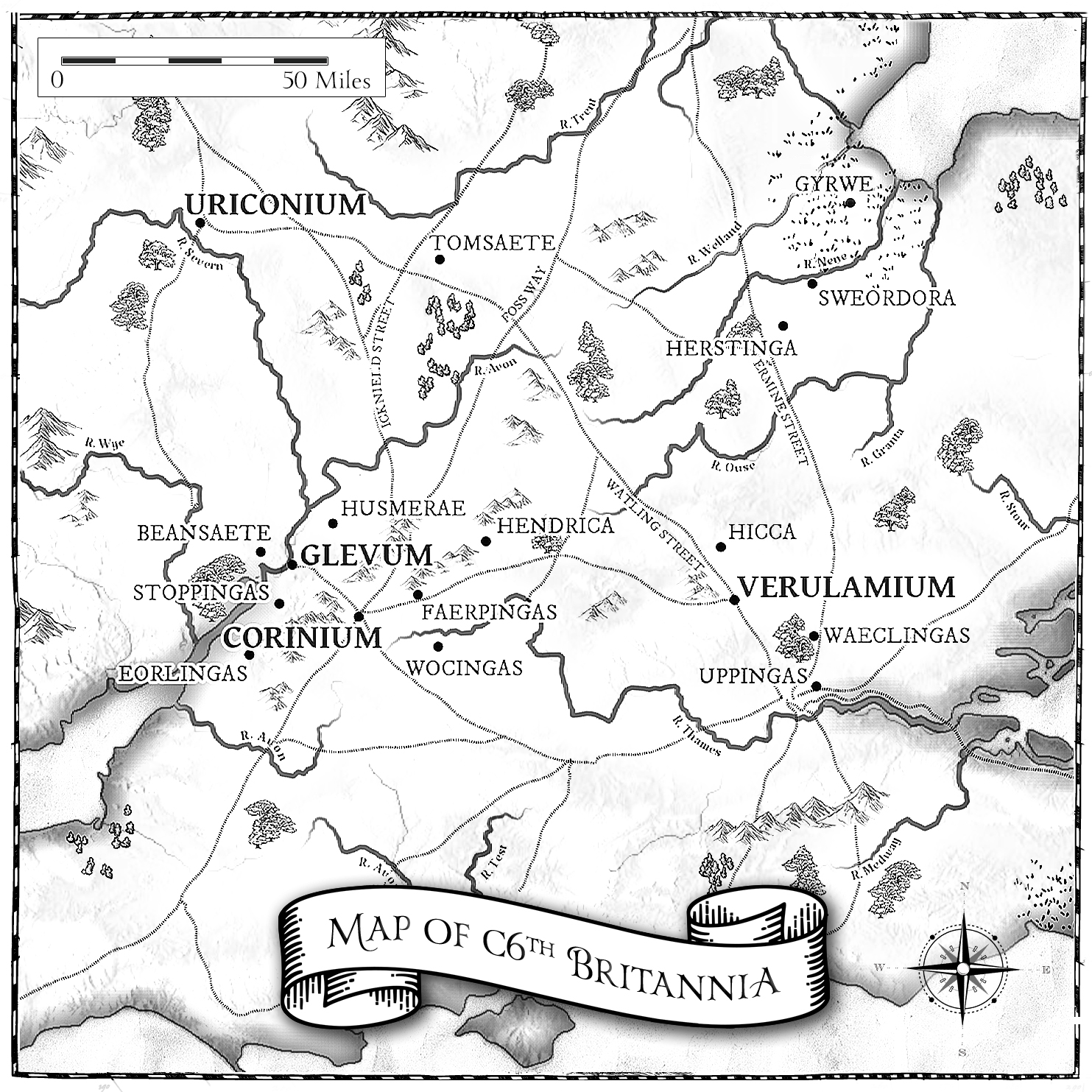
This is not really a story of historical fiction, but rather archaeological fiction. Pick up any non-fiction history book on Britain at this time, and you’ll find very little written about what was happening, because we do not know what was going on, other than perhaps in the south and south-west (where there was more continuity from the earlier ‘Roman’ period). If it’s a book about Mercia, there’ll be even less until the seventh century. It’s impossible to write about the history of a kingdom when there are no written records. And so we must rely on archaeology.
The decision to write about these formative years in what would become Mercia has been a long time coming for me (and it is set mostly in what would become Mercia although the name never appears in the books).
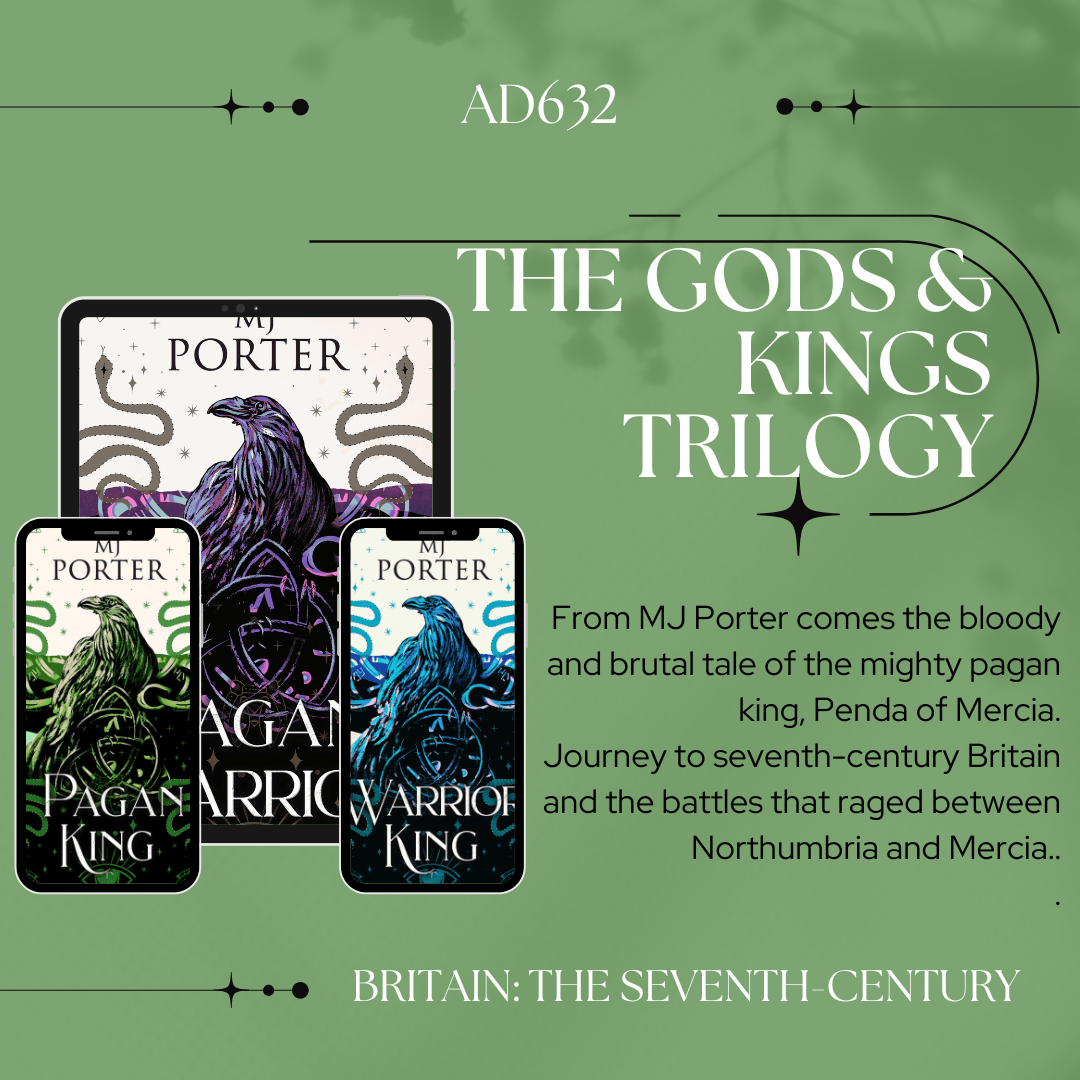
All that can be said with any certainty about Mercia is that a narrative had formed by the eighth century which was an attempt by the rulers of that time to explain how they came to be in control of the heartland of Mercia. It also attempt to explain how they ruled the wider Mercian kingdom (which included many other tribal affiliations: from the North Mercians, South Mercians and Middle Mercians to the outlying areas – the kingdom of the Hwicce, alongside that of the Magonsæte, being two of the best known tribal areas which people have heard about, and the Hwicce the region where I’ve based the Eorlingas). Bede, writing his Ecclesiastical History of the English People, finished by 734, knew some of these details, although he really did not like Penda the pagan – one of the most powerful Mercians in the seventh century (who it’s believed may have been from the Hwiccan kingdom) – but did grudgingly admit that his contemporary ruler of Mercia, Æthelbald, was a powerful individual, eclipsing the kings in his homeland of Northumbria by the eighth century.
Barbara Yorke has written:
The surviving sources allow us to say with confidence little more than that the kingdom of Mercia was in existence by the end of the sixth century. p. 102, Kings and Kingdoms of Early Anglo-Saxon England
How that kingdom came about, we do not know. I’ve chosen the date of this series carefully. It falls between the Battle of Camlann, said to have taken place in 537 according to the Welsh Annals, a later written source, and a later battle between ‘kings’ which occurred in the 570s and is mentioned in the Anglo-Saxon Chronicle, written 300 years after these events.
It’s difficult to determine any cohesive narrative from what is truly the Dark Ages for the whole of Britain. Others might look to the stories of the legendary Arthur (no, I don’t believe he existed), and Hengist and Horsa and think that’s enough, but having read K. R. Dark’s fascinating look at Britain at this period, Civitas to Kingdom, many years ago, I realised that what happened elsewhere might not have happened in Mercia, and equally, that generalisations shouldn’t be used about what would become the Saxon kingdoms in any single part of it. It was an island of petty tribal chieftains. It was not a country or a kingdom. This is an attempt to make some sense of what archaeological findings have been made and devise something that ‘could’ have happened. These people did not exist as I have named them, although I have adopted tribal names that are recorded in a later document (see below).
Wærmund is a name taken from a Mercian genealogy found in the Welsh Annals. There are a number of different variants of a Mercian genealogy. This is the one I’ve used, below.
Woden begot Watholgeot, begot Waga, begot Wihtlæd begot Wæround, begot Offa, begot Angen[geot], begot Eomer, [begot Icel,begot Cnebba, begot Cynewald, begot Creoda], begot Pybba. Pybba had twelve sons, two of whom are better known to me than the others, namely Penda and Eobba. Aethelred was the son of Penda; Penda was the son of Pybba. Aethebald was son of Alweo, son of Eobba, [brother] of Penda, son of Pybba. Egferht son of Offa, son of Thingrith, son of Eanwulf, son of Osmond, son of Eobba, son of Pybba.
Other versions of a Mercian genealogy are found in the Anglo-Saxon Chronicle entry for the year 626 (A2 Version, also known as the G version) when discussing the later reign of Penda which lists many of the same names, but has Wihtlæd as the son of Woden. David Dumville has noted that this represents a West Saxon interpretation of Mercia (the ASC was conceived of and begun in Wessex) – as such, he stresses the ‘Anglian’ tradition of this source, i.e. possibly Mercians writing about Mercians.
I’ve chosen Wærmund’s name somewhat randomly, but with the idea that he wasn’t the first of his family – and that, indeed, he is originally from one of the Wash tribes for which we have details from the Tribal Hidage. Every time I write a new series, something clicks for me, and in this case it’s that whatever the genealogies represent, it needn’t be those who ruled Mercia as a kingdom as we recognise it, but those who ruled the ‘tribe’ beforehand. Yes, they did claim descent from the god, Woden, but most of the Saxon kingdoms did.
It’s believed that the kingdom of the Hwicce was perhaps a native British one and that they came to merge with the Saxons, or rather at this time, Anglian invaders, and then fell under the sway of the wider Mercian kingdom. (The terminology is complex to get right.)
The names of the tribes come from the problematic and difficult-to-date Tribal Hidage, which survives in an eleventh-century document, but is believed to be a copy of an eighth-century document. It lists thirty-five kingdoms, which comprise ninety-five different tribal names believed to have amalgamated to form these thirty-five kingdoms, which were then further merged to form the six main Saxon kingdoms of the Heptarchy (the seventh, Northumbria, is not included in the Tribal Hidage). Feel free to go and try and make sense of the Tribal Hidage. Every non-fiction writers seems to use slightly different spellings and because some are so similar, it is incredibly confusing. Some of my tribes changed names repeatedly as I endeavoured to make them ‘fit’ the narrative and the journey my characters make. All mistakes are mine.
There are a wealth of Roman villas surviving in Gloucestershire, perhaps most famously Chedworth Roman Villa, and also many Roman mosaics, some of which are not available for public viewing as they have been covered up beneath the soil that has preserved them to ensure that continues. The tribe of the Eorlingas is associated with Arlingham, just below Gloucester, to the east of the River Severn. As far as I can tell, Frocester is the closest Roman villa ruin to have been discovered from nearby to where I wanted to base the Eorlingas, but with so many of them, it almost feels as though they might have been falling over them – there are fifty-two known Roman villas in Gloucestershire alone.
The idea of an economy dependent on iron had not really resonated with me before, but Robin Fleming’s comment that mining, metallurgy and smithing stood at the heart of the Roman economy made me reconsider this. She points out that from the late fourth century (which is traditionally deemed to be the end of Roman Britain – well, 410 is) there is a scarcity of traditional, crucial and once common everyday items – nails, evident in the lack of hobnail books and also coffins. She does, however, stress that the Romans had a successful ‘recycling’ scheme and that forging iron objects from these recycled elements may well have continued. However, pattern-wielded blades (which had largely come to dominate what we believe early Saxon/Anglian kings wielded in their battles) could not be made from recycled iron or from a single type of iron alloy, with at least four different iron alloys needed. Therefore, an age ‘without’ iron almost ensued. It is possible that these skills were lost and then needed to be rediscovered. Equally, it is possible that the evidence for such occupations as smelting have disappeared from the archaeological record in many places because of the transient nature of the process. I find the lack of nails in the archaeological record, however, very intriguing. It certainly points to something being lacking.
Languages in this era are, of course, impossible to reconstruct. It’s believed that English, Latin, British, Pictish and Irish would have been spoken. It must also be assumed that those coming to this island from Scandinavia and Germany would also have brought their languages with them. I’ve decided to use the terms Latin, Saxon, British and Brythonic in the text. (I had to make myself a chart to ensure I didn’t have people speaking to other people who didn’t share a language – it wasn’t pretty). There would potentially have been a vast number of local dialects as well, just as there are today.
The small iron-cast horse which Meddi has is based on a bronze object uncovered at Frocester. It is a fabulous piece, described in the site report as ‘crudely designed, with wide open mouth and large upstanding ears’. It is quite small, less than two inches in length, if I’ve understood the dimensions correctly, and shows the horse having reins but no stirrups. The horse was controlled by a bridle alone, and the horses were smaller, at twelve to fourteen hands, the equivalent of a hackney pony, or forty-eight to fifty-six inches tall (according to the internet). Stirrups were introduced by the Saxons.
I have struggled to find references to the religions at this time. Ronald Hutton’s Pagan Britain contains some useful passages. This somewhat leads into burial rites, which are often much of what we know of our ancestors. It does appear confusing – the magnificent ship burials at Sutton Hoo were preceded by burials beneath what is now the visitor centre (and which I think are more fascinating than the ship burials – or rather, the process of how they went from the one to the other within a generation.) Cremation and interment were somewhat haphazardly applied throughout Britain. My own distinctions between peoples are merely an attempt to highlight the differences between them. The depiction of the burial of Meddi’s daughter beneath inhabited buildings is a known phenomenon from this period, and written about by Robin Fleming in her chapter Living with Little Corpses in The Material Fall of Roman Britain 300-525CE.
For anyone affected by this storyline, or concerned by it, as someone who has experienced the loss of a child, I’m perhaps too comfortable including such story elements. To those who have also endured it, I extend my heartfelt sympathies and assure you, it does get easier. Eventually. (what follows below has been added at the end of the proofread for Lords of Iron).
This passage leads somewhat well to a thought by Meddi as she nears the end of book three.
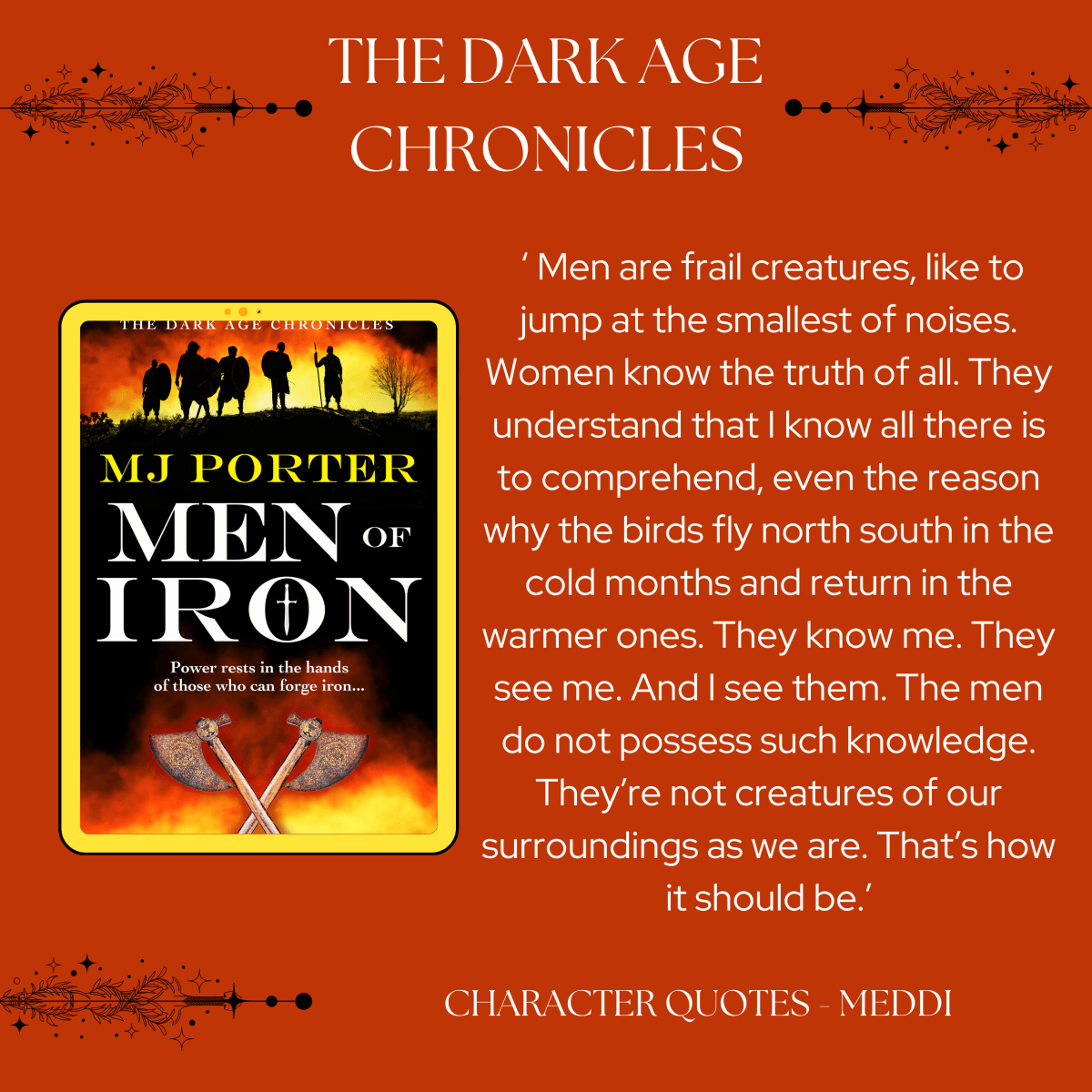
‘I’m Meddi, seeress of the Eorlingas. It’s been a long and troubled journey to reach this moment in my life when hatred has bled away to nothing but a dull ache where the life I thought I’d have has a child has failed to come to fruition. But I would change nothing, aside from the loss of my daughter.’
I think this is perhaps the most ‘me’ I’ve included in a novel (not that I’ve spent my lifetime filled with hatred, but I hope you understand the sentiment).
Perhaps, in the end, this trilogy has been as much for me, as it has been for my readers. Thank you.
Join my newsletter to follow my writing journey, get access to my exclusive Subscriber area on the blog, and receive a copy of Mercia – A Companion Guide to the Tales of Mercia.