

I’m welcoming Eleanor Birney and her new historical mystery, Behind the Green Baize Door, to the blog with a post about about the history behind the novel, #HistoricalFiction #HistoricalMystery #UpmarketFiction #LiteraryMystery #GildedAge #BlogTour #TheCoffeePotBookClub

I’m welcoming Eleanor Birney and her new historical mystery, Behind the Green Baize Door, to the blog with a post about about the history behind the novel #HistoricalFiction #HistoricalMystery #UpmarketFiction #LiteraryMystery #GildedAge #BlogTour #TheCoffeePotBookClub

I’m welcoming Eleanor Birney and her new historical mystery, Behind the Green Baize Door, to the blog with a post about about the history behind the novel

An 1828 Murder Case and the Questions It Left Behind

A guest post by Eleanor Birney, author of The Green Baize Door

I found the case that inspired The Green Baize Door nearly fifteen years ago.

It involved a man accused of murdering an elderly housekeeper. His defense was an unusual one. He admitted that he was a bad man (a liar and a thief), but insisted he was not that sort of bad man (a murderer). That distinction fascinated me, and it still does.

We prefer our stories cleaner than that. Perfectly innocent victims. Completely bad villains. It is more comfortable that way. If a person does something bad enough, it’s easier to believe that any good we thought we saw in them was a lie — a product of their deception — than to imagine that someone might be both good and bad in different measures.

Our preference for neat categories comes up fairly often in my line of work (I’m an attorney). So to see a man in 1828 engaging directly with that moral complexity — and using it as the basis of his defense — was both surprising and intriguing.

And then there was the strangeness of the crime itself: what kind of thief breaks into an otherwise empty mansion, turns the place over, kills an elderly housekeeper then steals from her, leaving behind all the wealth above stairs?

As far as I could determine, no one was ever convicted of the crime. The accused was acquitted, and his speech was so eloquent that the trial was included in collections of “notable cases” for decades after. The mystery was unresolved.

I knew I wanted to write about the case, but I did not know enough about early nineteenth-century England to do it justice. So I moved the murder to my side of the pond.

I chose Philadelphia for a number of reasons. The East coast had more polish than the West at that time, which provided more room for the upstairs/downstairs intrigue at the heart of the story. And the social upheaval at the end of the Victorian era perfectly suited the social and moral tension of the original case.

By 1900, Industrialization had drawn families off farms and into cities. Factory work was replacing inherited trades. Immigration was reshaping neighborhoods and exposing long-standing communities to new languages, religions, and political ideas. And all the while, electricity, steel, and railroads were remaking the physical landscape as quickly as fortunes were being made and lost.

America’s class system was never quite the same as Britain’s, which rested primarily on lineage, but it borrowed heavily from it. Wealth conferred status, and respectability implied virtue. An ideology that contrasted sharply with the men who were celebrated everywhere for clawing their way up to the top, seldom through virtuous dealings. The old belief that privilege reflected moral superiority had not yet disappeared, but it was under heavy siege.

1900 is also only a few years after the landmark Supreme Court decision Plessy v. Ferguson, one of the most disturbing cases in US history. In it, the highest court in the land gave constitutional sanction to racial segregation and reduced identity, and all the benefits and burdens then attendant to it, to fractions and legal classifications.

My main character, Marie Chevalier, lives inside that system.

Though her grandmother is “Colored Creole”, Marie appears “white” and receives the benefit of such. Doors open that would otherwise remain closed. And though her life is hard, the edges are softened. But nothing about that life is simple. Calling herself “colored” would feel dishonest — and disrespectful to those who bear the full weight of racial prejudice. Yet passing as white implies a shame she does not feel, and, worst of all, creates distance from the grandmother she loves and admires. What she gains in access, she risks losing in inheritance: pride, history, connection.

The 1828 case asked whether a man who was not innocent could also not be guilty. The social upheaval of the Gilded Age challenged the presumption that wealth implied virtue. And Plessy asked whether identity could be reduced to a single drop of blood. Each, in its own way, reflects the human instinct to force complex lives into simple, fixed categories.

That is the uneasy historical ground on which The Green Baize Door stands.

The murder at its center is a mystery, yes. But the deeper question is the one that first drew me in: what do we do with people who do not fit the roles society would assign to them?

Perhaps that is why the case stayed with me. Not because the crime was shocking, though it was. Or even because the defense was eloquent, though it certainly was. But because it revealed something uncomfortably familiar: how quickly we allow a single fact to define a life.

One failure becomes character. Socio-economic status assigns identity. And an arbitrary label can dictate how much respect a person deserves.

We do this instinctively. We reduce. We simplify. We decide. And in so doing, we flatten the contradictions that make people interesting — that make life interesting.

In The Green Baize Door, that instinct does more than shape reputations. It hides a killer.

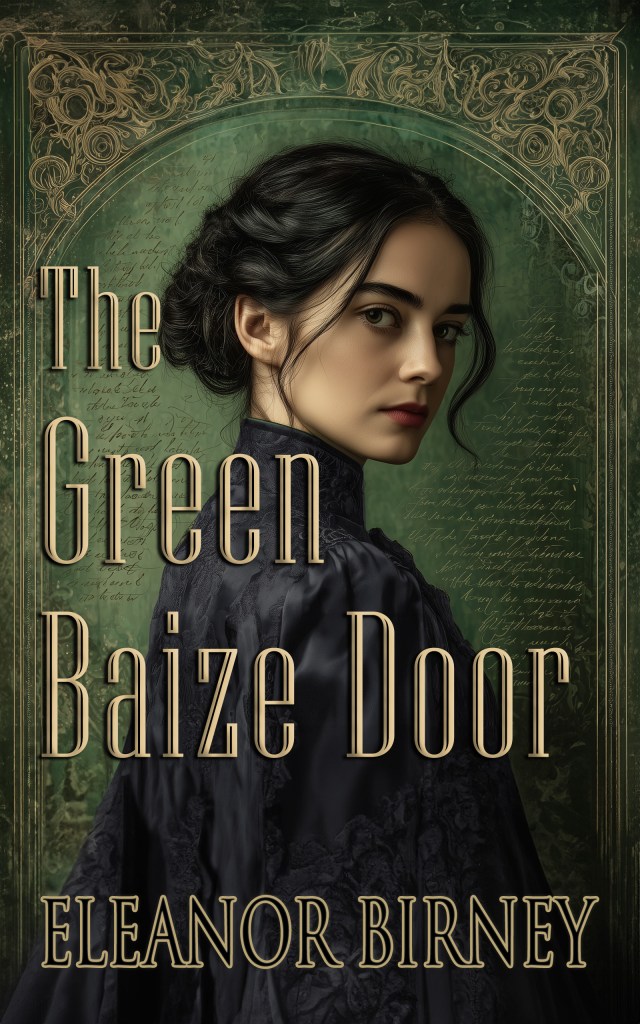
The Green Baize Door by Eleanor Birney is published by Parlor & Dock Press and is available now. For more information, visit eleanorbirney.com.

Here’s the blurb

An atmospheric historical mystery where every character has their own agenda, and their own truth.

In the fashionable mansions on Chestnut Hill, a simple green baize door separates the masters’ world from the servants’. That door is thrown wide when an elderly housekeeper is found brutally murdered on the first day of the new century. Marie Chevalier, the housekeeper’s poor but ambitious granddaughter, and James Lett, the mansion owner’s kind but indolent son, suspect the killer is connected to one of their families—but which one?

From drawing rooms to alleyways, their separate investigations lead them through the sometimes lavish, sometimes brutal, landscape of turn-of-the-century New England. When long-buried secrets begin to unravel the fragile threads that hold both households together, Marie and James must find a way to bridge the gulf between them—if only to prove that the murderer belongs not to their own world, but to that strange and foreign land on the other side of the green baize door.

Inspired by real-life events, The Green Baize Door is a richly layered historical mystery that explores themes of class identity, family loyalty, and the sometimes blurry line between virtue and vice.
Purchase Link

https://books2read.com/u/mBWALv

https://books2read.com/u/mqRkOd

Meet the author

Eleanor Birney writes historical mysteries about class, moral ambiguity, and people who aren’t satisfied with life on their side of the green baize door.

She received a BA in History from UC Berkeley, and works as a legal research attorney, a day job that feeds her love of precision, research, and puzzles.

Growing up in foster care gave her a lifelong fascination with the way society steers people into assigned places—and how some of those people refuse to stay in them.

She lives in Northern California with her family. The Green Baize Door is her debut novel.

www.eleanorbirney.com

https://www.bookbub.com/authors/eleanor-birney

Author Eleanor Birney
Follow The Green Baize Door Blog tour with The Coffee Pot Book Club

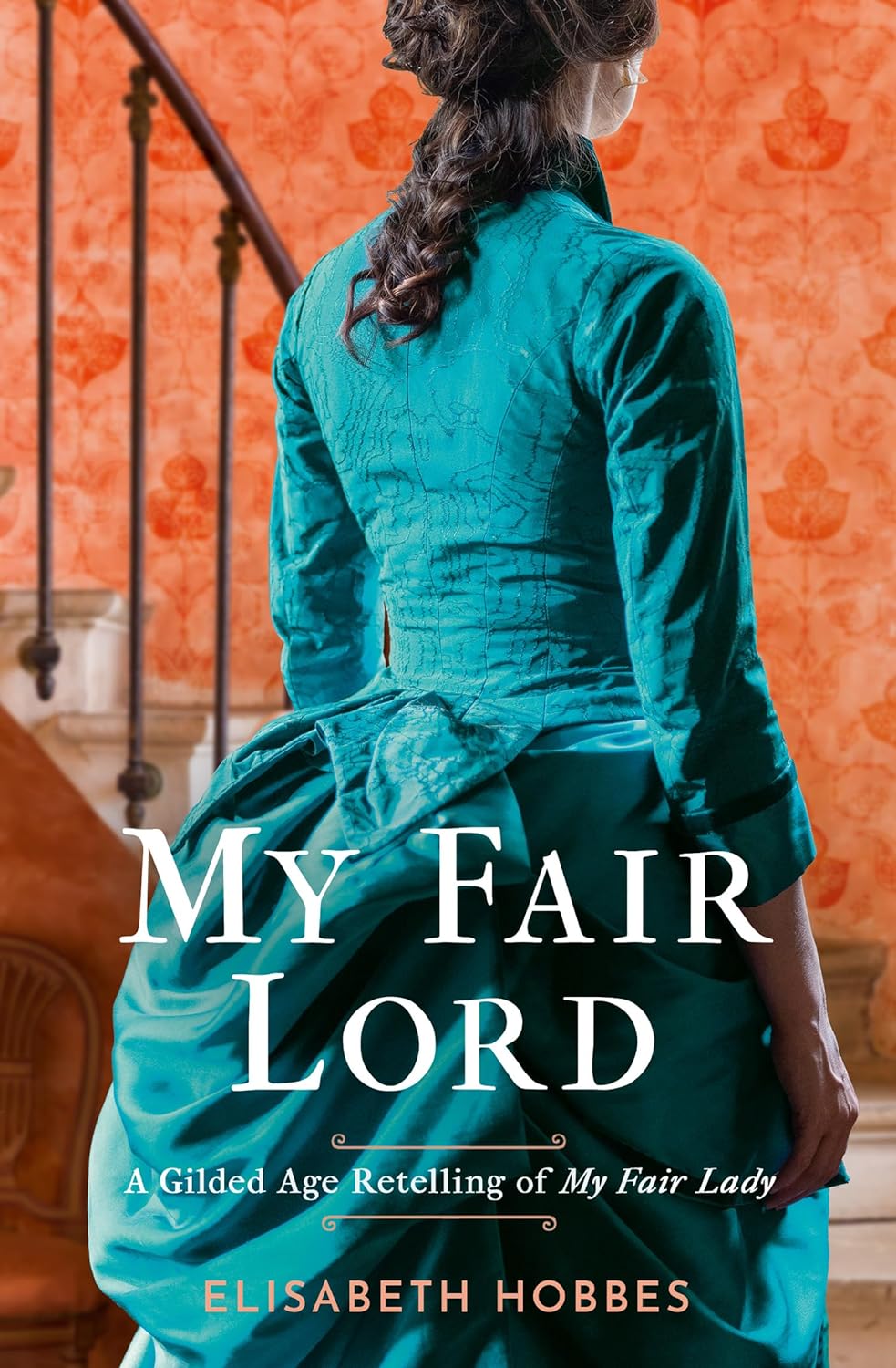
I’m delighted to be reviewing My Fair Lord by Elisabeth Hobbes #histfic

Here’s the blurb

A Gilded Age Retelling of My Fair Lady

Arriving into English society from the drawing rooms of New York, Miss Florence Wakechild desires nothing less than the marriage her father is so desperately seeking for her. Clayton Wakechild desires nothing more than finding a suitable husband for his daughter – a husband of noble birth and title no less. No ‘new money’ here.

Frustrated with her father’s obsession with the British aristocracy, Florence comes up with a plan. If she can train an ordinary working man to behave like a viscount and fool her father, she can prove to him a title is meaningless.

It’s a straightforward plan, but the man Florence chooses is Ned Blake, a man who will open her eyes in a way she couldn’t have imagined. As Ned’s hands gently guide her across the ballroom floor, the last thing Florence expects to feel is something… real.

With his past catching up with him, Ned seizes the opportunity to lie low, if only briefly, but will the secrets he’s keeping destroy the chance of happiness he’d never imagined?

Purchase Link

https://mybook.to/MyFairLord

My Review

My Fair Lord is an engaging romance set, in the later 19th century.

Our two main characters meet in the first sentence, and their tale then takes us from Liverpool to New York. Elizabeth Wakechild is an outspoken young, wealthy American woman, determined against marrying a British titled lord with no money. Ned is somewhat of a mystery – a man who can move in quite exulted company but is also not out of place in a dockyard pub. Elizabeth’s desire to show her father’s determination that she marry into a title is based on little more than conceit, bringing them together. With the aid of Ned, Elizabeth intends to show her father that a man can be taught about manners and societal norms without having been born to them and sets about teaching him with forthright determination.

Both hot-headed, and with agendas of their own, the two but heads, but also remain determined to fulfil their respective bargains, no matter what, and even if it means travelling to New York. The narrative is split between the pair and moves at quite a brisk pace.

Ned and Elizabeth are both fun characters. Elizabeth is educated in the correct forms of address for every member of British society; Ned isn’t, or at least, he pretends not to be. They fall in love with one another, which accounts for why they refuse to part ways, even if it might be better for them to do so, even though, as it stands, they could never be together.

I enjoyed the story. Elizabeth is perhaps the more-rounded character. Her secrets are freely shared with the reader, whereas Ned’s aren’t. This does allow for the ending to be quite unexpected.

This is sure to appeal to fans of historical romance of all time periods.

Meet the author

Elisabeth writes romantic Historical fiction as Elisabeth Hobbes and Historical folklore/fantasy romance as Elisabeth J. Hobbes.

She teaches Primary school but would love to write full time because unlike five-year-olds her characters generally do what she tells them. She spends most of her spare time reading and is a pro at cooking one-handed while holding a book.

Elisabeth hails from York but lives in Cheshire because the car broke down there in 1999 and she never left. Elisabeth has two almost grown kids, two cats, two dogs and a husband. The whole family are on the autistic spectrum and that probably includes the pets! She dreams of having a tidy house one day.

Connect with Elisabeth

Facebook  https://www.facebook.com/ElisabethHobbes/

Twitter https://twitter.com/ElisabethHobbes

Bookbub https://www.bookbub.com/profile/elisabeth-hobbes?follow=true

Amazon viewauthor.at/ElisabethHobbes

Instagram https://www.instagram.com/elisabethhobbes_author/

Bluesky https://bsky.app/profile/elisabethhobbes.bsky.social

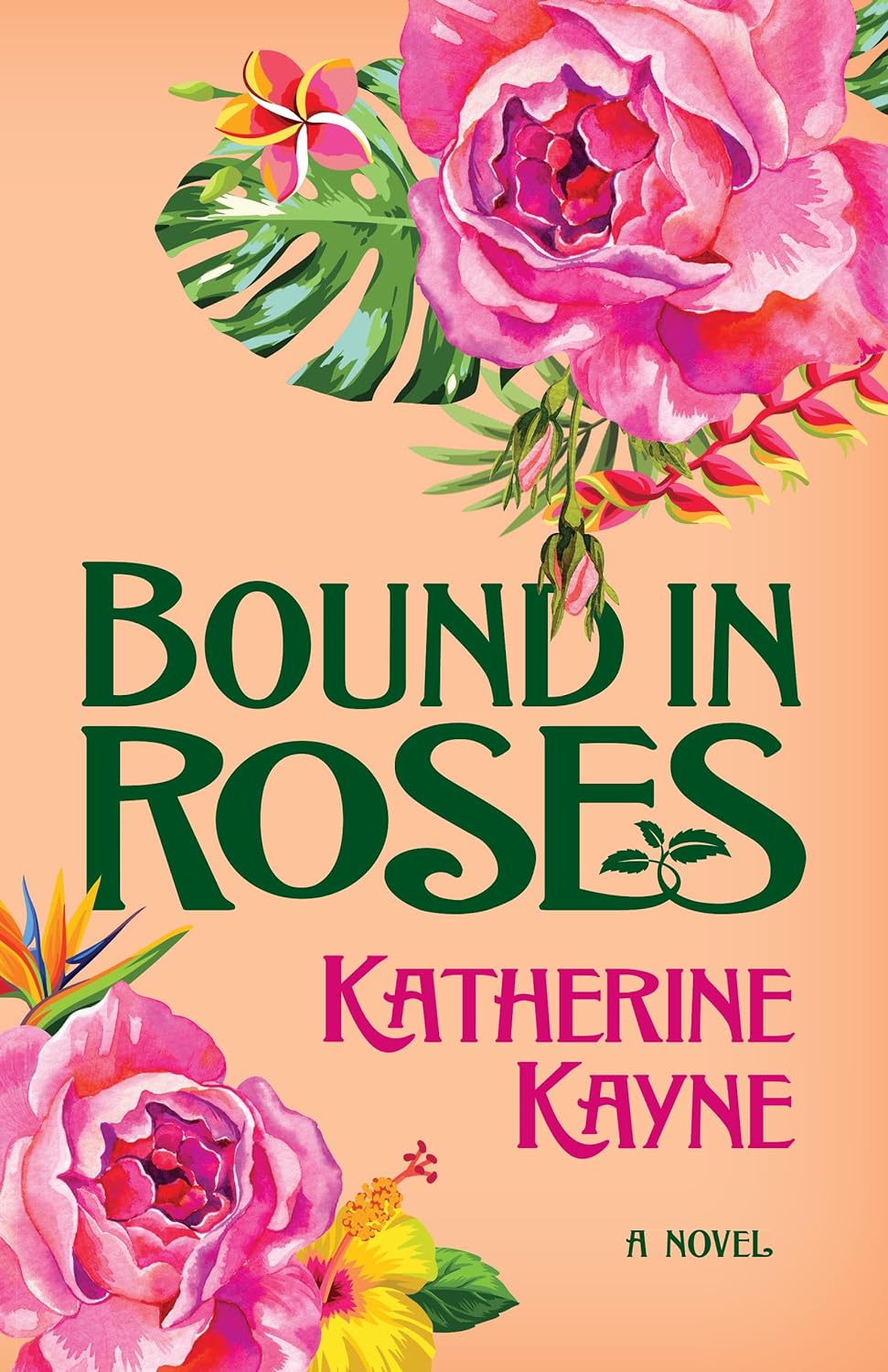
I’m delighted to welcome Katherine Kayne and her new book, Bound in Roses, to the blog #BoundinRoses #HistoricalRomance #GildedAge #BlogTour #TheCoffeePotBookClub

I’m delighted to welcome Katherine Kayne and her new book, Bound in Roses, to the blog.

Here’s the blurb

A red-hot Hawaiian romance blooms for a buttoned-up botanist who must learn to let go and embrace the ancient voice within her.

After a failed engagement to a high-society suitor in San Francisco, Lokelani “Lucky” Letwin returns home to Hawaii, leaving her beloved rosebushes behind. She’s desperate to establish a life of her own-a daunting task for any unmarried female in the early twentieth century but particularly for one passionate about the science of plants. A stubborn, song-filled girl now grown into an accomplished woman Lokelani is haunted by a family tragedy. She is as reluctant to acknowledge her past as she is to accept the supernatural force building inside her, strong and inevitable. She is a mākāhā, a Gate, ever connected to the power of the islands . . . if only she will admit it.

In her quest to retrieve her roses, Lokelani is reunited with Artemus Chang, a childhood friend, who’s now a handsome and successful lawyer. As the spark between them grows, Artemus agrees to help her recover her roses, only to discover her kisses leave him literally breathless. When a mystical teacher enters her life, Lokelani’s embrace of the voice of ancient power bubbling up within her takes on new urgency and new apprehensions.

Will Lokelani continue to be bound by guilt and fear? Or will she learn to reconcile her gifts – as both a practical botanist and a mystical Gate – to sing once more and claim her love?

This title is also available to read on #KindleUnlimited

Universal Link:

Meet the Author

Award winning author Katherine Kayne writes deeply romantic historical fantasy set in old Hawaii. Her critically acclaimed debut novel BOUND IN FLAME delivers myth, magic and all the sparks promised by the title. The next installment in her Hawaiian Ladies’ Riding Society series, BOUND IN ROSES, is available for preorder now.

Katherine’s novels are filled with horses and history and happily ever after . . . and heroes strong enough to follow their heroine’s lead. She spends a part of each year on Hawaii Island immersing herself in Hawaii’s past. Aided of course by the occasional mai tai. Katherine created the world of the Hawaiian Ladies Riding Society to tell the stories of the fearless horsewomen of the islands’ ranches. Because who doesn’t love a suffragist on horseback? With a bullwhip? Wearing flowers?

If you come along for the ride, be prepared for almost anything to happen. Katherine can promise you fiery kisses, charming cowboys, women who ride like the rainbow to save the day, and that rarest of beasts-handsome men who like to dance.

Connect with the Author

Website: Book Bub:

Follow Bound in Roses blog tour with The Coffee Pot Book Club