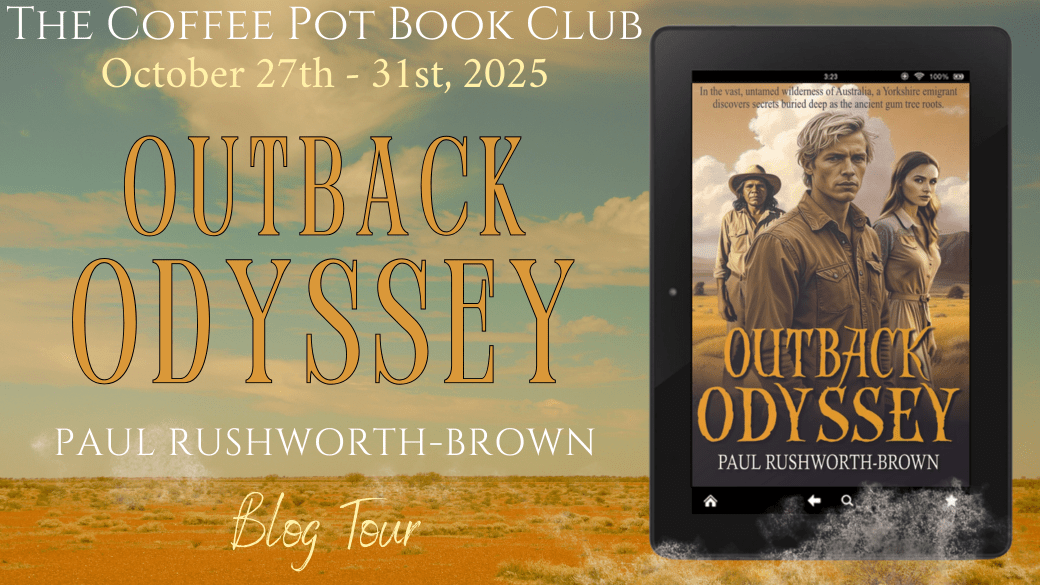
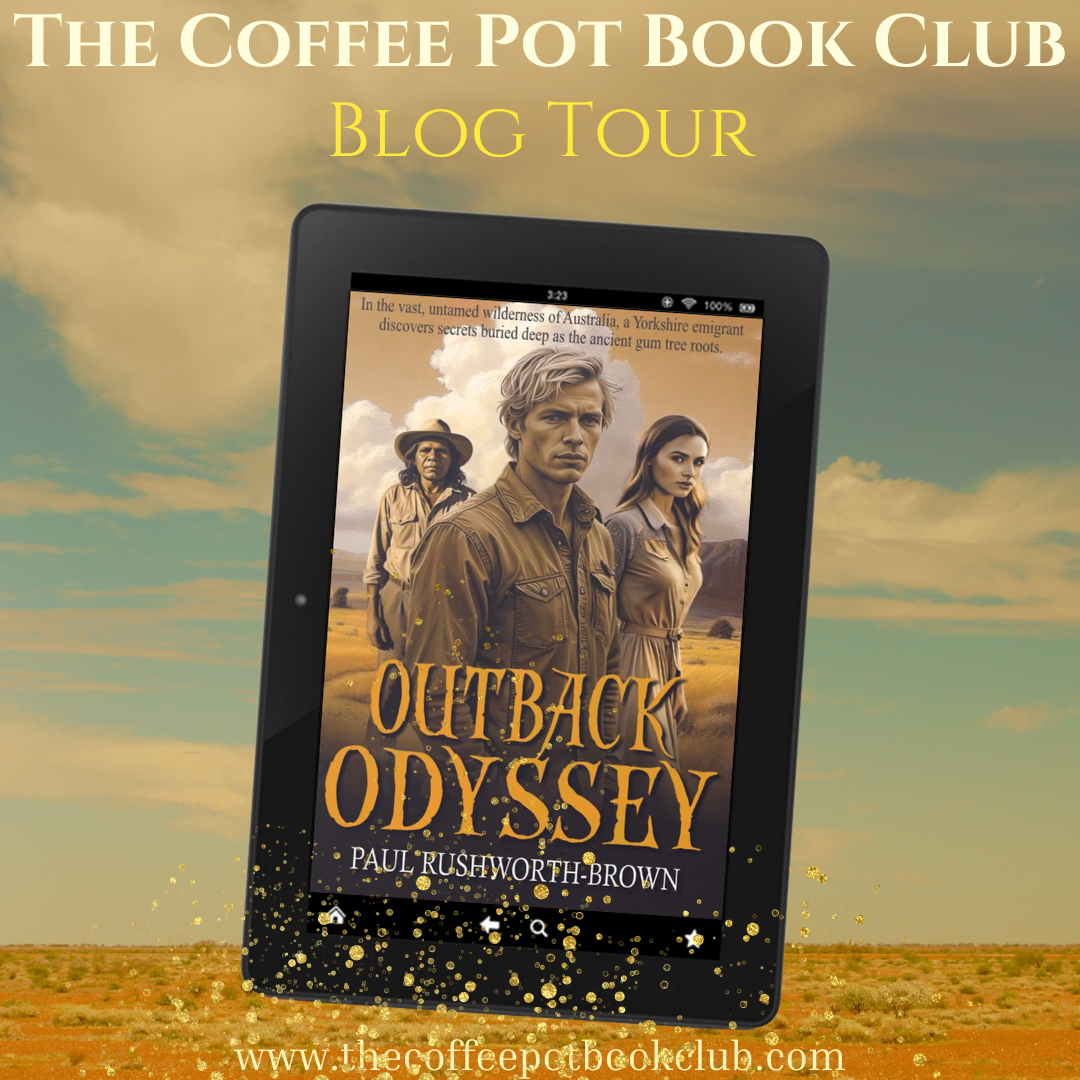
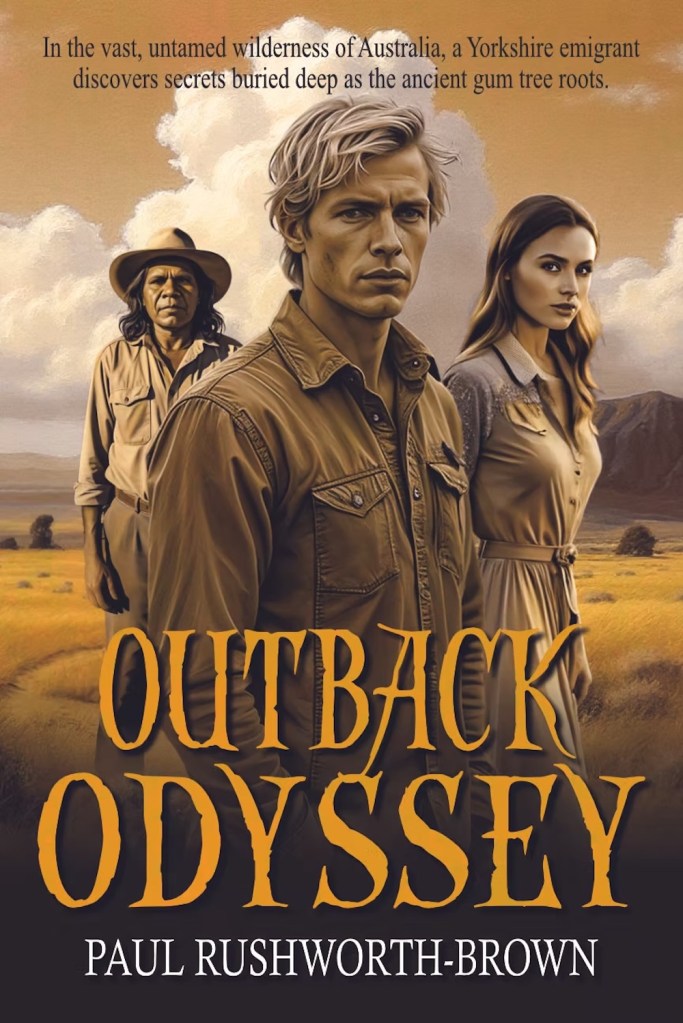
I’m delighted to welcome Paul Rushworth-Brown and his book, Outback Odyssey, to the blog with an excerpt.
Excerpt – Cultural Encounter with Jarrah
“I ask your permission to teach him our ways and show him our culture and Country.”
The Elders exchanged glances, the firelight catching the lines of their faces. The eldest of them, Jarrah, was the first to speak. His voice was deep, and his eyes carried the weight of generations.
“This is not a decision that should be made lightly.”
Kullindi leaned forward, her gaze unwavering. “What is it that you see in this whitefella? You think he is worthy of this — why?” Her words hung in the air, as heavy as the night.
Dhirrari’s reply came steady. “Jimmy has walked a hard road, not so different from my own. He has known loss and loneliness. He was raised without family or a place to call home, but he has chosen to connect, to understand, to belong. I have watched him — not for days, but for moons. He listens, not just with his ears, but with his heart. He doesn’t take from the Land without thought; he walks it with care.”
The silence stretched long, broken only by the crackle of the fire. Finally, Jarrah gave a slow nod. “Then let it be so. But remember — to walk this path is not to borrow. It is to carry. It will change him.”
Jimmy bowed his head, understanding without needing every word. For the first time in his life, he felt the weight of acceptance settle on his shoulders like a mantle he was willing to bear.
Here’s the Blurb
1950s Australia. In the wake of war and dislocation, young Yorkshireman Jimmy journeys to the outback, chasing escape but finding something far more dangerous: the truth of himself and the land he now calls home.
What begins as a story of survival becomes a profound allegory of belonging, silence, and identity. As Jimmy collides with love and betrayal, he also encounters the enduring wisdom of the First Peoples — knowledge that most outsiders are too frightened to face, let alone write about.Outback Odyssey is sweeping and cinematic, a novel of resilience threaded with unexpected twists and allegorical depth. Already under consideration for a screenplay adaptation, it peels back the myths of Australia’s past to reveal what lies beneath: the unspoken histories
Paul Rushworth-Brown was born in England and raised in Canada before emigrating to Australia at eighteen, where he became a citizen. By twenty, he had already travelled the world twice, hitchhiked across Australia, and worked as a navvy in outback Queensland — experiences that gave him an enduring respect for resilience, culture, and the landscapes that shape human character.
He later completed a Master’s degree at Charles Sturt University, honing the research skills that underpin his richly detailed novels. A high school teacher and former professional football coach, Paul draws on a lifetime of experience to bring authenticity and depth to his writing.
His novels are known for their cinematic sweep, allegorical undercurrents, and unexpected twists. Outback Odyssey, his fourth book, is a tale of survival and belonging set against the vast backdrop of 1950s Australia. Beneath its page-turning adventure lie questions of identity, silence, and reconciliation — themes that echo long after the final page.
Paul lives in Sydney, where he writes, teaches, and continues to explore the intersections of history and identity.
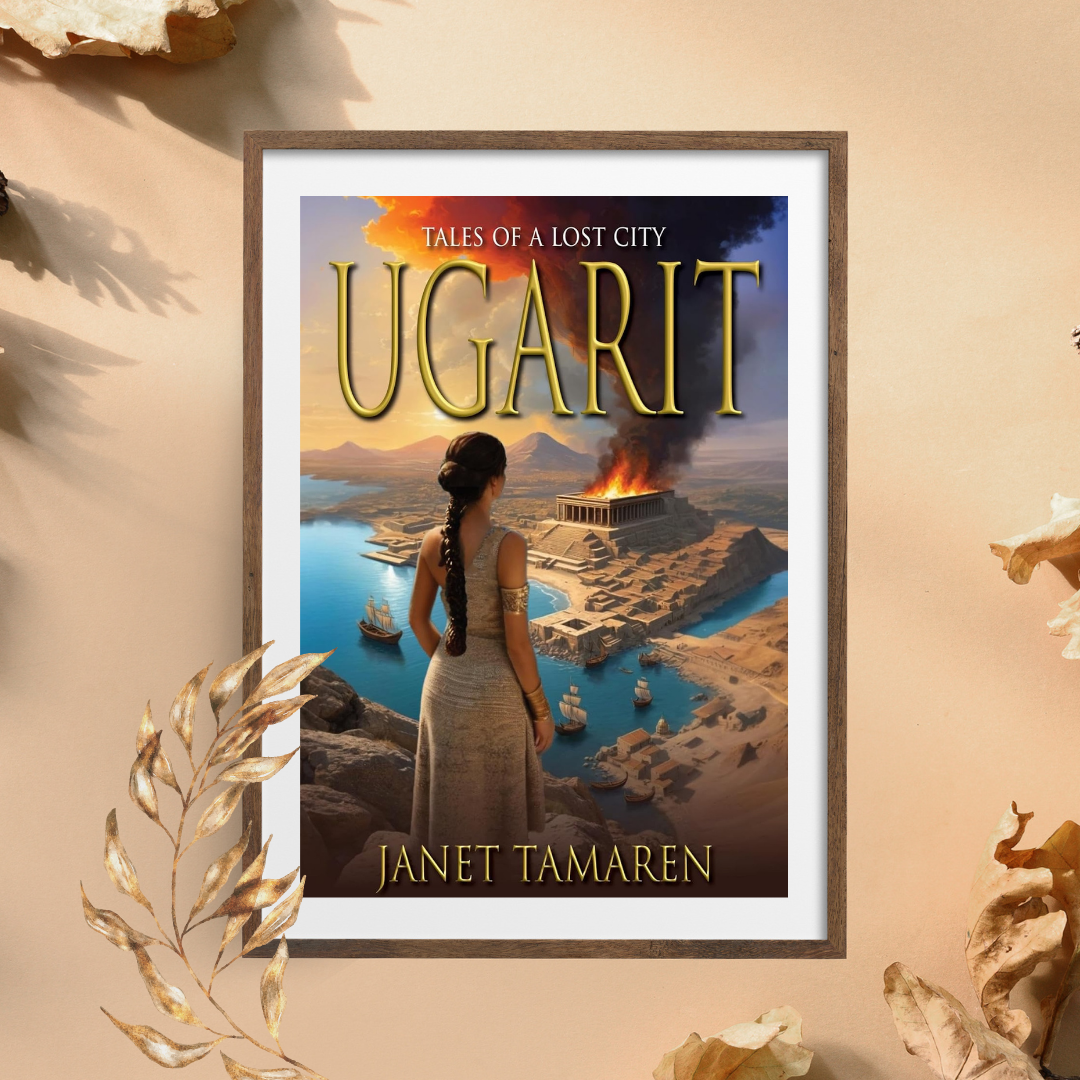
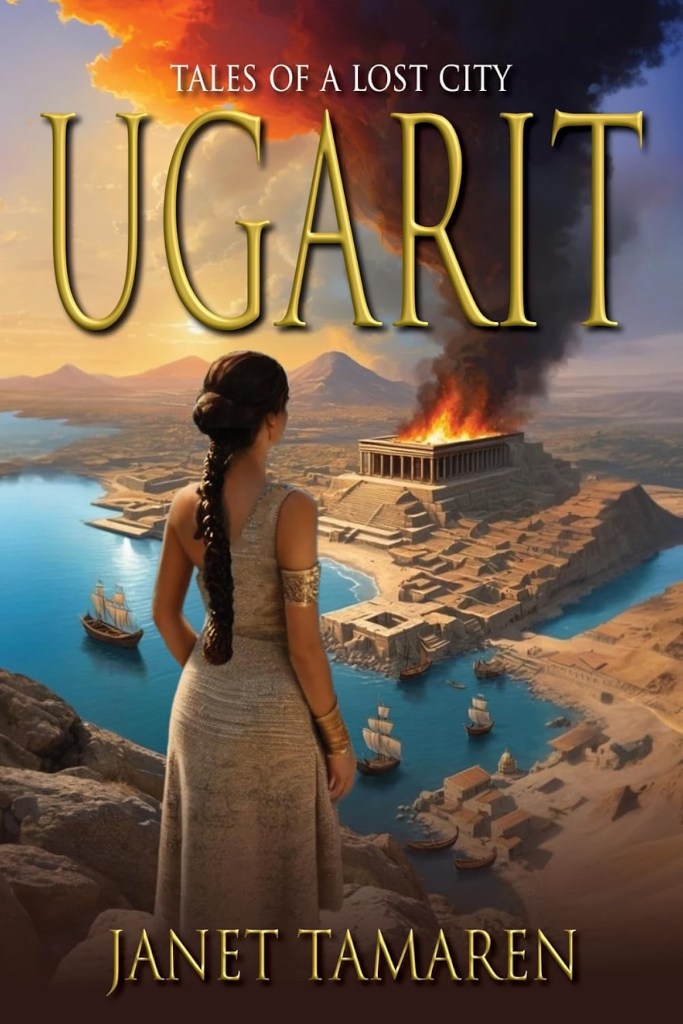
I’m delighted to welcome Janet Tamaren and her book, Ugarit: Tales of a Lost City, to the blog #HistoricalFiction #AncientNearEast #BronzeAge #Ugarit #BlogTour #TheCoffeePotBookClub
I’m delighted to welcome Janet Tamaren and her book, Ugarit: Tales of a Lost City, to the blog with an excerpt.
Excerpt
CHAPTER 4: AT THE HEALER’S SHOP
Yoninah’s house had the classic sign of the healer outside the door: a snake entwined around a pole.
Hearing a firm knock at the door from the street, Yoninah went to answer it. A middle-aged man stood there, nursing his left arm. The arm was clearly crooked.
“I broke my arm. Can you fix it?” he said with a slight accent.
“Yes, I can splint your arm for you,” she said. “And I have pain meds for you as well.”
“That would be most welcome.” He grimaced with the pain.
Showing him to the front room, where she kept her herbs and supplies, she got him situated on a comfortable bench. She was skilled at setting broken bones. Every month or so, someone from the docks appeared at her door with an injury to an arm or leg. The men did heavy work: unloading cargo from the ships.
“I have silver to pay you. I am told you are good at your work. I’ve broken bones before. I know it will lay me up for a while.” The man attempted a smile, but it didn’t quite work.
Looking more closely at him, she saw that he had the cheekbones, chin, and beard of the Aegean. His hair was black, mixed with a sprinkling of gray. The skin of his face and arms was heavily tanned, with creases across the face, courtesy of the harsh sun of the Great Sea. A handsome face except for the grimace.
Probably a refugee from the war in the north, from Troy, she thought. A war that had been over and done with for a good twenty years.
She picked up a salve of poppy seed extract and myrrh and returned to the bench where the Mycenean sat. She washed the area and applied the numbing ointment as a compress. As she worked, she made small talk to distract him from his pain: “I’m guessing you are Mycenaean. Not much accent there, but you look like you’re from the Aegean. How did you break your arm?”
“I was carrying wine jars on a cart drawn by an ox. The cursed animal took a tumble,” said the Mycenean. “I tried to catch the jars before they hit the ground. The jars survived but my arm broke. Heard the thing snap. Hurts like the sting of a thousand bees.”
“Well, let the compress work for a bit. Should feel better in a short time,” said Yoninah. “Let me find a splint to fit you.”
“And maybe a cup of honeyed wine to take the edge off?” he asked.
“Certainly,” she said. Yoninah called for her daughter Laylah to fetch a flask with honeyed wine.
“How did you end up in Ugarit?” asked Yoninah. “This is a distance from the Aegean Sea.”
“The war,” he said flatly. “I mean the Trojan War. I joined the fleet in Mycenae when I was seventeen because I thought it would be a grand adventure. They paid a good bonus as well. Ten stinking years later – most of it spent outside the grand walls of Troy, in a siege that was going nowhere –we somehow broke through the walls, looted the city, and burnt it.”
“I was sick of the whole adventure by then. And sick of the sea: too many storms, too many shipwrecks. Never wanted to go back across the Great Sea.” He paused for a beat and said, “Is my arm almost ready? I can’t feel the pain as much anymore.”
“Good,” she said. “Lay your arm flat on the table. And here is that wine for you.”
Taking a cup of wine from Laylah with his right arm, he drank it down in one fell swoop.
Yoninah had him lay his misshapen left arm on the table, and manipulated the broken bone back into position. She splinted it with a plank of cedar wood and wrapped it in clean cloths. “How does it feel?” she asked.
“Not bad,” the man said. The man’s attempt at a smile proved a bit more successful.
“You fought at Troy. That’s a goodly distance from Ugarit,” Yoninah said as she gathered up a sling. “How did you wind up here?”
“Never wanted to go back to the open sea. Took passage on a ship bound for Ugarit. As you know, these ships travel along the coast. That took a scant ten days, what with favorable winds and currents. Been here a good twenty tears now,” he said.
She gave him a sling, to keep his elbow bent and the arm held close against his chest. She tied the sling herself. As she bent over him, he stared at her chest.
“That’s a pretty necklace you are wearing.” His eyes were fixed on the pendant she wore, a painted terracotta figure of a naked woman.
Yoninah bit her lip as she tried to hold back a smile. Her patient was a bit tipsy now.
“Thank you. It is Asherah, the Queen of Heaven.” She was momentarily distracted by the intensity of his gaze. She reverted quickly to her healer persona.
“There you go. No using the arm! For at least four weeks. Do you have a wife or daughter to keep an eye on you?” Yoninah couldn’t meet his eyes as she asked this question.
“No,” he said. “My wife died. I have a friend who can help. I’ll be all right.”
“My husband died five years ago,” Yoninah said before she could catch herself. She didn’t really need to tell him this information. She turned away and busied herself for a moment.
“I’ll need you to come back in two weeks,” she said. I’ll need to make sure the arm is healing.”
“My name is Menelaus. And yours is?”
“You can call me Yoninah” she said.
Giving her a silver shekel for the arm repair, he swore he would be careful with the arm and agreed to return in two weeks. He gave her a lopsided grin at that point. Possibly due to the excess of wine, she thought.
After he left, she felt uplifted. That had been an unusually pleasant interaction. The bone had gone smoothly back into place.
Laylah had remained respectful while the Mycenean was there. After he left, she looked at her mother’s flushed face and laughed. “You like him.” she said.
Yoninah agreed: “He is handsome enough. He kept us amused.” She thought, “It is true, I am looking to forward to seeing him again.”
Here’s the Blurb
A captivating tale of bravery in the face of heartbreak and upheaval.
IN THE SPRING OF 1190 BC, on the sun-drenched shores of the eastern Mediterranean, the thriving city of Ugarit pulses with life, trade, and courtly intrigues. But danger brews beyond its walls.
Yoninah, a gifted healer, offers herbs and amulets to ease her neighbours’ suffering. When a Mycenaean – an ex-soldier from the Trojan War—stumbles into her life, he reawakens memories she thought long buried. Just as whispers of war echo ever closer.
Meanwhile, in the royal court, Thut-Moses is a scribe who was trained in the temples of Egypt. The king is paralyzed by ominous messages: foreign invaders are razing one coastal city after another. As the tide of destruction nears, Ugarit’s fate hangs in the balance.
Torn between loyalty and survival, love and duty, Yoninah and Thut-Moses must each decide: what will they risk to protect what the hold most dear?
Rich with historical detail and inspired by newly-translated cuneiform tablets unearthed form Ugarit’s ashes, UGARIT brings to life the final days of a cosmopolitan world on the brink of collapse – a sweeping tale of courage and resilience at the twilight of the Bronze Age.
Praise for Ugarit:
“A masterfully told tale-rich, riveting, and utterly transporting. I couldn’t put it down.”
Janet Tamaren is a retired physician who practiced for two decades in rural Kentucky. Now living in Denver with her husband, she enjoys writing and is the author of a medical memoir and a guide to Hebrew Bible stories. She began writing UGARIT during the COVID lockdown.
I’m delighted to welcome Luv Lubker and her new book, Under The Sword, to the blog #HistoricalFiction #VictorianEra #KaiserWilhelm #QueenVictoria #Anti-Trafficking #BlogTour #TheCoffeePotBookClub
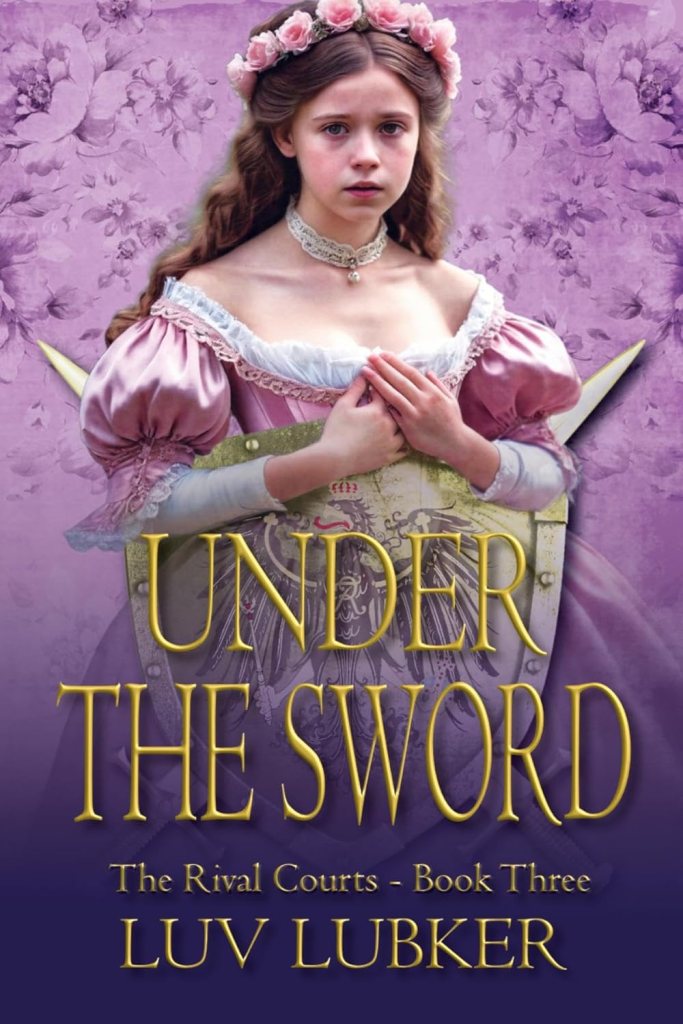
I’m delighted to welcome Luv Lubker and her new book, Under The Sword, from The Rival Courts series, to the blog, with an excerpt.
Louischen sat on the broken branch of a tree which leaned over a little stream, gazing down into the water at the round face and big eyes of the little girl who seemed to look back up at her. Her face, too, was streaked with tears.
“Oh, Charlotta, I’m so glad I found you here,” she whispered. “You are Charlotta, but I must call you Charlotta the second, as Charlotta – the first – is gone forever. Papa – Papa killed her. I never thought he would do such a thing, but I saw her shatter into pieces with such a look of anguish! Oh, I can tell you everything, Charlotta.” She looked away and sighed. “Only, I can’t see you indoors. I can only see you here. Charlotta – the first – was with me so often. She was in the little glass over my bed. And – oh, Charlotta, I was so afraid. I couldn’t move, because there were bits of glass all over my bed, and I was afraid. But he can’t smash you. The wind can blow you away, into little bits, but you will still be there,” she whispered, as the wind blew and the face in the water rippled away for a moment.
Her little yellow voice seemed to float around Charlotta’s face, instead of hers. At first there had been waves of blue around the sides, but now, shimmering stars of deep, piney green fell over it. She sighed happily.
“I feel so peaceful here. But I wouldn’t dare to go to sleep here – the wind might blow me down and I wouldn’t want to sleep in your bed. No – I would rather sleep in the orchard, if I slept outside – in, or under, the cherry trees. It would be so nice to be buried in their petals, I think. But you will never know that, unless –” Louischen took a cherry pit out of her pocket, and looked at it. “Unless I planted one here, but the gardener says it would take years before it could rain down its pretty petals. But perhaps…” Louischen slipped carefully down from the branch, dug a little spot in the ground, next to the water, and covered it over. She bent down and kissed the spot. “Make a blanket for Charlotta, please,” she whispered.
She turned round and threw her arms around the pine tree, kissing it. “I have something for you, too,” she whispered. She took a bunch of pressed cherry blossoms from her pocket, and tucked it under the pine needles. “You belong together,” she whispered, turning her head on its side to look at the flowers peeking up, and smiled at them.
“Goodbye,” she whispered, and ran across the little island, carefully stepping across the fallen tree.
Here’s the blurb
From acclaimed Victorian historical author, Luv Lubker, the author of “Under His Spell” comes the continuing romance of the Princess Royal Victoria and Frederick III of Prussia.
Join Queen Victoria’s eldest daughter and her husband, future German Emperor Frederick III in this third installment of The Rival Courts family saga, as they climb the treacherous path to their dream of German unification in the Franco-Prussian war of 1870.
In the calm after the storm, Vicky and Fritz have it all: a devoted marriage, a growing family, and the promise of a bright future. But Fritz’s Uncle Karl lies in wait behind the scenes, hatching his newest plot. A shocking outcome of Vicky’s Royal duties will bring fresh doubts to Fritz’s heart, and his fatherhood.
As personal tragedy strikes and shakes them to their core, Fritz is forced to lead the largest battle history has ever seen. One which could change the face of Europe forever.
Vicky’s best friend struggles to shield her daughters from the sinister force that seeks to control them. The youngest shares her grandfather’s uncanny ability to know the truth behind others’ motives. But can she see the truth in him? In such a dangerous world, what heroic role will this small child play?
Can they escape the danger and betrayal that lurks in every corner as they travel to the icy expanse of Russia, the peaceful Mediterranean shores, and the vast Eastern deserts?
Will Vicky and Fritz’s love and marriage survive a mysterious illness, or will Uncle Karl’s conspiracies tear them apart for good?
Fans of Clare McHugh’s A Most English Princess, Mary Hart Perry’s The Shadow Princess, and Daisy Goodwin’s Victoria will be swept away by this gripping tale of love, war, and intrigue. With rich historical detail and deeply human struggles, Under the Sword, the third installment of The Rival Courts saga, brings to life the triumphs and tragedies in a fight against a nefarious trade which flourished in the shadows of the Royal court. A must-read for lovers of Victorian-era royal fiction.
Trigger Warnings: All non-graphic:
Sex trafficking/prostitution encouraged by villain (but anti-trafficking is a strong theme); Rape, drugged gang-rape (off-the-page); Implied (off-the-page) child abuse (physical, sexual); Childhood pregnancy; Trauma processing/PTSD in historical setting; Death of child, grief; Occasional racist remark (strongly DISapproved by main character); Coerced marriage; War/battle scenes; ED/sexual disfunction (Discreet/non-explicit discussion and frustration of spouse); Implied death of pet cat; Historical views expressed by characters about homosexuality
Luv Lubker began life in the Animal World, researching creatures great and small since before she can remember, and earning her degree in chicken psychology by age twelve. Not long after, she immigrated to the Victorian era, where she has lived half her life in close company with the Brontë sisters and made friends with Queen Victoria’s extended family, whom she now knows quite as well as her own kin.
Born in a cattle trough in the Appalachian Mountains, Luv currently resides in Texas’ Great Plains when visiting the modern world. When she isn’t writing or reading, she delights in preparing and savoring gourmet raw food with her family and exploring nature on long bike rides. Her special abilities include researching in seven languages and riding a unicycle since age seven.
Luv’s research delves into the unwritten stories that history left behind. Through unpublished letters, altered manuscripts, and deeply buried secrets, she reveals emotional truths concealed beneath the era’s refined exterior. Her novels give voice to the silenced, reveal what Victorians were taught to suppress and what their biographers chose to omit, tracing invisible scars that shaped lives, choices, and history itself.
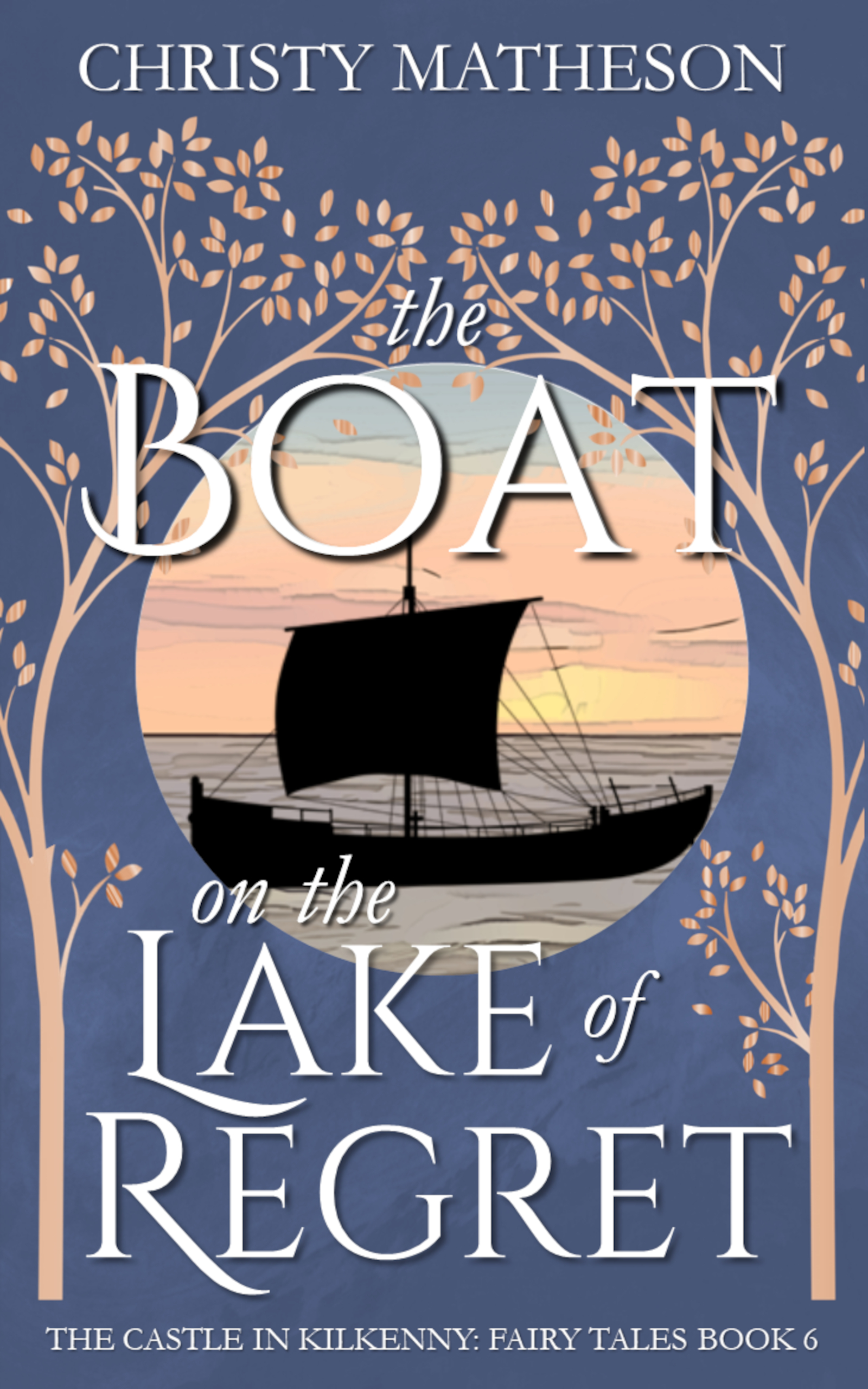
I’m delighted to welcome Chritsy Matheson and her book, The Boat on the Lake of Regret, The Castle in Kilkenny: Fairy Tales, to the blog with a snippet.
Snippet
Opening:
“Hannah!” Dylan calls. “Hannah?”
A shiver of worry runs up my spine. He never uses my real name.
“Here! I’m in the parlor!” Footsteps thunder down the hallway and Dylan bursts in. His hair is all mussed, his face is wild, and his jeans are in deplorable shape.
“What on earth happened? Come in and—”
“I’m fine. It’s yourself who needs to be careful.”
Fancy that, after barely making time for me for weeks, he bursts into my own home and orders me around!
He sees his mistake immediately. “I didn’t mean—look, I brought you this, Henny luv.”
Well, that’s a little better. He holds out his palm and I move close to look. He smells of campfire and sweat and rain, and I rest my hand on his arm just to feel the steady solid warmth of him.
“Oh, you didn’t have to buy me a ring! I’ve told you already that I’ll marry you, and we’re trying to save up.”
Despite my protests, the ring is lovely, and I reach for it, but Dylan closes his fist before I can touch it.
“It’s not that…I mean, of course we are. It’s just”—he takes my hand, his fingers cool and gentle—“there’s a whole story, but”—he slides the skin-warmed metal over my first knuckle—“first I want to —”
Here’s the Blurb
He has one last chance to be a fairy tale hero.
But she didn’t agree to be the damsel in distress.
When her longtime boyfriend unexpectedly slides a ring on her finger, Hannah is whisked from her everyday bedroom to a medieval ball. Hannah knew that Dylan would do anything to prove to her parents that he’s husband material, including going into the Fae world—but she never agreed to go through the Veil herself.
Now one of three princess sisters, Hannah is paired with now-Prince Dylan. But, homesick and blindsided, she pretends the Veil has wiped him from her memory.
As her prince scrambles in vain to be the right kind of hero, Hannah ignores her instincts and follows her new sisters onto a mysterious boat—which promptly sails them into a land of giants, magical traps, and enchanted pianos…and away from Dylan.
Read now to journey back to medieval Ireland, complete with the Fae and mythological monsters, in this fairy tale adventure and sweet “it was always you” romance.
Characters you connect with. Adventure. Love. Family… And endings that are more than a sugar rush.
When Christy Matheson is not throwing ordinary characters into fairy tales, she is busy raising five children. (Very busy.) She writes character-driven historical fiction with and without fantasy elements, and her “fresh, smart, and totally charming” stories have won multiple awards.
Christy is also an embroidery artist, classically trained pianist, and sews all of her own clothes. She lives in Oregon, on a country property that fondly reminds her of a Regency estate (except with a swing set instead of faux Greek ruins), with her husband, five children, three Shelties, one bunny, and an improbable quantity of art supplies.
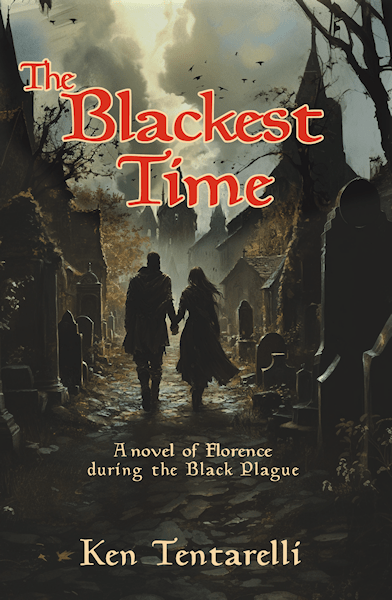
I’m delighted to welcome Ken Tentarelli and his new book, The Blackest Time, to the blog with an excerpt.
Excerpt
Parishioners rise up in anger when a priest declares the Black Plague a divine punishment fortheir sins
.Those attending the morning mass included families living in the parish, lumbermen who had been logging forests in the nearby hills, The lumbermen clustered together near the front of the church, close to the altar. They formed the single largest group. Everyone, Gino included, studied the people nearby, fearful someone close by might show symptoms of the sickness: flushed faces, lumps, or darkened areas on the neck or arms.
While waiting for mass to begin, Gino listened to snatches of conversation. Men raised their voices enough to speak with other men, probably neighbors with whom they had sat elbow-to-elbow in a crowded tavern months ago, and now wouldn’t get within an arm’s length of each other. Women felt it imprudent to speak above a whisper in church, so they merely smiled at each other across the void.
Gino heard some families were absent from mass because they were mourning the death of family members. In one family, it was said, both the mother and father had succumbed, leaving behind three youngsters. No one knew what had become of those children. Stories circulated of entire families having been claimed by the sickness. Most surprising were reports of families fleeing the city to escape the pestilence. For the past two years, people had streamed into Florence from the countryside to seek salvation from the famine. Did the departure of these families mark a turnaround, the beginning of an exodus?
Although the lumbermen were far from him, he sensed hostility in their guttural outbursts. Many had left wives and children in the city while they logged in the hills, so death rampaging unchecked though the city threatened their families and they reacted with anger. They wanted something more tangible than bad air—possibly someone—to blame for the misery.
A small bell sounded when the sacristy door opened, and a priest emerged, followed by two altarboys. When they reached the altar, the priest spread his upraised arms and delivered the opening blessing. Near the midpoint of the service, the priest stepped to the pulpit to deliver his sermon.“We are all God’s children,” he began. “God loves us … all of us. He wants us to love Him, to heed His word, and to obey Him. Our Lord would not cause His children to suffer without reason.” Shifting from a tempered tone, the priest boomed, “This pestilence has been inflicted upon us because we have offended Him. There can be no other explanation.”
Shaken by the indictment, people glanced furtively at those around them as if they were all co-conspirators in a plot against God. “What could we have done to deserve this punishment?” they asked themselves.
Pleased his words had stunned his flock as he had intended, he continued, “We have sinned against God, and only by ending our sinful ways can we expect Him to end this scourge. You may not be an adulterer or a fornicator, but ask yourself, are you committing the sins of envy and pride?”
One lumberman’s face reddened. He bellowed, “My wife was a good, holy, God-fearing woman. She committed no sin worthy of this damnation; yet she suffered a horrible death. She cannot beheld to account for this misery.”
The outcry froze everyone. The priest gripped the lectern so tightly his knuckles turned white; his fingernails dug into the wood. Another lumberman shouted, “My son was barely old enough to walk. He was an innocent child. What sin could he have committed? But he was struck down.”
Family groups moved farther away from the bellicose woodsmen, who began grumbling in support of their comrades. A third man called out, “I wear my best smock when I come to church.” He pointed to its threadbare sleeve and its soiled shoulder. “This is my best! Look at it !It’s frayed and spotted. How could anyone who dresses like this be accused of being prideful?
“Do you know who is prideful?” he asked and raised an arm angled toward the priest. “Thepriests! Look at them. They don’t wear frayed vestments. Before the new bishop came, the priests in this diocese wore plain linen vestments. But now, linen isn’t good enough for them. They all wear expensive silk.” The eyes of all the parishioners shifted to the priest.
The man continued, “The bishop refused to serve communion from a pewter chalice. Now all chalices in the diocese are silver … all except the one used by the bishop. His is gold.” He spread his arms wide. “My wife spends nights in the dark to preserve her lone candle, while this church and others are lit up like brothels.”
He swept his gaze around the church to make eye contact with everyone. “For two years, when rain destroyed the crops, we all struggled to find food for our families. Beggars starved in the streets. But do you know of any priest who went hungry? None of them went to sleep with pangs of hunger. They made sure their bellies were filled.”
“If this terrible disease has been unleashed upon us by the sin of pride, it is the bishop and his minions who brought it upon us.” He ended his tirade in a booming voice, saying, “We need to make the bishop stop his prideful ways and walk in the humble shoes of Saint Francis. I say we go to him now.” He strode the length of the nave and out the door, followed by the other lumbermen.
Here’s the Blurb
Set in the 1300s during the devastating black plague, The Blackest Time is a powerful tale of compassion, love, and the human spirit’s ability to endure immense adversity.
Gino, the central character, is a young man who leaves his family’s farm to find work in a pharmacy in Florence. His experiences show us how people coped in the most horrific time in history.
Shortly after Gino arrived in the city, two years of incessant rain destroyed crops in the countryside, leading to famine and despair in the city. Gino offers hope and help to the suffering— he secures shelter for a woman forced to leave her flooded farm, rescues a young girl orphaned by the plague, and aids others who have lost everything.
The rains had barely ended when the plague hit the city, exposing the true character of its people. While some blamed others for the devastation, the story focuses on the compassionate acts of neighbors helping each other overcome fear and suffering. Doctors bravely risk infection to care for their patients. A woman healer, wrongly accused of witchcraft and driven from the city, finds a new beginning in a village where her skills were appreciated.
Despite the hardships, love blossoms between Gino and a young woman he met at the apothecary. Together they survive, finding strength in each other and hope in a world teetering on the edge.
The Blackest Time is a testament to the strength of the human spirit in overcoming unimaginable tragedy.
Ken Tentarelli is a frequent visitor to Italy. In travels from the Alps to the southern coast of Sicily, he developed a love for its history and its people.
He has studied Italian culture and language in Rome and Perugia, background he used in his award-winning series of historical thrillers set in the Italian Renaissance. He has taught courses in Italian history spanning time from the Etruscans to the Renaissance, and he’s a strong advocate of libraries and has served as a trustee of his local library and officer of the library foundation.
When not traveling, Ken and his wife live in beautiful New Hampshire.
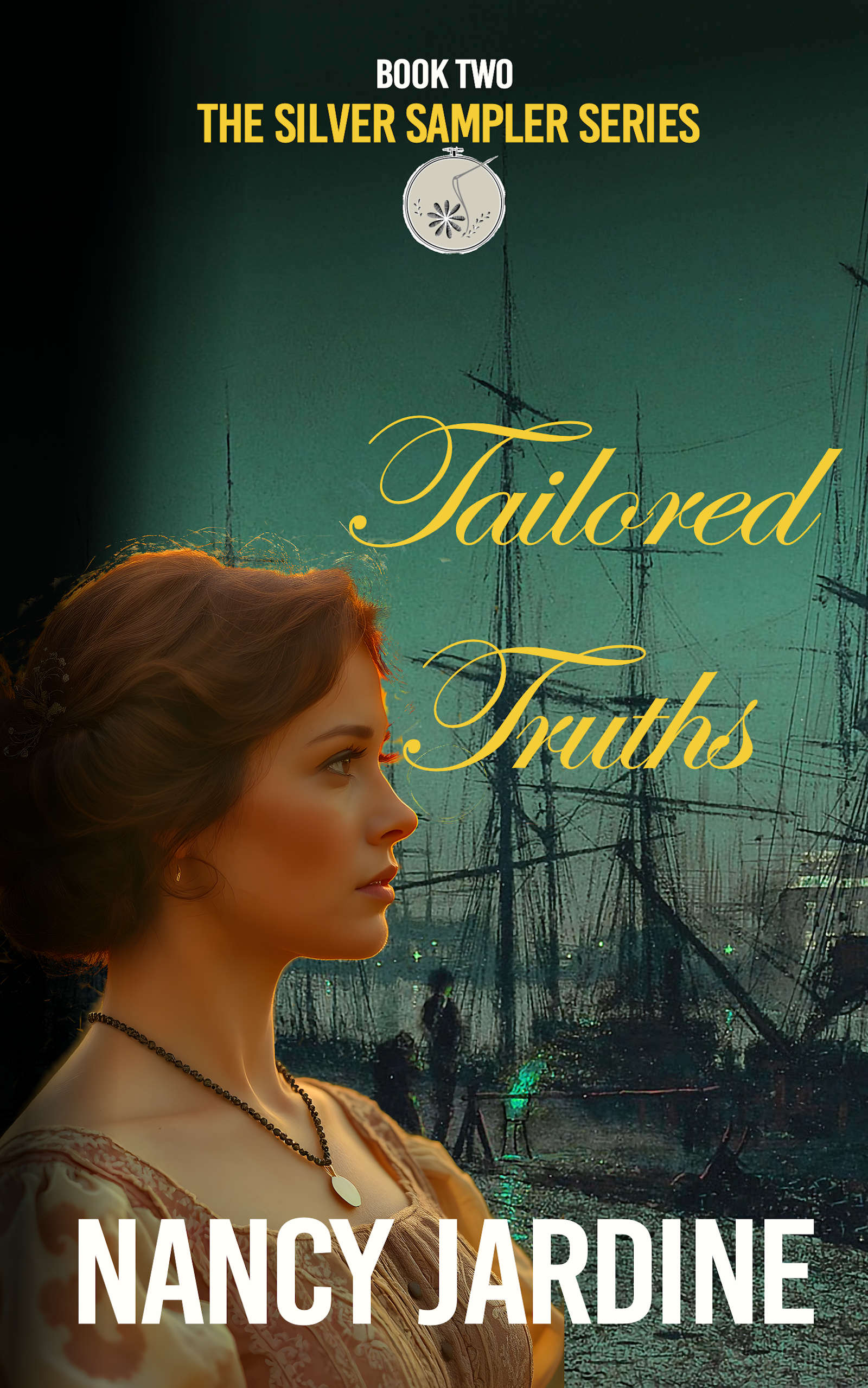
I’m delighted to welcome Nancy Jardine and her new book, Tailored Truths, Book 2 in the Silver Sampler Series, to the blog with a guest post.
Guest Post – Mill Owner Benevolence
My character, Margaret, has a variety of jobs in Tailored Truths. Two of them are in different areas of one of the larger mills in Dundee (Scotland). The time period covered in the book is between 1855 and 1868 when Dundee mills were, at times, highly profitable though the situation was also volatile, markets and sales being unpredictable. Workers were hired when high production was needed and they lost their jobs when things weren’t so rosy in the world markets. Margaret finds herself lucky to have a job when she desperately needs one, even if it pays a pittance!
During the earlier part of the 19th Century, linen was the prime mill product in the Dundee area. Coarse linen weave was highly sought after for sailcloth; for canvas sacks and bags for transporting goods; and a coarse linen weave named Osnaburg was produced for sending to the American plantations to be made into rough clothing for slaves. The main drawback, however, was that the flax (raw product) tended to come from Baltic states. When Britain became embroiled in the Crimean War, between 1853-1856, the flax supplies from the Russian Baltic states were deemed as potentially unreliable. The larger mill owners in Dundee tended to work on a ‘six months’ system where supplies were ordered well in advance, since shipping from the Baltic also relied on an annual short-window of weather good enough for sailing ships. Not having continuous raw supplies presented a huge problem since linen was highly sought after during the Crimean War. The war office bought lots of linen products, the British army and navy requiring constant supplies and replacements to sails; uniforms; sacks; tents etc. Market prices fluctuated but some of the Dundee mills profited very well during the Crimean War, though there were the much leaner years afterwards when the War Office requisitions dwindled.
To offset potential losses from a lack of flax, some of those larger mill owners in Dundee turned to producing jute weaves. Jute wasn’t a new product around Dundee, since some of the smaller weavers had already been producing jute products for decades, but the profit margin for them was low. Initially, the raw jute was grown in Bengal (India) and shipped to Dundee via local Indian dealers but when the larger mill owners saw jute as being profitable they organised the shipping themselves.
The tradition in Bengal had been for jute products to be hand-woven. There were no powered-looms nor any steam machinery in Bengal for spinning and weaving till later in the 1850s and 1860s, so there was no real competition when the big Dundee mills began jute mass production.
The raw jute needed to be softened first before carding and spinning could happen. Whale oil was already known to be a good product for that process and it was highly convenient that the quaysides at Dundee were regularly frequented by the huge whaling ships.
Some of the mill owners weathered the unpredictable markets very well and their bank accounts swelled enormously. Many of them chose to use their wealth to build new mansions for their families in the nearby coastal town of Broughty, or around the city of Dundee. In doing this, they provided much needed construction jobs, and then jobs for inside and outside staff. I used this situation in Tailored Truths, giving Margaret a taste of the high-life when she is taken on as a lady’s maid in one of the new mansions. The ‘family’ are naturally only on the periphery of high society, with Margaret experiencing it from the point of view as an elevated servant, but her situation means a glimpse into how the nouveaux riche of Dundee were living.
Some of the Dundee mill owners took opportunities to use some of their wealth for the benefit of the citizens of Dundee. Whether this was true altruism, or expected of them, could be debated at length but the facts are that some public buildings and facilities would not have been built so readily without hefty donations coming from the mill owners. Some of the still-existing public parks in Dundee came about from extensive donations, Baxter Park being a fine example. The land was acquired, planted up and turned into beautiful walkways for the working people of Dundee to enjoy when freed from their long hours of work. Baxter Park also has a very fine pavilion, currently used as a multi-purpose venue with a tiny daytime café. One of the marvellous aspects of the sandstone pavilion in Baxter Park, designed by Sir Joseph Paxton – a renowned architect and landscaper – is the grand rooftop balustrade. There is a fantastic view from there of the River Tay and the far bank of Fife. When the park was newly planted the view would have been much better than today. It’s still very good since the whole park site is ‘up-the-hill’ from the harbourside but today some of the original and very mature trees, and modern housing slightly obscure the views.
I couldn’t resist adding in a scene where Margaret meets some very handsome lads in my fictitious Baxton park. It didn’t feel authentic to give my Dundee mill family the genuine name of Baxter, but I chose something very close. My fictitious Mister Baxton is, in his own way, remotely instrumental in Margaret’s progress through her late teenage years and into her twenties. How?…Too many spoilers ruin the book (Shh.. I just made that up!)
Here’s the Blurb
An engrossing Victorian Scotland Saga (Silver Sampler Series Book 2)
Is self-supporting success enough for Margaret Law or will her future also include an adoring husband and children? She might secretly yearn for that though how can she avoid a repeat of relationship deceptions that disenchanted her so much during her teenage years?
Employment as a lady’s maid, and then as a private tutor in Liverpool in the 1860s bring thrilling opportunities Margaret could never have envisaged. Though when those posts end, her educational aspirations must be shelved again. Reliance on her sewing skills is paramount for survival when she returns to Dundee.
Meeting Sandy Watson means love, marriage and starting a family – though not necessarily in that order – are a striking development though it entails a move north to Peterhead. Yet, how can Margaret shed her fear of commitment and her independence and take the plunge?
Jessie, her sister-at-heart, is settled in Glasgow. Frequent letters are a life-line between them but when it all goes horribly wrong, the contents of Margaret’s correspondence don’t necessarily mirror her awful day-to-day realities.
This title is available to read on #KindleUnlimited
Meet the Author
Nancy Jardine writes historical adventure fiction, historical saga, time travel historical adventure and contemporary mysteries. Research, grandchildren, gardening fill up her day in the castle country of Aberdeenshire, Scotland, when not writing or promoting her writing. Interacting with readers is a joy at Book and Craft Fairs where she signs/sells paperback versions of her novels. She enjoys giving author presentations on her books and on Ancient Roman Scotland.
Memberships include: Historical Novel Society; Scottish Association of Writers, Federation of Writers Scotland, Romantic Novelists’ Association and the Alliance of Independent Authors. She’s self-published with Ocelot Press.
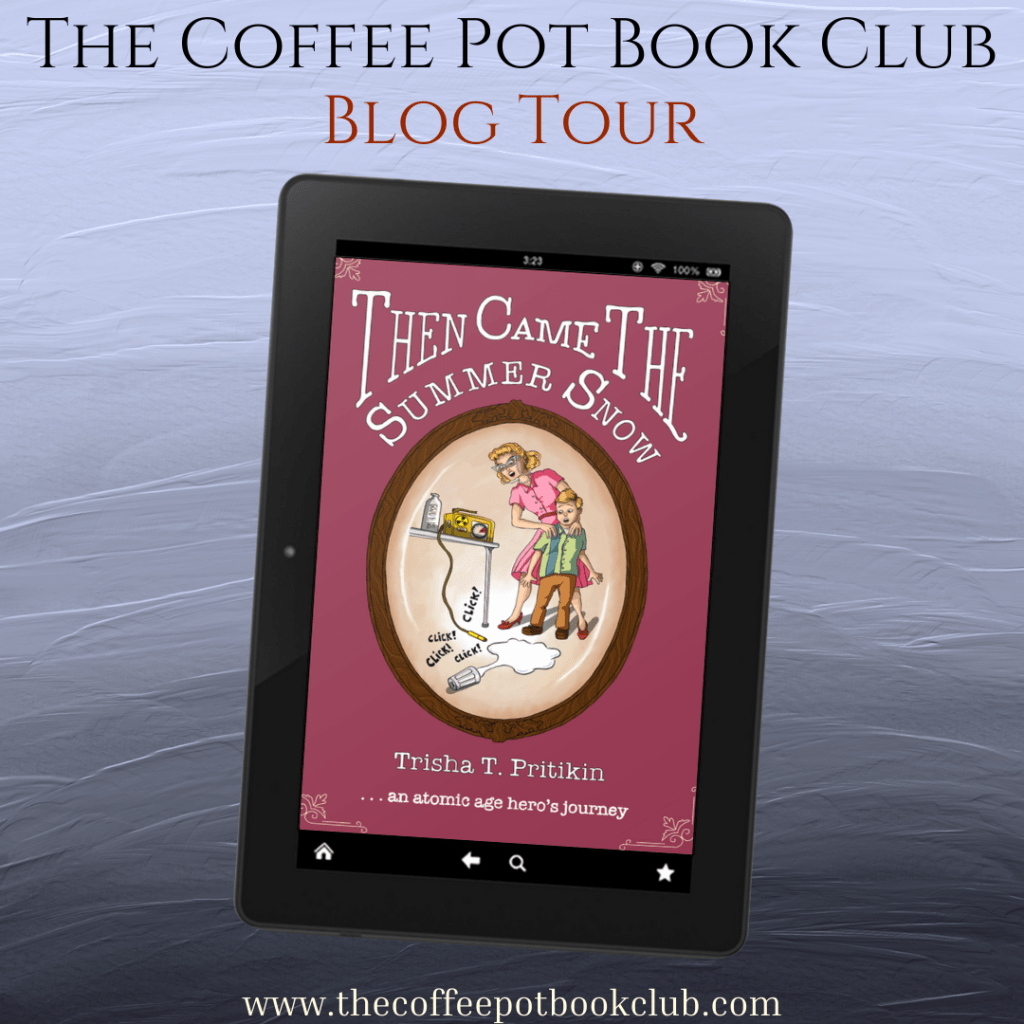
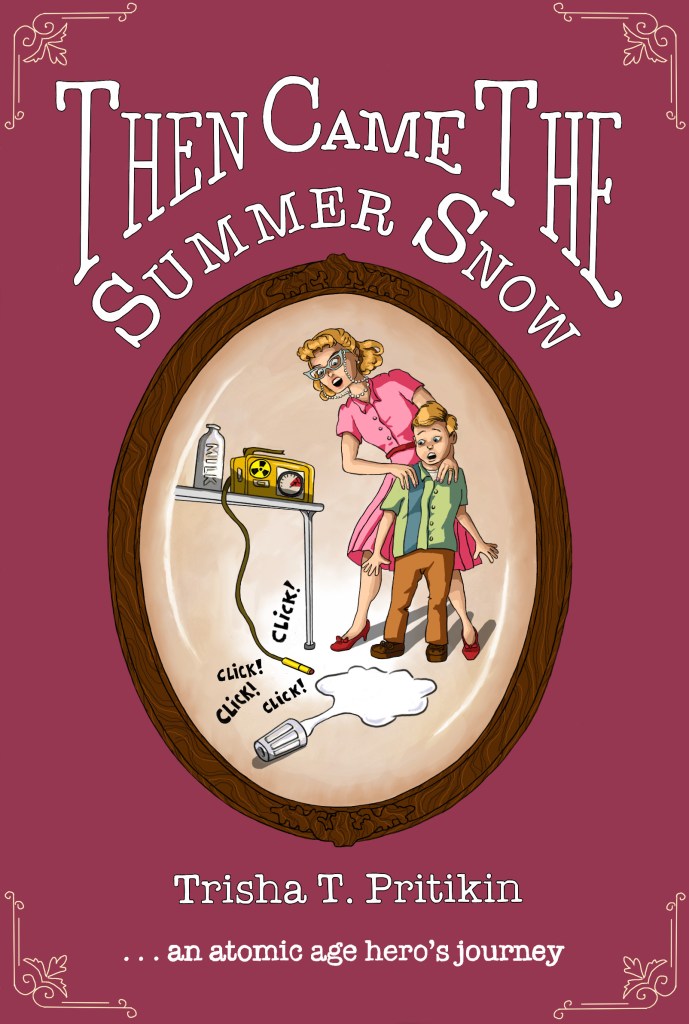
I’m welcoming Then Came The Summer Snow by Trisha T Pritikin to the blog #HistoricalFiction #Downwinders #AtomicJustice #1950s #BlogTour #TheCoffeePotBookClub
Here’s the blurb
In 1958, Edith Higgenbothum, a housewife in Richland, Washington, downwind of the massive Hanford nuclear weapons production site, discovers that the milk her young son Herbie drinks contains radioactive iodine from Hanford’s secret fallout releases. Radioactive iodine can damage the thyroid, especially in children.
When Herbie is diagnosed with aggressive thyroid cancer, Edith allies with mothers of children with thyroid cancer and leukemia in communities blanketed by fallout from Nevada Test Site A-bomb tests on a true atomic age hero’s journey to save the children.
Praise for Then Came the Summer Snow:
“In Trisha Pritikin’s crisp and sweeping novel, the Cold War comes home to live with a family in Richland, Washington. Not the Cold War of ideologies, but the one that included 2,000+ nuclear tests, and the production of hundreds of tons of plutonium; that contaminated our homes, food and communities; that actually took family members.”
~ Robert “Bo” Jacobs, Emeritus Professor of History at the Hiroshima Peace Institute and Hiroshima City University, author of Nuclear Bodies: The Global Hibakusha (Yale 2022).
“Then Came the Summer Snow is like an unexpected gift in its surprise and freshness. Absurdity informs its realism, its poignancy, and its humor. A troubling, hilarious, weird, and wonderful novel.”
~ Mark Spencer, author of An Untimely Frost
Triggers: misogynist culture of 1950s; no violence, but cancers in children are a focus, and thyroid cancer treatment.
This title is available to read on #KindleUnlimited.
Meet the author
Trisha is an internationally known advocate for fallout-exposed populations downwind of nuclear weapons production and testing sites. She is an attorney and former occupational therapist.
Trisha was born and raised in Richland, the government-owned atomic town closest to the Hanford nuclear weapons production facility in southeastern Washington State. Hanford manufactured the plutonium used in the Trinity Test, the world’s first test of an atomic bomb, detonated July 16,1945 at Alamogordo, NM, and for Fat Man, the plutonium bomb that decimated Nagasaki on August 9, 1945. Beginning in late 1944, and for more than forty years thereafter, Hanford operators secretly released millions of curies of radioactive byproducts into the air and to the waters of the Columbia River, exposing civilians downwind and downriver. Hanford’s airborne radiation spread across eastern Washington, northern Oregon, Idaho, Western Montana, and entered British Columbia.
Trisha suffers from significant thyroid damage, hypoparathyroidism, and other disabling health issues caused by exposure to Hanford’s fallout in utero and during childhood. Infants and children are especially susceptible to the damaging effects of radiation exposure.
Trisha’s first book, The Hanford Plaintiffs: Voices from the Fight for Atomic Justice, published in 2020 by the University Press of Kansas, has won multiple awards, including San Francisco Book Festival, 1st place (history); Nautilus Silver award (journalism and investigative reporting); American Book Fest Book Awards Finalist (US History); Eric Hoffer Awards, Shortlist Grand Prize Finalist; and Chanticleer International Book Awards, 1st Place, (longform journalism). The Hanford Plaintiffs was released in Japanese in 2023 by Akashi Shoten Publishing House, Tokyo.
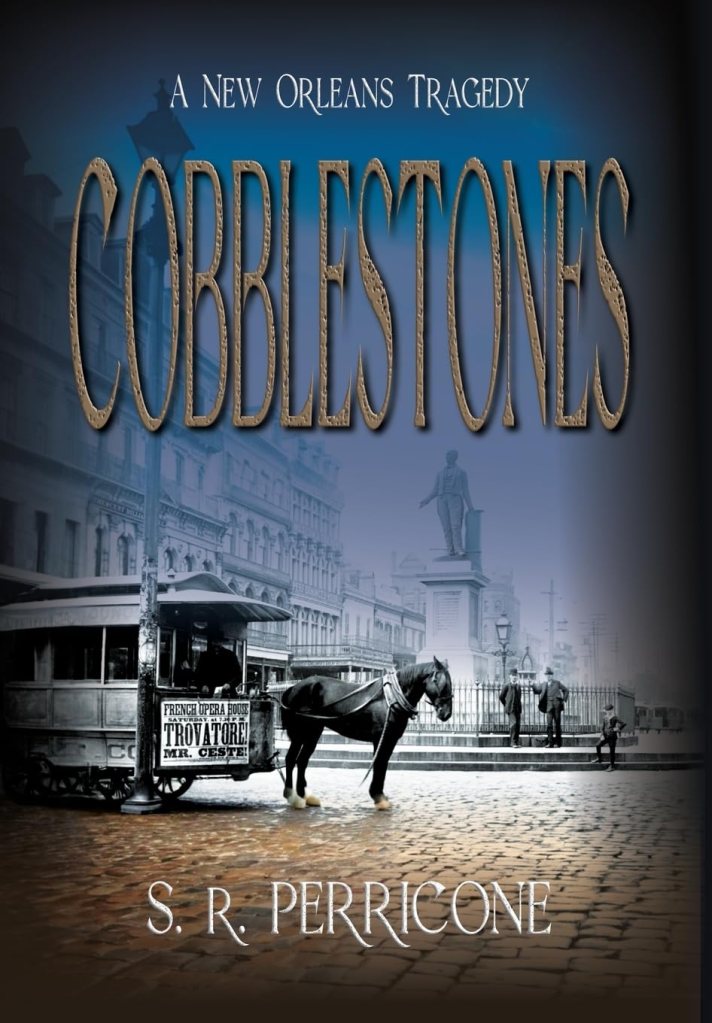
I’m welcoming SR Perricone to the blog with Cobblestones #HistoricalFiction #NewOrleans #TrueEvents #TheCoffeePotBookClub #BlogTour @cathiedunn
@thecoffeepotbookclub
Excerpt
An editorial from the newspaper introduced the letter. It read:
THE PROVENZANO-MATRANGA CASE.
We have very much pleasure in publishing the letter which here follows. In the first place, such a document, with such names attached to it, holds out a strong prospect that, as the frequent undetected assassinations among the Italian community in New Orleans find no manner of sympathy with a large portion of that community, they will in the course of a few years be stamped out altogether for want of moral support. And in the next place, the contents of the letter are calculated to strengthen the hands of the prosecution, and to stiffen the backbone of the witnesses who will be called to give evidence in the Provenzano-Matranga case, which opens today. This is the letter:
New Orleans, July 14, 1890
To the Editor of the Times-Democrat:
For a reason appreciated by the entire community we have heretofore been reticent with respect to the numerous assassinations charged to our countrymen. But we trust that, with the help of the intelligent and independent press of this city, we may be able to stamp out forever the horrible scenes of cold-blooded murder which are charged against our entire people, under the delusion that we all favor a settlement of troubles through the vendetta.
We desire to place ourselves on record as friends of peace and order, and without meaning to prejudice the case now on trial we trust sincerely that the witnesses will speak, and that those, whoever they many be, who have taken part in this midnight assassination may be tried and, after legal conviction, sternly punished.
Here’s the blurb
The turbulent history of Post-Reconstruction New Orleans collides with the plight of Sicilian immigrants seeking refuge in America.
Antonio, a young man fleeing Sicily after avenging his father’s murder, embarks on a harrowing journey to New Orleans with the help of Jesuit priests expelled from his homeland. However, the promise of a fresh start quickly sours as Antonio becomes entangled in a volatile clash of cultures, corruption, and crime.
In the late 19th century, Italian immigrants in New Orleans faced hostility, exploitation, and a brutal system of indentured servitude. Antonio becomes a witness to history as a bitter feud over the docks spirals into violence, culminating in the assassination of Irish police chief David C. Hennessy. The ensuing trial of nine Italians and the shocking lynching of eleven innocent men ignited international outrage, threatening to sever ties between the United States and Italy.
Caught in the crossfire of prejudice and power struggles, Antonio fights to survive while grappling with his own past and future. His journey weaves a gripping tale of resilience, betrayal, and the enduring hope for justice. Cobblestones: A New Orleans Tragedy is a poignant reminder of the human cost of intolerance and the courage it takes to rebuild a life from ashes.
“A phenomenal epic account of a forgotten slice of New Orleans history for fans of Scorsese / Coppola-type cinematic dramas such as Midnight Vendetta and The Godfather!” ~ HFC Reviews
Sal Perricone, a graduate of Loyola University of New Orleans with a BA (1975) and JD (1979), has dedicated his career to law enforcement, legal practice, and public service. Beginning as a sergeant with the Jefferson Parish Sheriff’s Department, he progressed to detective with the New Orleans Police Department before practicing law privately in New Orleans. In 1985, he joined the Federal Bureau of Investigation as a Supervisory Special Agent, specializing in financial crime investigations and organized crime.
In 1991, Sal Perricone transitioned to the U.S. Attorney’s Office for the Eastern District of Louisiana, where he served as Chief of the Organized Crime Strike Force and Senior Litigation Counsel until retiring in 2012. Over his illustrious career, he prosecuted significant cases involving La Cosa Nostra, public corruption, and white-collar crime. He earned numerous accolades, including multiple Director’s Awards and the Attorney General’s Award for his role in establishing the Katrina Fraud Task Force.
An adjunct professor at Tulane University and the University of New Orleans, Sal Perricone has trained law enforcement professionals across the nation. Post-retirement, he has authored two novels with positive Catholic themes, Blue Steel Crucifix and The Shadows of Nazareth. A Brother Martin alumnus, he continues to inspire with his dedication to justice and ethics.
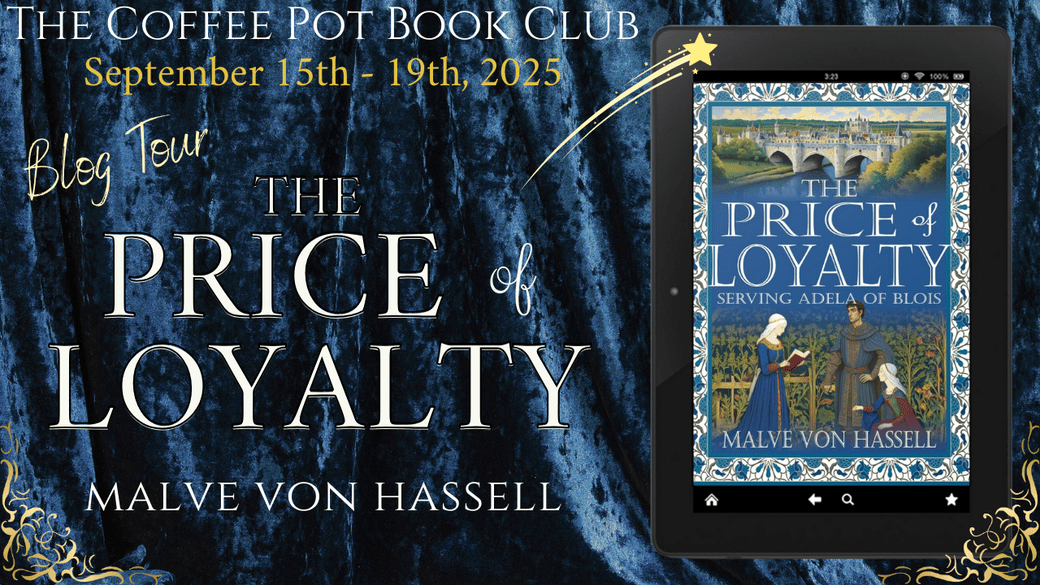
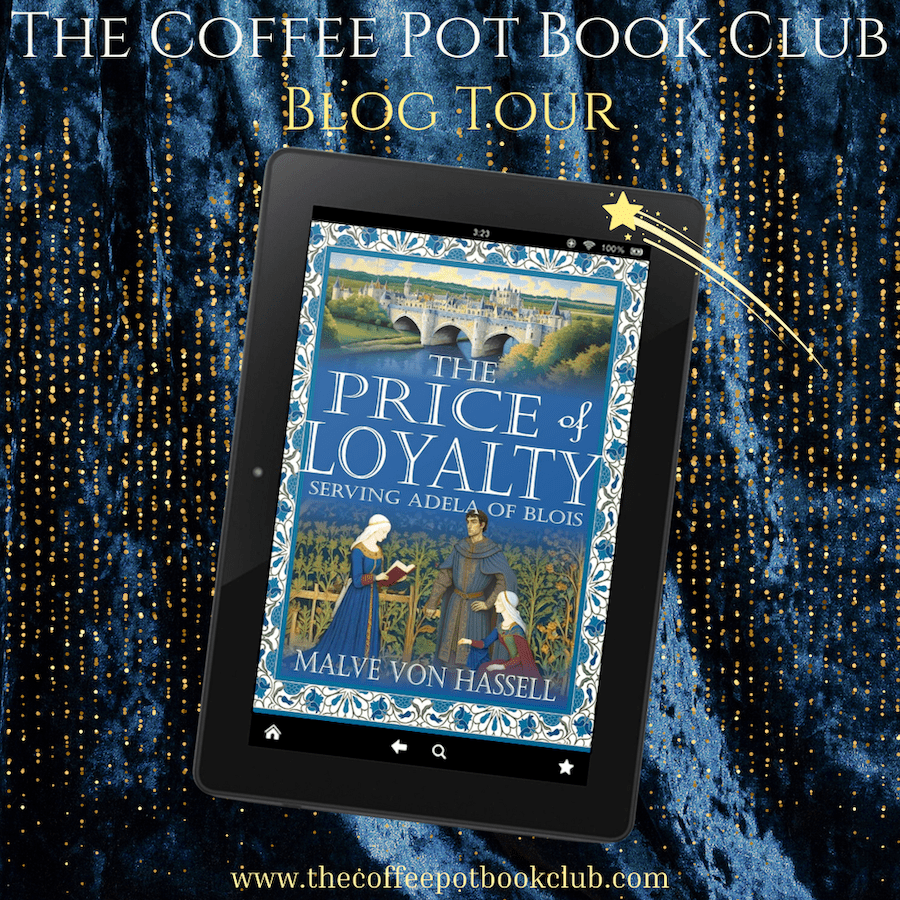
I’m delighted to welcome Malve von Hassell and her new book, The Price of Loyalty, to the blog #HistoricalFiction #medieval #France #crusades #AdelaofBlois #WilliamtheConqueror #StephenHenrydeBlois #BlogTour #TheCoffeePotBookClub
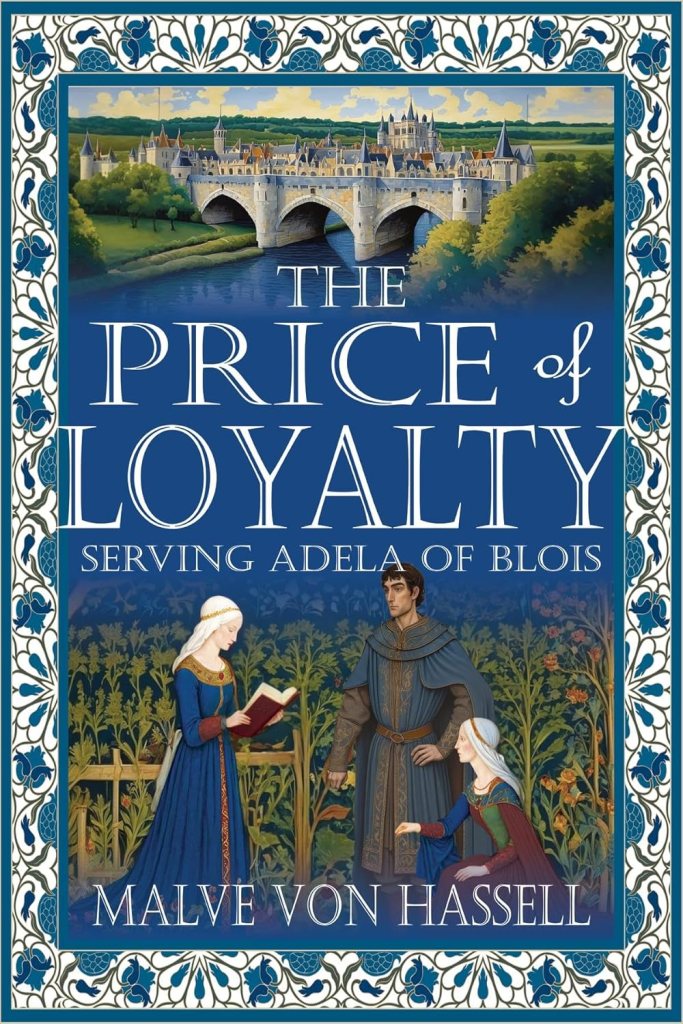
I’m delighted to welcome Malve Von Hassell and her new book, The Price of Loyalty: Serving Adela Bois, to the blog with an excerpt.
Excerpt
Caught In The Snare
1103 Caen
“But, my lady, any of your knights could do this.”
Cerdic had never yet been so frustrated and angry. Adela wanted him to take her son Theobald to her brother-in-law Hugh of Troyes. And she had mentioned another unspecified task. Certainly, she was a widow, and she needed friends around her whom she could trust. But she had other advisors, and for an errand like this, she surely could find someone else. Was he going to be at her back and call indefinitely?
“Theobald has known you all his life. It would be good for him to spend time with you. It has not been easy for him and his brothers.” Adela avoided his eyes. “My brother-in-law is a good man and the right person to take charge of a growing boy, especially now that he has lost his father. Moreover, Hugh and his wife Constance haven’t been blessed with children. Theobald is his heir designate. It is time that Theobald learns everything he needs to know for his future station and duties in life.”
Cerdic stared at her, at a loss for words.
“I can’t and don’t want to ask anybody else. I trust you.”
Cerdic bowed. In truth, he could hardly go on protesting.
Several weeks later, he was back on the road in the company of a surly twelve-year-old boy. For the first hour, they rode in silence. It was early December, and the first hoar frost had turned everything dull and brown. They had to ride north and west toward Troyes; Champagne was a large county, and it would take them about two days.
Theobald had bowed to his mother and ducked out of her embrace. He had mounted his horse without acknowledging Cerdic. He was slender and fine-boned; it didn’t look as if he would have his father’s sturdy build as an adult. His curly hair peeking out underneath his woolen cap was dark brown, not the reddish hue of his grandfather and his uncles. He rode with his head bent and his shoulders hunched.
Guisbert was ten, Cerdic thought with a pang, not much younger than this boy. Would he even recognize his father?
The first words they exchanged were when Cerdic’s horse started limping, and Cerdic had to stop to check the hooves. A stone had worked its way underneath one shoe. Fortunately, Cerdic could pick it out.
“Tell you what.” Cerdic straightened up. The boy’s expression was sullen and slightly hostile. “I don’t trust this shoe, and I don’t want the bay to go lame on me. Let’s walk for a bit. The next village isn’t too far from here, and we’ll find a blacksmith there.”
So they walked, leading the horses. “What are the roads like in the Holy Land?” Theobald asked after a while.
Cerdic didn’t think that the boy really cared about the roads, but it was an opening. “Would you believe it? Some are a lot better than the roads here. Others again are nothing but sand and rocks.”
Theobald was silent. They continued walking.
Then Theobald cleared his throat. “You were with my father, weren’t you?”
“Yes, I was,” Cerdic responded cautiously. “What did your mother tell you?”
“Nothing.” The boy jerked on his horse’s rein so that the surprised animal flung his head up and snorted. “Sorry,” Theobald whispered to the horse. “My mother told me nothing other than that he’s dead. I can’t talk to her about it.”
Cerdic frowned, inwardly cursing Adela. So, that’s why she sent him on this journey.
Here’s the Blurb
In a time of kingdoms and crusades, one man’s heart is the battlefield.
Cerdic, a Saxon knight, serves Count Stephen-Henry of Blois with unwavering loyalty-yet his soul remains divided. Haunted by memories of England, the land of his childhood, and bound by duty to King William, the conqueror who once showed him mercy, Cerdic walks a dangerous line between past and present, longing and loyalty.
At the center of his turmoil stands Adela-daughter of a king, wife of a count, and the first to offer him friendship in a foreign land. But when a political marriage binds him to the spirited and determined Giselle, Cerdic’s world turns again. Giselle, fiercely in love with her stoic husband, follows him across sea and sand to the holy land, hoping to win the heart that still lingers elsewhere.
As the clash of empires looms and a crusade threatens to tear everything apart, Cerdic must confront the deepest truth of all-where does his loyalty lie, and whom does his heart truly belong to?
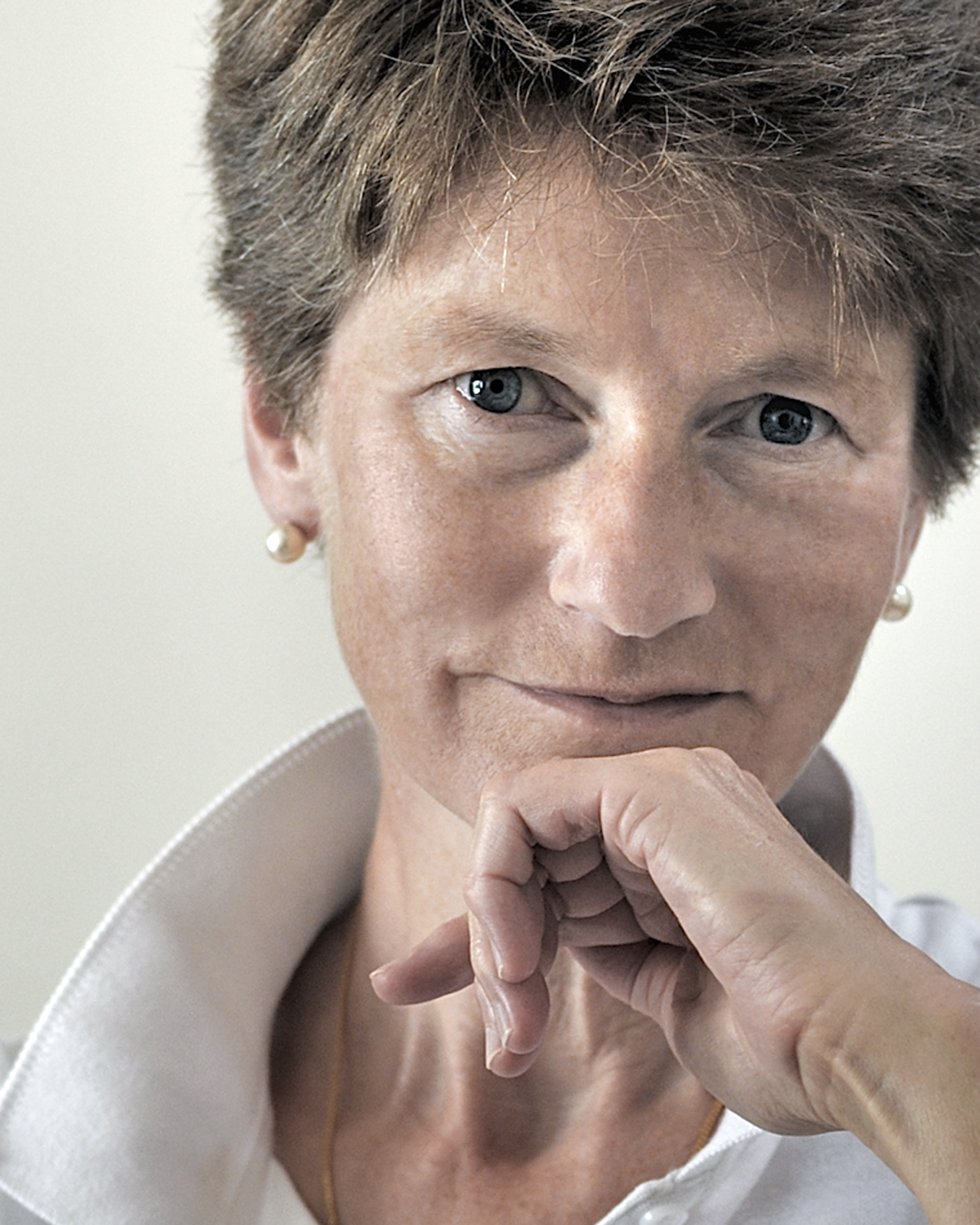
Malve von Hassell is a freelance writer, researcher, and translator. She holds a Ph.D. in anthropology from the New School for Social Research. Working as an independent scholar, she published The Struggle for Eden: Community Gardens in New York City (Bergin & Garvey 2002) and Homesteading in New York City 1978-1993: The Divided Heart of Loisaida (Bergin & Garvey 1996). She has also edited her grandfather Ulrich von Hassell’s memoirs written in prison in 1944, Der Kreis schließt sich – Aufzeichnungen aus der Haft 1944 (Propylaen Verlag 1994).
Malve has taught at Queens College, Baruch College, Pace University, and Suffolk County Community College, while continuing her work as a translator and writer. She has published two children’s picture books, Tooth Fairy (Amazon KDP 2012 / 2020), and Turtle Crossing (Amazon KDP 2023), and her translation and annotation of a German children’s classic by Tamara Ramsay, Rennefarre: Dott’s Wonderful Travels and Adventures (Two Harbors Press, 2012).
The Falconer’s Apprentice (namelos, 2015 / KDP 2024) was her first historical fiction novel for young adults. She has published Alina: A Song for the Telling (BHC Press, 2020), set in Jerusalem in the time of the crusades, and The Amber Crane (Odyssey Books, 2021), set in Germany in 1645 and 1945, as well as a biographical work about a woman coming of age in Nazi Germany, Tapestryof My Mother’s Life: Stories, Fragments, and Silences (Next Chapter Publishing, 2021), also available in German, Bildteppich Eines Lebens: Erzählungen Meiner Mutter, Fragmente Und Schweigen (Next Chapter Publishing, 2022).
Her latest publication is the historical fiction novel, The Price of Loyalty: Serving Adela of Blois (Historium Press, 2025).
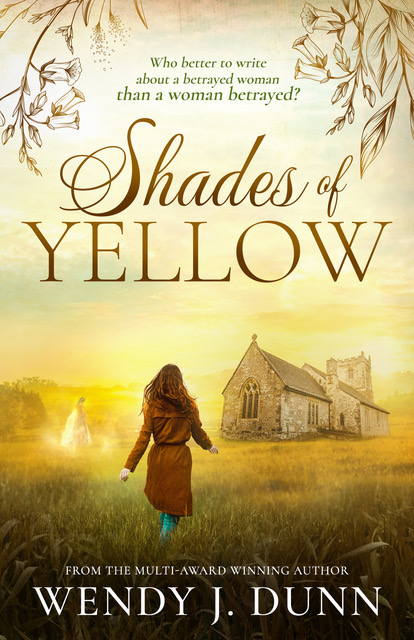
I’m delighted to welcome Wendy J Dunn to the blog with her new book Shades of Yellow ShadesOfYellow #Forgiveness #AmyRobsard #WomensFiction #DualTimeline #Romance #BlogTour #TheCoffeePotBookClub
What is the history behind Shades of Yellow?
There is a lot of history behind my novel — some of it expected and some of it more surprising. I always knew my character would be writing a novel about Amy Robsart. I love the Tudor period, so it made sense that my character would also share that love. It also made sense Lucy, as a breast cancer survivor, would also be drawn to the story of Amy Robsart. Some historians believe Amy Robsart had breast cancer, which led to the theory that her fall down a short flight of stairs resulted in a spontaneous spinal fracture because of bone metastasis. So, that meant I (and my character) had to research the life and times of Amy Robsart.
Amy was the first wife of Robert Dudley, the man who came closest to marrying Elizabeth Tudor. Amy was born in 1532, and met Robert when he accompanied his father, John Dudley, then the Earl of Warwick to deal with the Kett rebellion in 1549. Amy came from a wealthy family with good bloodlines. More importantly, she was her father’s heir. She was also pretty, pretty enough to catch Robert Dudley’s eye. They were also almost the same age. Robert’s father probably wanted a better match for his son, but he also had other sons. Robert was also not his heir, so when Robert and Amy fell in love (and it appears they fell in love), their parents agreed to their marriage in 1550 when they were around eighteen.
Amy married Robert while his father was solidifying his position as the actual power behind Edward VI’s throne. The first years of Robert and Amy’s marriage saw a fairly settled period for the Tudors. But then Edward VI died, and John Dudley failed to place Lady Jane Grey onto the throne. Mary Tudor claimed the crown, and Dudley soon lost his head at the Tower of London, and Mary imprisoned all his sons in the Tower. The following year, Lady Jane Grey and her husband Guildford were executed after another failed rebellion. For close to two years, Robert and his remaining brothers stayed in the Tower. His older brother died just days after their release. Another brother died while fighting in a war for Mary’s husband, Philip of Spain. By the time Elizabeth becomes Queen, Robert and Amy were living mostly separate lives. Robert and Elizabeth acted like lovers in the early years of Elizabeth’s reign – and caused a lot of scandal. The day after Elizabeth celebrated her twenty-seventh birthday, Amy was found dead at the bottom of a flight of stairs at Cumnor House, her neck broken. No one has ever solved the mystery of Amy Dudley’s death, and her husband Robert never escaped the suspicion that he organised her murder.
But most of my story takes place in 2010. While writing Shades of Yellow, I realised how long ago that now is. It was a different world in 2010. I ended up doing as much research about 2010 as I was doing about Amy’s life in Tudor times. I realised that Lucy’s life would have shaped her differently if she had been born around 1980 compared to 1996. She also would have had a few more life-changing options regarding her medical treatment if I had set the story in 2025.
By the time I finished Shades of Yellow, I had realised, with surprise, that history informed the entirety of my novel.
Here’s the blurb
During her battle with illness, Lucy Ellis found solace in writing a novel about the mysterious death of Amy Robsart, the first wife of Robert Dudley, the man who came close to marrying Elizabeth I. As Lucy delves into Amy’s story, she also navigates the aftermath of her own experience that brought her close to death and the collapse of her marriage.
After taking leave from her teaching job to complete her novel, Lucy falls ill again. Fearing she will die before she finishes her book, she flees to England to solve the mystery of Amy Robsart’s death.
Can she find the strength to confront her past, forgive the man who broke her heart, and take control of her own destiny?
Who better to write about a betrayed woman than a woman betrayed?
This title is available to read on #KindleUnlimited.
Meet the author
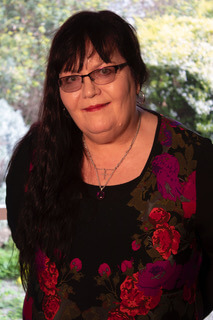
WENDY J. DUNN is a multi-award-winning Australian writer fascinated by Tudor history – so much so she was not surprised to discover a family connection to the Tudors, not long after the publication of Dear Heart, How Like You This, her first Anne Boleyn novel, which narrated the Anne Boleyn story through the eyes of Sir Thomas Wyatt, the elder.
Her family tree reveals the intriguing fact that one of her ancestral families – possibly over three generations – had purchased land from both the Boleyn and Wyatt families to build up their holdings. It seems very likely Wendy’s ancestors knew the Wyatts and Boleyns personally.
Wendy gained her PhD in 2014 and tutors in writing at Swinburne University of Technology, Australia. She loves walking in the footsteps of the historical people she gives voice to in her books.











































 MJ Porter