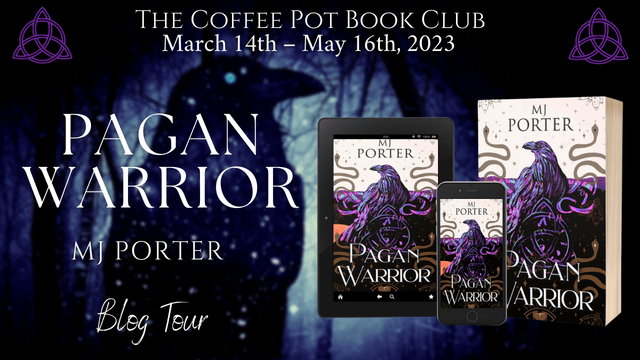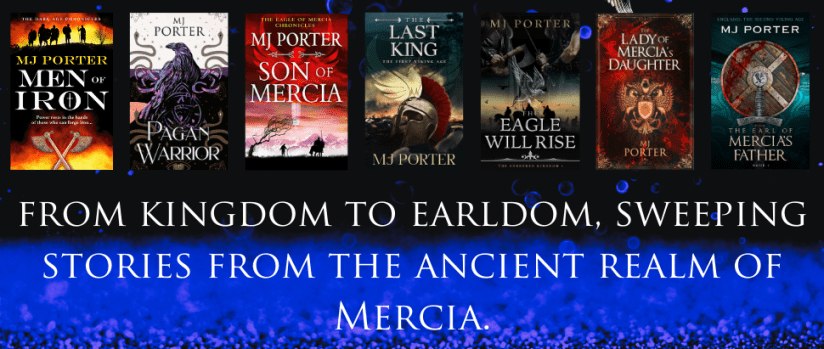
It’s the final day of the Pagan Warrior blog tour with The Coffee Pot Book Club, and to celebrate I am running a competition to win a signed set of the trilogy in paperback.
To enter, either sign up for my newsletter here (and receive a free short story set after the events of the trilogy), or if you’ve already signed up, drop me a quick email (mjporterauthor@gmail.com), and let me know you want to enter the competition. I will post worldwide and the competition will run until May 19th 2023, at which point, I will contact the winner, and announce them (if they are happy for me to do so) on my social media channels. Good luck everyone.
Pagan Warrior is the story of the battle of Hædfeld, fought in the seventh century between the Northumbrians, and you got it, the Mercians – or rather, Cadwallon of Gwynedd but with Penda of Mercia as his firm ally. You can find more details here.
A quick shout out to thank all the blog hosts and Cathie at The Coffee Pot Book Club for organising.
For May 16th, check out a review for Pagan Warrior on
And, the post that perhaps gave me the most fear to begin will but which was fun when I remembered all the little details, five fun facts about writing the trilogy.
For March 21st check out a post about two of the royal residences of Bernicia at the time, Bamburgh and Ad Gefrin (Yeavering). (There are lots of photos, thank you to Helen Hollick for uploading them all).
Briony and Tom, both in their twenties, are very different characters. But opposites attract. In business, as in love, they complement each other.
They buy a farm and discover a rare drug. Tom grows it and Briony markets it. At first, they are oblivious of their responsibilities to the land and its people. But gradually they realise that they have been supporting a racist and colonialist regime.
The onset of the Rhodesian – Zimbabwean War of Independence tears at the couple’s relationship. Misunderstandings arise from their conflicting personalities and from external pressures. Events pull them apart, but also bind them together.
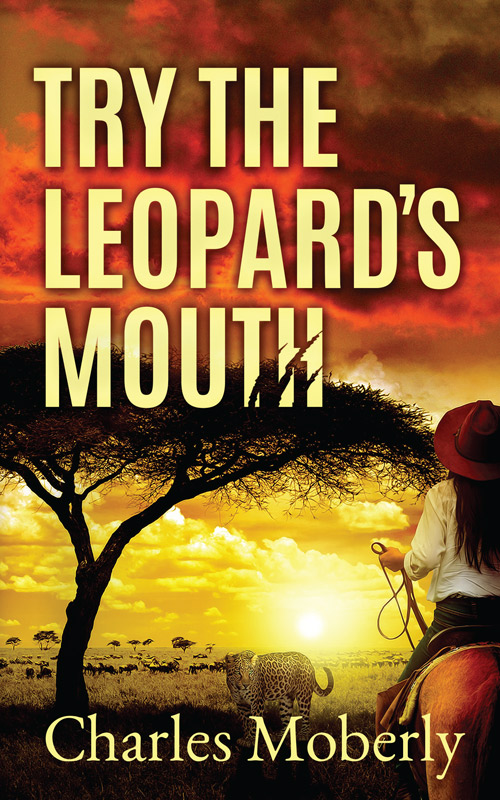
Try the Leopard’s Mouth is a romantic thriller set in Africa. It is also a historical novel, grounded in real events in the period 1970-80.
Buy Links
This title is available to read on #KindleUnlimited.
Charles Moberly has written three novels to date: The Scrotum Toad, a satirical comedy (Winner of a Chill with a Book Reader Award); The Corncrake, a historical novel set in 1909-10 and 1914-15 (Winner of a Chill with a Book Premier Award).
In The Corncrake, four members of a family share the narration, which passes between them approximately 300 times throughout – this powerful technique allows the reader to enter the minds of the characters as they react to events, so that love, conflicts and misunderstandings are conveyed immediately. This is only possible if the voices of the characters are so strong that they are identifiable the moment they speak.
Try the Leopard’s Mouth is a romantic thriller with a firm historical base.
Charles lived and worked in Africa for two years, which explains why two of his novels are set there.
In his writing, he loves tension and how cultural differences can tear people apart, yet unite them through a common humanity. He believes that no two characters should ever have the same voice. He writes in the vernacular of the time and place, using slang where appropriate.
I’m delighted to welcome Amy Maroney to the blog. I always love to hear about the historical research for author’s novels. So here we go.
Uncovering the story of Queen Charlotta of Cyprus, a forgotten heroine
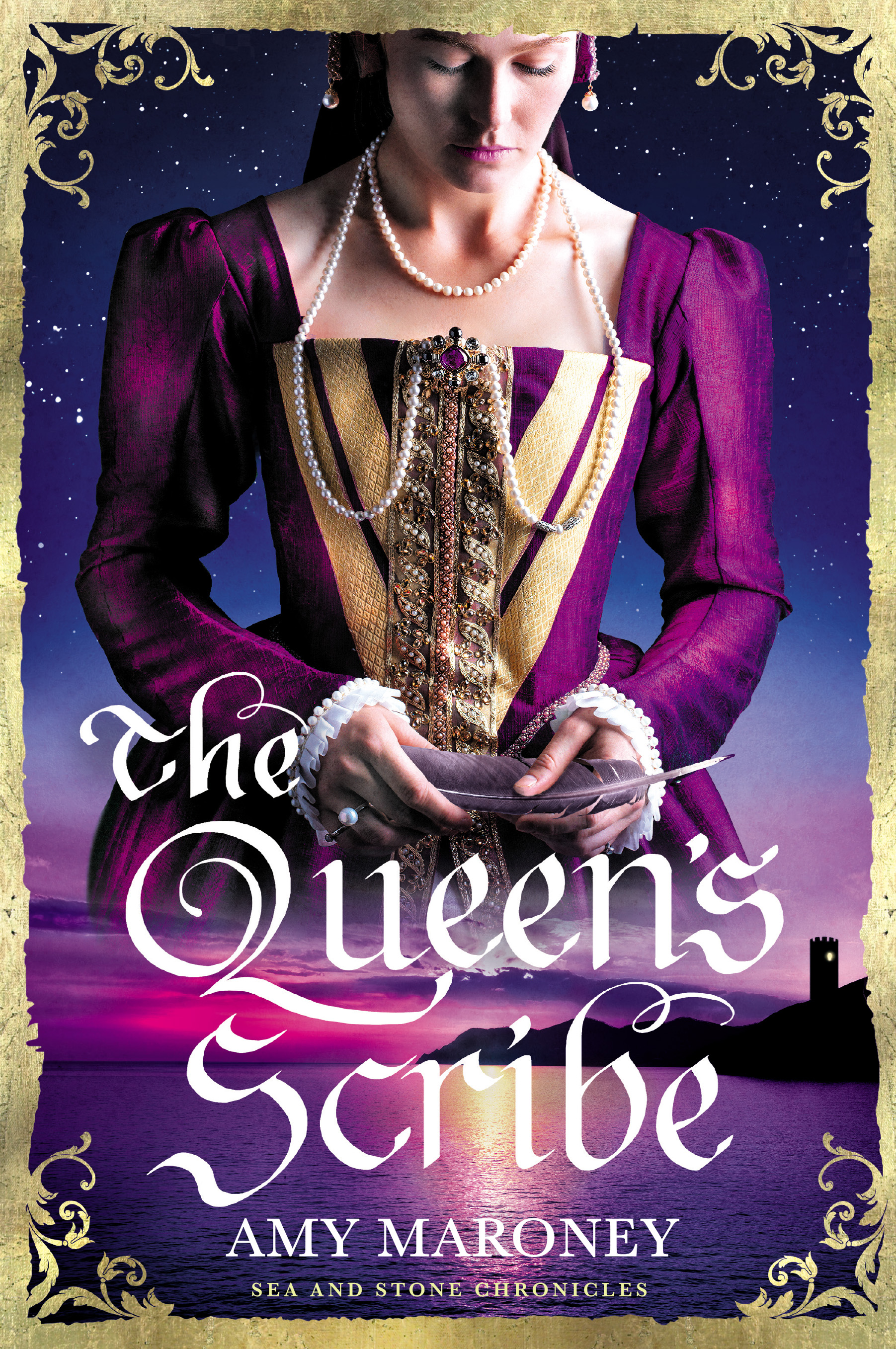
My new novel, The Queen’s Scribe, features a fifteenth-century monarch with an extraordinary story of ambition, courage, and dedication to her kingdom. Just who was Queen Charlotta of Cyprus, and why was she so mesmerizing that I wrote a book about her?
As is often the case with women in history, very little information remains about this queen (she was baptized ‘Charlotte’, but may have referred to herself as ‘Carlotta’; I call her ‘Charlotta’ in the novel). Most scholars agree that she was born about 1444.
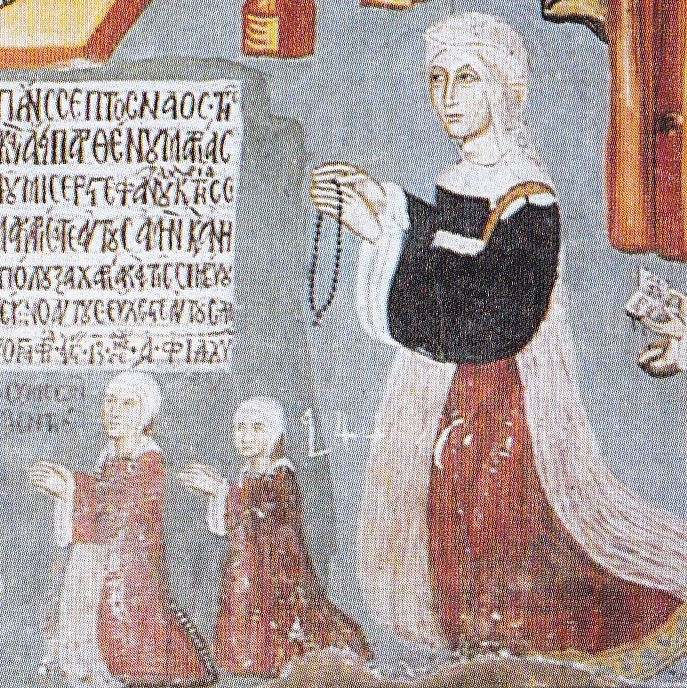
Charlotta was the only surviving child of King Jean II of Lusignan and his wife Eleni Palaiologina, princess of Morea. The following image is said to portray Charlotta, her mother, and her sister (subsequently deceased).
IMAGE OF QUEEN ELENI AND HER DAUGHTERS, PUBLIC DOMAIN PHOTO
Charlotta’s father, King Jean, was a genial but ineffective ruler who loved hunting, hawking, and spending money. The glory days of the kingdom ended abruptly when his grandfather King Janus was taken captive by Egyptian Mamluks and subsequently ransomed for 200,000 ducats, which put the kingdom in deep debt. By the time of Charlotta’s birth, three centuries of lavish living coupled with a weak military presence had crippled the once-powerful Lusignan dynasty.
Within the royal court itself, animosity festered like a battle wound. Queen Eleni was a proud Greek and a dominating personality. She purportedly bit off her rival Marietta’s nose when she found the woman in bed with her husband (some sources say she cut it off). Jean and Marietta’s son, Jacques (also known as Jacco the Bastard) was the apple of his father’s eye. A handsome, charismatic bully, he became Charlotta’s protector before his desire for the throne soured their relationship forever.
Thanks to her mother’s influence, Princess Charlotta was thoroughly Greek and her understanding of French was rudimentary at best. Though her father was French and many of the ruling nobility claimed French roots, the French spoken in Cyprus at the time was so distorted that native speakers visiting from Europe could not understand it.This fact underpins the plot of The Queen’s Scribe, which features a fictional French heroine whose skills as a scribe and interpreter become essential to Queen Charlotta.
PHOTO OF NICOSIA OLD TOWN, DEPOSIT PHOTOS STANDARD LICENSE
When she was about 13, Charlotta was married to the Portuguese Prince João of Coimbra. The young couple moved from the royal palace to a house elsewhere in the Cyprus capital of Nicosia, angering Charlotta’s mother and delighting the Western European (‘Latin’) members of the court. Tensions grew between the two camps until Prince João suddenly died under mysterious circumstances; the queen’s chamberlain—who was like a brother to Queen Eleni—was blamed.
In a royal tit-for-tat, the queen’s chamberlain was then killed by Sicilian associates of Jacco’s. Palace gossips said Charlotta had asked her half-brother to arrange the murder. Before he could be punished, Jacco fled for the island of Rhodes and the hospitality of the Knights Hospitaller.
Meanwhile, Charlotta grieved her dead husband and awaited a new betrothal, this time with her first cousin Louis (of the French-speaking Duchy of Savoy). Queen Eleni, who had been disabled by what might have been a paralytic stroke in early adulthood, slowly lost her health. Still, she fought the betrothal with every ounce of her strength, for in the Greek Orthodox tradition, marrying a first cousin was an unforgivable sin.
In 1458, both Queen Eleni and King Jean died. At 15, Charlotta was crowned queen. Soon afterward, Jacco sailed to Egypt, intent on gaining the sultan’s support for his campaign to seize his half-sister’s throne.
Meanwhile, the powerful barons who had served her father as council members now whispered in Charlotta’s ear. Some of them truly believed in her; others cared only for their own self-interest and survival; a few displayed breathtaking treachery.
Rumors began swirling that Jacco had charmed the Sultan of Egypt and was building a massive army of Mamluk warriors. Charlotta desperately needed help to preserve her throne, and naturally looked to her new husband, Louis, for support. But far from being the strong partner she’d hoped for, he was a disinterested and weak leader, more interested in fine food and amusements than strategizing for war.
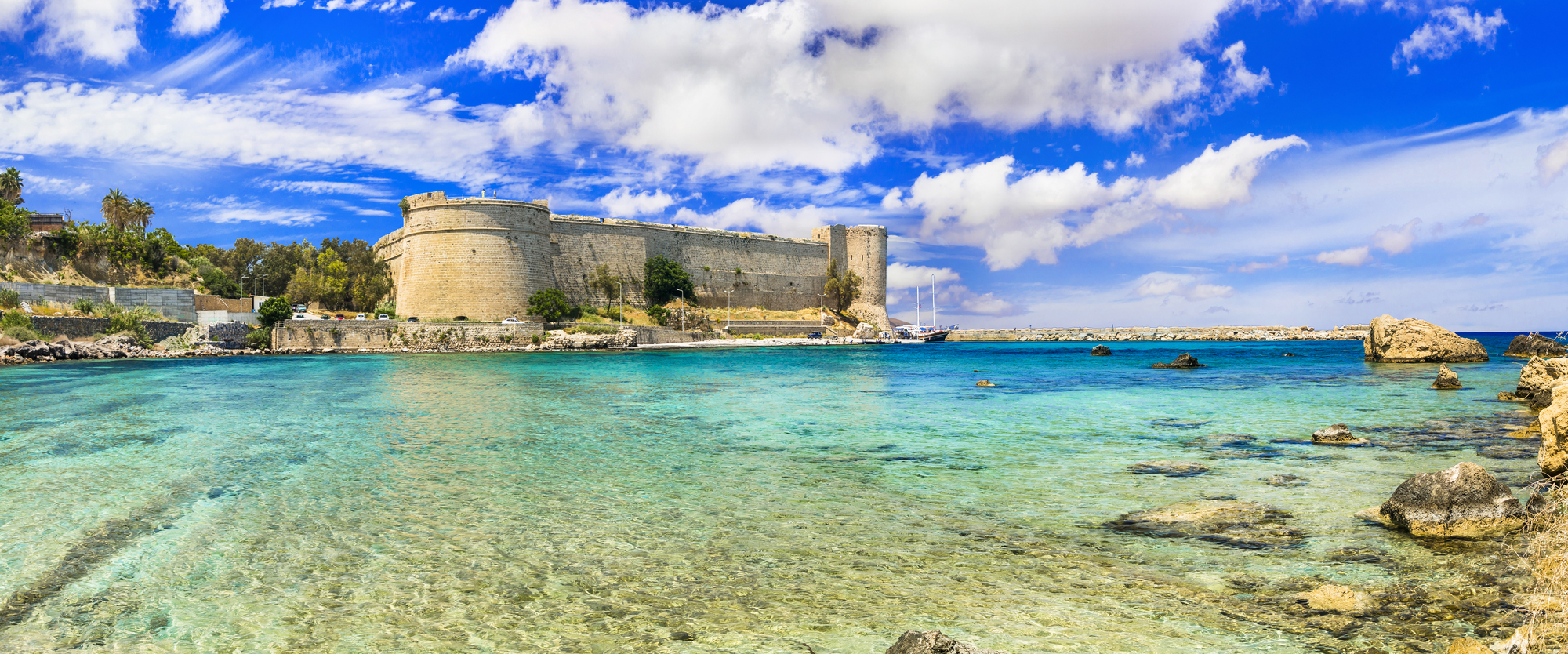
PHOTO OF KYRENIA FORTRESS, DEPOSIT PHOTOS STANDARD LICENSE
Less than two years after her coronation, Charlotta moved her court to the seaside fortress of Kyrenia, where they survived a massive siege by Jacco. A few months later, she left Louis in the fortress and sailed around the Mediterranean beseeching allies to help save her crown.
I chose to tell Queen Charlotta’s tale through the eyes of fictional Estelle de Montavon, daughter of a French falconer. In The Queen’s Scribe, Estelle—a talented scribe and linguist—becomes as valuable as gold when the royal court retreats to Kyrenia Fortress and civil war looms. When Queen Charlotta voyages across the Mediterranean Sea entreating French-speaking allies for help, Estelle is at her side, witnessing every triumph and disaster along the way.
Like so many other women in history, Queen Charlotta has been lost in the shadows for too long. I hope The Queen’s Scribe plays a role in bringing her story back into the light.
Thank you so much for sharing. She sounds that an intriguing character, as does her mother:)
Here’s the blurb
A broken promise. A bitter conflict. And a woman’s elusive chance to love or die.
1458. Young Frenchwoman Estelle de Montavon sails to Cyprus imagining a bright future as tutor to a princess. Instead, she is betrayed by those she loves most—and forced into a dangerous new world of scheming courtiers, vicious power struggles, and the terrifying threat of war.
Determined to flee, Estelle enlists the help of an attractive and mysterious falconer. But on the eve of her escape, fortune’s wheel turns again. She gains entry to Queen Charlotta’s inner circle as a trusted scribe and interpreter, fighting her way to dizzying heights of influence.
Enemies old and new rise from the shadows as Estelle navigates a royal game of cat and mouse between the queen and her powerful half-brother, who wants the throne for himself.
When war comes to the island, Estelle faces a brutal reckoning for her loyalty to the queen. Will the impossible choice looming ahead be her doom—or her salvation?
With this richly-told story of courage, loyalty, and the sustaining power of love, Amy Maroney brings a mesmerizing and forgotten world to vivid life. The Queen’s Scribe is a stand-alone novel in the Sea and Stone Chronicles collection.
Praise for the Sea and Stone Chronicles:

“Island of Gold is a nimbly told story with impeccable pacing.”
—Historical Novel Society, Editor’s Choice Review
“Sea of Shadows is stunning. A compelling tale of love, honor, and conviction.”
—Reader’s Favorite Review
Amy Maroney is the author of the award-winning Miramonde Series, the story of a Renaissance-era female artist and the modern day scholar on her trail.
Buy Links:
This title is available to read on #KindleUnlimited.
Amy Maroney studied English Literature at Boston University and worked for many years as a writer and editor of nonfiction. She lives in Oregon, U.S.A. with her family. When she’s not diving down research rabbit holes, she enjoys hiking, dancing, traveling, and reading.
Amy is the author of The Miramonde Series, an Amazon-bestselling historical mystery trilogy about a Renaissance-era female artist and the modern-day scholar on her trail. Amy’s award-winning historical adventure/romance series, Sea and Stone Chronicles, is set in medieval Rhodes and Cyprus.
An enthusiastic advocate for independent publishing, Amy is a member of the Alliance of Independent Authors and the Historical Novel Society.
I’m really excited to share the details of the Pagan Warrior blog tour with The Coffee Pot Book Club.
Pagan Warrior is the story of the battle of Hædfeld, fought in the seventh century between the Northumbrians, and you got it, the Mercians – or rather, Cadwallon of Gwynedd but with Penda of Mercia as his firm ally. You can find more details here.
I might have written this book many years ago, but it’s had a refresh, and is now available in audio, narrated by the fabulous, Matt Coles, as is the second book, Pagan King. Warrior King will be coming later this year in audio.
You can follow the blog tour, and I’ll be sharing posts here as well. A quick shout out to thank all the blog hosts and Cathie at The Coffee Pot Book Club for organising. Next Tuesday is the final day, and I’m going to be running a competition so pop back and see what’s happening.
And, the post that perhaps gave me the most fear to begin will but which was fun when I remembered all the little details, five fun facts about writing the trilogy.
For March 21st check out a post about two of the royal residences of Bernicia at the time, Bamburgh and Ad Gefrin (Yeavering). (There are lots of photos, thank you to Helen Hollick for uploading them all).
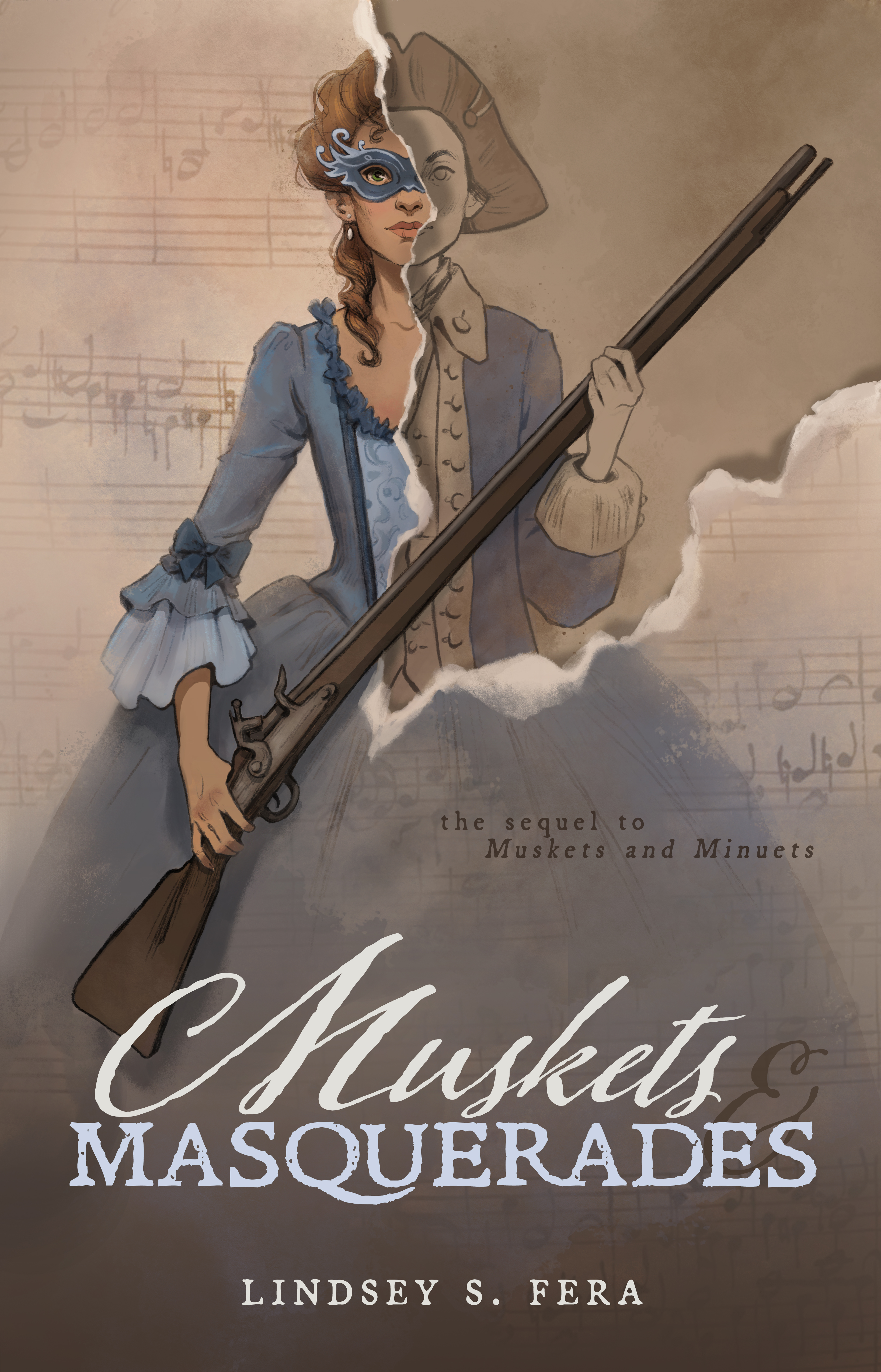
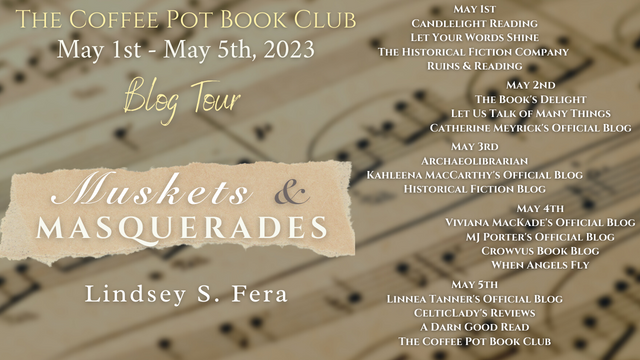
I’m delighted to welcome Lindsey S. Fera to the blog with an excerpt from her new book, Muskets and Masquerades.
His throat thick with melancholy, Jack leaned against an old cherry tree. It had been months since he allowed himself to feel sorrow, to remember the pain endured aboard HMS Lively. The laudanum had numbed everything, but was no longer a part of his life, thanks to Quinnapin, and five grueling days of sickness and agony. Now, he must relearn to feel.
The cherry tree’s welcoming shade reminded him of the Howletts’ ancient oak. Perhaps Mary and Henry occupied that space this very moment, laughing and climbing the tree’s thick, wide branches. Hopefully they did, for now with a proclamation of independence, war was certain to persist, and perhaps rage on for years to come. These will not be easy times.
Mr. Greeves, Hancock’s assistant, approached with steadfast step. “Mr. Perkins—you’re required, sir.”
Jack followed the assistant and reentered the stuffy meetinghouse.
“There he is, and looking a bit flushed, I must say,” John Adams said with a nod of approval. “The color in your cheeks does improve your complexion. We were quite astounded when first we saw you, looking so thin and pale.” Adams regarded Jefferson. “I’ve known this lad since he graduated Harvard and became my law apprentice. Indeed, he learned well; we’re now partners.”
“And I’m grateful to you, sir,” Jack replied. “My imprisonment upon HMS Lively did me quite the disservice, but I’m recovering well. My leg grows stronger each day.”
“So I’ve heard, Mr. Perkins,” Jefferson remarked. “We’re right heartily glad for your return to Congress. Pray, what do you think of the declaration?”
Jack beamed. “’Tis a marvel, sir. Better written than any good man here could’ve done—and each gentleman present is more than capable of conjuring such profound sentiments, but to put it to writing is quite the task. ’Tis been an honor to be part of such a moment, sir.”
“And your moment will come, too, Mr. Perkins. We still hope to court France. They would prove a most powerful ally,” Adams added.
Father rested a hand on Jack’s shoulder. “I couldn’t have said it better, Mr. Jefferson. I’m most pleased by your fine, diligent work. Have we each signed the parchment yet?”
John Adams eyed the meetinghouse door. “We’re awaiting Dr. Franklin. He went to the necessary.”
As Adams finished speaking, the meetinghouse door opened, and in stepped Dr. Franklin. A glint of sunlight reflected off his large patch of receding hairline, which yielded to long, greying hair. Franklin peered at the room from over the edge of round spectacles. “Shall we sign again, gentlemen?”
The men clamored about the room, surrounding Mr. Hancock at his desk. Jack joined his father and John Adams. He’d met Mr. Hancock several times when living in Boston. It had been at Hancock’s grand manor that George was bequeathed a sum of money from an old life insurance policy held by George’s natural father, Captain Bixby; Bixby had been contracted by Hancock’s late uncle. A night I’ll never forget; and I’m certain, neither will George. The annual sum had allowed his cousin to purchase the Black Water Inn in Portsmouth.
Mr. Hancock dipped a white quill into the inkwell and scraped off the excess black ink. He scratched a flamboyant signature, quite largely, onto the parchment. “Is it substantial enough to match the one sent to King George?”
The gentlemen laughed, and each took their turn signing the page. When it came to Jack, he hesitated, and met the eyes of those in the room.
“Gentlemen, I wish to speak on things I’ve contemplated since the creation of this document.”
“Go on, Perkins,” Franklin said, though a few others, Congressmen from the southern colonies, groaned.
“’Tis a privilege to sign such a document, but ’twas equally an honor to fight. I was there at Concord, and likewise present at Bunker Hill. I stand before you today, gentlemen, not as a vessel of Congress, quick to sign my name, but as a militiaman who fought the British on each of those fateful days. The people of Massachusetts have been fighting since 1770.” Jack’s throat clogged, but he composed himself. “’Tis been six long years for the people of Massachusetts, and I pray the rest of these alleged united states partake in the fight that has solely been ours. New-England has long been the head of Dr. Franklin’s famed serpent, and I’m overjoyed to see the other colonies join with us as the body.”
Jack dipped the quill in ink and signed his name. “This is for each man who remains on the front lines of battle, each man who has fought, and each man whose injury or death has been the cost of this document. This is for Bunker Hill.” Though he spoke the word man, he envisioned Annalisa, the woman who fought and survived Bunker Hill, the woman who’d traveled with him in the name of Congress and had lost her life. For Annalisa, he signed.
The gentlemen clapped.
“Hear, hear, Perkins.”
“Huzzah!”
Adams rapped his cane. “For Bunker Hill.”
Mr. Hancock nodded. “For Bunker Hill, Mr. Perkins.”
When the last signature was upon the parchment, Jack addressed Congress once more. “Now, we must all hang together, gentlemen.”
Dr. Franklin chuckled, landing a hand upon Jack’s shoulder. “Indeed, young Mr. Perkins, we must all hang together, for if we do not, we’ll all hang separately.”
Here’s the blurb
Jack and Annalisa are married only five months when, enroute to France, a shipwreck separates them. On different shores, each believes the other dead. But when Annalisa learns Jack is alive, she returns to America and discovers much has changed. After a betrayal, she flees town as her alter ego, Benjamin Cavendish, and joins the Continental Army.
Unbeknownst to Annalisa, Jack has also joined the Continentals, harboring shameful secrets from his days in mourning. Against the backdrop of war with Britain, façades mount between Jack and Annalisa, and the merry minuet of their adolescence dissolves into a masquerade of deceit, one which threatens to part them forever.
LINDSEY S. FERA is a born and bred New Englander, hailing from the North Shore of Boston. As a member of the Topsfield Historical Society and the Historical Novel Society, she forged her love for writing with her intrigue for colonial America by writing her debut novel, Muskets & Minuets, a planned trilogy.
When she’s not attending historical reenactments or spouting off facts about Boston, she’s nursing patients back to health. Muskets & Masquerades is her sophomore novel.
I’m really excited to share the details of the Pagan Warrior blog tour with The Coffee Pot Book Club.
Pagan Warrior is the story of the battle of Hædfeld, fought in the seventh century between the Northumbrians, and you got it, the Mercians – or rather, Cadwallon of Gwynedd but with Penda of Mercia as his firm ally. You can find more details here.
I might have written this book many years ago, but it’s had a refresh, and is now available in audio, narrated by the fabulous, Matt Coles, as is the second book, Pagan King. Warrior King will be coming later this year in audio.
You can follow the blog tour, and I’ll be sharing posts here as well. A quick shout out to thank all the blog hosts and Cathie at The Coffee Pot Book Club for organising.
And, the post that perhaps gave me the most fear to begin will but which was fun when I remembered all the little details, five fun facts about writing the trilogy.
For March 21st check out a post about two of the royal residences of Bernicia at the time, Bamburgh and Ad Gefrin (Yeavering). (There are lots of photos, thank you to Helen Hollick for uploading them all).
Finally free of Catherine of Aragon, Henry VIII, is now married to Anne Boleyn and eagerly awaiting the birth of his son. In a court still reeling from the royal divorce and growing public resentment against church reform, Henry must negotiate widespread resentment toward Anne. He places all his hopes in a son to cement his Tudor blood line, but his dreams are shattered when Anne is delivered of a daughter.
Burying his disappointment, Henry focuses on getting her with child again, but their marriage is volatile and as Henry faces personal bereavement, and discord at court, Anne’s enemies are gathering. When the queen miscarries of a son, and Henry suffers a life-threatening accident, his need for an heir becomes critical. Waiting in the wings is Jane Seymour, a lady-in-waiting who offers the king comfort and respite from Anne’s fiery passions.
But, when Anne falls foul of her former ally, Thomas Cromwell, and the king is persuaded he has been made a cuckold, Henry strikes out and the queen falls beneath the executioner’s sword, taking key players in Henry’s household with her.
Jane Seymour, stepping up to replace the fallen queen, quickly becomes pregnant. Delighted with his dull but fertile wife, Henry’s spirits rise even further when the prince is born safely. At last, Henry has all he desires but even as he celebrates, fate is preparing to deliver one more staggering blow.
Henry, the once perfect Renaissance prince, is now a damaged middle-aged man, disappointed in those around him but most of all in himself. As the king’s optimism diminishes, his intractability increases, and the wounded lion begins to roar.
Buy Links
This title is available to read on #KindleUnlimited.
When Judith Arnopp began to write professionally there was no question as to which genre to choose. A lifelong history enthusiast and avid reader, Judith holds an honours degree in English and Creative writing, and a Masters in Medieval Studies, both from the University of Wales, Lampeter.
Judith writes both fiction and non-fiction, working full-time from her home overlooking Cardigan Bay in Wales where she crafts novels based in the Medieval and Tudor period. Her main focus is on the perspective of historical women from all roles of life, prostitutes to queens, but she has recently turned her attention to Henry VIII himself.
Her novels include:
A Matter of Conscience: Henry VIII, the Aragon Years. (Book one of The Henrician Chronicle)
A Matter of Faith: Henry VIII, the years of the Phoenix (Book Two of The Henrician Chronicle)
The Beaufort Bride: (Book one of The Beaufort Chronicle)
The Beaufort Woman: (Book two of The Beaufort Chronicle)
The Kings Mother: (Book three of The Beaufort Chronicle)
The Heretic Wind: the life of Mary Tudor, Queen of England
A Song of Sixpence: The story of Elizabeth of York
Intractable Heart: The story of Katheryn Parr
The Kiss of the Concubine: A story of Anne Boleyn
Sisters of Arden: on the pilgrimage of Grace
The Winchester Goose: at the court of Henry VIII
The Song of Heledd:
The Forest Dwellers
Peaceweaver
Her non-fiction articles feature in various historical anthologies and magazines and an illustrated non-fiction book, How to Dress like a Tudor will be published by Pen & Sword in 2023.
I’m really excited to share the details of the Pagan Warrior blog tour with The Coffee Pot Book Club.
Pagan Warrior is the story of the battle of Hædfeld, fought in the seventh century between the Northumbrians, and you got it, the Mercians – or rather, Cadwallon of Gwynedd but with Penda of Mercia as his firm ally. You can find more details here.
I might have written this book many years ago, but it’s had a refresh, and is now available in audio, narrated by the fabulous, Matt Coles, as is the second book, Pagan King. Warrior King will be coming later this year in audio.
You can follow the blog tour, and I’ll be sharing posts here as well. A quick shout out to thank all the blog hosts and Cathie at The Coffee Pot Book Club for organising.
For April 25th, check out a post about Penda of Mercia.
And, the post that perhaps gave me the most fear to begin will but which was fun when I remembered all the little details, five fun facts about writing the trilogy.
For March 21st check out a post about two of the royal residences of Bernicia at the time, Bamburgh and Ad Gefrin (Yeavering). (There are lots of photos, thank you to Helen Hollick for uploading them all).
Today, I’m delighted to welcome Alison Morton to the blog to celebrate the 10th Anniversary edition of INCEPTIO.
Why Roman alternative history?
An avid reader of spy, thriller and crime stories from childhood and a life-long devotee of all things Roman, I yearned to write a Roman thriller with a true-hearted heroine imbued with Roman virtue but a tendency to go off-piste. Lindsey Davis does this beautifully with Flavia Albia, Falco’s daughter and to a certain extent with Helena Justina, Falco’s wife. However, I wanted women to run this New Rome. Yes, I had also read a lot of science fiction including wonderful stories by Anne McCaffery where women were equal if not leading their society. But I didn’t want to write space opera.
There was only one solution: I stayed on Planet Earth and brought my Roman stories up to the 21st century.
A fascination with the ‘what if’ idea
Perhaps it’s something all kids speculate about: suppose I have the wrong parents, suppose I’m really a lost princess, what if I could fly, what if we were all rich? Later, as a student of history, I was always fascinated by the possibilities of the tiniest thing turning the huge wheel of history – “For want of a nail,” and so on. Then I learnt about the ‘butterfly of doom’ where one butterfly flapping its wings cascaded events in a different direction.
When I produced my first manuscript, I didn’t know I was writing in a genre called alternative history (“althist” for short). I was inspired by Robert Harris’s Fatherland, a tense, shocking and beautifully written thriller with a heart-wrenching ‘secret’. Twisting history was allowed and used by acclaimed writers such as Michael Chabon and Kingsley Amis as well as Harris!
Of course, a thriller must be exciting, intriguing and full of emotional punch, but althist stories have their own ‘rules’. The most important are to identify the moment where history as we know it veers off onto a different path forever, and to weave into the story to show how the alternative timeline has developed since that point of divergence.
Why Roman alternative history?
‘Rome’ lasted 1229 years in the West, which time span would take us back to AD 794 from today. It changed from a tiny community of tribal farmers to a confident military and trading empire boasting high culture, diversity, power, engineering and rule of law, eventually dwindling to a miserable rump kneeling before barbarians.
Rome had the dark side of all ancient and later cultures: slavery, rampant corruption, patriarchalism and scant regard for disabled and poor people. But Rome gave us systems, values, including civic-mindedness, cultural and engineering genius and literacy that are still firmly embedded in our psyches today. So it shrieked “explore me” very loudly!
It goes back to a mosaic in Spain Standing on the beautiful floors in Ampurias, I asked my father, “What would it be like if Roman ladies were in charge, instead of the men?” Maybe it was the fierce sun boiling my brain, maybe early feminism peeping out or maybe just a precocious kid asking a smartarse question. But clever man and senior ‘Roman nut’, my father replied, “What do you think it would be like?”
Alison, age 11, and her mosaic
That childish vision grew and grew. When I was older, I realised I had to put in some proper research. The dissolution of the Roman Empire is fascinating and full of ‘what if’ and natural conflict:
The senatorial families at the end of the 4th century fiercely defended their tradition of worshipping the Roman gods despite ever encroaching Christianity. Led by former urban prefect of Rome and consul Quintus Aurelius Symmachus, they pleaded for religious tolerance, but by late 394 AD Emperor Theodosius made any pagan practice, even dropping a pinch of incense on a family altar in a private home, into a capital offence.
In its last fifty to seventy years the Western Roman Empire was dissolving into small enclaves, client states, cut off regions – the Domain of Soissons is one example.
Many former Roman territories retained their Roman administrative systems into the seventh and eighth centuries. Could one remote colony last even longer, say centuries?
Switching from a male Roman ethos to a feminist-lite one
I wanted a strong female character who drove the story, but not a harsh, excluding one, hence my heroine has some very human faults and characteristics. There was and perhaps still is a distinct lack of stories where two women have conversations beyond social or fashion issues and are not dependent on the male characters as wife, girlfriend, colleague. I use a technique called gender mirroring where I reverse the behaviour of the characters of a typical spy or action thriller. Think Jane Reacher or Jamie Bond in modern terms. A fascinating writing exercise!
So, I had to exercise the brain and apply some historical logic for Roma Nova. As the men defended the tiny new state of Roma Nova women worked in the fields, traded, sat on the council and managed the families. Consider the dynamic of only a few hundred men at the front especially during the Great Migrations. They simply ran out of male fighters to defend Roma Nova, so sisters and daughters from these pioneer families had to put on armour and heft weapons to defend their homeland and their way of life.
Fighting danger side-by-side with brothers and fathers reinforced women’s status and roles. And they never allowed the incursion of monotheistic paternalistic religions. In this way, women developed leadership roles in all parts of Roma Novan life over the next sixteen centuries.
Pulling in my own history
I served six years in the UK forces with active assignments all over the NATO area and beyond. It never occurred to me that women couldn’t serve in the military. I loved it! In the forces, you are only as good as your last job and you are promoted only on merit; both appealing ideas. Thus, my heroines serve in the elite forces in Roma Nova which fits in neatly with the traditional Roman military mindset.
Building the world
For credible alternative history (not Inglourious Basterds!), there is no easy ride such as making everything up. You need to research as thoroughly as for standard historical fiction, especially around the point in time when the timeline splits and leaves the standard one. For Roma Nova this was AD 395.
The twin guidelines of alternative history writing are plausibility and internal consistency. No country, real or imagined, can survive without a functioning government, an economic, social and political system, food, law and order and income. The basic skills of historical fiction writing apply in the same way: ability to research, respect for known facts (up to the point of divergence), a sense of historical setting, the avoidance of the information dump, and keeping speech, clothes and manners both consistent with and in the world you are describing. For example, in AD395, solidinot aurei, sestertii or denarii were coins used in the late empire, so Roma Nova Internet banking and credit cards in the 21st century are denoted in solidi.
The sources problem
Much of the historical record is missing from the late fourth century, the springboard for my book world. This complicates research. The big problem of records from antiquity is that they tend to contain the actions and thoughts of the elite and usually only of men. Symmachus, whom I mentioned above, was not only the urban prefect of Rome at one time but also a noted writer in a wide circle of intellectuals. Just under a dozen books of his letters and official dispatches have survived. Such fragments combined with finds from archaeological digs and the physical remains on the landscape help researchers build up a picture of life at the time. I’m always dropping into the British Museum, buying new books and searching online. It’s very much a case of putting the different pieces of a jigsaw together then filling in the gaps intelligently and with historical logic.
“It’s about Roman blood, survival and money. Mostly yours.”
In an alternative New York, Karen Brown is running for her life. She makes a snap decision to flee to Roma Nova – her dead mother’s homeland, the last remnant of the Roman Empire in the 21st century. But can Karen tough it out in such an alien culture? And with a crazy killer determined to terminate her for a very personal reason?
Stifled by the protective cocoon of her Roma Novan family, deceived by her new lover, she propels herself into a dangerous mission. But then the killer sets a trap – she must sacrifice herself for another – and she sees no escape.
A thriller laced with romance and coming of age, this first in series is Roman fiction brought into the 21st century through the lens of alternative history and driven by a female protagonist with heart and courage.
This 10th Anniversary hardback edition includes bonus content: Three character ‘conversations’, two short stories and the story behind INCEPTIO.
Buy links:
INCEPTIO 10th Anniversary special edition hardback:
Alison Morton writes award-winning thrillers featuring tough but compassionate heroines. Her ten-book Roma Nova series is set in an imaginary European country where a remnant of the ancient Roman Empire has survived into the 21stcentury and is ruled by women who face conspiracy, revolution and heartache but with a sharp line in dialogue. INCEPTIO starts the adventure…
She blends her fascination for Ancient Rome with six years’ military service and a life of reading historical, crime and thriller fiction. On the way, she collected a BA in modern languages and an MA in history.
Six full-length Roma Nova novels, including INCEPTIO, have won the BRAG Medallion, the prestigious award for indie fiction. SUCCESSIO, AURELIA and INSURRECTIO were selected as Historical Novel Society’s Indie Editor’s Choices. AURELIA was a finalist in the 2016 HNS Indie Award. The Bookseller selected SUCCESSIO as Editor’s Choice in its inaugural indie review. The Historical Novel Society recently selected JULIA PRIMA, the first Foundation story set in the 4thcentury, the accolade of Editors’ Choice.
Alison lives in Poitou in France, the home of Mélisende, the heroine of her two contemporary thrillers, Double Identityand Double Pursuit. Oh, and she’s writing the next Roma Nova story.
I’m delighted to welcome David Lawrence to the blog to share a guest post with us.
Criminal Records and the Cant Language
by David Lawrence
For me, historical research is like spinning a spider’s web – every fact I find interesting, be it a great political event or simply learning of a small household object no longer in use, is like a sticky thread spinning out into the ether. Eventually, a specific place, time, and event emerge, rather like a web, in which my story is caught.
For my first novel, Hugh, the story was caught in Westminster, 1768, centring around the antics of naughty MP John Wilkes.
For this novel, Blue Billy’s Rogue Lexicon, the web caught a story in The Mint (in Southwark), 1771, the summer of Captain Cook’s return from his first voyage round the globe.
Just how I arrived at my completed story I couldn’t exactly tell you(!). However, I can say that the initial thread came from a book called Mother Clap’s Molly House: The Gay Subculture in England 1700 – 1830. I had heard this book referenced here and there during various research projects, and by 2021, when I began researching Blue Billy and needed to read it, I discovered a copy was quite difficult to locate. It was one of the first of its kind on the subject, published in 1992 by Rictor Norton. Ebay, however, saved the day, and I secured my lightly-worn, and beloved, copy.
Little is known about the gay subculture in London during the 18th century, but what we do know, and what Mother Clap’s Molly House outlines wonderfully, are the criminal cases in which homosexual activity ended in legal prosecution. From an historical perspective, these criminal records are priceless, preserving glimpses of lives which would otherwise have been lost to history.
I knew my protagonist William Dempsey had a history quite far down the social ladder – raised on the streets by a den of thieves before getting himself into keeping by a Marquess with a taste for deceptively doe-eyed youths. Mother Clap’s Molly House mentioned that the dialect of the molly (gay) subculture might well have had parallels with the rogue’s lexicon used by your run-of-the-mill London criminals, which included female prostitutes. I already knew that William had worked as a male prostitute, and pow! I suddenly understood that his tricking name was Blue Billy, and that a rogue’s lexicon would form the framework for the novel (the chapter names in the novel are terms taken from this street slang).
The early 1770s I had long known was to be my general time period, but Captain Cook’s return to England after his three-year voyage round the globe cemented it as the summer of 1771. Why? I was seeing parallels between his journey of discovery and Billy’s journey of self-discovery. In the summer of 1771, Billy is thrown out of his West End apartment and must not simply start over from nothing but re-examine his life choices. For details on the voyage, Captain Cook by Walter Besant was a 19th century biography I thoroughly enjoyed, as well as The Endeavour Journal of Sir Joseph Banks from 25 August 1768-12 July 1771 – Banks being the botanist who accompanied Cook on his journey.
Wonderful books like London in the 18th Century by Jerry White and The First Bohemians by Vic Gatrell filled in many more details about this glorious era. I also found James Boswell’s diary from the 1760s, relating his experiences as a young man in London, to be a priceless resource, not only in terms of the attitudes at that time, but for those small details of daily life which make a novel so much richer.
Completing my research were two books detailing the lives of rogues, beggars and thieves of the era. The titles alone tell you how colourful they are: The Surprising Adventures of Bampfylde Moore Carew, King of the Beggars – Containing his Life, a Dictionary of the Cant Language, and many Entertaining Particulars of that Extraordinary Man by Robert Goadby (published 1749) and The English Rogue: Described in the Life of Meriton Latroon, A Witty Extravagant by Richard Head (published 1665)
Research on this project was quite a journey for me, and some wonderful reading along the way. All books (including, er, my own) are highly recommended!
Thank you so much for sharing. I love the titles of these books from the 17th and 18th century.
Here’s the blurb
William Dempsey was a wonder among wonders.
By 18, he had risen from a gang of London street rogues to be the personal plaything of the Marquess of Argyll. Maintained in splendour, celebrated at masquerades – with everything he could wish for.
Now all has come crashing down. He is put out in the rain without patronage, his West End apartment, or a place among the ton.
So on a stormy night, he arrives at a house in Southwark. Marathon Moll’s in the Mint – the bawdyhouse he worked in during his ascent and where he earned the name Blue Billy.
But is Marathon Moll’s a place from which to rise again? For there is one in the crowd, who catches his eye. Who takes his hand and promises something better.
Or does Moll’s signify a return to his roots? For one day, a second and very different young man raps on the door. Takes his hand and asks him to return to his past.
To the cat language of vagabonds. The canting dialect of thieves.
David Lawrence is the author of two queer historical novels – ‘Hugh: A Hero without a Novel’ and ‘Blue Billy’s Rogue Lexicon’. As a writer, he loves taking a deep dive into the politics, social norms, and events of 18th century England while presenting humorous and unique coming-of-age tales.
A native of the American Southwest, David has spent much of his life in Great Britain, France, and Finland. He now lives in the American Northwest – Helena, Montana – with his Finnish partner.
By day he loves hiking under the Big Sky of his beautiful adopted state.
By night, however, he prefers wandering the byways of 18th century London…