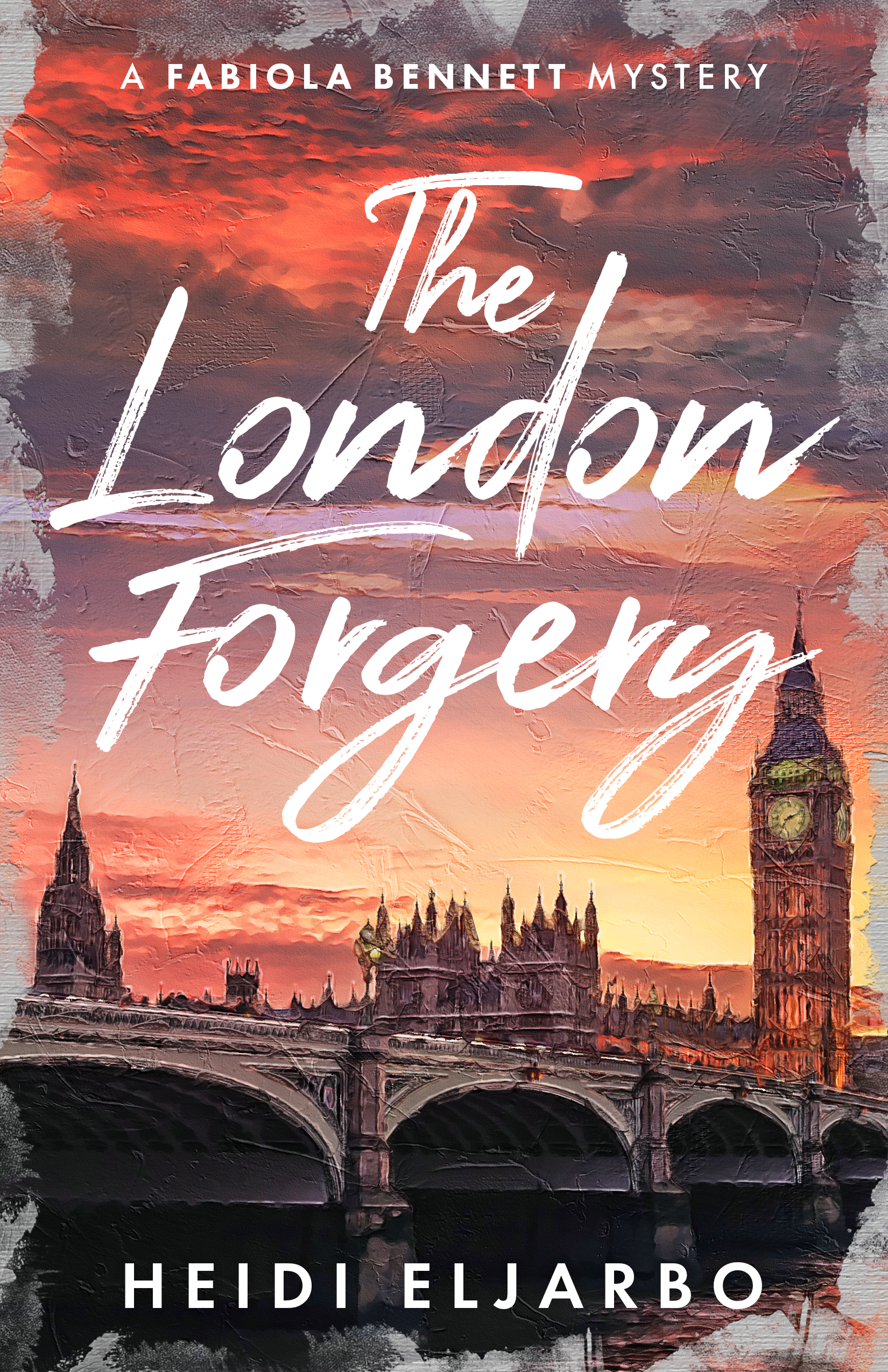
I’m welcoming The London Forgery by Heidi Eljarbo to the blog #TheLondonForgery #fabiolabennett #DualTimelineMystery #BlogTour #TheCoffeePotBookClub

I’m delighted to welcome Heidi back to the blog with a post about her new novel, The London Forgery.

They say a historical novel takes place at least fifty years back in time. It has its setting in a certain period in history, and the author paints a picture with words of what it was like to live back then. That author must love research, must love history, must love delving into the sight, sounds, and smells of that time.

And what’s not to love about that? I have days when I probably spend more time on research than I do on the actual writing process. Because historical accuracy is important, right? It would be an anachronism to read about a cell phone in a 1960’s novel.

To make things even more complicated, I love dual-timeline novels. And I enjoy writing them. The London Forgery is such a novel. The main character, an art historian named Fabiola Bennett, has been asked to help solve an art mystery…a serious one…and there’s a problem at the National Gallery in London.

The year is 1973. Phew! Just enough years back in time to call it historical fiction. But back up a minute. I was in my early teens in 1973. I’ve lived a while, but don’t feel like I’m historical quite yet. But, oh, how fun it was to check the facts about everything from blue and white police cars to what year chocolate digestives came on the market. I went into my own memory bank when I did research for the main storyand I looked at old pictures. My sister was several years older than me and ruled the fashion of that decade. I can remember the long skirts and dresses I wore, my orange platform shoes, and listening to my favorite music. Back then, my bedroom had green walls and sported a bright-orange plastic lampshade. A small transistor radio tuned to Radio Luxembourg sat on the windowsill.

In The London Forgery, Fabiola rushes off to London. A mysterious note has been delivered anonymously at the door of the National Gallery, and the director needs her help. The message is confusing, but it seems one of her favorite eighteenth-century portraits is in trouble. As always, Fabiola will take too many risks as she tries to solve the mystery involving the British artist Thomas Gainsborough and his 1750 portrait called Mr. and Mrs. Andrews.

But what about the other story? I mentioned The London Forgery is a dual-timeline novel. Each of the books in this series will have a secondary story about a famous artist—a story that blends in with the main theme of the book.

Writing about Gainsborough and his love for his wife, the process of painting the famous masterpiece, and the young sitters Robert and Frances Andrews was pure joy. There’s much information about these two couples. I listened to lectures about them, read umpteen articles, and studied the beautiful painting.
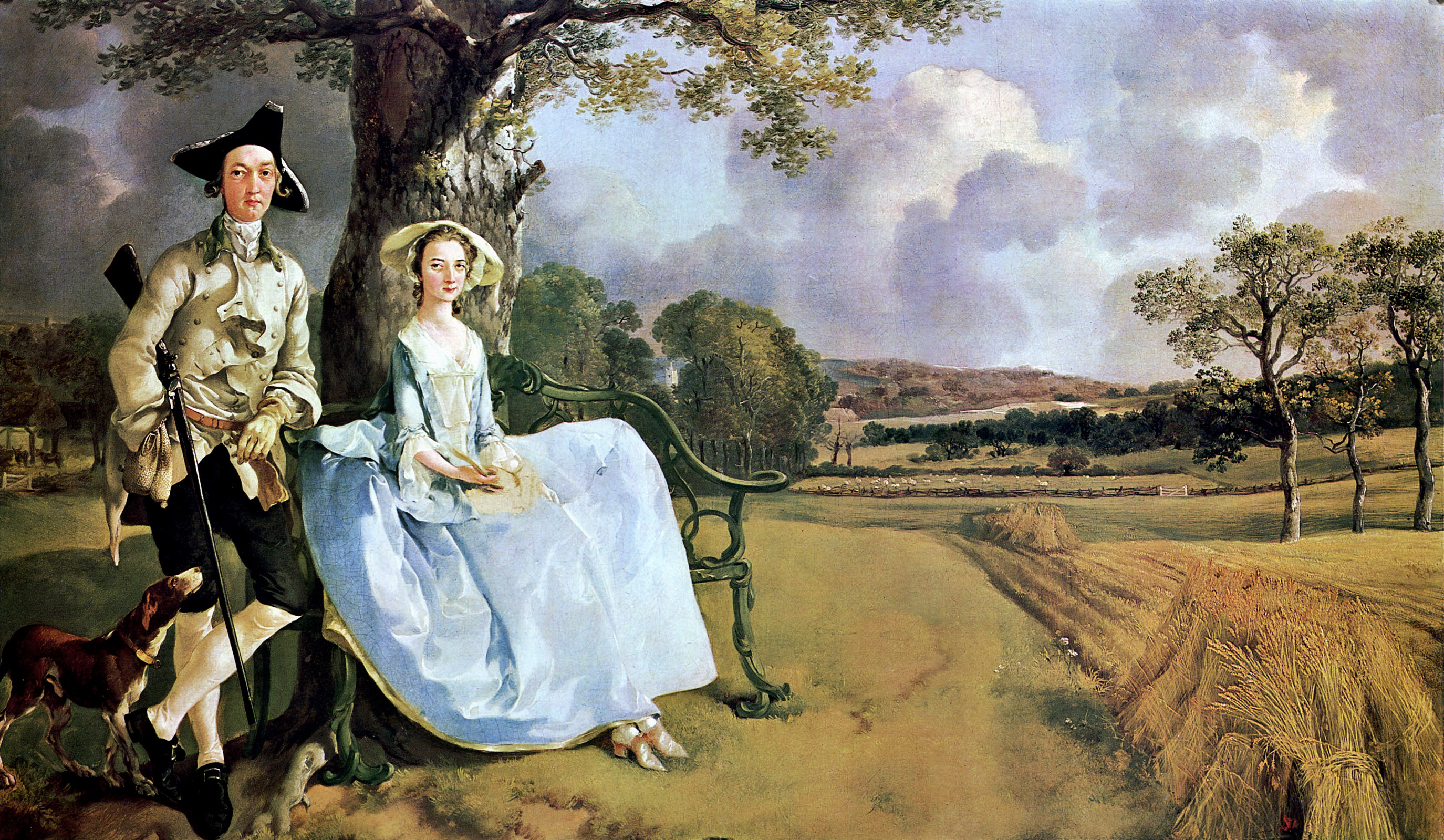
Mr. and Mrs. Andrews now hangs upstairs in room thirty-five in the National Gallery on Trafalgar Square in London. Go see it if you can. It’s worth the trip.

Take care, Heidi Eljarbo 

Here’s the blurb

1973. Art historian Fabiola Bennett sees herself as a prudently observant deer who becomes a daring and even mischievous lioness if the situation calls for it. And that’s exactly what’s required when greedy criminals steal, forge, and tamper with treasured artwork. When the crooks add murder to their list of crimes, the chaos is complete.

A mysterious note is delivered anonymously at the door of the National Gallery in London, and the director immediately calls Fabiola’s office in Oslo and pleads with her to come without delay. The message is confusing, but it seems one of her favorite eighteenth-century portraits is in trouble.

Fabiola hops on the first plane and meets up with her vibrant side-kick Pippa Yates and the ever-loyal Detective Inspector Cary Green from New Scotland Yard. But she is not naïve enough to think untangling the purpose and meaning of the mysterious note will be as simple as a walk in Hyde Park. These things never are.

1750. Newly married Robert and Frances Andrews, members of the landed gentry of Suffolk, England, hire young and talented Thomas Gainsborough to paint their wedding portrait. Their desire is a lovely conversation piece showing their wealth and class, an artwork to remember them by for generations to come.

Little do they know the gifted artist portrays their personalities exactly how he perceives them, and the artistic symbolism is not as flattering as they’d hoped for. Even the looming clouds in the distance promise a troublesome future.

This is the first book in a new dual timeline series by Heidi Eljarbo—an intriguing spin-off from the much-loved Soli Hansen Mysteries.

Fans of Lucinda Riley, Rhys Bowen, Kathleen McGurl, Kate Morton, and Katherine Neville will love this cozy historical art mystery, which takes the readers back to the nostalgia of the groovy seventies and the classical Georgian era of the eighteenth century.
Buy Links:

Available on #KindleUnlimited 

Universal Link

Amazon UKAmazon US

Amazon CAAmazon AU

Meet the author:

Heidi Eljarbo is the bestselling author of historical fiction and mysteries filled with courageous and good characters that are easy to love and others you don’t want to go near.

Heidi grew up in a home filled with books and artwork and she never truly imagined she would do anything other than write and paint. She studied art, languages, and history, all of which have come in handy when working as an author, magazine journalist, and painter. 

After living in Canada, six US states, Japan, Switzerland, and Austria, Heidi now calls Norway home. She and her husband have fifteen grandchildren—so far—in addition to a bouncy Wheaten Terrier.

Their favorite retreat is a mountain cabin, where they hike in the summertime and ski the vast, white terrain during winter.

Heidi’s favorites are family, God’s beautiful nature, and the word whimsical.

Connect with Heidi

Website: 

TwitterFacebook

Instagram: Pinterest

Book BubAmazon Author PageGoodreads

Follow The London Forgery by Heidi Eljarbo blog tour with The Coffee Pot Book Club

Check out Heidi’s previous visits to the blog.

Brushstrokes from the Past

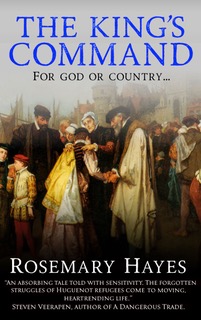
I’m delighted to welcome The King’s Command by Rosemary Hayes to the blog #HistoricalFiction #Huguenots #LouisXIV #BlogTour #TheCoffeePotBookClub

I’m delighted to welcome Rosemary Hayes and her new novel, The King’s Command to the blog.

INSPIRATION AND RESEARCH FOR MY NOVEL ‘THE KING’S COMMAND’

Carving above French Church in London 

I’d always known that I had Huguenot ancestors but had not given it much thought until a cousin mentioned that they had been driven out of France for their religious beliefs. This sparked my interest and I decided to find out more. 

My ancestors – the facts

Many of those who try to trace their Huguenot roots find the process laborious and frustrating, coming across contradictions and going down blind alleys, but I was lucky. A lot is known about my Huguenot forebears, Lydia and Samuel La Fargue. They feature in the Annals of the Huguenot Society and some meticulous research was done on them by an Edwardian ancestor of mine, so I had a head start. 

I knew where they lived in France; in a small town in Gascony, not far from Bordeaux, originally called Castillon-sur-Dordogne and now called Castillon-la-Bataillie. I knew what they did (they were predominately lawyers, physicians and minor nobles) and that they were friends with other prominent Protestant families in the region with whom they inter married and socialised. In the baptism records of the time, it can also be seen that they were godparents to one another’s children. The Edwardian ancestor states that they lived just outside the town centre in ‘the pleasant faubourg’ and, although I found no evidence of this, it seems likely to be true. They also owned land in the plains South of the town.

So, they came from the bourgeoisie, were committed Huguenots, following the teachings of Calvin, and their own ancestors had fought against the Catholics in the sixteenth century Wars of Religion. 

I also knew that Lydia, Samuel, their surviving children and Lydia’s widowed mother left Castillon and fled to Geneva in 1690. And also, intriguingly, that Samuel returned alone to Castillon in 1692 where he died, aged 32, on the very day on which he converted to Catholicism.  He may, of course, have died from natural causes, but these were turbulent times, so who knows? I did discover from local documents that he had returned to try and reclaim forfeited property.

After his death Lydia, her children and her mother then left Geneva for London and settled in the pleasant village of Hammersmith where there was a small Huguenot community. Lydia’s only surviving child, Elias, became a Church of England vicar in Lincolnshire and is my direct ancestor.

Why did the Huguenots flee France? A brief background

The wars of religion between Protestants and Catholics raged in France during the second half of the 16th century where hatred ran deep, armies were raised and atrocities committed by both sides. These wars were finally brought to an end through the actions of King Henry IV. Henry, originally a Protestant, was a pragmatist. In a bid to unite the country he converted to Catholicism, reportedly saying “Paris is well worth a mass” and promulgated the Edict of Nantes (1598) which granted official tolerance to Protestantism,  and for eighty years or so the Huguenots thrived. 

Henry’s successors, however, were far less tolerant of the Huguenots, destroying their strongholds and breaking up their military organisation and when the young Louis XIV  finally took control of his throne in 1661, he vowed to make France a wholly Catholic country and wipe out the ‘false religion’ of Protestantism once and for all. During his reign, the Edict of Nantes, which had protected Huguenots for so long, was revoked and their lives became impossible.

Unless they denied their faith, they would forfeit their property, be unable to practise their professions or trades and their children would be forcibly removed from them to be brought up as Catholics. They were banned from holding gatherings, even in private, and their temples were destroyed. Yet they were not allowed to leave the country; the King did not want to lose the skills of these hardworking and successful people.

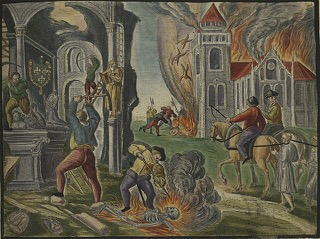
here destruction of Huguenot temple 

Hardly surprising then, that many converted and many fled despite the penalties if they were caught.

Huguenot women in prison 

The fiction

It has been an intriguing journey finding out about my ancestors and, more generally, about the circumstances which forced Huguenots like them to flee France. My book ‘The King’s Command’ is based, very loosely, on their experience. I have set the story in Castillon, called the main character Lydia (or Lidie, as she was known by her family) and her husband Samuel, but a lot of the other characters are fictional, as is the account of Samuel’s death and Lidie’s escape. I know nothing of the family’s actual escape to Geneva but night travelling was common. There were ‘Huguenot Trails’ known only to those within a trusted network, safe houses along the escape routes, false identities adopted and bribes paid. There were also plenty of financial rewards offered to those betraying Huguenots and to soldiers finding stowaways, with spies and informers everywhere, so any escape would have been fraught with danger.

In my story, I have made Lidie stay in Castillon and then escape not from nearby Bordeaux, which was heavily guarded, but from a little port called La Tremblade a good way up the West coast. Many Huguenots did escape from here and I used, as background, a contemporary account of one such escape, cranking up the tension as the family tried to avoid detection. 

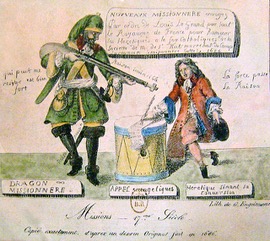
To add to the tension, I made the King’s dragoons visit Castillon to try and force unconverted Huguenot households to abjure. I don’t know if this is true, but certainly there were plenty of reports of this happening in the region.

dragoon forcing Huguenot to sign abduration papers 

I also made Samuel die a violent death as a direct result of his association with Claude Brousson, a Protestant lawyer and preacher who fought tirelessly for justice for the Huguenots. Brousson had to flee for his life to Switzerland and then, very bravely, returned in secret to become part of the Church of the Desert, in the wild and mountainous region of the Cevennes, where he preached and gave succour to his fellow Protestants. He died a martyr and hero but he is largely forgotten now and I felt he merited some recognition.

In reality, once Lidie reached London, it seems that she led a very quiet and worthy life, centred on the French church in Hammersmith, but I decided to make her lively and vivacious with a strong character and a love of fashion and of the new silks being made in Spitalfields. I also invented for her a naughty surviving daughter, a new romance and another child from a (fictitious) second marriage. 

In her will, Lidie left the bulk of her estate to her son Elias and the rest to the French church in Hammersmith and the French poor of London. It seems that she was still relatively well off and it is known that she brought with her from France some family portraits (presumably taken out of their frames and rolled up), some small pieces of family silver and the La Fargue seal.

The Huguenots were hardworking and talented people and they integrated so seamlessly into their adopted countries that, generations on, it is easy to forget the circumstances which forced them to flee their native France in the 17thcentury. 

Thank you so much for sharing your fabulous post.

Here’s the blurb

16 year old Lidie Brunier has everything; looks, wealth, health and a charming suitor but there are dark clouds on the horizon. Lidie  and her family are committed Huguenots and Louis XIV has sworn to stamp out this ‘false religion’ and make France a wholly Catholic country. Gradually Lidie’s comfortable life starts to disintegrate as Huguenots are stripped of all rights and the King sends his brutal soldiers into their homes to force them to become Catholics. Others around her break under pressure but Lidie and her family refuse to convert. With spies everywhere and the ever present threat of violence, they struggle on. Then a shocking betrayal forces Lidie’s hand and her only option is to try and flee the country. A decision that brings unimaginable hardship, terror and tragedy and changes her life for ever.

‘One of the very best historical novels I have ever read’

Sandra Robinson, Huguenot Ancestry Expert

Buy Links: 

This title is available to read with #KindleUnlimited.

Universal Link

Amazon UKAmazon US

Amazon AUAmazon CA

Meet the author

Rosemary Hayes has written over fifty books for children and young adults. She writes  in different genres, from edgy teenage fiction (The Mark), historical fiction (The Blue Eyed Aborigine and Forgotten Footprints), middle grade fantasy (Loose Connections, The Stonekeeper’s Child and Break Out)  to chapter books for early readers and texts for picture books. Many of her books have won or been shortlisted for awards and several have been translated into different languages.

Rosemary has travelled widely but now lives in South Cambridgeshire. She has a background in publishing, having worked for Cambridge University Press before setting up her own company Anglia Young Books which she ran for some years. She has been a reader for a well-known authors’ advisory service and runs creative writing workshops for both children and adults.

Rosemary has recently turned her hand to adult fiction and her historical novel ‘The King’s Command’ is about the terror and tragedy suffered by the French Huguenots during the reign of Louis XIV.

Connect with the author

Website Twitter Amazon Author Page Goodreads 

Follow The King’s Command blog tour with The Coffee Pot Book Club

I’m delighted to welcome to the blog a returning Helen Hollick and her new mystery, A Meadow Murder #CosyMystery #CozyMystery #Devon #BlogTour #TheCoffeePotBookClub

Here’s the blurb:

“As delicious as a Devon Cream Tea!” ~ author Elizabeth St John

“Every sentence pulls you back into the early 1970s… The Darling Buds of May, only not Kent, but Devon. The countryside itself is a character and Hollick imbues it with plenty of emotion” ~ author Alison Morton

***

Make hay while the sun shines? But what happens when a murder is discovered, and country life is disrupted?

Summer 1972. Young library assistant Jan Christopher and her fiancé, DS Lawrence Walker, are on holiday in North Devon. There are country walks and a day at the races to enjoy, along with Sunday lunch at the village pub, and the hay to help bring in for the neighbouring farmer.

But when a body is found the holiday plans are to change into an investigation of murder, hampered by a resting actor, a woman convinced she’s met a leprechaun and a scarecrow on walkabout…

Buy Links

This title is available to read on #KindleUnlimited. 

Universal Link

Amazon UKAmazon US

Amazon CAAmazon AU

Meet Helen Hollick

First accepted for traditional publication in 1993, Helen became a USA Today Bestseller with her historical novel, THE FOREVER QUEEN (titled A HOLLOW CROWN in the UK) with the sequel, HAROLD THE KING (US: I AM THE CHOSEN KING) being novels that explore the events that led to the Battle of Hastings in 1066. 

Her PENDRAGON’S BANNER TRILOGY is a fifth-century version of the Arthurian legend, and she writes a nautical adventure/fantasy series, THE SEA WITCH VOYAGES

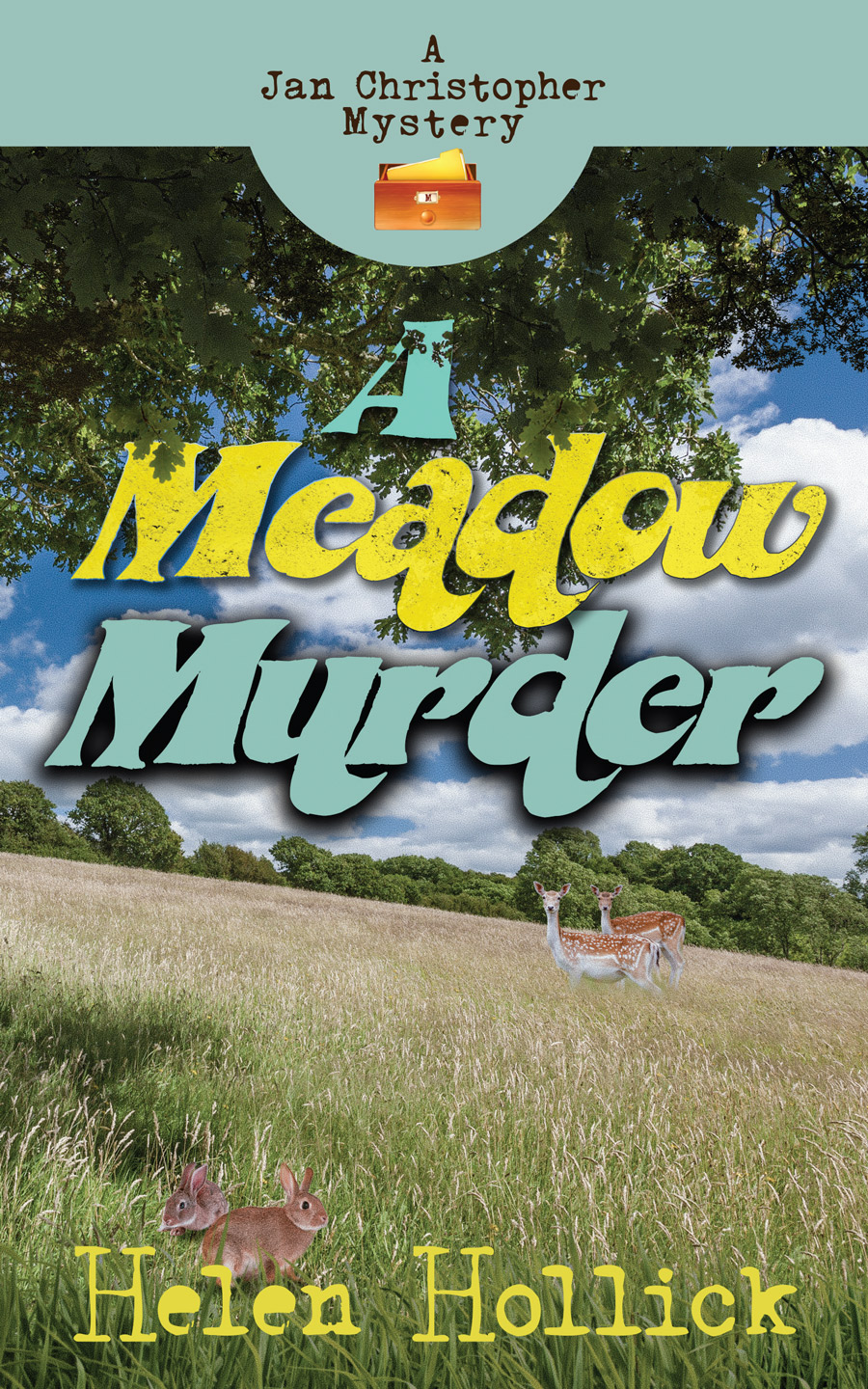
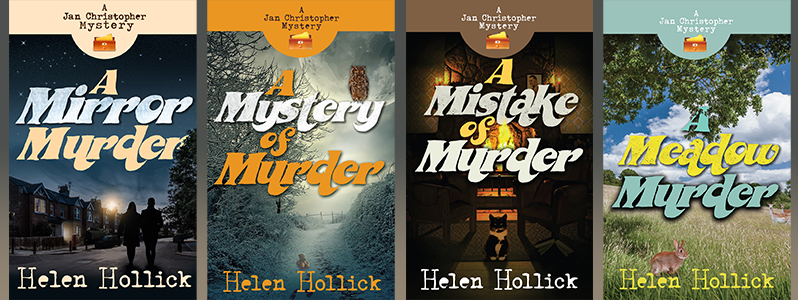
She has also branched out into the quick read novella, ‘Cosy Mystery’ genre with her JAN CHRISTOPHER MURDER MYSTERIES, set in the 1970s, with the first in the series, A MIRROR MURDER incorporating her, often hilarious, memories of working as a library assistant. The front cover of episode #4 A MEADOW MURDER is Helen’s actual hay meadow on her Devon farm.

Her non-fiction books are Pirates: Truth and Tales and Life of A Smuggler. She lives with her family in an eighteenth-century farmhouse in North Devon and occasionally gets time to write…

Connect with Helen

WebsiteTwitterFacebook:

NewsletterAmazon Author Page

GoodreadsBlog:

Subscribe to Helen’s Newsletter

Follow the A Meadow Murder blog tour with The Coffee Pot Book Club

Check out Helen’s post for book 3 in the Jan Christopher Mystery series.

Check out Helen’s 30th Anniversary publication post.

I’m delighted to welcome Stella Riley and her new book, The Shadow Earl to the blog. HistoricalRomance #HistoricalMystery #BlogTour #The CoffeePotBookClub

I’m delighted to welcome Stella Riley and her new book, The Shadow Earl to the blog. Read on for an excerpt.

An incident between Messrs Selwyn & Shelbourne at the Cocoa Tree Club

Daniel immediately noticed two things.  Basil Selwyn and his idiotic friends sitting near the Hazard table … and a footman about to serve them a steaming bowl of punch.  Opportunity and temptation coincided. One very slight movement was all it took. The footman tripped, lurched, fumbled with the bowl … and a couple of pints of rum punch cascaded over Mr Selwyn.

What the – ?’  Basil leapt from his seat in a sticky shower, whirled to deliver a blistering tirade … saw Daniel and froze.  

You!’ he spat. ‘You did that, you bastard.’

Several gentlemen at the Hazard table stopped playing to watch.

‘What?’ asked Daniel. ‘Don’t be ridiculous. The poor fellow tripped, that’s all.’

‘Not without help,’ raged Basil, dripping and trying to drag off his ruined coat. ‘You tripped him. Deliberately.’

‘And risk the stuff being spilled over me?  Hardly. Dare I mention that you have a slice of lemon in your hair?’

Basil hurled his coat aside, groped blindly for the lemon and glared at the footman. ‘You.  Tell me the truth. He tripped you, didn’t he?’

The poor man hesitated, swallowed and stammered that it had been an accident. 

‘Calm down, Selwyn,’ advised Daniel as the footman fled. ‘Your imagination is running away with you.  It’s been doing that a lot recently, hasn’t it?’

More heads turned, somebody sniggered and play at the Hazard table ceased.

Ignoring this, Basil growled, ‘I know what you did!’

‘You don’t because I didn’t.’ Daniel smiled sympathetically,  ‘You should try Mrs Baxter’s Elixir.  My great-aunt swears by it when her nerves are – ’ 

‘There’s nothing wrong with my nerves, damn you!  You tripped the footman. Admit it!’  And when Daniel shook his head, ‘Then you’re a bloody liar!’ 

The gasp of shock that rippled through his audience was lost on Basil, as was the voice advising, ‘Take that back while you still can, Selwyn.’

Here’s the blurb

At the end of his Grand Tour, somewhere between Athens and Constantinople, Christian Selwyn, the young Earl of Hazelmere, vanished – seemingly without a trace.

Time passes.  In London, his uncle and cousin move into his home … while his unofficial fiancée, Sophia, is left desolate and in limbo.  Finally, his friends – loyal and close as brothers – set out to search in person.  

Christian’s startling re-appearance at a grand ball takes society by storm and fuels endless speculation. Where has he been during these three missing years? What happened to him?  

And more importantly, how did it happen?  

Only one thing is clear.  The earl who left England five years ago, has returned a changed man.  A man with secrets.

Buy Links:

Audiobook narrated by Alex Wyndham

Universal Link

Amazon UK:   Amazon USAmazon CAAmazon AU

Barnes and NobleKoboSmashwords

Meet the author

Winner of four gold medals for historical romance (Readers’ Favourite in 2019, Book Excellence Awards in 2020, Global Book Awards in 2022 and Book Excellence Award in 2023) and fifteen B.R.A.G. Medallions, Stella Riley lives in the beautiful medieval town of Sandwich in Kent.

She is fascinated by the English Civil Wars and has written six books set in that period. These, like the 7 book Rockliffe series (recommended in The Times newspaper!) and the Brandon Brothers trilogy, are all available in audio, narrated by Alex Wyndham.

Stella enjoys travel, reading, theatre, Baroque music and playing the harpsichord.  She also has a fondness for men with long hair – hence her 17th and 18th century heroes.

Connect with Stella

Website:   Twitter: 

FacebookInstagramPinterest

Book BubAmazon Author PageGoodreads:

Follow The Shadow Earl blog tour with The Coffee Pot Book Club

I’m delighted to welcome Cindy Burkart Maynard to the blog, with an excerpt from her book, Esperanza’s Way #HistoricalFiction #Spain #womansjourney #BlogTour #TheCoffeePotBookClub 

I’m delighted to welcome Cindy Burkart Maynard to the blog, with an excerpt from her book, Esperanza’s Way.

Over the following months, the young woman and the old Master worked side by side, trying every treatment they could find. They rifled through Master Cohen’s books, desperate to fend off the invader overtaking Johanna’s body. They dressed the lumps with damp cloths infused with black nightshade. Esperanza created a poultice of nettle, mustard seed and moldy bread and laid it against the invading tumors. 

Among his books, Master Cohen found an ancient Egyptian remedy – an ointment that combined bull bile, fly droppings, and ochre. They prepared gallons of marjoram tea and forced her to choke it down. They spooned a powerful mixture of heartsease, marigold, and yarrow into her mouth. Nothing worked. By the time the courtyard flowers drooped in their pots, and cold winds stripped the trees of their leaves Johanna’s condition had worsened to a critical stage. She thrashed back and forth on her pallet, insensible to anything but the pain that enveloped her. 

“Please, husband,” she rasped. “Please end this torment. You must have something to release me from this agony.” Looking toward Esperanza standing at her bedside she begged. “Esperanza, you once killed a woman with belladonna. If you love me at all, please, please do the same for me.” 

Esperanza lifted her eyes to Master Cohen’s. He squeezed his eyes closed and nodded almost imperceptibly, giving her tacit permission to end Johanna’s suffering. 

Esperanza’s blood turned to ice in her veins.

Here’s the blurb

Motivated by the memory of her mother dying in her arms, Esperanza resolves that she will one day walk the halls of the Scola Medica at Salerno and train to become a healer. Fate brought Amika, a talented herbalist, into her life and helped Esperanza take her first steps toward gaining the knowledge that would fulfill her dream. Unfortunately, a tragic accident forced Esperanza to flee Amika’s home. Her journey toward finding the path to success is littered with stumbling blocks, some more difficult to avoid than she expected.

Buy Links:

Esperanza’s Way (Book 2)

Finding the Way (Book 1)  

Meet the author

Cindy Burkart Maynard is passionate about history, and the natural world, a passion that adds rich detail and context to her historical fiction novels. Her characters come to life on the page as they portray what it was like to live in another time and place. She weaves compelling, dramatic stories based on strong characters facing daunting challenges. She has co-authored two nonfiction works about the Colorado Plateau and the Desert Southwest and contributed articles to Images and Colorado Life Magazines. She has been a Volunteer Naturalist for Boulder County for more than twenty years, and served as a Docent at the Sonora Arizona Desert Museum in Tucson, AZ.

Awards:
Colorado Authors League Award Winner for Western Literature

Women Writing the West Award Finalist
WILLA Literary Award finalist for soft cover fiction.

Readers’ Favorite Five Star Author
Winner of the Marie M. Irvine award for Literary Excellence

Professional Affiliations:

Historical Novel Society of North America

Lighthouse Writers

Women’s Fiction Writers Association

Colorado Authors League

Rocky Mountain Fiction Writers

Authors Guild

Follow Cindy Burkart Maynard

Website:  

Publisher author pageTwitter:   Facebook:   

InstagramAmazon Author PageGoodreads

Follow the Esperanza’s Way blog tour with The Coffee Pot Book Club

I’m delighted to welcome Mary Anna Evans to the blog with her new book, The Traitor Beside Her and a blog post about the book’s setting. HistoricalFiction #HistoricalMystery #BlogTour #TheCoffeePotBookClub

I’m delighted to welcome Mary Anna Evans to the blog with her new book, The Traitor Beside Her and a blog post about the book’s setting.

When You Need to Know A Whole Lot About Your Nation’s Capital, But What You Really Need to Know Is What it Was Like in 1944….

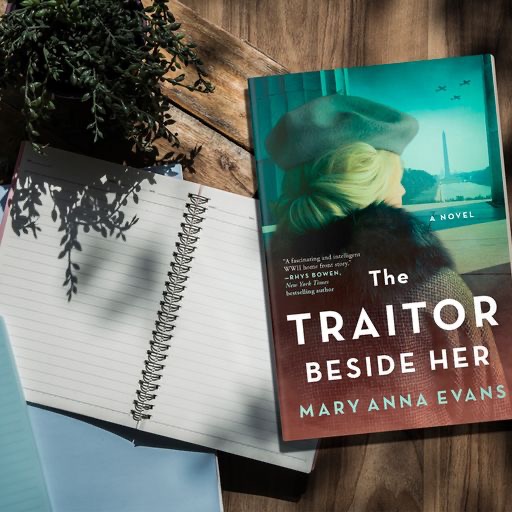
It’s no spoiler, based on my book’s cover, to say that The Traitor Beside Her is set in and around Washington, DC. Based on the woman’s clothing and the three possibly military-ish planes in the sky, and also based on the word “traitor,” it would be a safe bet for you to guess that it is set during World War II. And you’d be right!

Much of the action in The Traitor Beside Her takes place across the Potomac River from Washington, DC, in Arlington, Virginia, where a code breaking operation being done at a place called Arlington Hall paralleled the more widely known work being done across the Atlantic at Bletchley Park. However, my protagonist, Justine Byrne—she of the fetching hat and coat on the book cover—crosses the Potomac twice during the book, both times in the company of a man who is trying to woo her.

One of those dates is a traditional dinner date, during which Justine is wined and dined, all while packing heat in her white satin evening bag. But that is a story for another day. At the moment, I’m more focused on a more humble, everyday date, the kind of date you might go on during wartime when money was short and there was no sugar to go in the ice cream soda that a 1940s-era suitor might ordinarily have bought for a girl he was sweet on. For this humble date, Justine and the young man take an ordinary walk in an extraordinary setting.

Justine lives in a government-owned dormitory near where the Arlington Bridge crosses the Potomac, so she and her date take a short walk to the city, with the Lincoln Memorial as imposing sight in front of them. To write this scene, I had to first make sure that the Arlington Bridge was even there in 1944 (Spoiler Alert 1—it was), and that you could walk across it (Spoiler Alert 2—you could), and that it was lit if you needed to walk back after dark (Spoiler Alert 3—there were indeed lights).

The Lincoln Memorial was there, looking much like it does now, only a lot newer. The same could be said of the Lincoln Memorial Reflecting Pool, except there was a lot less pavement around it. These days, the pool is ringed with sidewalks, but not back then. There was just a narrow rim of pavement, presumably stone, at the edge of the pool. If Justine and her date want to walk around it, and they do, then they’ll be walking in the grass.

I thought this was all interesting information that was useful as the kind of background information that makes a historical novel feel real. But then I realized that it was also information that was important to my story. One of my characters uses a wheelchair. He can and absolutely does make his way through grass when he needs to do so. However, the lack of sidewalks making the Reflecting Pool easily accessible to him led me to another question. Was there a way to the pool in 1944 that didn’t involve a flight of stairs?

Well, the historical pictures that I could find didn’t tell me, and I still don’t know, but I acknowledged in the text that there were surely accessibility difficulties for that character in 1944, and I made sure that I did not put Jerry in a spot where he could not have been in that day and time. (Actually, I should say that I did not put him in a spot where he couldn’t easily have been in that day and time. Anybody who reads the climactic scene will see that Jerry always finds a way to do what needs doing.)

But if I told you what kind of trouble Jerry needed to get into in the climactic scene, I would need to give you Spoiler Alert 4, so I think I shall quit while I’m ahead.

Mary Anna

Thank you so much for sharing such a fabulous blog post.

Here’s the blurb

“Evans’s characters are vividly drawn, elevating this story and its revelations about women’s little-celebrated contributions to the war effort.”— Washington Post

“An exciting read with historical tidbits, a hint of danger, and a touch of romance.”— Kirkus Reviews

The Traitor Beside Her is an intricately plotted WWII espionage novel weaving together mystery, action, friendship, and a hint of romance perfect for fans of The Rose Code and Code Name Helene.

Justine Byrne can’t trust the people working beside her. Arlington Hall, a former women’s college in Virginia has been taken over by the United States Army where hundreds of men and women work to decode countless pieces of communication coming from the Axis powers.

Justine works among them, handling the most sensitive secrets of World War II—but she isn’t there to decipher German codes—she’s there to find a traitor.

Justine keeps her guard up and her ears open, confiding only in her best friend, Georgette, a fluent speaker of Choctaw who is training to work as a code talker. Justine tries to befriend each suspect, believing that the key to finding the spy lies not in cryptography but in understanding how code breakers tick. When young women begin to go missing at Arlington Hall, her deadline for unraveling the web of secrets becomes urgent and one thing remains clear: a single secret in enemy hands could end thousands of lives.

“A fascinating and intelligent WWII home front story.” —Rhys Bowen, New York Times bestselling author for The Physicists’ Daughter

Buy Links:

Universal Link:  

Amazon UKAmazon USAmazon CAAmazon AU

Barnes and NobleWaterstonesKoboBookshop

Audio Buy Links:

Audiobook narrated by Kimberly M. Wetherell

Audiobooks.comAudible:

Meet the author

Mary Anna Evans is an award-winning author, a writing professor, and she holds degrees in physics and engineering, a background that, as it turns out, is ideal for writing her Justine Byrne serieswhich began with The Physicists’ Daughter and continues with her new book, The Traitor Beside Her. She describes Justine as “a little bit Rosie-the-Riveter and a little bit Bletchley Park codebreaker.” 

Mary Anna’s crime fiction has earned recognition that includes two Oklahoma Book Awards, the Will Rogers Medallion Awards Gold Medal, and the Benjamin Franklin Award, and she co-edited the Edgar-nominated Bloomsbury Handbook to Agatha Christie. 

Connect with Mary Anna

WebsiteTwitter

FacebookLinkedInInstagram

Book BubAmazon Author PageGoodreads

Follow The Traitor Beside Her blog tour with The Coffee Pot Book Club

I’m delighted to welcome Elizabeth St. John and the audiobook for The Lady of the Tower to the blog #HistoricalFiction #Audiobook #BlogTour #TheCoffeePotBookClub #PrincesInTheTower

Elizabeth St John is sharing a snippet – written and audio – of her fab book, The Lady of the Tower. Enjoy.

Chapter Nine

Lydiard Park

I drew a deep, shuddering breath, my hand on my breast, feeling the posie ring concealed beneath.

“I can’t bear it, Anne. I can’t live this way any longer.” I slumped into a chair, such a paralyzing emptiness overwhelming me that my tears were frozen. Although the afternoon sun warmed my chamber, my hands were icy cold. I had hidden my emotions for so long that only hollowness remained, and the loss of Theo’s letters slammed the door shut on my soul. I hated the thought of Joan and Barbara reading his precious words, spitefully laughing over his declarations of love and his promises for our future. I did not care of their opinions of me, for I did not respect their morality, but to consider their envious suppositions tainted his writings disturbed me beyond words.

“Lucy, they are so terribly jealous of your happiness. It is horrible. I tried to stop them from forcing the lock on your box. I tried to prevent them from removing Theo’s letters. I am so sorry I could not intervene.” Anne’s white face was pinched, her cheeks streaked with tears.

“It’s not your fault, Anne. Don’t distress yourself more. I do not know what I have ever done to deserve this treatment from them, but it has been this way since I was a child, and it appears it will never cease.”

I looked around the familiar room, my sanctuary at Lydiard. The polished chestnut paneling glowed in the afternoon sun, and the vase of yellow roses on the chest emanated a heady fragrance that promised the long summer days ahead. Through the diamond-paned window shimmered the green parkland, where an ancient cypress tree marked the boundary of the bowling green and offered a shady resting place. All were loved by me with a passion that had sustained me during my exile at Battersey, and they became my refuge when I returned. Now they taunted me with an oppressive familiarity. I longed to be stripped of all the layers of family and emotions binding me to this place and to be free of the jealous web threatening now to strangle me.

“Anne, I need your help.”

She lifted her head eagerly, her sweet expression expectant.

“Of course, Lucy, of course. I will tell John of Joan’s cruel accusations. He will not believe her.”

“No, leave John from this for now. He will not understand the woman’s jealous heart that steers these resentful actions. No, it is something different that I ask of you.”

“Anything, for I cannot bear to see you be the object of your sister’s envy this way.”

“You leave for Guernsey to visit your father next week. I would come with you.”

Check out the audio snippet: https://youtu.be/s_Vn6LPoyFE

Here’s the blurb:

“Elizabeth St John has brought the Stuart Court vividly to life. She weaves together the known facts of Lucy’s life with colourful scenes of fictional imagination, drawing on innocent romance and bleak deception to create a believable heroine and an intriguing plot.” Historic Novel Society Book Review 

“The Lady of the Tower is a beautifully produced novel with a well-crafted story that will keep you both engaged and entertained. A joy to read. Thank you for sharing your world with us.” 

Writers Digest 24th Annual Book Awards

London, 1609. When Lucy St.John, a beautiful highborn orphan at the court of King James, is seduced by the Earl of Suffolk, she never imagines the powerful enemy she creates in his beloved sister, the Countess of Rochester. Or that her own sister Barbara would betray her and force Lucy to leave the court in disgrace. Spirited, educated, and skilled in medicine and precious remedies, Lucy fights her way back into society, and through an unexpected love match, becomes mistress of the Tower of London. 

Living inside the walls of the infamous prison, she defies plague, political intrigues and tragic executions to tend to aristocratic prisoners and criminals alike. Now married into the immensely powerful Villiers family, Barbara unites with the king’s favorite, the Duke of Buckingham, to raise the fortunes of Lucy and her family to dizzying heights. But with great wealth comes treachery, leaving Lucy to fight for her survival—and her honor—in a world of deceit and debauchery. 

Elizabeth St.John’s critically acclaimed debut novel tells the true story of her ancestress Lucy through her family’s surviving diaries, letters, and court papers. Lucy’s personal friendships with historical figures such as Sir Walter Raleigh and the Stuart kings brings a unique perspective to the history of seventeenth century England.  

Buy Links:

The ebook is available to read on Kindle Unlimited.

Universal Buy Link: https://geni.us/MyBookLOTT

Audiobook Buy Links:

Available on BookBub Chirp for only $3.99 during August:

https://www.chirpbooks.com/audiobooks/the-lady-of-the-tower-by-elizabeth-st-john

On all other platforms from $7.99 or FREE with an Audible subscription: 

https://geni.us/XZlpl45

Official Audiobook Sample:

https://geni.us/LOTTAudioSample

Meet Elizabeth St. John

Elizabeth St.John’s critically acclaimed historical fiction novels tell the stories of her ancestors: extraordinary women whose intriguing kinship with England’s kings and queens brings an intimately unique perspective to Medieval, Tudor, and Stuart times.

Inspired by family archives and residences from Lydiard Park to the Tower of London, Elizabeth spends much of her time exploring ancestral portraits, diaries, and lost gardens. And encountering the occasional ghost. But that’s another story.

Living between California, England, and the past, Elizabeth is the International Ambassador for The Friends of Lydiard Park, an English charity dedicated to conserving and enhancing this beautiful centuries-old country house and park. As a curator for The Lydiard Archives, she is constantly looking for an undiscovered treasure to inspire her next novel.

Elizabeth’s books include her trilogy, The Lydiard Chronicles, set in 17th Century England during the Civil War, and her newest release, The Godmother’s Secret, which explores the medieval mystery of the missing Princes in the Tower of London.

Connect with Elizabeth

WebsiteTwitter

FacebookLinkedInInstagram

Book BubAmazon Author PageGoodreads

Follow The Lady of the Tower blog tour with The Coffee Pot Book Club

It’s release day for the Buccaneer, the new book from Chris Thorndycroft, Pirates #Caribbean #Swashbuckling #NavalFiction #BlogTour #NewRelease #TheCoffeePotBookClub

Here’s the blurb

Bristol, 1713. When Philip Rake, pickpocket, smuggler and scoundrel is arrested and thrown in jail, he assumes he has a short walk to the gallows. But his father, a wealthy merchant who has remained a figure of mystery throughout his life, throws him a lifeline; become an indentured man on an expedition to the East Indies led by his friend, Woodes Rogers.

Woodes Rogers is looking for Libertatia – the fabled pirate kingdom of the legendary buccaneer Henry Avery – and the hoard of treasure rumoured to be hidden there. But Philip wants his freedom and when he learns that there are men onboard who once sailed with Henry Avery and plan to take the treasure for themselves, he jumps ship and embarks upon a career of piracy.

Philip’s story takes him from the backstreets of Bristol to the sun-baked hills of Madagascar and on to the tropical islands of the Caribbean in a thrilling tale of adventure in which he rubs shoulders with some of the most notorious pirates of the age including Blackbeard, Charles Vane, Anne Bonny and Mary Read.

Buy Links:

This title will be available to read on #KindleUnlimited. 

Universal Link

Amazon UKAmazon US

Amazon CAAmazon AU

Meet the Author

Chris Thorndycroft’s writing career began with short horror stories which appeared in magazines and anthologies such as Dark Moon Digest and American Nightmare. 

His first novel under his own name was A Brother’s Oath, book one in the Hengest and Horsa trilogy, which deals with the beginning of Anglo-Saxon England. He has always had a passion for historical fiction, kindled at the age of six when he first saw Errol Flynn in The Adventures of Robin Hood (1938). His books are deeply grounded in real history but often reimagine legends such as King Arthur and Robin Hood, weaving them in with historical events. 

He currently lives in Norway with his wife and two kids. 

Connect with Chris

WebsiteTwitter: Facebook:     Instagram

TikTokAmazon Author PageGoodreads:

Follow the Buccaneer Blog Tour with The Coffee Pot Book Club

Nancy Northcott and her historical fantasy, The King’s Champion, joins me on the blog HistoricalFantasy #WWII #Dunkirk #RomanticFantasy #BlogTour #TheCoffeePotBookClub

I’m delighted to welcome Nancy Northcott and her historical fantasy series to the blog. Nancy is sharing a fabulous post, about Challenges in the Past, with us.

Writing historical fantasy obviously requires dropping one’s characters into an historical world and making it seem real, vibrant and alive for readers. This holds true even when a writer decides to create an alternative timeline, or even an alternate universe for a particular era, as with steampunk, which is often set in a Victorian England that has steam-based and other tech. The more different the timeline and universe are from the way our history depicts a period, the more leeway an author has available in creating the world.

I like to stick close to the actual timeline, fitting my characters and their magic around the events of the era. That means I need to be fairly true to what people wore, how they lived, what they ate, and so on. In this post, I’ll share some of the challenges I faced in recreating the periods of the three books in my Boar King’s Honor historical fantasy trilogy.

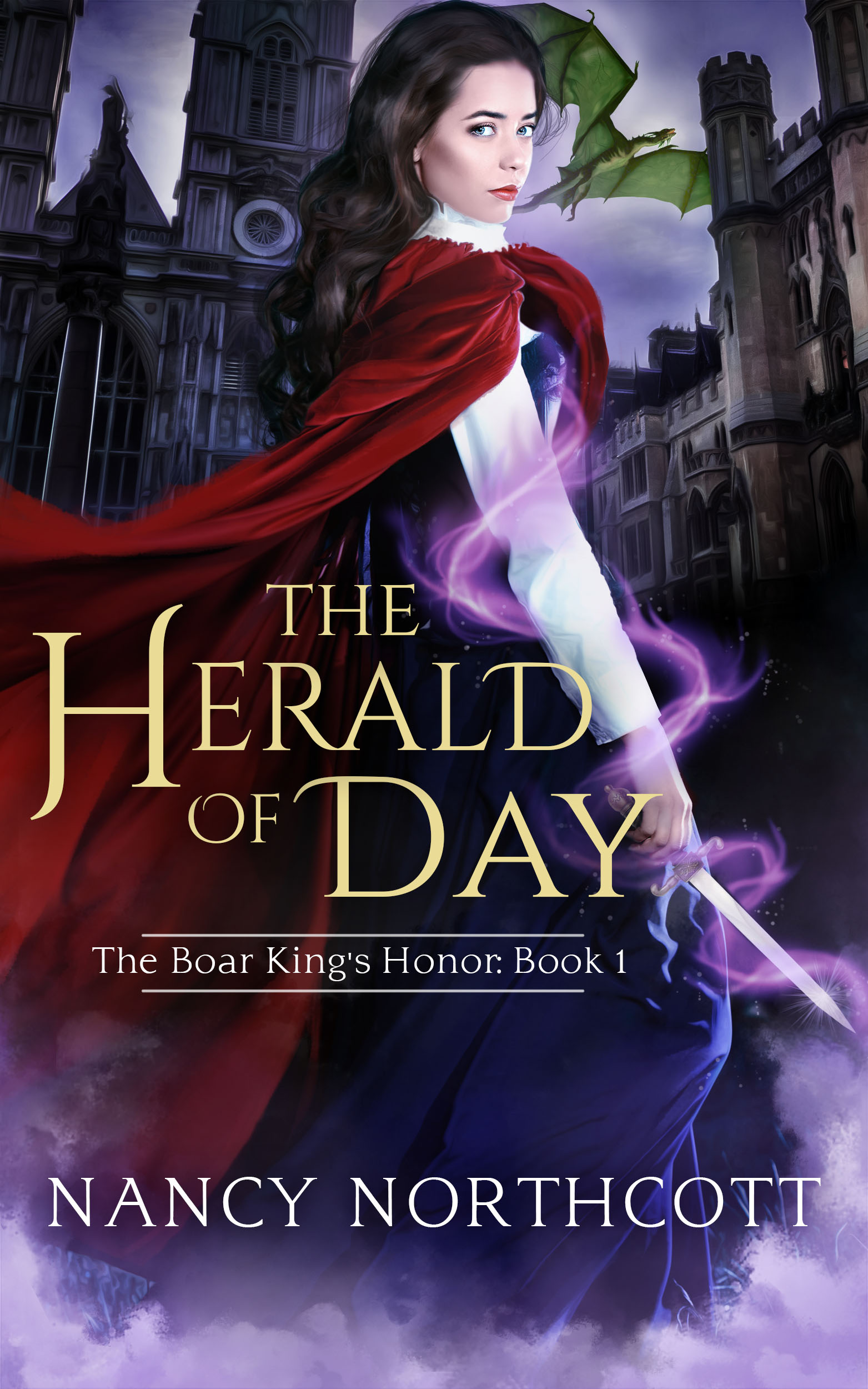
The action in the first book Boar King’s Honor trilogy, The Herald of Day, takes place in 1674, during the reign of Charles II. Although the book opens in Dover, most of the scenes take place in London. I happen to like that period, so I didn’t have to do much reading about the political situation in England at that time. I did, however, have to find out about travel, food, clothing, customs, and language. I started this project before the internet had virtually every kind of information on it, so I had to do a fair bit of hunting for answers.

Finding out about clothing was harder than I expected. I had a scene in which the villain undressed, and I realized I had no idea how men’s pants closed in 1674. I started asking writers, and someone knew someone who was not only a writer but a costumer. This friend of a friend generously provided sketches, references on clothing design and fabric, and other information that was helpful for all the characters.

Despite preferring to stay close to established history, I took a leap with that book and decided to have the villain, a wizard, figure out how to go back in time and change history to create a dictatorship of the magically Gifted—with himself at the head, of course. So I had to decide whether he made the change before, during, or after the Restoration of Charles II. I went back and read from the events leading up to it through the period immediately after and weighed the results of several options. I won’t say what I finally picked because the characters have to figure that out what the villain did, and I don’t want to spoil that for readers.

The second book, The Steel Rose, was the scariest to write from a research standpoint. By the time I started that one, the internet offered reams of material, and books on historical costume were easier to find around here than they’d been before. That simplified choices for the characters’ clothing, but the period brought a new headache.

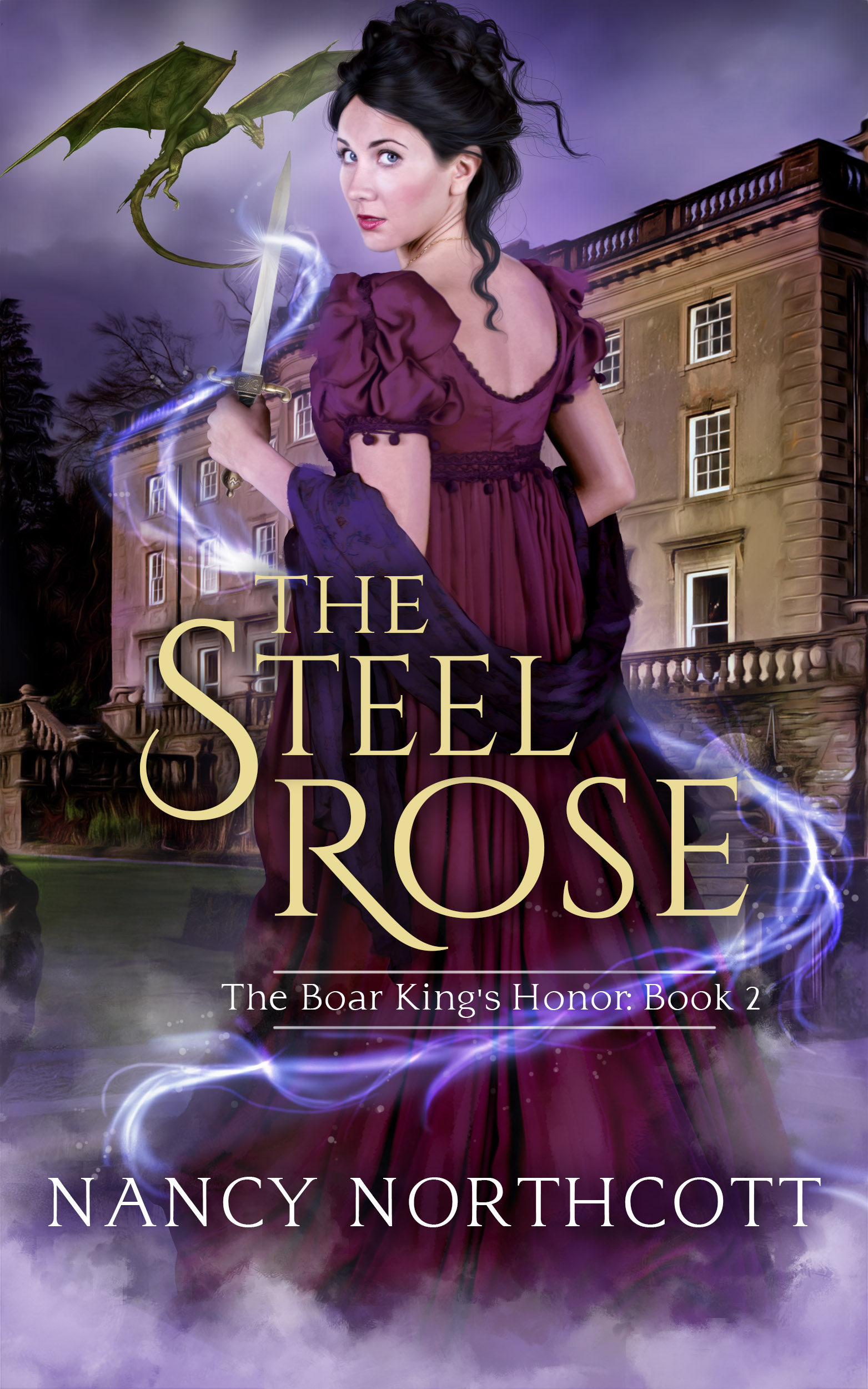
The Steel Rose is set in 1815 during the hundred days between Napoleon’s escape from Elba and the Battle of Waterloo. This period is known as the Regency because King George III was incapable of ruling and England was governed by his son, the future George IV, as Prince Regent. This is Jane Austen’s era. It’s also one of the most popular for romance novels. During the Regency, social classes were rigidly stratified, and manners made the difference between social success and ostracism. There was a very great deal of etiquette to learn.

As though that weren’t tough enough from a writer standpoint, there are vast numbers of people who love the era’s social history. They create historically accurate costumes, learn the dances, and memorize the etiquette. They’ve been known to eviscerate writers who got something wrong, and the internet didn’t offer the specific information I needed. Fortunately, some Regency romance writers came to my rescue, answering questions and pointing me to resources. I did cut come of the bowing and curtseying customary during the era in the interests of moving the story along.

The social niceties weren’t my only concern, though. This story would include both Napoleon’s departure from Elba and the Battle of Waterloo. You may be aware that literal armies of people re-enact Waterloo every year. And they do it wearing uniforms accurate for both the period and their military units. That means many, many potential readers would know if I made a mistake. 

Fortunately for me, Osprey Publishing puts out wonderful books full of detailed information on military uniforms and equipment. They also had a terrific book on the battle that led me to other books full of the meticulous details that gladden writers’ hearts.

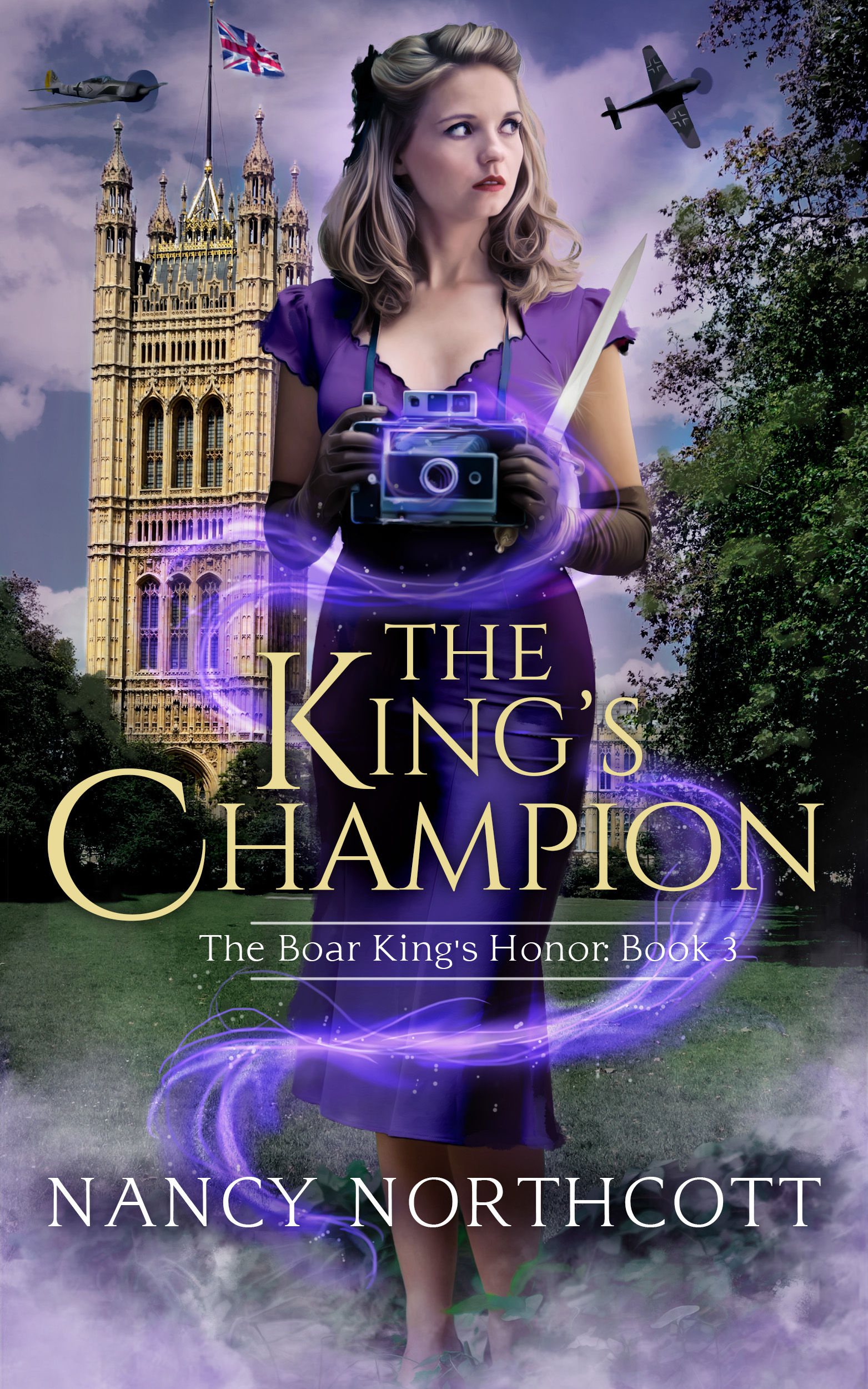
With those challenges behind me, I turned to the final book, The King’s Champion. It posed a different problem. There are many, many, many books about Britain during World War II, including libraries’ worth on social history. The trick, I quickly realized, would be in synthesizing all this information so that it offered an accurate picture of the era without including so much that it overshadowed the story. There are still people alive who remember the war years. There are many more who remember what those people said about life during the war. I had to depict British society in a way they would find acceptable. 

Friends whose parents remember hearing about the war from relatives helped me out, especially about rationing and housing. Other friends knew the answers I needed or knew British veterans who would answer my questions. The Imperial War Museum website was very useful, as were, again, Osprey books. It was from that website that I learned about the 5” per person per week rationing of hot bath water, but I was never able to figure out exactly when that started. 

At one point, my heroine is on a tugboat headed back to Dover from Dunkirk, and she asks the captain how long the trip will take. Unfortunately, I didn’t know. I could’ve deleted the question, but it would be logical for her to ask. I wanted to find the answer. This sent me down a research rabbit hole that grew ever deeper as I searched. Finally, after several attempts, I put the right combination of words into a search engine and hit upon a website devoted to the Little Ships of the evacuation.

These are some of the challenges I stumbled into while building the worlds for these three books. I didn’t want to hand-wave the problems away and just put down something convenient because “it’s fiction.” I’m grateful to everyone who helped me find the answers I needed.

I enjoyed the hunt for information, so finding it was a true delight each and every time. I’m happy with the worlds in this trilogy, and I hope readers be will as well.

#

Thank you for having me, MJ!

Thanks so much for sharing your fabulous post with my readers.

The Boar King’s Honor Trilogy

A wizard’s misplaced trust

A king wrongly blamed

A bloodline cursed until they clear the king’s name.

Here’s the blurb

Caught up in the desperate evacuation of the British Expeditionary Force from France in the summer of 1940, photojournalist Kate Shaw witnesses death and destruction that trigger disturbing visions. She doesn’t believe in magic and tries to pass them off as survivor guilt or an overactive imagination, but the increasingly intense visions force her to accept that she is not only magically Gifted but a seer.

In Dover, she meets her distant cousin Sebastian Mainwaring, Earl of Hawkstowe and an officer in the British Army. He’s also a seer and is desperate to recruit her rare Gift for the war effort. The fall of France leaves Britain standing alone as the full weight of Nazi military might threatens. Kate’s untrained Gift flares out of control, forcing her to accept Sebastian’s help in conquering it as her ethics compel her to use her ability for the cause that is right.

As this fledgling wizard comes into her own, her visions warn of an impending German invasion, Operation Sealion, which British intelligence confirms. At the same time, desire to help Sebastian, who’s doomed by a family curse arising from a centuries-old murder, leads Kate to a shadowy afterworld between life and death and the trapped, fading souls who are the roots of her family’s story. From the bloody battlefields of France to the salons of London, Kate and Sebastian race against time to free his family’s cursed souls and to stop an invasion that could doom the Allied cause. 

The King’s Champion concludes Nancy’s Northcott’s exciting Boar King’s Honor Trilogy.

Buy Links:

This series is available to read on #KindleUnlimited.

Universal Buy Links:   

The Herald of Day

Universal Buy Link

The Steel Rose

Universal Buy Link

The King’s Champion

Universal Buy Link

The Boar King’s Honor Trilogy Links:

Amazon US Amazon UK Amazon AU Amazon CA

Meet the author

Nancy Northcott’s childhood ambition was to grow up and become Wonder Woman.  Around fourth grade, she realized it was too late to acquire Amazon genes, but she still loved comic books, science fiction, fantasy, history, and romance.

Nancy earned her undergraduate degree in history and particularly enjoyed a summer spent studying Tudor and Stuart England at the University of Oxford. She has given presentations on the Wars of the Roses and Richard III to university classes studying Shakespeare’s play about that king. In addition, she has taught college courses on science fiction, fantasy, and society.   

The Boar King’s Honor historical fantasy trilogy combines Nancy’s love of history and magic with her interest in Richard III. She also writes traditional romantic suspense, romantic spy adventures, and two other speculative fiction series, the Light Mage Wars paranormal romances and, with Jeanne Adams, the Outcast Station space mystery series.

Connect with Nancy

WebsiteTwitter

FacebookInstagramPinterest

Book BubAmazon Author PageGoodreads

Follow The King’s Champion blog tour with The Coffee Pot Book Club

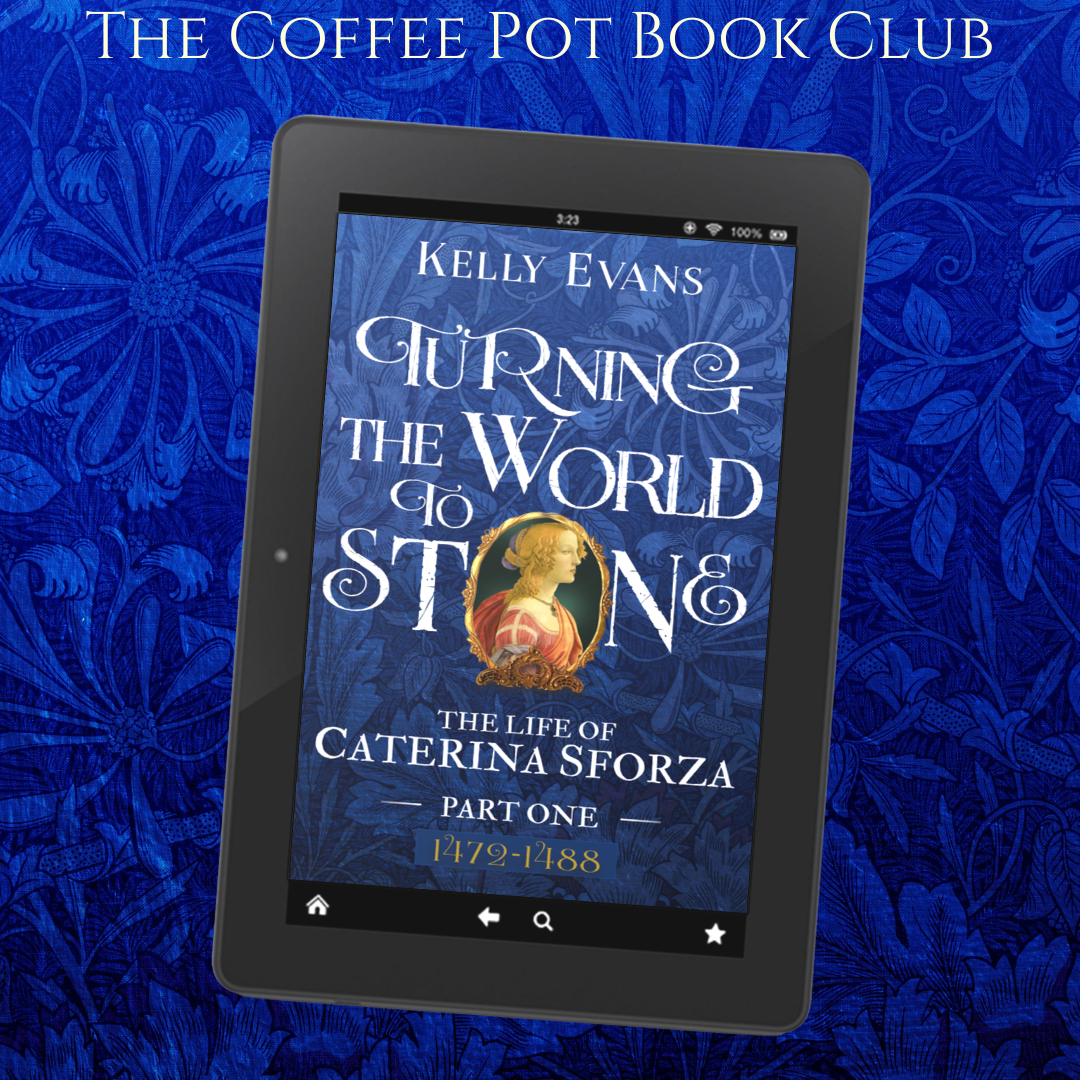
Kelly Evans’s Turning the World to Stone is on the blog. #HistoricalFiction #Renaissance #histfic #BlogTour #TheCoffeePotBookClub

I’m super excited to welcome my fellow Medieval Maverick, Kelly Evans and her new book, Turning the World to Stone, to the blog. Please enjoy this snipper from the story of Caterina Sforza.

When they were far enough from the people, her husband turned to her in his saddle. “Why? What was,” he motioned backwards at the citadel as it receded into the distance. “I don’t have the words to describe your actions. What did you think you’d accomplish by such a stupid act?” 

“I had to do it.” She turned to him. “You’re weak. I knew of the deal you’d accepted.” 

“You weren’t there,” he growled. 

“No, I was protecting YOUR inheritance, and that of our sons!” Caterina shifted in her saddle, the child in her stomach choosing that moment to kick. 

“Watch your tone, my lady.” 

“Or what? You’ll beat a pregnant woman? Knock me from my horse?” With a disgusted noise, she continued. “All of Rome knows of your cowardice so it would hardly be surprising to hear of such an act of petty violence from you.” 

Girolamo rode closer and began to raise his arm. Lifting her chin, Caterina stared coldly at him. Daringly. Defiantly. Glaring at her, he moved his mount to the side and rode a few steps away. 

“I thought not,” Caterina urged her own horse forward. “I’m going to pack what little we still have in Rome. Thank God I thought to send our belongings ahead to Forli.” She stopped her horse and turned it to face her husband. “I’m leaving tomorrow. I can’t stand to be in this Godforsaken city another day.”

Here’s the blurb

Vilified by history, Caterina Sforza learned early that her life was not her own. Married at age ten, she was a pawn in the ever-changing political environment of Renaissance Italy.

Resigned to her life as a fifteenth-century wife, Caterina adapted to the role she was expected to play: raising and educating her children, helping the poor in her new home, and turning a blind eye to her husband’s increasingly shameful behaviour. But Fate had other plans for her, and soon Caterina’s path would be plagued by murder, betrayal, and heartbreak. 

“Could I write all, the world would turn to stone.”

Buy Links: 

This title is available to read on #KindleUnlimited.

Universal Link

Amazon UKAmazon USAmazon CAAmazon AU

Meet the author

Born in Canada of Scottish extraction, Kelly Evans graduated in History and English then moved to England where she worked in the financial sector. While in London Kelly continued her studies in history, concentrating on Medieval History, and travelled extensively through Eastern and Western Europe. 

Kelly is now back in Canada with her husband Max and a rescue cat. She writes full-time, focussing on illuminating little-known women in history with fascinating stories. When not working on her novels, Kelly writes Described Video scripts for visually impaired individuals, plays oboe, and enjoys old sci-fi movies. 

Connect with Kelly

WebsiteTwitter

Facebook:  InstagramPinterest

Book BubAmazon Author PageGoodreads

Follow the Turning the World to Stone blog tour with The Coffee Pot Book Club