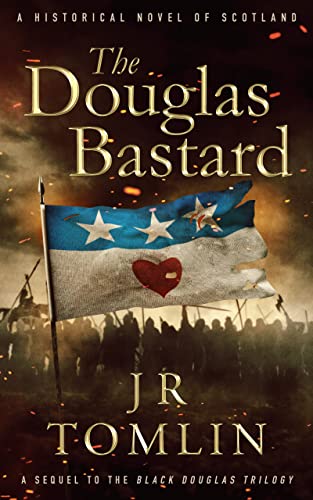
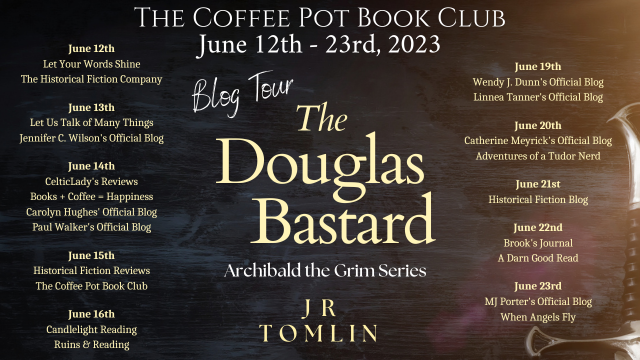
J R Tomlin tells us all about the historical background to The Douglas Bastard #HistoricalFiction #MedievalScotland #BlogTour #TheCoffeePotBookClub

I’m delighted to welcome J R Tomlin to the blog to tell us all about the historical background to The Douglas Bastard.

The Second War of Scottish Independence is a war that should never have happened. (Admittedly, that is true of quite a few wars) It happened simply because England’s King Edward III was pissed off at the Scots.

Remember that the famous Battle of Bannockburn was not the end of the First War of Scottish Independence, although many think it was. The Scots launched numerous chevauchees into England, believing the destruction of the north of England would force the English to the peace table. It did not work. The war continued for another decade, with the English forced out of Scotland but refusing to sign a peace treaty or recognise Scotland’s status as an independent kingdom.

However, in 1326, the rebellion by Queen Isabella and her lover Mortimer overthrowing King Edward II changed England’s political landscape. In June of the next year, James, Lord of Douglas, Thomas, Earl of Moray, and Donald, Earl of Mar, gathered a large force, as many as 10,000 men, and led a chevauchee across the border into England. They carried no supplies but lived off the land as they moved across a wide swathe of northern England. Perhaps in order to bring legitimacy to the new regime, Mortimer and the sixteen-year-old newly crowned King Edward III assembled an even larger army, much better equipped than the Scots, and led it north. They probably believed they could defeat the Scottish force in England, leaving Scotland undefended so they could go into Scotland.

It was a long and complex campaign in which the Scots outran the English, who quickly ran low on food and supplies. The Scots also had an unassailable position on a rocky height overlooking the fast-flowing River Weir. They even took an English scout prisoner and sent him with their position since the English seemed incapable of catching up with them. On the last day of July, the English army arrived on the other side of the Weir. They sent heralds, inviting the Scots to abandon their position and engage in battle. The Scottish leaders replied (and this sounds like James Douglas) that they were happy where they were, and if the English King and his council were unhappy with their lands being burnt before them, they should cross the river and do something about it. Mortimer and the young king refused. Crossing the Weir would allow their vanguard to be attacked before the rest of the army could cross, so they were certainly right to refuse.

The standoff lasted for three days before the Scots moved during the night to an even more unassailable position within an area known as Stanhope Park. At daylight, the English shifted their position but still dared not cross the Weir. Although the Scottish position was unassailable, it also appeared to have the Scots trapped with no way of resupplying. The English believed all they had to do was starve the Scots out, and they would win.

On the night of the 4th of August, James Douglas led a night attack, penetrating to the very centre of the English camp. They rode in, cutting guy ropes and firing tents. There was panic in the camp. Douglas himself collapsed the King’s tent with the terrified king inside, his confessor killed protecting him. By that time, the English were organising for defence, so the Scots returned, untouched, to their own camp.  

The next day, a Scot allowed himself to be taken prisoner to give the English word that the Scots would try to cut their way free the following night. The English, believing the story, spent the night in their armor with bonfires lit to see during the supposed coming battle. And the Scots retreated, picking their way through what the English had believed was an impenetrable marsh. 

The English King wept in fury and humiliation. 

He also never forgave the Scots. He was even more angry when his mother and Mortimer negotiated a peace treaty with Scotland which he and King Robert the Bruce signed in March 1328.

Only four years later, King Edward repudiated the treaty he had signed, backing an invasion by the pretender to the Scottish throne, Edward Balliol. Then began the totally useless Second War of Scottish Independence, which cost countless lives on both sides and eventually gained England nothing. 

It did, however, provide stories of treachery, battle, bravery, defeat, and triumph that beg to be told.  

Thank you so much for sharing the background to your new book. It sounds fabulous.

Here’s the blurb

Young Archibald, the Black Douglas’s bastard son, returns from exile to a Scotland ravaged by war. The war-hardened Knight of Liddesdale will teach him what he must learn. And with danger on every side, he must learn to sleep with one eye open and a claymore in his hand because even their closest ally may betray them…

Buy Links

The Douglas Bastard

Universal Link

Amazon UK Amazon US Amazon CA Amazon AU

Barnes and Noble Kobo iBooks Google Play

Archibald the Grim Series on Amazon

Amazon UK Amazon US

Meet the author

J R Tomlin is the author of twenty historical novels.

Her historical novels are mainly set in Scotland. You can trace her love of that nation to the stories of Robert the Bruce and the Black Douglas that her grandmother read her when she was small and to her hillwalking through the Scottish Cairngorms where the granite mountains have a gorgeous red glow under the setting sun.

In addition to having lived in Scotland, she has traveled in the US, mainland Europe and the Pacific Rim. She now lives in Oregon.

Connect with the author

Website  Twitter

Book Bub Amazon Author Page Goodreads 

Follow The Douglas Bastard by JR Tomlin blog tour with The Coffee Pot Book Club

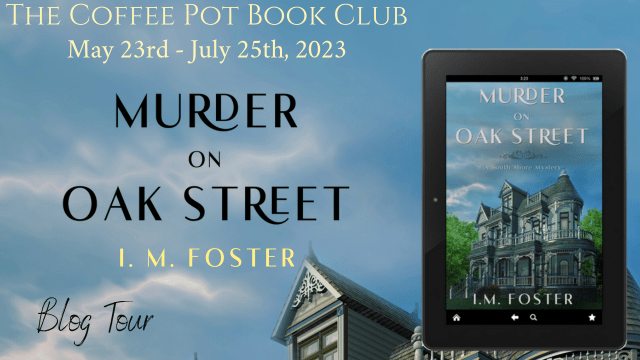
I. M. Foster shares a fascinating post about forensics in the early 20th century #historicalmystery #cozymystery #BlogTour #TheCoffeePotBookClub

I’m delighted to welcome I.M. Foster to the blog, to share a fascinating post on Forensics at the Turn of the Century.

To start off with, I guess I should give a very basic definition of what exactly forensics is. Basically, it is the use of different scientific disciplines, such as biology, chemistry, physics, etc., to investigate crimes or examine evidence that can be used to present in court. That being the case, the techniques available at any given period in history would depend largely on the stage of scientific development that was available to the investigator at the time. 

Today a multitude of investigative tools are available to detectives and medical examiners, from ballistics to DNA. Most large police departments even have their own forensics labs, as Suffolk County, New York now does. But forensic science in the day of Dr. Daniel O’Halleran was quite a bit different than it is today.   

To begin with, there was no such thing as forensic science, per se, even though the use of science to determine the cause of death actually goes back to ancient Rome and Egypt. For example, it was a physician, Antisius, who determined that of the twenty-three blows Julius Caesar received it was the one below his left arm that actually killed him. Alas, after the fall of the Roman Empire, the use of science to detect the cause of death seemed to stagnate for the next thousand or so years.

Fast forward to the sixteenth century, and things began to pick up again. Interest in determining reasons for a person’s demise increased, the French and Italians studied the result of violent death on internal organs, and once again, science was being used to assist in determining the cause of death. During the nineteenth century, scientific advances produced a number of breakthroughs that aided in criminal investigations. 

By the dawn of the twentieth century, poison could be detected in body tissue, handwriting analysis and the study of documents were being employed, and toxicology was being presented as evidence in jury trials. In addition, scientific tools, such as the polarized light microscope had been invented, enabling physicians to study fibers. And photography had made its appearance, making it easier to study the crime scene in detail.  

Fingerprints were still relatively new on the scene however. Though a system of classifying fingerprints had been developed by the 1880s, don’t expect Daniel to be incorporating it into his investigative tool kit right away. The system used by most of Europe and North America didn’t come about until 1896 and wasn’t employed in the United States until 1903, when it was used by the New York State Prison system for criminal identification. The first use of the technique at a criminal case in the United States didn’t occur until 1910. 

Before fingerprinting, something called anthropometry was used for identification, which was the measurement of body parts and their proportions to one another, not exactly foolproof. As for the twelve matching points of a fingerprint, that didn’t come along until 1918, so while Daniel might eventually play around with it, fingerprinting certainly not something he’s going to base his cases on.   

The turn of the century did present some extremely helpful investigative tools however. Biologists were able to determine not only if a stain was blood, but whether it was human or animal. Ballistics was becoming more refined, though the tracing of a bullet to a specific gun wouldn’t come about until 1910. And geology was first used in 1904 by a German scientist when he identified a killer from the dirt on his pants and under his fingernails, as well as the coal soot found on a handkerchief he’d left at the crime scene. Now, that is something that Daniel might eventually employ.

Other advances were just on the horizon. The use of a microscope to compare strands of hair didn’t come along until 1910, and the study of botanicals such as plant fibers and pollen in relation to a crime scene wasn’t widely used until the 1920s, though I’m sure there were local residents who might be able to point out where a certain plant was more prevalent.

In spite of all the advances, however, using scientific principles in criminal investigations still wasn’t seen as its own discipline. But in 1904, Edmond Locard was to write a passage that one might point to as the beginning of modern forensic science. Every contact leaves a trace. Shortly after, in 1909, the first school was opened for the sole purpose of studying how to use science to determine the cause and method of death, and thus the seeds were planted for the modern study of forensic science. 

Thank you for sharing such a fascinating post.

Here’s the blurb 

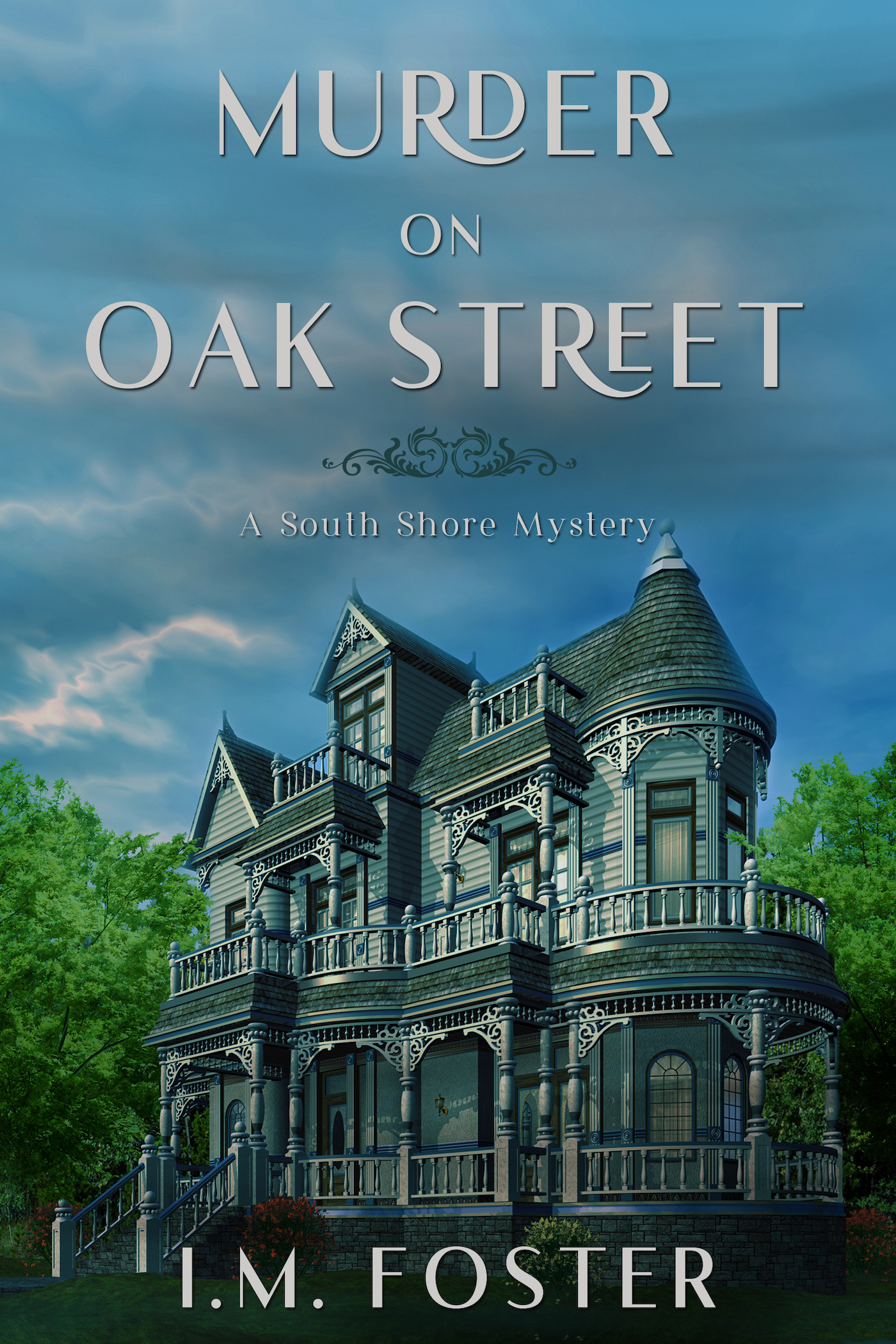
New York, 1904. After two years as a coroner’s physician for the city of New York, Daniel O’Halleran is more frustrated than ever. What’s the point when the authorities consistently brush aside his findings for the sake of expediency? So when his fiancée leaves him standing at the altar on their wedding day, he takes it as a sign that it’s time to move on and eagerly accepts an offer to assist the local coroner in the small Long Island village of Patchogue.

Though the coroner advises him that life on Long Island is far more subdued than that of the city, Daniel hasn’t been there a month when the pretty librarian, Kathleen Brissedon, asks him to look into a two-year-old murder case that took place in the city. Oddly enough, the case she’s referring to was the first one he ever worked on, and the verdict never sat right with him.

Eager for the chance to investigate it anew, Daniel agrees to look into it in his spare time, but when a fresh murder occurs in his own backyard, he can’t shake his gut feeling that the two cases are connected. Can he discover the link before another life is taken, or will murder shake the peaceful South Shore village once again?

Buy Links  

This title is available to read with #KindleUnlimited. 

Universal Link 

Amazon UK   Amazon US  Amazon CA Amazon AU

Meet the author

I. M. Foster is the pen name author Inez Foster uses to write her South Shore Mystery series, set on Edwardian Long Island. Inez also writes historical romances under the pseudonym Andrea Matthews, and has so far published two series in that genre: the Thunder on the Moor series, a time-travel romance set on the 16th century Anglo-Scottish Borders, and the Cross of Ciaran series, which follows the adventures of a fifth century Celt who finds himself in love with a twentieth century archaeologist. 

Inez is a historian and librarian, who love to read and write and search around for her roots, genealogically speaking. She has a BA in History and an MLS in Library Science and enjoys the research almost as much as she does writing the story. In fact, many of her ideas come to her while doing casual research or digging into her family history. Inez is a member of the Long Island Romance Writers, the Historical Novel Society, and Sisters in Crime.

Connect with IM Foster

Website

Twitter Facebook Instagram

Book Bub   Amazon Author Page Goodreads

Follow the Murder on Oak Street by IM Foster blog tour with The Coffee Pot Book Club

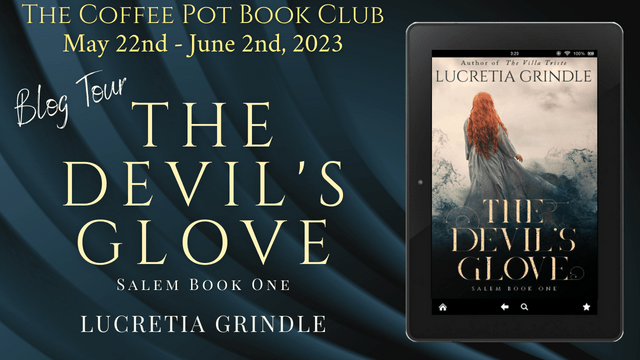
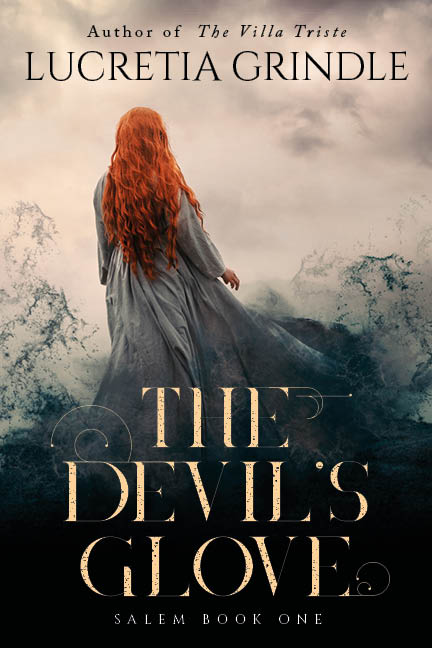
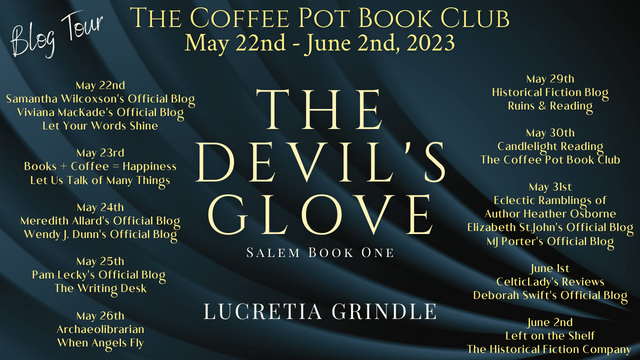
Lucretia Grindle shares a fascinating post about the historical women in her novel, The Devil’s Glove #blogtour

Guest Post by Lucretia Grindle on the Histroical Background to the Women in The Devil’s Glove

As I began to think about the Salem witchcraft trials, I was struck by what a distinctly female episode Salem was. Sure, you’ve got the Mathers, father and son, and the magistrates – all men. But this was a furor that was whipped up and powered by women, some of them very young women. And, while six men were executed (five hanged and one pressed to death) fourteen women were hanged. Because other women accused them. 

All of which led me to consider the roles women played in 17th century New England. As I began to contemplate The Devil’s Glove, I knew that my central character would be female, and so it seemed important to try to get past preconceptions and really understand the scope of possibility as well as the limitations on women’s lives in that time and place. What were they able to do, and not do? How did they fit, and not fit into the power structure of society? 

Salem certainly seemed a ‘fracture’; an incident when teen-aged girls, some of them orphaned, most of them servants and dependents – in other words those who would usually be the most un-empowered – wielded extraordinary power. A power they used to attack some of the most powerful female figures in the Massachusetts colony. Established and respected matrons like Rebecca Nurse. Women of wealth and social standing like Mary English. Women who would normally be politically untouchable, like the governor’s sister, Anne Phipps. What other ‘fractures’ might I find, if I went looking?

One of the greatest pleasures of writing history, and historical fiction in particular, is the way in which you begin thinking you know about something, only to discover facets of a world that are a complete surprise. So as I settled into archives and began to peel back layers, I was thrilled to find a complex and unexpected past peopled with an astonishing array of women. Resolve Hammond and her mother, Deliverance, are fictional characters. But the circumstances and possibilities of their lives are based on real women, some of whom appear in The Devil’s Glove, and many of whom will appear in the second and third books of the trilogy. These are a few of their stories.

Early in The Devil’s Glove we discover that Resolve and her mother spent the bloody years of King Philip’s war (1675-1678) sheltered among the tribe led by the female sachem, Ashawonks. This is based on a true episode. I placed the Hammonds with Ashawonks specifically, both because I wanted to bring her into the story and because she is Deliverance’s mentor, and her guide – the door through which Deliverance, and thus Resolve, enter the Native world. So, who was she? 

Female sachem, or saunkskwa of the Sakonnets, a tribe whose lands bordered the southern edge of the Plymouth settlement on Narragansett bay, Ashawonks was unique, not just because she was a women – there were several female sachems at the time – but because she became leader not via inheritance, but because of her formidable diplomatic skills. Her position would be challenged throughout her life, not only by the Anglo-Europeans who tried to push her off her lands, but also from within her own tribe. None of them succeeded. Instead, Ashawonks managed to walk a dangerous tightrope, keeping alliances – or at least relations – with Anglo-Europeans, while not openly alienating fellow sachems and tribes. She was especially close to the powerful militia commander, Benjamin Church, whom she often met and spoke with at length, using him as both a sounding board and conduit to The Powers that Were in Massachusetts. Thanks to skill, nerve, and an uncanny ability to read situations, Ashawonks  piloted her people, and those under her protection, through one of the most dangerous episodes in early American colonial history.

At about the same time Ashawonks was steering a course through a bloody war, another extraordinary woman gave birth to a daughter in Salem, Massachusetts. The daughter would become Mary English, who appears at the end of The Devil’s Glove and is a central to book II of the Salem trilogy. But it was her mother, Elinor Hollingworth, whose life suggested to me what the realistic possibilities might be for Deliverance Hammond. 

Elinor’s family arrived in Salem as part of The Great Migration, an influx of something in the area of 20,000 immigrants, primarily from the British Isles and mostly from England, who arrived in New England between approximately 1630 and 1640. At seventeen, Elinor married William Hollingworth, a sea captain and general all-round trader who wasn’t particularly good at either. His not very thrilling career came to an end when he went overboard and drowned, leaving Elinor with three small children and a mountain of debt. 

There were more eligible men than marriagable women drifting around New England at the time, and Elinor might well have re-married, as most widows did. But she wasn’t having any of it. Once was apparently enough. Instead, Elinor Hollingworth went to work. Petitioning the court to gain control of what was left of her husband’s business, she set about clearing his debts. 

In England at the time, women in naval cities like Bristol and Portsmouth were banding together to negotiate with the British Navy about pay and conditions while their husbands were at sea. Taking a leaf out of the same book, Elinor set herself up as a broker negotiating pay deals for working seamen in Salem, many of whom were illiterate, while taking a cut in return. She so successful that she rapidly became a sort of mini working seaman’s merchant bank.

 At the same time, Elinor saw an opportunity in the wives they left behind. Harnessing their domestic labor, inviting them to produce surplus butter, beer, biscuit, shirts, shoes and other supplies needed to outfit Salem’s growing merchant fleet, she became a ship’s chandler – the person captains went to for all the supplies they needed as soon as they knew they were going to sea. Within a few years, she not only paid off all of William’s accrued debt, but also acquired The Blue Parrot tavern, a seedy drinking den down on the waterfront that she made her headquarters.

Riding the tide of Salem’s exploding maritime trade, Elinor Hollingworth became so successful, and powerful, that when she was accused of witchcraft in 1672 by a neighbor she had annoyed, she merely shrugged it off, saying she was far too busy to be a witch. Twenty years later, her daughter tried essentially the same approach, with vastly different results. 

By then, Mary was married to Philip English, and they were the wealthiest tax payers in Salem, joint owners of a shipping empire that owned more than twenty vessels and included, among other things His and Hers warehouses. Mary received her warehouse from her mother as a wedding present. Elinor had not only made sure that her daughter was exceptionally well educated, she thought so much of her ability that she bypassed her son, and handed her entire business empire directly to her daughter. Philip English shared his mother in law’s esteem. Throughout their marriage, he and his wife owned their business jointly.

Along with the warehouses and the wharf and the ships, Mary and Philip English owned and inhabited a house in Salem so grand that it was known simply as The Great House. It had three stories, and housed not only their family, but also the shipping company’s counting house and a luxury goods shop which Mary oversaw and ran. And it was staffed by fifteen domestic servants, many of them indentured.

Indenture, the practice of contracting labor for a period of years in return for food and keep, and often passage to The New World was a relatively common practice, and part of the Englishes’ business. They arranged and brokered indenture contracts for a large number of, mostly young, people who came to New England from the island of Jersey. Many of them were single young women. One was called Judah White, and is Resolve’s best friend in The Devil’s Glove.

Indenture was not an easy life. You had little say over who you were indentured to, and there was no way out except to work out the years of the contract, or somehow find enough money to buy it out. But it was also a way for young men, and young women, from the lower classes to have a chance at starting a new life in The New World. For women in particular, this was otherwise close to impossible. Here was a way to take at least some of your destiny into your hands. Many made the leap, exhibiting an independence that defies common presumptions about women in the 17th century.

Ashawonks, Elinor, Mary and Judah are only some of the women I encountered while researching The Devil’s Glove. In each case, their circumstances and lives were unexpected. I hope you enjoy getting to know them as much as I did.

Here’s the blurb

Northern New England, summer, 1688.
Salem started here.

A suspicious death. A rumor of war. Whispers of witchcraft.

Perched on the brink of disaster, Resolve Hammond and her mother, Deliverance, struggle to survive in their isolated coastal village. They’re known as healers taught by the local tribes – and suspected of witchcraft by the local villagers.

Their precarious existence becomes even more chaotic when summoned to tend to a poisoned woman. As they uncover a web of dark secrets, rumors of war engulf the village, forcing the Hammonds to choose between loyalty to their native friends or the increasingly terrified settler community.

As Resolve is plagued by strange dreams, she questions everything she thought she knew – about her family, her closest friend, and even herself. If the truth comes to light, the repercussions will be felt far beyond the confines of this small settlement.

Based on meticulous research and inspired by the true story of the fear and suspicion that led to the Salem Witchcraft Trials, THE DEVIL’S GLOVE is a tale of betrayal, loyalty, and the power of secrets. Will Resolve be able to uncover the truth before the town tears itself apart, or will she become the next victim of the village’s dark and mysterious past?

Praise for The Devil’s Glove:

“From its opening lines this historical novel from Grindle (Villa Triste) grips with its rare blend of a powerfully evoked past, resonant characters, smart suspense, and prose touched with shivery poetry.” 

~ BookLife Reviews Editor’s Pick

Buy Links

This title is available to read on #KindleUnlimited.

Universal Link:  https://books2read.com/u/4EN58l

Amazon UKAmazon USAmazon CAAmazon AU

Meet the author

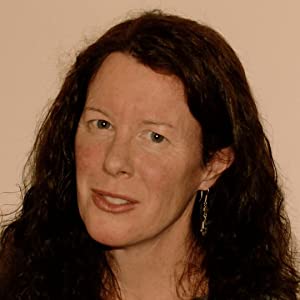
Lucretia Grindle grew up and went to school and university in England and the United States. After a brief career in journalism, she worked for The United States Equestrian Team organizing ‘kids and ponies,’ and for the Canadian Equestrian Team. For ten years, she produced and owned Three Day Event horses that competed at The World Games, The European Games and the Atlanta Olympics. In 1997, she packed a five mule train across 250 miles of what is now Grasslands National Park on the Saskatchewan/Montana border tracing the history of her mother’s family who descend from both the Sitting Bull Sioux and the first officers of the Canadian Mounties.

Returning to graduate school as a ‘mature student’, Lucretia completed an MA in Biography and Non-Fiction at The University of East Anglia where her work, FIREFLIES, won the Lorna Sage Prize. Specializing in the 19th century Canadian West, the Plains Tribes, and American Indigenous and Women’s History, she is currently finishing her PhD dissertation at The University of Maine. 

Lucretia is the author of the psychological thrillers, THE NIGHTSPINNERS, shortlisted for the Steel Dagger Award, and THE FACES of ANGELS, one of BBC FrontRow’s six best books of the year, shortlisted for the Edgar Award. Her historical fiction includes, THE VILLA TRISTE, a novel of the Italian Partisans in World War II, a finalist for the Gold Dagger Award, and THE LOST DAUGHTER, a fictionalized account of the Aldo Moro kidnapping. She has been fortunate enough to be awarded fellowships at The Hedgebrook Foundation, The Hawthornden Foundation, The Hambidge Foundation, The American Academy in Paris, and to be the Writer in Residence at The Wallace Stegner Foundation. A television drama based on her research and journey across Grasslands is currently in development. THE DEVIL’S GLOVE and the concluding books of THE SALEM TRILOGY are drawn from her research at The University of Maine where Lucretia is grateful to have been a fellow at the Canadian American Foundation. 

She and her husband, David Lutyens, live in Shropshire.

Connect with the author

WebsiteFacebookLinkedIn

InstagramAmazon Author PageGoodreads

Follow the blog tour for The Devil’s Glove with The Coffee Pot Book Club

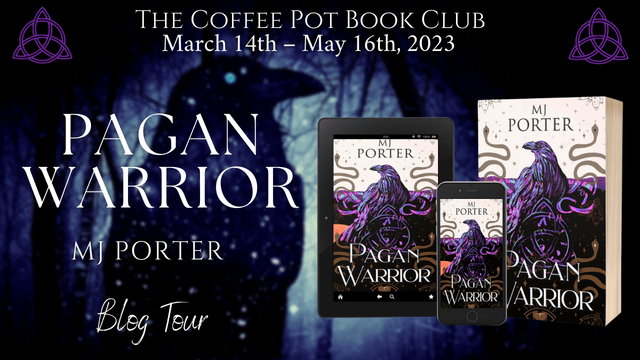
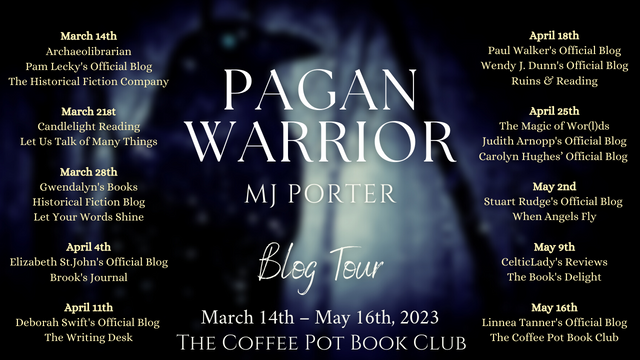
Pagan Warrior went on blog tour with The Coffee Pot Book Club in May 2023 #blogtour – check out the posts #GodsAndKings #TheSevethCentury

Pagan Warrior is the story of the battle of Hædfeld, fought in the seventh century between the Northumbrians, and you got it, the Mercians – or rather, Cadwallon of Gwynedd but with Penda of Mercia as his firm ally. You can find more details here.

A quick shout out to thank all the blog hosts and Cathie at The Coffee Pot Book Club for organising.

Check out a review for Pagan Warrior on

Linnea Tanner’s Official Blog

and a guest post about Mercia’s legacy over on

The Coffee Pot Book Club

Check out

The Book Delight

An excerpt on

The Celtic Lady Reviews

Check out the review on

Stuart Rudge’s Official Blog

And a guest post on who King Edwin of Northumbria was over on

When Angels Fly

Check out a post about Penda of Mercia.

The Magic of Word(l)ds

Read an excerpt featuring Eowa, Penda’s brother on

Judith Arnopp’s Official Blog

And, read an excerpt featuring Penda on

Carolyn Hughes Official Blog

I answered Paul Walker’s questions on his blog

Paul Walker’s Official Blog

There’s an except over on Wendy J Dunn’s Official Blog featuring King Edwin

Wendy J Dunn’s Official Blog

And a fabulous review on Ruins and Readings

Ruins and Readings

Read a guest post about how we know, what we know, about the seventh century.

Deborah Swift’s Official Blog

And a fabulous author interview over on

The Writing Desk

Read an excerpt on

Elizabeth St John’s Official Blog

And read about warfare in the Saxon period on

Brook Allan’s Official Blog

Check out a fabulous review on

https://gwendalynbooks.wordpress.com/2023/03/28/pagan-warrior/

A guest post about Mercia in the later eighth century on the Historical Fiction Blog.

https://historicalfictionblog.com/pagan-warrior-guest-post/

And, the post that perhaps gave me the most fear to begin will but which was fun when I remembered all the little details, five fun facts about writing the trilogy.

maryannbernal.blogspot.com

Check out a post about two of the royal residences of Bernicia at the time, Bamburgh and Ad Gefrin (Yeavering). (There are lots of photos; thank you to Helen Hollick for uploading them all.)

Let Us Talk of Many Things

And a review from

Candlelight Reading

Check out my author interview over on Archaeolibrarian.

Archaeolibrarian

I’m sharing an excerpt over on The Historical Fiction Company.

The Historical Fiction Company

I’ve written a piece about the historical background on Pam Lecky’s official blog.

Pam Lecky’s Official Blog

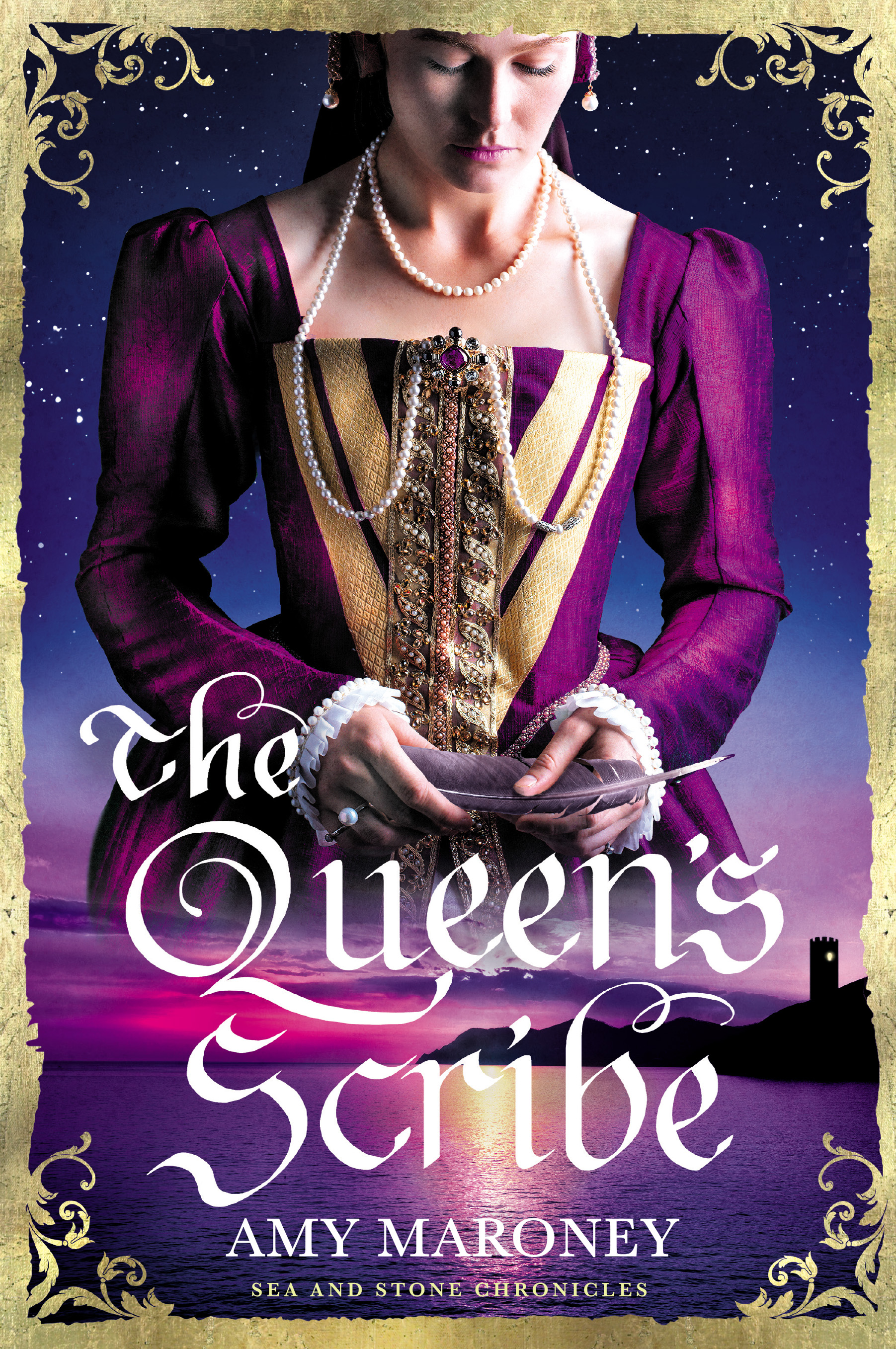
Welcoming Amy Maroney and her novel The Queen’s Scribe, to share a fabulous post about Queen Charlotte of Cyprus #HistoricalFiction #TheQueensScribe #RoyalHistory #BlogTour #TheCoffeePotBookClub

I’m delighted to welcome Amy Maroney to the blog. I always love to hear about the historical research for author’s novels. So here we go.

Uncovering the story of Queen Charlotta of Cyprus, a forgotten heroine

My new novel, The Queen’s Scribe, features a fifteenth-century monarch with an extraordinary story of ambition, courage, and dedication to her kingdom. Just who was Queen Charlotta of Cyprus, and why was she so mesmerizing that I wrote a book about her?

As is often the case with women in history, very little information remains about this queen (she was baptized ‘Charlotte’, but may have referred to herself as ‘Carlotta’; I call her ‘Charlotta’ in the novel). Most scholars agree that she was born about 1444. 

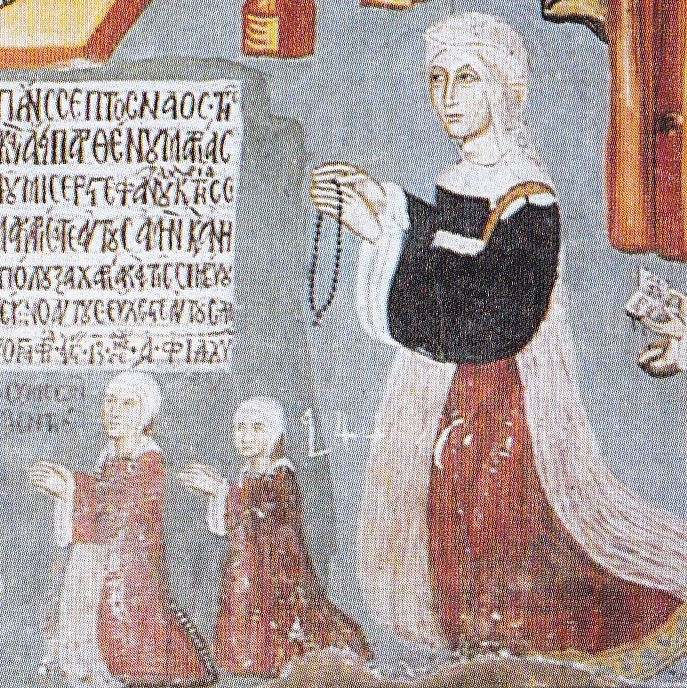
Charlotta was the only surviving child of King Jean II of Lusignan and his wife Eleni Palaiologina, princess of Morea. The following image is said to portray Charlotta, her mother, and her sister (subsequently deceased).

IMAGE OF QUEEN ELENI AND HER DAUGHTERS, PUBLIC DOMAIN PHOTO

Charlotta’s father, King Jean, was a genial but ineffective ruler who loved hunting, hawking, and spending money. The glory days of the kingdom ended abruptly when his grandfather King Janus was taken captive by Egyptian Mamluks and subsequently ransomed for 200,000 ducats, which put the kingdom in deep debt. By the time of Charlotta’s birth, three centuries of lavish living coupled with a weak military presence had crippled the once-powerful Lusignan dynasty. 

Within the royal court itself, animosity festered like a battle wound. Queen Eleni was a proud Greek and a dominating personality. She purportedly bit off her rival Marietta’s nose when she found the woman in bed with her husband (some sources say she cut it off). Jean and Marietta’s son, Jacques (also known as Jacco the Bastard) was the apple of his father’s eye. A handsome, charismatic bully, he became Charlotta’s protector before his desire for the throne soured their relationship forever.

Thanks to her mother’s influence, Princess Charlotta was thoroughly Greek and her understanding of French was rudimentary at best. Though her father was French and many of the ruling nobility claimed French roots, the French spoken in Cyprus at the time was so distorted that native speakers visiting from Europe could not understand it.This fact underpins the plot of The Queen’s Scribe, which features a fictional French heroine whose skills as a scribe and interpreter become essential to Queen Charlotta.

PHOTO OF NICOSIA OLD TOWN, DEPOSIT PHOTOS STANDARD LICENSE

When she was about 13, Charlotta was married to the Portuguese Prince João of Coimbra. The young couple moved from the royal palace to a house elsewhere in the Cyprus capital of Nicosia, angering Charlotta’s mother and delighting the Western European (‘Latin’) members of the court. Tensions grew between the two camps until Prince João suddenly died under mysterious circumstances; the queen’s chamberlain—who was like a brother to Queen Eleni—was blamed.

In a royal tit-for-tat, the queen’s chamberlain was then killed by Sicilian associates of Jacco’s. Palace gossips said Charlotta had asked her half-brother to arrange the murder. Before he could be punished, Jacco fled for the island of Rhodes and the hospitality of the Knights Hospitaller. 

Meanwhile, Charlotta grieved her dead husband and awaited a new betrothal, this time with her first cousin Louis (of the French-speaking Duchy of Savoy). Queen Eleni, who had been disabled by what might have been a paralytic stroke in early adulthood, slowly lost her health. Still, she fought the betrothal with every ounce of her strength, for in the Greek Orthodox tradition, marrying a first cousin was an unforgivable sin.

In 1458, both Queen Eleni and King Jean died. At 15, Charlotta was crowned queen. Soon afterward, Jacco sailed to Egypt, intent on gaining the sultan’s support for his campaign to seize his half-sister’s throne.

Meanwhile, the powerful barons who had served her father as council members now whispered in Charlotta’s ear. Some of them truly believed in her; others cared only for their own self-interest and survival; a few displayed breathtaking treachery. 

Rumors began swirling that Jacco had charmed the Sultan of Egypt and was building a massive army of Mamluk warriors. Charlotta desperately needed help to preserve her throne, and naturally looked to her new husband, Louis, for support. But far from being the strong partner she’d hoped for, he was a disinterested and weak leader, more interested in fine food and amusements than strategizing for war. 

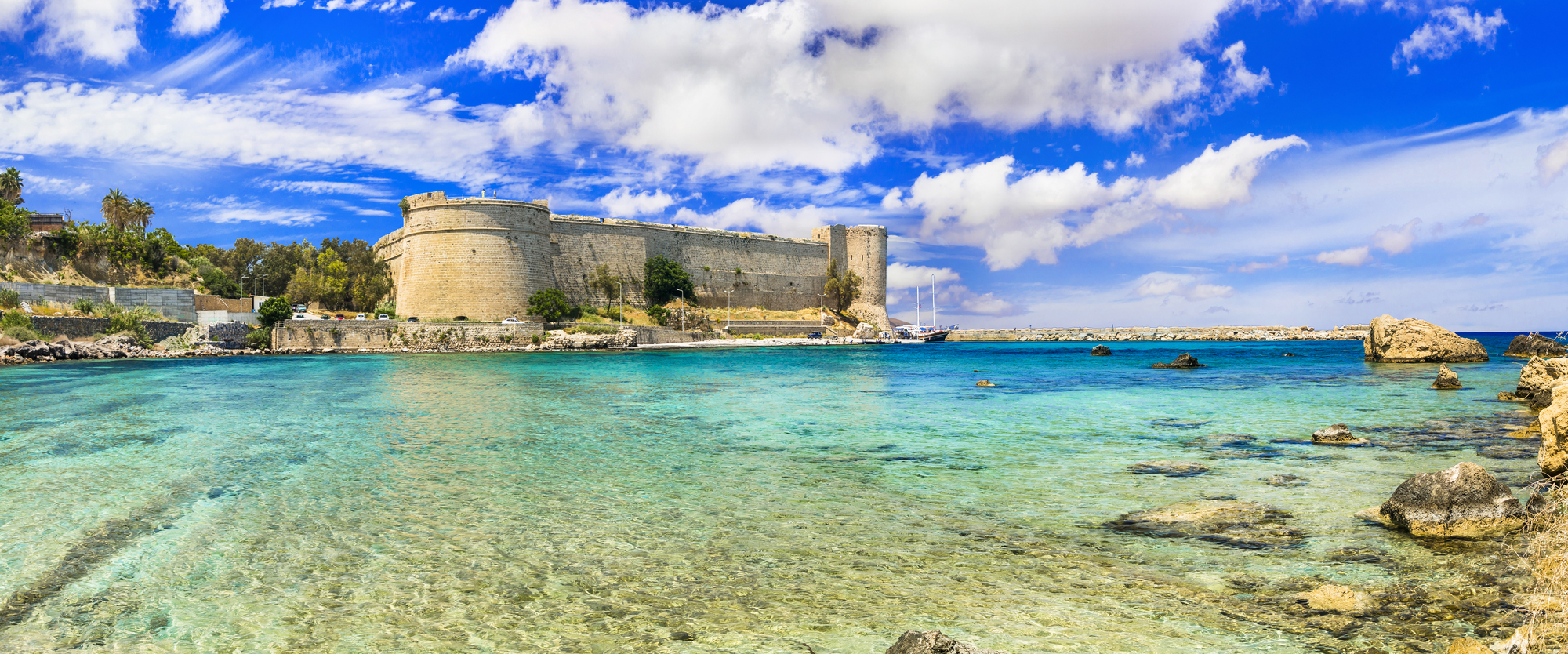
PHOTO OF KYRENIA FORTRESS, DEPOSIT PHOTOS STANDARD LICENSE

Less than two years after her coronation, Charlotta moved her court to the seaside fortress of Kyrenia, where they survived a massive siege by Jacco. A few months later, she left Louis in the fortress and sailed around the Mediterranean beseeching allies to help save her crown.

I chose to tell Queen Charlotta’s tale through the eyes of fictional Estelle de Montavon, daughter of a French falconer. In The Queen’s Scribe, Estelle—a talented scribe and linguist—becomes as valuable as gold when the royal court retreats to Kyrenia Fortress and civil war looms. When Queen Charlotta voyages across the Mediterranean Sea entreating French-speaking allies for help, Estelle is at her side, witnessing every triumph and disaster along the way. 

Like so many other women in history, Queen Charlotta has been lost in the shadows for too long. I hope The Queen’s Scribe plays a role in bringing her story back into the light.

Thank you so much for sharing. She sounds that an intriguing character, as does her mother:)

Here’s the blurb

A broken promise. A bitter conflict. And a woman’s elusive chance to love or die.

1458. Young Frenchwoman Estelle de Montavon sails to Cyprus imagining a bright future as tutor to a princess. Instead, she is betrayed by those she loves most—and forced into a dangerous new world of scheming courtiers, vicious power struggles, and the terrifying threat of war.

Determined to flee, Estelle enlists the help of an attractive and mysterious falconer. But on the eve of her escape, fortune’s wheel turns again. She gains entry to Queen Charlotta’s inner circle as a trusted scribe and interpreter, fighting her way to dizzying heights of influence. 

Enemies old and new rise from the shadows as Estelle navigates a royal game of cat and mouse between the queen and her powerful half-brother, who wants the throne for himself.

When war comes to the island, Estelle faces a brutal reckoning for her loyalty to the queen. Will the impossible choice looming ahead be her doom—or her salvation?

With this richly-told story of courage, loyalty, and the sustaining power of love, Amy Maroney brings a mesmerizing and forgotten world to vivid life. The Queen’s Scribe is a stand-alone novel in the Sea and Stone Chronicles collection.

Praise for the Sea and Stone Chronicles:

Island of Gold is a nimbly told story with impeccable pacing.”

Historical Novel Society, Editor’s Choice Review

Sea of Shadows is stunning. A compelling tale of love, honor, and conviction.”

Reader’s Favorite Review

Amy Maroney is the author of the award-winning Miramonde Series, the story of a Renaissance-era female artist and the modern day scholar on her trail.

Buy Links:

This title is available to read on #KindleUnlimited.

Universal Link

Amazon UKAmazon USAmazon CAAmazon AU

Meet the author

Amy Maroney studied English Literature at Boston University and worked for many years as a writer and editor of nonfiction. She lives in Oregon, U.S.A. with her family. When she’s not diving down research rabbit holes, she enjoys hiking, dancing, traveling, and reading. 

Amy is the author of The Miramonde Series, an Amazon-bestselling historical mystery trilogy about a Renaissance-era female artist and the modern-day scholar on her trail. Amy’s award-winning historical adventure/romance series, Sea and Stone Chronicles, is set in medieval Rhodes and Cyprus. 

An enthusiastic advocate for independent publishing, Amy is a member of the Alliance of Independent Authors and the Historical Novel Society.

Connect with Amy

WebsiteTwitterFacebook

LinkedInInstagramPinterest

Book BubAmazon Author PageGoodreads:

Follow The Queen’s Scribe blog tour with The Coffee Pot Book Club

Pagan Warrior is on blog tour with The Coffee Pot Book Club #blogtour – check out the posts for day 7

I’m really excited to share the details of the Pagan Warrior blog tour with The Coffee Pot Book Club.

Pagan Warrior is the story of the battle of Hædfeld, fought in the seventh century between the Northumbrians, and you got it, the Mercians – or rather, Cadwallon of Gwynedd but with Penda of Mercia as his firm ally. You can find more details here.

I might have written this book many years ago, but it’s had a refresh, and is now available in audio, narrated by the fabulous, Matt Coles, as is the second book, Pagan King. Warrior King will be coming later this year in audio.

Now that all three books have been ‘refreshed’ you can read in ebook or paperback, and the books are available from all good ebook/paperback sellers. Check out my latest tiktok video to see Warrior King in paperback:)

You can follow the blog tour, and I’ll be sharing posts here as well. A quick shout out to thank all the blog hosts and Cathie at The Coffee Pot Book Club for organising.

For April 25th, check out a post about Penda of Mercia.

The Magic of Word(l)ds

Read an excerpt featuring Eowa, Penda’s brother on

Judith Arnopp’s Official Blog

And, read an excerpt featuring Penda on

Carolyn Hughes Official Blog

For April 18th, I answered Paul Walker’s questions on his blog

Paul Walker’s Official Blog

There’s an except over on Wendy J Dunn’s Official Blog featuring King Edwin

Wendy J Dunn’s Official Blog

And a fabulous review on Ruins and Readings

Ruins and Readings

For April 11th, read a guest post about how we know, what we know, about the seventh century.

Deborah Swift’s Official Blog

And a fabulous author interview over on

The Writing Desk

For April 4th, read an excerpt on

Elizabeth St John’s Official Blog

And read about warfare in the Saxon period on

Brook Allan’s Official Blog

For March 28th, check out a fabulous review on

https://gwendalynbooks.wordpress.com/2023/03/28/pagan-warrior/

A guest post about Mercia in the later eighth century on the Historical Fiction Blog.

https://historicalfictionblog.com/pagan-warrior-guest-post/

And, the post that perhaps gave me the most fear to begin will but which was fun when I remembered all the little details, five fun facts about writing the trilogy.

maryannbernal.blogspot.com

For March 21st check out a post about two of the royal residences of Bernicia at the time, Bamburgh and Ad Gefrin (Yeavering). (There are lots of photos, thank you to Helen Hollick for uploading them all).

Let Us Talk of Many Things

And a review from

Candlelight Reading

From March 14th, check out my author interview over on Archaeolibrarian.

Archaeolibrarian

I’m sharing an excerpt over on The Historical Fiction Company.

The Historical Fiction Company

I’ve written a piece about the historical background on Pam Lecky’s official blog.

Pam Lecky’s Official Blog

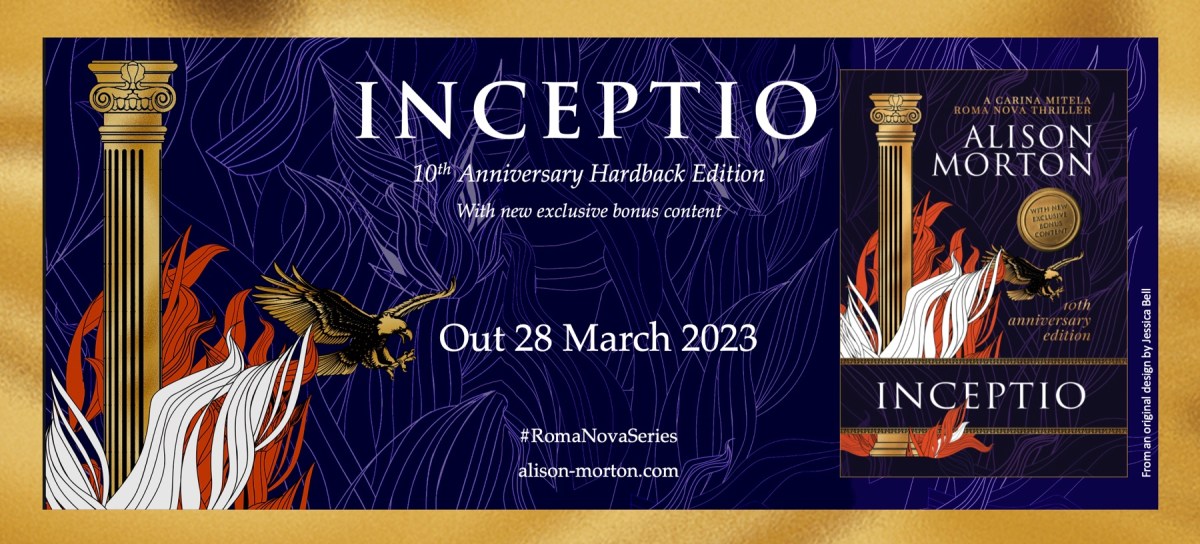
Today, I’m absolutely delighted to host Alison Morton and the 10th Anniversary Hardback of her novel, INCEPTIO #guestpost

Today, I’m delighted to welcome Alison Morton to the blog to celebrate the 10th Anniversary edition of INCEPTIO.

Why Roman alternative history?

An avid reader of spy, thriller and crime stories from childhood and a life-long devotee of all things Roman, I yearned to write a Roman thriller with a true-hearted heroine imbued with Roman virtue but a tendency to go off-piste. Lindsey Davis does this beautifully with Flavia Albia, Falco’s daughter and to a certain extent with Helena Justina, Falco’s wife. However, I wanted women to run this New Rome. Yes, I had also read a lot of science fiction including wonderful stories by Anne McCaffery where women were equal if not leading their society. But I didn’t want to write space opera.

There was only one solution:  I stayed on Planet Earth and brought my Roman stories up to the 21st century.

A fascination with the ‘what if’ idea

Perhaps it’s something all kids speculate about: suppose I have the wrong parents, suppose I’m really a lost princess, what if I could fly, what if we were all rich? Later, as a student of history, I was always fascinated by the possibilities of the tiniest thing turning the huge wheel of history – “For want of a nail,” and so on. Then I learnt about the ‘butterfly of doom’ where one butterfly flapping its wings cascaded events in a different direction. 

When I produced my first manuscript, I didn’t know I was writing in a genre called alternative history (“althist” for short). I was inspired by Robert Harris’s Fatherland, a tense, shocking and beautifully written thriller with a heart-wrenching ‘secret’. Twisting history was allowed and used by acclaimed writers such as Michael Chabon and Kingsley Amis as well as Harris! 

Of course, a thriller must be exciting, intriguing and full of emotional punch, but althist stories have their own ‘rules’. The most important are to identify the moment where history as we know it veers off onto a different path forever, and to weave into the story to show how the alternative timeline has developed since that point of divergence.

Why Roman alternative history?

‘Rome’ lasted 1229 years in the West, which time span would take us back to AD 794 from today. It changed from a tiny community of tribal farmers to a confident military and trading empire boasting high culture, diversity, power, engineering and rule of law, eventually dwindling to a miserable rump kneeling before barbarians.  

Rome had the dark side of all ancient and later cultures: slavery, rampant corruption, patriarchalism and scant regard for disabled and poor people. But Rome gave us systems, values, including civic-mindedness, cultural and engineering genius and literacy that are still firmly embedded in our psyches today. So it shrieked “explore me” very loudly!

It goes back to a mosaic in Spain 
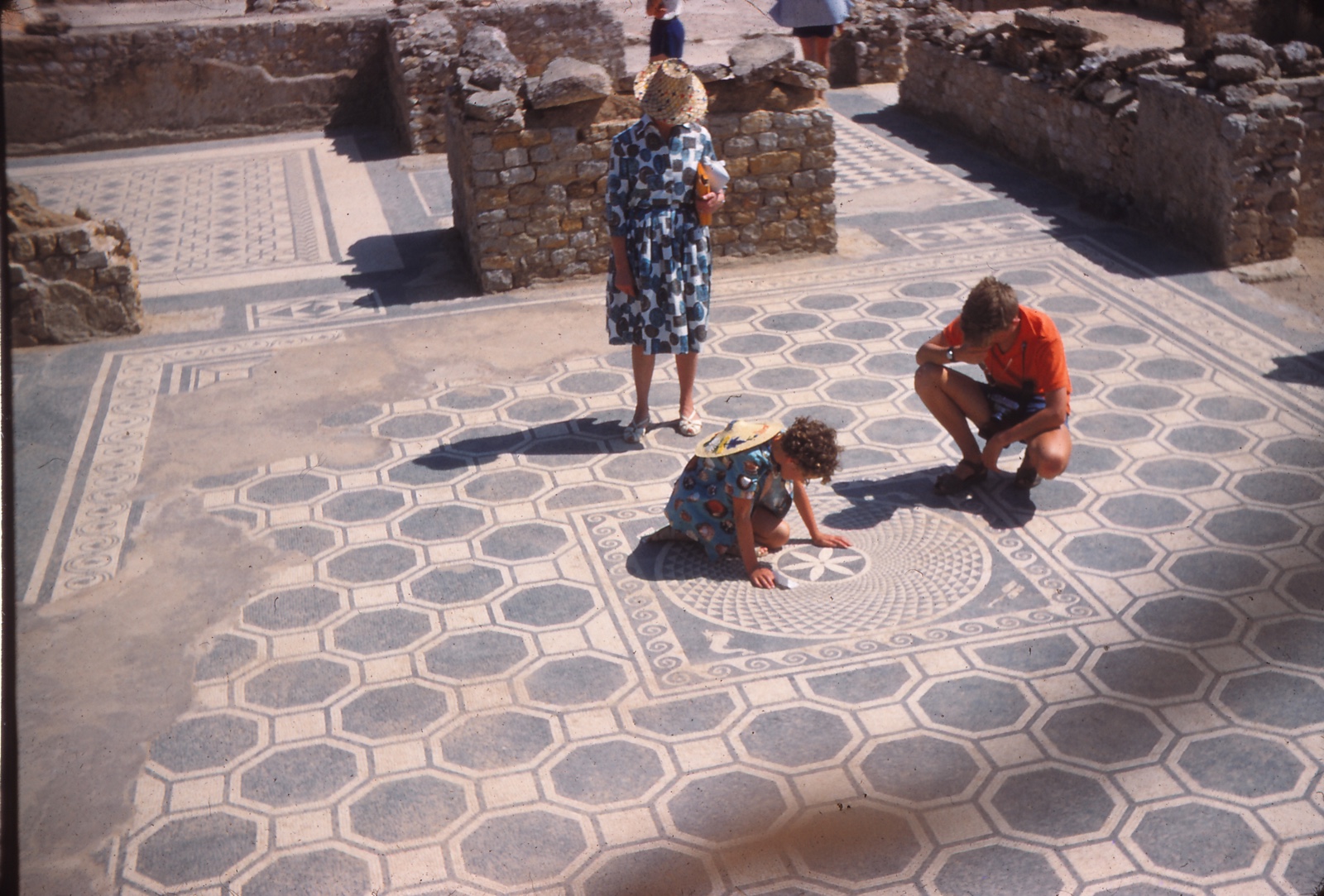
Standing on the beautiful floors in Ampurias, I asked my father, “What would it be like if Roman ladies were in charge, instead of the men?” Maybe it was the fierce sun boiling my brain, maybe early feminism peeping out or maybe just a precocious kid asking a smartarse question. But clever man and senior ‘Roman nut’, my father replied, “What do you think it would be like?”

Alison, age 11, and her mosaic

That childish vision grew and grew. When I was older, I realised I had to put in some proper research. The dissolution of the Roman Empire is fascinating and full of ‘what if’ and natural conflict:

  • The senatorial families at the end of the 4th century fiercely defended their tradition of worshipping the Roman gods despite ever encroaching Christianity. Led by former urban prefect of Rome and consul Quintus Aurelius Symmachus, they pleaded for religious tolerance, but by late 394 AD Emperor Theodosius made any pagan practice, even dropping a pinch of incense on a family altar in a private home, into a capital offence.
  • In its last fifty to seventy years the Western Roman Empire was dissolving into small enclaves, client states, cut off regions – the Domain of Soissons is one example. 
  • Many former Roman territories retained their Roman administrative systems into the seventh and eighth centuries. Could one remote colony last even longer, say centuries?

Switching from a male Roman ethos to a feminist-lite one

I wanted a strong female character who drove the story, but not a harsh, excluding one, hence my heroine has some very human faults and characteristics. There was and perhaps still is a distinct lack of stories where two women have conversations beyond social or fashion issues and are not dependent on the male characters as wife, girlfriend, colleague. I use a technique called gender mirroring where I reverse the behaviour of the characters of a typical spy or action thriller. Think Jane Reacher or Jamie Bond in modern terms. A fascinating writing exercise!

So, I had to exercise the brain and apply some historical logic for Roma Nova. As the men defended the tiny new state of Roma Nova women worked in the fields, traded, sat on the council and managed the families. Consider the dynamic of only a few hundred men at the front especially during the Great Migrations. They simply ran out of male fighters to defend Roma Nova, so sisters and daughters from these pioneer families had to put on armour and heft weapons to defend their homeland and their way of life. 

Fighting danger side-by-side with brothers and fathers reinforced women’s status and roles. And they never allowed the incursion of monotheistic paternalistic religions. In this way, women developed leadership roles in all parts of Roma Novan life over the next sixteen centuries. 

Pulling in my own history

I served six years in the UK forces with active assignments all over the NATO area and beyond. It never occurred to me that women couldn’t serve in the military. I loved it! In the forces, you are only as good as your last job and you are promoted only on merit; both appealing ideas. Thus, my heroines serve in the elite forces in Roma Nova which fits in neatly with the traditional Roman military mindset.

Building the world

For credible alternative history (not Inglourious Basterds!), there is no easy ride such as making everything up. You need to research as thoroughly as for standard historical fiction, especially around the point in time when the timeline splits and leaves the standard one. For Roma Nova this was AD 395. 


The twin guidelines of alternative history writing are plausibility and internal consistency. No country, real or imagined, can survive without a functioning government, an economic, social and political system, food, law and order and income. The basic skills of historical fiction writing apply in the same way: ability to research, respect for known facts (up to the point of divergence), a sense of historical setting, the avoidance of the information dump, and keeping speech, clothes and manners both consistent with and in the world you are describing.  For example, in AD395, solidinot aurei, sestertii or denarii were coins used in the late empire, so Roma Nova Internet banking and credit cards in the 21st century are denoted in solidi.

The sources problem

Much of the historical record is missing from the late fourth century, the springboard for my book world. This complicates research. The big problem of records from antiquity is that they tend to contain the actions and thoughts of the elite and usually only of men. Symmachus, whom I mentioned above, was not only the urban prefect of Rome at one time but also a noted writer in a wide circle of intellectuals. Just under a dozen books of his letters and official dispatches have survived. Such fragments combined with finds from archaeological digs and the physical remains on the landscape help researchers build up a picture of life at the time.  I’m always dropping into the British Museum, buying new books and searching online. It’s very much a case of putting the different pieces of a jigsaw together then filling in the gaps intelligently and with historical logic.

And then you leap into the void, gladius in hand…

If readers would like to try writing an alternative history story, they can download my FREE handout on tips and techniques: http://alisonmortonauthor.com/writing-books/writing-in-an-alternative-history-setting/

Here’s the blurb

“It’s about Roman blood, survival and money. Mostly yours.”

In an alternative New York, Karen Brown is running for her life. She makes a snap decision to flee to Roma Nova – her dead mother’s homeland, the last remnant of the Roman Empire in the 21st century. But can Karen tough it out in such an alien culture? And with a crazy killer determined to terminate her for a very personal reason? 

Stifled by the protective cocoon of her Roma Novan family, deceived by her new lover, she propels herself into a dangerous mission. But then the killer sets a trap – she must sacrifice herself for another – and she sees no escape.

A thriller laced with romance and coming of age, this first in series is Roman fiction brought into the 21st century through the lens of alternative history and driven by a female protagonist with heart and courage.

This 10th Anniversary hardback edition includes bonus content: Three character ‘conversations’, two short stories and the story behind INCEPTIO.

Buy links: 

INCEPTIO 10th Anniversary special edition hardback: 

International Buy Link: 

Amazon UKAmazon US:  Amazon AUS:  Amazon CA: 

Barnes & NobleBook Depository

Your local bookshop or library

All other formats (ebook, paperback, audio)

Meet the Author

Alison Morton writes award-winning thrillers featuring tough but compassionate heroines. Her ten-book Roma Nova series is set in an imaginary European country where a remnant of the ancient Roman Empire has survived into the 21stcentury and is ruled by women who face conspiracy, revolution and heartache but with a sharp line in dialogue. INCEPTIO starts the adventure…

She blends her fascination for Ancient Rome with six years’ military service and a life of reading historical, crime and thriller fiction. On the way, she collected a BA in modern languages and an MA in history.  

Six full-length Roma Nova novels, including INCEPTIO, have won the BRAG Medallion, the prestigious award for indie fiction. SUCCESSIO, AURELIA and INSURRECTIO were selected as Historical Novel Society’s Indie Editor’s Choices.  AURELIA was a finalist in the 2016 HNS Indie Award. The Bookseller selected SUCCESSIO as Editor’s Choice in its inaugural indie review. The Historical Novel Society recently selected JULIA PRIMA, the first Foundation story set in the 4thcentury, the accolade of Editors’ Choice.

Alison lives in Poitou in France, the home of Mélisende, the heroine of her two contemporary thrillers, Double Identityand Double Pursuit. Oh, and she’s writing the next Roma Nova story.

Connect with Alison:

Connect with Alison on her Roma Nova siteFacebook author page

TwitterAlison’s writing blogInstagram

Goodreads:   Alison’s Amazon pageNewsletter sign-up

Follow the Inceptio Blog Tour with The Coffee Pot Book Club

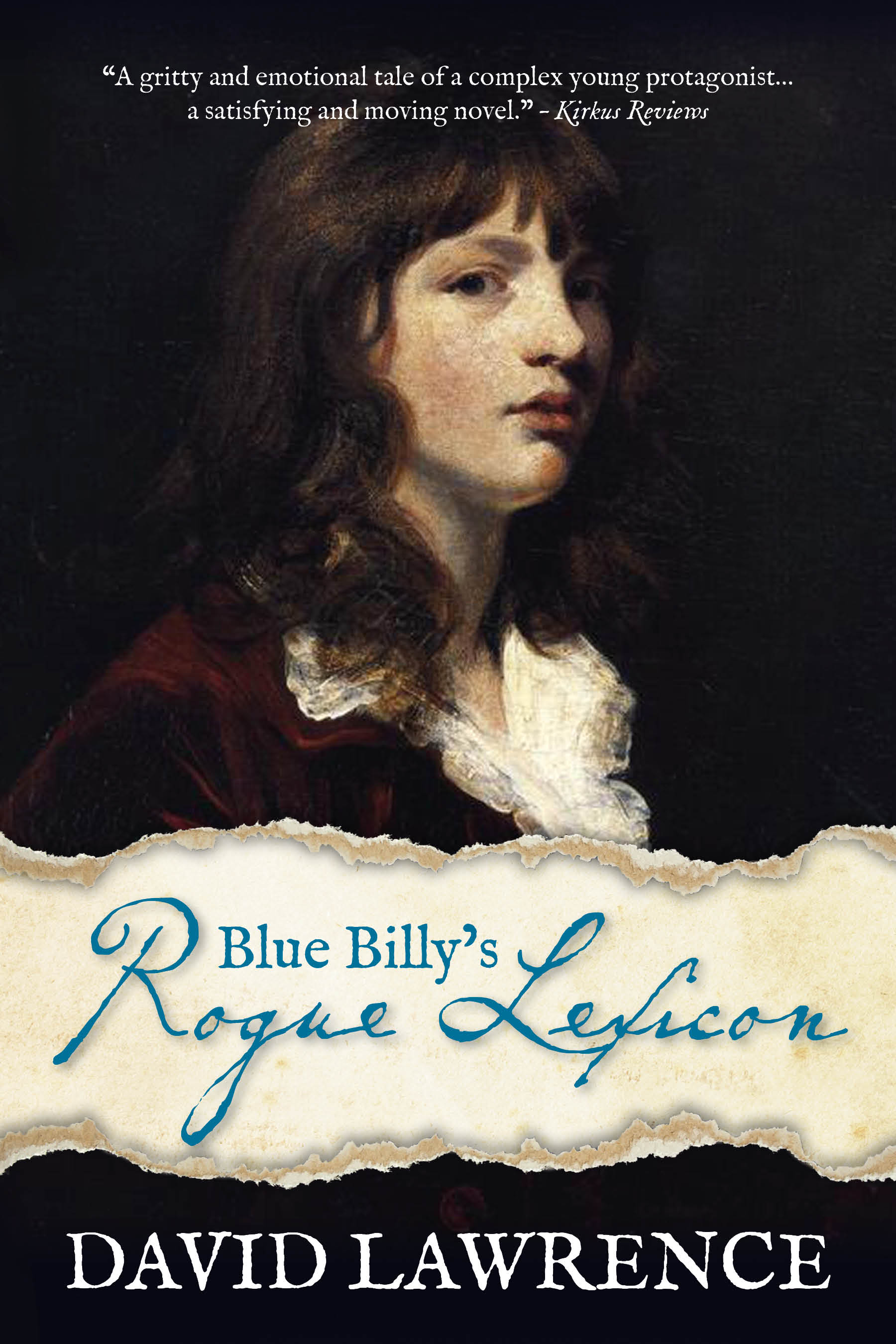
I’m delighted to welcome David Lawrence and his new book, Blue Billy’s Rogue Lexicon to the blog HistoricalFiction #QueerFiction #RomanticComedy #BlogTour #TheCoffeePotBookClub

I’m delighted to welcome David Lawrence to the blog to share a guest post with us.

Criminal Records and the Cant Language

by David Lawrence

For me, historical research is like spinning a spider’s web – every fact I find interesting, be it a great political event or simply learning of a small household object no longer in use, is like a sticky thread spinning out into the ether. Eventually, a specific place, time, and event emerge, rather like a web, in which my story is caught. 

For my first novel, Hugh, the story was caught in Westminster, 1768, centring around the antics of naughty MP John Wilkes.

For this novel, Blue Billy’s Rogue Lexicon, the web caught a story in The Mint (in Southwark), 1771, the summer of Captain Cook’s return from his first voyage round the globe.

Just how I arrived at my completed story I couldn’t exactly tell you(!). However, I can say that the initial thread came from a book called Mother Clap’s Molly House: The Gay Subculture in England 1700 – 1830. I had heard this book referenced here and there during various research projects, and by 2021, when I began researching Blue Billy and needed to read it, I discovered a copy was quite difficult to locate. It was one of the first of its kind on the subject, published in 1992 by Rictor Norton. Ebay, however, saved the day, and I secured my lightly-worn, and beloved, copy.
Little is known about the gay subculture in London during the 18th century, but what we do know, and what Mother Clap’s Molly House outlines wonderfully, are the criminal cases in which homosexual activity ended in legal prosecution. From an historical perspective, these criminal records are priceless, preserving glimpses of lives which would otherwise have been lost to history. 

I knew my protagonist William Dempsey had a history quite far down the social ladder ­– raised on the streets by a den of thieves before getting himself into keeping by a Marquess with a taste for deceptively doe-eyed youths. Mother Clap’s Molly House mentioned that the dialect of the molly (gay) subculture might well have had parallels with the rogue’s lexicon used by your run-of-the-mill London criminals, which included female prostitutes. I already knew that William had worked as a male prostitute, and pow! I suddenly understood that his tricking name was Blue Billy, and that a rogue’s lexicon would form the framework for the novel (the chapter names in the novel are terms taken from this street slang).

The early 1770s I had long known was to be my general time period, but Captain Cook’s return to England after his three-year voyage round the globe cemented it as the summer of 1771. Why? I was seeing parallels between his journey of discovery and Billy’s journey of self-discovery. In the summer of 1771, Billy is thrown out of his West End apartment and must not simply start over from nothing but re-examine his life choices. For details on the voyage, Captain Cook by Walter Besant was a 19th century biography I thoroughly enjoyed, as well as The Endeavour Journal of Sir Joseph Banks from 25 August 1768-12 July 1771 – Banks being the botanist who accompanied Cook on his journey.

Wonderful books like London in the 18th Century by Jerry White and The First Bohemians by Vic Gatrell filled in many more details about this glorious era. I also found James Boswell’s diary from the 1760s, relating his experiences as a young man in London, to be a priceless resource, not only in terms of the attitudes at that time, but for those small details of daily life which make a novel so much richer.

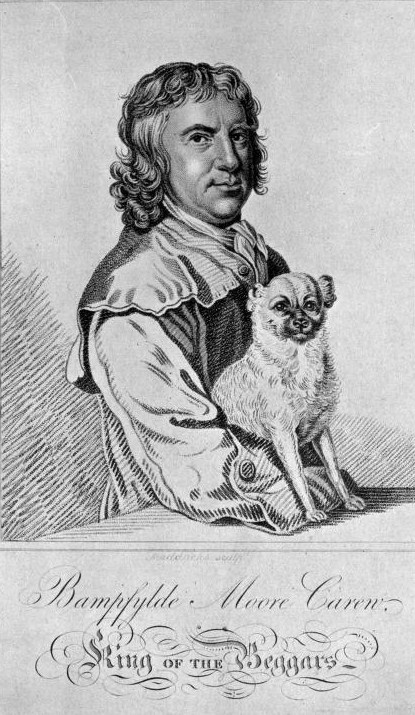
Completing my research were two books detailing the lives of rogues, beggars and thieves of the era. The titles alone tell you how colourful they are: The Surprising Adventures of Bampfylde Moore Carew, King of the Beggars – Containing his Life, a Dictionary of the Cant Language, and many Entertaining Particulars of that Extraordinary Man by Robert Goadby (published 1749) and The English Rogue: Described in the Life of Meriton Latroon, A Witty Extravagant by Richard Head (published 1665)

Bampfylde Moore Carew

Both are public domain images – https://commons.wikimedia.org

Research on this project was quite a journey for me, and some wonderful reading along the way. All books (including, er, my own) are highly recommended!

Thank you so much for sharing. I love the titles of these books from the 17th and 18th century.

Here’s the blurb

William Dempsey was a wonder among wonders.

By 18, he had risen from a gang of London street rogues to be the personal plaything of the Marquess of Argyll. Maintained in splendour, celebrated at masquerades – with everything he could wish for.

Now all has come crashing down. He is put out in the rain without patronage, his West End apartment, or a place among the ton.

So on a stormy night, he arrives at a house in Southwark. Marathon Moll’s in the Mint – the bawdyhouse he worked in during his ascent and where he earned the name Blue Billy.

But is Marathon Moll’s a place from which to rise again? For there is one in the crowd, who catches his eye. Who takes his hand and promises something better.

Or does Moll’s signify a return to his roots? For one day, a second and very different young man raps on the door. Takes his hand and asks him to return to his past.

To the cat language of vagabonds. The canting dialect of thieves.

To the schemes, and the dreams, of his youth.

Buy Links

This title is available on #KindleUnlimited?

Universal Link: https://geni.us/bluebillysroguelexicon

Amazon UKAmazon USAmazon CAAmazon AU

Meet the author

David Lawrence is the author of two queer historical novels – ‘Hugh: A Hero without a Novel’ and ‘Blue Billy’s Rogue Lexicon’. As a writer, he loves taking a deep dive into the politics, social norms, and events of 18th century England while presenting humorous and unique coming-of-age tales.

A native of the American Southwest, David has spent much of his life in Great Britain, France, and Finland.  He now lives in the American Northwest – Helena, Montana – with his Finnish partner. 


By day he loves hiking under the Big Sky of his beautiful adopted state.


By night, however, he prefers wandering the byways of 18th century London…

Connect with David

WebsiteFacebook

Book BubAmazon Author PageGoodreads

Follow the Blue Billy’s Rogue Lexicon blog tour with The Coffee Pot Book Club

Pagan Warrior is on blog tour with The Coffee Pot Book Club #blogtour – check out the posts for day 6

I’m really excited to share the details of the Pagan Warrior blog tour with The Coffee Pot Book Club.

Pagan Warrior is the story of the battle of Hædfeld, fought in the seventh century between the Northumbrians, and you got it, the Mercians – or rather, Cadwallon of Gwynedd but with Penda of Mercia as his firm ally. You can find more details here.

I might have written this book many years ago, but it’s had a refresh, and is now available in audio, narrated by the fabulous, Matt Coles, as is the second book, Pagan King. Warrior King will be coming later this year in audio.

Now that all three books have been ‘refreshed’ you can read in ebook or paperback, and the books are available from all good ebook/paperback sellers. Check out my latest tiktok video to see Warrior King in paperback:)

You can follow the blog tour, and I’ll be sharing posts here as well. A quick shout out to thank all the blog hosts and Cathie at The Coffee Pot Book Club for organising.

For April 18th, I answered Paul Walker’s questions on his blog

Paul Walker’s Official Blog

There’s an except over on Wendy J Dunn’s Official Blog featuring King Edwin

Wendy J Dunn’s Official Blog

And a fabulous review on Ruins and Readings

Ruins and Readings

For April 11th, read a guest post about how we know, what we know, about the seventh century.

Deborah Swift’s Official Blog

And a fabulous author interview over on

The Writing Desk

For April 4th, read an excerpt on

Elizabeth St John’s Official Blog

And read about warfare in the Saxon period on

Brook Allan’s Official Blog

For March 28th, check out a fabulous review on

https://gwendalynbooks.wordpress.com/2023/03/28/pagan-warrior/

A guest post about Mercia in the later eighth century on the Historical Fiction Blog.

https://historicalfictionblog.com/pagan-warrior-guest-post/

And, the post that perhaps gave me the most fear to begin will but which was fun when I remembered all the little details, five fun facts about writing the trilogy.

maryannbernal.blogspot.com

For March 21st check out a post about two of the royal residences of Bernicia at the time, Bamburgh and Ad Gefrin (Yeavering). (There are lots of photos, thank you to Helen Hollick for uploading them all).

Let Us Talk of Many Things

And a review from

Candlelight Reading

From March 14th, check out my author interview over on Archaeolibrarian.

Archaeolibrarian

I’m sharing an excerpt over on The Historical Fiction Company.

The Historical Fiction Company

I’ve written a piece about the historical background on Pam Lecky’s official blog.

Pam Lecky’s Official Blog

Pagan Warrior is on blog tour with The Coffee Pot Book Club #blogtour – check out the posts for day 5

I’m really excited to share the details of the Pagan Warrior blog tour with The Coffee Pot Book Club.

Pagan Warrior is the story of the battle of Hædfeld, fought in the seventh century between the Northumbrians, and you got it, the Mercians – or rather, Cadwallon of Gwynedd but with Penda of Mercia as his firm ally. You can find more details here.

I might have written this book many years ago, but it’s had a refresh, and is now available in audio, narrated by the fabulous, Matt Coles, as is the second book, Pagan King. Warrior King will be coming later this year in audio.

Now that all three books have been ‘refreshed’ you can read in ebook or paperback, and the books are available from all good ebook/paperback sellers. Check out my latest tiktok video to see Warrior King in paperback:)

You can follow the blog tour, and I’ll be sharing posts here as well. A quick shout out to thank all the blog hosts and Cathie at The Coffee Pot Book Club for organising.

For April 11th, read a guest post about how we know, what we know, about the seventh century.

Deborah Swift’s Official Blog

And a fabulous author interview over on

The Writing Desk

For April 4th, read an excerpt on

Elizabeth St John’s Official Blog

And read about warfare in the Saxon period on

Brook Allan’s Official Blog

For March 28th, check out a fabulous review on

https://gwendalynbooks.wordpress.com/2023/03/28/pagan-warrior/

A guest post about Mercia in the later eighth century on the Historical Fiction Blog.

https://historicalfictionblog.com/pagan-warrior-guest-post/

And, the post that perhaps gave me the most fear to begin will but which was fun when I remembered all the little details, five fun facts about writing the trilogy.

maryannbernal.blogspot.com

For March 21st check out a post about two of the royal residences of Bernicia at the time, Bamburgh and Ad Gefrin (Yeavering). (There are lots of photos, thank you to Helen Hollick for uploading them all).

Let Us Talk of Many Things

And a review from

Candlelight Reading

From March 14th, check out my author interview over on Archaeolibrarian.

Archaeolibrarian

I’m sharing an excerpt over on The Historical Fiction Company.

The Historical Fiction Company

I’ve written a piece about the historical background on Pam Lecky’s official blog.

Pam Lecky’s Official Blog