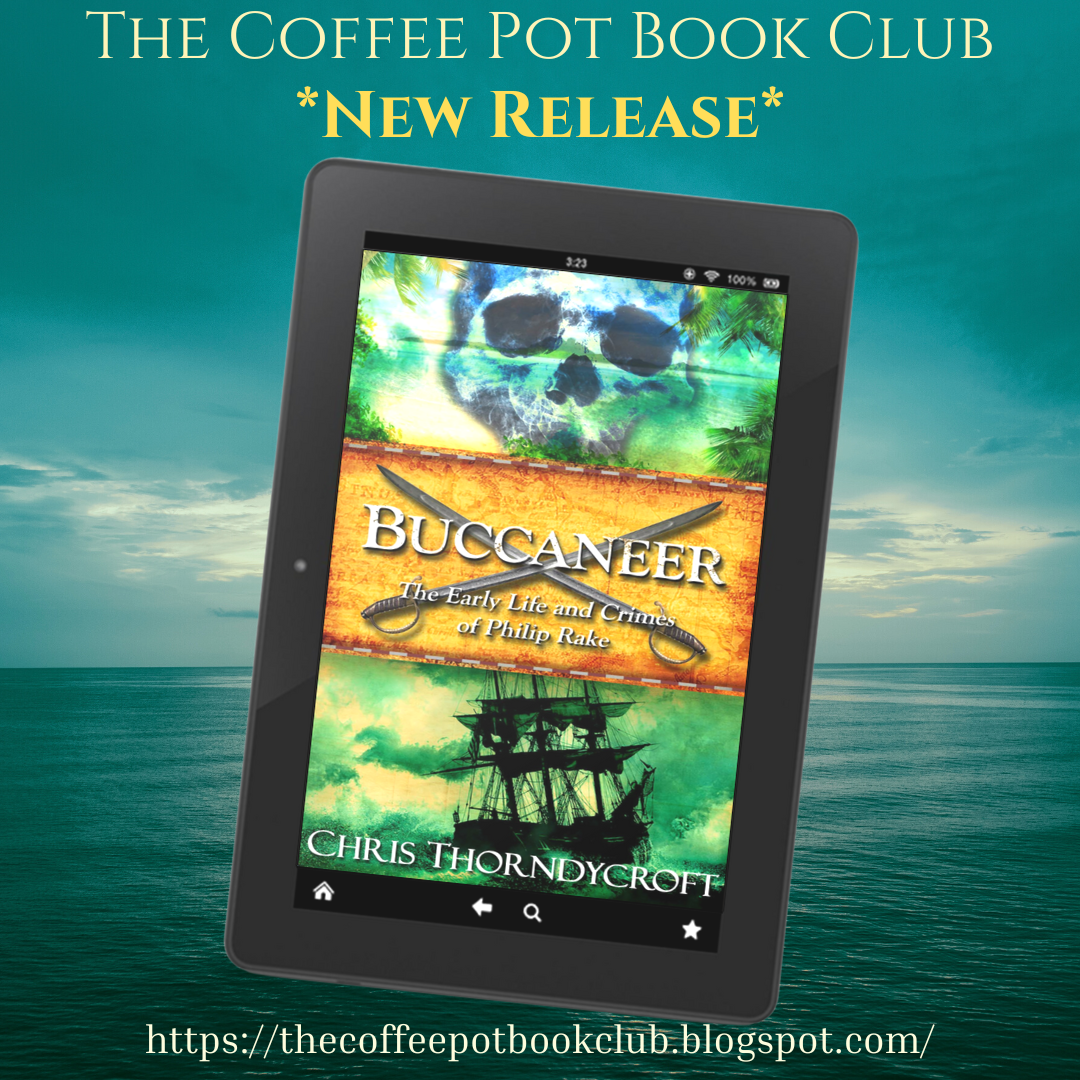
It’s release day for the Buccaneer, the new book from Chris Thorndycroft, Pirates #Caribbean #Swashbuckling #NavalFiction #BlogTour #NewRelease #TheCoffeePotBookClub

Here’s the blurb

Bristol, 1713. When Philip Rake, pickpocket, smuggler and scoundrel is arrested and thrown in jail, he assumes he has a short walk to the gallows. But his father, a wealthy merchant who has remained a figure of mystery throughout his life, throws him a lifeline; become an indentured man on an expedition to the East Indies led by his friend, Woodes Rogers.

Woodes Rogers is looking for Libertatia – the fabled pirate kingdom of the legendary buccaneer Henry Avery – and the hoard of treasure rumoured to be hidden there. But Philip wants his freedom and when he learns that there are men onboard who once sailed with Henry Avery and plan to take the treasure for themselves, he jumps ship and embarks upon a career of piracy.

Philip’s story takes him from the backstreets of Bristol to the sun-baked hills of Madagascar and on to the tropical islands of the Caribbean in a thrilling tale of adventure in which he rubs shoulders with some of the most notorious pirates of the age including Blackbeard, Charles Vane, Anne Bonny and Mary Read.

Buy Links:

This title will be available to read on #KindleUnlimited. 

Universal Link

Amazon UKAmazon US

Amazon CAAmazon AU

Meet the Author

Chris Thorndycroft’s writing career began with short horror stories which appeared in magazines and anthologies such as Dark Moon Digest and American Nightmare. 

His first novel under his own name was A Brother’s Oath, book one in the Hengest and Horsa trilogy, which deals with the beginning of Anglo-Saxon England. He has always had a passion for historical fiction, kindled at the age of six when he first saw Errol Flynn in The Adventures of Robin Hood (1938). His books are deeply grounded in real history but often reimagine legends such as King Arthur and Robin Hood, weaving them in with historical events. 

He currently lives in Norway with his wife and two kids. 

Connect with Chris

WebsiteTwitter: Facebook:     Instagram

TikTokAmazon Author PageGoodreads:

Follow the Buccaneer Blog Tour with The Coffee Pot Book Club

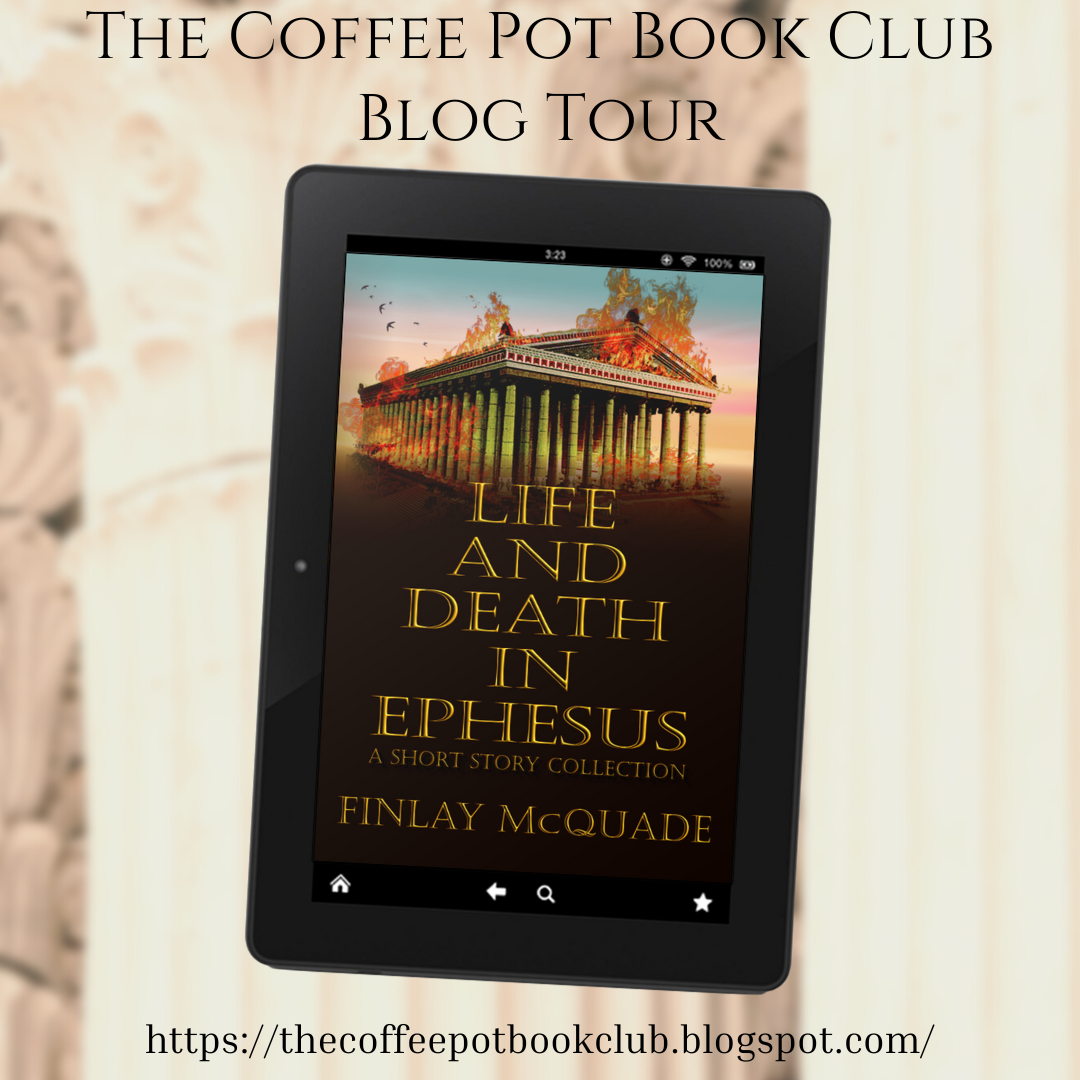
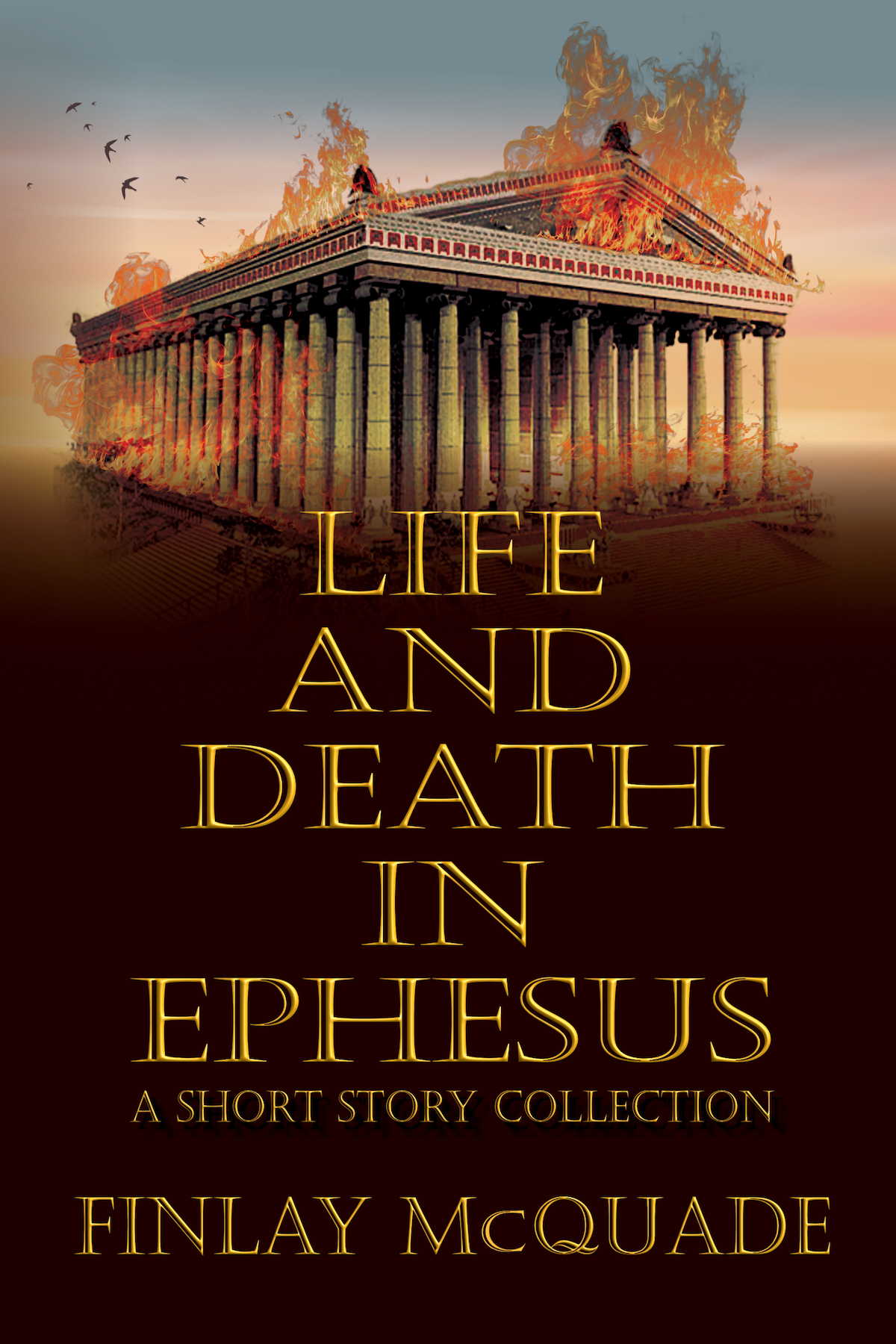
I’m delighted to feature an excerpt from Finlay McQuade’s new book, Life and Death in Ephesus, a short story collection. HistoricalFiction #shortstories #Ephesus #BlogTour #TheCoffeePotBookClub

I’m delighted to feature an excerpt from Finlay McQuade’s new book, Life and Death in Ephesus, a short story collection.

From “Nestorius.”

The next day, sure enough, the church of the Evangelist was half empty, but the murmurs of protest were twice as loud as the hissing and whispering of the day before. Even so, Nestorius persisted. Desperate to demonstrate the simple logic of his argument, he introduced a new metaphor into his sermon:
“Ferment the grape and what do you get? You get a sublime wine that buoys your spirit and lifts you heavenward. Squeeze the olive and what do you get? You get a taste of ancient earth, a hint of delight first tasted in the Garden by our earliest ancestors. But when you mix the two, what do you get? The sublime headiness of wine? No. The rich earthiness of Eden? No. You get a noxious mixture that retains the qualities of neither. Such is not the nature of Jesus Christ.
“Jesus was a man and had all the qualities of a man, including the capacity to suffer and die. And he was also and always will be a God, who did not die and did not fear the pains of death as you and I inevitably will. Our Lord Jesus Christ had two natures, the one human and the other divine. The blessed Virgin gave birth to the one, but she did not give birth to the other, because the Son of God already existed and had always existed. That is why I have said and I say again that the blessed Virgin was the Christ-bearer, not the God-bearer. And yet, from that miraculous moment of Incarnation, the God and the man were united as one: human and divine in perfect union.”
It seemed at first to have made an impression on his audience, for they were quiet. Later, on reflection, he thought that perhaps they were dazzled by the clarity of his argument, but no closer to accepting its truth. Then a scrawny little monk with a red clean-shaven face in the pew nearest to the altar stood and shouted in a deep bass voice, “HERETIC! HERETIC!” and continued to shout it until he was joined by a scattering of others in the dim interior of the church, and gradually by just about everyone present, “HERETIC! HERETIC! HERETIC!”

Here’s the blurb:

For over a thousand years, Ephesus, on the Aegean coast of what is now Turkey, was a thriving city. It was the site of the Temple of Artemis, one of the Wonders of the World, and a destination for religious pilgrimage long before the advent of Christianity. In the first century CE, St. John and St. Paul introduced Christianity to Ephesus, where it survived its turbulent beginnings and, in the fifth century CE, hosted the God-defining Council of Ephesus.

Life and Death in Ephesus is a collection of stories about major events in the history of Ephesus. Characters appearing in these stories include Herostratus, first to commit a “herostratic crime”; Alexander, the warrior king; Julius Caesar and Mark Antony, both lovers of Cleopatra; Heraclitus, the philosopher who said, “You can’t put your foot in the same river twice”; St. Paul, persona non grata in Ephesus; Nestorius, whose characterization of Jesus split the Eastern and Western church, and others, also important, whose names I have had to make up.

Hilke Thür, a leading archeologist, has said of these stories, “Life and Death in Ephesus will be a delightful and enjoyable accompaniment to the many available guidebooks. Not just tourists, but anyone interested in history will benefit from reading them.”

Buy Links:

Universal Link:

Amazon UKAmazon USAmazon CA: Amazon AU:

Barnes and Noble. Kobo

Meet the author

Finlay McQuade is a retired educator. He was born in Ireland, went to high school in England, and university in the USA. He has a BA in English from Pomona College, an MA in British and American literature from Harvard University, and a PhD in education from the University of Pittsburgh, where he also taught writing courses in the English department. He spent some happy years as a high school English teacher and soccer coach, but after co-authoring the book How to Make a Better School he found himself in demand as a consultant to schools and school improvement projects in the USA and often, also, abroad. He ended his career in education when he retired from Bogazici University in Istanbul, where he had mentored young teachers in the school of education. 

For eight years after retirement, he lived in Selcuk, Turkey, among the ruins of the ancient city of Ephesus. The streets and squares of Ephesus became his neighborhood. His companions included archeologists, tour guides, and souvenir sellers. His curiosity about the people who had lived in those empty buildings for over a thousand years resulted in Life and Death in Ephesus, a collection of stories chronicling major events in the city’s history.

Now, back in the USA with time on his hands, he finds himself returning again and again to memories of his boyhood on the coast of Northern Ireland. The result of these forays into his past will be another collection of stories, part memoir, part fiction, called Growing Up in Ulster.

Connect with Finlay:

WebsitePinterestAmazon Author PageGoodreads

Follow the Life and Death in Ephesus blog tour with The Coffee Pot Book Club

Today, I’m welcoming Juliane Weber to the blog with her series, The Irish Fortune which begins with Under the Emerald Sky #HistoricalFiction #HistoricalRomance #Ireland #BlogTour #BookBlast #TheCoffeePotBookClub

Today, I’m delighted to welcome Juliane Weber, and the Irish Fortune series to the blog. Book 1 is currently on special offer for 99p/99c, so snap it up.

Here’s the blurb

“Under the Emerald Sky reaches another level in storytelling, the kind where the characters remain with you long after you have closed the book.” – The Historical Fiction Company

It’s 1843 and the Englishman Quinton Williams has come to Ireland to oversee the running of his father’s ailing estate and escape his painful past. There he meets the Irishwoman Alannah O’Neill, whose family is one of few to have retained ownership of their land, the rest having been supplanted by the English over the course of the country’s bloody history. Seeing the injustices of Victorian Ireland, Alannah’s brother Kieran has learned to hate the English and imperialism. Aware of Kieran’s hostility towards the English, Alannah keeps her growing relationship with Quin a secret – but it’s a secret that can’t be kept for long from those plotting to end England’s oppression of the Irish people. As Quin and Alannah seek happiness in the face of hate and revenge, an action-packed romance ensues.

But all the while, disaster looms – the Great Famine that would forever change the course of Ireland’s history. With repeated failure of the potato harvest upon which most Irish families depend, thousands will go hungry, with sickness and starvation sweeping through Irish farms, decimating poor populations for years to come.

Can Quin and Alannah find happiness in a land teetering on the brink of disaster?  

Buy Links: 

This series is available to read on #KindleUnlimited. 

*Under the Emerald Sky, Book 1, ebook is on offer at 0.99.*

Universal Links

Under the Emerald Sky

Beneath the Darkening Clouds

Amazon UK:  Book 1  Book 2 Series

Amazon US:  Book 1 Book 2  Series 

Amazon CA:  Book 1  Book 2  Series 

Amazon AU:  Book 1 Book 2 Series

Meet the author

Juliane Weber is a scientist turned historical fiction writer, and author of the Irish Fortune Series. Her stories take readers on action-packed romantic adventures amid the captivating scenery and folklore of 19th century Ireland. 

Under the Emerald Sky, the first book in the Irish Fortune Series, was awarded bronze medals in The Historical Fiction Company 2021 Book of the Year Contest and The Coffee Pot Book Club 2022 Book of the Year Contest. The second book in the series, Beneath the Darkening Clouds, was awarded a bronze medal in The Historical Fiction Company 2022 Book the Year Contest.

Juliane spent most of her life in South Africa, but now lives with her husband and two sons in Hamelin, Germany, the town made famous by the story of the Pied Piper.

Connect with Juliane

WebsiteTwitterFacebookLinkedInInstagram

Book BubAmazon Author PageGoodreads

Follow the Irish Fortune Series blog tour with The Coffee Pot Book Club

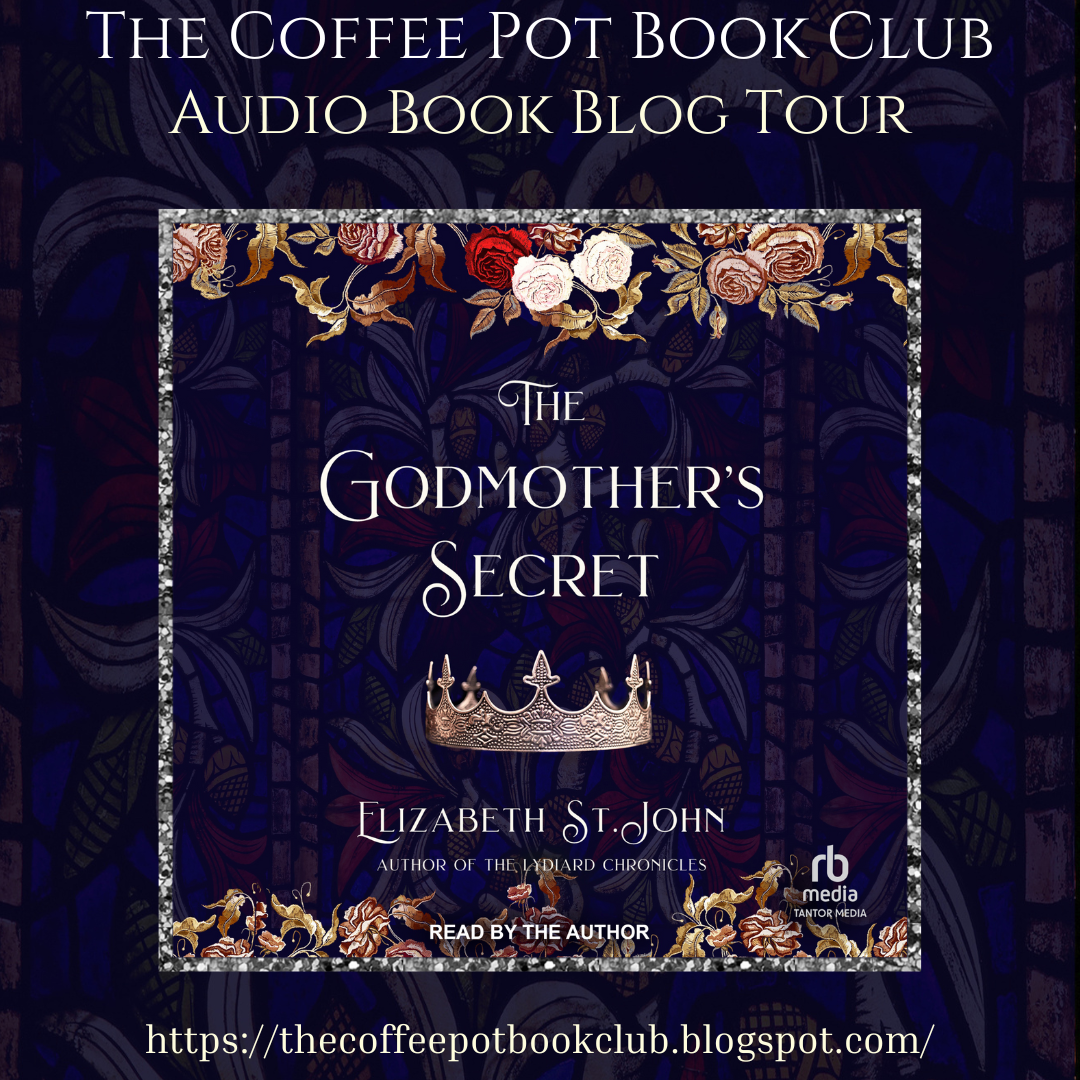
I’m delighted to welcome Elizabeth St. John and her new audiobook, The Godmother’s Secret to the blog #HistoricalFiction #PrincesInTheTower #Audiobook #BlogTour #TheCoffeePotBookClub

I’m delighted to welcome Elizabeth St. John and her new audiobook, The Godmother’s Secret to the blog, with a snippet to read, and to listen to:)

Spring 1483 | Stony Stratford

“Go to Ned’s chamber, Lady Scrope. You can see for yourself—there, upstairs, with the guard on the door.” Gloucester nods across the mud-rutted stable yard of the Rose and Crown in Stony Stratford. “’Struth, but this is a piss-poor place for the King of England to spend the night. But directly on the London road.” He glances at Harry. “I believe you are right. Lord Rivers is preparing for a speedy departure.”

“And that he will have,” responds Harry. “But perhaps not in the direction he planned.” He gestures at me impatiently. “Go now to the king.”

I dismount and walk cautiously up the broken wooden stairs to the outer gallery. Harry’s ranting increased on the brief ride from Northampton, his cursing against the Woodvilles unbearable. I just want to hold Ned, comfort him and give him courage to face the days ahead. The poor boy has lost his father. The rest is men’s talk.

The guard is sleepy, his air distracted. 

“I am Lady Scrope. Godmother to King Edward.”

He just stares ahead.

“Let me pass.”

Reluctantly, he moves to one side. 

My precious boy stands in the middle of the room, quite alone. He cries in surprise and runs into my arms. Ned’s thin frame is trembling like a stricken rabbit. He is now my king, but he is also my boy, a mere twelve-year-old lad guarded and alone in his chamber in this dilapidated inn. 

“My father.” His voice cracks like a broken reed. “Oh, Lady Scrope, I did not get to say good-bye to him.”

“Hush. Hush, my Ned.” His baby name slips out naturally. I hug him for the longest time, feeling his tense shoulders gradually lower. I can feel him struggling not to cry, and I must help him gather his emotions. I hold him at arm’s length to look into his eyes. “Be brave, my darling, take courage. You must be strong, be true to your destiny.”

“But not yet, Lady Scrope. I’m not ready yet.” His eyes well with tears again. My heart breaks.

“Listen to me,” I say fiercely. “Just as Arthur pulled the sword from the stone, kingship has been thrust upon you.”

He looks at me, his head tilted. “And he didn’t even know he would be king.”

I knew I’d capture his imagination. “No, he didn’t. And look how brave he was.”

Ned childishly scrubs his face, a crimson flush on his fair skin. “Our favourite story. Do you think I could be a great king like Arthur?”

“Yes, my darling. Yes. For you have been schooled well in chivalry, Ned. Your father and Lord Rivers have prepared you since your birth for this moment, although it has indeed come too quickly.” I gently wipe a tear from his smooth cheek. “And you have me, Lord Scrope, and your mother, Dickon, and your sisters, your family who loves you so very much, to help you.”  

Ned lifts his chin, sucks in a deep shuddering breath. I free the crucifix from my purse and fold it into his palms, pressing his hands around the precious relic.

“From your father, to my care.” I stroke the blond hair that tufts from his damp forehead in the way it has grown since he was four years old. “So you would know he is always with you, Ned. And that he entrusts me with your well-being.”

Audio Link to go with Snippet

https://youtu.be/uBkAEsx8WEo

Here’s the blurb:

“An extremely well-written book with depth and complexity to the main characters. The author says she wanted to write a book about family love and tolerance, and a woman’s loyalty and courage. She has done so. This is the best book I’ve read in ages!”

The Ricardian Bulletin, Richard III Society

“The authenticity and historical research displayed within this story is immense and exquisite. Ms. St. John is sure to be a newfound favorite for fans of not only this fractious time in English history, but of all historical fans who adore rich, immersive prose.”
Historical Fiction Company 2022 Book of the Year

“A very enjoyable read. The historical veracity is impeccable, and Elysabeth is a likeable, admirable character who faces interesting dilemmas with love and courage.”
Historical Novel Society

If you knew the fate of the Princes in the Tower, would you tell? Or forever keep the secret?

May 1483: The Tower of London. When King Edward IV dies and Lady Elysabeth Scrope delivers her young godson, Edward V, into the Tower of London to prepare for his coronation, she is engulfed in political turmoil. Within months, the prince and his brother have disappeared, Richard III is declared king, and Elysabeth’s sister Margaret Beaufort conspires with her son Henry Tudor to invade England and claim the throne.

Desperate to protect her godson, Elysabeth battles the intrigue, betrayal, and power of the last medieval court, defying her Yorkist husband and her Lancastrian sister under her godmother’s sacred oath to keep Prince Edward safe. Bound by blood and rent by honour, Elysabeth is torn between King Richard and Margaret Beaufort, knowing that if her loyalty is questioned, she is in peril of losing everything—including her life.

Were the princes murdered by their uncle, Richard III? Did Margaret Beaufort mastermind their disappearance to usher in the Tudor dynasty? Or did the young boys vanish for their own safety? Of anyone at the royal court, Elysabeth has the most to lose–and the most to gain–by keeping secret the fate of the Princes in the Tower.

Inspired by England’s most enduring historical mystery, Elizabeth St.John blends her family history with known facts and centuries of speculation to create an intriguing story about what happened to the Princes in the Tower.

Buy Links:

Audiobook Buy Link 

The Godmother’s Secret is discounted by 50% on Audiobooks.com only this week – use the link below.

https://www.audiobooks.com/promotions/promotedBook/680002/godmothers-secret

The ebook is available to read on Kindle Unlimited.

Universal Buy Link 

Meet Elizabeth St. John

Elizabeth St.John’s critically acclaimed historical fiction novels tell the stories of her ancestors: extraordinary women whose intriguing kinship with England’s kings and queens brings an intimately unique perspective to Medieval, Tudor, and Stuart times.

Inspired by family archives and residences from Lydiard Park to the Tower of London, Elizabeth spends much of her time exploring ancestral portraits, diaries, and lost gardens. And encountering the occasional ghost. But that’s another story.

Living between California, England, and the past, Elizabeth is the International Ambassador for The Friends of Lydiard Park, an English charity dedicated to conserving and enhancing this beautiful centuries-old country house and park. As a curator for The Lydiard Archives, she is constantly looking for an undiscovered treasure to inspire her next novel.

Elizabeth’s books include her trilogy, The Lydiard Chronicles, set in 17th Century England during the Civil War, and her newest release, The Godmother’s Secret, which explores the medieval mystery of the missing Princes in the Tower of London.

Connect with Elizabeth

WebsiteTwitter

FacebookLinkedInInstagram

Book BubAmazon Author PageGoodreads

Follow The Godmother’s Secret blog tour with The Coffee Pot Book Club

Today I’m delighted to welcome Luv Lubker to the blog with Under His Spell #UnderHisSpell #TheRivalCourts #VictorianFiction #HistoricalFiction #BlogTour #TheCoffeePotBookClub

Today, I’m sharing a fab excerpt from Under His Spell.

Fritz stood awkwardly at the nursery door. “Should we really be here?” he asked his mother. “I mean, should the men come to the nursery?”

“Fritz, the Queen asked us to; I think you can tell what is proper,” she said shortly.

“How is my little Godson?” Papa was asking Prince Albert.

“Very well indeed, look at him,” the Prince Albert said. “He is a strong little fellow.”

“Fritz, come and meet your Godbrother,” Papa said.

The little boy stood, wobbling. “Fitz solda?” he asked.

“He is an observant little fellow, to see that we are in uniform,” Fritz said, awkwardly picking up the little boy. He set him back down on his feet after a moment, watching as the little boy reached out his hand toward him. He fell, slapping Fritz’s leg in the process.

“Our little warrior is very strong,” the Queen laughed.

Arthur sat up again. “Fitz, Fitz solda; Ata be solda!” he giggled as he pulled on the spur on Fritz’s boot.

“Yes, I can see you will be a soldier,” Fritz said, sitting down and holding out his cap. “Come here, my little Godbrother.” He liked the sound of that. Godbrother. In Prussia they almost always said “sponsors”, not “Godparents”. Arthur toddled toward him, taking hold of his cap and trying to put it on. It covered his whole head and shoulders. Fritz laughed.

Vicky appeared at the door. “So, you have met my dear little brother,” she said, picking Arthur up and sitting at Fritz’s side. “Isn’t he a darling?”

“He is a precious child,” said Fritz, a little awkwardly. “But – you are used to this?” he said, watching Vicky stroke her little brother’s head.

“Yes, Mama calls me their little mother. You… You only have Vivi. But didn’t you do this with her?”

“No, the older children aren’t allowed back into the nursery once they leave it, in Prussia,” he said. “I mostly saw her when she was brought down after dessert, when the nurse took her out for walks, and for a few minutes in company, until she was about seven.”

“Oh!” Vicky exclaimed. “I can’t imagine that. How lonely you must be!” She slipped her hand into his. “I am your friend now.”

Here’s the blurb

A beautiful love story between the Princess Royal Victoria and Fritz Wilhelm, Frederick III of Prussia

A lonely young man attends the first World’s Fair – the Great Exhibition of 1851 – and meets a family who changes his life forever.

Follow the young Prince Fritz – later Friedrich III – of Prussia and his wife, Queen Victoria’s eldest daughter, Vicky, (parents of Kaiser Wilhelm II) through their courtship and the joys and struggles of their first four years of marriage. 

Fritz and Vicky dream of a peaceful united Germany, but Fritz’s uncle Karl has his own dreams of power…

Discover often hinted at but unrevealed secrets of the Prussian Royal court…

Buy Links:

Universal Link:  

Amazon UK:   Amazon US: Amazon CA:   Amazon AU:

Barnes and Noble:

Kobo:

Meet the author

Luv Lubker has lived in the Victorian era half her life, making friends with the Brontë sisters and the extended family of Queen Victoria. Now she knows them quite as well as her own family.

Born in a cattle trough in the Appalachian mountains, Luv lives in Texas – when she comes to the modern world. 

When she isn’t living in the Victorian era, she enjoys being with her family; making and eating delicious raw food, riding her bike (which she only learned to ride at 25, though she’d ridden a unicycle since she was 7), and watching animals – the passion of her childhood.

Connect with Luv

Website: Twitter:

Facebook: LinkedIn: Instagram:

Pinterest: Amazon Author Page: Goodreads:
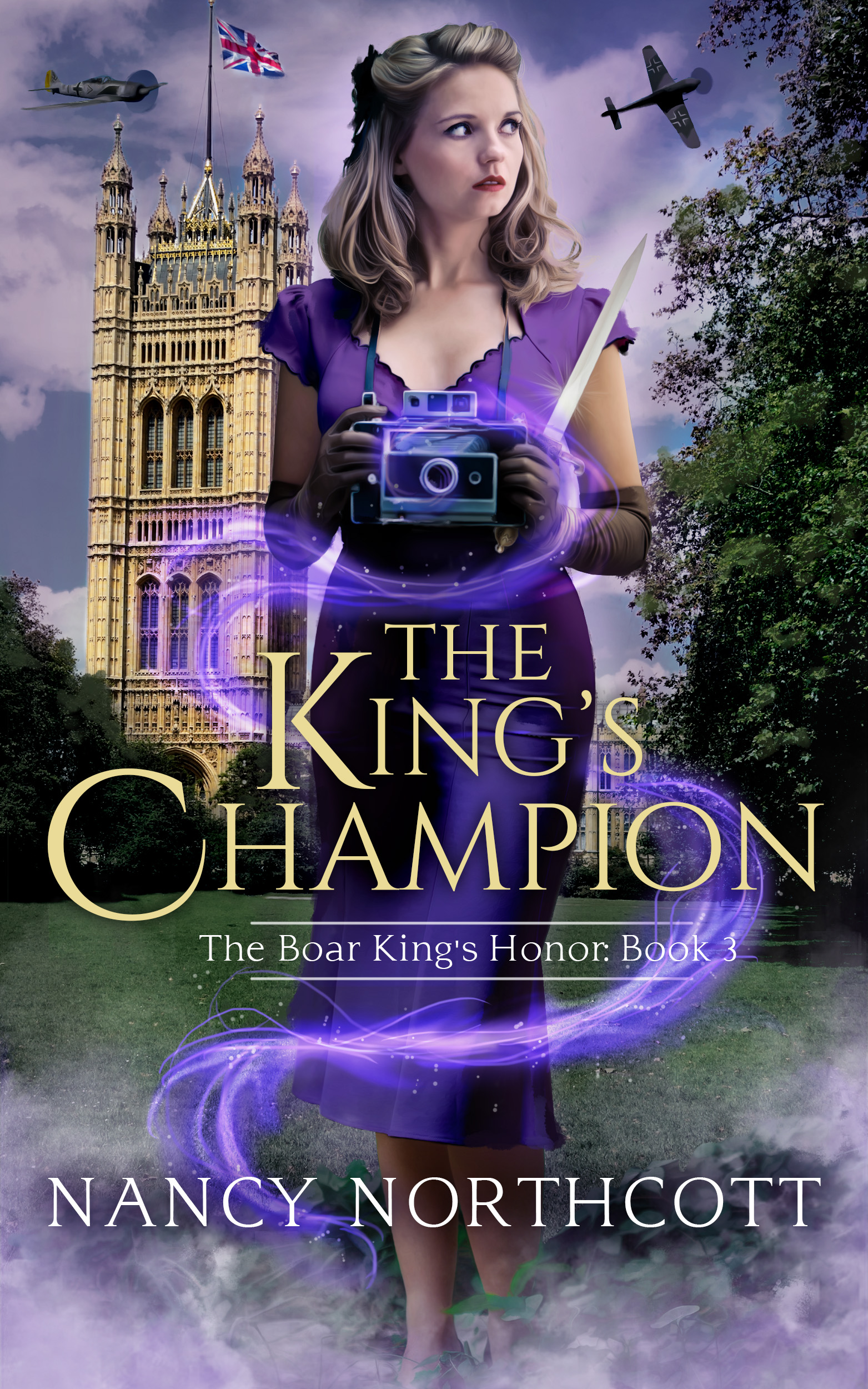
I’m delighted to welcome Nancy Northcott and her historical fantasy, The King’s Champion, to the blog HistoricalFantasy #WWII #Dunkirk #RomanticFantasy #BlogTour #TheCoffeePotBookClub

I’m delighted to welcome Nancy Northcott and her historical fantasy series to the blog. Nancy is sharing a fabulous post, about Challenges in the Past, with us.

Writing historical fantasy obviously requires dropping one’s characters into an historical world and making it seem real, vibrant and alive for readers. This holds true even when a writer decides to create an alternative timeline, or even an alternate universe for a particular era, as with steampunk, which is often set in a Victorian England that has steam-based and other tech. The more different the timeline and universe are from the way our history depicts a period, the more leeway an author has available in creating the world.

I like to stick close to the actual timeline, fitting my characters and their magic around the events of the era. That means I need to be fairly true to what people wore, how they lived, what they ate, and so on. In this post, I’ll share some of the challenges I faced in recreating the periods of the three books in my Boar King’s Honor historical fantasy trilogy.

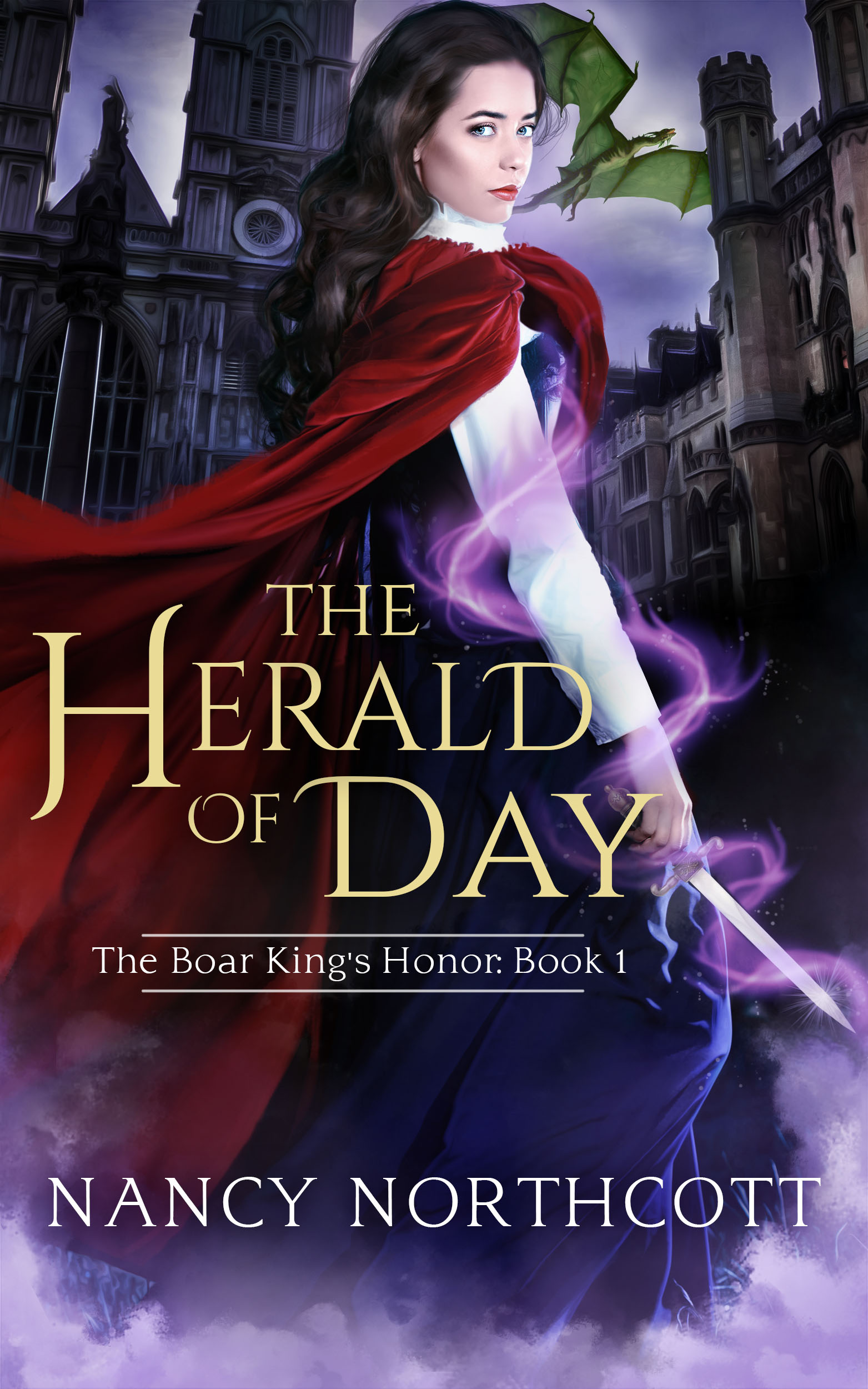
The action in the first book Boar King’s Honor trilogy, The Herald of Day, takes place in 1674, during the reign of Charles II. Although the book opens in Dover, most of the scenes take place in London. I happen to like that period, so I didn’t have to do much reading about the political situation in England at that time. I did, however, have to find out about travel, food, clothing, customs, and language. I started this project before the internet had virtually every kind of information on it, so I had to do a fair bit of hunting for answers.

Finding out about clothing was harder than I expected. I had a scene in which the villain undressed, and I realized I had no idea how men’s pants closed in 1674. I started asking writers, and someone knew someone who was not only a writer but a costumer. This friend of a friend generously provided sketches, references on clothing design and fabric, and other information that was helpful for all the characters.

Despite preferring to stay close to established history, I took a leap with that book and decided to have the villain, a wizard, figure out how to go back in time and change history to create a dictatorship of the magically Gifted—with himself at the head, of course. So I had to decide whether he made the change before, during, or after the Restoration of Charles II. I went back and read from the events leading up to it through the period immediately after and weighed the results of several options. I won’t say what I finally picked because the characters have to figure that out what the villain did, and I don’t want to spoil that for readers.

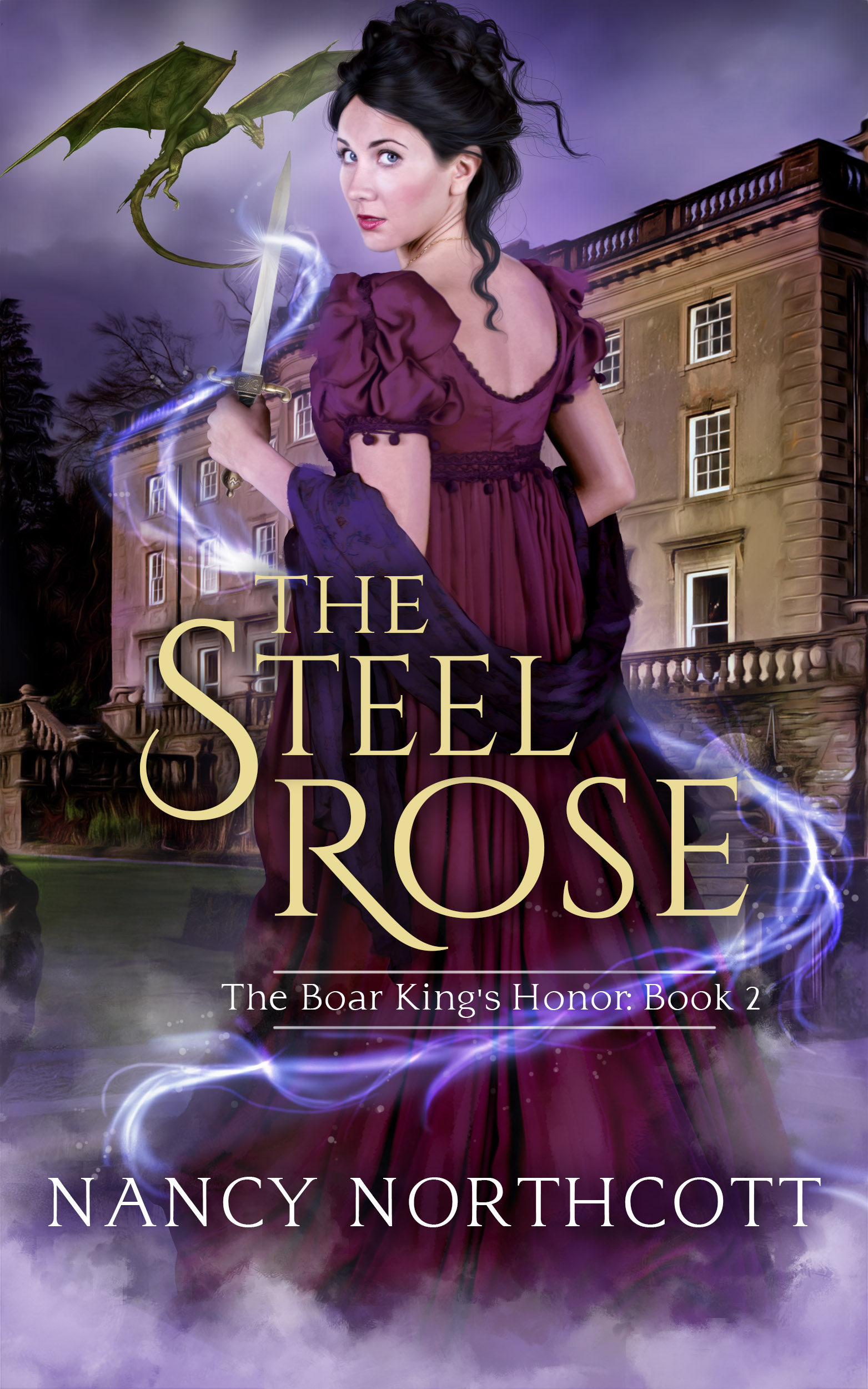
The second book, The Steel Rose, was the scariest to write from a research standpoint. By the time I started that one, the internet offered reams of material, and books on historical costume were easier to find around here than they’d been before. That simplified choices for the characters’ clothing, but the period brought a new headache.

The Steel Rose is set in 1815 during the hundred days between Napoleon’s escape from Elba and the Battle of Waterloo. This period is known as the Regency because King George III was incapable of ruling and England was governed by his son, the future George IV, as Prince Regent. This is Jane Austen’s era. It’s also one of the most popular for romance novels. During the Regency, social classes were rigidly stratified, and manners made the difference between social success and ostracism. There was a very great deal of etiquette to learn.

As though that weren’t tough enough from a writer standpoint, there are vast numbers of people who love the era’s social history. They create historically accurate costumes, learn the dances, and memorize the etiquette. They’ve been known to eviscerate writers who got something wrong, and the internet didn’t offer the specific information I needed. Fortunately, some Regency romance writers came to my rescue, answering questions and pointing me to resources. I did cut come of the bowing and curtseying customary during the era in the interests of moving the story along.

The social niceties weren’t my only concern, though. This story would include both Napoleon’s departure from Elba and the Battle of Waterloo. You may be aware that literal armies of people re-enact Waterloo every year. And they do it wearing uniforms accurate for both the period and their military units. That means many, many potential readers would know if I made a mistake. 

Fortunately for me, Osprey Publishing puts out wonderful books full of detailed information on military uniforms and equipment. They also had a terrific book on the battle that led me to other books full of the meticulous details that gladden writers’ hearts.

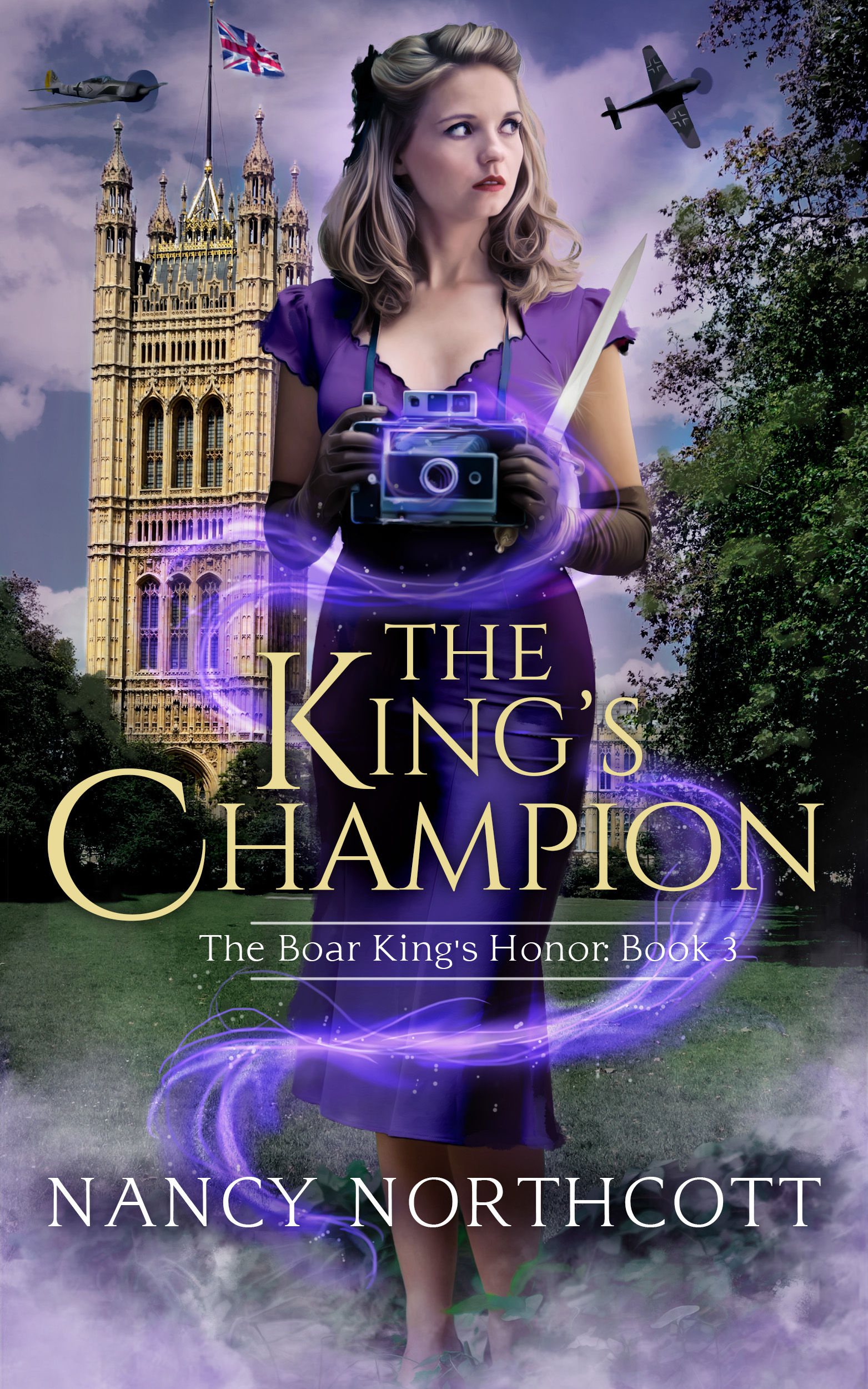
With those challenges behind me, I turned to the final book, The King’s Champion. It posed a different problem. There are many, many, many books about Britain during World War II, including libraries’ worth on social history. The trick, I quickly realized, would be in synthesizing all this information so that it offered an accurate picture of the era without including so much that it overshadowed the story. There are still people alive who remember the war years. There are many more who remember what those people said about life during the war. I had to depict British society in a way they would find acceptable. 

Friends whose parents remember hearing about the war from relatives helped me out, especially about rationing and housing. Other friends knew the answers I needed or knew British veterans who would answer my questions. The Imperial War Museum website was very useful, as were, again, Osprey books. It was from that website that I learned about the 5” per person per week rationing of hot bath water, but I was never able to figure out exactly when that started. 

At one point, my heroine is on a tugboat headed back to Dover from Dunkirk, and she asks the captain how long the trip will take. Unfortunately, I didn’t know. I could’ve deleted the question, but it would be logical for her to ask. I wanted to find the answer. This sent me down a research rabbit hole that grew ever deeper as I searched. Finally, after several attempts, I put the right combination of words into a search engine and hit upon a website devoted to the Little Ships of the evacuation.

These are some of the challenges I stumbled into while building the worlds for these three books. I didn’t want to hand-wave the problems away and just put down something convenient because “it’s fiction.” I’m grateful to everyone who helped me find the answers I needed.

I enjoyed the hunt for information, so finding it was a true delight each and every time. I’m happy with the worlds in this trilogy, and I hope readers be will as well.

#

Thank you for having me, MJ!

Thanks so much for sharing your fabulous post with my readers.

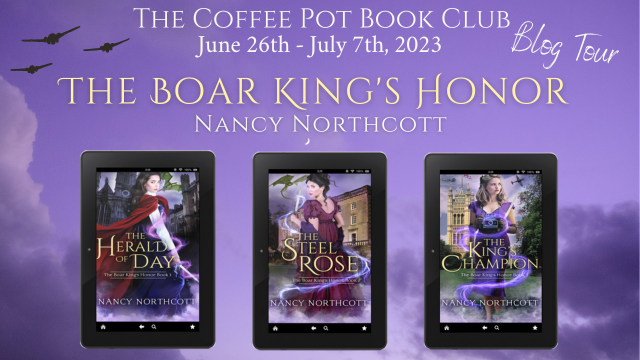
The Boar King’s Honor Trilogy

A wizard’s misplaced trust

A king wrongly blamed

A bloodline cursed until they clear the king’s name.

Here’s the blurb

Caught up in the desperate evacuation of the British Expeditionary Force from France in the summer of 1940, photojournalist Kate Shaw witnesses death and destruction that trigger disturbing visions. She doesn’t believe in magic and tries to pass them off as survivor guilt or an overactive imagination, but the increasingly intense visions force her to accept that she is not only magically Gifted but a seer.

In Dover, she meets her distant cousin Sebastian Mainwaring, Earl of Hawkstowe and an officer in the British Army. He’s also a seer and is desperate to recruit her rare Gift for the war effort. The fall of France leaves Britain standing alone as the full weight of Nazi military might threatens. Kate’s untrained Gift flares out of control, forcing her to accept Sebastian’s help in conquering it as her ethics compel her to use her ability for the cause that is right.

As this fledgling wizard comes into her own, her visions warn of an impending German invasion, Operation Sealion, which British intelligence confirms. At the same time, desire to help Sebastian, who’s doomed by a family curse arising from a centuries-old murder, leads Kate to a shadowy afterworld between life and death and the trapped, fading souls who are the roots of her family’s story. From the bloody battlefields of France to the salons of London, Kate and Sebastian race against time to free his family’s cursed souls and to stop an invasion that could doom the Allied cause. 

The King’s Champion concludes Nancy’s Northcott’s exciting Boar King’s Honor Trilogy.

Buy Links:
This series is available to read on #KindleUnlimited.

Universal Buy Links:   

The Herald of Day

Universal Buy Link

The Steel Rose

Universal Buy Link

The King’s Champion

Universal Buy Link

The Boar King’s Honor Trilogy Links:

Amazon US Amazon UK Amazon AU Amazon CA

Meet the author

Nancy Northcott’s childhood ambition was to grow up and become Wonder Woman.  Around fourth grade, she realized it was too late to acquire Amazon genes, but she still loved comic books, science fiction, fantasy, history, and romance.

Nancy earned her undergraduate degree in history and particularly enjoyed a summer spent studying Tudor and Stuart England at the University of Oxford. She has given presentations on the Wars of the Roses and Richard III to university classes studying Shakespeare’s play about that king. In addition, she has taught college courses on science fiction, fantasy, and society.   

The Boar King’s Honor historical fantasy trilogy combines Nancy’s love of history and magic with her interest in Richard III. She also writes traditional romantic suspense, romantic spy adventures, and two other speculative fiction series, the Light Mage Wars paranormal romances and, with Jeanne Adams, the Outcast Station space mystery series.

Connect with Nancy

WebsiteTwitter

FacebookInstagramPinterest

Book BubAmazon Author PageGoodreads

Follow The King’s Champion blog tour with The Coffee Pot Book Club

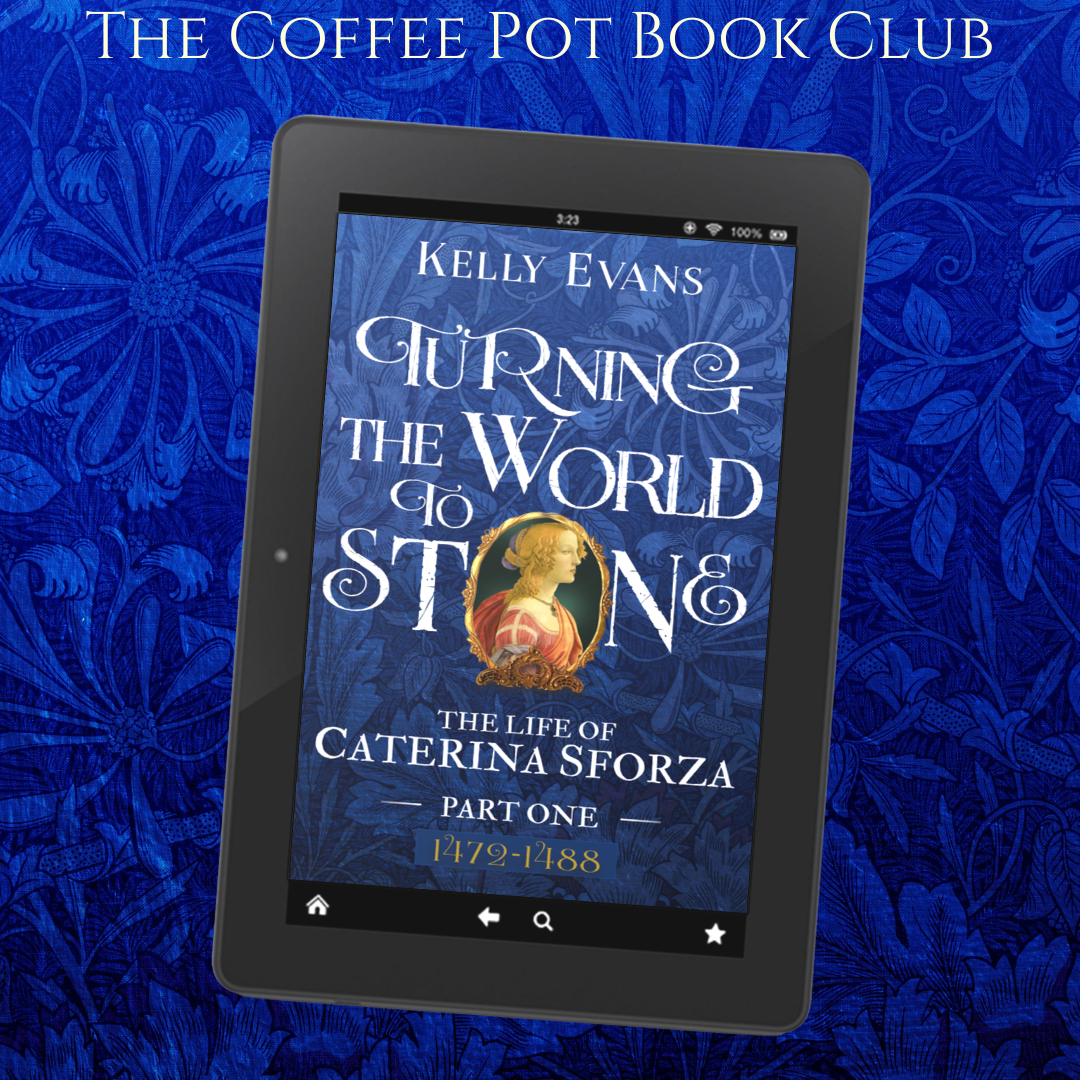
I’m super excited to welcome Kelly Evans and her new book, Turning the World to Stone, to the blog. #HistoricalFiction #Renaissance #histfic #BlogTour #TheCoffeePotBookClub

I’m super excited to welcome my fellow Medieval Maverick, Kelly Evans and her new book, Turning the World to Stone, to the blog. Please enjoy this snipper from the story of Caterina Sforza.

When they were far enough from the people, her husband turned to her in his saddle. “Why? What was,” he motioned backwards at the citadel as it receded into the distance. “I don’t have the words to describe your actions. What did you think you’d accomplish by such a stupid act?” 

“I had to do it.” She turned to him. “You’re weak. I knew of the deal you’d accepted.” 

“You weren’t there,” he growled. 

“No, I was protecting YOUR inheritance, and that of our sons!” Caterina shifted in her saddle, the child in her stomach choosing that moment to kick. 

“Watch your tone, my lady.” 

“Or what? You’ll beat a pregnant woman? Knock me from my horse?” With a disgusted noise, she continued. “All of Rome knows of your cowardice so it would hardly be surprising to hear of such an act of petty violence from you.” 

Girolamo rode closer and began to raise his arm. Lifting her chin, Caterina stared coldly at him. Daringly. Defiantly. Glaring at her, he moved his mount to the side and rode a few steps away. 

“I thought not,” Caterina urged her own horse forward. “I’m going to pack what little we still have in Rome. Thank God I thought to send our belongings ahead to Forli.” She stopped her horse and turned it to face her husband. “I’m leaving tomorrow. I can’t stand to be in this Godforsaken city another day.”

Here’s the blurb

Vilified by history, Caterina Sforza learned early that her life was not her own. Married at age ten, she was a pawn in the ever-changing political environment of Renaissance Italy.

Resigned to her life as a fifteenth-century wife, Caterina adapted to the role she was expected to play: raising and educating her children, helping the poor in her new home, and turning a blind eye to her husband’s increasingly shameful behaviour. But Fate had other plans for her, and soon Caterina’s path would be plagued by murder, betrayal, and heartbreak. 

“Could I write all, the world would turn to stone.”

Buy Links: 

This title is available to read on #KindleUnlimited.

Universal Link

Amazon UKAmazon USAmazon CAAmazon AU

Meet the author

Born in Canada of Scottish extraction, Kelly Evans graduated in History and English then moved to England where she worked in the financial sector. While in London Kelly continued her studies in history, concentrating on Medieval History, and travelled extensively through Eastern and Western Europe. 

Kelly is now back in Canada with her husband Max and a rescue cat. She writes full-time, focussing on illuminating little-known women in history with fascinating stories. When not working on her novels, Kelly writes Described Video scripts for visually impaired individuals, plays oboe, and enjoys old sci-fi movies. 

Connect with Kelly

WebsiteTwitter

Facebook:  InstagramPinterest

Book BubAmazon Author PageGoodreads

Follow the Turning the World to Stone blog tour with The Coffee Pot Book Club

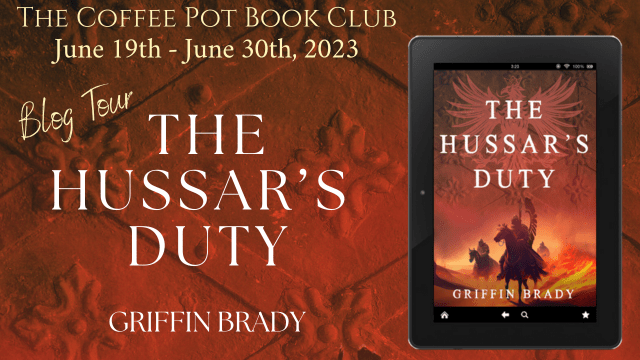
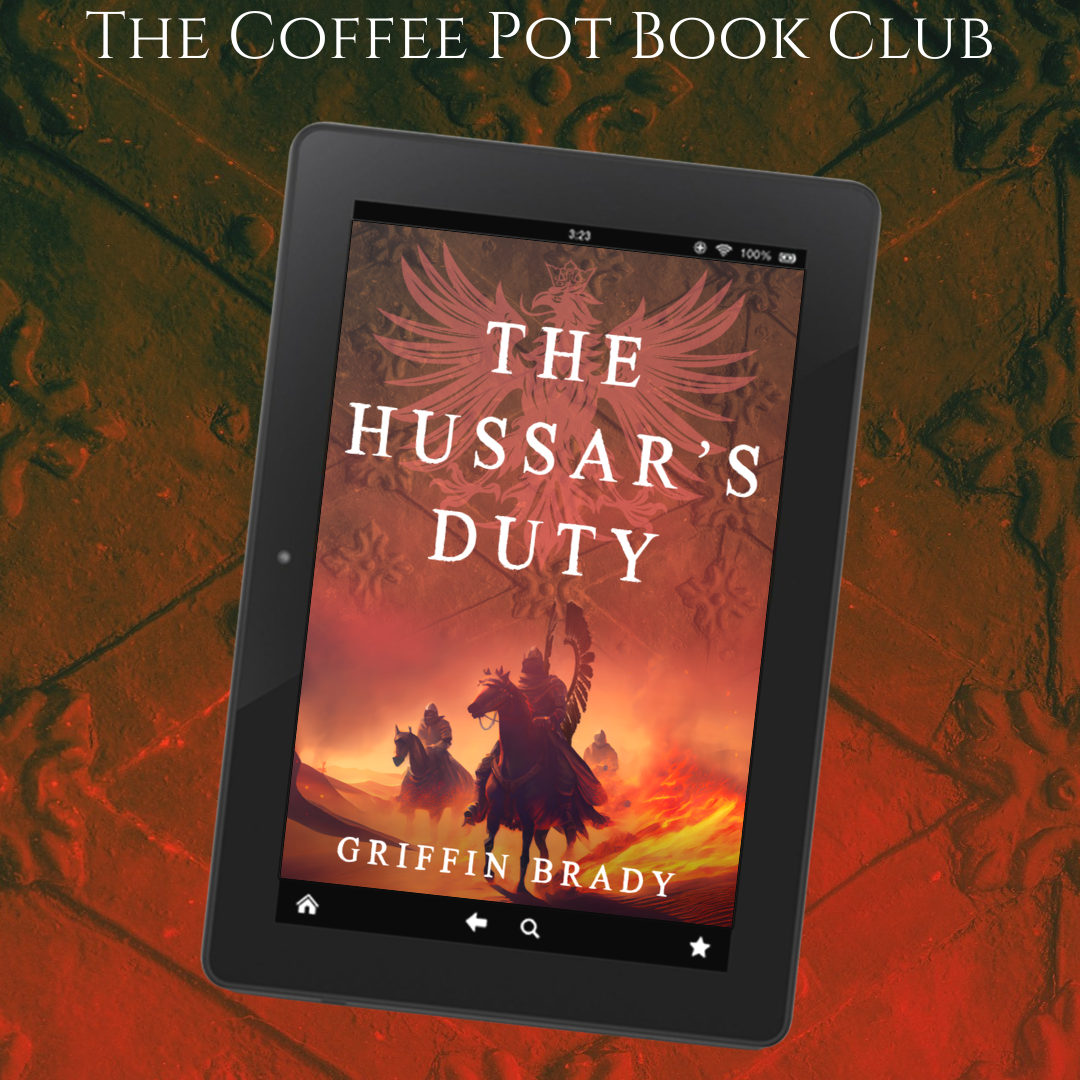
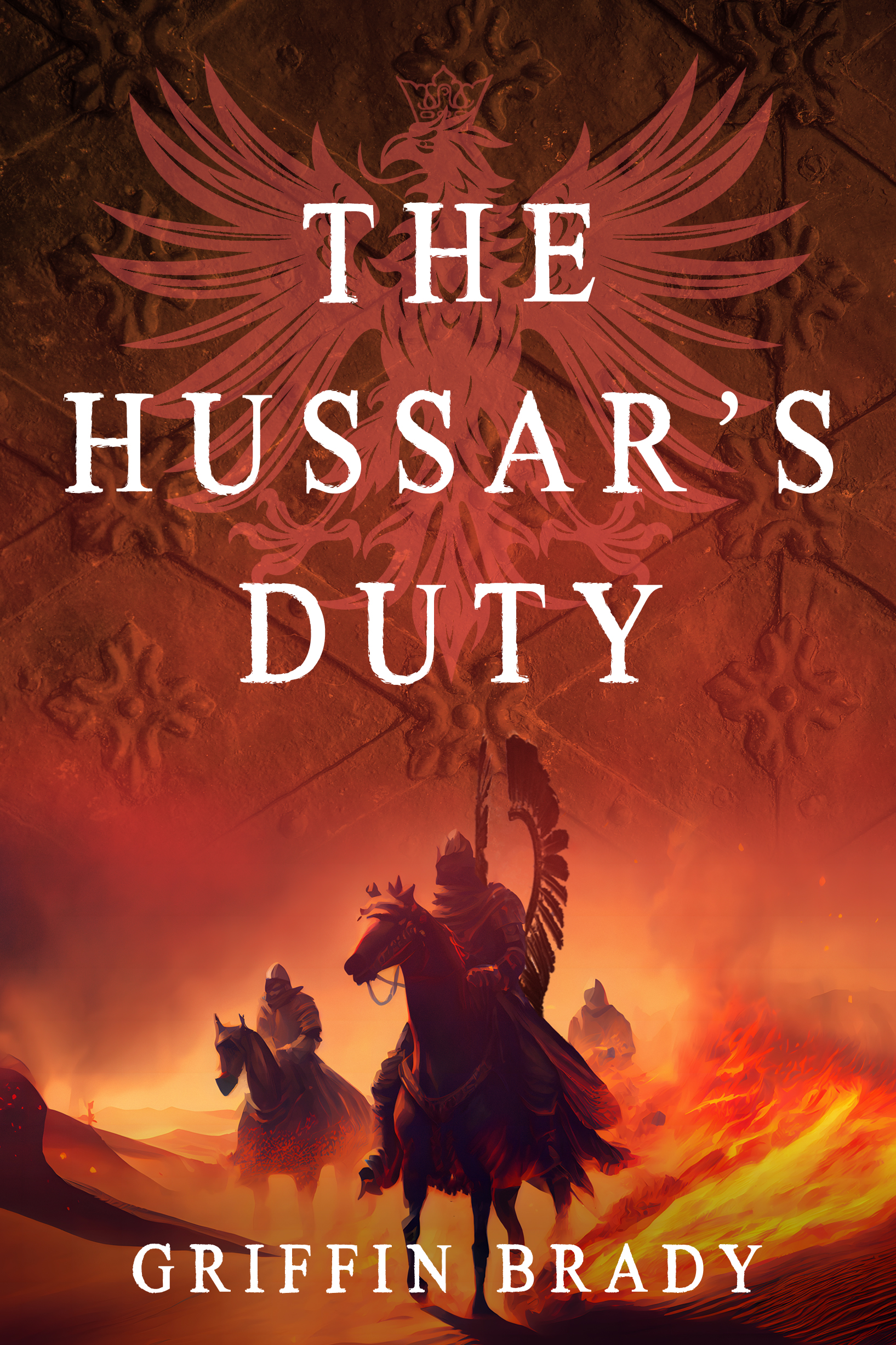
Today I’m delighted to share an excerpt from The Hussar’s Duty by Griffin Brady #HistoricalFiction #WingedHussars #BlogTour #TheCoffeePotBookClub

Today I’m delighted to share an excerpt from The Hussar’s Duty by Griffin Brady.

Chapter 23 – Tremors

Oliwia had donned her cloak and exited the castle walls, making for St. Lawrence’s vaulted vestibules, black-and-white marble tiled floors, and high windows that threw down prismed light. She should have arranged for a male escort, but said males in her party were engaged in the tiltyards. Besides, Nadia walked beside her, they were within the walls of the city, and the sun was high in the early afternoon sky.

They scurried across Viche Square into the welcoming embrace of the cathedral’s walls. Nerves that had been jangling off and on for days suddenly calmed as she dipped her fingers in the font’s cool water, genuflected, and crossed herself under the watchful eyes of the archangels high above the glorious altar. She had come to love those angels. 

The place was stunning … and mostly empty, which gave her an opportunity to linger as long as she pleased. She lit candles for each of her children, her brother, and Jacek, before selecting a pew close to the front. Kneeling, she bent her head over her hands clasped in prayer, dimly aware that Nadia sat several pews back.

Mary, Mother of God, I beseech you, please protect …

How long her prayers ran on and how much she repeated them, she could not say. When she lifted her head, shadows moved across the high windows. Glancing over her shoulder, she glimpsed Nadia sitting, rather than kneeling, and the maid seemed to be asleep. Oliwia suppressed a smile and sent one last prayer heavenward. She made to rise, but her knees and lower legs had gone numb. Eyes cast downward, she rearranged herself and grasped the pew to heave herself to her feet. A looming shadow, followed by a rank smell, had her eyes flying fully open. A man she did not recognize stood beside her, broadside to the altar so that he faced her side.

He crowded her. “Ain’t this a fortunate coincidence?” Breath fouled with the smell of decaying teeth and spirits blasted her, and his raspy voice sent alarm bells clanging in her head. She knew that voice! She turned to run, but a viselike grip clamped down on her arm. “Such a fine, fine lady. I have been dreaming of you ever since our encounter, my pet. Let’s go somewhere quiet where we can become better acquainted and tend to our unfinished business.”

My pet?

Terror seized her, and she kicked out, landing a blow to the man’s inner thigh. She had missed her mark, but he howled nonetheless, giving her a split second to whirl and run to the main aisle. Nadia startled to life and took off in the opposite direction toward one of the chapels. Behind Oliwia, the man thumped his way along the pew, though his steps were clumsy, uneven.

Finally unhampered by the pew, Oliwia ran shrieking down the aisle. “Help! Highwayman! Help!”

A stunned priest and several worshippers were congregated in a portal. The priest shouted for a guard, and Oliwia slowed enough to look over her shoulder. Her would-be attacker was headed for the sanctuary with all haste, but Nadia … Where was Nadia?

Here’s the blurb

Poland’s most valiant winged hussar is called to fight in a campaign ripe for disaster. But he must also protect those he loves from jackals waiting to pounce. How does he choose between duty and devotion when death is on the line?

When Sultan Osman II sends Poland’s envoy packing, the Commonwealth must prepare for war against one of the largest armies the Ottomans have ever assembled. Tasked with repelling the invasion is Grand Hetman of the Crown Stanisław Żółkiewski, and he knows who to turn to: Jacek Dąbrowski, the Commonwealth’s most valiant Polish winged hussar.

Jacek has been idle far too long, and the call to arms is a siren’s song he can’t resist. But he has built a life far from the battlefield with his wife, Oliwia, and their children. If he pursues his quest for glory, who will safeguard them?

Oliwia knows her husband is restless. In fact, she’s been sending Jacek on cross-country errands for years in the hopes of quelling his lust for battle. When she realizes her efforts are futile, she resolves herself to letting him go—after hatching a scheme to accompany him.

Honor. Obligation. Devotion. These forces push and pull Jacek in different directions. His country needs him, but so does his family. Where does his duty lie? His choice will cause catastrophic ripples no matter which path he follows … and could very well bring the loss of his loved ones or his life.

Will the cost of defending king and country prove too steep for this warrior?

This is a standalone continuation in The Winged Warrior Series.

Buy Links: 

This title is available to read on #KindleUnlimited. 

Universal Link

Amazon USAmazon UKAmazon AUAmazon CA

Meet the author

Griffin Brady is an award-winning historical fiction author with a keen interest in the Polish Winged Hussars of the 16th and 17th centuries. She is a member of the Historical Novel Society and Rocky Mountain Fiction Writers. Her debut novel, The Heart of a Hussar, was a finalist for the 2021 Chaucer Early Historical Fiction Award and a 2021 Discovered Diamond. 

The proud mother three grown sons, she lives in Colorado with her husband. She is also an award-winning bestselling romance author who writes under the pen name G.K. Brady.

Connect with the author

WebsiteTwitterFacebook

Book BubAmazon Author PageGoodreads

Follow The Hussar’s Duty blog tour with The Coffee Pot Book Club

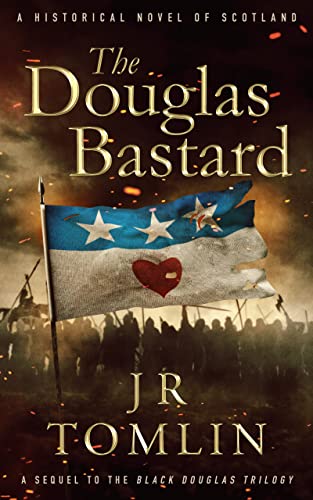
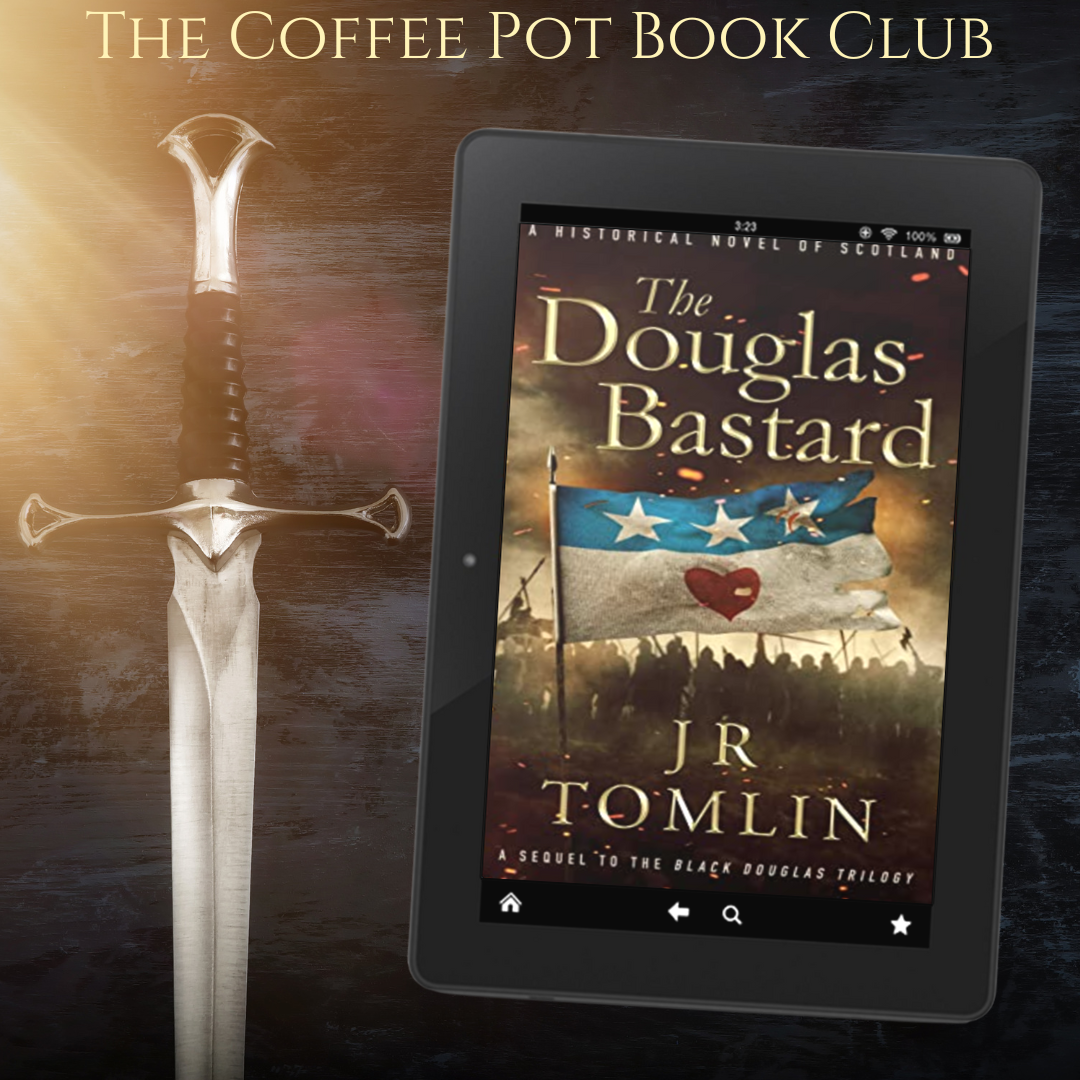
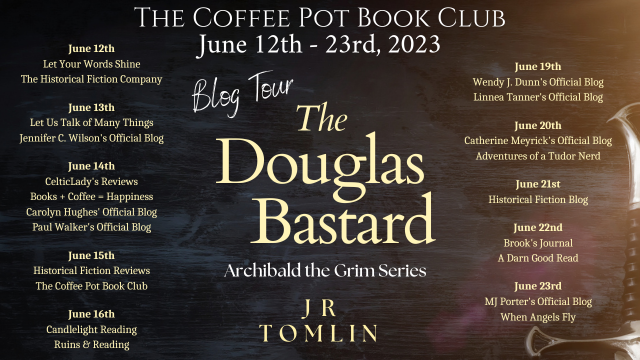
I’m delighted to welcome J R Tomlin to the blog to tell us all about the historical background to The Douglas Bastard #HistoricalFiction #MedievalScotland #BlogTour #TheCoffeePotBookClub

I’m delighted to welcome J R Tomlin to the blog to tell us all about the historical background to The Douglas Bastard.

The Second War of Scottish Independence is a war that should never have happened. (Admittedly, that is true of quite a few wars) It happened simply because England’s King Edward III was pissed off at the Scots.

Remember that the famous Battle of Bannockburn was not the end of the First War of Scottish Independence, although many think it was. The Scots launched numerous chevauchees into England, believing the destruction of the north of England would force the English to the peace table. It did not work. The war continued for another decade, with the English forced out of Scotland but refusing to sign a peace treaty or recognise Scotland’s status as an independent kingdom.

However, in 1326, the rebellion by Queen Isabella and her lover Mortimer overthrowing King Edward II changed England’s political landscape. In June of the next year, James, Lord of Douglas, Thomas, Earl of Moray, and Donald, Earl of Mar, gathered a large force, as many as 10,000 men, and led a chevauchee across the border into England. They carried no supplies but lived off the land as they moved across a wide swathe of northern England. Perhaps in order to bring legitimacy to the new regime, Mortimer and the sixteen-year-old newly crowned King Edward III assembled an even larger army, much better equipped than the Scots, and led it north. They probably believed they could defeat the Scottish force in England, leaving Scotland undefended so they could go into Scotland.

It was a long and complex campaign in which the Scots outran the English, who quickly ran low on food and supplies. The Scots also had an unassailable position on a rocky height overlooking the fast-flowing River Weir. They even took an English scout prisoner and sent him with their position since the English seemed incapable of catching up with them. On the last day of July, the English army arrived on the other side of the Weir. They sent heralds, inviting the Scots to abandon their position and engage in battle. The Scottish leaders replied (and this sounds like James Douglas) that they were happy where they were, and if the English King and his council were unhappy with their lands being burnt before them, they should cross the river and do something about it. Mortimer and the young king refused. Crossing the Weir would allow their vanguard to be attacked before the rest of the army could cross, so they were certainly right to refuse.

The standoff lasted for three days before the Scots moved during the night to an even more unassailable position within an area known as Stanhope Park. At daylight, the English shifted their position but still dared not cross the Weir. Although the Scottish position was unassailable, it also appeared to have the Scots trapped with no way of resupplying. The English believed all they had to do was starve the Scots out, and they would win.

On the night of the 4th of August, James Douglas led a night attack, penetrating to the very centre of the English camp. They rode in, cutting guy ropes and firing tents. There was panic in the camp. Douglas himself collapsed the King’s tent with the terrified king inside, his confessor killed protecting him. By that time, the English were organising for defence, so the Scots returned, untouched, to their own camp.  

The next day, a Scot allowed himself to be taken prisoner to give the English word that the Scots would try to cut their way free the following night. The English, believing the story, spent the night in their armor with bonfires lit to see during the supposed coming battle. And the Scots retreated, picking their way through what the English had believed was an impenetrable marsh. 

The English King wept in fury and humiliation. 

He also never forgave the Scots. He was even more angry when his mother and Mortimer negotiated a peace treaty with Scotland which he and King Robert the Bruce signed in March 1328.

Only four years later, King Edward repudiated the treaty he had signed, backing an invasion by the pretender to the Scottish throne, Edward Balliol. Then began the totally useless Second War of Scottish Independence, which cost countless lives on both sides and eventually gained England nothing. 

It did, however, provide stories of treachery, battle, bravery, defeat, and triumph that beg to be told.  

Thank you so much for sharing the background to your new book. It sounds fabulous.

Here’s the blurb

Young Archibald, the Black Douglas’s bastard son, returns from exile to a Scotland ravaged by war. The war-hardened Knight of Liddesdale will teach him what he must learn. And with danger on every side, he must learn to sleep with one eye open and a claymore in his hand because even their closest ally may betray them…

Buy Links

The Douglas Bastard

Universal Link

Amazon UK Amazon US Amazon CA Amazon AU

Barnes and Noble Kobo iBooks Google Play

Archibald the Grim Series on Amazon

Amazon UK Amazon US

Meet the author

J R Tomlin is the author of twenty historical novels.

Her historical novels are mainly set in Scotland. You can trace her love of that nation to the stories of Robert the Bruce and the Black Douglas that her grandmother read her when she was small and to her hillwalking through the Scottish Cairngorms where the granite mountains have a gorgeous red glow under the setting sun.

In addition to having lived in Scotland, she has traveled in the US, mainland Europe and the Pacific Rim. She now lives in Oregon.

Connect with the author

Website  Twitter

Book Bub Amazon Author Page Goodreads 

Follow The Douglas Bastard by JR Tomlin blog tour with The Coffee Pot Book Club

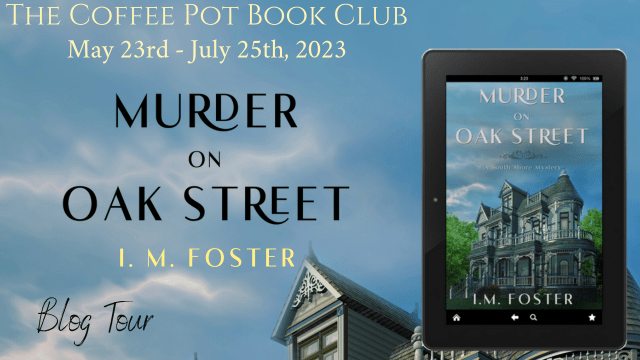
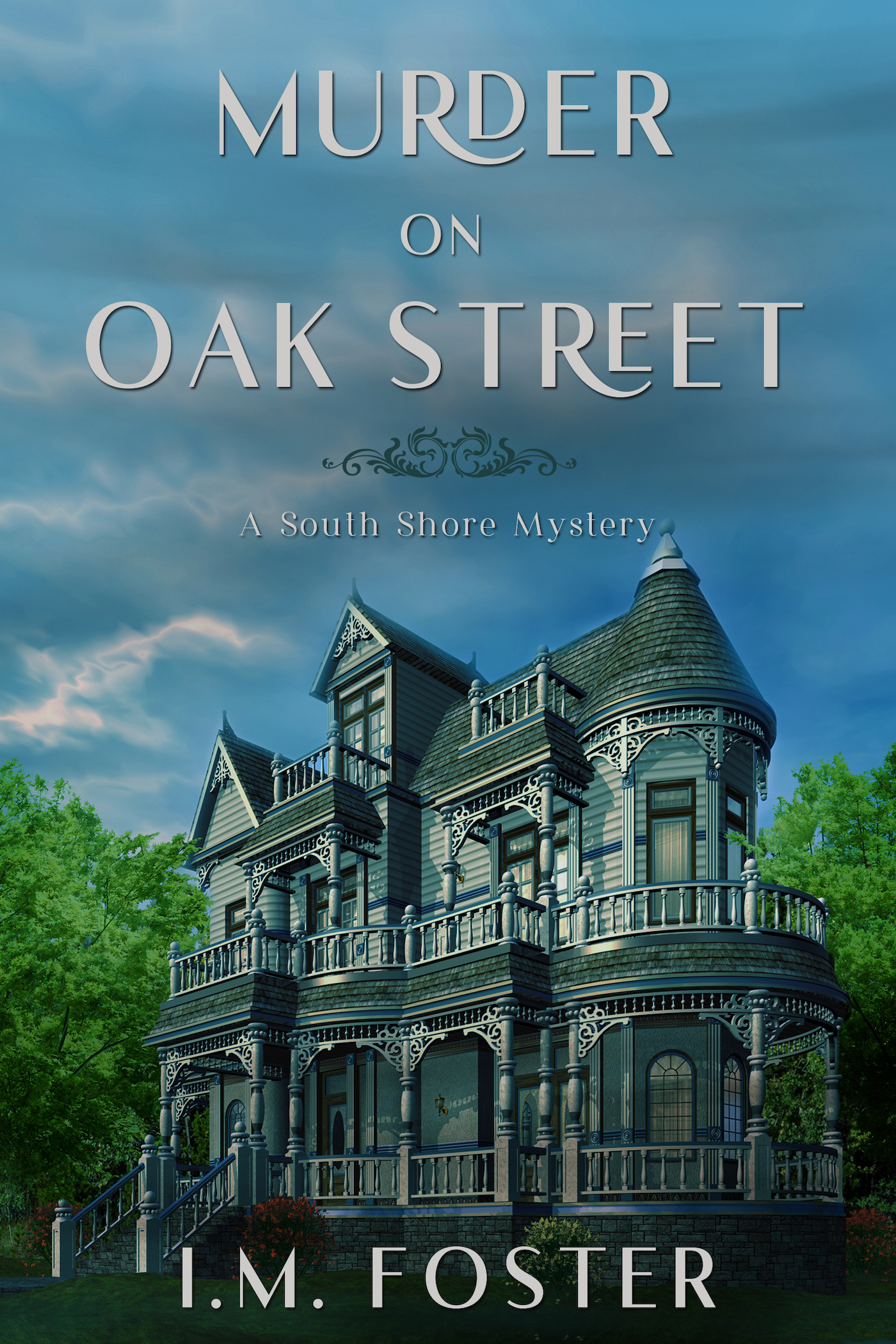
I’m welcoming I. M. Foster and her new book, Murder on Oak Street, to the blog with a fascinating post about forensics in the early 20th century historicalmystery #cozymystery #BlogTour #TheCoffeePotBookClub

I’m delighted to welcome I.M. Foster to the blog, to share a fascinating post on Forensics at the Turn of the Century.

To start off with, I guess I should give a very basic definition of what exactly forensics is. Basically, it is the use of different scientific disciplines, such as biology, chemistry, physics, etc., to investigate crimes or examine evidence that can be used to present in court. That being the case, the techniques available at any given period in history would depend largely on the stage of scientific development that was available to the investigator at the time. 

Today a multitude of investigative tools are available to detectives and medical examiners, from ballistics to DNA. Most large police departments even have their own forensics labs, as Suffolk County, New York now does. But forensic science in the day of Dr. Daniel O’Halleran was quite a bit different than it is today.   

To begin with, there was no such thing as forensic science, per se, even though the use of science to determine the cause of death actually goes back to ancient Rome and Egypt. For example, it was a physician, Antisius, who determined that of the twenty-three blows Julius Caesar received it was the one below his left arm that actually killed him. Alas, after the fall of the Roman Empire, the use of science to detect the cause of death seemed to stagnate for the next thousand or so years.

Fast forward to the sixteenth century, and things began to pick up again. Interest in determining reasons for a person’s demise increased, the French and Italians studied the result of violent death on internal organs, and once again, science was being used to assist in determining the cause of death. During the nineteenth century, scientific advances produced a number of breakthroughs that aided in criminal investigations. 

By the dawn of the twentieth century, poison could be detected in body tissue, handwriting analysis and the study of documents were being employed, and toxicology was being presented as evidence in jury trials. In addition, scientific tools, such as the polarized light microscope had been invented, enabling physicians to study fibers. And photography had made its appearance, making it easier to study the crime scene in detail.  

Fingerprints were still relatively new on the scene however. Though a system of classifying fingerprints had been developed by the 1880s, don’t expect Daniel to be incorporating it into his investigative tool kit right away. The system used by most of Europe and North America didn’t come about until 1896 and wasn’t employed in the United States until 1903, when it was used by the New York State Prison system for criminal identification. The first use of the technique at a criminal case in the United States didn’t occur until 1910. 

Before fingerprinting, something called anthropometry was used for identification, which was the measurement of body parts and their proportions to one another, not exactly foolproof. As for the twelve matching points of a fingerprint, that didn’t come along until 1918, so while Daniel might eventually play around with it, fingerprinting certainly not something he’s going to base his cases on.   

The turn of the century did present some extremely helpful investigative tools however. Biologists were able to determine not only if a stain was blood, but whether it was human or animal. Ballistics was becoming more refined, though the tracing of a bullet to a specific gun wouldn’t come about until 1910. And geology was first used in 1904 by a German scientist when he identified a killer from the dirt on his pants and under his fingernails, as well as the coal soot found on a handkerchief he’d left at the crime scene. Now, that is something that Daniel might eventually employ.

Other advances were just on the horizon. The use of a microscope to compare strands of hair didn’t come along until 1910, and the study of botanicals such as plant fibers and pollen in relation to a crime scene wasn’t widely used until the 1920s, though I’m sure there were local residents who might be able to point out where a certain plant was more prevalent.

In spite of all the advances, however, using scientific principles in criminal investigations still wasn’t seen as its own discipline. But in 1904, Edmond Locard was to write a passage that one might point to as the beginning of modern forensic science. Every contact leaves a trace. Shortly after, in 1909, the first school was opened for the sole purpose of studying how to use science to determine the cause and method of death, and thus the seeds were planted for the modern study of forensic science. 

Thank you for sharing such a fascinating post.

Here’s the blurb 

New York, 1904. After two years as a coroner’s physician for the city of New York, Daniel O’Halleran is more frustrated than ever. What’s the point when the authorities consistently brush aside his findings for the sake of expediency? So when his fiancée leaves him standing at the altar on their wedding day, he takes it as a sign that it’s time to move on and eagerly accepts an offer to assist the local coroner in the small Long Island village of Patchogue.

Though the coroner advises him that life on Long Island is far more subdued than that of the city, Daniel hasn’t been there a month when the pretty librarian, Kathleen Brissedon, asks him to look into a two-year-old murder case that took place in the city. Oddly enough, the case she’s referring to was the first one he ever worked on, and the verdict never sat right with him.

Eager for the chance to investigate it anew, Daniel agrees to look into it in his spare time, but when a fresh murder occurs in his own backyard, he can’t shake his gut feeling that the two cases are connected. Can he discover the link before another life is taken, or will murder shake the peaceful South Shore village once again?

Buy Links  

This title is available to read with #KindleUnlimited. 

Universal Link 

Amazon UK   Amazon US  Amazon CA Amazon AU

Meet the author

I. M. Foster is the pen name author Inez Foster uses to write her South Shore Mystery series, set on Edwardian Long Island. Inez also writes historical romances under the pseudonym Andrea Matthews, and has so far published two series in that genre: the Thunder on the Moor series, a time-travel romance set on the 16th century Anglo-Scottish Borders, and the Cross of Ciaran series, which follows the adventures of a fifth century Celt who finds himself in love with a twentieth century archaeologist. 

Inez is a historian and librarian, who love to read and write and search around for her roots, genealogically speaking. She has a BA in History and an MLS in Library Science and enjoys the research almost as much as she does writing the story. In fact, many of her ideas come to her while doing casual research or digging into her family history. Inez is a member of the Long Island Romance Writers, the Historical Novel Society, and Sisters in Crime.

Connect with IM Foster

Website

Twitter Facebook Instagram

Book Bub   Amazon Author Page Goodreads

Follow the Murder on Oak Street by IM Foster blog tour with The Coffee Pot Book Club