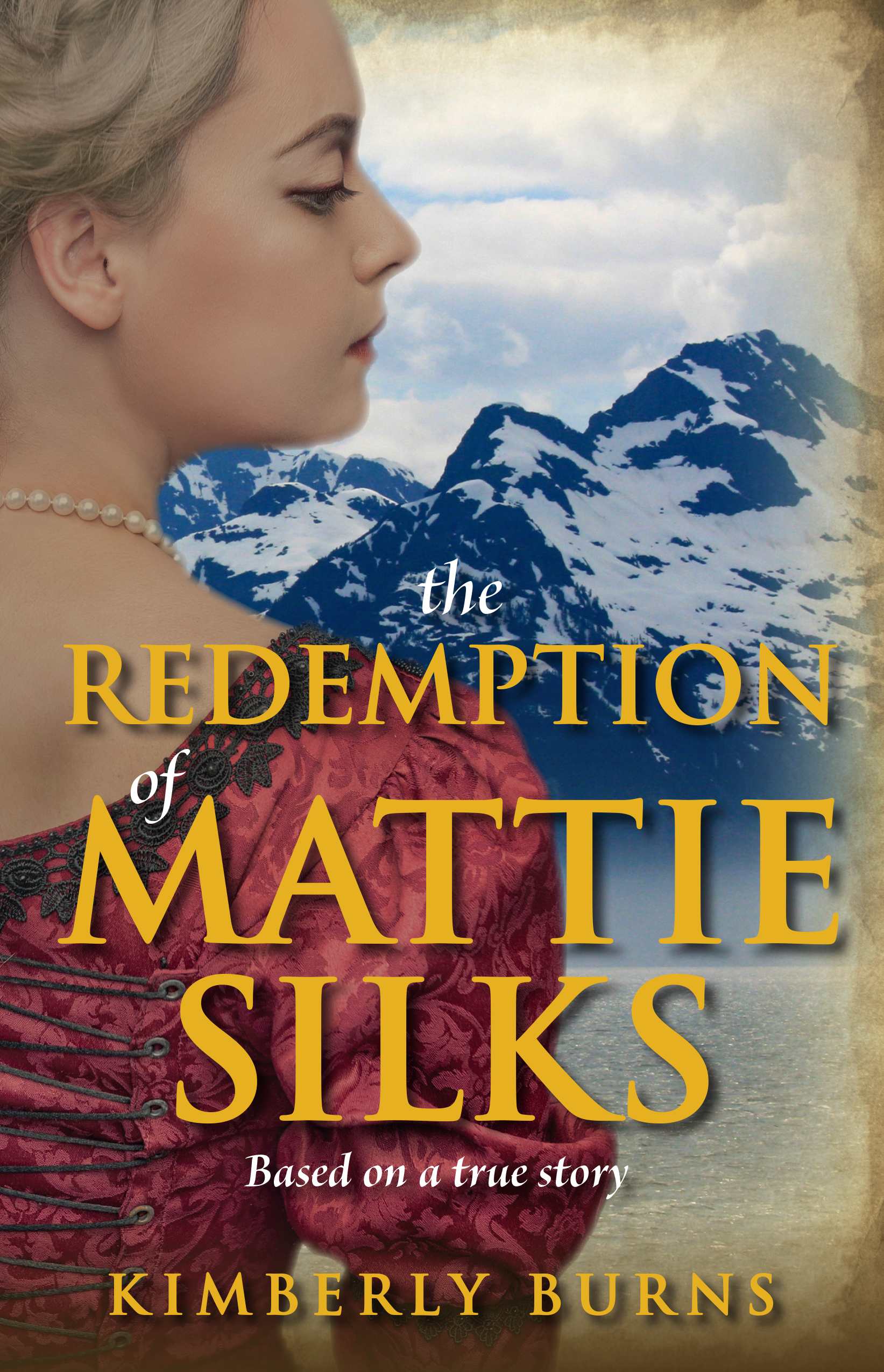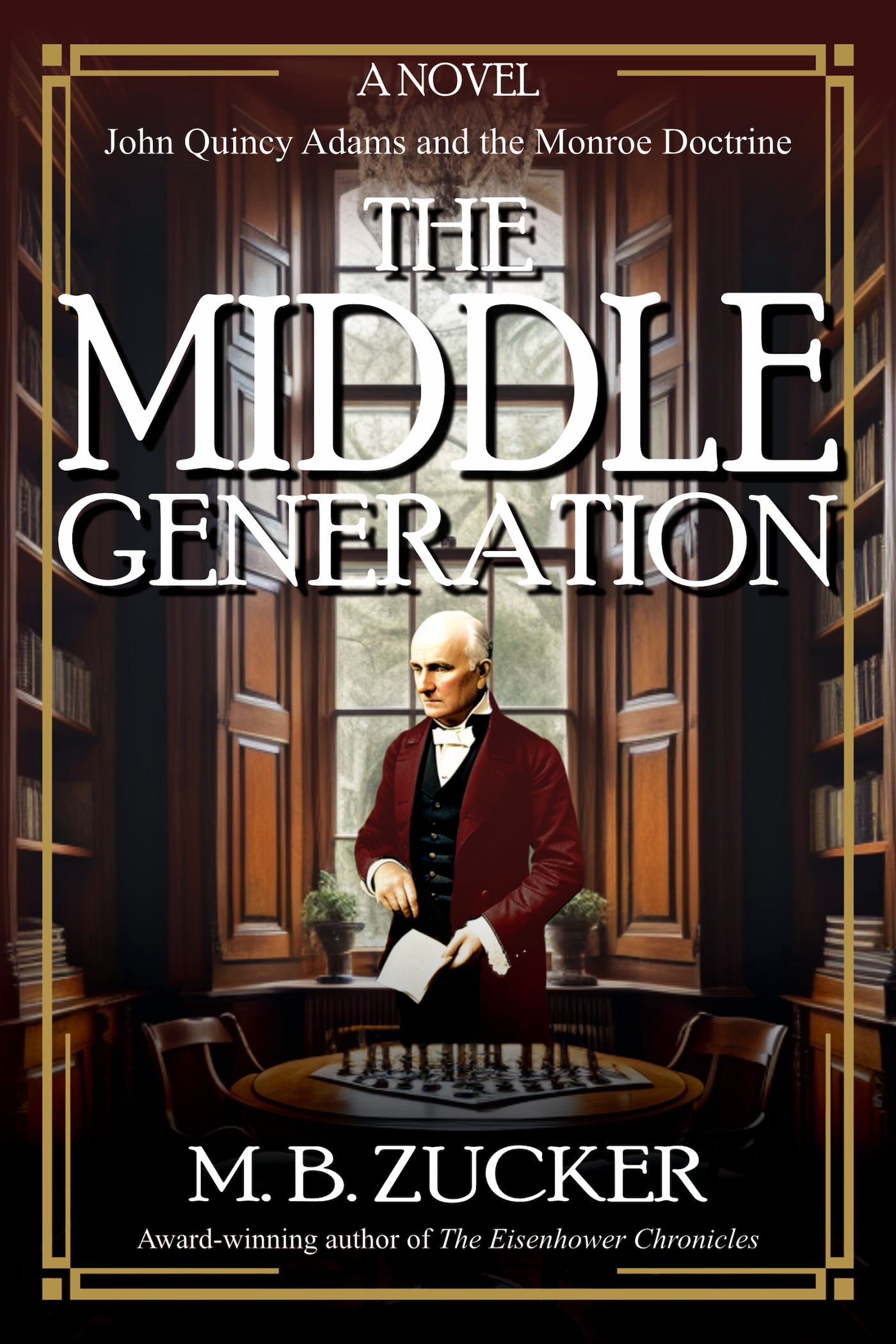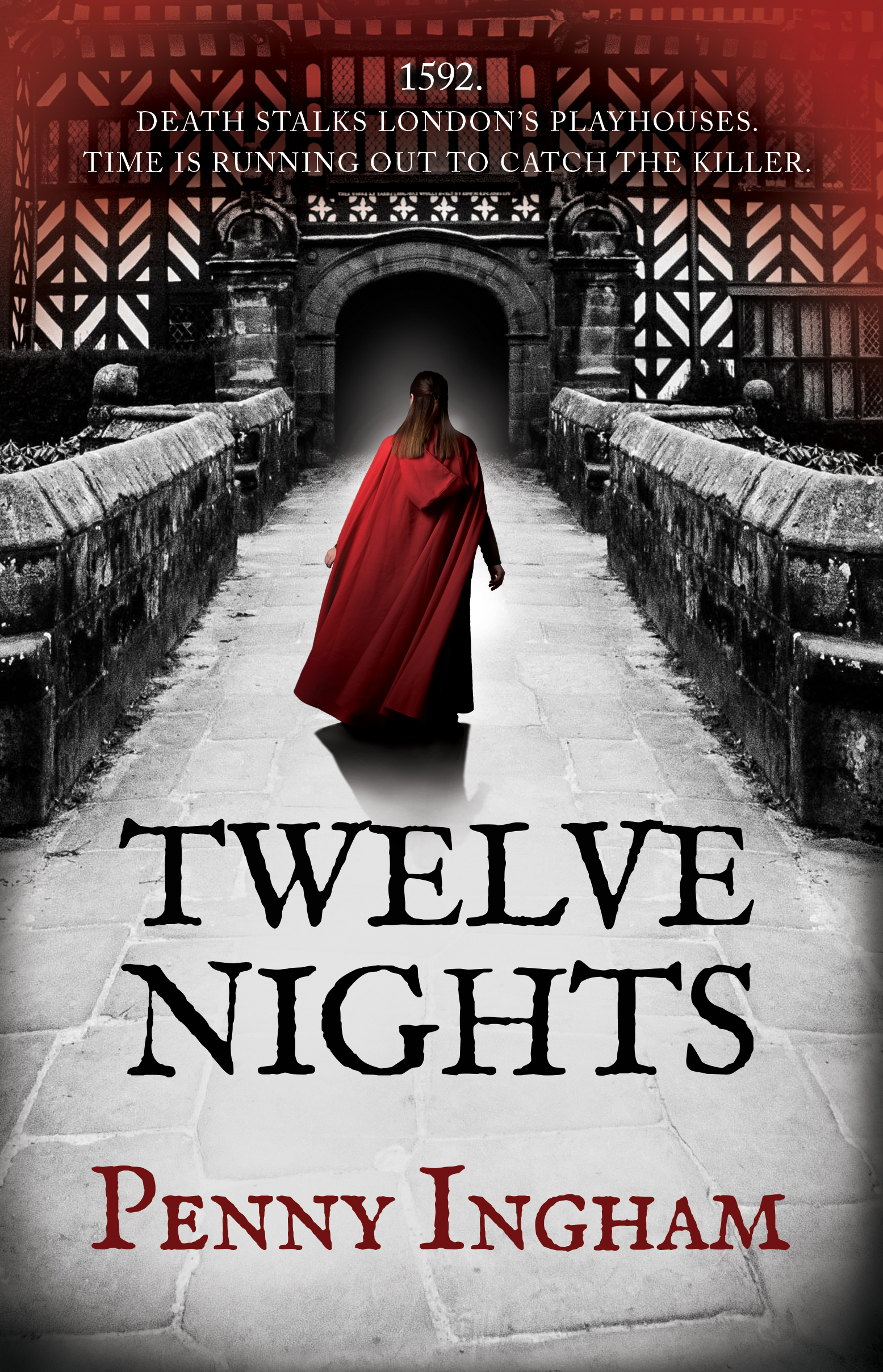
I’m delighted to welcome Carolyn Hughes and her new novel, The Merchant’s Dilemma to the blog, with an excerpt from the book Medieval #HistoricalFiction #Meonbridge #BlogTour #TheCoffeePotBookClub #CPBC

I’m delighted to welcome Carolyn Hughes and her new novel, The Merchant’s Dilemma to the blog, with an excerpt from the book.

From Chapter 1

The door to the chamber opened and then closed softly.

‘Mistress Collyton?’ said a man’s voice, very low but loud enough for Bea to know exactly whose it was. ‘Is she still asleep?’

Bea heard the old woman huff, perhaps as she started awake, then the scrape of the chair.

‘No, no,’ said Riccardo, gently, ‘there is no need to stand.’

‘Thank you, sir,’ said Mistress Collyton. ‘She comes and goes, I think, but never awake long enough for me to speak to her.’

‘It has been so many days. I wonder if she will ever fully wake? How much I wish to look into my sweet Bea’s eyes and hear her laugh.’

Bea’s heart fluttered. “Sweet Bea”? Was that truly what he said? If so, where was his wife? Surely, he’d not refer to heras his sweet if he had a wife? Well, not in his servant’s hearing…

‘It may be yet a while afore she laughs, sir,’ said Mistress Collyton, ‘even when she do come back to us.’

‘Just seeing her eyes open would do for now, when I thought I would never see my lovely girl again.’

‘Indeed, sir.’ Bea heard the old woman grunt a little and the creaking of the chair. ‘Will you stay wi’ her a moment whilst I fetch her gruel?’ 

‘Glad to,’ he said. The door opened and shut again, then he came over to the bed. He sat down upon it and leaned forward to touch the edge of the bedding covering most of Bea’s face.

Her heart thudded. She had only a moment to decide: was she still asleep, or should she greet the man she loved? And who still, it seemed, loved her.

As the coverlet and sheet were drawn gently back, she let her eyes flick open.

Riccardo gasped, and jerked upright. ‘You are awake.’

She smiled.

‘How do you feel?’

‘Comfortable,’ she murmured.

‘And rested? Stronger?’ His eyes were bright but also brimming with anxiety.

Her shoulders twitched in a little shrug. ‘I still hurt all over, and my head is giddy. I doubt I’d be able to walk far, but maybe I could get up before too long?’

Riccardo’s eyes crinkled. ‘Oh, Bea, I am so pleased to hear it. Of course, I am sorry you are still in pain but, with continued rest and care from Mistress Collyton, God will soon surely grant you a full recovery.’

‘Thank you for taking me in,’ she whispered.

He leaned forward again and stroked her cheek lightly with his fingers. ‘Surely you knew I would. That was why you came.’

‘I hoped you might, or that, if I died, you’d take care of my poor corpse.’

‘Thank God that was not asked of me.’ He held his hand lightly against her cheek. ‘Many weeks and months may still lie ahead of us before you are fully well, but we shall succeed.’ 

Tears were hovering in his eyes. ‘You must know, darling girl, how very relieved I am you have come back to me.’

She could scarce believe what he was saying. Of course, she’d hoped he’d not abandon her in her frailty. That he’d take her in; maybe even help her to recover. But what he was saying now was much more than that. It sounded as if he was expecting her to stay here, in this house – for months, maybe. And he was saying that he loved her.

‘I can see it in your eyes. How glad I am that dreadful storm drove me to your door.’ She bit her lip. ‘But I have to ask, Riccardo, where is your wife?’

A shadow passed across his face. ‘Ah, of course, you do not know. How could you? Poor Katherine died, as did our little Oliver.’

‘Oh, Riccardo, I’m so sorry––’

He held up his hand. ‘The loss of my little boy was awful.’ He looked up, his eyes moist. ‘He was perfect, you know. But Katherine struggled in the birthing of him, and the midwife said it had simply taken much too long. How I railed at the cruelty of his death…’

‘And your wife?’

He shrugged. ‘Of course, I would never have wished her dead but, in truth, Katherine was not much of a wife to me.’ He spoke it quietly. ‘I regret to say I do not miss her…’ He hung his head.

‘When was this?’ she whispered.

‘September. Not so long ago.’

‘When I came here,’ she said, ‘and found you gone, I remember thinking maybe you’d taken your wife and child out for a visit and had been caught out by the weather, unable to return. I thought I’d likely die here on your doorstep before you reached home again.’

‘In truth, Bea, I was pacing the streets of Winchester, searching for you.’ He gave her a wry grin. ‘You see, I thought I had seen you some weeks before, although the girl I saw then had looked frail and wretched. Then, that night, I was out of my wits with worry that it was you I saw, and you might be out in all that terrible wind and rain, unable to find shelter… Well, I just had to go out and look for you. I searched for hours, and was distraught when I was forced to return home without you. But then there you were, lying on my doorstep…’ He swallowed. ‘At first, I thought that I had come too late. That you were already dead. When I found you were still living, oh, Bea, you cannot imagine how thankful and relieved I was.’

His face lit up again, and her heart turned over. She surely didn’t deserve his love, yet how grateful she was to have it. 

Here’s the blurb

1362. Winchester. Seven months ago, accused of bringing plague and death from Winchester, Bea Ward was hounded out of Meonbridge by her former friends and neighbours. Finding food and shelter where she could, she struggled to make her way back to Winchester again.

Yet, once she arrived, she wondered why she’d come.

For her former lover – the love of her life – Riccardo Marchaunt, had married a year ago. And she no longer had the strength to go back to her old life on the streets. Frail, destitute and homeless, she was reduced to begging. Then, in January, during a tumultuous and destructive storm, she found herself on Riccardo’s doorstep. She had no plan, beyond hoping he might help her, or at least provide a final resting place for her poor body.

When Bea awakes to find she’s lying in Riccardo’s bed once more, she’s thankful, thrilled, but mystified. But she soon learns that his wife died four months ago, along with their newborn son, and finds too that Riccardo loves her now as much as he ever did, and wants to make her his wife. But can he? And, even if he can, could she ever really be a proper merchant’s wife?

Riccardo could not have been more relieved to find Bea still alive, when he thought he had lost her forever. She had been close to death, but is now recovering her health. He adores her and wants her to be his wife. But how? His father would forbid such an “unfitting” match, on pain of denying him his inheritance. And what would his fellow merchants think of it? And their haughty wives?

Yet, Riccardo is determined that Bea will be his wife. He has to find a solution to his dilemma… With the help of his beloved mother, Emilia, and her close friend, Cecily, he hatches a plan to make it happen.

But even the best laid plans sometimes go awry. And the path of love never did run smooth…

The Merchant’s Dilemma is a companion novel to the main series of Meonbridge Chronicles, and continues the story of Bea and Riccardo after the end of the fourth Chronicle, Children’s Fate. It is a little more romantic and light-hearted than the other Chronicles but, if you’ve enjoyed reading about the lives of the characters of Meonbridge, you will almost certainly enjoy reading The Merchant’s Dilemma too!

Buy Links

This title is available to read on #KindleUnlimited.

Universal Link: https://books2read.com/u/3RY7Yj

Amazon UKAmazon USAmazon AUAmazon CA

Meet the author

Carolyn Hughes has lived much of her life in Hampshire. With a first degree in Classics and English, she started working life as a computer programmer, then a very new profession. But it was technical authoring that later proved her vocation, word-smithing for many different clients, including banks, an international hotel group and medical instruments manufacturers.

Although she wrote creatively on and off for most of her adult life, it was not until her children flew the nest that writing historical fiction took centre stage. But why historical fiction? Serendipity!

Seeking inspiration for what to write for her Creative Writing Masters, she discovered the handwritten draft, begun in her twenties, of a novel, set in 14th century rural England… Intrigued by the period and setting, she realised that, by writing a novel set in the period, she’d be able to both learn more about the medieval past and interpret it, which seemed like a thrilling thing to do. A few days later, the first Meonbridge Chronicle, Fortune’s Wheel, was under way.

Six published books later (with more to come), Carolyn does now think of herself as an Historical Novelist. And she wouldn’t have it any other way…

Carolyn has a Master’s in Creative Writing from Portsmouth University and a PhD from the University of Southampton.

You can connect with Carolyn through her website www.carolynhughesauthor.com and social media.

Connect with the author

WebsiteTwitterFacebook

Book BubAmazon Author PageGoodreads

Follow The Merchant’s Dilemma blog tour with The Coffee Pot Book Club

Check out Carolyn’s last stop by the blog.

I’m delighted to welcome David Fitz-Gerald to the blog with an excerpt from his new historical thriller, If It’s The Last Thing I Do #HistoricalFiction #1970s #BlogTour #TheCoffeePotBookClub

I’m delighted to welcome David Fitz-Gerald to the blog with an excerpt from his new historical thriller, If It’s The Last Thing I Do

From Chapter 6

On Thursday morning, Stanley asked me if he could borrow a couple of hundred dollars until next week. He said he had made some miscalculations. His checkbook didn’t add up straight and he didn’t have any savings. I asked him if two hundred dollars would get him through, and he assured me that it would.

Doyle Polk was coming up the sidewalk as I pulled my wallet from my purse and handed cash to the night watchman. I glanced at the general manager and saw his frown, and in that instant, I knew he didn’t approve and I was going to hear about it. I didn’t have long to wait. Stanley’s Plymouth had barely left the parking lot when Doyle confronted me. “What are you doing, giving that man money?”

I felt my face tighten defensively. “He said he needed money, so I agreed to help him until next week.”

“And what will you do next week when he needs money for something else, Lady Fingers?”

“I don’t know, Doyle. I guess I’ll worry about that next week.”

“And what will you do when Stanley’s coworkers find out you lent Stanley some money? Won’t be long and you’ll be making dozens of loans.”

“Good heavens, Doyle. I never met anyone with such a dismal outlook.”

“You don’t know these guys like I do, Misty. Give ’em an inch, they’ll take a mile. Give ’em a dime, they’ll steal a dollar, and ask you for change for a twenty.”

“How did you get to be so jaded?”

“Did I mention I’ve been here for a long time? When I started out, I lent a guy a hundred dollars. Just like I said, before I knew it, everybody was asking me for money. I felt like a flippin’ bank. Learned my lesson and stopped that right away. These guys lead a hardscrabble life, Misty. They go from one emergency to the next as fast as you turn the pages in the Lake Placid News. You gotta harden yourself to it. You’ve heard the story about the swimmer drowning the lifeguard, ain’t you? If you get too close to ’em, they’ll drag you underwater. Gotta stay aloof. That’s what I always say. Unless you gonna give everybody two hundred dollars, don’t give anybody money.”

Here’s the blurb

It’s 1975, and Misty Menard unexpectedly inherits her father’s business in Lake Placid, New York. It never occurred to her that she could wind up as the CEO of a good old-fashioned manufacturing company.

After years of working for lawyers, Misty knows a few things about the law. Her favorite young attorney is making a name for himself, helping traditionally owned companies become employee owned, using a little-known, newly-passed law. When he offers to help Misty convert Adirondack Dowel into an ESOP, pro bono, Misty jumps at the chance. 

The employees are stunned, the management team becomes hostile, and the Board of Directors is concerned. Misfortune quickly follows the business transformation. A big customer files for bankruptcy. A catastrophic ice jam floods the business. Stagflation freezes the economy. A mysterious shrouded foe plots revenge. Misty’s family faces a crisis. The Trustee is convinced something fishy is going on, the appraiser keeps lowering the company’s value, and the banker demands additional capital infusions. Misty thought she had left her smoking addiction and alcoholism in the past, but when a worker’s finger is severed in an industrial accident, Misty relapses.

Disasters threaten to doom the troubled company. After surviving two world wars and the Great Depression, it breaks Misty’s heart to think that she has destroyed her father’s company. All she wants is to cement her father’s legacy and take care of the people who built the iconic local business. Can a quirky CEO and her loyal band of dedicated employee owners save an heirloom company from foreclosure, repossession, and bankruptcy?

Get your copy of the thrilling If It’s the Last Thing I Do now… if it’s the last thing you do!

Buy Links:

Universal Link

Amazon UKAmazon USAmazon CAAmazon AU

Barnes and NobleWaterstonesKobo

Meet the author

David Fitz-Gerald writes historical fiction in his spare time, with the hope of transporting readers to another time and place.

If It’s the Last Thing I Do is his 7th novel.

​Dave has worked for more than 30 years as an accountant, employee owner, and member of the management team at a “silver” ESOP (employee-owned) company. He has championed the cause in national, non-profit association leadership roles.

Dave’s family roots run deep in the Adirondacks, going back generations. He attended college and worked at a deli in Saranac Lake during the 1980s. He spent two summers as an elf at Santa’s Workshop on Whiteface Mountain in the 1970s and is an Adirondack 46-er, which means he has hiked all of New York’s highest peaks.

Connect with the author

Link Tree  Soundtrack Album  Soundtrack on Spotify 

WebsiteTwitterFacebook

LinkedInInstagramPinterest

Book BubAmazon Author PageGoodreads

Follow the If It’s The Last Thing I Do blog tour with The Coffee Pot Book Club

I’m delighted to be sharing an excerpt from Susannah Willey’s new book, War Sonnets HistoricalFiction #WWII #Pacific #BlogTour #CPBC #TheCoffeePotBookClub

I’m delighted to be sharing an excerpt from War Sonnets by Susannah Willey.

ASSAULT FORCE

The sea is calm; upon its boundless deep

Our troopship glides, lost in infinity.

Beneath her decks two thousand soldiers sleep,

Or, waking, wonder what their fate will be.

From my assigned position here on high

I peer ahead, and in the east I see

The dawn’s pale fingers clawing at the sky,

And then, a speck of land. The enemy

Will not be sleeping. 

Now the troops are out

And stand in little groups beside each boat.

The gunship’s roar drowns out the sergeant’s shout.

Rope ladders fall, the LCIs, afloat,

Receive two thousand men in war array.

Each boat, full loaded, quickly moves away.

CHAPTER 18

PHILIPPINE SEA—JANUARY 31, 1945

Leo sat against a pile of life rafts, his knees bent to support the letter he was writing. Dooley perched on a pile of rafts next to him with a handful of Aussie sailors. Their ship, the Australian transport Westralia, was part of a large convoy escorted by agile destroyers. …

“I could spend the rest of the war right here.” Dooley patted the life raft. “Whatcha think, Yankee boy?” Ever since they’d left New Guinea, Dooley had acted like his outburst at Leo’s promotion had never happened.

Leo set down his pen and took a moment to stretch his arms. “I think I’d rather be almost anywhere but on a ship.” 

Dooley took a last, deep drag on his cigarette. “With our luck,” he said, exhaling smoke through his nostrils, “we’ll get sunk by a submarine before we get to Luzon.” He flicked his cigarette into the water.

“Not funny.” Leo growled.

“More likely some crazy kamikaze,” an Aussie sailor said, “locked into a bomb-loaded plane they call an Okha. But Baka is more like it: a bloody fool.” His fellow seamen snickered.

“Those mates are crazy.” The sailor propped himself up on one elbow. “One of ’em nearly sent us to kingdom come a couple months ago.” He glanced at his fellow Aussies. “Ain’t that right, mates?” 

“Yeah, up in Leyte,” said another. “Missed us by a wallaby’s tail.” He held up his thumb and forefinger, an inch apart.

“About eight of them just dropped from the clouds.” The Aussie launched into his story. “Before you could blink, one of them crashed head-on into one of our carriers. Our mates couldn’t do anything but watch.”

Sitting on the open deck, Leo felt exposed. He subconsciously scanned the sky for enemy planes, strained to hear their engines. His brain struggled with an indistinct image of planes impacting with ships—something he’d really rather not imagine.

“Instead of cats and dogs, it was raining planes and bodies, machine-gun fire and bombs. Seemed like those bloody bastards were hell-bent on dying.”

One of his mates picked up the story. “The ship next to us got clobbered. Bloody Baka took out half the crew. Men flyin’ through the air like rag dolls, others stuck with shrapnel. They said the deck was covered with Jap guts and brains, all kinds of body parts and plane wreckage.”

That was something Leo couldn’t begin to imagine, and he was grateful for that. He dang sure didn’t want to get obsessed about being split into pieces by a kamikaze. “Sitting ducks” was a perfect description of their situation out here in the middle of the ocean. Except a duck was a lot harder to hit than a troopship. 

The Aussie storyteller looked at Dooley. “You should’ve seen it, Yank. Helluva mess.”

Dooley bristled at that last remark. “Don’t call me a Yank.”

One of the Australian soldiers snickered. “Well, that accent of yours sure ain’t Brit.”

Dooley jumped to the deck, fists clenched at his sides. “You can call Sergeant Baldwin here a Yank cause he’s a northerner. But I’m from Loo-siana, and where I come from, calling a southern boy a Yank is fightin’ words.” 

The Aussie held up a hand. “Don’t go getting your civvies wrinkled, mate. It’s just what we call Americans.”

“American’s full of goddamned mongrels, and I ain’t one of them,” Dooley growled. “We got Russkies and Polacks, Wops—and Yankees.” He spat out the word as if it was the sourest bit of vomit. “We got so many Nips they had to build prison camps to keep ’em outta our hair. And that don’t even count the spics and ni—”

Leo had about enough of Dooley’s bragging and bigotry. He held his hand out for Dooley to stop. “Yeah, we get it. You southern boys are some kind of special all right.” 

Dooley glared at Leo and started pacing. “All’s I’m sayin’”—his deep southern drawl thickened as he stopped and pointed an accusing finger at the Aussie—”is don’t put me in the same kennel with the mutts.” 

The sailor put up his hands in a defensive gesture. “Slow down and speak English, mate. Whatever language you’re talkin’ sounds more like Chinese.”

“Ain’t no goddamned Chink, mate. Dooley put up his fists, took a step toward the rafts. 

The Aussie jumped off the raft, ready to fight. “You ain’t winnin’ this fight, Yank.”

Dooley snarled and lunged toward the Aussie sailor, who raised his fists and took a step toward Dooley.

 “Come on, fellas.” Leo didn’t want any part of this fight. Dooley was being a jerk, and it embarrassed Leo. He stepped between the two men, cautiously put a hand on Dooley’s chest. “You’re making this a bigger deal than it oughta be. Step back and cool off a minute.”

Dooley glared, but what Leo noticed was beyond Dooley: a cloud of smoke bursting from a destroyer escort in the near distance. In seconds, the air boomed with the report of multiple firing K-guns. 

The harsh tones of the General Quarters alarm sent the men on the life rafts scrambling. As troops en route to the front lines, they weren’t much more than cargo—there was nothing for them to do but hide.

Adrenaline surged through Leo’s body as his brain went to work. K-guns fired depth charges. Depth charges meant enemy subs. Enemy subs meant torpedoes—likely the ones the Japs called kaitens, manned suicide bombs not unlike the kamikaze planes. They were notoriously inaccurate, but how accurate did a danged torpedo have to be? His mind was spinning out of control even as he fought to stay calm. 

“Leo!” Dooley shouted from under the pile of life rafts and gestured for Leo to join him.

Dooley’s shout got his attention. 

Leo’s instincts took over. He looked across the ship’s deck, crowded with frantic soldiers trying to find their way, being pushed and shoved by the ship’s crew trying to do their jobs.

“Come on, Yank.” Dooley’s voice was strained and insistent. “Get in here.”

Leo scrambled under the life rafts, pushing his way well back into the pile.

All sound was muffled now, the incessant alarm, the boom of exploding missiles, the shouts of men who hadn’t yet found cover. The skirmish sounded deceptively far away.

Leo’s heart pounded. Every breath took effort in the suffocating enclosure created by the life rafts. Was that a plane he’d heard? He struggled to shut out the noise and concentrate. His body tensed, waiting for the explosion that would collapse the deck underneath him. He struggled to breathe.

This was too soon. They weren’t supposed to fight until Luzon. 

Leo thought about his future, his belief that hard work and ethics were all it took to be a success. He hadn’t counted on random things like kamikaze and kaiten. He hadn’t faced the fact that life and death didn’t take sides. He wiped the sweat from his forehead, forced himself to slow his breathing. 

I’m not ready to die. Not yet.

At last, the battleships went quiet, the General Quarters alarm stilled, and the order came to stand down. 

Leo pulled himself from his hiding place, watching as soldiers slowly emerged from where they had taken cover. Many of them had merely lain prone on deck with their hands covering their head. 

“Holy shit.” Dooley slipped out from under the life rafts. “What in hell was that?”

Leo’s hands still trembled as he brushed off his fatigues. “Too close is what that was.” He scanned the ships in the convoy. “Doesn’t look like anyone took any damage.”

Dooley stood and turned in a slow circle as he surveyed the ships. Leo noticed that Dooley’s hands trembled almost as much as his own. The sea was quiet now, the sun bright on the water as each ship sailed on its own reflection. Neither Leo nor Dooley felt compelled to disrupt the calm. 

At last, Dooley completed his rounds and turned to Leo. “Yankee boy, I think we’re at war.”

Here’s the blurb

1942: In the war-torn jungles of Luzon, two soldiers scout the landscape. Under ordinary circumstances they might be friends, but in the hostile environment of World War II, they are mortal enemies.

Leal Baldwin, a US Army sergeant, writes sonnets. His sights are set on serving his country honorably and returning home in one piece. But the enemy is not always Japanese…Dooley wants Leo’s job, and he’ll do whatever it takes to get it…Leo finds himself fighting for his reputation and freedom.

Lieutenant Tadashi Abukara prefers haiku. He has vowed to serve his emperor honorably, but finds himself fighting a losing battle. Through combat, starvation, and the threat of cannibalism, Tadashi’s only thought is of survival and return to his beloved wife and son. As Leo and Tadashi discover the humanity of the other side and the questionable moral acts committed by their own, they begin to ask themselves why they are here at all. When they at last meet in the jungles of Luzon, only one will survive, but their poetry will live forever.

Buy Links:

Universal Link

Amazon UKAmazon USAmazon AUAmazon CA

Barnes & Noble

Meet the author

Susannah Willey is a baby boomer, mother of four, grandmother of three, and a recovering nerd. To facilitate her healing, she writes novels. In past lives, she has been an office assistant, stay-at-home-mom, Special Education Teaching Assistant, School Technology Coordinator, and Emergency Medical Technician. She holds a Bachelor’s Degree in Instructional Computing from S.U.N.Y. Empire State College, and a Master’s Degree in Instructional Design from Boise State University. 

Susannah grew up in the New York boondocks and currently lives in Central New York with her companion, Charlie, their dogs, Magenta and Georgie, and Jelly Bean the cat.

Connect with the author

Website:   FacebookInstagramPinterest

ThreadsAmazon Author PageGoodreads

Alliance of Independent Authors

Historical Fiction Company

Follow the War Sonnets blog tour with The Coffee Pot Book Club

I’m delighted to welcome RJ Lloyd to the blog with a guest post about his new book, Burning Secret.

I’m delighted to welcome RJ Lloyd to the blog with a guest post about his new book, Burning Secret.

Burning Secret is a true story. Well, almost. The novel blurs the lines between fact and fiction as it reconstructs the real life of Enoch Price, my great-great-grandfather, and is a story many can relate to through their ancestors and family histories. 

Set at the end of the nineteenth century, it spans the ocean from the squalor of Victorian London to the frontier town of Jacksonville, Florida, where civic life struggled to recover from the American Civil War and the end of slavery.

The novel operates on several levels: as a fast-paced thriller with plenty of derring-do, a morality tale of good vs. greed, and how life can easily corrupt the pursuit of happiness. Some have even suggested that underneath it all lies a tragic love story.

Burning Secret took eleven years to research and write, and the more I researched, the more I realised how much more I needed to explore. In 1881, Enoch was listed in the London Gazette as a bankrupt and destined for two years in the debtors’ prison, from which few emerged unscathed. Abandoning his wife and three young daughters, he made for Florida. It was here, in Jacksonville, with his newly created identity of Harry Mason, that he carved out his future, and, by hook or by crook, he amassed a fortune and became a powerful politician. While all of this time, his wife and daughters in England, entirely ignorant of his new persona, languished in poverty.

Researching Harry Mason in Florida required patience and persistent work. Some basic information came from the public records in Jacksonville and Tallahassee, where the librarians and archivists were exceptionally helpful. 

Sixteen years after stepping ashore, homeless and destitute, Harry was elected on 15 June 1897 to the Jacksonville City Council, representing the eighth ward of Ortega, Venetia and Avondale, and in 1903, was elected to the Florida State House of Representatives, where the only surviving photograph of him is archived. 

From his arrival in 1881, the Jacksonville annual trade directories trace Harry as a bartender at The European House, a bar in the Dutch style run by Nicky Arend at 80– 82 West Bay. 

Several academic records held by Florida’s universities mention his involvement in Jacksonville’s 1888 deadly outbreak of Yellow Fever. He again appears in 1901, when the city was razed to the ground by the Great Fire of Jacksonville. 

There are several public records and court transcripts, some held in the United States Library of Congress, which cite Harry as the promoter who, against fierce public opposition, brought the 1894 World Heavyweight Boxing Championship fight between Gentleman Jim Corbett and Charlie Mitchell to Jacksonville. 

His most outstanding achievement was building the Hotel Mason, at the junction of Bay and Julia Streets, Jacksonville, which opened on 31 December 1913. The largest and most opulent hotel in Florida (demolished in 1978).

Harry, aged 75 years, died on 5 November 1919 at his home, the Villa Alexandria, near the junction of River Road and Arbor Lane in the district of San Marco. The Mitchell family originally built the extensive, almost palatial, villa in the 1870s, which came into Harry’s ownership in somewhat opaque circumstances. Long after his death, the Florida Supreme Court recorded several legal challenges to his ownership. 

Indeed, based on his bigamous marriage in Jacksonville in April 1883 to Bessie Nolan, his three English daughters from his first marriage to Eliza challenged his last will in the American courts.

What an amazing story.Thank you so much for sharing.

Here’s the blurb

Inspired by actual events, Burning Secret is a dramatic and compelling tale of ambition, lies and betrayal. 

Born in the slums of Bristol in 1844, Enoch Price seems destined for a life of poverty and hardship-but he’s determined not to accept his lot. 

Enoch becomes a bare-knuckle fighter in London’s criminal underworld. But in a city where there’s no place for honest dealing, a cruel loan shark cheats him, leaving Enoch penniless and facing imprisonment. 

Undaunted, he escapes to a new life in America and embarks on a series of audacious exploits. But even as he helps shape history, Enoch is not content. Tormented by his past and the life he left behind, Enoch soon becomes entangled in a web of lies and secrets. 

Will he ever break free and find the happiness he craves? 

Influenced by real people and events, Enoch’s remarkable story is one of adventure, daring, political power, deceit and, in the end, the search for redemption and forgiveness. 

Buy Links
Universal Buy Link

Amazon UK  Amazon US Amazon CA Amazon AU

Meet the author

After retiring as a senior police officer, R J Lloyd turned his detective skills to genealogy, tracing his family history to the 16th century. However, after 15 years of extensive research, he couldn’t track down his great-great-grandfather, Enoch Price, whose wife, Eliza, had, in living memory, helped raise his mother.
It was his cousin Gillian who, after several more dead-ends, called one day to say that she had found him through a fluke encounter. Susan Sperry from California, who had recently retired, decided to explore the box of documents given to her thirty years before by her mother, which she had never opened. In the box, she found some references to her great grandfather, Harry Mason, a wealthy hotel owner from Florida who had died in 1919. It soon transpired that Susan’s great grandfather, Harry Mason, was, in fact, Enoch Price.

From this single thread, the extraordinary story of Harry Mason began to unravel, leading R J Lloyd to visit the States to meet his newly discovered American cousins, and it was Susan Sperry and Kimberly Mason, direct descendants, who persuaded R J Lloyd to write the extraordinary story of their ancestor. 

R J Lloyd graduated from the University of Warwick with a degree in Philosophy and Psychology and a Masters in Marketing from UWE. Since leaving a thirty-year career in policing, he’s been a non-executive director with the NHS, social housing, and other charities. He lives with his wife in Bristol, spending his time travelling, writing and producing delicious plum jam from the trees on his award-winning allotment. 

Connect with the author
Website Twitter Facebook

Instagram Amazon Author Page   Goodreads 

Follow the Burning Secret blog tour with The Coffee Pot Book Club

I’m delighted to welcome Julia Ibbotson to the blog with her book, Drumbeats #HistoricalFiction #Romance #Mystery #WomensFiction #BlogTour #TheCoffeePotBookClub #CPBC

I’m delighted to welcome Julia Ibbotson to the blog with her book, Drumbeats

Here’s the blurb

It’s 1965, and 18 year old Jess escapes her stifling English home for a gap year in Ghana, West Africa. But it’s a time of political turbulence across the region. Fighting to keep her young love who waits back in England, she’s thrown into the physical and emotional dangers of civil war, tragedy and the conflict of a disturbing new relationship. And why do the drumbeats haunt her dreams?

This is a rite of passage story which takes the reader hand in hand with Jess on her journey towards the complexities and mysteries of a disconcerting adult world.

This is the first novel in the acclaimed Drumbeats trilogy: DrumbeatsWalking in the RainFinding Jess.

For fans of Dinah Jefferies, Kate Morton, Rachel Hore, Jenny Ashcroft

Buy Links

This title is available to read on #KindleUnlimited.

Universal Link: https://books2read.com/Drumbeats1     

Meet the author

Award-winning author Julia Ibbotson herself spent an exciting time in Ghana, West Africa, teaching and nursing (like Jess in her books), and always vowed to write about the country and its past. And so, the Drumbeats Trilogy was born. She’s also fascinated by history, especially by the medieval world, and concepts of time travel, and has written haunting time-slips of romance and mystery partly set in the Anglo-Saxon period. 

She studied English at Keele University, England, specialising in medieval language, literature and history, and has a PhD in linguistics. She wrote her first novel at age 10, but became a school teacher, then university lecturer and researcher. Her love of writing never left her and to date she’s written 9 books, with a 10th on the way. 

Julia is a member of the Romantic Novelists Association, Society of Authors and the Historical Novel Society.

Connect with the author
Website:          Twitter:           

Facebook:       LinkedIn:        Instagram:       

Pinterest:         Amazon Author Page:             Goodreads:      

Follow the Drumbeats blog tour with the Coffee Pot Book Club

I’m delighted to be sharing an excerpt from The Ghost of Greyson Hall by MK McClintock #HistoricalRomanceMystery #HistoricalMystery #BlogTour #TheCoffeePotBookClub #CPBC

I’m delighted to be sharing an excerpt from The Ghost of Greyson Hall by MK McClintock

A picture containing text, clipart

Description automatically generated

PROLOGUE

In the year of 1782, among the snow-dusted hills of Northumberland, Lady Grace Canterbury of Greyson Hall disappeared. 

Rumors abounded. She ran away with her Highland lover, leaving her husband and son behind. Others speculated on her declining health, claiming she’d gone away to die in solitude when the fever and pain overcame her body and mind. Those who knew her never believed the gossip and resolved through the years that ruffians kidnapped her at the command of her jealous husband.

No one ever learned the truth. Lady Canterbury vanished.

She’d left behind an infant son, who had barely found comfort in his mother’s arms. A fair-haired and handsome boy who resembled his mother in coloring, including the eyes, ice blue and startling cold if it had not been for the spray of thick, black lashes.

Before the birth, Lord Spencer Canterbury had shared with her how he longed for a fair-haired daughter who looked like her mother. However, when their son made his first appearance, she saw her husband’s joy in knowing it was a strong and healthy boy who would one day inherit the title and become master of their vast estate. 

How does such a lady vanish without leaving a remnant of evidence?

For more than a century, the truth remained a mystery. Lady Canterbury became a faded memory, a story to entertain and bewilder at celebrations and gatherings. For generations, speculation continued. Descendants of the family attempted to unravel the mystery of the eighteenth-century puzzle, alas to no avail. Few took the matter seriously—after all, it was long before their time—and the image of a graceful beauty with hair as pale as the risen moon and eyes the color of waves on the sea faded into history.

Excerpt from The Ghost of Greyson Hall copyright © MK McClintock

Here’s the blurb

Once a year, an ancient secret walks the corridors of Greyson Hall, a place shrouded in mystery and whispered legend.
When Devon Clayton inherited the stately mansion in England’s wild north from his uncle, he never imagined what secrets lurked within its walls, hidden for centuries. When his friends and brothers join him for the holiday, the British Agents and their families discover that their most unusual case will bring new meaning to Christmas spirit.

They must now unravel a century-old mystery if they are to break the curse and save a love that transcends time.

A long novella set in Northumberland in December 1782 and 1892.
Also Available:

  • Alaina Claiborne
  • Blackwood Crossing
  • Clayton’s Honor

Note: The British Agent series books are written to be read as stand-alone novels. However, they each have cross-over characters, meaning characters from each book will appear in the others. The only reading order is chronological, but each title can still be read as stand-alone.

Praise for the British Agent Series:

“Ms. McClintock succeeds in masterfully weaving both genres meticulously together until mystery lovers are sold on romance and romance lovers love the mystery!” 

—InD’Tale Magazine on Alaina Claiborne

“This book was perfectly-paced with mystery, romance, adventure, and so much more. I am definitely recommending that everyone who loves historical fiction in general read this book. I cannot wait to start reading the next book in this series.”
—Dreams Come True Through Reading on Blackwood Crossing

“MK McClintock has spun an enchanting tale deeply entrenched in the lands of Scotland and England that will leave you riveted to your chair until you turn the last page.” —My Life, One Story at a Time on Blackwood Crossing

Clayton’s Honor by MK McClintock is a clean historical romance that will keep your heart beating and your palms sweating. This is definitely a novel that is going on my ‘read again’ shelf! A really good and smooth read!” —Readers’ Favorite 

Buy Links: 

Universal Buy LinkBarnes & NobleBookBub

Meet the author

MK McClintock is an award-winning author who writes historical romantic fiction about chivalrous men and strong women who appreciate chivalry. Her stories of romance, mystery, and adventure sweep across the American West to the Victorian British Isles with places and times between and beyond. 

Her works include the following series: Montana Gallaghers, Crooked Creek, British Agents, Whitcomb Springs, and the stand-alone collection, A Home for Christmas. She is also the co-author of the McKenzie Sisters Mysteries.

MK enjoys a quiet life in the northern Rocky Mountains. Visit her online home at www.mkmcclintock.com, where you can learn more about her books, explore extras, and subscribe to receive news. 

Connect with the author

WebsiteFacebookInstagramPinterest

Book BubMailing ListAmazon Author Page

Follow The Ghost of Grayson Hall Blog Tour with the Coffee Pot Book Club

I’m delighted to welcome Ally Stirling and her new book, The Sight of Heather to the blog #HistoricalFiction #WomensFiction #ScottishFolklore #BlogTour #CPBC #TheCoffeePotBookClub 

I’m delighted to welcome Ally Stirling and her new book, The Sight of Heather to the blog with a snippet from the book.

Snippet

Her mind emptied as she breathed in the aroma of white heather still hanging in the air from making Jessie’s dress. The stones warmed. Sitting cross-legged, she let her body sway before slipping into weightlessness. Time stood still as her surroundings melted into the dark, allowing her mind to travel. An indeterminate time passed before she opened her eyes, returned both stones to their bag, wrapped the tartan knot in brown paper with a sprig of the white heather from Jessie’s bouquet, then packed both away. After pushing the chest back to its place under the bed, she changed into her nightclothes, climbed into bed, blew out the candle, then prayed to her guides … before crying herself to sleep.

Here’s the blurb

For centuries, the fae folk and spae women of Scotland were feared – and persecuted.

Life in the 1800s countryside, with its unforgiving climate, was both magnificent and harsh – testing cultures, beliefs and the loyalties of crofters.

The first in this series, The Sight of Heather, begins a journey of allegiance, sacrifice, and fortitude in a land of bold, resilient women.

Jessie’s ideal life spirals when she learns she is a first daughter in a biological line of ‘spaes’ endowed with unique gifts of spiritual sight and healing, aided by powerful ancestral stones.

Backed by a vindictive priest intent on charging Jessie with murder and witchcraft, the new owner of the Cruachan Manor plots to rout the spaes and destroy their beloved forest.

Despite grave warnings and family conflict, Jessie determinedly pursues her skills and powers, plunging her family and village into danger.

Resolute in uplifting her fellow women, Jessie consults her stones.

Faced with those who deem her evil, she must choose to relinquish her craft, or sacrifice herself to protect her culture and kin – and Lily, the next first daughter – the future of the spaes.

Buy Links

Universal Link

Amazon UKAmazon USAmazon AUAmazon AU

Barnes and NobleKoboiBooks

Meet the author

Ally Stirling is a Fiction writer of Scottish origin, currently living in Cape Town with her Braveheart husband, awesome children, the happiest dog in the world, and her menacing cat (aka ‘Devil Cat’).

An unexpected gift resulting in a prophetic message prompted Ally to give her passion for writing the time it demanded, and in 2018 she joined Cathy Eden’s Working with Words writers group. She credits the love, support, and inspiration of this group of talented women, her ‘writing tribe’ for encouraging her to put words on paper. She also joined (ROSA,) and while Romance is not her genre, this association has been an invaluable source of knowledge and insight into the indie publishing world.

Allowing her imagination freedom to roam resulted in various short stories, before one in particular rooted itself, evolving into her first full-length novel. This book has now become first in a series, with the second and third ready to follow, four and five in the planning stage. Who knew her characters would be so demanding.

Her love of writing fiction stems from her belief that it transports us to magical places when life gets too real. 

Addicted to her friends, coffee, every colour of wine, and any type of chocolate, she describes her clan as the family and friends who have built her castle and keep her sane, without whom she’d be short on humour and drinking games. 

Connect with the author

WebsiteTwitterFacebookInstagram

Book BubAmazon Author PageGoodreads

Follow The Sight of Heather blog tour with The Coffee Pot Book Club

I’m delighted to welcome Susan E Sage and her new novel, Dancing in the Ring, to the blog #HistoricalFiction #HistoricalBiographicalFiction #Historical Romance #BlogTour #TheCoffeePotBookClub

I’m sharing a snippet from Susan E Sage’s new novel, Dancing in the Ring.

Catherine stared at an oak tree outside the classroom window without seeing the young man on the branch staring back in at her. 

That humid early September afternoon, she was preoccupied with the fact that in less than a year, at age twenty-five, she’d be one of only four women in her graduating class. That is, if she passed all her remaining classes at the Detroit College of Law. She’d done well until this point, but anything could happen. Her single hope: to someday soon wear the cap and gown.

Then Catherine noticed the most handsome man she’d ever seen smiling at her from a tree branch. The oak tree was right outside the window, so she could see his brown wavy hair, the cleft in his chin, and even a dimple on his cheek. He wore a straw boater hat and tipped it her way when he caught her noticing him. She knew he was a fellow student as she’d noticed him before in the hallways, and at a few lectures. 

He almost took her breath away, not because he was there on the branch, but because he was so darn handsome. “Only Valentino could compare,” she’d later confide to Molly, her sister. She fanned her face when he persisted to stare at her. Throughout college, she’d prided herself on not having been much distracted by young men, but now she’d become a silly schoolgirl.

Somehow she knew he expected her to avoid his stare. Instead, she returned it. Five minutes left of class, so why not have a little fun? It was also the last day of classes for the term.

As Catherine predicted, he found it unnerving. He imitated an ape and began scratching his underarm. At this, she nudged a friend sitting next to her. “Joan, get a load of what’s outside on the tree branch!” Enjoying even more attention, he began making loud ape-like noises. Then he almost lost his footing. 

Here’s the blurb:

Detroit in the 1920s proved to be the Paris of the West for many – including Catherine McIntosh and Robert Sage. These two law school students become as passionate about each other as they are their dreams.

From a poor family in the Detroit neighborhood of Corktown, Catherine learned early on, the necessity of being resilient. She becomes one of the first women in Detroit to obtain a law degree. Bob, the ‘battling barrister,’ boxes in order to pay for law school. Despite his gruff and tough-boy personality, my great uncle Bob was a friend to all:  judges, cops, and even a couple members of the notorious Purple Gang. The couple becomes legendary in legal circles for their commitment to social justice causes – as well as notorious in the local speakeasies and dancehalls.

At first, their optimism seems boundless, as it had for so many following an era of trauma and challenges that include the 1918 flu pandemic. It isn’t long before their passionate courtship turns into a tempestuous marriage. Then the Great Depression hits and their lives are forever changed. 

Buy Links:

This title is available to read on #KindleUnlimited.

Universal Link:  

Amazon UKAmazon USAmazon AUAmazon CA

Barnes and NobleWaterstonesBlack Rose Writing

Meet the author

Susan Sage has published three novels: Insominy (2015), A Mentor and Her Muse (2017), and Dancing in the Ring (2023). Her writing has appeared in various literary magazines and journals. She received her English degree from Wayne State University where she was a recipient of the Tompkins Award in creative writing. 

Although a Detroit native, she has resided most of her adult life in Flushing, Michigan with her husband and two cats.  

Connect with the author

Website:  Twitter

Facebook: InstagramPinterest

Book BubAmazon Author PageGoodreads

Follow the Dancing in the Ring blog tour with The Coffee Pot Book Club

I’m welcoming The London Forgery by Heidi Eljarbo to the blog #TheLondonForgery #fabiolabennett #DualTimelineMystery #BlogTour #TheCoffeePotBookClub

I’m delighted to welcome Heidi back to the blog with a post about her new novel, The London Forgery.

They say a historical novel takes place at least fifty years back in time. It has its setting in a certain period in history, and the author paints a picture with words of what it was like to live back then. That author must love research, must love history, must love delving into the sight, sounds, and smells of that time.

And what’s not to love about that? I have days when I probably spend more time on research than I do on the actual writing process. Because historical accuracy is important, right? It would be an anachronism to read about a cell phone in a 1960’s novel.

To make things even more complicated, I love dual-timeline novels. And I enjoy writing them. The London Forgery is such a novel. The main character, an art historian named Fabiola Bennett, has been asked to help solve an art mystery…a serious one…and there’s a problem at the National Gallery in London.

The year is 1973. Phew! Just enough years back in time to call it historical fiction. But back up a minute. I was in my early teens in 1973. I’ve lived a while, but don’t feel like I’m historical quite yet. But, oh, how fun it was to check the facts about everything from blue and white police cars to what year chocolate digestives came on the market. I went into my own memory bank when I did research for the main storyand I looked at old pictures. My sister was several years older than me and ruled the fashion of that decade. I can remember the long skirts and dresses I wore, my orange platform shoes, and listening to my favorite music. Back then, my bedroom had green walls and sported a bright-orange plastic lampshade. A small transistor radio tuned to Radio Luxembourg sat on the windowsill.

In The London Forgery, Fabiola rushes off to London. A mysterious note has been delivered anonymously at the door of the National Gallery, and the director needs her help. The message is confusing, but it seems one of her favorite eighteenth-century portraits is in trouble. As always, Fabiola will take too many risks as she tries to solve the mystery involving the British artist Thomas Gainsborough and his 1750 portrait called Mr. and Mrs. Andrews.

But what about the other story? I mentioned The London Forgery is a dual-timeline novel. Each of the books in this series will have a secondary story about a famous artist—a story that blends in with the main theme of the book.

Writing about Gainsborough and his love for his wife, the process of painting the famous masterpiece, and the young sitters Robert and Frances Andrews was pure joy. There’s much information about these two couples. I listened to lectures about them, read umpteen articles, and studied the beautiful painting.

Mr. and Mrs. Andrews now hangs upstairs in room thirty-five in the National Gallery on Trafalgar Square in London. Go see it if you can. It’s worth the trip.

Take care, Heidi Eljarbo 

Here’s the blurb

1973. Art historian Fabiola Bennett sees herself as a prudently observant deer who becomes a daring and even mischievous lioness if the situation calls for it. And that’s exactly what’s required when greedy criminals steal, forge, and tamper with treasured artwork. When the crooks add murder to their list of crimes, the chaos is complete.

A mysterious note is delivered anonymously at the door of the National Gallery in London, and the director immediately calls Fabiola’s office in Oslo and pleads with her to come without delay. The message is confusing, but it seems one of her favorite eighteenth-century portraits is in trouble.

Fabiola hops on the first plane and meets up with her vibrant side-kick Pippa Yates and the ever-loyal Detective Inspector Cary Green from New Scotland Yard. But she is not naïve enough to think untangling the purpose and meaning of the mysterious note will be as simple as a walk in Hyde Park. These things never are.

1750. Newly married Robert and Frances Andrews, members of the landed gentry of Suffolk, England, hire young and talented Thomas Gainsborough to paint their wedding portrait. Their desire is a lovely conversation piece showing their wealth and class, an artwork to remember them by for generations to come.

Little do they know the gifted artist portrays their personalities exactly how he perceives them, and the artistic symbolism is not as flattering as they’d hoped for. Even the looming clouds in the distance promise a troublesome future.

This is the first book in a new dual timeline series by Heidi Eljarbo—an intriguing spin-off from the much-loved Soli Hansen Mysteries.

Fans of Lucinda Riley, Rhys Bowen, Kathleen McGurl, Kate Morton, and Katherine Neville will love this cozy historical art mystery, which takes the readers back to the nostalgia of the groovy seventies and the classical Georgian era of the eighteenth century.

Buy Links:

Available on #KindleUnlimited 

Universal Link

Amazon UKAmazon US

Amazon CAAmazon AU

Meet the author:

Heidi Eljarbo is the bestselling author of historical fiction and mysteries filled with courageous and good characters that are easy to love and others you don’t want to go near.

Heidi grew up in a home filled with books and artwork and she never truly imagined she would do anything other than write and paint. She studied art, languages, and history, all of which have come in handy when working as an author, magazine journalist, and painter. 

After living in Canada, six US states, Japan, Switzerland, and Austria, Heidi now calls Norway home. She and her husband have fifteen grandchildren—so far—in addition to a bouncy Wheaten Terrier.

Their favorite retreat is a mountain cabin, where they hike in the summertime and ski the vast, white terrain during winter.

Heidi’s favorites are family, God’s beautiful nature, and the word whimsical.

Connect with Heidi

Website: 

TwitterFacebook

Instagram: Pinterest

Book BubAmazon Author PageGoodreads

Follow The London Forgery by Heidi Eljarbo blog tour with The Coffee Pot Book Club

Check out Heidi’s previous visits to the blog.

Brushstrokes from the Past

I’m delighted to welcome The King’s Command by Rosemary Hayes to the blog #HistoricalFiction #Huguenots #LouisXIV #BlogTour #TheCoffeePotBookClub

I’m delighted to welcome Rosemary Hayes and her new novel, The King’s Command to the blog.

INSPIRATION AND RESEARCH FOR MY NOVEL ‘THE KING’S COMMAND’

Carving above French Church in London 

I’d always known that I had Huguenot ancestors but had not given it much thought until a cousin mentioned that they had been driven out of France for their religious beliefs. This sparked my interest and I decided to find out more. 

My ancestors – the facts

Many of those who try to trace their Huguenot roots find the process laborious and frustrating, coming across contradictions and going down blind alleys, but I was lucky. A lot is known about my Huguenot forebears, Lydia and Samuel La Fargue. They feature in the Annals of the Huguenot Society and some meticulous research was done on them by an Edwardian ancestor of mine, so I had a head start. 

I knew where they lived in France; in a small town in Gascony, not far from Bordeaux, originally called Castillon-sur-Dordogne and now called Castillon-la-Bataillie. I knew what they did (they were predominately lawyers, physicians and minor nobles) and that they were friends with other prominent Protestant families in the region with whom they inter married and socialised. In the baptism records of the time, it can also be seen that they were godparents to one another’s children. The Edwardian ancestor states that they lived just outside the town centre in ‘the pleasant faubourg’ and, although I found no evidence of this, it seems likely to be true. They also owned land in the plains South of the town.

So, they came from the bourgeoisie, were committed Huguenots, following the teachings of Calvin, and their own ancestors had fought against the Catholics in the sixteenth century Wars of Religion. 

I also knew that Lydia, Samuel, their surviving children and Lydia’s widowed mother left Castillon and fled to Geneva in 1690. And also, intriguingly, that Samuel returned alone to Castillon in 1692 where he died, aged 32, on the very day on which he converted to Catholicism.  He may, of course, have died from natural causes, but these were turbulent times, so who knows? I did discover from local documents that he had returned to try and reclaim forfeited property.

After his death Lydia, her children and her mother then left Geneva for London and settled in the pleasant village of Hammersmith where there was a small Huguenot community. Lydia’s only surviving child, Elias, became a Church of England vicar in Lincolnshire and is my direct ancestor.

Why did the Huguenots flee France? A brief background

The wars of religion between Protestants and Catholics raged in France during the second half of the 16th century where hatred ran deep, armies were raised and atrocities committed by both sides. These wars were finally brought to an end through the actions of King Henry IV. Henry, originally a Protestant, was a pragmatist. In a bid to unite the country he converted to Catholicism, reportedly saying “Paris is well worth a mass” and promulgated the Edict of Nantes (1598) which granted official tolerance to Protestantism,  and for eighty years or so the Huguenots thrived. 

Henry’s successors, however, were far less tolerant of the Huguenots, destroying their strongholds and breaking up their military organisation and when the young Louis XIV  finally took control of his throne in 1661, he vowed to make France a wholly Catholic country and wipe out the ‘false religion’ of Protestantism once and for all. During his reign, the Edict of Nantes, which had protected Huguenots for so long, was revoked and their lives became impossible.

Unless they denied their faith, they would forfeit their property, be unable to practise their professions or trades and their children would be forcibly removed from them to be brought up as Catholics. They were banned from holding gatherings, even in private, and their temples were destroyed. Yet they were not allowed to leave the country; the King did not want to lose the skills of these hardworking and successful people.

here destruction of Huguenot temple 

Hardly surprising then, that many converted and many fled despite the penalties if they were caught.

Huguenot women in prison 

The fiction

It has been an intriguing journey finding out about my ancestors and, more generally, about the circumstances which forced Huguenots like them to flee France. My book ‘The King’s Command’ is based, very loosely, on their experience. I have set the story in Castillon, called the main character Lydia (or Lidie, as she was known by her family) and her husband Samuel, but a lot of the other characters are fictional, as is the account of Samuel’s death and Lidie’s escape. I know nothing of the family’s actual escape to Geneva but night travelling was common. There were ‘Huguenot Trails’ known only to those within a trusted network, safe houses along the escape routes, false identities adopted and bribes paid. There were also plenty of financial rewards offered to those betraying Huguenots and to soldiers finding stowaways, with spies and informers everywhere, so any escape would have been fraught with danger.

In my story, I have made Lidie stay in Castillon and then escape not from nearby Bordeaux, which was heavily guarded, but from a little port called La Tremblade a good way up the West coast. Many Huguenots did escape from here and I used, as background, a contemporary account of one such escape, cranking up the tension as the family tried to avoid detection. 

To add to the tension, I made the King’s dragoons visit Castillon to try and force unconverted Huguenot households to abjure. I don’t know if this is true, but certainly there were plenty of reports of this happening in the region.

dragoon forcing Huguenot to sign abduration papers 

I also made Samuel die a violent death as a direct result of his association with Claude Brousson, a Protestant lawyer and preacher who fought tirelessly for justice for the Huguenots. Brousson had to flee for his life to Switzerland and then, very bravely, returned in secret to become part of the Church of the Desert, in the wild and mountainous region of the Cevennes, where he preached and gave succour to his fellow Protestants. He died a martyr and hero but he is largely forgotten now and I felt he merited some recognition.

In reality, once Lidie reached London, it seems that she led a very quiet and worthy life, centred on the French church in Hammersmith, but I decided to make her lively and vivacious with a strong character and a love of fashion and of the new silks being made in Spitalfields. I also invented for her a naughty surviving daughter, a new romance and another child from a (fictitious) second marriage. 

In her will, Lidie left the bulk of her estate to her son Elias and the rest to the French church in Hammersmith and the French poor of London. It seems that she was still relatively well off and it is known that she brought with her from France some family portraits (presumably taken out of their frames and rolled up), some small pieces of family silver and the La Fargue seal.

The Huguenots were hardworking and talented people and they integrated so seamlessly into their adopted countries that, generations on, it is easy to forget the circumstances which forced them to flee their native France in the 17thcentury. 

Thank you so much for sharing your fabulous post.

Here’s the blurb

16 year old Lidie Brunier has everything; looks, wealth, health and a charming suitor but there are dark clouds on the horizon. Lidie  and her family are committed Huguenots and Louis XIV has sworn to stamp out this ‘false religion’ and make France a wholly Catholic country. Gradually Lidie’s comfortable life starts to disintegrate as Huguenots are stripped of all rights and the King sends his brutal soldiers into their homes to force them to become Catholics. Others around her break under pressure but Lidie and her family refuse to convert. With spies everywhere and the ever present threat of violence, they struggle on. Then a shocking betrayal forces Lidie’s hand and her only option is to try and flee the country. A decision that brings unimaginable hardship, terror and tragedy and changes her life for ever.

‘One of the very best historical novels I have ever read’

Sandra Robinson, Huguenot Ancestry Expert

Buy Links: 

This title is available to read with #KindleUnlimited.

Universal Link

Amazon UKAmazon US

Amazon AUAmazon CA

Meet the author

Rosemary Hayes has written over fifty books for children and young adults. She writes  in different genres, from edgy teenage fiction (The Mark), historical fiction (The Blue Eyed Aborigine and Forgotten Footprints), middle grade fantasy (Loose Connections, The Stonekeeper’s Child and Break Out)  to chapter books for early readers and texts for picture books. Many of her books have won or been shortlisted for awards and several have been translated into different languages.

Rosemary has travelled widely but now lives in South Cambridgeshire. She has a background in publishing, having worked for Cambridge University Press before setting up her own company Anglia Young Books which she ran for some years. She has been a reader for a well-known authors’ advisory service and runs creative writing workshops for both children and adults.

Rosemary has recently turned her hand to adult fiction and her historical novel ‘The King’s Command’ is about the terror and tragedy suffered by the French Huguenots during the reign of Louis XIV.

Connect with the author

Website Twitter Amazon Author Page Goodreads 

Follow The King’s Command blog tour with The Coffee Pot Book Club