
I’m delighted to welcome Bonnie Suchman and her new book, Stumbling Stones, to the blog #HistoricalFiction #JewishHistory #FamilyHistory #WWII #BlogTour #TheCoffeePotBookClub

I’m delighted to welcome Bonnie Suchman and her new book, Stumbling Stones, to the blog with an excerpt.

Excerpt 2

The weekend following the incident at the Westend Synagogue was the opening weekend of the summer season for the Frankfurt bath resorts. Frankfurt had a number of public bath resorts along the Main River, but the Heppenheimer family had always gone to the Nierderrad Licht- und Luftbad (Light and Air Bath). Located on a peninsula in the Main River, the bath had a sand beach, a river pool, and a café. When Alice was a child, the facilities were rather primitive. But while she was living in Nuremberg, the city had added changing rooms and showers. And while the consumption of alcohol was forbidden through the 1920s, the café began serving wine and beer in 1933. After Alice returned to Frankfurt, one of her favorite activities in the summer was to spend an entire Sunday at the Nierderrad bath, swimming in the pool and enjoying the afternoon with family or friends.

Unfortunately for Frankfurt’s Jews, the enactment of the Nuremberg Laws impacted this coveted summer leisure activity. While Jews could frequent any of the public baths before those laws were passed, beginning in the summer of 1937, Jews in Frankfurt could only visit the Nierderrad Light and Air Bath. Asit turned out, this was one of the few new directives that did not affect Alice, since she had always gone to the Nierderrad Bath. And that was Alice’s plan for the first Sunday the bath was open.

Alice woke early that Sunday morning and was just too excited to remain in bed. She began packing the wicker basket with enough food for lunch and an afternoon snack, taking her time as she made the sandwiches. Alfred and Alice had planned to pick up Selma and Emma around 10 am, and the four of them would take the tram to the bath. Fortunately for Alice, Leo would not be joining them – he claimed it would be too hot for him. After she finished preparing all of the food for the day, Alice still had an hour before they needed to leave, and so sat down with a cup of coffee and read yesterday’s paper. Alice didn’t mind the wait — it was nice to just sit and not have to work.

Just before 10 am, Alice and Alfred left the apartment and walked to Selma’s apartment. Of course, when they arrived, Emma was not even close to being ready. But Alice expected that her mother would be late and joined her sister in the kitchen. Selma inspected the food basket, made a face at Alice, and then replaced much of what Alice had packed with food she had prepared. Alice laughed, but did not object. When Emma was finally ready, the four left the apartment and walked to the tram stop. As they boarded the tram, they could see others carrying baskets for a day at the bath. As they continued the ride, Alice could see the car filling with more and more Jews taking the tram to the Niederrad Bath. Alice thought to herself, regardless of all the other challenges in their lives, today, Frankfurt’s Jews were going to enjoy a day in the sun. That was certainly the case for Alice.

The tram stopped just outside the gates of the bath, and virtually everyone exited the tram. They all walked up to the ticket booth to pay the small admission fee. The Jewish community had been forced to lease the bath from the city for the 1937 summer season, and the fee was intended to cover the cost of the lease. After entering the facilities, the ladies went to the right and Alfred went to the left to change into their bathing suits. After they finished changing, Alfred rented four chairs and an umbrella and then the four found a place to settle for the day.

Alice and Selma had taken swimming lessons as children and both immediately went into the pool to swim. Emma did not like the water, but enjoyed watching her daughters swim. Alfred was afraid of the water, but was happy to sit in a chair and read his book. He also enjoyed talking to his mother-in-law. Emma had been raised by a religious scholar and Alfred had attended an orthodox yeshiva. Alfred was no longer religious, but Emma still attended services when she could and liked to discuss the week’s Torah portion with Alfred when they were together. Emma’s scholarly father believed it was important for all of his children to receive a Jewish education, and Emma was happy to share that knowledge in conversations with her son-in-law. At some point, Alice stopped swimming and looked over at her mother and Alfred. It was clear they were arguing over some point and having fun. Without having to worry about whether Alice or Selma would be bored by the conversation, the two could enjoy challenging each other with various arguments, which they were clearly doing. But it was always in good fun, and neither ever left the discussion with bruised egos, so Alice went back to her swim.

Around noon, Alice opened the food basket. Alfred had already walked to the café for cold drinks. The sun was strong, but the breeze from the river kept everyone comfortable as they ate their lunch. After lunch, Alice decided to take a nap, and was soon sound asleep. Deep into a dream, Alice could hear her name and woke with a start. She stared at Alfred.

“What’s wrong? What’s happened?”

Alfred smiled at her. “Nothing has happened. I am sorry I startled you. They are about to start the boat races and I thought you would want to watch.”

Alice took a deep breath to calm herself. “I was dreaming that you were being chased by Nazis and then I heard you call my name in the dream. I thought something bad had happened. But it was just a dream. Yes, let’s go watch the races. Where are Selma and Mama?”

“Your mom was getting a bit warm, so Selma took her to the café for a cold coffee.”

The Jewish sports club Schild was on the peninsula next to the Nierderrad bath and had built a boathouse in the 1920s. Following the restriction on Jewish participation in all sporting events, Schild invited other Jewish boat clubs to store their boats at the boathouse and then organized rowing races to run through the summer. The first rowing race was about to start when Alice and Alfred reached the shoreline. There were so many people there to watch the race that Alice and Alfred had trouble seeing the river. Six boats were in the water and then the gun went off to start the race. People started to cheer for their team and Alice and Alfred soon found themselves cheering for Schild. The race lasted about a minute and Schild was victorious. Alice and Alfred hugged each other and then hugged others who had been cheering for Schild.

There were several other boat races, but Alice and Alfred decided to take a walk instead along the path that followed the water. Others were also walking along the path, and Alice and Alfred stopped to chat with several people they knew. Alfred noticed someone selling ices and bought them both ices. They reached their chairs as they were finishing their ices. Selma was reading and Emma was napping.

“Welcome back. How were the races?”

“We only watched the first race. Schild won, which was pretty exciting. Then Alfred and I took a walk along the water. How is Mama doing?”

“I think Mama might be ready to leave.”

“I am also ready to leave. Let’s pack up everything and then we can wake Mama. We can all change in the changing rooms and then head home.”

By the time they left the bath, it was nearly 3 pm. The tram arrived almost immediately after they reached the stop, and it soon filled with other Jews, exhausted from their day at Niederrad Bath. Alfred found a seat for Emma and Selma, but he and Alice were forced to stand. That was okay, Alice thought. The ride would be relatively quick. As the tram started to empty of bathers, Alice could hear several teenage boys in the back bothering an elderly Jewish couple.

Alfred looked at Alice and shook his head. “Alice, say nothing. Just look to the front of the tram. Out stop is next.”

As soon as the tram stopped, Alice and Selma helped up their mother and the four quickly left the tram. I hope that couple is okay, Alice thought to herself. But she knew it would not have helped them if she had tried to intervene. What could she or Alfred have been able to do? They actually could have made things worse. She tried not to think about the couple as they walked her sister and mother home.

Alice was singing to herself as she prepared dinner that evening. Nothing fancy, just a cold soup and a cold chicken salad. She could hear Alfred enter the kitchen. Her hugged her from behind and kissed the back of her neck.

“Well, someone is in a particularly good mood.”

“I am. It was just a really nice day. The weather was perfect and it was nice not to have to worry about being hassled by people that hate you. The only bad thing that happened to me today was that my shoulders got a little too much sun. But being there today makes me think maybe we can wait out this craziness. Maybe if the Nazis gave us our own space to live, we could be okay.”

“I know what you mean about feeling safe in a place. It was really nice to be in a place where it was okay to be Jewish. But that was only because the Nazi won’t let Jews visit the other baths.

And we are not safe even in places that are just for Jews. Remember what happened last week at the concert in the synagogue? Today was just a respite from reality. We will never be truly safe as long as we are in Germany. And I believe it will only get worse. We need to leave as soon as we can.”

“I agree. Still, it was nice to feel totally safe, at least for a few hours. Hopefully, we will feel that all the time once we are in America.”

Heres the blurb

“Alice knew that Selma sometimes felt judged by their mother and didn’t always like it when Alice was praised and Selma was not. Alice glanced over at her sister, but Selma was smiling at Alice. In what Alice understood might be Selma’s last act of generosity towards her sister, Selma was going to let Alice bask in the glow of Emma’s pride toward her elder daughter. Then the three shared a hug, a hug that seemed to last forever.”

Alice Heppenheimer, born into a prosperous German Jewish family around the turn of the twentieth century, comes of age at a time of growing opportunities for women.

So, when she turns 21 years old, she convinces her strict family to allow her to attend art school, and then pursues a career in women’s fashion. Alice prospers in her career and settles into married life, but she could not anticipate a Nazi Germany, where simply being Jewish has become an existential threat. Stumbling Stones is a novel based on the true story of a woman driven to achieve at a time of persecution and hatred, and who is reluctant to leave the only home she has ever known.

But as strong and resilient as Alice is, she now faces the ultimate challenge – will she and her husband be able to escape Nazi Germany or have they waited too long to leave?

Buy Link

Universal Link:

Meet the Author

Bonnie Suchman is an attorney who has been practicing law for forty years. Using her legal skills, she researched her husband’s family’s 250-year history in Germany, and published a non-fiction book about the family, Broken Promises: The Story of a Jewish Family in Germany. Bonnie found one member of the family, Alice Heppenheimer, particularly compelling. Stumbling Stones tells Alice’s story. Bonnie has two adult children and lives in Maryland with her husband, Bruce.

Connect with the Author


Website: BookBub:

Follow the Stumbling Stones blog tour with The Coffee Pot Book Club

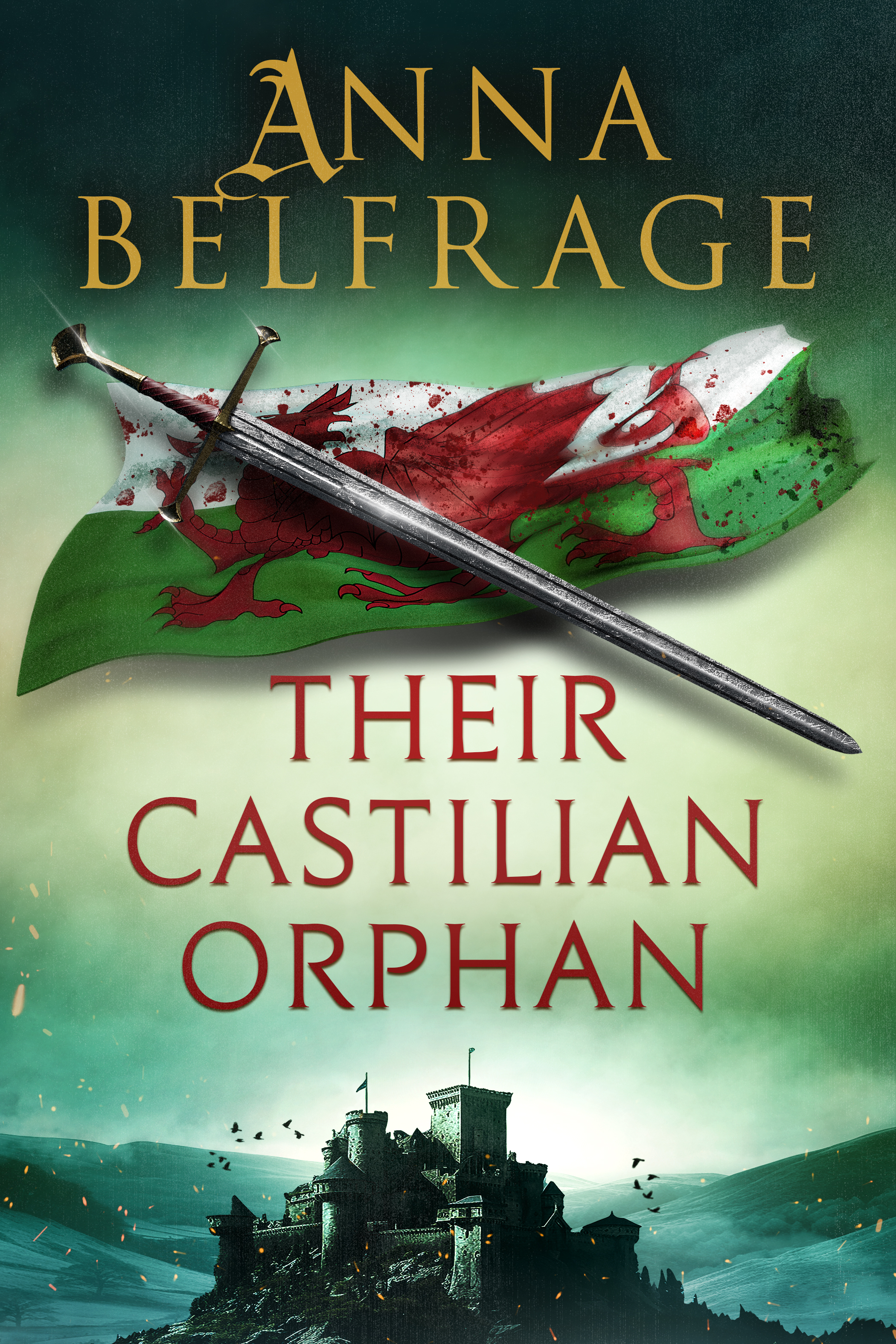
Today, I’m welcoming Anna Belfrage and her new book, Their Castilian Orphan, to the blog with an excerpt #blogtour #historicalfiction #historicalromance #blogtour

Here’s an excerpt from Their Castilian Orphan

In which Lionel—still hurting after having been told everything he though he knew about his parentage is a lie—and Noor reconcile

Noor had only visited the huge abbey church once before. As she recalled, it had been full of pilgrims and clerics, the sour scent of sweat and grime mingling with that of incense. She’d been too uncomfortable by the press of people to truly take in the magnificence of this huge space consecrated to God, but today, as she followed Father Alain in, the church was relatively empty. It was an hour or so after prime, and she was out of breath after hurrying after the priest, who’d appeared at their little inn, insisting she accompany him.

Despite the early hour, Robert and his men had already left for Clerkenwell. Elena was still asleep on the pallet in the room she shared with Noor and Robert, but Noor herself had been up since dawn, unable to sleep. All night, Lionel’s words had gnawed at her, and even if Robert was probably right when he said the lad did not mean them—not really—they still hurt. They hurt even more when she considered that they were still lying to him, still denying him his true lineage. But to tell him was impossible, for his sake as well as theirs. 

“Beautiful, isn’t it?” Father Alain murmured beside her, and she bit back an annoyed remark along the lines that she had other matters preying on her mind—far more important matters. But she reluctantly agreed he was right, amazed by the vivid colours that wound their way up the wooden screens that portioned off the various chapels, the statues in red and blue and gold. She craned her head back to study the ceiling so high up above, and from beyond the rood screen came the sound of singing. 

Robes swished as a group of priests passed by. A couple of women stood close together and prayed, and Noor bent her head and clasped her hands. Dearest Lord, keep Lionel safe. Safe from his true past, safe from too much suffering and pain. Help him find his way; help him know that he is so, so loved. 

Father Alain’s touch on her arm brought her out of her fervent praying. 

“He’s over there,” he said, dipping his head to gesture to a small shape that sat hunched in a corner, knees to his chest. “He was here when I came for prime. I think he has slept as badly as you have.” He gave her a smile. “Go on. He needs his mother.”

“He told me yesterday that I am not his mother.”

Father Alain brushed her cheek. “Of course you are. You have loved him and cared for him since he was a swaddled babe. Who else deserves to be called his mother? Those words, he said them in anger—and he regrets them.”

“Did he say as much?”

“Nay. But it suffices to look at him, don’t you think?” 

Noor approached Lionel hesitantly. Once she reached him, she crouched before him, only to realise he was fast asleep, his face streaked with tear tracks. As she’d done so many times in his life, she adjusted his coif, cupping his cheek in the process. Still the downy cheek of a young lad, but when he opened his eyes, he looked far too weary for a lad not yet twelve.

“I am sorry,” he said hoarsely.

“So am I.” She slid down to sit on the floor beside him, ignoring the disapproving tsk from a passing priest. “But it was never my intention to cause you pain. All I wanted was to keep you safe—and with me.” 

He nodded. “What was he like, my father?”

She frowned. “Dark hair, dark eyes, shorter than Robert and slim rather than stout. Strong shoulders, though. You could see he was a man accustomed to handling weapons.” 

“Do I look like him?”

She studied him. “Maybe. I never knew him as a lad—truth is, I didn’t know him at all. He just rode into Orton Manor and asked me to take care of you.”

“Why?”

Noor sighed. “I do not know. There was so much upheaval at the time: Robert was God knows where helping the king finalise his conquest, there was falling out among the Welsh, far too many Marcher lords eager to claim more land from the defeated Welsh. A veritable quagmire, and I think your father found it hard to navigate through such turbulent times.”

“Do you believe he fought against the English?” 

She knew he had. Fought and lost and died so, so bravely that distant day in Shrewsbury. 

“I do not know,” she lied. Holy Mother, save her soul! But this lie was for Lionel’s sake, not hers. “I think that had he been fighting against the English, he’d have left you with his Welsh kin. Instead, he left—” 

“Kin? You were his kin?”

“His very distant, very English kin,” she replied drily. “My grandmother was Welsh,” she offered. 

“So you are my kin as well,” Lionel said, leaning against her. She wrapped an arm round his shoulders.

“I am.”

They sat like that for a while until Lionel began fidgeting. “I must get back,” he muttered. “Wilbur will be most displeased with me for slipping out as I did.” He exhaled. “He’ll likely belt me.”

Noor shot to her feet. “What? Do you want me to talk to him?”

Lionel looked horrified. “No! I can take it. Besides, Wilbur isn’t like Ambrose.”

“How so?” Father Alain asked, rising from where he’d been sunk in his own private devotions.

“Ambrose liked to hurt. Wilbur doesn’t.” Lionel shrugged.

Together, they made for the western doors. When they were some yards away, a clerk came scurrying from the direction of the choir, his sandals clacking on the stone floor. Noor had an impression of someone of a height with her and very thin, his face angular and dominated by shrewd eyes under heavy brows. 

The man hurried by. Lionel grabbed hold of Noor’s kirtle. “That’s him,” he hissed. “That’s Humphrey!”

He’d not kept his voice down. The clerk turned, frowning at Lionel before glancing at Noor. He paled, even more so when he caught sight of Father Alain. With a little yelp, he took to his feet, leaping like a hunted hart towards the door.

“Well,” Father Alain said. “That was unfortunate.” 

“Do you think he’ll flee?” Noor asked. 

“I hope he does, for his sake. I hope he isn’t foolish enough to mention to his lord and master that we might know who he is.” Father Alain looked grim. 

“Why would that be foolish?” Lionel asked.

“Eustace might be displeased,” Noor said lightly. “He expects Humphrey to keep to the shadows.” She ushered Lionel outside. “You hurry back to Wilbur and apologise profoundly. Tell him your foster mother desired your companionship for prime.”

Lionel nodded and trotted off.

“And Lionel,” she called, causing him to stop. She caught up with him. “Stay well away from Eustace—and Humphrey. Promise.”

Here’s the blurb

It is 1294 and Eustace de Lamont is back in England after five years in exile. He will stop at nothing to ruin Robert FitzStephan and his wife, Noor d’Outremer.

Robert’s half brother, Eustace de Lamont, has not mellowed during his absence. He is more ruthless than ever, and this time he targets Robert’s and Noor’s foster son, Lionel.

Lionel is serving King Edward as a page when Eustace appears at court. Not only does Lionel become the horrified witness to Eustace’s violent streak, Eustace also starts voicing his suspicions about Lionel’s parentage. The truth about Lionel’s heritage is explosive—should King Edward find out, all would be lost for Robert and Noor.

In October of 1294, Wales rises in rebellion. Robert must leave his family unprotected to fight the Welsh rebels on the king’s behalf, comforted only by the fact that Eustace too is called to fight.

Except that Eustace has no intention of allowing his duty to his king—or a mere rebellion—come between him and his desire to destroy Robert FitzStephan . . .

Buy Links 

This title is available to read on #KindleUnlimited.

Universal buy link: https://mybook.to/TCO

Meet the author

Had Anna been allowed to choose, she’d have become a time-traveller. As this was impossible, she became a financial professional with three absorbing interests: history, romance and writing. Anna has authored the acclaimed time travelling series The Graham Saga, set in 17th century Scotland and Maryland, as well as the equally acclaimed medieval series The King’s Greatest Enemy which is set in 14th century England. Anna has just released the final instalment, Their Castilian Orphan, in her other medieval series, The Castilian Saga ,which is set against the conquest of Wales. She has recently released Times of Turmoil, a sequel to her time travel romance, The Whirlpools of Timeand is now considering just how to wiggle out of setting the next book in that series in Peter the Great’s Russia, as her characters are demanding. . .

All of Anna’s books have been awarded the IndieBRAG Medallion, she has several Historical Novel Society Editor’s Choices, and one of her books won the HNS Indie Award in 2015. She is also the proud recipient of various Reader’s Favorite medals as well as having won various Gold, Silver and Bronze Coffee Pot Book Club awards.

“A master storyteller” 

“This is what all historical fiction should be like. Superb.”

Find out more about Anna, her books and enjoy her eclectic historical blog on her website, www.annabelfrage.com  

Sign up to Anna’s newsletter to keep up with new releases, give-ways and other fun stuff: http://eepurl.com/cjgatT

Connect with the author

Website: www.annabelfrage.com

Twitter: https://twitter.com/abelfrageauthor

Bluesky: https://bsky.app/profile/abelfrageauthor.bsky.social

Facebook: https://www.facebook.com/annabelfrageauthor

Instagram: https://instagram.com/annabelfrageauthor

Book Bub: https://www.bookbub.com/profile/anna-belfrage

Amazon Author Page: http://Author.to/ABG

Goodreads: https://www.goodreads.com/author/show/6449528.Anna_Belfrage

Follow Their Castilian Orphan blog tour with The Coffee Pot Book Club

I’m welcoming Kinley Bryan and her new book, The Lost Women of Mill Street to the blog with a fantastic guest post #histfic

Mill Life in the Antebellum South

In the opening pages of The Lost Women of Mill Street, sisters Clara and Kitty Douglas each work a pair of power looms in a Roswell, Georgia, cotton mill. The Civil War has been raging for more than three years and will soon find its way to their village.

Like (fictional) Clara and Kitty, most mill workers in the antebellum South came from small, struggling farms, and their income was needed to make ends meet. Mill owners often recruited families who could provide several workers, as is the case with Clara and Kitty, whose mother, now deceased, had come with them to the mill years earlier. 

At the Roswell mills and others throughout the South, employees went to work at sunrise and labored for ten to twelve hours, six days a week. Working conditions were poor: the noise was deafening, the ever-present dust and lint caused health problems, and the heat and humidity could be overwhelming. Working the rapidly moving spinning frames and power looms was dangerous: fingers, long hair, or clothing could become entangled in the machinery, causing severe injury or even death.

Some antebellum mill owners were slaveowners, and a small number of them put enslaved men to work in the mills doing the heaviest work: moving large bales of cotton, loading wagons with finished goods, and working in the pickers room, where raw cotton was cleaned of dirt and seeds. Black women were generally excluded from mill work. 

While a small number of white men were employed by the mills, working as loom fixers or supervisors, the labor of poor white women and children was the cheapest. Women held jobs in the spinning and weaving rooms. Children worked entry-level jobs such as spinner or doffer. The spinner’s job was to move quickly up and down a row of machines, repairing breaks and snags. A doffer removed bobbins holding spun fiber from a spinning frame and replaced them with empty ones. 

The mills featured in my novel are owned by the Roswell Manufacturing Company. Founded in 1839, the company became one of the largest textile mill operations in Georgia. Though the mills thrived, the mill workers did not. They were paid in scrip, which they spent at the company store for goods and supplies, after rent for factory housing was deducted from their pay. If they became sick or injured from the hazardous working conditions, there was no employer-provided health care or sick pay. 

A source that was invaluable to my research on textile mills of the era, Neither Lady nor Slave: Working Women of the Old South, states that despite the Roswell mills’ success, the owners showed little concern for their employees’ welfare: “When new state legislation required operatives’ working hours be limited to from sunup to sundown, the board members voted that all Roswell employees, the majority of whom were women and children, could either work under the new laws but suffer reduced wages or work the old, longer hours for the same pay.” 

During the Civil War, the Roswell mills produced gray woolen cloth for Confederate uniforms, as well as military supplies such as tent cloth, candlewick, and rope. When Federal troops arrived in Roswell during General Sherman’s 1864 advance through Georgia, it wasn’t surprising that they destroyed the mills. What was surprising was that the mill workers, mostly women and children, were arrested and sent hundreds of miles north.

In The Lost Women of Mill Street, Clara and Kitty’s experiences are based on actual events, and their troubles at the mill are just the beginning.

Here’s the blurb

1864: As Sherman’s army marches toward Atlanta, a cotton mill commandeered by the Confederacy lies in its path. Inside the mill, Clara Douglas weaves cloth and watches over her sister Kitty, waiting for the day her fiancé returns from the West.

When Sherman’s troops destroy the mill, Clara’s plans to start a new life in Nebraska are threatened. Branded as traitors by the Federals, Clara, Kitty, and countless others are exiled to a desolate refugee prison hundreds of miles from home.

Cut off from all they’ve ever known, Clara clings to hope while grappling with doubts about her fiancé’s ambitions and the unsettling truths surrounding his absence. As the days pass, the sisters find themselves thrust onto the foreign streets of Cincinnati, a city teeming with uncertainty and hostility. She must summon reserves of courage, ingenuity, and strength she didn’t know she had if they are to survive in an unfamiliar, unwelcoming land.

Inspired by true events of the Civil War, The Lost Women of Mill Street is a vividly drawn novel about the bonds of sisterhood, the strength of women, and the repercussions of war on individual lives.

Buy Link

https://books2read.com/lostwomenofmillstreet

Meet the author

Kinley Bryan’s debut novel, Sisters of the Sweetwater Fury, inspired by the Great Lakes Storm of 1913 and her own family history, won the 2022 Publishers Weekly Selfies Award for adult fiction. An Ohio native, she lives in South Carolina with her husband and three children. The Lost Women of Mill Street is her second novel.

Connect with the author

Website: https://kinleybryan.com/

Twitter: https://twitter.com/kinleybauthor

Facebook: https://www.facebook.com/KinleyBryanWrites

Instagram: https://www.instagram.com/kinleybryanauthor/

Book Bub: https://www.bookbub.com/profile/kinley-bryan

Amazon Author Page: https://www.amazon.com/stores/Kinley-Bryan/author/B09J5GWDLX

Goodreads: https://www.goodreads.com/author/show/21892910.Kinley_Bryan

Follow The Lost Women of Mill Street blog tour with The Coffee Pot Book Club

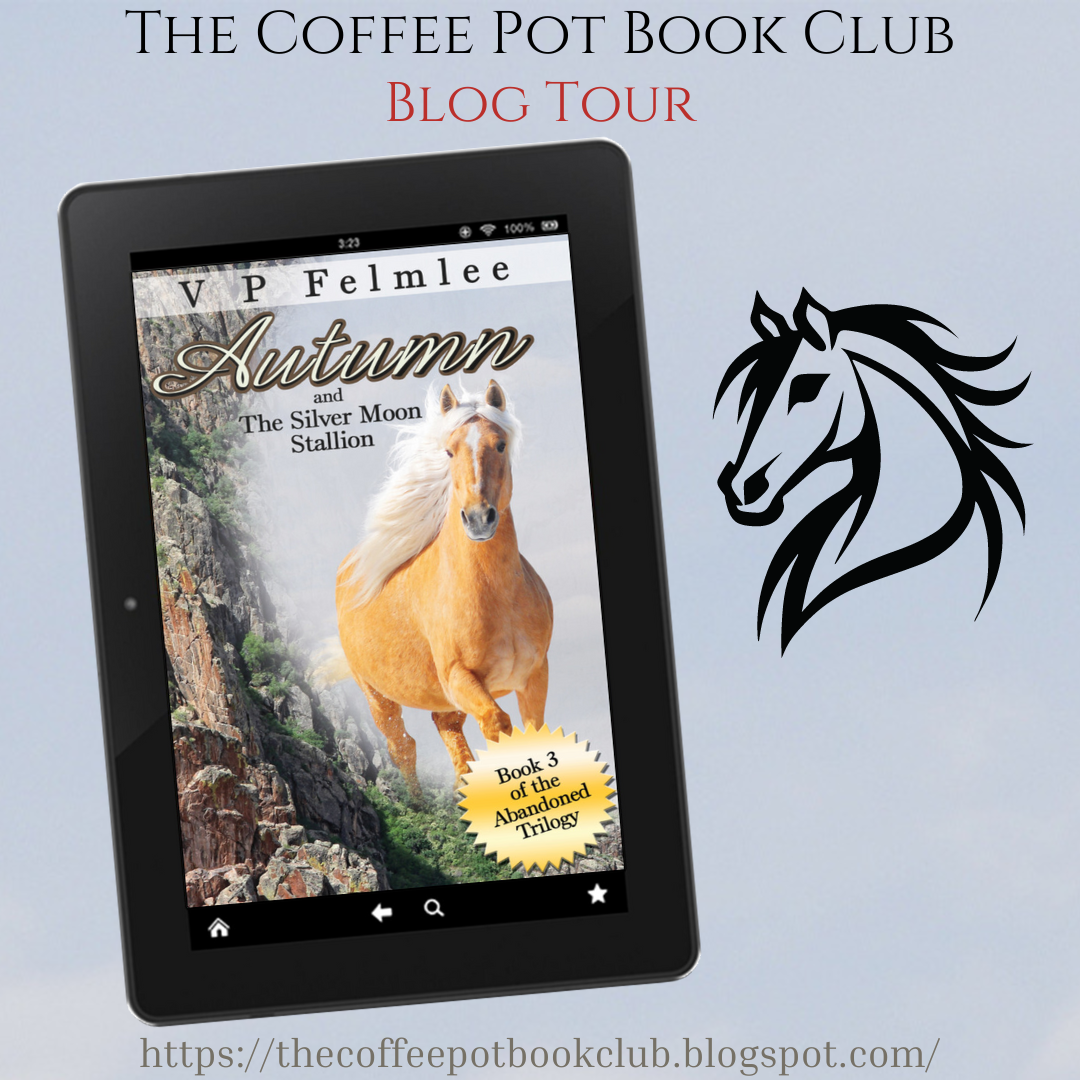
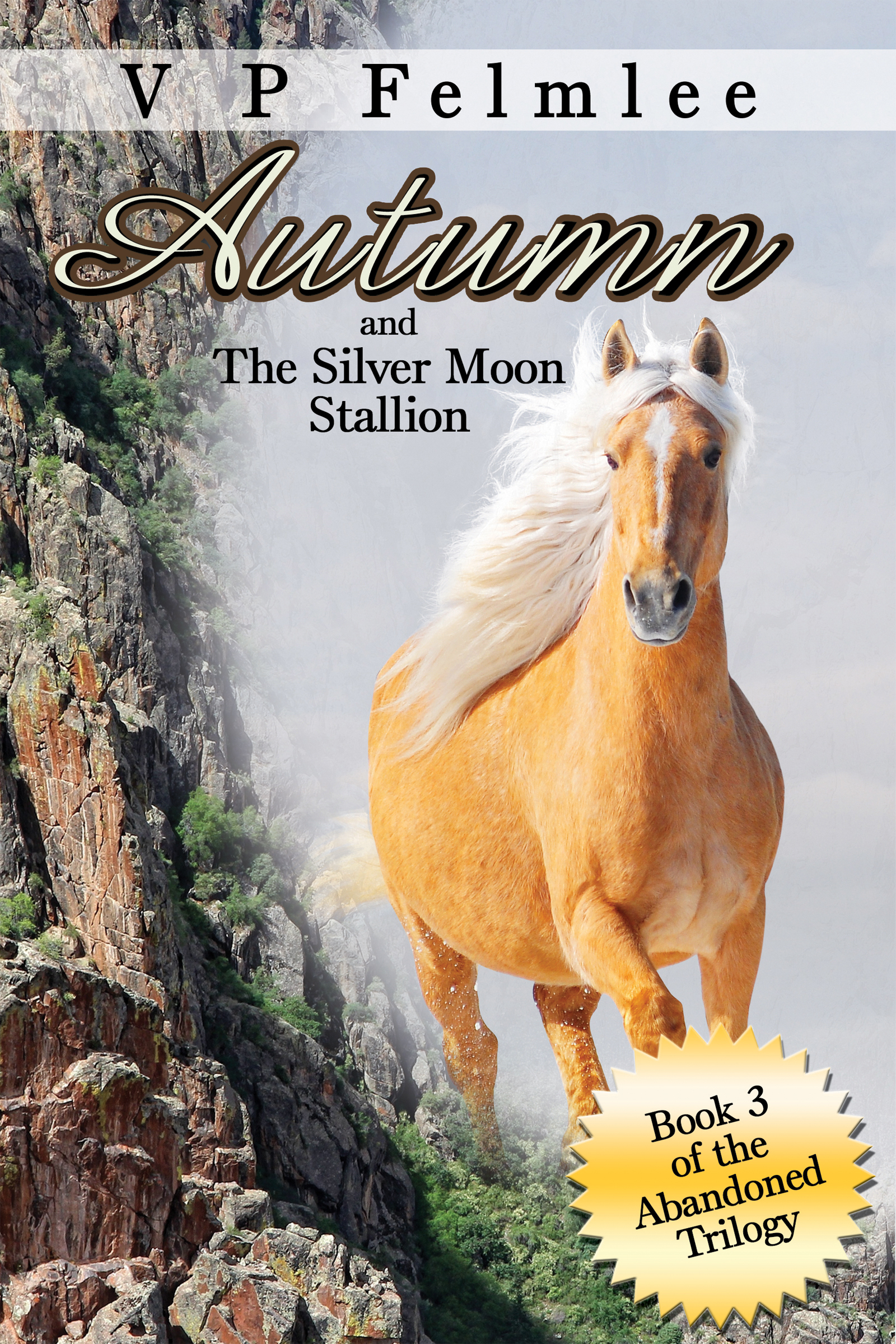
I’m delighted to welcome V P Felmlee and her new book, Autumn and The Silver Moon Stallion, to the blog #YoungAdultFiction #NewAdultFiction #Mustangs #WildHorses #AbandonedAnimals #TheCoffeePotBookClub #BlogTour

I’m delighted to welcome V P Felmlee and her new book, Autumn and The Silver Moon Stallion, book 3 in The Abandoned Trilogy, to the blog with an excerpt.

Excerpt

As one, Becky, Autumn, and Silver Moon looked up just in time to see a tower of water coming over the top of the canyon, right towards them.

Autumn turned to run.

Becky turned to run.

Silver Moon was still coming down the trail, watched as waves hit the ground, then rose up like a living thing several feet in the air before crashing down first on Autumn then on the girl.

More water was coming from above, splashing and crashing, ramming its way from canyon wall to canyon wall, shoving anything in its way forward, relentless and unstoppable.

Without thinking, Silver Moon jumped in.

Becky looked back, trying to see Autumn, swallowing ice-cold water in the process. She spat it out, then saw the palomino struggling to get her footing. The water was too deep, and was forcing them along at an incomprehensible speed.

Becky grasped a large boulder. She couldn’t hold on to it. Her body banged against an outcrop, driving the air from her lungs.

I have to watch where I’m going, she thought, don’t look back, look forward.

The filly was trying hard to get to Becky, who was just ahead of her. The water pushed her against the canyon walls, forcing her to one side, then another. Instinct took over, her legs began to move. I have to keep my head up.

She was now whale-eyed, growing more terrified with each second. She couldn’t avoid the boulders and slammed into them time and again.

She began to panic.

Silver Moon was strong and big but he was almost no match for the churning maelstrom the canyon had become.

Just ahead, he saw Autumn losing the fight to keep her head up. He saw her disappear, briefly emerge, then disappear.

Here’s the Blurb

An abused, neglected filly is abandoned on a remote country road, left to die.

A young woman grieves the loss of her best friend, the champion horse she had built

her life and future around.

The heir to one of the largest ranches in Wyoming comes home to face the ire and

disappointment of his grandfather.

A world-renown scientist clashes with the U.S.government over a brutal,

decades-long war to decide the fate of thousands of

mustangs, a beloved icon of  the American West.

Autumn and The Silver Moon Stallion is their story of love, hatred, and death.

Will their struggles give them hope to fight for their beliefs, or tear them forever apart?

Buy Link

Universal Link:

This title is available to read on #KindleUnlimited

Meet the Author

V P Felmlee is the author of The Abandoned Trilogy: Price Tadpole & Princess Clara; Good Boy Ben; and the third book in the series, Autumn and the Silver Moon Stallion. A former newspaper reporter and editor, she has a degree in geology, and has been active in historic preservation and animal welfare issues. Her articles have appeared in several magazines and she has won numerous awards.

She will be the 2025 president of Women Writing the West and lives in Grand Junction, Colorado, with her husband, two dogs, and six cats.

Connect with the Author

Website:

Follow The Autumn and Silver Moon Stallion blog tour with The Coffee Pot Book Club

I’m delighted to welcome Ann Bennett and her new book, A Rose In The Blitz, to the blog #HistoricalFiction #HistoricalRomance #WorldWarII #BlogTour #TheCoffeePotBookClub

I’m delighted to welcome Ann Bennett and her new book, A Rose In The Blitz of the Sisters of War series, to the blog.

Here’s the blurb

Escape into the dramatic world of London during the Blitz in this sweeping family saga of love, war and betrayal.

Northamptonshire: 1980: Wealthy landowner, Hadan Rose, is dying. His daughter, May, rushes to his country estate, Rose Park, with her daughter, Rachel, to nurse him through his final days.

In the afternoons, while Hadan sleeps, May tells Rachel about her wartime experiences.

In 1940, Three of the four Rose sisters leave Rose Park to serve the war effort. May, the youngest is left behind. But she soon runs away from home to join an ambulance crew in London. She experiences the horrors of the Blitz first-hand but what happens to her there has remained secret her whole life.

In 1980, at Rose Park, Rachel wanders through the old house, looking at old photographs and papers, uncovering explosive family secrets from ninety years before. Secrets that her grandfather wanted to take to his grave. At the local pub, Rachel meets Daniel Walters, a local journalist and musician who takes an interest in her. But can she trust him, or does he have an ulterior motive for seeking her company?

As the secrets of the past gradually reveal themselves, both Rachel and May realise that their worlds are forever changed.

Fans of Lucinda Riley, Dinah Jeffries and Victoria Hislop will love this escapist wartime saga, Book 1 in the Rose Park Chronicles.

Buy Link

Universal Link:

This title is available to read on #KinldeUnlimited

Meet the Author

Ann Bennett is a British author of historical fiction. Her first book, Bamboo Heart: A Daughter’s Quest, was inspired by researching her father’s experience as a prisoner of war on the Thai-Burma Railway and by her own travels in South-East Asia. Since then, that initial inspiration has led her to write more books about the second world war in SE Asia. Bamboo Island: The Planter’s Wife, A Daughter’s Promise, Bamboo Road: The Homecoming, The Tea Planter’s Club, The Amulet and her latest release The Fortune Teller of Kathmandu are also about WWII in South East Asia. All seven make up the Echoes of Empire Collection.

Ann is also the author of The Lake Pavilion, The Lake Palace, both set in British India during the 1930s and WWII, and The Lake Pagoda and The Lake Villa, both set in French Indochina. The Runaway Sisters, bestselling The Orphan House, The Child Without a Home and The Forgotten Children are set in Europe during the same era and are published by Bookouture.

Ann is married with three grown up sons and a granddaughter and lives in Surrey, UK. For more details please visit www.annbennettauthor.com.

Connect with the Author

Website: BookBub:

Follow A Rose In The Blitz blog tour with The Coffee Pot Book Club

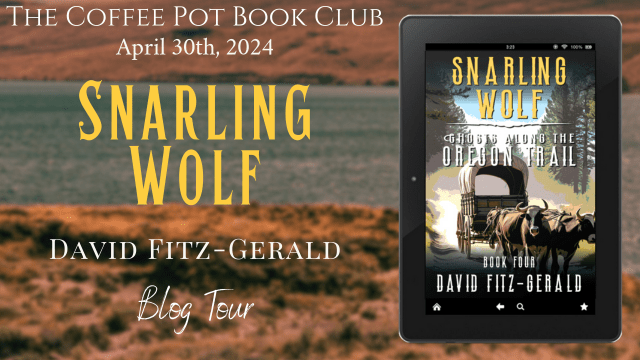
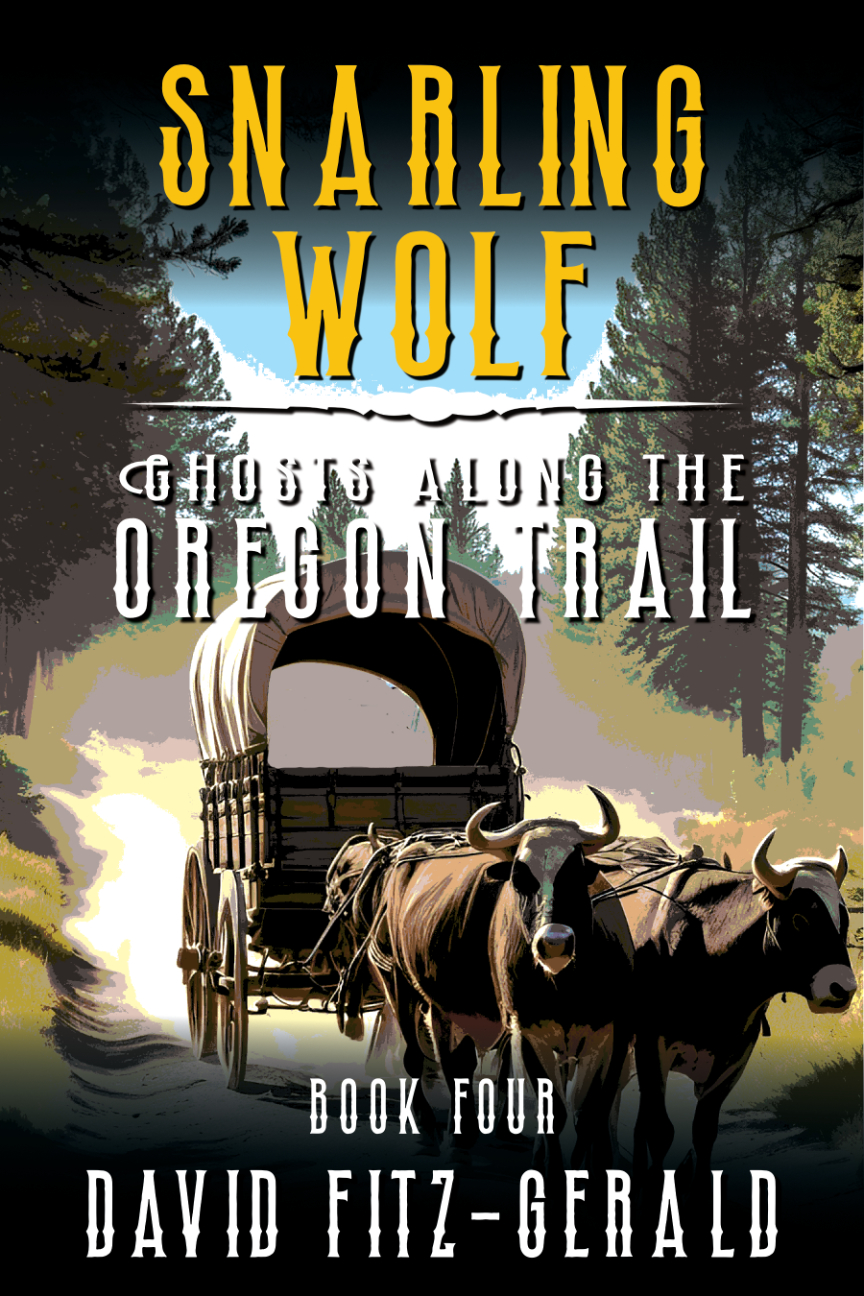
I’m delighted to welcome back David Fitz-Gerald and his new book, Snarling Wolf, to the blog #WesternAdventure #AmericanWest #WildWest #HistoricalWestern #NewRelease #BlogTour #TheCoffeePotBookClub

I’m delighted to welcome back David Fitz-Gerald and his new book, Snarling Wolf, book 4 in the Ghosts Along the Oregon Trail series, to the blog with a series trailer.

Series Trailer

Ghosts Along the Oregon Trail series trailer

Here’s the blurb

Dive back into the gripping, frontier chaos. Snarling Wolf is the fourth adventurous installment in the Ghosts Along the Oregon Trail series.

The famed Snake River marks the point the wagon master claims that all the greenhorns turn loco. After twelve hundred grueling miles and four relentless months on the trail, the expedition teeters on the brink. Frayed nerves, exhausted patience, and the specter of doom cast a dark cloud over the travelers.

At every turn, new dangers emerge. A young man who is like a brother to Dorcas Moon is ravaged in a mountain lion attack. A heat wave grips the dusty, barren plains and spreads sickness. The wolves that lurk in the shadows edge closer. Even the rattlesnakes seem emboldened.

Dorcas’ daughter, Rose’s descent into madness can no longer be ignored. What began as an eerie preoccupation with death takes a shocking turn when Rose reveals her truths. Dorcas is thrust into a realm of disbelief, and her worst fears about Rose’s mysterious suitor become a stark reality.

As weary emigrants yearn for respite, tales of murderous outlaws spread like wildfire across the prairie. Passing strangers share the latest terrifying news. It’s only a matter of when, not if, the notorious highwaymen will strike. Which bend of the mighty snake shelters the feared outlaws?

Grab your copy of Snarling Wolf now and unveil the next chapter in Dorcas Moon’s relentless saga. Sink your teeth into this tale of survival, madness, and the unyielding spirit of those who brave the treacherous migration.

Buy Link

Universal Link:

This title is available to read on #KindleUnlimited

Meet the Author

David Fitz-Gerald writes westerns and historical fiction. He is the author of twelve books, including the brand-new series, Ghosts Along the Oregon Trail set in 1850. Dave is a multiple Laramie Award, first place, best in category winner; a Blue Ribbon Chanticleerian; a member of Western Writers of America; and a member of the Historical Novel Society.

Alpine landscapes and flashy horses always catch Dave’s eye and turn his head. He is also an Adirondack 46-er, which means that he has hiked to the summit of the range’s highest peaks. As a mountaineer, he’s happiest at an elevation of over four thousand feet above sea level.

Dave is a lifelong fan of western fiction, landscapes, movies, and music. It should be no surprise that Dave delights in placing memorable characters on treacherous trails, mountain tops, and on the backs of wild horses.

Connect with the Author

Website: BookBub: Linktree:

Follow the Snarling Wolf blog tour with The Coffee Pot Book Club

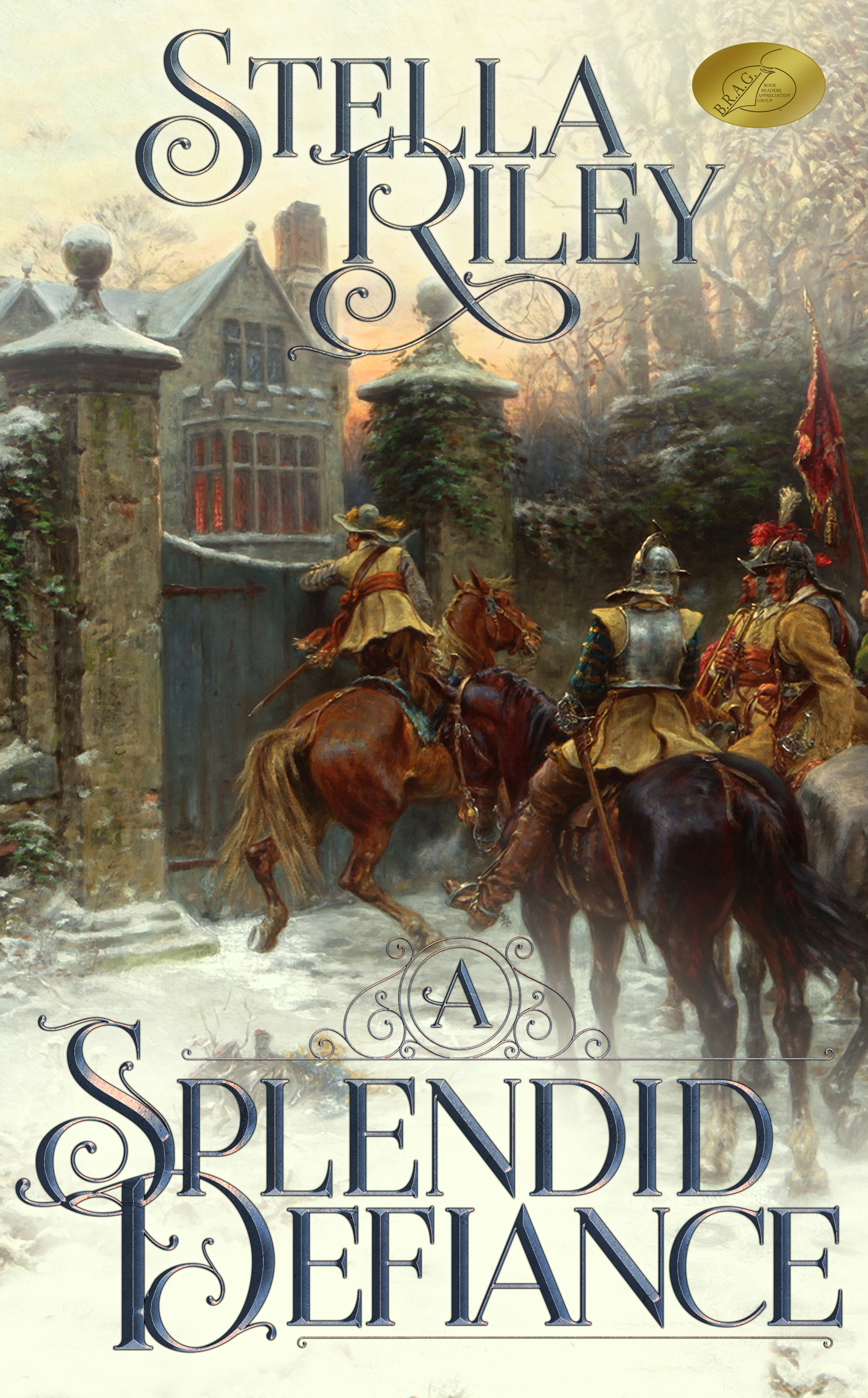
I’m delighted to welcome Stella Riley and her new book, A Splendid Defiance, to the blog #HistoricalFiction #HistoricalRomance #EnglishCivilWar #BlogTour #TheCoffeePotBookClub

I’m delighted to welcome Stella Riley and her new book, A Splendid Defiance, a Roundheads & Cavaliers book, to the blog with an excerpt from Chapter 2: Bargaining with the enemy.

Chapter 2: Bargaining with the enemy

Jonas did not know if he was irritated or relieved to hear that Captain Ambrose awaited him in the shop.  He loathed the garrison but a review of the last quarter’s figures had revealed a far from satisfactory state of affairs which meant he needed the Captain’s business.  This, however, did not make him any less uncivil than usual and he said, ‘I begin to find your persistence annoying.’

‘I’m sure,’ agreed Justin.  ‘But the remedy is in your own hands.  And you won’t be the first to sacrifice your principles in exchange for hard cash.’

Jonas’s gaze sharpened.

‘Is that how you would pay?  No promissory notes?’

‘No.  We have the money.  What we don’t have is endless time to discuss the matter.  If the men are to have decent coats this winter, we need the cloth – and sooner rather than later. If you won’t supply it, I’ll apply to Oxford.  Your choice … but if you can’t make it, then I must.  Well?’

Jonas stared at the worldly elegance before him and longed for the satisfaction of refusing.  Bitter rage burned in his breast and his frustration channelled itself into hatred for the man in front of him.

‘Very well.  Broadcloth or worsted?’

The Captain expressed a preference for broadcloth.  Jonas named his price and the Captain laughed.

‘Oh no, Mr. Radford.  I realise that the damage done to your finer feelings will require compensation – but I’m not willing to be robbed.  Try again.’

Robbed?’ echoed Jonas.  ‘Do you think I can’t guess where you get the ‘hard cash’ you boast of?’

‘On the contrary, I’m very sure that you can.  But I am equally sure that you will find our transaction less painful if you avoid thinking of it.’

Jonas’s answer was a diatribe against Cavalier lawlessness and vice.  Captain Ambrose waited until he paused for breath and then said, ‘This is war, Mr. Radford.  The  Parliament attacks our convoys and we theirs.  It is unfortunate but necessary.  I doubt any of us takes any pleasure in it.’

‘Pleasure is all your kind ever think about!’ spat Jonas.  ‘But God sees all and is not deceived.  And you might remember that, if war makes thieves –’

‘Peace hangs them.  Quite.’  Bored grey eyes met smouldering black ones. ‘But I’m not here to justify either myself or my cause – and I don’t have all day to waste while you preach. Fifteen shillings the yard and not a farthing more.’

Here’s the blurb

For two years England has been in the grip of Civil War.  In Banbury, Oxfordshire, the Cavaliers hold the Castle, the Roundheads want it back and the town is full of zealous Puritans.

Consequently, the gulf between Captain Justin Ambrose and Abigail Radford, the sister of a fanatically religious shopkeeper, ought to be unbridgeable.

The key to both the fate of the Castle and that of Justin and Abigail lies in defiance.  But will it be enough?

A Splendid Defiance is a dramatic and enchanting story of forbidden love, set against the turmoil and anguish of the English Civil War.

Buy Link

Universal Link:

Special Tour Price: Ebook £1.95/ US $1.95 (and equivalent) for the duration of the tour

Meet the Author

Winner of four gold medals for historical romance and sixteen Book Readers’ Appreciation Medallions, Stella Riley lives in the beautiful medieval town of Sandwich in Kent.

She is fascinated by the English Civil Wars and has written six books set in that period. These, like the 7 book Rockliffe series, the Brandon Brothers trilogy and, most recently The Shadow Earl, are all available in audio, performed by Alex Wyndham.

Stella enjoys travel, reading, theatre, Baroque music and playing the harpsichord.  She also has a fondness for men with long hair – hence her 17th and 18th century heroes.

Connect with the Author

Website: BookBub:

Follow the A Splendid Defiance blog tour with The Coffee Pot Book Cub

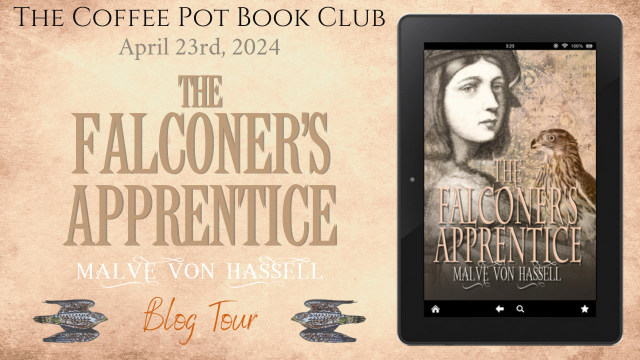
I’m delighted to welcome Malve von Hassel and her new book, The Falconer’s Apprentice, to the blog #HistoricalFiction #HolyRomanEmpire #FrederickII #CasteldelMonte #falconry #MedievalMedicine #BlogTour #TheCoffeePotBookClub

I’m delighted to welcome Malve von Hassel and her new book, The Falconer’s Apprentice, to the blog.

Here’s the blurb

THE FALCONER’S APPRENTICE is a story of adventure and intrigue set in the intense social and political unrest of the Holy Roman Empire in the thirteenth century.

“That bird should be destroyed!”

Andreas stared at Ethelbert in shock. Blood from an angry-looking gash on the young lord’s cheek dripped onto his embroidered tunic. Andreas clutched the handles of the basket containing the young peregrine. Perhaps this was a dream—

Andreas, an apprentice falconer at Castle Kragenberg, cannot bear the thought of killing the young female falcon and smuggles her out of the castle. Soon he realizes that his own time there has come to an end, and he stows away, with the bird, in the cart of an itinerant trader, Richard of Brugge.

So begins a series of adventures that lead him from an obscure castle in northern Germany to the farthest reaches of Frederick von Hohenstaufen’s Holy Roman Empire, following a path dictated by the wily trader’s mysterious mission. Andreas continues to improve his falconry skills, but he also learns to pay attention to what is happening around him as he travels through areas fraught with political unrest.

Eventually, Richard confides in Andreas, and they conspire to free Enzio, the eldest of the emperor’s illegitimate sons, from imprisonment in Bologna.

Buy Link

Universal Link:

This title is also available to read on #KindleUnlimited

Barnes & Noble:

Meet the Author

Malve von Hassell is a freelance writer, researcher, and translator. She holds a Ph.D. in anthropology from the New School for Social Research. Working as an independent scholar, she published The Struggle for Eden: Community Gardens in New York City (Bergin & Garvey 2002) and Homesteading in New York City 1978-1993: The Divided Heart of Loisaida (Bergin & Garvey 1996). She has also edited her grandfather Ulrich von Hassell’s memoirs written in prison in 1944, Der Kreis schließt sich – Aufzeichnungen aus der Haft 1944 (Propylaen Verlag 1994).

She has taught at Queens College, Baruch College, Pace University, and Suffolk County Community College, while continuing her work as a translator and writer.

Malve has published two children’s picture books, Tooth Fairy (Amazon KDP 2012/2020), and Turtle Crossing (Amazon KDP 2023), and her translation and annotation of a German children’s classic by Tamara Ramsay, Rennefarre: Dott’s Wonderful Travels and Adventures (Two Harbors Press, 2012).

The Falconer’s Apprentice (2015/KDP 2024) was her first historical fiction novel for young adults. She has published Alina: A Song for the Telling (BHC Press, 2020), set in Jerusalem in the time of the crusades, and The Amber Crane (Odyssey Books, 2021), set in Germany in 1645 and 1945, as well as a biographical work about a woman coming of age in Nazi Germany, Tapestry of My Mother’s Life: Stories, Fragments, and Silences (Next Chapter Publishing, 2021), also available in German, Bildteppich Eines Lebens: Erzählungen Meiner Mutter, Fragmente Und Schweigen (Next Chapter Publishing, 2022), and is working on a historical fiction trilogy featuring Adela of Blois.

Connect with the Author

Website: BlueSky: BookBub:

Follow The Falconer’s Apprentice blog tour with The Coffee Pot Book Club

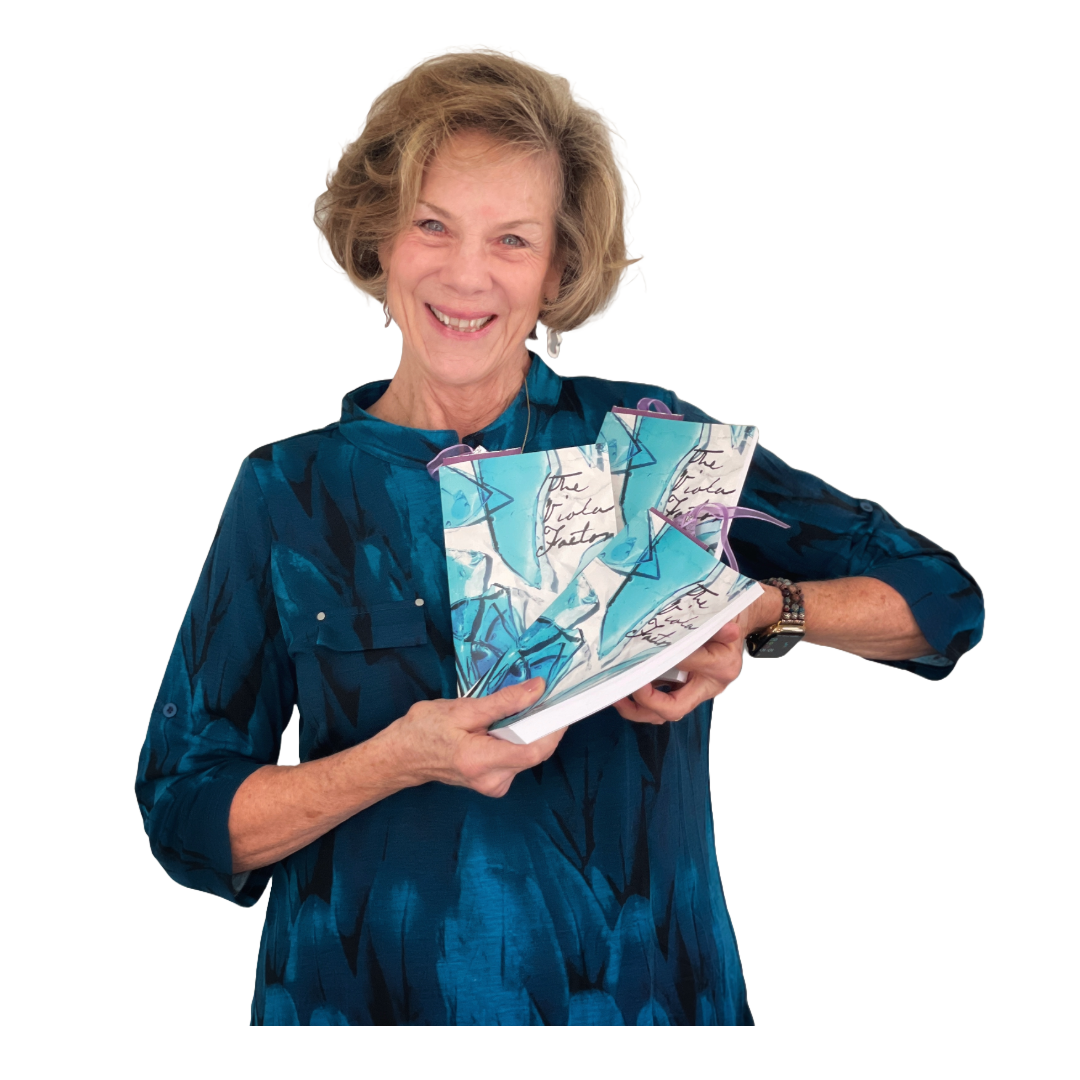
I’m delighted to welcome Sheridan Brown and her new book, The Viola Factor, to the blog #ViolaKnappRuffner #HistoricalFiction #BiographicalHistoricalFiction #BlogTour #TheCoffeePotBookClub

I’m delighted to welcome Sheridan Brown and her new book, The Viola Factor, to the blog, with a book trailer.

The Viola Factor Book Trailer

The Viola Factor Book Trailer

Here’s the blurb

“The Viola Factor” takes place at a time when the country faced division and growth after the American Civil War. Viola Knapp Ruffner (1812-1903) struggled with what was just and fair, becoming a little-known confidant for a young black scholar from Virginia. But Viola was much more than a teacher; she was a mother, wife, game-changer, and friend. With her mother’s dying wish, a young woman alone, she left her New England roots. This is a story of trauma and love in the South while battling for justice and the rightful education of the enslaved and once enslaved. African American leader Booker T. Washington (1856-1915) called her his friend and model for life.

The Viola Factor is in many ways a journey of life done in baby steps, tentatively stumbling, until a galloping stride is achieved. Viola Knapp wears different shoes on different days. Heavy, mud-trekking boots to allow for aggressive steps, and daintier shoes for more rhythmic and assertive ones. She was a diligent daughter, an outspoken protector, and a progressive teacher.

Like many women in her situation, alone at seventeen, Viola must realize her own principles to fulfill her future goals. With every stride, Viola Knapp Ruffner marches around surprises, over potholes, and dodges folly after folly on her journey to be fulfilled. After ambling in one direction, plodding along in another, and wandering to find herself, a sudden halt pushes her forward until a factor of fate places her in the path of a newly freed slave with a desire to read and penchant to lead. After years of post-traumatic stress and mental uncoupling, she finds herself a woman who followed her mother’s dying wish to fight for what is fair and just.

Buy Link

Universal Link:

Meet the Author

Sheridan Brown holds advanced degrees in school leadership and is a certified teacher, principal, and educational leader. The arts have always been a central force in her life, since performing in piano recitals, school band, plays, and singing in choirs her whole life.

Ms. Brown was born in Tennessee and raised in small towns of southwest Virginia. She practiced her profession in Virginia, Massachusetts, and Florida. Upon retirement, she began volunteering, painting, writing, researching, and traveling with her husband, attorney John Crawford. She has one son, Tony Hume. She is GiGi to Aiden and Lucy. She has returned to the Blue Ridge to live and explore.

Connect with the Author
Follow The Viola Factor blog tour with The Coffee Pot Book Club

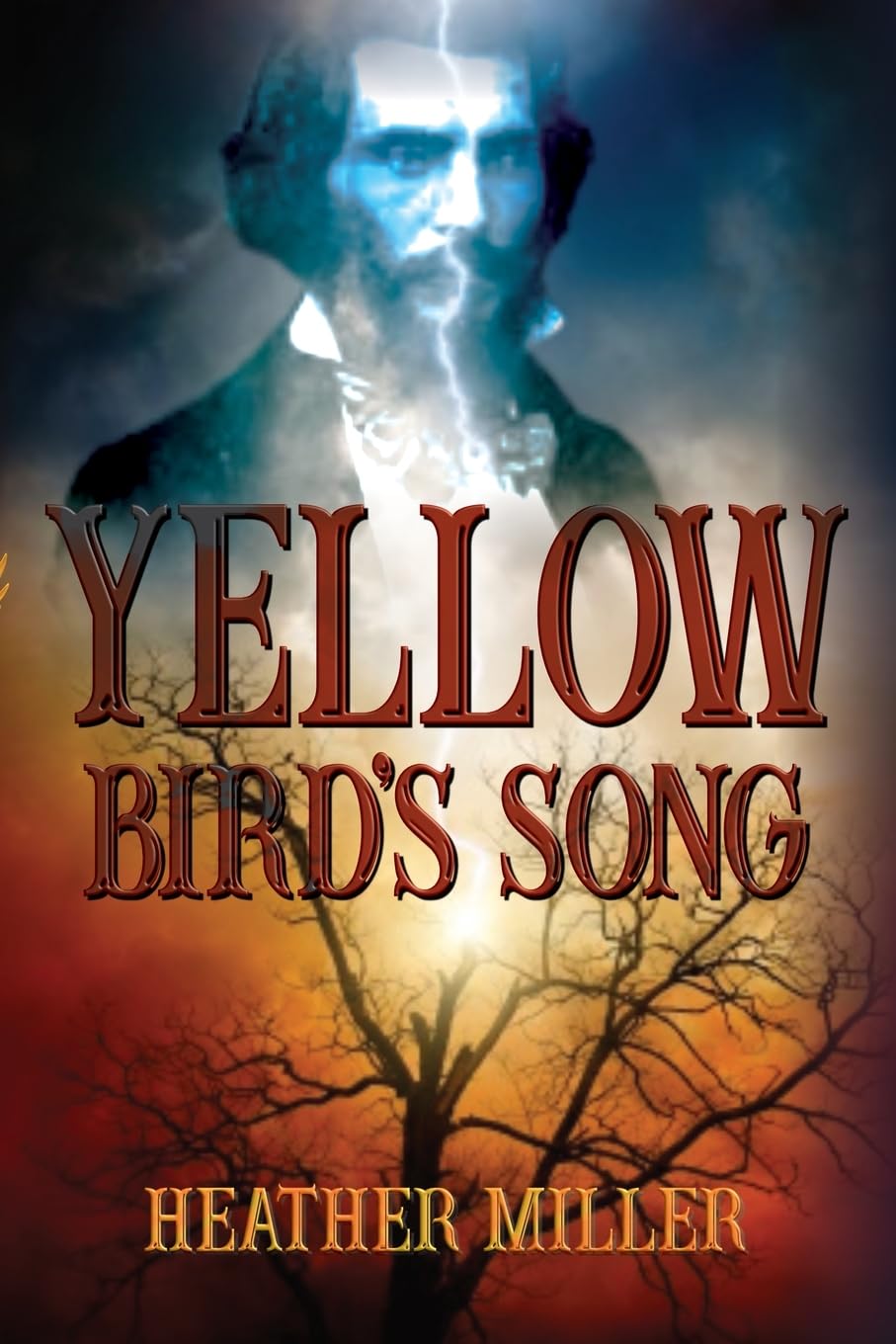
I’m delighted to welcome Heather Miller and her new book, Yellow Bird’s Song, to the blog #AmericanHistory #NativeAmericanHistory #TrailOfTears #BlogTour #TheCoffeePotBookClub

I’m delighted to welcome Heather Miller and her new book, Yellow Bird’s Song, to the blog with an excerpt.

Excerpt 1

John Rollin Ridge, Cherokee Nation West, 1850

The evening’s red sky horizon stretched its wide arms behind Judge Kell’s dogtrot, extending into the dust. A dead tree stood as an ineffectual sentry between his corn crib and smokehouse, visible through the open-framed breezeway. I salivated, smelling pork fat lingering in the air. No longer able to afford to slaughter hogs, my family could only recall bacon’s salty taste.

Inside the paddock, my appy lay on his side. Castration’s fresh blood tainted his coat of bronze and cream. Blood gathered under his hind quarters. If Kell had cut his femoral, he’d die from blood loss. That horse was Dick’s grandson, the pony I begged Papa to bring west from Running Waters.

The porch door squeaked, then slammed behind him. Kell expected me. He rolled tobacco in paper, sealing it closed with his tongue. His eyes squinted from the western prairie’s sunlight sliding low behind me.

He struck a phosphorus match against the porch post, lit the end of the rolled tobacco, held it in his lips, tilted his head to the side, and inhaled. Through smoke, he said, “Look at you, Rollin, standing on my land like some Mexican bandit. I believe your post is south of here.” Kell’s sarcasm snarled like poisoned saliva foaming from the jaw of a rabid dog.

“I’m in the right place,” I said, more confidently than I felt, flying on vindication’s wind alone.

“That is where you and I agree. Not much else, but that singular point.”

He sauntered, with spotless leather boots, to the edge of the steps extending into the western dirt, just dust over the granite under Indian land.

I nodded left toward his painted paddock fence. “Kell, you take my Appaloosa stallion? His markings are unmistakable.”  

Kell gestured with his smoking hand, pointing the two fingers toward my injured animal. “You mean that gelding?”

“Who made him so?”3

“I did and am willing to stand by my deeds with my life.4Found him in pastureland. Horse bucked and rammed me. Without balls, he’ll settle right down.”

“As a judge, you should know Cherokee don’t own open tribal land. No reason he should be here.”

Judge Kell gripped his porch rail but remained atop its planks on the high ground. Then, his unoccupied, dominant hand recognized his bowie knife’s handle, sheathed, and slung low on his hip. He said, “Can testify to nothing.”

His lies didn’t dampen my resolve. I saw through him. We both knew the real reason I was there. I shouted, “My sister can.”

He leaned against his porch post with carefree nonchalance. “The deaf and dumb sister? I don’t know what that feeble-minded woman could mean.”

I touched the leather strap of Clarinda’s whistle around my neck. “She doesn’t need to speak to witness. She is a medicine woman.” Then I separated my boots, furthering my stance against the inevitable explosion of powder and ball from the iron under my palm.

Kell scoffed. “Then remind me to stay well. That woman’s a witch.”

Wouldn’t be illness that killed him. I couldn’t allow Kell’s wit to move me to fire first, no matter what insults he hurled at my sister. To make justice legal, Kell must first try to take my life, although that didn’t mean I couldn’t provoke the inevitable.

I matched his sarcasm. “Now isn’t the time to insult my family. Come down off that porch. Clarinda and Skili followed you, saw what you did. You’ve cost me far more than future foals. That blade in your grip took my father’s life.”

I spoke the Cherokee words fast, having memorized their phrases from a thousand daydreams. Still, this time, the words echoed in the abandoned cave of my chest with heavier resonance—measuring the phrase’s increased weight by speech.

He spoke his smug reply through smoke. “Your father’s signature on that treaty stole nearly four thousand Cherokee souls. So, I believe, son, both that horse and your father,” he smiled before finishing his thought, “got what they deserved.”

“According to whom? Your justice? Chief Ross’? It’s his bloody hands you’re hiding.”

Kell pulled a rogue piece of tobacco off his tongue with his thumb and pointer finger. “See now, truth rests in each man’s perception. Your father knew that, at least.”

“Papa understood Cherokee sovereignty could not exist in the East. My family stood in the way of Chief Ross’ greed; Ross sent you to kill him for it.”

Kell’s searing sarcasm furthered his attempt at intimidation. He shook his head, clicking his tongue. “By accusing Chief Ross of such crimes, you make a steep accusation for a raven so young.” But then, his snide tone became more cynical. “Your family received lawful Cherokee blood vengeance. So’s I heard.”

It wasn’t only his voice; every crack of bare earth mocked me. But what he didn’t know, what the ground couldn’t predict, was that this time, his blood would run. Cherokee Nation’s rocky soil would soak in it, dilute him in its groundwater, and spit his remnants through every winding river and well. 

Kell offered an aside, turning his face from me. “You’re still breathing.” He looked back, continuing his threat with closed-tooth menace. “When this knife reaches you, that’ll end. How ironic—” He stopped short, mid-thought, and exhaled a chuckle before inhaling again from his lit tobacco. His eyes looked at me from my worn boots to my mother’s pale eyes. 

I finished the sentiment on his behalf, “That the same knife would assassinate a father and murder his son? Admit your part. You were there in ‘39; the same knife hangs at your side.”

Kell unsheathed and admired the blade in his hand as if he hadn’t seen his distorted reflection in it for years. “She’s a beautiful weapon, don’t you think? Buckhorn handle. Metal inside the bone. Streamlined and strong. Son, this weapon ended many a man’s life with its peaceful vengeance.” 

I barked, “Vengeance is a fickle whore. She strains her rulings through a sieve she calls morality, leaving behind rocks and politics. Justice’s bullet is fair and fast. Even blindfolded, her shooter doesn’t have to stand close to hit where he’s aiming.”

Years ago, the image of Kell’s bowie knife forged in my mind. Its craftsman burned the bone handle with the image of an arrowhead—no shaft, no flight feathers—only a killing point. Kell’s knife required wind and aim, powered by his quick reach, and forged will. My twelve-year-old eyes remembered his blade. At twenty-two, my memory dripped in images of Papa’s blood.

Impatient and blinded by the reddening dusk, Kell spoke with vigorous staccato, hefting his significant weight down the stairs. “Take your thumb off that trigger, boy, before you start a war.” Then, with sight restored, he dirtied his spotless boots, kicking a wandering rat snake slithering between us, seaming a dividing line in prairie dust.

I shook my head in disgust. “War began ten years ago. Your whiskey breath is as rancid as your soul. I can smell it stronger now.” I studied his smirk, offering my own in exchange. “Stinks so bad, I thought someone died.”

Kell and I stood in paradox: I, in the shadow of a tree, him in the dying sunlight. His age to my youth, wealth to my poverty, appointment to my banishment, and vengeful intent opposing my righteous confidence.  

He cocked his head and smirked, glanced over to my horse, and crushed the remnants of his smoke into the dust. “You think this will end with you? Cousin Stand leading your teenage brothers and Boudinot’s boy against my grown sons and Chief Ross’ men in some unsanctioned feud? The few against the many?” 

“No, justice ends with me. If you approach, you will lose your life.”5I wouldn’t retreat from his taunts, knowing them for what they were. If Cousin Stand and I took down Chief Ross, it wouldn’t be a feud; it would escalate an already brewing Cherokee civil war.

Here’s the blurb

Rollin Ridge, a mercurial figure in this tribal tale, makes a fateful decision in 1850, leaving his family behind to escape the gallows after avenging his father and grandfather’s brutal assassinations. With sin and grief packed in his saddlebags, he and his brothers head west in pursuit of California gold, embarking on a journey marked by hardship and revelation. Through letters sent home, Rollin uncovers the unrelenting legacy of his father’s sins, an emotional odyssey that delves deep into his Cherokee history.

The narrative’s frame transports readers to the years 1827-1835, where Rollin’s parents, Cherokee John Ridge and his white wife, Sarah, stumble upon a web of illicit slave running, horse theft, and whiskey dealings across Cherokee territory. Driven by a desire to end these inhumane crimes and defy the powerful pressures of Georgia and President Andrew Jackson, John Ridge takes a bold step by running for the position of Principal Chief, challenging the incumbent, Chief John Ross. The Ridges face a heart-wrenching decision: to stand against discrimination, resist the forces of land greed, and remain on their people’s ancestral land, or to sign a treaty that would uproot an entire nation, along with their family.

Buy Link

Universal Link:

Meet the Author

As a veteran English teacher and college professor, Heather has spent nearly thirty years teaching her students the author’s craft. Now, with empty nest time on her hands, she’s writing herself, transcribing lost voices in American’s history.

Connect with the Author
Website:

Follow the Yellow Bird’s Song blog tour with The Coffee Pot Book Club