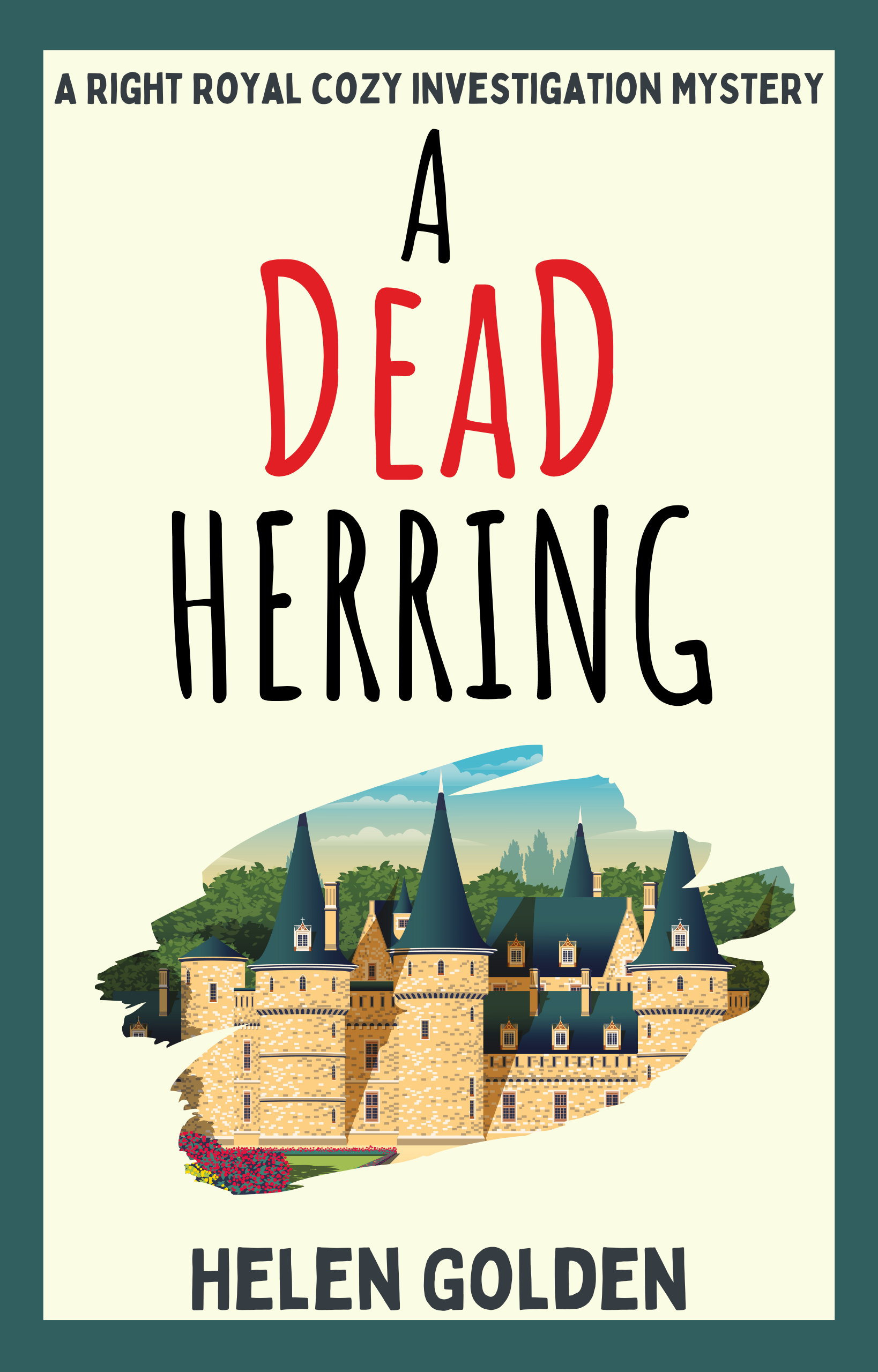
Book review for Helen Golden’s cozy mystery, A Dead Herring #blogtour #bookreview

Here’s the blurb

BREAKING NEWS Urshall United FC Owner Dies at Drew Castle

 Details are sketchy at this stage, but it is believed businessman Ben Rhodes (38) was found dead in his bathroom at the king’s Scottish home by his twin brother Max, where the pair were guests at a shooting party hosted by Lord Frederick Astley (39), brother of Lady Beatrice (36). The cause of Mr Rhodes’ death is not known, but he started receiving death threats from football fans after his controversial takeover of the club and had recently employed his own personal security.

How unlucky can a girl get? Is fate playing a cruel trick on her for boorish Detective Chief Inspector Richard Fitzwilliam to be the only person who can get to the snowed-in castle to investigate Ben Rhodes’s death? And with no other external resources available to him, he now needs her, her smart dog, and her best friends’ help to catch the killer. Can they put their issues behind them and work together to find the murderer before the weather improves and the perpetrator is free to leave?

Another page-turning cozy British whodunnit with a hint of humour from author Helen Golden.

Purchase Link

 https://books2read.com/u/3GWBZ8

My Review

If you don’t know that I adore this series, then you’ve been hiding under a rock:)

The Right Royal Cozy Investigations, of which the fabulously titled, A Dead Herring is the latest release, are a fantastic series of stories (with a thread running through them all that I will not be alone in being desperate to see the resolution for) which are just that bit elevated from other books of the genre.

The plotting is tight, the characters have great and very human interactions, the crimes are shocking, the investigations are robust, and the stories all have a great little twist where the reader has an ‘I know who did it moment,’ even if the characters haven’t quite reached it yet.

A Dead Herring is no different. Lady Bea and Perry, alongside Simon, find themselves being asked to help Pairs with this one, which makes a nice change, and the true moment of peril also has a great twist.

I find this series to be dependably great. That might not sound like praise, but it is. I know if I read one of these books, I’m going to be entertained and amused, and I’m always eager for the next book in the series. If you enjoy cosy crime, you must check out this series, and I recommend reading them in order.

Check out my reviews for the books in the series:

Spruced up for Murder

For Richer, For Deader

Not Mushroom for Death

An Early Death

Meet the author

Hello. I’m Helen Golden. I write British contemporary cozy whodunnits with a hint of humour. I live in small village in Lincolnshire in the UK with my husband, my step-daughter, her two cats, our two dogs, sometimes my step-son, and our tortoise.

I used to work in senior management, but after my recent job came to a natural end I had the opportunity to follow my dreams and start writing. It’s very early in my life as an author, but so far I’m loving it.

It’s crazy busy at our house, so when I’m writing I retreat to our caravan (an impulsive lockdown purchase) which is mostly parked on our drive. When I really need total peace and quiet, I take it to a lovely site about 15 minutes away and hide there until my family runs out of food or clean clothes

Connect with Helen

Website – https://helengoldenauthor.com/

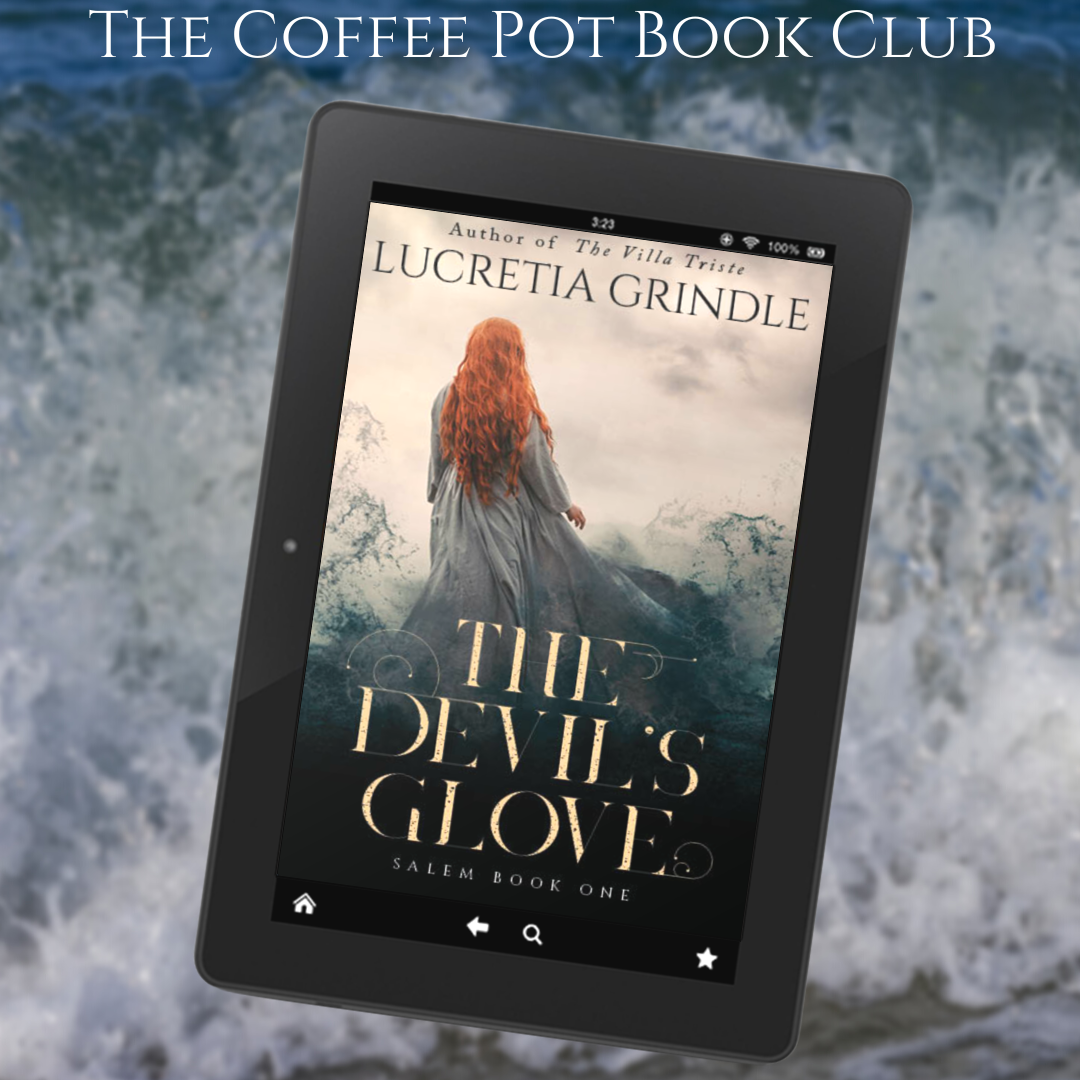
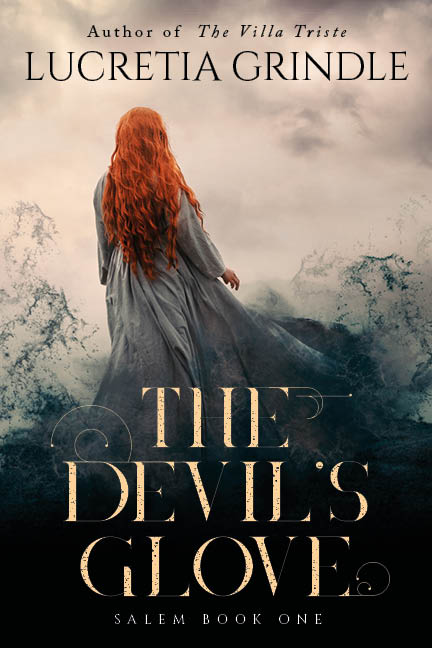
Lucretia Grindle shares a fascinating post about the historical women in her novel, The Devil’s Glove #blogtour

Guest Post by Lucretia Grindle on the Histroical Background to the Women in The Devil’s Glove

As I began to think about the Salem witchcraft trials, I was struck by what a distinctly female episode Salem was. Sure, you’ve got the Mathers, father and son, and the magistrates – all men. But this was a furor that was whipped up and powered by women, some of them very young women. And, while six men were executed (five hanged and one pressed to death) fourteen women were hanged. Because other women accused them. 

All of which led me to consider the roles women played in 17th century New England. As I began to contemplate The Devil’s Glove, I knew that my central character would be female, and so it seemed important to try to get past preconceptions and really understand the scope of possibility as well as the limitations on women’s lives in that time and place. What were they able to do, and not do? How did they fit, and not fit into the power structure of society? 

Salem certainly seemed a ‘fracture’; an incident when teen-aged girls, some of them orphaned, most of them servants and dependents – in other words those who would usually be the most un-empowered – wielded extraordinary power. A power they used to attack some of the most powerful female figures in the Massachusetts colony. Established and respected matrons like Rebecca Nurse. Women of wealth and social standing like Mary English. Women who would normally be politically untouchable, like the governor’s sister, Anne Phipps. What other ‘fractures’ might I find, if I went looking?

One of the greatest pleasures of writing history, and historical fiction in particular, is the way in which you begin thinking you know about something, only to discover facets of a world that are a complete surprise. So as I settled into archives and began to peel back layers, I was thrilled to find a complex and unexpected past peopled with an astonishing array of women. Resolve Hammond and her mother, Deliverance, are fictional characters. But the circumstances and possibilities of their lives are based on real women, some of whom appear in The Devil’s Glove, and many of whom will appear in the second and third books of the trilogy. These are a few of their stories.

Early in The Devil’s Glove we discover that Resolve and her mother spent the bloody years of King Philip’s war (1675-1678) sheltered among the tribe led by the female sachem, Ashawonks. This is based on a true episode. I placed the Hammonds with Ashawonks specifically, both because I wanted to bring her into the story and because she is Deliverance’s mentor, and her guide – the door through which Deliverance, and thus Resolve, enter the Native world. So, who was she? 

Female sachem, or saunkskwa of the Sakonnets, a tribe whose lands bordered the southern edge of the Plymouth settlement on Narragansett bay, Ashawonks was unique, not just because she was a women – there were several female sachems at the time – but because she became leader not via inheritance, but because of her formidable diplomatic skills. Her position would be challenged throughout her life, not only by the Anglo-Europeans who tried to push her off her lands, but also from within her own tribe. None of them succeeded. Instead, Ashawonks managed to walk a dangerous tightrope, keeping alliances – or at least relations – with Anglo-Europeans, while not openly alienating fellow sachems and tribes. She was especially close to the powerful militia commander, Benjamin Church, whom she often met and spoke with at length, using him as both a sounding board and conduit to The Powers that Were in Massachusetts. Thanks to skill, nerve, and an uncanny ability to read situations, Ashawonks  piloted her people, and those under her protection, through one of the most dangerous episodes in early American colonial history.

At about the same time Ashawonks was steering a course through a bloody war, another extraordinary woman gave birth to a daughter in Salem, Massachusetts. The daughter would become Mary English, who appears at the end of The Devil’s Glove and is a central to book II of the Salem trilogy. But it was her mother, Elinor Hollingworth, whose life suggested to me what the realistic possibilities might be for Deliverance Hammond. 

Elinor’s family arrived in Salem as part of The Great Migration, an influx of something in the area of 20,000 immigrants, primarily from the British Isles and mostly from England, who arrived in New England between approximately 1630 and 1640. At seventeen, Elinor married William Hollingworth, a sea captain and general all-round trader who wasn’t particularly good at either. His not very thrilling career came to an end when he went overboard and drowned, leaving Elinor with three small children and a mountain of debt. 

There were more eligible men than marriagable women drifting around New England at the time, and Elinor might well have re-married, as most widows did. But she wasn’t having any of it. Once was apparently enough. Instead, Elinor Hollingworth went to work. Petitioning the court to gain control of what was left of her husband’s business, she set about clearing his debts. 

In England at the time, women in naval cities like Bristol and Portsmouth were banding together to negotiate with the British Navy about pay and conditions while their husbands were at sea. Taking a leaf out of the same book, Elinor set herself up as a broker negotiating pay deals for working seamen in Salem, many of whom were illiterate, while taking a cut in return. She so successful that she rapidly became a sort of mini working seaman’s merchant bank.

 At the same time, Elinor saw an opportunity in the wives they left behind. Harnessing their domestic labor, inviting them to produce surplus butter, beer, biscuit, shirts, shoes and other supplies needed to outfit Salem’s growing merchant fleet, she became a ship’s chandler – the person captains went to for all the supplies they needed as soon as they knew they were going to sea. Within a few years, she not only paid off all of William’s accrued debt, but also acquired The Blue Parrot tavern, a seedy drinking den down on the waterfront that she made her headquarters.

Riding the tide of Salem’s exploding maritime trade, Elinor Hollingworth became so successful, and powerful, that when she was accused of witchcraft in 1672 by a neighbor she had annoyed, she merely shrugged it off, saying she was far too busy to be a witch. Twenty years later, her daughter tried essentially the same approach, with vastly different results. 

By then, Mary was married to Philip English, and they were the wealthiest tax payers in Salem, joint owners of a shipping empire that owned more than twenty vessels and included, among other things His and Hers warehouses. Mary received her warehouse from her mother as a wedding present. Elinor had not only made sure that her daughter was exceptionally well educated, she thought so much of her ability that she bypassed her son, and handed her entire business empire directly to her daughter. Philip English shared his mother in law’s esteem. Throughout their marriage, he and his wife owned their business jointly.

Along with the warehouses and the wharf and the ships, Mary and Philip English owned and inhabited a house in Salem so grand that it was known simply as The Great House. It had three stories, and housed not only their family, but also the shipping company’s counting house and a luxury goods shop which Mary oversaw and ran. And it was staffed by fifteen domestic servants, many of them indentured.

Indenture, the practice of contracting labor for a period of years in return for food and keep, and often passage to The New World was a relatively common practice, and part of the Englishes’ business. They arranged and brokered indenture contracts for a large number of, mostly young, people who came to New England from the island of Jersey. Many of them were single young women. One was called Judah White, and is Resolve’s best friend in The Devil’s Glove.

Indenture was not an easy life. You had little say over who you were indentured to, and there was no way out except to work out the years of the contract, or somehow find enough money to buy it out. But it was also a way for young men, and young women, from the lower classes to have a chance at starting a new life in The New World. For women in particular, this was otherwise close to impossible. Here was a way to take at least some of your destiny into your hands. Many made the leap, exhibiting an independence that defies common presumptions about women in the 17th century.

Ashawonks, Elinor, Mary and Judah are only some of the women I encountered while researching The Devil’s Glove. In each case, their circumstances and lives were unexpected. I hope you enjoy getting to know them as much as I did.

Here’s the blurb

Northern New England, summer, 1688.
Salem started here.

A suspicious death. A rumor of war. Whispers of witchcraft.

Perched on the brink of disaster, Resolve Hammond and her mother, Deliverance, struggle to survive in their isolated coastal village. They’re known as healers taught by the local tribes – and suspected of witchcraft by the local villagers.

Their precarious existence becomes even more chaotic when summoned to tend to a poisoned woman. As they uncover a web of dark secrets, rumors of war engulf the village, forcing the Hammonds to choose between loyalty to their native friends or the increasingly terrified settler community.

As Resolve is plagued by strange dreams, she questions everything she thought she knew – about her family, her closest friend, and even herself. If the truth comes to light, the repercussions will be felt far beyond the confines of this small settlement.

Based on meticulous research and inspired by the true story of the fear and suspicion that led to the Salem Witchcraft Trials, THE DEVIL’S GLOVE is a tale of betrayal, loyalty, and the power of secrets. Will Resolve be able to uncover the truth before the town tears itself apart, or will she become the next victim of the village’s dark and mysterious past?

Praise for The Devil’s Glove:

“From its opening lines this historical novel from Grindle (Villa Triste) grips with its rare blend of a powerfully evoked past, resonant characters, smart suspense, and prose touched with shivery poetry.” 

~ BookLife Reviews Editor’s Pick

Buy Links

This title is available to read on #KindleUnlimited.

Universal Link:  https://books2read.com/u/4EN58l

Amazon UKAmazon USAmazon CAAmazon AU

Meet the author

Lucretia Grindle grew up and went to school and university in England and the United States. After a brief career in journalism, she worked for The United States Equestrian Team organizing ‘kids and ponies,’ and for the Canadian Equestrian Team. For ten years, she produced and owned Three Day Event horses that competed at The World Games, The European Games and the Atlanta Olympics. In 1997, she packed a five mule train across 250 miles of what is now Grasslands National Park on the Saskatchewan/Montana border tracing the history of her mother’s family who descend from both the Sitting Bull Sioux and the first officers of the Canadian Mounties.

Returning to graduate school as a ‘mature student’, Lucretia completed an MA in Biography and Non-Fiction at The University of East Anglia where her work, FIREFLIES, won the Lorna Sage Prize. Specializing in the 19th century Canadian West, the Plains Tribes, and American Indigenous and Women’s History, she is currently finishing her PhD dissertation at The University of Maine. 

Lucretia is the author of the psychological thrillers, THE NIGHTSPINNERS, shortlisted for the Steel Dagger Award, and THE FACES of ANGELS, one of BBC FrontRow’s six best books of the year, shortlisted for the Edgar Award. Her historical fiction includes, THE VILLA TRISTE, a novel of the Italian Partisans in World War II, a finalist for the Gold Dagger Award, and THE LOST DAUGHTER, a fictionalized account of the Aldo Moro kidnapping. She has been fortunate enough to be awarded fellowships at The Hedgebrook Foundation, The Hawthornden Foundation, The Hambidge Foundation, The American Academy in Paris, and to be the Writer in Residence at The Wallace Stegner Foundation. A television drama based on her research and journey across Grasslands is currently in development. THE DEVIL’S GLOVE and the concluding books of THE SALEM TRILOGY are drawn from her research at The University of Maine where Lucretia is grateful to have been a fellow at the Canadian American Foundation. 

She and her husband, David Lutyens, live in Shropshire.

Connect with the author

WebsiteFacebookLinkedIn

InstagramAmazon Author PageGoodreads

Follow the blog tour for The Devil’s Glove with The Coffee Pot Book Club

Book review for Jane Dunn’s, An Unsuitable Heiress. #bookreview #blogtour

Here’s the blurb

‘Do you realise, Corinna, just how hard it is for a young woman of irregular birth, without family, fortune or friends in the world? Marriage is the only way to get any chance of a life.’

Following the death of her mother, Corinna Ormesby has lived a quiet life in the countryside with her cantankerous Cousin Agnes. Her father’s identity has been a tantalising mystery, but now at nineteen Corinna knows that finding him may be her only way to avoid marriage to the odious Mr Beech.

Deciding to head to London, Corinna dons a male disguise. Travelling alone as a young woman risks scandal and danger, but when, masquerading as a youth, she is befriended by three dashing blades, handsome and capable Alick Wolfe, dandy Ferdinand Shilton and the incorrigible Lord Purfoy, Corinna now has access to the male-only world of Regency England. And when she meets Alick’s turbulent brother Darius, a betrayal of trust leads to deadly combat which only one of the brothers may survive.

From gambling in gentleman’s clubs to meeting the courtesans of Covent Garden, Corinna’s country naivety soon falls away. But when she finds her father at last, learns the truth about her parentage and discovers her fortunes transformed, she must quickly decide how to reveal her true identity, while hoping that one young man in particular can see her for the beauty and Lady she really is.

Purchase Link

https://mybook.to/Heiresssocial

My Review

A Suitable Heiress continues Jane Dunn’s exploration of Regency-era England. Once more, we have a very different main character, young Corinna, who knows she’s a bastard, but is determined to find her father, and continue in her quest to become an artist. And how might she manage this? By masquerading as a man and running away to London.

What ensues is a delightful tale of the era, not without its peril for our heroine/hero as her disguise is discovered and her father found. But this is only half the story for Corinna must manage her friendships carefully and guard her reputation as well as her companions while seeking to fulfill her ambitions.

An Unsuitable Heiress is a delightful Regency tale sure to appeal to fans of the era.

Find my review for The Marriage Season here.

Meet the author

Jane Dunn is an historian and biographer and the author of seven acclaimed biographies, including Daphne du Maurier and her Sisters and the Sunday Times and NYT bestseller, Elizabeth & Mary: Cousins, Rivals, Queens. She comes to Boldwood with her first fiction outing – a trilogy of novels set in the Regency period, the first of which is to be published in January 2023. She lives in Berkshire with her husband, the linguist Nicholas Ostler.

Connect with Jane

Twitter

Instagram

Bookbub profile

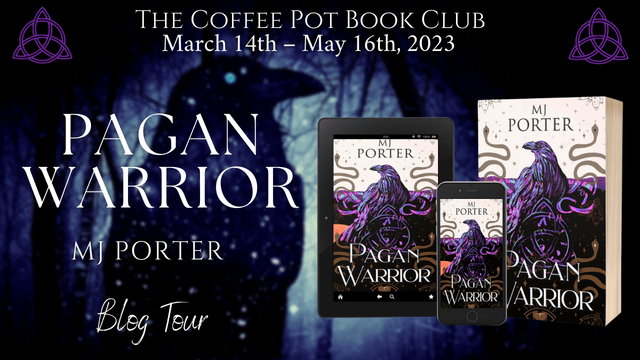
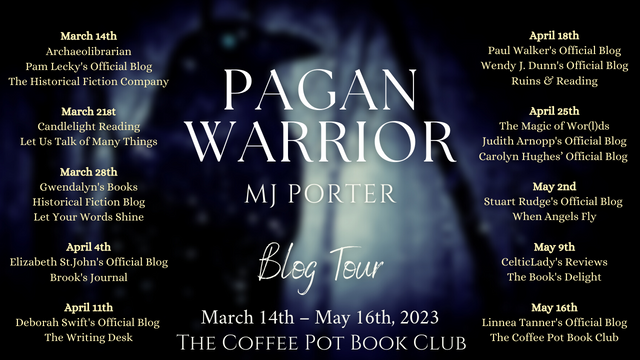
Pagan Warrior went on blog tour with The Coffee Pot Book Club in May 2023 #blogtour – check out the posts #GodsAndKings #TheSevethCentury

Pagan Warrior is the story of the battle of Hædfeld, fought in the seventh century between the Northumbrians, and you got it, the Mercians – or rather, Cadwallon of Gwynedd but with Penda of Mercia as his firm ally. You can find more details here.

A quick shout out to thank all the blog hosts and Cathie at The Coffee Pot Book Club for organising.

Check out a review for Pagan Warrior on

Linnea Tanner’s Official Blog

and a guest post about Mercia’s legacy over on

The Coffee Pot Book Club

Check out

The Book Delight

An excerpt on

The Celtic Lady Reviews

Check out the review on

Stuart Rudge’s Official Blog

And a guest post on who King Edwin of Northumbria was over on

When Angels Fly

Check out a post about Penda of Mercia.

The Magic of Word(l)ds

Read an excerpt featuring Eowa, Penda’s brother on

Judith Arnopp’s Official Blog

And, read an excerpt featuring Penda on

Carolyn Hughes Official Blog

I answered Paul Walker’s questions on his blog

Paul Walker’s Official Blog

There’s an except over on Wendy J Dunn’s Official Blog featuring King Edwin

Wendy J Dunn’s Official Blog

And a fabulous review on Ruins and Readings

Ruins and Readings

Read a guest post about how we know, what we know, about the seventh century.

Deborah Swift’s Official Blog

And a fabulous author interview over on

The Writing Desk

Read an excerpt on

Elizabeth St John’s Official Blog

And read about warfare in the Saxon period on

Brook Allan’s Official Blog

Check out a fabulous review on

https://gwendalynbooks.wordpress.com/2023/03/28/pagan-warrior/

A guest post about Mercia in the later eighth century on the Historical Fiction Blog.

https://historicalfictionblog.com/pagan-warrior-guest-post/

And, the post that perhaps gave me the most fear to begin will but which was fun when I remembered all the little details, five fun facts about writing the trilogy.

maryannbernal.blogspot.com

Check out a post about two of the royal residences of Bernicia at the time, Bamburgh and Ad Gefrin (Yeavering). (There are lots of photos; thank you to Helen Hollick for uploading them all.)

Let Us Talk of Many Things

And a review from

Candlelight Reading

Check out my author interview over on Archaeolibrarian.

Archaeolibrarian

I’m sharing an excerpt over on The Historical Fiction Company.

The Historical Fiction Company

I’ve written a piece about the historical background on Pam Lecky’s official blog.

Pam Lecky’s Official Blog

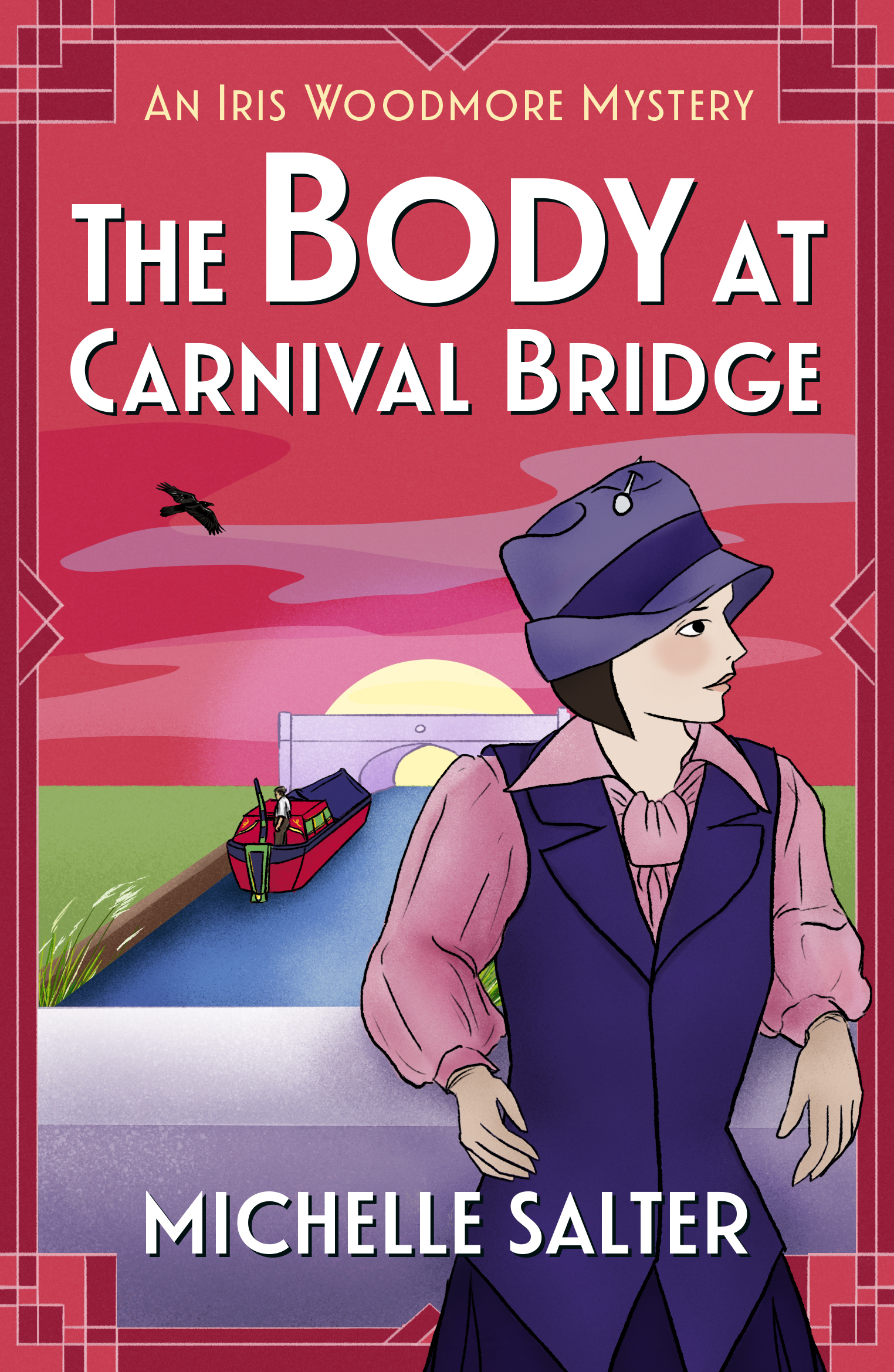
Book Review for The Body at Carnival Bridge by Michelle Salter #historicalmystery #cosycrime #highlyrecommended

Here’s the blurb

How deadly is the fight for equality?

It’s 1922, and after spending a year travelling through Europe, Iris Woodmore returns home to find a changed Walden. Wealthy businesswoman Constance Timpson has introduced equal pay in her factories and allows women to retain their jobs after they marry.

But these radical new working practices have made her deadly enemies.

A mysterious sniper fires a single shot at Constance – is it a warning, or did they shoot to kill? When one of her female employees is murdered, it’s clear the threat is all too real – and it’s not just Constance in danger.

As amateur sleuth Iris investigates, she realises the sniper isn’t the only hidden enemy preying on women.

 Purchase Link https://mybook.to/CarnivalBridgesocial

My Review

The Body at Carnival Bridge is the third book in the Iris Woodmore series, and it is going from strength to strength.

Some time has passed since the tragic events of book 2, and Iris is perhaps a little out of sorts with herself, but no sooner has she made contact with her old friends than tragedy strikes, and Iris is compelled to investigate the death of a young girl.

What ensues is a well-reasoned and intriguing mystery, highlighting the social inequalities of women in the aftermath of World War I and also referencing the harsh realities of the lives of women unable to access birth control. The author really excels in placing the reader in the period without overloading the narrative., and always with an eye to moving the mystery onwards.

The Iris Woodmore mysteries are fast becoming some of my favourites. The mystery is always reliable, the author has an eye for detail, and Iris herself is a likeable character, as are those surrounding her.

A fabulous mystery well-grounded in the period’s events without overloading the reader.

Check out my review for Death at Crookham Hall and Murder at Waldenmere Lake.

Meet the author

Michelle Salter is a historical crime fiction writer based in northeast Hampshire. Many local locations appear in her mystery novels. She’s also a copywriter and has written features for national magazines. When she’s not writing, Michelle can be found knee-deep in mud at her local nature reserve. She enjoys working with a team of volunteers undertaking conservation activities.

Connect with Michelle  

Facebook: 

Twitter

Instagram

Bookbub profile

Book review for A Contest to Kill For by E V Hunter #cosycrime #blogtour

Here’s the blurb

The competition is fierce…. Desperate to try and rebuild the reputation of Hopgood Hall, owners Alexi Ellis and Cheryl and Drew Hopgood agree to host a realty TV baking show, spearheaded by their arrogant but enigmatic head chef Marcel Gasquet. Hopefully the ratings will bring in bookings to the struggling hotel and Cosmo, Alexi’s antisocial feral cat, is hoping to get a starring role too!

The temperature is high… Fiery and hot-headed, Marcel’s antics makes for brilliant television, but off-screen trouble is brewing. One of the contestants, femme fatale Juliette Hammond, makes it clear that she will do anything to secure the winning prize – even if it means sweetening up the prima donna chef. The results are deadly!

So when Juliette is found dead, all eyes turn to Marcel. Has his fiery French temper got the better of him or has someone else fallen victim to Juliette’s devious ways? With the reputation of the hotel in tatters and Marcel’s liberty on the line, Alexi needs answers and fast.  And the only person she can turn to for help is her old friend and private eye Jack Maddox.  Jack’s working his own case, but he can’t refuse Alexi and he knows more than anyone that this murder could cost them everything!

Perfect for fans of Faith Martin, Frances Evesham and Emma Davies.

My review

A Contest to Kill For is Book 2 in the Hopgood Hotel mysteries. I have read book 1 and think it helps to have read it when heading into book 2, not for the main part of the mystery, but when the mystery becomes tighter and more twisty.

Alexi and Jack, our ‘will they, won’t they’ couple, find themselves flung back together when one of the stars of the cookery competition is found dead in her bedroom. With everyone being recorded almost 24/7, how could someone have been murdered and it not been witnessed by these cameras?

As events escalate, Marcel, the grumpy chef, becomes the prime suspect while the TV company distances itself from the allegations. Over to Alexi and Jack to clear his name, if they can.

As with Book 1, this is a twisty mystery, and nothing is quite as it seems as it nears its conclusion. This is an engaging read, and once again, I failed to guess the culprit, which is always a sign of a good story.

Check out my review for book 1 and book 5.

Cover image for A Comtest to Kill For by EV Hunter

Meet the author

Evie Hunter has written a great many successful regency romances as Wendy Soliman and is now redirecting her talents to produce dark gritty thrillers for BoldwoodFor the past twenty years she has lived the life of a nomad, roaming the world on interesting forms of transport, but has now settled back in the UK. 

Connect with EV Hunter

Newsletter Sign Up

Bookbub profile

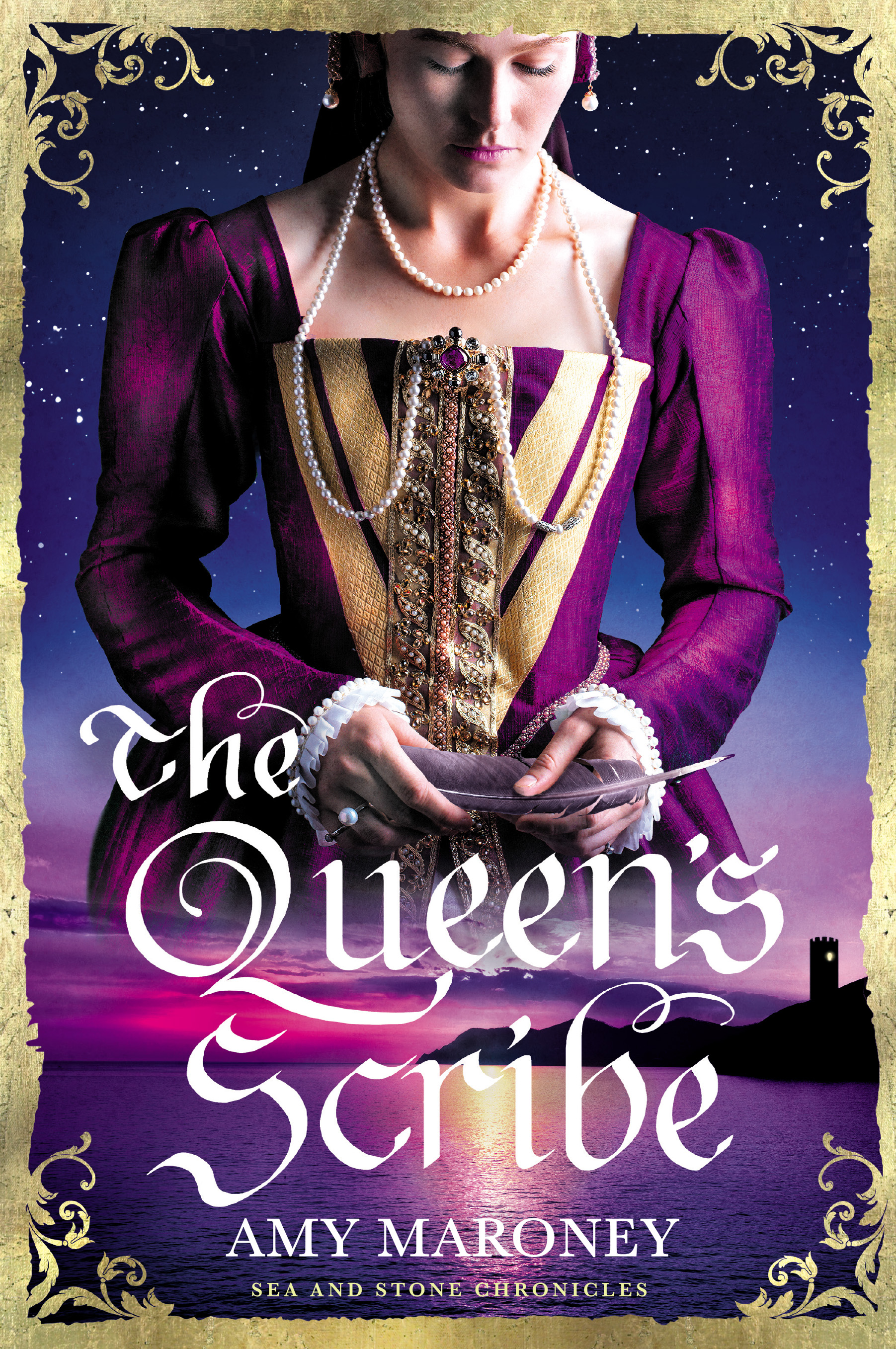
Welcoming Amy Maroney and her novel The Queen’s Scribe, to share a fabulous post about Queen Charlotte of Cyprus #HistoricalFiction #TheQueensScribe #RoyalHistory #BlogTour #TheCoffeePotBookClub

I’m delighted to welcome Amy Maroney to the blog. I always love to hear about the historical research for author’s novels. So here we go.

Uncovering the story of Queen Charlotta of Cyprus, a forgotten heroine

My new novel, The Queen’s Scribe, features a fifteenth-century monarch with an extraordinary story of ambition, courage, and dedication to her kingdom. Just who was Queen Charlotta of Cyprus, and why was she so mesmerizing that I wrote a book about her?

As is often the case with women in history, very little information remains about this queen (she was baptized ‘Charlotte’, but may have referred to herself as ‘Carlotta’; I call her ‘Charlotta’ in the novel). Most scholars agree that she was born about 1444. 

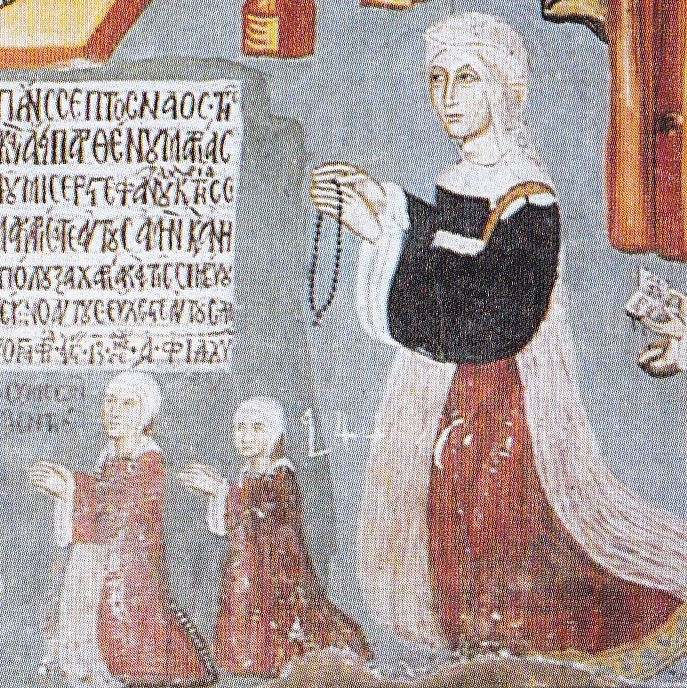
Charlotta was the only surviving child of King Jean II of Lusignan and his wife Eleni Palaiologina, princess of Morea. The following image is said to portray Charlotta, her mother, and her sister (subsequently deceased).

IMAGE OF QUEEN ELENI AND HER DAUGHTERS, PUBLIC DOMAIN PHOTO

Charlotta’s father, King Jean, was a genial but ineffective ruler who loved hunting, hawking, and spending money. The glory days of the kingdom ended abruptly when his grandfather King Janus was taken captive by Egyptian Mamluks and subsequently ransomed for 200,000 ducats, which put the kingdom in deep debt. By the time of Charlotta’s birth, three centuries of lavish living coupled with a weak military presence had crippled the once-powerful Lusignan dynasty. 

Within the royal court itself, animosity festered like a battle wound. Queen Eleni was a proud Greek and a dominating personality. She purportedly bit off her rival Marietta’s nose when she found the woman in bed with her husband (some sources say she cut it off). Jean and Marietta’s son, Jacques (also known as Jacco the Bastard) was the apple of his father’s eye. A handsome, charismatic bully, he became Charlotta’s protector before his desire for the throne soured their relationship forever.

Thanks to her mother’s influence, Princess Charlotta was thoroughly Greek and her understanding of French was rudimentary at best. Though her father was French and many of the ruling nobility claimed French roots, the French spoken in Cyprus at the time was so distorted that native speakers visiting from Europe could not understand it.This fact underpins the plot of The Queen’s Scribe, which features a fictional French heroine whose skills as a scribe and interpreter become essential to Queen Charlotta.

PHOTO OF NICOSIA OLD TOWN, DEPOSIT PHOTOS STANDARD LICENSE

When she was about 13, Charlotta was married to the Portuguese Prince João of Coimbra. The young couple moved from the royal palace to a house elsewhere in the Cyprus capital of Nicosia, angering Charlotta’s mother and delighting the Western European (‘Latin’) members of the court. Tensions grew between the two camps until Prince João suddenly died under mysterious circumstances; the queen’s chamberlain—who was like a brother to Queen Eleni—was blamed.

In a royal tit-for-tat, the queen’s chamberlain was then killed by Sicilian associates of Jacco’s. Palace gossips said Charlotta had asked her half-brother to arrange the murder. Before he could be punished, Jacco fled for the island of Rhodes and the hospitality of the Knights Hospitaller. 

Meanwhile, Charlotta grieved her dead husband and awaited a new betrothal, this time with her first cousin Louis (of the French-speaking Duchy of Savoy). Queen Eleni, who had been disabled by what might have been a paralytic stroke in early adulthood, slowly lost her health. Still, she fought the betrothal with every ounce of her strength, for in the Greek Orthodox tradition, marrying a first cousin was an unforgivable sin.

In 1458, both Queen Eleni and King Jean died. At 15, Charlotta was crowned queen. Soon afterward, Jacco sailed to Egypt, intent on gaining the sultan’s support for his campaign to seize his half-sister’s throne.

Meanwhile, the powerful barons who had served her father as council members now whispered in Charlotta’s ear. Some of them truly believed in her; others cared only for their own self-interest and survival; a few displayed breathtaking treachery. 

Rumors began swirling that Jacco had charmed the Sultan of Egypt and was building a massive army of Mamluk warriors. Charlotta desperately needed help to preserve her throne, and naturally looked to her new husband, Louis, for support. But far from being the strong partner she’d hoped for, he was a disinterested and weak leader, more interested in fine food and amusements than strategizing for war. 

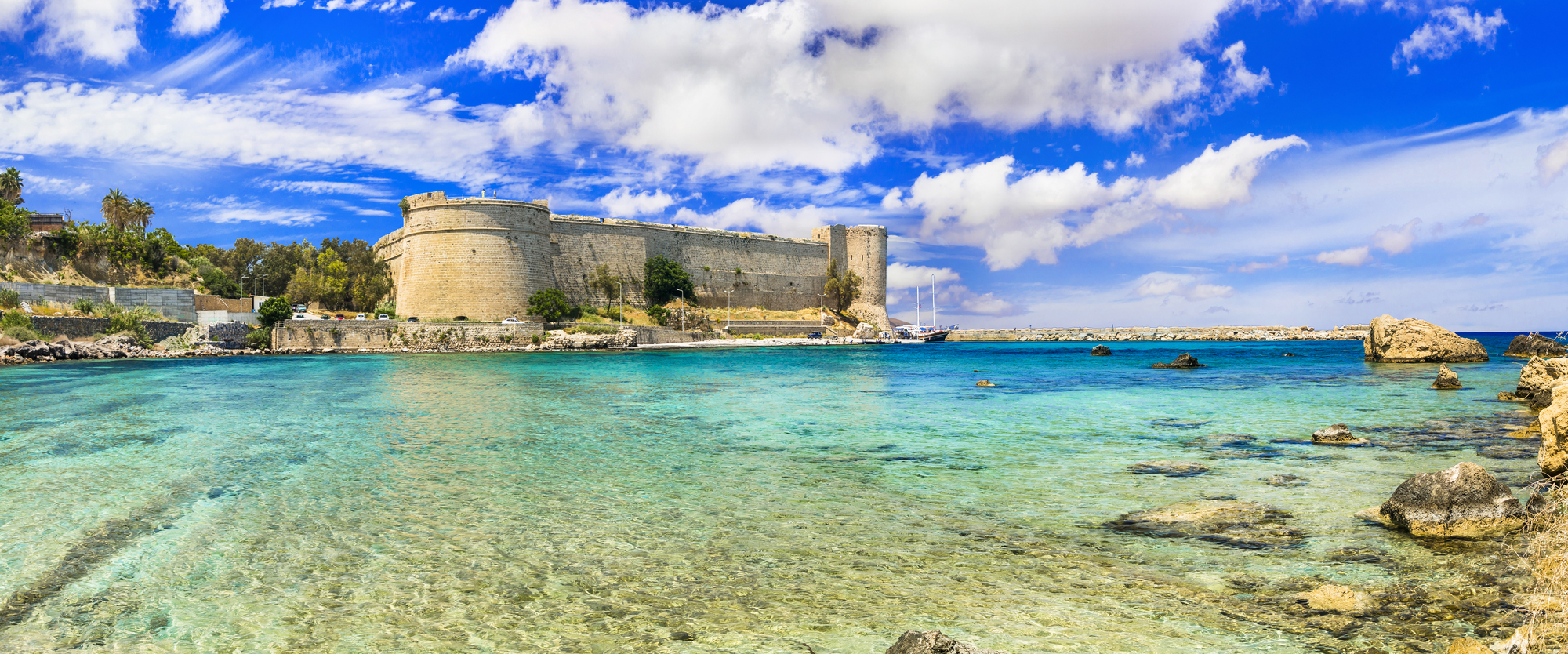
PHOTO OF KYRENIA FORTRESS, DEPOSIT PHOTOS STANDARD LICENSE

Less than two years after her coronation, Charlotta moved her court to the seaside fortress of Kyrenia, where they survived a massive siege by Jacco. A few months later, she left Louis in the fortress and sailed around the Mediterranean beseeching allies to help save her crown.

I chose to tell Queen Charlotta’s tale through the eyes of fictional Estelle de Montavon, daughter of a French falconer. In The Queen’s Scribe, Estelle—a talented scribe and linguist—becomes as valuable as gold when the royal court retreats to Kyrenia Fortress and civil war looms. When Queen Charlotta voyages across the Mediterranean Sea entreating French-speaking allies for help, Estelle is at her side, witnessing every triumph and disaster along the way. 

Like so many other women in history, Queen Charlotta has been lost in the shadows for too long. I hope The Queen’s Scribe plays a role in bringing her story back into the light.

Thank you so much for sharing. She sounds that an intriguing character, as does her mother:)

Here’s the blurb

A broken promise. A bitter conflict. And a woman’s elusive chance to love or die.

1458. Young Frenchwoman Estelle de Montavon sails to Cyprus imagining a bright future as tutor to a princess. Instead, she is betrayed by those she loves most—and forced into a dangerous new world of scheming courtiers, vicious power struggles, and the terrifying threat of war.

Determined to flee, Estelle enlists the help of an attractive and mysterious falconer. But on the eve of her escape, fortune’s wheel turns again. She gains entry to Queen Charlotta’s inner circle as a trusted scribe and interpreter, fighting her way to dizzying heights of influence. 

Enemies old and new rise from the shadows as Estelle navigates a royal game of cat and mouse between the queen and her powerful half-brother, who wants the throne for himself.

When war comes to the island, Estelle faces a brutal reckoning for her loyalty to the queen. Will the impossible choice looming ahead be her doom—or her salvation?

With this richly-told story of courage, loyalty, and the sustaining power of love, Amy Maroney brings a mesmerizing and forgotten world to vivid life. The Queen’s Scribe is a stand-alone novel in the Sea and Stone Chronicles collection.

Praise for the Sea and Stone Chronicles:

Island of Gold is a nimbly told story with impeccable pacing.”

Historical Novel Society, Editor’s Choice Review

Sea of Shadows is stunning. A compelling tale of love, honor, and conviction.”

Reader’s Favorite Review

Amy Maroney is the author of the award-winning Miramonde Series, the story of a Renaissance-era female artist and the modern day scholar on her trail.

Buy Links:

This title is available to read on #KindleUnlimited.

Universal Link

Amazon UKAmazon USAmazon CAAmazon AU

Meet the author

Amy Maroney studied English Literature at Boston University and worked for many years as a writer and editor of nonfiction. She lives in Oregon, U.S.A. with her family. When she’s not diving down research rabbit holes, she enjoys hiking, dancing, traveling, and reading. 

Amy is the author of The Miramonde Series, an Amazon-bestselling historical mystery trilogy about a Renaissance-era female artist and the modern-day scholar on her trail. Amy’s award-winning historical adventure/romance series, Sea and Stone Chronicles, is set in medieval Rhodes and Cyprus. 

An enthusiastic advocate for independent publishing, Amy is a member of the Alliance of Independent Authors and the Historical Novel Society.

Connect with Amy

WebsiteTwitterFacebook

LinkedInInstagramPinterest

Book BubAmazon Author PageGoodreads:

Follow The Queen’s Scribe blog tour with The Coffee Pot Book Club

Eagle of Mercia release day post and links to other posts

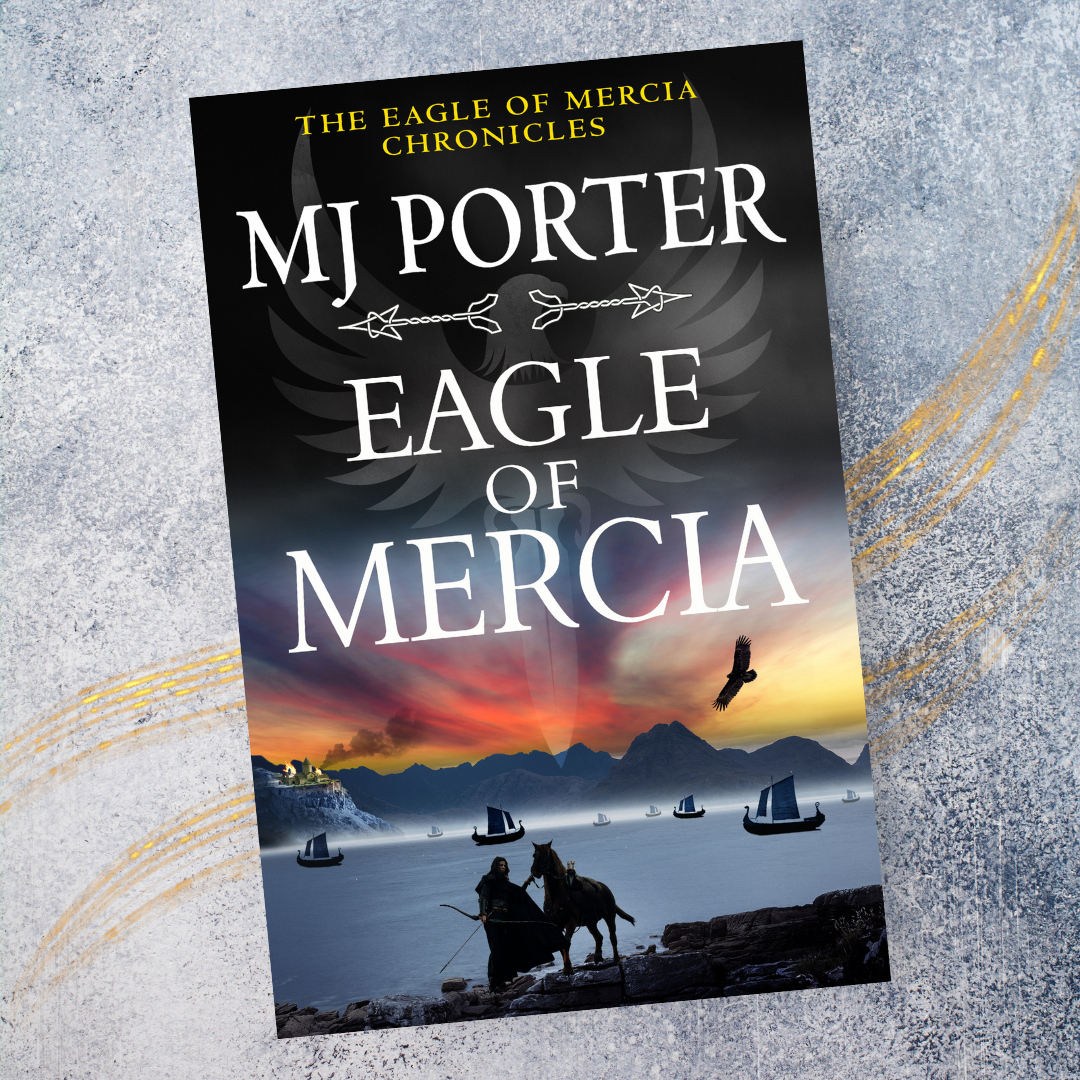
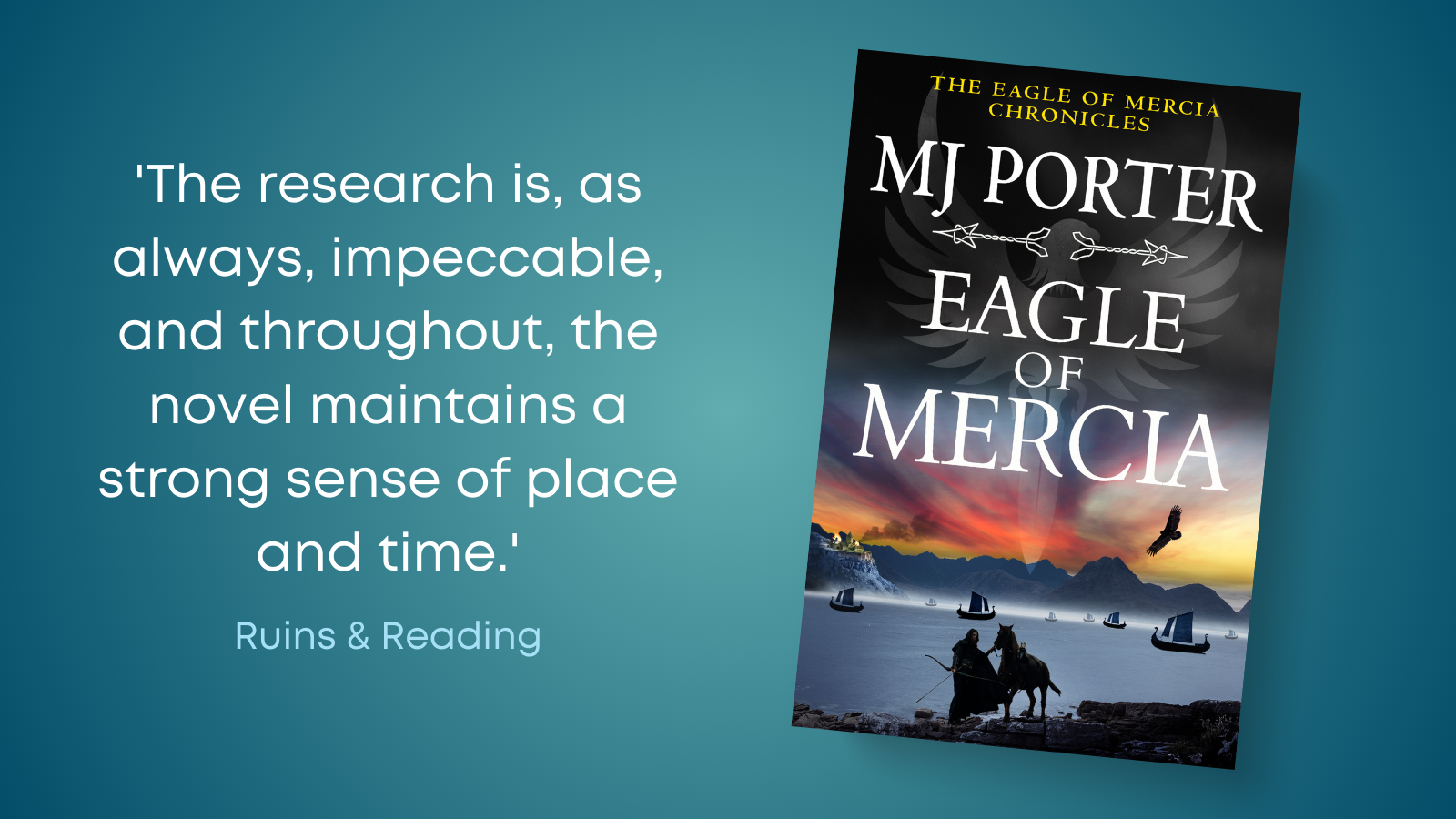
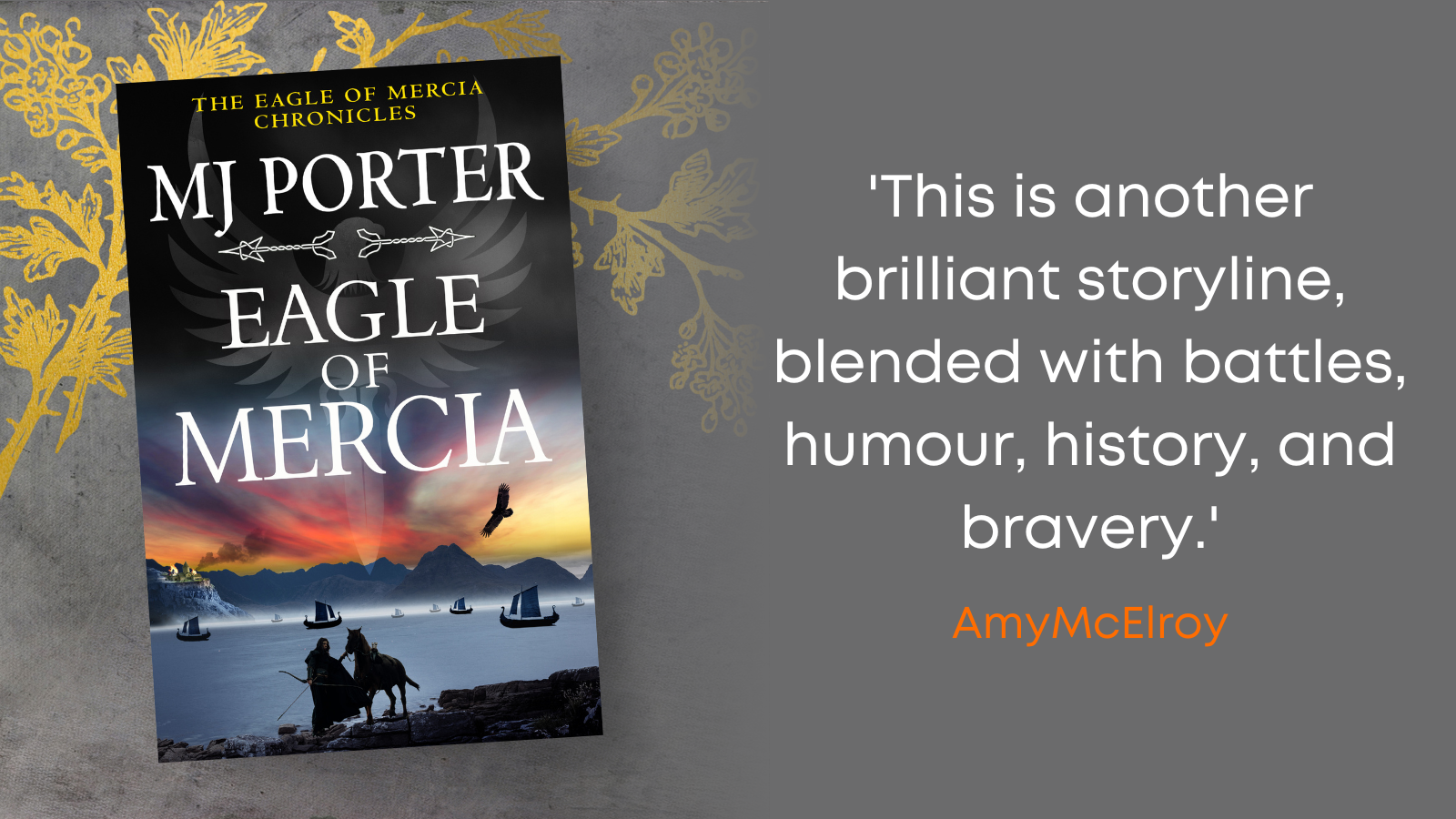
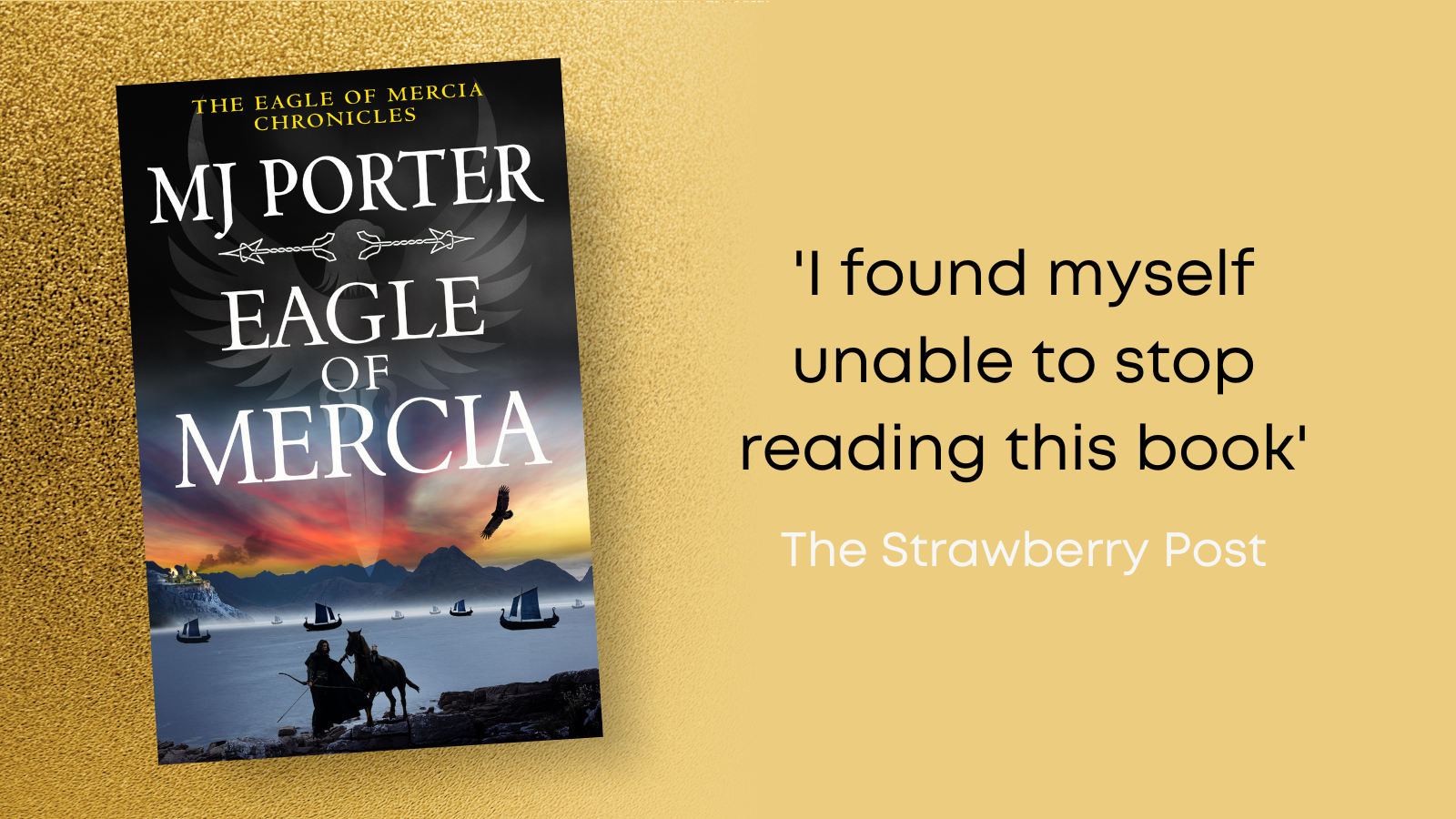
Today is the day, book 4 in The Eagle of Mercia Chronicles is released into the wild. I’m really excited about this one:) And I can’t believe we’re already onto book 4.

Here’s the blurb:

A mercy mission in the heart of Wessex is beset with deadly, bloody dangers.

Tamworth AD831

Icel’s profile continues to rise. Lord of Budworth and warrior of Mercia, he’s acknowledged by King Wiglaf and his comrades to keep Mercia safe from the ravages of Wessex, the king-slayer of the East Angles, and the Viking raiders.
But, danger looms.  Alongside Spring’s arrival comes the almost certain threat of the Viking raiders return. 

When Lord Coenwulf of Kingsholm is apprehended by a Viking and held captive on the Isle of Sheppey in Wessex held Kent, Icel is implored by Lady Cynehild to rescue her husband.

To rescue Lord Coenwulf, Icel and his fellow warriors must risk themselves twice over, for not only must they overpower the Viking raiders, they must also counter the threat of Mercia’s ancient enemy, the kingdom of Wessex as they travel through their lands.

Far from home and threatened on all sides, have Icel and his fellow warriors sworn to carry out an impossible duty?

books2read.com/EagleofMercia

Available now in ebook, paperback and audio, the hardback should be with us shortly.

Read my release day post about the River Thames.

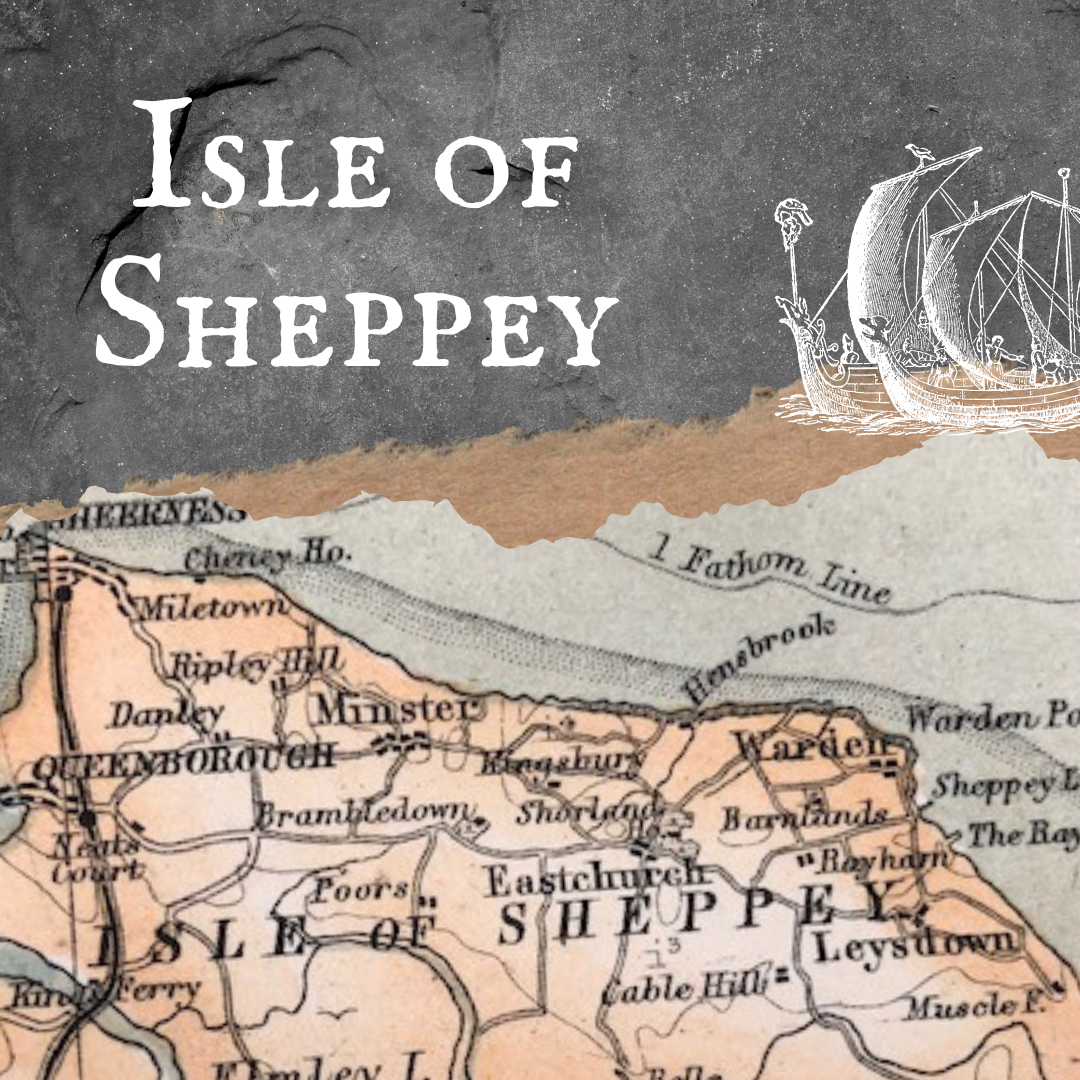
Read all about the Isle of Sheppey

Read my release day post on the Boldwood website about the Eagle of Mercia Chronicles.


I can let you know that book 5 is mostly written, and I know the title and I’ve seen the cover – I know, I’m such a tease. I will update when I can share more.


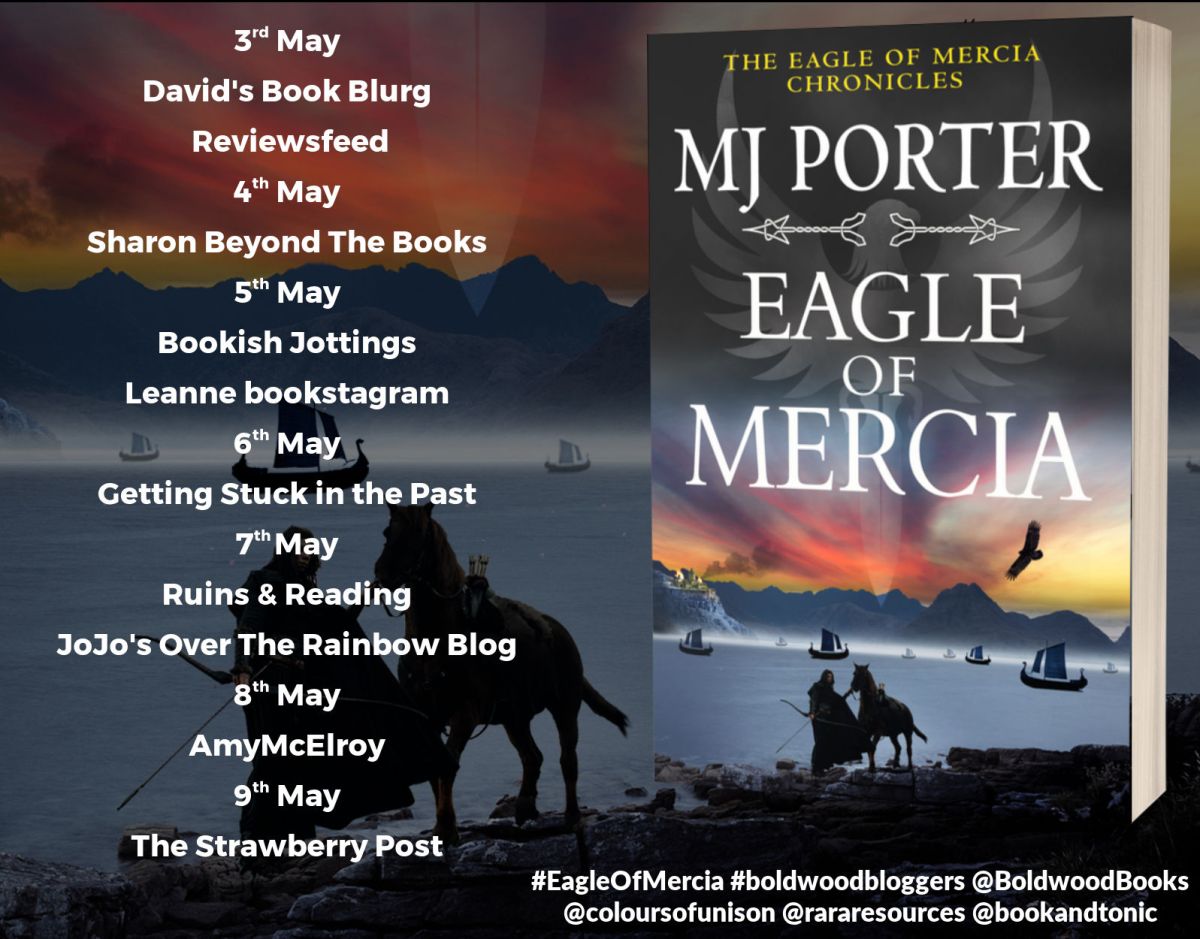
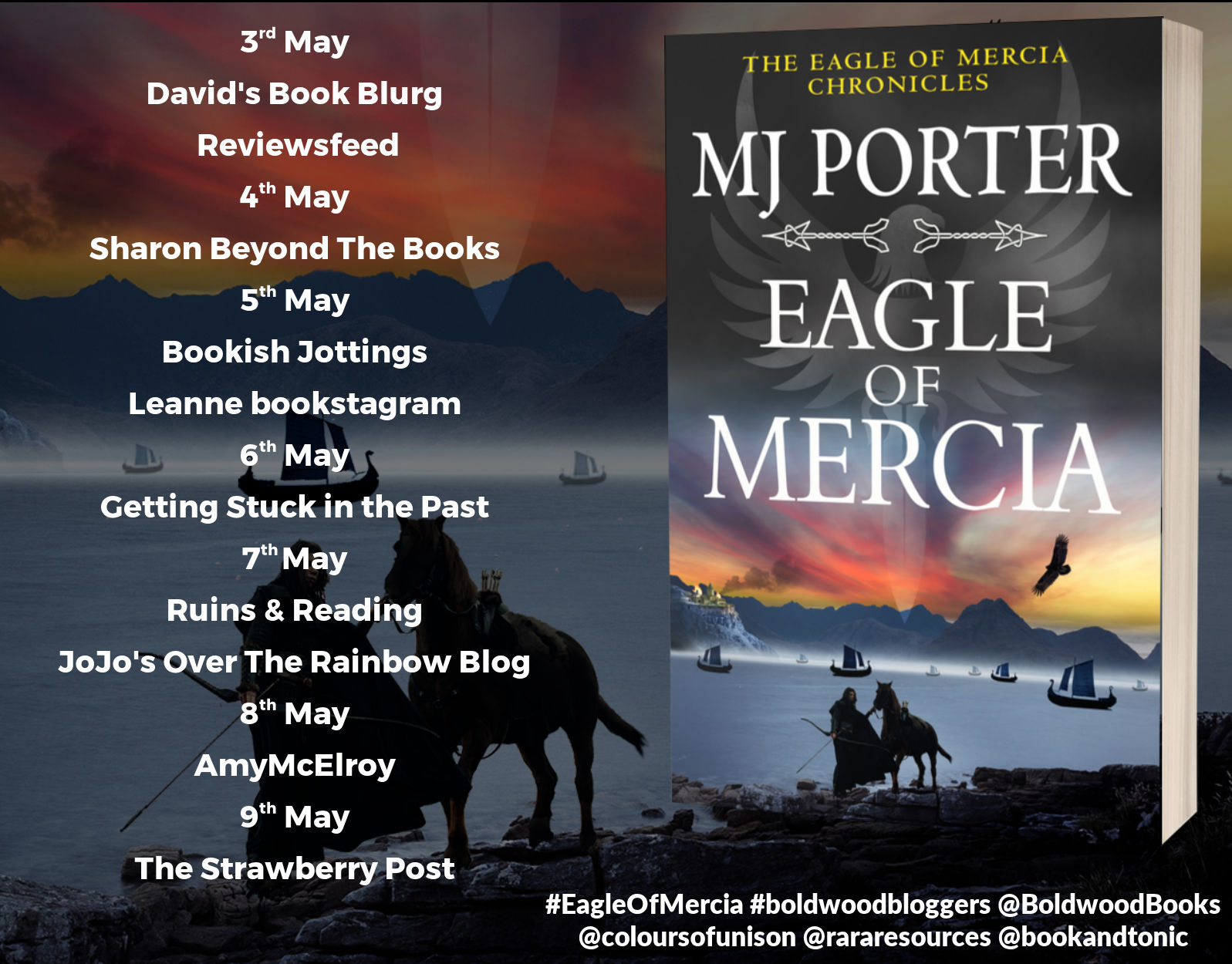
Check out the blog tour for Eagle of Mercia. My thanks to Rachel at Rachel’s Random Resources for organising and all the hosts for taking part. I will add the links each day. The initial reviews for Eagle are very positive, so I hope you’ll enjoy it too.

Reviewsfeed

David’s Book Blurg

Sharon Beyond the Books

Leanne Bookstagram

Bookish Jottings

Getting Stuck in the Past

Ruins and Reading

Amy McElroy

The Strawberry Post

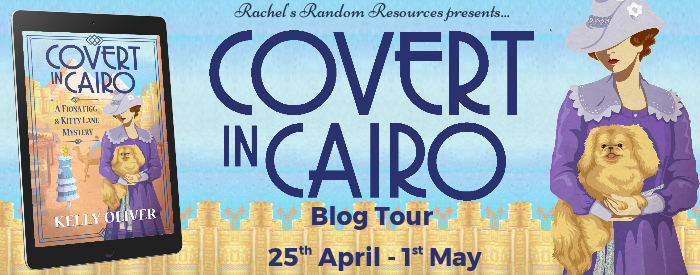
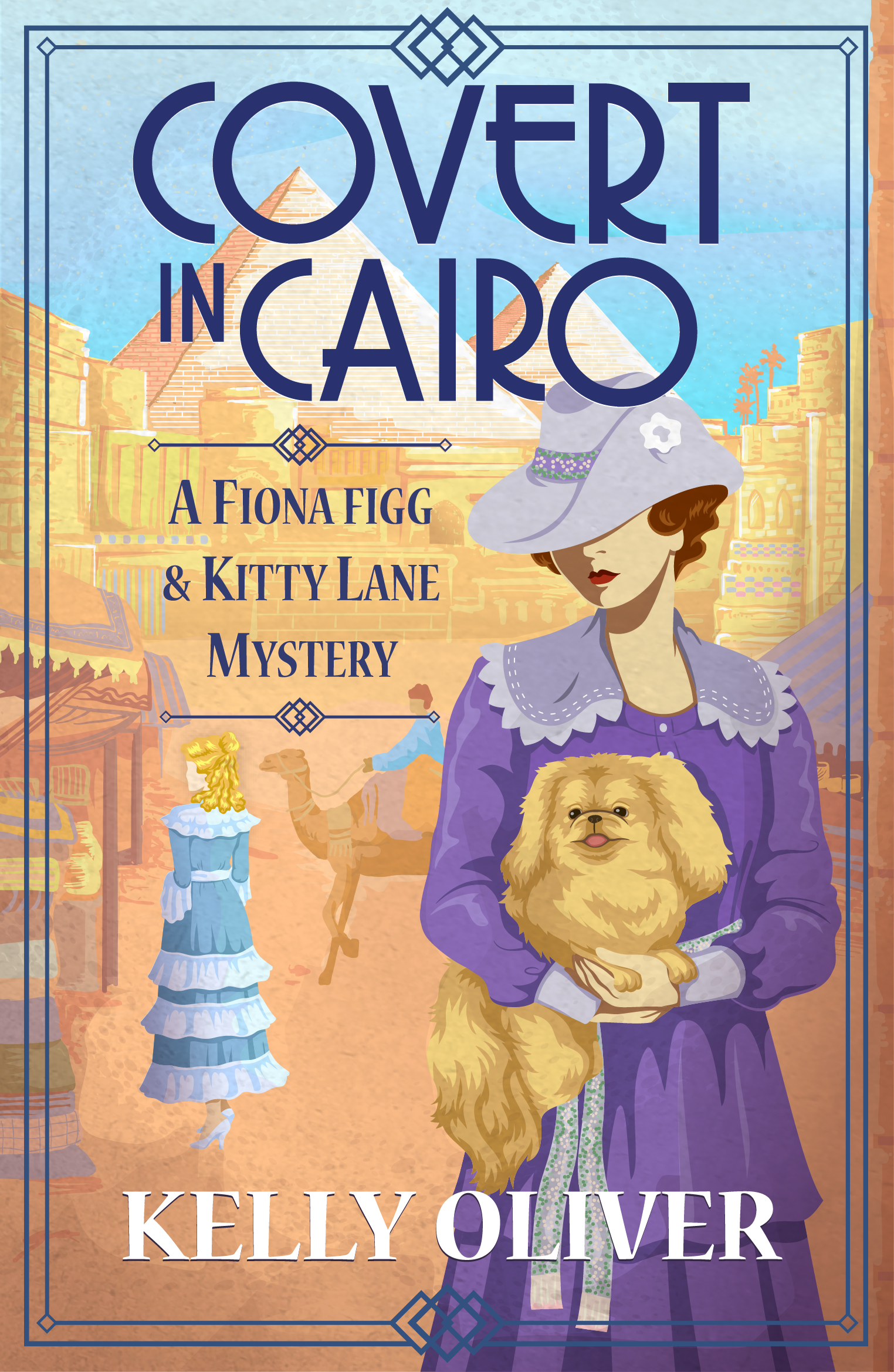
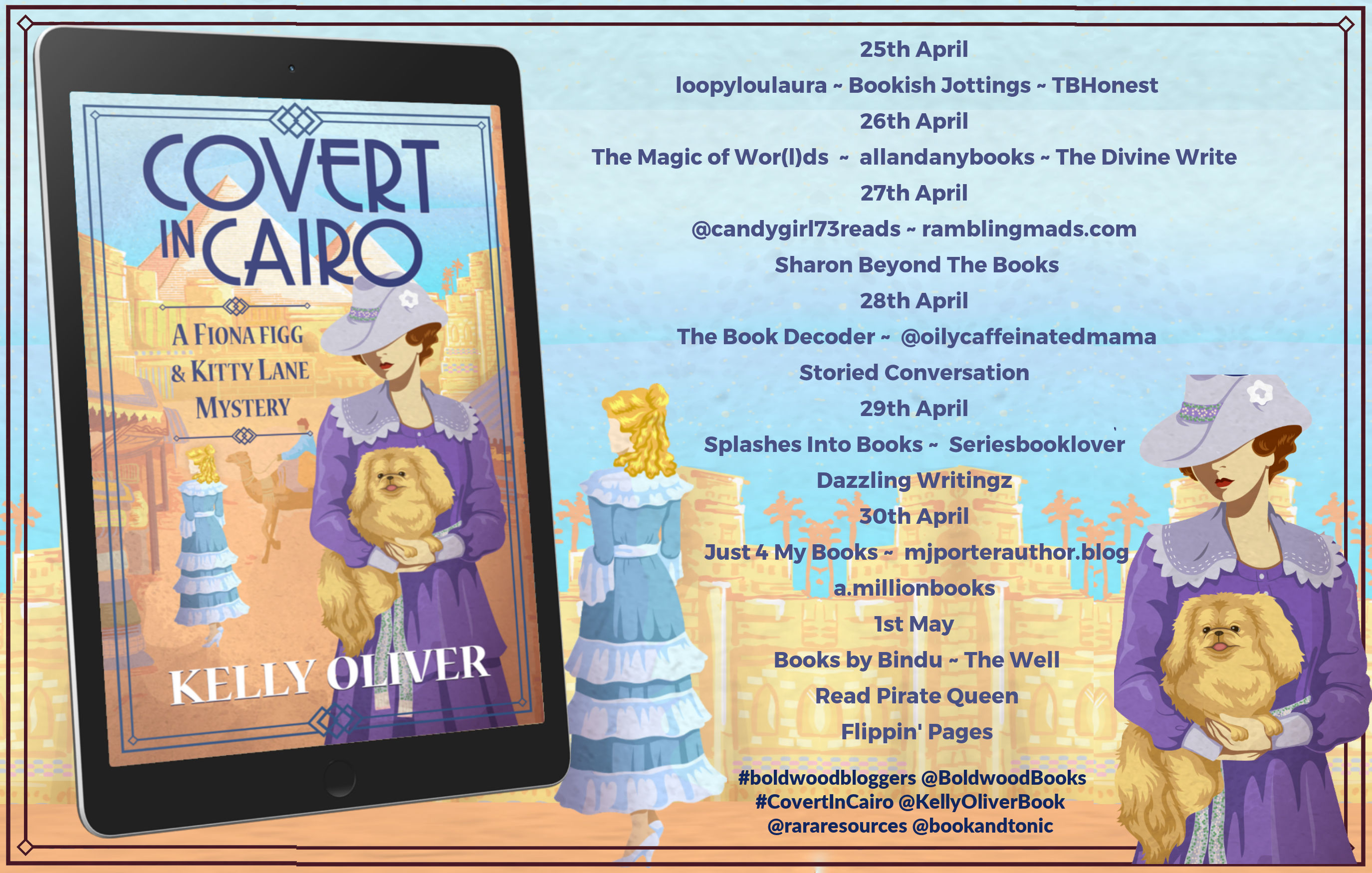
Today I’m delighted to be taking part in the blog tour for a new historical mystery, Covert in Cairo by Kelly Oliver #blogtour #BoldwoodBooks

Here’s the blurb:

Cairo. December 1917.

Following a tip-off from notorious spy Fredrick Fredricks, Fiona Figg and Kitty Lane of British Intelligence find themselves in the hustle and bustle of Egypt. But ancient mummies aren’t the only bodies buried in the tombs of Cairo.

When a young French archeologist is found dead in a tomb in the desert with his head bashed in, and an undercover British agent goes missing, the threat moves closer to home.

As they dig deeper, soon Fiona and Kitty uncover a treasure trove of suspects, including competing excavators, jealous husbands, secret lovers, and belligerent spies! Fiona wonders if the notorious Fredrick Fredricks could be behind the murders? Or is the plot even more sinister?

One thing is clear – If Fiona and Kitty can’t catch the killer, they might end up sharing a sarcophagus with Nefertiti.

With humor as dry as the Arabian desert, and pacing as fast as a spitting camel, Fiona and Kitty are back in another sparkling adventure, this time in WW1 Egypt.

Purchase Link – https://amzn.to/3iB6WGd

My Review

Covert in Cairo is an enjoyable trip to Cairo in December 1917. Fiona Figg is on a mission to prevent the Suez Canal from being attacked, as she finds a Cairo overrun with British troops, very much a Britain away from home, complete with good tea and marmalade.

As in the previous book, Fiona Figg longs to make a name for herself and finally win free from the confines of being a file clerk at the War Office, but not everything goes her way. Kitty Lane is on hand to add her skills to the investigation, and Clifford, their chaperone, but really, a man with an eye for the ladies and very much embodying all that was wrong in the thinking of an early twentieth-century man, including thinking women were fragile, can add his skills as well, most notably being able to talk to anyone.

What ensues is a tale of murder, antiquities, camels and donkeys, night-time shenanigans, and an all-round good mystery.

An enjoyable jaunt to the Cairo of the past, including several well-known historical personalities, and ensuring that Fiona must continue her pursuit of an errant spy and, as such, win-free from returning to dreary London for the time being.

Check out my review for book 1 in the Fiona Figg and Kitty Lane Mystery books Chaos at Carnegie Hall

Meet the Author

Kelly Oliver is the award-winning, bestselling author of three mysteries series: The Jessica James Mysteries, The Pet Detective Mysteries, and the historical cozies The Fiona Figg Mysteries, set in WW1. She is also the Distinguished Professor of Philosophy at Vanderbilt University and lives in Nashville, Tennessee. She is bringing new titles in the Fiona Figg series to Boldwood, the first of which, Chaos in Carnegie Hall, will be published in November 2022.

Connect with Kelly

Facebook: https://www.facebook.com/kellyoliverauthor  
Twitter: https://twitter.com/kellyoliverbook  

Bookbub profile: https://www.bookbub.com/authors/kelly-oliver

Follow the Covert in Cairo blog tour with Rachel’s Random Resources

Pagan Warrior is on blog tour with The Coffee Pot Book Club #blogtour – check out the posts for day 7

I’m really excited to share the details of the Pagan Warrior blog tour with The Coffee Pot Book Club.

Pagan Warrior is the story of the battle of Hædfeld, fought in the seventh century between the Northumbrians, and you got it, the Mercians – or rather, Cadwallon of Gwynedd but with Penda of Mercia as his firm ally. You can find more details here.

I might have written this book many years ago, but it’s had a refresh, and is now available in audio, narrated by the fabulous, Matt Coles, as is the second book, Pagan King. Warrior King will be coming later this year in audio.

Now that all three books have been ‘refreshed’ you can read in ebook or paperback, and the books are available from all good ebook/paperback sellers. Check out my latest tiktok video to see Warrior King in paperback:)

You can follow the blog tour, and I’ll be sharing posts here as well. A quick shout out to thank all the blog hosts and Cathie at The Coffee Pot Book Club for organising.

For April 25th, check out a post about Penda of Mercia.

The Magic of Word(l)ds

Read an excerpt featuring Eowa, Penda’s brother on

Judith Arnopp’s Official Blog

And, read an excerpt featuring Penda on

Carolyn Hughes Official Blog

For April 18th, I answered Paul Walker’s questions on his blog

Paul Walker’s Official Blog

There’s an except over on Wendy J Dunn’s Official Blog featuring King Edwin

Wendy J Dunn’s Official Blog

And a fabulous review on Ruins and Readings

Ruins and Readings

For April 11th, read a guest post about how we know, what we know, about the seventh century.

Deborah Swift’s Official Blog

And a fabulous author interview over on

The Writing Desk

For April 4th, read an excerpt on

Elizabeth St John’s Official Blog

And read about warfare in the Saxon period on

Brook Allan’s Official Blog

For March 28th, check out a fabulous review on

https://gwendalynbooks.wordpress.com/2023/03/28/pagan-warrior/

A guest post about Mercia in the later eighth century on the Historical Fiction Blog.

https://historicalfictionblog.com/pagan-warrior-guest-post/

And, the post that perhaps gave me the most fear to begin will but which was fun when I remembered all the little details, five fun facts about writing the trilogy.

maryannbernal.blogspot.com

For March 21st check out a post about two of the royal residences of Bernicia at the time, Bamburgh and Ad Gefrin (Yeavering). (There are lots of photos, thank you to Helen Hollick for uploading them all).

Let Us Talk of Many Things

And a review from

Candlelight Reading

From March 14th, check out my author interview over on Archaeolibrarian.

Archaeolibrarian

I’m sharing an excerpt over on The Historical Fiction Company.

The Historical Fiction Company

I’ve written a piece about the historical background on Pam Lecky’s official blog.

Pam Lecky’s Official Blog