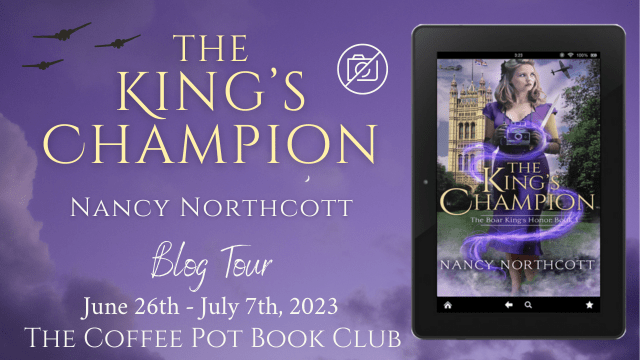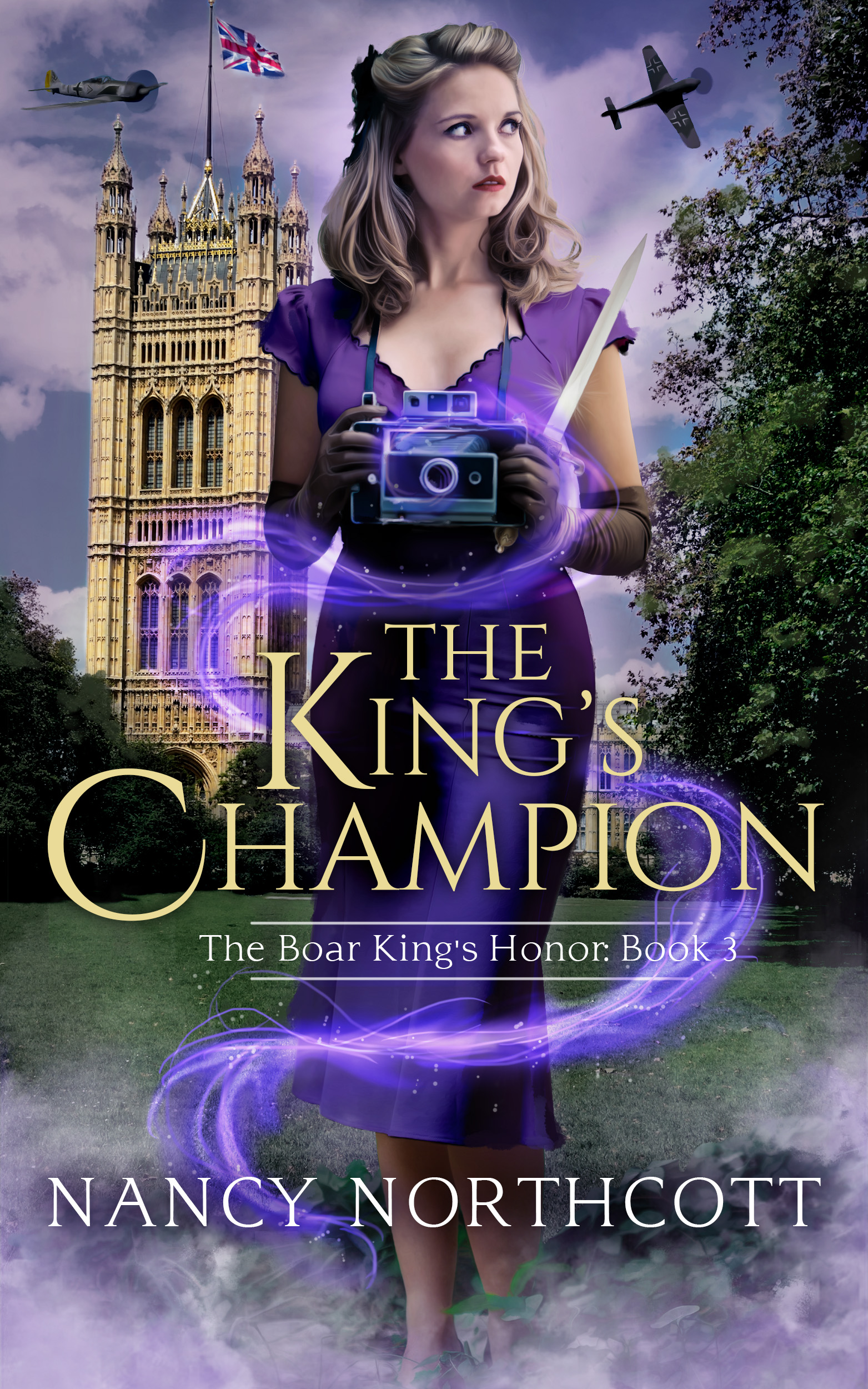
Nancy Northcott and her historical fantasy, The King’s Champion, joins me on the blog HistoricalFantasy #WWII #Dunkirk #RomanticFantasy #BlogTour #TheCoffeePotBookClub

I’m delighted to welcome Nancy Northcott and her historical fantasy series to the blog. Nancy is sharing a fabulous post, about Challenges in the Past, with us.

Writing historical fantasy obviously requires dropping one’s characters into an historical world and making it seem real, vibrant and alive for readers. This holds true even when a writer decides to create an alternative timeline, or even an alternate universe for a particular era, as with steampunk, which is often set in a Victorian England that has steam-based and other tech. The more different the timeline and universe are from the way our history depicts a period, the more leeway an author has available in creating the world.

I like to stick close to the actual timeline, fitting my characters and their magic around the events of the era. That means I need to be fairly true to what people wore, how they lived, what they ate, and so on. In this post, I’ll share some of the challenges I faced in recreating the periods of the three books in my Boar King’s Honor historical fantasy trilogy.

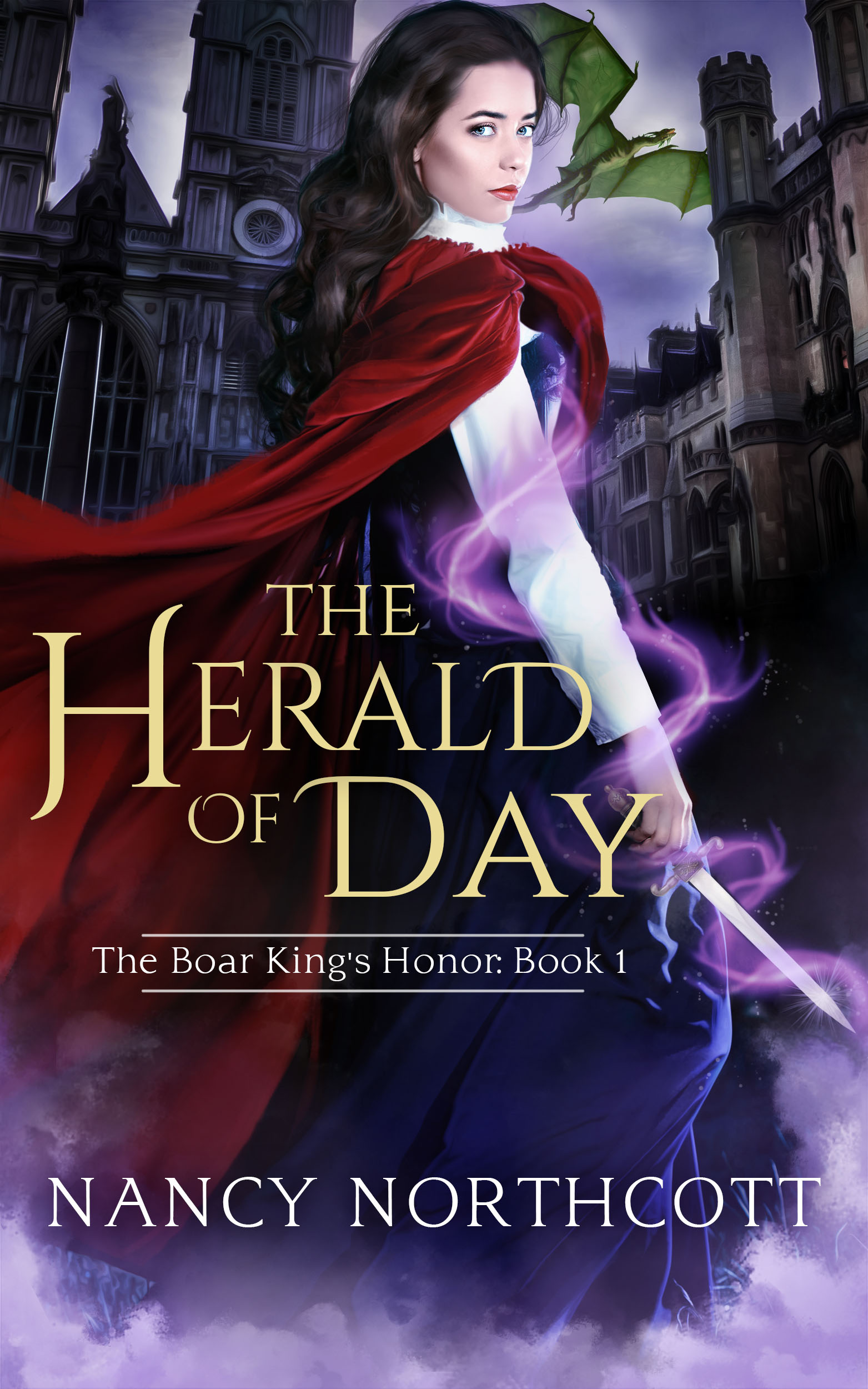
The action in the first book Boar King’s Honor trilogy, The Herald of Day, takes place in 1674, during the reign of Charles II. Although the book opens in Dover, most of the scenes take place in London. I happen to like that period, so I didn’t have to do much reading about the political situation in England at that time. I did, however, have to find out about travel, food, clothing, customs, and language. I started this project before the internet had virtually every kind of information on it, so I had to do a fair bit of hunting for answers.

Finding out about clothing was harder than I expected. I had a scene in which the villain undressed, and I realized I had no idea how men’s pants closed in 1674. I started asking writers, and someone knew someone who was not only a writer but a costumer. This friend of a friend generously provided sketches, references on clothing design and fabric, and other information that was helpful for all the characters.

Despite preferring to stay close to established history, I took a leap with that book and decided to have the villain, a wizard, figure out how to go back in time and change history to create a dictatorship of the magically Gifted—with himself at the head, of course. So I had to decide whether he made the change before, during, or after the Restoration of Charles II. I went back and read from the events leading up to it through the period immediately after and weighed the results of several options. I won’t say what I finally picked because the characters have to figure that out what the villain did, and I don’t want to spoil that for readers.

The second book, The Steel Rose, was the scariest to write from a research standpoint. By the time I started that one, the internet offered reams of material, and books on historical costume were easier to find around here than they’d been before. That simplified choices for the characters’ clothing, but the period brought a new headache.

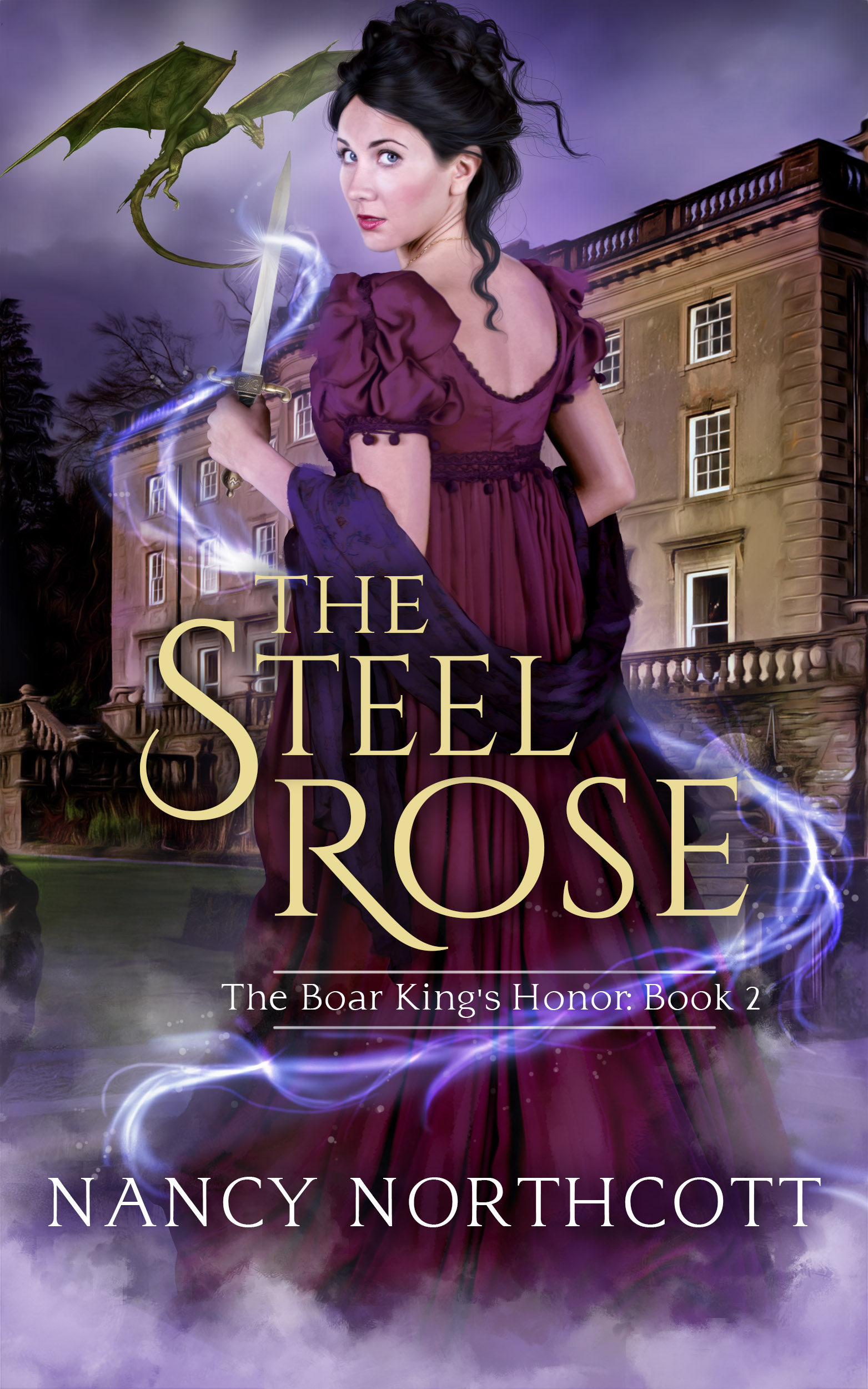
The Steel Rose is set in 1815 during the hundred days between Napoleon’s escape from Elba and the Battle of Waterloo. This period is known as the Regency because King George III was incapable of ruling and England was governed by his son, the future George IV, as Prince Regent. This is Jane Austen’s era. It’s also one of the most popular for romance novels. During the Regency, social classes were rigidly stratified, and manners made the difference between social success and ostracism. There was a very great deal of etiquette to learn.

As though that weren’t tough enough from a writer standpoint, there are vast numbers of people who love the era’s social history. They create historically accurate costumes, learn the dances, and memorize the etiquette. They’ve been known to eviscerate writers who got something wrong, and the internet didn’t offer the specific information I needed. Fortunately, some Regency romance writers came to my rescue, answering questions and pointing me to resources. I did cut come of the bowing and curtseying customary during the era in the interests of moving the story along.

The social niceties weren’t my only concern, though. This story would include both Napoleon’s departure from Elba and the Battle of Waterloo. You may be aware that literal armies of people re-enact Waterloo every year. And they do it wearing uniforms accurate for both the period and their military units. That means many, many potential readers would know if I made a mistake. 

Fortunately for me, Osprey Publishing puts out wonderful books full of detailed information on military uniforms and equipment. They also had a terrific book on the battle that led me to other books full of the meticulous details that gladden writers’ hearts.

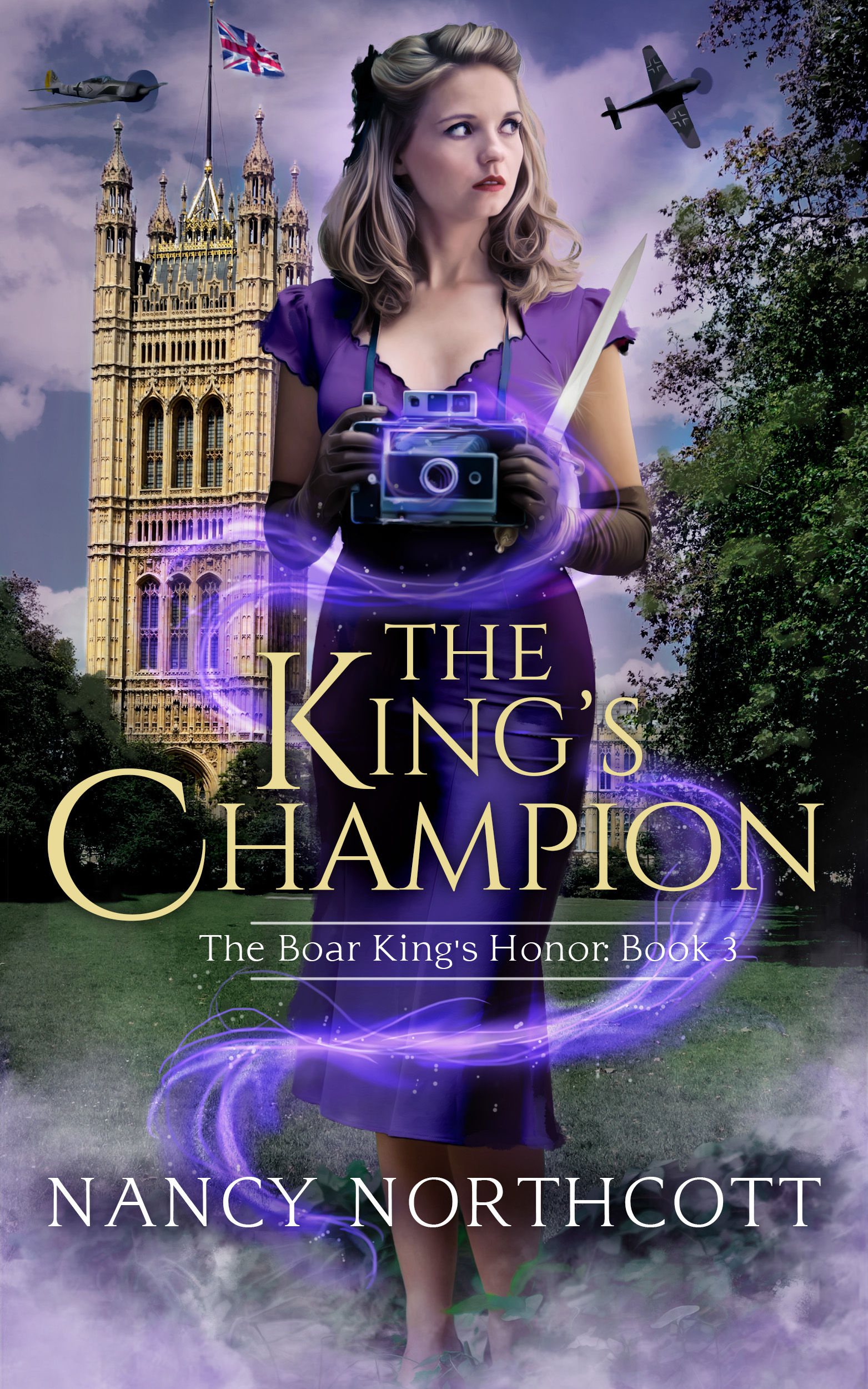
With those challenges behind me, I turned to the final book, The King’s Champion. It posed a different problem. There are many, many, many books about Britain during World War II, including libraries’ worth on social history. The trick, I quickly realized, would be in synthesizing all this information so that it offered an accurate picture of the era without including so much that it overshadowed the story. There are still people alive who remember the war years. There are many more who remember what those people said about life during the war. I had to depict British society in a way they would find acceptable. 

Friends whose parents remember hearing about the war from relatives helped me out, especially about rationing and housing. Other friends knew the answers I needed or knew British veterans who would answer my questions. The Imperial War Museum website was very useful, as were, again, Osprey books. It was from that website that I learned about the 5” per person per week rationing of hot bath water, but I was never able to figure out exactly when that started. 

At one point, my heroine is on a tugboat headed back to Dover from Dunkirk, and she asks the captain how long the trip will take. Unfortunately, I didn’t know. I could’ve deleted the question, but it would be logical for her to ask. I wanted to find the answer. This sent me down a research rabbit hole that grew ever deeper as I searched. Finally, after several attempts, I put the right combination of words into a search engine and hit upon a website devoted to the Little Ships of the evacuation.

These are some of the challenges I stumbled into while building the worlds for these three books. I didn’t want to hand-wave the problems away and just put down something convenient because “it’s fiction.” I’m grateful to everyone who helped me find the answers I needed.

I enjoyed the hunt for information, so finding it was a true delight each and every time. I’m happy with the worlds in this trilogy, and I hope readers be will as well.

#

Thank you for having me, MJ!

Thanks so much for sharing your fabulous post with my readers.

The Boar King’s Honor Trilogy

A wizard’s misplaced trust

A king wrongly blamed

A bloodline cursed until they clear the king’s name.

Here’s the blurb

Caught up in the desperate evacuation of the British Expeditionary Force from France in the summer of 1940, photojournalist Kate Shaw witnesses death and destruction that trigger disturbing visions. She doesn’t believe in magic and tries to pass them off as survivor guilt or an overactive imagination, but the increasingly intense visions force her to accept that she is not only magically Gifted but a seer.

In Dover, she meets her distant cousin Sebastian Mainwaring, Earl of Hawkstowe and an officer in the British Army. He’s also a seer and is desperate to recruit her rare Gift for the war effort. The fall of France leaves Britain standing alone as the full weight of Nazi military might threatens. Kate’s untrained Gift flares out of control, forcing her to accept Sebastian’s help in conquering it as her ethics compel her to use her ability for the cause that is right.

As this fledgling wizard comes into her own, her visions warn of an impending German invasion, Operation Sealion, which British intelligence confirms. At the same time, desire to help Sebastian, who’s doomed by a family curse arising from a centuries-old murder, leads Kate to a shadowy afterworld between life and death and the trapped, fading souls who are the roots of her family’s story. From the bloody battlefields of France to the salons of London, Kate and Sebastian race against time to free his family’s cursed souls and to stop an invasion that could doom the Allied cause. 

The King’s Champion concludes Nancy’s Northcott’s exciting Boar King’s Honor Trilogy.

Buy Links:
This series is available to read on #KindleUnlimited.

Universal Buy Links:   
The Herald of Day

Universal Buy Link

The Steel Rose

Universal Buy Link

The King’s Champion

Universal Buy Link

The Boar King’s Honor Trilogy Links:

Amazon US Amazon UK Amazon AU Amazon CA

Meet the author

Nancy Northcott’s childhood ambition was to grow up and become Wonder Woman.  Around fourth grade, she realized it was too late to acquire Amazon genes, but she still loved comic books, science fiction, fantasy, history, and romance.

Nancy earned her undergraduate degree in history and particularly enjoyed a summer spent studying Tudor and Stuart England at the University of Oxford. She has given presentations on the Wars of the Roses and Richard III to university classes studying Shakespeare’s play about that king. In addition, she has taught college courses on science fiction, fantasy, and society.   

The Boar King’s Honor historical fantasy trilogy combines Nancy’s love of history and magic with her interest in Richard III. She also writes traditional romantic suspense, romantic spy adventures, and two other speculative fiction series, the Light Mage Wars paranormal romances and, with Jeanne Adams, the Outcast Station space mystery series.

Connect with Nancy

WebsiteTwitter

FacebookInstagramPinterest

Book BubAmazon Author PageGoodreads

Follow The King’s Champion blog tour with The Coffee Pot Book Club

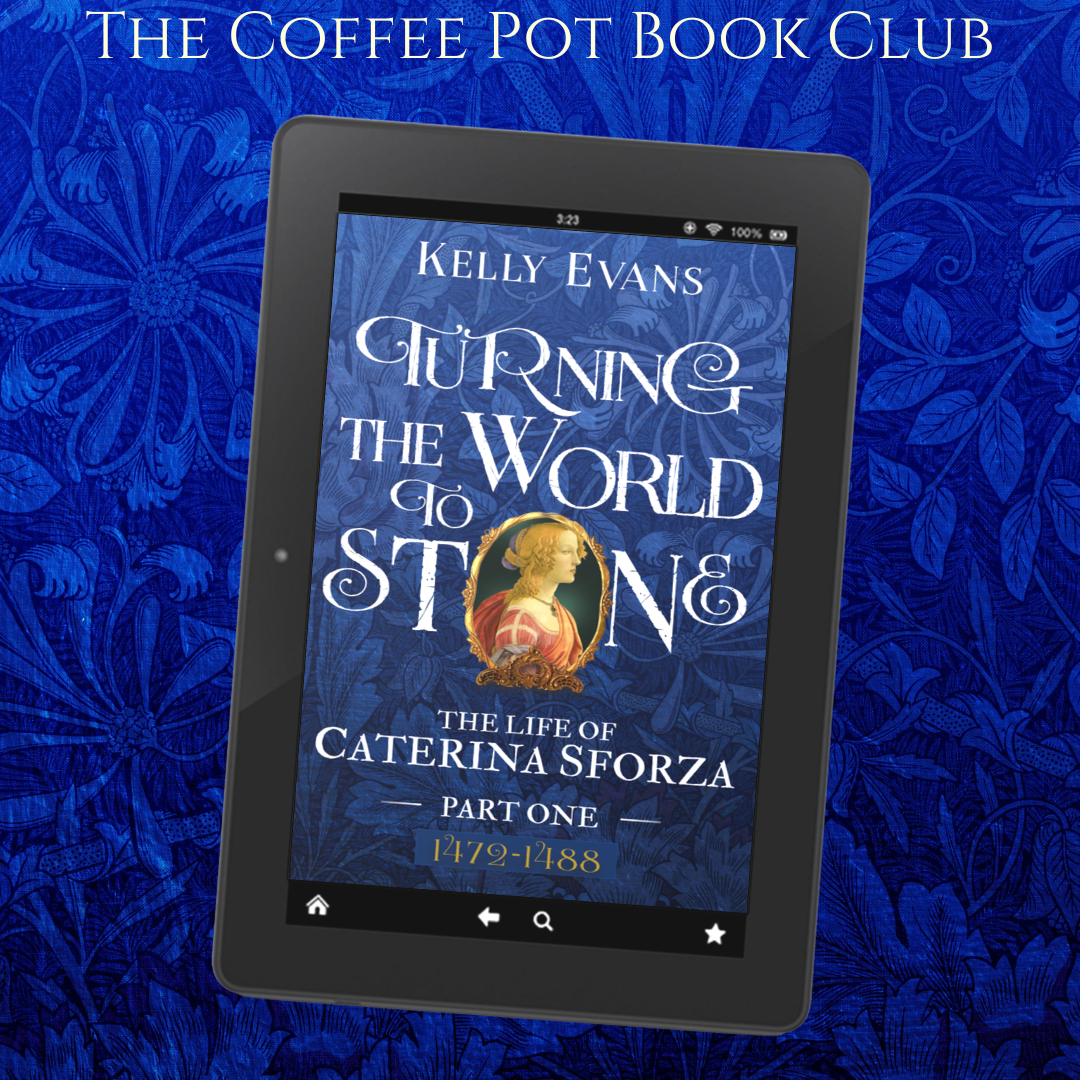
Kelly Evans’s Turning the World to Stone is on the blog. #HistoricalFiction #Renaissance #histfic #BlogTour #TheCoffeePotBookClub

I’m super excited to welcome my fellow Medieval Maverick, Kelly Evans and her new book, Turning the World to Stone, to the blog. Please enjoy this snipper from the story of Caterina Sforza.

When they were far enough from the people, her husband turned to her in his saddle. “Why? What was,” he motioned backwards at the citadel as it receded into the distance. “I don’t have the words to describe your actions. What did you think you’d accomplish by such a stupid act?” 

“I had to do it.” She turned to him. “You’re weak. I knew of the deal you’d accepted.” 

“You weren’t there,” he growled. 

“No, I was protecting YOUR inheritance, and that of our sons!” Caterina shifted in her saddle, the child in her stomach choosing that moment to kick. 

“Watch your tone, my lady.” 

“Or what? You’ll beat a pregnant woman? Knock me from my horse?” With a disgusted noise, she continued. “All of Rome knows of your cowardice so it would hardly be surprising to hear of such an act of petty violence from you.” 

Girolamo rode closer and began to raise his arm. Lifting her chin, Caterina stared coldly at him. Daringly. Defiantly. Glaring at her, he moved his mount to the side and rode a few steps away. 

“I thought not,” Caterina urged her own horse forward. “I’m going to pack what little we still have in Rome. Thank God I thought to send our belongings ahead to Forli.” She stopped her horse and turned it to face her husband. “I’m leaving tomorrow. I can’t stand to be in this Godforsaken city another day.”

Here’s the blurb

Vilified by history, Caterina Sforza learned early that her life was not her own. Married at age ten, she was a pawn in the ever-changing political environment of Renaissance Italy.

Resigned to her life as a fifteenth-century wife, Caterina adapted to the role she was expected to play: raising and educating her children, helping the poor in her new home, and turning a blind eye to her husband’s increasingly shameful behaviour. But Fate had other plans for her, and soon Caterina’s path would be plagued by murder, betrayal, and heartbreak. 

“Could I write all, the world would turn to stone.”

Buy Links: 

This title is available to read on #KindleUnlimited.

Universal Link

Amazon UKAmazon USAmazon CAAmazon AU

Meet the author

Born in Canada of Scottish extraction, Kelly Evans graduated in History and English then moved to England where she worked in the financial sector. While in London Kelly continued her studies in history, concentrating on Medieval History, and travelled extensively through Eastern and Western Europe. 

Kelly is now back in Canada with her husband Max and a rescue cat. She writes full-time, focussing on illuminating little-known women in history with fascinating stories. When not working on her novels, Kelly writes Described Video scripts for visually impaired individuals, plays oboe, and enjoys old sci-fi movies. 

Connect with Kelly

WebsiteTwitter

Facebook:  InstagramPinterest

Book BubAmazon Author PageGoodreads

Follow the Turning the World to Stone blog tour with The Coffee Pot Book Club

Book review A Courtesan’s Worth by Felicity George, a Regency steamy romance #blogtour #histfic #RegencyRomance

Here’s the blurb

A mistress cannot marry for love…

As one of the famous Preece sisters, Kitty is the most sought-after courtesan in London. But with the vicious Duke of Gillingham scaring away any man who looks her way, securing a new arrangement with a wealthy gentleman will be no easy feat. Kitty’s only hope to find someone suitable is through her loyal and cherished friend, the Reverend Sidney Wakefield.

Sidney has devoted his life to the church, but it was never by choice. He is a writer and Kitty his muse. As he is roped into Kitty’s plotting, he begins to realise that protecting her from the malevolent Duke comes at a price – and it might mean losing Kitty to someone else entirely.

As Kitty and Sidney try to find a way out, it becomes clear that years of friendship have developed into something deeper. Except that they are from different worlds and Kitty’s heart has never been hers to give away…

Purchase Link

https://bit.ly/3Js0bA7

My Review

A Courtesan’s Worth is a steamy Regency romance featuring Kitty, London’s most expensive courtesan, and Sydney, a vicar who’s struck up a friendship with Kitty, and believes Kitty is the muse that inspires his writing. What neither of them seem to realise is that they love one another. Sydney, somewhat blind to Kitty’s role in society, believes they should marry, if only he had the money. Kitty, with the responsibility for ensuring her sisters, and their many illegitimate offspring, are well provided for in life, feels the weight of pressure, for all she seems tired of the life of a courtesan where she has no choice other than to become attached to the man with the largest purse strings, many of whom are odious and aged.

What ensues is a tale of love and desire, passion and sometimes hatred, as the pair try to negotiate their way to be together even though there are obstacles in their way, Kitty’s sister, and the Duke who wishes to employ Kitty’s skills, being the main ones. There’s also a pugilist, Butcher, while Sydney’s brother, the heir to the fortune, is also somewhat dismissive of it all.

This has a lovely feel to it. There are all the elements you’d expect to find in a Regency romance set in London, but we also see some of the ‘other’ side as well. The life that Kitty leads is explained in some detail, and the way society views her adds a new flavour to the genre you know and love.

The story moves quite rapidly, building to the thing we all love about Regency Romances, the many obstacles and people in their way and the eventual satisfying resolution of the romance between Kitty and Sydney. There is also a rather fabulous twist in the last few pages.

A lively, and intriguing tale sure to delight fans of the genre and with an eye to the social history of Regency courtesans which is highly enjoyable.

Meet the author

 Felicity George is a writer and teacher from Toronto, where she lives with her husband, her two teenage children, a large cat, and a tiny dog. A lifelong devotee of Jane Austen and Georgette Heyer, Felicity adores a happily-ever-after. A Courtesan’s Worth is book two in the Gentlemen of London series.

Connect with the author

On Twitter: Felicity George 

On Facebook: Felicity George, Author 

Book review for Terminal Black by Colin Garrow on the blog #blogtour #review #thriller

Here’s the blurb:

A stolen identity. A hitman. A bent cop.

Relic Black takes things that don’t belong to him—credit cards, golf clubs, toothbrushes. But when a hitman mistakes him for someone else, Relic lands himself in a difficult situation. With a dead man on his hands and a guilty conscience, he sets off to save the life of the man whose identity he has stolen. And that’s when the real trouble starts…

Purchase Link

https://geni.us/m2Ax

My Review

Terminal Black is a tight and twisty thriller set in Scotland, complete with accents (for some of the characters) and a cast of increasingly nasty individuals.

The story is really well constructed. There is much going on in this book, and a lot of people are up to no good and in it only for themselves. The bent copper, the angry wife, Relic himself, as well as a couple of bad ‘uns as well.

The plot moves quickly, taking the reader around much of Inverness and Nairn, with a little sidestep to Dundee. If you don’t know the area, don’t worry. If you do know the area, you’ll enjoy hearing the names of places you perhaps visit often. I certainly felt as though I knew the layout of the story, and that helped me, but I don’t think it’s necessary to enjoy this tale of a ‘hit’ gone wrong and the wrong man, in the wrong place, at very much the wrong time.

A thoroughly enjoyable thriller with a fast pace and a few characters you’re going to love to hate, and with a delightful twist in the closing pages. Another fabulous read from Colin Garrow – do be aware of the adult content and strong language.

Meet the Author

 Colin Garrow grew up in a former mining town in Northumberland. He has worked in a plethora of professions including: taxi driver, antiques dealer, drama facilitator, theatre director and fish processor, and has occasionally masqueraded as a pirate. All Colin’s books are available as eBooks and paperback.

His short stories have appeared in several literary mags, including: SN Review, Flash Fiction Magazine, Word Bohemia, Every Day Fiction, The Grind, A3 Review, 1,000 Words, Inkapture and Scribble Magazine. He currently lives in a humble cottage in North East Scotland where he writes novels, stories, poems and the occasional song.

He also makes rather nice cakes.

Connect with Colin

Website  Amazon Author Page 

Twitter  Smashwords  Facebook  Bookbub 

The Watson Letters

Check out my reviews for Colin Garrow’s books

Blood on the Tyne

The Watson Letters

J R Tomlin tells us all about the historical background to The Douglas Bastard #HistoricalFiction #MedievalScotland #BlogTour #TheCoffeePotBookClub

I’m delighted to welcome J R Tomlin to the blog to tell us all about the historical background to The Douglas Bastard.

The Second War of Scottish Independence is a war that should never have happened. (Admittedly, that is true of quite a few wars) It happened simply because England’s King Edward III was pissed off at the Scots.

Remember that the famous Battle of Bannockburn was not the end of the First War of Scottish Independence, although many think it was. The Scots launched numerous chevauchees into England, believing the destruction of the north of England would force the English to the peace table. It did not work. The war continued for another decade, with the English forced out of Scotland but refusing to sign a peace treaty or recognise Scotland’s status as an independent kingdom.

However, in 1326, the rebellion by Queen Isabella and her lover Mortimer overthrowing King Edward II changed England’s political landscape. In June of the next year, James, Lord of Douglas, Thomas, Earl of Moray, and Donald, Earl of Mar, gathered a large force, as many as 10,000 men, and led a chevauchee across the border into England. They carried no supplies but lived off the land as they moved across a wide swathe of northern England. Perhaps in order to bring legitimacy to the new regime, Mortimer and the sixteen-year-old newly crowned King Edward III assembled an even larger army, much better equipped than the Scots, and led it north. They probably believed they could defeat the Scottish force in England, leaving Scotland undefended so they could go into Scotland.

It was a long and complex campaign in which the Scots outran the English, who quickly ran low on food and supplies. The Scots also had an unassailable position on a rocky height overlooking the fast-flowing River Weir. They even took an English scout prisoner and sent him with their position since the English seemed incapable of catching up with them. On the last day of July, the English army arrived on the other side of the Weir. They sent heralds, inviting the Scots to abandon their position and engage in battle. The Scottish leaders replied (and this sounds like James Douglas) that they were happy where they were, and if the English King and his council were unhappy with their lands being burnt before them, they should cross the river and do something about it. Mortimer and the young king refused. Crossing the Weir would allow their vanguard to be attacked before the rest of the army could cross, so they were certainly right to refuse.

The standoff lasted for three days before the Scots moved during the night to an even more unassailable position within an area known as Stanhope Park. At daylight, the English shifted their position but still dared not cross the Weir. Although the Scottish position was unassailable, it also appeared to have the Scots trapped with no way of resupplying. The English believed all they had to do was starve the Scots out, and they would win.

On the night of the 4th of August, James Douglas led a night attack, penetrating to the very centre of the English camp. They rode in, cutting guy ropes and firing tents. There was panic in the camp. Douglas himself collapsed the King’s tent with the terrified king inside, his confessor killed protecting him. By that time, the English were organising for defence, so the Scots returned, untouched, to their own camp.  

The next day, a Scot allowed himself to be taken prisoner to give the English word that the Scots would try to cut their way free the following night. The English, believing the story, spent the night in their armor with bonfires lit to see during the supposed coming battle. And the Scots retreated, picking their way through what the English had believed was an impenetrable marsh. 

The English King wept in fury and humiliation. 

He also never forgave the Scots. He was even more angry when his mother and Mortimer negotiated a peace treaty with Scotland which he and King Robert the Bruce signed in March 1328.

Only four years later, King Edward repudiated the treaty he had signed, backing an invasion by the pretender to the Scottish throne, Edward Balliol. Then began the totally useless Second War of Scottish Independence, which cost countless lives on both sides and eventually gained England nothing. 

It did, however, provide stories of treachery, battle, bravery, defeat, and triumph that beg to be told.  

Thank you so much for sharing the background to your new book. It sounds fabulous.

Here’s the blurb

Young Archibald, the Black Douglas’s bastard son, returns from exile to a Scotland ravaged by war. The war-hardened Knight of Liddesdale will teach him what he must learn. And with danger on every side, he must learn to sleep with one eye open and a claymore in his hand because even their closest ally may betray them…

Buy Links

The Douglas Bastard

Universal Link

Amazon UK Amazon US Amazon CA Amazon AU

Barnes and Noble Kobo iBooks Google Play

Archibald the Grim Series on Amazon

Amazon UK Amazon US

Meet the author

J R Tomlin is the author of twenty historical novels.

Her historical novels are mainly set in Scotland. You can trace her love of that nation to the stories of Robert the Bruce and the Black Douglas that her grandmother read her when she was small and to her hillwalking through the Scottish Cairngorms where the granite mountains have a gorgeous red glow under the setting sun.

In addition to having lived in Scotland, she has traveled in the US, mainland Europe and the Pacific Rim. She now lives in Oregon.

Connect with the author

Website  Twitter

Book Bub Amazon Author Page Goodreads 

Follow The Douglas Bastard by JR Tomlin blog tour with The Coffee Pot Book Club

I. M. Foster shares a fascinating post about forensics in the early 20th century #historicalmystery #cozymystery #BlogTour #TheCoffeePotBookClub

I’m delighted to welcome I.M. Foster to the blog, to share a fascinating post on Forensics at the Turn of the Century.

To start off with, I guess I should give a very basic definition of what exactly forensics is. Basically, it is the use of different scientific disciplines, such as biology, chemistry, physics, etc., to investigate crimes or examine evidence that can be used to present in court. That being the case, the techniques available at any given period in history would depend largely on the stage of scientific development that was available to the investigator at the time. 

Today a multitude of investigative tools are available to detectives and medical examiners, from ballistics to DNA. Most large police departments even have their own forensics labs, as Suffolk County, New York now does. But forensic science in the day of Dr. Daniel O’Halleran was quite a bit different than it is today.   

To begin with, there was no such thing as forensic science, per se, even though the use of science to determine the cause of death actually goes back to ancient Rome and Egypt. For example, it was a physician, Antisius, who determined that of the twenty-three blows Julius Caesar received it was the one below his left arm that actually killed him. Alas, after the fall of the Roman Empire, the use of science to detect the cause of death seemed to stagnate for the next thousand or so years.

Fast forward to the sixteenth century, and things began to pick up again. Interest in determining reasons for a person’s demise increased, the French and Italians studied the result of violent death on internal organs, and once again, science was being used to assist in determining the cause of death. During the nineteenth century, scientific advances produced a number of breakthroughs that aided in criminal investigations. 

By the dawn of the twentieth century, poison could be detected in body tissue, handwriting analysis and the study of documents were being employed, and toxicology was being presented as evidence in jury trials. In addition, scientific tools, such as the polarized light microscope had been invented, enabling physicians to study fibers. And photography had made its appearance, making it easier to study the crime scene in detail.  

Fingerprints were still relatively new on the scene however. Though a system of classifying fingerprints had been developed by the 1880s, don’t expect Daniel to be incorporating it into his investigative tool kit right away. The system used by most of Europe and North America didn’t come about until 1896 and wasn’t employed in the United States until 1903, when it was used by the New York State Prison system for criminal identification. The first use of the technique at a criminal case in the United States didn’t occur until 1910. 

Before fingerprinting, something called anthropometry was used for identification, which was the measurement of body parts and their proportions to one another, not exactly foolproof. As for the twelve matching points of a fingerprint, that didn’t come along until 1918, so while Daniel might eventually play around with it, fingerprinting certainly not something he’s going to base his cases on.   

The turn of the century did present some extremely helpful investigative tools however. Biologists were able to determine not only if a stain was blood, but whether it was human or animal. Ballistics was becoming more refined, though the tracing of a bullet to a specific gun wouldn’t come about until 1910. And geology was first used in 1904 by a German scientist when he identified a killer from the dirt on his pants and under his fingernails, as well as the coal soot found on a handkerchief he’d left at the crime scene. Now, that is something that Daniel might eventually employ.

Other advances were just on the horizon. The use of a microscope to compare strands of hair didn’t come along until 1910, and the study of botanicals such as plant fibers and pollen in relation to a crime scene wasn’t widely used until the 1920s, though I’m sure there were local residents who might be able to point out where a certain plant was more prevalent.

In spite of all the advances, however, using scientific principles in criminal investigations still wasn’t seen as its own discipline. But in 1904, Edmond Locard was to write a passage that one might point to as the beginning of modern forensic science. Every contact leaves a trace. Shortly after, in 1909, the first school was opened for the sole purpose of studying how to use science to determine the cause and method of death, and thus the seeds were planted for the modern study of forensic science. 

Thank you for sharing such a fascinating post.

Here’s the blurb 

New York, 1904. After two years as a coroner’s physician for the city of New York, Daniel O’Halleran is more frustrated than ever. What’s the point when the authorities consistently brush aside his findings for the sake of expediency? So when his fiancée leaves him standing at the altar on their wedding day, he takes it as a sign that it’s time to move on and eagerly accepts an offer to assist the local coroner in the small Long Island village of Patchogue.

Though the coroner advises him that life on Long Island is far more subdued than that of the city, Daniel hasn’t been there a month when the pretty librarian, Kathleen Brissedon, asks him to look into a two-year-old murder case that took place in the city. Oddly enough, the case she’s referring to was the first one he ever worked on, and the verdict never sat right with him.

Eager for the chance to investigate it anew, Daniel agrees to look into it in his spare time, but when a fresh murder occurs in his own backyard, he can’t shake his gut feeling that the two cases are connected. Can he discover the link before another life is taken, or will murder shake the peaceful South Shore village once again?

Buy Links  

This title is available to read with #KindleUnlimited. 

Universal Link 

Amazon UK   Amazon US  Amazon CA Amazon AU

Meet the author

I. M. Foster is the pen name author Inez Foster uses to write her South Shore Mystery series, set on Edwardian Long Island. Inez also writes historical romances under the pseudonym Andrea Matthews, and has so far published two series in that genre: the Thunder on the Moor series, a time-travel romance set on the 16th century Anglo-Scottish Borders, and the Cross of Ciaran series, which follows the adventures of a fifth century Celt who finds himself in love with a twentieth century archaeologist. 

Inez is a historian and librarian, who love to read and write and search around for her roots, genealogically speaking. She has a BA in History and an MLS in Library Science and enjoys the research almost as much as she does writing the story. In fact, many of her ideas come to her while doing casual research or digging into her family history. Inez is a member of the Long Island Romance Writers, the Historical Novel Society, and Sisters in Crime.

Connect with IM Foster

Website

Twitter Facebook Instagram

Book Bub   Amazon Author Page Goodreads

Follow the Murder on Oak Street by IM Foster blog tour with The Coffee Pot Book Club

Book review for Helen Golden’s cozy mystery, A Dead Herring #blogtour #bookreview

Here’s the blurb

BREAKING NEWS Urshall United FC Owner Dies at Drew Castle

 Details are sketchy at this stage, but it is believed businessman Ben Rhodes (38) was found dead in his bathroom at the king’s Scottish home by his twin brother Max, where the pair were guests at a shooting party hosted by Lord Frederick Astley (39), brother of Lady Beatrice (36). The cause of Mr Rhodes’ death is not known, but he started receiving death threats from football fans after his controversial takeover of the club and had recently employed his own personal security.

How unlucky can a girl get? Is fate playing a cruel trick on her for boorish Detective Chief Inspector Richard Fitzwilliam to be the only person who can get to the snowed-in castle to investigate Ben Rhodes’s death? And with no other external resources available to him, he now needs her, her smart dog, and her best friends’ help to catch the killer. Can they put their issues behind them and work together to find the murderer before the weather improves and the perpetrator is free to leave?

Another page-turning cozy British whodunnit with a hint of humour from author Helen Golden.

Purchase Link

 https://books2read.com/u/3GWBZ8

My Review

If you don’t know that I adore this series, then you’ve been hiding under a rock:)

The Right Royal Cozy Investigations, of which the fabulously titled, A Dead Herring is the latest release, are a fantastic series of stories (with a thread running through them all that I will not be alone in being desperate to see the resolution for) which are just that bit elevated from other books of the genre.

The plotting is tight, the characters have great and very human interactions, the crimes are shocking, the investigations are robust, and the stories all have a great little twist where the reader has an ‘I know who did it moment,’ even if the characters haven’t quite reached it yet.

A Dead Herring is no different. Lady Bea and Perry, alongside Simon, find themselves being asked to help Pairs with this one, which makes a nice change, and the true moment of peril also has a great twist.

I find this series to be dependably great. That might not sound like praise, but it is. I know if I read one of these books, I’m going to be entertained and amused, and I’m always eager for the next book in the series. If you enjoy cosy crime, you must check out this series, and I recommend reading them in order.

Check out my reviews for the books in the series:

Spruced up for Murder

For Richer, For Deader

Not Mushroom for Death

An Early Death

Meet the author

Hello. I’m Helen Golden. I write British contemporary cozy whodunnits with a hint of humour. I live in small village in Lincolnshire in the UK with my husband, my step-daughter, her two cats, our two dogs, sometimes my step-son, and our tortoise.

I used to work in senior management, but after my recent job came to a natural end I had the opportunity to follow my dreams and start writing. It’s very early in my life as an author, but so far I’m loving it.

It’s crazy busy at our house, so when I’m writing I retreat to our caravan (an impulsive lockdown purchase) which is mostly parked on our drive. When I really need total peace and quiet, I take it to a lovely site about 15 minutes away and hide there until my family runs out of food or clean clothes

Connect with Helen

Website – https://helengoldenauthor.com/

Lucretia Grindle shares a fascinating post about the historical women in her novel, The Devil’s Glove #blogtour

Guest Post by Lucretia Grindle on the Histroical Background to the Women in The Devil’s Glove

As I began to think about the Salem witchcraft trials, I was struck by what a distinctly female episode Salem was. Sure, you’ve got the Mathers, father and son, and the magistrates – all men. But this was a furor that was whipped up and powered by women, some of them very young women. And, while six men were executed (five hanged and one pressed to death) fourteen women were hanged. Because other women accused them. 

All of which led me to consider the roles women played in 17th century New England. As I began to contemplate The Devil’s Glove, I knew that my central character would be female, and so it seemed important to try to get past preconceptions and really understand the scope of possibility as well as the limitations on women’s lives in that time and place. What were they able to do, and not do? How did they fit, and not fit into the power structure of society? 

Salem certainly seemed a ‘fracture’; an incident when teen-aged girls, some of them orphaned, most of them servants and dependents – in other words those who would usually be the most un-empowered – wielded extraordinary power. A power they used to attack some of the most powerful female figures in the Massachusetts colony. Established and respected matrons like Rebecca Nurse. Women of wealth and social standing like Mary English. Women who would normally be politically untouchable, like the governor’s sister, Anne Phipps. What other ‘fractures’ might I find, if I went looking?

One of the greatest pleasures of writing history, and historical fiction in particular, is the way in which you begin thinking you know about something, only to discover facets of a world that are a complete surprise. So as I settled into archives and began to peel back layers, I was thrilled to find a complex and unexpected past peopled with an astonishing array of women. Resolve Hammond and her mother, Deliverance, are fictional characters. But the circumstances and possibilities of their lives are based on real women, some of whom appear in The Devil’s Glove, and many of whom will appear in the second and third books of the trilogy. These are a few of their stories.

Early in The Devil’s Glove we discover that Resolve and her mother spent the bloody years of King Philip’s war (1675-1678) sheltered among the tribe led by the female sachem, Ashawonks. This is based on a true episode. I placed the Hammonds with Ashawonks specifically, both because I wanted to bring her into the story and because she is Deliverance’s mentor, and her guide – the door through which Deliverance, and thus Resolve, enter the Native world. So, who was she? 

Female sachem, or saunkskwa of the Sakonnets, a tribe whose lands bordered the southern edge of the Plymouth settlement on Narragansett bay, Ashawonks was unique, not just because she was a women – there were several female sachems at the time – but because she became leader not via inheritance, but because of her formidable diplomatic skills. Her position would be challenged throughout her life, not only by the Anglo-Europeans who tried to push her off her lands, but also from within her own tribe. None of them succeeded. Instead, Ashawonks managed to walk a dangerous tightrope, keeping alliances – or at least relations – with Anglo-Europeans, while not openly alienating fellow sachems and tribes. She was especially close to the powerful militia commander, Benjamin Church, whom she often met and spoke with at length, using him as both a sounding board and conduit to The Powers that Were in Massachusetts. Thanks to skill, nerve, and an uncanny ability to read situations, Ashawonks  piloted her people, and those under her protection, through one of the most dangerous episodes in early American colonial history.

At about the same time Ashawonks was steering a course through a bloody war, another extraordinary woman gave birth to a daughter in Salem, Massachusetts. The daughter would become Mary English, who appears at the end of The Devil’s Glove and is a central to book II of the Salem trilogy. But it was her mother, Elinor Hollingworth, whose life suggested to me what the realistic possibilities might be for Deliverance Hammond. 

Elinor’s family arrived in Salem as part of The Great Migration, an influx of something in the area of 20,000 immigrants, primarily from the British Isles and mostly from England, who arrived in New England between approximately 1630 and 1640. At seventeen, Elinor married William Hollingworth, a sea captain and general all-round trader who wasn’t particularly good at either. His not very thrilling career came to an end when he went overboard and drowned, leaving Elinor with three small children and a mountain of debt. 

There were more eligible men than marriagable women drifting around New England at the time, and Elinor might well have re-married, as most widows did. But she wasn’t having any of it. Once was apparently enough. Instead, Elinor Hollingworth went to work. Petitioning the court to gain control of what was left of her husband’s business, she set about clearing his debts. 

In England at the time, women in naval cities like Bristol and Portsmouth were banding together to negotiate with the British Navy about pay and conditions while their husbands were at sea. Taking a leaf out of the same book, Elinor set herself up as a broker negotiating pay deals for working seamen in Salem, many of whom were illiterate, while taking a cut in return. She so successful that she rapidly became a sort of mini working seaman’s merchant bank.

 At the same time, Elinor saw an opportunity in the wives they left behind. Harnessing their domestic labor, inviting them to produce surplus butter, beer, biscuit, shirts, shoes and other supplies needed to outfit Salem’s growing merchant fleet, she became a ship’s chandler – the person captains went to for all the supplies they needed as soon as they knew they were going to sea. Within a few years, she not only paid off all of William’s accrued debt, but also acquired The Blue Parrot tavern, a seedy drinking den down on the waterfront that she made her headquarters.

Riding the tide of Salem’s exploding maritime trade, Elinor Hollingworth became so successful, and powerful, that when she was accused of witchcraft in 1672 by a neighbor she had annoyed, she merely shrugged it off, saying she was far too busy to be a witch. Twenty years later, her daughter tried essentially the same approach, with vastly different results. 

By then, Mary was married to Philip English, and they were the wealthiest tax payers in Salem, joint owners of a shipping empire that owned more than twenty vessels and included, among other things His and Hers warehouses. Mary received her warehouse from her mother as a wedding present. Elinor had not only made sure that her daughter was exceptionally well educated, she thought so much of her ability that she bypassed her son, and handed her entire business empire directly to her daughter. Philip English shared his mother in law’s esteem. Throughout their marriage, he and his wife owned their business jointly.

Along with the warehouses and the wharf and the ships, Mary and Philip English owned and inhabited a house in Salem so grand that it was known simply as The Great House. It had three stories, and housed not only their family, but also the shipping company’s counting house and a luxury goods shop which Mary oversaw and ran. And it was staffed by fifteen domestic servants, many of them indentured.

Indenture, the practice of contracting labor for a period of years in return for food and keep, and often passage to The New World was a relatively common practice, and part of the Englishes’ business. They arranged and brokered indenture contracts for a large number of, mostly young, people who came to New England from the island of Jersey. Many of them were single young women. One was called Judah White, and is Resolve’s best friend in The Devil’s Glove.

Indenture was not an easy life. You had little say over who you were indentured to, and there was no way out except to work out the years of the contract, or somehow find enough money to buy it out. But it was also a way for young men, and young women, from the lower classes to have a chance at starting a new life in The New World. For women in particular, this was otherwise close to impossible. Here was a way to take at least some of your destiny into your hands. Many made the leap, exhibiting an independence that defies common presumptions about women in the 17th century.

Ashawonks, Elinor, Mary and Judah are only some of the women I encountered while researching The Devil’s Glove. In each case, their circumstances and lives were unexpected. I hope you enjoy getting to know them as much as I did.

Here’s the blurb

Northern New England, summer, 1688.
Salem started here.

A suspicious death. A rumor of war. Whispers of witchcraft.

Perched on the brink of disaster, Resolve Hammond and her mother, Deliverance, struggle to survive in their isolated coastal village. They’re known as healers taught by the local tribes – and suspected of witchcraft by the local villagers.

Their precarious existence becomes even more chaotic when summoned to tend to a poisoned woman. As they uncover a web of dark secrets, rumors of war engulf the village, forcing the Hammonds to choose between loyalty to their native friends or the increasingly terrified settler community.

As Resolve is plagued by strange dreams, she questions everything she thought she knew – about her family, her closest friend, and even herself. If the truth comes to light, the repercussions will be felt far beyond the confines of this small settlement.

Based on meticulous research and inspired by the true story of the fear and suspicion that led to the Salem Witchcraft Trials, THE DEVIL’S GLOVE is a tale of betrayal, loyalty, and the power of secrets. Will Resolve be able to uncover the truth before the town tears itself apart, or will she become the next victim of the village’s dark and mysterious past?

Praise for The Devil’s Glove:

“From its opening lines this historical novel from Grindle (Villa Triste) grips with its rare blend of a powerfully evoked past, resonant characters, smart suspense, and prose touched with shivery poetry.” 

~ BookLife Reviews Editor’s Pick

Buy Links

This title is available to read on #KindleUnlimited.

Universal Link:  https://books2read.com/u/4EN58l

Amazon UKAmazon USAmazon CAAmazon AU

Meet the author

Lucretia Grindle grew up and went to school and university in England and the United States. After a brief career in journalism, she worked for The United States Equestrian Team organizing ‘kids and ponies,’ and for the Canadian Equestrian Team. For ten years, she produced and owned Three Day Event horses that competed at The World Games, The European Games and the Atlanta Olympics. In 1997, she packed a five mule train across 250 miles of what is now Grasslands National Park on the Saskatchewan/Montana border tracing the history of her mother’s family who descend from both the Sitting Bull Sioux and the first officers of the Canadian Mounties.

Returning to graduate school as a ‘mature student’, Lucretia completed an MA in Biography and Non-Fiction at The University of East Anglia where her work, FIREFLIES, won the Lorna Sage Prize. Specializing in the 19th century Canadian West, the Plains Tribes, and American Indigenous and Women’s History, she is currently finishing her PhD dissertation at The University of Maine. 

Lucretia is the author of the psychological thrillers, THE NIGHTSPINNERS, shortlisted for the Steel Dagger Award, and THE FACES of ANGELS, one of BBC FrontRow’s six best books of the year, shortlisted for the Edgar Award. Her historical fiction includes, THE VILLA TRISTE, a novel of the Italian Partisans in World War II, a finalist for the Gold Dagger Award, and THE LOST DAUGHTER, a fictionalized account of the Aldo Moro kidnapping. She has been fortunate enough to be awarded fellowships at The Hedgebrook Foundation, The Hawthornden Foundation, The Hambidge Foundation, The American Academy in Paris, and to be the Writer in Residence at The Wallace Stegner Foundation. A television drama based on her research and journey across Grasslands is currently in development. THE DEVIL’S GLOVE and the concluding books of THE SALEM TRILOGY are drawn from her research at The University of Maine where Lucretia is grateful to have been a fellow at the Canadian American Foundation. 

She and her husband, David Lutyens, live in Shropshire.

Connect with the author

WebsiteFacebookLinkedIn

InstagramAmazon Author PageGoodreads

Follow the blog tour for The Devil’s Glove with The Coffee Pot Book Club

Book review for Jane Dunn’s, An Unsuitable Heiress. #bookreview #blogtour

Here’s the blurb

‘Do you realise, Corinna, just how hard it is for a young woman of irregular birth, without family, fortune or friends in the world? Marriage is the only way to get any chance of a life.’

Following the death of her mother, Corinna Ormesby has lived a quiet life in the countryside with her cantankerous Cousin Agnes. Her father’s identity has been a tantalising mystery, but now at nineteen Corinna knows that finding him may be her only way to avoid marriage to the odious Mr Beech.

Deciding to head to London, Corinna dons a male disguise. Travelling alone as a young woman risks scandal and danger, but when, masquerading as a youth, she is befriended by three dashing blades, handsome and capable Alick Wolfe, dandy Ferdinand Shilton and the incorrigible Lord Purfoy, Corinna now has access to the male-only world of Regency England. And when she meets Alick’s turbulent brother Darius, a betrayal of trust leads to deadly combat which only one of the brothers may survive.

From gambling in gentleman’s clubs to meeting the courtesans of Covent Garden, Corinna’s country naivety soon falls away. But when she finds her father at last, learns the truth about her parentage and discovers her fortunes transformed, she must quickly decide how to reveal her true identity, while hoping that one young man in particular can see her for the beauty and Lady she really is.

Purchase Link

https://mybook.to/Heiresssocial

My Review

A Suitable Heiress continues Jane Dunn’s exploration of Regency-era England. Once more, we have a very different main character, young Corinna, who knows she’s a bastard, but is determined to find her father, and continue in her quest to become an artist. And how might she manage this? By masquerading as a man and running away to London.

What ensues is a delightful tale of the era, not without its peril for our heroine/hero as her disguise is discovered and her father found. But this is only half the story for Corinna must manage her friendships carefully and guard her reputation as well as her companions while seeking to fulfill her ambitions.

An Unsuitable Heiress is a delightful Regency tale sure to appeal to fans of the era.

Find my review for The Marriage Season here.

Meet the author

Jane Dunn is an historian and biographer and the author of seven acclaimed biographies, including Daphne du Maurier and her Sisters and the Sunday Times and NYT bestseller, Elizabeth & Mary: Cousins, Rivals, Queens. She comes to Boldwood with her first fiction outing – a trilogy of novels set in the Regency period, the first of which is to be published in January 2023. She lives in Berkshire with her husband, the linguist Nicholas Ostler.

Connect with Jane

Twitter

Instagram

Bookbub profile

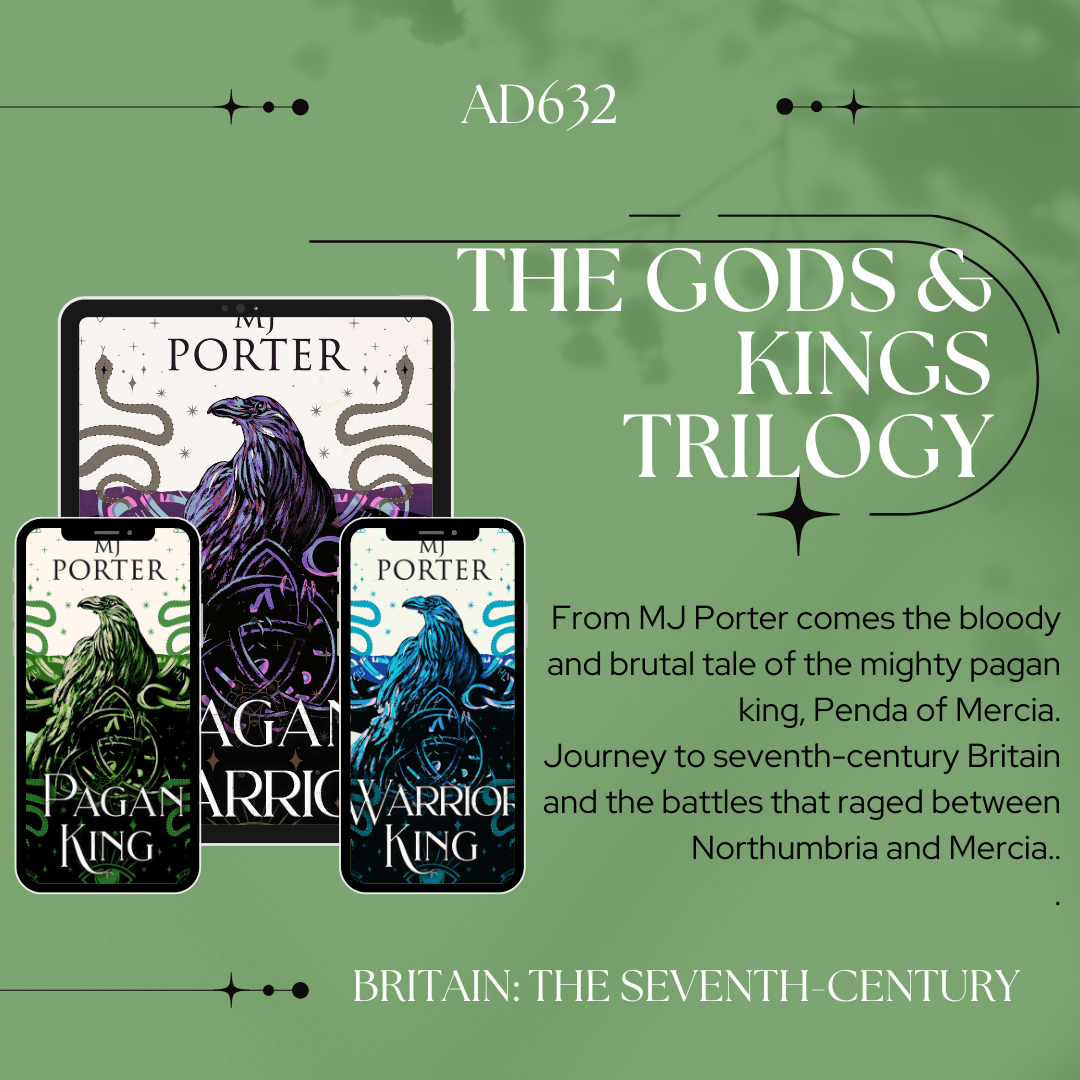
Pagan Warrior went on blog tour with The Coffee Pot Book Club in May 2023 #blogtour – check out the posts #GodsAndKings #TheSevethCentury

Pagan Warrior is the story of the battle of Hædfeld, fought in the seventh century between the Northumbrians, and you got it, the Mercians – or rather, Cadwallon of Gwynedd but with Penda of Mercia as his firm ally. You can find more details here.

A quick shout out to thank all the blog hosts and Cathie at The Coffee Pot Book Club for organising.

Check out a review for Pagan Warrior on

Linnea Tanner’s Official Blog

and a guest post about Mercia’s legacy over on

The Coffee Pot Book Club

Check out

The Book Delight

An excerpt on

The Celtic Lady Reviews

Check out the review on

Stuart Rudge’s Official Blog

And a guest post on who King Edwin of Northumbria was over on

When Angels Fly

Check out a post about Penda of Mercia.

The Magic of Word(l)ds

Read an excerpt featuring Eowa, Penda’s brother on

Judith Arnopp’s Official Blog

And, read an excerpt featuring Penda on

Carolyn Hughes Official Blog

I answered Paul Walker’s questions on his blog

Paul Walker’s Official Blog

There’s an except over on Wendy J Dunn’s Official Blog featuring King Edwin

Wendy J Dunn’s Official Blog

And a fabulous review on Ruins and Readings

Ruins and Readings

Read a guest post about how we know, what we know, about the seventh century.

Deborah Swift’s Official Blog

And a fabulous author interview over on

The Writing Desk

Read an excerpt on

Elizabeth St John’s Official Blog

And read about warfare in the Saxon period on

Brook Allan’s Official Blog

Check out a fabulous review on

https://gwendalynbooks.wordpress.com/2023/03/28/pagan-warrior/

A guest post about Mercia in the later eighth century on the Historical Fiction Blog.

https://historicalfictionblog.com/pagan-warrior-guest-post/

And, the post that perhaps gave me the most fear to begin will but which was fun when I remembered all the little details, five fun facts about writing the trilogy.

maryannbernal.blogspot.com

Check out a post about two of the royal residences of Bernicia at the time, Bamburgh and Ad Gefrin (Yeavering). (There are lots of photos; thank you to Helen Hollick for uploading them all.)

Let Us Talk of Many Things

And a review from

Candlelight Reading

Check out my author interview over on Archaeolibrarian.

Archaeolibrarian

I’m sharing an excerpt over on The Historical Fiction Company.

The Historical Fiction Company

I’ve written a piece about the historical background on Pam Lecky’s official blog.

Pam Lecky’s Official Blog