Author of Saxon historical fiction and non-fiction, 20th-century historical mysteries, and Norse-inspired historical romantasy. Book reviewer and blog host.
The Winds of Change is a story of love, loyalty and betrayal on the eve of the Spanish Civil War, when the country is political turmoil with strikes and demonstrations, unemployment is high and the people are starving.
In this complicated love triangle we meet Ramon, a member of the Republican Left, who has accidentally killed a policeman and is on the run from the Guardia Civil and Hugo, the son of the wealthy owner of a local sherry bodega. Both men are in love with Clementina, the beautiful daughter of a well-known gypsy horse trader but there are obstacles in both their paths.
Hugo finds that when he tries to see Clementina again, both his parents and hers do everything they can to stop him.
Meanwhile Ramon’s brother, Pedro, is arrested and imprisoned because he will not reveal his brother’s whereabouts to the Guardia Civil. Now Ramon has to choose between his brother and the woman he loves.
This fast moving historical novel is a story of love, politics, class prejudice, intrigue and betrayal in the year leading up to the Spanish Civil War.
Buy Links:
This title is available to read on #KindleUnlimited.
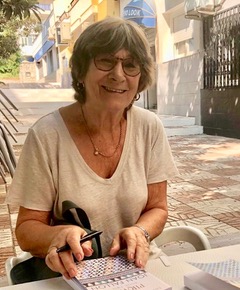
Teacher, management trainer and business woman, the Scottish-born novelist, Joan Fallon moved from the UK to Spain in 1998 and dedicated herself to full-time writing. She is now the self-published author of eighteen books, many of which are historical novels set in southern Spain, and focus on two distinct periods in the country’s history, the Spanish Civil War and Moorish Spain.
More recently she had turned her attention to writing contemporary crime fiction, with a series of novels entitled The Jacaranda Dunne Mysteries but her love of historical fiction has lured her back to writing about Spain in the 20th century in her latest novel The Winds of Change.
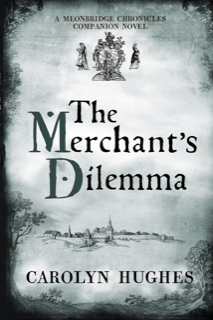
I’m delighted to welcome Carolyn Hughes and her new novel, The Merchant’s Dilemma to the blog, with an excerpt from the book.
From Chapter 1
The door to the chamber opened and then closed softly.
‘Mistress Collyton?’ said a man’s voice, very low but loud enough for Bea to know exactly whose it was. ‘Is she still asleep?’
Bea heard the old woman huff, perhaps as she started awake, then the scrape of the chair.
‘No, no,’ said Riccardo, gently, ‘there is no need to stand.’
‘Thank you, sir,’ said Mistress Collyton. ‘She comes and goes, I think, but never awake long enough for me to speak to her.’
‘It has been so many days. I wonder if she will ever fully wake? How much I wish to look into my sweet Bea’s eyes and hear her laugh.’
Bea’s heart fluttered. “Sweet Bea”? Was that truly what he said? If so, where was his wife? Surely, he’d not refer to heras his sweet if he had a wife? Well, not in his servant’s hearing…
‘It may be yet a while afore she laughs, sir,’ said Mistress Collyton, ‘even when she do come back to us.’
‘Just seeing her eyes open would do for now, when I thought I would never see my lovely girl again.’
‘Indeed, sir.’ Bea heard the old woman grunt a little and the creaking of the chair. ‘Will you stay wi’ her a moment whilst I fetch her gruel?’
‘Glad to,’ he said. The door opened and shut again, then he came over to the bed. He sat down upon it and leaned forward to touch the edge of the bedding covering most of Bea’s face.
Her heart thudded. She had only a moment to decide: was she still asleep, or should she greet the man she loved? And who still, it seemed, loved her.
As the coverlet and sheet were drawn gently back, she let her eyes flick open.
Riccardo gasped, and jerked upright. ‘You are awake.’
She smiled.
‘How do you feel?’
‘Comfortable,’ she murmured.
‘And rested? Stronger?’ His eyes were bright but also brimming with anxiety.
Her shoulders twitched in a little shrug. ‘I still hurt all over, and my head is giddy. I doubt I’d be able to walk far, but maybe I could get up before too long?’
Riccardo’s eyes crinkled. ‘Oh, Bea, I am so pleased to hear it. Of course, I am sorry you are still in pain but, with continued rest and care from Mistress Collyton, God will soon surely grant you a full recovery.’
‘Thank you for taking me in,’ she whispered.
He leaned forward again and stroked her cheek lightly with his fingers. ‘Surely you knew I would. That was why you came.’
‘I hoped you might, or that, if I died, you’d take care of my poor corpse.’
‘Thank God that was not asked of me.’ He held his hand lightly against her cheek. ‘Many weeks and months may still lie ahead of us before you are fully well, but we shall succeed.’
Tears were hovering in his eyes. ‘You must know, darling girl, how very relieved I am you have come back to me.’
She could scarce believe what he was saying. Of course, she’d hoped he’d not abandon her in her frailty. That he’d take her in; maybe even help her to recover. But what he was saying now was much more than that. It sounded as if he was expecting her to stay here, in this house – for months, maybe. And he was saying that he loved her.
‘I can see it in your eyes. How glad I am that dreadful storm drove me to your door.’ She bit her lip. ‘But I have to ask, Riccardo, where is your wife?’
A shadow passed across his face. ‘Ah, of course, you do not know. How could you? Poor Katherine died, as did our little Oliver.’
‘Oh, Riccardo, I’m so sorry––’
He held up his hand. ‘The loss of my little boy was awful.’ He looked up, his eyes moist. ‘He was perfect, you know. But Katherine struggled in the birthing of him, and the midwife said it had simply taken much too long. How I railed at the cruelty of his death…’
‘And your wife?’
He shrugged. ‘Of course, I would never have wished her dead but, in truth, Katherine was not much of a wife to me.’ He spoke it quietly. ‘I regret to say I do not miss her…’ He hung his head.
‘When was this?’ she whispered.
‘September. Not so long ago.’
‘When I came here,’ she said, ‘and found you gone, I remember thinking maybe you’d taken your wife and child out for a visit and had been caught out by the weather, unable to return. I thought I’d likely die here on your doorstep before you reached home again.’
‘In truth, Bea, I was pacing the streets of Winchester, searching for you.’ He gave her a wry grin. ‘You see, I thought I had seen you some weeks before, although the girl I saw then had looked frail and wretched. Then, that night, I was out of my wits with worry that it was you I saw, and you might be out in all that terrible wind and rain, unable to find shelter… Well, I just had to go out and look for you. I searched for hours, and was distraught when I was forced to return home without you. But then there you were, lying on my doorstep…’ He swallowed. ‘At first, I thought that I had come too late. That you were already dead. When I found you were still living, oh, Bea, you cannot imagine how thankful and relieved I was.’
His face lit up again, and her heart turned over. She surely didn’t deserve his love, yet how grateful she was to have it.
Here’s the blurb
1362. Winchester. Seven months ago, accused of bringing plague and death from Winchester, Bea Ward was hounded out of Meonbridge by her former friends and neighbours. Finding food and shelter where she could, she struggled to make her way back to Winchester again.
Yet, once she arrived, she wondered why she’d come.
For her former lover – the love of her life – Riccardo Marchaunt, had married a year ago. And she no longer had the strength to go back to her old life on the streets. Frail, destitute and homeless, she was reduced to begging. Then, in January, during a tumultuous and destructive storm, she found herself on Riccardo’s doorstep. She had no plan, beyond hoping he might help her, or at least provide a final resting place for her poor body.
When Bea awakes to find she’s lying in Riccardo’s bed once more, she’s thankful, thrilled, but mystified. But she soon learns that his wife died four months ago, along with their newborn son, and finds too that Riccardo loves her now as much as he ever did, and wants to make her his wife. But can he? And, even if he can, could she ever really be a proper merchant’s wife?
Riccardo could not have been more relieved to find Bea still alive, when he thought he had lost her forever. She had been close to death, but is now recovering her health. He adores her and wants her to be his wife. But how? His father would forbid such an “unfitting” match, on pain of denying him his inheritance. And what would his fellow merchants think of it? And their haughty wives?
Yet, Riccardo is determined that Bea will be his wife. He has to find a solution to his dilemma… With the help of his beloved mother, Emilia, and her close friend, Cecily, he hatches a plan to make it happen.
But even the best laid plans sometimes go awry. And the path of love never did run smooth…
The Merchant’s Dilemma is a companion novel to the main series of Meonbridge Chronicles, and continues the story of Bea and Riccardo after the end of the fourth Chronicle, Children’s Fate. It is a little more romantic and light-hearted than the other Chronicles but, if you’ve enjoyed reading about the lives of the characters of Meonbridge, you will almost certainly enjoy reading The Merchant’s Dilemma too!
Buy Links
This title is available to read on #KindleUnlimited.
Carolyn Hughes has lived much of her life in Hampshire. With a first degree in Classics and English, she started working life as a computer programmer, then a very new profession. But it was technical authoring that later proved her vocation, word-smithing for many different clients, including banks, an international hotel group and medical instruments manufacturers.
Although she wrote creatively on and off for most of her adult life, it was not until her children flew the nest that writing historical fiction took centre stage. But why historical fiction? Serendipity!
Seeking inspiration for what to write for her Creative Writing Masters, she discovered the handwritten draft, begun in her twenties, of a novel, set in 14th century rural England… Intrigued by the period and setting, she realised that, by writing a novel set in the period, she’d be able to both learn more about the medieval past and interpret it, which seemed like a thrilling thing to do. A few days later, the first Meonbridge Chronicle, Fortune’s Wheel, was under way.
Six published books later (with more to come), Carolyn does now think of herself as an Historical Novelist. And she wouldn’t have it any other way…
Carolyn has a Master’s in Creative Writing from Portsmouth University and a PhD from the University of Southampton.
You can connect with Carolyn through her website www.carolynhughesauthor.com and social media.
I’m delighted to welcome David Fitz-Gerald to the blog with an excerpt from his new historical thriller, If It’s The Last Thing I Do
From Chapter 6
On Thursday morning, Stanley asked me if he could borrow a couple of hundred dollars until next week. He said he had made some miscalculations. His checkbook didn’t add up straight and he didn’t have any savings. I asked him if two hundred dollars would get him through, and he assured me that it would.
Doyle Polk was coming up the sidewalk as I pulled my wallet from my purse and handed cash to the night watchman. I glanced at the general manager and saw his frown, and in that instant, I knew he didn’t approve and I was going to hear about it. I didn’t have long to wait. Stanley’s Plymouth had barely left the parking lot when Doyle confronted me. “What are you doing, giving that man money?”
I felt my face tighten defensively. “He said he needed money, so I agreed to help him until next week.”
“And what will you do next week when he needs money for something else, Lady Fingers?”
“I don’t know, Doyle. I guess I’ll worry about that next week.”
“And what will you do when Stanley’s coworkers find out you lent Stanley some money? Won’t be long and you’ll be making dozens of loans.”
“Good heavens, Doyle. I never met anyone with such a dismal outlook.”
“You don’t know these guys like I do, Misty. Give ’em an inch, they’ll take a mile. Give ’em a dime, they’ll steal a dollar, and ask you for change for a twenty.”
“How did you get to be so jaded?”
“Did I mention I’ve been here for a long time? When I started out, I lent a guy a hundred dollars. Just like I said, before I knew it, everybody was asking me for money. I felt like a flippin’ bank. Learned my lesson and stopped that right away. These guys lead a hardscrabble life, Misty. They go from one emergency to the next as fast as you turn the pages in the Lake Placid News. You gotta harden yourself to it. You’ve heard the story about the swimmer drowning the lifeguard, ain’t you? If you get too close to ’em, they’ll drag you underwater. Gotta stay aloof. That’s what I always say. Unless you gonna give everybody two hundred dollars, don’t give anybody money.”
Here’s the blurb
It’s 1975, and Misty Menard unexpectedly inherits her father’s business in Lake Placid, New York. It never occurred to her that she could wind up as the CEO of a good old-fashioned manufacturing company.
After years of working for lawyers, Misty knows a few things about the law. Her favorite young attorney is making a name for himself, helping traditionally owned companies become employee owned, using a little-known, newly-passed law. When he offers to help Misty convert Adirondack Dowel into an ESOP, pro bono, Misty jumps at the chance.
The employees are stunned, the management team becomes hostile, and the Board of Directors is concerned. Misfortune quickly follows the business transformation. A big customer files for bankruptcy. A catastrophic ice jam floods the business. Stagflation freezes the economy. A mysterious shrouded foe plots revenge. Misty’s family faces a crisis. The Trustee is convinced something fishy is going on, the appraiser keeps lowering the company’s value, and the banker demands additional capital infusions. Misty thought she had left her smoking addiction and alcoholism in the past, but when a worker’s finger is severed in an industrial accident, Misty relapses.
Disasters threaten to doom the troubled company. After surviving two world wars and the Great Depression, it breaks Misty’s heart to think that she has destroyed her father’s company. All she wants is to cement her father’s legacy and take care of the people who built the iconic local business. Can a quirky CEO and her loyal band of dedicated employee owners save an heirloom company from foreclosure, repossession, and bankruptcy?
Get your copy of the thrilling If It’s the Last Thing I Do now… if it’s the last thing you do!
David Fitz-Gerald writes historical fiction in his spare time, with the hope of transporting readers to another time and place.
If It’s the Last Thing I Do is his 7th novel.
Dave has worked for more than 30 years as an accountant, employee owner, and member of the management team at a “silver” ESOP (employee-owned) company. He has championed the cause in national, non-profit association leadership roles.
Dave’s family roots run deep in the Adirondacks, going back generations. He attended college and worked at a deli in Saranac Lake during the 1980s. He spent two summers as an elf at Santa’s Workshop on Whiteface Mountain in the 1970s and is an Adirondack 46-er, which means he has hiked all of New York’s highest peaks.
1347. Bruised and bloodied by an epic battle at Crécy, six soldiers of fortune known as the Essex Dogs pick through the wreckage of the fighting – and their own lives.
Now a new siege is beginning, and the Dogs are sent to attack the soaring walls of Calais. King Edward has vowed no Englishman will leave France til this city falls. To get home, they must survive a merciless winter in a lawless camp deadlier than any battlefield.
Obsessed with tracking down the vanished Captain, Loveday struggles to control his own men. Romford is haunted by the reappearance of a horrific figure from his past. And Scotsman is spiralling into a pit of drink, violence and self-pity.
The Dogs are being torn apart – but this war is far from over. It won’t be long before they lose more of their own…
Wolves of Winter takes readers to the aftermath of the English ‘triumph’ at the Battle of Crecy and reunites readers with those of the Essex Dogs who yet live. Far from the promise of returning home with their forty days pay for fighting in the English king’s army, our remaining Dogs find themselves directed to Calais, which the English king has decided must be taken from French hands. What ensues is a harsh portrayal of the life of fighting men, mere pawns in the hands of the English king, his son and their battle commanders.
This is not a tale filled with lighter moments. Our Dogs are world-weary and frustrated. Loveday is bedevilled by a face from the past, young Romford is a mess, and the others have their own problems as well. They haven’t even managed to make any extra cash from war booty because they’re too slow to try and sell their captured weapons, and the king has ordered all French weapons must be handed over to prevent them being sold to their enemy.
Told from multiple points of view, both from those inside Calais and those without, and also from someone who’s lost all thanks to the English, the story feels somewhat disconnected on occasion. There are also some characters who don’t fare well, and indeed, whose part in the story seems to serve little purpose (it’s somewhat unfortunate that these are two of the only three female characters mentioned).
This isn’t a simple story of a siege. Every party has a self-interest in the success or failure of the siege or in withstanding the siege. It’s multi-layered and fulfilling on a number of levels. It does lack some of the lighter moments from Essex Dogs. Northampton, a larger-than-life character, doesn’t feature as much, and he is a bit of a miss.
The eventual ending of the siege and the final moments of the book are particularly poignant, but it does leave me wondering whether we can even talk of the Essex Dogs any more or if they have simply become a few individuals with loyalty to no one but themselves. Perhaps that, then, is the meaning behind the title. I will have to wait and see when book 3 in the trilogy is released.
Wolves of Winter is a harsh tale of war and depravation – and how the machinations of the nobility and ruling family impact the lives of those they command or wish to overthrow. And behind the royalty and nobility are those with the money who truly hold all the cards.
Dan Jones is the Sunday Times and New York Times bestselling author of many non-fiction books, including The Plantagenets, The Templars, and Powers and Thrones. He is a renowned writer, broadcaster and journalist. He has presented dozens of TV shows, including the Netflix series Secrets of Great British Castles, and writes and hosts the podcast This is History. His debut novel, Essex Dogs, is the first in a series following the fortunes of ordinary soldiers in the early years of the Hundred Years’ War. He is a Fellow of the Royal Historical Society.
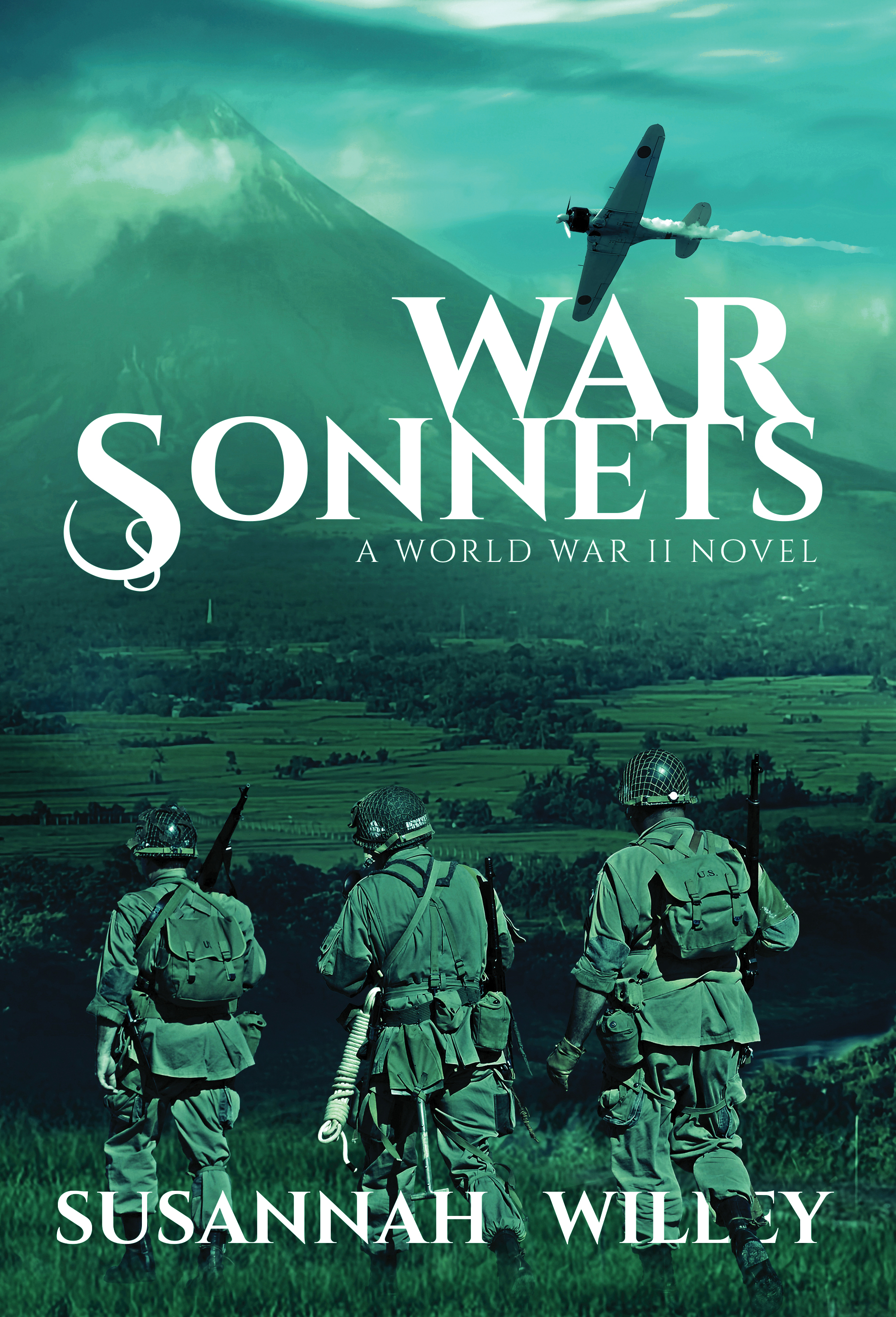
I’m delighted to be sharing an excerpt from War Sonnets by Susannah Willey.
ASSAULT FORCE
The sea is calm; upon its boundless deep
Our troopship glides, lost in infinity.
Beneath her decks two thousand soldiers sleep,
Or, waking, wonder what their fate will be.
From my assigned position here on high
I peer ahead, and in the east I see
The dawn’s pale fingers clawing at the sky,
And then, a speck of land. The enemy
Will not be sleeping.
Now the troops are out
And stand in little groups beside each boat.
The gunship’s roar drowns out the sergeant’s shout.
Rope ladders fall, the LCIs, afloat,
Receive two thousand men in war array.
Each boat, full loaded, quickly moves away.
CHAPTER 18
PHILIPPINE SEA—JANUARY 31, 1945
Leo sat against a pile of life rafts, his knees bent to support the letter he was writing. Dooley perched on a pile of rafts next to him with a handful of Aussie sailors. Their ship, the Australian transport Westralia, was part of a large convoy escorted by agile destroyers. …
“I could spend the rest of the war right here.” Dooley patted the life raft. “Whatcha think, Yankee boy?” Ever since they’d left New Guinea, Dooley had acted like his outburst at Leo’s promotion had never happened.
Leo set down his pen and took a moment to stretch his arms. “I think I’d rather be almost anywhere but on a ship.”
Dooley took a last, deep drag on his cigarette. “With our luck,” he said, exhaling smoke through his nostrils, “we’ll get sunk by a submarine before we get to Luzon.” He flicked his cigarette into the water.
“Not funny.” Leo growled.
“More likely some crazy kamikaze,” an Aussie sailor said, “locked into a bomb-loaded plane they call an Okha. But Baka is more like it: a bloody fool.” His fellow seamen snickered.
“Those mates are crazy.” The sailor propped himself up on one elbow. “One of ’em nearly sent us to kingdom come a couple months ago.” He glanced at his fellow Aussies. “Ain’t that right, mates?”
“Yeah, up in Leyte,” said another. “Missed us by a wallaby’s tail.” He held up his thumb and forefinger, an inch apart.
“About eight of them just dropped from the clouds.” The Aussie launched into his story. “Before you could blink, one of them crashed head-on into one of our carriers. Our mates couldn’t do anything but watch.”
Sitting on the open deck, Leo felt exposed. He subconsciously scanned the sky for enemy planes, strained to hear their engines. His brain struggled with an indistinct image of planes impacting with ships—something he’d really rather not imagine.
“Instead of cats and dogs, it was raining planes and bodies, machine-gun fire and bombs. Seemed like those bloody bastards were hell-bent on dying.”
One of his mates picked up the story. “The ship next to us got clobbered. Bloody Baka took out half the crew. Men flyin’ through the air like rag dolls, others stuck with shrapnel. They said the deck was covered with Jap guts and brains, all kinds of body parts and plane wreckage.”
That was something Leo couldn’t begin to imagine, and he was grateful for that. He dang sure didn’t want to get obsessed about being split into pieces by a kamikaze. “Sitting ducks” was a perfect description of their situation out here in the middle of the ocean. Except a duck was a lot harder to hit than a troopship.
The Aussie storyteller looked at Dooley. “You should’ve seen it, Yank. Helluva mess.”
Dooley bristled at that last remark. “Don’t call me a Yank.”
One of the Australian soldiers snickered. “Well, that accent of yours sure ain’t Brit.”
Dooley jumped to the deck, fists clenched at his sides. “You can call Sergeant Baldwin here a Yank cause he’s a northerner. But I’m from Loo-siana, and where I come from, calling a southern boy a Yank is fightin’ words.”
The Aussie held up a hand. “Don’t go getting your civvies wrinkled, mate. It’s just what we call Americans.”
“American’s full of goddamned mongrels, and I ain’t one of them,” Dooley growled. “We got Russkies and Polacks, Wops—and Yankees.” He spat out the word as if it was the sourest bit of vomit. “We got so many Nips they had to build prison camps to keep ’em outta our hair. And that don’t even count the spics and ni—”
Leo had about enough of Dooley’s bragging and bigotry. He held his hand out for Dooley to stop. “Yeah, we get it. You southern boys are some kind of special all right.”
Dooley glared at Leo and started pacing. “All’s I’m sayin’”—his deep southern drawl thickened as he stopped and pointed an accusing finger at the Aussie—”is don’t put me in the same kennel with the mutts.”
The sailor put up his hands in a defensive gesture. “Slow down and speak English, mate. Whatever language you’re talkin’ sounds more like Chinese.”
“Ain’t no goddamned Chink, mate.”Dooley put up his fists, took a step toward the rafts.
The Aussie jumped off the raft, ready to fight. “You ain’t winnin’ this fight, Yank.”
Dooley snarled and lunged toward the Aussie sailor, who raised his fists and took a step toward Dooley.
“Come on, fellas.” Leo didn’t want any part of this fight. Dooley was being a jerk, and it embarrassed Leo. He stepped between the two men, cautiously put a hand on Dooley’s chest. “You’re making this a bigger deal than it oughta be. Step back and cool off a minute.”
Dooley glared, but what Leo noticed was beyond Dooley: a cloud of smoke bursting from a destroyer escort in the near distance. In seconds, the air boomed with the report of multiple firing K-guns.
The harsh tones of the General Quarters alarm sent the men on the life rafts scrambling. As troops en route to the front lines, they weren’t much more than cargo—there was nothing for them to do but hide.
Adrenaline surged through Leo’s body as his brain went to work. K-guns fired depth charges. Depth charges meant enemy subs. Enemy subs meant torpedoes—likely the ones the Japs called kaitens, manned suicide bombs not unlike the kamikaze planes. They were notoriously inaccurate, but how accurate did a danged torpedo have to be? His mind was spinning out of control even as he fought to stay calm.
“Leo!” Dooley shouted from under the pile of life rafts and gestured for Leo to join him.
Dooley’s shout got his attention.
Leo’s instincts took over. He looked across the ship’s deck, crowded with frantic soldiers trying to find their way, being pushed and shoved by the ship’s crew trying to do their jobs.
“Come on, Yank.” Dooley’s voice was strained and insistent. “Get in here.”
Leo scrambled under the life rafts, pushing his way well back into the pile.
All sound was muffled now, the incessant alarm, the boom of exploding missiles, the shouts of men who hadn’t yet found cover. The skirmish sounded deceptively far away.
Leo’s heart pounded. Every breath took effort in the suffocating enclosure created by the life rafts. Was that a plane he’d heard? He struggled to shut out the noise and concentrate. His body tensed, waiting for the explosion that would collapse the deck underneath him. He struggled to breathe.
This was too soon. They weren’t supposed to fight until Luzon.
Leo thought about his future, his belief that hard work and ethics were all it took to be a success. He hadn’t counted on random things like kamikaze and kaiten. He hadn’t faced the fact that life and death didn’t take sides. He wiped the sweat from his forehead, forced himself to slow his breathing.
I’m not ready to die. Not yet.
At last, the battleships went quiet, the General Quarters alarm stilled, and the order came to stand down.
Leo pulled himself from his hiding place, watching as soldiers slowly emerged from where they had taken cover. Many of them had merely lain prone on deck with their hands covering their head.
“Holy shit.” Dooley slipped out from under the life rafts. “What in hell was that?”
Leo’s hands still trembled as he brushed off his fatigues. “Too close is what that was.” He scanned the ships in the convoy. “Doesn’t look like anyone took any damage.”
Dooley stood and turned in a slow circle as he surveyed the ships. Leo noticed that Dooley’s hands trembled almost as much as his own. The sea was quiet now, the sun bright on the water as each ship sailed on its own reflection. Neither Leo nor Dooley felt compelled to disrupt the calm.
At last, Dooley completed his rounds and turned to Leo. “Yankee boy, I think we’re at war.”
Here’s the blurb
1942: In the war-torn jungles of Luzon, two soldiers scout the landscape. Under ordinary circumstances they might be friends, but in the hostile environment of World War II, they are mortal enemies.
Leal Baldwin, a US Army sergeant, writes sonnets. His sights are set on serving his country honorably and returning home in one piece. But the enemy is not always Japanese…Dooley wants Leo’s job, and he’ll do whatever it takes to get it…Leo finds himself fighting for his reputation and freedom.
Lieutenant Tadashi Abukara prefers haiku. He has vowed to serve his emperor honorably, but finds himself fighting a losing battle. Through combat, starvation, and the threat of cannibalism, Tadashi’s only thought is of survival and return to his beloved wife and son. As Leo and Tadashi discover the humanity of the other side and the questionable moral acts committed by their own, they begin to ask themselves why they are here at all. When they at last meet in the jungles of Luzon, only one will survive, but their poetry will live forever.
Susannah Willey is a baby boomer, mother of four, grandmother of three, and a recovering nerd. To facilitate her healing, she writes novels. In past lives, she has been an office assistant, stay-at-home-mom, Special Education Teaching Assistant, School Technology Coordinator, and Emergency Medical Technician. She holds a Bachelor’s Degree in Instructional Computing from S.U.N.Y. Empire State College, and a Master’s Degree in Instructional Design from Boise State University.
Susannah grew up in the New York boondocks and currently lives in Central New York with her companion, Charlie, their dogs, Magenta and Georgie, and Jelly Bean the cat.
I’m delighted to welcome RJ Lloyd to the blog with a guest post about his new book, Burning Secret.
Burning Secret is a true story. Well, almost. The novel blurs the lines between fact and fiction as it reconstructs the real life of Enoch Price, my great-great-grandfather, and is a story many can relate to through their ancestors and family histories.
Set at the end of the nineteenth century, it spans the ocean from the squalor of Victorian London to the frontier town of Jacksonville, Florida, where civic life struggled to recover from the American Civil War and the end of slavery.
The novel operates on several levels: as a fast-paced thriller with plenty of derring-do, a morality tale of good vs. greed, and how life can easily corrupt the pursuit of happiness. Some have even suggested that underneath it all lies a tragic love story.
Burning Secret took eleven years to research and write, and the more I researched, the more I realised how much more I needed to explore. In 1881, Enoch was listed in the London Gazette as a bankrupt and destined for two years in the debtors’ prison, from which few emerged unscathed. Abandoning his wife and three young daughters, he made for Florida. It was here, in Jacksonville, with his newly created identity of Harry Mason, that he carved out his future, and, by hook or by crook, he amassed a fortune and became a powerful politician. While all of this time, his wife and daughters in England, entirely ignorant of his new persona, languished in poverty.
Researching Harry Mason in Florida required patience and persistent work. Some basic information came from the public records in Jacksonville and Tallahassee, where the librarians and archivists were exceptionally helpful.
Sixteen years after stepping ashore, homeless and destitute, Harry was elected on 15 June 1897 to the Jacksonville City Council, representing the eighth ward of Ortega, Venetia and Avondale, and in 1903, was elected to the Florida State House of Representatives, where the only surviving photograph of him is archived.
From his arrival in 1881, the Jacksonville annual trade directories trace Harry as a bartender at The European House, a bar in the Dutch style run by Nicky Arend at 80– 82 West Bay.
Several academic records held by Florida’s universities mention his involvement in Jacksonville’s 1888 deadly outbreak of Yellow Fever. He again appears in 1901, when the city was razed to the ground by the Great Fire of Jacksonville.
There are several public records and court transcripts, some held in the United States Library of Congress, which cite Harry as the promoter who, against fierce public opposition, brought the 1894 World Heavyweight Boxing Championship fight between Gentleman Jim Corbett and Charlie Mitchell to Jacksonville.
His most outstanding achievement was building the Hotel Mason, at the junction of Bay and Julia Streets, Jacksonville, which opened on 31 December 1913. The largest and most opulent hotel in Florida (demolished in 1978).
Harry, aged 75 years, died on 5 November 1919 at his home, the Villa Alexandria, near the junction of River Road and Arbor Lane in the district of San Marco. The Mitchell family originally built the extensive, almost palatial, villa in the 1870s, which came into Harry’s ownership in somewhat opaque circumstances. Long after his death, the Florida Supreme Court recorded several legal challenges to his ownership.
Indeed, based on his bigamous marriage in Jacksonville in April 1883 to Bessie Nolan, his three English daughters from his first marriage to Eliza challenged his last will in the American courts.
What an amazing story.Thank you so much for sharing.
Here’s the blurb
Inspired by actual events, Burning Secret is a dramatic and compelling tale of ambition, lies and betrayal.
Born in the slums of Bristol in 1844, Enoch Price seems destined for a life of poverty and hardship-but he’s determined not to accept his lot.
Enoch becomes a bare-knuckle fighter in London’s criminal underworld. But in a city where there’s no place for honest dealing, a cruel loan shark cheats him, leaving Enoch penniless and facing imprisonment.
Undaunted, he escapes to a new life in America and embarks on a series of audacious exploits. But even as he helps shape history, Enoch is not content. Tormented by his past and the life he left behind, Enoch soon becomes entangled in a web of lies and secrets.
Will he ever break free and find the happiness he craves?
Influenced by real people and events, Enoch’s remarkable story is one of adventure, daring, political power, deceit and, in the end, the search for redemption and forgiveness.
After retiring as a senior police officer, R J Lloyd turned his detective skills to genealogy, tracing his family history to the 16th century. However, after 15 years of extensive research, he couldn’t track down his great-great-grandfather, Enoch Price, whose wife, Eliza, had, in living memory, helped raise his mother. It was his cousin Gillian who, after several more dead-ends, called one day to say that she had found him through a fluke encounter. Susan Sperry from California, who had recently retired, decided to explore the box of documents given to her thirty years before by her mother, which she had never opened. In the box, she found some references to her great grandfather, Harry Mason, a wealthy hotel owner from Florida who had died in 1919. It soon transpired that Susan’s great grandfather, Harry Mason, was, in fact, Enoch Price.
From this single thread, the extraordinary story of Harry Mason began to unravel, leading R J Lloyd to visit the States to meet his newly discovered American cousins, and it was Susan Sperry and Kimberly Mason, direct descendants, who persuaded R J Lloyd to write the extraordinary story of their ancestor.
R J Lloyd graduated from the University of Warwick with a degree in Philosophy and Psychology and a Masters in Marketing from UWE. Since leaving a thirty-year career in policing, he’s been a non-executive director with the NHS, social housing, and other charities. He lives with his wife in Bristol, spending his time travelling, writing and producing delicious plum jam from the trees on his award-winning allotment.
A twenty-year-old cold case unearths dark secrets in the scorching-hot destination thriller from Emily Freud.
Twenty years ago, Mari vanished while backpacking through Thailand with her boyfriend, Luke. He was accused of murder, but has always insisted he’s innocent. Besides, her body was never found.
Now, he’s finally ready to talk. And filmmaker Cassidy Chambers wants to be the one to uncover what really happened, back then, in the dark of the jungle.
But as she delves deeper into the past, Cassidy begins to fear what lies ahead, and the secrets buried along the way.
Emily Freud is the author of My Best Friend’s Secret and What She Left Behind. She has worked on Emmy and BAFTA award winning television series including Educating Yorkshire and First Dates. Emily lives in North London, with her husband and two children. She is currently working on her next novel.
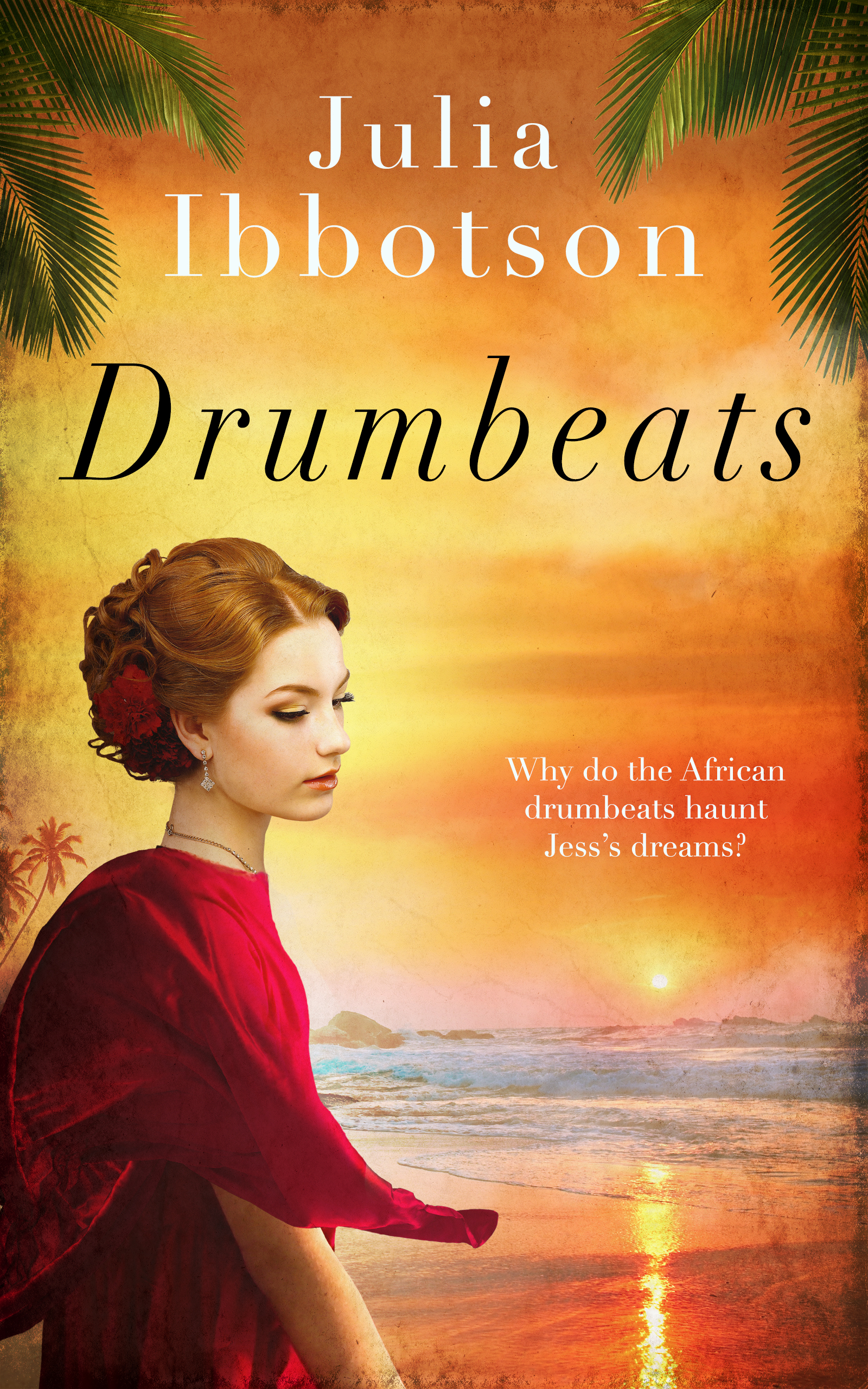
I’m delighted to welcome Julia Ibbotson to the blog with her book, Drumbeats
Here’s the blurb
It’s 1965, and 18 year old Jess escapes her stifling English home for a gap year in Ghana, West Africa. But it’s a time of political turbulence across the region. Fighting to keep her young love who waits back in England, she’s thrown into the physical and emotional dangers of civil war, tragedy and the conflict of a disturbing new relationship. And why do the drumbeats haunt her dreams?
This is a rite of passage story which takes the reader hand in hand with Jess on her journey towards the complexities and mysteries of a disconcerting adult world.
This is the first novel in the acclaimed Drumbeats trilogy: Drumbeats, Walking in the Rain, Finding Jess.
For fans of Dinah Jefferies, Kate Morton, Rachel Hore, Jenny Ashcroft
Buy Links
This title is available to read on #KindleUnlimited.
Award-winning author Julia Ibbotson herself spent an exciting time in Ghana, West Africa, teaching and nursing (like Jess in her books), and always vowed to write about the country and its past. And so, the Drumbeats Trilogy was born. She’s also fascinated by history, especially by the medieval world, and concepts of time travel, and has written haunting time-slips of romance and mystery partly set in the Anglo-Saxon period.
She studied English at Keele University, England, specialising in medieval language, literature and history, and has a PhD in linguistics. She wrote her first novel at age 10, but became a school teacher, then university lecturer and researcher. Her love of writing never left her and to date she’s written 9 books, with a 10th on the way.
Julia is a member of the Romantic Novelists Association, Society of Authors and the Historical Novel Society.
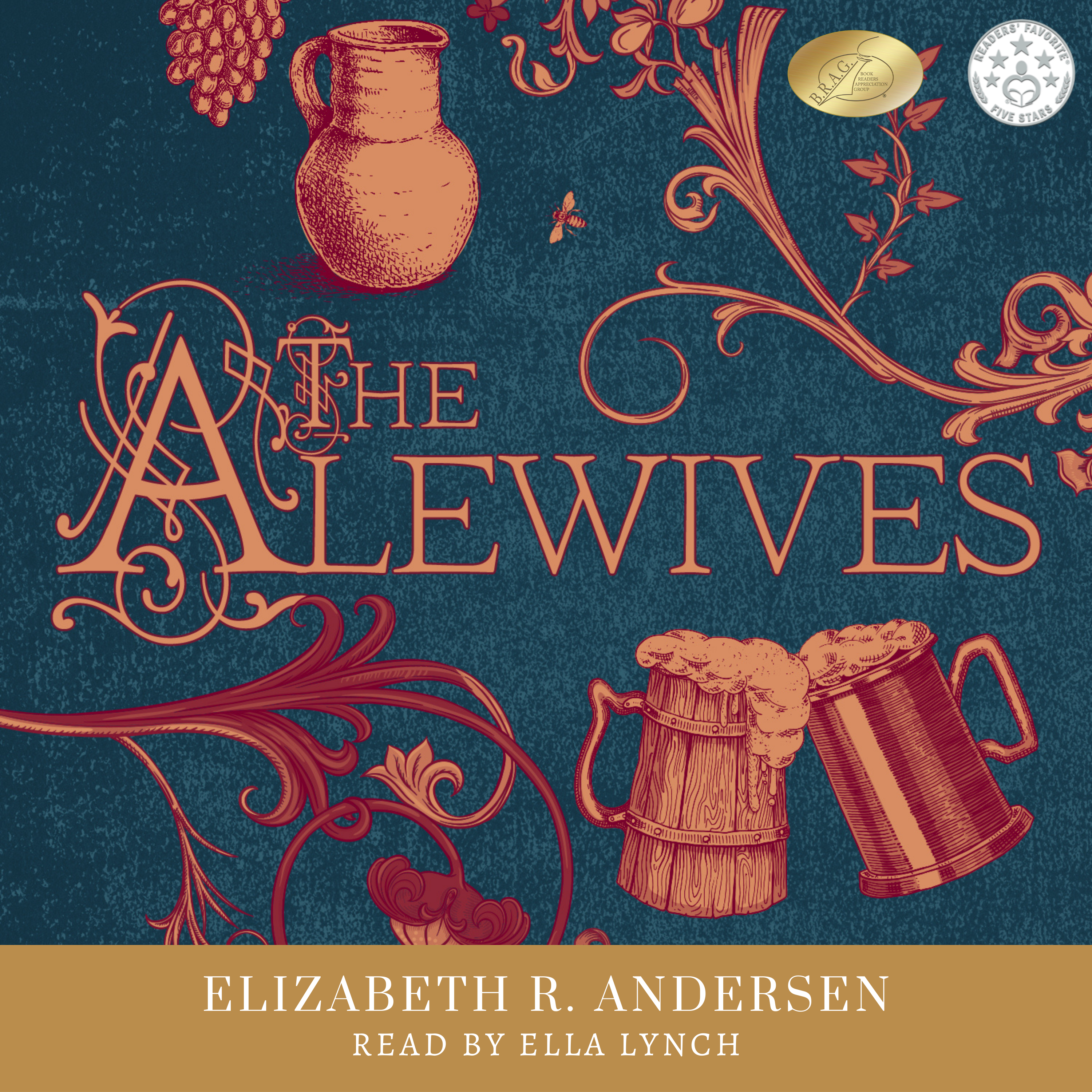
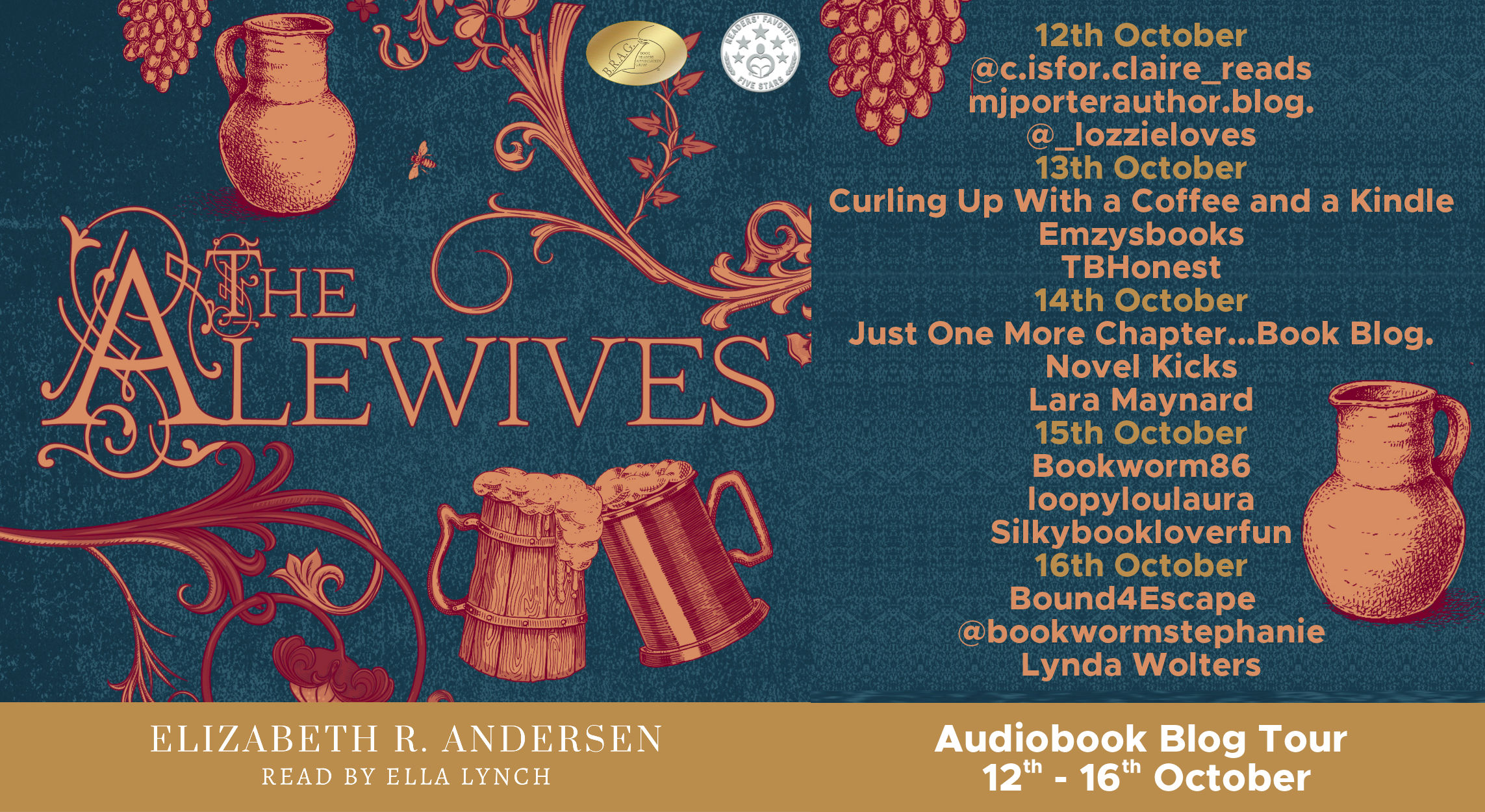
Gritta, Appel, and Efi managed to survive the Black Death, only to find that they are in desperate need of money. With limited options and lots of obstacles, they band together to become alewives – brewing and selling ale in the free Alsatian town of Colmar. But when an elderly neighbor is discovered dead in her house, the alewives cannot convince the sheriff and the town council that her death wasn’t an accident, it was murder. As the body count piles up, the ale flows and mystery is afoot!
Set in the tumultuous years after the most devastating pandemic the world has ever experienced, The Alewives is a playful romp through a dark time, when society was reeling from loss and a grieving population attempted to return to normal, proving that with the bonds of love, friendship, and humor, the human spirit will always continue to shine.
* * * * * A short, sharp, snappy, hugely entertaining, medieval mystery that portrays the realities of life at the time, with just the right amount of humour to make it thoroughly entertaining. A well-deserved 5/5 from me! – MJ Porter, author of Cragside and The Erdington Mysteries
* * * *.* ‘The Alewives’ is laid out with great compassion, insight and humour and the reader comes to care for these people! The strong and growing working relationship and friendship of the three ale wives in question and round which the action evolves is moving and profound. we are left hoping that good times – and further adventures – are just around the corner! – The Historical Fiction Company
You can see above that I’ve already read and reviewed The Alewives. (You can find my original review here) You’ll also see that I adored it! What you won’t know is that of late, I’m growing my interest in audio books, and I couldn’t resist this one.
While the storyline is amazing, told with just the right amount of humour, historical detail, intrigue, and the reality of the era, the narration adds a whole new dimension to the tale. Ella Lynch is fabulous in bringing the wonderful ‘real’ characters of Grita, Efi and Appel to life, as well as Colmar, and the collection of bumbling and ineffectual male characters.
This story will make you chuckle, make you grimace, make you growl at the unfairness of their lives, and also entirely draw you in to the mystery.
A fabulous mystery. I’ve read it, and I’ve listened to, and I recommend you do the same.
Meet the author
Although she spent many years of her life as a journalist, independent fashion designer, and overworked tech employee, there have always been two consistent loves in Elizabeth R. Andersen’s life: writing and history. She finally decided to put them both together and discovered her true love.
Elizabeth lives in the Seattle area with her young son and energetic husky. On the weekends she usually hikes in the stunning Cascade mountains to hide from people and dream up new plotlines and characters.
– Join Elizabeth’s monthly newsletter and receive the first two chapters of The Scribe for free. Sign up at https://www.elizabethrandersen.com
– Find photos of hikes and daily author life at Elizabeth’s Instagram: @elizabethrandersen
– Follow Elizabeth on Twitter for nerdy medieval history facts: @E_R_A_writes
My name is Ella Lynch, I am an experienced British audiobook narrator and nature-loving treasure seeker on an ever-evolving journey of connection and expansion through the art of storytelling.
I am an empathetic, married mum of 1, a member of the LGBTQIA+ community and a mental health advocate. My lived experiences inform my art, helping me deeply connect with the intentions behind words and relay them intuitively to the listener.
I gained a triple distinction in my (BTEC) National Diploma in Performing Arts from Truro College, and have been working as a professional audiobook narrator since 2018. In this time I have narrated over 100 audiobooks, voiced numerous healthcare explainer videos for the NHS, provided VO for children’s animated audiobooks and even dubbed a Russian commercial!
I have a particular passion and flair for Magical Realism, Literary Fiction and LGBTQIA+ Romance and Comedy, and as a voracious reader myself I absolutely thrive on bringing all words, across multiple genres, to life for listeners.
When I’m not in my booth you will likely find me walking my dog on the beach, paddleboarding an estuary, exploring the UK in my self-built campervan, playing boardgames and cooking up delicious plant-based feasts for my family. A vegan of over 20 years, I love crochet, painting, fires, swimming and hoola-hooping as well as meditating, practicing Reiki and EFT tapping and deep, heart-felt connection.
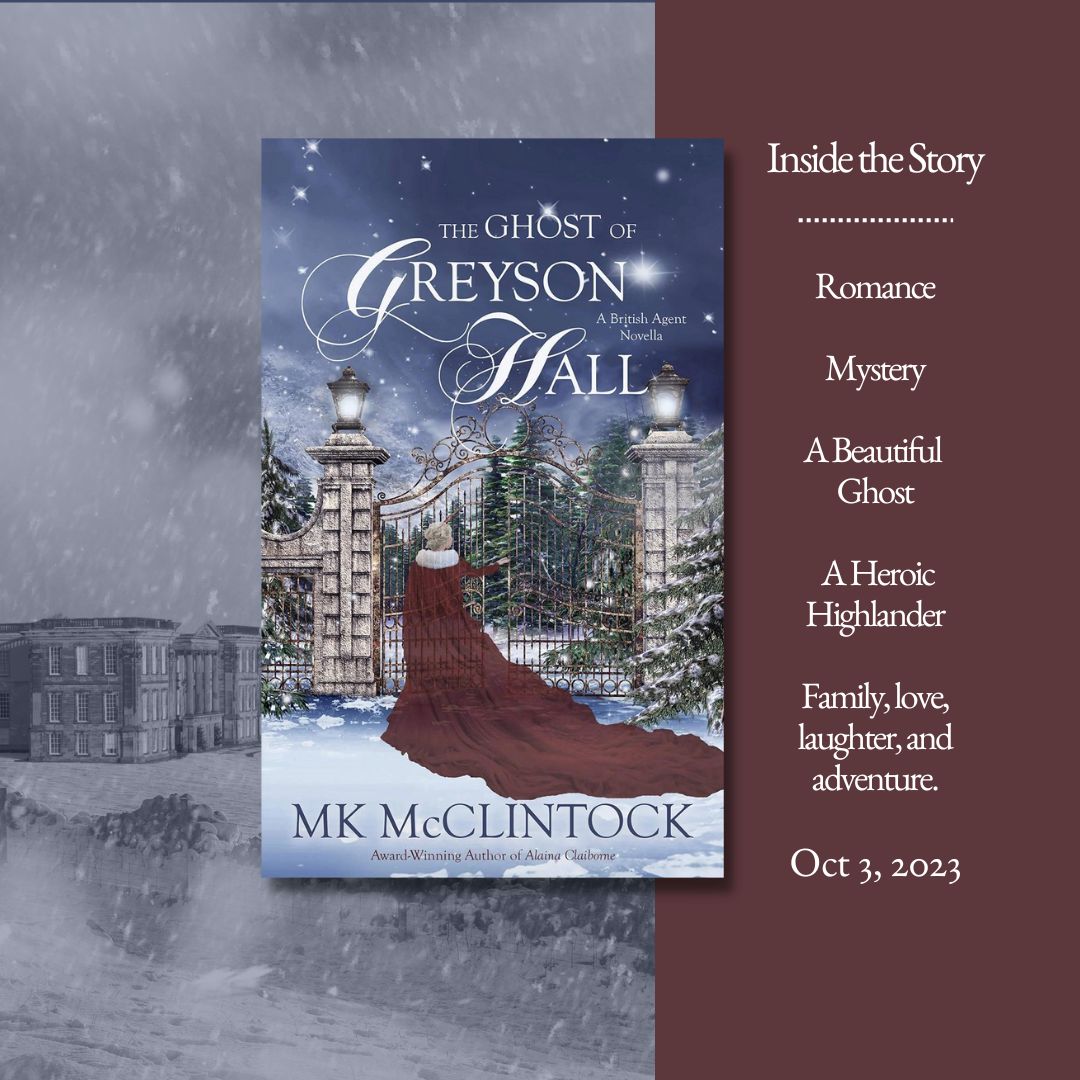
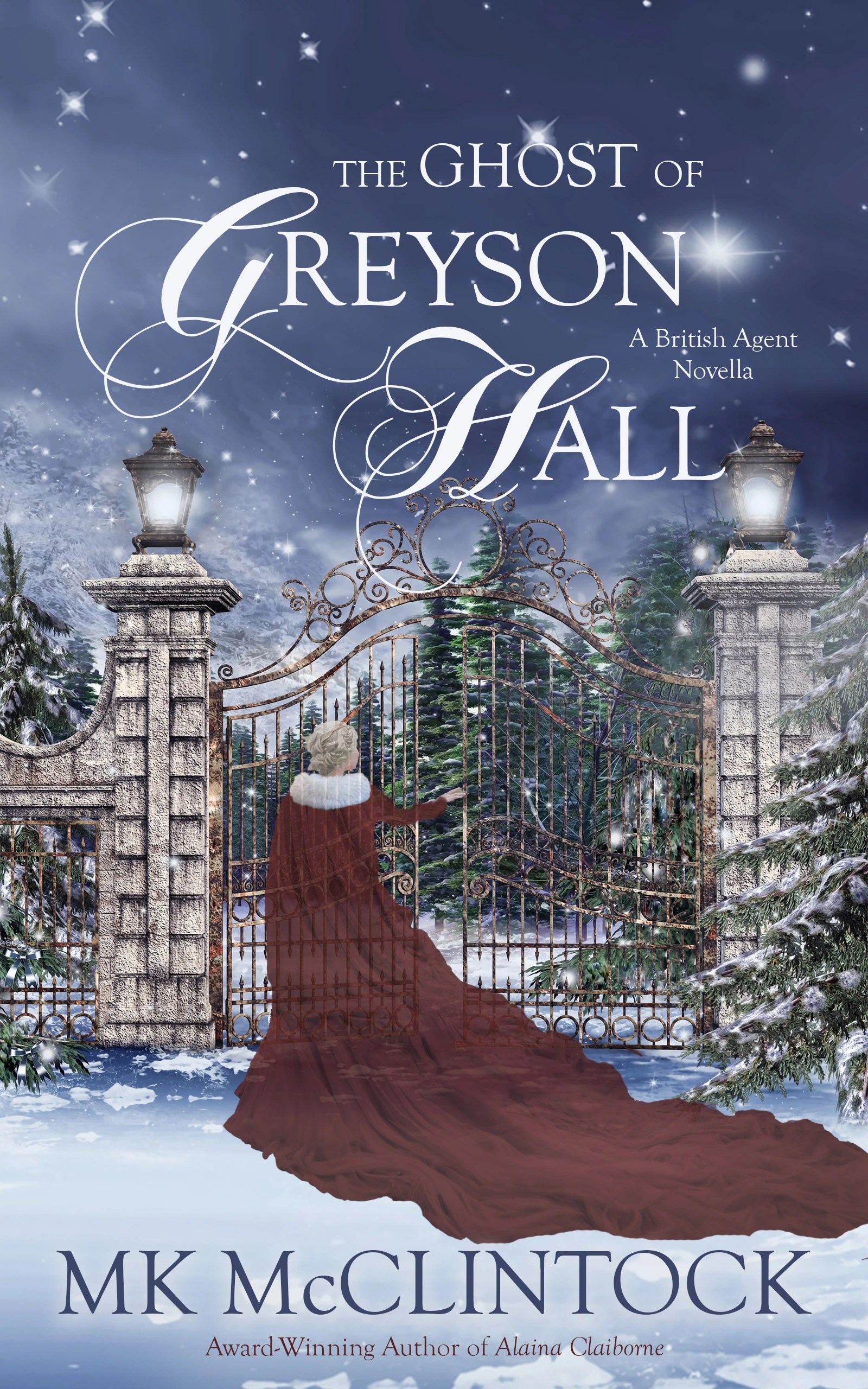
I’m delighted to be sharing an excerpt from The Ghost of Greyson Hall by MK McClintock
PROLOGUE
In the year of 1782, among the snow-dusted hills of Northumberland, Lady Grace Canterbury of Greyson Hall disappeared.
Rumors abounded. She ran away with her Highland lover, leaving her husband and son behind. Others speculated on her declining health, claiming she’d gone away to die in solitude when the fever and pain overcame her body and mind. Those who knew her never believed the gossip and resolved through the years that ruffians kidnapped her at the command of her jealous husband.
No one ever learned the truth. Lady Canterbury vanished.
She’d left behind an infant son, who had barely found comfort in his mother’s arms. A fair-haired and handsome boy who resembled his mother in coloring, including the eyes, ice blue and startling cold if it had not been for the spray of thick, black lashes.
Before the birth, Lord Spencer Canterbury had shared with her how he longed for a fair-haired daughter who looked like her mother. However, when their son made his first appearance, she saw her husband’s joy in knowing it was a strong and healthy boy who would one day inherit the title and become master of their vast estate.
How does such a lady vanish without leaving a remnant of evidence?
For more than a century, the truth remained a mystery. Lady Canterbury became a faded memory, a story to entertain and bewilder at celebrations and gatherings. For generations, speculation continued. Descendants of the family attempted to unravel the mystery of the eighteenth-century puzzle, alas to no avail. Few took the matter seriously—after all, it was long before their time—and the image of a graceful beauty with hair as pale as the risen moon and eyes the color of waves on the sea faded into history.
Once a year, an ancient secret walks the corridors of Greyson Hall, a place shrouded in mystery and whispered legend. When Devon Clayton inherited the stately mansion in England’s wild north from his uncle, he never imagined what secrets lurked within its walls, hidden for centuries. When his friends and brothers join him for the holiday, the British Agents and their families discover that their most unusual case will bring new meaning to Christmas spirit.
They must now unravel a century-old mystery if they are to break the curse and save a love that transcends time.
A long novella set in Northumberland in December 1782 and 1892. Also Available:
Alaina Claiborne
Blackwood Crossing
Clayton’s Honor
Note: The British Agent series books are written to be read as stand-alone novels. However, they each have cross-over characters, meaning characters from each book will appear in the others. The only reading order is chronological, but each title can still be read as stand-alone.
Praise for the British Agent Series:
“Ms. McClintock succeeds in masterfully weaving both genres meticulously together until mystery lovers are sold on romance and romance lovers love the mystery!”
—InD’Tale Magazine on Alaina Claiborne
“This book was perfectly-paced with mystery, romance, adventure, and so much more. I am definitely recommending that everyone who loves historical fiction in general read this book. I cannot wait to start reading the next book in this series.” —Dreams Come True Through Reading on Blackwood Crossing
“MK McClintock has spun an enchanting tale deeply entrenched in the lands of Scotland and England that will leave you riveted to your chair until you turn the last page.” —My Life, One Story at a Time on Blackwood Crossing
“Clayton’s Honor by MK McClintock is a clean historical romance that will keep your heart beating and your palms sweating. This is definitely a novel that is going on my ‘read again’ shelf! A really good and smooth read!” —Readers’ Favorite
MK McClintock is an award-winning author who writes historical romantic fiction about chivalrous men and strong women who appreciate chivalry. Her stories of romance, mystery, and adventure sweep across the American West to the Victorian British Isles with places and times between and beyond.
Her works include the following series: Montana Gallaghers, Crooked Creek, British Agents, Whitcomb Springs, and the stand-alone collection, A Home for Christmas. She is also the co-author of the McKenzie Sisters Mysteries.
MK enjoys a quiet life in the northern Rocky Mountains. Visit her online home at www.mkmcclintock.com, where you can learn more about her books, explore extras, and subscribe to receive news.