Author of Saxon historical fiction and non-fiction, 20th-century historical mysteries, and Norse-inspired historical romantasy. Book reviewer and blog host.
A twenty-year-old cold case unearths dark secrets in the scorching-hot destination thriller from Emily Freud.
Twenty years ago, Mari vanished while backpacking through Thailand with her boyfriend, Luke. He was accused of murder, but has always insisted he’s innocent. Besides, her body was never found.
Now, he’s finally ready to talk. And filmmaker Cassidy Chambers wants to be the one to uncover what really happened, back then, in the dark of the jungle.
But as she delves deeper into the past, Cassidy begins to fear what lies ahead, and the secrets buried along the way.
Emily Freud is the author of My Best Friend’s Secret and What She Left Behind. She has worked on Emmy and BAFTA award winning television series including Educating Yorkshire and First Dates. Emily lives in North London, with her husband and two children. She is currently working on her next novel.
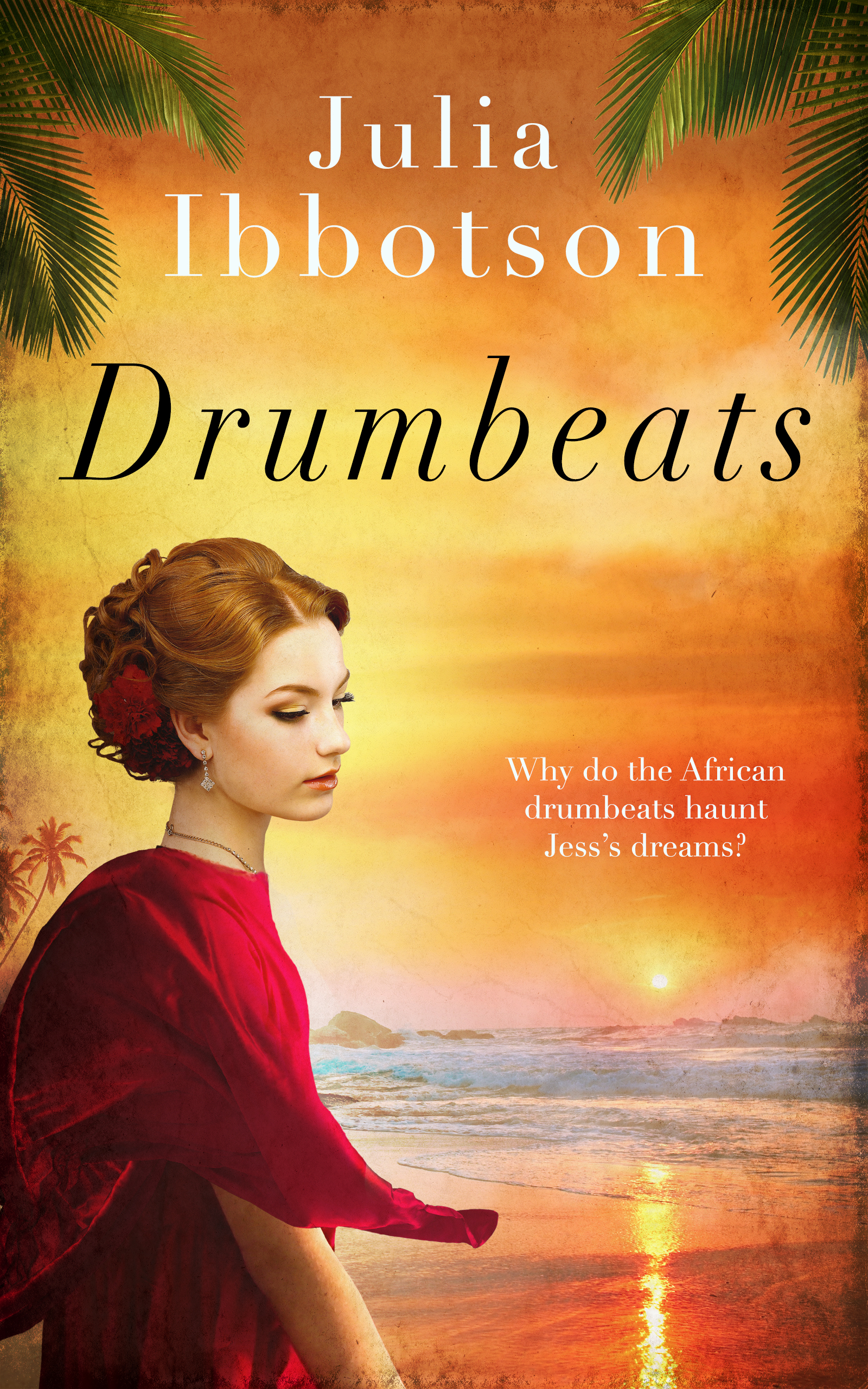
I’m delighted to welcome Julia Ibbotson to the blog with her book, Drumbeats
Here’s the blurb
It’s 1965, and 18 year old Jess escapes her stifling English home for a gap year in Ghana, West Africa. But it’s a time of political turbulence across the region. Fighting to keep her young love who waits back in England, she’s thrown into the physical and emotional dangers of civil war, tragedy and the conflict of a disturbing new relationship. And why do the drumbeats haunt her dreams?
This is a rite of passage story which takes the reader hand in hand with Jess on her journey towards the complexities and mysteries of a disconcerting adult world.
This is the first novel in the acclaimed Drumbeats trilogy: Drumbeats, Walking in the Rain, Finding Jess.
For fans of Dinah Jefferies, Kate Morton, Rachel Hore, Jenny Ashcroft
Buy Links
This title is available to read on #KindleUnlimited.
Award-winning author Julia Ibbotson herself spent an exciting time in Ghana, West Africa, teaching and nursing (like Jess in her books), and always vowed to write about the country and its past. And so, the Drumbeats Trilogy was born. She’s also fascinated by history, especially by the medieval world, and concepts of time travel, and has written haunting time-slips of romance and mystery partly set in the Anglo-Saxon period.
She studied English at Keele University, England, specialising in medieval language, literature and history, and has a PhD in linguistics. She wrote her first novel at age 10, but became a school teacher, then university lecturer and researcher. Her love of writing never left her and to date she’s written 9 books, with a 10th on the way.
Julia is a member of the Romantic Novelists Association, Society of Authors and the Historical Novel Society.
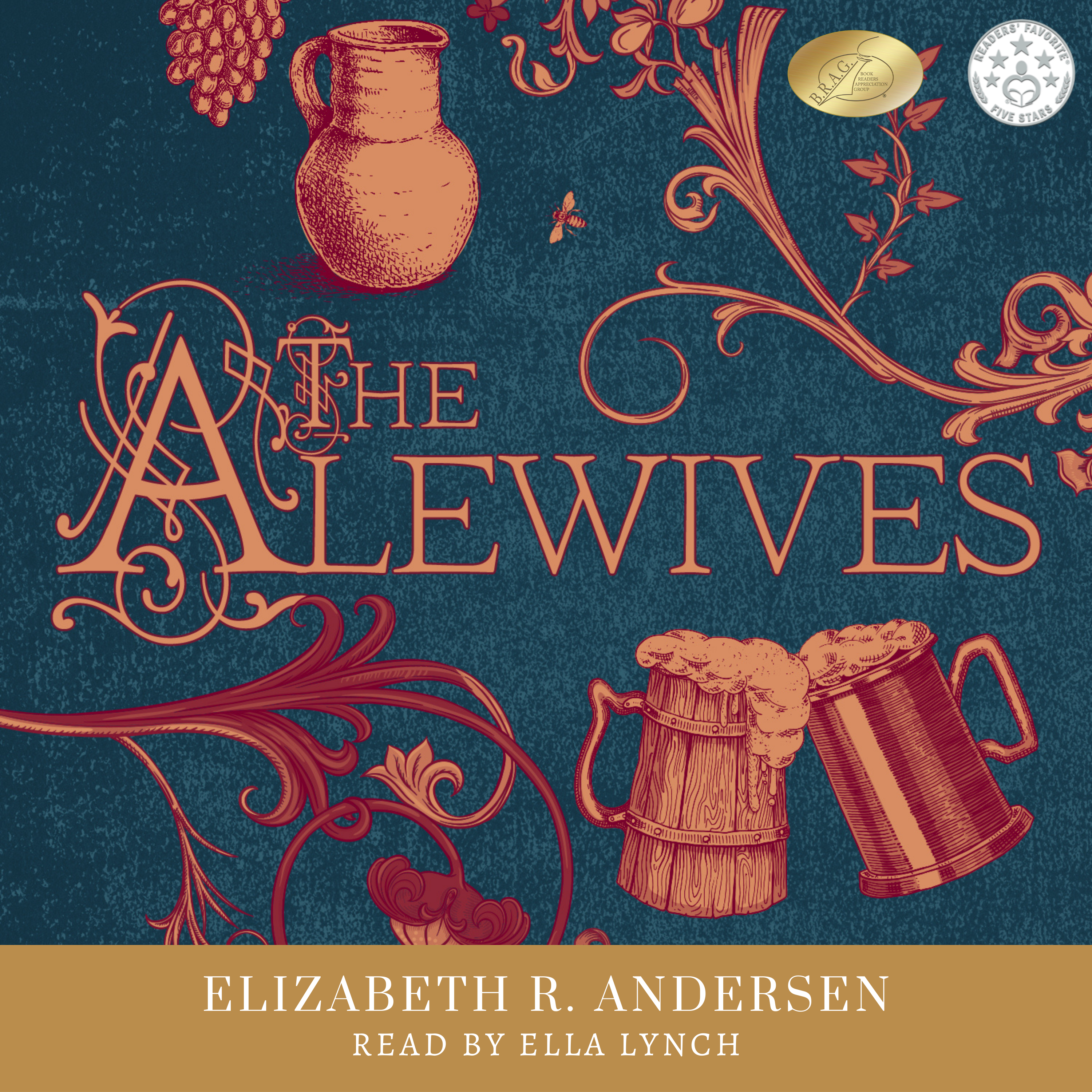
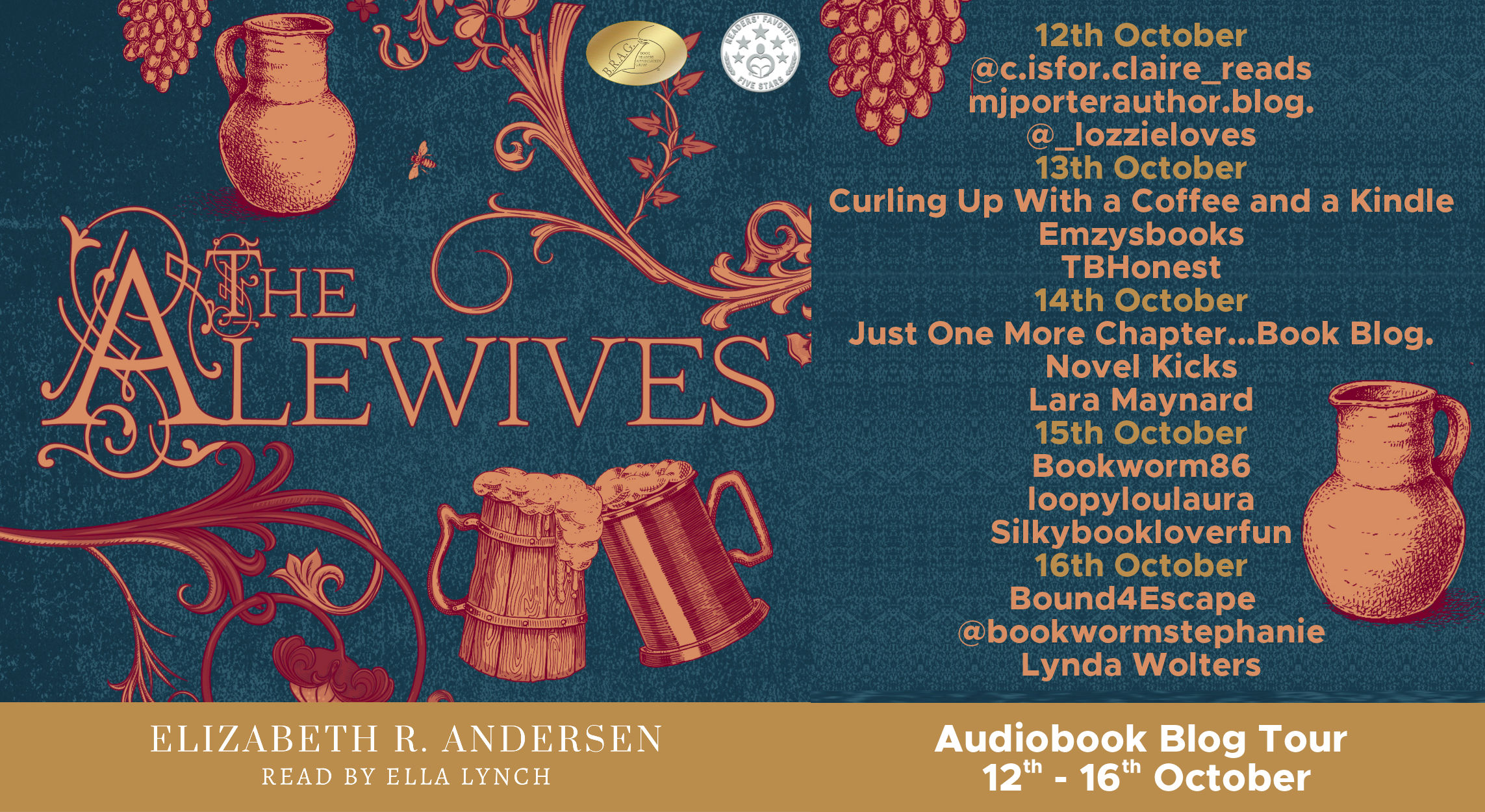
Gritta, Appel, and Efi managed to survive the Black Death, only to find that they are in desperate need of money. With limited options and lots of obstacles, they band together to become alewives – brewing and selling ale in the free Alsatian town of Colmar. But when an elderly neighbor is discovered dead in her house, the alewives cannot convince the sheriff and the town council that her death wasn’t an accident, it was murder. As the body count piles up, the ale flows and mystery is afoot!
Set in the tumultuous years after the most devastating pandemic the world has ever experienced, The Alewives is a playful romp through a dark time, when society was reeling from loss and a grieving population attempted to return to normal, proving that with the bonds of love, friendship, and humor, the human spirit will always continue to shine.
* * * * * A short, sharp, snappy, hugely entertaining, medieval mystery that portrays the realities of life at the time, with just the right amount of humour to make it thoroughly entertaining. A well-deserved 5/5 from me! – MJ Porter, author of Cragside and The Erdington Mysteries
* * * *.* ‘The Alewives’ is laid out with great compassion, insight and humour and the reader comes to care for these people! The strong and growing working relationship and friendship of the three ale wives in question and round which the action evolves is moving and profound. we are left hoping that good times – and further adventures – are just around the corner! – The Historical Fiction Company
You can see above that I’ve already read and reviewed The Alewives. (You can find my original review here) You’ll also see that I adored it! What you won’t know is that of late, I’m growing my interest in audio books, and I couldn’t resist this one.
While the storyline is amazing, told with just the right amount of humour, historical detail, intrigue, and the reality of the era, the narration adds a whole new dimension to the tale. Ella Lynch is fabulous in bringing the wonderful ‘real’ characters of Grita, Efi and Appel to life, as well as Colmar, and the collection of bumbling and ineffectual male characters.
This story will make you chuckle, make you grimace, make you growl at the unfairness of their lives, and also entirely draw you in to the mystery.
A fabulous mystery. I’ve read it, and I’ve listened to, and I recommend you do the same.
Meet the author
Although she spent many years of her life as a journalist, independent fashion designer, and overworked tech employee, there have always been two consistent loves in Elizabeth R. Andersen’s life: writing and history. She finally decided to put them both together and discovered her true love.
Elizabeth lives in the Seattle area with her young son and energetic husky. On the weekends she usually hikes in the stunning Cascade mountains to hide from people and dream up new plotlines and characters.
– Join Elizabeth’s monthly newsletter and receive the first two chapters of The Scribe for free. Sign up at https://www.elizabethrandersen.com
– Find photos of hikes and daily author life at Elizabeth’s Instagram: @elizabethrandersen
– Follow Elizabeth on Twitter for nerdy medieval history facts: @E_R_A_writes
My name is Ella Lynch, I am an experienced British audiobook narrator and nature-loving treasure seeker on an ever-evolving journey of connection and expansion through the art of storytelling.
I am an empathetic, married mum of 1, a member of the LGBTQIA+ community and a mental health advocate. My lived experiences inform my art, helping me deeply connect with the intentions behind words and relay them intuitively to the listener.
I gained a triple distinction in my (BTEC) National Diploma in Performing Arts from Truro College, and have been working as a professional audiobook narrator since 2018. In this time I have narrated over 100 audiobooks, voiced numerous healthcare explainer videos for the NHS, provided VO for children’s animated audiobooks and even dubbed a Russian commercial!
I have a particular passion and flair for Magical Realism, Literary Fiction and LGBTQIA+ Romance and Comedy, and as a voracious reader myself I absolutely thrive on bringing all words, across multiple genres, to life for listeners.
When I’m not in my booth you will likely find me walking my dog on the beach, paddleboarding an estuary, exploring the UK in my self-built campervan, playing boardgames and cooking up delicious plant-based feasts for my family. A vegan of over 20 years, I love crochet, painting, fires, swimming and hoola-hooping as well as meditating, practicing Reiki and EFT tapping and deep, heart-felt connection.
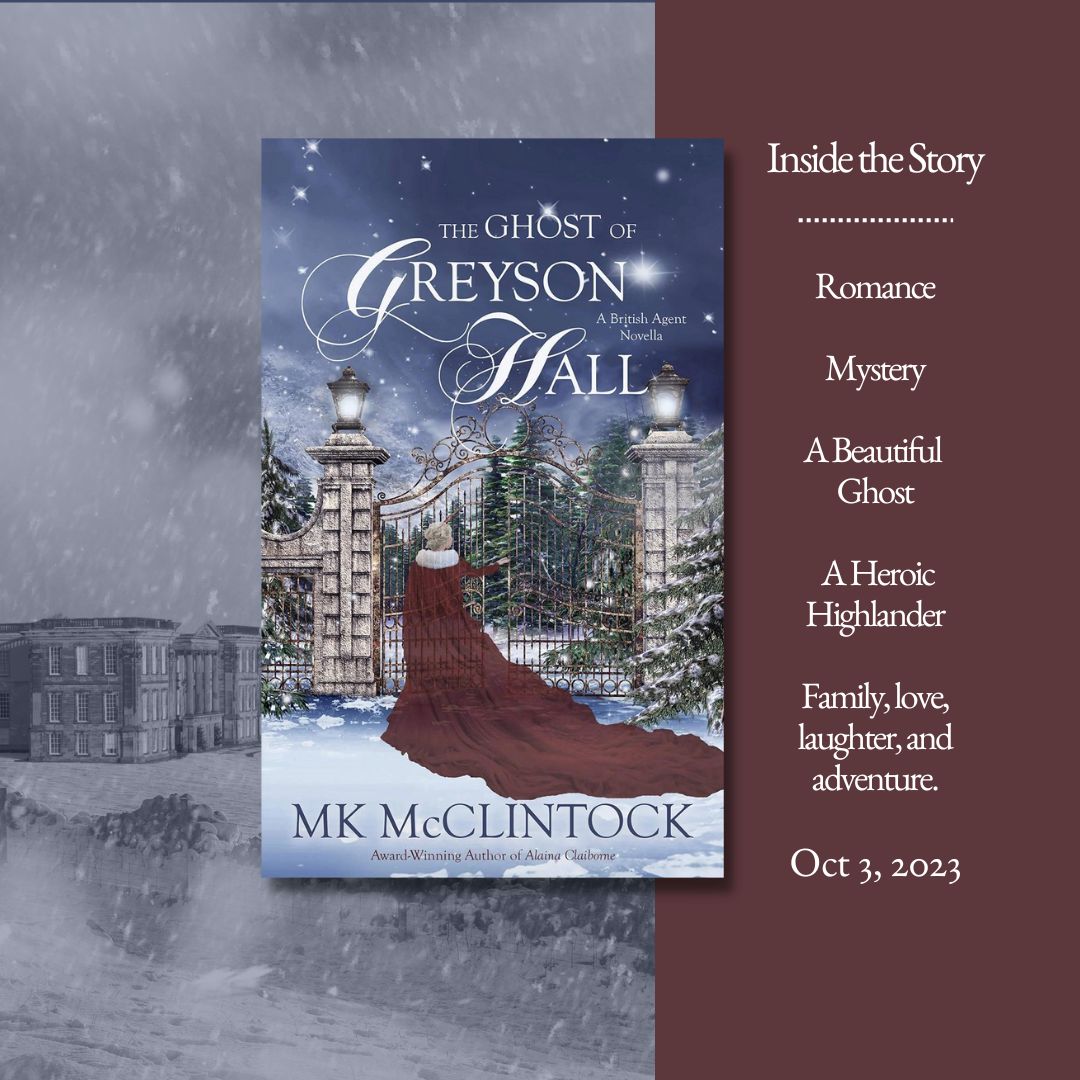
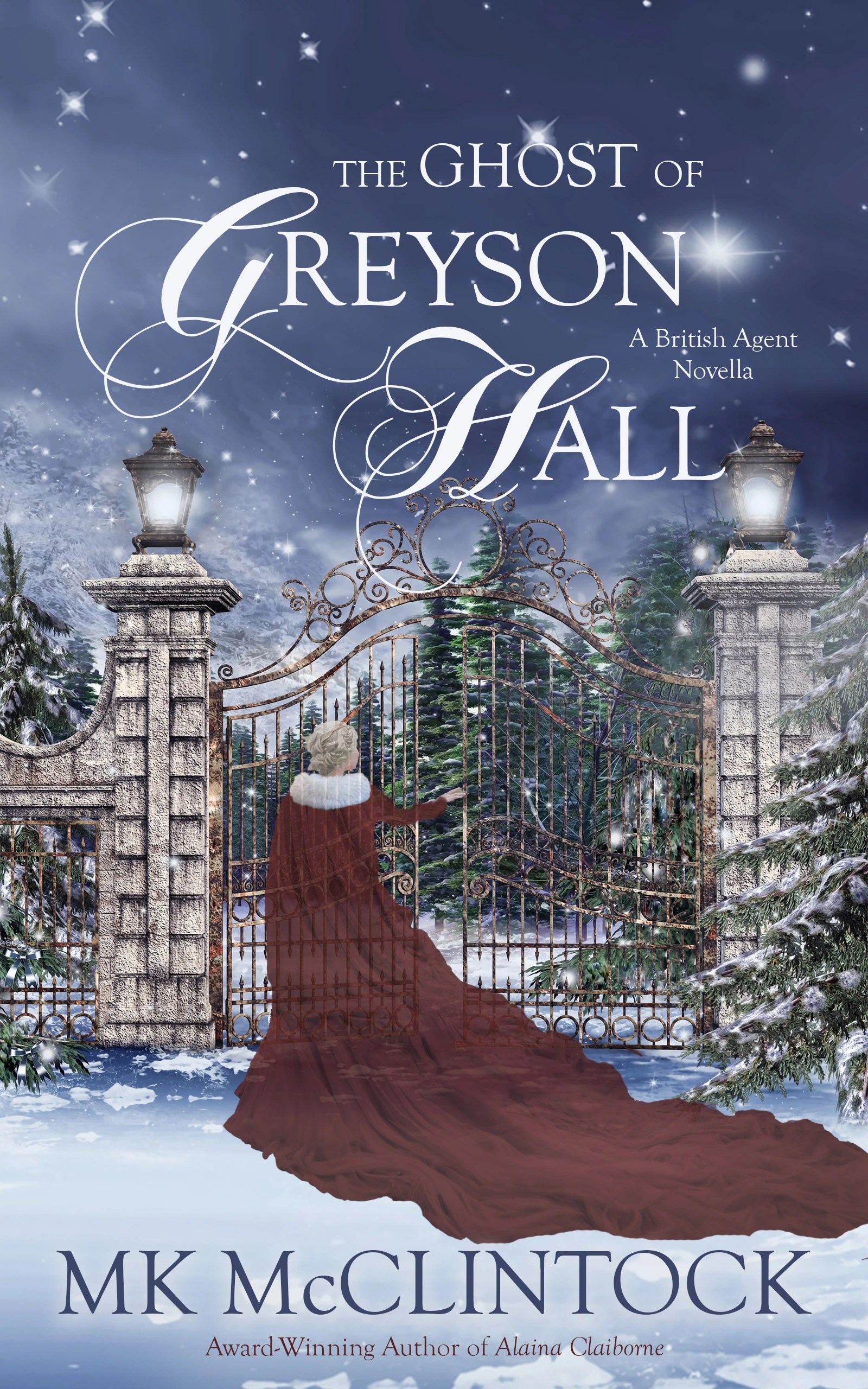
I’m delighted to be sharing an excerpt from The Ghost of Greyson Hall by MK McClintock
PROLOGUE
In the year of 1782, among the snow-dusted hills of Northumberland, Lady Grace Canterbury of Greyson Hall disappeared.
Rumors abounded. She ran away with her Highland lover, leaving her husband and son behind. Others speculated on her declining health, claiming she’d gone away to die in solitude when the fever and pain overcame her body and mind. Those who knew her never believed the gossip and resolved through the years that ruffians kidnapped her at the command of her jealous husband.
No one ever learned the truth. Lady Canterbury vanished.
She’d left behind an infant son, who had barely found comfort in his mother’s arms. A fair-haired and handsome boy who resembled his mother in coloring, including the eyes, ice blue and startling cold if it had not been for the spray of thick, black lashes.
Before the birth, Lord Spencer Canterbury had shared with her how he longed for a fair-haired daughter who looked like her mother. However, when their son made his first appearance, she saw her husband’s joy in knowing it was a strong and healthy boy who would one day inherit the title and become master of their vast estate.
How does such a lady vanish without leaving a remnant of evidence?
For more than a century, the truth remained a mystery. Lady Canterbury became a faded memory, a story to entertain and bewilder at celebrations and gatherings. For generations, speculation continued. Descendants of the family attempted to unravel the mystery of the eighteenth-century puzzle, alas to no avail. Few took the matter seriously—after all, it was long before their time—and the image of a graceful beauty with hair as pale as the risen moon and eyes the color of waves on the sea faded into history.
Once a year, an ancient secret walks the corridors of Greyson Hall, a place shrouded in mystery and whispered legend. When Devon Clayton inherited the stately mansion in England’s wild north from his uncle, he never imagined what secrets lurked within its walls, hidden for centuries. When his friends and brothers join him for the holiday, the British Agents and their families discover that their most unusual case will bring new meaning to Christmas spirit.
They must now unravel a century-old mystery if they are to break the curse and save a love that transcends time.
A long novella set in Northumberland in December 1782 and 1892. Also Available:
Alaina Claiborne
Blackwood Crossing
Clayton’s Honor
Note: The British Agent series books are written to be read as stand-alone novels. However, they each have cross-over characters, meaning characters from each book will appear in the others. The only reading order is chronological, but each title can still be read as stand-alone.
Praise for the British Agent Series:
“Ms. McClintock succeeds in masterfully weaving both genres meticulously together until mystery lovers are sold on romance and romance lovers love the mystery!”
—InD’Tale Magazine on Alaina Claiborne
“This book was perfectly-paced with mystery, romance, adventure, and so much more. I am definitely recommending that everyone who loves historical fiction in general read this book. I cannot wait to start reading the next book in this series.” —Dreams Come True Through Reading on Blackwood Crossing
“MK McClintock has spun an enchanting tale deeply entrenched in the lands of Scotland and England that will leave you riveted to your chair until you turn the last page.” —My Life, One Story at a Time on Blackwood Crossing
“Clayton’s Honor by MK McClintock is a clean historical romance that will keep your heart beating and your palms sweating. This is definitely a novel that is going on my ‘read again’ shelf! A really good and smooth read!” —Readers’ Favorite
MK McClintock is an award-winning author who writes historical romantic fiction about chivalrous men and strong women who appreciate chivalry. Her stories of romance, mystery, and adventure sweep across the American West to the Victorian British Isles with places and times between and beyond.
Her works include the following series: Montana Gallaghers, Crooked Creek, British Agents, Whitcomb Springs, and the stand-alone collection, A Home for Christmas. She is also the co-author of the McKenzie Sisters Mysteries.
MK enjoys a quiet life in the northern Rocky Mountains. Visit her online home at www.mkmcclintock.com, where you can learn more about her books, explore extras, and subscribe to receive news.
Uncovering a web of conspiracy that intertwines past and present, can Lady Beatrice and DCI Richard Fitzwilliam catch a killer and unveil the truth of her husband’s death at long last?
BREAKING NEWS Second Senior Police Officer Dies Within a Week
A senior officer from the Protection and Investigations (Royal) Services died unexpectedly yesterday. His death comes hot on the heels of Detective Inspector Ethan Preece (43) from City Police, who died of a suspected heart attack last week. Although he’s not yet been named, the dead officer was a greatly respected public figure, who had served in policing for over thirty years. A PaIRS spokesperson has confirmed that ‘neither men’s death is being treated as suspicious at this time’.
With the senior PaIRS officer dead, so is any hope of reopening the inquiry into Lady Beatrice’s husband’s accident fifteen years ago. Unless, of course, there is something that links the two men to the earl’s fatal car crash?
Can she and Fitzwilliam, along with their friends, work together to unravel the mystery and catch a killer before the truth is buried forever?
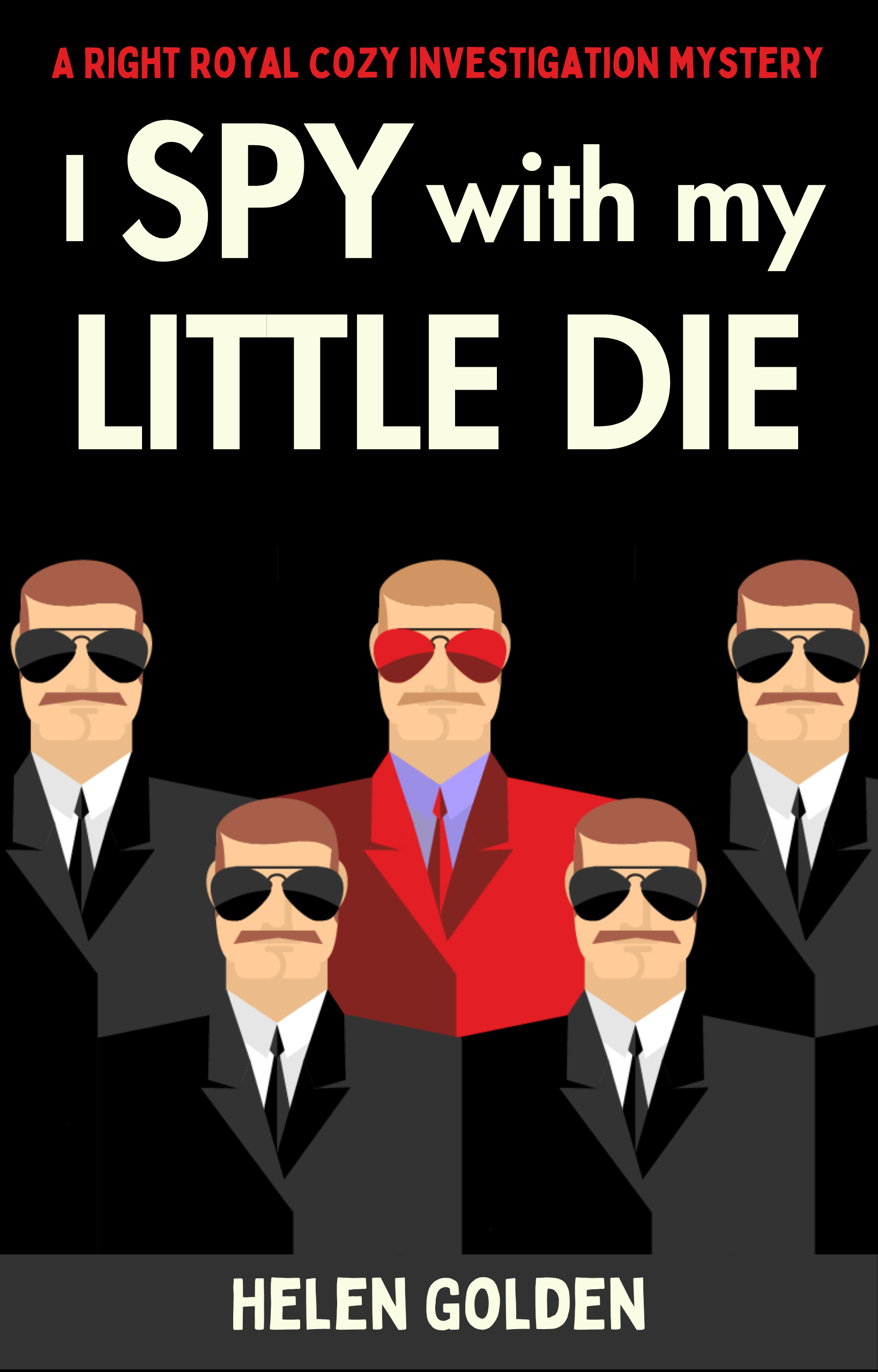
I Spy With My Little Die is the sixth book in the Right Royal Cozy Investigation Mystery Series. I have read ALL the previous novels, including the prequel, which has to be read at a certain point in the series, and the author’s free short story about how some of the characters first met. You guessed it, I love this series, and this new instalment doesn’t disappoint.
There has been a long-running mystery burbling away in the background of the previous books. In I Spy With My Little Die, we finally get our answers – I’m not moaning – I’ve adored how the author has woven this other element through the stories – but it does feel as though it’s the right time to GET SOME ANSWERS. And the answers we get are well worth the wait.
As with any series, the characters grow on the reader. Lady Bea, Perry, Simon and Fitzwilliam have all had their moments throughout the earlier books, and in this one, it’s really Fitzwilliam who gets his chance to shine – which, again, is good and about time. There is much less of the ‘stately home as a background element’ to this book. Much of the action takes place in London, and much of it in offices, and there is a bit more of a police-procedural feel to this one, but don’t let that put you off. Fitzwilliam really does have an intriguing murder to solve, and while we, the reader, might be more clued in than Fitzwilliam, leading to a few ‘don’t do that moments,’ it really does only add to the enjoyment.
The plotting is tight, and the story moves quickly towards our long-awaited conclusion. While I’m not one to put my star marking on the blog, I assure you this is a 5/5.
If you’ve not yet read any of the Right Royal Cosy mystery books but you love contemporary cosy mysteries, then I urge you to give the first book in the series a chance. I assure you, you’ll soon be hooked and surging towards this sixth book. And despite how pleased I am to finally have some answers, I’m also delighted that the series will continue. I think there’s a lot more for Lady Bea, Fitzwilliam, Perry, Simon and one little white terrier to uncover.
Check out my reviews for previous books in the series
Hello. I’m Helen Golden. I write British contemporary cozy whodunnits with a hint of humour. I live in small village in Lincolnshire in the UK with my husband, my step-daughter, her two cats, our two dogs, sometimes my step-son, and our tortoise.
I used to work in senior management, but after my recent job came to a natural end I had the opportunity to follow my dreams and start writing. It’s very early in my life as an author, but so far I’m loving it.
It’s crazy busy at our house, so when I’m writing I retreat to our caravan (an impulsive lockdown purchase) which is mostly parked on our drive. When I really need total peace and quiet, I take it to a lovely site about 15 minutes away and hide there until my family runs out of food or clean clothes
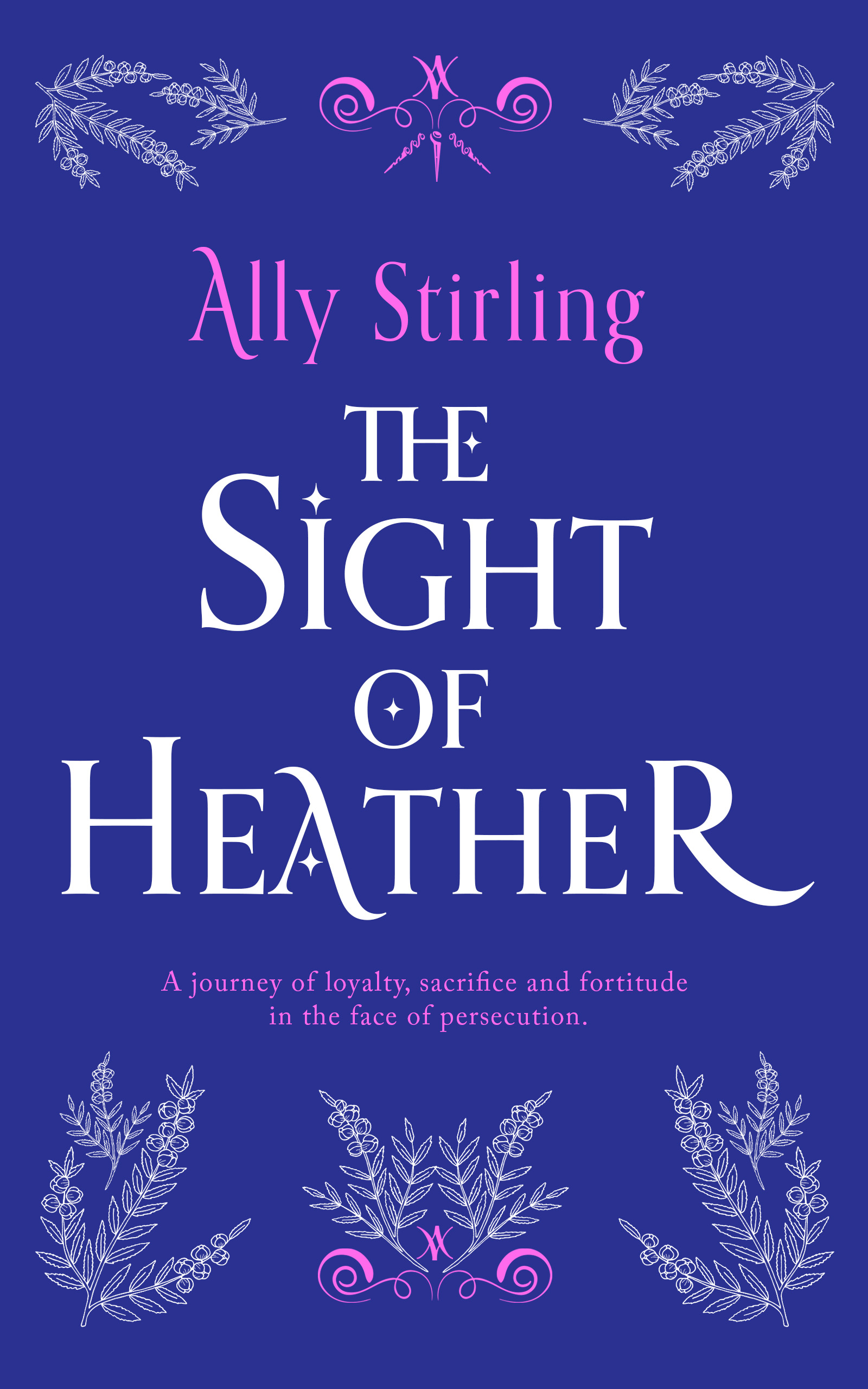
I’m delighted to welcome Ally Stirling and her new book, The Sight of Heather to the blogwith a snippet from the book.
Snippet
Her mind emptied as she breathed in the aroma of white heather still hanging in the air from making Jessie’s dress. The stones warmed. Sitting cross-legged, she let her body sway before slipping into weightlessness. Time stood still as her surroundings melted into the dark, allowing her mind to travel. An indeterminate time passed before she opened her eyes, returned both stones to their bag, wrapped the tartan knot in brown paper with a sprig of the white heather from Jessie’s bouquet, then packed both away. After pushing the chest back to its place under the bed, she changed into her nightclothes, climbed into bed, blew out the candle, then prayed to her guides … before crying herself to sleep.
Here’s the blurb
For centuries, the fae folk and spae women of Scotland were feared – and persecuted.
Life in the 1800s countryside, with its unforgiving climate, was both magnificent and harsh – testing cultures, beliefs and the loyalties of crofters.
The first in this series, The Sight of Heather, begins a journey of allegiance, sacrifice, and fortitude in a land of bold, resilient women.
Jessie’s ideal life spirals when she learns she is a first daughter in a biological line of ‘spaes’ endowed with unique gifts of spiritual sight and healing, aided by powerful ancestral stones.
Backed by a vindictive priest intent on charging Jessie with murder and witchcraft, the new owner of the Cruachan Manor plots to rout the spaes and destroy their beloved forest.
Despite grave warnings and family conflict, Jessie determinedly pursues her skills and powers, plunging her family and village into danger.
Resolute in uplifting her fellow women, Jessie consults her stones.
Faced with those who deem her evil, she must choose to relinquish her craft, or sacrifice herself to protect her culture and kin – and Lily, the next first daughter – the future of the spaes.
Ally Stirling is a Fiction writer of Scottish origin, currently living in Cape Town with her Braveheart husband, awesome children, the happiest dog in the world, and her menacing cat (aka ‘Devil Cat’).
An unexpected gift resulting in a prophetic message prompted Ally to give her passion for writing the time it demanded, and in 2018 she joined Cathy Eden’s Working with Words writers group. She credits the love, support, and inspiration of this group of talented women, her ‘writing tribe’ for encouraging her to put words on paper. She also joined (ROSA,) and while Romance is not her genre, this association has been an invaluable source of knowledge and insight into the indie publishing world.
Allowing her imagination freedom to roam resulted in various short stories, before one in particular rooted itself, evolving into her first full-length novel. This book has now become first in a series, with the second and third ready to follow, four and five in the planning stage. Who knew her characters would be so demanding.
Her love of writing fiction stems from her belief that it transports us to magical places when life gets too real.
Addicted to her friends, coffee, every colour of wine, and any type of chocolate, she describes her clan as the family and friends who have built her castle and keep her sane, without whom she’d be short on humour and drinking games.
I’m sharing a snippet from Susan E Sage’s new novel, Dancing in the Ring.
Catherine stared at an oak tree outside the classroom window without seeing the young man on the branch staring back in at her.
That humid early September afternoon, she was preoccupied with the fact that in less than a year, at age twenty-five, she’d be one of only four women in her graduating class. That is, if she passed all her remaining classes at the Detroit College of Law. She’d done well until this point, but anything could happen. Her single hope: to someday soon wear the cap and gown.
Then Catherine noticed the most handsome man she’d ever seen smiling at her from a tree branch. The oak tree was right outside the window, so she could see his brown wavy hair, the cleft in his chin, and even a dimple on his cheek. He wore a straw boater hat and tipped it her way when he caught her noticing him. She knew he was a fellow student as she’d noticed him before in the hallways, and at a few lectures.
He almost took her breath away, not because he was there on the branch, but because he was so darn handsome. “Only Valentino could compare,” she’d later confide to Molly, her sister. She fanned her face when he persisted to stare at her. Throughout college, she’d prided herself on not having been much distracted by young men, but now she’d become a silly schoolgirl.
Somehow she knew he expected her to avoid his stare. Instead, she returned it. Five minutes left of class, so why not have a little fun? It was also the last day of classes for the term.
As Catherine predicted, he found it unnerving. He imitated an ape and began scratching his underarm. At this, she nudged a friend sitting next to her. “Joan, get a load of what’s outside on the tree branch!” Enjoying even more attention, he began making loud ape-like noises. Then he almost lost his footing.
Here’s the blurb:
Detroit in the 1920s proved to be the Paris of the West for many – including Catherine McIntosh and Robert Sage. These two law school students become as passionate about each other as they are their dreams.
From a poor family in the Detroit neighborhood of Corktown, Catherine learned early on, the necessity of being resilient. She becomes one of the first women in Detroit to obtain a law degree. Bob, the ‘battling barrister,’ boxes in order to pay for law school. Despite his gruff and tough-boy personality, my great uncle Bob was a friend to all: judges, cops, and even a couple members of the notorious Purple Gang. The couple becomes legendary in legal circles for their commitment to social justice causes – as well as notorious in the local speakeasies and dancehalls.
At first, their optimism seems boundless, as it had for so many following an era of trauma and challenges that include the 1918 flu pandemic. It isn’t long before their passionate courtship turns into a tempestuous marriage. Then the Great Depression hits and their lives are forever changed.
Buy Links:
This title is available to read on #KindleUnlimited.
Susan Sage has published three novels: Insominy (2015), A Mentor and Her Muse (2017), and Dancing in the Ring (2023). Her writing has appeared in various literary magazines and journals. She received her English degree from Wayne State University where she was a recipient of the Tompkins Award in creative writing.
Although a Detroit native, she has resided most of her adult life in Flushing, Michigan with her husband and two cats.
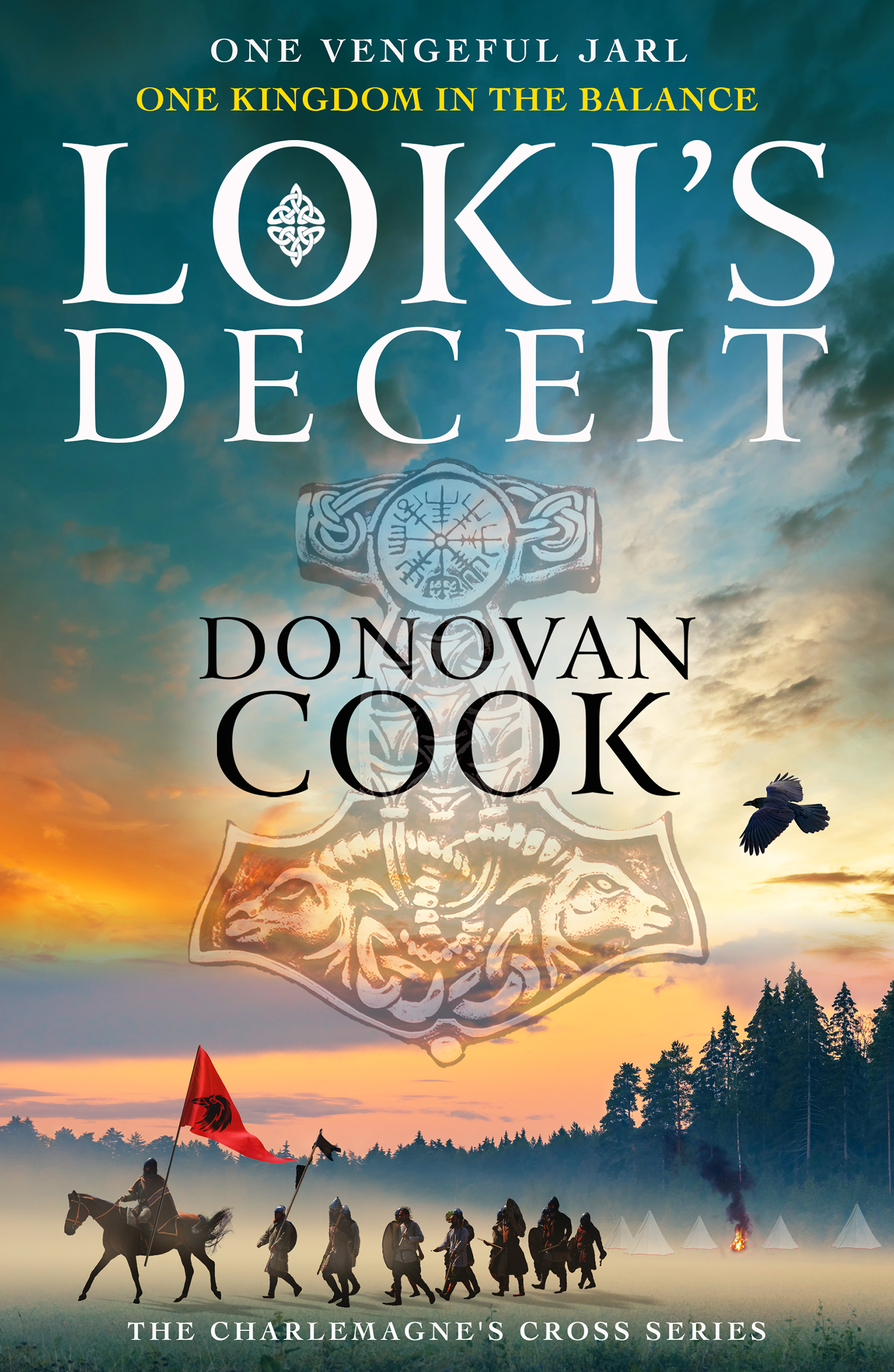
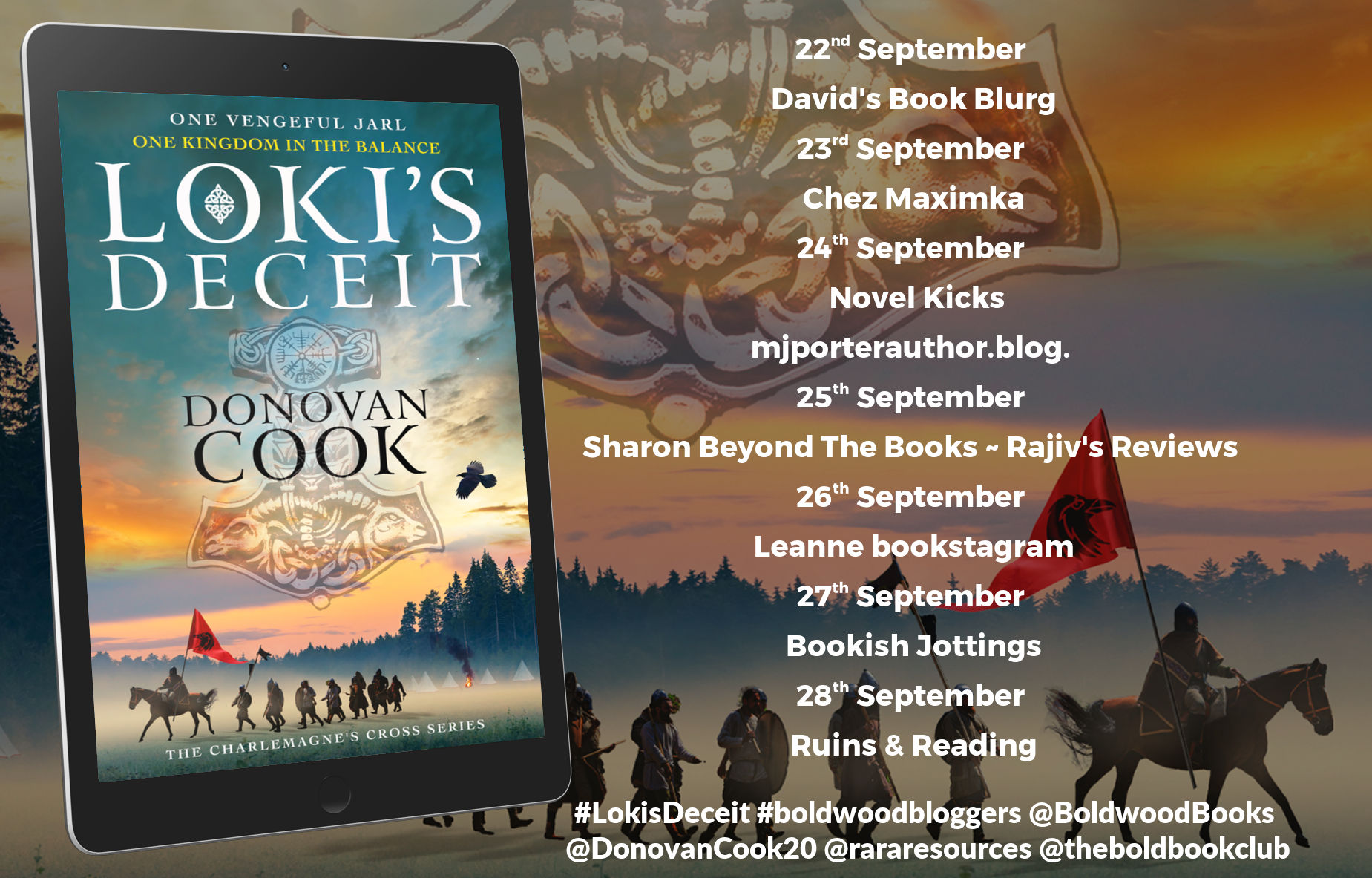
A challenger filled with vengeance. A kingdom’s fate at stake.
Sven the Boar is Jarl of Ribe once more. He and Charles try to settle into their new lives, but trouble and treachery are never too far away.
Tormented by recent events, Charles struggles to adapt to life amongst the heathens that mock his Christian God and the arrival of a priest from the south only makes things worse.
Meanwhile, Sven is burdened with the responsibilities of being Jarl again and protecting his grandson from those hunting him.
When forced into an alliance with King Horik’s nephew who is raising an army to challenge his uncle for the throne of Denmark, Sven makes an important decision.
As the threat of war becomes real, Sven rides to fight a battle that will change the destiny of Denmark.
But whilst he fights, will Charles remain safe or are other games in play that threaten him?
Loki’s Deceit is book 2 in the Charlemagne’s Cross Series. Check out my review for Odin’s Betrayal. Do you need to have read book 1? Probably, but I’m always happy to read books out of order, and you will certainly enjoy it if you do jump in now.
Loki’s Deceit begins almost immediately after the catastrophic events of Odin’s Betrayal. Charles and his grandfather, Sven, are still uncomfortable around one another, and neither of them is happy to find themselves in Ribe – Sven because he doesn’t relish being jarl once more, and Charles because he’s far from home and with no fellow Christians for friends.
We also have a few new points of view for Loki’s Deceit, that of Hildegard and that of Gerold. They add some of the richer background elements to the story, filling in the gaps for how the events of book 1 came about, for this is really a tale of impending war amongst the Danish jarls and their king, even while Charles and Sven battle their inner turmoils. Not only is their war, but conspiracy abounds wherever Sven and Charles turn. There are many characters that we shouldn’t trust and which Sven and Charles should also be mindful of, all bound up with their combined unease anyway. The settlement of Ribe is filled with men, women, and children who don’t like Charles at all or, indeed, his grandfather, the mighty Sven the Boar. There are many keen to take Sven’s position, and there are many who would welcome that.
For me, this felt very much as though this was more Sven’s story than Charles’. Not that we don’t get just as much Charles as Sven, but Sven is the warrior who will be forced to fight for his survival and that of his fellow warriors, while Charles is still not sure what he’s fighting for, although he is prepared to fight.
As with Odin’s Betrayal, the action continues until the last page, and I am looking forward to book 3.
Loki’s Deceit is a tale of loyalty, ambition, family, politics and religious divide, sure to appeal to fans of the era and historical fiction in general. It’s fabulous to read a series set (almost) entirely in Denmark.
Meet the author
Donovan Cook is the author of the well-received Ormstunga Saga series which combines fast-paced narrative with meticulously researched history of the Viking world, and is inspired by his interest in Norse Mythology
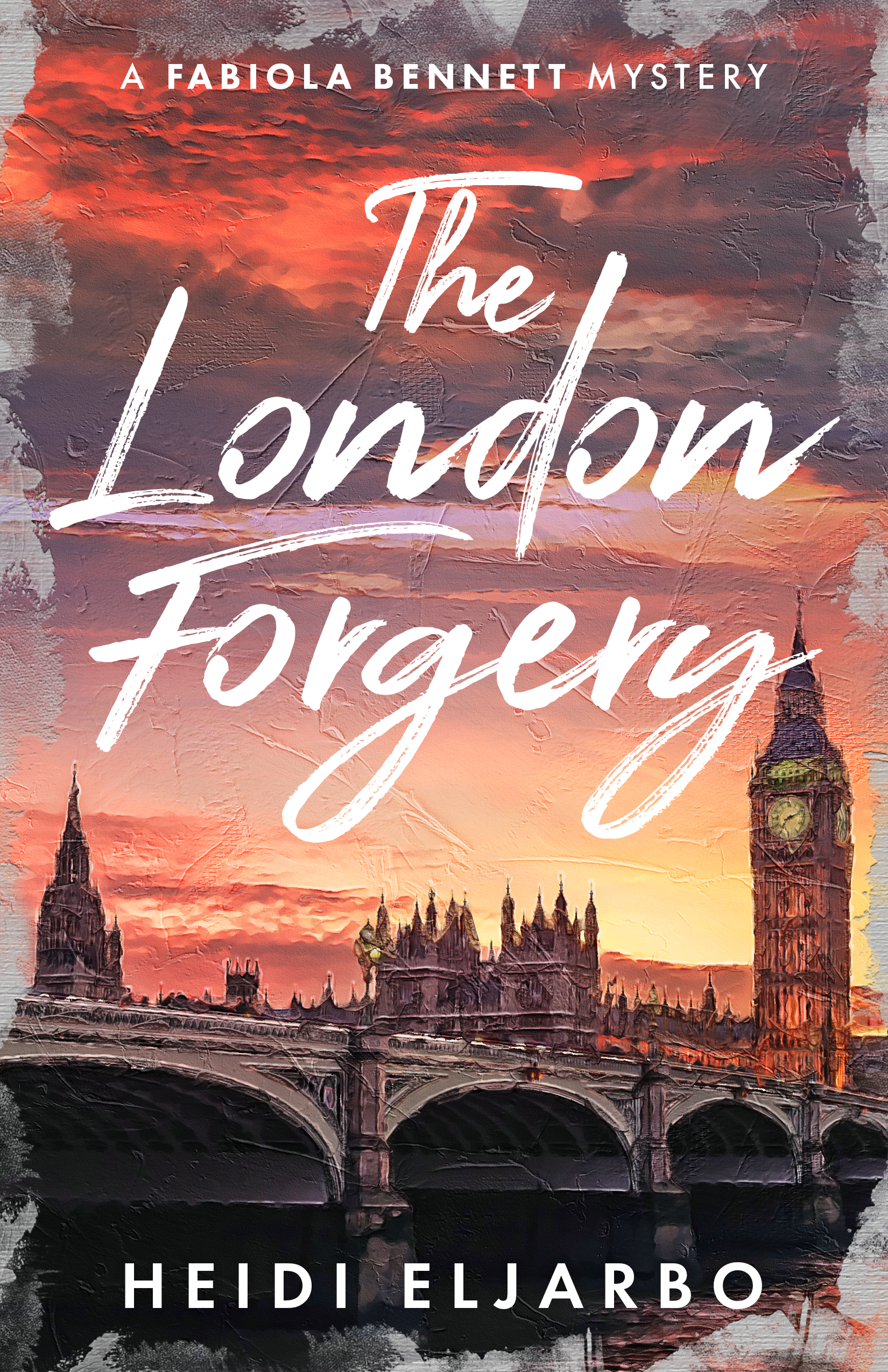
I’m delighted to welcome Heidi back to the blog with a post about her new novel, The London Forgery.
They say a historical novel takes place at least fifty years back in time. It has its setting in a certain period in history, and the author paints a picture with words of what it was like to live back then. That author must love research, must love history, must love delving into the sight, sounds, and smells of that time.
And what’s not to love about that? I have days when I probably spend more time on research than I do on the actual writing process. Because historical accuracy is important, right? It would be an anachronism to read about a cell phone in a 1960’s novel.
To make things even more complicated, I love dual-timeline novels. And I enjoy writing them. The London Forgery is such a novel. The main character, an art historian named Fabiola Bennett, has been asked to help solve an art mystery…a serious one…and there’s a problem at the National Gallery in London.
The year is 1973. Phew! Just enough years back in time to call it historical fiction. But back up a minute. I was in my early teens in 1973. I’ve lived a while, but don’t feel like I’m historical quite yet. But, oh, how fun it was to check the facts about everything from blue and white police cars to what year chocolate digestives came on the market. I went into my own memory bank when I did research for the main story, and I looked at old pictures. My sister was several years older than me and ruled the fashion of that decade. I can remember the long skirts and dresses I wore, my orange platform shoes, and listening to my favorite music. Back then, my bedroom had green walls and sported a bright-orange plastic lampshade. A small transistor radio tuned to Radio Luxembourg sat on the windowsill.
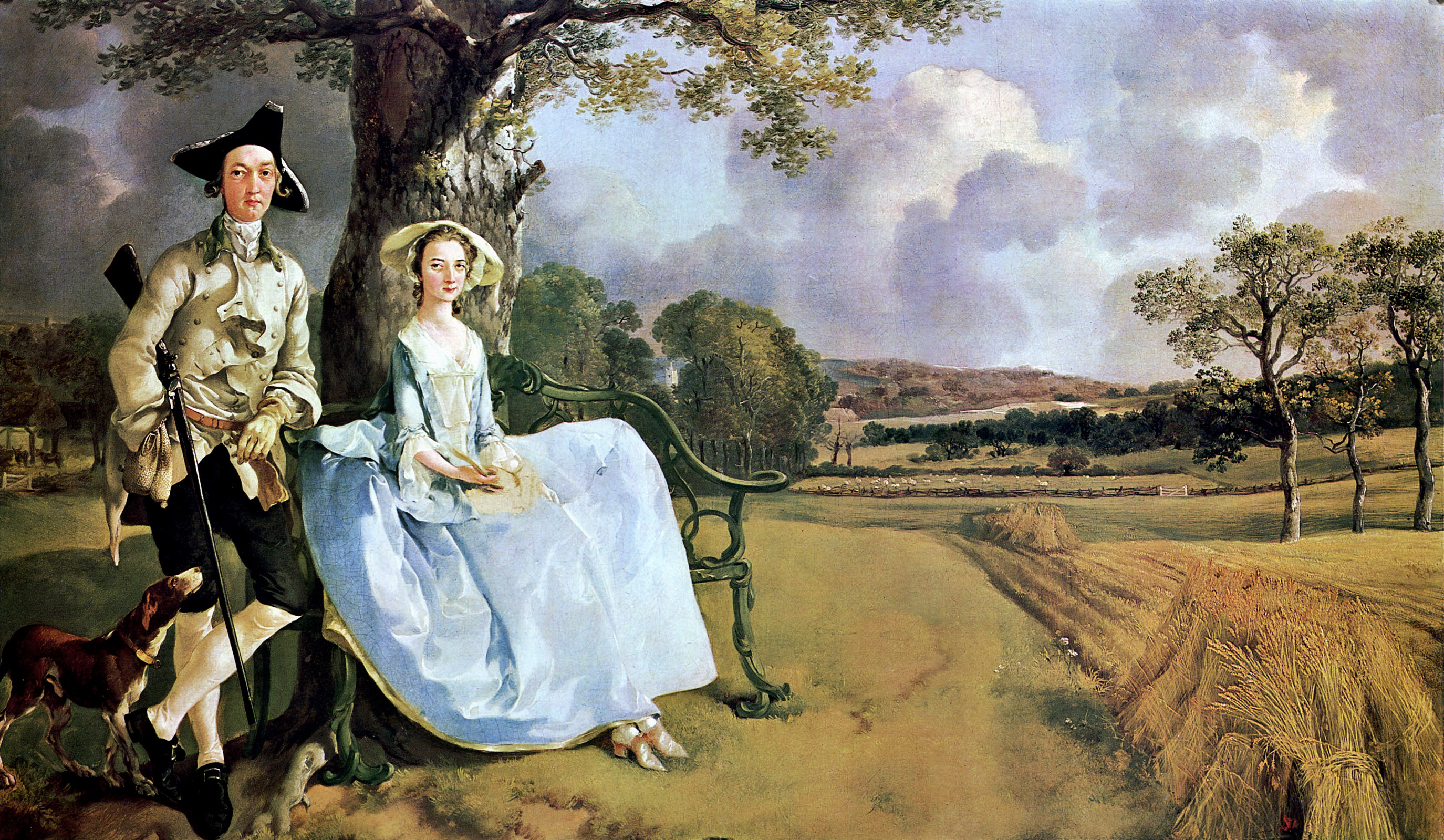
In The London Forgery, Fabiola rushes off to London. A mysterious note has been delivered anonymously at the door of the National Gallery, and the director needs her help. The message is confusing, but it seems one of her favorite eighteenth-century portraits is in trouble. As always, Fabiola will take too many risks as she tries to solve the mystery involving the British artist Thomas Gainsborough and his 1750 portrait called Mr. and Mrs. Andrews.
But what about the other story? I mentioned The London Forgery is a dual-timeline novel. Each of the books in this series will have a secondary story about a famous artist—a story that blends in with the main theme of the book.
Writing about Gainsborough and his love for his wife, the process of painting the famous masterpiece, and the young sitters Robert and Frances Andrews was pure joy. There’s much information about these two couples. I listened to lectures about them, read umpteen articles, and studied the beautiful painting.
Mr. and Mrs. Andrews now hangs upstairs in room thirty-five in the National Gallery on Trafalgar Square in London. Go see it if you can. It’s worth the trip.
Take care, Heidi Eljarbo
Here’s the blurb
1973. Art historian Fabiola Bennett sees herself as a prudently observant deer who becomes a daring and even mischievous lioness if the situation calls for it. And that’s exactly what’s required when greedy criminals steal, forge, and tamper with treasured artwork. When the crooks add murder to their list of crimes, the chaos is complete.
A mysterious note is delivered anonymously at the door of the National Gallery in London, and the director immediately calls Fabiola’s office in Oslo and pleads with her to come without delay. The message is confusing, but it seems one of her favorite eighteenth-century portraits is in trouble.
Fabiola hops on the first plane and meets up with her vibrant side-kick Pippa Yates and the ever-loyal Detective Inspector Cary Green from New Scotland Yard. But she is not naïve enough to think untangling the purpose and meaning of the mysterious note will be as simple as a walk in Hyde Park. These things never are.
1750. Newly married Robert and Frances Andrews, members of the landed gentry of Suffolk, England, hire young and talented Thomas Gainsborough to paint their wedding portrait. Their desire is a lovely conversation piece showing their wealth and class, an artwork to remember them by for generations to come.
Little do they know the gifted artist portrays their personalities exactly how he perceives them, and the artistic symbolism is not as flattering as they’d hoped for. Even the looming clouds in the distance promise a troublesome future.
This is the first book in a new dual timeline series by Heidi Eljarbo—an intriguing spin-off from the much-loved Soli Hansen Mysteries.
Fans of Lucinda Riley, Rhys Bowen, Kathleen McGurl, Kate Morton, and Katherine Neville will love this cozy historical art mystery, which takes the readers back to the nostalgia of the groovy seventies and the classical Georgian era of the eighteenth century.
Heidi Eljarbo is the bestselling author of historical fiction and mysteries filled with courageous and good characters that are easy to love and others you don’t want to go near.
Heidi grew up in a home filled with books and artwork and she never truly imagined she would do anything other than write and paint. She studied art, languages, and history, all of which have come in handy when working as an author, magazine journalist, and painter.
After living in Canada, six US states, Japan, Switzerland, and Austria, Heidi now calls Norway home. She and her husband have fifteen grandchildren—so far—in addition to a bouncy Wheaten Terrier.
Their favorite retreat is a mountain cabin, where they hike in the summertime and ski the vast, white terrain during winter.
Heidi’s favorites are family, God’s beautiful nature, and the word whimsical.
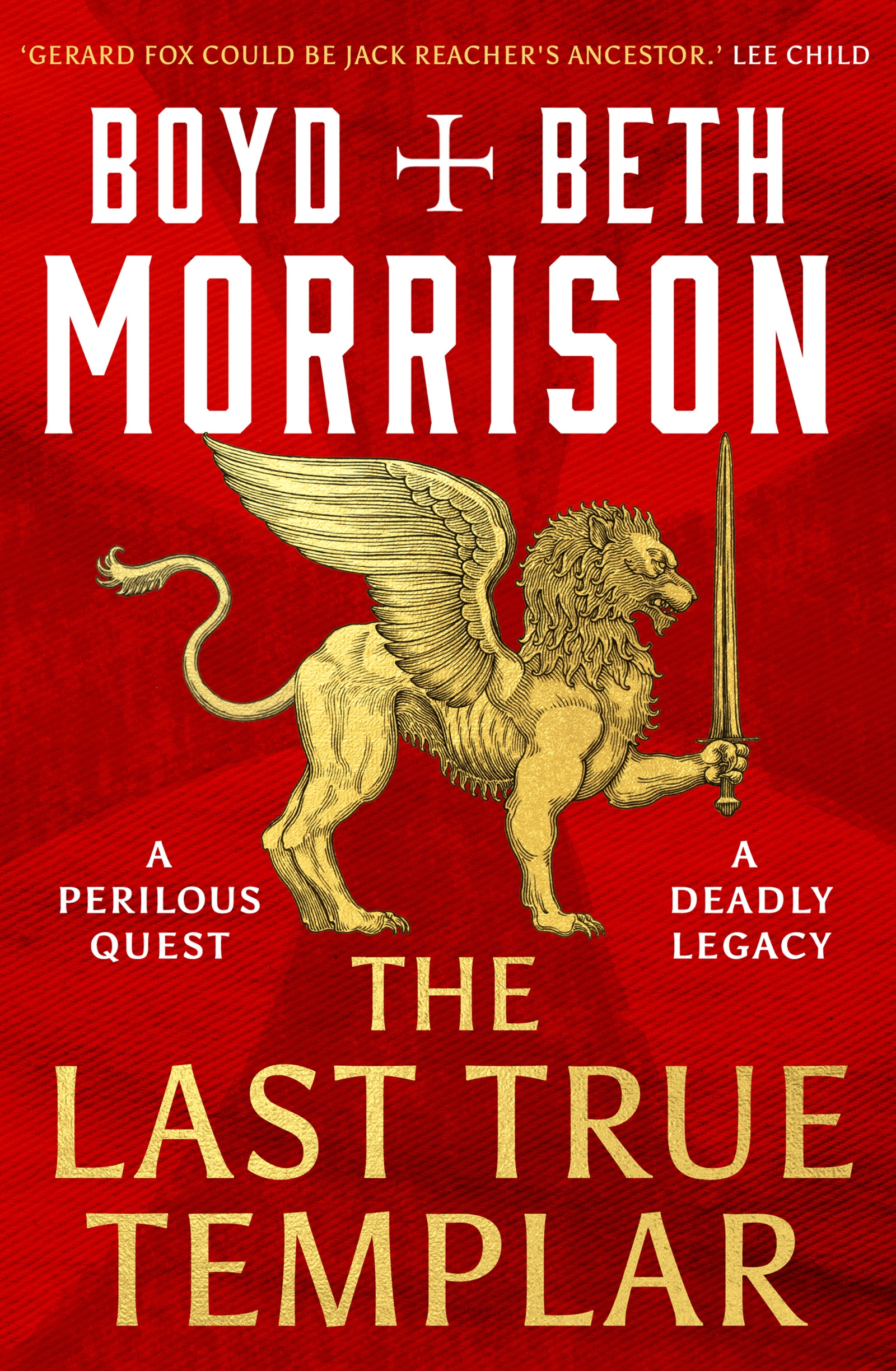
The thrilling new historical adventure from New York Times bestselling author Boyd Morrison and expert medievalist Beth Morrison. Fox and Willa find themselves on a dangerous quest for the treasure of the Templar Knights.
A Perilous Quest. A Deadly Legacy.
Italy, 1351. English companions, knight Gerard Fox and the resourceful Willa, have come through a death-defying journey across war-torn Europe. Now looking towards a future together, they must first find a way to reconcile with their difficult pasts.
In a small village between Florence and Siena, Fox and Willa are caught up in a deadly ambush. After rescuing Luciana, the target of the attack, they take refuge in her opulent villa and learn her heartbreaking story – a tale of loss, deception, and a burning desire for freedom.
Soon, Fox and Willa are involved in a perilous quest to save Luciana’s family legacy. To do so, they will have to solve a mystery that points the way to the fabled lost treasure of the Knights Templar.
The Last True Templar is a thrilling journey through fourteenth-century Italy, taking our two heroes to Siena, Florence and Venice (and somewhere else, but spoilers) as they attempt to assist Luciana in her bid to finally solve the mystery of her father’s last letter, sent to her over forty years ago, and which it’s believed, will lead to the lost Templar treasure.
And they’re not alone, for as with all good thrillers, there is another side to this story, and someone else wants to get their hands on the Templar treasure just as much as they do: Luciana’s ruthless husband.
This is an Italy in recovery following the devastation of the Black Death, where few, it seems, have been left unscathed. Ironically, two Englishmen, Gerard and Armstrong, are most involved in the hustle and bustle of the quest, with the aid of some quick-witted and intelligent women.
This story is well-grounded in the historical architecture of the time, as our characters race to solve clues, riding from city to city, some loyal to Luciana’s husband and some to Luciana, all needing to look at or visit various important buildings – many of the well-known ones still being built, or heavily renovated. There is intrigue aplenty. Those characters trying to stop Gerard, Willa, and Luciana are ruthless and ambitious, and all this while Gerard and Willa are trying to determine their future.
Throughout the narrative, there’s quite a bit of to-ing and fro-ing in time. I’d prefer the flashbacks to occur before the characters reveal what happened, as they are somewhat irrelevant.
This is book 2 in the series – I haven’t read book 1 – I don’t necessarily think you need to read the first book to enjoy this one, as we’re given snippets of what’s happened before, but this is very much an isolated ‘quest’. And I did enjoy it. The Last True Templar is very much in the mould of a Dan Brown thriller, only set in the distant past, with an eye to what the cityscapes would have looked like in 1351, and with three feisty women to ensure the narrative never gets bogged down in more purely violent bouts between our two sides.
A rollercoaster of a journey, it’s sure to appeal to fans of historical fiction, historical mysteries and old-fashioned action and adventure stories- (as well as to fans of The Curse of Oak Island:))
About the author
Boyd Morrison is the #1 New York Times bestselling author of twelve thrillers, including six with Clive Cussler. His first novel, The Ark, was an Indie Next Notable pick and was translated into over a dozen languages. He has a PhD in industrial engineering from Virginia Tech.
Beth Morrison is Senior Curator of Manuscripts at the J. Paul Getty Museum. She has curated major exhibitions including ‘Imagining the Past in France, 1250-1500’, and ‘Book of Beasts: The Bestiary in the Medieval World’. She has a PhD in the History of Art from Cornell University.























 MJ Porter