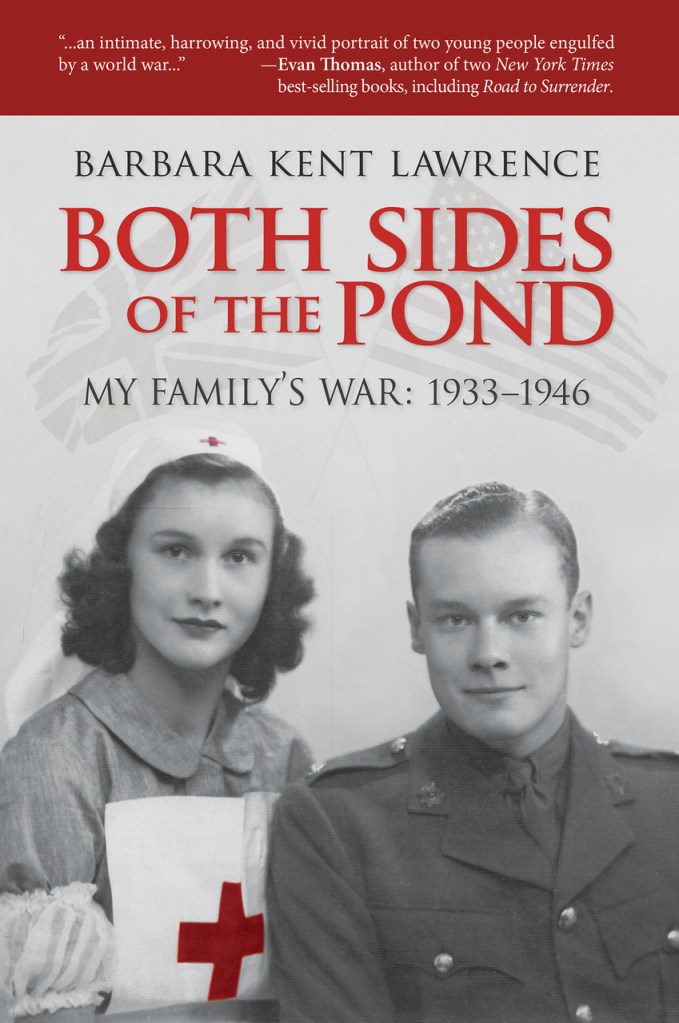
I’m spotlighting Both Sides of the Pond, My Family’s War: 1933-1946 by Barbara Kent Lawrence #BothSidesOfThePond #HistoricalFiction #WorldWar2History #MyFamilysWar #maineauthor #BlogTour #TheCoffeePotBookClub
I’m spotlighting Both Sides of the Pond, My Family’s War: 1933-1946 by Barbara Kent Lawrence
Here’s the blurb
In January of 1939 when Barbara Greene, a beautiful young British actress, met Joe Kennedy, Jr., son of the American Ambassador, she could not have expected that their relationship would lead to her emigrating to the United States and learning to pilot a plane. Neither could her brother, Kent, have foreseen his bitter retreat from Dunkirk when he left England in January 1940 to fight in France, or his subsequent service on the frontlines in Cornwall, North Africa, Sicily, and Burma.
In this intensively researched war story of the author’s family, we also hear the stories of other ordinary people who survived extraordinary circumstances. Richly illustrated with photographs and documents, “Both Sides of the Pond, My Family’s War: 1933 – 1946” is a captivating book.
Praise for Both Sides of the Pond:
“Author Barbara Kent Lawrence weaves a rich tapestry of the lives of her British mother and uncle from 1933 to 1946, before, during, and just after World War II. … War stories are very personal. This is such a story, and it offers insight into how two young people navigated difficult years that altered the trajectories of the lives they thought they would live. It is a worthy read, written beautifully. Don’t miss it.“ ~ Patricia Walkow, Military Writers Society of America
“I loved this book and couldn’t put it down. History and the complexity of human relationships unfold with uncommon grace.“ ~ Barbara Lazear Ascher, winner, most recently, of Pushcart’s Editors Book Award for Ghosting: A Widow’s Voyage Out.
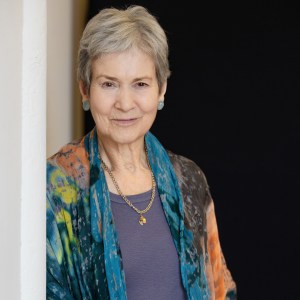
Dr. Lawrence is the author of many articles and nine books, including an award-winning dissertation about the influence of culture on aspirations in Maine. Her new book, Both Sides of the Pond, My Family’s War: 1933 – 1945, is available in book stores and on amazon.com.
A former professor, she has taught courses in anthropology and sociology, research, and writing non-fiction and memoir. Lawrence grew up in New York City and Washington D.C., then earned a BA in anthropology from Bennington College, an MA in sociology from New York University, and an Ed.D. in Administration, Policy and Planning from Boston University.
In addition to teaching, Lawrence has worked for the Department of Social Services and the Housing Development Administration in New York, directed a small museum in Maine, co-run a brokerage and construction company, consulted for the Rural School and Community Trust and KnowledgeWorks, and started four non-profit organizations supporting the environment and students.
When not working she loves to garden, knit, and go for walks, pastimes she learned from her British mother. She lives in Maine and is working on the third novel in her Islands series.
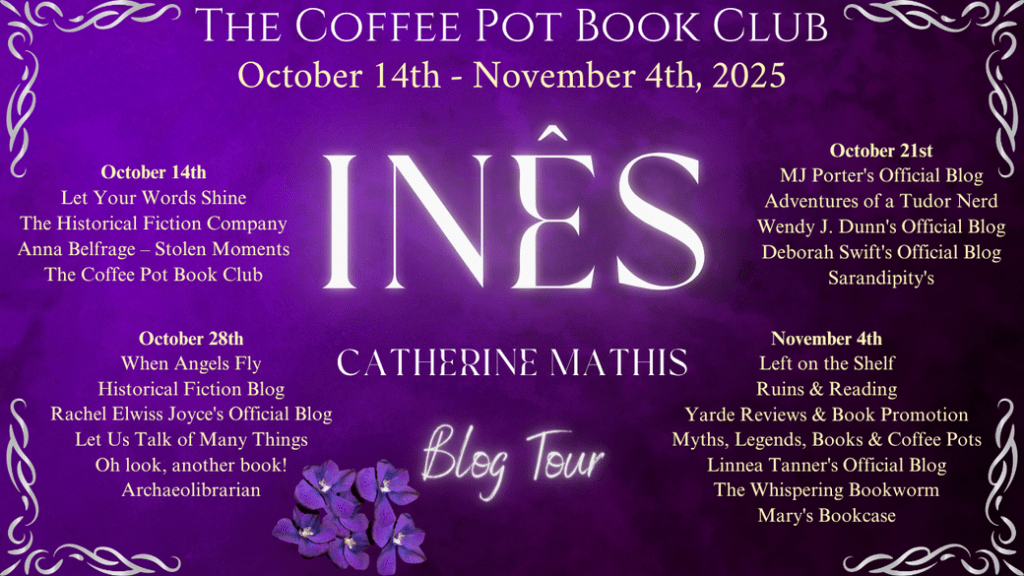
I’m delighted to welcome Catherine Mathis and her new book Inês to the blog, with a fascinating guest post #HistoricalFiction #MedievalFiction #BlogTour #TheCoffeePotBookClub @cathiedunn
@thecoffeepotbookclub @cmathisauthor
In Candide Voltaire describes the great earthquake of All Saints Day 1755 which hit during Sunday church services resulting in the destruction of most of Lisboa and surrounding villages for miles and miles. Then Lisboa burned and was hit by a tsunami. Records and documents not destroyed in 1755 were ravaged by Napoleon’s troops. Records for the early fourteenth century were never as plentiful for Portugal as they are for France or England, and these two seminal events did not help. The larger hurdle is I do not speak or read Portuguese or the earlier spellings of medieval Portuguese, nor Spanish for that matter.
Most histories of Portugal will mention the Pedro and Inês affair in passing, not depth. The prominent chronicle surviving to this day was written by Fernão Lopes in the early fifteenth century. The extant Lopes work starts with the reign of King Pedro. Lopes’s chronicles for earlier kings are lost. Lopes proclaims an intent for historical accuracy and does a good job of balancing characters and events despite writing for the Avis dynasty. These chronicles were not available in English until 2023, and I did not trip across them until mid-2024 when my novel was already with the publisher.
There are references to other documents long lost to time. There are some records in archives and other Portuguese and Spanish cities. Professor Rita Costa Gomes wrote The Making of Court Society, a scholarly Portuguese book translated into English, though it provides some information only in Portuguese. Other useful books include: de Oliveira Marques’s Daily Life in Portugal in the Late Middle Ages, A.R. Disney’s History of Portugal and the Portuguese Empire, and Oliver Sacks’s Hallucinations.
For good or ill, my primary source was Edward McMurdo’s The History of Portugal, Volume II published in 1889. McMurdo takes a bit of getting used to; his opinions are well stirred into the history presented. Likely Portuguese/Spanish documents of recent years have updated information.
I found this legend on a trip to Portugal. Then several years later I returned to Portugal, specifically to visit the locations central to the story along with visiting museums. There is little extant material in museums from this period. I walked the grounds of a convent now in ruins in Coimbra that is central to the story. While geography changes with time, walking narrow streets and the buildings that remain from the fourteenth century helped when creating scenes.
It is in the gaps of written documents that novels unfold. It does not mean that accuracy is not important. It absolutely is. Did Pedro marry Inês? Not in the legal sense of marriage arranged for an heir to the throne. Did Pedro believe he wed her? Did Inês believe she was married? I chose to answer yes to both questions. Inês – from what we believe we know – exhibited loyalty to her friend Constanza, Pedro’s wife, and cared deeply for all of Pedro’s children. Inês did not have a child until at least a year after the death of Pedro’s first wife. Then she bears Pedro children regularly. Others suppose the love affair began before Pedro was widowed. Pedro refused to marry suitable women his father proposed after his first wife’s death. He had clergy attest to the marriage with Inês. And he never marries again, though he has a consequential affair.
There are lots of technical practices in the lives of medieval royals that are not common in our world. Technically Pedro was married before he wed Constanza. It was a marriage never consummated before it was dissolved. Often marriage agreements are bargaining tools of a king in managing relationships with other countries or inside his own country. The key is what is important to the story being told, what is critical in the history of the time, yet not a turning point for the story being told. For example, the Battle of Salado was huge in Pedro’s lifetime as was the Great Pestilence. Neither of these events is a driving factor in the legend. They are included but not critical.
The other key issue is names. Men named Pedro or João or women named Maria litter the landscape. I made a decision to use a name per person and not confuse the reader by overly focusing on titles or full proper names. It is easier if there is one central Pedro not to be confused with Pedro’s in the nobility or neighboring countries. The point is the story. For the novel, this means a Pedro in a neighboring country becomes Peter or more plainly Castile’s king. All readers know Portugal existed in the medieval period. Their likely earliest recollection is of Prince Henry the Navigator, still a century away from Pedro. Those seeking a good story are less concerned with the rabbit holes and details of history some of us find fascinating. This is the writer’s balancing act.
Let’s close with a final thought on sources and information. For many dates there is not an agreement as different sources will offer different dates for the same event. And between then and now, the calendar changed. Many birth dates and thus ages were not recorded in sources, especially for women and also children who die young. Often this is not critical to the story, the legend.
The fun part of research is falling down the rabbit holes. As I chase a fact or information about a location I can get sidetracked into reading articles on the nature of queenship, the trade between Portugal and England or the Netherlands, life on board a ship, etc. Most of the research is never used, and always worth the time to study.
Here’s the blurb
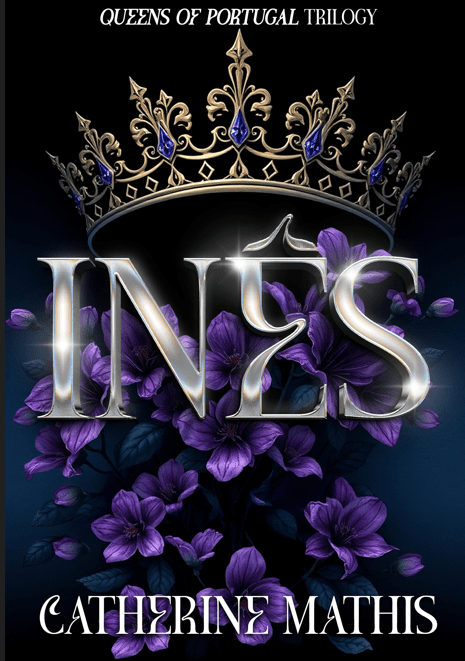
An heir to the throne, a gorgeous blonde lady-in-waiting, the king’s trusted advisor. When a father and son don’t understand each other, the son pays an outrageous price.
Love, jealousy, loyalty, and revenge roil the court of 14th century Portugal.
In this engrossing launch to the Queens of Portugal trilogy, Catherine Mathis gives a fresh take on the tale of Pedro and Inês, Portugal’s real-life Romeo and Juliet. Pedro’s father would not have been king if not for his trusted advisor, Gonçalves. Once king, he wants no part in neighboring Castile’s royal convulsions though his son, Pedro, befriends powerful Castilians.
The all-consuming drive of the king is to ensure his line rules Portugal for centuries to come. He needs legitimate, strong heirs. The Infante Pedro loves a woman not deemed worthy to wear the crown as queen. Between father and son is Gonçalves, the king’s powerful, unquestioned counselor who is mentor to the son. Both Gonçalves and Pedro seek the attention of Inês.
There is a horrific cost to winning the love of Inês. She will not release her grip on Pedro until he keeps the two sworn oaths he made to her. Can Pedro do the impossible to satisfy Inês?
Inês is based on real people and events, exploring a cultural touchstone of Portuguese history.
Praise for Inês:
“Mathis masterfully weaves emotional depth into the narrative, creating a deeply engaging experience that leaves a lasting impression and invites readers on an unforgettable journey through the grandeur and intrigue of Portugal’s past.” ~ Mary Anne Yarde, The Coffee Pot Book Club 5* Review
“This exciting start to the Queens of Portugal trilogy describes the legendary love story of Pedro and Inês, and I was amazed at the excellent storytelling and how the author brings the courts to life. There is a lot of drama and intrigue, and the characters’ emotions are beautifully captured in this engrossing tale.” ~ Readers Favorite 5* Review
Catherine Mathis was born in Berlin, the daughter of an American spy. As she grew up in Washington, D.C., her spy father turned into a drug enforcement agent. His career change wrecked any chance at high school popularity. She graduated from Sewanee | The University of the South with a degree in history focused on the medieval period. After a career in finance, she returned to her first love of medieval history to ‘Share Iberian Tales.’ Outside of writing, spare time joys are family, friends, reading, collecting folk/outsider art, and travel.
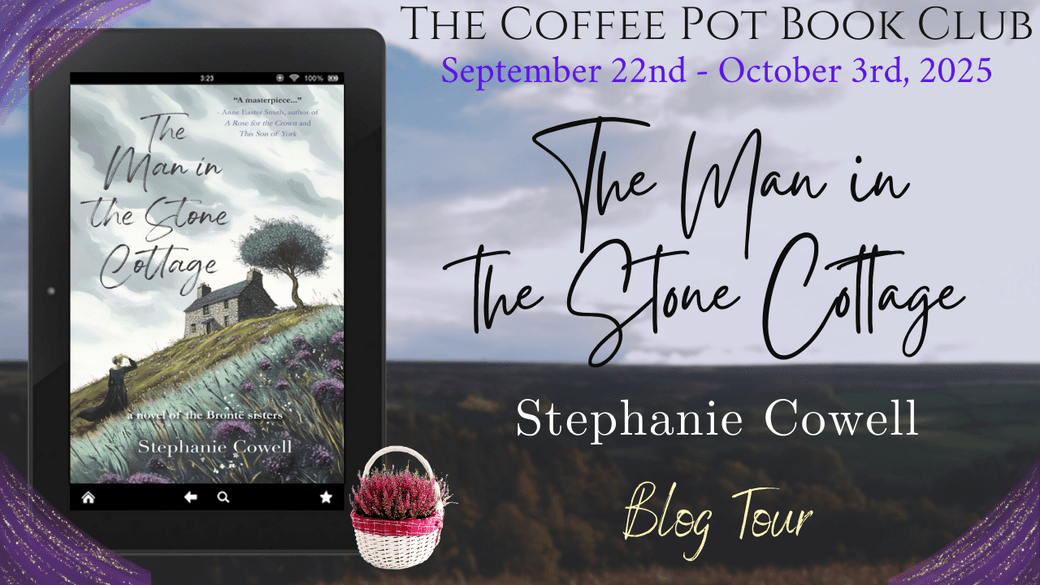
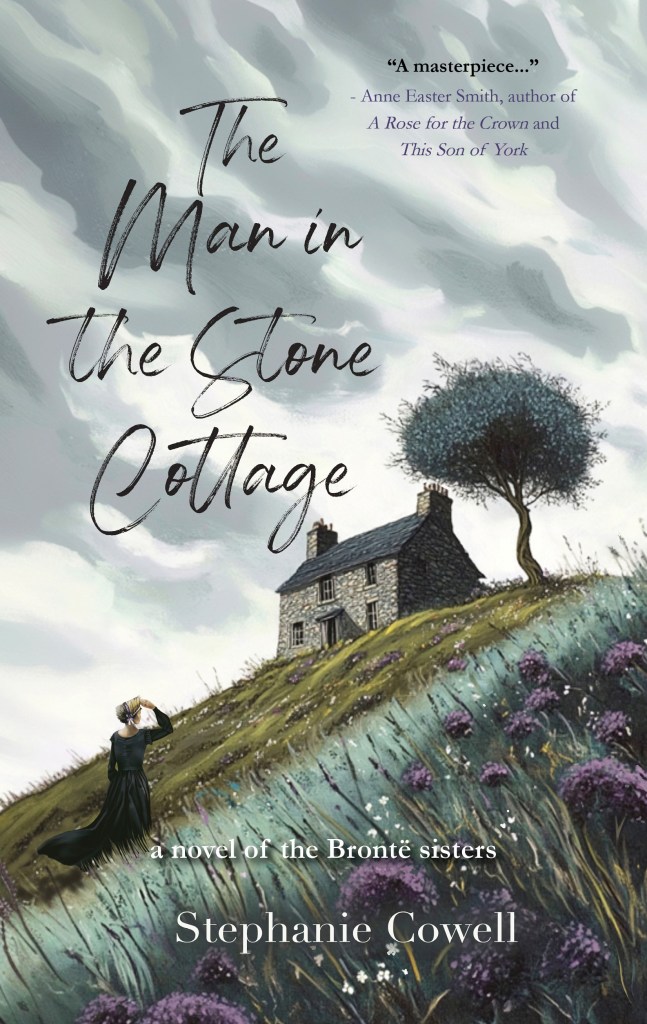
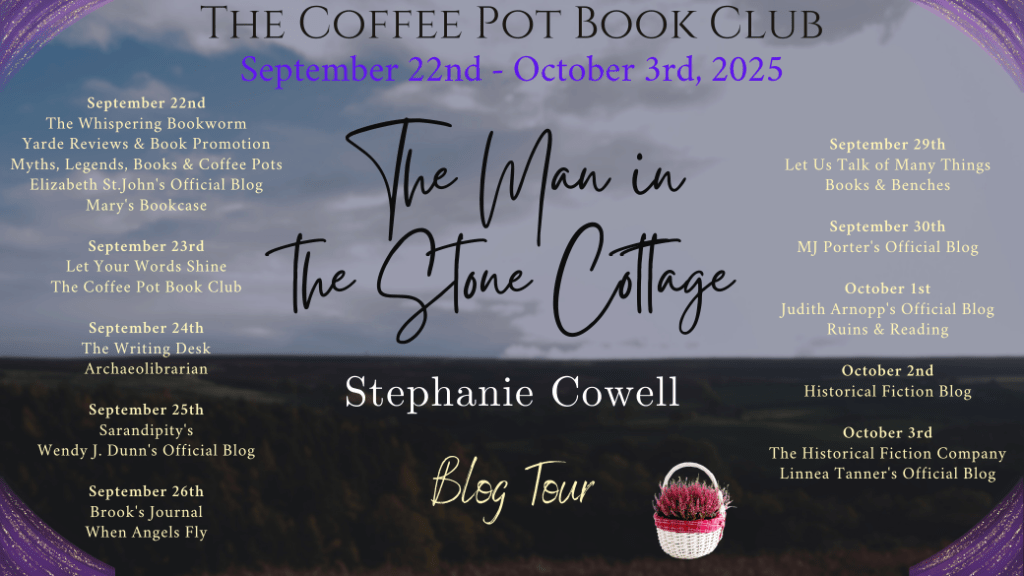
I’m welcoming Stephanie Cowell to the blog with a fascinating post about research for her new novel, The Man in the Stone Cottage: a novel of the Brontë sisters #Brontë #Yorkshire #Victorian #EnglishLiterature #WomenWriters #HistoricalFiction @cathiedunn
@cowell.stephanie @thecoffeepotbookclub
Researching My Novel on the Brontë Sisters by Stephanie Cowell
I simply love research. The opportunity to know more about my beloved historical characters and their surroundings and daily world is thrilling. Researching Charlotte, Anne and Emily Brontë, I had a chance to go to their village in Yorkshire (Haworth) and to the Parsonage where they lived with their clergyman father and wrote their books and what is more thrilling than that? I travelled there three times over many years.
In curated display cases, I could see the needles with which they sewed, the cup they drank from (imagine seeing Emily’s cup and knowing she might have paused in writing bits of Heathcliff to drink a sip of tea!), their clothing, their hand-written childhood magazines. I could walk around the house, climbing the steps they climbed every day. In the parlor/dining room, I marveled at the table where they wrote their books. (After a century or more of searching by scholars, the actual table was found in private hands and in 2015 it was brought back to the Parsonage. Someone has scratched “E” in the wood. Was it our Emily?)
So, my first research was going to the Parsonage, but a great deal of research of course was from biographies and household advice books and letters which describes event and feelings and hopes and fears. They describe loneliness.
Letters are the best! Charlotte wrote the most. She wrote hundreds to her best friend Ellen, pouring out her frustration about working in a teaching job at a boarding school until exhausted. She wrote about her family. She wrote to her publisher’s reader about her sadness over her alcoholic brother who could not keep a job. She wrote her married Belgium professor of her adoration of him. We have these letters almost two hundred years. They are from the writer who penned Jane Eyre’s passionate words, “Do you think, because I am poor, obscure, plain and little, I am soulless and heartless?”
Research! I have two bookshelves of biographies, literary analysis, life in Victorian England, books about the town of Haworth and the house, even a biography of the rather obscure man Charlotte eventually married. I just remembered that at one time my novel was not from the point of view of the two sisters, but only from his point of view. And like the larger part of stories I begin, it was not finished but eventually morphed into the final novel THE MAN IN THE STONE COTTAGE.
I try to keep my research books together also in certain shelves but some wander over the house. When I was a beginning writer and rather poor, I used the library for everything. Now I am afraid I mostly use the internet to buy obscure second-hand books.
It was however in an actual bookshop one day that I glanced at a shelf and found THE book I wanted, THE book I must have. This was in the days before the internet. I gasped so that I am fortunate the salesperson did not come rushing over to see if I was okay. Perhaps he was used to having people gasp over discovered books.
There is a problem with biographies. I went to a bookshop reading of one of Charlotte’s biographers, and someone asked her, “Have you written the definitive biography?” and she replied, “Oh no, I hope not. Every biographer sees her in a different way!” And that is true. Charlotte’s first biographer Mrs. Gaskell made Charlotte into a near saint. Others have emphasized the prickly side of her personality. Who would not be prickly with all her losses and griefs and hardships?
Emily and Anne have several biographies each, but less is known about them. These two sisters were more private and did not pour their heart out on paper, or perhaps fewer paper were kept.
Even when a novel is long finished and gone into the hands of readers, I love and long for the worlds where my beloved characters have walked. So, I go to wander in the streets of York or Paris or Florence, and if I wait, I will see one of my characters coming toward me. And likely he or she will smile and say, “There you are! Welcome back! We’ve been waiting for you!”
Here’s the blurb
“A haunting and atmospheric historical novel.” – Library Journal
In 1846 Yorkshire, the Brontë sisters— Charlotte, Anne, and Emily— navigate precarious lives marked by heartbreak and struggle.
Charlotte faces rejection from the man she loves, while their blind father and troubled brother add to their burdens. Despite their immense talent, no one will publish their poetry or novels.
Amidst this turmoil, Emily encounters a charming shepherd during her solitary walks on the moors, yet he remains unseen by anyone else.
After Emily’ s untimely death, Charlotte— now a successful author with Jane Eyre— stumbles upon hidden letters and a mysterious map. As she stands on the brink of her own marriage, Charlotte is determined to uncover the truth about her sister’ s secret relationship.
The Man in the Stone Cottage is a poignant exploration of sisterly bonds and the complexities of perception, asking whether what feels real to one person can truly be real to another.
Praise for The Man in the Stone Cottage:
“A mesmerizing and heartrending novel of sisterhood, love, and loss in Victorian England.” – Heather Webb, USA Today bestselling author of Queens of London
“Stephanie Cowell has written a masterpiece.” – Anne Easter Smith, author of This Son of York
“With The Man in the Stone Cottage, Stephanie Cowell asks what is real and what is imagined and then masterfully guides her readers on a journey of deciding for themselves.” – Cathy Marie Buchanan, author of The Painted Girls
“The Brontës come alive in this beautiful, poignant, elegant and so very readable tale. Just exquisite.” – NYT bestseller, M.J. Rose
“Cowell’s ability to take readers to time and place is truly wonderful and absorbing.” – Stephanie H. (Netgalley)
“Such a lovely, lovely book!” – Books by Dorothea (Netgalley)
Stephanie Cowell has been an opera singer, balladeer, founder of Strawberry Opera and other arts venues including a Renaissance festival in NYC.
She is the author of seven novels including Marrying Mozart, Claude & Camille: a novel of Monet, The Boy in the Rain and The Man in the Stone Cottage. Her work has been translated into several languages and adapted into an opera. Stephanie is the recipient of an American Book Award.
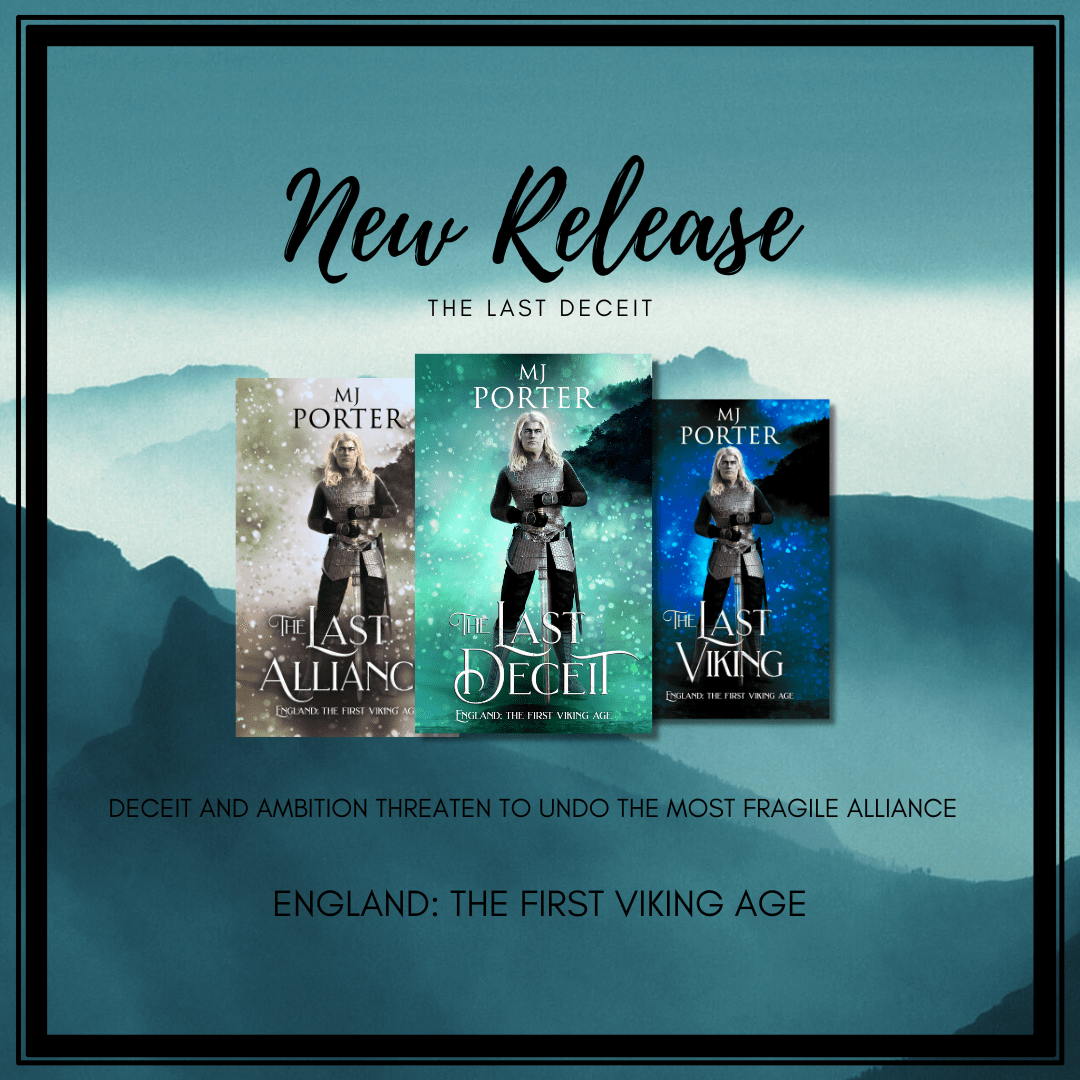
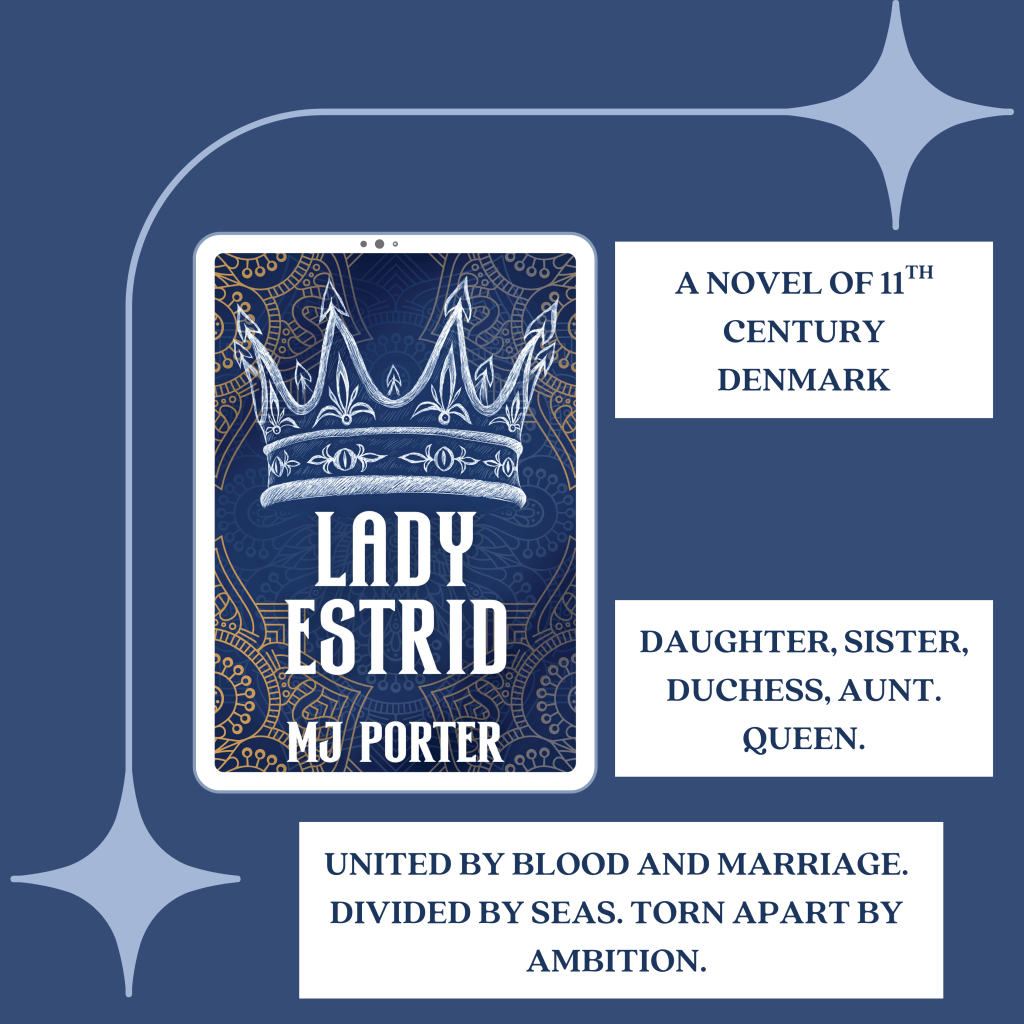
Letter writing in the Eleventh Century, how I recreated Lady Estrid’s connections with her vast family. #non-fiction #histfic
In trying to bring together the narrative for Lady Estrid, I faced a bit of a problem: the vast distances involved. Lady Estrid had family in England, Denmark, Sweden and Norway, many of them she may never have met in person.
Today, we might pick up the phone, or have a quick look on the internet, but in the eleventh century, how would people have communicated?
And so to letter writing. There are two surviving letters from the eleventh-century that were sent by King Cnut, Estrid’s brother, to the English, when he was absent from his newly conquered country, in AD1020 and AD1027. I give a small example below.
;Be it known therefore to all of you, that I have humbly vowed to the Almighty God himself henceforward to amend my life in all respects, and to rule the kingdoms and the people subject to me with justice and clemency, giving equitable judgments in all matters; and if, through the intemperance of my youth or negligence, I have hitherto exceeded the bounds of justice in any of my acts, I intend by God’s aid to make an entire change for the better.’ From Cnut’s letter to the English from AD1027.
These might well have been an exercise for Cnut in asserting his authority over the English, and giving his regents a little bit of extra support, but they open up the possibility of just who else was busy writing and sending letters to one another.
There’s always the assumption that unless you were a holy man, you perhaps couldn’t read or write, and in fact, in one of the books I referenced for Lady Estrid, I found a fascinating chart detailing people who are known to have been used by the ruling family of Normandy as messengers, another way that messages could be sent between people. But surely, sometimes, it was just better to write everything down, that way nothing could be lost in translation.
Without the possibility of Lady Estrid ever meeting some members of her family, using letter writing allowed me to artificially create conversations between the characters, and while it might not have been the ‘norm’ it was certainly something that happened. Indeed, three centuries earlier, there’s a great wealth of information to be found in the letters of Alcuin of York (c735-804), so it wasn’t as though it was a new thing. With Denmark’s conversion to Christianity, there would have been a ready selection of scribes just waiting to note down Lady Estrid’s frustrations and complaints, even if she didn’t pen them herself.
Here’s an example of one of Estrid’s letters I create in the book.
Dearest Mother, Lady Sigrid. Queen of Denmark.’
‘This marriage doesn’t agree with me. How could you agree to it? I trusted you more than any other to understand how difficult it would be to be forced to live amongst strangers. I relied on you to argue with my father about the necessity of the union.’
And don’t tell me I will one day be the queen of the Rus, as my father planned. Prince Ilja is not a strong man. I don’t foresee him living long. Not at all. The poor man. He has barely been able to consummate our union. I hope I will not carry his child. It will be weak and feeble, and I will not tolerate such.’
My children will be strong and powerful. One day, it is they who will be kings and queens. But these children will not be shared with Prince Ilja. I am sure of it.’
And even if he were to survive, his brothers are a treasonous coven. None of them wishes the other to succeed at their expense. I foresee only bloodshed and paranoia when Ilja’s father is dead.’
Frida is my only friend and ally, reminding me of home. I hope to return to Denmark one day. I never imagined leaving her. I miss her. The kingdom of the Rus is not the same. Not at all.’
Send me news of my father and brothers. I wish to know if my father has finally triumphed in England over King Æthelred. I should like to know that he didn’t callously send me away without so much as seeing me in person for no good reason, because he was absent, in England, as so often the case. If he fails in England again, I will never forgive him for his actions towards me.’
Your despairing daughter, Lady Estrid Sweinsdottir, from Kiev.’
Who was Lady Estrid, and why did I write about her life? #histfic #TheEleventhCentury #England #Denmark #non-fiction
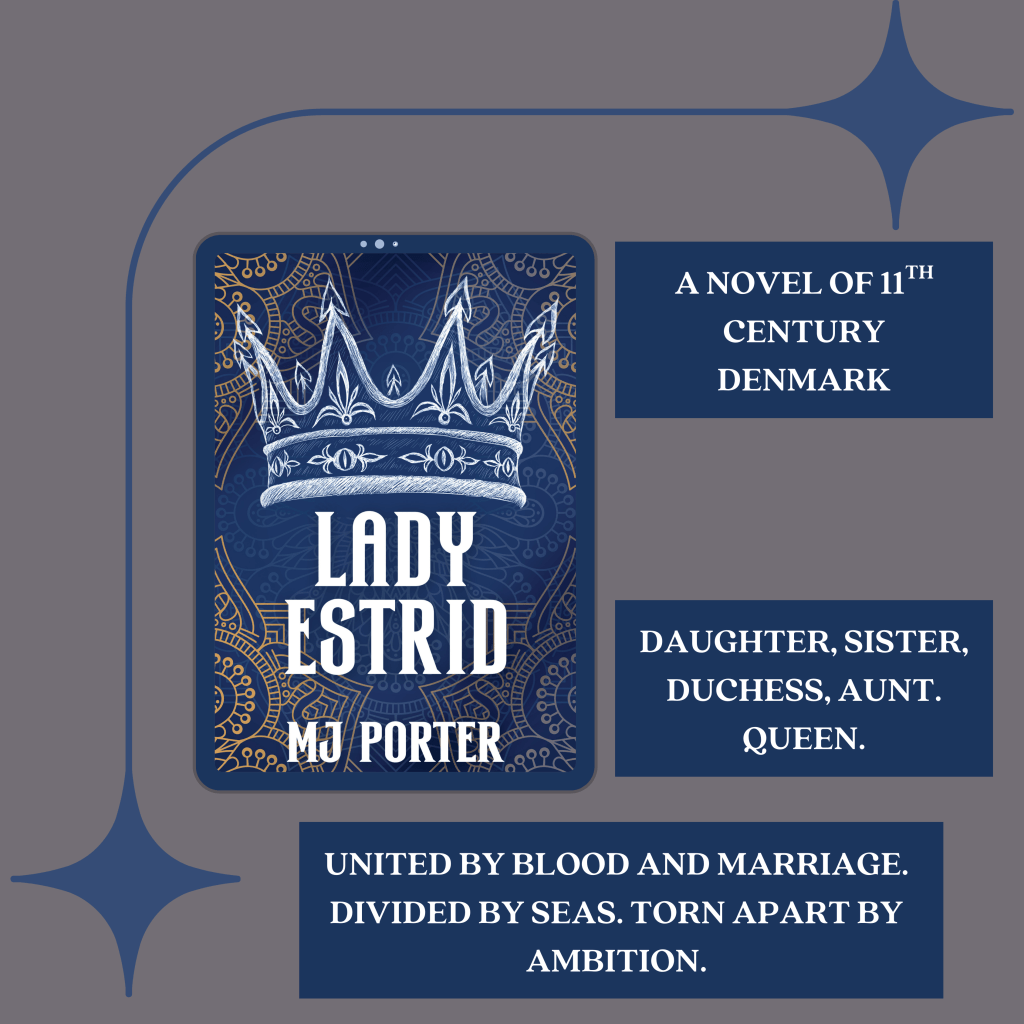
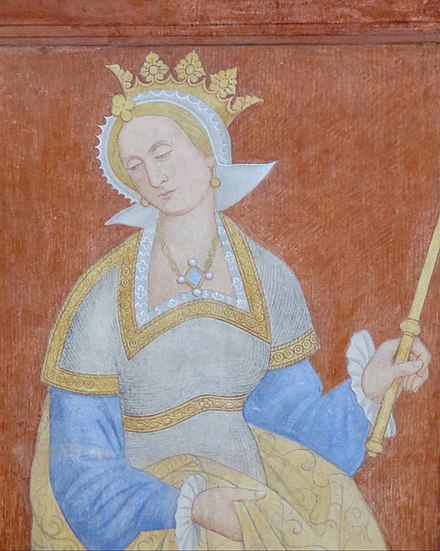
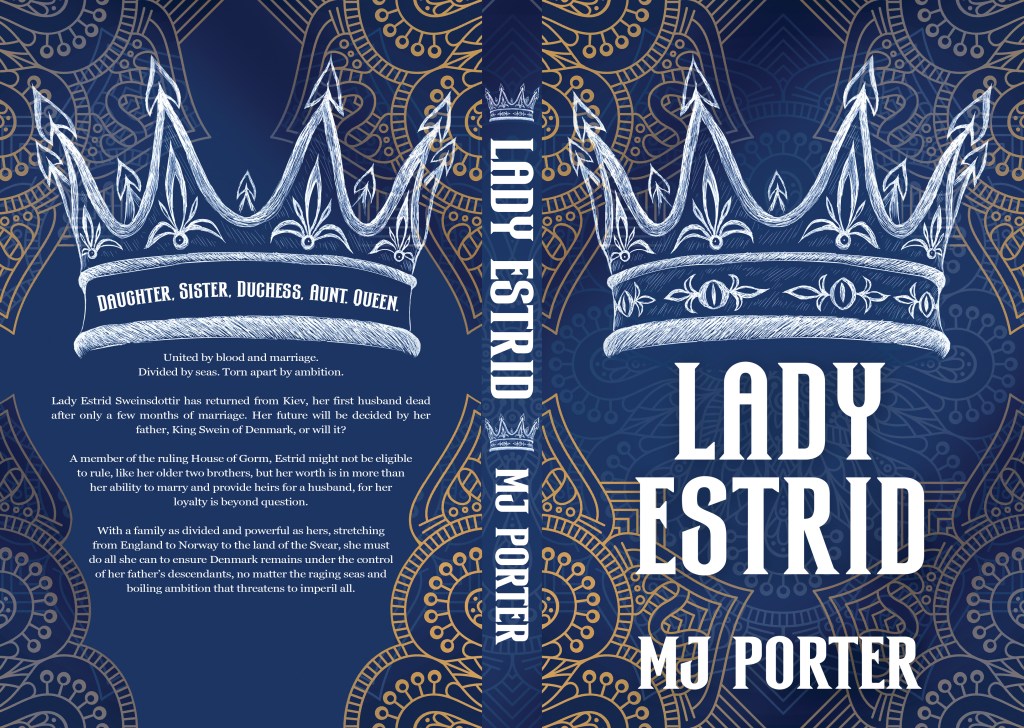
Lady Estrid, or Edith or even Margaret, daughter of King Swein Forkbeard of Denmark (and briefly England) is one of those beguiling characters who lived through momentous change.
I’ve long been drawn to her, and used her as a ‘bit’ part character in my The Earls of Mercia series, but I wanted to dedicate both more time to Lady Estrid, and also to Denmark. Even when I’ve written about Cnut, who was king of England and Denmark, much of the action has taken place in England. There’s simply not enough ‘space’ to fit everything in.
Lady Estrid, like similar royal women (Queen Eadgifu of England and Lady Elfrida in the tenth century), had the advantage of living a much longer life than many of her male family members (check out the family trees here). She was the ‘glue’ that held together the narrative of what was happening in Denmark. And because of her vast family, it also allowed me to weave the story of not just Denmark, but also Norway, Sweden, England, and Normandy, into the narrative.
She was the daughter of a king, the sister of three kings, the aunt of four kings, the mother of one king, and in time, the grandmother of three further kings.
Having written about Queen Eadgifu, Lady Elfrida, and King Edward the Elder’s daughters (in tenth century England), I wanted a new ‘woman’ to bring to life. I could have chosen Queen Emma, or even Queen Edith of England, but their stories are more well-known. I’ve long been fascinated by the Scandinavian countries during the Viking Age, and Lady Estrid was just too good a character to leave in her ‘bit’ part without adding anything further.
For all Lady Estrid’s claims as mother, aunt, sister and daughter, there’s very little that can be said about her, not even the order of her three marriages, if they occurred, can be confirmed. It’s only possible to say that her marriage to Jarl Úlfr took place because of the survival of her children. It’s the lack of ‘hard facts’ about her, and the potential to weave a story that includes so many of the other well-known women and men of the period, that made Lady Estrid so irresistible. When stories focus on Earl Godwine, or King Cnut, or even on King Harald Hardrada, it’s possible to lose sight of the bigger picture, and Lady Estrid certainly provides the potential to show the overarching events that occurred from AD1013-1050 within Denmark and England.
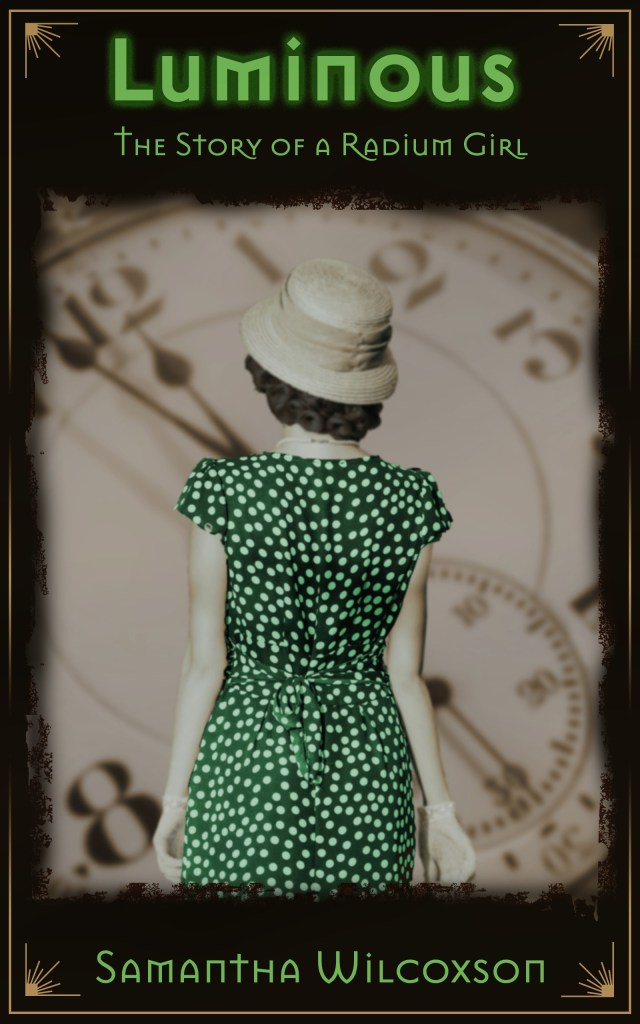
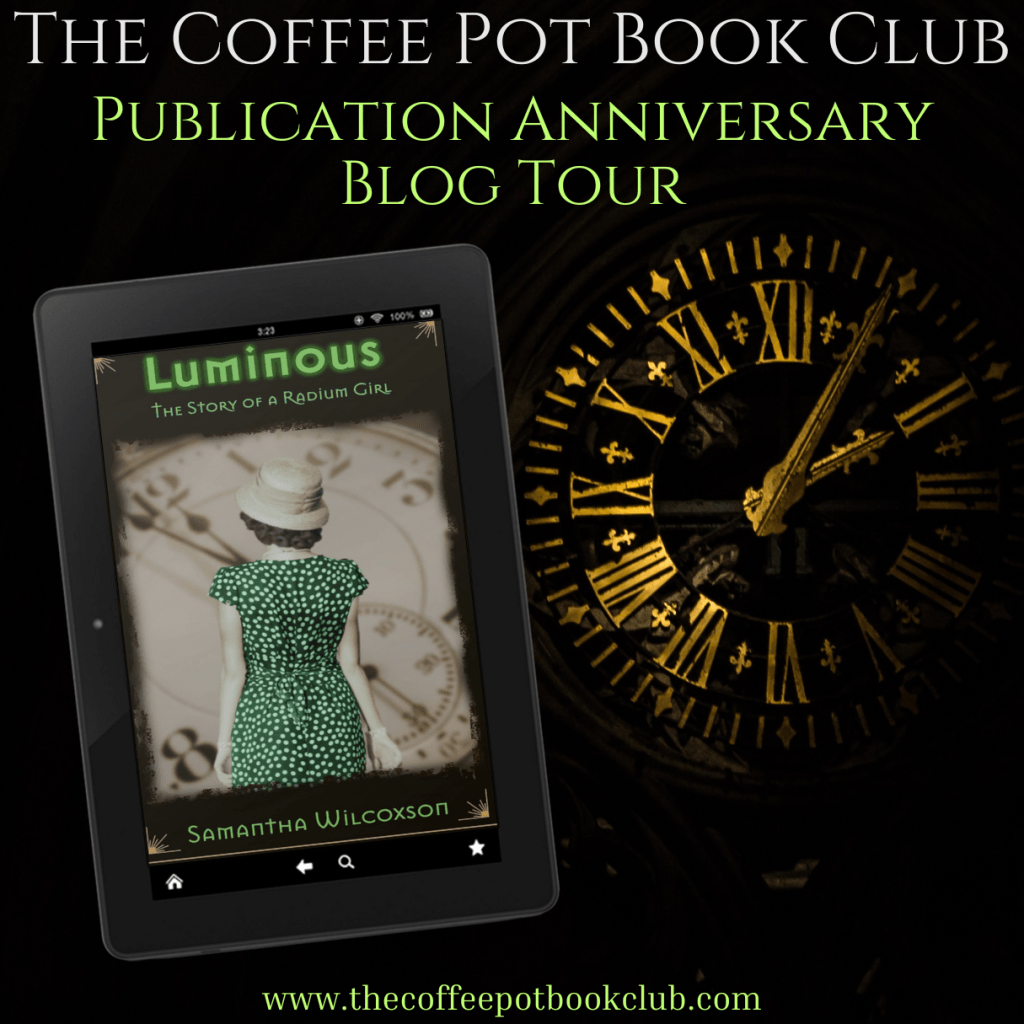
Catherine’s life is set on an unexpected course when she accepts a job at Radium Dial. The dial painters forge friendships and enjoy their work but soon discover that an evil secret lurks in the magical glow-in-the-dark paint. When she and her friends start falling ill, Catherine Donohoe takes on the might of a big corporation and becomes an early pioneer of social justice in the era between world wars.
Emotive and inspiring – this book will touch you like no other as you witness the devastating impact of radium poisoning on young women’s lives.
It’s too late for me, but maybe it will help some of the others.
This title is available to read on #KindleUnlimited.
Meet the author
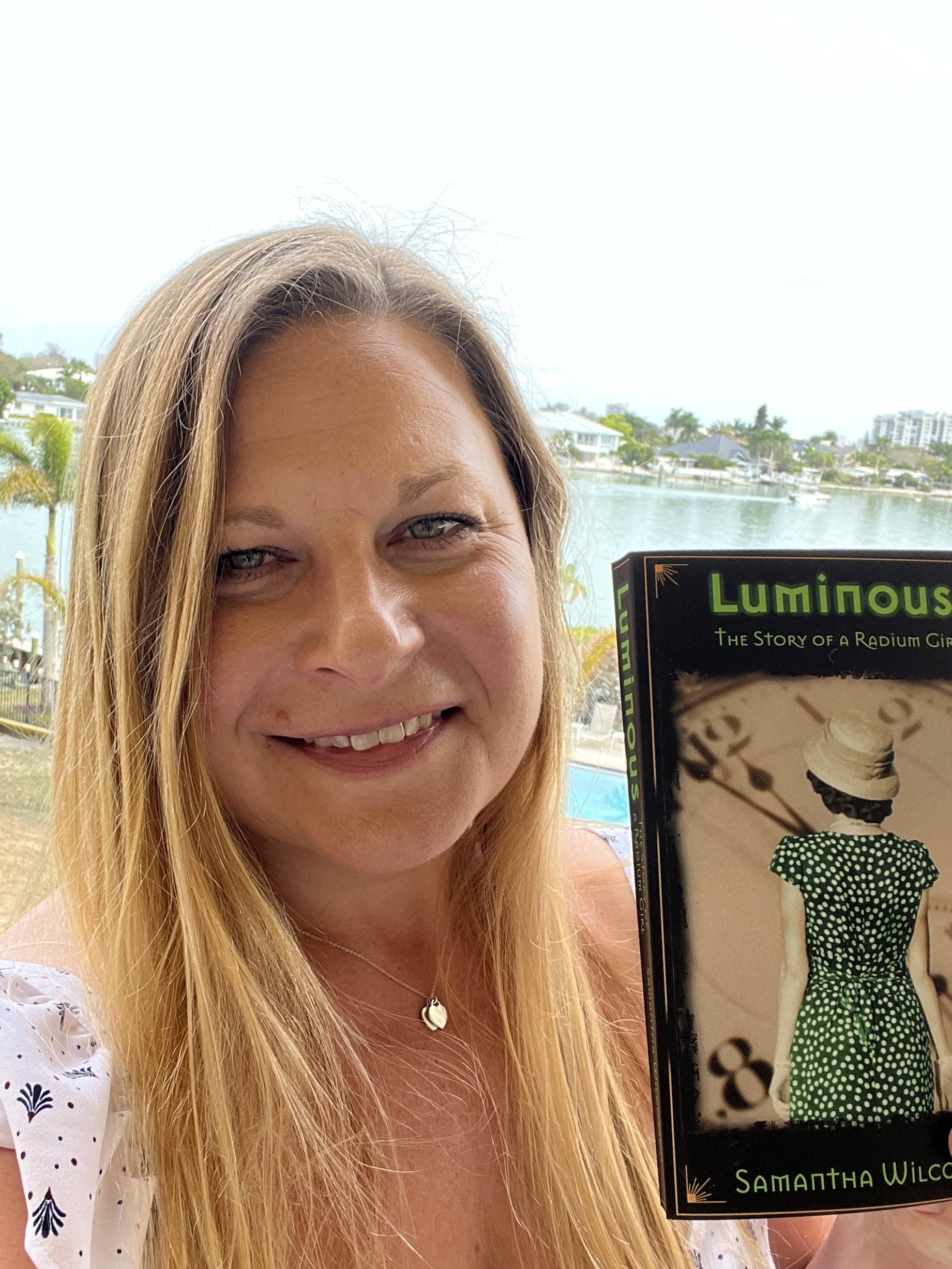
Writer, history enthusiast, and sufferer of wanderlust, Samantha enjoys exploring the lives of historical figures through research and travel. She strives to reveal the deep emotions and motivations of historical figures, enabling readers to connect with them in a unique way. Samantha is an American writer with British roots and proud mother of three amazing young adults. She can frequently be found lakeside with a book in one hand and glass of wine in the other.
Samantha’s most recent release is a biography of James Alexander Hamilton published by Pen & Sword History. She is currently writing a trilogy set during the Wars of the Roses for Sapere Books.
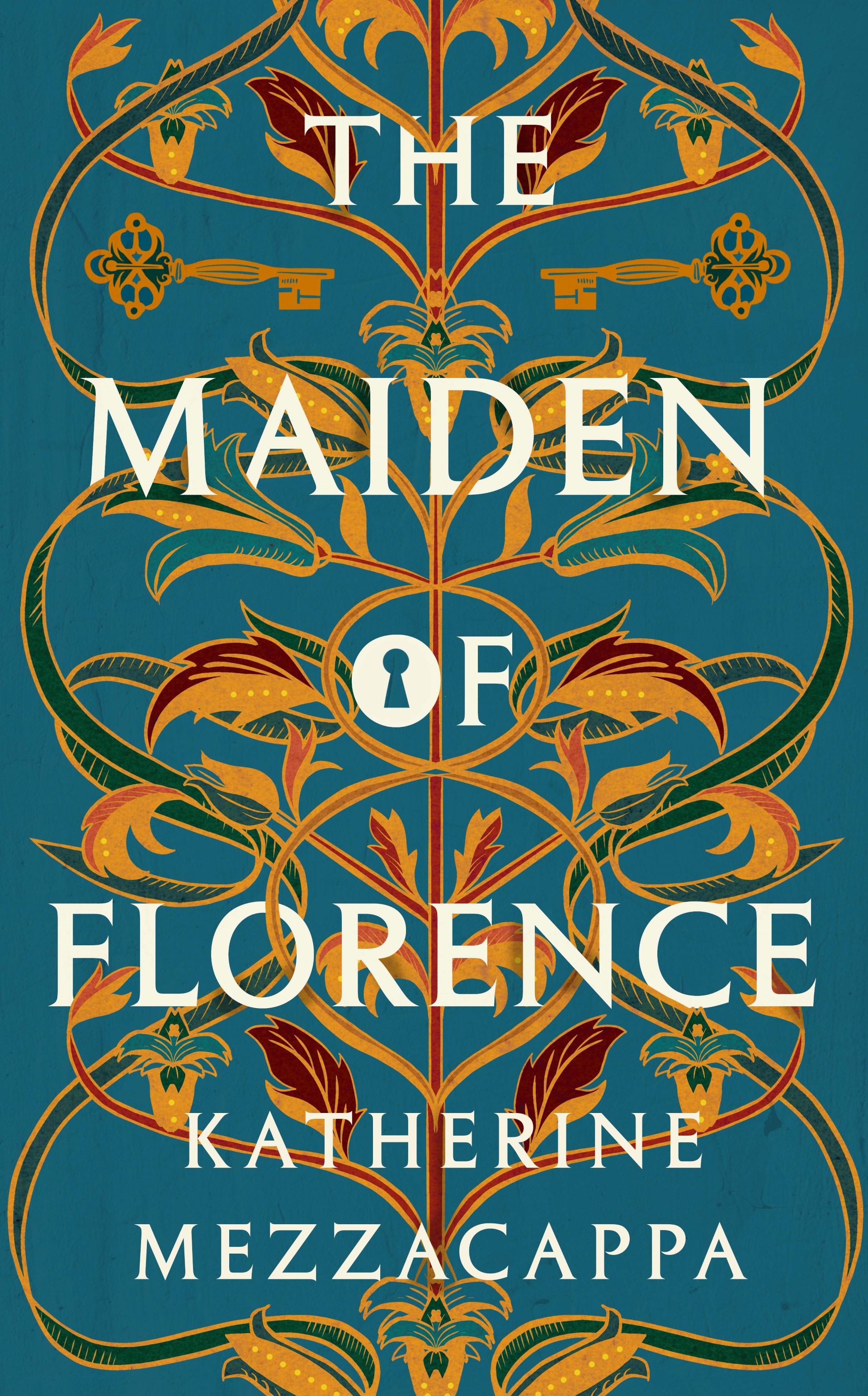
‘My defloration was talked about in all the courts of Europe. The Prince boasted of his prowess, even as preparations were being made for his wedding, as boldly as if he had ridden across that causeway with bloodstained sheet tied to his lance.’ 1584, Italy: Twenty-year-old Giulia expects she will live and die incarcerated as a silk weaver within the walls of her Florentine orphanage, where she has never so much as glimpsed her own face. This all changes with the visit of the Medici family’s most trusted advisor, promising her a generous dowry and a husband if she agrees to a small sacrifice that will bring honour and glory to her native city. Vincenzo Gonzaga, libertine heir to the dukedom of Mantua, wants to marry the Grand-Duke of Tuscany’s eldest daughter, but the rumours around his unconsummated first marriage must be silenced first. Eager for a dynastic alliance that will be a bulwark against the threat of Protestant heresy beyond the Alps, the Pope and his cardinals turn a blind eye to a mortal sin. A powerful #MeToo story of the Renaissance, based on true events.
Told with the benefit of hindsight by our maiden of Florence, Giulia, The Maiden of Florence is the story of this astounding event and the consequences of it for our fair maiden. The first third of the book is a retelling of what might have befallen Giulia, and events then move on to tell the story of what occurred afterwards, including her eventual marriage. However, the reach of the man behind her involvement is never very far away, despite her resentment of it.
The narrative allows Giulia to have her happily ever after ‘for now’, but events quickly move on, and she finds herself caught up in the battle to protect her oldest son, seeking aid where she would never have thought to do so until desperate.
The story is told with compassion and some insight from her husband. The recreation of Florence and Venice in the late 1500s/early 1600s is intriguing while also reflecting her restricted world view—we see only a small area of Florence and Venice. Giulia is rarely, if ever, not subject to some external force, whether it is the benign influence of her husband or other malevolent forces.
An engaging read, somewhat slower in pace, and sure to delight readers of this era and also narratives featuring strong women who are constrained by the society they live in.
Meet the author
Katherine Mezzacappa is an Irish writer of mainly historical fiction, currently living in Italy. She has published several novels under pen names with publishers Bonnier Zaffre and eXtasy. She works as a manuscript assessor for The Literary Consultancy. Katherine reviews for Historical Novel Society’s quarterly journal and is one of the organisers of the Society’s 2022 UK conference. In her spare time she volunteers with a used book charity of which she is a founder member.
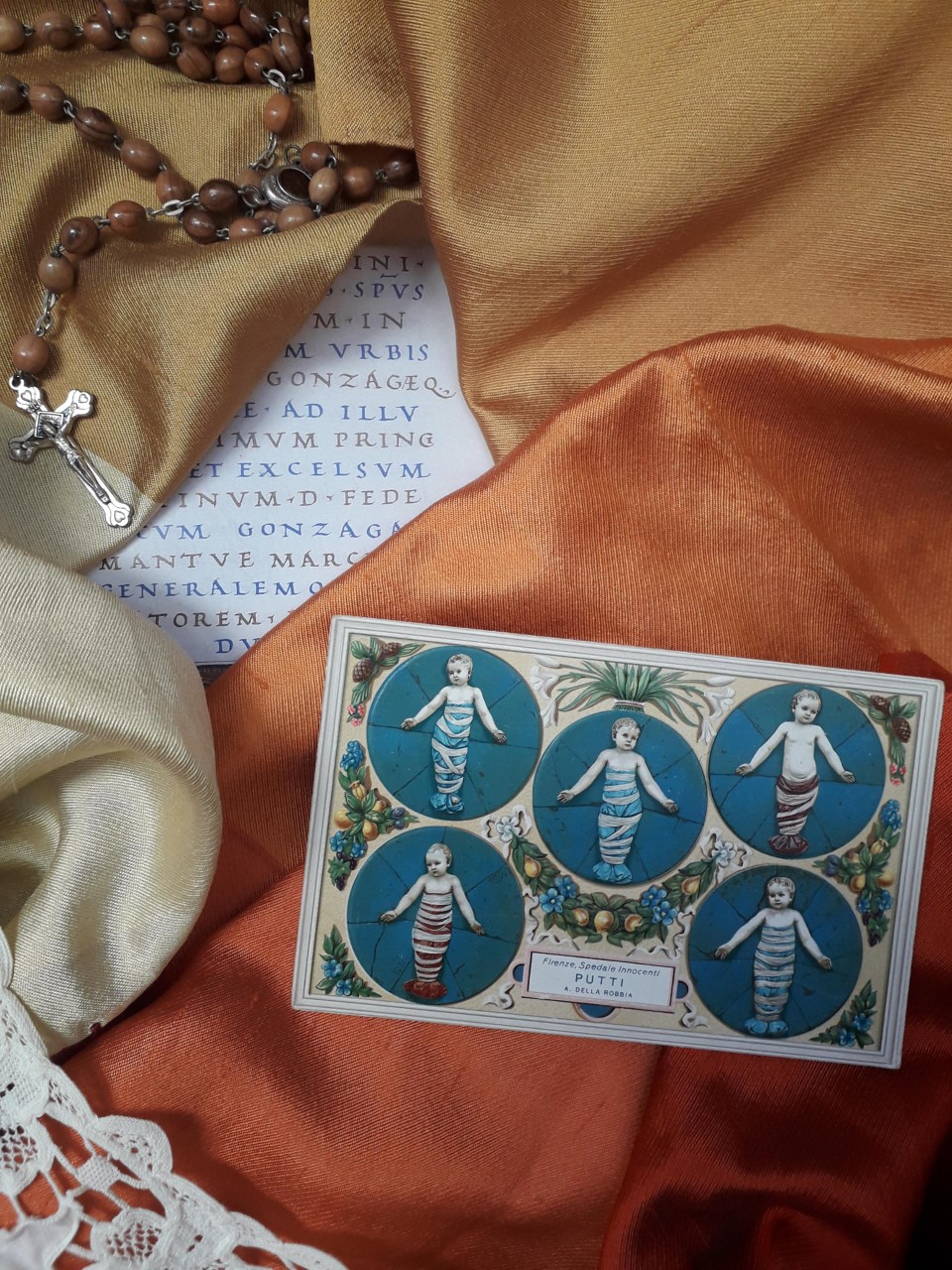
Giveaway to Win a vintage postcard, early 1900s, of the babies from the façade of the Innocenti orphanage. (Open INT)
*Terms and Conditions –Worldwide entries welcome. Please enter using the Rafflecopter box below. The winner will be selected at random via Rafflecopter from all valid entries and will be notified by Twitter and/or email. If no response is received within 7 days then Rachel’s Random Resources reserves the right to select an alternative winner. Open to all entrants aged 18 or over. Any personal data given as part of the competition entry is used for this purpose only and will not be shared with third parties, with the exception of the winners’ information. This will passed to the giveaway organiser and used only for fulfilment of the prize, after which time Rachel’s Random Resources will delete the data. I am not responsible for despatch or delivery of the prize.
I’m delighted to welcome Sheridan Brown and her new book, The Viola Factor, to the blog, with a book trailer.
The Viola Factor Book Trailer
The Viola Factor Book Trailer
Here’s the blurb
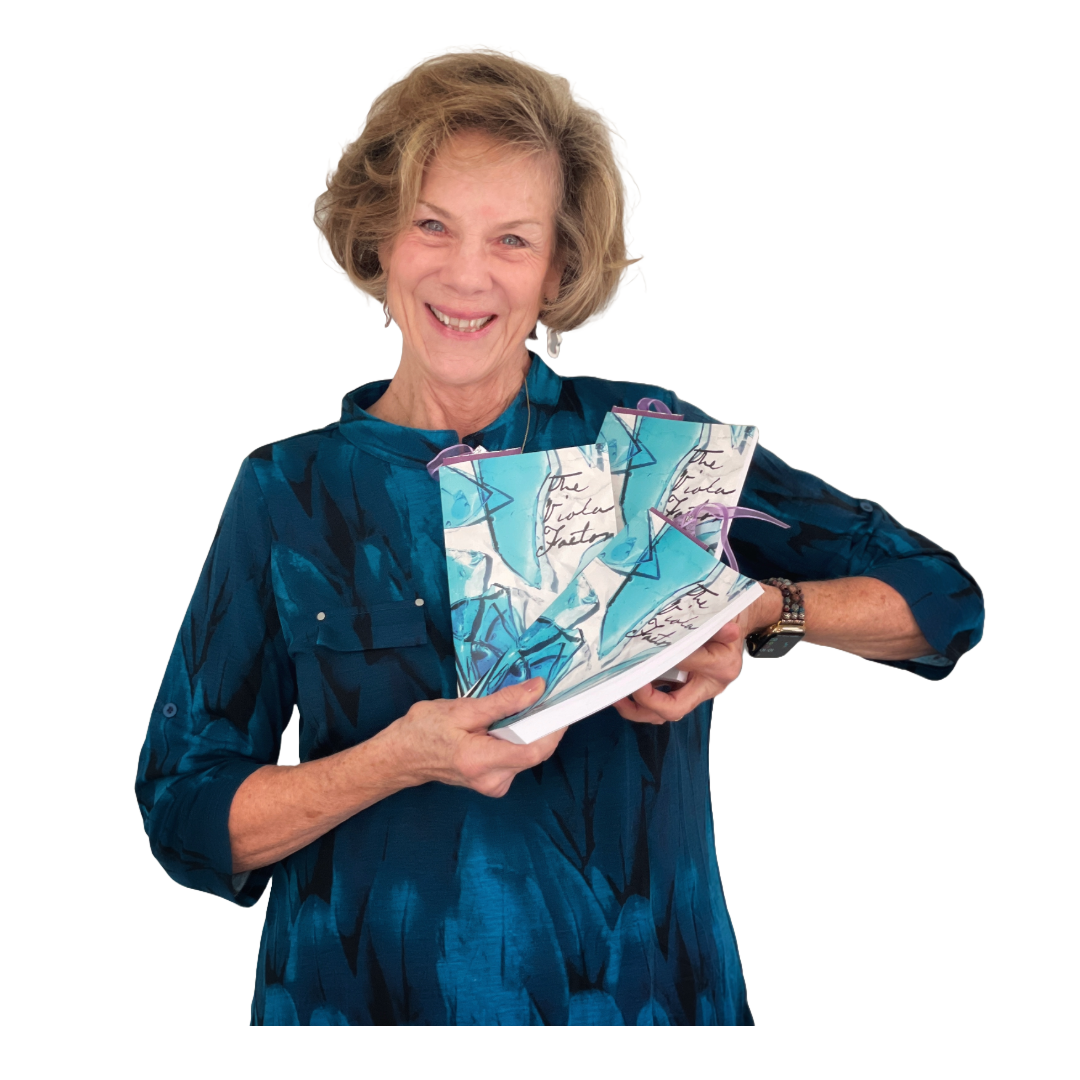
“The Viola Factor” takes place at a time when the country faced division and growth after the American Civil War. Viola Knapp Ruffner (1812-1903) struggled with what was just and fair, becoming a little-known confidant for a young black scholar from Virginia. But Viola was much more than a teacher; she was a mother, wife, game-changer, and friend. With her mother’s dying wish, a young woman alone, she left her New England roots. This is a story of trauma and love in the South while battling for justice and the rightful education of the enslaved and once enslaved. African American leader Booker T. Washington (1856-1915) called her his friend and model for life.
The Viola Factor is in many ways a journey of life done in baby steps, tentatively stumbling, until a galloping stride is achieved. Viola Knapp wears different shoes on different days. Heavy, mud-trekking boots to allow for aggressive steps, and daintier shoes for more rhythmic and assertive ones. She was a diligent daughter, an outspoken protector, and a progressive teacher.
Like many women in her situation, alone at seventeen, Viola must realize her own principles to fulfill her future goals. With every stride, Viola Knapp Ruffner marches around surprises, over potholes, and dodges folly after folly on her journey to be fulfilled. After ambling in one direction, plodding along in another, and wandering to find herself, a sudden halt pushes her forward until a factor of fate places her in the path of a newly freed slave with a desire to read and penchant to lead. After years of post-traumatic stress and mental uncoupling, she finds herself a woman who followed her mother’s dying wish to fight for what is fair and just.
Sheridan Brown holds advanced degrees in school leadership and is a certified teacher, principal, and educational leader. The arts have always been a central force in her life, since performing in piano recitals, school band, plays, and singing in choirs her whole life.
Ms. Brown was born in Tennessee and raised in small towns of southwest Virginia. She practiced her profession in Virginia, Massachusetts, and Florida. Upon retirement, she began volunteering, painting, writing, researching, and traveling with her husband, attorney John Crawford. She has one son, Tony Hume. She is GiGi to Aiden and Lucy. She has returned to the Blue Ridge to live and explore.

















 MJ Porter