
On this day in history, The Battle of Hædfeld #nonfiction #histfic #Saxon
The Battle of Hædfeld, 12th October AD632 or 633
Not to give too many spoilers, but below is an account of the battle of Hædfeld on 12th October AD632 or 633 (there is a little bit of confusion surrounding the year and indeed the date due to a belief Bede may not have started the years as we would do).
The Words of Bede from ‘The Ecclesiastical History of the English People’
“EDWIN reigned most gloriously seventeen years over the nations of the English and the Britons, six whereof, as has been said, he also was a servant in the kingdom of Christ. Cadwalla; king of the Britons, rebelled against him, being supported by Penda, a most warlike man of the royal race of the Mercians, and who from that time governed that nation twenty-two years with various success. A great battle being fought in the plain that is called Heathfield, Edwin was killed on the 12th of October, in the year of our Lord 633, being then forty-seven years of age, and all his army was either slain or dispersed. In the same war also, before him, fell Osfrid, one of his sons, a warlike youth; Eanfrid, another of them, compelled by necessity, went over to King Penda, and was by him afterwards, in the reign of Oswald, slain, contrary to his oath.”
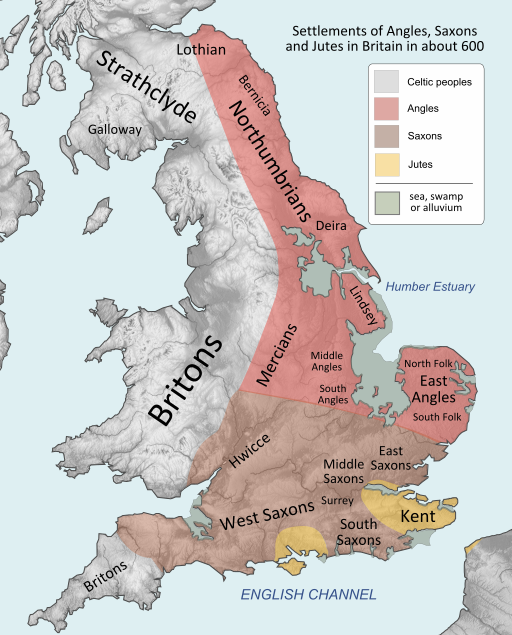
Bede, a Northumbrian monk writing a hundred years after the events, was no doubt dismayed that his holy (but only recently converted to Christianity) king, Edwin, was killed by a coalition raised against him, one of whom, Penda, was a pagan. Penda was to cause no end of problems for the Northumbrian kingdom, and its two constituent parts, Bernicia (roughly what we now think of as Northumberland) and Deira (centred around York). It is quite astounding to realise how many people Edwin upset, for it wasn’t just Penda and Cadwallon (believed to have been Edwin’s foster-brother and now king of one of the Welsh kingdoms) who joined the battle. There were many, many people with an axe to grind against Edwin, from the furthest reaches of Britain (check out this post about politics in the seventh century). Yet, victory never seems to have been assured. The two coalitions were almost perfectly poised against one another.
I find the date of the battle quite fascinating. October. Somewhere near Doncaster, on the banks of the River Don (or so it’s been believed for a long time – this might be being reappraised even as I type this). It would, undoubtedly, have been far past what we consider the ‘prime’ time to be battling. Not yet winter, but summer would undoubtedly have been behind them. It was also a long way from home for the alliance arranged against Edwin, in territory belonging to Edwin. I can’t help thinking he should have had the advantage. But that was most certainly not the case at the end of the day.
I’ve said before, and I’ll repeat it again, as much as we look at this period and see bloody warfare, what we’re really looking at is family politics played out with sword, seax, shield and spear. Edwin was Cadwallon’s foster-brother. Edwin’s son turned on his father and allied with the ‘enemy.’ One of those who joined the alliance against him was his nephew (Edwin’s sister’s son). Edwin had killed his father to become king and he was living in exile. The coming decades saw constant unease between Mercia and Northumbria, which erupted into full-blown war on two subsequent occasions, at Maserfeld in 641/2 (close to the Welsh border) and Winwæd in 655 (again, believed to be somewhere vaguely in the ‘north’ of England, and this time in November!). The ebb and flow of battle undoubtedly categorised these men (and women). While Bede portrays events with religious connotations (for he is writing an eccelsiastical history) it is much more likely family dynamics were at play with their attendent treachery, betrayal and sometimes, more rarely, loyalty.
Letter writing in the Eleventh Century, how I recreated Lady Estrid’s connections with her vast family. #non-fiction #histfic
In trying to bring together the narrative for Lady Estrid, I faced a bit of a problem: the vast distances involved. Lady Estrid had family in England, Denmark, Sweden and Norway, many of them she may never have met in person.
Today, we might pick up the phone, or have a quick look on the internet, but in the eleventh century, how would people have communicated?
And so to letter writing. There are two surviving letters from the eleventh-century that were sent by King Cnut, Estrid’s brother, to the English, when he was absent from his newly conquered country, in AD1020 and AD1027. I give a small example below.
;Be it known therefore to all of you, that I have humbly vowed to the Almighty God himself henceforward to amend my life in all respects, and to rule the kingdoms and the people subject to me with justice and clemency, giving equitable judgments in all matters; and if, through the intemperance of my youth or negligence, I have hitherto exceeded the bounds of justice in any of my acts, I intend by God’s aid to make an entire change for the better.’ From Cnut’s letter to the English from AD1027.
These might well have been an exercise for Cnut in asserting his authority over the English, and giving his regents a little bit of extra support, but they open up the possibility of just who else was busy writing and sending letters to one another.
There’s always the assumption that unless you were a holy man, you perhaps couldn’t read or write, and in fact, in one of the books I referenced for Lady Estrid, I found a fascinating chart detailing people who are known to have been used by the ruling family of Normandy as messengers, another way that messages could be sent between people. But surely, sometimes, it was just better to write everything down, that way nothing could be lost in translation.
Without the possibility of Lady Estrid ever meeting some members of her family, using letter writing allowed me to artificially create conversations between the characters, and while it might not have been the ‘norm’ it was certainly something that happened. Indeed, three centuries earlier, there’s a great wealth of information to be found in the letters of Alcuin of York (c735-804), so it wasn’t as though it was a new thing. With Denmark’s conversion to Christianity, there would have been a ready selection of scribes just waiting to note down Lady Estrid’s frustrations and complaints, even if she didn’t pen them herself.
Here’s an example of one of Estrid’s letters I create in the book.
Dearest Mother, Lady Sigrid. Queen of Denmark.’
‘This marriage doesn’t agree with me. How could you agree to it? I trusted you more than any other to understand how difficult it would be to be forced to live amongst strangers. I relied on you to argue with my father about the necessity of the union.’
And don’t tell me I will one day be the queen of the Rus, as my father planned. Prince Ilja is not a strong man. I don’t foresee him living long. Not at all. The poor man. He has barely been able to consummate our union. I hope I will not carry his child. It will be weak and feeble, and I will not tolerate such.’
My children will be strong and powerful. One day, it is they who will be kings and queens. But these children will not be shared with Prince Ilja. I am sure of it.’
And even if he were to survive, his brothers are a treasonous coven. None of them wishes the other to succeed at their expense. I foresee only bloodshed and paranoia when Ilja’s father is dead.’
Frida is my only friend and ally, reminding me of home. I hope to return to Denmark one day. I never imagined leaving her. I miss her. The kingdom of the Rus is not the same. Not at all.’
Send me news of my father and brothers. I wish to know if my father has finally triumphed in England over King Æthelred. I should like to know that he didn’t callously send me away without so much as seeing me in person for no good reason, because he was absent, in England, as so often the case. If he fails in England again, I will never forgive him for his actions towards me.’
Your despairing daughter, Lady Estrid Sweinsdottir, from Kiev.’
I’m resharing an interview I gave when I’d finished writing Lady Estrid, a novel of eleventh century Denmark #histfic #writingadvice #authorinterview
Why did you decide to write about Lady Estrid?
Lady Estrid has been a character that’s long fascinated me. She crops up as a ‘bit part’ character in another series I write, but as time has gone on, I’ve realised that she offers a lot more than I’ve been allowing her so far. And so, I hope at a suitable point in the other series, I decided to explore Lady Estrid for herself. It involves stepping away from my comfort zone of pre-Conquest England in the eleventh century, and allows me to write about Scandinavia at this time period, which has always been a huge area of interest for me.
I’ve written a few long story arcs before, but only two other books which cover such a huge amount of time (about four decades). Such a project allows me to focus on the bigger picture and to put historical characters into a much wider story-arc than writing just about them would allow.
By necessity, Lady Estrid must be a strong woman, able to manipulate the politics taking place around her. I think that there’s a huge and growing interest in such women, and of course, Denmark (and Scandinavia as a whole) at this time, isn’t something that I believe has been tackled before, potentially because of the lack of English Language books about the era.
What drew you towards the Early Medieval era in which you set your book?
I’m fascinated by everything pre-1066 in England, but also wider afield. It’s impossible to tell the story of just one of these later countries, inhabited by Northmen or Norsemen, without looking to what’s happening elsewhere. These characters didn’t abide by our current national boundaries.
What were the challenges you faced in researching this period of history and were there any unexpected surprises?
The biggest problem with writing about this time period is the sources. I’m not as familiar with the Saga material and the works of Adam of Bremen and Saxon Gramaticus, as I’d like to be. As such, I rely much more on secondary sources than I might when writing about the Early English period. And of course, it’s a period where written sources are quite scarce anyway. Not only is it difficult to ‘find’ Lady Estrid, but, as you might have noticed, many of the character share the same names – there are no ends of Swein/Svein/Sven’s and equally, just as many Gytha’s and Gunnhild’s.
I was surprised by just how little the women of the Danish royal family are mentioned in any secondary sources. I’ve recently been on a book buying spree, and even in a new monograph on Cnut, Lady Estrith is only cited in the index seven times, and in a 798-page book, she has about 3 words!
What do you think is the most challenging aspect of writing Historical Fiction?
I think this depends on how much history you want to put in your book. I’ve just written three books in The Ninth Century Series, and while they’re historical in nature, much of the day-to-day activity is actually fighting and swearing. Lady Estrid has a much weightier content. It has a cast of many more people; they all have to be placed in the right time period and at the right events, and there is not as much information about any of them as I’d like there to be. Obviously, The Ninth Century Series was easier to write once the time period was set. Lady Estrid was an altogether different project. It took much longer, and was more frustrating because I was trying to ensure it didn’t conflict with previous stories I’ve written, which have a very ‘Early English’ basis.
What advice do you have for aspiring Historical Fiction authors?
Know the time period you’re writing about, and not just what happens during it, but also what happens both before, and after, and in neighbouring countries as well. And, be aware of what ‘might have happened’ if certain events – normally births, deaths or wars – hadn’t happened. Remember, your characters don’t have the benefit of hindsight that you have as a writer. Everything to them would have been immediate, imminent and happening to them. Don’t fall into the trap of presenting everything as a fait accompli.
And, be prepared to be frustrated. There’s always some niggly little fact that is just not mentioned anywhere. The decision then has to be made as to whether to ‘make it up’ or write around it, and readers will somehow always know if you make it up.
And on a final note, be prepared to do something a little bit ‘different,’ be bold, be creative, do whatever has to be done to engage an audience with the time period.
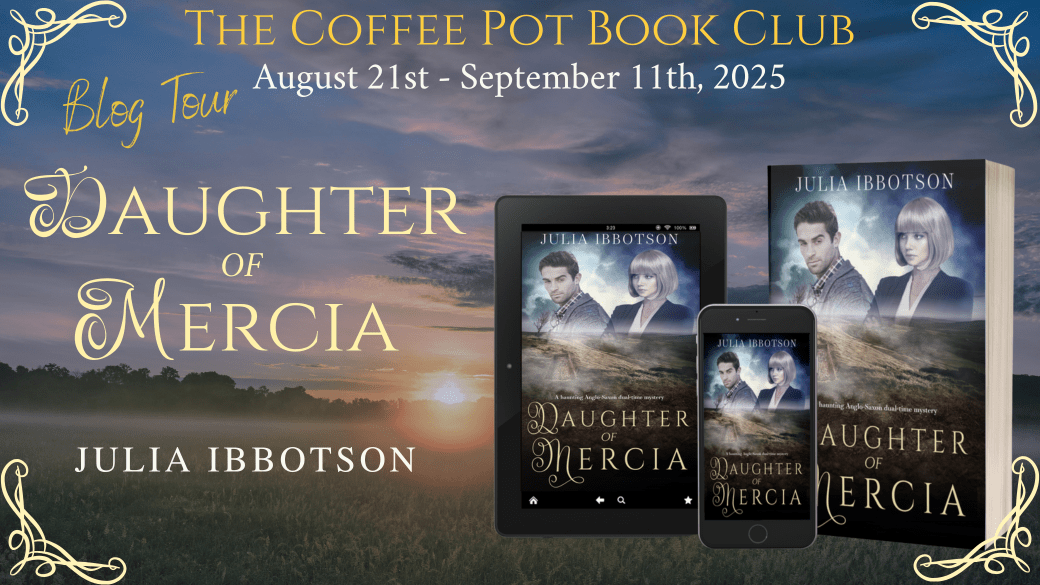
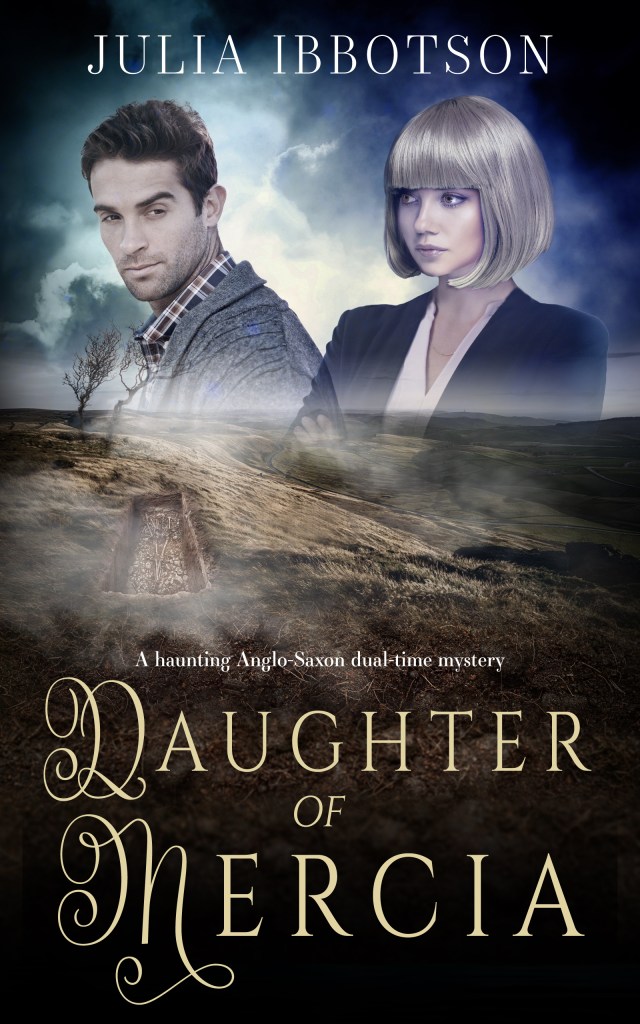
I’m delighted to welcome Julia Ibbotson and her book, Daughter of Mercia, to the blog with a guest post.
Lady Mildryth of Mercia
It might surprise us to know that women in the Anglo-Saxon period, even early in their history, were regarded as equal in importance to their male counterparts. Women could hold their own wealth, land, possessions; they could inherit from their fathers or mothers on their own account and they could bequeath it to their children. They were not regarded as the property of their husbands or fathers. Their rights were protected in law and it seems that this applied across the social spectrum, from high-status families presumably to ealdormen to thegns to freedmen ceorls and grant-bearer geburs.
High-status women could be leaders of settlements / regions in the years following the immigration and settling of even the early tribes of Anglo-Saxons. They could be strategists and negotiators. Later, for example, Lady Ǣthelflaed of Mercia, the 10th century daughter of King Alfred, strategized battles to take Derby, Leicester, York, and of whom it is said that she was a “man in valour, a woman in name”. The Anglo-Saxon word cūning (king)applies to either male or female leaders, while the word queen (cwene) applies only to the wife of a king. The historical significance of strong female leaders goes right back to Boudicca of the Iceni in the first century AD. Post-Roman Britain was composed of many small kingdoms, and kingdoms fought to take over other kingdoms and thus wield greater power over a larger region. But our theories of this time of great change are beginning to recognise the way that stable everyday life and the quest for peace were also significant.
Lady Mildryth is a fictional character but is bred of such strong female leaders as these. I have based her on other Anglo-Saxon women who have a place in the history of Britain and I wanted her to represent an idea of the powerful yet peace-loving early settlers who wanted to create stable, secure communities, from the chaos and blood-shed of previous generations. Clearly, I have taken liberties with historical characters and events for the sake of my novel and it is not intended to be an accurate academic analysis of the time, but since archaeological excavation is only just gaining a clearer picture of the early Anglo-Saxon period and its domestic and cultural signigifance, maybe my imagination is not so far out!
Recent archaeological excavation and research has demonstrated that even back to the 5th century, high status ladies were buried with signifiers of their wealth in their grave goods: rich jewellery, gold artefacts, precious glass, beautiful fabrics.
Lady Mildryth, as the leader of a region, would have worn fabrics that were richly dyed and decorated: a chemise or shift, a long-sleeved kirtle (under-gown) often of expensive linen or wool, an over-gown trimmed with fur or braid, and an embroidered mantle(cloak). As a high-status woman, she would have eaten well, with home-grown meat, fish, dairy, vegetables, fruit (hedgerow berries but also imported dates, figs, almonds), and she would have drunk honeyed mead and imported wine, during her mead hall feastings.
Although her antecedents are pagan, and she accepts the duality of her people, she finds herself on the cusp of Christianity, yet still drifting to some of the pagan beliefs of her upbringing. Her late mother was from the Cornovii tribe from the people of Pengwern / Powys, Celtic-Brythonic pagans. She was hand-fasted to Mildryth’s father and died when Mildryth was young. Lady M’s character takes after her mother’s strength of will and determination to be on a par with her brothers (Crydda and Cynewald) – although she knows that she must earn this.
Her antecedents are historical (well, possibly legendary!) characters. Her grandfather is Icel, son of Eomer, of the Icinglas (or Iclingas), an Angle from across the seas in Jutland. He is said to have led his people across the North Sea in around 515 AD to the region we now call East Anglia, and is said to have moved westwards across the country, founding the kingdom of Mercia in the 520s AD. His son, Lady Mildryth’s father, is Cnebba who ruled after Icel from possibly around 535 AD.
We speak of the archetypes ‘Peace-weavers’ and ‘Shield-maidens’ in Anglo Saxon society and I see Lady Mildryth as a Peace-weaver. She is a strategist and commander of men, like Lady Æthelflæd of Mercia generations later. But she is also a negotiator and does not wish to conquer other lands or fight to subdue other tribes. She is dedicated to her settlement, her community, and my novel is more about domestic history than that of battles and high kings.
Lady Mildryth strives to make her settlement run smoothly and to encourage the cultural enrichment of her people: a culture taken from her Angeln ancestors as shown in her use of the scōp, the poet story-teller who regales the thegns of the mead-hall with tales of tradition, of warriors, family and legendary heroism. Peace-weavers were often encouraged, or chose, to make expedient marriages with other kingdoms to avert potential strife. There is evidence to suggest that there were battles for lands, yes, but also deals and negotiations so that tribes could coexist. In Daughter of Mercia, Lady Mildryth is certainly aware of this.
If you’d like to read more of life in Anglo-Saxon times, you may like to look at my blog on my website and the 7-part series ‘Living with the Anglo-Saxons’ athttps://juliaibbotsonauthor.comwhere there are also some reference texts.
Here’s the Blurb
Echoes of the past resonate across the centuries as Dr Anna Petersen, a medievalist and runologist, is struggling with past trauma and allowing herself to trust again. When archaeologist (and Anna’s old adversary) Professor Matt Beacham unearths a 6th century seax with a mysterious runic inscription, and reluctantly approaches Anna for help, a chain of events brings the past firmly back into her present. And why does the burial site also contain two sets of bones, one 6th century and the other modern?
As the past and present intermingle alarmingly, Anna and Matt need to work together to solve the mystery of the seax runes and the seemingly impossible burial, and to discover the truth about the past. Tensions rise and sparks fly between Anna and Matt. But how is 6th century Lady Mildryth of Mercia connected to Anna? Can they both be the Daughter of Mercia?
For fans of Barbara Erskine, Elena Collins, Pamela Hartshorne, Susanna Kearsley and Christina Courtenay.
This title is available to read on #KindleUnlimited
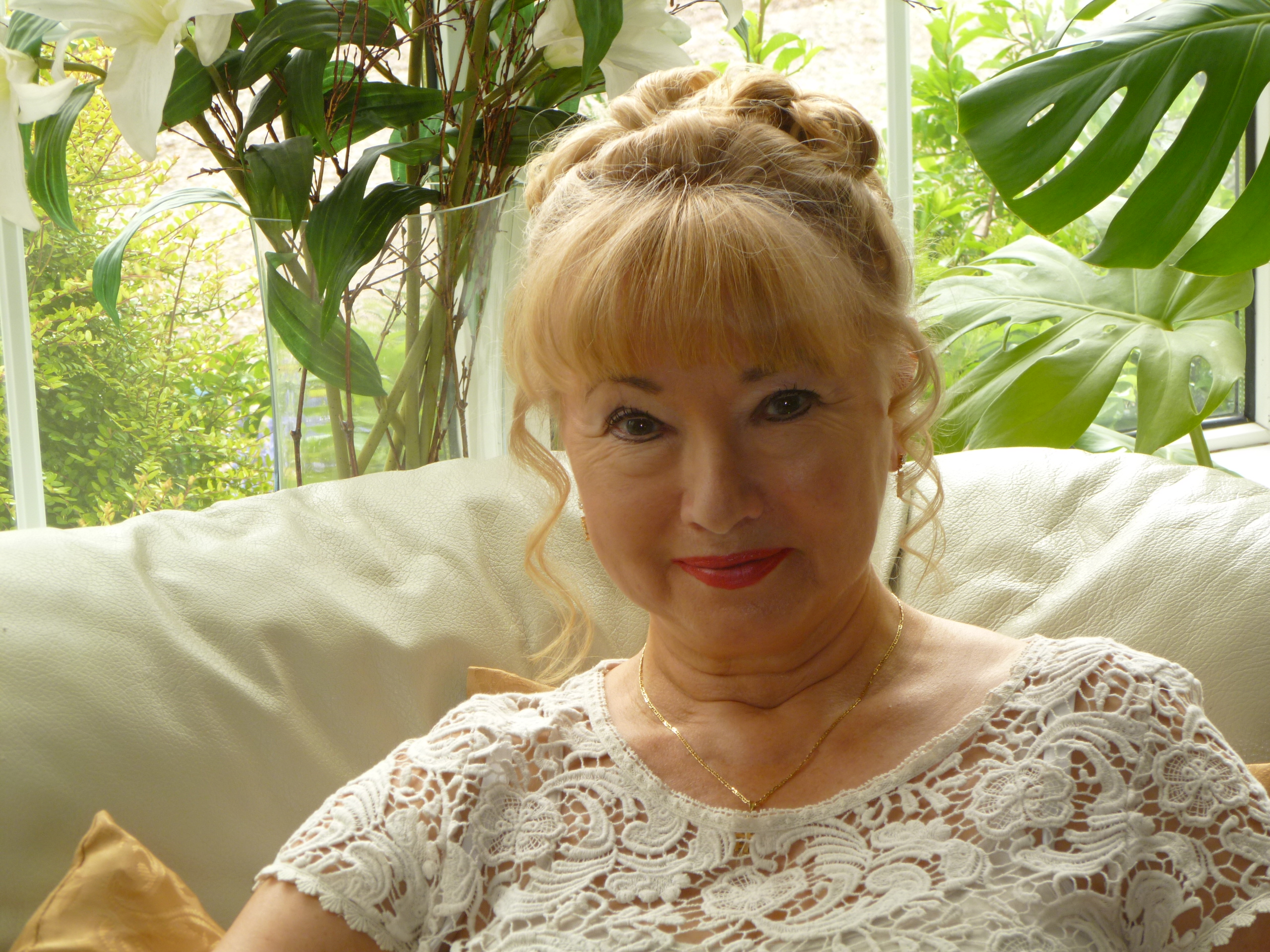
Meet the Author
Julia Ibbotson is fascinated by the medieval world and the concept of time. She is the author of historical mysteries with a frisson of romance. Her books are evocative of time and place, well-researched and uplifting page-turners. Her current series focuses on early medieval time-slip/dual-time mysteries.
Julia read English at Keele University, England, specialising in medieval language / literature / history, and has a PhD in socio-linguistics. After a turbulent time in Ghana, West Africa, she became a school teacher, then a university academic and researcher. Her break as an author came soon after she joined the RNA’s New Writers’ Scheme in 2015, with a three-book deal from Lume Books for a trilogy (Drumbeats) set in Ghana in the 1960s.
She has published five other books, including A Shape on the Air, an Anglo-Saxon timeslip mystery, and its two sequels The Dragon Tree and The Rune Stone. Her latest novel is the first of a new series of Anglo-Saxon dual-time mysteries, Daughter of Mercia, where echoes of the past resonate across the centuries.
Her books will appeal to fans of Barbara Erskine, Pamela Hartshorne, Susanna Kearsley, and Christina Courtenay. Her readers say: ‘Julia’s books captured my imagination’, ‘beautiful story-telling’, ‘evocative and well-paced storylines’, ‘brilliant and fascinating’ and ‘I just couldn’t put it down’.
Who was Lady Estrid, and why did I write about her life? #histfic #TheEleventhCentury #England #Denmark #non-fiction
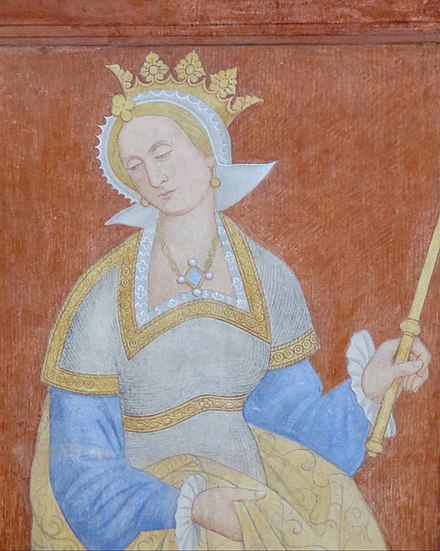
Lady Estrid, or Edith or even Margaret, daughter of King Swein Forkbeard of Denmark (and briefly England) is one of those beguiling characters who lived through momentous change.
I’ve long been drawn to her, and used her as a ‘bit’ part character in my The Earls of Mercia series, but I wanted to dedicate both more time to Lady Estrid, and also to Denmark. Even when I’ve written about Cnut, who was king of England and Denmark, much of the action has taken place in England. There’s simply not enough ‘space’ to fit everything in.
Lady Estrid, like similar royal women (Queen Eadgifu of England and Lady Elfrida in the tenth century), had the advantage of living a much longer life than many of her male family members (check out the family trees here). She was the ‘glue’ that held together the narrative of what was happening in Denmark. And because of her vast family, it also allowed me to weave the story of not just Denmark, but also Norway, Sweden, England, and Normandy, into the narrative.
She was the daughter of a king, the sister of three kings, the aunt of four kings, the mother of one king, and in time, the grandmother of three further kings.
Having written about Queen Eadgifu, Lady Elfrida, and King Edward the Elder’s daughters (in tenth century England), I wanted a new ‘woman’ to bring to life. I could have chosen Queen Emma, or even Queen Edith of England, but their stories are more well-known. I’ve long been fascinated by the Scandinavian countries during the Viking Age, and Lady Estrid was just too good a character to leave in her ‘bit’ part without adding anything further.
For all Lady Estrid’s claims as mother, aunt, sister and daughter, there’s very little that can be said about her, not even the order of her three marriages, if they occurred, can be confirmed. It’s only possible to say that her marriage to Jarl Úlfr took place because of the survival of her children. It’s the lack of ‘hard facts’ about her, and the potential to weave a story that includes so many of the other well-known women and men of the period, that made Lady Estrid so irresistible. When stories focus on Earl Godwine, or King Cnut, or even on King Harald Hardrada, it’s possible to lose sight of the bigger picture, and Lady Estrid certainly provides the potential to show the overarching events that occurred from AD1013-1050 within Denmark and England.
I’m delighted to welcome Julia Ibbotson and her new book, A Shape on the Air, to the blog #Medieval #HistoricalFiction #AngloSaxon #TimeTravel #TimeSlip #Mystery #Romance #BlogTour #TheCoffeePotBookClub
I’m delighted to welcome Julia Ibbotson and her new book, A Shape on the Air, Dr DuLac Series, Book 1, to the blog.

Here’s the Blurb
Can echoes of the past threaten the present? They are 1500 years apart, but can they reach out to each other across the centuries? One woman faces a traumatic truth in the present day. The other is forced to marry the man she hates as the ‘dark ages’ unfold.
How can Dr Viv DuLac, medievalist and academic, unlock the secrets of the past?
Traumatised by betrayal, she slips into 499 AD and into the body of Lady Vivianne, who is also battling treachery. Viv must uncover the mystery of the key that she unwittingly brings back with her to the present day, as echoes of the past resonate through time. But little does Viv realise just how much both their lives across the centuries will become so intertwined. And in the end, how can they help each other across the ages without changing the course of history?
For fans of Barbara Erskine, Pamela Hartshorne, Susanna Kearsley, Christina Courtenay.
This title is available to read on #KindleUnlimited
Meet the Author
Julia Ibbotson is fascinated by the medieval world and the concept of time. She is the author of historical mysteries with a frisson of romance. Her books are evocative of time and place, well-researched and uplifting page-turners. Her current series focuses on early medieval time-slip/dual-time mysteries.
Julia read English at Keele University, England, specialising in medieval language / literature / history, and has a PhD in socio-linguistics. After a turbulent time in Ghana, West Africa, she became a school teacher, then a university academic and researcher. Her break as an author came soon after she joined the RNA’s New Writers’ Scheme in 2015, with a three-book deal from Lume Books for a trilogy (Drumbeats) set in Ghana in the 1960s.
She has published five other books, including A Shape on the Air, an Anglo-Saxon timeslip mystery, and its two sequels The Dragon Tree and The Rune Stone. Her latest novel is the first of a new series of Anglo-Saxon dual-time mysteries, Daughter of Mercia, where echoes of the past resonate across the centuries.
Her books will appeal to fans of Barbara Erskine, Pamela Hartshorne, Susanna Kearsley, and Christina Courtenay. Her readers say: ‘Julia’s books captured my imagination’, ‘beautiful story-telling’, ‘evocative and well-paced storylines’, ‘brilliant and fascinating’ and ‘I just couldn’t put it down’.
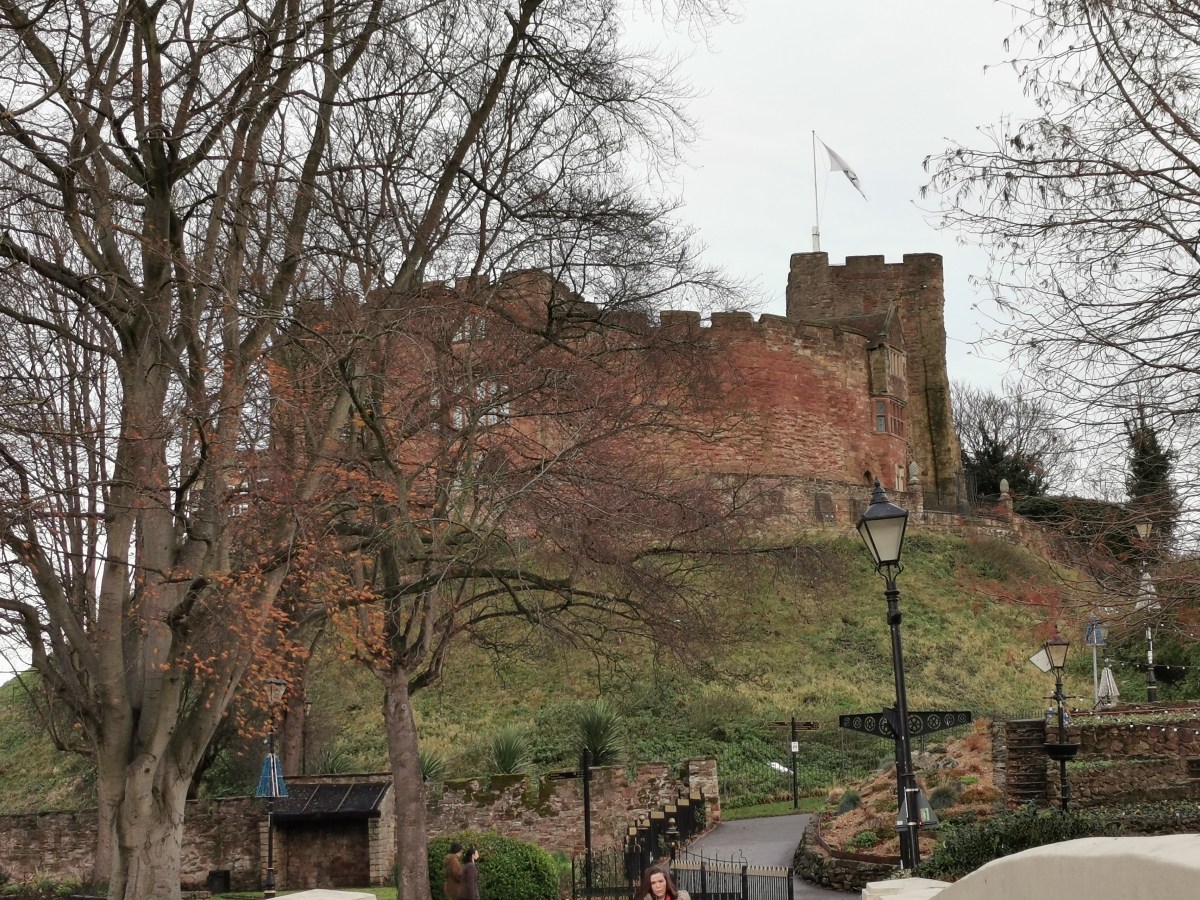
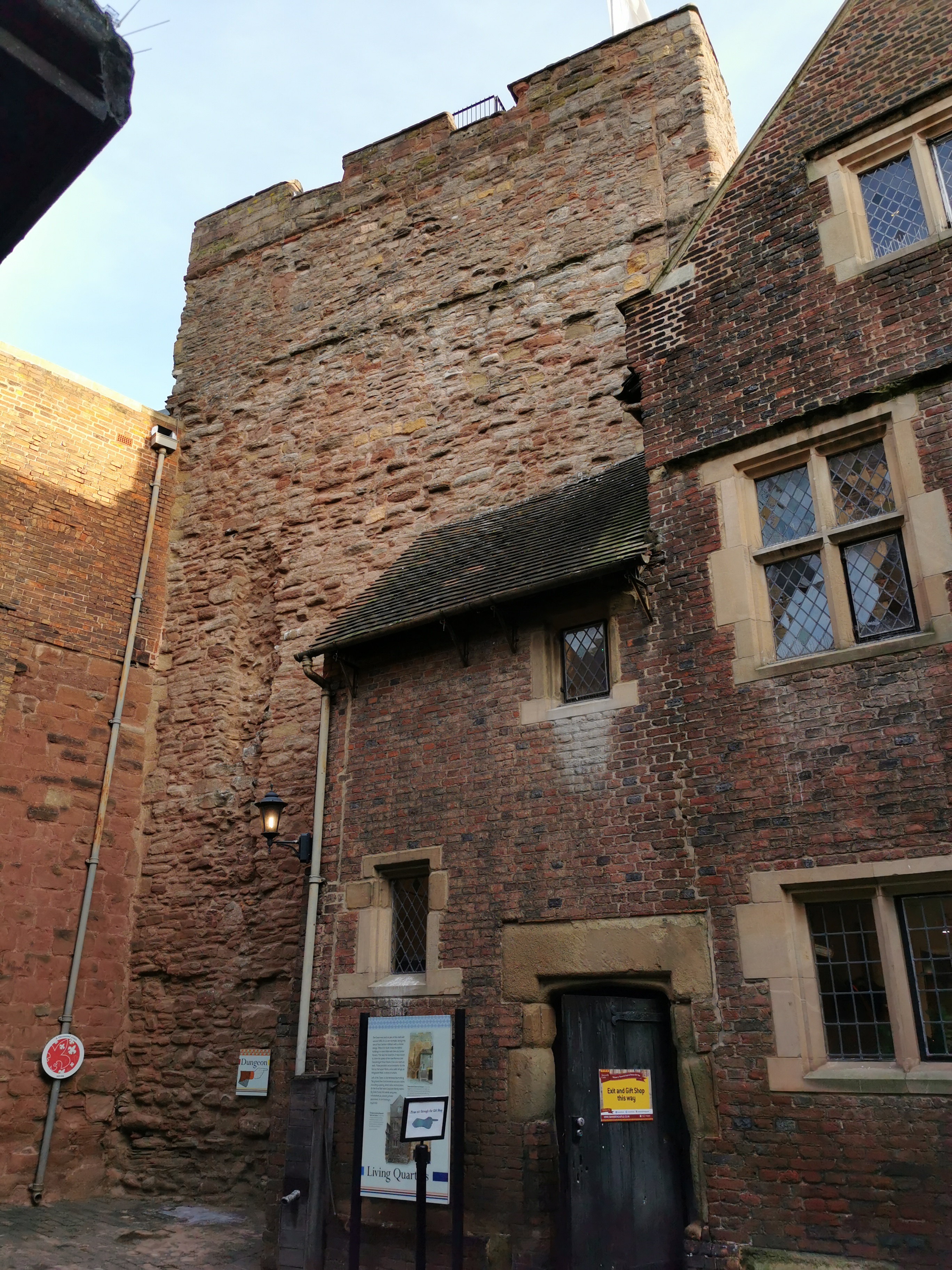
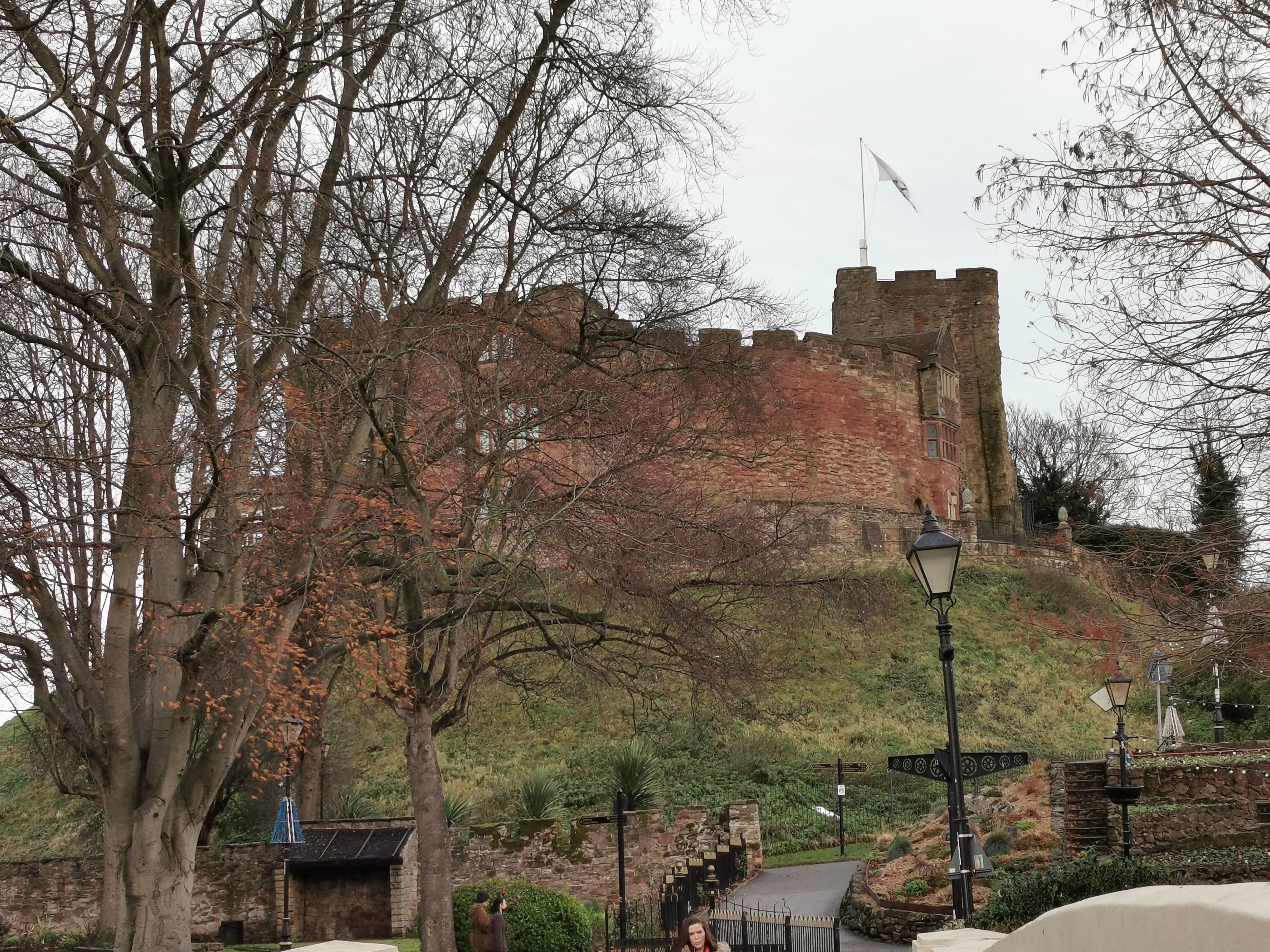
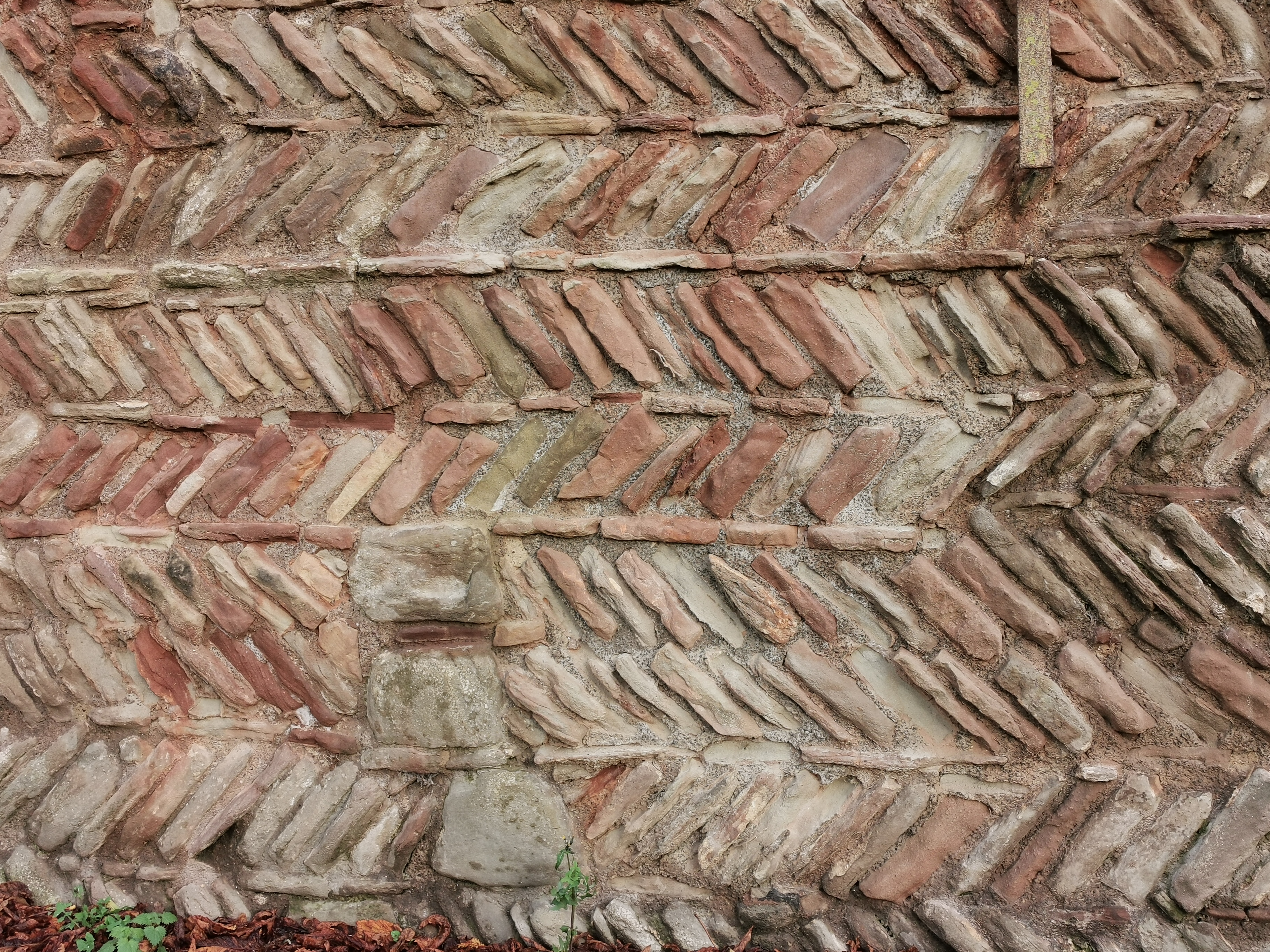
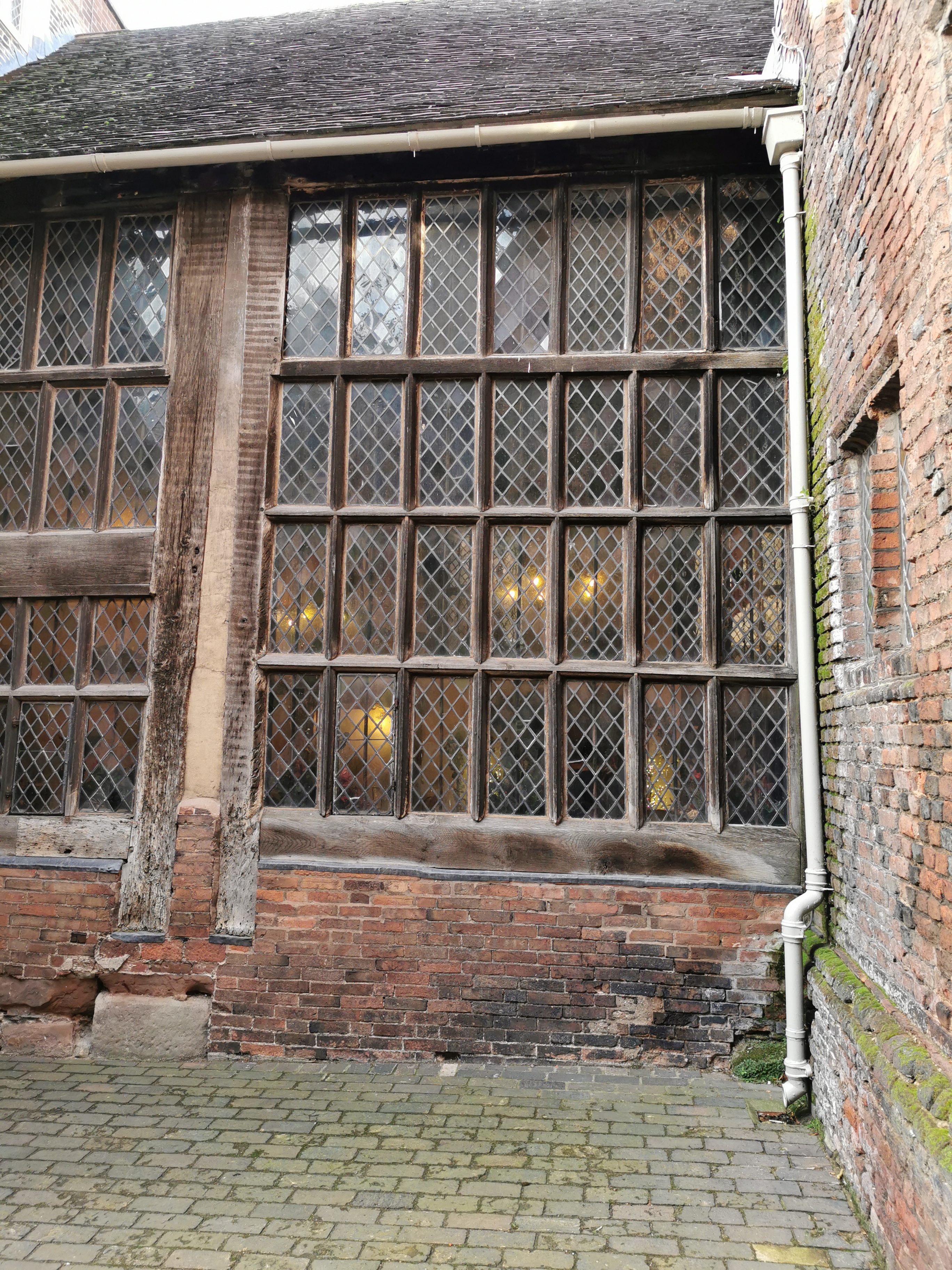
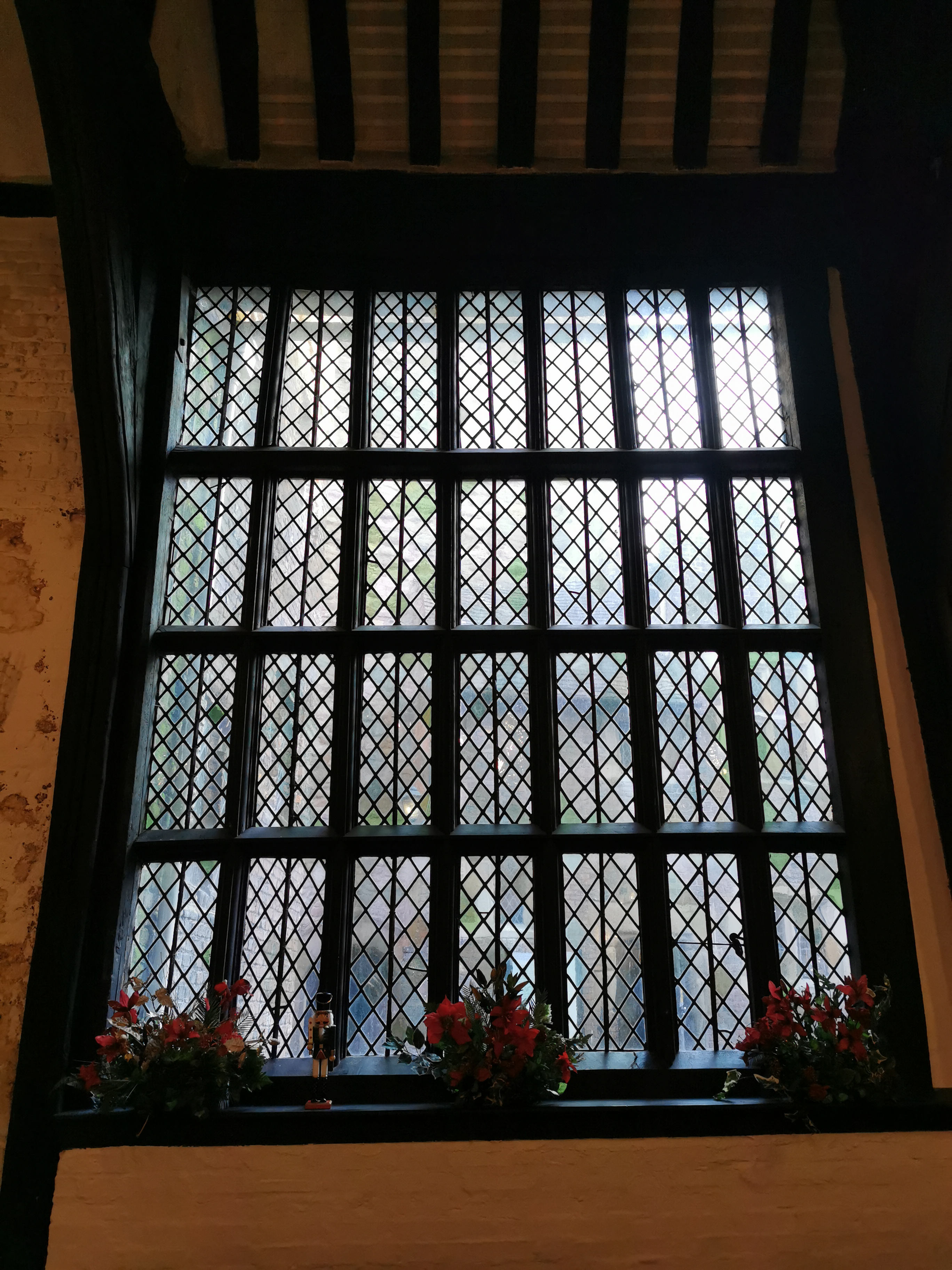
Like Lichfield and Repton, Tamworth has long been known to be a capital of the Saxon Mercian kingdom. Visitors today will find a more modern castle, which variously dates from the end of Saxon England up to the Victorian era, and one which is crammed with fascinating detail, from the herringbone wall beneath it to the beautiful Tudor windows of the great hall.
On a visit in 2021, I can also inform you that it currently had a third of the fabulous Staffordshire Hoard on display and an excellent museum filled with all things Saxon. (I believe it still holds some of the Staffordshire Hoard). Castles, if they were built in the late Saxon period, and some of them were, would have been constructed from wood. It was only later that they came to be built or rebuilt in stone, as we recognise them today.
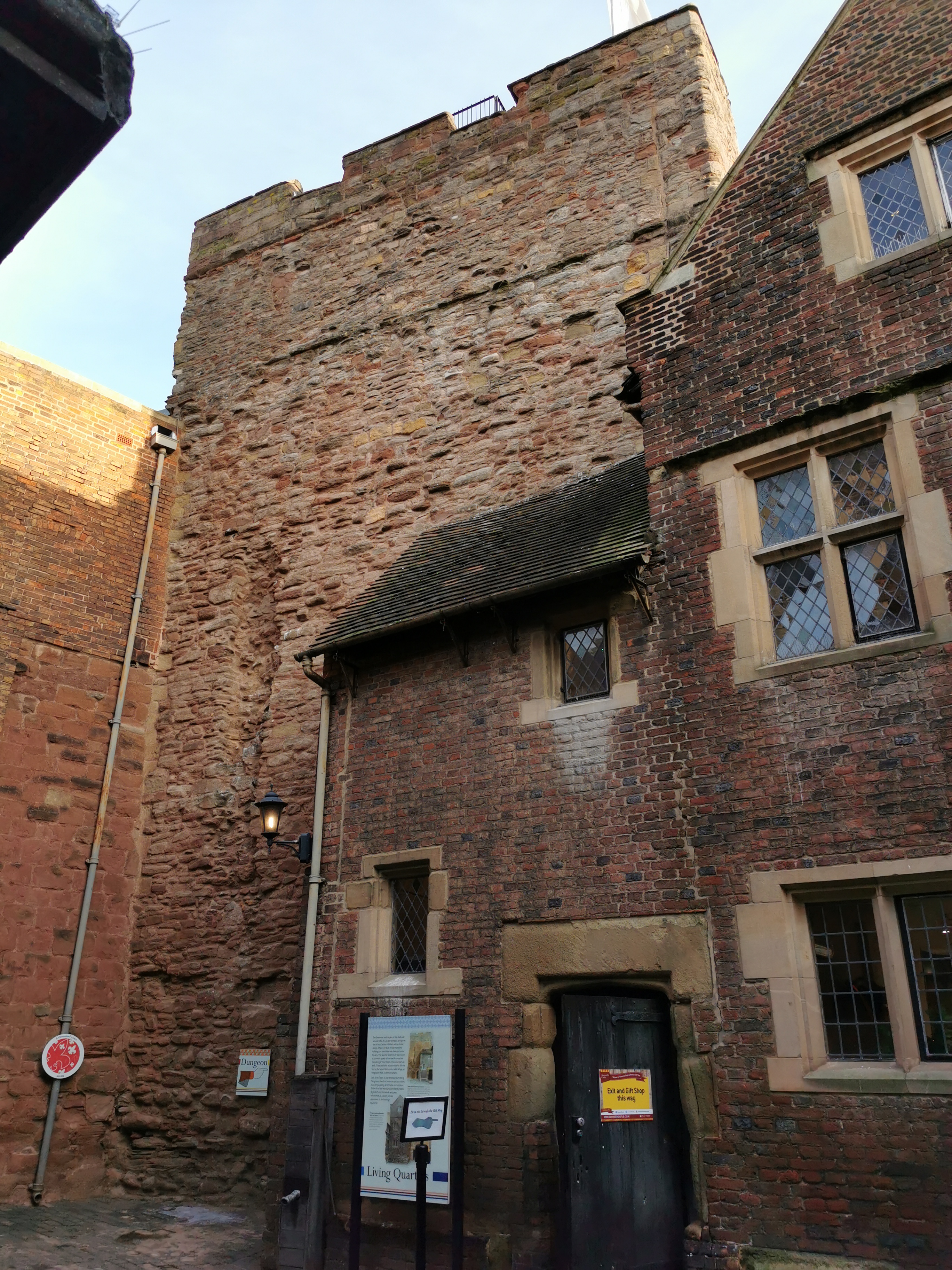
A view of the oldest part of Tamworth Castle, dating to after the end of Saxon England
Today’s castle wouldn’t have existed in the 820s and 830s. Indeed, it’s proven to be very difficult for archaeologists to determine where the original settlement of Tamworth lay, no doubt, because much of it has been overbuilt, just as in most places where habitation has been almost continuous. A fire in 1345 might well have destroyed any remaining wooden dwellings, making the endeavour even more difficult.
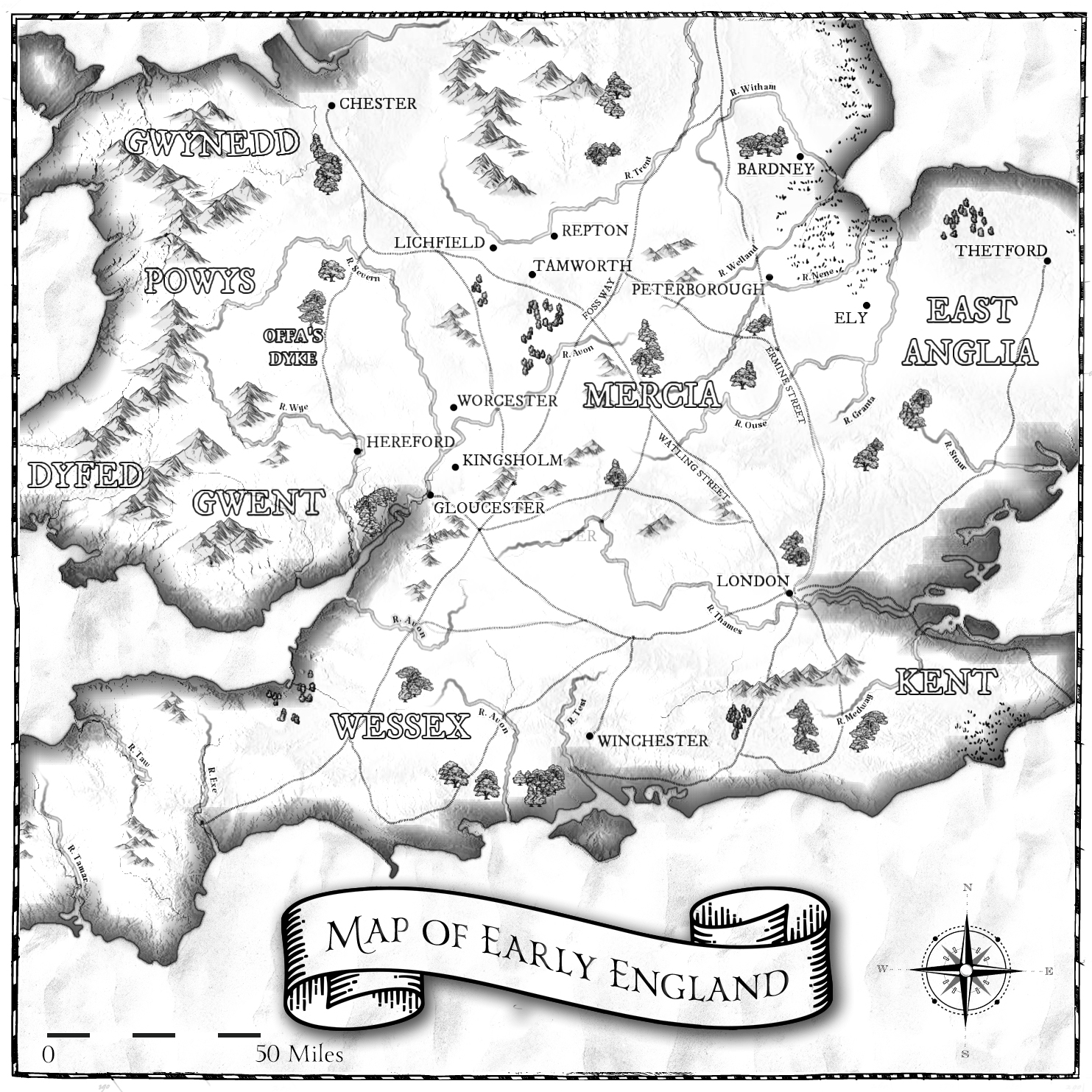
Map showing the location of Tamworth, at the heart of the Saxon kingdom of Mercia. It is close to Lichfield, another important location, and to Repton where, for a period, the ruling family were buried.
It has been possible to reconstruct Tamworth in the 900s, when it was designated a ‘burh,’ a defensive settlement in which the local population could seek shelter from the Viking raiders behind its walls. (I can’t find the image at the moment).
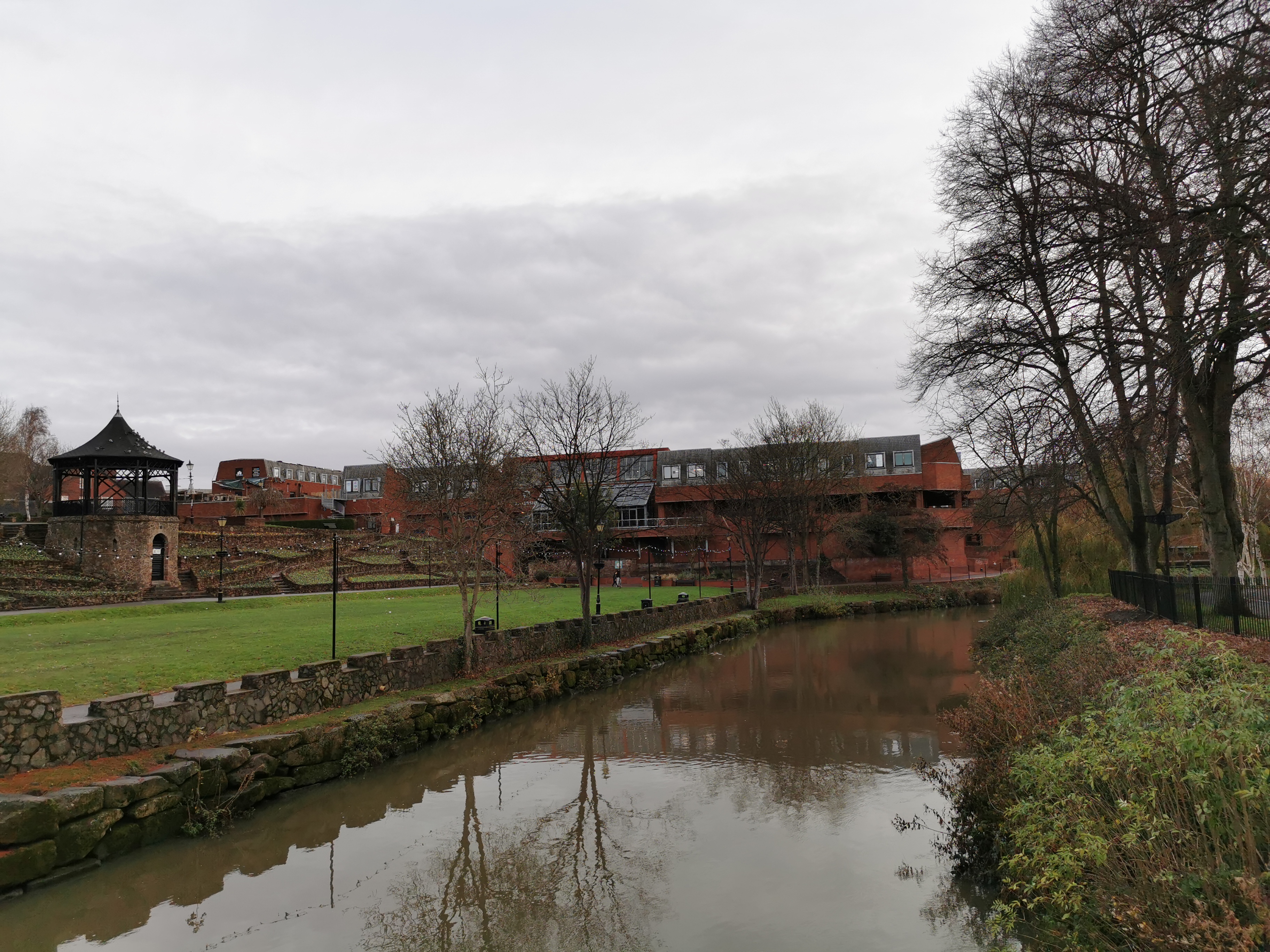
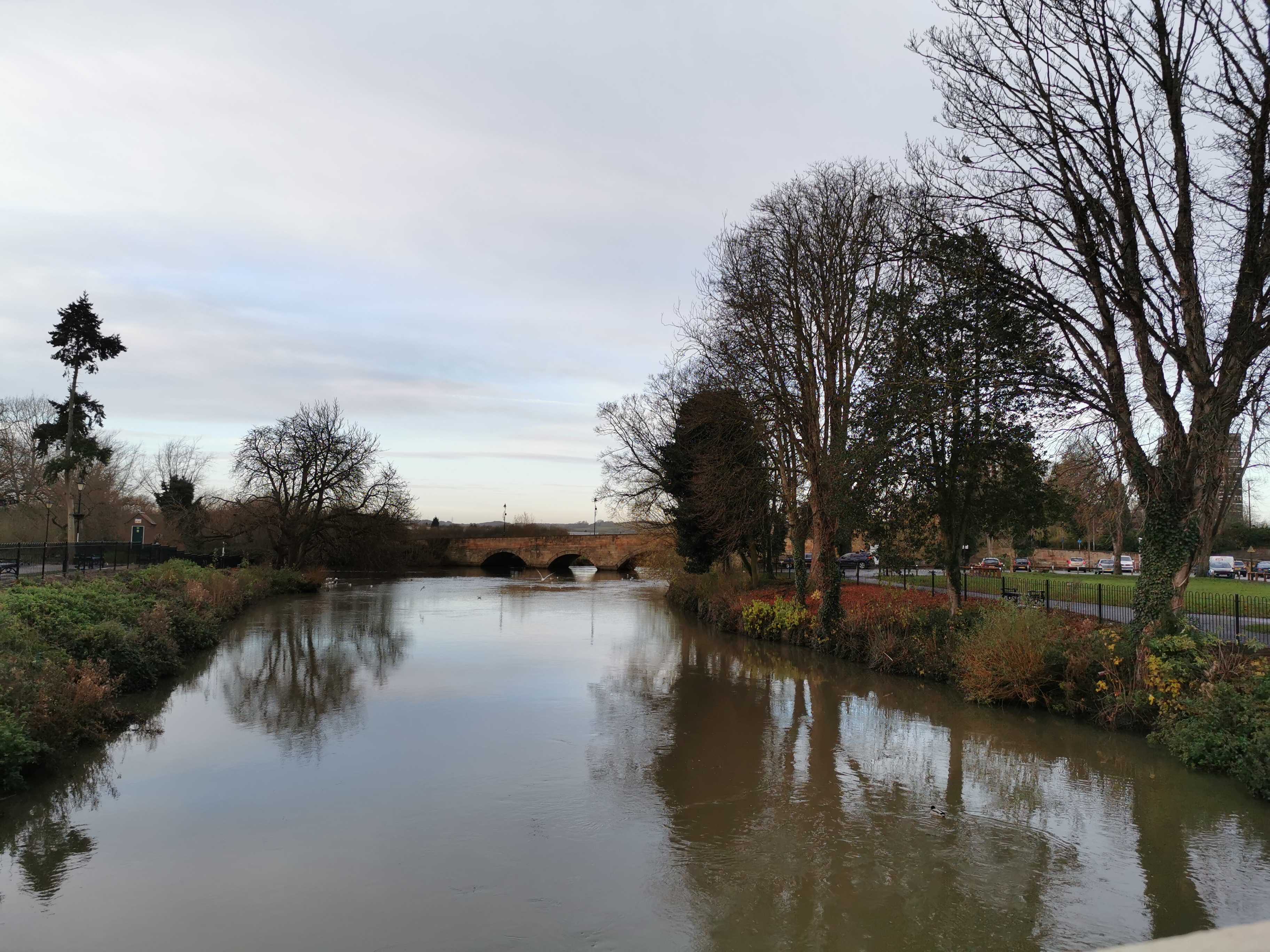
But it is possible to imagine how Saxon Tamworth might well have looked in the 800s, when the Eagle of Mercia Chronicles takes place. The rivers, The Tame and the Anker, run in front of the current castle, and there’s a slight rise, on which I used to spend many happy hours running up and down the steps, with flowers blooming in the flower beds. From there, it would have been possible to see a reasonable distance south. The river would have been put to good use, and the remains of a water mill have been found and dated to the later Saxon period. Houses would have been built from wood, wattle and daub with thatched roofs, and there would have been workshops as well as residential dwellings. At the centre of the settlement would have been a lord’s hall. While this hasn’t been found in Tamworth, it could have measured upwards of 24 metres long by 6 metres wide. It’s believed it was also surrounded by a defensive ditch. Somewhat sheltered, as the road to Lichfield is uphill, it would have been a pleasant, and I assure you, on the right day, very warm, location for Mercian kings to have lived within. It was close to Watling Street too, allowing easy access to the rest of Mercia.
View of Tamworth castle from the bridgeThe famous Herringbone wall (I think it’s famous, anyway).The Tudor window from the outsideThe Tudor window from the insideThe wall walkwayView from the bridge crossing the riverAnother view from the bridge over the river
I’m delighted to welcome Paul Bernardi and his new book, Uprising, book 2 of the Rebellion series, to the blog.
Here’s the Blurb
Summer 1067. Northumbria.
Oslac, thegn of the village of Acum, feels cheated – having been robbed of the chance to kill his enemy by his own kinsman.
Instead, Gundulf, the erstwhile Lord of Hexham and murderer of Acum’s villagers, is now awaiting justice for his crimes in Bebbanburh, Earl Oswulf’s fortress capital far to the north.
But when Oslac narrowly escapes death at the hands of Gundulf’s assassin, he realises he will never be safe while the Dane lives. Summoning his closest companions, Oslac heads north to demand Oswulf put an end to Gundulf’s life – only to find the prisoner has escaped.
Tracking the fugitive into the wild hills and dales of Northumbria – places far beyond the reach of Oswulf’s power – Oslac falls into Gundulf’s trap when the earl’s warband is ambushed with catastrophic consequences.
Elsewhere, unrest in the north of England is growing. Impotent in the face of Norman avaricious brutality, the Saxon nobility can do nothing to prevent their ancestral lands being passed to foreign invaders. It can only be endured for so long, and a reckoning is coming.

Once again, Oslac must put aside his personal vendetta to join with the few remaining great lords of Anglo-Saxon England in what may prove to be the final, climactic stand against their Norman overlords.
The song of swords will echo across the land once more.
Paul Bernardi studied Anglo-Saxon and Medieval history at the University of Leeds more years ago than he cares to remember. He has been an author of historical fiction since his first novel (a second world war drama) was published in 2017. Since then, he has reverted to his favoured period, publishing six more novels (so far) set in 11th century England, mainly around the time of the Norman Conquest.
Paul Bernardi’s books are published by Sharp Books.
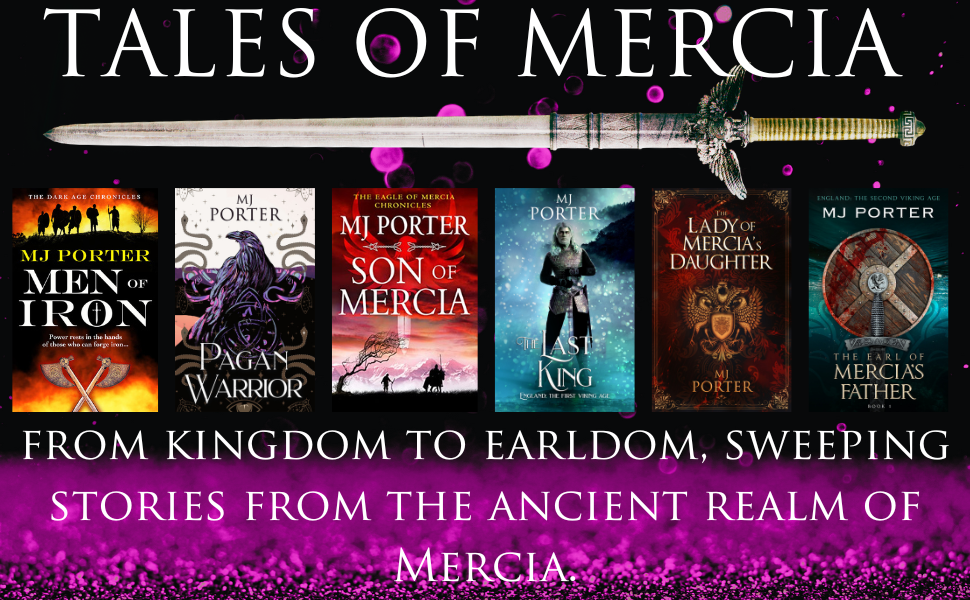
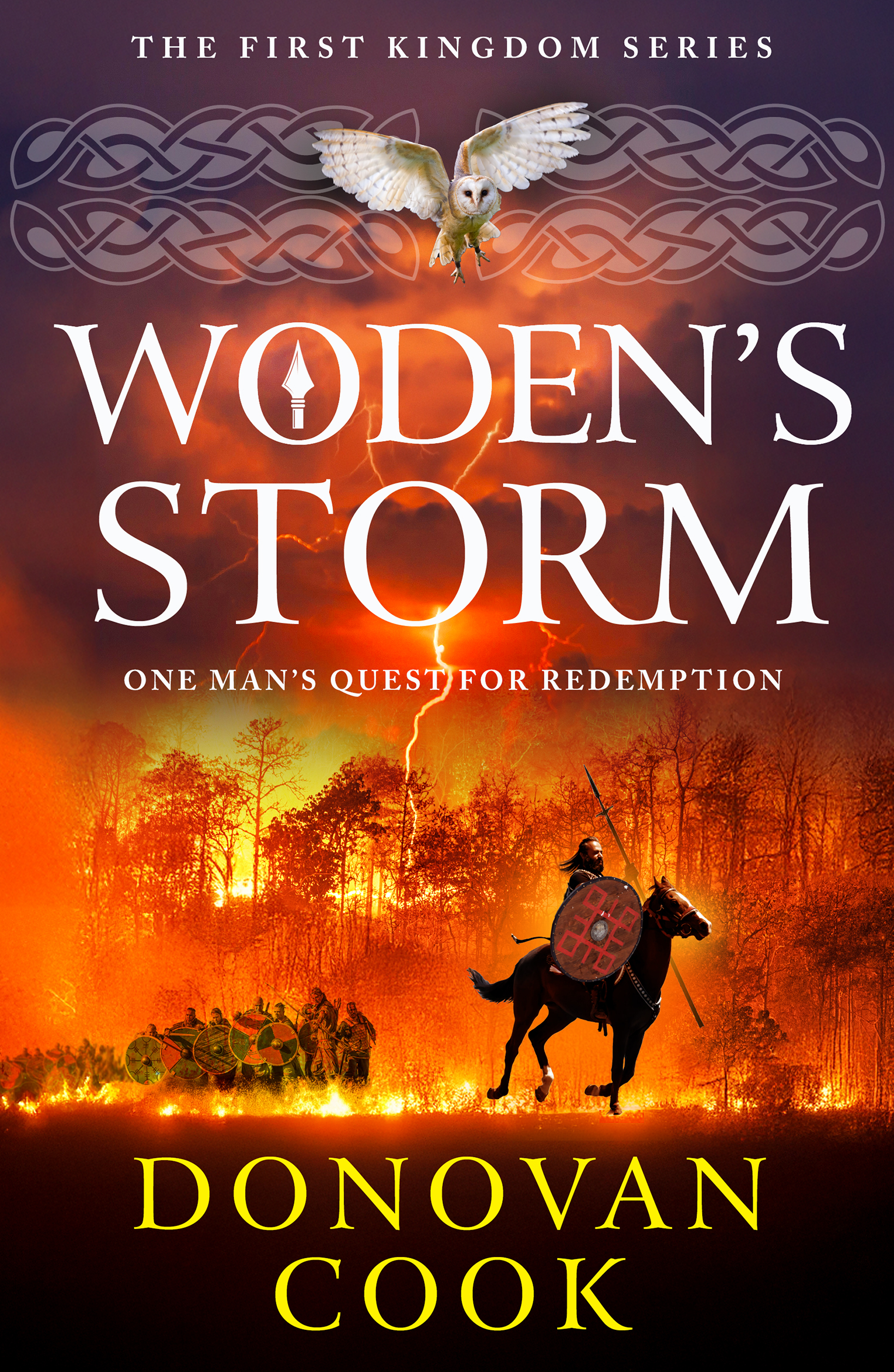
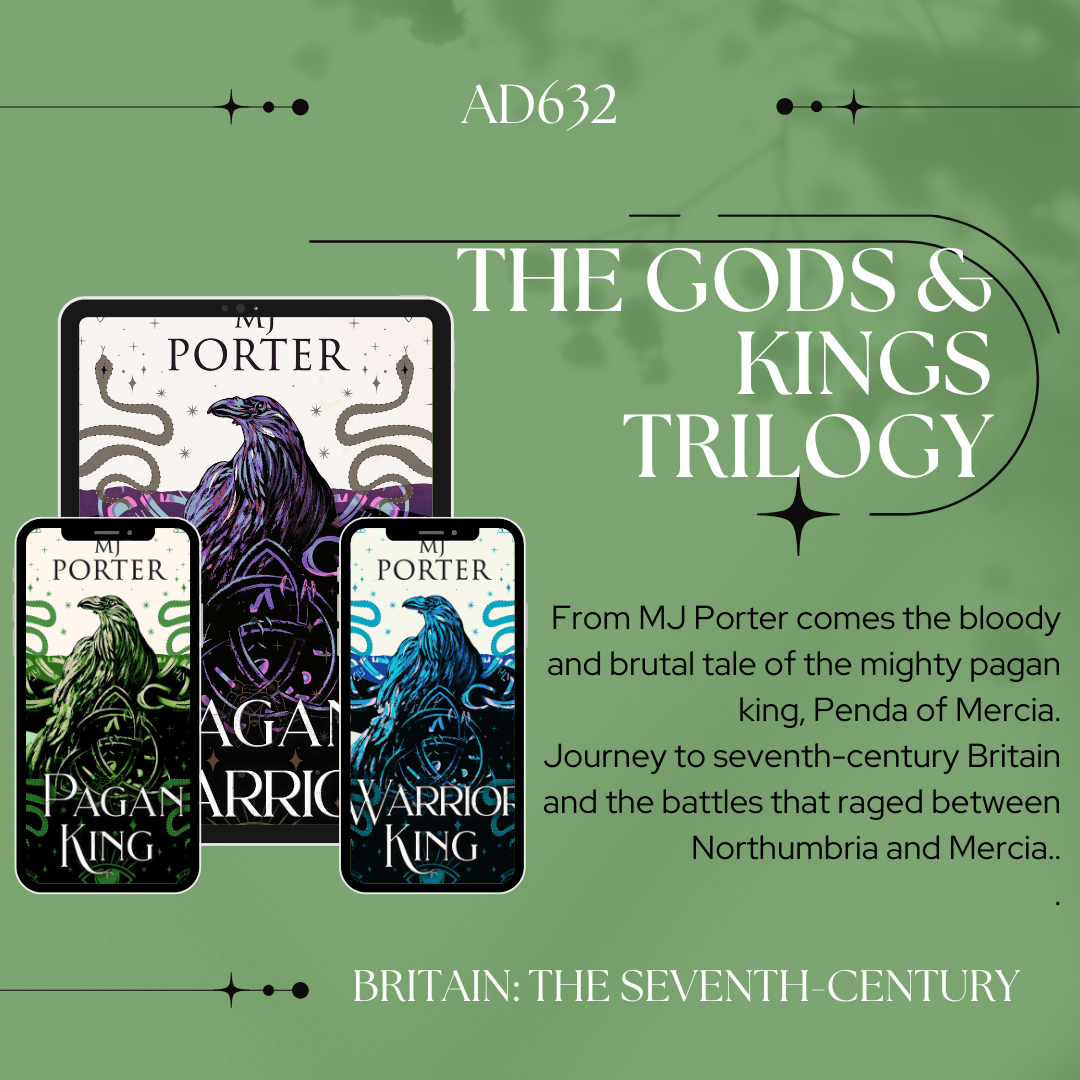
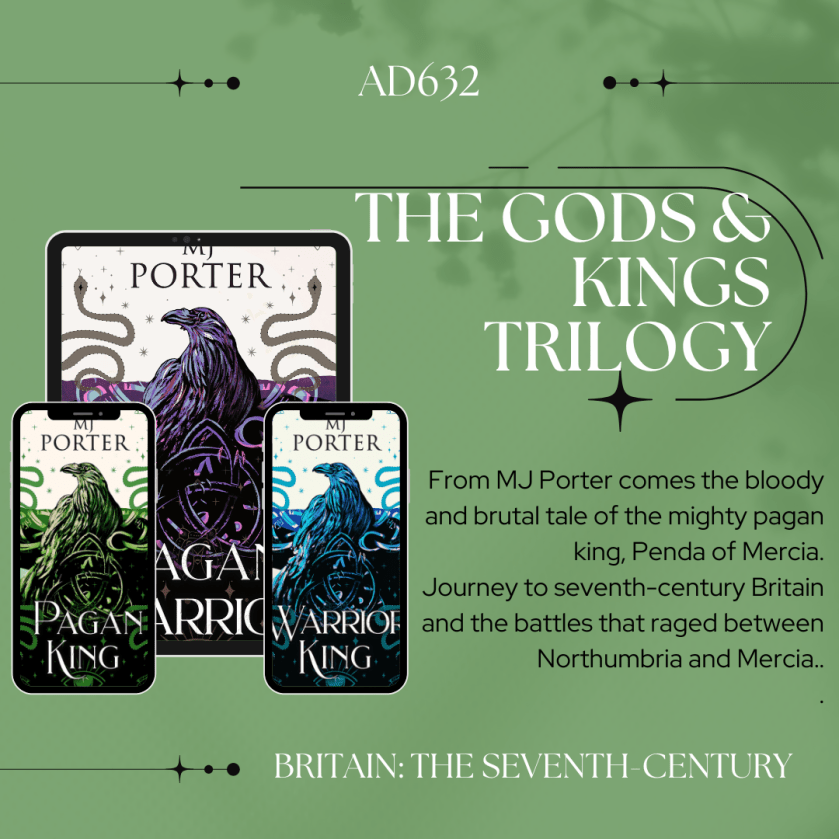
On this day in history….. Pagan Warrior, then titled Hædfeld first hit the ‘shelves,’ as it were. Until the release of Men of Iron earlier this year, Pagan Warrior had been the furthest back in time I’d written about. So, what prompted me to write about Penda, the mighty pagan king of Mercia?
Well, I think you all know by now that I’m a Mercian by birth. But my plans for Penda actually started with the desire to tell the story of the battle of Maserfeld, which is the second major battle Penda fought against the Northumbrians, nine years after Hædfeld. For the sake of my readers, and because it was too good an opportunity to miss, I decided to start with the earlier battle of Hædfeld.
And what a revelation it was. I’ve said before there are certain periods in the history of Saxon England that feel as though we know more about them – Pagan Warrior and the whole Gods and Kings Trilogy is one of those periods. We have the names of Penda’s many allies and his enemies. The island of Britain so often segregated into neat little kingdoms that too often fall into the now established England, Scotland and Wales (and Northern Ireland) feels alive with the earlier, smaller kingdoms stretching from Dumnonia all the way to the Pictish kingdom, taking in Wessex, Mercia and the Welsh kingdoms along the way. And of course the family dynamics between the Mercian brothers and the Northumbrian children also offered a fascinating angle to explore. On top of all that there was the pagan/Christian element as well. What a delight.
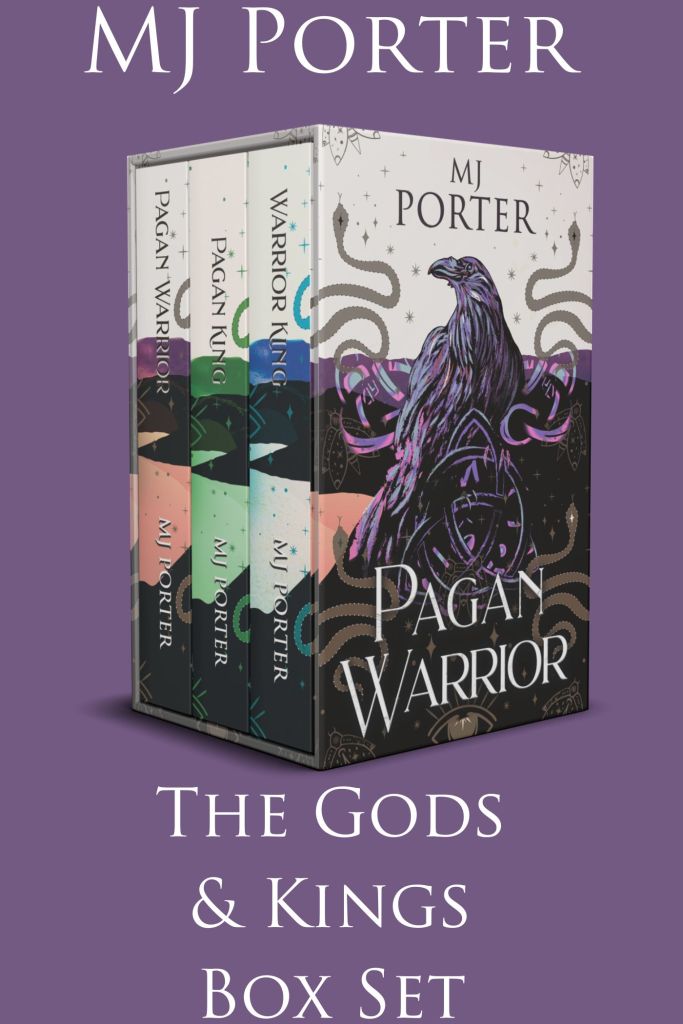
At the heart of it, Hædfeld is a story of a single battle, and the events that led to it, so often the case, years in the making. So, if you’ve not tried Pagan Warrior now is the perfect opportunity. The ebook is currenly 99p/99c on all good platforms (not just Amazon), and to celebrate, I’ve created a special edition matte covered hardback with foiled writing, (exclusively available sirectly from my SumUp store) AND a boxset of the whole trilogy. (It’s also available in audio but I can’t do any special offers for that).