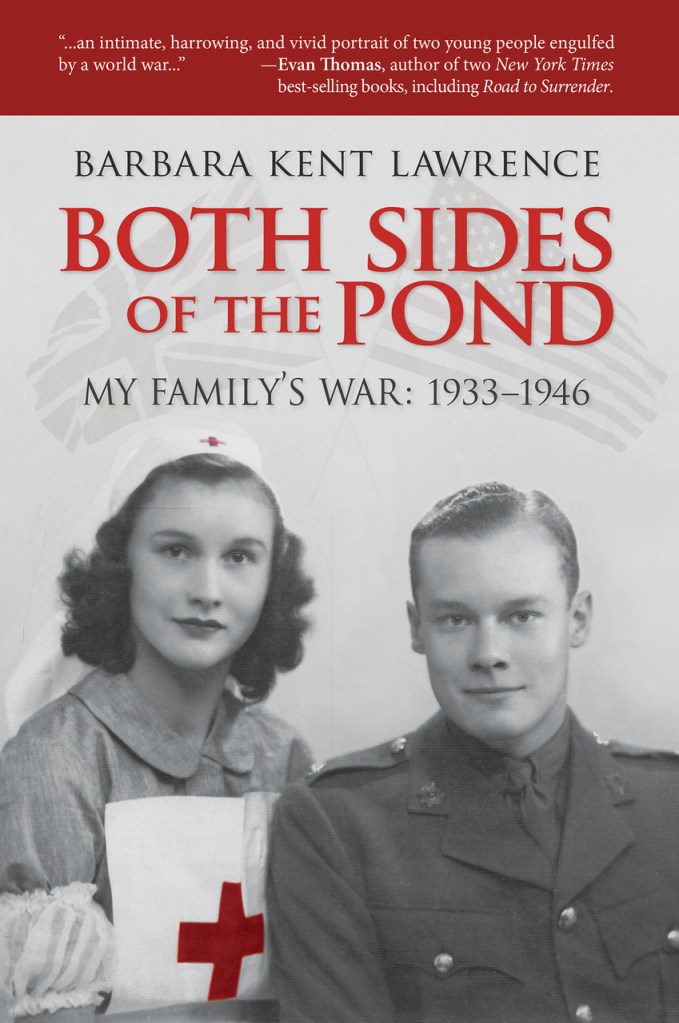
I’m spotlighting Both Sides of the Pond, My Family’s War: 1933-1946 by Barbara Kent Lawrence #BothSidesOfThePond #HistoricalFiction #WorldWar2History #MyFamilysWar #maineauthor #BlogTour #TheCoffeePotBookClub
I’m spotlighting Both Sides of the Pond, My Family’s War: 1933-1946 by Barbara Kent Lawrence
Here’s the blurb
In January of 1939 when Barbara Greene, a beautiful young British actress, met Joe Kennedy, Jr., son of the American Ambassador, she could not have expected that their relationship would lead to her emigrating to the United States and learning to pilot a plane. Neither could her brother, Kent, have foreseen his bitter retreat from Dunkirk when he left England in January 1940 to fight in France, or his subsequent service on the frontlines in Cornwall, North Africa, Sicily, and Burma.
In this intensively researched war story of the author’s family, we also hear the stories of other ordinary people who survived extraordinary circumstances. Richly illustrated with photographs and documents, “Both Sides of the Pond, My Family’s War: 1933 – 1946” is a captivating book.
Praise for Both Sides of the Pond:
“Author Barbara Kent Lawrence weaves a rich tapestry of the lives of her British mother and uncle from 1933 to 1946, before, during, and just after World War II. … War stories are very personal. This is such a story, and it offers insight into how two young people navigated difficult years that altered the trajectories of the lives they thought they would live. It is a worthy read, written beautifully. Don’t miss it.“ ~ Patricia Walkow, Military Writers Society of America
“I loved this book and couldn’t put it down. History and the complexity of human relationships unfold with uncommon grace.“ ~ Barbara Lazear Ascher, winner, most recently, of Pushcart’s Editors Book Award for Ghosting: A Widow’s Voyage Out.
Dr. Lawrence is the author of many articles and nine books, including an award-winning dissertation about the influence of culture on aspirations in Maine. Her new book, Both Sides of the Pond, My Family’s War: 1933 – 1945, is available in book stores and on amazon.com.
A former professor, she has taught courses in anthropology and sociology, research, and writing non-fiction and memoir. Lawrence grew up in New York City and Washington D.C., then earned a BA in anthropology from Bennington College, an MA in sociology from New York University, and an Ed.D. in Administration, Policy and Planning from Boston University.
In addition to teaching, Lawrence has worked for the Department of Social Services and the Housing Development Administration in New York, directed a small museum in Maine, co-run a brokerage and construction company, consulted for the Rural School and Community Trust and KnowledgeWorks, and started four non-profit organizations supporting the environment and students.
When not working she loves to garden, knit, and go for walks, pastimes she learned from her British mother. She lives in Maine and is working on the third novel in her Islands series.
I’m welcoming Eleanor Birney and her new historical mystery, Behind the Green Baize Door, to the blog with a post about about the history behind the novel #HistoricalFiction #HistoricalMystery #UpmarketFiction #LiteraryMystery #GildedAge #BlogTour #TheCoffeePotBookClub
I’m welcoming Eleanor Birney and her new historical mystery, Behind the Green Baize Door, to the blog with a post about about the history behind the novel
An 1828 Murder Case and the Questions It Left Behind
A guest post by Eleanor Birney, author of The Green Baize Door
I found the case that inspired The Green Baize Door nearly fifteen years ago.
It involved a man accused of murdering an elderly housekeeper. His defense was an unusual one. He admitted that he was a bad man (a liar and a thief), but insisted he was not that sort of bad man (a murderer). That distinction fascinated me, and it still does.
We prefer our stories cleaner than that. Perfectly innocent victims. Completely bad villains. It is more comfortable that way. If a person does something bad enough, it’s easier to believe that any good we thought we saw in them was a lie — a product of their deception — than to imagine that someone might be both good and bad in different measures.
Our preference for neat categories comes up fairly often in my line of work (I’m an attorney). So to see a man in 1828 engaging directly with that moral complexity — and using it as the basis of his defense — was both surprising and intriguing.
And then there was the strangeness of the crime itself: what kind of thief breaks into an otherwise empty mansion, turns the place over, kills an elderly housekeeper then steals from her, leaving behind all the wealth above stairs?
As far as I could determine, no one was ever convicted of the crime. The accused was acquitted, and his speech was so eloquent that the trial was included in collections of “notable cases” for decades after. The mystery was unresolved.
I knew I wanted to write about the case, but I did not know enough about early nineteenth-century England to do it justice. So I moved the murder to my side of the pond.
I chose Philadelphia for a number of reasons. The East coast had more polish than the West at that time, which provided more room for the upstairs/downstairs intrigue at the heart of the story. And the social upheaval at the end of the Victorian era perfectly suited the social and moral tension of the original case.
By 1900, Industrialization had drawn families off farms and into cities. Factory work was replacing inherited trades. Immigration was reshaping neighborhoods and exposing long-standing communities to new languages, religions, and political ideas. And all the while, electricity, steel, and railroads were remaking the physical landscape as quickly as fortunes were being made and lost.
America’s class system was never quite the same as Britain’s, which rested primarily on lineage, but it borrowed heavily from it. Wealth conferred status, and respectability implied virtue. An ideology that contrasted sharply with the men who were celebrated everywhere for clawing their way up to the top, seldom through virtuous dealings. The old belief that privilege reflected moral superiority had not yet disappeared, but it was under heavy siege.
1900 is also only a few years after the landmark Supreme Court decision Plessy v. Ferguson, one of the most disturbing cases in US history. In it, the highest court in the land gave constitutional sanction to racial segregation and reduced identity, and all the benefits and burdens then attendant to it, to fractions and legal classifications.
My main character, Marie Chevalier, lives inside that system.
Though her grandmother is “Colored Creole”, Marie appears “white” and receives the benefit of such. Doors open that would otherwise remain closed. And though her life is hard, the edges are softened. But nothing about that life is simple. Calling herself “colored” would feel dishonest — and disrespectful to those who bear the full weight of racial prejudice. Yet passing as white implies a shame she does not feel, and, worst of all, creates distance from the grandmother she loves and admires. What she gains in access, she risks losing in inheritance: pride, history, connection.
The 1828 case asked whether a man who was not innocent could also not be guilty. The social upheaval of the Gilded Age challenged the presumption that wealth implied virtue. And Plessy asked whether identity could be reduced to a single drop of blood. Each, in its own way, reflects the human instinct to force complex lives into simple, fixed categories.
That is the uneasy historical ground on which The Green Baize Door stands.
The murder at its center is a mystery, yes. But the deeper question is the one that first drew me in: what do we do with people who do not fit the roles society would assign to them?
Perhaps that is why the case stayed with me. Not because the crime was shocking, though it was. Or even because the defense was eloquent, though it certainly was. But because it revealed something uncomfortably familiar: how quickly we allow a single fact to define a life.
One failure becomes character. Socio-economic status assigns identity. And an arbitrary label can dictate how much respect a person deserves.
We do this instinctively. We reduce. We simplify. We decide. And in so doing, we flatten the contradictions that make people interesting — that make life interesting.
In The Green Baize Door, that instinct does more than shape reputations. It hides a killer.
The Green Baize Door by Eleanor Birney is published by Parlor & Dock Press and is available now. For more information, visiteleanorbirney.com.
Here’s the blurb
An atmospheric historical mystery where every character has their own agenda, and their own truth.
In the fashionable mansions on Chestnut Hill, a simple green baize door separates the masters’ world from the servants’. That door is thrown wide when an elderly housekeeper is found brutally murdered on the first day of the new century. Marie Chevalier, the housekeeper’s poor but ambitious granddaughter, and James Lett, the mansion owner’s kind but indolent son, suspect the killer is connected to one of their families—but which one?
From drawing rooms to alleyways, their separate investigations lead them through the sometimes lavish, sometimes brutal, landscape of turn-of-the-century New England. When long-buried secrets begin to unravel the fragile threads that hold both households together, Marie and James must find a way to bridge the gulf between them—if only to prove that the murderer belongs not to their own world, but to that strange and foreign land on the other side of the green baize door.
Inspired by real-life events, The Green Baize Door is a richly layered historical mystery that explores themes of class identity, family loyalty, and the sometimes blurry line between virtue and vice.
Eleanor Birney writes historical mysteries about class, moral ambiguity, and people who aren’t satisfied with life on their side of the green baize door.
She received a BA in History from UC Berkeley, and works as a legal research attorney, a day job that feeds her love of precision, research, and puzzles.
Growing up in foster care gave her a lifelong fascination with the way society steers people into assigned places—and how some of those people refuse to stay in them.
She lives in Northern California with her family. The Green Baize Door is her debut novel.
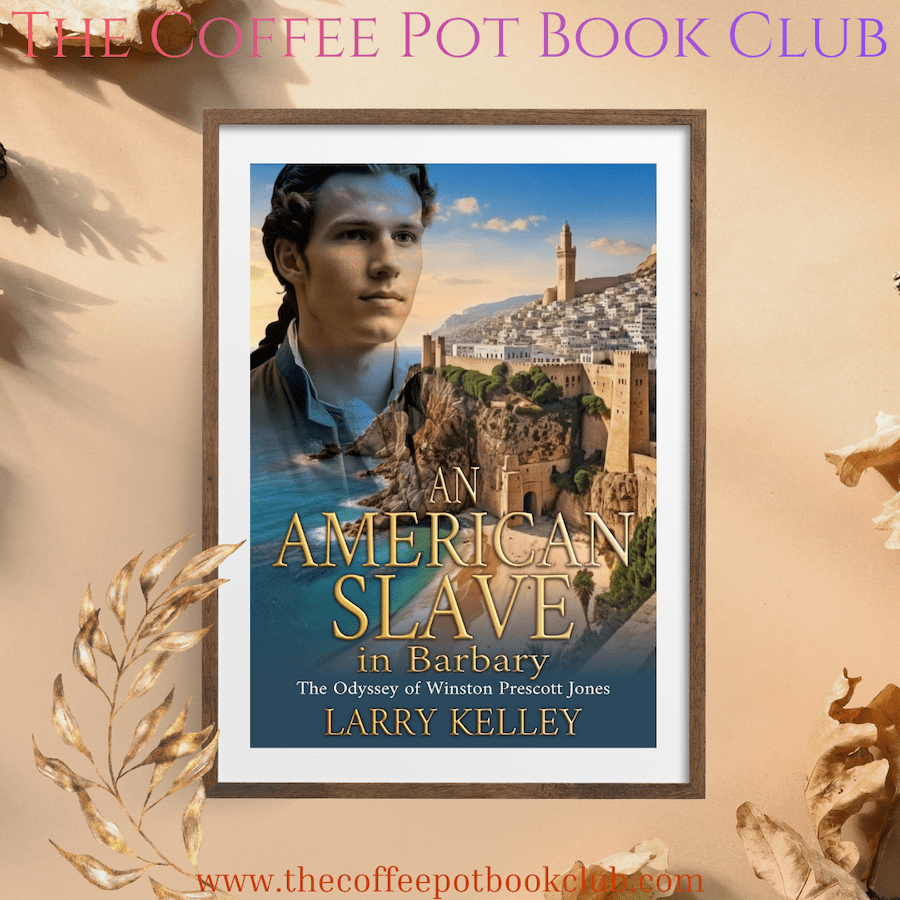
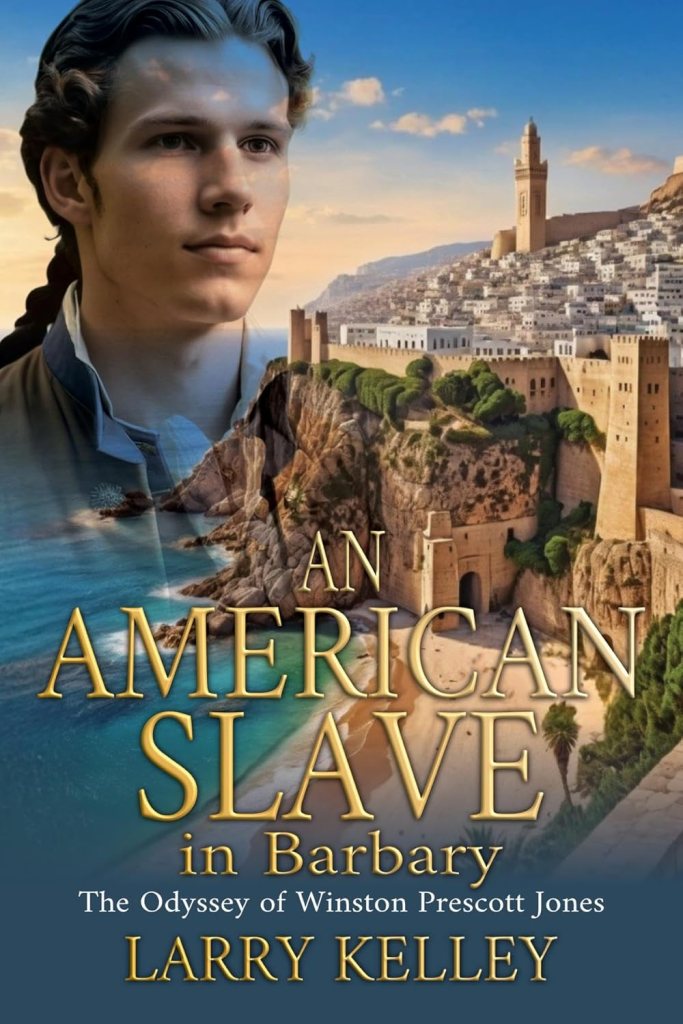
I’m welcoming An American Slave in Barbary – The Odyssey of Winston Prescott Jones by Larry Kelley to the blog #HistoricalFiction #BarbaryCoast #SlaveTrade #AmericanRevolution #BlogTour #TheCoffeePotBookClub
@KelleyComment @cathiedunn
@thecoffeepotbookclub
I’m welcoming An American Slave in Barbary – The Odyssey of Winston Prescott Jones by Larry Kelley to the blog
Here’s an excerpt from An American Slave in Barbary
Now, as the sun lowered in its westward descent toward the Atlantic, my thirst and my need to know if my brother might have survived left me no choice. I walked out the dunes, across the flat beach, down onto damp sand that descended at a steep angle into the surf. Without worrying if anyone could see me, I made my way toward Sale. I reasoned that unless, by an unlikely twist of fate, I was found by some friendly villager who wished to take me in and hide me, I would turn myself over to the mercies of the Moroccan authorities of Sale and or their agents, in exchange for a cup of water.
As I reached the portion of the beach near the outskirts of the city, two natives in a horse-drawn cart rode toward me near the waterline. The cart held an unarmed man driving and, next to him, a man armed with a scimitar, pistol, and ammunition belts strapped across his torso. The cart stopped abruptly in front of me. The armed man leaped out of the cart and ran toward me with his sword drawn, pointing at me. “Infidel, don’t move! Come here,” he yelled at me in Arabic as he motioned that I move toward the back of his cart.
As he led me there, I saw in the rear bed two of my shipmates and close friends, Moore and Etheredge. “Jones!” they cried in unison. As I climbed into the back of the cart, they reached out their hands to mine with tears welling up in their eyes.
My new jailor was remarkably a man I recognized as one who boarded our ship when we were captured in the Mediterranean and was among the pirates who sailed it off into the storm. As he ran a chain through the ring in my ankle iron, which I still wore from our original capture, I said, “Lads, do you know if my brother, Robbie, made it ashore?”
Their looks told me what I feared had to be true. They shook their heads while looking down at the floor of the cart.
Here’s the blurb
An American Slave in Barbary: The Odyssey of Winston Prescott Jones is the story of a first-generation American student whose commercial ship is captured in the summer of 1801 by Moslem pirates. He spends the next sixteen years as a captive in Algiers. He rises to become a confidant to the Dey of Algiers, who is desperate to know what made the American shopkeepers and farmers believe they could defeat the British war machine, and how they intended to rule themselves.
In the genre created by Homer, it is a tale of suffering, sin, and redemption, and a young man’s epic journey to regain his freedom.
Larry Kelley’s life was changed by 9/11. He desperately wanted to find out who these people were who attacked us, what ordinary citizens could do to join the battle, and how those plotting to kill us in future attacks could be defeated.
Kelley has written scores of columns on the dangers of Western complacency. In his tenure as a political commentary writer, he has made a significant impact. His feature articles have appeared in the Piedmont Post, the San Francisco Chronicle, Human Events, and Townhall Magazine. Two of his articles were featured on the cover of Townhall Magazine.
His first book, Lessons from Fallen Civilizations, is the result of ten years of research. And received critical praise as a saga that begins on the plain of Marathon in 490 BC and whose main character is Western Civilization.
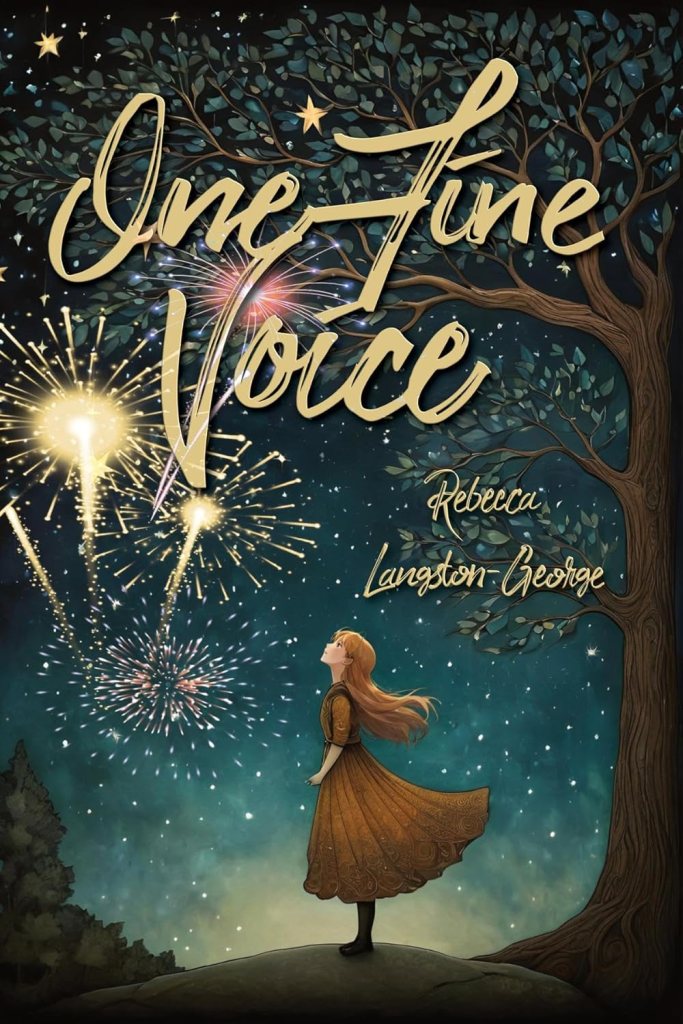
I’m welcoming Rebecca Langston-George to the blog, with her new book, One Fine Voice @RebeGeorge @cathiedunn
@rebeccalangstongeorge @thecoffeepotbookclub #OneFineVoice #HistoricalFiction #MiddleGrade #BlogTour #TheCoffeePotBookClub
I’m welcoming Rebecca Langston-George to the blog, with her new book, One Fine Voice
Here’s an excerpt
Chapter 2
The pianist hit a wrong note in the chorus, causing Mama to wince, just as the church’s back doors wheezed open. A girl with a big blue hair bow in the next pew turned to look at me. Our eyes locked. Then she turned toward the doors behind us. I followed her gaze. That’s when I first saw them.
White robed men wearing pointed hoods paraded up the center aisle. They marched together in pairs until they reached the altar where my daddy had just kneeled; then half went left and half went right, forming a line across the front of the church. Their faces were masked save for the cut-out eye holes. Those sunken, shadowed holes all stared right at me, it seemed, pulling my eyes toward them, locking me in their dark gaze, paralyzing me with their murky eyes.
I tried to sing. I knew every song in the hymnal by heart. But just like the white masks staring at me I didn’t have a working mouth. I tried to read the words in the hymnal, but I couldn’t tear my eyes away from those blank stares. The one thing in my body that worked was my memory. It jabbed a stick in a deep muddy pool of my mind that usually only bubbled up in my nightmares.
Four years ago, a winter’s day. A crust of ice crunched underfoot as I walked with my uncle to his barn. A lamb had gotten loose and had frozen to death near the fence. Its white wool stiff with sparkling ice crystals. A black crow was perched atop its head, a dark berry dangling from its beak. The crow flew away, and I saw that the lamb’s eyes had been picked out. Its cold, empty eye sockets stared through me, and I screamed.
I felt that same urge to scream right then and run clear down the street away from our new church. I even turned my head toward the back door, but something stopped me. The girl—the one with the big blue bow—she was singing, –like she probably did every Sunday. I blinked. I turned my head the other way. Daddy sang along in his strong tenor. Blink. Reverend Dewhurst held his hymnal high and sang toward the ceiling. The pianist plunked on. Mama was the only other one that looked confused. Everyone around us was acting as if nothing unusual was happening, like masked robed men marching into church was perfectly normal. Was this normal for Grayson, Indiana?
Here’s the blurb
All her life, Esther Hopkins has been told she has a mighty fine voice.
Still, she can’t believe her luck when just days after moving to town she’s invited to sing a solo at the 1923 Independence Day picnic.
But the group sponsoring the picnic is not the benevolent fraternal order they claim to be. Worse, they’ve recruited her father, the town’s freshly ordained Baptist minister, to become their chaplain.
When they target the immigrant family of her new best friend, Esther must risk her father’s anger, the KKK’s revenge, and her family’s safety to follow her conscience, salvage her friendship, and find the strength to speak truth to power even if it costs all she holds dear.
Rebecca Langston-George is the author of nineteen books for young readers including the globally popular For the Right to Learn: Malala Yousafzai’s Story. Though she’s long been known for nonfiction, One Fine Voice is her first middle grade historical fiction.
A retired teacher credentialed in both single subject language arts for upper grades and multiple subjects for younger grades, Rebecca is a popular school presenter for all ages, encouraging students to investigate and tap into their personal interests when writing.
She serves on the board of The California Reading Association and is the Co-Regional Advisor for SCBWI Central-Coastal California, helping other writers achieve their dreams.
She splits her time between California’s scenic coast and its agricultural heartland, writing (and mostly rewriting) at one mile per hour on a treadmill desk. Read more at Rebecca Langston-George | Children’s Book Author.
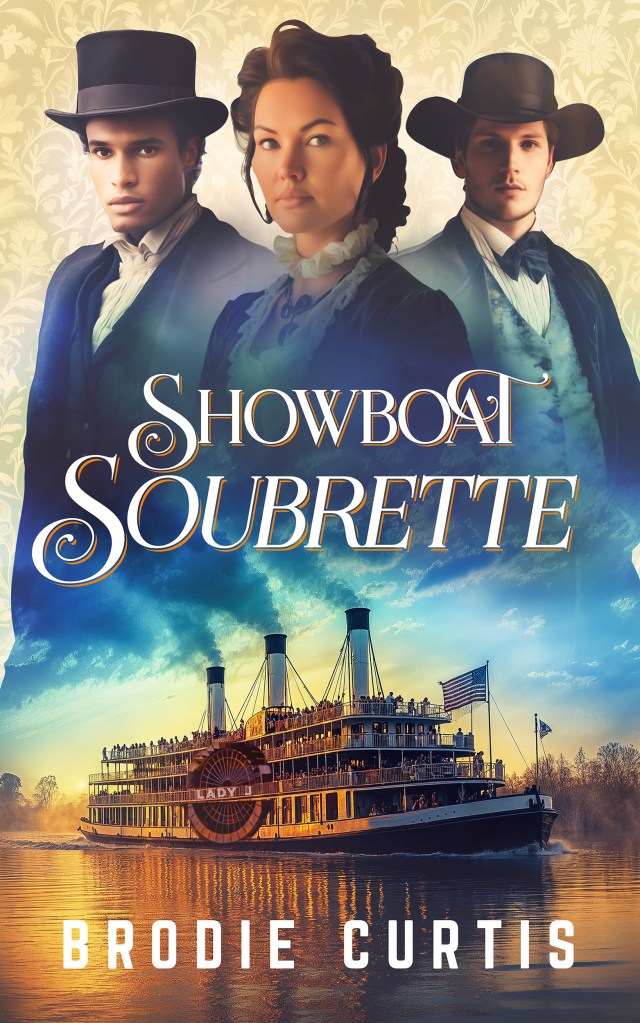
I’m delighted to welcome Brodie Curtis and his book, Showboat Soubrette, to the blog with a guest post.
Guest Post
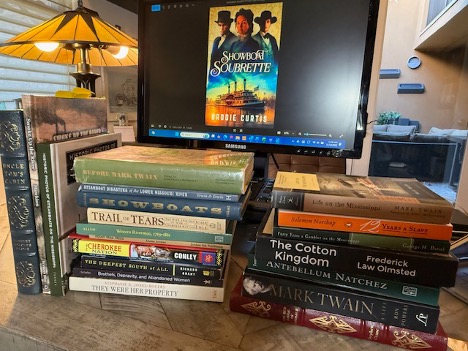
SHOWBOAT SOUBRETTE is my third historical novel set in the riverboat era on the lower Mississippi River prior to the Civil War. To learn about the period, I dug into a variety of research sources that are listed below. I truly got energized to tell my story by taking a drive along the Big Muddy, from Hannibal down to Natchez, stopping frequently at historical sites, and along the river itself. Had to feel it!
Brodie Curtis Looks Upriver from Natchez
UNDERSTANDING THE ANTEBELLUM DEEP SOUTH:
Romanticism of the Antebellum American Deep South could be found in the pageantry of the attire worn by the privileged, and in the heady adornment of passenger-hauling riverboats that paddle-wheeled the Mississippi. But the period exhibited almost unbelievable cruelty in its institution of slavery and in the bigoted attitudes of the times. And in its violence. Perhaps the first title listed below, Olmsted’s The Cotton Kingdom illuminates these contradictions best.
Olmsted, F. (1861). The Cotton Kingdom: A Traveller’s Observations on Cotton and Slavery in the American Slave States 1853-1861.
McDermott, J. (“Edited with an Introduction and Forward”) ( 1968). Before Mark Twain: A Sampler of Old, Old Times on the Mississippi.
Stowe, H.B. (1852). Uncle Tom’s Cabin.
Northup, S. (1853). 12 Years a Slave.
Devol, G. (1894). Forty Years a Gambler on the Mississippi.
Jones-Rogers, S. (2019). They Were Her Property: White Women as Slave Owners in the American South.
James, D.C. (1968). Antebellum Natchez.
Kelleher Schafer, J. (2009). Brothels, Depravity, and Abandoned Women: Illegal Sex in Antebellum New Orleans.
Sharp, A. and Sharp, G. (2009). Antebellum Myths and Folklore: A Search for the Truth.
Grant, R. (2020). The Deepest South of All: True Stories from Natchez, Mississippi.
RIVERBOATS:
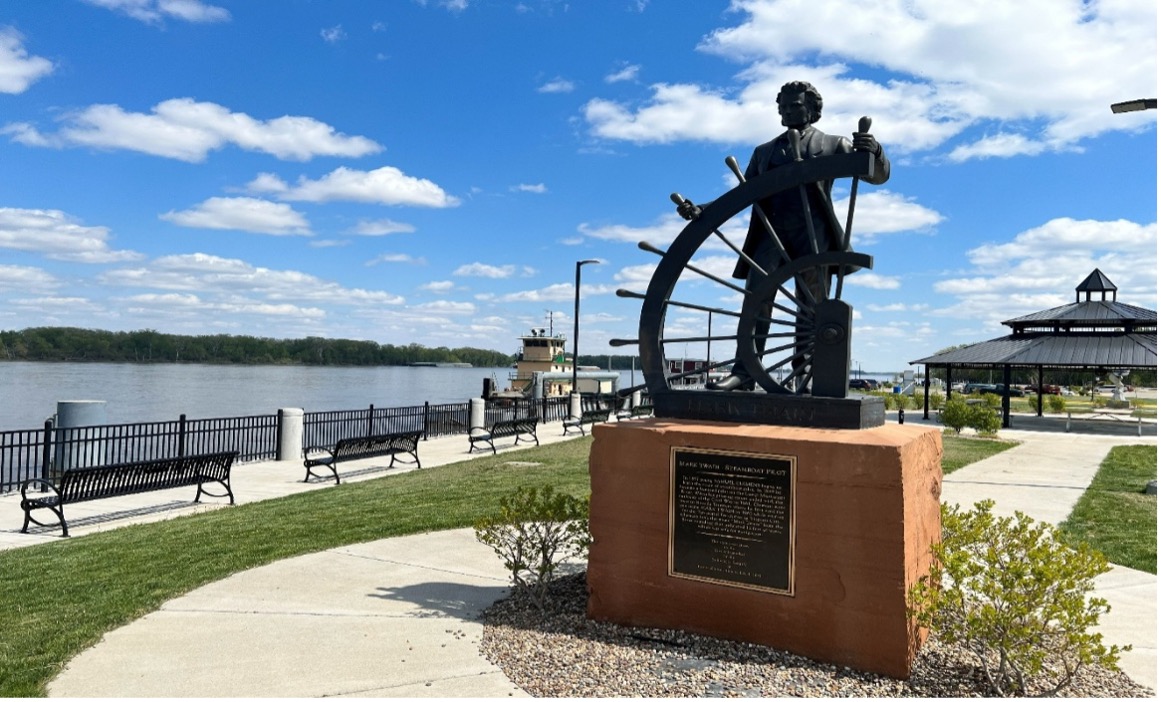
Is there a more majestic image than a multi-decked steamboat gliding on the river, smoke billowing from its stacks while water clicks over its paddles? Yet idyllic portraits belied the dangers, from collisions and boiler explosions to snags, sandbars, fire and ice and other in climate conditions. Thousands of boats ended up at the bottom of the river. Mark Twain’s memoir of his cub pilot days and old images in many of the sources below sparked my imagination.
Twain, M. (1883). Life on the Mississippi.
Powers, R. (2005). Mark Twain: A Life.
Brodie Curtis took in the Mark Twain Attractions in Hannibal MO
Shapiro, D. (2009). Historic Photos of Steamboats on the Mississippi.
Graham, P. (1951). Showboats: The History of an American Institution.
Allen, M. (1990). Western Rivermen, 1763-1861: Ohio and Mississippi Boatmen and the Myth of the Alligator Horse.
Lloyd, J. (1855). Lloyd’s Steamboat Directory, and Disasters on the Western Waters.
Hawkins, V. (2016). Smoke up the River: Steamboats and the Arkansas Delta.
Berger Erwin, V. and Erwin, J. (2020). Steamboat Disasters of the Lower Missouri River.
Sandlin, L. (2010). Wicked River: The Mississippi When it Last Ran Wild. Buck, R. (2023). Life on the Mississippi: An Epic American Adventure.
Here’s the Blurb
FROM STAR SHOWBOAT SINGER TO PIRATE PREY ON THE WICKED RIVER!
Showboat singer Stella Parrot’s star rises in the Antebellum South with every sold-out performance along the lower Mississippi River. When a river pirate viciously assaults her, new friends Toby Freeman and John Dee Franklin foil the attack. However, the pirate’s family is bent on revenge.
Stella, Toby, and John Dee escape their riverboat with able assistance from young cub pilot Sam Clemens, only to be pursued by the notorious Burton Gang. As the trio runs for their lives, mortal perils await at every turn: a fierce storm, high-stakes gambling confrontations, deadly combat, and a cotton boat up in flames. Stella, a Cherokee Indian, and Toby, a free Black man, and their friend White man John Dee endure relentless racial prejudices and injustices in the gritty underbelly of the Wicked River while fleeing to New Orleans—where the Burtons will be waiting!
SHOWBOAT SOUBRETTE’s fast-paced lower river adventure chase features romantic showboat scenes and is unsparing in its exploration of the bigoted and sometimes lawless riverboat era.
Praise:
“Captivating characters? A fast-paced storyline? Cameos from historical figures? Brodie Curtis checks all the boxes in his novel set along the Mississippi River on the eve of the Civil War. Well done.”
Tim Wendell, author of CASTRO’s CURVEBALL and REBEL FALLS
“SHOWBOAT SOUBRETTE is a novel that transcends a simple river chase, unfolding instead as a richly textured portrait of time and place where beauty and brutality are forced to coexist. Brodie Curtis has crafted a story that entertains without simplifying, thrills without trivializing, and ultimately delivers a powerful testament to courage and solidarity on the margins of history…For readers who crave historical fiction with pace and teeth, this novel will be a compelling and unforgettable ride.”
THE HISTORICAL FICTION COMPANY
“This was an unputdownable read for me!…It’s an optimistic picture of a shocking time in American history….SHOWBOAT SOUBRETTE is ideal for fans of historical adventure fiction, especially fans of Twain himself and Percival Everett’s JAMES.”
Ruth F. Stevens, author of STAGE SEVEN and THE SOUTH BAY SERIES Books 1 and 2
“Readers of historical fiction will love SHOWBOAT SOUBRETTE…a river adventure down the great Mississippi to New Orleans in the 1850s when racial tension is ripe in the Old South…an adventure worthy of Mark Twain’s pen… Curtis is a master of description and atmosphere.”
Tyler R. Tichelaar, PhD and award-winning author of THE MYSTERIES OF MARQUETTE
“(E)xtensive research draws the reader in and carries them along on this fast-paced adventure, blending interesting historical facts with compelling fictional characters. I thoroughly enjoyed the journey and recommend this voyage down the mighty Mississippi.”
Kris Abel-Helwig, author of THE HERO SERIES and the upcoming RULE OF ODDS.
This title is available to read on #KindleUnlimited
Meet the Author
Raised in the Midwest, Brodie Curtis was educated as a lawyer and left the corporate world to embrace life in Colorado with his wife and two sons.
Curtis is the author of THE FOUR BELLS, a novel of The Great War, which is the product of extensive historical research, including long walks through the fields of Flanders, where much of the book’s action is set. His second novel, ANGELS AND BANDITS, takes his protagonists into The Battle of Britain. Curtis’ third novel is set on a Mississippi Riverboat prior to the Civil War.
A lover of history, particularly American history and the World Wars, Curtis reviews historical fiction for the Historical Novels Review and more than 100 of his published reviews and short takes on historical novels can be found on his website: brodiecurtis.com.
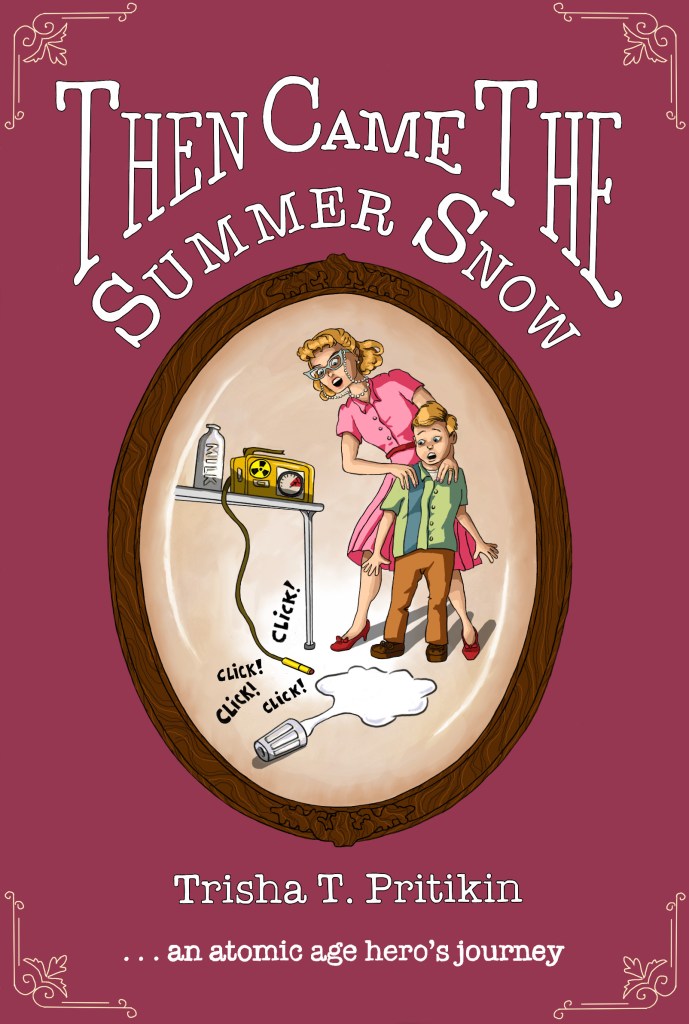
I’m welcoming Then Came The Summer Snow by Trisha T Pritikin to the blog #HistoricalFiction #Downwinders #AtomicJustice #1950s #BlogTour #TheCoffeePotBookClub
Here’s the blurb
In 1958, Edith Higgenbothum, a housewife in Richland, Washington, downwind of the massive Hanford nuclear weapons production site, discovers that the milk her young son Herbie drinks contains radioactive iodine from Hanford’s secret fallout releases. Radioactive iodine can damage the thyroid, especially in children.
When Herbie is diagnosed with aggressive thyroid cancer, Edith allies with mothers of children with thyroid cancer and leukemia in communities blanketed by fallout from Nevada Test Site A-bomb tests on a true atomic age hero’s journey to save the children.
Praise for Then Came the Summer Snow:
“In Trisha Pritikin’s crisp and sweeping novel, the Cold War comes home to live with a family in Richland, Washington. Not the Cold War of ideologies, but the one that included 2,000+ nuclear tests, and the production of hundreds of tons of plutonium; that contaminated our homes, food and communities; that actually took family members.”
~ Robert “Bo” Jacobs, Emeritus Professor of History at the Hiroshima Peace Institute and Hiroshima City University, author of Nuclear Bodies: The Global Hibakusha (Yale 2022).
“Then Came the Summer Snow is like an unexpected gift in its surprise and freshness. Absurdity informs its realism, its poignancy, and its humor. A troubling, hilarious, weird, and wonderful novel.”
~ Mark Spencer, author of An Untimely Frost
Triggers: misogynist culture of 1950s; no violence, but cancers in children are a focus, and thyroid cancer treatment.
This title is available to read on #KindleUnlimited.
Meet the author
Trisha is an internationally known advocate for fallout-exposed populations downwind of nuclear weapons production and testing sites. She is an attorney and former occupational therapist.
Trisha was born and raised in Richland, the government-owned atomic town closest to the Hanford nuclear weapons production facility in southeastern Washington State. Hanford manufactured the plutonium used in the Trinity Test, the world’s first test of an atomic bomb, detonated July 16,1945 at Alamogordo, NM, and for Fat Man, the plutonium bomb that decimated Nagasaki on August 9, 1945. Beginning in late 1944, and for more than forty years thereafter, Hanford operators secretly released millions of curies of radioactive byproducts into the air and to the waters of the Columbia River, exposing civilians downwind and downriver. Hanford’s airborne radiation spread across eastern Washington, northern Oregon, Idaho, Western Montana, and entered British Columbia.
Trisha suffers from significant thyroid damage, hypoparathyroidism, and other disabling health issues caused by exposure to Hanford’s fallout in utero and during childhood. Infants and children are especially susceptible to the damaging effects of radiation exposure.
Trisha’s first book, The Hanford Plaintiffs: Voices from the Fight for Atomic Justice, published in 2020 by the University Press of Kansas, has won multiple awards, including San Francisco Book Festival, 1st place (history); Nautilus Silver award (journalism and investigative reporting); American Book Fest Book Awards Finalist (US History); Eric Hoffer Awards, Shortlist Grand Prize Finalist; and Chanticleer International Book Awards, 1st Place, (longform journalism). The Hanford Plaintiffs was released in Japanese in 2023 by Akashi Shoten Publishing House, Tokyo.
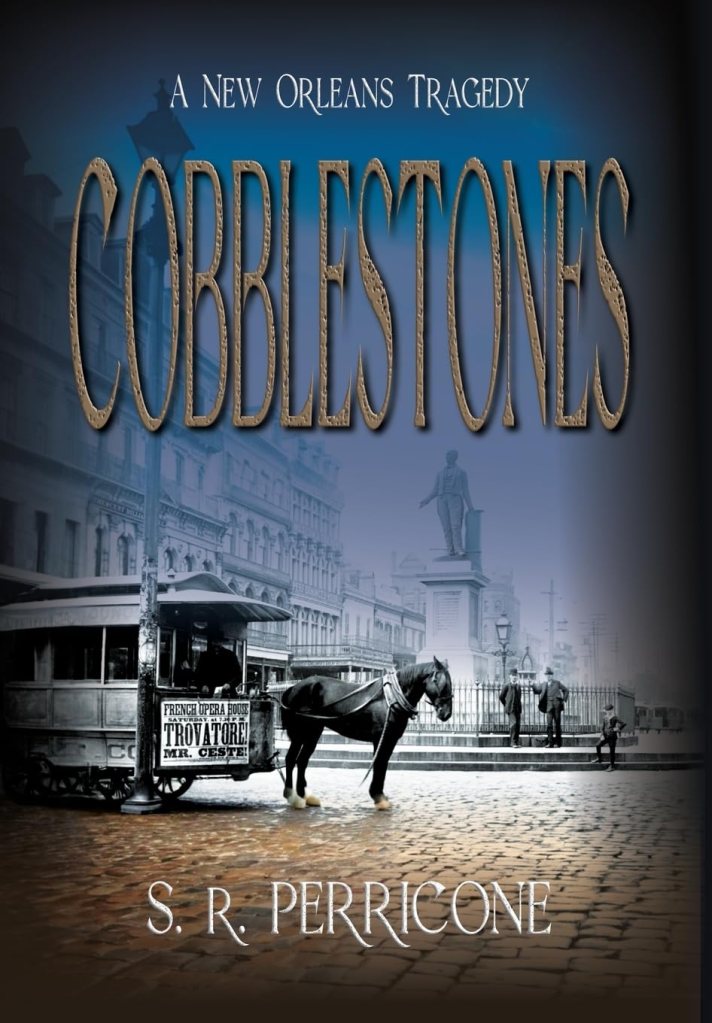
I’m welcoming SR Perricone to the blog with Cobblestones #HistoricalFiction #NewOrleans #TrueEvents #TheCoffeePotBookClub #BlogTour @cathiedunn
@thecoffeepotbookclub
Excerpt
An editorial from the newspaper introduced the letter. It read:
THE PROVENZANO-MATRANGA CASE.
We have very much pleasure in publishing the letter which here follows. In the first place, such a document, with such names attached to it, holds out a strong prospect that, as the frequent undetected assassinations among the Italian community in New Orleans find no manner of sympathy with a large portion of that community, they will in the course of a few years be stamped out altogether for want of moral support. And in the next place, the contents of the letter are calculated to strengthen the hands of the prosecution, and to stiffen the backbone of the witnesses who will be called to give evidence in the Provenzano-Matranga case, which opens today. This is the letter:
New Orleans, July 14, 1890
To the Editor of the Times-Democrat:
For a reason appreciated by the entire community we have heretofore been reticent with respect to the numerous assassinations charged to our countrymen. But we trust that, with the help of the intelligent and independent press of this city, we may be able to stamp out forever the horrible scenes of cold-blooded murder which are charged against our entire people, under the delusion that we all favor a settlement of troubles through the vendetta.
We desire to place ourselves on record as friends of peace and order, and without meaning to prejudice the case now on trial we trust sincerely that the witnesses will speak, and that those, whoever they many be, who have taken part in this midnight assassination may be tried and, after legal conviction, sternly punished.
Here’s the blurb
The turbulent history of Post-Reconstruction New Orleans collides with the plight of Sicilian immigrants seeking refuge in America.
Antonio, a young man fleeing Sicily after avenging his father’s murder, embarks on a harrowing journey to New Orleans with the help of Jesuit priests expelled from his homeland. However, the promise of a fresh start quickly sours as Antonio becomes entangled in a volatile clash of cultures, corruption, and crime.
In the late 19th century, Italian immigrants in New Orleans faced hostility, exploitation, and a brutal system of indentured servitude. Antonio becomes a witness to history as a bitter feud over the docks spirals into violence, culminating in the assassination of Irish police chief David C. Hennessy. The ensuing trial of nine Italians and the shocking lynching of eleven innocent men ignited international outrage, threatening to sever ties between the United States and Italy.
Caught in the crossfire of prejudice and power struggles, Antonio fights to survive while grappling with his own past and future. His journey weaves a gripping tale of resilience, betrayal, and the enduring hope for justice. Cobblestones: A New Orleans Tragedy is a poignant reminder of the human cost of intolerance and the courage it takes to rebuild a life from ashes.
“A phenomenal epic account of a forgotten slice of New Orleans history for fans of Scorsese / Coppola-type cinematic dramas such as Midnight Vendetta and The Godfather!” ~ HFC Reviews
Sal Perricone, a graduate of Loyola University of New Orleans with a BA (1975) and JD (1979), has dedicated his career to law enforcement, legal practice, and public service. Beginning as a sergeant with the Jefferson Parish Sheriff’s Department, he progressed to detective with the New Orleans Police Department before practicing law privately in New Orleans. In 1985, he joined the Federal Bureau of Investigation as a Supervisory Special Agent, specializing in financial crime investigations and organized crime.
In 1991, Sal Perricone transitioned to the U.S. Attorney’s Office for the Eastern District of Louisiana, where he served as Chief of the Organized Crime Strike Force and Senior Litigation Counsel until retiring in 2012. Over his illustrious career, he prosecuted significant cases involving La Cosa Nostra, public corruption, and white-collar crime. He earned numerous accolades, including multiple Director’s Awards and the Attorney General’s Award for his role in establishing the Katrina Fraud Task Force.
An adjunct professor at Tulane University and the University of New Orleans, Sal Perricone has trained law enforcement professionals across the nation. Post-retirement, he has authored two novels with positive Catholic themes, Blue Steel Crucifix and The Shadows of Nazareth. A Brother Martin alumnus, he continues to inspire with his dedication to justice and ethics.
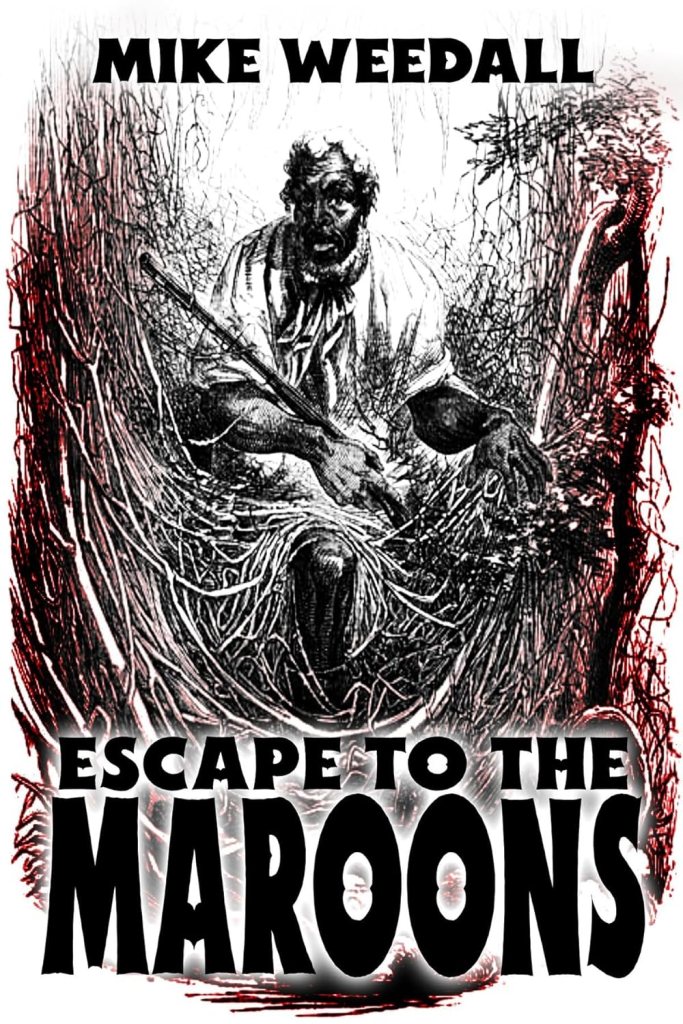
I’m delighted to welcome Mike Weedall and his new book, Escape to the Maroons, to the blog with an excerpt.
Excerpt
Nathanial On Arriving At Maroons Camp
Besides the people waiting here, more are coming. I’m the center of attention. People whisper and point at me. I don’t like what’s going on. No one looks friendly. They must think I’m a white man. Should I say something? Better leave that to Lincoln.
This place looks sizable. The ground is dry. Trees and thick brush are on all sides. We crossed smaller islands like this getting here. Moses called them hummocks. This appears to be much bigger. There must be different ways in and out of here. I’m exhausted and need to sit. Better stand until Lincoln says that’s okay.
How did this day lead me here? This morning, I planned to stand up in court and explain why they should grant me freedom. My stepfather said I’d be a fool to do that and better run if I got the chance. I wasn’t expecting that advice from a minister who preached we should always obey the law. When that lazy deputy got distracted, I took off. What choice did I have other than to flee? I pray they don’t punish my family for raising me as a freeman.
What’s next? Lincoln is waving for me to follow him.
Here’s the Blurb
In 1792, an escaped slave, raised and living as white, is discovered and forced to flee into the Great Dismal Swamp.
Barely escaping a bounty hunter, a Maroons community of fugitive slaves rescues him. Over time, Nathanial comes to accept his true identity while fighting to overcome the suspicions of his new community. Because of his pale skin, he becomes a conductor on the underground railroad, slipping runners onto ships going north. On one of his missions, fate intervenes and places Nathanial’s community at risk.
This little-known chapter in American history tells how escaped enslaved people gave their all to live free while creating a community and economy in one of the world’s most unforgiving environments.
As the author of three books, Mike’s passion is finding the little-known stories of history and bringing them to life. History in school is too often events and dates. Mike seeks to discover the people who lived those events and reveal why those individuals made the decisions they did. Ultimately, there are stories to be mined, and who doesn’t love a good story?
In his historical novel “Escape To The Maroons,” Mike tells the little-known story of 1791 self-liberated slaves who chose to struggle for survival in The Great Dismal Swamp in their determination to live free. The term Maroons delineates areas where escaped slaves fled and could not be recaptured. It’s estimated that over 2,000 survived deep in the swamp around the turn of that century.
His first book “Iva: The True Story of Tokyo Rose” describes the tragic life of Iva Toguri. Trapped in Japan during World War II, this Japanese American woman was forced to work for Radio Tokyo. Although she never participated in propaganda, the racial animus of post-war America led to her being falsely labelled as Tokyo Rose and prosecuted for treason. Through her incarceration and the ongoing discrimination heaped upon her, Iva never lost her courage and determination.
“War Angel: Korea 1950” was his second book that followed a reservist nurse thrust into the carnage of The Korean War. Serving as an operating room nurse in a Mobile Army Surgical Hospital, the real MASH and strength of a woman is revealed.
Mike resides with his family in the Pacific Northwest where they enjoy experiencing the outdoors.
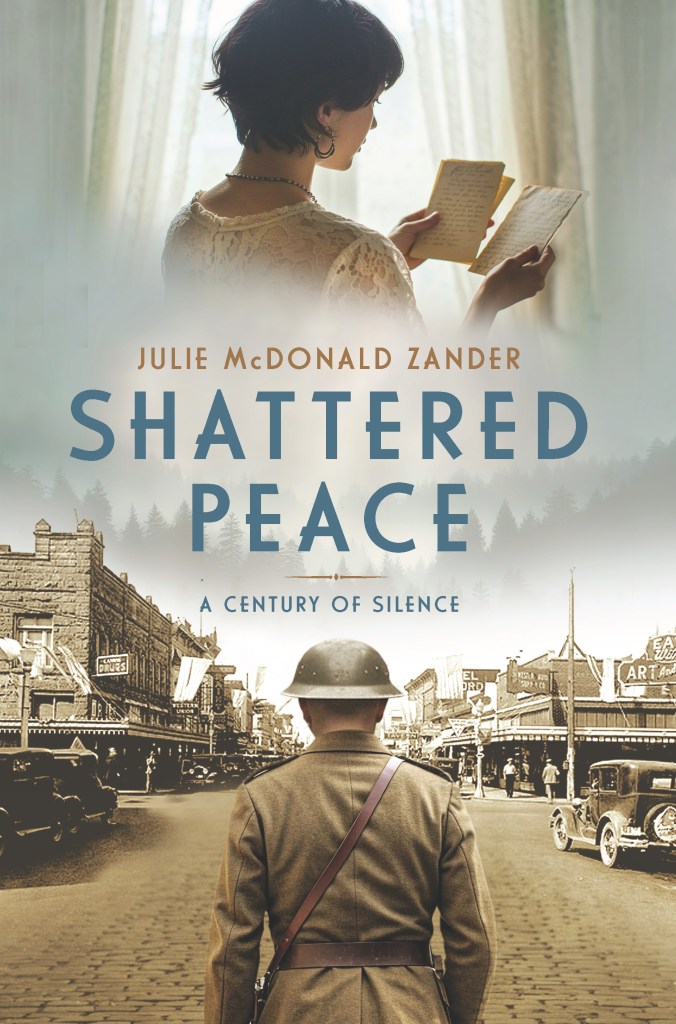
A forgotten diary. A century-old secret. A town still haunted by its past.
When former Navy Seabee Colleen Holmes inherits an old house in Centralia, Washington, she sees it as a chance to escape her own ghosts and start anew. But as she peels back layers of history within the home’s walls, she unearths long-buried secrets tied to a dark chapter in the town’s history.
Hidden behind crumbling plaster, a faded diary and a bundle of love letters unveil the struggles of a soldier trapped in the trenches of France and the heartbreak of those left waiting at home. Yet the diary’s brittle pages hold more than just longing—they bear witness to the explosive events of November 11, 1919, when a parade meant to celebrate peace erupted into violence and bloodshed.
As Colleen pieces together the tragic choices that shattered lives and fractured a town, she realizes history is never truly buried. The wounds of yesterday still shape today, and the past is not done with her yet.
Inspired by true events, Shattered Peace is a gripping time-slip novel of love, loss, and the echoes of history that refuse to fade. Perfect for fans of The Alice Network and The Girl You Left Behind, this haunting tale of resilience, redemption, and the pursuit of truth will linger long after the final page.
Triggers: It contains references to date rape, war violence, post-traumatic stress disorder, and faith and redemption
Julie McDonald Zander, an award-winning journalist, earned a bachelor’s degree in communications and political science from the University of Washington before working two decades as a newspaper reporter and editor. Through her personal history company, Chapters of Life, she has published more than 75 individual, family, and community histories.
Her debut novel, The Reluctant Pioneer, won a Will Rogers Medallion and was a finalist for the Western Writers of America’s Spur Award for Best Historical Novel.
She and her husband live in the Pacific Northwest, where they raised their two children.
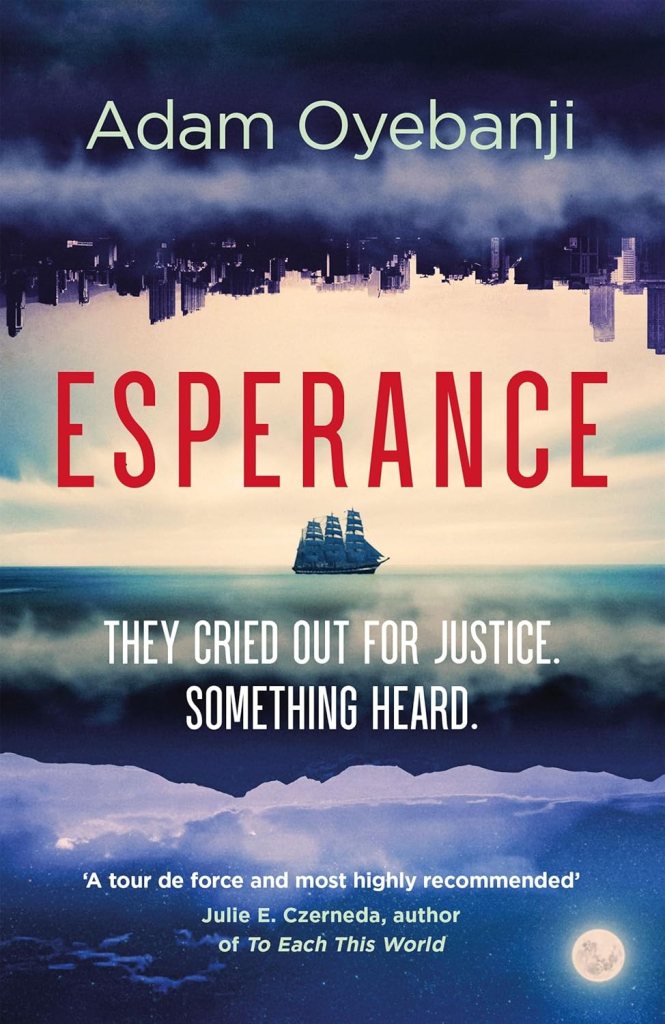
The history-bending speculative fiction from Adam Oyebanji, award-winning author of BRAKING DAY.
An impossible death: Detective Ethan Krol has been called to the scene of a baffling murder: a man and his son, who appear to have been drowned in sea-water. But the nearest ocean is a thousand miles away.
An improbable story: Hollie Rogers doesn’t want to ask too many questions of her new friend, Abi Eniola. Abi claims to be an ordinary woman from Nigeria, but her high-tech gadgets and extraordinary physical abilities suggest she’s not telling the whole truth.
An incredible quest: As Ethan’s investigation begins to point towards Abi, Hollie’s fears mount. For Abi is very much not who she seems. And it won’t be long before Ethan and Hollie find themselves playing a part in a story that spans cultures, continents . . . and centuries.
An extraordinary speculative thriller about the scars left by the Atlantic slave-trade, by a master of the genre.
Esperance is an enthralling and captivating novel. It is mostly a mystery, and much of it revolves around determining who perpetrated an impossible crime. It is also a story of friendship, family, and a quest for justice.
The story begins quickly, with our impossible crime, introducing us to one of our main characters, Ethan. It is he and Abi, who we meet a little while later, who propel the story onwards, but they both have their own agendas and therefore, the reader is very much left in the dark about some elements. We quickly realise Abi is far from what she seems. We quickly realise Ethan has his own demons, but we’re swept along in the mystery of the entire thing. I adored that Abi spoke with a 1930s flavour. It really gave her character an extraordinary shine.
I loved the historical elements of the story and how they combined with the otherworldly ones. I found the whole story quite extraordinary and incredibly enjoyable, although, of course, tinged with sorrow for the real-life elements it’s built upon.
The ending, when it came, perhaps felt a little rushed. I would have loved to know more about the otherworldly elements.
That said, readers of quirky mysteries interlaced with otherworldly elements, as well as those who love a good tale of retribution, will devour this novel, just as I did.
If it’s not quite a five-star read, it so very nearly is that I feel it would be wrong not to give it. Esperance is available now, and it’s well worth checking out. I have to say, the tag line got me for this one, ‘They cried out for justice. Something heard.’ (Shudder).



















































 MJ Porter