Author of Saxon historical fiction and non-fiction, 20th-century historical mysteries, and Norse-inspired historical romantasy. Book reviewer and blog host.
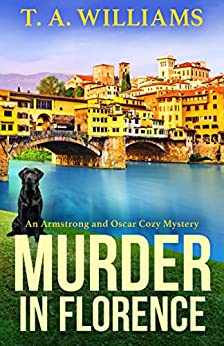
A brand-new cozy crime series set in gorgeous Tuscany…It’s murder in paradise!
A glamorous film star…
Life as a private investigator in the suburbs of Florence isn’t always as glamorous as Dan Armstrong imagined it to be, until he is asked to investigate a recent spate of violent attacks on a Hollywood movie set in Florence. The star of the show, movie-star royalty Selena Gardner, fears her life is in imminent danger…
Foul play on set…
As Dan investigates, he discovers secrets and scandals are rife within the cast and crew. But with no actual murder, Dan believes these attacks could simply be warnings to someone…until the first body is found.
A dangerous killer on the loose.
Now Dan and his trusty sidekick Oscar are in a race against time to catch the murderer. But the more Dan uncovers, the more the killer strikes and Dan finds himself caught in the line of fire too! Is this one case Dan and Oscar will regret?
Murder in Florence is the third book in the Armstrong and Oscar series of cosy crime set in Italy, and book 3 is just as enthralling as the first two books in the series.
This time, Dan somehow finds himself forced to wear tights to blend into the film set he works on, where crossbows have been shot at those on set. It is all very perplexing. I loved the use of the movie to enrich the story with historical details of Florence. Always a history buff, it was great to see it put to good use while keeping me entertained.
As with the first two books in the series, there is a twisty plot where Dan gets to venture to many local beauty spots before getting even the sniff at a breakthrough on the case, and of course, none of it would happen without the aid of the always hungry, and always a bit ‘farty’ Oscar the labrador pooch.
A thoroughly entertaining tale.
My thanks to the publisher and Netgalley for my review copy.
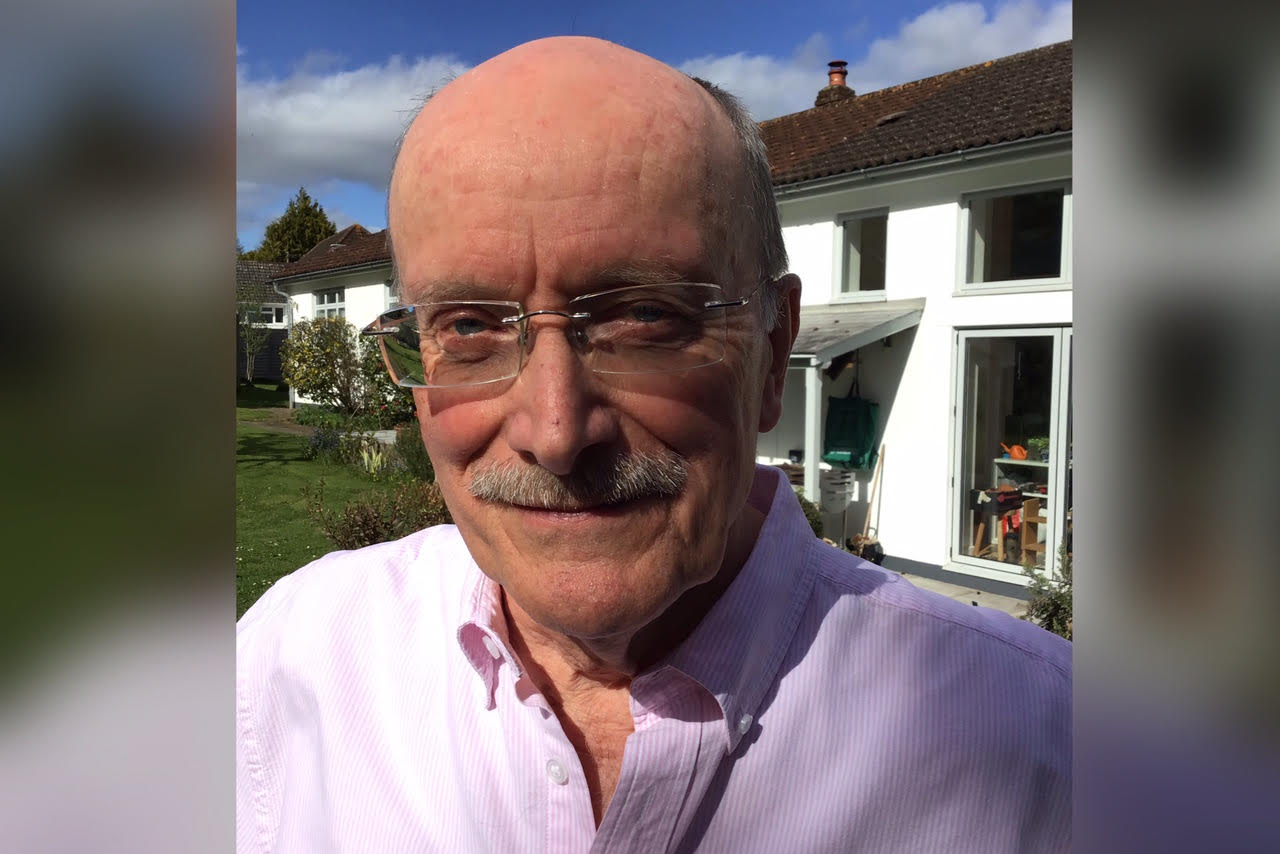
T A Williams is the author of over twenty bestselling romances for HQ and Canelo and is now turning his hand to cosy crime, set in his beloved Italy, for Boldwood. The series will introduce us to retired DCI Armstrong and his labrador Oscar and the first book, entitled Murder in Tuscany, will be published in October 2022. Trevor lives in Devon with his Italian wife.
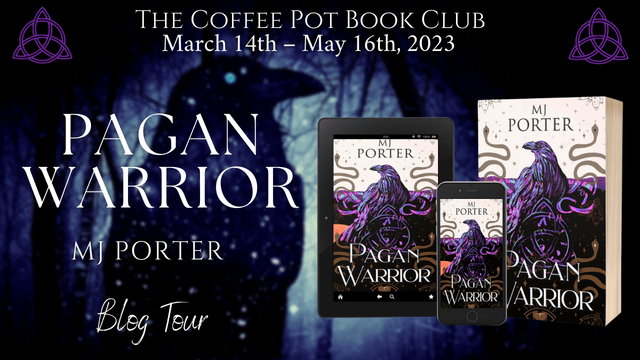
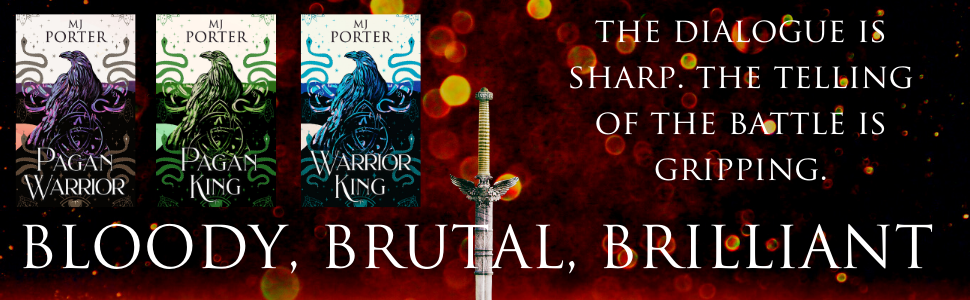
I’m really excited to share the details of the Pagan Warrior blog tour with The Coffee Pot Book Club.
Pagan Warrior is the story of the battle of Hædfeld, fought in the seventh century between the Northumbrians, and you got it, the Mercians – or rather, Cadwallon of Gwynedd but with Penda of Mercia as his firm ally. You can find more details here.
I might have written this book many years ago, but it’s had a refresh, and is now available in audio, narrated by the fabulous, Matt Coles, as is the second book, Pagan King. Warrior King will be coming later this year in audio.
And, if you read on Nook, I’ve created a special discount code just for Nook readers. Using code BNPPAGAN at checkout will get you 50% off all three titles, for a limited time.
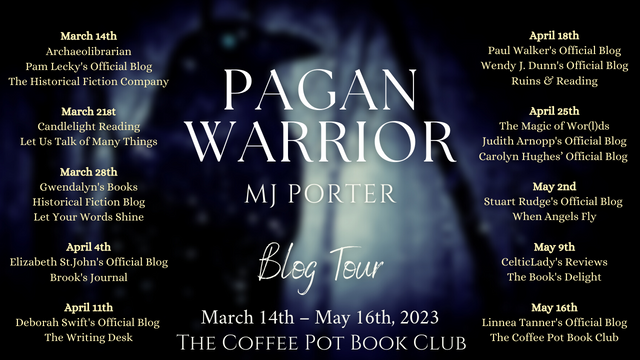
You can follow the blog tour, and I’ll be sharing posts here as well. A quick shout out to thank all the blog hosts and Cathie at The Coffee Pot Book Club for organising.
And, the post that perhaps gave me the most fear to begin will but which was fun when I remembered all the little details, five fun facts about writing the trilogy.
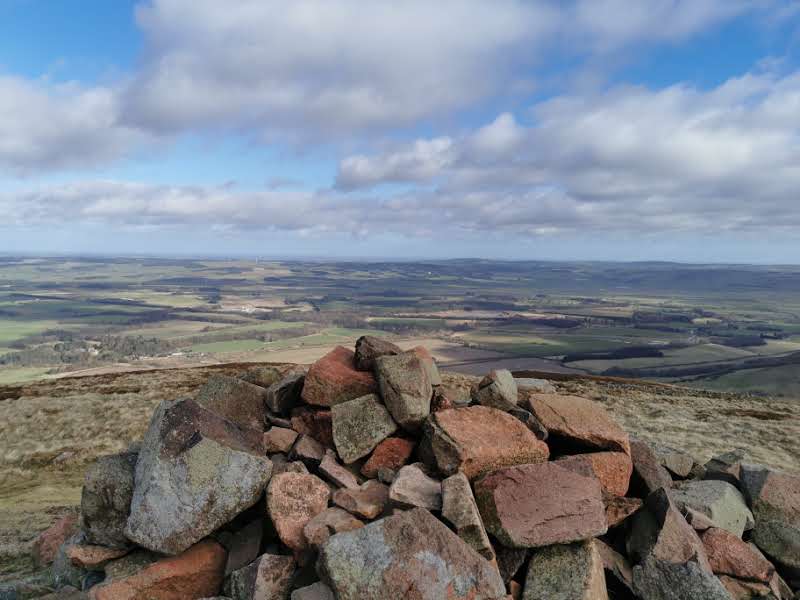
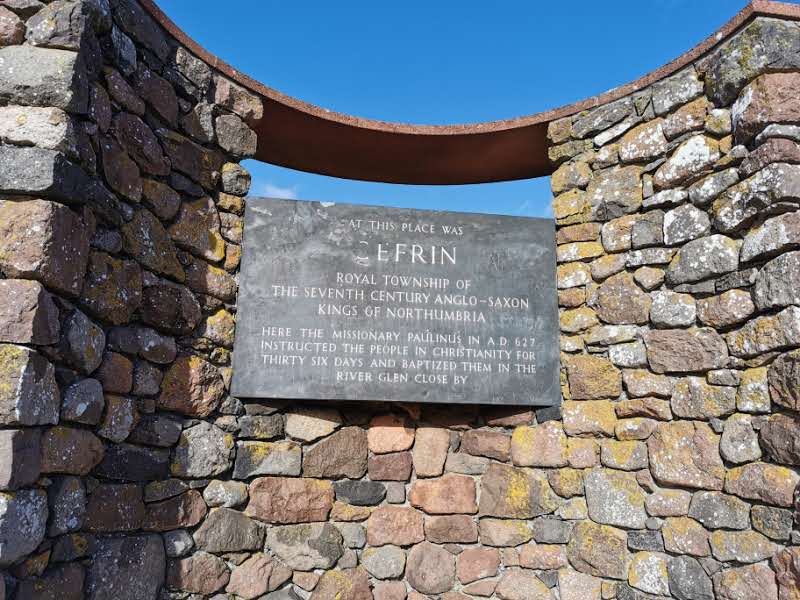
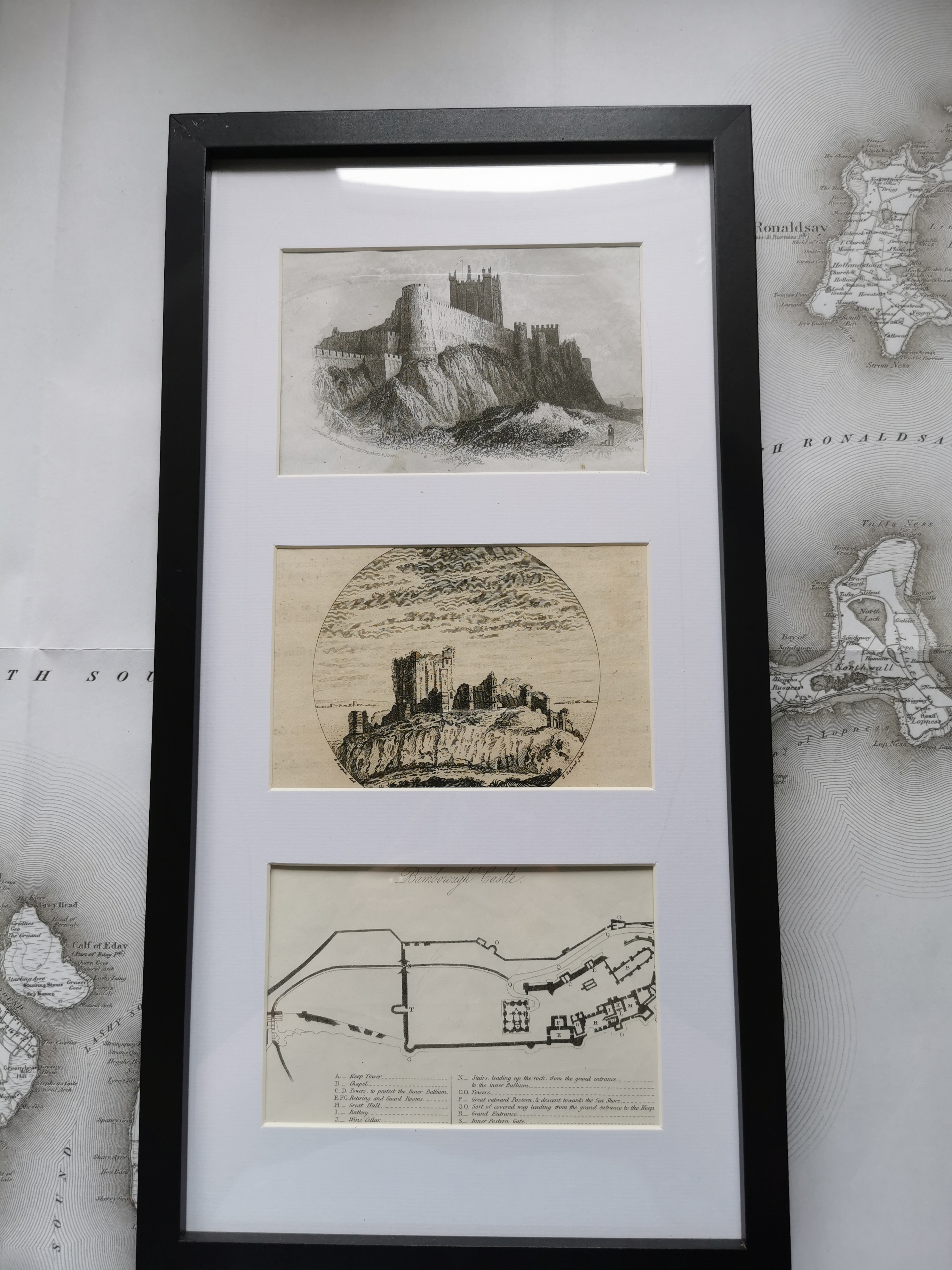
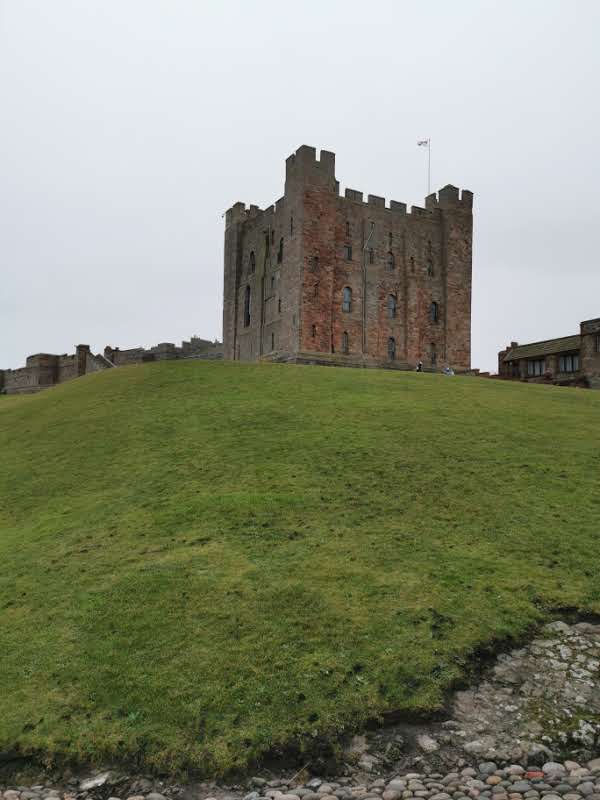
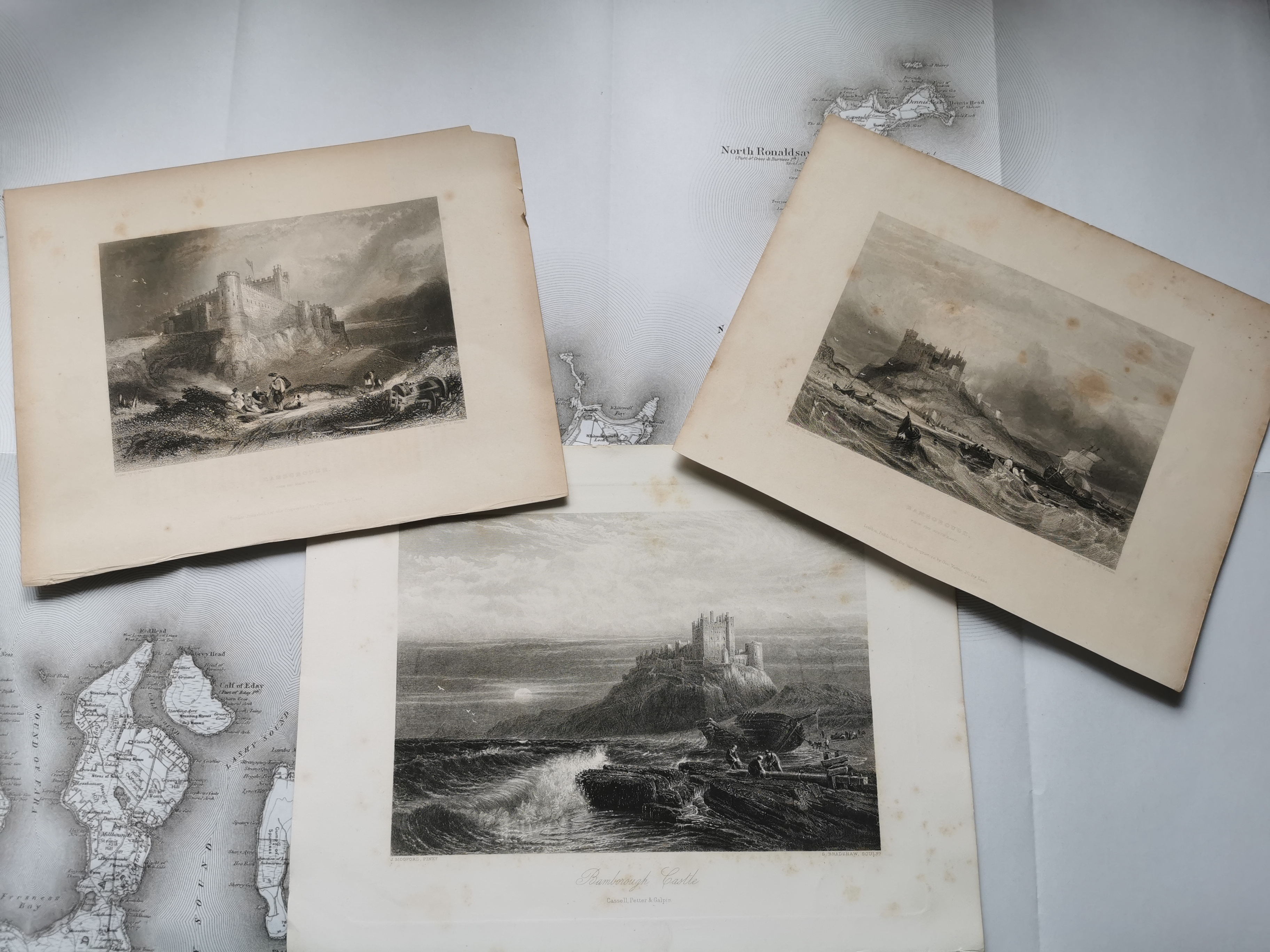
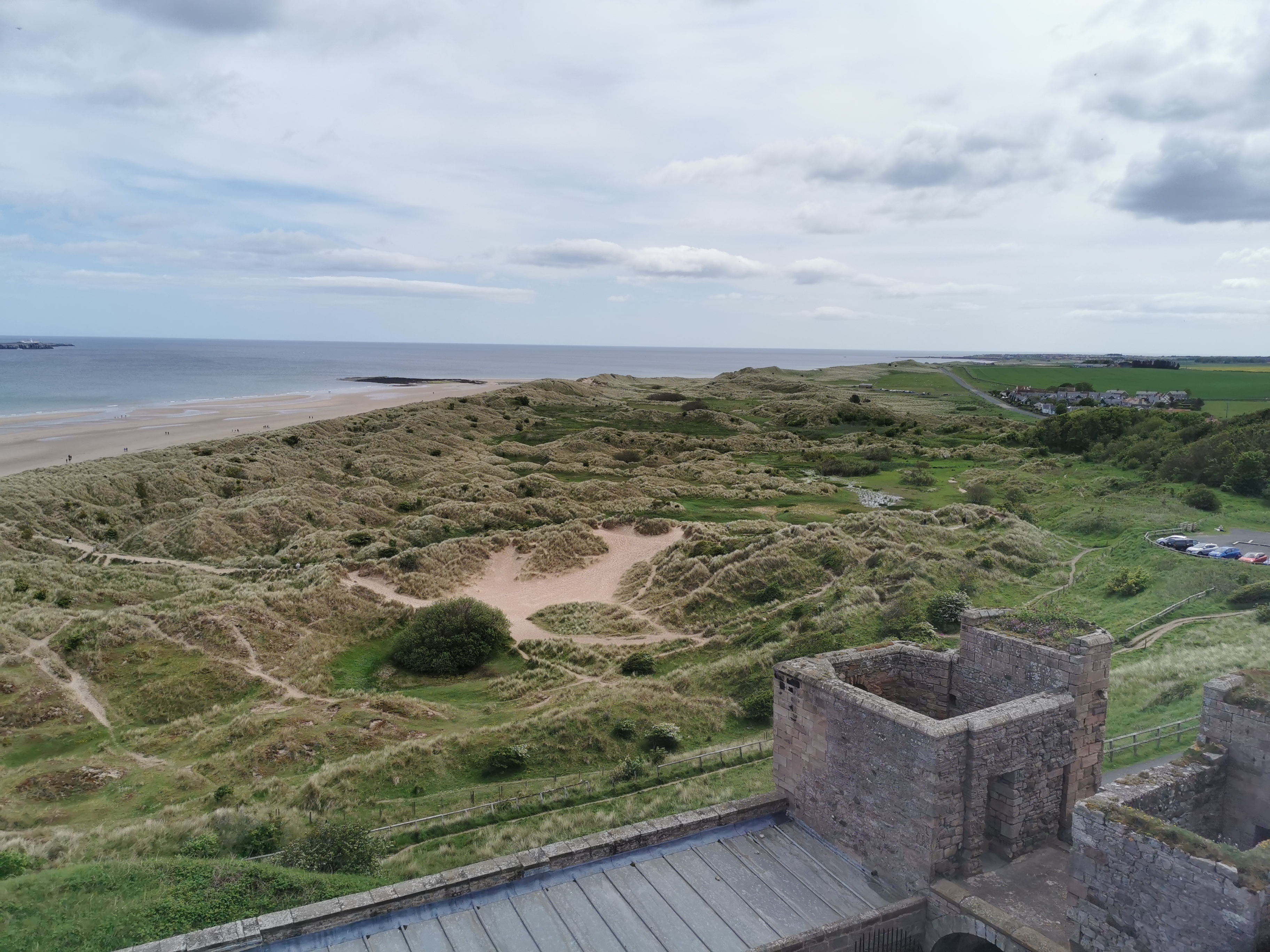
For March 21st check out a post about two of the royal residences of Bernicia at the time, Bamburgh and Ad Gefrin (Yeavering). (There are lots of photos, thank you to Helen Hollick for uploading them all).
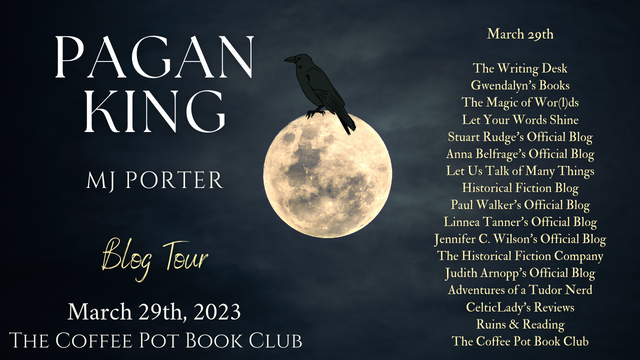
Not content with highlighting Pagan Warrior, Pagan King gets its own blog tour today. A huge thank you to Cathie at The Coffee Pot Book Club for organising, and to all the hosts for showcasing the second book in the Gods and Kings trilogy/ also known as The Seventh Century trilogy, on their blogs today.
You can follow the tour below.
And, you can find Pagan King on your retailer of choice here. It’s also available in audio format from Audible, Amazon and iTunes. Check it out below. Narrated by the fabulous Matt Coles.
I’m really excited to share the details of the Pagan Warrior blog tour with The Coffee Pot Book Club.
Pagan Warrior is the story of the battle of Hædfeld, fought in the seventh century between the Northumbrians, and you got it, the Mercians – or rather, Cadwallon of Gwynedd but with Penda of Mercia as his firm ally. You can find more details here.
I might have written this book many years ago, but it’s had a refresh, and is now available in audio, narrated by the fabulous, Matt Coles, as is the second book, Pagan King. Warrior King will be coming later this year in audio. For this third week, 27th March-2nd April, the ebook of Warrior King (book 3) is reduced globally to 99p/99c and equivalent. Follow the link below.
And, if you read on Nook, I’ve created a special discount code just for Nook readers. Using code BNPPAGAN at checkout will get you 50% off all three titles, for a limited time.
You can follow the blog tour, and I’ll be sharing posts here as well. A quick shout out to thank all the blog hosts and Cathie at The Coffee Pot Book Club for organising.
For today, March 28th, check out a fabulous review on
And, the post that perhaps gave me the most fear to begin will but which was fun when I remembered all the little details, five fun facts about writing the trilogy.
For March 21st check out a post about two of the royal residences of Bernicia at the time, Bamburgh and Ad Gefrin (Yeavering). (There are lots of photos, thank you to Helen Hollick for uploading them all).
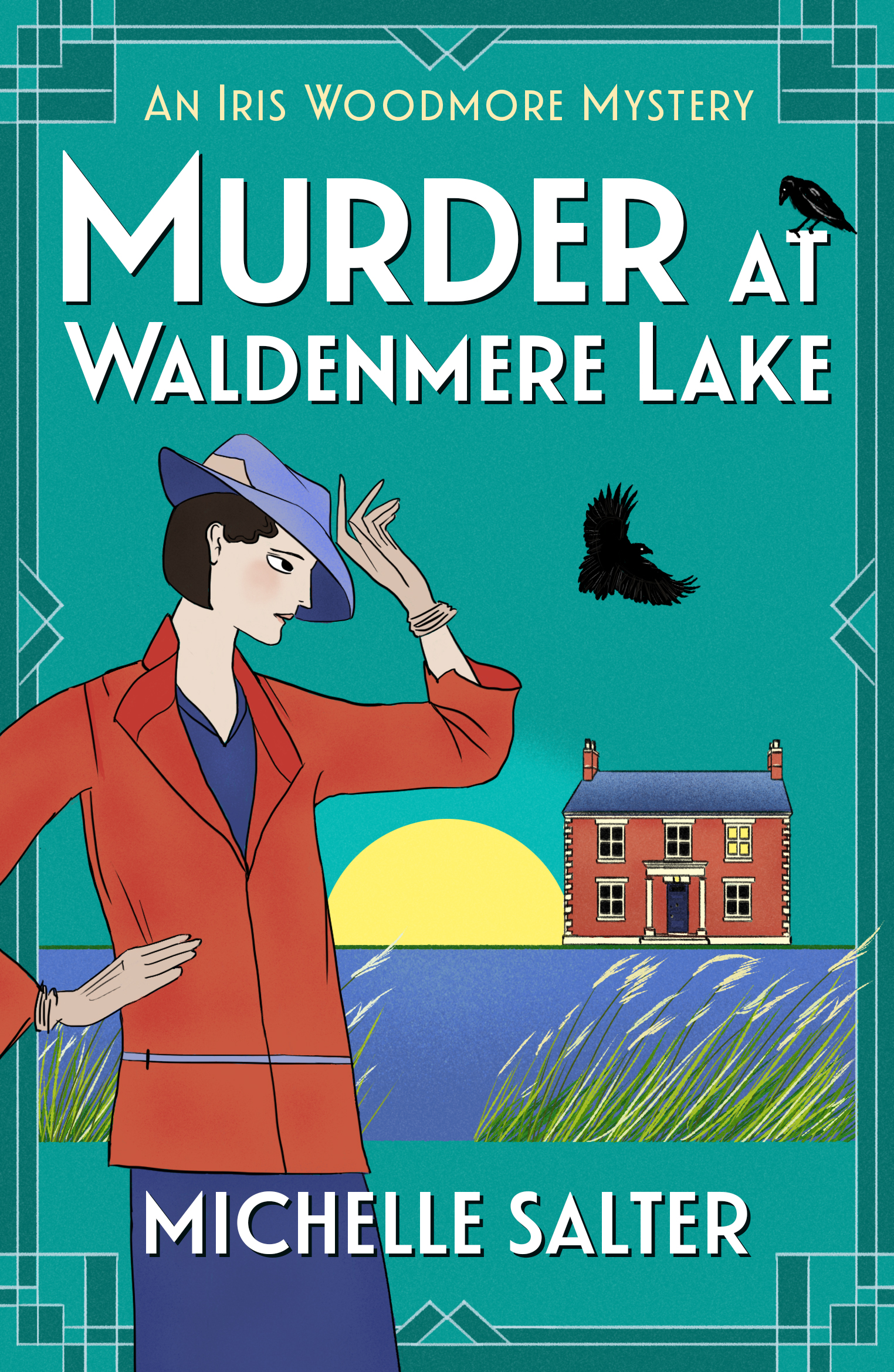
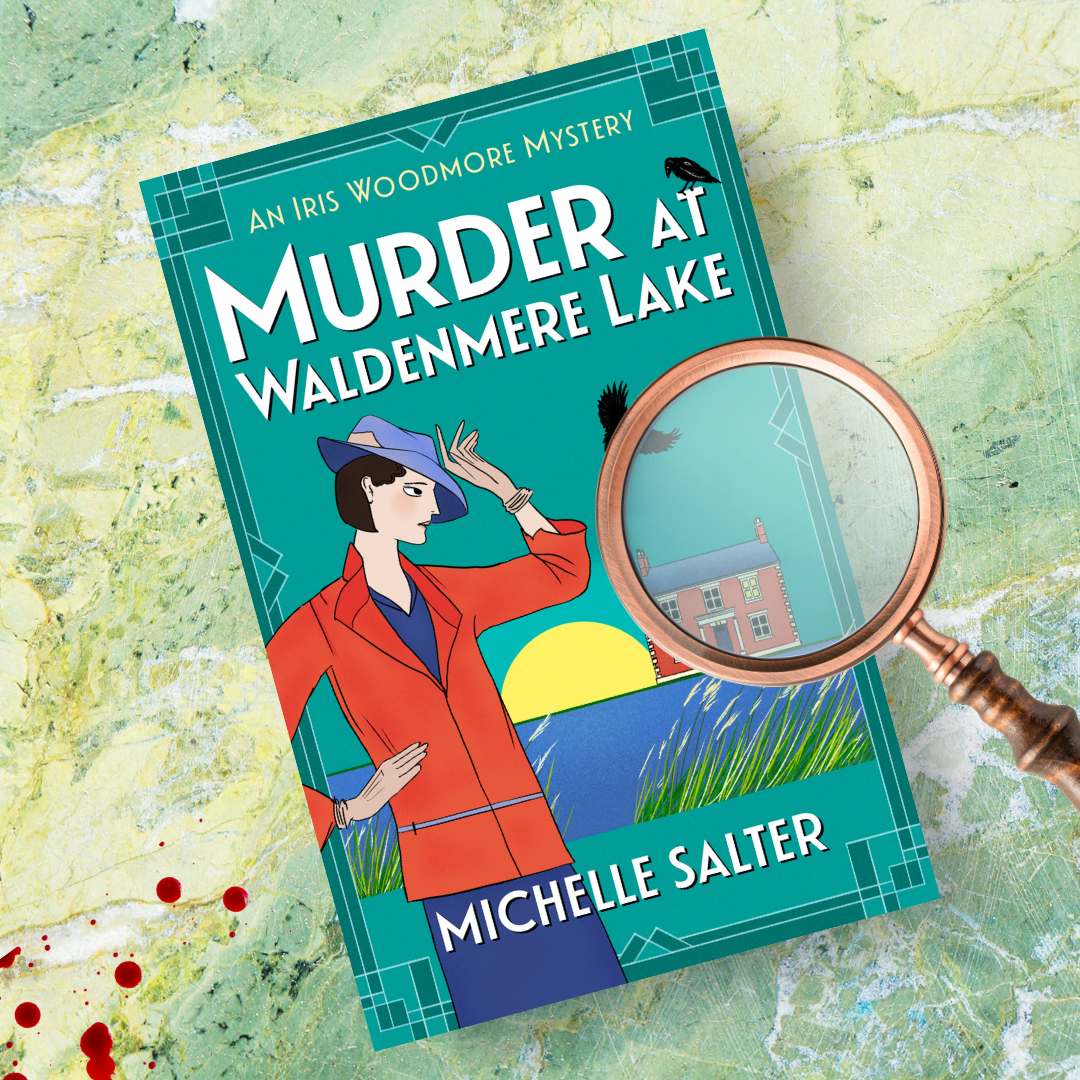
A murder shocks the small town of Walden. And it’s only the beginning…
Walden, 1921. Local reporter Iris Woodmore is determined to save her beloved lake, Waldenmere, from destruction.
After a bloody and expensive war, the British Army can’t afford to keep the lake and build a convalescent home on its shores yet they still battle with Walden Council and a railway company for ownership. But an old mansion used as an officer training academy stands where the railway company plans to build a lakeside hotel. It belongs to General Cheverton – and he won’t leave his home.
When the General is found murdered, it appears someone will stop at nothing to win the fight for Waldenmere. Iris thinks she can take on the might of the railway company and find the killer. But nothing prepares her for the devastation that’s to come…
Murder at Waldenmere Lake is book two in the Iris Woodmore Mystery series set in the very early 1920s onwards. Check out my review for Death at Crookham Hall here.
Book 2, Murder at Waldenmere Lake, begins not soon after the events of the first book, and it’s good to see some familiar characters return to Walden. As with book 1, the mystery is firmly rooted in the concerns of the period, recovering from the events of World War 1 while contending with changes in society. I really love how well-researched the two novels are. I love a cosy mystery, but I adore it even more when the author goes that one step further and adds so much more authentic settings to the novel.
As with book 1, there’s a murder fairly early on in the novel, which seems impossible to solve, and events more quite sedately until there is another murder and events really begin to move at pace. And yet, even with the devastation Iris feels at the murder, she can’t seem to work out who was responsible, and indeed, some personal betrayal strikes her low as well.
The mystery, when it is eventually solved, is delightfully nuanced. Looking back, there might have been some hints I should have read more into, but I didn’t, and so, as with book 1, the big reveal is a surprise but a really well-constructed one. I adored this book. Iris is a great character, as is Percy and the people she interacts with.
A fabulously well-researched historical cosy mystery, and I can’t wait for the next book in the series.
Meet the author
Michelle Salter is a historical crime fiction writer based in northeast Hampshire. Many local locations appear in her mystery novels. She’s also a copywriter and has written features for national magazines. When she’s not writing, Michelle can be found knee-deep in mud at her local nature reserve. She enjoys working with a team of volunteers undertaking conservation activities.
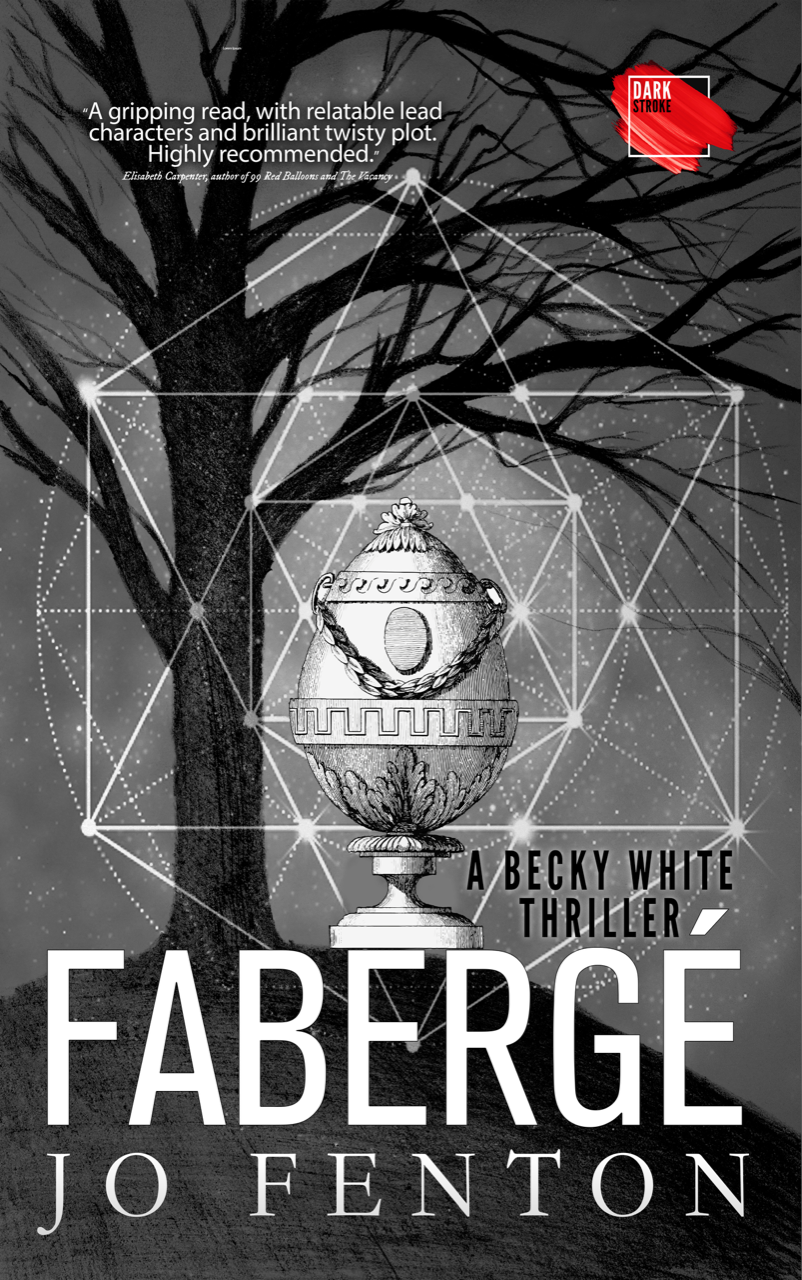
Manchester detective Becky White and her friends at the White Knight Detective Agency take on a case involving the theft of a multi-million-pound Fabergé egg.
Events quickly escalate, and they find themselves dealing with unscrupulous villains who will stop at nothing – not even at kidnapping or murder – to achieve their goals.
Can Becky solve the mystery before her hidden enemies catch up with her?
Faberge is the third book in the Becky White thrillers series. I was compelled to read it by the title. Faberge eggs are certainly something to conjure an image in my mind.
As it’s the first book in the series that I’ve read, it’s taken me a little while to get to know the characters and to work out what’s happening. That said, it’s well worth the effort, for this is a very twisty and tightly woven thriller set in the UK, in the cities of Manchester and Preston, with a brief trip to London.
All three of our main characters, Becky, Will and Joanne, have their backstories, which we could be forgiven for thinking were irrelevant, but they’re not. What seems to be a seemingly random chain of events begins to have more and more relevance. The tension ramps up in the book as it tumbles toward its conclusion. This does have a tight and twisty plot.
A novel that was worth sticking with, and I would recommend that new readers perhaps start with the first book in the series just to give them a firm grounding for the events in Faberge, although the book works very well on its own – once you’ve worked out who all the characters are.
A thrilling thriller.
Meet the Author
Jo Fenton grew up in Hertfordshire, UK. She devoured books from an early age, particularly enjoying adventure books, school stories and fantasy. She wanted to be a scientist from aged six after being given a wonderful book titled “Science Can Be Fun”. At eleven, she discovered Agatha Christie and Georgette Heyer, and now has an eclectic and much loved book collection cluttering her home office.
Jo combines an exciting career in Clinical Research with an equally exciting but very different career as a writer of psychological thrillers.
When not working, she runs (very slowly), and chats to lots of people. She lives in Manchester with her husband, youngest son, a Golden Retriever/Husky cross and a tankful of tropical fish. She is an active and enthusiastic member of two writing groups and a reading group.
Connect with Jo
I can be found at my website www.jofenton137.com or on Facebook, Twitter, Instagram and Pinterest (links below):
Giveaway to Win a Faberge mouse mat and notebook (Open to UK Only)
*Terms and Conditions –UK entries welcome. Please enter using the Rafflecopter box below. The winner will be selected at random via Rafflecopter from all valid entries and will be notified by Twitter and/or email. If no response is received within 7 days then Rachel’s Random Resources reserves the right to select an alternative winner. Open to all entrants aged 18 or over. Any personal data given as part of the competition entry is used for this purpose only and will not be shared with third parties, with the exception of the winners’ information. This will passed to the giveaway organiser and used only for fulfilment of the prize, after which time Rachel’s Random Resources will delete the data. I am not responsible for despatch or delivery of the prize.
I’m really excited to share the details of the Pagan Warrior blog tour with The Coffee Pot Book Club.
Pagan Warrior is the story of the battle of Hædfeld, fought in the seventh century between the Northumbrians, and you got it, the Mercians – or rather, Cadwallon of Gwynedd but with Penda of Mercia as his firm ally. You can find more details here.
I might have written this book many years ago, but it’s had a refresh, and is now available in audio, narrated by the fabulous, Matt Coles, as is the second book, Pagan King. Warrior King will be coming later this year in audio. For this second week, 20th March-25th March, the ebook of Pagan King (book 2) is reduced globally to 99p/99c and equivalent. Follow the link below.
I’ve also, finally, managed to get book three, Warrior King, uploaded to all good ebook platforms, and they will be going live during this week. Kobo have so far won the competition. Use this link, which I will be updating, or try the one above, and hopefully, Warrior King will be linked to Pagan King as well. It means Warrior King is also available in hardcover from Amazon.
You can follow the blog tour, and I’ll be sharing posts here as well. A quick shout out to thank all the blog hosts and Cathie at The Coffee Pot Book Club for organising.
For today (March 21st) check out a post about two of the royal residences of Bernicia at the time, Bamburgh and Ad Gefrin (Yeavering). (There are lots of photos, thank you to Helen Hollick for uploading them all).
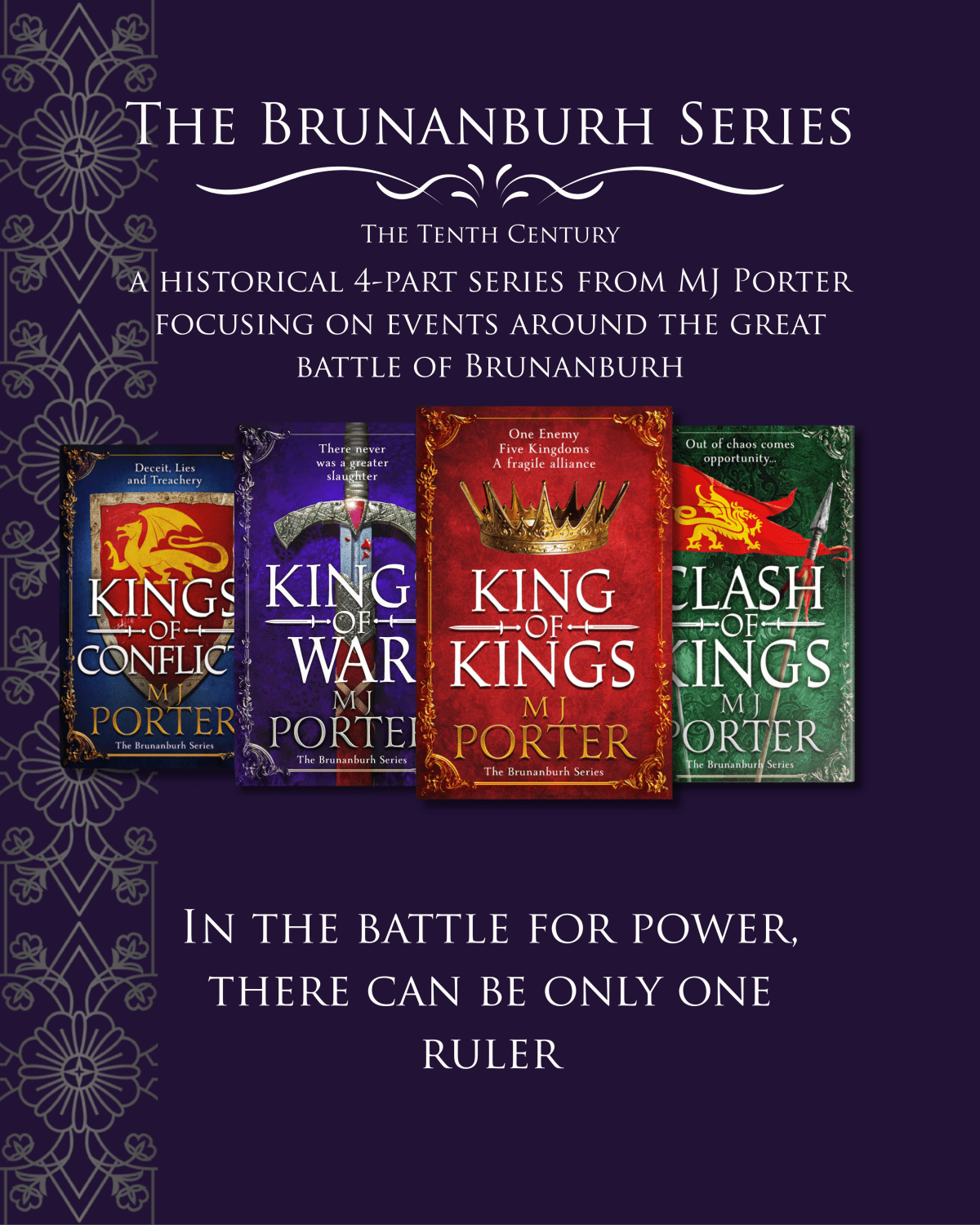
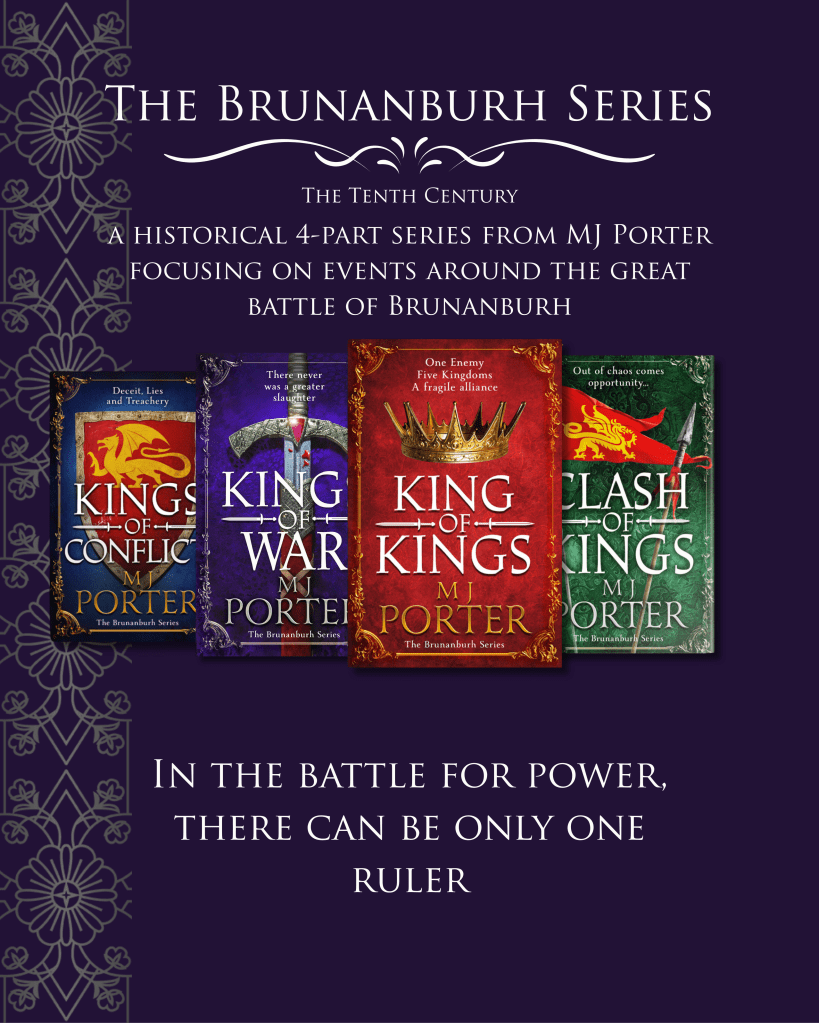
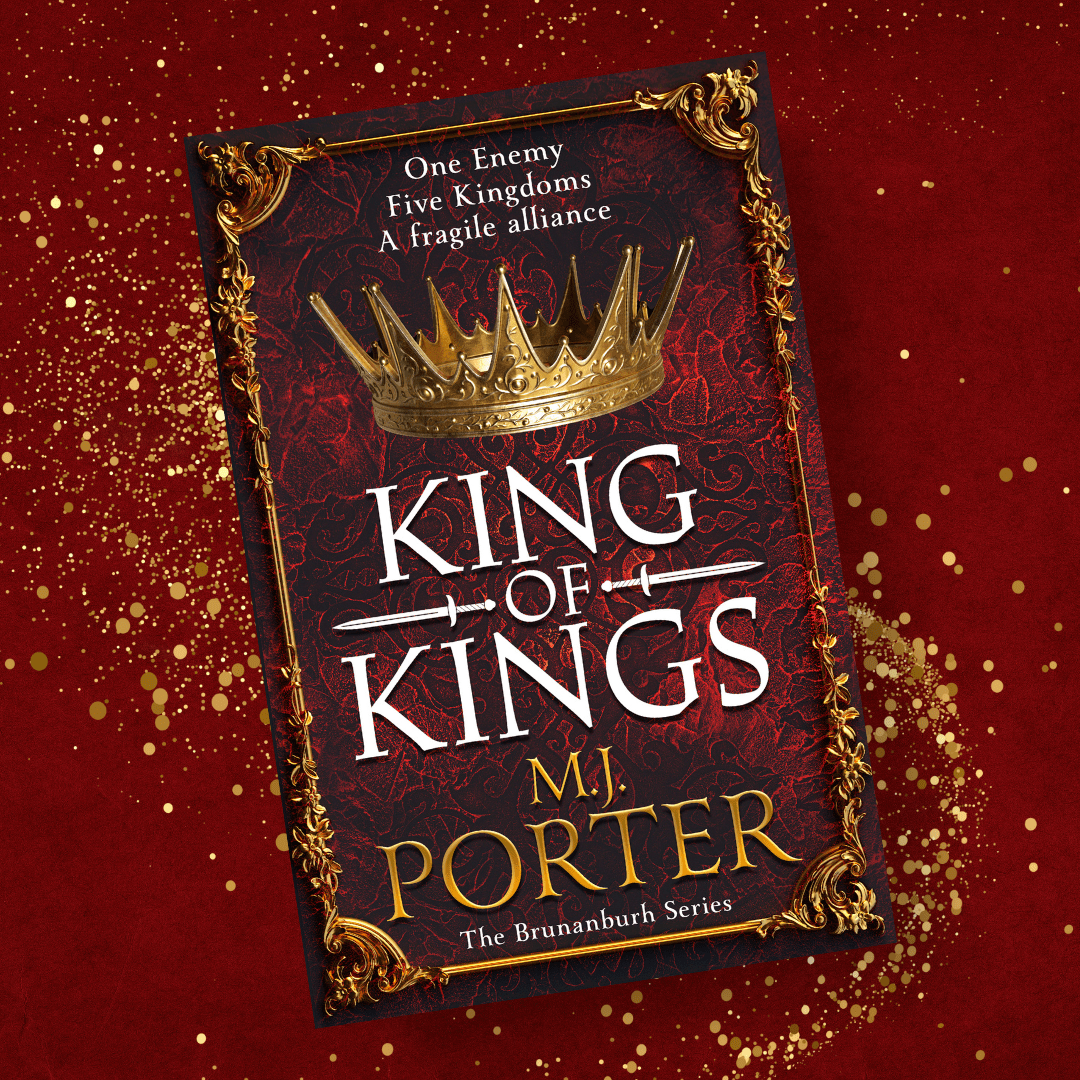
My latest release, King of Kings, is a tale of five kings, and one enemy. But what was the background in what we would now know as England?
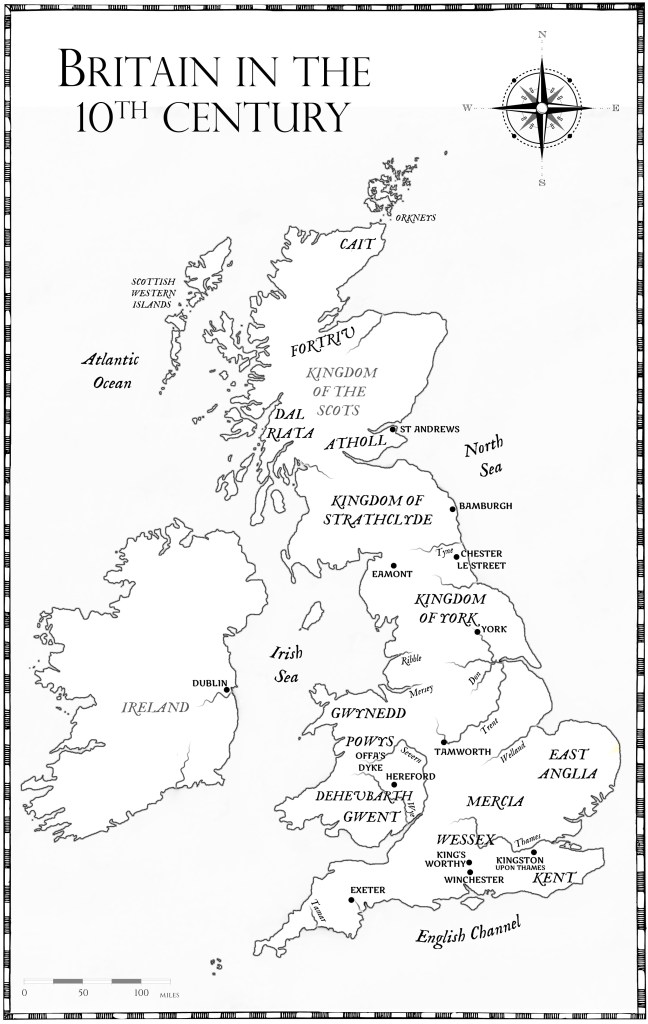
The tenth-century sees the creation of what we would recognise as ‘England’ – the combining of Wessex with Mercia, with the additions of Kent, the kingdom of the East Angles, the Danish Five Boroughs, and the kingdom of York, and also the independent kingdom of Bamburgh. But telling this story is complex. When people think of England, they might not know all these smaller kingdoms. They might not know, particularly, what the Danish Five Boroughs (Leicester, Nottingham, Lincoln, Stamford and Derby), were because if you google the Five Boroughs, you’ll be told about New York (this has happened to me).
Everybody knows about King Alfred of Wessex holding back the tide of the advancing Viking raiders throughout his reign from 874-899. And if everybody didn’t know before, then Uhtred, Bernard Cornwell’s Saxon warrior, has done much to ensure we know about it now.
But again, it’s not quite so simple. The Saxon kingdoms of the seventh century onwards numbered seven, alongside Wessex, there was also Kent, Mercia, the kingdom of the East Angles, Northumbria, Essex and Sussex. These kingdoms eventually merged to give us just Wessex, Mercia, Kent, the kingdom of the East Angles and Northumbria (which itself comprised of two kingdoms, Deira centred on York, and Bernicia, centred on Bamburgh). So, all seems clear there? But no.
When the Viking raiders began their concerted attacks on Britain in the late ninth century, Alfred of Wessex promulgated a treaty with one of their leaders, Guthrum, forging an independent kingdom of the Viking raiders, which stretched along something known as the Alfred-Guthrum line. Loosely, this meant that land to the east was in the control of the Viking raiders. All that survived of those kingdoms south of the Humber was Wessex and the western part of Mercia. The Viking raiders had already overrun Northumbria. The kingdom of Jorvik, centred on York, was part of a Dublin/York kingship, where the kings of York/Jorvik had often already been the king of Dublin, and this kingship was firmly in the hands of a family claiming descent from Ivarr (the Boneless), one of the men who’d led the concerted Viking raider attacks of the 860s and 870s which we might find termed The Great Heathen Army.
Map designed by Flintlock Covers
This, then, reimagined what we think of as England and these Saxon kingdoms weren’t the only ones to face attack from the Viking raiders. The many Welsh kingdoms shared sea borders with the Dublin Norse, and the small kingdom of Manx (the Isle of Man) became incredibly important, as did all of the islands that surround western and northern Scotland. Orkney, at this time, was settled by the Norse.
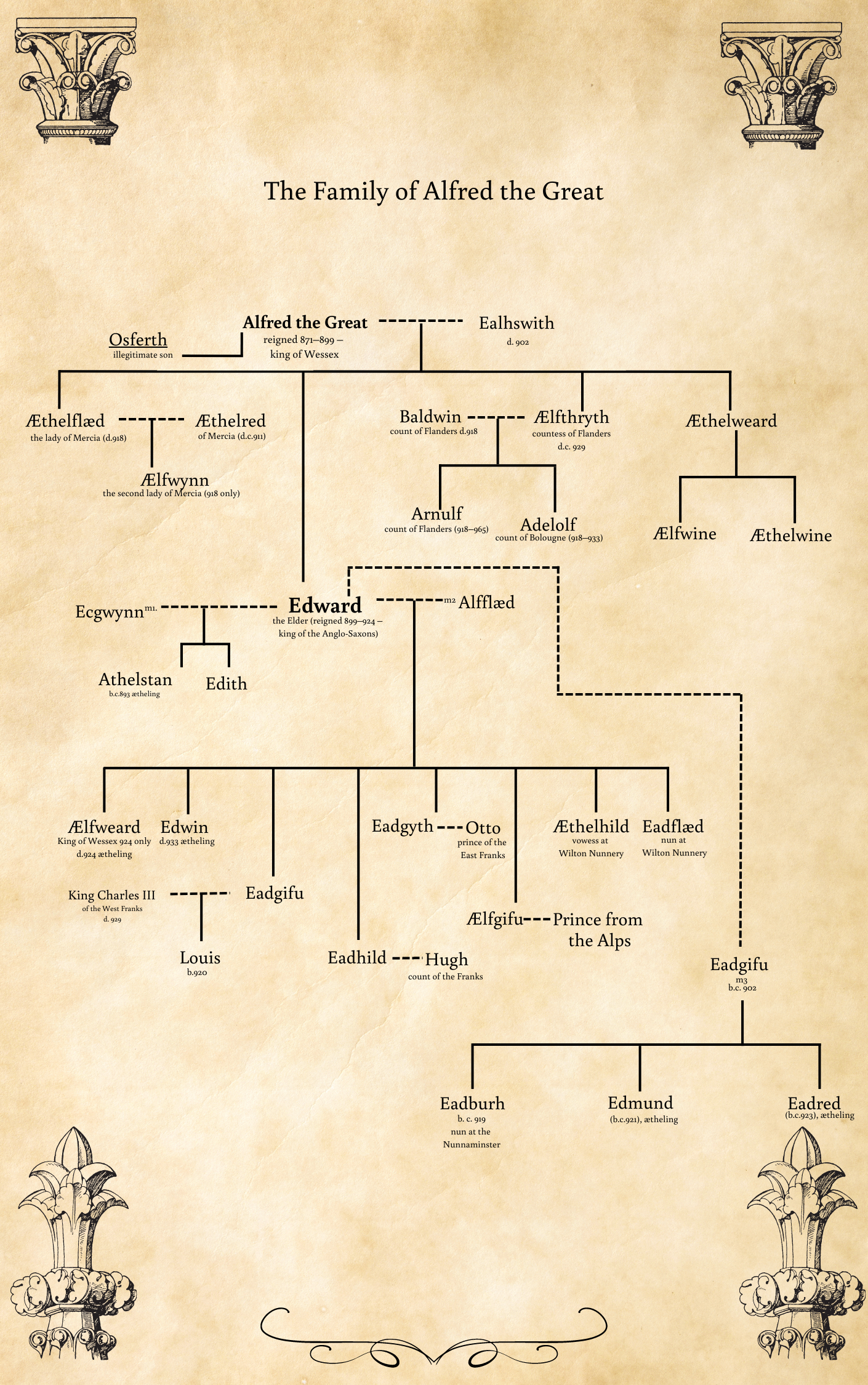
When Alfred died in 899, he was king of Wessex. His son, Edward, would become king of the Anglo-Saxons, ruling over Wessex and Kent, and then after the death of his sister, Æthelflæd, the Lady of Mercia, staking his claim to western Mercia as well as those parts of the Five Boroughs, essentially Norse held lands, known as the Danelaw, which Æthelflæd had ‘won’ back for Mercia.
‘Here in the early part of this year, with God’s help, she [Æthelflæd] peaceably got in her control the stronghold at Leicester and the most part of the raiding-armies that belonged to it were subjected. And also the York-folk had promised her – and some of them granted so by pledge, some confirmed with oaths – that they would be at her disposition.’[i]
This was a time of intense unease, almost constant warfare. And not everyone was happy about the advances the surviving Wessex royal family made. Edward died at Farndon, in Mercia, perhaps putting down a Mercian rebellion or, a Welsh one. Farndon wasn’t far from the border with the Welsh kingdoms.
But Edward’s death, and the subsequent death of his son Ælfweard only sixteen days later, brought about a sea change. Ælfweard wasn’t Edward’s oldest son; that was Athelstan, a youth seemingly banished to live with his aunt in Mercia when Edward remarried (if the later pseudo-historian, William of Malmesbury is to be believed who makes the claim that it was Alfred’s wish that Athelstan be brought up in ‘the court of his daughter Æthelflæd and Æthelred his son in law.’[ii]
Athelstan was immediately recognised as the king of Mercia. Not long afterwards, he also became king of Wessex. And his ambitions didn’t stop there.
‘Here King Edward died at Farndon in Mercia; and very soon, 16 days after, his son Ælfweard died at Oxford; and their bodies lie at Winchester. And Athelstan was chosen as king by the Mercians and consecrated at Kingston.’[iii]
It’s difficult to imagine that Athelstan wasn’t a warrior of fierce renown. His aunt and uncle, the lord and lady of Mercia, had spent much of their rule, both together, and then after Æthelred’s death, Æthelflæd had continued alone, driving back the incursion of the Viking raiders, or the Norse as it might be easier to term them. Athelstan must surely have taken his place in these battles. And yet, while he was eager to hold tightly to the kingdoms of Mercia, Kent and Wessex, he was also prepared to unite people through peace, and this is where the story, King of Kings, begins. With Athelstan, the first crowned king of the English.
[i] Swanton, M. trans and edit The Anglo-Saxon Chronicles, (Orion Publishing Group, 2000), p.105
[ii] Mynors, R.A.B. ed and trans, completed by Thomson, R.M. and Winterbottom, M. Gesta Regvm Anglorvm, The History of the English Kings, William of Malmesbury, (Clarendon Press, 1998), p.211
[iii] Swanton, M. trans and edit The Anglo-Saxon Chronicles, (Orion Publishing Group, 2000), D text p.105
(I’m re-sharing an old post which I’ve amended slightly, and added some new graphics).
England, Wales, Scotland, the smaller kingdoms of Mercia, Wessex, Northumbria, East Anglia, Kent, Powys, Gwynedd, Dal Riada – for the uninitiated (including myself) the sheer number of kingdoms and kings that peopled the period in British history before 1066 can appear as a bewildering display of names, places, times and events, and perhaps never more so than when a historian is trying to sell a book and so makes a statement in their title that applies to that particular king.
Map designed by Flintlock Covers
Phrases such ‘the Golden Age of Northumbria’, ‘the Mercian hegemony’, ‘the rise of Wessex’, they all mask so many events that I find the phrases very unhelpful and perhaps worse, misleading.
I think that Athelstan and his younger half brother, Edmund, probably deserve their titles as Kings of the English. And it’s not just my opinion either. There was, according to Sarah Foot in her book on Athelstan, a concerted effort by the king and his bishops to have him stand apart from his predecessors – to be something ‘different’ to them. They named him king of the English, not king of Mercia (a post he held briefly before another of his younger brothers died) and not king of Wessex, for all that he was both of those things.
They changed his title, they crowned him with a crown, not a helmet. They wanted Athelstan to be something other than his grandfather, King Alfred, and his father, King Edward. It was a bold statement to make, and one they continued when Athelstan died too young and his half-brother, Edmund replaced him. He too was crowned using, it must be supposed, the same Coronation service. (For full details have a peek at Sarah Foot’s book on Athelstan – or read the first few chapters of King of Kings as the service appears in it as well).
So why the change? Essentially the old Saxon kingdoms, for all that they were preserved in the naming of the earls/ealdormens designations, had been swept aside by the Viking raiders. The old kingdoms had become a handy label to apply to certain geographic areas, and the kings of Wessex, whilst keen to hold onto their hereditary titles because of the permanence their own royal line had managed to acquire, were equally as keen to do away with regional boundaries. There was, it can’t be denied, a concerted and almost unrelenting urge to drive any Viking raider or Dane or Norwegian (the Norse) from British soil, and this is what Athelstan and then Edmund were tasked with doing.
Yet the idea of ‘English’ wasn’t a new concept. Why else would Bede have called his great piece of religious historical writing “The Ecclesiastical History of the English people’, if there hadn’t been a shared consciousness that the people in England, all be it in their separate kingdoms, didn’t have a shared heritage? Why the idea suddenly took flight under King Athelstan could be attributed to a new sense of confidence in Wessex and Mercia at the time. They were confident that they could beat the Viking raiders and they were convinced that England belonged to them.
Or perhaps it was more than that? The destruction wrought by the Viking raiders on the separate kingdoms must have been a stark reminder of just how insular the kingdoms had become, and the Viking raiders showed everyone just how easy it was to run roughshod over the individual kingdoms. Only in unity could the Saxon kingdoms of England survive another onslaught; only with unity could the Saxons hold onto their kingdoms they’d claimed about 500 years before.
It was a message that was learned quickly and taken to heart. Athelstan worked to reunite more of the Saxon kingdoms with the growing ‘England’, and he tried to do so by both diplomacy and through war. Yet, the Viking raiders hadn’t finished with England, and nor were they her only enemies. This also lies at the heart of Athelstan’s ‘masterplan’ his treaty of Eamont (if it truly happened – Benjamin Hudson in his Celtic Scotland is not convinced). Athelstan wanted to be a mighty king, but he also wanted England, and the wider Britain (also a concept already understood otherwise why else would that cantankerous monk – Gildas – have called his even earlier work than Bede’s “On the Ruin of Britain?”) to be united in their attempts to repel the Viking raiders. He was a man with a keen vision of the future and it was a vision that his brother continued, with slightly different direction and results.
Family Tree designed by Boldwood Books
The ‘English Kings” saw safety in unity, and of course, an increase in the power they held went hand-in-hand with that.
Yet at no point during the Saxon period can it be said that the emergence of ‘England’ as we know it, was a given certainty. Throughout the period other great kings had tried to claim sovereignty over other kingdoms, but never with any permanence. The earlier, regional kings, were powerful within their own lifetimes and within their own regions. Few, if any, were able to pass on their patrimony complete upon their death. This was a time of personal kingship, and it was only under Athelstan and Edmund that the leap was taken away from this to a more permanent power base.
Not that it was a smooth transition and it did have the side-effect of allowing other men, those not related to the royal family, to evolve their own individual power bases in the old Saxon kingdoms. The ‘English’ kings had to do more than just rule their own kingdom, they had to rule their ealdormen and earls, their warriors, bishops and archbishops. The number of names of kings might start to deplete in the after math of Athelstan and Edmund’s kingship, but in their place spring up more and more powerful men, men that these English kings had to rely on.
Becoming King of the English was very much a mixed blessing, bringing with it new and greater responsibilities and more, it brought with it the need to expand personal government further, to have a greater persona to broadcast.