Blog Posts from MJ Porter, author and reviewer

Happy release day for Murder Lost and Found by Debbie Young #cozycrime #SophieSayers

Here’s the blurb

Sophie Sayers is ready for a glorious summer, but when a dead body is found in the village school’s lost property cupboard the summer holidays take an unexpected turn.

Even more shocking is when the body goes missing. Without a body, the police refuse to investigate. That’s just not good enough.

Sophie is determined to get to the bottom of the mystery. She needs to find out who has died and nab the culprit if she’s going to save the village school from the threat of closure.

My Review

Murder Lost and Found continues the Sophie Sayers Cosy Mysteries.

It’s the summer holidays, the school is empty of children, but while the caretaker and office manager try to ensure the school is prepared for the start of term, strange happenings take place.

I really enjoy this collection of stories. They’re light-hearted and a quick, pacy read, and I felt this one was particularly strong with the mystery of the lost property cupboard and the strange notes, making poor Sophie doubt herself, even while she contends with change at Horace’s bookshop.

A fun and entertaining read. Bring on book 8.

My thanks to Netgalley and the publisher for my review copy.

Purchase Link

https://amzn.to/3JIkJpH

Meet the Author

Debbie Young is the much-loved author of the Sophie Sayers and St Brides cosy crime mysteries. She lives in a Cotswold village where she runs the local literary festival, and has worked at Westonbirt School, both of which provide inspiration for her writing. She is bringing both her series to Boldwood in a 13-book contract. They will be publishing several new titles in each series and republishing the backlist, starting in September 2022.

Debbie Young

Connect with Debbie  

Facebook https://www.facebook.com/AuthorDebbieYoung

Twitter https://twitter.com/DebbieYoungBN

Instagram https://www.instagram.com/debbieyoungauthor/  

Newsletter Sign Up: https://bit.ly/DebbieYoungNews

Bookbub profile: https://www.bookbub.com/authors/debbie-young

(This review contains an Amazon affiliate link)

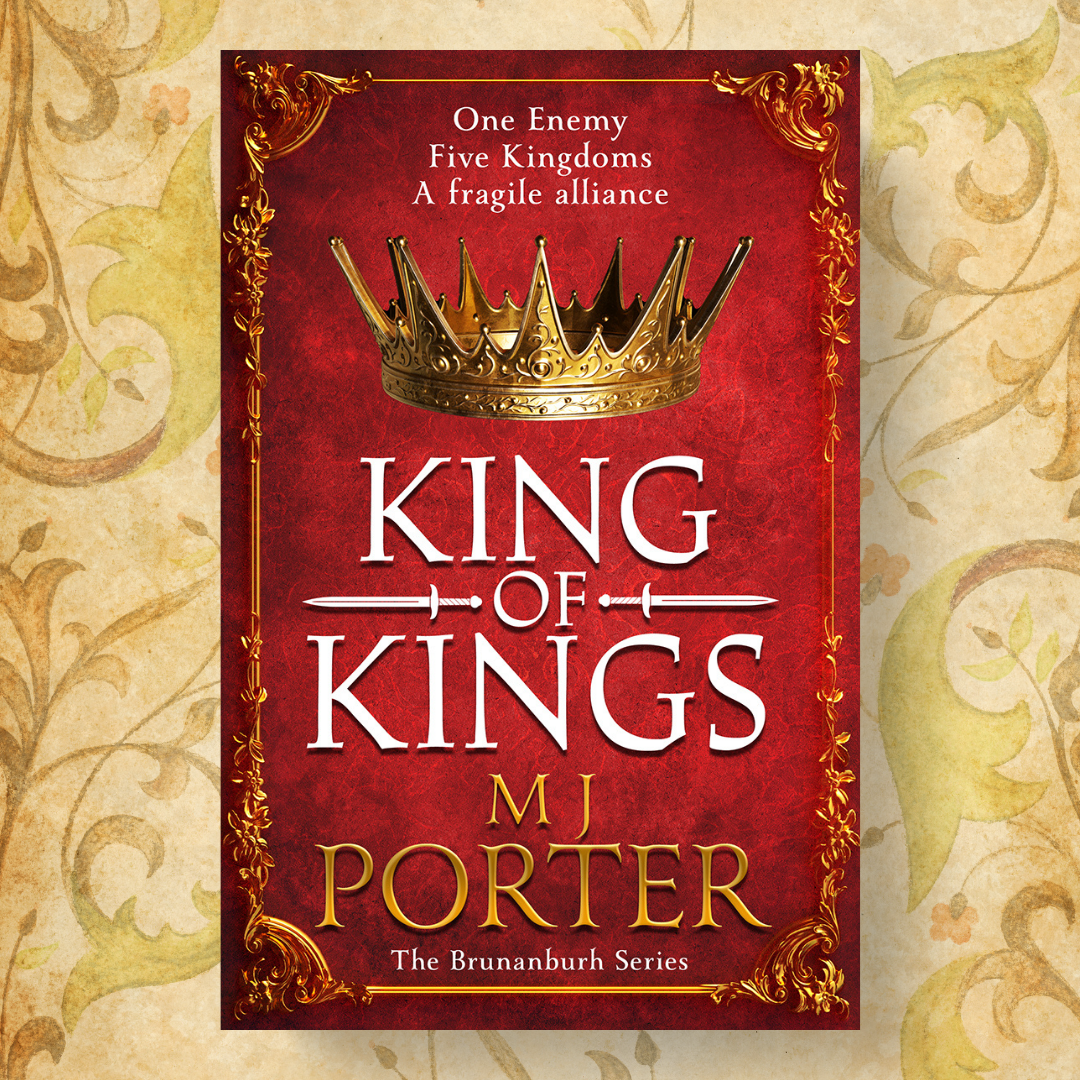
My new book, King of Kings, has a number of main characters. Meet Lady Eadgifu. #histfic #nonfiction #Brunanburh

King of Kings has a number of characters, and some might be surprised to find Lady Eadgifu amongst them, but she was an incredibly important historical character, and I couldn’t leave her out of the narrative set at the English court.

Lady Eadgifu was the third wife of Edward the Elder (r.899-924), king of the Anglo-Saxons. Edward the Elder was the father of King Athelstan, and a whole host of daughters, as well as five sons. Lady Eadgifu would, it seems, have been young when she married the aging Edward the Elder, and that meant that she long outlived him, and also, that her three children (possibly four, but I’ve opted for three) were young when their father died. And two of these children were sons, Edmund (born c.921) and Eadred (born c.923). Her daughter, Eadburh, is thought to have been the oldest of the three children, born c.919.

While Lady Eadgifu, from what’s known (and it isn’t much, as there are few surviving charters from the end of Edward’s reign) perhaps had little role to play while her husband lived, other than wife and mother to the king’s children, following his death, she became increasingly significant. She was the daughter of an ealdorman, who perhaps died just before her birth, and her family are said to have had connections with Kent. Indeed, it’s often stated that she brought her husband Kent with their union. By that, what’s often meant, is the loyalty of the Kentish people. Remember, at this time, we’re still just before the creation of ‘England’ as we would now recognise it.

Sadly, very little is known about Lady Eadgifu (and she’s not alone in this – many of the royal women ‘disappear’ at points in the historical record, and on occasion, are entirely lost.) We know about a land dispute she was involved in, and also much more information for after Athelstan’s reign.

Indeed, it has been said that

‘Nor is it surprising that Eadgifu, as the consort of the previous king, served little role in her stepson’s court.[i]

[i] Firth, M. and Schilling, C. ‘The Lonely Afterlives of Early English Queens’, in Nephilologus September 2022, https://doi.org/10.1007/s11061-022-09739-4p.7

However, Barbara Yorke believes that,

‘the enhanced position [of Lady Eadgifu] may also have been developed specifically for the widowed Eadgifu as part of an alliance with her stepson Æthelstan [Athelstan] in which she supported his position and he recognised her sons as his heirs.’[i]


[i] Yorke, B. ‘The Women in Edgar’s Life,’ in Edgar, King of the English, 959-975 Scragg, D. ed (The Boydell Press, 2008), p.146


And it is this option that I’ve decided to explore in King of Kings. Lady Eadgifu was wife to a king. She would have known her worth, even when faced with a stepson as the king of the English, and another stepson, and stepdaughters, who perhaps didn’t share any love for their, potentially, younger stepmother. Will Lady Eadgifu work with or against Athelstan? Read on to find out.

Map design by Shaun at Flintlock Covers

books2read.com/King-of-Kings

Meet Owain, king of Strathclyde

Meet Athelstan, king of the English

Meet Constantin, king of the Scots

Meet Hywel, king of the West Welsh

Meet Ealdred, king of Bamburgh

Check out the Brunanburh Series Page

Posts

I’m absolutely delighted to share a fabulous post about dressing for success in the 17th century by author, Anna Belfrage, who had to find out all sorts of undergarment related information for A Rip in The Veil #HistoricalFiction #TimeTravelRomance #BlogTour #TheCoffeePotBookClub

Today, I’m absolutely delighted to share a fabulous post from Anna Belfrage about dressing in the seventeenth century. It will make you giggle, I promise.

Dressing for success in the seventeenth century

In a A Rip in the Veil—the first book in The Graham Saga—the unfortunate (or not, depending how one sees it) Alex Lind has the misfortune of falling three centuries backwards in time to land at the feet of Matthew Graham. Matthew Graham is a devout Presbyterian who has fought in the Commonwealth armies in the Civil War. To Alex, he is initially very strange. Heck, the entire situation is strange: no, wait—it’s impossible! 

Matthew is as taken aback as Alex is—perhaps even more, as the only explanation to her sudden appearance in his life must be magic. Or? Besides, what is the woman wearing? Those tight, tight breeches she calls ‘djeens” showcase her every curve, as do her other garments. No, had she been his woman, he’d never have allowed her to set a foot outside dressed like that, all of her exposed, like. 

Alex quickly realises that in this new time she has to adapt. ASAP. And one of the first things she must embrace is an entire new wardrobe. “Yay me,” she mutters as she shakes out shift and petticoats and heavy skirts and bodice and. . .

I must admit that I wasn’t entirely thrilled when Alex landed in 1658. The seventeenth century is not my sartorial favourite – especially when it comes to male fashion. 

This period dress thing is difficult.

First of all, as the writer of historical fiction it is important to understand what people wore, who wore what and how it was worn. In some cases it’s straightforward: stockings cover your feet and the nether part of your legs no matter if you live in the twentieth century or the fifteenth. But take that rather ugly male adornment that Henry VIII was so proud of flaunting – the codpiece – and I am somewhat stumped. How did it work? ( Okay, so I’ve looked this up; strings, buttons or hooks kept this decorative little (hmm) flap of fabric in place.)

Secondly, it helps if the writer in question finds the period attire alluring in some way or other. It’s difficult to write convincingly about handsome men in codpieces and padded breeches when all you see in your head is something resembling a man in a huge diaper.

Finally, there must be a familiarity with how people dress and undress. “He told her to turn around and zipped up her gown,” is not a good description of the intimacy between man and wife in the fourteenth century. (BTW, the modern zipper owes a lot to Swedish inventor Gideon Sundback. It’s nice to know us Swedes have contributed to human development: dynamite, zippers, gauge blocks, the AGA cooker.) Having exploring male fingers encountering panties in the sixteenth century is also something of an anachronism, and should the dashing regency rake pulls down his boxers you’re not reading historical fiction, you’re reading about a masquerade.

To avoid such gaffes, I’ve spent a lot of time researching the period and have accordingly done my fair share of staring at what few clothes survive from the seventeenth century—like James II’s elegant attire exhibited in the Victoria & Albert museum. Okay, so that is later in the century, but all that lace, all those embroideries, and that gigantic wig! Plus, the high heels on the shoes. . . Nope, not at all my cup of tea. 

Earlier in the 1600s, men wore wide breeches, sashes, lace, ribbons—like these young and elegant Stuart brothers in Van Dyke’s portrait. 

To the seventeenth century young girl, they were likely delectable. To Alex, not so much. She’d be hard put not to laugh her head off. So it is fortunate that when she first meets Matthew, he is in a ragged shirt and equally ragged breeches, fleeing from pursuing soldiers. It is also fortunate that Matthew would no more adorn himself with ribbons than he would dance attendance on the king—he is a man of Parliamentarian convictions. No, Matthew wears plain and well-made clothes, now and then adorned with a ruffled cuff or an elegant collar.  

Obviously, Matthew expects this new female companion of his to dress sedately, which is how Alex finds herself obliged to re-learn just how to dress.

In the seventeenth century, there were no bras, no panties. Instead, the undergarment is a shapeless elongated linen shirt that comes to just below the knees. This shift is worn over stockings that come to just above the knee and are fastened by garters.
“I can help you with those,” Matthew suggests, and there is a twinkle in his eyes as he helps Alex fasten the stockings with pink ribbons. Just because he doesn’t wear ribbons, it doesn’t mean she can’t, he says. In fact, he rather likes the fact that she is wearing them—and that he tied them into place. 
Over the shift—which also doubles as nightgown—Alex now dons a corset. 
“Ugh!” she groans as she tightens into place. The corset she has ties in front—only people who can afford a ladies maid have corsets that tie in the back. She has to struggle a bit to get it to sit right, and then there are the petticoats, tied into place at her waist and falling to mid-calf. Only the very, very rich have garments that fall all the way to the floor. Most women have skirts high enough to allow them to work and walk without dragging the hem in the dirt. 

“Here.” Matthew hands her the heavy skirts. And yes, they are heavy, making it hard to, for example, run. Or jump a fence. Once Alex has stepped into them, he helps her tighten them into place. A bodice, a shawl to cover what may remain exposed of her chest and then Matthew holds out a cap.
“No way!” She backs away, staring at the embroidered linen coif. 
“You must cover your hair,” he says.
She refuses. 
There is a slight. . . er . . . argument. Things end in a compromise: she will not cover her hair indoors, but otherwise she will either wear a coif or a hat. Matthew would prefer both, but he is pragmatic enough to realise this isn’t a battle he will win. Besides, Alex is having to handle a lot of change as it is.
“Tell me about it,” she mutters. She isn’t overly impressed with the food. Or the lack of chocolate. Or of tea. “I thought they had tea in the seventeenth century,” she groans. 
“They do,” I tell her, “but it is very, very expensive.” 
“Oh.” She gnaws her lip, her shoulders slumping. Which is probably why Matthew expends a ridiculous amount on a ridiculous small quantity of tea next time he goes to Edinburgh, pleased by the way she lights up from within when he hands the precious package over. 

Over time, Alex will become accustomed to her new clothes, even if she will quite often think longingly of jeans and sweatshirts, of Converse and shop-bought socks. (She hates to knit) 

But while she adapts to her new life on the outside, she remains a woman of modern conviction and outlook, which will now and then cause her quite some problems in her new time. It is fortunate that she has Matthew to guide her. On the other hand, there will be countless of occasions when Matthew will owe his life and sanity to her, the strange lass he found concussed and burned on an empty Scottish moor. Two halves made whole are my Alex and Matthew, no matter such details as sartorial arguments!

Thank you so much for such a fabulous post. I just can’t imagine all the lace:)

Here’s the blurb

On a muggy August day in 2002 Alex Lind disappears. On an equally stifling August day in 1658, Matthew Graham finds her on a Scottish moor.  Life will never be the same for Alex – or for Matthew. 

Alexandra Lind is thrown three centuries backwards in time to land at the feet of escaped convict Matthew Graham. 

Matthew doesn’t know what to make of this strange woman who has seemingly fallen from the skies—what is she, a witch? 

Alex is convinced the tall, gaunt man is some sort of hermit, an oddball, but she quickly realises the odd one out is she, not he. 

Catapulted from a life of modern comfort, Alex grapples with her new existence, further complicated by the dawning realization that someone from her time has followed her here—and not exactly to extend a helping hand. 

Potential compensation for this brutal shift in fate comes in the shape of Matthew, a man she should never have met, not when she was born three centuries after him. But Matthew comes with baggage of his own and on occasion his past threatens them both. At times Alex finds it all excessively exciting, longing for the structured life she used to have. 

How will she ever get back? And more importantly, does she really want to?

Buy Links

This title is available to read on #KindleUnlimited.

Universal Link

Amazon UKAmazon USAmazon CAAmazon AU

Meet the author

Had Anna been allowed to choose, she’d have become a time-traveller. As this was impossible, she became a financial professional with two absorbing interests: history and writing. Anna has authored the acclaimed time travelling series The Graham Saga, set in 17th century Scotland and Maryland, as well as the equally acclaimed medieval series The King’s Greatest Enemy which is set in 14th century England.  

Anna has also published The Wanderer, a fast-paced contemporary romantic suspense trilogy with paranormal and time-slip ingredients. 

Her Castilian Heart is the third in her “Castilian” series, a stand-alone sequel to her September 2020 release, His Castilian Hawk. Set against the complications of Edward I’s invasion of Wales, His Castilian Hawk is a story of loyalty, integrity—and love. In the second instalment, The Castilian Pomegranate, we travel with the protagonists to the complex political world of medieval Spain. This latest release finds our protagonists back in England—not necessarily any safer than the wilds of Spain!

Anna has also authored The Whirlpools of Time in which she returns to the world of time travel. Join Duncan and the somewhat reluctant time-traveller Erin on their adventures through the Scottish Highlands just as the first Jacobite rebellion is about to explode! 

All of Anna’s books have been awarded the IndieBRAG Medallion, she has several Historical Novel Society Editor’s Choices, and one of her books won the HNS Indie Award in 2015. She is also the proud recipient of various Reader’s Favorite medals as well as having won various Gold, Silver and Bronze Coffee Pot Book Club awards.

Find out more about Anna, her books and enjoy her eclectic historical blog on her website, www.annabelfrage.com  

Connect with Anna:

WebsiteTwitterFacebookInstagram

Book BubAmazon Author PageGoodreads

Follow the A Rip in The Veil blog tour with The Coffee Pot Book Club

I’m delighted to welcome The Adventures of Ruby Pi and the Geometry Girls by Tom Durwood to the blog YAadventure #ScienceGirls #BlogTour #TheCoffeePotBookClub

I’m delighted to feature an excerpt from The Adventures of Ruby Pi and the Geometry Girls by Tom Durwood.

A DISRUPTION ON THE COUNTING FLOOR

The Great Famine remains a taboo in China, 

where it is referred to euphemistically as 

the ‘Three Years of Natural Disasters’ or the 

‘Three Years of Difficulties.’     

— Tani Branigan, The Guardian                           

Freckles, well-earned from working long days in the sun, sprinkled the bridge of the nose and spilled over onto the cheeks of the face of the farm girl, Yan Li. 

A badge of honor in her home region, the freckles were looked on as a relic of the agrarian past in certain sectors of modern China. The New China. Industrial China. 

“Don’t do this!” whispered Ming Jun, seated beside her. “The bridge bombing has everyone on edge. What if they –”

“Someone has to say something.” 

Yan Li’s eyes were clear, her jaw firm, her expression determined. She straightened the barrette holding her hair back.  

Yan Li stood up. 

“Sit down!” hissed Ming Jun, 

“These mathematics are wrong! All wrong!”

Yan Li announced this to the room full of working clerks and book-keeps on the expansive counting floor of Building Two. 

Her voice was too loud to be ignored.    

Faces turned towards her. 

“It’s all bad,” she continued. “Completely phony. The assumptions are fabricated. You know this!” 

The calm murmur of adding and multiplying, of calculations and quiet consultations, of pens scratching on paper, the soft clanking of typewriters in the half-walled stations which ringed the floor of low desks offices – all sounds on the counting floor subsided.     

“A thousand times ridiculous is still ridiculous. I can’t be the only one who thinks so.”  

Two of the red-kerchiefed floor proctors hustled towards Ya Li. After all, she was disrupting the entire society’s forward progress. 

“Sit back down, farm girl,” commented one of her tallying peers. But the lone jibe froze in the air. None others joined.  

“Look,” said Yan Li evenly. “If anyone believes these so-called forecasts we are producing … well then, their deaths will be on our heads, comrades. It will be our fault if we do not speak up”

By now, even the soft plucking of stringed instruments in the background had fallen silent.  

“We-cannot-possibly-endorse-this-charade!” concluded Yan Li.

“It’s the millet,” called out a second fellow scribe, a boy near the middle. “The winter wheat numbers are higher –” 

“A FACTOR of FOUR higher?” demanded Yan Li. “The families who sit and wait for those phantom grains will be sorely disappointed, my friend. Empty bowls! They will starve and it will be horrible — ” 

“Her work has been strenuous, Shi’lang,” implored Ming Jun to the first proctor, “the hours long. Just let her sit back down.”

“All right,” said the proctor Shi’lang, a handsome older boy dressed in white with a red kerchief around his neck. “That’s quite enough!”

“Who will join me in a new and honest set of calculations?” demanded Yan Li. 

A loud knock on the glass walls.

A trio of the skinny soldiers, buck-toothed boys in green suits, rifles slung over shoulders, had paused in their campus patrol. Were they needed, to restore order? 

Shi’lang waved them away. 

Shi’lang draped an arm around Yan Li’s shoulder and laughed in a most friendly fashion.    

“Ah! Yes! Now I see the error you mention, Yan Li. I had noticed it, too. You are a prankster! Charming.” He chuckled.

A little bell was ringing. It emanated from the corner office, raised above the counting floor. The Supervisor’s office.

A second floor-proctor joined Shi’lang and together they ushered Yan Li off the floor. 

“‘Charade,’” laughed handsome Shi’lang, shaking his head wryly. 

The members of the counting floor disliked this show of force. 

Rumblings started up in the back rows …

Across the big open room, another red-bandana youth clapped his hands.  

“Back to work, please.”

The morning fruit and cheese platters were quickly circulated, an hour earlier than usual.  

The soft plucking of lutes rose once again.  

Gradually, unevenly, the Chairman’s work continued. 

2. IN THE OFFICE OF THE SUPERVISOR

By the end of the first millennium A.D., China

possessed a sophistication in the technology

of traditional agriculture that has never been surpassed …

the basic contours of this spectacular agricultural system

were laid during the Classical period.   

– Agriculture in Ancient China 

The Chairman’s summer villa compound in Mei Ling is most pleasant. 

Dappled sunlight graces the secluded retreat, a well-manicured place most conducive to quiet contemplation and deep thoughts.  Burbling streams and winding paths run through the sylvan grounds of the lakeshore campus. Mountain goats roam the cliffs and munch on grass at the forested margins. Staircases and antique cable cars bring visitors down the sharp inclines leading to Lake Wuhan at the compound’s western edge.  Deer stoop to drink from still ponds by Building Four. 

Red drapes frame tableaus of blond furniture and upholstered chairs of the lobbies within the glass walls of Building Three. An assembly hall could be glimpsed beyond the plum carpeting. 

Among the tall pine and bamboo trees, the young soldiers with their guard dogs walked the paths winding up to bulky Building One. A swimming pool was hidden behind its tinted windows.  Building Two, where the agricultural forecasts in support of the coming Great Leap Forward – the bold initiative which would establish and a new China — were taking place, where Yan Li had created such a commotion, was lower and sleeker. 

* * *

The star-splashed freckles sprinkled across Yan Li’s nose and cheeks stood out now. Her blood was rising, and the skin of her face was flushed with anger. 

The Supervisor, Miss Wang Na, paced the striped rug of the corner office. She paused to look out over the clerks working on their calculations o forecast the coming harvests. 

Yan Li stood, defiant. Her hands had been tied.   

Cushions in primary colors decorated the white sofas in the glass-walled office. Ivory rugs offset a row of wood-paneled bookshelves behind the large desk.      

“We have summoned the Director,” said Miss Wang Na. 

“He left for Xinhua an hour ago, but we can get him back.”   

She paced behind metal standing lamps.   

“Summon Empress Lu Zhi and the Seven Hoardes of Han for all I care,” commented Yan Li.       

“This is most serious,” said Shi’lang

Miss Wang Na paused to consider the lake. 

The glass corner office was perched on and above sparkling blue Lake Wuhan’s shoreline. Splashing paddle-boats and brightly colored lanterns strung along the lakeside walkways gave no hint as to what might lay beneath the deep waters’ surface. 

Miss Wang Na turned, cursing bitterly. 

“First the bombing! Then the Yunhe rebels attack our supply lines. Now this! Treason from within!”

“You’re the traitor!” spat Yan Li. “You are complicit in what will be a famine of colossal proportions! Death by starvation.  In the millions — ” 

“Why are you trying to make me look bad, farm girl?” demanded Miss Wang Na. 

“To save tens of thousands of lives,” answered Yan Li.

“The Director will be presenting our tables to the Bureau, in Beijing, in less than a week. If the net present values do not align — ”

“Oh, that part is easy enough,” refuted the girl. “The net present value of next year’s famine is ‘Famine.’ Also known as ‘Zero.’”

“Yes, well, your barn-yard stubbornness, your backward ways, your slavery to tradition, your LACK of VISION are exactly what the Chairman fears most. I was present during his address at the Beijing Palace, and he predicted that these epochal events woul — ”

__________________________________________________________________________________

The net present value of next year’s famine is ‘Famine.’ Also known as ‘Zero.’ 

__________________________________________________________________________________

“Setting bad mathematics in historical context doesn’t change anything,” said Yan Li. 

“Reactionary.” Shi’lang shook his head. “Confucian.”

“’Confucian’? It’s not Confucian. The calculations need to be exact. Based on reality. It all must beintentional. Not some empty exercise. If the numbers are compromised even slightly, it’s all worthless. No forecast. How can you not see that?”

“Oh, I see,” said the Supervisor, Miss Wang Na.   

“I see, all right.” 

“What’s this? Eh?” asked the Supervisor sharply. 

She pointed to the equation at the top of one of Yan Li’s pages.

“What is the meaning of this formula?”

Yield in t/ha = (220 × 24 × 3.4) / 10,000 = 1.79

“It’s not a formula,” answered Yan Li, shaking her head. “It’s an equation. 

“It shows the crop yield in any given harvest. Every forecaster follows this same model.” 

“And why is it incomplete?” demanded the Supervisor. 

“It’s waiting for a proper numerator. What you gave me is garbage. Worse than garbage.”

Shi’lang moved as if to strike her. Miss Wang Na stepped between them.

“Let X equal X,” challenged Yan Li, stepping forward —  

Here’s the blurb

Young adult fiction featuring gambling, bandits, swordplay, probability and Bayes’ Theorem. An English teacher hopes to engage students with colorful STEM adventures. 

“In this outstanding collection, Tom addresses the chronic problem of our young women dropping out of STEM studies. His stories lend adventure to scientific thinking.” 

(~ Tanzeela Siddique, Math Instructor)

Buy Links

Universal Link

Amazon UKAmazon USAmazon CAAmazon AU

Barnes and NobleKobo

Meet the author

Tom Durwood is a teacher, writer and editor with an interest in history. Tom most recently taught English Composition and Empire and Literature at Valley Forge Military College, where he won the Teacher of the Year Award five times. Tom has taught Public Speaking and Basic Communications as guest lecturer for the Naval Special Warfare Development Group at the Dam’s Neck Annex of the Naval War College.

Tom’s ebook Empire and Literature matches global works of film and fiction to specific quadrants of empire, finding surprising parallels. Literature, film, art and architecture are viewed against the rise and fall of empire. In a foreword to Empire and Literature, postcolonial scholar Dipesh Chakrabarty of the University of Chicago calls it “imaginative and innovative.” Prof. Chakrabarty writes that “Durwood has given us a thought-provoking introduction to the humanities.” His subsequent book “Kid Lit: An Introduction to Literary Criticism” has been well-reviewed. “My favorite nonfiction book of the year,” writes The Literary Apothecary (Goodreads).

Early reader response to Tom’s historical fiction adventures has been promising. “A true pleasure … the richness of the layers of Tom’s novel is compelling,” writes Fatima Sharrafedine in her foreword to “The Illustrated Boatman’s Daughter.” The Midwest Book Review calls that same adventure “uniformly gripping and educational … pairing action and adventure with social issues.” Adds Prairie Review, “A deeply intriguing, ambitious historical fiction series.”

Tom briefly ran his own children’s book imprint, Calico Books (Contemporary Books, Chicago). Tom’s newspaper column “Shelter” appeared in the North County Times for seven years. Tom earned a Masters in English Literature in San Diego, where he also served as Executive Director of San Diego Habitat for Humanity.

Two of Tom’s books, “Kid Lit” and “The Illustrated Boatman’s Daughter,” were selected “Best of the New” by Julie Sara Porter’s Bookworm  Book Alert

Connect with Tom

WebsiteNewsletter:  

TwitterFacebookLinkedIn

PinterestAmazon Author PageGoodreads: 

Follow The Adventures of Ruby Pi and The Geometry Girls blog tour with The Coffee Pot Book Club

Meet Ealdred, King of Bamburgh, from King of Kings (The Brunanburh Series).

Who was Ealdred of Bamburgh?

King of Kings has a number of characters, and King Ealdred, or Lord Ealdred of Bamburgh is one of them. But who was he, and what was the independent kingdom of Bamburgh?

Now, I think we all ‘think’ we know about Bebbanburg (Bamburgh) thanks to Uhtred of Bebbanburg, Bernard Cornwell’s creation. But events in Bamburgh are complex and not easy to understand, even for someone who might think they know the period quite well.

What was Bamburgh?

So what was Bamburgh? Bamburgh is traditionally associated with the kingdom of Bernicia – the far northern Saxon kingdom, which was particularly prominent during the seventh century, so three hundred years before the events of King of Kings, and which was joined to the kingdom of Deira to form Northumbria. Check out my Gods and Kings trilogy for the some of the events of this period.

The iconic castle that stands today is a later building, the oldest part, the keep, dating to the end of the Saxon period, while much of what we see today is the later work of Lord Armstrong (who built Cragside), when he significantly repaired the remains. Indeed, the family still own Bamburgh Castle, although not Cragside, which is a National Trust property. (I’ve written a 1930s mystery set at Cragside).

Bamburgh is slightly unusual in that there are old images of the castle before the 19th century work of Armstrong. I enjoy collecting these antique prints. We often find such buildings falling into ruin, not being ruined and the rebuilt.

Antique prints of Bamburgh Castle

And Bamburgh Castle and its environs are stuffed with archaeology. There were some very famous archaeological investigations undertaken in the 1960s, and there’s now a dedicated team unearthing the treasures hidden beneath the current building. You can follow the teams work at Bamburgh Research Project’s Blog. You might know about Bamburgh because of the seventh century bones discovered in the Bole Hole, and there’s a great book about this, Warrior by Edoardo Albert and Paul Gething – available from all good book sellers. You can also learn about where these bones now lie by checking out Bamburgh Bones.

The well

The Tenth Century at Bamburgh

But, all this is before the events of the tenth-century (or after), as fascinating as it is. So, what was happening in the tenth-century? The easiest way I can describe this is that while York, and much of the Saxon kingdom of Northumbria was inundated with the Norse (Viking raiders if you will), Bamburgh was a bastion against this influx, wedged between the growing might of the kingdom of the Scots, ruled by Constantin, and the constantly changing affairs of York, and its string of Norse rulers, often associated with Dublin as well.

Ealdred’s father, Eadwulf is somewhat better attested, with the Annals of Ulster naming him as ‘king of the Saxons of the north.’ He died in c.913 and then Ealdred seems to have had a difficult time of it, his gaze more likely to turn to the Scots kingdom than the known Saxon rulers based in Mercia and Wessex when he was threatened by the Norse Viking raiders.

However, he joined an alliance with Edward the Elder, king of the Anglo-Saxons, in 920 (corrected from 924).

‘And then the king of Scots and all the nation of Scots chose him as father and lord; and [so also did] Reginald and Eadwulf’s sons and all those who live in Northumbria, both English and Danish and Norwegians and others; and also the king of the Strathclyde Britons and all the Strathclyde Britons.’

(Swanton, M. trans and edit The Anglo-Saxon Chronicles, (Orion Publishing Group, 2000 p.104 (A text )

This then takes us to the beginning of King of Kings. Will Ealdred continue his alliance with the new king of the Anglo-Saxons, or will he look elsewhere, especially now that the Viking raider, Sihtric, is lord of York/Jorvik?

What about Uhtred of Bebbanburg?

As to Uhtred himself, of The Last Kingdom fame, he’s even more shadowy than Ealdred, and for that reason, doesn’t feature at all in King of Kings, although there is an ealdorman Uhtred who will appear in subsequent books.

Map design by Shaun at Flintlock Covers
King of Kings cover on a black and glittery background.

books2read.com/King-of-Kings

Meet the other historical characters from King of Kings and the Brunanburh Series

Meet Hywel, the king of the West Welsh

Meet Constantin, the king of the Scots

Meet Athelstan, the king of the English

Meet Lady Eadgifu, queen of the Anglo-Saxons

Meet Owain, the king of Strathclyde

My new book, King of Kings, has a number of main characters. Meet Hywel, the king of the West Welsh.

My new book, King of Kings, is a multi-viewpoint novel telling the story of events in Britain from 925-934. I thought it would be good to share details of the historical people my main characters are based on.

My portrayal of Hywel, better known as Hywel Dda (which autocorrect is determined should say Dad), and which means ‘good’ (a unique epithet in Wales), is of course, fictional, but who was the historical Hywel? Firstly, it should be noted that this epithet is a later invention, not assigned to Hywel until at least the twelfth century, and perhaps, as Dr. Kari Maund has commented in The Welsh Kings: Warriors, Warlords and Princes, a reflection of border events at that period rather than the earlier tenth century. (Dr Maund was one of my university lecturers, so she knows her stuff).
By Unknown author – This image is available from the National Library of WalesYou can view this image in its original context on the NLW Catalogue, CC0, https://commons.wikimedia.org/w/index.php?curid=41427788

Hywel has no date of birth recorded, and indeed, like Constantin of the Scots, he seems to have ruled for a long time providing much-needed consistency. Hywel ap Cadell was the grandson of the famous Rhodri Mawr, who’d united the kingdoms of the Welsh during his rule. But, this unity fragmented on Rhodri’s death.

To begin with, Hywel ruled Dehuebarth, probably with his brother, Clydog, (who may have been the younger brother) after the death of their father in c.911. He, his brother, and his cousin, Idwal of Gwynedd, submitted to the English king, Edward the Elder in the late 910s.

‘and the kings of Wales: Hywel and Clydog and Idwal and all the race of the Welsh, sought him as their lord [Edward]’. ASC A 922 corrected to 918 (Swanton, M. trans and edit The Anglo-Saxon Chronicles, (Orion Publishing Group, 2000)p.103-4)

Not long after, Clydog died, leaving Hywel as ruler of Dehuebarth. Hywel had also married Elen, the daughter of Llywarch and niece of Rhydderch, the last king of Dyfed, and he was able to use this alliance to eventually claim Dyfed as well.

Hywel’s believed to have been highly educated, and some historians suggest he was particularly fascinated with King Alfred, and all he’d achieved and was therefore keen to emulate many of his actions. This could also be why his name came to be associated with the codification of laws in later traditions. What fascinates me most about Hywel is his decision to ally closely with King Athelstan which will be explored in King of Kings. Certainly, he is a intriguing figure in early tenth-century Britain, and not just because we know he made a pilgrimage to Rome in 928, and still managed to return back to his kingdom and continue ruling it.

Map design by Shaun at Flintlock Covers

Preorder King of Kings

(released 10th February 2023)

books2read.com/King-of-Kings

Meet Ealdred, the king of Bamburgh

Meet Constantin, the king of the Scots

Meet Athelstan, the king of the English

Meet Eadgifu, queen of the Anglo-Saxons

Meet Owain, king of Strathclyde

My new book, King of Kings, has a number of main characters. Meet Constantin, the king of the Scots.

My new book, King of Kings, is a multi-viewpoint novel telling the story of events in Britain from 925-934. I thought it would be good to share details of the historical people my character are based on.

My portrayal of Constantin, the king of the Scots, is of course fictional in King of Kings, but he is based on a historical individual, Constantin (e) II, so who exactly was he?

Constantin is a fascinating character. Again, and as with Athelstan, his exact date of birth is unknown, but it must have been, at the latest, by 877/8, when his short-reigned father died.

By 900, Constantin was the king of the Scots (we think – there is some confusion about this). This wasn’t yet quite Scotland, but it was getting there. The ancient kingdoms of Cait, Fortriu, Atholl and Dal Riata, were ruled by one king, Constantin. But, he hadn’t succeeded his father, Aed, but rather a man named Domnall II, his cousin. At this time there were two rival dynasties and they strictly alternated the kingship.

Affairs in the kingdom of the Scots often intermingled with those of the independent kingdom of Bamburgh, Strathclyde, and of course, the Norse, or Viking raiders, if you will. Indeed, the entry recording Constantin’s death in the Annals of Ulster, reads as though there was often strife.

Constantinus son of Ed held the kingdom for xl years in whose third year the Northmen plundered Dunkeld and all Albania. In the following year the Northmen were slain in Strath Erenn…And the battle of Tinemore happened in his xviii year between Constantin and Ragnall and the Scotti had the victory. And the battle of Dun Brunde in his xxxiiii year.’ (Alex Woolf, From Pictland to Scotland, 789-1070,p.126)

Constantin, ruling for decades, and I mean decades, seems to have brought much needed stability to the kingdom, as affairs there very much mirrored the emerging ‘England’ to the south.

‘Constantin’s reign has increasingly come to be see as one of the most significant in the history of Scotland. Not only was it very long, at least forty years, but it was also the period during which conflict and diplomatic relations between a kingdom recognisably ancestral to Scotland and one recognisably ancestral to England first occurred.’ (Alex Woolf, From Pictland to Scotland, 789-1070, p.128)

Constantin allied with the rulers of Bamburgh, and York, and also, on occasion, both Æthelflæd of Mercia and Edward the Elder, after her death. But, he seems to have been quite flexible in his thinking, and was prepared to pick and choice as he saw fit.

By the beginning of King of Kings, Constantin would have been in his mid-forties, and he was still to rule for many years to come, and he was certainly a more than adequate counterpart to Athelstan, king of the English, no doubt helped by his sons and grandsons, as his reign continued.

Map design by Shaun at Flintlock Covers

Preorder King of Kings

(released 10th February 2023)

books2read.com/King-of-Kings

Meet Athelstan, the king of the English

Meet Hywel, the king of the West Welsh

Meet Ealdred, the king of Bamburgh

Meet Lady Eadgifu, queen of the Anglo-Saxons

Meet Owain, the king of Strathclyde

I’m sharing my review for brand new cosy crime A Date to Die For by E.V Hunter #cosycrime

Here’s the blurb

The start of a brand-new Cozy Crime series! Welcome to Hopgood Hall.

An unlikely duo…

When investigative journalist, Alexi Ellis, falls victim to cutbacks, she and Cosmo, her anti-social feral cat, head for beautiful Hopgood Hall, where they plan to lick their wounds in the boutique hotel run by her old friends, Cheryl and Drew Hopgood.

A missing woman…

But when she arrives Alexi discovers Cheryl and Drew both distraught. Their close friend, Natalie Parker, who recently settled in the area, has gone missing. Alexi’s sure the woman has just taken a trip somewhere, but she still has a nose for a story and agrees to look into it.

A case to solve!

So too does ex-Met Police detective turned private eye, Jack Maddox. Natalie Parker had been using his sister’s online dating agency and Jack needs to find her before his sister’s business is ruined.

Reluctantly, Alexi, Jack – and Cosmo! – join forces to find out what happened to Natalie. But soon they discover secrets that someone desperately wants to make sure are never revealed!

Cover image forA Date to Die for by EV Hunter

Purchase Link

https://amzn.to/3HiFHso

My Review

A Date to Die For by E V Hunter is a fast-paced, modern-day cosy mystery.

The two main characters, well three if we include our side-kick, Cosmo, the cat, are well-sketched. Alexi has run away from her old life in the city to her friends in the country. Jack already has a new life in the country. They’re both city bods, suddenly faced with the world of equestrian shenanigans; one a journalist and one an ex-police officer working as a private investigator. And Cosmo, is well, Cosmo. He’s an unusual cat who likes to travel and has no problem being on a leash.

The author has such an engaging writing style. I actually couldn’t believe how quickly I read the pages, the mystery burbling away as the point of view switches between the two main characters so that the reader gets to know them and begins to unravel the mystery of the disappearance of Natalie, the woman who ran a local flower delivery company, but who hasn’t been seen for days.

Events take a slightly darker turn as the story progresses. The mystery itself is well-developed, and while there is one particular scene that might have every reader shouting, ‘No, don’t do that,’ I found the resolution to be satisfying and twisty enough that I’d never have guessed it.

A twisty, tightly-plotted cosy mystery, with a fabulous writing style. Very enjoyable.

Meet the Author

E.V. Hunter has written a great many successful regency romances as Wendy Soliman and revenge thrillers as Evie Hunter. She is now redirecting her talents to produce cosy murder mysteries. For the past twenty years she has lived the life of a nomad, roaming the world on interesting forms of transport, but has now settled back in the UK.

Connect with EV Hunter

Newsletter Sign Up

Bookbub profile

(This post contains an Amazon affililate link)

I’m welcoming Jessie Mills and her novel, Rosalind: DNA’s Invisible Woman to the blog today #rosalindfranklin #invisiblewomen #BlogTour #TheCoffeePotBookClub

I’m delighted to welcome Jessie Mills to the blog, with an extract from her novel, Rosalind: DNA’s Invisible Woman

Extract from ROSALIND: DNA’s INVISIBLE WOMAN, Part I, chapter 1 (Exodus | Shemot)

Norway, August 1939

As I stand in line with the other passengers, a dour-faced policeman snatches my passport from my hands. He looks up to examine me from beneath a deeply etched brow.

‘English?’ he asks.

His menacing eyes follow me as I walk past him and up the steps to board the ocean liner. The port town of Bergen is dotted with wooden houses in vivid hues of red and yellow. It is a different sight from the sleepy fishing village on our inbound journey when the Sheriff’s office was closed. I wished then that we could have flown from Gressholmen Airport, in one of the new metallic Imperial Airways planes. They were as big and shiny as the Zeppelins on the banners in Paris. But Father insisted that we couldn’t get the family Austin on one.

On our return, queues into the port stretch for several miles. The jetty is crawling with uniformed police in visor caps, which shield their faces from the stark Norwegian sun. The police are checking passengers’ papers before boarding the boat.

The ship has cast a deep and foreboding shadow over the steps.

As my feet navigate each rung, the iron staircase creaks and yawns. The structure is gnawing at the bolts on the side of the ship.

The staircase sways in unison with the waves as they lap with force against the steel stern. My feet move in time with the structure, back and forth like a pendulum. I vault two steps at a time, levering my body from every other step until the sun’s rays warm the cloth on my back.

Standing on the ship’s bow, I long to stay there forever. The last of August’s sun is twinkling softly on the water’s peaks. The waves are undulating gently against the hull as the boat crosses the water.

The journey out of the port is smooth. With each ripple and swell of the water, my mind drifts, first to home and then to college. I am due to return to Cambridge in less than a month. Suddenly, a thought grips me. At first, it is fleeting, but the more I try to suppress it, the harder it resurfaces, with agonising intensity. I may never return.

Seconds later, a pummelling sensation rams my stomach. The ship swings to one side, and the rail jolts against my ribs.

‘Navy ships?’ my mother asks.

A Cimmerian mist quickly settles on the water’s surface. Through the haze, a large vessel is visible.

My father’s response is inaudible.

As we descend the poorly lit stairwell at the side of the ship, a tide of panic sweeps over me. My parents and brothers spend the rest of the journey in silence.

Perhaps it is selfish to want the bourgeois life of a scientist, a gentleman’s profession. I like Maths too, as well as Chemistry. Yet while the rest of the world is upended by ideology, science is the last bastion deserving of my faith. From the tiniest molecule to the whole of the universe, science pervades every inch. It is the only language we have to make sense of it.

When you lose everything you ever knew to be true, all you can do is drive forwards to keep the ghosts at bay. Our family holiday to Norway began much like our trip two years before. There were few signs of what would transpire, or how it would change the course of our lives. Sometimes it only takes one event, one meeting, one person, or one kiss, for a life to change forever. That August was to be one of those events.

Here’s the blurb

‘A luminous, pin-sharp portrait of a true trailblazer. Mills’s writing simply glows.’ Zoë Howe, Author, Artist and RLF Writing Fellow at Newnham College, University of Cambridge

Rosalind: DNA’s Invisible Woman tells the true story of the woman who discovered the structure of DNA, whose work was co-opted by three men who won a Nobel prize for the discovery.

Her story is one of hope, perseverance, love and betrayal. 

Driven by her faith in science, Rosalind Franklin persisted with her education in the face of formidable obstacles, including the de-reservation of women from war science. 

In Norway at the start of World War II, her place at Cambridge’s first women’s college was thrown into jeopardy.

A decade later, she fled Paris upon the news that the research director at the State Chemicals Lab was having an affair. They continued to write to each other in secret.  

Rosalind knew when embarking on science, a gentleman’s profession, that the odds would be stacked against a woman’s success. But she did not foresee that her pay would later be cut on account of her age and gender, that she would be burned by the plagiarism rife among her male contemporaries or face her own battle with cancer. 

When she took a research post at King’s College London, the head of the physics department switched her subject to DNA at the last minute. 

She was tasked with discovering its structure using X-ray crystallography. Could she become the first scientist to map the DNA molecule and would the discovery ultimately be worth it? 

When two researchers at Cambridge University, her alma mater, built a three-chain model of DNA weeks after seeing her lecture, she knew that it was wrong. 

Scientists at each of the three labs competing in the race to find DNA’s structure had guessed that the molecule had three chains. Her evidence proved them wrong. But would anybody listen?

This is the story of DNA that you won’t find in the history books…   

The woman behind science’s greatest discovery has been variously referred to as ‘an obsessive woman’, ‘difficult’, and ‘the dark lady of DNA’. Why was she called these names, and were they justified? 

Written by journalist and former Wall Street Journal (PRO) editor Jessica Mills Davies, following nearly three years of intensive archival research, the novel aims to give Rosalind Franklin a voice for the first time in history. Her story is the most well-documented account of ‘the Matilda effect’ and its corollary ‘the Matthew Effect’, whereby women’s contributions to science and other professions are often ignored or misappropriated. 

The Exeter Novel Prize-longlisted novel is peppered with copies of original correspondence between her and her contemporaries, illustrating how three men got away with the biggest heist in scientific history. 

Buy Links: 

Universal Link

Amazon UKAmazon USAmazon CAAmazon AU

Barnes and NobleWaterstonesKoboBlackwell’s: 

(Also available on APPLE BOOKS)

Meet the author

Jessica is a journalist and author. She has written for publications such as The Independent, The Wall Street Journal and Business Insider, where she investigated the use of flammable cladding in hospital intensive care units in 2020.

Before that she was a member of the steering committee for Women at Dow Jones, where she spent several years as an editor and led the team that uncovered the misuse of funds at Abraaj.

Her debut novel tells the true story of Rosalind Franklin, the invisible woman behind the discovery of DNA’s double helix. It was longlisted for the Exeter Novel Prize 2020.

Connect with Jessie

WebsiteTwitterFacebook

LinkedIn: InstagramPinterest

Amazon Author PageGoodreads

Follow the Rosalind: DNAs Invisible Woman Blog Tour with The Coffee Pot Book Club

Today, I’m welcoming The White Sails Series Collector’s Edition by Emma Lombard to the blog #blogtour

Here’s the blurb

Award-winner, The White Sails Series, where icy winter storms, opportunistic mercenaries, uncharted lands, and a colourful crew of sailors are all lashed together by an epic love story. 

This collector’s edition includes all four books in the series.

The White Sails Series: Special Hardback Omnibus

If Bridgerton and Pirates of the Caribbean had a love child.

Are you a fan of sweeping romantic adventures?

Do you fall for tall, brooding Naval Officers?

Love a feisty female lead who makes you yell aloud?

Then hop aboard Emma Lombard’s hardback Collector’s Edition of The White Sails Series, and batten down the hatches!

But why?

Well, firstly, let me tell you what my Kickstarter campaign isn’t. It isn’t a plea for donations, it’s not a beg for money, and it’s not just another retailer.

Okay, so what is it then? 

Kickstarter is a wonderful way for me to give more to my fans.

It allows fans access to a special collector’s edition that is not (and will never be) available from online retailers.

It allows fans to have each and every copy personalised, which is just not doable on retailers.

It also allows fans a more intimate view of the story behind my series.

And best of all, it allows fans to get involved in my next series, whether through an exclusive sneak peek of the first draft or even having a character named after them.

Oh, and did I mention there’s an opportunity to win the original oil painting of the cover?

Where else in the world do you get all this extra cool stuff thrown in just because you bought a book?

What’s in it for you, Emma?

Without wanting to sound too cheesy, I’m beside myself to put such a pretty book out in the world. I’m mean, just look at that dreamy sunset! I’m not going to lie, I love a chunky book.

This collector’s edition fulfils my ultimate author dream—to be able to hold (and smell) a weighty tome. I’m not the only one—I’ve had folks walk up to my books at the market and pick them up just to smell them! My kind of peeps!

I know it’s taboo to talk about money, but the pledges received for this campaign will help me recoup some of the upfront expenses that I have already laid out, like editing, book cover design, audiobook narration, and it will give me the momentum I need to invest in those same services for my next series, The Gold Hills Series.

You’ll be helping keep the indie publishing ecosphere turning, which in turn lets me keep creating more stories.

So, what’s The White Sails Series about?

One of my readers described it best: If Bridgerton and Pirates of the Caribbean had a love child.

The idea for this series was born from a tiny nugget of family gossip that my grandmother shared with me. She told me how my 3x great grandmother left her well-to-do family in England to elope with an English sea captain, and live aboard his ship with him. 

I took the basic concept of this story and had a blast creating an entirely fictitious imagining of what it might have been like for a woman to live aboard a ship in those days. Quite ironic considering that I get terribly sea-sick myself.

Curious? Never seen what a Kickstarter campaign looks like?

Just looking: Take a look at Emma’s campaign to see it in detail: https://www.kickstarter.com/projects/emma-lombard-author/the-white-sails-series-special-hardback-omnibus-audiobook?ref=9oxhwz

Note: clicking on this link will not sign you up to anything, it will simply take you to the campaign page to look.

GIVEAWAY

Batten down the hatches, m’lovelies, for a chance to win an exclusive, personalised, hardcover Collector’s Edition of The White Sails Series: 

Fill out the entry form — https://forms.gle/Be1snbRhVZzcKyKY7

Winner will be notified by email on February 18th, 2023.

Buy Links 

Exclusively available on Kickstarter

Meet the author

Emma Lombard was born in Pontefract in the UK. She grew up in Africa—calling Zimbabwe and South Africa home for a few years—before finally settling in Brisbane Australia, and raising four boys. Before she started writing historical fiction, she was a freelance editor in the corporate world, which was definitely not half as exciting as writing rollicking romantic adventures. Her characters are fearless seafarers, even though in real life Emma gets disastrously sea sick.

Connect with Emma

WebsiteTwitter: FacebookInstagram

Book BubAmazon Author PageGoodreads

Follow The White Sail Series Collector’s Edition blog tour with The Coffee Pot Book Club

MJ Porter

Author of Saxon historical fiction, 20th-century historical mysteries, and Saxon historical non-fiction. Book reviewer and blog host.

Skip to content ↓