Blog Posts from MJ Porter, author and reviewer

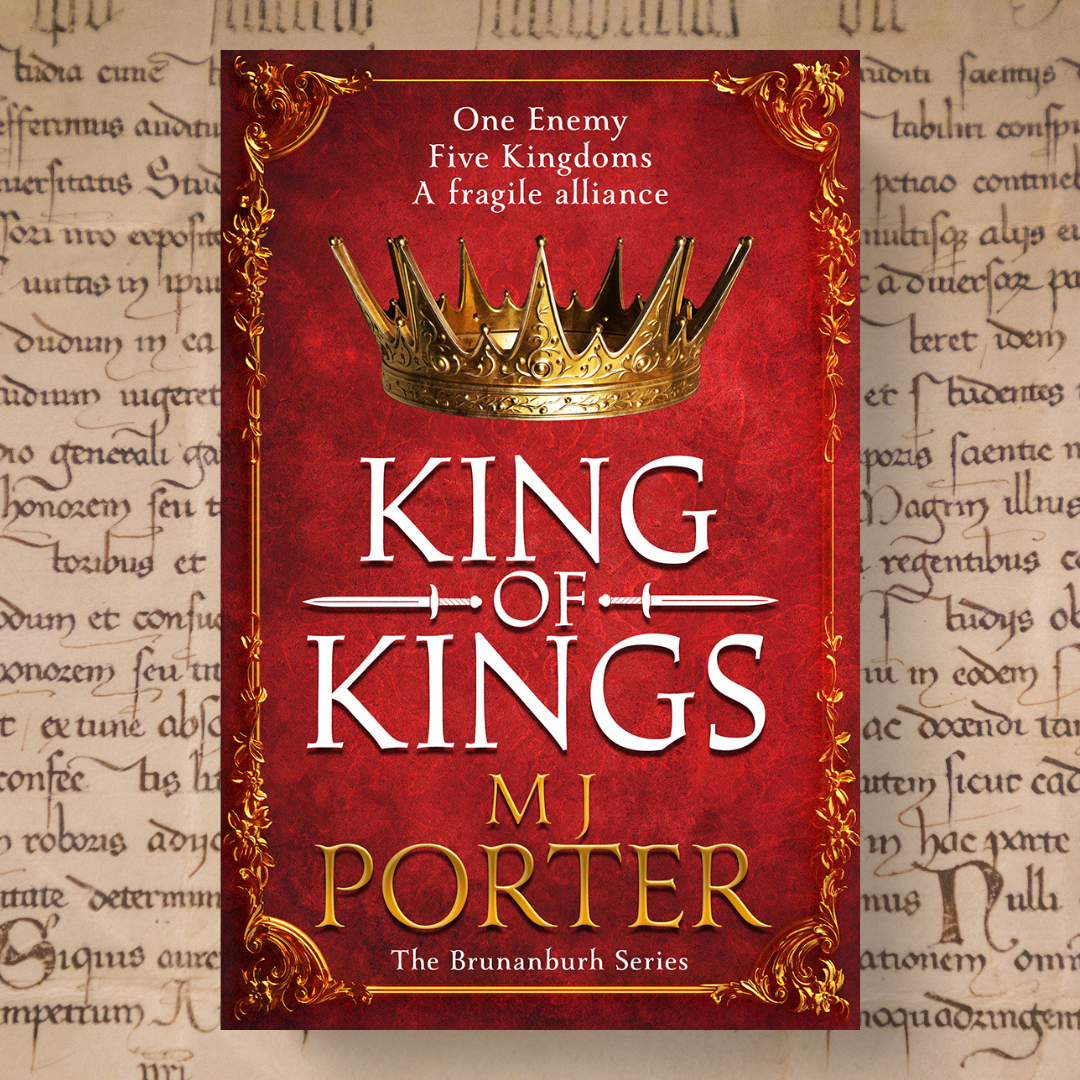
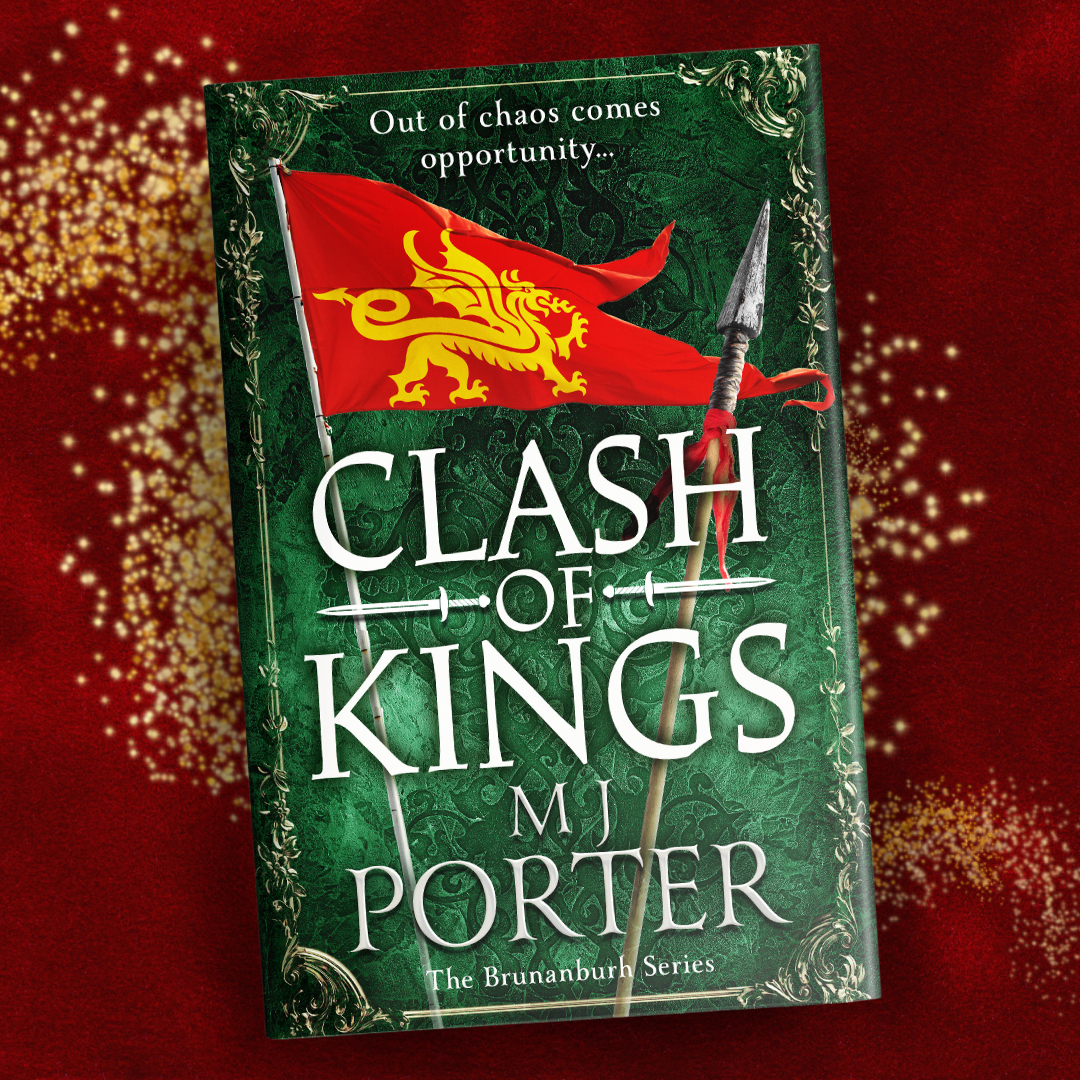
King of Kings is currently just 99p/99c on Amazon Kindle/Kobo in the UK/Canada and in Australia it’s $1.99

Here’s the blurb

‘An epic tale of the birth of a nation. Truly mesmerising. Game of Thrones meets The Last Kingdom’ – Gordon Doherty

In the battle for power, there can be only one ruler.

AD925
Athelstan is the king of the English, uniting the petty kingdoms of Wessex, Mercia, the Danish-held Five Boroughs and York following the sudden death of his father, King Edward.
His vision is to unite the realms of the Scots and the Welsh in a peace accord that will protect their borders from the marauding threat of the Norse Vikings.
Whilst seemingly craving peace and demanding loyalty with an imperium over every kingdom, Athelstan could dream of a much bigger prize.
But danger and betrayal surround his best intentions, namely from his overlooked stepbrother, Edwin, who conspires and vies for what he deems is his rightful place as England’s king.
As ever, powerful men who wish to rule do not wish to be ruled, and Constantin of the Scots, Owain of Strathclyde, and Ealdred of Bamburgh plot their revenge against the upstart English king, using any means necessary.
An epic story of kingsmanship that will set in motion the pivotal, bloody Battle of Brunanburh where allies have to be chosen wisely…
‘MJ effortlessly draws you into early Medieval England with this fascinating tale.’ – Donovan Cook


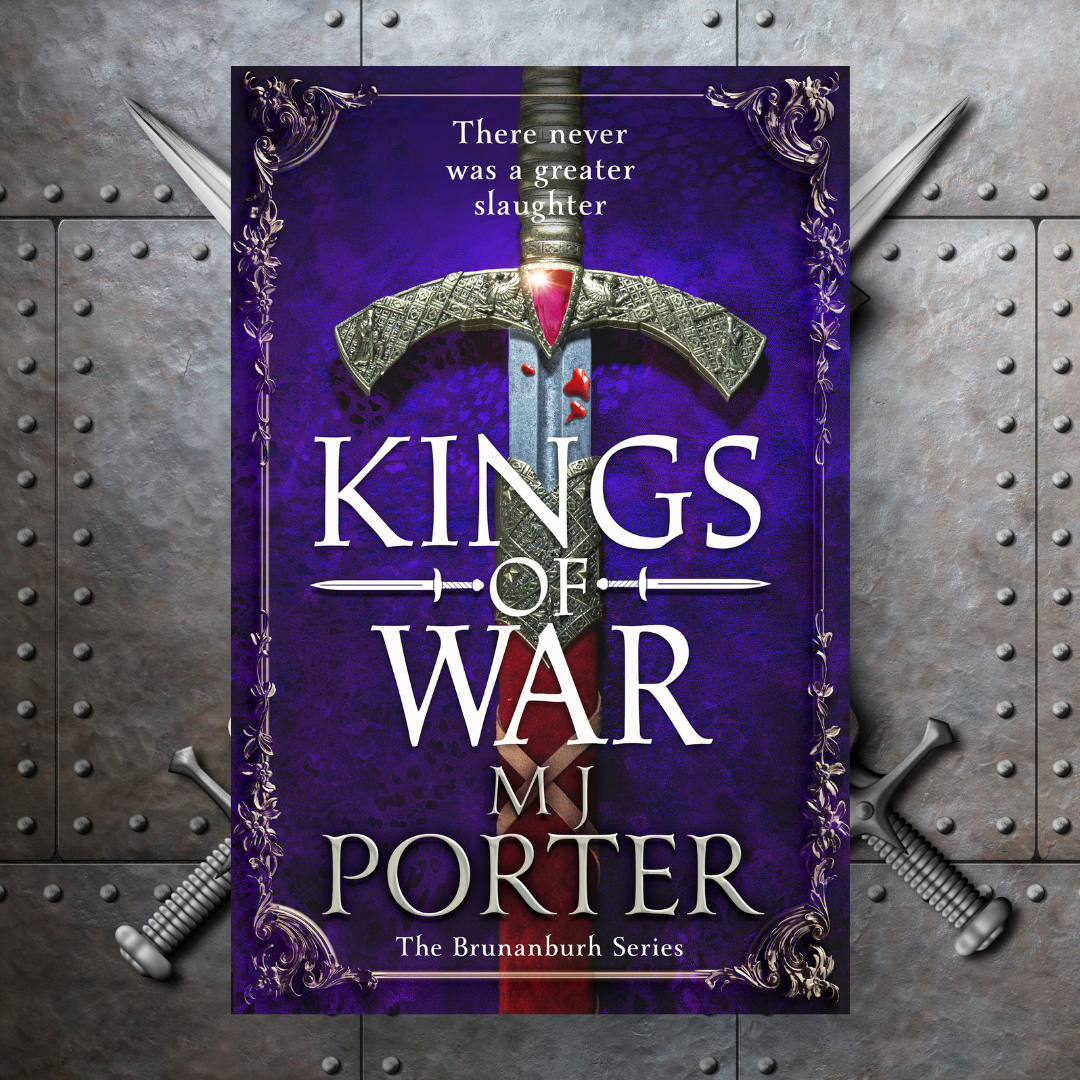
Yep, you’ve read that right. King of Kings is currently reduced in select territories, and select platforms, to just 99p/99c/$1.99 and equivalent. With book 2, Kings of War, and its fabulous cover, due for release next month, now is the perfect time to grab book 1.

Did you watch Seven Kings Must Die? Then this is the series for you. This is my retelling of the famous battle of Brunanburh, in all its complex political machinations and quest to be ‘king’ over all of Britain, not just England.

The tale began life in 2014 – long before anyone knew (perhaps other than Bernard Cornwell) that the Uhtred tales would culminate in the battle of Brunanburh. It’s my attempt to give a ‘wide’ view of the build-up and the battle, and to tell a story of Great Britain in the 920s and 930s instead of just picking a side.

These ambitious men tried to rewrite the map of Great Britain, and wow, they caused some carnage along the way.

I’ve written some blog posts to help everyone know who the characters are, and to give an idea of what was happening in what would be England, Scotland, Wales and Ireland at the time. Check out the posts from the main Brunanburh Series page on my blog. Enjoy:)

Æthelfest 2023 and a trip to Tamworth, in the heart of Mercia

The statue of Æthelflæd and a young Athelstan, the future king of England, at Tamworth Castle

It is possible that I couldn’t have picked a hotter weekend to venture from my coastal location to the heart of the former Mercian kingdom, but that didn’t stop the event from being fantastic.

Æthelfest, a celebration of all things Saxon, with an emphasis on Æthelflæd, the lady of Mercia, and the anniversary of her death, which occurred on 12th June 918, included author talks (of which I gave one), a reenactment camp, music in the bandstand, and even some ‘have a go archery’, of which I was brilliant – of course. I met Annie Whitehead, who also writes about Mercia, and managed to snag a place on one of her very popular talks.

Regrettably, it was super toasty while I was there, and so I massively applaud the re-enactors who even managed to have a battle with all their equipment on.

Tamworth Castle currently houses some of the Staffordshire Hoard, and it was great to see it in all its shining glory, although I didn’t take any photos of it. But, I did get some snaps of the coins they have in the museum and also had an Athelstan coin struck by the re-enactors.

It’s to be hoped that the event proved popular and will be repeated.

While I was there, I also took the opportunity to visit the ‘strange little building’ close to where I grew up, and which has been so instrumental in my desire to write about Saxon England, and particularly Mercia.

While I’ve not written about Lady Æthelflæd (yet), I have written about her daughter and the events immediately after her mother’s death, when Lady Ælfwynn succeeded to the kingdom of Mercia, but only for a short amount of time, in The Lady of Mercia’s Daughter and A Conspiracy of Kings – which feature on my bookmark below:)

If you fancy checking out the books, you can find The Lady of Mercia’s Daughter here.

A huge thank you to Tamworth Castle for inviting me to the event. And if I met you there, do please say hello.

I’m delighted to welcome J R Tomlin to the blog to tell us all about the historical background to The Douglas Bastard #HistoricalFiction #MedievalScotland #BlogTour #TheCoffeePotBookClub

I’m delighted to welcome J R Tomlin to the blog to tell us all about the historical background to The Douglas Bastard.

The Second War of Scottish Independence is a war that should never have happened. (Admittedly, that is true of quite a few wars) It happened simply because England’s King Edward III was pissed off at the Scots.

Remember that the famous Battle of Bannockburn was not the end of the First War of Scottish Independence, although many think it was. The Scots launched numerous chevauchees into England, believing the destruction of the north of England would force the English to the peace table. It did not work. The war continued for another decade, with the English forced out of Scotland but refusing to sign a peace treaty or recognise Scotland’s status as an independent kingdom.

However, in 1326, the rebellion by Queen Isabella and her lover Mortimer overthrowing King Edward II changed England’s political landscape. In June of the next year, James, Lord of Douglas, Thomas, Earl of Moray, and Donald, Earl of Mar, gathered a large force, as many as 10,000 men, and led a chevauchee across the border into England. They carried no supplies but lived off the land as they moved across a wide swathe of northern England. Perhaps in order to bring legitimacy to the new regime, Mortimer and the sixteen-year-old newly crowned King Edward III assembled an even larger army, much better equipped than the Scots, and led it north. They probably believed they could defeat the Scottish force in England, leaving Scotland undefended so they could go into Scotland.

It was a long and complex campaign in which the Scots outran the English, who quickly ran low on food and supplies. The Scots also had an unassailable position on a rocky height overlooking the fast-flowing River Weir. They even took an English scout prisoner and sent him with their position since the English seemed incapable of catching up with them. On the last day of July, the English army arrived on the other side of the Weir. They sent heralds, inviting the Scots to abandon their position and engage in battle. The Scottish leaders replied (and this sounds like James Douglas) that they were happy where they were, and if the English King and his council were unhappy with their lands being burnt before them, they should cross the river and do something about it. Mortimer and the young king refused. Crossing the Weir would allow their vanguard to be attacked before the rest of the army could cross, so they were certainly right to refuse.

The standoff lasted for three days before the Scots moved during the night to an even more unassailable position within an area known as Stanhope Park. At daylight, the English shifted their position but still dared not cross the Weir. Although the Scottish position was unassailable, it also appeared to have the Scots trapped with no way of resupplying. The English believed all they had to do was starve the Scots out, and they would win.

On the night of the 4th of August, James Douglas led a night attack, penetrating to the very centre of the English camp. They rode in, cutting guy ropes and firing tents. There was panic in the camp. Douglas himself collapsed the King’s tent with the terrified king inside, his confessor killed protecting him. By that time, the English were organising for defence, so the Scots returned, untouched, to their own camp.  

The next day, a Scot allowed himself to be taken prisoner to give the English word that the Scots would try to cut their way free the following night. The English, believing the story, spent the night in their armor with bonfires lit to see during the supposed coming battle. And the Scots retreated, picking their way through what the English had believed was an impenetrable marsh. 

The English King wept in fury and humiliation. 

He also never forgave the Scots. He was even more angry when his mother and Mortimer negotiated a peace treaty with Scotland which he and King Robert the Bruce signed in March 1328.

Only four years later, King Edward repudiated the treaty he had signed, backing an invasion by the pretender to the Scottish throne, Edward Balliol. Then began the totally useless Second War of Scottish Independence, which cost countless lives on both sides and eventually gained England nothing. 

It did, however, provide stories of treachery, battle, bravery, defeat, and triumph that beg to be told.  

Thank you so much for sharing the background to your new book. It sounds fabulous.

Here’s the blurb

Young Archibald, the Black Douglas’s bastard son, returns from exile to a Scotland ravaged by war. The war-hardened Knight of Liddesdale will teach him what he must learn. And with danger on every side, he must learn to sleep with one eye open and a claymore in his hand because even their closest ally may betray them…

Buy Links

The Douglas Bastard

Universal Link

Amazon UK Amazon US Amazon CA Amazon AU

Barnes and Noble Kobo iBooks Google Play

Archibald the Grim Series on Amazon

Amazon UK Amazon US

Meet the author

J R Tomlin is the author of twenty historical novels.

Her historical novels are mainly set in Scotland. You can trace her love of that nation to the stories of Robert the Bruce and the Black Douglas that her grandmother read her when she was small and to her hillwalking through the Scottish Cairngorms where the granite mountains have a gorgeous red glow under the setting sun.

In addition to having lived in Scotland, she has traveled in the US, mainland Europe and the Pacific Rim. She now lives in Oregon.

Connect with the author

Website  Twitter

Book Bub Amazon Author Page Goodreads 

Follow The Douglas Bastard by JR Tomlin blog tour with The Coffee Pot Book Club

I’m welcoming I. M. Foster and her new book, Murder on Oak Street, to the blog with a fascinating post about forensics in the early 20th century historicalmystery #cozymystery #BlogTour #TheCoffeePotBookClub

I’m delighted to welcome I.M. Foster to the blog, to share a fascinating post on Forensics at the Turn of the Century.

To start off with, I guess I should give a very basic definition of what exactly forensics is. Basically, it is the use of different scientific disciplines, such as biology, chemistry, physics, etc., to investigate crimes or examine evidence that can be used to present in court. That being the case, the techniques available at any given period in history would depend largely on the stage of scientific development that was available to the investigator at the time. 

Today a multitude of investigative tools are available to detectives and medical examiners, from ballistics to DNA. Most large police departments even have their own forensics labs, as Suffolk County, New York now does. But forensic science in the day of Dr. Daniel O’Halleran was quite a bit different than it is today.   

To begin with, there was no such thing as forensic science, per se, even though the use of science to determine the cause of death actually goes back to ancient Rome and Egypt. For example, it was a physician, Antisius, who determined that of the twenty-three blows Julius Caesar received it was the one below his left arm that actually killed him. Alas, after the fall of the Roman Empire, the use of science to detect the cause of death seemed to stagnate for the next thousand or so years.

Fast forward to the sixteenth century, and things began to pick up again. Interest in determining reasons for a person’s demise increased, the French and Italians studied the result of violent death on internal organs, and once again, science was being used to assist in determining the cause of death. During the nineteenth century, scientific advances produced a number of breakthroughs that aided in criminal investigations. 

By the dawn of the twentieth century, poison could be detected in body tissue, handwriting analysis and the study of documents were being employed, and toxicology was being presented as evidence in jury trials. In addition, scientific tools, such as the polarized light microscope had been invented, enabling physicians to study fibers. And photography had made its appearance, making it easier to study the crime scene in detail.  

Fingerprints were still relatively new on the scene however. Though a system of classifying fingerprints had been developed by the 1880s, don’t expect Daniel to be incorporating it into his investigative tool kit right away. The system used by most of Europe and North America didn’t come about until 1896 and wasn’t employed in the United States until 1903, when it was used by the New York State Prison system for criminal identification. The first use of the technique at a criminal case in the United States didn’t occur until 1910. 

Before fingerprinting, something called anthropometry was used for identification, which was the measurement of body parts and their proportions to one another, not exactly foolproof. As for the twelve matching points of a fingerprint, that didn’t come along until 1918, so while Daniel might eventually play around with it, fingerprinting certainly not something he’s going to base his cases on.   

The turn of the century did present some extremely helpful investigative tools however. Biologists were able to determine not only if a stain was blood, but whether it was human or animal. Ballistics was becoming more refined, though the tracing of a bullet to a specific gun wouldn’t come about until 1910. And geology was first used in 1904 by a German scientist when he identified a killer from the dirt on his pants and under his fingernails, as well as the coal soot found on a handkerchief he’d left at the crime scene. Now, that is something that Daniel might eventually employ.

Other advances were just on the horizon. The use of a microscope to compare strands of hair didn’t come along until 1910, and the study of botanicals such as plant fibers and pollen in relation to a crime scene wasn’t widely used until the 1920s, though I’m sure there were local residents who might be able to point out where a certain plant was more prevalent.

In spite of all the advances, however, using scientific principles in criminal investigations still wasn’t seen as its own discipline. But in 1904, Edmond Locard was to write a passage that one might point to as the beginning of modern forensic science. Every contact leaves a trace. Shortly after, in 1909, the first school was opened for the sole purpose of studying how to use science to determine the cause and method of death, and thus the seeds were planted for the modern study of forensic science. 

Thank you for sharing such a fascinating post.

Here’s the blurb 

New York, 1904. After two years as a coroner’s physician for the city of New York, Daniel O’Halleran is more frustrated than ever. What’s the point when the authorities consistently brush aside his findings for the sake of expediency? So when his fiancée leaves him standing at the altar on their wedding day, he takes it as a sign that it’s time to move on and eagerly accepts an offer to assist the local coroner in the small Long Island village of Patchogue.

Though the coroner advises him that life on Long Island is far more subdued than that of the city, Daniel hasn’t been there a month when the pretty librarian, Kathleen Brissedon, asks him to look into a two-year-old murder case that took place in the city. Oddly enough, the case she’s referring to was the first one he ever worked on, and the verdict never sat right with him.

Eager for the chance to investigate it anew, Daniel agrees to look into it in his spare time, but when a fresh murder occurs in his own backyard, he can’t shake his gut feeling that the two cases are connected. Can he discover the link before another life is taken, or will murder shake the peaceful South Shore village once again?

Buy Links  

This title is available to read with #KindleUnlimited. 

Universal Link 

Amazon UK   Amazon US  Amazon CA Amazon AU

Meet the author

I. M. Foster is the pen name author Inez Foster uses to write her South Shore Mystery series, set on Edwardian Long Island. Inez also writes historical romances under the pseudonym Andrea Matthews, and has so far published two series in that genre: the Thunder on the Moor series, a time-travel romance set on the 16th century Anglo-Scottish Borders, and the Cross of Ciaran series, which follows the adventures of a fifth century Celt who finds himself in love with a twentieth century archaeologist. 

Inez is a historian and librarian, who love to read and write and search around for her roots, genealogically speaking. She has a BA in History and an MLS in Library Science and enjoys the research almost as much as she does writing the story. In fact, many of her ideas come to her while doing casual research or digging into her family history. Inez is a member of the Long Island Romance Writers, the Historical Novel Society, and Sisters in Crime.

Connect with IM Foster

Website

Twitter Facebook Instagram

Book Bub   Amazon Author Page Goodreads

Follow the Murder on Oak Street by IM Foster blog tour with The Coffee Pot Book Club

The King’s Brother Research book dump

I always like to share my research with my readers. Here’s a small pile of the books that I’ve specifically used in the last few weeks while finalising the little details in The King’s Brother.

As always, there are resources not shown here. The two primary online resources that I will NEVER tire of sharing are

PASE https://pase.ac.uk

Electronic Sawyer https://esawyer.lib.cam.ac.uk/about/index.html

My two versions of The Anglo-Saxon Chronicle not shown here have also proved invaluable, my preferred version by Michael Swanton, and the version found in English Historical Documents Vol. 1 by Dorothy Whitlock, although I’ve discovered I have a first edition, and there was a subsequent second edition, which is the one most often used – mind my first edition was substantially cheaper than a second edition. (I dare you to click on the link and see how much it costs:))

Of course, I would never have started this mad, crazy journey of chronicling the lives of the earls of Mercia without the work of Stephen Baxter, The Earls of Mercia, Lordship and Power in Late Anglo-Saxon England.

Some of these books are more academic than others. For those looking for an introduction to the period, I highly recommend The Death of Anglo-Saxon England by Nick Higham which is stuffed with images and can be found quite cheaply second-hand.

books2read.com/TheKingsBrother

The families of the Earls of Mercia series

I thought a little refresh might be in order with the release of The King’s Brother, so I’m resharing some genealogy tables I put together when working on The English King and Lady Estrid. These will, hopefully, point you in the right direction for the somewhat complex family dynamics in The King’s Brother.

The House of Leofwine

The family of King Æthelred II.

The children of Lady Emma, twice England’s queen.

The House of Godwine.

The family of Gytha, wife of Earl Godwine

I hope that helps. You can click on the tables to increase their size.

Don’t forget to check out The King’s Brother and also visit The Earls of Mercia page on my blog.

Posts

Happy Release Day to The King’s Brother, the new Earls of Mercia book (yes, it’s book XI)

At last, and I’m with you on this one, it’s release day for The King’s Brother. This is book 11 in the Earls of Mercia series (but really 15th if you count the side stories of Wulfstan, Swein, Cnut and Lady Estrid), and it’s been really hard to return to a world I’ve not written about for near enough three years, but also thoroughly enjoyable to encounter Leofric and Ælfgar once more.

Here’s the blurb

England, AD1045

King Edward has married into the powerful House of Godwine, alongside making his wife’s brother, Sweyn Godwineson, Earl of Hereford. The House of Leofwine has received nothing, despite their continuing loyalty to the new king.

With the kingdom threatened by the pretensions of King Magnus of Norway, seeking to make good on the claim that he and Harthacnut agreed to inherit each other’s kingdoms should the other die first, King Edward is determined to build a ship army to counter anything his enemy might attempt.

But while the king’s eye is on external enemies, there are those closer to home determined to cause the king problems, most notably Sweyn Godwineson, who allies with the Welsh king responsible for the death of Eadwine Leofwineson, and then abducts the abbess of Leominster, refusing to give her up. With his sister as the king’s wife, Sweyn believes he can’t be touched until the church acts against him and he’s excommunicated and outlawed.

And Sweyn Godwineson hasn’t finished causing his king problems. When he returns to England without the king’s permission, desperate to recover his landed wealth and possessions, Sweyn finds more than just the House of Leofwine determined against his reinstatement.

Desperate men will take desperate actions, even the king’s brother.

Purchase Link

https://amzn.to/3MI5lt9

Available in ebook, paperback and with Kindle Unlimited.

Check out the Earls of Mercia series.

Posts

I’m delighted to be reviewing and sharing some fabulous details about A.J. Lyndon’s new book, The Tawny Sash, available now

AJ Lyndon writes about her new book, The Tawny Sash.

The walls of Warwick Castle, England are ten feet (3.04 metres) thick. For hundreds of years they kept enemies out and prisoners in. If you screamed, no one would hear you. Australian novelist AJ Lyndon found this out the hard way a few years ago when, during a visit to the UK she was accidentally locked in a room at the top of the spiral staircase in Guy’s Tower. It was the culmination of an exciting day of research, gathering material from the castle’s archivist and visiting the dungeons where ‘witch trials’ were in progress, before her guide showed her the real one! ‘It was a creepy hole in the ground,’ Lyndon says. ‘I didn’t go in!’

It was late in the afternoon, and visiting school parties were heading back to the entrance, when Lyndon’s guide took her into Guy’s Tower, where guest accommodation became prison cells for captured Royalist officers during the English Civil War. Two of Lyndon’s fictional characters in her first novel, The Welsh Linnet were imprisoned there for months after being captured at the (real) Battle of Edgehill in 1642.

‘I had already written the first draft of the novel,’ Lyndon says, ‘But it became a compulsion to visit the actual rooms, and the governor’s quarters in the gatehouse. The guide took me from one locked room to another while I filmed. There are lots of graffiti carved into the walls. The prisoners obviously got bored. One is signed “Edward Disney 1643”!’ When I finished filming in the last of the tower rooms, the guide turned the door handle but nothing happened. “That’s funny,” he said.

And that’s how Lyndon discovered how thick the walls were and that mobile phones don’t work inside Guy’s Tower! Fortunately the guides carry radios for such situations and Lyndon’s incarceration lasted no more than ten minutes.

‘It was the highlight of the visit,’ she laughs. ‘One of the French school kids going round had slid the bolt.’

After the first novel came Covid, making research trips to England impossible. Lyndon had managed one more trip before the world locked down. She walked the battlefields of southeast Cornwall where King Charles I’s Cavaliers trapped the Roundheads with nothing but the sea at their backs. A whole army surrendered; and many of the foot soldiers died of starvation on the hard slog back to London. The orange-tawny sash (seen on the cover of the book) was how the southern Parliamentarian (Roundhead) armies showed their allegiance. Northern Parliamentarians wore blue sashes, the colours of the Fairfax family. Uniforms as we know them did not exist, which made life on the battlefield a bit interesting. Red coats were first introduced by Oliver Cromwell for his New Model Army about a year after the action in this book takes place.

Lyndon says she couldn’t have completed The Tawny Sash without Zoom. ‘The pandemic was a world-wide tragedy, but there were side-benefits. Historical societies in the UK such as the Battlefields Trust began holding their historical lectures on Zoom.’ Now overseas members like Lyndon can tune in, providing they don’t mind getting up early. ‘I hate the winter though,’ Lyndon laughs. ‘Lectures in London or Manchester at 8pm are 5am Melbourne time. I set the alarm and switch my camera on with a sweatshirt hastily pulled over my PJs.’

Lyndon, who lives in the Victorian Central Highlands, has been obsessed with history and historical fiction since high school. ‘Everyone knows about the Tudors, King Henry VIII and his six wives, but far fewer people have read books set during the time of the Stuarts. The ill-fated Stuart monarch Charles I was executed by Parliament after a trial and civil war that sent shock waves through Europe and across the Atlantic to the American colonies, where it set the stage for the American revolution.

Her second novel The Tawny Sash follows the further adventures of the Vaughan and Lucie families. Captain Gabriel Vaughan has been released from Oxford Castle prison on the authority of an order bearing the signature and family seal of Sir Henry Lucie. The problem is the order wasn’t signed by him but by his eldest son Will who stole the seal. Now Sir Henry wants revenge. Gabriel and Will are on the run from a court martial amidst the chaos of civil war, trying to clear their names before Sir Henry’s hired spy can find them. The hunt for the two men follows the course of the war from Oxford to Cornwall; and features treachery, kidnappings, daring escapes and of course sword fights.

The Tawny Sash is available now. 

Here’s the blurb

Book 2 in the War Without An Enemy series. Historical novel set in England 1644 during the English Civil War between King Charles I and the English Parliament. Sequel to ‘The Welsh Linnet‘.

Welsh gentleman Gabriel Vaughan and his brother-in-law Will Lucie are on the run from the vengeful Sir Henry Lucie and the threat of a court martial. The two cavalry captains must clear their names before Sir Henry’s hired spy can find them.

But then Gabriel, a follower of the outlawed Catholic faith, becomes embroiled in religious infighting at King Charles I’s most important fortress, Basing House and when a plot to betray the garrison is hatched, Gabriel is implicated.

The Tawny Sash continues the story of the Vaughan and Lucie families in the third year of the English Civil War. The bitter war has intensified and ‘quarter’ may no longer be given to those captured on the blood-drenched battlefields of Cheriton, Cropredy Bridge and Lostwithiel. When the royalists trap the threadbare, starving Roundhead rebel army at the tip of Cornwall, Gabriel and Will face further dangers and a terrible dilemma.

My Review

The Tawny Sash is an engrossing tale of the English Civil War, when families were pitched against one another, and religious division sundered England.

For all the complicated politics, religious divide, and military endeavours that take place throughout the book, I found it to be so well written that I never floundered. The English Civil War is outside my area of expertise. I know of it, but not about it. AJ Lyndon has brought the era to life by making it about personal relationships while the wider war rages all around them. There is time for love, and hatred, all played out against a backdrop of monumental change.

A fabulous story that I highly recommend. I will have to check out book 1 in the series.

Purchase Link

https://amzn.to/3IMZr97

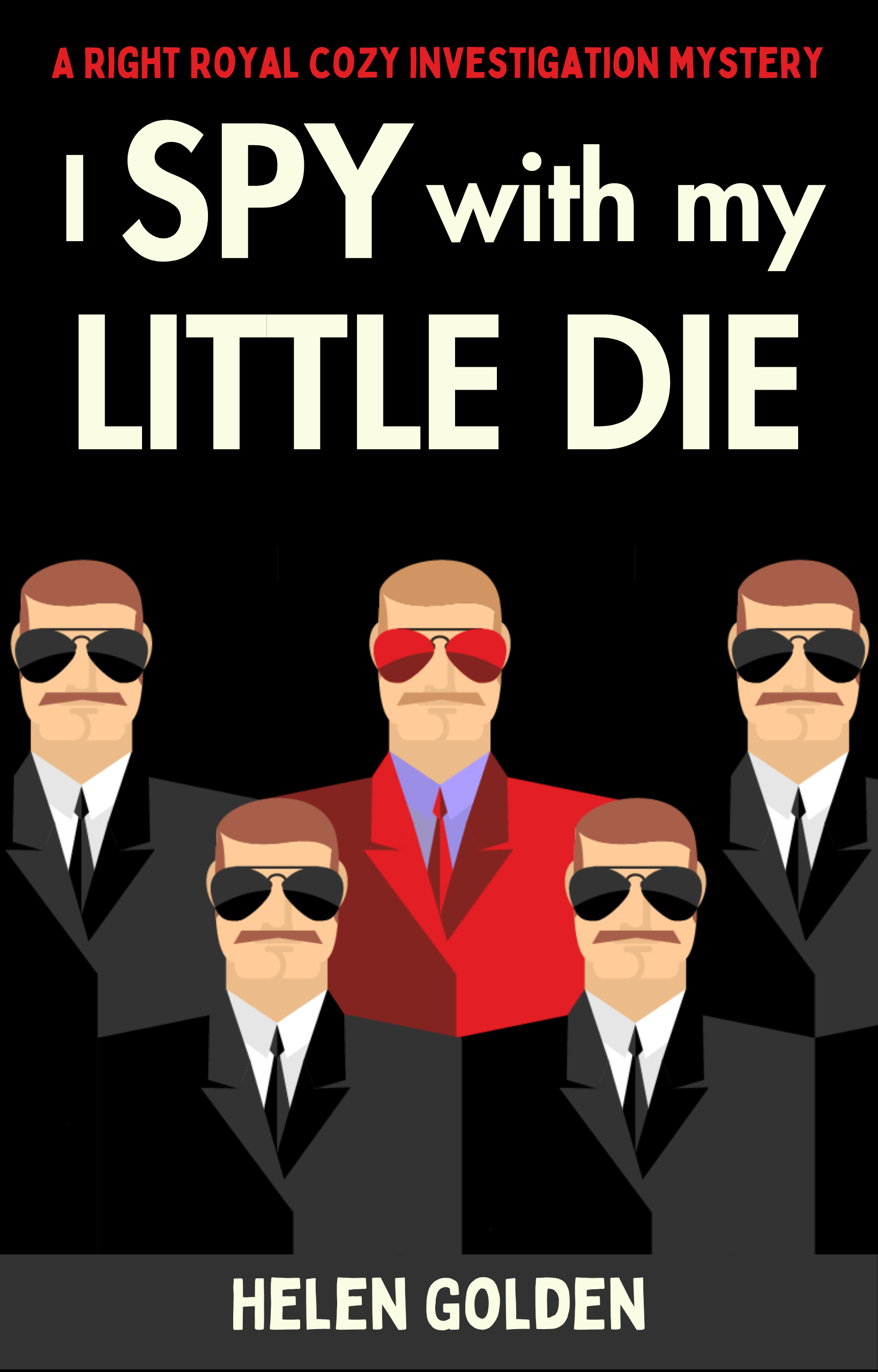
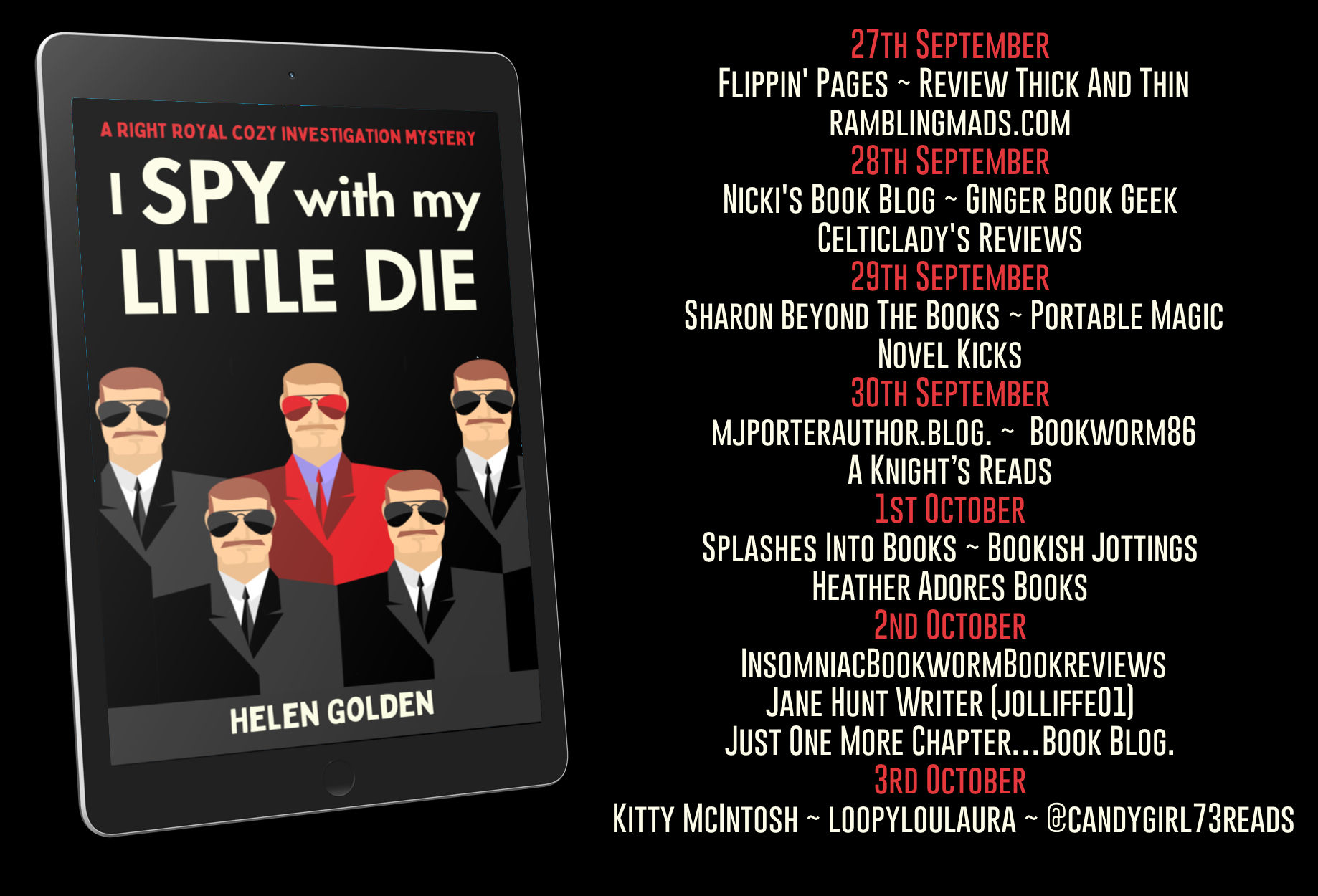
Today, I’m excited to share my review for Helen Golden’s new cozy mystery, A Dead Herring #blogtour

Here’s the blurb

BREAKING NEWS Urshall United FC Owner Dies at Drew Castle

 Details are sketchy at this stage, but it is believed businessman Ben Rhodes (38) was found dead in his bathroom at the king’s Scottish home by his twin brother Max, where the pair were guests at a shooting party hosted by Lord Frederick Astley (39), brother of Lady Beatrice (36). The cause of Mr Rhodes’ death is not known, but he started receiving death threats from football fans after his controversial takeover of the club and had recently employed his own personal security.

How unlucky can a girl get? Is fate playing a cruel trick on her for boorish Detective Chief Inspector Richard Fitzwilliam to be the only person who can get to the snowed-in castle to investigate Ben Rhodes’s death? And with no other external resources available to him, he now needs her, her smart dog, and her best friends’ help to catch the killer. Can they put their issues behind them and work together to find the murderer before the weather improves and the perpetrator is free to leave?

Another page-turning cozy British whodunnit with a hint of humour from author Helen Golden.

Purchase Link

 https://books2read.com/u/3GWBZ8

My Review

If you don’t know that I adore this series, then you’ve been hiding under a rock:)

The Right Royal Cozy Investigations, of which the fabulously titled, A Dead Herring is the latest release, are a fantastic series of stories (with a thread running through them all that I will not be alone in being desperate to see the resolution for) which are just that bit elevated from other books of the genre.

The plotting is tight, the characters have great and very human interactions, the crimes are shocking, the investigations are robust, and the stories all have a great little twist where the reader has an ‘I know who did it moment,’ even if the characters haven’t quite reached it yet.

A Dead Herring is no different. Lady Bea and Perry, alongside Simon, find themselves being asked to help Pairs with this one, which makes a nice change, and the true moment of peril also has a great twist.

I find this series to be dependably great. That might not sound like praise, but it is. I know if I read one of these books, I’m going to be entertained and amused, and I’m always eager for the next book in the series. If you enjoy cosy crime, you must check out this series, and I recommend reading them in order.

Check out my reviews for the books in the series:

Spruced up for Murder

For Richer, For Deader

Not Mushroom for Death

An Early Death

Meet the author

Hello. I’m Helen Golden. I write British contemporary cozy whodunnits with a hint of humour. I live in small village in Lincolnshire in the UK with my husband, my step-daughter, her two cats, our two dogs, sometimes my step-son, and our tortoise.

I used to work in senior management, but after my recent job came to a natural end I had the opportunity to follow my dreams and start writing. It’s very early in my life as an author, but so far I’m loving it.

It’s crazy busy at our house, so when I’m writing I retreat to our caravan (an impulsive lockdown purchase) which is mostly parked on our drive. When I really need total peace and quiet, I take it to a lovely site about 15 minutes away and hide there until my family runs out of food or clean clothes

Connect with Helen

Website – https://helengoldenauthor.com/

I’m delighted to feature Catherine Meyrick and her new book, Cold Blows the Wind on the blog today #blogtour

I’m delighted to sharan excerpt from Catherine Metric’s new book, Cold Blows the Wind.

The meal was served almost immediately, a hearty stew with bread and butter. The whole family sat close around the table on an assortment of stools, benches and chairs, Billy on Ellen’s knee. He fought to get the spoon from her as she tried to feed him. When she thought he had eaten enough, she surrendered the spoon. As much went into his hair and across his cheeks as into his mouth. He happily burbled away as he played with the spoon.

Harry was hoeing into the meal with as much relish as George and polished off the gravy with the bread. He swallowed the last of his bread and said, ‘That was delicious, Mrs Thompson, just like my grandmother used to make.’

Mary Ann stood and went to the stove, pouring water from the kettle into the teapot standing on the hob. Jane collected the empty plates and placed them beside the washing tub on the bench beneath the kitchen window.

Ellen lifted Billy off her lap and handed him to Alice. ‘There’s cake as well.’

‘Take a big slice, Harry,’ Dad said. ‘Ellen baked the cake specially for you.’

She brought the pound cake out of the pantry cupboard. It had turned out perfectly, a lovely golden brown on top, sprinkled with sugar.

‘Don’t be silly, Dad.’ Ellen concentrated on cutting the slices evenly, trying to ignore the heat rising up her neck. ‘I often make a cake on Sundays.’

Mary Ann, busy pouring the tea, snorted and tried to cover it with a cough.

Alice, holding Billy and attempting to wipe the remains of his meal from his hands and face, opened her mouth, ‘But …’ A jab in the ribs from Jane silenced her.

Mam sat back, warming her hands around her teacup. ‘So you’re staying with old Mrs Hennessy.’

‘Yes, on weekdays. I go up the mountain on Saturday afternoon, back by Sunday night.’

‘No time for play,’ Dad said.

‘No, unfortunately. I need to keep an eye on the old folk.’

‘I’ve seen you striding along towards the Huon Road on a Saturday.’ George stretched back in his chair. ‘Too fast for me to catch up. I’d started to wonder if you were avoiding me.’

Harry shook his head. ‘I need to be quick, don’t want to be climbing up the track in the dark.’

‘Summer is on its way, longer days.’ George put his empty teacup down. ‘Time for a beer, I think.’ He went to the sideboard and opened one of Harry’s bottles of beer. Glasses were passed to all but the younger girls, and, drinks in hand, the questioning began.

‘Where was your father from?’ Dad asked.

‘England.’

‘But where? It’s a big place.’

Harry shrugged. ‘Cheltenham I think it’s called, wherever that is.’

Dad nodded. ‘About eighty or so miles south of Stoke on Trent, where I was. Pretty place, from what I’ve heard.’

‘And, Mrs Thompson, are you from there too?’

Before Mam could answer, Dad said, ‘Beth here is English or Scottish depending on her fancy on the day.’

Mam rolled her eyes. ‘We moved around the border. My parents were Scottish, but I were sent here from Carlisle.’

His hazel eyes intent on Harry, Dad asked, ‘Now, young feller, what did you do in Perth?’

‘This and that. I’ll turn my hand to whatever makes a penny.’

Ellen frowned. Why was he being vague? Was he hiding something? Perhaps he had been in gaol. It might not be a problem, depending on his crime.

George clearly thought the same. ‘Ever been in gaol, Harry?’

Harry sat up in his chair, his mouth open, as if he was shocked by the suggestion. ‘No.’ He paused, frowning, perhaps trying to work out why he had been asked. ‘My grandfather had a farm. I worked on that for a few years,’ he finally said. ‘Then did a bit of wandering, joined a party exploring the interior, tried my hand at fishing.’

Ellen listened as he talked of the country he had travelled through—the scenery, the sheer rock walls, the great boulders in all manner of reds and browns, the floods, the wildflowers bursting into bloom as the waters receded. The way Harry described it all, it was as good as the stories Dad read out from the paper.

‘Later I worked on the East-West Telegraph line.’

Harry spoke of the heat and the sand, the scarcity of fresh water, the transport of logs by sea, hauling them ashore and through the coastal scrub to the route of the telegraph line, the raising of the poles and the stringing of the wires overhead, the cheering as the two lines, from Perth and from Adelaide, were finally joined at Eucla. Although, his descriptions were not as vivid as before, Ellen thought they seemed more real.

‘You didn’t think to come and visit your father when you were younger?’ Mam said.

‘It never crossed my mind. There was plenty to do in Western Australia.’

‘Your father said he was a shoemaker in England,’ Dad said.

‘Just like you.’ Ellen smiled at her father.

‘He didn’t do much of it in Western Australia. It was mostly fencing, shingle splitting, a bit of carpentry and hunting ducks and kangaroos.’

‘You must have been young when Mr Woods came here.’ Mam stared straight at him, a line between her brows.

Ellen wondered if she was concerned at the thought of a little boy left without his father or puzzling out his age.

Harry nodded. ‘I was.’ He added nothing more.

‘And your mother?’

‘Dead.’ His terse response brought an end to the interrogation.

Here’s the blurb

Hobart Town 1878 – a vibrant town drawing people from every corner of the earth where, with confidence and a flair for storytelling, a person can be whoever he or she wants. Almost.

Ellen Thompson is young, vivacious and unmarried, with a six-month-old baby. Despite her fierce attachment to her family, boisterous and unashamed of their convict origins, Ellen dreams of marriage and disappearing into the ranks of the respectable. Then she meets Harry Woods.

Harry, newly arrived in Hobart Town from Western Australia, has come to help his aging father, ‘the Old Man of the Mountain’ who for more than twenty years has guided climbers on Mount Wellington. Harry sees in Ellen a chance to remake his life.

But, in Hobart Town, the past is never far away, never truly forgotten. When the past collides with Ellen’s dreams, she is forced to confront everything in life a woman fears most.

Based on a period in the lives of the author’s great-great-grandparents, Sarah Ellen Thompson and Henry Watkins Woods, Cold Blows the Wind is not a romance but it is a story of love – a mother’s love for her children, a woman’s love for her family and, those most troublesome loves of all, for the men in her life. It is a story of the enduring strength of the human spirit.

Buy Links

Universal Link

Amazon UKAmazon USAmazon CAAmazon AU

Barnes and NobleWaterstones:   KoboApple:

Meet the author

Catherine Meyrick is an Australian writer of romantic historical fiction. She lives in Melbourne but grew up in Ballarat, a large regional city steeped in history. Until recently she worked as a customer service librarian at her local library. She has a Master of Arts in history and is also an obsessive genealogist.

When she is not writing, reading and researching, Catherine enjoys gardening, the cinema and music of all sorts from early music and classical to folk and country & western. And, not least, taking photos of the family cat to post on Instagram.

Connect with Catherine

WebsiteTwitter

FacebookInstagramPinterest

Book BubAmazon Author PageGoodreads:

Follow the Cold Blows the Wind blog tour with The Coffee Pot Book Club

MJ Porter

Author of Saxon historical fiction, 20th-century historical mysteries, and Saxon historical non-fiction. Book reviewer and blog host.

Skip to content ↓