Blog Posts from MJ Porter, author and reviewer

Where was the battle of Brunanburh fought in 937? #KingofKings #KingsofWar

First things first, no one actually knows where the battle of Brunanburh took place. No one. There are a number of different sites that historians have suggested from the one I’ve chosen in Kings of War, indeed, upwards of forty of them, although Bromborough in Cheshire, Brinsworth in South Yorkshire and Burnswark in Dumfries and Galloway are the most well-known. It’s worth noting that these different locations range all over Britain, from Devon to Scotland from the east coast to the west.

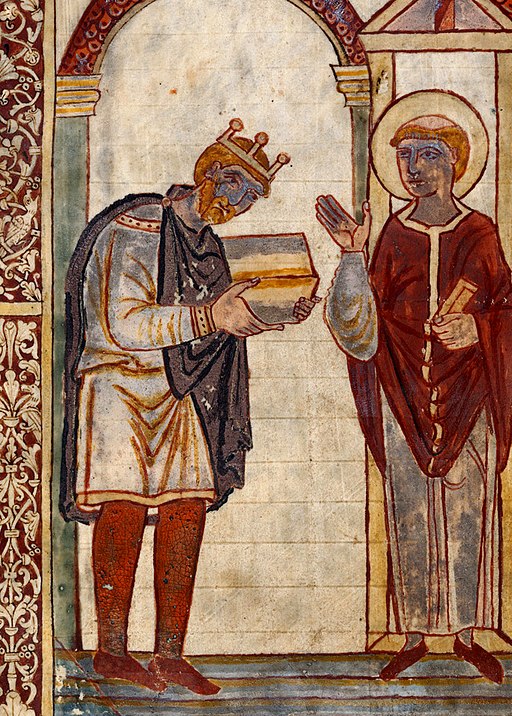
Frontispiece of Bede’s Life of St Cuthbert, showing King Æthelstan (924–39) presenting a copy of the book to the saint himself. 29.2 x 20cm (11 1/2 x 7 7/8″). Originally from MS 183, f.1v at Corpus Christi College, Cambridge. (Wikimedia Commons)

As one historian has commented, more discussion has taken place about where Brunanburh was located than about its actual historical significance, which is often seen as much less important in the grand scheme of later events. Much of these difficulties arise because of the variety of names given to the location of the battle. Brunandun, in Æthelweard’s Chronicon (a later tenth century Latin copy of the Anglo-Saxon Chronicle), Symeon of Durham suggested Weondune, although known by the name Brunnaneerc or Brunnanbyrig, while Geoffrey Gaimar (another post Conquest source) names it as Bruneswerce. To add to the confusion, are some of the descriptions given about the battle. John of Worcester ( a later source) asserts that Olaf and Constantin entered the mouth of the River Humber something that Symeon of Durham echoes. It’s been suggested that John of Worcester (an Anglo-Norman writing long after the events of 937 took place) took the knowledge that the River Humber was where Harald Hardrada landed in 1066 and Svein Forkbeard in 1069 and extrapolated from it.

As part of the discussion about where the battle took place, another problem needs to be addressed, that of the belief that the English rode down the Norse as they were fleeing from the battlefield to reach their ships. A word, eorodcistum, has been taken to be a reference to horses. Paul Cavill has shown that this word actually refers to gatherings of men and need not mean that horses were involved . This therefore does away with the argument that the Norse ships were far from where the battle took place.

(Please see https://ludos.leeds.ac.uk:443/R/-?func=dbin-jump- full&object_id=123858&silo_library=GEN01, for this discussion in full)

As well as the various sources mentioned above, the battle is also referenced in Welsh, Scottish and Irish sources. It was deemed to be significant. The Chronicles of the Kings of Alba gives a very brief account: ‘And the battle of Dun Brunde in his xxxiii year in which was slain the son of Constantin.’ While the Annals of Ulster tell us: ‘AU 937.6. A great, lamentable and horrible battle was cruelly fought between the Saxons and the Northmen, in which several thousands of Northmen, who are uncounted, fell, but their king, Amlaib, escaped with a few followers. A large number of Saxons fell on the other side, but Æ∂elstan, king of the Saxons, enjoyed a great victory.’ (Alex Woolf, From Pictland to Alba, 789-1070, p.169) (Amlaib was an Irish version of the name Olaf). A later source, that of the Historia Regum Anglorum by Symeon of Durham, tells that ‘Onlaf’ came with 615 ships. There are also many later sources that tell of the battle of Brunanburh, the distance in time to them being written, tending to add more and more details which can’t be confirmed with any accuracy.

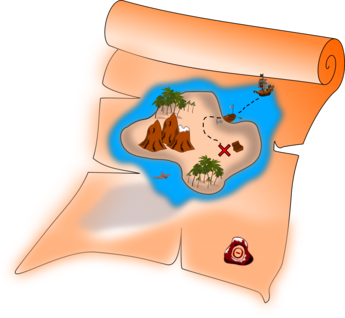
Map design by Flintlock Covers

Pauline Stafford, who has written an extensive account of the actual writing of what we know as The Anglo-Saxon Chronicle, After Alfred:Anglo-Saxon Chronicles and Chroniclers 900-1150, (which survives in nine recensions/or versions, all with slightly different details and emphasis) states that perhaps the most famous account of the battle, the Brunanburh poem, was a retrospective addition, probably written in the twenty years after Athelstan’s death, and certainly before the death of the last son of King Edward the Elder, Eadred, in 955. Some have suggested that Edmund may not actually have been present at the battle but that it was deemed expedient to assign him a part in it, perhaps after his death, to show the sons of King Edward the Elder working together for England.

And there is one final source, which I’ve made no use of, but which many may be aware of, that of the accounting of the battle, named as Vinhei∂r in Egil’s Saga, a thirteenth-century Icelandic saga, which of course, is a tale of Egil’s involvement in the battle and tells us very little about the battle itself.

In recent years, and indeed, before I wrote the initial drafts of this book and its predecessor, there has been a move to accept the Wirral as the possible location. Bernard Cornwell has been instrumental, as has an archaeology group based in Wirral, in trying to find corroborating evidence for this. The results of the work can be found in Never Greater Slaughter by Michael Livingstone. Even now, I find it amusing that it wasn’t until Bernard Cornwell made Brunanburh one of the burhs built by the House of Wessex that I quite realized the significance of that element of the name.

In my role as writer of historical fiction, I chose the site that I thought offered the best opportunity to develop the storyline and the one that intrigued me the most. After all, it does sort of make sense that any battle for York would have taken place close to York, but equally, why would the Dublin Norse have sailed all the way around the tip of Scotland to get to York from the East Coast? If they used one of the portage routes overland then again, we must ask why. And so, I opted for the position which would be the closest way of them stepping foot on English soil. 

Britania Saxonica, 17th Century Map, showing Brunanburh north of Bamburgh

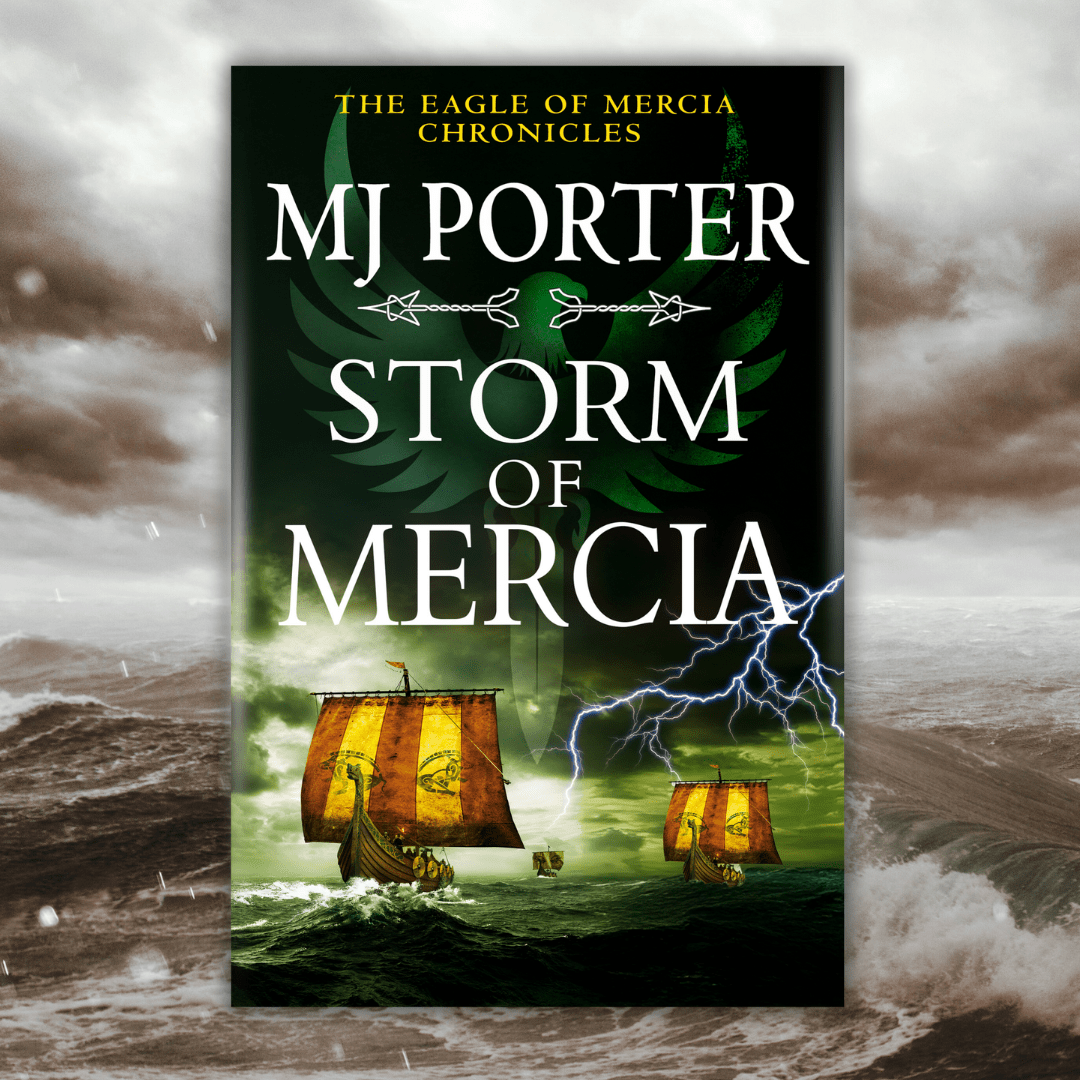
Kings of War is available now in ebook, paperback, audio and hardback.

books2read.com/kingsofwar

Meet the characters from King of Kings and Kings of War by visiting the Brunanburh page on my blog.

Happy Release day to Kings of War #histfic #history #Saxons #NewRelease

It’s release day for Kings of War, the sequel to King of Kings. This is the story of the battle of Brunanburh fought in 937. (Check out my post on where exactly Brunanburh was fought).

I’m so excited to share this story with my readers, and the cover is fantastic.

Here’s the blurb:

Can the King of the Scots and the Dublin Norse triumph against a united England?

AD934

King Athelstan of the English has been successful in uniting the many kingdoms of Britain against one enemy, the Viking raiders.

But men who are kings don’t wish to be ruled. 

Constantin, King of the Scots, rebelled against the Imperium and was forcibly brought to bend the knee to Athelstan and England at Cirencester.

His son Ildulb seeks bloody vengeance from Athelstan following the battle at Cait and the death of his son.

Olaf Gothfrithson, king of the Dublin Norse, having asserted his power following his father’s death has his sights set on reclaiming Jorvik. 

Can the united might of the Scots and the violence of the Dublin Norse, descendants of the infamous Viking raiders, bring King Athelstan and his vision of the united Saxon English to her knees?

An epic story of kingsmanship that will result in the pivotal, bloody Battle of Brunanburh, where only one side can be victorious.

King of Kings

Kings of War

Check out the Brunanburh Series page for more information on the books and the historical characters involved.

Meet Olaf Gothfrithson, king of Dublin

Meet Edmund, ætheling of the English

Meet Ealdorman Athelstan

Read the release day posts on Boldwood Books Facebook account

Kings of War is on blog tour with the fabulous hosts of Rachel’s Random Resources. I’ll be sharing their reviews throughout the next week. A huge thank you to Rachel, and the hosts.

Leanne bookstagram

Sharon Beyond the Books

Seriesbooklover

David’s Book Blurg

Bookish Jottings

Ruins & Reading

Scrapping and Playing


And it’s not just the blog hosts sharing reviews either:) Thank you.

Amy McElroy

Terry Rudge

Today, I’m delighted to welcome a returning Alan Bardos to the blog, with a post inspired by his book about the assassination of Archduke Franz Ferdinand and his wife Sophie.#histfic #TheAssassins

Today, I’m delighted to welcome a returning Alan Bardos to the blog, with a post about A Comedy of Errors inspired by his book about the assassination of Archduke Franz Ferdinand and his wife Sophie.

The assassination of Archduke Franz Ferdinand was one of history’s greatest turning points, but it happened by accident. Everyone knows the story ends with the death of the Archduke and his wife, Sophie, putting into play the diplomatic crisis that lead to the First World War. It is perhaps less well known that the events leading up to the assassination were a terrible comedy of errors that culminated in a world changing tragedy.

It was this combination of tragedy and comedy that first drew me to the story and, I hope will draw people to a novel about the assassination, despite knowing the ending! The assassination of Franz Ferdinand happened as a result of a whole series of mistakes and missed opportunities right from the beginning.

When the assassins travelled from Belgrade to Sarajevo, Nedeljko Cabrinovic the biggest liability of the conspirators, met a police detective from Sarajevo on the train in Bosnia. The detective was a friend of his father’s, who was a businessman and pillar of the community, which had created a lot of conflict with his radical son.

The policeman had recently seen Nedeljko’s father and struck up a conversation with Nedeljko to catch him up on family news. This made Gavrilo Princip, who was traveling separately, but by accident sitting in the same train carriage, nervous. Cabrinovic’s easy going nature had already endangered the other assassins during the journey. The Policeman noticed and asked Cabrinovic who Gavrilo was and why he was staring at them, but his suspicions were not raised any further. A simple request to see Gavrilo Princip’s papers would have revealed that he was travelling illegally and put pay to the whole plot before the assassins reached Sarajevo.

This reflects the Austro-Hungarian Government’s attitude to the threat placed by the nationalist movements in their Balkan provinces. No attempt was made to counter them because the security services did not believe they existed, let alone posed a threat. The repeated warnings of a possible assassination were ignored by the local military governor, General Potiorek, the Archduke himself and the Austro-Hungarian Government. The idea that half starved schoolboys could be any kind of a threat was too ridiculous to contemplate.

This is the main theme I wanted to explore in The Assassins, through my two lead fictional characters: Johnny Swift, a feckless British diplomat and Lazlo Breitner, a methodical Hungarian official.

Breitner is well aware of the threat from the assassins and does everything he can to persuade the authorities of the danger posed by the nationalist movements, bringing him into conflict with his superiors.

He is forced to take drastic measures to convince them and coerces Johnny into joining the conspirators. Johnny manages to ingratiate himself with the assassins and joins in their reckless behaviour that should have got them caught. Somehow they remain undetected and Johnny’s licentious nature frustrates Breitner’s plan.

On the morning of the Archduke’s visit Johnny realises the enormity of his error and tries to foil the assassination plot. Then the tragedies of 28th June 1914 come into play.

They say that the side that makes the least amount of mistakes wins a war. It also seems to be the case for the side who starts them.

Here’s the blurb

1914.

Tensions are reaching boiling point in Europe and the threat of war is imminent. 

Johnny Swift, a young and brash diplomatic clerk employed by the British embassy is sent to infiltrate the ‘Young Bosnians’, a group of idealistic conspirators planning to murder Franz Ferdinand. The heir to the Austro-Hungarian throne, in a bid to liberate their country from the monarchy’s grip.

Swift has been having an affair with his employer’s wife, Lady Elizabeth Smyth. Sir George Smyth dispatches the agent on the dangerous mission, believing that it will be the last he will see of his young rival.

The agent manages to infiltrate the Young Bosnian conspirators’ cell, helped by Lazlo Breitner, a Hungarian Civil Servant.
However, Swift soon realises that he may be in over his head. His gambling debts and taste for beautiful women prove the least of his problems as he struggles to survive on his wits in the increasingly complex – and perilous – world of politics and espionage.

Desperate to advance himself and with the lives of a royal couple unexpectedly in his hands, Swift tries to avert catastrophe. 

Amazon Purchase Links

UK USA

Meet the author

Writing historical fiction combines the first great love of Alan Bardos’s life, making up stories, with the second, researching historical events and characters. He currently lives in Oxfordshire with his wife… the other great love of his life.

There is still a great deal of mystery and debate surrounding many of the events of the First World War, which he explores in his historical fiction series. Through the eyes of Johnny Swift, a disgraced and degenerate diplomat and soldier.

The series starts with the pivotal event of the twentieth century. The Assassination of Archduke Franz Ferdinand. The second book ‘The Dardanelles Conspiracy’ is based on an attempt by Naval Intelligence to bribe Turkey out of the First World War. In the third book Johnny will be employed as a useful idiot to flush out a traitor working to undermine the Allies.

Connect with Alan

Instagram: Facebook: Twitter:

YouTube Channel

Goodreads: BookBub: Amazon Author Page:

See previous posts here, here and here.

My new book, Kings of War, has a number of main characters. Meet Constantin, the king of the Scots.

My new book, Kings of War, is a multi-viewpoint novel telling the story of events in Britain from 925-934. I thought it would be good to share details of the historical people my character are based on.

My portrayal of Constantin, the king of the Scots, is of course fictional in King of Kings, but he is based on a historical individual, Constantin (e) II, so who exactly was he?

Constantin is a fascinating character. Again, and as with Athelstan, his exact date of birth is unknown, but it must have been, at the latest, by 877/8, when his short-reigned father died.

By 900, Constantin was the king of the Scots (we think – there is some confusion about this). This wasn’t yet quite Scotland, but it was getting there. The ancient kingdoms of Cait, Fortriu, Atholl and Dal Riata, were ruled by one king, Constantin. But, he hadn’t succeeded his father, Aed, but rather a man named Domnall II, his cousin. At this time there were two rival dynasties and they strictly alternated the kingship.

Affairs in the kingdom of the Scots often intermingled with those of the independent kingdom of Bamburgh, Strathclyde, and of course, the Norse, or Viking raiders, if you will. Indeed, the entry recording Constantin’s death in the Annals of Ulster, reads as though there was often strife.

Constantinus son of Ed held the kingdom for xl years in whose third year the Northmen plundered Dunkeld and all Albania. In the following year the Northmen were slain in Strath Erenn…And the battle of Tinemore happened in his xviii year between Constantin and Ragnall and the Scotti had the victory. And the battle of Dun Brunde in his xxxiiii year.’ (Alex Woolf, From Pictland to Scotland, 789-1070,p.126)

Constantin, ruling for decades, and I mean decades, seems to have brought much needed stability to the kingdom, as affairs there very much mirrored the emerging ‘England’ to the south.

‘Constantin’s reign has increasingly come to be see as one of the most significant in the history of Scotland. Not only was it very long, at least forty years, but it was also the period during which conflict and diplomatic relations between a kingdom recognisably ancestral to Scotland and one recognisably ancestral to England first occurred.’ (Alex Woolf, From Pictland to Scotland, 789-1070, p.128)

Constantin allied with the rulers of Bamburgh, and York, and also, on occasion, both Æthelflæd of Mercia and Edward the Elder, after her death. But, he seems to have been quite flexible in his thinking, and was prepared to pick and choice as he saw fit.

By the beginning of King of Kings, Constantin would have been in his mid-forties, and he was still to rule for many years to come, and he was certainly a more than adequate counterpart to Athelstan, king of the English, no doubt helped by his sons and grandsons, as his reign continued.

Map design by Shaun at Flintlock Covers

books2read.com/kingsofwar

Meet Athelstan, the king of the English

Meet Hywel, the king of the West Welsh

Meet Ealdred, the king of Bamburgh

Meet Lady Eadgifu, queen of the Anglo-Saxons

Meet Owain, the king of Strathclyde

My new book, Kings of War, has a number of main characters. Meet Athelstan, the King of the English.

Athelstan is one of the main characters in my new book, Kings of War, a multiple point of view story, recounting affairs in Britain from 925-934. Here’s a post about Athelstan I wrote for the release of King of Kings.

Based on a historical person, my portrayal of him, is of course, fictitious, but there are many details known about him. However, we don’t know for sure who his mother was, it’s believed she might have been called Ecgwynn, and we don’t know, for certain, the name of his sister, but it’s believed she might have been named Edith. What is known is that his father was Edward, the son of King Alfred, and known to us today as Edward the Elder. Athelstan is also rare in that he is one of only two Saxon kings for who a contemporary image is available. (The other is Edgar, who would have been his step-nephew)

Edward the Elder
Edward the Elder – MS Royal 14 B VI.jpg
Miniature d’Édouard l’Ancien dans une généalogie royale du XIVe siècle. WikiCommons

It must be supposed that Athelstan was born sometime in the late 890s. And according to a later source, that written by William of Malmesbury in the 1100s (so over two hundred years later), Athelstan was raised at the court of his aunt, Æthelflæd of Mercia. David Dumville has questioned the truth of this, but to many, this has simply become accepted as fact.

‘he [Alfred] arranged for the boy’s education at the court of his daughter, Æthelflæd and Æthelred his son in law, where he was brought up with great care by his aunt and the eminent ealdorman for the throne that seemed to await him.’[i]


[i] Mynors, R.A.B. ed and trans, completed by Thomson, R.M. and Winterbottom, M. Gesta Regvm AnglorvmThe History of the English Kings, William of Malmesbury, (Clarendon Press, 1998), p.211 Book II.133

Æthelflæd image
Æthelflæd as depicted in the cartulary of Abingdon Abbey (British Library Cotton MS Claudius B VI, f.14).
https://commons.wikimedia.org/wiki/File:Æthelflæd_as_depicted_in_the_cartulary_of_Abingdon_Abbey.png
AnonymousUnknown author, Public domain, via Wikimedia Commons

Why then might this have happened? Edward became king on the death of his father, Alfred, and either remarried at that time, or just before. Edward’s second wife (if indeed, he was actually married to Athelstan’s mother, which again, some doubt), Lady Ælfflæd is believed to have been the daughter of an ealdorman and produced a hefty number of children for Edward. Perhaps then, Athelstan and his unnamed sister, were an unwelcome reminder of the king’s first wife, or perhaps, as has been suggested, Alfred intended for Athelstan to succeed in Mercia after the death of Æthelflæd, and her husband, Æthelred, for that union produced one child, a daughter named Ælfwynn.

There is an acknowledged dearth of information surrounding King Edward the Elder’s rule of Wessex. He’s acknowledged as the king of the Anglo-Saxons. His father had been the king of Wessex. Historians normally use the surviving charters to unpick the political machinations of the Saxon kings, but for Edward, there’s a twenty year gap between the beginning and end of his reign, where almost no known genuine charters have survived. What isn’t known for sure, is how much control, if any, he had in Mercia. Was Mercia subservient to Wessex or was it ruled independently? It’s impossible to tell. And this makes it difficult to determine what Athelstan might have been doing, and also what his father’s intentions were towards him.

Frontispiece of Bede’s Life of St Cuthbert, showing King Æthelstan (924–39) presenting a copy of the book to the saint himself. 29.2 x 20cm (11 1/2 x 7 7/8″). Originally from MS 183, f.1v at Corpus Christi College, Cambridge. (Wikimedia Commons)

What is known is that following the death of King Edward in 924, Athelstan was acknowledged as the king of Mercia; his stepbrother, Ælfweard was proclaimed king in Wessex. As with all events at this time, it shouldn’t be assumed that just because this is what happened, this is what was always intended.

‘Here King Edward died at Farndon in Mercia; and very soon, 16 days after, his son Ælfweard died at Oxford; and their bodies lie at Winchester. And Athelstan was chosen as king by the Mercians and consecrated at Kingston.’[i]


[i] Swanton, M. trans and edit The Anglo-Saxon Chronicles, (Orion Publishing Group, 2000), D text p.105

But, if Athelstan was raised in Mercia, it’s highly likely he was a warrior from a young age, helping the Mercians defeat the Viking raiders who still had control of the Danish Five Boroughs of Lincoln, Nottingham, Derby, Nottingham and Leicester.

And the events of 924 are where King of Kings begins, and so I will leave him there. By now, he would have been perhaps thirty years old, give or take a few years. What sort of man was he? What sort of king might he be? Do please read King of Kings to find out. And, if this intrigues you, then do please have a look at Sarah Foot’s wonderful monograph on him, Athelstan, from Yale Publishing.

Design by Boldwood Books

books2read.com/kingsofwar

Meet Hywel, king of the West Welsh

Meet Constantin, king of the Scots

Meet Lady Eadgifu, queen of the Anglo-Saxons

Meet Ealdred, king of Bamburgh

Meet Owain, king of Strathclyde

Meet Olaf Gothfrithson, king of Dublin

Today I’m delighted to welcome Luv Lubker to the blog with Under His Spell #UnderHisSpell #TheRivalCourts #VictorianFiction #HistoricalFiction #BlogTour #TheCoffeePotBookClub

Today, I’m sharing a fab excerpt from Under His Spell.

Fritz stood awkwardly at the nursery door. “Should we really be here?” he asked his mother. “I mean, should the men come to the nursery?”

“Fritz, the Queen asked us to; I think you can tell what is proper,” she said shortly.

“How is my little Godson?” Papa was asking Prince Albert.

“Very well indeed, look at him,” the Prince Albert said. “He is a strong little fellow.”

“Fritz, come and meet your Godbrother,” Papa said.

The little boy stood, wobbling. “Fitz solda?” he asked.

“He is an observant little fellow, to see that we are in uniform,” Fritz said, awkwardly picking up the little boy. He set him back down on his feet after a moment, watching as the little boy reached out his hand toward him. He fell, slapping Fritz’s leg in the process.

“Our little warrior is very strong,” the Queen laughed.

Arthur sat up again. “Fitz, Fitz solda; Ata be solda!” he giggled as he pulled on the spur on Fritz’s boot.

“Yes, I can see you will be a soldier,” Fritz said, sitting down and holding out his cap. “Come here, my little Godbrother.” He liked the sound of that. Godbrother. In Prussia they almost always said “sponsors”, not “Godparents”. Arthur toddled toward him, taking hold of his cap and trying to put it on. It covered his whole head and shoulders. Fritz laughed.

Vicky appeared at the door. “So, you have met my dear little brother,” she said, picking Arthur up and sitting at Fritz’s side. “Isn’t he a darling?”

“He is a precious child,” said Fritz, a little awkwardly. “But – you are used to this?” he said, watching Vicky stroke her little brother’s head.

“Yes, Mama calls me their little mother. You… You only have Vivi. But didn’t you do this with her?”

“No, the older children aren’t allowed back into the nursery once they leave it, in Prussia,” he said. “I mostly saw her when she was brought down after dessert, when the nurse took her out for walks, and for a few minutes in company, until she was about seven.”

“Oh!” Vicky exclaimed. “I can’t imagine that. How lonely you must be!” She slipped her hand into his. “I am your friend now.”

Here’s the blurb

A beautiful love story between the Princess Royal Victoria and Fritz Wilhelm, Frederick III of Prussia

A lonely young man attends the first World’s Fair – the Great Exhibition of 1851 – and meets a family who changes his life forever.

Follow the young Prince Fritz – later Friedrich III – of Prussia and his wife, Queen Victoria’s eldest daughter, Vicky, (parents of Kaiser Wilhelm II) through their courtship and the joys and struggles of their first four years of marriage. 

Fritz and Vicky dream of a peaceful united Germany, but Fritz’s uncle Karl has his own dreams of power…

Discover often hinted at but unrevealed secrets of the Prussian Royal court…

Buy Links:

Universal Link:  

Amazon UK:   Amazon US: Amazon CA:   Amazon AU:

Barnes and Noble:

Kobo:

Meet the author

Luv Lubker has lived in the Victorian era half her life, making friends with the Brontë sisters and the extended family of Queen Victoria. Now she knows them quite as well as her own family.

Born in a cattle trough in the Appalachian mountains, Luv lives in Texas – when she comes to the modern world. 

When she isn’t living in the Victorian era, she enjoys being with her family; making and eating delicious raw food, riding her bike (which she only learned to ride at 25, though she’d ridden a unicycle since she was 7), and watching animals – the passion of her childhood.

Connect with Luv

Website: Twitter:

Facebook: LinkedIn: Instagram:

Pinterest: Amazon Author Page: Goodreads:
Meet the new characters in Kings of War, Edmund, Ætheling of the English

There are a few new characters in Kings of War, the sequel to King of Kings. Here I’ll explain who the historical individuals probably were, and what’s known about them, if anything. That said, Edmund did feature in King of Kings, but I’ve not shared his information before.

Edmund, of the House of Wessex, is the second-youngest halfbrother of the king, Athelstan. His date of birth is not known for sure, but it’s believed to have been in about 921, as he’s said to have been 18 when he became king on Athelstan’s death. His mother is Lady Eadgifu, the third wife of Edward the Elder. He has a full brother, Eadred, even younger than him.

Family tree by Boldwood Books

‘And the Ætheling succeeded to the kingdom; and he was then 18 years old.’ (ASC A)

Edmund would only have been very young when his father, Edward the Elder, died in 924. It’s doubtful whether he had any memory of him at all. It’s long been believed that his mother, Lady Eadgifu, was responsible for raising him and his younger brother. What precisely Edmund was doing during the reign of his older half-brother isn’t known for sure. He is said to have fought beside him at the Battle of Brunanburh, but some cast doubt on this.

What is known is that Edmund had a sister (possibly two) and his sister, Eadburh, c.919-952, became a nun and was regarded as a saint.

William of Malmesbury in his Gesta Pontificum Anglorum tells the story of Edmund’s sister, Eadburh,[i] being consigned to the Nunnaminster in infancy as she showed such signs of devotion.[ii]

‘There had been a convent on this spot before, in which Eadburg, daughter of king Edward the Elder, had lived and died, but by then it was almost in ruins. When she was barely three, Eadburg had given a remarkable proof of her future holiness. Her father had wanted to find out whether his little girl would turn towards God or the world. He set out in the dining room the adornments of the different ways of life, on this side a chalice and the Gospels, on the other bangles and necklaces. The little girl was brought in by the nurse and sat on her father’s knees. He told her to choose which she wanted. With a fierce look she spat out the things of the world, and immediately crawling on hands and knees towards the Gospels and chalice adored them in girlish innocence…Her father honoured his offspring with more restrained kisses and said, ‘Go where heaven calls you, follow the bridegroom you have chosen and a blessing be upon your going.’…Countless miracles during her life and after her death bear witness to the devotion of her heart and the integrity of her body.’[iii] 

William later adds that, ‘Some of the bones of Eadburg the happy are buried,’[iv] at Pershore.

Aside from the later William of Malmesbury (who wrote long after the Norman Conquest of 1066), Eadburh is the recipient of land in one charter, that of S446, dated to 939 and surviving in one manuscript. ‘King Athelstan to Eadburh, his sister; grant of 17 hides (mansae) at Droxford, Hants.’[v] Other that, nothing is known of Eadburh with any certainty.

I won’t share more details of Edmund just yet as he has an important part to play in the Brunanburh Series.

You can read King of Kings for FREE for a very limited time on Amazon, Kobo and Apple Books in the UK, US, Australia and Canada. (3rd-10th July ’23)

books2read.com/King-of-Kings

Preorder Kings of War now

books2read.com/kingsofwar

Read about Olaf Gothfrithson

Check out all the historical characters from the Brunanburh Series by visiting the Brunanburh Series page on the blog.


[i] Believed to be Eadburg (8) on PASE

[ii] Foot, S Athelstan (Yale University Press, 2011), p.45 Priest, D trans, Gesta Pontificum Anglorum, The Deeds of the Bishops of England, (The Boydell Press, 2002)

[iii] Priest, D trans, Gesta Pontificum Anglorum, The Deeds of the Bishops of England, (The Boydell Press, 2002), pp115-6

[iv] Priest, D trans, Gesta Pontificum Anglorum, The Deeds of the Bishops of England, (The Boydell Press, 2002), p.202

[v] Sawyer, P. H. (Ed.), Anglo-Saxon charters: An annotated list and bibliography, rev. Kelly, S. E., Rushforth, R., (2022). http://www.esawyer.org.uk/ S446

 

I’m delighted to welcome Nancy Northcott and her historical fantasy, The King’s Champion, to the blog HistoricalFantasy #WWII #Dunkirk #RomanticFantasy #BlogTour #TheCoffeePotBookClub

I’m delighted to welcome Nancy Northcott and her historical fantasy series to the blog. Nancy is sharing a fabulous post, about Challenges in the Past, with us.

Writing historical fantasy obviously requires dropping one’s characters into an historical world and making it seem real, vibrant and alive for readers. This holds true even when a writer decides to create an alternative timeline, or even an alternate universe for a particular era, as with steampunk, which is often set in a Victorian England that has steam-based and other tech. The more different the timeline and universe are from the way our history depicts a period, the more leeway an author has available in creating the world.

I like to stick close to the actual timeline, fitting my characters and their magic around the events of the era. That means I need to be fairly true to what people wore, how they lived, what they ate, and so on. In this post, I’ll share some of the challenges I faced in recreating the periods of the three books in my Boar King’s Honor historical fantasy trilogy.

The action in the first book Boar King’s Honor trilogy, The Herald of Day, takes place in 1674, during the reign of Charles II. Although the book opens in Dover, most of the scenes take place in London. I happen to like that period, so I didn’t have to do much reading about the political situation in England at that time. I did, however, have to find out about travel, food, clothing, customs, and language. I started this project before the internet had virtually every kind of information on it, so I had to do a fair bit of hunting for answers.

Finding out about clothing was harder than I expected. I had a scene in which the villain undressed, and I realized I had no idea how men’s pants closed in 1674. I started asking writers, and someone knew someone who was not only a writer but a costumer. This friend of a friend generously provided sketches, references on clothing design and fabric, and other information that was helpful for all the characters.

Despite preferring to stay close to established history, I took a leap with that book and decided to have the villain, a wizard, figure out how to go back in time and change history to create a dictatorship of the magically Gifted—with himself at the head, of course. So I had to decide whether he made the change before, during, or after the Restoration of Charles II. I went back and read from the events leading up to it through the period immediately after and weighed the results of several options. I won’t say what I finally picked because the characters have to figure that out what the villain did, and I don’t want to spoil that for readers.

The second book, The Steel Rose, was the scariest to write from a research standpoint. By the time I started that one, the internet offered reams of material, and books on historical costume were easier to find around here than they’d been before. That simplified choices for the characters’ clothing, but the period brought a new headache.

The Steel Rose is set in 1815 during the hundred days between Napoleon’s escape from Elba and the Battle of Waterloo. This period is known as the Regency because King George III was incapable of ruling and England was governed by his son, the future George IV, as Prince Regent. This is Jane Austen’s era. It’s also one of the most popular for romance novels. During the Regency, social classes were rigidly stratified, and manners made the difference between social success and ostracism. There was a very great deal of etiquette to learn.

As though that weren’t tough enough from a writer standpoint, there are vast numbers of people who love the era’s social history. They create historically accurate costumes, learn the dances, and memorize the etiquette. They’ve been known to eviscerate writers who got something wrong, and the internet didn’t offer the specific information I needed. Fortunately, some Regency romance writers came to my rescue, answering questions and pointing me to resources. I did cut come of the bowing and curtseying customary during the era in the interests of moving the story along.

The social niceties weren’t my only concern, though. This story would include both Napoleon’s departure from Elba and the Battle of Waterloo. You may be aware that literal armies of people re-enact Waterloo every year. And they do it wearing uniforms accurate for both the period and their military units. That means many, many potential readers would know if I made a mistake. 

Fortunately for me, Osprey Publishing puts out wonderful books full of detailed information on military uniforms and equipment. They also had a terrific book on the battle that led me to other books full of the meticulous details that gladden writers’ hearts.

With those challenges behind me, I turned to the final book, The King’s Champion. It posed a different problem. There are many, many, many books about Britain during World War II, including libraries’ worth on social history. The trick, I quickly realized, would be in synthesizing all this information so that it offered an accurate picture of the era without including so much that it overshadowed the story. There are still people alive who remember the war years. There are many more who remember what those people said about life during the war. I had to depict British society in a way they would find acceptable. 

Friends whose parents remember hearing about the war from relatives helped me out, especially about rationing and housing. Other friends knew the answers I needed or knew British veterans who would answer my questions. The Imperial War Museum website was very useful, as were, again, Osprey books. It was from that website that I learned about the 5” per person per week rationing of hot bath water, but I was never able to figure out exactly when that started. 

At one point, my heroine is on a tugboat headed back to Dover from Dunkirk, and she asks the captain how long the trip will take. Unfortunately, I didn’t know. I could’ve deleted the question, but it would be logical for her to ask. I wanted to find the answer. This sent me down a research rabbit hole that grew ever deeper as I searched. Finally, after several attempts, I put the right combination of words into a search engine and hit upon a website devoted to the Little Ships of the evacuation.

These are some of the challenges I stumbled into while building the worlds for these three books. I didn’t want to hand-wave the problems away and just put down something convenient because “it’s fiction.” I’m grateful to everyone who helped me find the answers I needed.

I enjoyed the hunt for information, so finding it was a true delight each and every time. I’m happy with the worlds in this trilogy, and I hope readers be will as well.

#

Thank you for having me, MJ!

Thanks so much for sharing your fabulous post with my readers.

The Boar King’s Honor Trilogy

A wizard’s misplaced trust

A king wrongly blamed

A bloodline cursed until they clear the king’s name.

Here’s the blurb

Caught up in the desperate evacuation of the British Expeditionary Force from France in the summer of 1940, photojournalist Kate Shaw witnesses death and destruction that trigger disturbing visions. She doesn’t believe in magic and tries to pass them off as survivor guilt or an overactive imagination, but the increasingly intense visions force her to accept that she is not only magically Gifted but a seer.

In Dover, she meets her distant cousin Sebastian Mainwaring, Earl of Hawkstowe and an officer in the British Army. He’s also a seer and is desperate to recruit her rare Gift for the war effort. The fall of France leaves Britain standing alone as the full weight of Nazi military might threatens. Kate’s untrained Gift flares out of control, forcing her to accept Sebastian’s help in conquering it as her ethics compel her to use her ability for the cause that is right.

As this fledgling wizard comes into her own, her visions warn of an impending German invasion, Operation Sealion, which British intelligence confirms. At the same time, desire to help Sebastian, who’s doomed by a family curse arising from a centuries-old murder, leads Kate to a shadowy afterworld between life and death and the trapped, fading souls who are the roots of her family’s story. From the bloody battlefields of France to the salons of London, Kate and Sebastian race against time to free his family’s cursed souls and to stop an invasion that could doom the Allied cause. 

The King’s Champion concludes Nancy’s Northcott’s exciting Boar King’s Honor Trilogy.

Buy Links:

This series is available to read on #KindleUnlimited.

Universal Buy Links:   

The Herald of Day

Universal Buy Link

The Steel Rose

Universal Buy Link

The King’s Champion

Universal Buy Link

The Boar King’s Honor Trilogy Links:

Amazon US Amazon UK Amazon AU Amazon CA

Meet the author

Nancy Northcott’s childhood ambition was to grow up and become Wonder Woman.  Around fourth grade, she realized it was too late to acquire Amazon genes, but she still loved comic books, science fiction, fantasy, history, and romance.

Nancy earned her undergraduate degree in history and particularly enjoyed a summer spent studying Tudor and Stuart England at the University of Oxford. She has given presentations on the Wars of the Roses and Richard III to university classes studying Shakespeare’s play about that king. In addition, she has taught college courses on science fiction, fantasy, and society.   

The Boar King’s Honor historical fantasy trilogy combines Nancy’s love of history and magic with her interest in Richard III. She also writes traditional romantic suspense, romantic spy adventures, and two other speculative fiction series, the Light Mage Wars paranormal romances and, with Jeanne Adams, the Outcast Station space mystery series.

Connect with Nancy

WebsiteTwitter

FacebookInstagramPinterest

Book BubAmazon Author PageGoodreads

Follow The King’s Champion blog tour with The Coffee Pot Book Club

It’s publication day for Queuing for the Queen by Swéta Rana #newrelease #blogtour

Here’s the blurb

‘Beautifully sensitive, quietly reflective, this absorbing tale about a group of strangers brought together following the death of Queen Elizabeth II is an absolute triumph.’ LoveReading debut of the month

One queue. 250,000 people. Twenty-four life-changing hours.

A young boy wearing a cereal box crown, impatiently dragging his mother behind him.

A friendly man in a khaki raincoat, talking about his beloved Leeds United to anyone who will listen.

An elderly woman who has lived her life alongside the Queen, and is just hoping she’ll make it to the end of the queue to say goodbye.

And among them, a British Indian mother and daughter, driven apart by their differences, embarking on a pilgrimage which neither of them yet know will change their lives forever.

Full of secrets and surprises, this uplifting novel celebrates not only the remarkable woman who defined an era and a country, but also the diverse and unique people she served for so long.

Purchase Links 

https://www.amazon.co.uk/Queuing-Queen-highly-anticipated-inspired/dp/1035900181/

https://www.amazon.com/Queuing-Queen-highly-anticipated-inspired/dp/1035900181/

Kobo – the ebook is currently only 99p

https://www.kobo.com/gb/en/ebook/queuing-for-the-queen

Meet the author

Swéta Rana was born into a Gujarati family in Birmingham, and now lives in south London. She studied Philosophy and Theology at Oxford before doing a Master’s in Publishing at UCL. After working briefly in editorial at Orion, she moved into designing and managing commercial websites.

Swéta has enjoyed writing ever since she was a child, always taking any opportunity she can to write fiction pieces, film reviews, or articles on Indian culture. Queuing for the Queen is her first novel.

In her spare time, Swéta takes Hindi language classes, sings soprano in a chamber choir, and volunteers for a mental health charity.

Connect with Swéta

 https://twitter.com/s_rana_

https://swetarana.com/

I’m super excited to welcome Kelly Evans and her new book, Turning the World to Stone, to the blog. #HistoricalFiction #Renaissance #histfic #BlogTour #TheCoffeePotBookClub

I’m super excited to welcome my fellow Medieval Maverick, Kelly Evans and her new book, Turning the World to Stone, to the blog. Please enjoy this snipper from the story of Caterina Sforza.

When they were far enough from the people, her husband turned to her in his saddle. “Why? What was,” he motioned backwards at the citadel as it receded into the distance. “I don’t have the words to describe your actions. What did you think you’d accomplish by such a stupid act?” 

“I had to do it.” She turned to him. “You’re weak. I knew of the deal you’d accepted.” 

“You weren’t there,” he growled. 

“No, I was protecting YOUR inheritance, and that of our sons!” Caterina shifted in her saddle, the child in her stomach choosing that moment to kick. 

“Watch your tone, my lady.” 

“Or what? You’ll beat a pregnant woman? Knock me from my horse?” With a disgusted noise, she continued. “All of Rome knows of your cowardice so it would hardly be surprising to hear of such an act of petty violence from you.” 

Girolamo rode closer and began to raise his arm. Lifting her chin, Caterina stared coldly at him. Daringly. Defiantly. Glaring at her, he moved his mount to the side and rode a few steps away. 

“I thought not,” Caterina urged her own horse forward. “I’m going to pack what little we still have in Rome. Thank God I thought to send our belongings ahead to Forli.” She stopped her horse and turned it to face her husband. “I’m leaving tomorrow. I can’t stand to be in this Godforsaken city another day.”

Here’s the blurb

Vilified by history, Caterina Sforza learned early that her life was not her own. Married at age ten, she was a pawn in the ever-changing political environment of Renaissance Italy.

Resigned to her life as a fifteenth-century wife, Caterina adapted to the role she was expected to play: raising and educating her children, helping the poor in her new home, and turning a blind eye to her husband’s increasingly shameful behaviour. But Fate had other plans for her, and soon Caterina’s path would be plagued by murder, betrayal, and heartbreak. 

“Could I write all, the world would turn to stone.”

Buy Links: 

This title is available to read on #KindleUnlimited.

Universal Link

Amazon UKAmazon USAmazon CAAmazon AU

Meet the author

Born in Canada of Scottish extraction, Kelly Evans graduated in History and English then moved to England where she worked in the financial sector. While in London Kelly continued her studies in history, concentrating on Medieval History, and travelled extensively through Eastern and Western Europe. 

Kelly is now back in Canada with her husband Max and a rescue cat. She writes full-time, focussing on illuminating little-known women in history with fascinating stories. When not working on her novels, Kelly writes Described Video scripts for visually impaired individuals, plays oboe, and enjoys old sci-fi movies. 

Connect with Kelly

WebsiteTwitter

Facebook:  InstagramPinterest

Book BubAmazon Author PageGoodreads

Follow the Turning the World to Stone blog tour with The Coffee Pot Book Club

MJ Porter

Author of Saxon historical fiction, 20th-century historical mysteries, and Saxon historical non-fiction. Book reviewer and blog host.

Skip to content ↓