I’m delighted to welcome Heidi Eljarbo and her Christmas romance, Twelfth Cake House, to the blog
Here’s the blurb
Even a clever matchmaker may need a push in the right direction if she’s to find true love. When she’s asked to find a match for herself, it proves to be the most difficult task she’s ever undertaken.
Mid-December 1796.
Sixty-year-old spinster Miss Jemima Thurgood has three weeks to finish the preparations for her annual Twelfth Night party. In her position as a matchmaker, for over forty years she has assumed a grave responsibility. Luckily, she’s a shrewd observer of people, and many happy reunions have come about due to her exceptional talent for nudging kindred hearts in the right direction.
Every year, Jemima invites twelve carefully selected men and women to her festivity, and each guest is assigned a dinner partner. The days before the merrymaking are constantly disrupted by one unforeseen event after another. Jemima must work hard to be ready in time, and more importantly, to provide the kind of celebration her chosen guests deserve.
But this year, what Jemima doesn’t know is that her life is about to take a sudden change of course—one she could not have predicted or planned for. As the days pass, several gentlemen indicate they are interested in becoming better acquainted with her, but only a very special man can charm a matchmaker.
A sweet romance novella set during a witty and enchanting Georgian-Era Christmas, Twelfth Cake House is a story about traditions, goodwill, and finding hope and the courage to change and take a chance on finding true love.
Buy Links:
This title is available to read on #KindleUnlimited.
Heidi Eljarbo is the award-winning author of dual-timeline historical fiction with heartwarming clean romance, wit, and adventurous mystery.
Heidi grew up in a home filled with books and artwork and never imagined she would do anything other than write and paint. She studied art, languages, and history, danced on the BYU Ballroom Dance Team, and still sings in choirs.
After living in Canada, six US states, Japan, Switzerland, and Austria, Heidi now calls Norway home. She and her husband have a total of nine children, and fifteen grandchildren—so far—in addition to a bouncy Wheaten Terrier.
Their favorite retreat is a mountain cabin, where they hike in the summertime and ski the vast, white terrain during winter.
Heidi’s favorites are family, God’s beautiful nature, and the word whimsical.
Hello readers. I had to share this because The Alewives is such a fantastic read. Do please snap it up. (Over night it’s been riding very high in the UK top 100 overall chart which is AMAZING). I’ve read the book and listened to the audio, and if you know me by now, that is very rare! So, yes, my love for this story is very genuine.
Here’s the blurb
Colmar, 1353 CE
Gritta, Appel, and Efi managed to survive the Black Death, only to find that they are in desperate need of money. With limited options and lots of obstacles, they band together to become alewives – brewing and selling ale in the free Alsatian town of Colmar. But when an elderly neighbor is discovered dead in her house, the alewives cannot convince the sheriff and the town council that her death wasn’t an accident, it was murder. As the body count piles up, the ale flows and mystery is afoot!
Set in the tumultuous years after the most devastating pandemic the world has ever experienced, The Alewives is a playful romp through a dark time, when society was reeling from loss and a grieving population attempted to return to normal, proving that with the bonds of love, friendship, and humor, the human spirit will always continue to shine.
The Alewives is a fantastically well-written murder mystery set in the immediate aftermath of the Black Death, with delightful characters and a sinister murderer and thief, at the heart of all the problems. Set in the tannery area of Colmar, something smells bad.
The three main characters of Gritta, Appel, and Efi are all glorious creations – Grita with her useless husband and horde of children (she had 12, you see), Appel with her mysterious nighttime activities, and young Efi, who has the sense of a young kid goat at the beginning of the tale.
This story is immersive and filled with just enough tension and humour to make even a story about those who survived the Black Death an absolute delight to read. The humour is well constructed, the antics of the three women, acting a little outside the ‘law’ in a deeply patriarchal society that doesn’t allow women to brew their own ale for profit, artfully created, and even the Friar, Wikerus, is a sympathetic character, in the end. The three women are put upon. Society is against them, as is the sheriff (all the male characters are dismissive of the women, but they get on with it, doing all they can to circumnavigate the obstacles placed in their path), and the church, and just about everyone else, but they triumph.
The mystery itself is really well constructed, as are the red herrings. I didn’t know who the culprit(s) (no spoilers here) were until the big reveal.
A short, sharp, snappy, hugely entertaining, medieval mystery that portrays the realities of life at the time, with just the right amount of humour to make it thoroughly entertaining. A well-deserved 5/5 from me!
Meet the Author
Elizabeth R. Andersen’s debut novel, The Scribe, launched in July of 2021. Although she spent many years of her life as a journalist, independent fashion designer, and overworked tech employee, there have always been two consistent loves in her life: writing and history. She finally decided to do something about this and put them both together.
Elizabeth lives in the Seattle area with her long-suffering husband and young son. On the weekends she usually hikes in the stunning Cascade mountains to hide from people and dream up new plotlines and characters.
– Join Elizabeth’s monthly newsletter and receive the first two chapters of The Scribe for free. Sign up at https://www.elizabethrandersen.com
– Find photos of hikes and daily author life at Elizabeth’s Instagram: @elizabethrandersen
– Follow Elizabeth on Twitter for nerdy medieval history facts: @E_R_A_writes
I’m delighted to welcome Justin Newland to the blog with a guest post about his new book, The Mark of the Salamander.
The Mark of the Salamander is the first part of a two-book series entitled The Island of Angels, which tells the epic story and secret history of England’s coming of age during the Elizabethan era.
Queen Elizabeth of England and King Philip II of Spain opposed each other in a religious war in the late 16th century. Even as enemies, they shared plenty in common.
Elizabeth was known as the Virgin Queen because she never married. King Philip II of Spain was known as ‘the Prudent’ because he was frugal with his money.
Process El Escorial Monastery
She too was a spendthrift, and was exceedingly careful with money, and so in the same way as Philip, she was prudent too. For many years, Philip lived in the castle- monastery of El Escorial near Madrid. There he was surrounded by Hieronymite monks, who lived an austere life in the image of the their founder, the biblical scholar, St Jerome. Living like a monk, study, austerity and discipline were Philip’s daily fare.
Elizabeth on the other hand, moved around using the River Thames to head from her favourite palace at Richmond to her other royal estates at Whitehall and Greenwich.
She also went on royal progresses to visit the estates of her senior courtiers, like Kenilworth, Osterley and Theobalds.
Elizabeth I
Astrologically, Elizabeth was a Virgo, actually a double Virgo, because her rising sign was also Virgo. Curiously, Virgo means virgin. The coincidences don’t end there. Because the flag that the Spanish Armada flew had, on one side of it, an image of Madonna, Mary, the mother of Jesus who was herself a virgin.
Philip was himself a Taurus, the bull, and bullish he was in defiance. Stubborn as a mule, he sent several Armadas to invade England, but none of them succeeded. Taurus and Virgo are both Earth signs; Elizabeth and Philip shared that in common too.
King Philip II of Spain
The boundaries between the two nations would not have been as explicit had England and Spain been at war today. Today there would be sanctions on trade between the warring nations. In the 16th Century, things were not as cut and dried.
For example, it would have been quite normal for the Queen, Drake and the other English aristocrats to enjoy a glass of Spanish wine and sherry. The other irony to this is that one of the major exporters of said Spanish wine was from the estates of the Duke of Medina Sidonia. Said Duke was the commander of the Spanish Armada sent to invade England’s shores in the summer of 1588.
Elizabeth’s personal motto was ‘Semper Eadem’ which means ‘Always the Same.’ But what was ‘the same’ where she was concerned? She saw herself as married and in service to the people and land of England, and that never varied. She saw herself as protector of the realm, and that never varied either. She too was always fierce in her defiance against the Duke of Parma, who had invaded the Netherlands on behalf of King Philip. This resolution is enshrined in the words from her famous Tilbury speech:
“… I think foul scorn that Parma or Spain, or any prince of Europe, should dare to invade the borders of my realm.”
By comparison, King Philip’s motto was Orbis non Sufficit, which means the World is Not Enough. If the world is not enough, what is? The solar system? The universe? This motto reeks of hubris, or excessive pride. Perhaps this is what led King Philip to miss out certain orders to his naval commander, the Duke of Medina Sidonia.
Two opponents. One a man, who rested in one place, static. The other a woman, who moved from place to place, ever mobile. One led the life of a scholarly monk. The other danced her way into the hearts of the English people and gave her name to an era.
Here’s the blurb
1575.
Nelan Michaels is a young Flemish man fleeing religious persecution in the Spanish Netherlands. Settling in Mortlake outside London, he studies under Queen Elizabeth’s court astrologer, conjuring a bright future – until he’s wrongly accused of murder.
Forced into the life of a fugitive, Nelan hides in London, before he is dramatically pressed into the crew of the Golden Hind.
Thrust into a strange new world on board Francis Drake’s vessel, Nelan sails the seas on a voyage to discover discovery itself. Encountering mutiny, ancient tribes and hordes of treasure, Nelan must explore and master his own mystical powers – including the Mark of the Salamander, the mysterious spirit of fire.
THE MARK OF THE SALAMANDER is the first in The Island of Angels series: a two-book saga that tells the epic story and secret history of England’s coming of age during the Elizabethan era.
Justin Newland’s novels represent an innovative blend of genres from historical adventure to supernatural thriller and magical realism. His stories explore the themes of war and religion, and speculate on the human’s spiritual place in the universe.
Undeterred by the award of a Doctorate in Mathematics from Imperial College, London, he conceived his debut novel, The Genes of Isis (Matador, 2018), an epic fantasy set under Ancient Egyptian skies.
The historical thriller, The Old Dragon’s Head (Matador, 2018), is set in Ming Dynasty China in the shadows of the Great Wall.
The Coronation (Matador, 2019) was another historical adventure and speculates on the genesis of the most important event in the modern world – the Industrial Revolution.
The Abdication (Matador, 2021) is a mystery thriller in which a young woman confronts her faith in a higher purpose and what it means to abdicate that faith.
The Mark of the Salamander (Book Guild, 2023) is the first in a two-book series, The Island of Angels. Set in the Elizabethan era, it’s an epic tale of England’s coming of age.
His work in progress is the second in the series, The Midnight of Eights, the charting of the uncanny coincidences that led to the repulse of the Spanish Armada.
Author, speaker and broadcaster, Justin appears on LitFest panels, gives talks to historical associations and libraries and enjoys giving radio interviews and making podcasts.
Born three days before the end of 1953, he lives with his partner in plain sight of the Mendip Hills in Somerset, England.
I’m delighted to welcome Marcia Clayton and her new book, Millie’s Escape, to the blog. She’s sharing a snippet from the story.
“Granny, Granny, guess what. I’ve been serving customers all on my own, and I even took the money because I can count the pennies now.”
Betsey studied her grandson fondly. At four years old, he was the spitting image of his father, William, and a constant reminder of the son she had lost, but she loved him dearly, and though she would never admit it to anyone, even herself, he was something of a favourite. She pulled him towards her and sat him on her knee, pushing his mop of curly red hair out of his eyes.
“Aren’t you a clever young man, then? Whom did you serve?”
“Mum said I could serve all the children with a square of sugary pastry and charge them a ha’penny each.”
“That’s very smart of you. What did you do if a customer gave you a penny?”
“Oh, that’s easy; I gave them a ha’penny change. I know there are two ha’pennies in one penny.”
“That’s right. You’ll be running the place before we know it.”
“Do you know, though, Granny, there were three who didn’t have any money, and Mum told me to give them a pastry square each anyway.”
Bentley seemed puzzled by this.
“I see. Did you want to give them some food?”
“Yes; they were thin and dirty and looked cold and hungry, so I think they needed something to eat.”
“You did the right thing then, and I hope you’ll always be kind to folk less fortunate than yourself. Do you know, when I was a little girl, I was like those three children because I never had enough to eat, and I was always cold? But for the kindness of some folk, I probably wouldn’t be here at all.”
Bentley was astounded at the thought of his granny being cold and hungry.
“Oh, I’m so glad someone was nice to you, Granny. I’ll always remember that.”
Here’s the blurb
1885 North Devon, England
It is winter in the small Devon village of Brampford Speke, and a typhoid epidemic has claimed many victims. Millie, aged fifteen, is doing her best to nurse her mother and grandmother as well as look after Jonathan, her five-year-old brother. One morning, Millie is horrified to find that her mother, Rosemary, has passed away during the night and is terrified the same fate may befall her granny, Emily.
When Emily’s neighbours inform her that Sir Edgar Grantley has also perished from the deadly disease, the old woman is distraught, for the kindly gentleman has been their benefactor for many years, much to the disgust of his wife, Lilliana. Emily is well aware that Sir Edgar’s generosity has long been a bone of contention between him and his spouse, and she is certain Lady Grantley will evict them from their cottage at the first opportunity.
As she racks her brain for a solution, Emily remembers her father came from Hartford, a seaside village in North Devon and had relatives there. Desperate and too weak to travel, she insists Millie and Jonathan leave home and make their way to Hartford before the embittered woman can cause trouble for them. There, she tells them, they must throw themselves on the mercy of their family and hope they will offer them a home.
With Emily promising to follow as soon as possible, the two youngsters reluctantly set off on their fifty-mile journey on foot and in the harshest of weather conditions. Emily warns them to be cautious, for she suspects Lady Grantley may well pursue them to seek revenge for a situation that has existed between the two families for many years.
Buy Links:
This title is available to read with #KindleUnlimited.
All the books in The Hartford Manor Series can be ordered from any bookshop.
Meet the author
Marcia Clayton is the author of five books in The Hartford Manor Series, a heart-warming family saga stretching from the Regency period to Victorian times. A sixth book is to be released in 2024.
Marcia was born in North Devon, a rural and picturesque area in the far South West of England. When she left school, Marcia worked in a bank for several years until she married her husband, Bryan, and then stayed at home for a few years to care for her three sons, Stuart, Paul and David. As the children grew older, Marcia worked as a Marie Curie nurse caring for the terminally ill and later for the local authority managing school transport.
Now a grandmother, Marcia enjoys spending time with her family and friends. She’s a keen researcher of family history, and this hobby inspired some of the characters in her books. A keen gardener, Marcia grows many of her own vegetables. She is also an avid reader and enjoys historical fiction, romance, and crime books.
Vilified by history, Caterina Sforza learned early that her life was not her own. Married at age ten, she was a pawn in the ever-changing political environment of Renaissance Italy.
Resigned to her life as a fifteenth-century wife, Caterina adapted to the role she was expected to play: raising and educating her children, helping the poor in her new home, and turning a blind eye to her husband’s increasingly shameful behaviour. But Fate had other plans for her, and soon Caterina’s path would be plagued by murder, betrayal, and heartbreak.
“Could I write all, the world would turn to stone.”
Buy Links:
This title is available to read on #KindleUnlimited.
Turning the World to Stone follows the life of young Caterina Sforza through her marriage to the nephew of the current pope. It is a story of the city-states of Italy, told through the eyes of one girl as she becomes a young woman in a world where family names are important.
Her husband, chosen for her by her father, is not at all a dashing figure of early Renaissance Italy but rather a bit of a fool who thinks more of himself than he should, relying on his relationship with the pope until the pope’s death plunges him, and his ever-growing family into strife, which his wife, Caterina, is unprepared to accept.
This is a story of its time when women were ruled by their fathers and then their husbands, expected to do little more than breed and look pretty. Still, Caterina has other plans and, while saddled with a useless and politically inept husband, can make much of her birth family to ensure the survival of her and her children.
It is an engaging tale, sure to delight fans of stories concerning the forgotten women of history and those interested in Italian history.
Meet the author
Born in Canada of Scottish extraction, Kelly Evans graduated in History and English then moved to England where she worked in the financial sector. While in London Kelly continued her studies in history, concentrating on Medieval History, and travelled extensively through Eastern and Western Europe.
Kelly is now back in Canada with her husband Max and a rescue cat. She writes full-time, focussing on illuminating little-known women in history with fascinating stories. When not working on her novels, Kelly writes Described Video scripts for visually impaired individuals, plays oboe, and enjoys old sci-fi movies.
I’m sharing a post about the family of Ealdorman Leofwine, Saxon England and the position of ealdormen/earls #non-fiction #fiction #histfic
Who was Ealdorman Leofwine?
Ealdorman Leofwine , was the ealdorman of the Hwicce (c.994-1023), one of the ancient tribal regions in Mercia, which was a part of England, at the time the story begins. It is possible he may have been related to Ælfwine, who is named, and dies at the Battle of Maldon (more below).
Ealdorman Leofwine and his descendants, who would hold positions of power until the Norman Conquest of 1066, are a unique family in this tumultuous period. No other family, apart from the ruling family of Wessex (and even then there was a minor hiccup caused by those pesky Danish kings) held a position of such power and influence and for such a long period of time, as far as is currently known. The position of ealdorman was not hereditary. It was a position in the gift of the king, and Saxon kings ruled with a varying number of ealdormen. To understand Leofwine’s significance, it’s important to understand this. Unlike an earl – a term we are all perhaps far more familiar with – but specifically a medieval earl in this regard – that position was both more often than not hereditary AND meant that the person involved ‘owned’ significant properties in the area they were earls over. This is not how the ealdormanic system worked in Saxon England, as it’s currently understood.
It is difficult to track many of the ealdormanic families of this period, and the previous century, but there are a few notable individuals, all who bucked the usual trend, which no doubt accounts for why we know who they are.
Perhaps most well-known is Ealdorman Athelstan Half-King, who was the ealdorman of East Anglia from about 934 to 955/6 when he fell from favour at court during the reign of King Eadwig and retired to Glastonbury Abbey. Before he did so, he ensured that his son, Æthelwald, was elevated to the position of ealdorman in his place. This was most unusual, but then, he came from a powerful family, fiercely loyal to the ruling House of Wessex, if not actually a member of them. Athelstan Half-King is believed to have been the son of Ealdorman Æthelfrith, a Mercian ealdorman when Lady Æthelflæd was the Lady of Mercia. Athelstan was one of four brothers. His older brother seems to have either briefly retained the ealdordom after their father’s death in Mercia, or been accorded it a few years later, but when he died, Athelstan Half-King didn’t become ealdorman of Mercia in his place. No, he remained in East Anglia while his two brothers, Eahric and Æthelwald, held ealdordoms in Wessex (Eahric) and Kent (Æthelwald). They didn’t become the ealdorman of Mercia either. The ealdordom passed to a different individual.
When Ealdorman Æthelwald of the East Angles died a few short years later (Athelstan Half-King’s son), his place was taken by Ealdorman Æthelwine, the youngest of Athelstan Half-King’s children. But, the family failed to hold on to the position, despite Ealdorman Æthelwine being married three times, and fathering three sons, one of whom died at the battle of Assandun in 1016. The next to hold the ealdordom of the East Angles after the death of Æthelwine was Leofsige, who was the ealdorman until he fell foul of the king in 1002. In the early 1000s Ulfcytel emerges and may have been married to one of the king’s daughters, but is never officially accorded the title of ealdorman. You can read about Ealdorman Athelstan Half-King in The Brunanburh Series.
Another famous ealdorman was Byrhtnoth of Essex, who died at the Battle of Maldon in 991. But Byrhtnoth was not the son of the previous ealdorman, and indeed, he married the daughter of a very wealthy man and in turn was raised to an ealdordom in Essex at exactly the same time that Ealdorman Athelstan Half-King was being forced to retire from his position in East Anglia. (Byrhtnoth’s wife’s sister had briefly been married to King Edmund (939-946, before his murder). While there are some arguments that Byrhtnoth was from a well regarded family, his appointment was not because of an hereditary claim. It’s known that he was father to a daughter, but not to a son. As such his family did not retain the ealdordom on his death. Indeed, it seems as though Essex and the East Anglian earlordoms were united for a time under Leofsige.
The argument has been put forth that the position of ealdorman may have come with properties that were the king’s to gift to the individual to enable them to carry out their duties in a particular area. The Saxons had a number of types of land tenure, bookland, was land of which the ‘owners’ held the ‘book’ or ‘the title deed.’ (There are some wonderful charters where landed people had to ask for the king to reissue a charter as theirs was lost, often in a fire. There is a wonderful example where King Edgar has to reissue a charter for his grandmother, as he’d lost it while it was in his care). Other land tenure was ‘loan land,’ that is land that could be loaned out, often for a set number of ‘lives.’ Ealdormen might then have held bookland that was hereditary, and not in the area they were ealdorman of, and loan land that was in the king’s to gift to them within the area that they were the appointed ealdorman.
Many will be familiar with the family of Earl Godwine and his sons (thanks to the influence of the Danes, the term ealdorman was replaced by earl, which was the anglicised version of jarl). Much work has been done on the land that the Godwine family held when the great Domesday survey was undertaken during the reign of William the Conqueror. It will quickly become apparent that while they had areas where they held a great deal of land, these were not necessarily the areas over which first Godwin and then his sons Tostig, Harold, Gyrth, Leofwine and Sweyn held the position of earl. Most notably, Tostig was earl of Northumbria from 1055-1065, and yet the family had almost no landed possessions there.
And this is where we return to Ealdorman Leofwine and his family. While everyone knows about Earl Godwine and his sons, they didn’t hold their position for as long as Ealdorman Leofwine and his family. Earl Godwine is first named as an earl in charter S951 dated to 1018. By that period, Leofwine of the Twice had already held a position of importance since 994. The families of both men would converge as the events of 1066 drew nearer, and indeed, Godwine’s son, Harold, was married to Ealdorman Leofwine’s great-granddaughter when he was briefly king of England.
When Ealdorman Leofwine died, his son, Leofric, didn’t become ealdorman in his place. Leofric was a sheriff during the period between his father’s death and his own appointment. And indeed, Leofric’s son, Ælfgar was elevated to an earldom before his father’s death, and so was not initially the earl of Mercia. However, on this occasion, and because of a political situation that was rife with intrigue, Ælfgar did become the earl of Mercia after his father’s death, and after Ælfgar’s death, his young son also took the earldom of Mercia. The family survived the events of 1066, but they didn’t retain their hold on the earldom. The House of Leofwine were a family to not only rival that of Earl Godwine’s, as far as it’s known, but they were also the ONLY family to retain a position as an ealdorman/earl for over seventy years. And yet, very few know about them, and indeed, in many non-fiction books, they’re not even mentioned. And that was the perfect opportunity for me to write about the fabulous family, largely inspired by a non-fiction book, The Earls of Mercia: Lordship and Power in Late Anglo-Saxon England by Stephen Baxter.
The History Quill Convention has been running for a few years now, and in February 2024 it’s back, as a weekend-long convention (so shorter than others), focusing on two main themes, The Craft of Historical Fiction (3rd Feb) and The Business of Historical Fiction (4th Feb)- two topics that are very relevant to today’s author. I’ll be talking on day 2 with fellow authors, about different pathways in publishing, popping on my ‘indie’ head and my ‘traditionally published’ head.
If this sounds like your sort of thing, then check out the Convention webpage using this (affiliate) link, and do it before the Early Bird Discount runs out. Tickets are for each day so if only one topic interests you, you only attend that one day,
I really enjoy The History Quill Conventions – it’s always good to learn ‘new’ things, and sometimes, just to hear that what you’re doing is ‘right.’
Have you ever hankered to dress like a Tudor lord or lady, or perhaps you prefer the status of goodwife, or costermonger, or even a bawd?
For beginner historical reenactors, the path to authenticity can be bewildering and sometimes intimidating. Judith Arnopp uses her own experience, both as a historian and a medieval/Tudor lady, to make your own journey a little easier.
The author traces the transition of fashion from the relatively subtle styles popular at the court of Henry VII, through the carefully constructed royal grandeur of Henry VIII, Edward VI, and Mary I to the pinnacle of majesty and splendid iconography of Elizabeth I.
In contrast to the magnificence of court come the ordinary folk who, subject to sumptuary laws and regulations, wore garments of a simpler cut and cloth – a strata of society that formed the back bone of Tudor England.
This brief history of 16th century fashion examines clothing for both rich and poor, adult and child, and offers tips and tricks on how to begin to sew your first historically inspired garment, this book is aimed at helping the beginner learn How to Dress like a Tudor.
Judith writes historical fiction set during the late medieval and Tudor period. Her usual focus is on the women who lived close to the monarch, women like Margaret Beaufort, Elizabeth of York and Mary Tudor but more recently has been writing from the perspective of Henry VIII himself. Her books are on Kindle, Audible and Paperback.
She also writes non-fiction, her work featuring in many anthologies and online magazines. Her latest non-fiction, How to Dress like a Tudor published by Pen & Sword Books is available now.
Judith is a founder member of a reenactment group The Fyne Company of Cambria, and began making Tudor costumes for herself, her husband, John, and other members of the group. It was this that inspired How to Dress like a Tudor and she hopes to write more non-fiction Tudor history in the future.
I’m delighted to welcome Kimberley Burns to the blog with a post about her new book, The Redemption of Mattie Silks.
Women of the Old West
Women of the Old West were pioneers and trailblazers, but not just in the sense that they gave up their homes and trekked into the wilderness. They also blazed trails in business, were pioneers of medicine and groundbreakers in politics.
Remember the old US Army advertising campaign: “We do more before 9AM than most people do all day”? My great-grandmother could have given any soldier a run for their money. With a baby on her hip and five more little ones trailing behind, she packed her valuables into a wagon and walked from North Carolina to Colorado. She spent the rest of her life on a homestead in the Colorado foothills, keeping the house and raising three more babies while also completing a man’s day’s work out on the range. She may have accomplished more before any given sunrise than I do in a good year. Sadly, stories of her and other remarkable but unknown heroines are being lost in the fog of history.
There were few acceptable careers for women in the 1800s, and certainly none that created wealth. Most working women struggled on subsistence earnings as laundresses, cooks, maids, or teachers. But in the West, where survival often depended on everyone pulling their weight, women could not afford to be shrinking violets. Their husbands and communities needed all hands to pitch in. The move west wrenched women from the customs, conventions, standards, and traditions with which they had been raised. They had to develop new codes of acceptable behavior, dress, and mores. In my novel The Mrs. Tabor, a local madam explains that a woman alone can act with the highest decorum and in the end, she will politely starve to death. The madam warns, “The law of survival always trumps the rules of etiquette.”
The need for labor gave Western women opportunities to create careers that their sisters in the East did not have. Women were often good with livestock, and ran cattle ranches, bred horses, or drove pack mules. It is estimated that 15% of homesteaders were single women. In an era when women could not sign a legal contract or open a bank account, female entrepreneurs owned restaurants, stores, and hotels in frontier towns.
In the mining boomtowns, most men preferred prospecting to planning infrastructure. This opened the door for the few women there to participate in government and improve the living conditions for their families and communities. In fact, many Old West towns lacked a school and church until the females organized the funding and building of these cultural institutions. White men may have explored the West, but white women settled it.
Western women also participated in politics decades before the constitution was amended to allow voting for all, regardless of sex. Wyoming Territory passed a women’s voting act in 1869, and the gals got right to work. Within a year the territory had female jury members, a bailiff and a justice of the peace. Other states and territories west of the Mississippi soon followed suit and women were voting in Colorado by 1893 and in Utah by 1896.
In a region where males greatly outnumbered females, some lonely men were of the opinion that woman’s suffrage might attract quality marriage candidates. Daring and hardy adventuresses would be drawn to a new life in the Wild West in they had a hand in shaping it. Delicate flowers accustomed to a steady life of comfort need not apply.
When their Eastern sisters were marching for the right to vote in matching white dresses, Western women were campaigning to be elected to public office themselves. All-lady town councils were elected in Oskaloosa, Kansas (1888) and Kanab, Utah (1912). In 1920, the same year that the 19th Amendment was finally ratified, Jackson, Wyoming elected an all-female mayor and city council. One of their descendants wrote, “There was a practical approach to it. [They said] we need this and we’ll do it ourselves.” Dubbed the Petticoat Rulers, they extended electric service, installed street lights, grated streets, created a town cemetery, collected taxes, and appointed a (female) town treasurer, marshal, and health officer.
Medical schools were graduating a handful of token female doctors in the late 1800s. Many of those found acceptance in the rough western territories. Perhaps citizens felt a lady doctor was better than no doctor at all. The television show Dr. Quinn, Medicine Woman was loosely based on the life of Doc Susie who served small mountain towns in the Colorado Rockies from 1893 until 1956. Imagine the patients she must have treated in a region filled with wild animals and wilder men. Her story and that of a few other early medical professionals are noted in state historical society collections, but most are unknown in the wider world.
Some women found work on the wrong side of the law. Pearl Hart robbed stagecoaches. Belle Star led a gang of cattle rustlers. Sing Choy, also known as China Mary, controlled the opium dens and Chinese prostitution in old Tombstone. The main character of my latest book, Mattie Silks, used her sharp business acumen to run one of Denver’s most successful brothels for over forty years.
Regardless of where they found employment, the women of the Old West displayed an incredible work ethic and courage enough to fill a library with adventure stories. But there is another, less glamorous trait they seemed to possess — pragmatism. If there was work to be done, they simply got to it. I don’t think many of the women who settled the wild frontier took any time to reflect on accomplishments or bask in any congratulatory accolades. There were few philosophical debates about equality of ability or opportunity. They were too busy, living by the motto, “Get ’er done!”
Here’s the blurb:
SEEKING REDEMPTION, SHE FINDS RETRIBUTION
In 1892, running one of the West’s fanciest brothels is a rough game. In a town filled with brazen criminals, corrupt police, zealous politicians, and morality committees, Madam Mattie Silks makes her fortune catering to Colorado’s gold and silver millionaires.
Notorious crime boss “Soapy” Smith is at the top of the Denver underworld. There are no rules for Smith’s gang. They solve problems with bribes and bullets. When Mattie’s husband stumbles into Soapy’s dealings, she struggles to protect him.
Gold is discovered in the Yukon and Mattie seizes the opportunity for adventure and profit. But Skagway, Alaska, is even more lawless than Denver. Mattie must use all her business sense and street smarts to safeguard those she cares about. Will it be enough? Or will Lady Justice again turn a blind eye?
Based on a true story, The Redemption of Mattie Silks is an action-packed tale of a woman succeeding in a man’s world even when the cards are stacked against her.
“The research on the era shines through, as do the grit and spirit of the characters. …A colorful and enthralling journey.”
~ K.T. Blakemore, award-winning author of The Good Time Girlsseries
“A nice, nuanced portrait of the complex underworld with fine and witty turns of phrase. A great Western romp!”
~ Randi Samuelson-Brown, award-winning author of TheBad Old Daysseries
Buy Links:
This title is available to read with #KindleUnlimited
Kimberly Burns grew up in Colorado hearing stories about the colourful characters of the Old West. She has degrees from the University of Colorado and the University of Hartford. Kimberly is a member of the Historical Novel Society, Western Writers of America, and Women Writing the West. She lives with her husband and black Lab in Leesburg, Virginia.
Her debutnovel The Mrs. Tabor won numerous awards including the Western Fictioneers Peacemaker Award for Best New Novel, a gold medal for Best Regional Fiction from the IndependentPublisher Book Awards, a National Indie Excellence Award, and a silver medal from the Colorado Independent Publishers Association EVVY Awards.
Kimberly and her unruly heroines make for an entertaining book talk. She is available to discuss her novels with book groups in person or online. Email her at info@kimberlyburnsauthor.com.
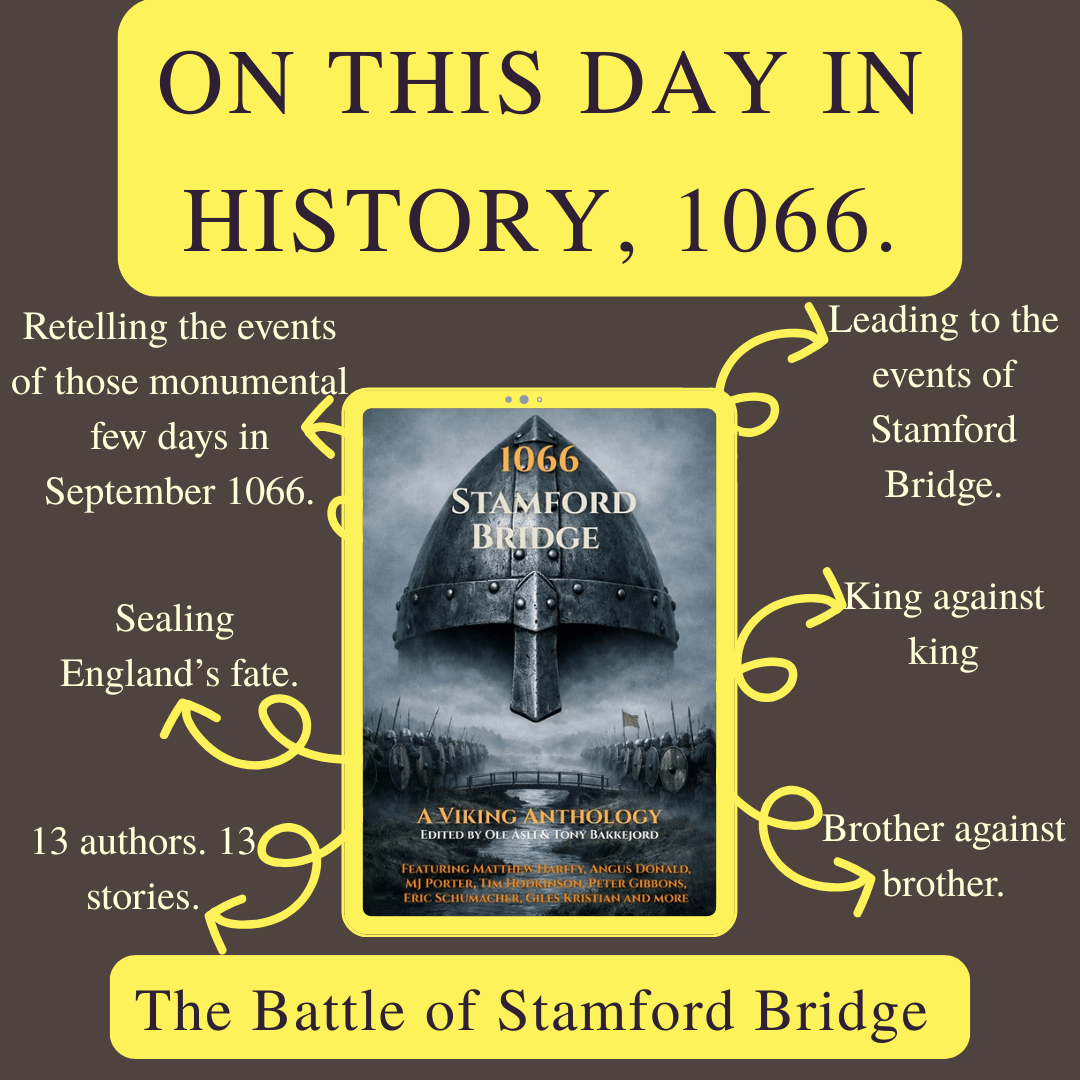
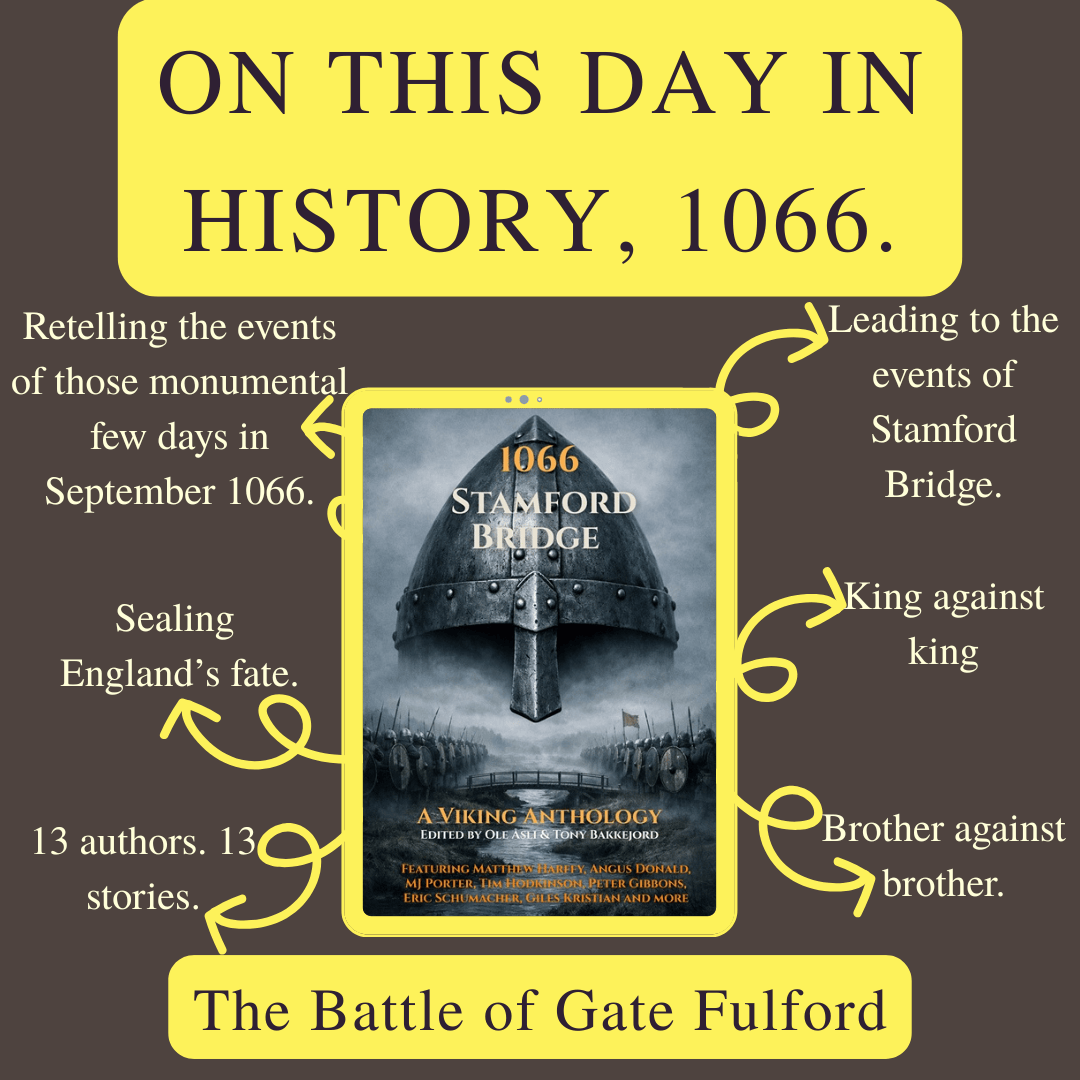
It’s often forgotten, in the great swirl of events throughout the eleventh century, that England wasn’t conquered once, but instead three times, by King Swein in 1013, by his son in 1016, and then by William the Conqueror in 1066.
England only reclaimed its English king with the death of King Swein shortly after he claimed the kingship, when Æthelred II, the much-maligned, king of England was restored, it’s said, by his nobility, provided he did ‘a better job’ of it (I paraphrase). At this time, Cnut, Swein’s son, wasn’t deemed as suitable to replace his father, while Æthelred II had many sons who could succeed him. Æthelred was deemed ‘an old man’ by now (born probably in about 966-8), but he had surviving sons from his marriage to his first wife, named as Ælfgifu, and also from the better known Lady Emma. The oldest of these sons,Athelstan, died in 1014, having made a name for himself as an honourable man. His will survives. His next youngest brother had also perished a decade ago, meaning Edmund was the oldest surviving son. In the great swirl of events, people forget Edmund was proclaimed king on his father’s death in April 1016, and that he ruled for a good sixth months, before his own death in November.
The relationship between Edmund and his father is difficult to unpick. It doesn’t seem to have been congenial. Æthelred II is most often accused of having overmighty subjects (somewhat ironic when they invited him back to England after Swein’s death), and there was a particular thorny problem of Eadric Streona, married, it’s said, to one of Æthelred’s daughters, and a tricky character. Eadric is associated with Mercia. To counter his reach, Edmund, married into a Mercian family in 1015, the story being that he rescued the woman from captivity and then married her. As romantic as that might sound, this was sound political expediency. In the tenth century, King Athelstan was strongly associated with Mercia, being declared king of Mercia before becoming king of Wessex. Edgar, in the 950s, seems to have done something similar, being declared king of Mercia while his brother, Eadwig, was king of England, or perhaps only Wessex – there is much uncertainty about this. Eadwig would die young, allowing Edgar to build on his Mercian powerbase and claim England for himself.
As such, Edmund was following known precedent when he looked to Mercia for support when he must have feared that the eyes of the witan would favour his younger half-brother, Edward, for the kingship. No doubt, Edmund actually gained support because while England was at war with Cnut throughout 1016, he was a man grown and could fight for the English. Edward, much younger, would have been unable to do so.
And so to 1016. On the death of his father, Edmund was declared king, but Cnut also took the same title. Many battles later, Cnut and Edmund reached an accord, it’s said, after the English defeat at the unallocated battle of Assandun. England was ‘split,’ Edmund became king of Wessex, Cnut held the remainder and it could have possibly remained split if not for Edmund’s untimely death, perhaps from wounds taken in battle fighting against Cnut and his warriors, and in which, Eadric Streona had played his new king false, defecting to King Cnut’s side.
Edmund II, known as Ironside, left two children, perhaps twins, and these children were raised in exile, away from England and the reach of the Danish conquering force. They did still have a part to play in the future of England, and Edmund’s granddaughter became queen of Scotland in 1070, while his grandson was briefly declared king of England in the tumultuous events of 1066.
You can read the story of Cnut and Edmund in The Earls of Mercia series side story, Cnut: The Conqueror.
Here’s the blurb:
To gain what he wanted, what he felt he was owed, he would do anything, even if it meant breaking oaths to a woman he loved and the mother of his son.
Swein, King of Denmark, and briefly England, lies dead, his son ousted from England as King Æthelred returns from his exile in Normandy at the behest of his witan and the bishops. Æthelred might have relinquished his kingdom to Swein, the Danish conqueror, but with Swein dead, the men have no interest in supporting an untried youth whose name resounds with the murder of one of England’s greatest bishops. A youth known only for his savagery and joy of battle. A true Norseman who utilizes his weapons without thought.
But Cnut wants a kingdom and will do anything to gain one. As England’s ravaged by a civil war between the sons of two former kings, Edmund, son of King Æthelred, and Cnut, son of Swein, the men must make personal decisions in the heat of battle as they strive to reclaim their birthrights whilst doing all they can to stay alive.
Cnut is a side story in the Earls of Mercia series, retelling the story of the last century of Saxon England through the eyes of the powerful Earls of Mercia, the only noble family, apart from the House of Wessex, to hold their position for nearly a century.