


I’m delighted to welcome Laura Rahme and her new book, The Signare of Gorée, to the blog with The Last Waalo Queen: Ndaté Yalla Mbodj.
The Last Waalo Queen: Ndaté Yalla Mbodj
One of the historical figures that I feature in my novel, The Signare of Gorée, is Senegal’s last warrior queen, Ndaté Yalla Mbodj. Her origins are generally accepted to be a blend of Serer and Lebou, two of the main cultural groups in Senegal. She held the title of lingeer of the Waalo kingdom of Senegal. She appears only briefly in my book and does not play a direct part in the mystery, yet her presence looms large and hints at key events that would change Senegal’s destiny in the upcoming decade.
During the 1840s, Senegal consisted of independent kingdoms. The Waalo kingdom which extended along the northwest of Senegal, sharing a border with Mauritania, comprised the island of Saint-Louis, settled by the French since 1659. South of Waalo lay the kingdom of Cayor which engulfed today’s capital, Dakar, then a Lebou village. Only a short pirogue trip away was the island of Gorée, ceded to Europeans, and a center for commercial and slave trade for centuries.
The Signare of Gorée is set in a period when concessions by Waalo rulers allowed the French to trade in Senegal, but during which French figures were not sovereign. Europeans had to pay custom taxes to continue to trade freely in the Waalo. Over the years and leading into 1854, the French encountered increasing opposition, and what they saw as nuisances, arising from Waalo or Cayor rulers, but also from the Trarza Moors who dwelled across the Mauritanian border. Frustrated in their desire for economic gain, French entrepreneurs aspired to conquest as the means to secure the flow of resources and merchandise. As such, Ndaté Yalla Mbodj was not only the sole female ruler of Senegal, but she was to be the last queen of non-colonized Senegal. Her fight would be bitter and determined.
She ascended the throne in the palace of Nder on 1 October 1846 upon the death of her sister, Njembot Mbodj. While still young, both women had witnessed their mother’s tragic self-immolation during a battle with the Trarza moors. The Waalo army consisted of fiercely animist male warriors called tieddos, but the Waalo women were also trained in combat. Since then, and despite French military intervention to thwart it, a marital alliance between Njembot Mbodj and the Trarza ruler had smoothed discords between the Waalo kingdom and the Trarza emirate. But during her rule, Ndaté Yalla was forced to fight both the French and the Trarzas.
From the time she stepped on the throne, Ndaté Yalla made it clear that the French were to obey tithe and land boundary agreements. She wrote them letters and signed them – the only female ruler to do so – and defied them, asserting her rulership over the Waalo. In short, she bothered them.
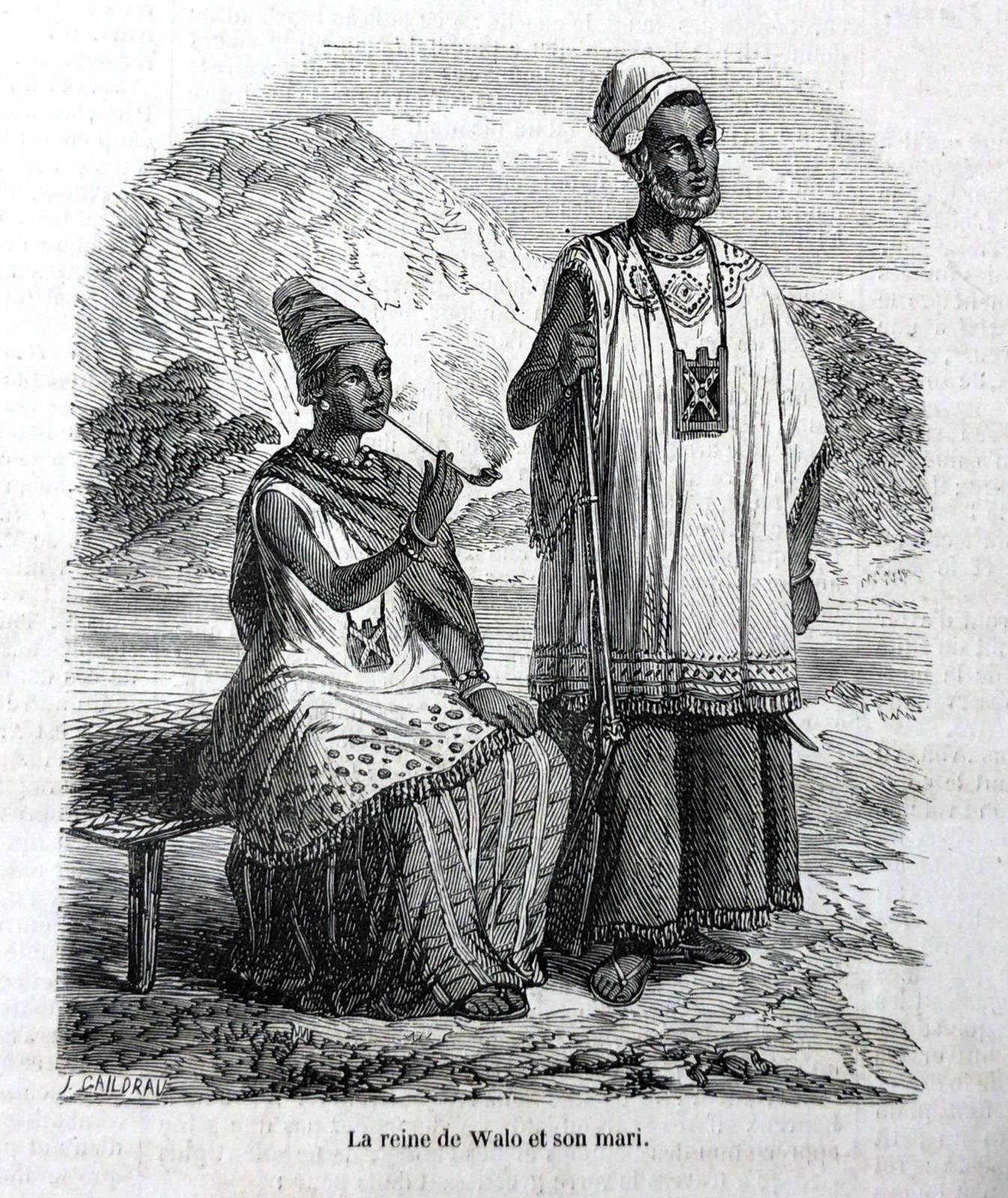
An engraving by Jules Gaildrau (1816-1898)
Public domain image
Together with her husband, Marosso Tassé Diop, who was prince of Cayor, Lord of Koki, and commander of the Waalo’s tieddo army, Ndaté Yalla fought regularly with the French and Moors.
But the French would have the last word. They called upon Louis Faidherbe, a poly-engineer and French general, to quell both the Trarzas and the Waalo kingdom. In 1854, the Bordeaux entrepreneur, Hilaire Maurel, who appears in The Signare of Gorée, would end up playing a decisive role, along with his nephew, Marc Maurel, in General Faidherbe’s mind-blowing ascension as governor of Senegal. They worked behind the scenes to ensure that the like-minded Faidherbe and his military strategies would clear the path for their already thriving enterprises and future economic ambitions.
Rallying an army that included coerced local troops, Faidherbe defeated Ndaté Yalla Mbodj in 1855, spelling the collapse of the kingdoms of Waalo and Cayor. The fall of the lingeer was powerfully symbolic. The other male-led kingdoms of Senegal would fall soon after, marking the start of France’s colonization of Senegal. During his 1855-1864 campaign, General Faidherbe employed a scorched-earth policy, burning through fertile plains and razing villages. He not only burned Ndaté Yalla Mbodj’s palace in Nder but took away her son, Sidya Diop. The afflicted lingeer would die in 1860, in Dagana, where her commemorative statue stands today.
I was born in Dakar fifteen years after Senegal regained its independence from France. Colonial education must have lingered a while as I never learned about Ndaté Yalla Mbodj at school. I also suspect the Senegalese values of soutoura (discretion) and muñ (to tolerate) encouraged a long silence on the sufferings and injustices of the past. But in the last twenty years, in the name of historical accuracy, and as more African voices are given due weight, Ndaté Yalla Mbodj’s name has resurged. Publications that tell of her important story now exist in multiple languages. I am not the first to mention her, but it was important for me to feature her in The Signare of Gorée.

Blurb
1846. In the heat of West Africa, the French navy uncovers the corpses of two French soldiers. Inspector Maurice Leroux arrives at the island of Gorée. It seems death has come to this small colonial outpost off the Senegal coast, home to the prosperous mixed-blood women known as the signares.
The navy suspects that the Bambara people, emboldened by approaching emancipation, may be out for blood. While confronted by the locals’ strange magical beliefs, Maurice remains skeptical. Does malevolence play a part, or are these deaths accidental, brought upon by the brutality of nature in an island known as the white man’s grave?
But when murder strikes, it becomes clear that a killer is stalking Gorée.
Swept by a mystery unlike any he has known, Maurice meets Signare Angélique Aussenac. The proud métis, deserted by her wealthy Bordeaux lover, casts her spell upon Maurice.
But beyond the throbbing sounds of the tam-tams and the glittering signare soirées, danger lurks. Someone is watching. And the deaths go on.
Could the killer be one of the rich Bordeaux merchants? Or are they hiding among the powerful signares?
A historical mystery spanning France and Senegal, THE SIGNARE OF GORÉE explores a world of magic, murder, and passion.
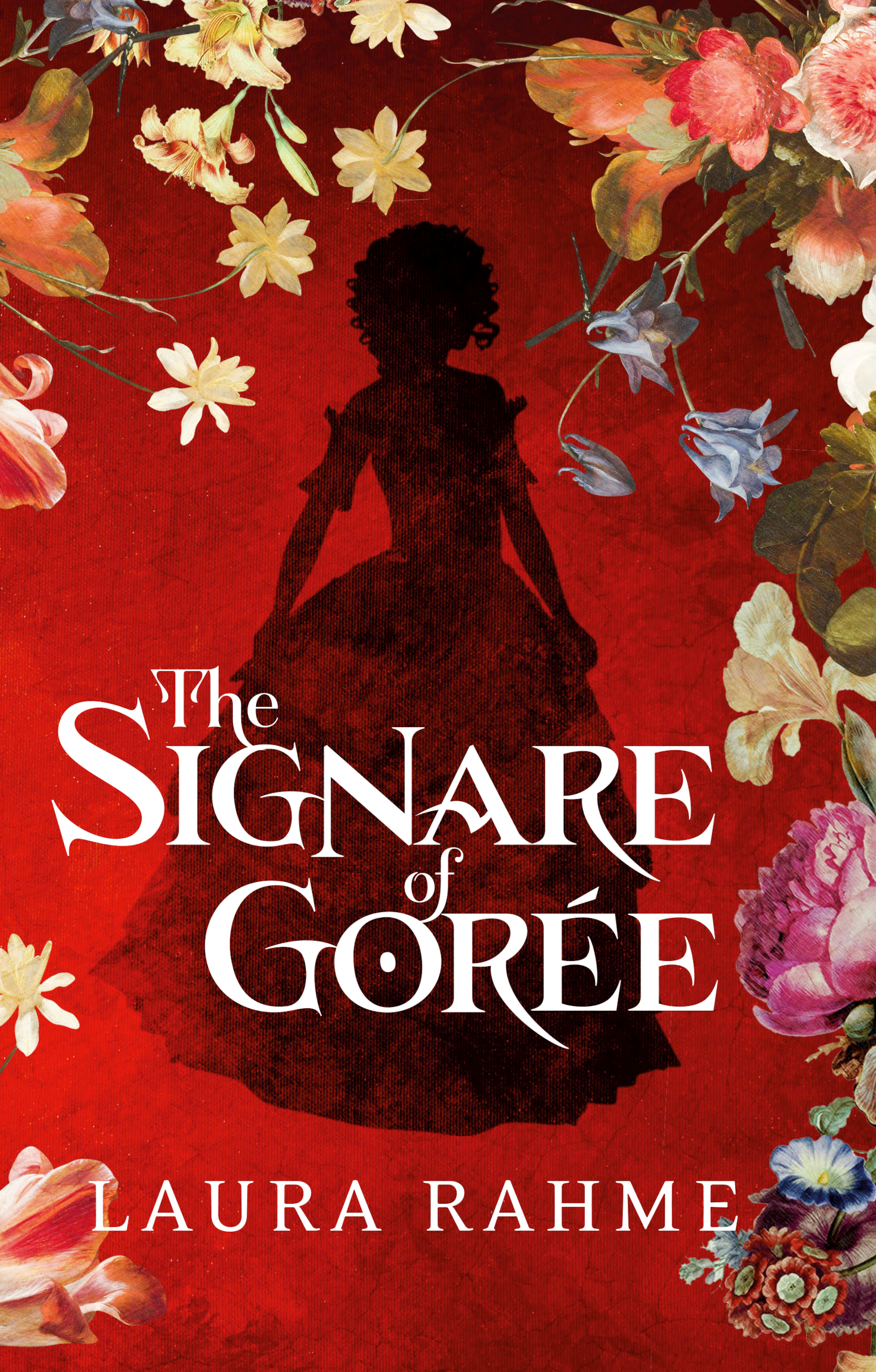
Buy Link
This title is available to read on #KindleUnlimited
Meet the Author
Laura Rahme is the author of seven historical novels. Born in Dakar, Senegal where she spent her early childhood, she moved to Australia at the age of ten. A graduate of two Honors degrees in Aerospace Engineering and Psychology, she has worked over two decades as an IT professional. Her greatest joy comes from travel, researching history, and penning historical mysteries. She now lives in France with her screenwriting husband.

Connect with the Author
Discover more from MJ Porter
Subscribe to get the latest posts sent to your email.

 MJ Porter
Thanks so much for hosting Laura Rahme today, with such a fascinating guest post.
Take care,
Cathie xx
The Coffee Pot Book Club
LikeLiked by 1 person
Thank you so much for having me on your wonderful blog and for supporting The Signare of Gorée!
LikeLiked by 1 person