

I’m delighted to welcome Tim Walker to the blog to share two extracts from his new short story collection, London Tales, which feature the River Thames.
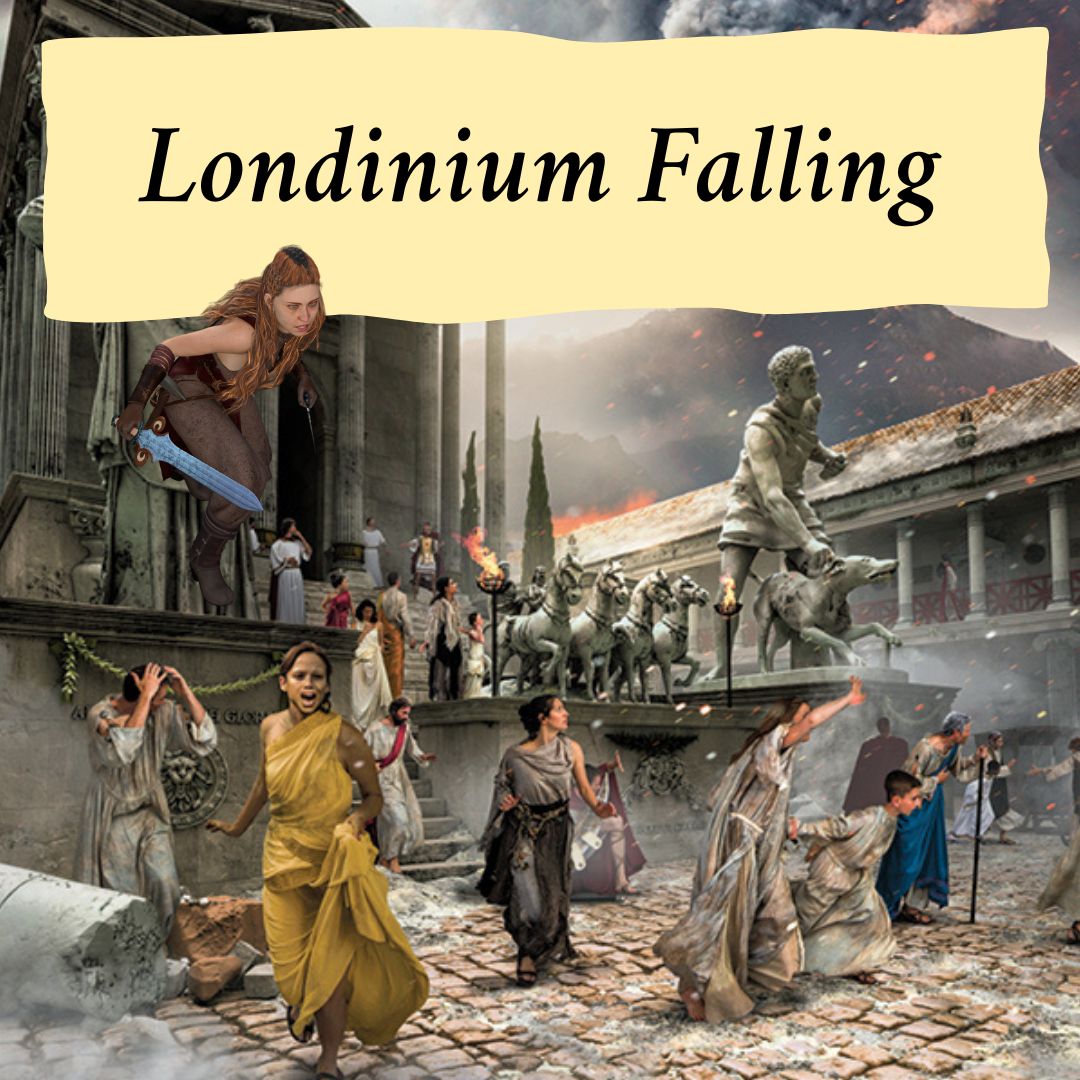
Londinium Falling
This story is set in the year 60 CE, at the time of the Boudican Revolt, when the settlement was barely 15 years old. Historians speculate that a bridge across the Thames was constructed around the year 50 CE. This wooden structure was situated next to the modern London Bridge, where solid rock on both banks made it possible for Roman bridge builders to lay the foundations. It is thought that there was a drawbridge in the central span to allow tall-masted galleys to row upstream of the bridge to moor in a natural pool that became the port. It is thought that a settlement on the south bank that would in time become Southwark, sprang up once the bridge was complete.
The Romans adopted the name of the tribal river god, Father Tamesis, as the name for the river. Over time, ‘Tamesis’ became ‘Thames’. Father Tamesis was a feared, spiteful entity who dwelt in the depths of the river, feeding on the bodies of the drowned. Would the ancient Britons have made human sacrifice to appease this feared god?
In this extract, Roman soldiers Marcellus and Septimus join a flotilla of small boats fleeing Boudica’s murderous tribal warriors who killed everyone they found, cutting off many heads that were tossed into the Walbrook (to be discovered in recent times by archaeologists), and burning the settlement to the ground…
The battle was lost and the galley carrying the procurator, centurion and several hundred men had cast off. It was still upstream of the bridge, heading for the wider centre span where a drawbridge was being opened for the high central mast to pass through. Marcellus and his comrades watched the drama unfold as a desperate defence of the raised bridge was put up by a band of plucky legionaries as screaming warriors poured onto the shaking structure. The warriors overpowered and killed the few remaining guards and some terrified civilians and cut away the ropes that held up their leaf of the raised bridge, sending it crashing down, but too late to prevent the galley passing through. There was little they could do apart from shout abuse and hurl what few weapons and objects came to hand. The Romans shielded themselves and shouted abuse back, passing safely into the widening river estuary.
Septimus pointed to a boat ahead of them as the general melee started to fade behind them. “That’s your friend, Lupus, and the brute, Brutus.” The six oarsmen rowed them alongside the smaller boat and Septimus shouted a friendly, “Hail fellow legionaries of the Ninth!” The other boat returned the welcome and threw a rope so the two boats could join…
They followed in the wake of the galley, going with the brown-grey flow of the impassive river, occasionally looking back to see Londinium burning, all red and orange flames, grey smoke spiralling to the skies. It was a funeral pyre for their fallen comrades, a show of utter contempt for the Roman invaders, exposing their weaknesses. It was an indication of the worthlessness of the settlement and all things Roman to the bold Britons who would soon wipe off their paint and melt away into the dark, foreboding forests or salty marshes.
“Are their gods stronger than ours?” Marcellus groaned at the sight of a legionary slipping under the brown, choppy flow as two tribal warriors up to their knees in muddy slime pointed their spears and shouted curses.
“Their flesh-eating god, Tamesis, will grow fat feeding on our brothers,” Septimus sourly replied. “But our generals will return with a greater force to subdue this stubborn island for the lumps of lead and silver in their rocks.”
Marcellus grunted and pulled on an oar, joining a flotilla of boats that followed in the wake of the galley. “Then, I hope they rebuild their towns with high stone walls, as these painted devils have had the taste of victory.”
Burning Shadows
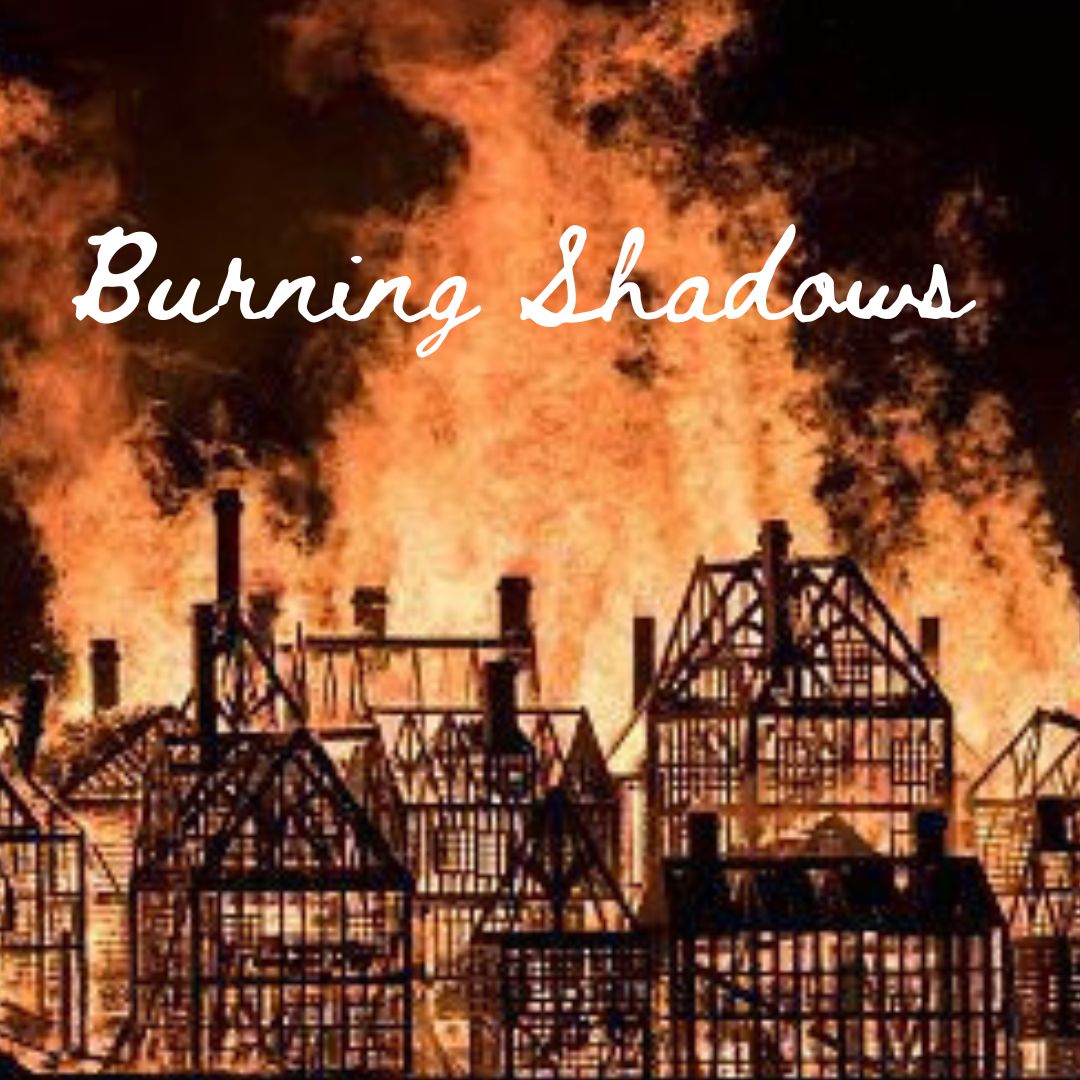
Fast forward to 1666 and the Great Fire of London. In the story Burning Shadows, fugitive and notorious regicide, William Say, enlists the help of a friend to escape the sheriff’s men…
Half an hour later, they were on the raised deck of an elongated skiff with six oarsmen on each side. A family begged for deliverance, but Rook shook his head and ordered his men to cast off.
“I am relieved to be on the river, my friend, as the sheriff’s men nearly had me at the meeting house,” Say explained whilst scanning the shore for sight of his pursuers. “I have also learned that you can find friends in the most unexpected of places.”
“Then it’s God’s will that you are saved, William. To hunt you still for your part in Cromwell’s obsession is unjust, in my view. The Indemnity and Oblivion Act was intended to bring reconciliation and put the past to bed, but the new king uses it only to pursue his vengeance. I warrant we’ll be safe at Richmond.”
“Aye. My thanks again, Sebastian. My old bones cannot take much more of this. But we must spend our time in prayer to the Lord of Hosts to ready our souls for a sterner judgement.” The sight before them was one never to be forgotten, for however many days that remained of the world of Men. The river was a bustle of boats, mainly ferries taking distressed families from the north bank to the south, whilst the sight of St Paul’s burning brightly beneath a sombre, darkened sky, framed a scene of utter devastation. Warehouses along the river burnt fiercely, as did the first three houses on London Bridge in the distance. A warehouse exploded, sending white and blue sparks mixed with yellow high over the river in an unnatural rage, causing a wherry to capsize and the two friends to shudder.
“This has the whiff of God’s judgement, alright,” Rook muttered, gripping the rail as the boat rocked in a gentle swell.
William’s feet were planted wide apart, as he had learned from his Channel crossings. He linked his plump fingers in the act of prayer. “May God our Father watch over my daughter and her family, until such a time as they meet our maker on Judgement Day, whether this be it, or it is yet to be.”
The birds had fled the skies and the only sound was that of oars splashing in the opaque, brown flow of the river as the skiff moved upstream. They rounded a bend so that all that could be seen on the horizon was a column of black smoke rising to the heavens.
“There is meaning in this, but what is the lesson?” Rook asked.
“Either a divine rebuke, the wicked tongue of Satan, or the opening act of Doomsday?” William’s thoughts turned to little Ruth and a tear welled.
“An eye for an eye, ‘til we’re all blinded,” he muttered, wiping his face with a kerchief.
“What’s that, William?” Rook enquired.
“If I gave myself up to the king’s justice, would his revenge be satisfied, and my family be saved from persecution?”
“The king would have your head on a spike, but his thirst for revenge will not be slaked until the last of you is dead,” Rook replied. “This is a man who had Cromwell’s body dug up to display his rotting head on a pole. He would soon find another cause for his vengeful spirit to feast on. Do not doubt the importance of removing his father, the tyrant Charles Stuart, William, and ending the age of absolute monarchy. We shall bide our time, whatever time there is, and if the world doesn’t end, then we shall be here to curb the excesses of this arrogant, restored king. Parliament will rise again.”
William nodded at his friend’s soothing words, but his eyes remained fixed on the foul, black spew issuing from Satan’s gaping maw. All was not well in the world of Men; on that, all could agree.
Here’s the blurb
This collection of eleven tales offers dramatic pinpricks in the rich tapestry of London’s timeline, a city with two thousand years of history. They are glimpses of imagined lives at key moments, starting with a prologue in verse from the point of view of a native Briton tribeswoman absorbing the shock of Roman invasion. The first story is a tense historical adventure set in Roman Londinium in 60 CE from the perspective of terrified legionaries and townsfolk facing the vengeful Iceni queen, Boudica, whose army burnt the fledgling city to the ground.
Further historical dramas take place in 1381 during the Peasant’s Revolt, the Great Fire of London in 1666 and the last ice fair on the frozen Thames in 1814. These are followed by a romance set during the Blitz in 1941, then the swinging Sixties and wide-flared seventies are remembered in the life story of fictional policeman, Brian Smith. Moving on, an East End family get a fright from copycat killings that are a throwback to the 1888 Jack the Ripper murders.
There’s a series of contemporary stories that reference recent events, including the London terrorist bombings of 2005, a literary pub crawl and a daring prison break, building to the imagined death throes of London in a chilling, dystopian vision. These stories are loosely inspired by the author’s personal experiences and reflections on his time living and working in London in the 1980’s and 90’s. Adaptability, resilience, conformity and resolve are recurring themes.
London Tales evokes the city’s rich history and the qualities that were needed by Londoners at various times to survive and prosper – from the base and brutal, devious and inspired, to the refined and civilized.
Available from Amazon in e-book, paperback, Kindle Unlimited and audiobook formats, London Tales is a companion volume to Thames Valley Tales.
Book cover designed by Sean McClean, shows elements from stories.

Buy Link:
This title is available to read on #KindleUnlimited.
Meet the author
Tim Walker is an independent author living near Windsor in the UK. Although born in Hong Kong in the sixties, he grew up in Liverpool where he began his working life as a trainee reporter on a local newspaper. After attaining a degree in Communication Studies he moved to London where he worked in the newspaper publishing industry for ten years before relocating to Zambia where, following a period of voluntary work with VSO, he set up his own marketing and publishing business. He returned to the UK in 2009.
His creative writing journey began in earnest in 2013, as a therapeutic activity whilst recovering from cancer treatment. He began writing an historical fiction series, A Light in the Dark Ages, in 2014, inspired by a visit to the part-excavated site of former Roman town Calleva Atrebatum at Silchester in Hampshire. The series connects the end of Roman Britain to elements of the Arthurian legend and is inspired by historical source material, presenting an imagined historical fiction of Britain in the fifth and early sixth centuries.
The last book in the series, Arthur, Rex Brittonum, was published in June 2020. This is a re-imagining of the story of King Arthur and follows on from 2019’s Arthur Dux Bellorum. Both titles are Coffee Pot Book Club recommended reads. The series starts with Abandoned (second edition, 2018); followed by Ambrosius: Last of the Romans (2017); and book three, Uther’s Destiny (2018). Series book covers are designed by Canadian graphic artist, Cathy Walker.
Tim has also written two books of short stories, Thames Valley Tales (second edition 2023), London Tales (2023); a book of verse, Perverse (2020); a dystopian thriller, Devil Gate Dawn (2016); and three children’s books, co-authored with his daughter, Cathy – The Adventures of Charly Holmes (2017), Charly & the Superheroes (2018) and Charly in Space (2020).
Tim took early retirement on medical grounds and now divides his time between writing and helping out at a Berkshire-based charity, Men’s Matters.
Find out more about the author at his website: www.timwalker1666.wixsite.com/website

Connect with the author
Goodreads Author Page: Amazon Author Page:
https://facebook.com/LondonPostcards Twitter: Instagram:

Discover more from MJ Porter
Subscribe to get the latest posts sent to your email.

 MJ Porter
Thank you for hosting Tim Walker with excerpts from his London Tales today.
Take care,
Cathie xx
The Coffee Pot Book Club
LikeLike