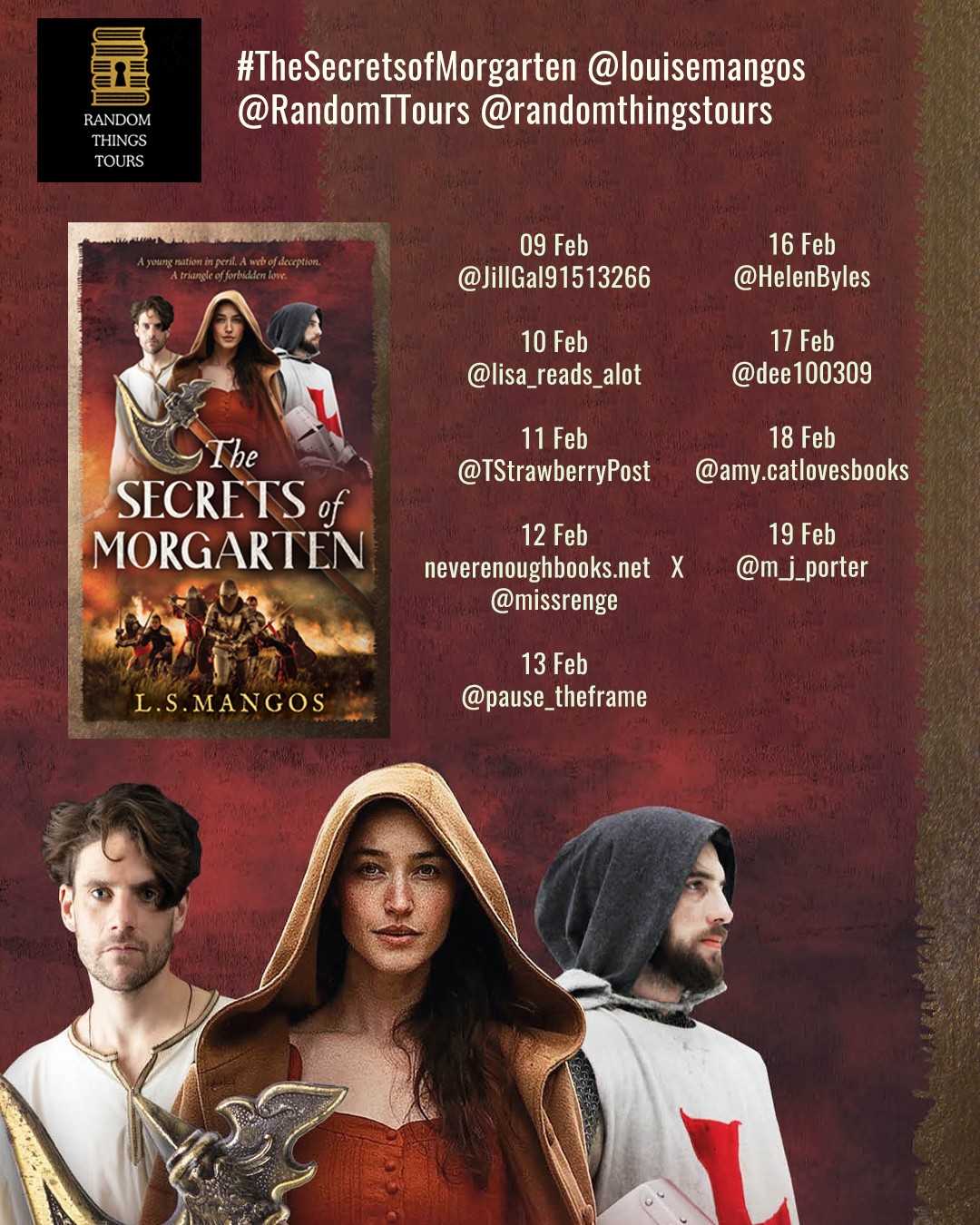
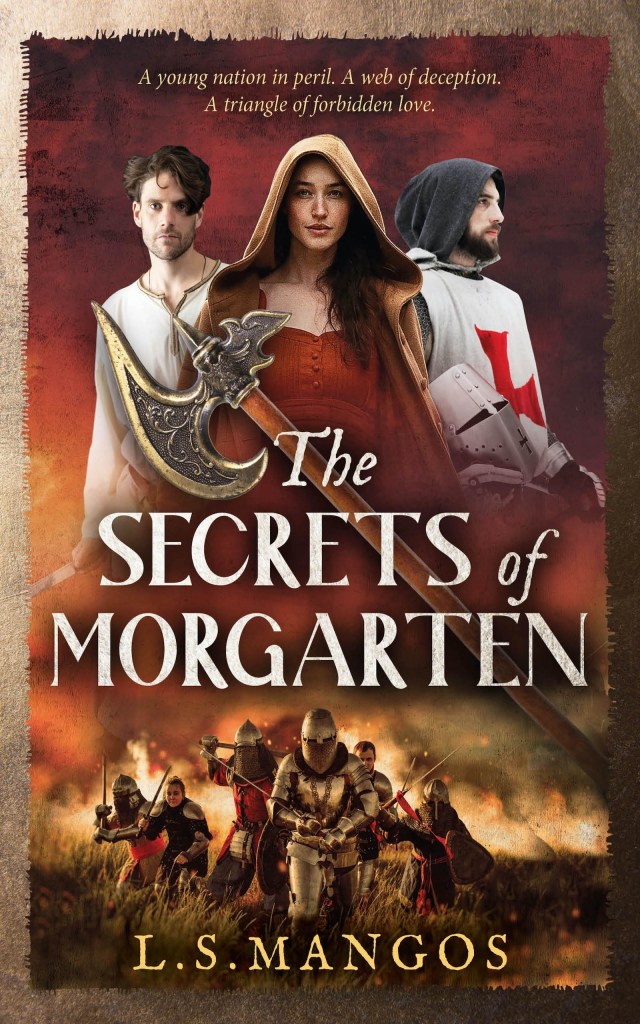
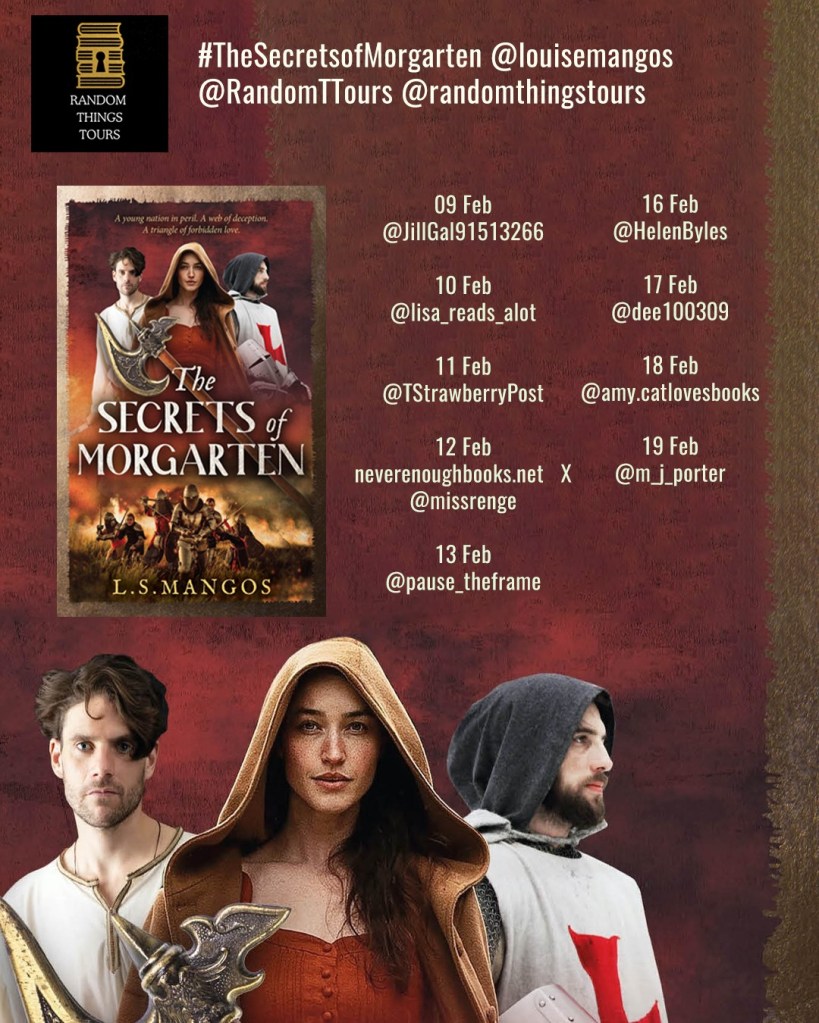
I’m reviewing the Secrets of Morgarten by LS Mangos #historicalfiction #bookreview #blogtour #fourteenthcentury
Here’s the blurb
A young nation in peril. A web of deception. A triangle of forbidden love.
The year is 1315. The fledgling nation of Switzerland – the Helvetic Confederation – is under threat from the Habsburgs. In France, the Knights Templar have been disbanded and declared heretics by the king.
Magda, a beautiful weaver living near the alpine village of Morgarten, befriends Walter, a messenger who is the son of the legendary Wilhelm Tell. Walter and Magda’s budding romance is threatened by the arrival of Sébastien, a French fugitive.
What secrets is this foreigner hiding? Can Walter solve the mystery of a murder and a stolen religious artefact before a mighty battle with the Habsburgs ensues? And who will be the victors in their turbulent triangle of love?
The Secrets of Morgarten is a historical fiction/romance novel set in the early 1300s, following three main characters through about a year of their lives. The characters of Magda, Wilhelm and Sebastian all offer different, if not strictly, opposing, viewpoints of events as they unfold.
It is a story of conflict and love against a backdrop of intrigue and approaching war, and the narrative moves quickly between the twin storylines, so that the conflict occurs between the characters as well as in the wider world.
It is a slower-paced novel, rich in detail and complex political machinations that builds towards its conclusion (the theft not occuring until quite late in the book) which thrusts our three main characters into the midst of the unevitable conflict where decisions must be made that will have far-reaching consequences. It’s an intriguing novel, depicting events I’ve not previously read about before.
Meet the author
Louise Mangos grew up in the UK but has spent more than half her life in Switzerland. Her debut psychological suspense Strangers on a Bridge was a finalist in the Exeter Novel Prize and long listed for the Bath Novel Award. She has published four further psychological suspense novels – The Art of Deception, The Beaten Track, Four Fatal Flaws and The Girl in the Doorway.
She lives in the foothills of the Alps, a stone’s throw from the site of the Battle of Morgarten, with her Kiwi husband and two sons. When she’s not writing you can find her on the cross-country ski trails or wild swimming in the lake by her home, depending on the season. Louise also writes short fiction which has won prizes and been published in more than twenty print anthologies. She holds a Masters in Crime Writing from the University of East Anglia.
Find her on Twitter, Instagram or BlueSky @LouiseMangos and Facebook @LouiseMangosBooks
I’m delighted to welcome Clare Flynn and Under a Southern Sky to the blog #NewReleaseBook #BookCompetition #HistoricalFictionBook
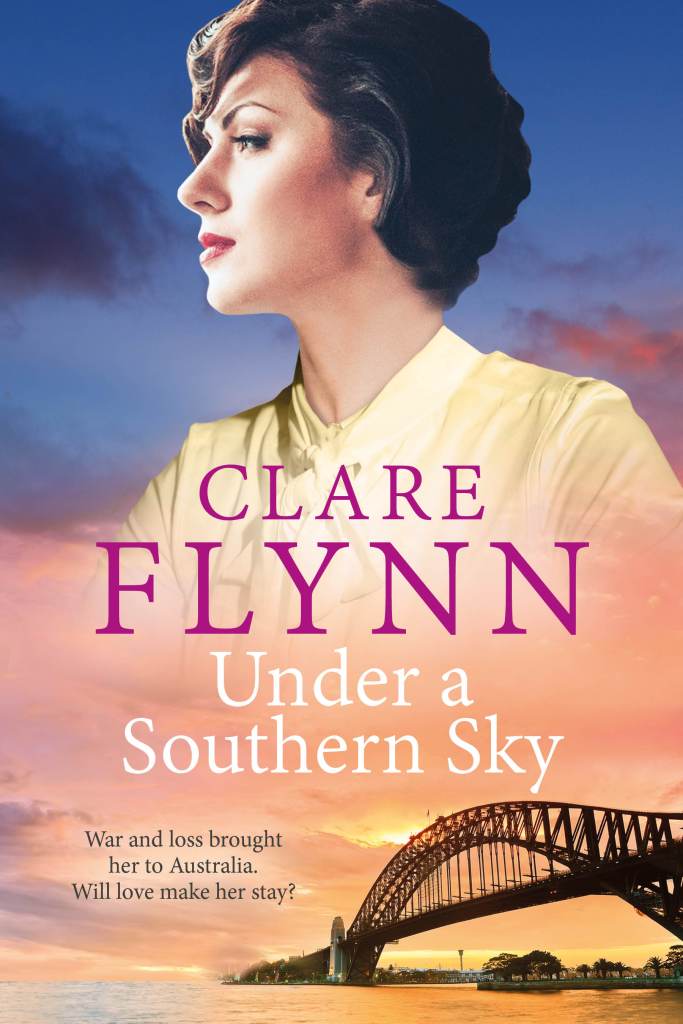
I’m delighted to welcome Clare Flynn and Under a Southern Sky to the blog
Here’s the blurb
After a German fighter sinks her husband’s ship in the icy Atlantic, grief-stricken Hannah Kidd flees the rubble and ration queues of wartime Liverpool for a new life on the other side of the world. In sun-soaked Sydney, she discovers more than just refuge from nightly bombing raids—she finds unexpected family connections, meaningful work, and the handsome Eddie Greenbank.
As Hannah explores the golden beaches of Sydney’s eastern shores, the misty valleys of the Blue Mountains, and the rolling scenery of the Hunter Valley, she begins to believe that happiness isn’t lost forever. But even in Australia, the war’s long shadow threatens everything she’s begun to rebuild. Hannah must decide: will she let grief define her, or will she fight for the future she never thought she’d have?
A sweeping story of resilience and renewal set against the dramatic backdrop of wartime Australia, Under a Southern Sky explores how far we must sometimes travel—both in miles and in spirit—to find our way home.
Clare Flynn is the award-winning author of nineteen historical novels. She is the 2020 Selfies Adult Fiction prize winner for The Pearl of Penang and the 2022 Indie Champion for the Romantic Novelists Association. Clare is a Fellow of the Royal Society of Arts and a member of the Historical Writers’ Association and the Romantic Novelists Association. She lives in Eastbourne on the south coast of England.
*Terms and Conditions –UK entries welcome. Please enter using the Gleam box below. The winner will be selected at random via Gleam from all valid entries and will be notified by Twitter and/or email. If no response is received within 7 days then Rachel’s Random Resources reserves the right to select an alternative winner. Open to all entrants aged 18 or over. Any personal data given as part of the competition entry is used for this purpose only and will not be shared with third parties, with the exception of the winners’ information. This will passed to the giveaway organiser and used only for fulfilment of the prize, after which time Rachel’s Random Resources will delete the data. I am not responsible for despatch or delivery of the prize.
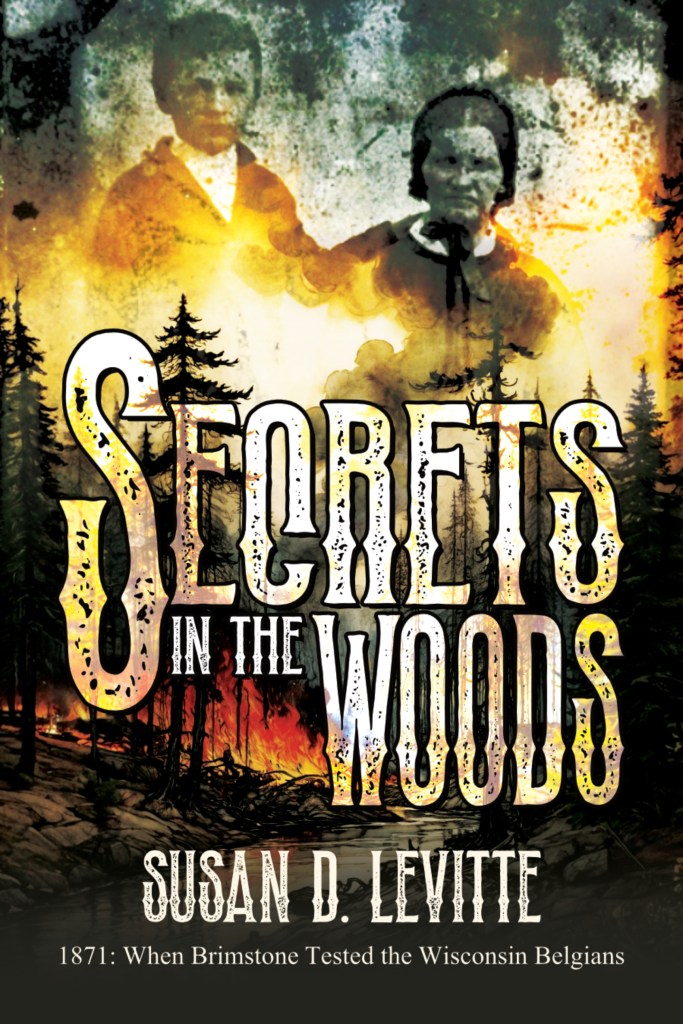
I’m welcoming Susan D Levitte to the blog with an excerpt from her new book, The Secrets in the Woods, 1871Fire #PeshtigoFire #WIHistory #BlogTour #TheCoffeePotBookClub
I’m welcoming Susan D Levitte to the blog with an excerpt from her new book, The Secrets in the Woods
Here’s a snippet
The assignment was going to mark the anniversary of a tragic period in the region’s history. The Peshtigo Fire, or the Great Fire as those on this side of the bay often referred to it, killed at least fifteen hundred white people and countless American Indians in a few hours.
Because it had happened sixty years ago, there were not many people left to tell their stories. Many of those still alive had just been small children at the time, with memories dimmed and shaded by stories they had heard in hushed tones during their lives.
When Edna Mae was told she would be interviewing a woman who had been fifteen when the fire happened…
Here’s the blurb
On October 8, 1871, fire turned night into a living hell.
While Chicago’s blaze claimed the headlines, a fiercer and more devastating inferno swept across Wisconsin’s Green Bay peninsula-obliterating farms, forests, and families in its path.
Here, among immigrant settlers carving new lives from the wilderness, survival came down to split-second choices: to run, to hide, to fight the flames. Mothers shielded children with their bodies, fathers vanished into smoke, and neighbors faced the firestorm with nothing but faith and will.
Inspired by forgotten accounts and newspaper fragments, Secrets in the Woods brings to life the untold human drama of one of America’s most harrowing nights-a story of resilience, loss, and the fragile hope that rises from the ashes.
Triggers: Corporal punishment, spousal abuse, deaths by natural disaster, death in childbirth.
Susan was born and raised as the fifth generation to live on the family land in Northeast North Dakota (nearly Canada). She moved to Wisconsin in 1997, living in Door and Manitowoc County and now resides in the pastoral Kewaunee County. Married to Quentin, they share their home with Olive and Penny, their silly Labrador retrievers, and Gil, their ever-lazy cat.
As a devoted reader of historical fiction and nonfiction, she brings her passion for history and desire to educate readers into her work. With twenty-five years of experience in global advertising and marketing, she holds a master’s degree in communications and currently contributes her expertise to the Green Bay Austin Straubel International Airport.
Introducing 757, the first book in the brand new series, The House of Mercia #fiction #nonfiction #Mercia
Here’s the blurb for 757
This is Mercia. The year is 757. A king will fall. A king will rise. But first, civil war will rage.
King Æthelbald’s forty-year vice-like rule over Mercia has been rigid. But he lacks a legitimate heir despite his insatiable bedchamber antics.
Offa must stand hostage to his family’s good behaviour, when his father missteps in removing his mother from Æthelbald’s bed. Shockingly, his younger sister now replaces her.
But the king isn’t finished with his denigration of Offa’s noble House. When his parents are traitorously killed, Offa’s resentment grows, compounded by the ridicule heaped on him by King Æthelbald’s oathsworn warriors.
With the king’s health deteriorating, the matter of the succession becomes paramount. There are plenty who share a claim to the kingship.
Discord threatens to fracture the mighty realm, and those with sword and shield, seax and spear are prepared to risk it all to be the future king of Mercia.
The background to the House of Mercia – AKA what happens after the Gods and Kings trilogy
If you’ve been with me for a while, you’ll know I’ve written about Mercia in many of the centuries of its existence. Until now, I haven’t ventured into the eighth century and many of you might not have read the Gods and Kings Trilogy (there is still time to get it read before House of Mercia hits the shelves), and even if you have, there’s a century between the final events of Warrior King (655) and the beginning of 757, the first book in The House of Mercia series. So, I thought it was time to add some flavour to this century.
The Gods and Kings trilogy follows a collection of mighty warrior kings in Saxon England from the 620s to the 650s, as the ‘larger’ Saxon kingdoms were forming – (Northumbria from Bernicia and Deira) (Mercia from the heartland of Mercia centred around the area of the Tomsæte (yep, they get a mention in the Dark Age Chronicles) to include the kingdoms of the Hwicce, the Magonsæte, Lindsey and Elmet). Of these, it’s the brother kings Eowa and Penda that most concern us, as they were both kings of Mercia, claiming descent through Pybba (and it’s this genealogy that leads us back to Wærmund (from the Dark Age Chronicles), and even mentions an Icel (do you see what I did there?)
Whatever the exact relationship between the two brothers (as explored in the Gods and Kings trilogy), they ruled one after another, Eowa falling at the battle of Maserfeld in 642, against the Northumbrians and Penda outliving him to rule until his death in 655. (There’s also another shadowy brother, possibly sharing a father but not a mother, Cuthwalh, who is important. He was never a king of Mercia, but his existence (if he existed) is very relevant to events in the eighth and indeed, ninth century.)
Eowa had children when he died. Penda also had children. As the brother who ruled second, the kingdom of Mercia was bequeathed to Penda’s children, first Pæda (his son, who didn’t rule for very long), then Wulfhere (Penda’s son 658-675), Æthelred (Penda’s son, who abdicated in 704 and died in 716), Ceonred (Wulfhere’s son, who ruled from 704-709 and abdicated to travel to Rome), Ceolred (Æthelred’s son, from 709-716) and then Coelwald, who briefly succeeds and is assumed to be another son of Æthelred, until the line passes to that descended from Eowa, through his son or daughter (I think in the Gods and Kings trilogy I’ve made Alweo a daughter), Alweo, in the figure of Æthelbald, while Offa’s line descended through the other brother, Osmod. (Looking at this, I can’t help thinking that a little less religious fervour might have been to the advantage of the ruling line of Mercia – but of course, this was the time of conversion – Wulfhere is said to have been the first Christian king of Mercia (although Pæda also converted, but sadly, met a sticky end). The relationship between Mercia and Northumbria at the time was, I think ‘messy.’
So, that all seems quite complicated. At this time, Mercia was very often in conflict with the kingdom of Northumbria, and indeed, a number of assassinations occur. Pæda is killed by his wife (a Northumbrian). A daughter of Penda also marries one of Oswiu’s sons, Alhfrith. The Northumbrian king, Oswiu (the cheek of it), then briefly rules Mercia, until he’s driven from Mercia by Wulfhere (Penda’s son), who then becomes king. Wulfhere endeavoured to defeat the Northumbrians, then being ruled by Ecgfrith (half-brother of Alhfrith), the son of Oswiu, but failed, whereas Wulfhere’s brother, Æthelred, was later successful. These two battles fascinate me, and if you’ve read my short story, A Father’s Son, which you can download here and join my mailing list) it’s the very beginning of a project where I hoped to tell the story of these two battles, the one where Northumbria is triumphant, the other where Mercia sets the record straight, but I’ve never quite found the time.
This succinct account then brings us to Æthelbald, an old man by the time The House of Mercia takes place, but one who evidently ruled well throughout his 41 years – quite an astonishing feat at the time. It’s believed he lived for some time in exile before becoming king, perhaps in the kingdom of the East Angles, when her king, Ælfwald, ruled. It seems evident, therefore, that there was some discord in Mercia at the time between the potential ruling houses. While Eowa’s son hadn’t endeavoured to claim the kingship of Mercia (I think he died, but maybe that was what I had happen in the Gods and Kings trilogy), his descendants were more ambitious. So, this brings us to the events of 757, the first book in the House of Mercia series. What comes next will form the narrative.
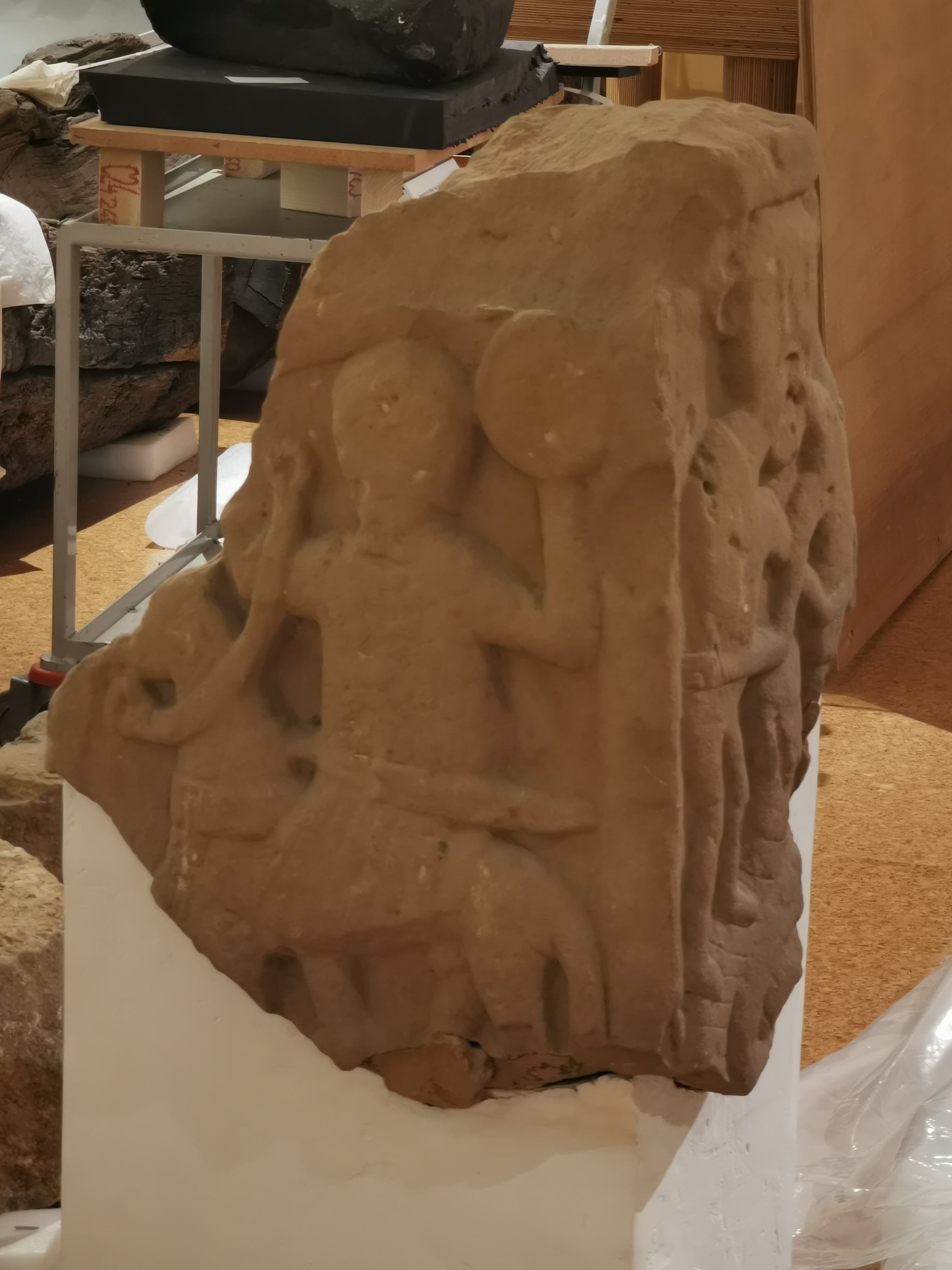
The Repton Stone at Derby Museum, believed to be a depiction of King Æthelbald riding a horse (please note, the museum was being renovated when I visited. It’s not usually displayed like this).
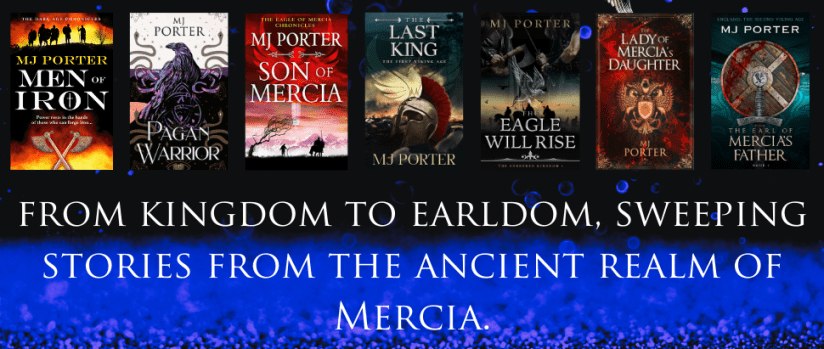
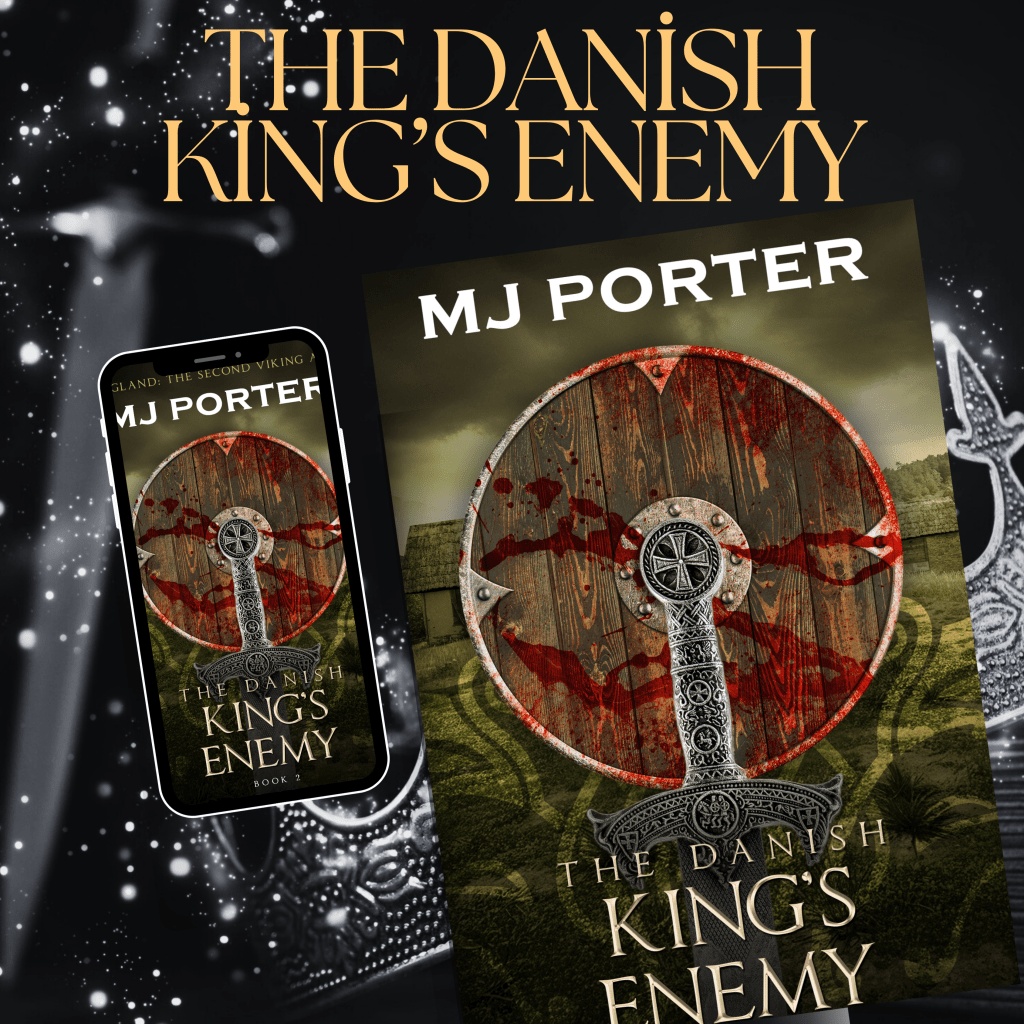
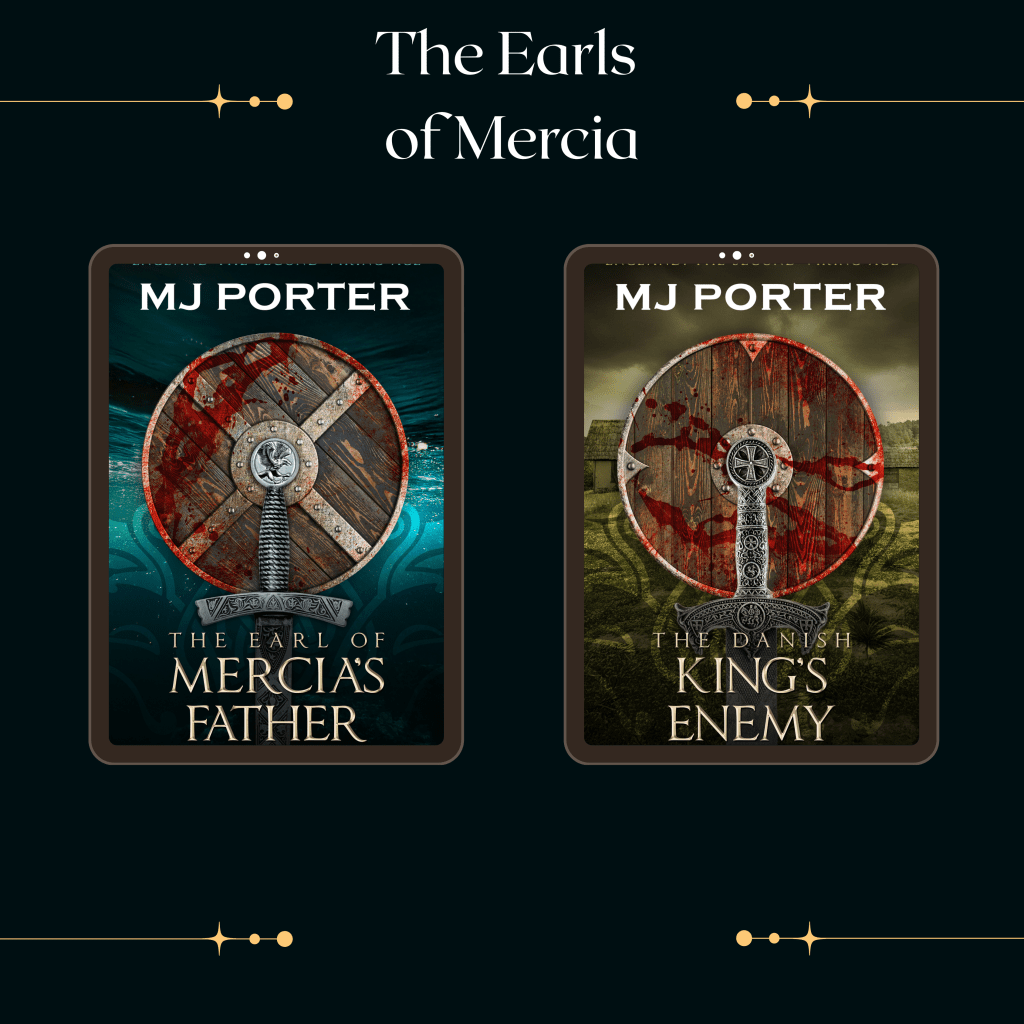
It might well be the second historical fiction novel I ever wrote, but I thought it could do with a little update to match The Earl of Mercia’s Father. Huge thanks to my cover designer at 100 Covers.
The new cover also means I’ve expanded the available formats. The book is now available in ebook, trade paperback (6×9), large print/hardcover combined, and the smaller, more usual-sized UK paperback (5.06 x 7.81), available via IngramSpark (use the link below). This version should also be distributed to a wider range of print retailers. And, of course, you can order a signed copy from me, too, via my online store.
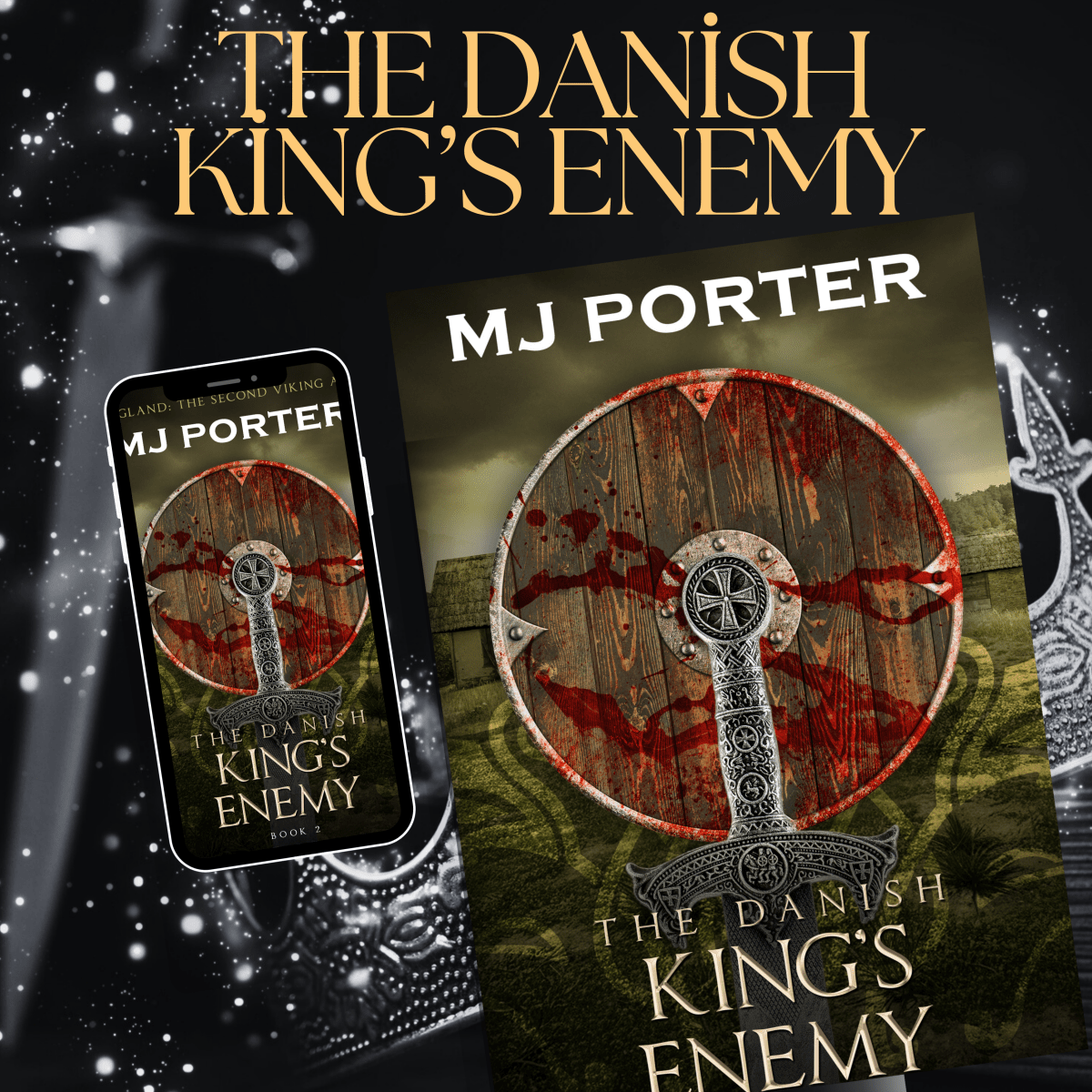
The Danish King's Enemy: England: The Second Vikin ….
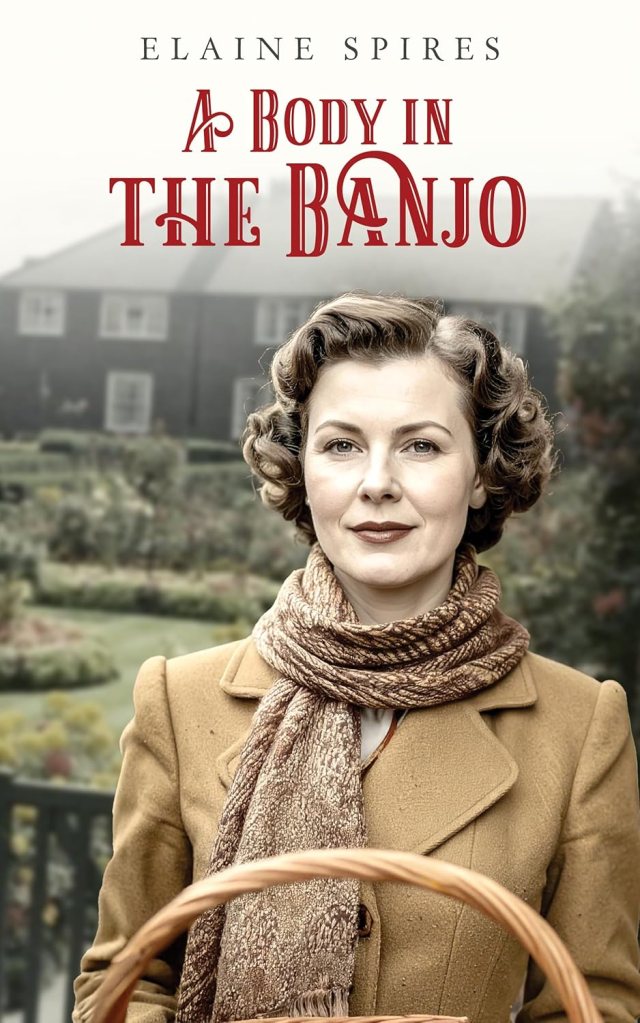
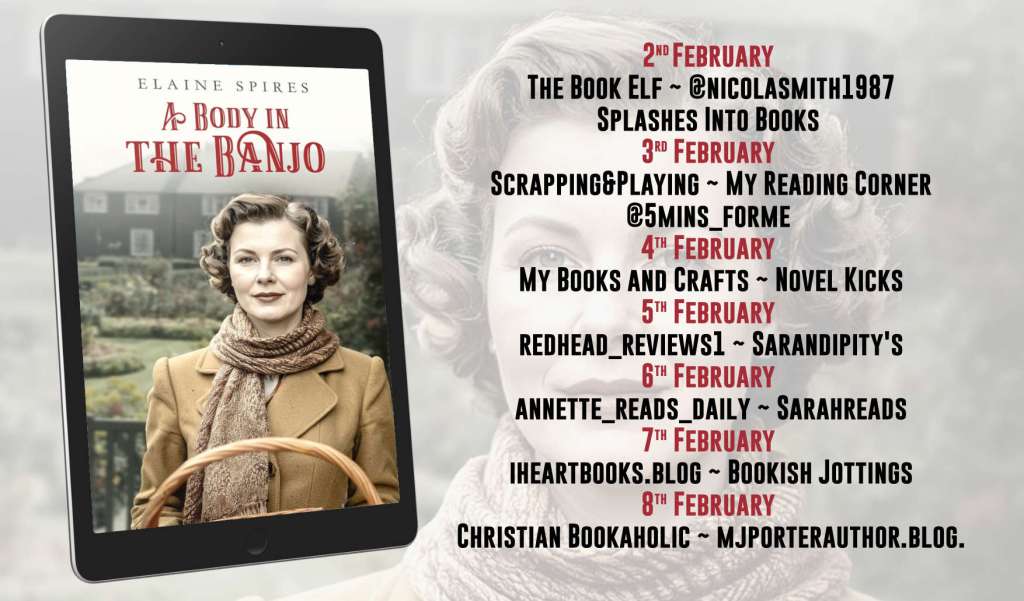
I’m sharing my review for A Body in the Banjo by Elaine Spires, a historical mystery set in Dagenham #blogtour #bookreview
I’m sharing my review for A Body in the Banjo by Elaine Spires, a historical mystery set in Dagenham
Here’s the blurb
It’s November 1958 and Dagenham is excitedly awaiting Bonfire Night. Cissie Partridge isn’t too keen on fireworks but she generously donates to the local children doing Penny for the guy. Cissie is content with her lot. She loves her husband Harold. She shops, she cooks, she reads at every opportunity and she volunteers at the Dockland Settlement. Observant and sharp, she gets on with all her neighbours. Then, one morning, she finds a body…
A Body in the Banjo is an historical mystery set in 1958, just before Bonfire Night.
It is a story of a small community and one woman in particualar, Cissie, who doesn’t so much laud anything over her neighbours, but is, perhaps, a little bit of a busy body, although not so much as one who spends all her time watching her neighbours. No, instead Cissie listens to their comings and goings through the open bedroom window each night.
This is a story very much following the minutae of Cissie’s day to day existence as a 1950s housewife, and while some of it feels a little repetitive, the finale does build to a fine mystery which makes absolute sense of all the noise’s Cissie hears on the fateful night.
A really solid mystery, with a normal woman as the main character, although there are also others who take the narrative from time to time. I’m sure fans of historical mysteries will enjoy the story.
Meet the author
Elaine Spires is a novelist, playwright and actress. Extensive travelling and a background in education and tourism perfected Elaine’s keen eye for the quirky characteristics of people, captivating the humorous observations she now affectionately shares with the readers of her novels. Elaine also writes plays and her short film Only the Lonely was made by Dan Films and won the Groucho Club Best Short Film Award 2019 and two Silver Awards at WOFFF 2019.
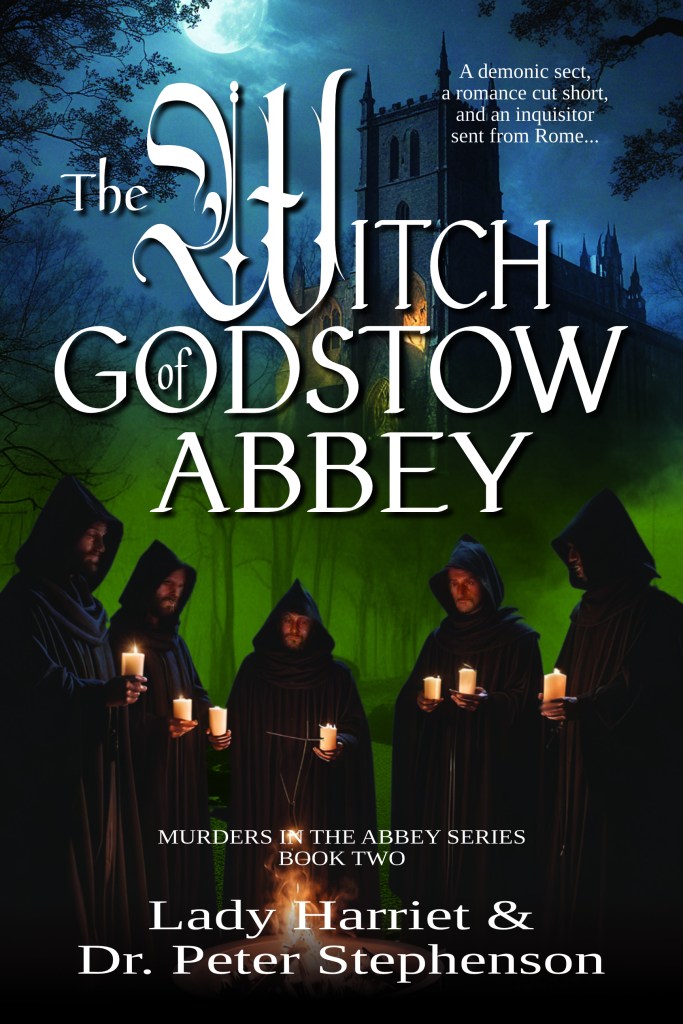
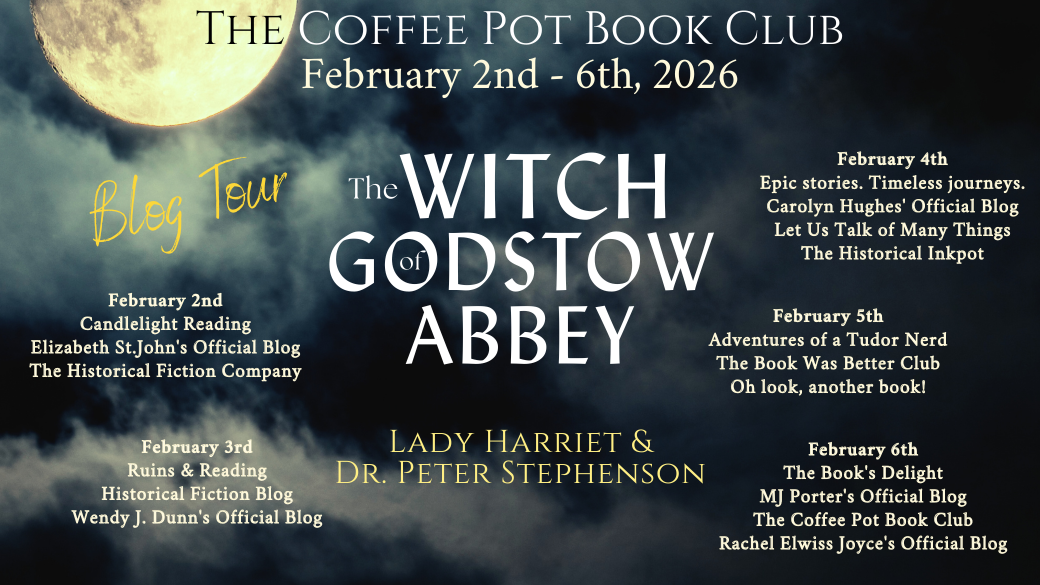
I’m delighted to welcome Harriet Taggart and Peter Stephenson and their book, The Witch of Godstow Abbey, Murders in the Abbey Series, to the blog with an excerpt.
Excerpt
From Chapter 1 – Bones of the Innocent
The autumn sun was starting to set, signaling that it was time to leave the garden, perform their ablutions and go to the chapel for Vespers. But before they could move, Isabel’s voice rang out from the far side of the garden, screaming again and again, “Sister, Sister, come quickly!”
“What on earth is it, child? Are you injured?”
Isabel was breathless. “No, Sister, no. But you must come. Hurry!” And the screaming broke out once more, raw with terror.
Agnes walked rapidly around to the other side, where Isabel was on her hands and knees, a garden claw waving wildly in her hand. There on the ground in front of Isabel, half buried in the soft, freshly-turned earth, were three tiny bodies.
Pale and shaking, Isabel could scarcely speak. She tried to catch her breath, but to no avail. “These are b… b… babies, sister. Wh.. wh… who would kill newborn infants like this?
Here’s the Blurb
A widowed academic investigating strange historical practices gets drawn back in time and into the year 1299 in Oxford. Join a cast of compelling characters-nuns, novices and outsiders-as they battle the forces of darkness. Enter their struggle against evil, clandestine organizations. Join their life-threatening fight to protect each other, be willing to die for each other, and occasionally fall in love.
Will heroic love and righteous pursuit of justice triumph? Will the horror-inducing villain be found out and overthrown? Or will the courageous troop of those fighting for what is good be overpowered and taken captive?
Set in Oxford, England, in the year 1299, a struggle takes place between the sisters of the local convent and a strange, terrifying local evil society. They discover a secret organization of men who perform unspeakable deeds. The lives of several sisters are in danger.
Join Mother Alice, Sister Agnes and Isabel, along with Lady Beatrix and Lady Harriet, as they confront and do battle with an evil, secret society intent on attacking them, taking over the convent and sacrificing a young woman.
If you love stories that keep you turning pages while imparting fascinating accounts of the past, this latest mystery in the “Murders in the Abbey” series will tingle your spine.
Praise for The Witch of Godstow Abbey:
‘Richly atmospheric and quietly gripping, “The Witch of Godstow Abbey” is a worthy addition to your bookshelf.’
Lady Harriet holds the legal title “Lady of the Manor,” as defined under English law, and traces her ancestry to Charlemagne’s royal line.
A lifelong reader and devoted genealogist for nearly fifty years, Harriet has always had a passion for stories, whether they are buried in the past or found in the pages of a good book. She is the co-author of We Are Manx, a self-published family saga that explores her Manx heritage and the history of the Isle of Man in rich detail.
She’s also a photographer who prefers being behind the lens, a word lover addicted to word games, and a fan of wooden jigsaw puzzles. She has traveled extensively, with a deep appreciation for history, diverse cultures, and the unexpected joys that can be found away from home. Her career spanned volunteerism, real estate, and systems administration, but now she happily devotes her time to more creative pursuits.
As she puts it: “I’m old enough for Medicare, but not quite old enough to get a birthday card from King Charles—were I a Brit.”
The Witch of Godstow Abbey, written in partnership with Dr. Peter Stephenson, marks her first (but certainly not last) foray into historical fiction. With photography, she creates books of images; with storytelling, she creates images made of words.
Dr. Peter Stephenson has written or contributed to over twenty books, all but one of which are non-fiction technical books. He has published over 1,000 papers in technical journals, technical trade journals, and peer-reviewed legal journals. One of his peer-reviewed papers has over 15,400 downloads.
In addition to writing, Dr. Stephenson has been playing blues and Americana music for 70 years. It is through that performing, and after earning a PhD from Oxford Brookes University, that he was given the appellation “Doc” by the owner of one of his performance venues.
Having visited Oxford several times and being employed by a UK company in nearby Malvern, it was only natural that he would set his tales in Oxfordshire. His academic experience in Oxford town sealed the deal and resulted in his first historical novel, The Whispering Dead of Rewley Abbey—Book 1 in the “Murders in the Abbey” series—which reached the Amazon Kindle bestseller list and won a Pencraft award for literary excellence in the winter of 2025. He now writes with his collaborator and writing partner, Lady Harriet.
Dr. Stephenson lives with two Savannah cats on a pond in Auburn Hills, Michigan. Starting a “new” career at the age of 80, Doc reckons that he has only about the next 20 years to finish the series and retire – again – perhaps this time to Oxford.
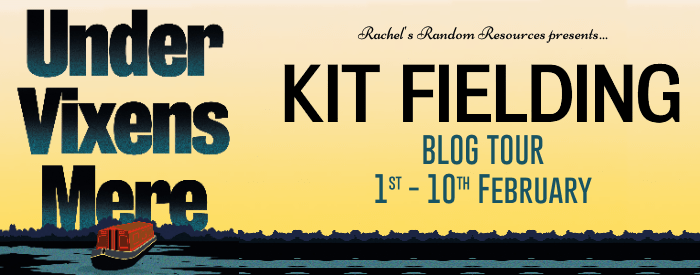
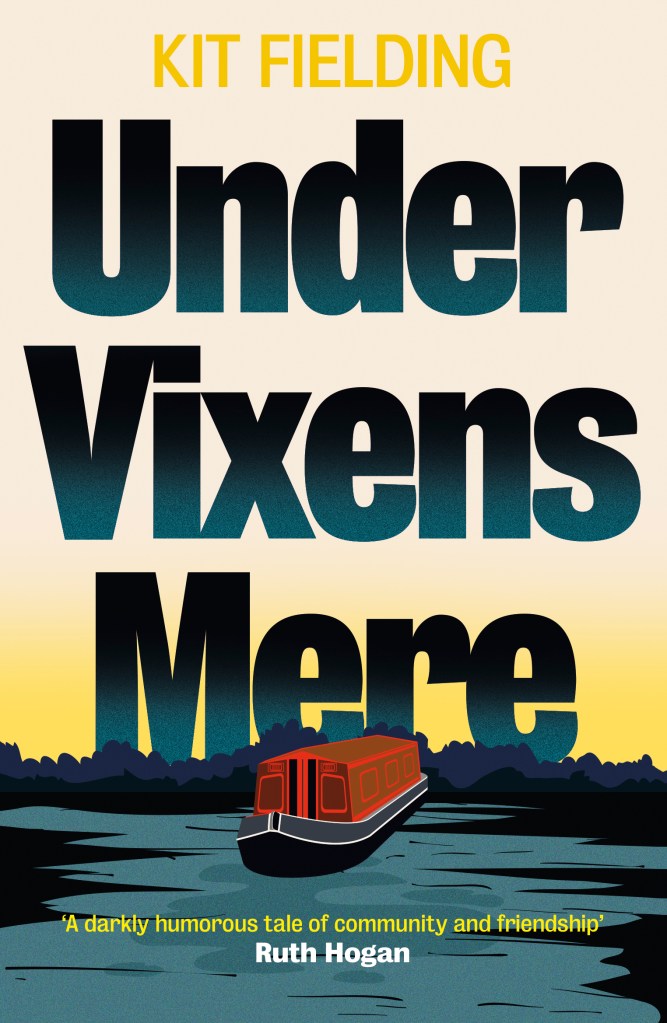
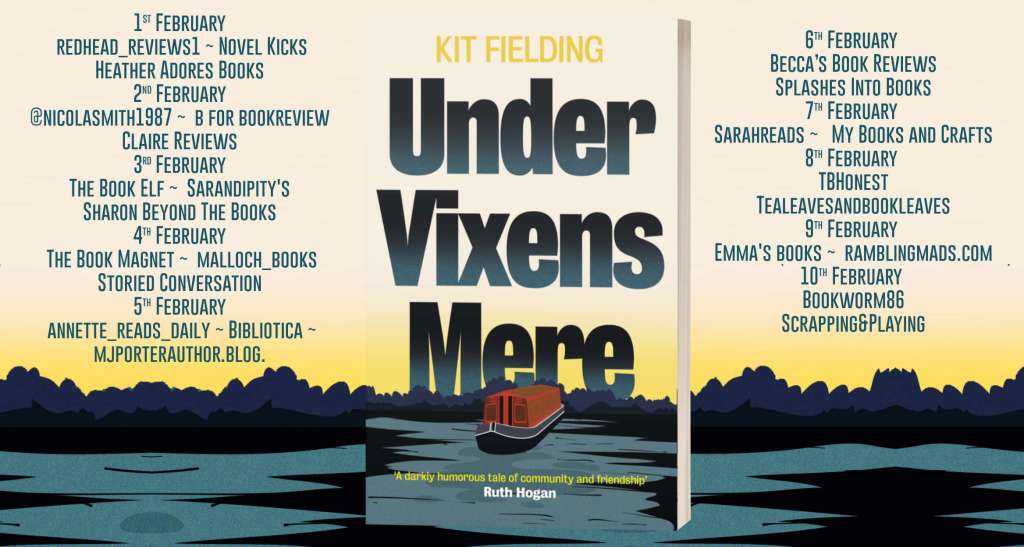
I’m delighted to share and excerpt and a competition to celebrate the release of Under Vixens Mere by Kit Fielding #blogtour #newrelease
Here’s the excerpt
Context: ‘You’ is Brodie, a mysterious Scotsman who has not been to Vixens Mere for fifteen years, and is invited to join a party in the Shed, which belongs to Big Ed and Milly, two long-standing residents of Vixens Mere, a community of people who live on houseboats.
Summer Walker.
You.
You give instructions to Mick, ‘Behave yourself. No barking while I’m gone.’ The dog pretends not to hear. Now you don’t really want to go to this meet-up. You’re a loner. Private. Not the mixing type. You’ve kept your own company for so many years now it’s second nature to sit on the sidelines. You’ll go for a couple of beers, some minor conversation, and then quietly slip away. But it doesn’t quite work out that way.
You see her immediately. Can’t help but look. Karen Jones. She’s sitting with a thin upright man – got to be her husband – who’s warming his bones by the wood burner. When he stands she takes his arm, and guides him outside to the toilet (Or as Big Ed calls it, the Thunderbox.) Then she guides him back. Glances again in your direction, Glances across fifteen years of time, briefly raises her hand in recognition of your presence. Gives you a strange sad smile.
You’ve been talking to Big Ed and Milly, and he’s asking what you’ve done with your life ‘thus far,’ and he laughs at his own expression. Milly reckons you’ve still a long way to go and you answer with the usual parries, the usual non-disclosure. Then Big Ed is drawing you over towards Karen Jones and the man who’s a constant at her side. Big Ed says to Karen, ‘You remember Brodie? Stayed here a long time ago.’
And then she’s in front of you and her hand is gently warm in yours and you’re seeing into and beyond a woman creeping towards middle age. You’re seeing a girl of twenty-five, eyes brimming with tears, who’s saying a goodbye that neither of you want but cannot avoid. Tonight that young woman, hiding behind her older self, is looking intently into your face and she’s saying, almost in disbelief, ‘But you haven’t changed at all, Brodie. You look just the same.’
You’re thinking that she may be older but she’s still as lovely, though it’s not words you can utter aloud. Then Big Ed is introducing, ‘Harry Jones, Karen’s husband’ and this tall thin man, whose eyes are out of focus, fumbles for your outstretched hand, latches onto it, says, ‘Pleased to meet you, Brodie,’ and he says it with such genuine honesty you feel a shadow of guilt flit over you.
Here’s the blurb
If poor Harry Jones hadn’t lowered himself into the water one freezing winter’s night, a long-buried secret would never have come to the surface.
If …
Big Ed and Milly had been able to have children,
Karen hadn’t longed for love and romance,
Lorrie hadn’t finally ditched Petra,
Dinah hadn’t found out the truth about Barry,
Jed hadn’t dealt drugs and got Anna pregnant,
Carl Thomson hadn’t come looking for him,
and Moses hadn’t heard the commotion …
then there would be no story of Vixens Mere to tell.
Kit Fielding plans and writes his novels in a motorhome at various locations around the country.
The feeling of impermanence is natural to him due to his mother’s traveller roots and a childhood succession of tied-cottages accommodation in different parts of England.
Kit Fielding says that there was always a curiosity about what was waiting, or was lurking, just around the corner. This legacy has stayed with him to the present day and it feeds into his work.
*Terms and Conditions –UK entries welcome. Please enter using the Gleam box below. The winner will be selected at random via Gleam from all valid entries and will be notified by Twitter and/or email. If no response is received within 7 days then Rachel’s Random Resources reserves the right to select an alternative winner. Open to all entrants aged 18 or over. Any personal data given as part of the competition entry is used for this purpose only and will not be shared with third parties, with the exception of the winners’ information. This will passed to the giveaway organiser and used only for fulfilment of the prize, after which time Rachel’s Random Resources will delete the data. I am not responsible for despatch or delivery of the prize.
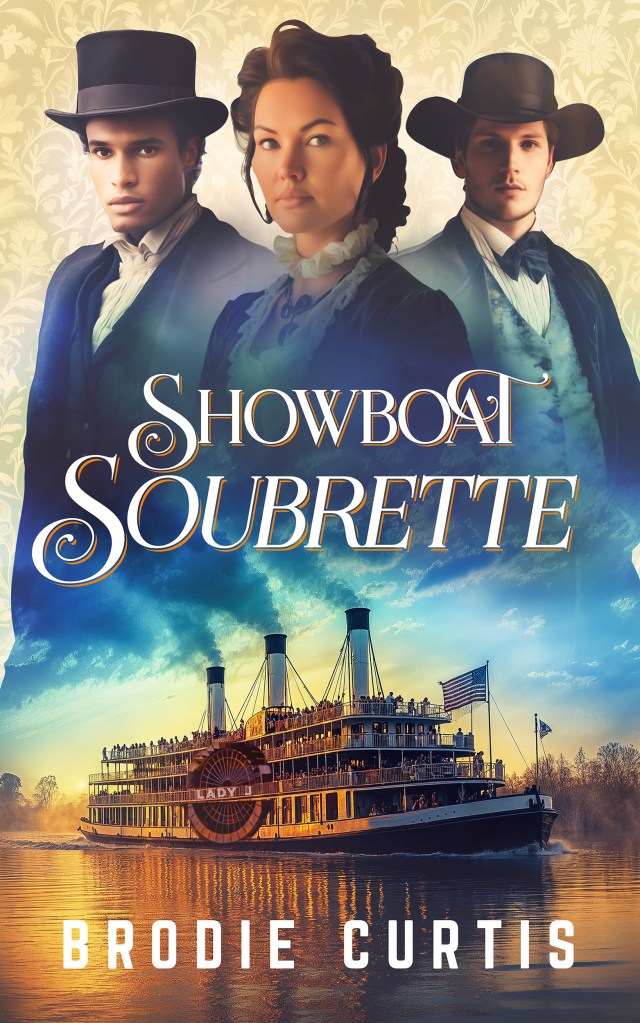
I’m delighted to welcome Brodie Curtis and his book, Showboat Soubrette, to the blog with a guest post.
Guest Post
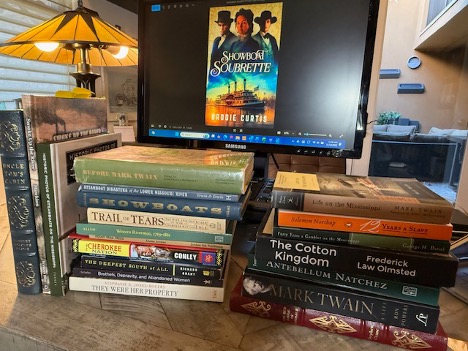
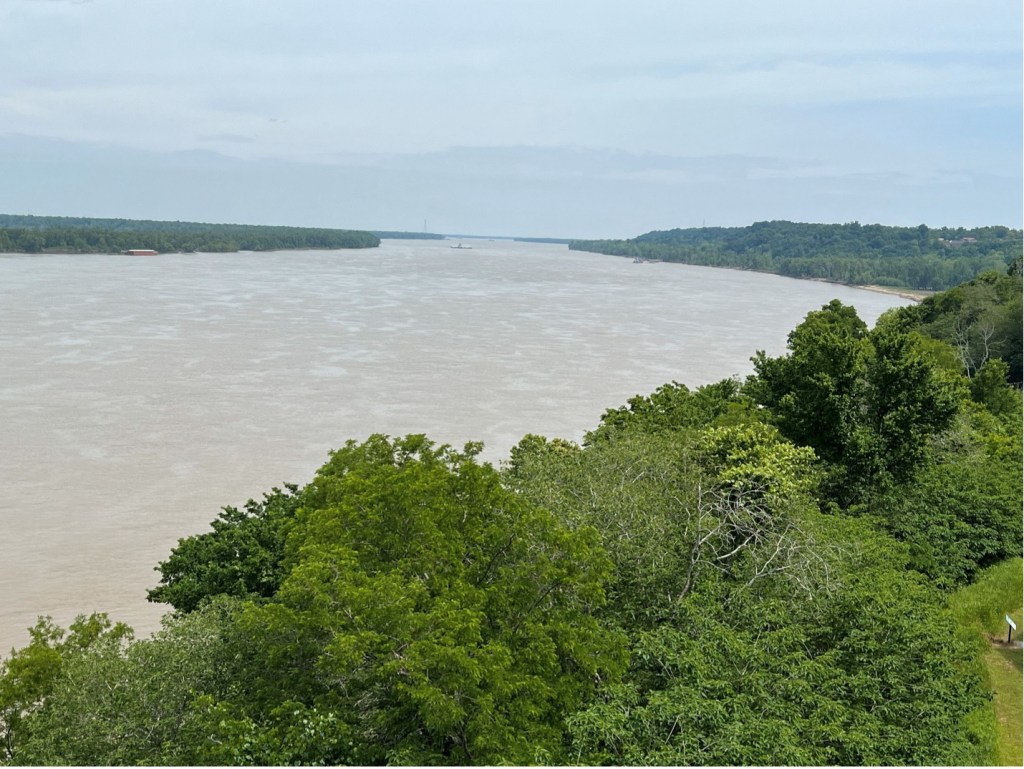
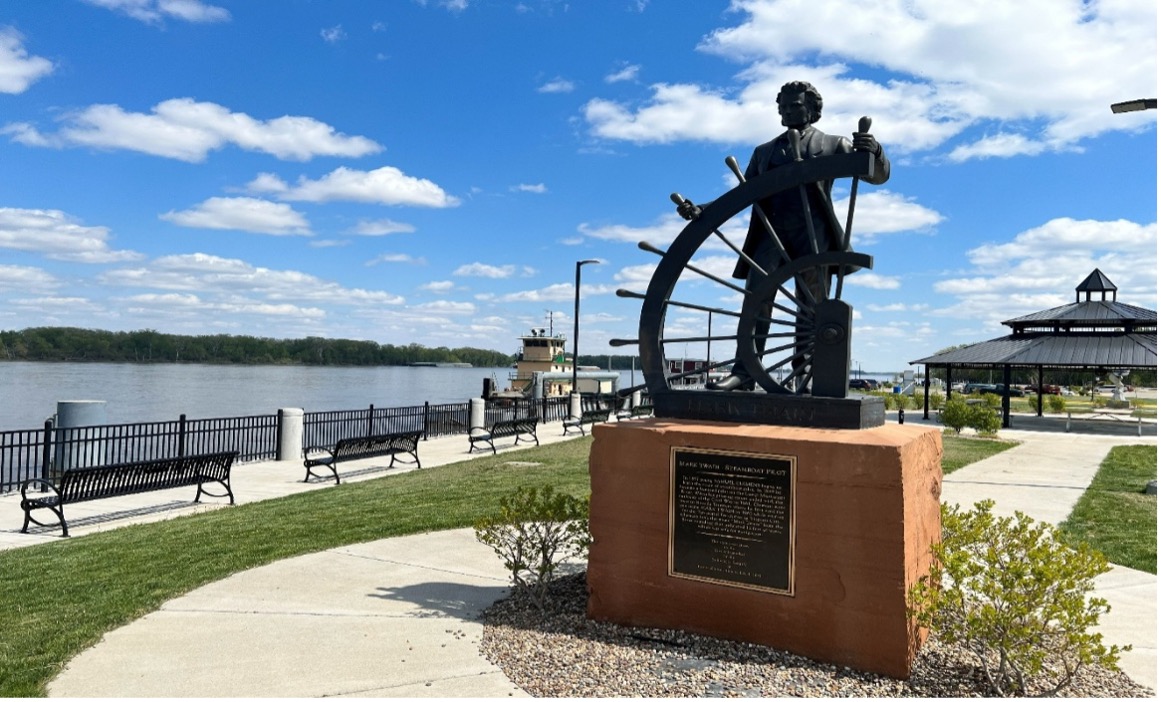
SHOWBOAT SOUBRETTE is my third historical novel set in the riverboat era on the lower Mississippi River prior to the Civil War. To learn about the period, I dug into a variety of research sources that are listed below. I truly got energized to tell my story by taking a drive along the Big Muddy, from Hannibal down to Natchez, stopping frequently at historical sites, and along the river itself. Had to feel it!
Brodie Curtis Looks Upriver from Natchez
UNDERSTANDING THE ANTEBELLUM DEEP SOUTH:
Romanticism of the Antebellum American Deep South could be found in the pageantry of the attire worn by the privileged, and in the heady adornment of passenger-hauling riverboats that paddle-wheeled the Mississippi. But the period exhibited almost unbelievable cruelty in its institution of slavery and in the bigoted attitudes of the times. And in its violence. Perhaps the first title listed below, Olmsted’s The Cotton Kingdom illuminates these contradictions best.
Olmsted, F. (1861). The Cotton Kingdom: A Traveller’s Observations on Cotton and Slavery in the American Slave States 1853-1861.
McDermott, J. (“Edited with an Introduction and Forward”) ( 1968). Before Mark Twain: A Sampler of Old, Old Times on the Mississippi.
Stowe, H.B. (1852). Uncle Tom’s Cabin.
Northup, S. (1853). 12 Years a Slave.
Devol, G. (1894). Forty Years a Gambler on the Mississippi.
Jones-Rogers, S. (2019). They Were Her Property: White Women as Slave Owners in the American South.
James, D.C. (1968). Antebellum Natchez.
Kelleher Schafer, J. (2009). Brothels, Depravity, and Abandoned Women: Illegal Sex in Antebellum New Orleans.
Sharp, A. and Sharp, G. (2009). Antebellum Myths and Folklore: A Search for the Truth.
Grant, R. (2020). The Deepest South of All: True Stories from Natchez, Mississippi.
RIVERBOATS:
Is there a more majestic image than a multi-decked steamboat gliding on the river, smoke billowing from its stacks while water clicks over its paddles? Yet idyllic portraits belied the dangers, from collisions and boiler explosions to snags, sandbars, fire and ice and other in climate conditions. Thousands of boats ended up at the bottom of the river. Mark Twain’s memoir of his cub pilot days and old images in many of the sources below sparked my imagination.
Twain, M. (1883). Life on the Mississippi.
Powers, R. (2005). Mark Twain: A Life.
Brodie Curtis took in the Mark Twain Attractions in Hannibal MO
Shapiro, D. (2009). Historic Photos of Steamboats on the Mississippi.
Graham, P. (1951). Showboats: The History of an American Institution.
Allen, M. (1990). Western Rivermen, 1763-1861: Ohio and Mississippi Boatmen and the Myth of the Alligator Horse.
Lloyd, J. (1855). Lloyd’s Steamboat Directory, and Disasters on the Western Waters.
Hawkins, V. (2016). Smoke up the River: Steamboats and the Arkansas Delta.
Berger Erwin, V. and Erwin, J. (2020). Steamboat Disasters of the Lower Missouri River.
Sandlin, L. (2010). Wicked River: The Mississippi When it Last Ran Wild. Buck, R. (2023). Life on the Mississippi: An Epic American Adventure.
Here’s the Blurb
FROM STAR SHOWBOAT SINGER TO PIRATE PREY ON THE WICKED RIVER!
Showboat singer Stella Parrot’s star rises in the Antebellum South with every sold-out performance along the lower Mississippi River. When a river pirate viciously assaults her, new friends Toby Freeman and John Dee Franklin foil the attack. However, the pirate’s family is bent on revenge.
Stella, Toby, and John Dee escape their riverboat with able assistance from young cub pilot Sam Clemens, only to be pursued by the notorious Burton Gang. As the trio runs for their lives, mortal perils await at every turn: a fierce storm, high-stakes gambling confrontations, deadly combat, and a cotton boat up in flames. Stella, a Cherokee Indian, and Toby, a free Black man, and their friend White man John Dee endure relentless racial prejudices and injustices in the gritty underbelly of the Wicked River while fleeing to New Orleans—where the Burtons will be waiting!
SHOWBOAT SOUBRETTE’s fast-paced lower river adventure chase features romantic showboat scenes and is unsparing in its exploration of the bigoted and sometimes lawless riverboat era.
Praise:
“Captivating characters? A fast-paced storyline? Cameos from historical figures? Brodie Curtis checks all the boxes in his novel set along the Mississippi River on the eve of the Civil War. Well done.”
Tim Wendell, author of CASTRO’s CURVEBALL and REBEL FALLS
“SHOWBOAT SOUBRETTE is a novel that transcends a simple river chase, unfolding instead as a richly textured portrait of time and place where beauty and brutality are forced to coexist. Brodie Curtis has crafted a story that entertains without simplifying, thrills without trivializing, and ultimately delivers a powerful testament to courage and solidarity on the margins of history…For readers who crave historical fiction with pace and teeth, this novel will be a compelling and unforgettable ride.”
THE HISTORICAL FICTION COMPANY
“This was an unputdownable read for me!…It’s an optimistic picture of a shocking time in American history….SHOWBOAT SOUBRETTE is ideal for fans of historical adventure fiction, especially fans of Twain himself and Percival Everett’s JAMES.”
Ruth F. Stevens, author of STAGE SEVEN and THE SOUTH BAY SERIES Books 1 and 2
“Readers of historical fiction will love SHOWBOAT SOUBRETTE…a river adventure down the great Mississippi to New Orleans in the 1850s when racial tension is ripe in the Old South…an adventure worthy of Mark Twain’s pen… Curtis is a master of description and atmosphere.”
Tyler R. Tichelaar, PhD and award-winning author of THE MYSTERIES OF MARQUETTE
“(E)xtensive research draws the reader in and carries them along on this fast-paced adventure, blending interesting historical facts with compelling fictional characters. I thoroughly enjoyed the journey and recommend this voyage down the mighty Mississippi.”
Kris Abel-Helwig, author of THE HERO SERIES and the upcoming RULE OF ODDS.
This title is available to read on #KindleUnlimited
Meet the Author
Raised in the Midwest, Brodie Curtis was educated as a lawyer and left the corporate world to embrace life in Colorado with his wife and two sons.
Curtis is the author of THE FOUR BELLS, a novel of The Great War, which is the product of extensive historical research, including long walks through the fields of Flanders, where much of the book’s action is set. His second novel, ANGELS AND BANDITS, takes his protagonists into The Battle of Britain. Curtis’ third novel is set on a Mississippi Riverboat prior to the Civil War.
A lover of history, particularly American history and the World Wars, Curtis reviews historical fiction for the Historical Novels Review and more than 100 of his published reviews and short takes on historical novels can be found on his website: brodiecurtis.com.
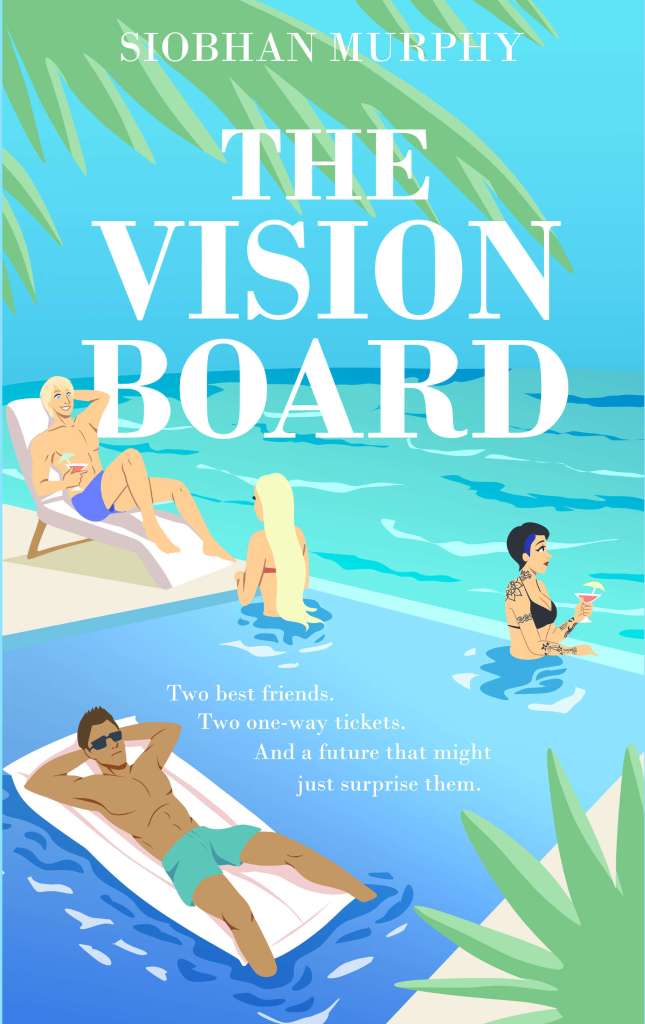
I’m welcoming The Vision Board by Siobhan Murphy to the blog #romance #blogtour @rararesources @rachelsrandomresources
Here’s the blurb
Two best friends. Two one-way tickets. And a future that might just surprise them. Bex and Amy are best friends and total opposites. Bex is cynical, Amy is romantic. Bex is chaotic, Amy is organised. With the prospect of turning 34 just around the corner, neither is where they expected to be at this point in their lives. Bex is exploring her sexuality and has a string of failed relationships, while Amy is newly single and desperate to fall in love. Armed with a photographic vision board of the future, Bex and Amy put their trust in ‘The Universe’ and fly from London to Bali, then on to Australia in search of adventure, cocktails on the beach and maybe even love. Almost immediately, Amy finds someone who is the perfect fit for her dream life. While Bex is stuck playing double dates with his best friend, the most pompous man she has ever met, but also one of the hottest. Travelling via white sand beaches, lush rainforests and road trips through idyllic scenery, the images on their vision board begin to transform into reality. However, people are not always what they seem, and first impressions are not always accurate. Add in a queer, charismatic love interest and a vindictive ex-girlfriend, and the path of true love begins to get a little more complex. When ‘The Universe’ has its own agenda, is it possible to manifest a happy ever after? An Enemies to Lovers destination romance with a sprinkling of Pride and Prejudice vibes.
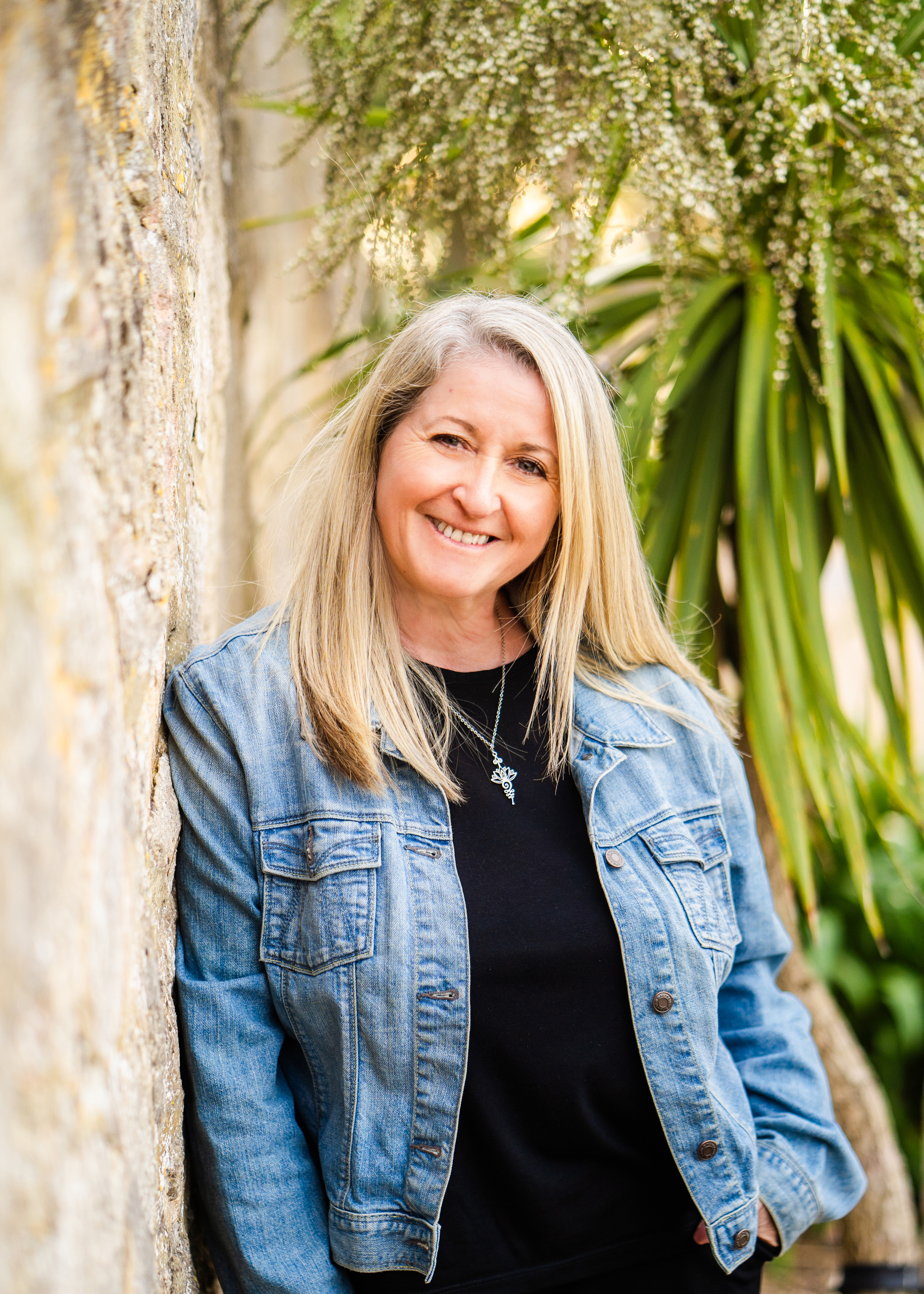
Siobhan Murphy is a writer and photographer based in the UK. She writes (and reads) both light-hearted romantic comedies and contemporary women’s fiction/Bookclub fiction.
Her writing hours are sponsored by Earl Grey tea, chocolate bars several glasses of wine. When she is not writing, reading, or working in her photography day job, her hobbies are eating haribo sweets, talking nonsense and walking into rooms wondering why she is there.
She loves to travel, laugh at the absurdity of life, and enjoy a glass of wine with good friends. She loves a good TV binge session, especially shows like Grey’s Anatomy, Virgin River, Emily in Paris, or This is Us. She can be an emotional wreck who often runs out of tissues and when she was a child, her dad had to constantly reassure her that programmes on the TV weren’t real. The upside of this is that she can legitimately class her habit of binge-watching RomCom films as ‘research.’
Siobhan loves to escape into books and live in other worlds. Like most writers, she has been an avid reader from the second she hurtled into the world (well perhaps a little bit after that). Over the years she’s drifted around the world in search of adventure, hoping to figure out what to do with her life. She is not sure if she has the answer yet but writing certainly comes close. Though she suspects her long-suffering family, and her liver might not agree.
She’s impulsive and easily bored, so she’s turned her hand to many jobs over the years. She’s worked in places as diverse as the High Commission in Nairobi; a market stall selling cheese in the UK and an 80ft racing yacht in Australia. Been a secondary school English teacher and a Barista with no discernible talent for making coffee. She’s done admin work for a number of businesses but discovered that offices aren’t really for her. Her favourite job was as a bookseller for Waterstones, she loved recommending books to customers and applying those 3 for 2 stickers that people find so hard to remove. For the last 19 years she’s been a professional photographer, taking portraits of humans – often the really, really small ones.














 MJ Porter