Reviews are starting to come in, and I’d like to thank all the reviewers for taking the time to have a look at The Royal Women Who Made England. You can check out the reviews over on the Pen and Sword website.
In the meantime, don’t forget to enter the combined competition between my two publishers for signed copies of The Royal Women and King of Kings (UK only. Closing date 6th Feb 2024). You can find the details here.
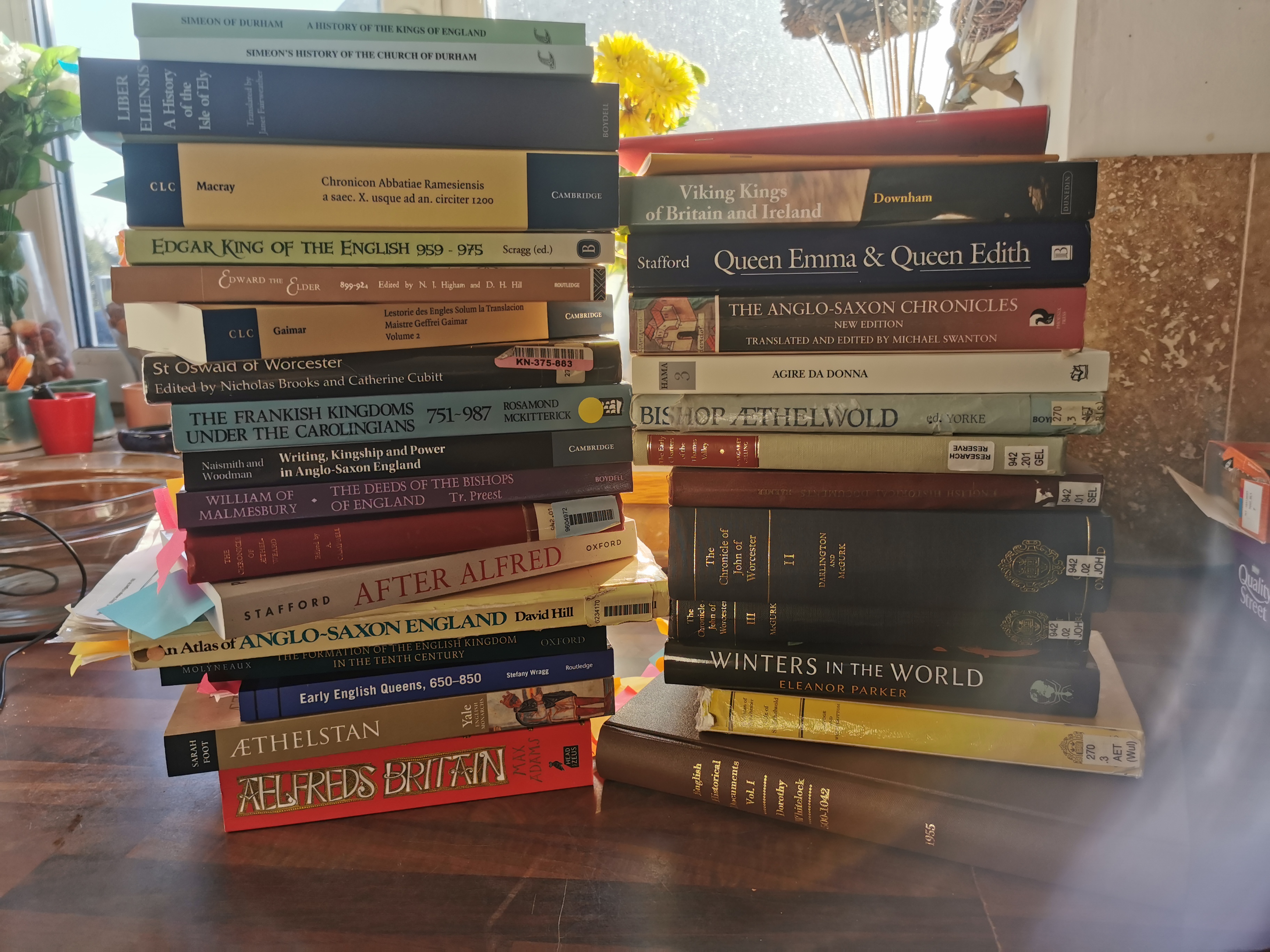
And, I have another little video to share with you below about one of the later Anglo-Norman sources I made use of while researching the book.
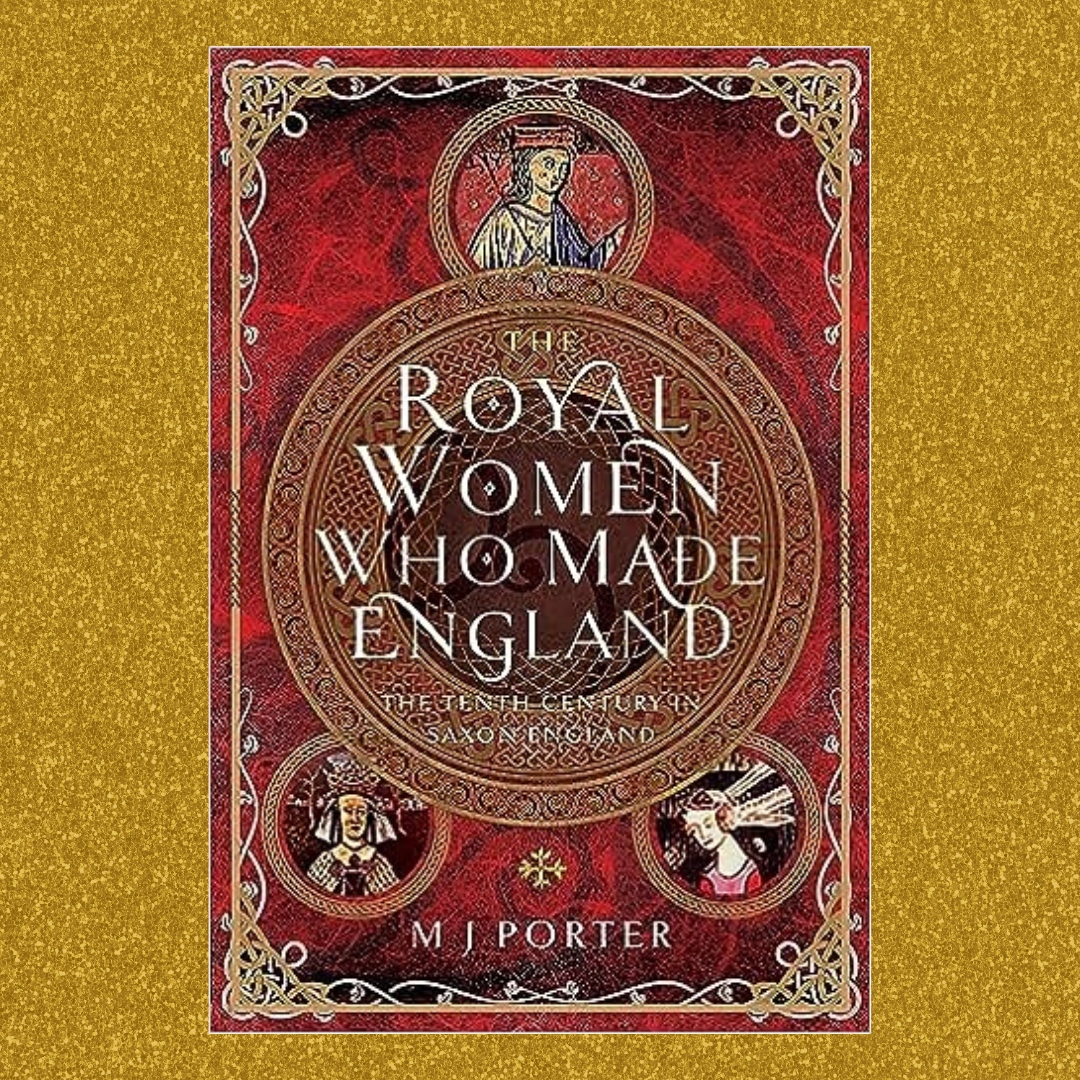
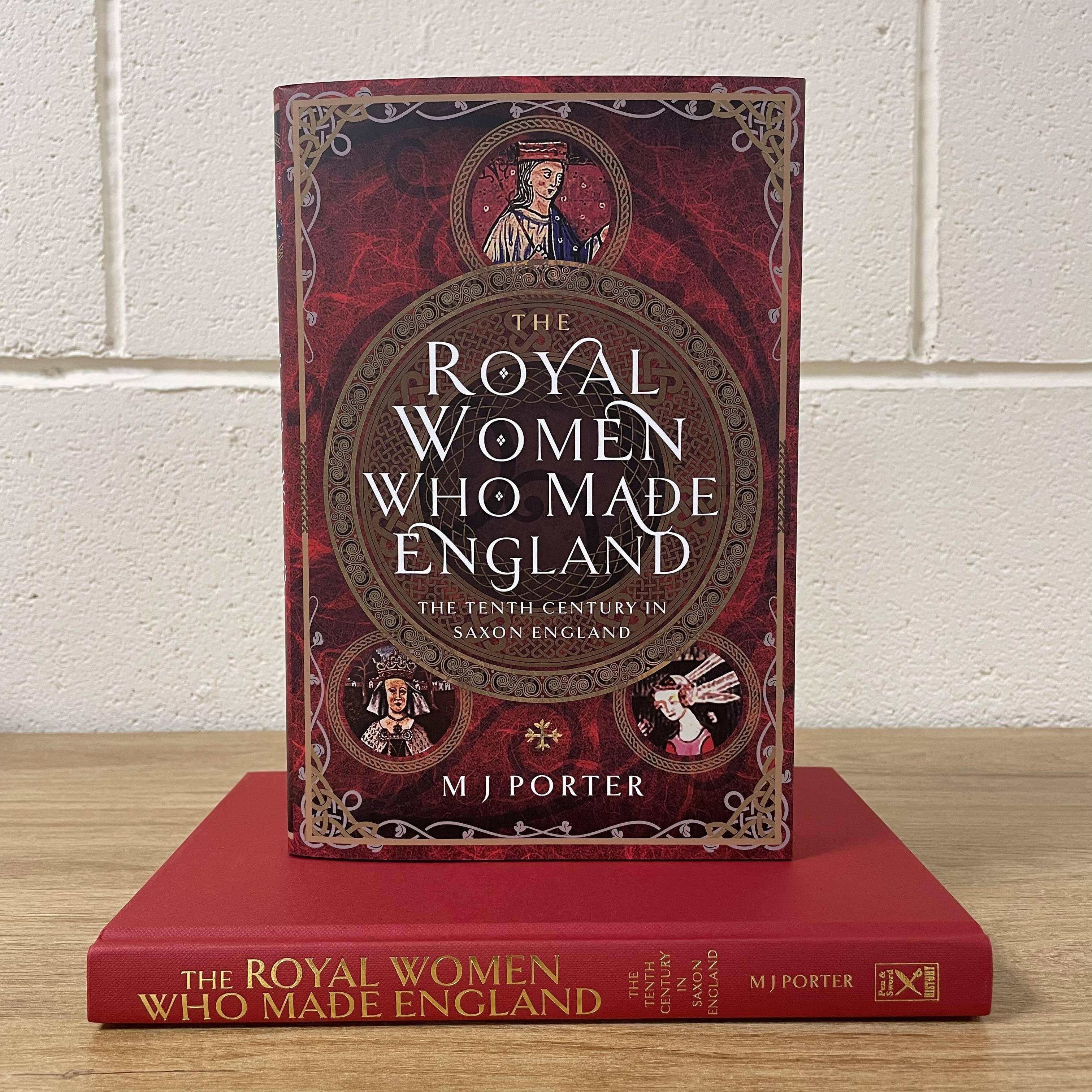
It feels like I’ve been talking about this book forever, but the day is finally upon us. The Royal Women Who Made England is available in hardback in the UK from today. It will be released in the US in March.
If you’ve been hiding from me for the last few months, you might be wondering what this is all about. So here goes.
Throughout the tenth century, England, as it would be recognised today, formed. No longer many Saxon kingdoms, but rather, just England. Yet, this development masks much in the century in which the Viking raiders were seemingly driven from England’s shores by Alfred, his children and grandchildren, only to return during the reign of his great, great-grandson, the much-maligned Æthelred II.
Not one but two kings would be murdered, others would die at a young age, and a child would be named king on four occasions. Two kings would never marry, and a third would be forcefully divorced from his wife. Yet, the development towards ‘England’ did not stop. At no point did it truly fracture back into its constituent parts. Who then ensured this stability? To whom did the witan turn when kings died, and children were raised to the kingship?
The royal woman of the House of Wessex came into prominence during the century, perhaps the most well-known being Æthelflæd, daughter of King Alfred. Perhaps the most maligned being Ælfthryth (Elfrida), accused of murdering her stepson to clear the path to the kingdom for her son, Æthelred II, but there were many more women, rich and powerful in their own right, where their names and landholdings can be traced in the scant historical record.
Using contemporary source material, The Royal Women Who Made England can be plucked from the obscurity that has seen their names and deeds lost, even within a generation of their own lives.
So, who were these royal women? While some of us will know Æthelflæd, the Lady of Mercia, either because I think she is one of THE most famous Saxon women, or because of The Last Kingdom TV series and books, but she is merely one of many.
I’ve fictionalised Elfrida and her contemporaries, Eadgifu, the third wife of Edward the Elder and also some of his daughters, as well as Ælfwynn, the daughter of Æthelflæd. My first non-fiction title is me sharing my research that these stories are based upon.
I’ve also ‘found’ many other women of the period who have left some sort of physical reminder, mostly in charters or because their wills have survived.
In total, I discuss over twenty women directly involved with the royal family, either by birth or marriage, and also a further forty, who appear in the sources. I also take a good look at what these sources are and how they perhaps aren’t always as reliable as we might hope. I make an attempt to ‘place’ these women in the known historical events of the period. And draw some conclusions, which surprised even me.
You can find some of my blog posts about these women below.
In the online resource, The Prosopography of Anglo-Saxon England (PASE), a database of every known name from the Saxon period, 33,981 male names are listed. There are only 1,460 female names for the 600-year period of Saxon England. Only 4 per cent of entries are women (there are also many anonymous ones which may mask more women). Twenty-one (possibly twenty-two) of these belong to the royal women of the tenth century. So, who were they?
Æthelgifu, Alfred and Ealhswith’s second daughter, the abbess of Shaftesbury.
Ælfthryth, the Countess of Flanders, their third daughter.
Ecgwynn (if that was her name), mother to King Athelstan, and his unnamed sister, given the name of Ecgwynn/Edith in later sources
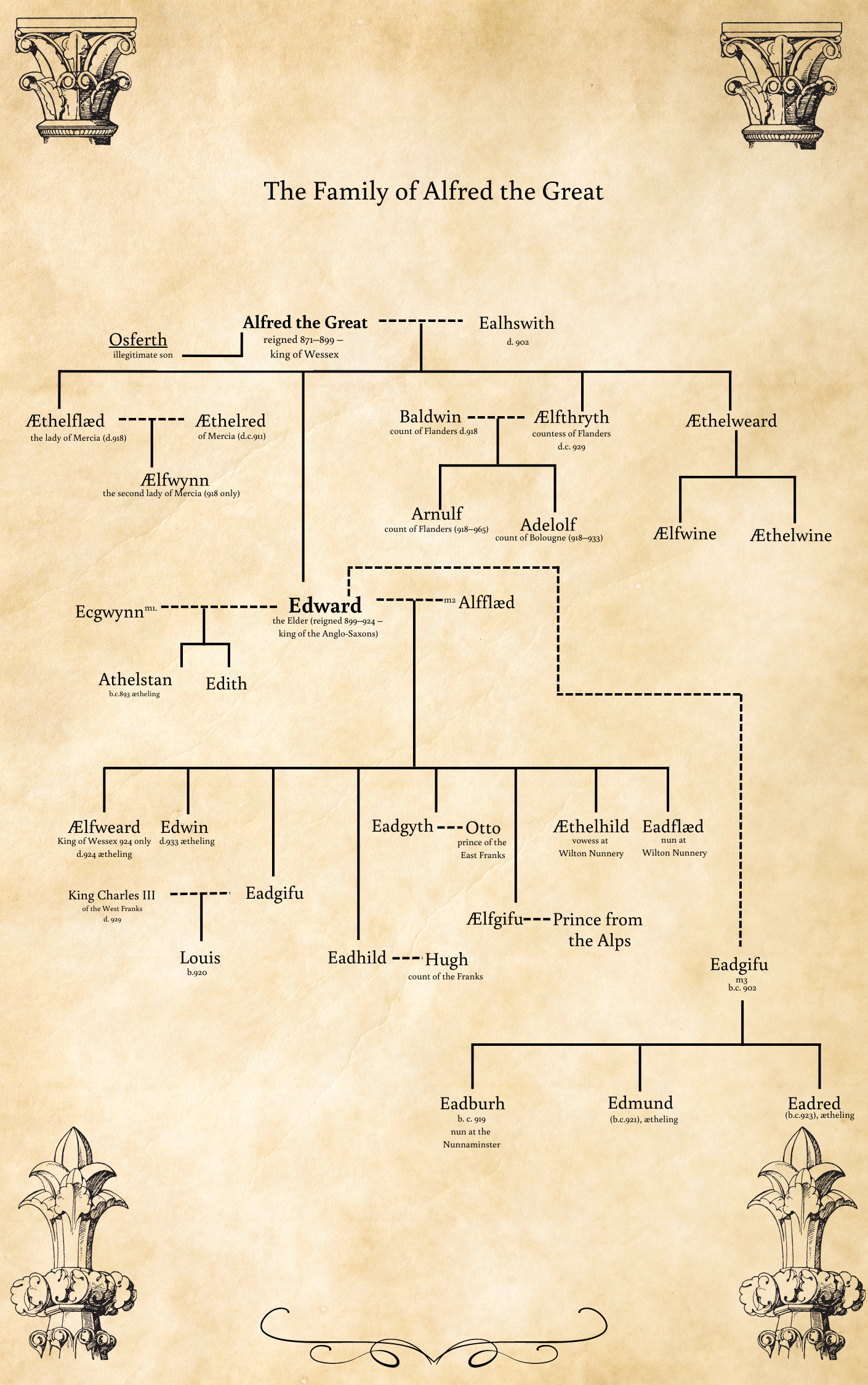
Lady Ælfflæd the second wife of Edward the Elder. They had many children. Six of them were daughters, Æthelhild, Eadgifu, Eadflæd, Eadhild, Eadgyth and Ælfgifu.
Edward’s third wife, Lady Eadgifu, certainly had one daughter, Eadburh. (There is the possibility that she had two.)
Ælfgifu of Shaftesbury, whose mother Wynflæd is named, was the first wife of Edmund. Æthelflæd of Damerham was Edmund’s second wife.
Edmund’s oldest son, Eadwig, married another Lady Ælfgifu.
Edmund’s youngest son, Edgar, would marry, or have children with no fewer than three women, Æthelflæd, Wulfthryth and Elfrida/Ælfthryth. From these three unions, one daughter was born, Edith/Eadgyth.
Another Ælfgifu was the first wife of Æthelred II. His second wife was Lady Emma of Normandy. At least four daughters were born to Ælfgifu, a daughter (also called Ælfgifu), Eadgyth, Wulfhild and Ælfthryth, while Lady Emma was the mother to Gode.
You can read all about these women in my non-fiction book, and there are also some links to blog posts I’ve written, which may be of interest.
Below you can hear me try and explain the importance of the marriages of some of these women into the West Frankish dynasty. I also forget the title of my non-fiction title, and generally make a bit of a mess of it. Enjoy:)
The Family of Charles III, the king of the West Franks (in my own words)


 MJ Porter