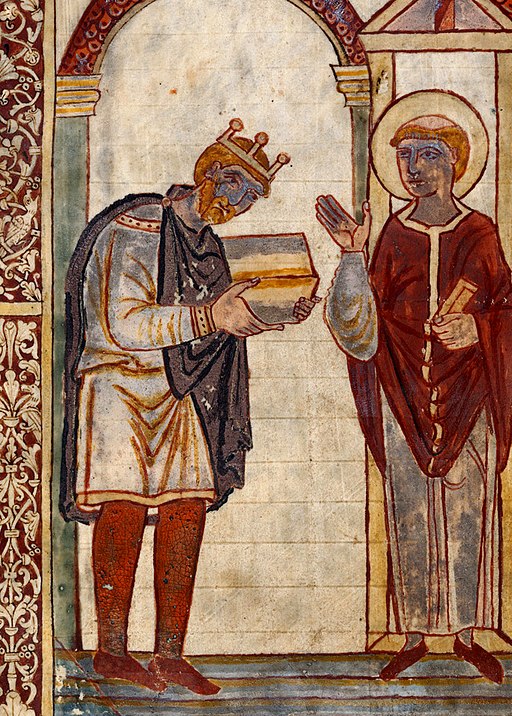
The hero of the Mercian Ninth Century Series, King Coelwulf, has not been treated kindly by history.
He appears in the Anglo-Saxon Chronicle (the main narrative source for the period) as a ‘foolish king’s thegn’ (in the ASC E Version, although not in the older A version) and not actually a king at all.
´Here the raiding army went from Lindsey to Repton and took winter-quarters there, and [[874] drove the king Burhred across the sea 22 years after he had the kingdom; and conquered all that land…And the same year they granted the kingdom of Mercia to be held by a foolish king’s thegn, and he swore them oaths and granted hostages, that it should be ready for them whichever day they might want it, and he himself should be ready with all who would follow him, at the service of the raiding-army. (A) 874 [873]
´Here the raiding-army went from Lindsey to Repton, and there took winter quarters, and drove the king Burhred across the sea 22 years after he had the kingdom, and conquered all that land. And he went to Rome and settled there, and his body lies at St Mary’s church in the English Quarter. And the same year they granted the kingdom of Mercia to be held by Ceolwulf, a foolish king’s thegn.’ (E)874 [873] (Both quotes from M Swanton ed. and trans. The Anglo-Saxon Chronicles).
His ‘reign’ has been explained as being entirely dependent on Viking overlords who really ruled Mercia, from their ‘base’ at Repton. He was a ‘puppet king,’ a sop to assist the independent Mercians as they struggled to come to terms with their new warlords.
The survival of two charters, carrying Coelwulf’s name, and witnessed by the ealdormen and bishops of Mercia, have not been given the attention they deserve because they suggest a different interpretation to that of King Alfred (the Great) single-handedly defeating the Vikings, and making ‘England,’ as does the discovery of the Watlington Hoard of coins which suggests that Coelwulf and Alfred were ruling jointly.
So, if we put aside the problems of what Coelwulf did, or didn’t achieve, who might he actually be, and why might he have been named as king?
Coelwulf’s name leads historians of the period to suggest he was a member of a branch of the Mercian royal family whose last ruler was King Coelwulf I, who ruled in Mercia from AD821-823. He succeeded his brother, Coenwulf, who ruled from AD796-821. They were descended from the brother of the mighty seventh-century king, Penda, most famously known for being pagan, warlike and terrorising the Northumbrian kingdom during its ‘Golden Age.’ (Read about Penda and the Northumbrian kingdom in my Gods and Kings trilogy). He was therefore a member of a long-lived ruling dynasty that could trace its descendants all the way back to the early 600s.
This identification of Coelwulf helps to explain why he was accepted as king following King Burgred’s abdication. He was no foolish king’s thegn. He was a member of a ruling dynasty, who, for one reason or another, were no longer the ruling family in Mercia in the 870’s. (And what was happening in Mercia before the 870’s is just as fascinating as what came after it – you can read about that in The Eagle of Mercia Chronicles).
For the first time ever, I’m on a podcast. Come and listen to me talk to the fabulous Jenny Wheeler about all things Saxon, and just what I really think of the term ‘the Dark Ages.’
Listen on The Joys of Binge Reading website, where you can also find links and a transcript of the podcast, or via Spotify below, and be sure to check out the other fab authors Jenny has featured on the podcast.
If you’ve read a few of my books, you’ll know that I don’t very often venture into the Saxon lands on the north-west coast of England. (I know that Ealdorman Leofwine visits there in his second book, but I didn’t know better then). There’s a very good reason for this. I am, quite frankly, a bit scared to do so. Mainly because I don’t feel as though I can get a firm understanding of what was happening there during the Saxon era. (I would say the same about Cornwall/Devon – and that’s because there are various references to the area coming under Saxon control – only to be repeated a later period, so it clearly didn’t happen when some of the sources say it did).
Some research will highlight the Norse element of the area, and others will call it Cumbria, or Northumberland. And in the 830s, before the main ravages of the Viking raiders, it feels very unknown to me.
But, in Protector of Mercia, I do take young Icel to the north-west – no doubt to test myself and to see if I could do it.
I think we can start with Chester, which admittedly, would probably have been classified as being in Mercia. Chester, a former roman site, is well-known, even now there are standing Roman ruins. Admittedly, what Chester might have been like in the 830s is more difficult to pin point – so I had a bit of fun with that.
And after Chester? What then? I like to make use of old maps when I’m trying to reconstruct the past (the one above is a road map, so looks a bit unusual). Yes, they’re still positively modern but I find it easier than using Googlemaps where there’s too much ‘modern’ to look at. The starkness of antique maps isn’t always quite as extreme as on the map below of Cheshire from 1835 which shows the voting hundreds but there’s always something of value in them, even if its just revealing where the rivers are in relation to settlements – if you use Googlemaps you might become distracted by canals and other, much later, attempts to control rivers.
Indeed, we almost go from one extreme to another when looking at the map for Cumbria or Cumberland as the map calls it. This is from 1895 so is much more modern.
But it’s the map below that should put the problems into context. This is a snippet from Britain in the Dark Ages, an Ordnance Survey map from 1966, which shows just how stark the landscape might have been (I don’t doubt that we should, hopefully, know a bit more in the intervening 50+ years).
So, there’s not a lot to go on, and I’m sending poor Icel north-west, so it’ll be interesting to see what he discovers.
Protector of Mercia is released today, 5th September, in ebook, audio and paperback. The hardback will be ready soon.
Welcome to my release day post for Protector of Mercia. I’m going to talk about the kings who preceded all the chaos of the series.
Readers of the Eagle of Mercia Chronicles will have encountered the names of kings Coenwulf and Coelwulf, although the kings in the first book, Son of Mercia, ruled after both Coenwulf and Coelwulf. But, having written about Coelwulf II in the Mercian Ninth Century books – which feature an older, and wiser Icel, I was eager to return to an equally unsettled period in Mercia’s history. And this, helped by the fact that Icel would just have been old enough at this period to be involved, very much helped set the scene. However, the aftermath of the reigns of these two men, brothers, are very much at the heart of political affairs during the Eagle of Mercia Chronicles.

So, who were Coenwulf and Coelwulf or Ceolwulf?
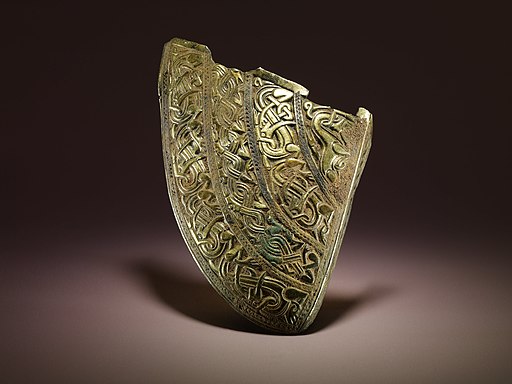
Coenwulf, the first and only of his name, was king of Mercia from 796 until his death in 821. He claimed descent, not from the previous king Offa (of Offa’s Dyke fame), and his son, but instead from Pybba, who is believed to have been the father of both Kings Penda and Eowa (read about them in my Gods and Kings trilogy) who ruled in the seventh century. You might have heard of Penda. Although the connection isn’t sound, he is often referenced when talking about the Staffordshire Hoard.
It does seem as though the crisis of the late 820s/830s and the slow decline of Mercian power have overshadowed all that King Coenwulf achieved, not helped by the fact that his son, who was to succeed him, died before his father (if he existed at all), so that on Coenwulf’s death, the kingship passed to his brother, Coelwulf, and he in turn was overthrown at some point in 823-826. The brother kings seem to have shared another brother as well, who may have been king of Kent, after Mercia annexed the kingdom to its own domain.
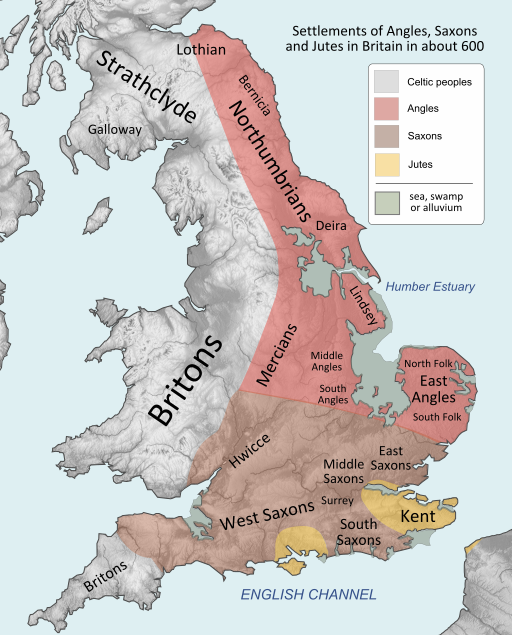
But Coenwulf was a successful ruler. He claimed the kingship after the death of Offa’s son, Ecgfrith, not long after his father’s death, (Offa is said to have been keen to eliminate all rivals to the kingship which is why, when his son died, the kingship had to pass to a more obscure branch of the ruling line), and while he suffered reverses in Kent and the kingdom of the East Angles, he does seem to have exercised control in both places, and was also aggressive against the Welsh kingdoms throughout his reign. Mercia, at this time, was NOT confined to the current English Midlands, it was a much vaster kingdom although it’s firm boundaries are difficult to establish.
Map design by Flintlock Covers
While the Anglo-Saxon Chronicle is sparse about our brother kings, that didn’t stop the later Norman writers, embellishing the story of them. But first, what do we hear about these kings from the Anglo-Saxon Chronicle?
‘Ceolwulf, king of Mercia, ravaged over the inhabitants of Kent as far as the Marsh, and [they] captured Præn, their king, and led him bound into Mercia.’ 796 [798[ (A)
´Here Coenwulf, king of Mercia, passed away, and Coelwulf succeeded to the kingdom.’ 819 [821] (A)
´Here Ceolwulf was deprived of his kingdom.’ 821 [823] (A)
´And the same year King Egbert and King Beornwulf fought at Ellendynm and Egbert took the victory; and a great slaughter was made there…. And that year the East Angles killed Beornwulf, king of the Mercians.’ 823 [825[ (A)
´Here Ludeca, king of Mercia, was killed, and his 5 ealdormen with him, and Wiglaf succeeded to the kingdom.’ 825 [827] (A)
´Here Wiglaf obtained the kingdom of Mercia again.’ 828 [830] (A)
Henry of Huntingdon, one of the Anglo-Norman author, writes of Cenwulf, our Coenwulf
‘Not long afterwards, Cenwulf, king of Mercia, beating and ravaging his way through the Kentish province, captured their king Præn, who could not match his strength and was lurking in the coverts and isolated places, and victoriously took him back in chains.’ p.259
Coenwulf’s brother, Coelwulf, succeeded him, but not for long, until he was usurped. Henry of Huntingdon in summarising affairs in Mercia adds.
‘Cenwulf reigned peacefully for twenty-six years, and died the common death.
Ceolwulf possessed the kingdom for three years, which the fierce Beornwulf then wrested from him.’ p.271
The Chronicle of John of Worcester adds similar details.
‘[821] Ceolwulf, king of the Mercians, was driven from his kingdom, and Beornwulf was raised to the kingship.’p241
There is some confusion regarding children born to either brother, and indeed, much that is known of that later Coelwulf II stems from the fact he shared a name with one of the two brothers, and as such, his connection with that ruling family can be supposed by experts in the field (not me). It appears that Coenwulf had a son and a daughter, the daughter well known as an abbess at a local nunnery, and possibly, two wives. King Coelwulf is known to have had one daughter, Ælflæd, who married Wigmund, the son of King Wiglaf. But there is a distinct lack of information regarding these individuals. We don’t know when the usurped King Coelwulf died. We don’t know when his daughter died, for certain, and obviously, other children are unknown.
The Chronicle of John of Worcester, another Anglo-Norman writer, informs us that.
‘[819] St Cenwulf, king of the Mercians, after a life devoted to good deeds, passed over to the eternal blessedness which is in heaven, and left his 7-year-old son St Kenelm heir of his realm. But when a few months had passed, by the treachery of his own sister Cwenthryth, whose cruel spirit had been roused by an awful lust for power, he was secretly done to death with cruel outrage by Æscberht, his most bloodthirsty tutor, in the shade of a thorn tree in a deserted wood. But he who was slain with heaven alone as witness, was later revealed by heaven’s witness through a column of light. Kenelm’s head was cut off, milk-white in the beauty and innocence of birth, and from it a milky dove with golden wings soared to heaven. After his happy martyrdom, Ceolwulf received the kingdom of the Mercians.’ P239-241
Henry of Huntington adds. ‘At Winchcombe you will read of the secret martyrdom of Kenelm. He was the son of Cenwulf, the Mercia king, who died in the year of grace 819, having reigned for twenty-four years. The martyrdom of his son Kenelm was revealed from heaven to Pope Silvester II at Rome.’p691
However, Coenwulf and Coelwulf I do seem to have enjoyed military successes. Coelwulf’s attacks on Wales are mentioned in the Annales Cambriae.
‘818 Cenwulf [Coenwulf] devastated the Dyfed regio.
822 The fortress of Degannwy is destroyed by the Saxons and they took the kingdom of Powys into their own control.’ p48
The Anglo-Saxon Chronicle is not helpful about the reigns of either brother, other than referencing their accession and either death or deposing. We don’t know the date that Coelwulf I died, although he clearly lived after being deposed.
Increasingly, scholarship is looking at Mercia during this period – if the answers can’t be found in the surviving written sources they can be found elsewhere. When King Alfred began his revival in education, many of the scholars he turned to were Mercians, highlighting Mercia’s accomplishments in all spheres – and the correlation has been made that the same happened in Mercia after the end of Northumbria’s Golden Age. There is also a wealth of Mercian sculpture dated to this period which hints at the power and influence of the kingdom, perhaps even of artistic centres at the heart of certain designs.
This doesn’t yet help us truly appreciate the power these kings could wield – so often overshadowed by what happened after their reigns, but it certainly shows we should be wary of accepting this absence in the written sources as indicative of their failure. Indeed, we should be wary of any Wessex-centred source from later in the same century (the Anglo-Saxon Chronicle) that might not only suffer from Wessex-bias, but may also reveal a desire to overshadow Mercia in order to proclaim Wessex’s kings as the more powerful. This is something that is certainly at the heart of the revival in interest in the descendant of these two kings, King Coelwulf II, or Mercia’s last king, written about as a ‘foolish king’s thegn’ in the Anglo-Saxon Chronicle but clearly very far from being that.
It’s intriguing to realise that our Norman writers only had access to much the same information that we do in order to offer an account of what was happening in Mercia at this time. But they do seem to have enjoyed embellishing the words of the Anglo-Saxon Chronicle, and while arguments are often made that they may have had access to local sources not written about in the Anglo-Saxon Chronicle, especially for John of Worcester, who wrote at one of the most important Mercian centres, until their words can be entirely unpicked, we must be wary of using their additions as historical ‘fact,’ in much the same way that we need to be wary of the Anglo-Saxon Chronicle(s).
Quotations are taken from the following translations. Darlington, R.R. & McGurk, P. ed. The Chronicle of John of Worcester Volume II The Annals from 450 to 1066(Clarendon Press, 1995). Greenway, D. ed. and trans. Historia Anglorum, The History of the English People, Henry of Huntingdon, (Clarendon Press, 1996. Morris’ translation of Nennius and the Welsh Annals and Swanton’s The Anglo-Saxon Chronicles.

If you’ve not yet started The Eagle of Mercia Chronicles, then check out this introduction to the series.
Sign up to my monthly newsletter to learn more about my writing journey, new releases and special offers, and receive a free short story collection featuring many stories of Saxon England.
Today is the day, book 5 in The Eagle of Mercia Chronicles is released into the wild.
Here’s the blurb:
A deathbed oath leaves the lives of two infants hanging in the balance.
Tamworth AD833 After successfully rescuing her husband from the Island of Sheppey, Icel hears the deathbed confession of Lady Cynehild which leaves him questioning what he knows about his past, as well as his future.
In the unenviable position of being oath sworn to protect their two atheling sons when Lord Coenwulf is punished and banished for his treason against the Mercian ruler, King Wiglaf, Icel is once more torn between his oaths and the secret he knows.
When the two children are kidnapped, Icel, good to his word, and fearing for their safety, pursues their abductors into the dangerous Northern lands, fearing to discover who is behind the audacious attempt on their lives: the queen, the king’s son, or even Lady Ælflæd, a friend to him in the past, but now wed to the king’s son and aunt to the two abandoned children.
Alone in the Northern lands, Icel finds himself facing his worse fears. Can he rescue the children from their captor, or will he fail and lose his life in the process?
Read all about Protector of Mercia over on my publisher’s Facebook account.
Protector of Mercia is on blog tour. My thanks to Rachel at Rachel’s Random Resources for organising and all the hosts for taking part. I will add the links each day.
Check out the reviews below. I’ll be updating as the blog tour progresses.
Why did I decide to tell the story of King Coelwulf II of Mercia?
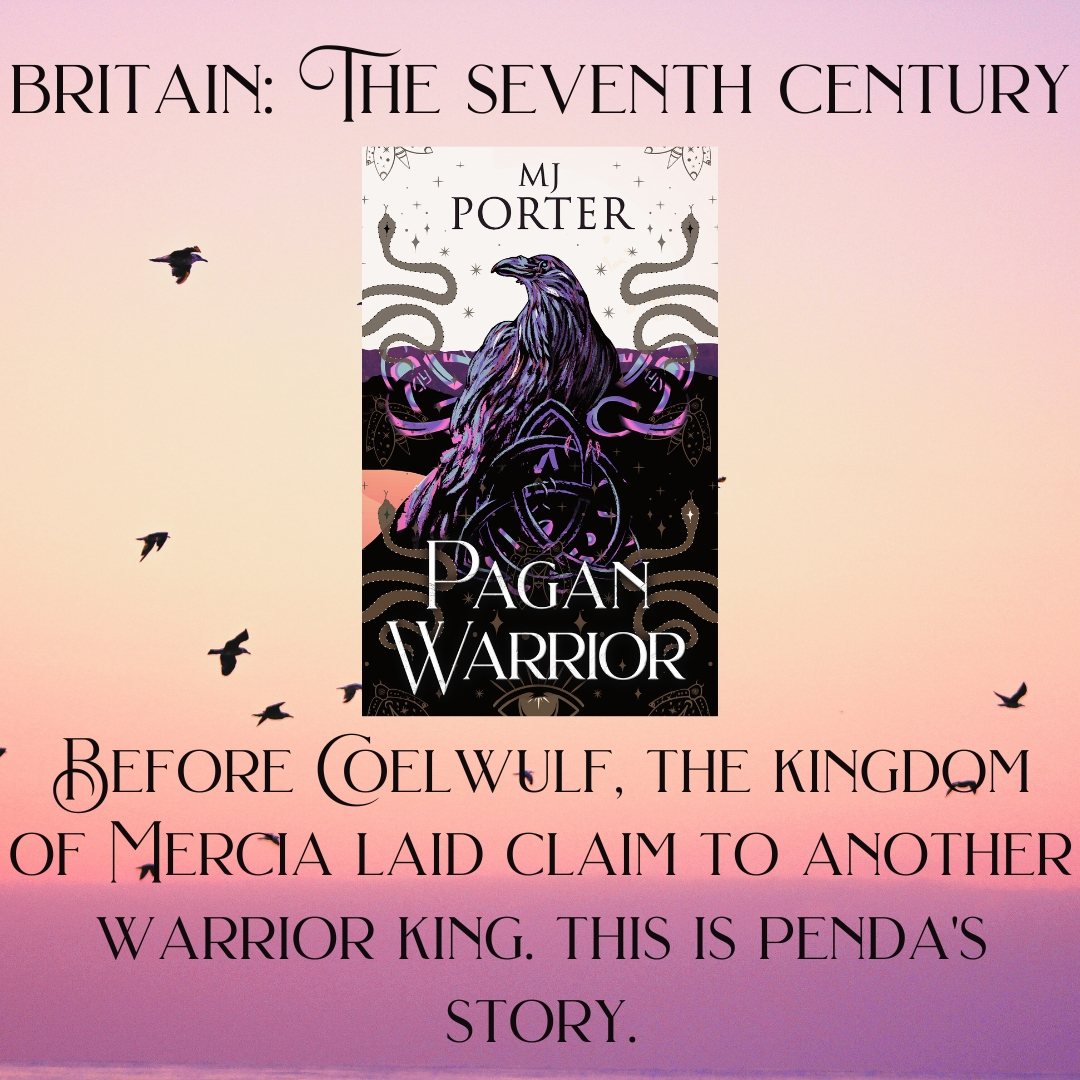
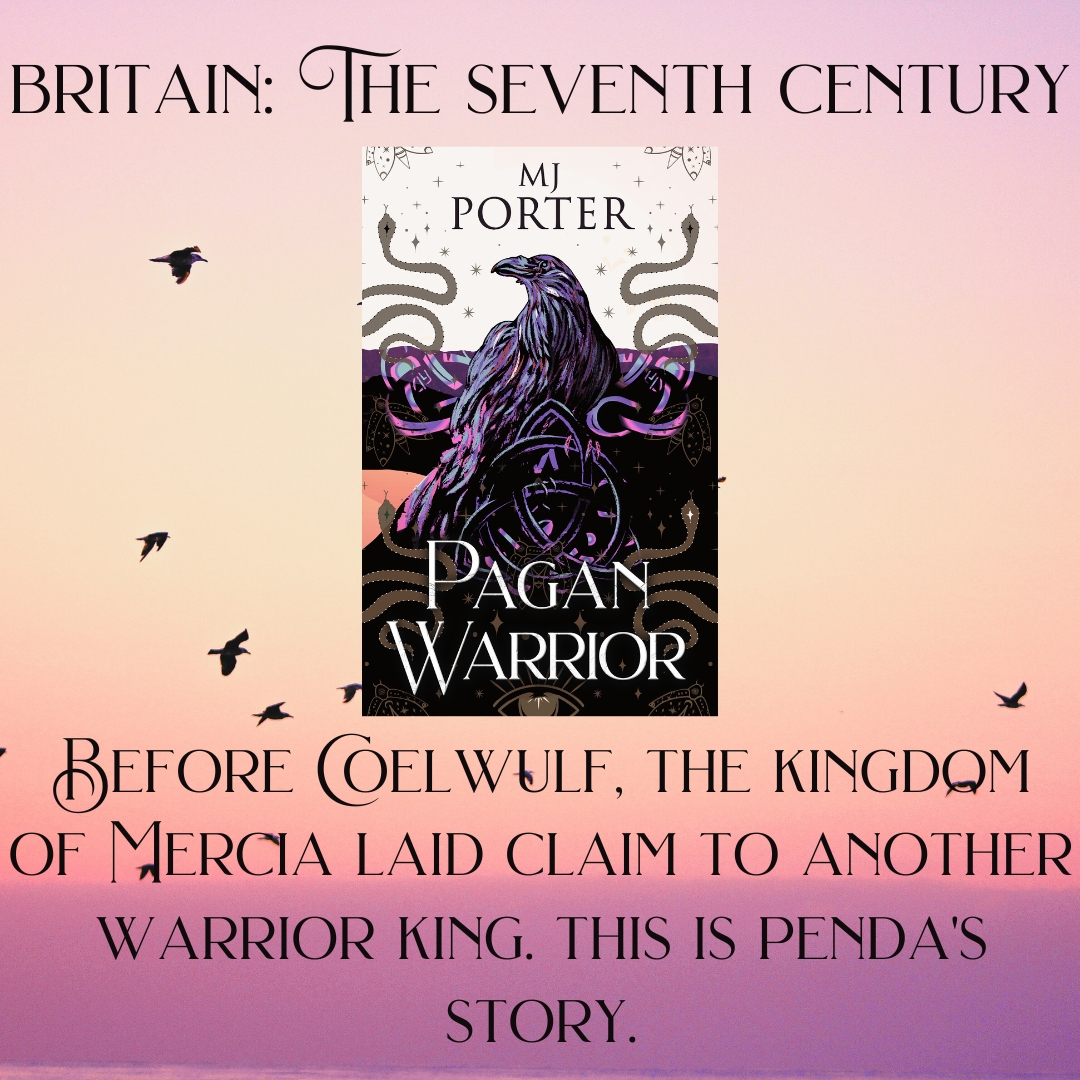
The Last King is set in Mercia in the Ninth Century, one of the ancient kingdoms of England. Mercia, at that time, is perceived as being on the decline – no more the mighty King Penda of the seventh century (who I’ve written about in Pagan Warrior) or King Offa of the eighth century (who I do want to write about), but instead Wessex, on Mercia’s southern border, just waiting to pounce when Mercia is already weak and further destabilised by the Vikings of the Great Heathen Army. It seems inevitable that Mercia will be subsumed by Wessex.
Mercia’s king in the early 870’s was Burgred, brother by marriage to King Alfred and with King Alfred himself married to a Mercian, I think we can all decipher the intentions of the House of Wessex towards Mercia. This alliance seems to have been powerful, persuasive, and long lasting, until abruptly, Wessex gave up on Mercia, and refused to assist in the battle against the Vikings. It is this Mercia that Coelwulf lived in, and lived through.
The historical Coelwulf was allegedly a member of a family who had ruled as kings in the early 800’s. King Coelwulf II (as he was known) was accepted by the Mercians as their king. This is ‘proved’ by the few charters which survive from the time period, which are ‘witnessed’ by the three bishops of Mercia, and her ealdormen as well. In the past, these documents have been taken to show that all of the Mercian nobility bowed down before the Vikings and accepted them as their ‘overlords.’ This view is only now being challenged, and I’m enjoying challenging it.
Mercia, unlike the kingdoms of Northumbria and Wessex, had no one who wrote propaganda for her. Northumbria had the Venerable Bede, Wessex had the Anglo-Saxon Chronicle, but for Mercia, there is a dearth of information. Perhaps there was a record, it is hinted at in something known as the Mercian Register incorporated in one version of the Anglo-Saxon Chronicle, but it is presumed that much of the record was burned by the Vikings.
I’m thriving on looking at the possibilities for what might have happened in Mercia. There are surprising omissions in the Anglo-Saxon Chronicle, a few things that don’t make too much sense when you examine them further, and so ‘my’ version of the time period is a little bit different to anything people might read about in older books. It doesn’t make it right, but, and this is what is so appealing about the time period, it also doesn’t make it wrong.
Warrior King is now live on many audio channels, and slowly making its way onto more and more. Right now, I know it’s available on Spotify, Kobo, Nook, Chirp, Scribd, Bingebooks. Other platforms will be coming live in the coming days and weeks.
Warrior King sample, narrated by the fabulous Matt Coles
With Warrior King, the trilogy, Gods and Kings, is now complete in audio and readers can enjoy listening and reading to the tale of Penda, Mercia and the events of the middle of the seventh century in Saxon England. I hope you’ll enjoy, and I want to say huge thanks to Matt Coles who had this trilogy thrust upon him when a previous narrator was unable to continue, and has done an amazing job of bringing the era to life. When he narrates, I hear my characters as I first visualised them. It’s an amazing experience.
If you’d like a code to download Warrior King from Spotify, please send me an email, and tell me why you want to listen, and I’ll send you a code and instructions about how to use them, or find me on one of my social channels – perhaps not Facebook as I get a bit lost with messages on there.
The Earl of Mercia’s Father, or Ealdorman as it was originally known, has had quite the book journey and I thought I’d share some of those details.
Ealdorman began life back in about 2011 when I was researching for my MA using the local university library. It didn’t have a massive Saxon section, and so I slowly worked my way through the more biographical titles. I am interested in the people and their lives, but also in the wider political events. I read all and sundry, in no particular order, and really, with no intention of doing more than learning a bit more about the era. I read about Lady Elfrida, England’s first crowned queen, I read about King Edward the Confessor, I read about the Godwines, Cnut, Æthelred (I think you’re getting the idea), and I read a book about the Earls of Mercia. And I did some more research and wrote some essays and then one day I thought, ‘wait a mo, that would be a good story.’ And so, the first Earls of Mercia story began life, the intention to offer an alternative narrative to the one often presented of the last century of Saxon England, through the eyes of the Earls of Mercia as opposed to Earl Godwine and his family.
From my research, I’d discovered Ealdorman Leofwine, an often shadowy character but one who is documented from 994 to about 1022 as one of King Æthelred II’s ealdormen (we didn’t have earls until King Cnut conquered England). But, I’ve told this story many times, my intention here is to write about that book.
It began life in 2011, but ground to a halt sometime that year, about 30,000 words in because I was a bit stuck. I wanted to take my character to Shetland, but kept confusing Orkney and Shetland. That sounds like a stupid reason to stop writing, but stop I did. And for quite a long time. Not until May 2013 did I resume my story, and only after a trip to Orkney, which, once and for all, ensured I knew the difference between Orkney and Shetland.
I hurried to finish the book, filled with enthusiasm for the project once more. I played the old ‘find an agent game’ to no avail, and decided to indie publish myself, as I’d been doing with my fantasy books. And so that should have been it. Ealdorman was out in the world.
But that wasn’t it. In fact, that was far from it. I held the rights for some years, continued writing the series, and one day, signed a publishing contract with much excitement, for book 1 and book 2. Suffice to say, it was not my best decision. So, fast forward a few years and it was mine once more, and I could republish it – with a new title and a new cover. But that wasn’t all.
In the ‘lost years’ (as I’ll term them), I’d continued writing, this series, another series, probably another series, a few side stories, etc etc. And so, the original book, Ealdorman, was no longer, in my mind at least, ‘fit for purpose.’ Being indie, knowing that one day I’d hopefully get my rights back, I both wrote out the first two books in the series (for people reading all of my series and after a chronologically sound narrative between series) and also massively edited, amended and rewrote the book as I could publish it in paperback. The one that’s now published, is not at all the book I first wrote between 2011 and 2013. There are elements that remain, and certainly Ealdorman Leofwine is still my half-blind hero, but much else has changed. It’s more exciting now. I’ve dealt with some of the ‘nerd’ elements to it, but Leofwine is still Leofwine.
This then, is something that many writers never get to do. If Ealdorman had remained as it was, if I’d given up due to a lack of success, if I’d not written more books, if I’d not lost my rights for a few years, if I’d traditionally published it, the book that is The Earl of Mercia’s Father in its current guise wouldn’t exist. And despite it’s problems – it’s not been possible to write them all out – I’m very proud of all that this book represents, not just for me as a writer, but for the journey the book has been on, from handwritten notes, to a finished draft, to a rewritten draft, through another rewrite to what it is today. It’s been a journey and a half.
The notebook, the original beginning, and the ending that has still never been written, although I have used it in a short story.
You can find out more about the entire series on my Earls of Mercia page on the blog.
I write about the Saxon kingdom of Mercia a lot. I thought it had been entirely unintentional until now. But has it?
I grew up in an area that would one have been in Mercia. From a seemingly young age, I knew Mercia had once been a kingdom in its own right. I knew I lived in the centre of what had once been a mighty kingdom. The local church’s name, St Chad’s, was a dedication to a priest who converted the Mercians to Christianity. Tamworth, the next city along, was also a capital of Mercia (and where much of the Son of Mercia is set). Repton, a little further afield, a Mercian royal mausoleum, so when I went to university and began to study the period, I was, of course, drawn to that kingdom, to Mercia and to all it could offer me.
The Early English kingdom of Mercia is unfortunate in having no extant records surviving from the height of its power and reach. Northumbria has the works of the Venerable Bede and his Ecclesiastical History of the English People. Wessex has the Anglo-Saxon Chronicle (ASC) – a collection of nine extant ‘versions’ of the same chronicle but with some later regional bias. Mercia has none of these things – although one of the ASC’s may be more Mercian in tone than others. Mercia also has a collection of surviving charters, and also many, many sculptures, that can be dated to this era.
It’s believed that any Mercian annalistic records that existed were destroyed by the Raider Viking attacks that gained in intensity throughout the ninth century. This is highly possible. It means that we never truly ‘hear’ the story of Mercia. We hear a Northumbrian view of Mercia. And we hear a Wessex view on Mercia. What of Mercia itself? We also hear views of Mercia from Alcuin and his collection of letters from the later eighth century.
Students of Early England are taught very much in a set chronological pattern of the Golden Age of Northumbria in the seventh century, the Supremacy of Mercia in the eighth and then the slow but seemingly unstoppable expansion of Wessex to claim all of England under one kingship so that by the time we reach 1066, England as we know it today, exists and is ruled by one king. This glosses over the fact that these kingdoms all existed simultaneously. They all fought and argued amongst one another. They all had ambitions to rule much more of modern England than their kingdom borders necessitated.
And, of course, the joy of redressing the balance a little is never far from my mind. I aim to make sure that people know of Mercia and don’t just think of its growth, supremacy and decline, as though the kingdoms of Northumbria and Wessex were more to blame for what befell Mercia than its own kings and inhabitants.
And so Mercia? What of Mercia during the Golden Age of Northumbria (the Gods and Kings trilogy)? What of Mercia through the decline of its supremacy (the Eagle of Mercia Chronicles), through the Viking Raider attacks and the growth of Wessex (the Mercian Ninth Century), after the death of Lady Æthelflæd (the Lady of Mercia’s Daughter) and what happened to Mercia during the final one hundred years of Saxon England (The Earls of Mercia series)?
What indeed? It’s not a small task, but it’s one I’ve set myself. And I’m far from finished with it. I have plans for more new titles, in time.
King Edward has married into the powerful House of Godwine, alongside making his wife’s brother, Sweyn Godwineson, Earl of Hereford. The House of Leofwine has received nothing, despite their continuing loyalty to the new king.
With the kingdom threatened by the pretensions of King Magnus of Norway, seeking to make good on the claim that he and Harthacnut agreed to inherit each other’s kingdoms should the other die first, King Edward is determined to build a ship army to counter anything his enemy might attempt.
But while the king’s eye is on external enemies, there are those closer to home determined to cause the king problems, most notably Sweyn Godwineson, who allies with the Welsh king responsible for the death of Eadwine Leofwineson, and then abducts the abbess of Leominster, refusing to give her up. With his sister as the king’s wife, Sweyn believes he can’t be touched until the church acts against him and he’s excommunicated and outlawed.
And Sweyn Godwineson hasn’t finished causing his king problems. When he returns to England without the king’s permission, desperate to recover his landed wealth and possessions, Sweyn finds more than just the House of Leofwine determined against his reinstatement.
Desperate men will take desperate actions, even the king’s brother.
‘The king has gifted more land to his wife,’ Lady Godgifu hissed to Earl Leofric as she strode from one end of their private quarters to another. He winced to hear the fury in her words.
‘She is his wife. It’s to be expected. He does no more than gift her the lands his mother held when she was queen.’
‘Is that right?’ his wife rounded on him, coming to an abrupt halt and rearing up before him. ‘It is merely the lands due to the queen, is it, just as the earls have lands due to them?’ Once more, Leofric grimaced to hear the fury in his wife’s words.
‘It is right, yes, and I’ve told you of the king’s reasons for making this marriage.’
‘Yes, you did, and with them, you implied that it would be a union worth nothing to the bloody Godwine family, and yet now, they have more landed possessions to laud over us and the other earls and their families.’
Leofric watched his wife, noting her flushed cheeks and how her lips were pursed as she once more paced from one end of the room to the other. All could hear the sound of her shoes over the wooden floorboards. All would hear, but whether they knew what it meant remained to be seen.
‘The king does us no disservice.’
‘And neither does he reward us for our loyalty,’ and here, his wife stabbed her chest forcefully with her finger. ‘Our loyalty and our desire to keep England united.’
‘The king must be seen to be caring towards his wife and any future children she must think to bear for him.’
‘But there are to be no children,’ Lady Godgifu all but shrieked, and now her face had bleached of all colour. ‘You’ve assured me,’ she almost spat.
‘And the king assured me. My dear, really, you must understand that this game the king is playing isn’t going to be concluded in a matter of months. He must be shown to be thinking of his wife’s future.’
‘Then he needs to do something to rein in that fat old Lady Gytha.’
Leofric recoiled at his wife’s harsh words, yet they were true. No one would deny them. Lady Gytha and her many, many years of childbearing had ensured the Godwine clan was huge. The House of Leofric was the very opposite, although his son, Ælfgar, was doing his best, alongside his wife, to ensure that the lack of children born to his father and mother was rectified in the next generation. Already they were the parents to three sons and a daughter.
‘What would you have me do?’ Earl Leofric capitulated. ‘The king can’t cast his wife aside so soon after the marriage. Neither can he purposefully withhold lands normally in the possession of the woman who is queen. Should he even attempt to do so, Earl Godwine will raise a stink at the witan.’
‘The king shouldn’t be fearful of that man,’ Godgifu sneered.
‘I don’t for one moment think he’s fearful of Earl Godwine. As I said, to ensure the earl and his family don’t suspect the king, he must do everything as he would, as though he knew there would be an heir at some point in the future.’
‘I don’t like it,’ Lady Godgifu finally swept onto the chair beside Leofric’s. ‘I don’t like it at all.’
‘And why, this morning, of them all, has it riled so much?’ Earl Leofric risked her wrath but knew the question needed asking.
‘Lady Gytha,’ Lady Godgifu began.
‘What of Lady Gytha?’ Leofric prodded when nothing further was forthcoming.
‘She, she,’ and here Lady Godgifu took a steadying breath and actually looked at her husband without the fury in her eyes. ‘She’s determined I’m only too aware of what her daughter has accomplished. She’s ensured word reached me of the queen’s latest acquisitions at Wantage and Lambourn.’
‘And they came as a surprise to you?’ Leofric felt safer now that Godgifu’s flash of fury had dissipated.
‘No, not really. I knew it would happen. It’s just the way that terrible woman has of making sure all know about her family and its wealth. She has no shame.’
Leofric found a grin on his face and chuckled gently.
‘Why should she be any different to her husband? He’s shameless in his grasping ways. He shows no remorse for those he tramples along the way. He’s almost without morals.’
‘It’s unseemly in a woman,’ Godgifu harrumphed unhappily, and Leofric laughed all the more.
‘So you wouldn’t do it given half a chance?’
‘I most certainly would not. There’s no need to gloat about my landed interests to anyone. I’m the earl of Mercia’s wife. I must have landed wealth, but I don’t need to vaunt about it.’ Godgifu settled herself, perching, Leofric couldn’t help thinking, like a hen over her egg. Not that he dared say that out loud.
‘She’s proud of her daughter. Think how foolish she’ll look when there’s no child and her grandson isn’t the next king of England.’
Lady Godgifu lapsed to silence, and then a slow grin spread over her face, returning to its normal pale colour. ‘It’ll be interesting to hear the excuses when they start in September,’ she murmured. ‘Provided the king hasn’t played us for fools. I don’t wish to have to contend with that family having a queen amongst them as well as a future king.’
Leofric nodded, pleased to have placated his wife, for all worry ran through his chest. The king had assured him that it was a means of curtailing the growing power of the House of Godwine, but Leofric couldn’t help thinking that his king was a wily man. Maybe he was merely placating the House of Leofwine for now. He gnawed on his lip and worked to restore his composure.