
Meet the new characters in Kings of War, Edmund, Ætheling of the English

There are a few new characters in Kings of War, the sequel to King of Kings. Here I’ll explain who the historical individuals probably were, and what’s known about them, if anything. That said, Edmund did feature in King of Kings, but I’ve not shared his information before.

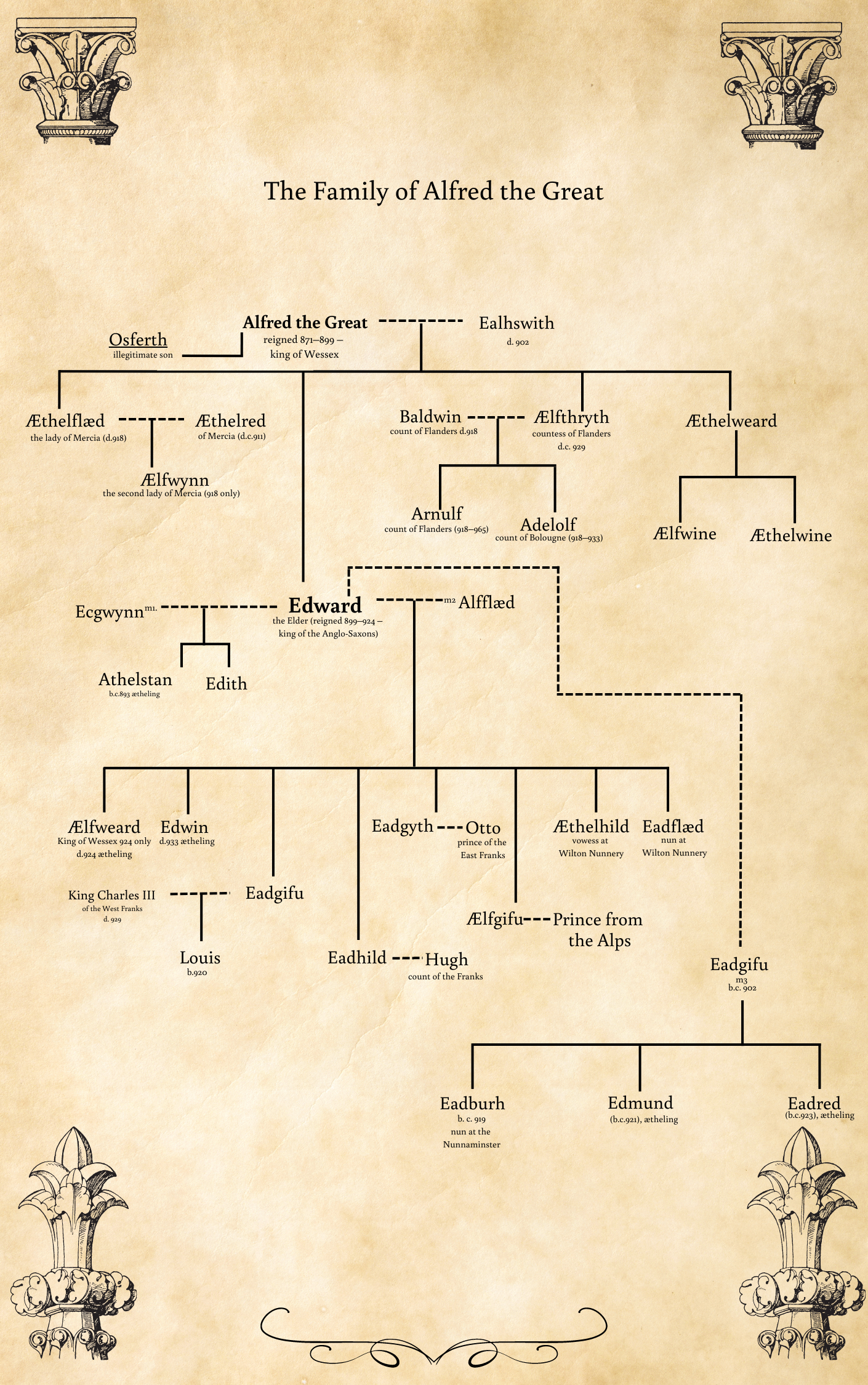
Edmund, of the House of Wessex, is the second-youngest halfbrother of the king, Athelstan. His date of birth is not known for sure, but it’s believed to have been in about 921, as he’s said to have been 18 when he became king on Athelstan’s death. His mother is Lady Eadgifu, the third wife of Edward the Elder. He has a full brother, Eadred, even younger than him.
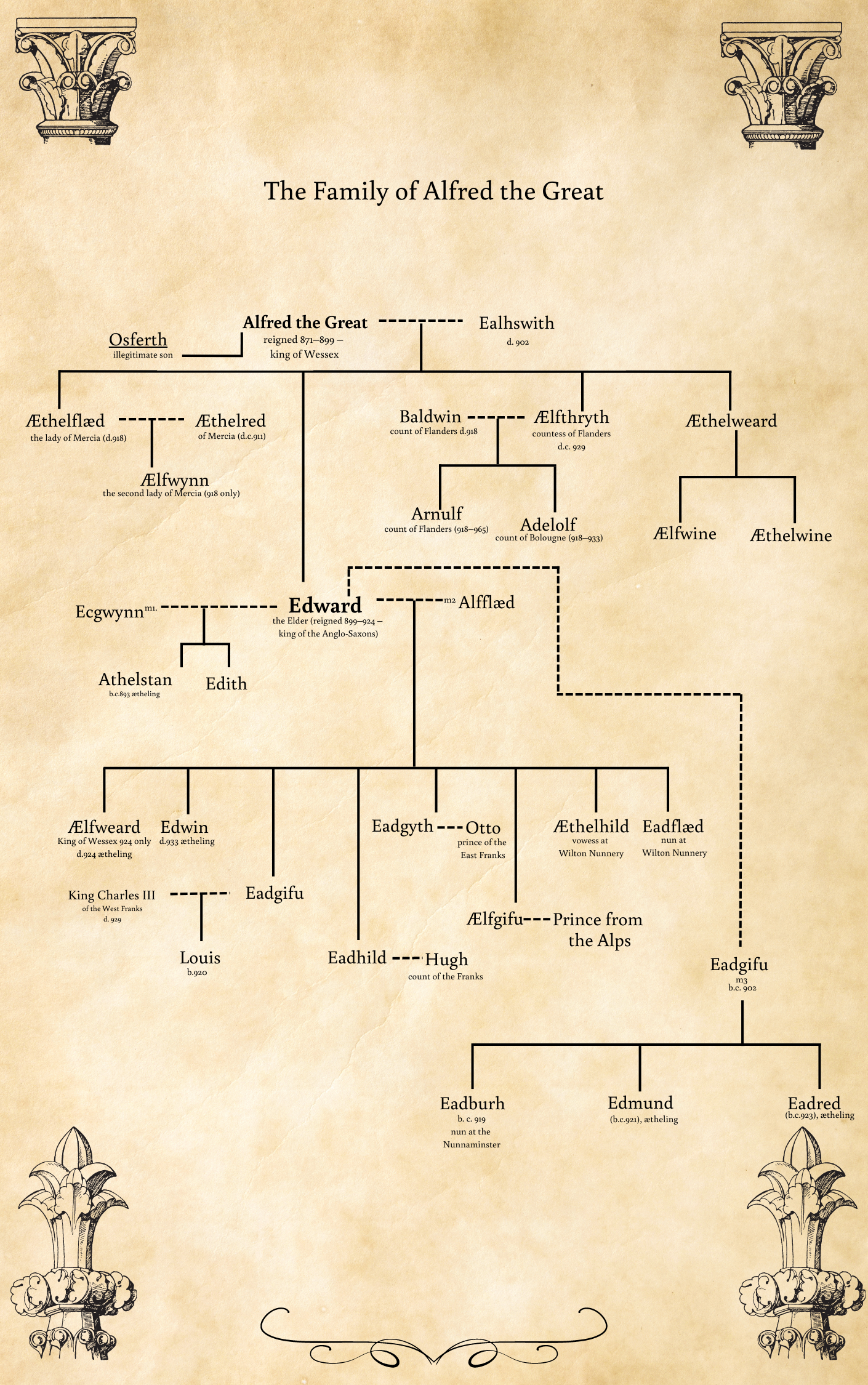
Family tree by Boldwood Books

‘And the Ætheling succeeded to the kingdom; and he was then 18 years old.’ (ASC A)

Edmund would only have been very young when his father, Edward the Elder, died in 924. It’s doubtful whether he had any memory of him at all. It’s long been believed that his mother, Lady Eadgifu, was responsible for raising him and his younger brother. What precisely Edmund was doing during the reign of his older half-brother isn’t known for sure. He is said to have fought beside him at the Battle of Brunanburh, but some cast doubt on this.

What is known is that Edmund had a sister (possibly two) and his sister, Eadburh, c.919-952, became a nun and was regarded as a saint.

William of Malmesbury in his Gesta Pontificum Anglorum tells the story of Edmund’s sister, Eadburh,[i] being consigned to the Nunnaminster in infancy as she showed such signs of devotion.[ii]

‘There had been a convent on this spot before, in which Eadburg, daughter of king Edward the Elder, had lived and died, but by then it was almost in ruins. When she was barely three, Eadburg had given a remarkable proof of her future holiness. Her father had wanted to find out whether his little girl would turn towards God or the world. He set out in the dining room the adornments of the different ways of life, on this side a chalice and the Gospels, on the other bangles and necklaces. The little girl was brought in by the nurse and sat on her father’s knees. He told her to choose which she wanted. With a fierce look she spat out the things of the world, and immediately crawling on hands and knees towards the Gospels and chalice adored them in girlish innocence…Her father honoured his offspring with more restrained kisses and said, ‘Go where heaven calls you, follow the bridegroom you have chosen and a blessing be upon your going.’…Countless miracles during her life and after her death bear witness to the devotion of her heart and the integrity of her body.’[iii] 

William later adds that, ‘Some of the bones of Eadburg the happy are buried,’[iv] at Pershore.

Aside from the later William of Malmesbury (who wrote long after the Norman Conquest of 1066), Eadburh is the recipient of land in one charter, that of S446, dated to 939 and surviving in one manuscript. ‘King Athelstan to Eadburh, his sister; grant of 17 hides (mansae) at Droxford, Hants.’[v] Other that, nothing is known of Eadburh with any certainty.

I won’t share more details of Edmund just yet as he has an important part to play in the Brunanburh Series.

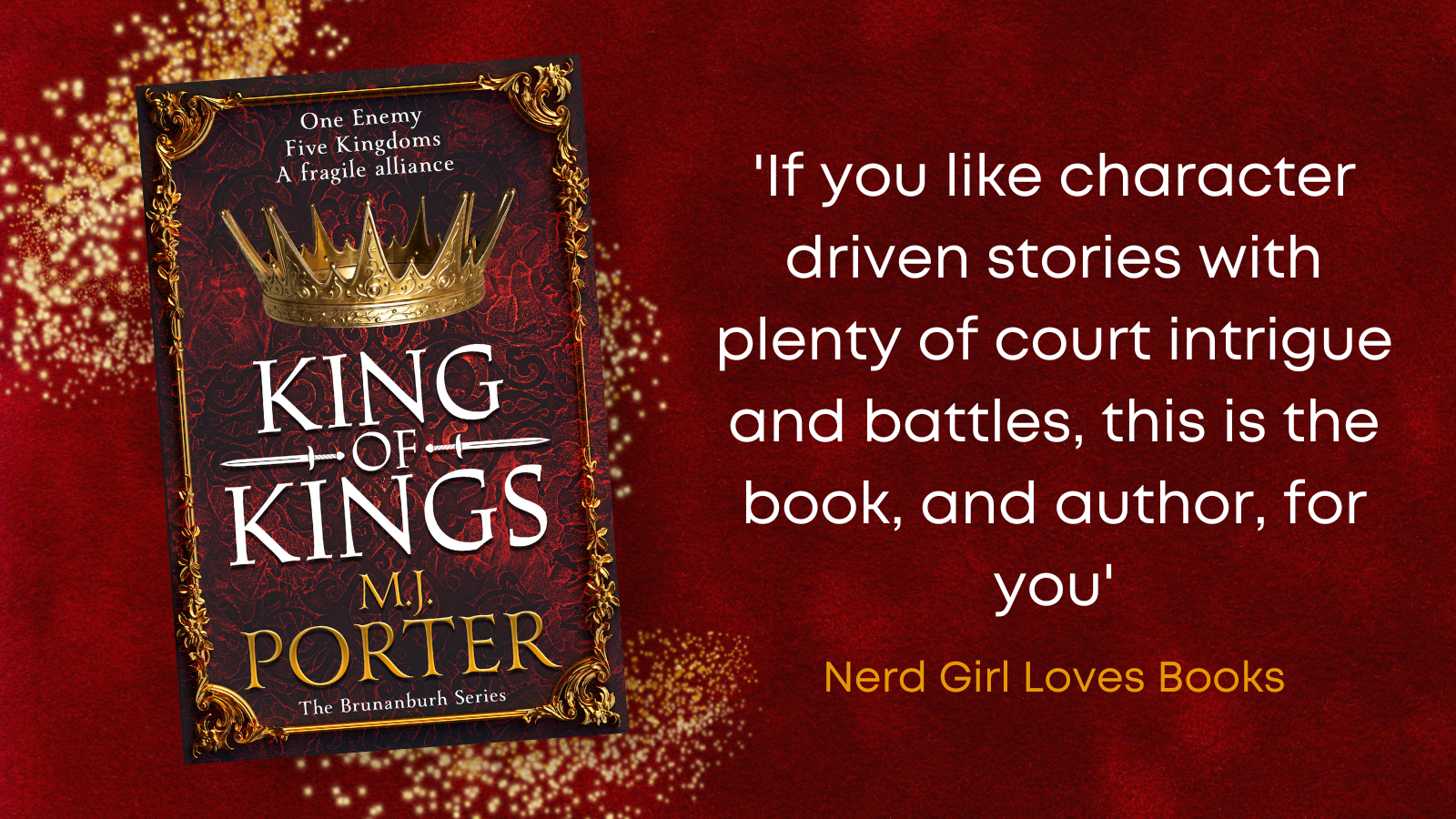
You can read King of Kings for FREE for a very limited time on Amazon, Kobo and Apple Books in the UK, US, Australia and Canada. (3rd-10th July ’23)

books2read.com/King-of-Kings

Preorder Kings of War now

books2read.com/kingsofwar

Read about Olaf Gothfrithson

Check out all the historical characters from the Brunanburh Series by visiting the Brunanburh Series page on the blog.


[i] Believed to be Eadburg (8) on PASE

[ii] Foot, S Athelstan (Yale University Press, 2011), p.45 Priest, D trans, Gesta Pontificum Anglorum, The Deeds of the Bishops of England, (The Boydell Press, 2002)

[iii] Priest, D trans, Gesta Pontificum Anglorum, The Deeds of the Bishops of England, (The Boydell Press, 2002), pp115-6

[iv] Priest, D trans, Gesta Pontificum Anglorum, The Deeds of the Bishops of England, (The Boydell Press, 2002), p.202

[v] Sawyer, P. H. (Ed.), Anglo-Saxon charters: An annotated list and bibliography, rev. Kelly, S. E., Rushforth, R., (2022). http://www.esawyer.org.uk/ S446


It’s Audiobook Appreciation Month, and here is why I love audiobooks

As with all things kindle and ebooks related, I was not quick to adapt to audiobooks. In fact, I really struggled with them for some time. I was happy to have my books available as audiobooks, but I didn’t really like or understand the allure of it.

Until.

Well, there’s always an until.

I’d listened to a few audios on my daily walks before I hit upon how it really worked for me. They help me sleep. What? I know, it sounds rather counterproductive. So, I don’t listen to many ‘new’ audios, but I love to listen to an audiobook for a book I’ve already read, and then I listen to them at night, comfy in my bed, although some do question my headphones, which are big chunky things, but I can’t wear in-ear ones – I have a funny ear. Actually, I think it’s more to do with my spectacles – so many things trying to make use of my ears at one time. So, with my big chunky headphones, and my phone, I sleep better than I ever have, thanks to my audiobooks.

I know you want to know why. So here goes. My brain is always ‘on the go.’ It’s always thinking. Teasing out plot lines, thinking about stuff going on in my personal life. Thinking, thinking, thinking. It’s a pain. Do you know how hard it is to ‘think’ when you’re listening to an audiobook. You have to REALLY want to not be listening to what you’re being told.

It also helps that I listen to my ‘classics,’ the stories I love. Discworld – they’re all in the process of being rerecorded, and while I was a bit grumpy about this, I’m just grateful that I now have two versions to listen to. Anne McAffrey’s PERN books, and Katherine Kerr’s Deverry books are also up there. These are stories I know well, and I get to enjoy them all over again. And, by setting a timer on my audio, I know I don’t actually miss much when I fall asleep.

Now, not all books work. Some you need to listen to during the day – some narrators are a bit too excitable, but as an alternative way of enjoying my reading, audiobooks are fabulous. Why not give them a try?

Audiobooks are also great for driving, exercising and just chilling out without needing to engage with any other sense than my hearing. Mind – I recommend some noise cancelling headphones as well.

With my author head on, I also love hearing my characters brought to life, hearing them with all the inflexion I imagine in my mind when I’m writing them.

Listen to the fabulous Matt Coles bring King Athelstan of the English to life from King of Kings.

books2read.com/King-of-Kings

King of Kings is currently just 99p/99c on Amazon Kindle/Kobo in the UK/Canada and in Australia it’s $1.99

Here’s the blurb

‘An epic tale of the birth of a nation. Truly mesmerising. Game of Thrones meets The Last Kingdom’ – Gordon Doherty

In the battle for power, there can be only one ruler.

AD925
Athelstan is the king of the English, uniting the petty kingdoms of Wessex, Mercia, the Danish-held Five Boroughs and York following the sudden death of his father, King Edward.
His vision is to unite the realms of the Scots and the Welsh in a peace accord that will protect their borders from the marauding threat of the Norse Vikings.
Whilst seemingly craving peace and demanding loyalty with an imperium over every kingdom, Athelstan could dream of a much bigger prize.
But danger and betrayal surround his best intentions, namely from his overlooked stepbrother, Edwin, who conspires and vies for what he deems is his rightful place as England’s king.
As ever, powerful men who wish to rule do not wish to be ruled, and Constantin of the Scots, Owain of Strathclyde, and Ealdred of Bamburgh plot their revenge against the upstart English king, using any means necessary.
An epic story of kingsmanship that will set in motion the pivotal, bloody Battle of Brunanburh where allies have to be chosen wisely…

‘MJ effortlessly draws you into early Medieval England with this fascinating tale.’ – Donovan Cook


Yep, you’ve read that right. King of Kings is currently reduced in select territories, and select platforms, to just 99p/99c/$1.99 and equivalent. With book 2, Kings of War, and its fabulous cover, due for release next month, now is the perfect time to grab book 1.

Did you watch Seven Kings Must Die? Then this is the series for you. This is my retelling of the famous battle of Brunanburh, in all its complex political machinations and quest to be ‘king’ over all of Britain, not just England.

The tale began life in 2014 – long before anyone knew (perhaps other than Bernard Cornwell) that the Uhtred tales would culminate in the battle of Brunanburh. It’s my attempt to give a ‘wide’ view of the build-up and the battle, and to tell a story of Great Britain in the 920s and 930s instead of just picking a side.

These ambitious men tried to rewrite the map of Great Britain, and wow, they caused some carnage along the way.

I’ve written some blog posts to help everyone know who the characters are, and to give an idea of what was happening in what would be England, Scotland, Wales and Ireland at the time. Check out the posts from the main Brunanburh Series page on my blog. Enjoy:)

King of Kings, and the coronation of England’s first king

Athelstan, widely regarded as the first king of the ‘English’ or the first king of England, is one of the main characters in King of Kings. And indeed, the book opens with Athelstan undergoing his coronation. Before his reign, the ruling House of Wessex hadn’t been proclaimed as England’s kings. King Alfred (879-899), Athelstan’s grandfather, was termed the king of the Angles and Saxons (in a charter from 889 known as S346[I]). His son, Edward the Elder, was the king of the Anglo-Saxons, and whether this meant Wessex and Mercia combined has been much debated. But Athelstan was king of the English, (and this certainly included Wessex and Mercia, and parts of the Danelaw that had been reclaimed) and in a departure from earlier custom, was consecrated not with a warrior-helm, but instead with a crown.

Debate still rages as to whether the coronation ordo that has survived was written for Athelstan, his father, or even his nephew (Edgar (959-975), and indeed, whether it included provision for the king’s wife to be consecrated beside him, but for King of Kings, I made use of what is known about the service and reimagined the ceremony for my readers. I hope you enjoy it. Read on for a short extract.

‘This means that only a year after my father’s untimely death, the kingdoms of Mercia, those parts of the East Anglian kingdom that my father lately reclaimed, Wessex and Kent, are reunited again under one ruler. The Saxons, or rather, the English, have just one king. And this is my moment of divine glory, when, before the men and women of the Mercian and Wessex witan, I’ll be proclaimed as king over all.

A prayer is intoned by the archbishop of Canterbury, Athelm, appealing to God to endow me with the qualities of the Old Testament kings: Abraham, Moses, Joshua, David and Solomon. As such, I must be faithful, meek, and full of fortitude and humility while also possessing wisdom. I hope I’ll live up to these lofty expectations.

I’m anointed with the holy oil and then given a thick gold ring with a flashing ruby to prove that I accept my role as protector of the one true faith. A finely balanced sword is placed in my hands, the work of a master blacksmith, with which I’m to defend widows and orphans and through which I can restore things left desolated by my foes, and my foes are the Norse.’


[i]  http://www.esawyer.org.uk/,

books2read.com/King-of-Kings

King of Kings is currently available with Prime Reading.

Map design by Flintlock Covers

The first kings of the ‘English’ – Athelstan and Edmund

(I’m re-sharing an old post which I’ve amended slightly, and added some new graphics).

England, Wales, Scotland, the smaller kingdoms of Mercia, Wessex, Northumbria, East Anglia, Kent, Powys, Gwynedd, Dal Riada – for the uninitiated (including myself) the sheer number of kingdoms and kings that peopled the period in British history before 1066 can appear as a bewildering display of names, places, times and events, and perhaps never more so than when a historian is trying to sell a book and so makes a statement in their title that applies to that particular king.

Map designed by Flintlock Covers

Phrases such ‘the Golden Age of Northumbria’, ‘the Mercian hegemony’, ‘the rise of Wessex’, they all mask so many events that I find the phrases very unhelpful and perhaps worse, misleading.

I think that Athelstan and his younger half brother, Edmund, probably deserve their titles as Kings of the English. And it’s not just my opinion either. There was, according to Sarah Foot in her book on Athelstan, a concerted effort by the king and his bishops to have him stand apart from his predecessors – to be something ‘different’ to them. They named him king of the English, not king of Mercia (a post he held briefly before another of his younger brothers died) and not king of Wessex, for all that he was both of those things.

They changed his title, they crowned him with a crown, not a helmet. They wanted Athelstan to be something other than his grandfather, King Alfred, and his father, King Edward. It was a bold statement to make, and one they continued when Athelstan died too young and his half-brother, Edmund replaced him. He too was crowned using, it must be supposed, the same Coronation service. (For full details have a peek at Sarah Foot’s book on Athelstan – or read the first few chapters of King of Kings as the service appears in it as well).

So why the change? Essentially the old Saxon kingdoms, for all that they were preserved in the naming of the earls/ealdormens designations, had been swept aside by the Viking raiders. The old kingdoms had become a handy label to apply to certain geographic areas, and the kings of Wessex, whilst keen to hold onto their hereditary titles because of the permanence their own royal line had managed to acquire, were equally as keen to do away with regional boundaries. There was, it can’t be denied, a concerted and almost unrelenting urge to drive any Viking raider or Dane or Norwegian (the Norse) from British soil, and this is what Athelstan and then Edmund were tasked with doing.

Yet the idea of ‘English’ wasn’t a new concept. Why else would Bede have called his great piece of religious historical writing “The Ecclesiastical History of the English people’, if there hadn’t been a shared consciousness that the people in England, all be it in their separate kingdoms, didn’t have a shared heritage? Why the idea suddenly took flight under King Athelstan could be attributed to a new sense of confidence in Wessex and Mercia at the time. They were confident that they could beat the Viking raiders and they were convinced that England belonged to them.

Or perhaps it was more than that? The destruction wrought by the Viking raiders on the separate kingdoms must have been a stark reminder of just how insular the kingdoms had become, and the Viking raiders showed everyone just how easy it was to run roughshod over the individual kingdoms. Only in unity could the Saxon kingdoms of England survive another onslaught; only with unity could the Saxons hold onto their kingdoms they’d claimed about 500 years before.

It was a message that was learned quickly and taken to heart. Athelstan worked to reunite more of the Saxon kingdoms with the growing ‘England’, and he tried to do so by both diplomacy and through war. Yet, the Viking raiders hadn’t finished with England, and nor were they her only enemies. This also lies at the heart of Athelstan’s ‘masterplan’ his treaty of Eamont (if it truly happened – Benjamin Hudson in his Celtic Scotland is not convinced). Athelstan wanted to be a mighty king, but he also wanted England, and the wider Britain (also a concept already understood otherwise why else would that cantankerous monk – Gildas – have called his even earlier work than Bede’s “On the Ruin of Britain?”) to be united in their attempts to repel the Viking raiders. He was a man with a keen vision of the future and it was a vision that his brother continued, with slightly different direction and results.

Family Tree designed by Boldwood Books

The ‘English Kings” saw safety in unity, and of course, an increase in the power they held went hand-in-hand with that.

Yet at no point during the Saxon period can it be said that the emergence of ‘England’ as we know it, was a given certainty. Throughout the period other great kings had tried to claim sovereignty over other kingdoms, but never with any permanence. The earlier, regional kings, were powerful within their own lifetimes and within their own regions. Few, if any, were able to pass on their patrimony complete upon their death. This was a time of personal kingship, and it was only under Athelstan and Edmund that the leap was taken away from this to a more permanent power base.

Not that it was a smooth transition and it did have the side-effect of allowing other men, those not related to the royal family, to evolve their own individual power bases in the old Saxon kingdoms. The ‘English’ kings had to do more than just rule their own kingdom, they had to rule their ealdormen and earls, their warriors, bishops and archbishops. The number of names of kings might start to deplete in the after math of Athelstan and Edmund’s kingship, but in their place spring up more and more powerful men, men that these English kings  had to rely on.

Becoming King of the English was very much a mixed blessing, bringing with it new and greater responsibilities and more, it brought with it the need to expand personal government further, to have a greater persona to broadcast.

King of Kings is available now, and Kings of War is coming in July 2023.

A Conspiracy of Kings turns 3 today. #bookbirthday #TheRoyalWomen

It’s a week of book birthdays! Today, it’s the turn of A Conspiracy of Kings, the sequel to The Lady of Mercia’s Daughter.

Here’s the blurb

Mercia, 918.

Lady Ælfwynn has taken her mother’s place as the Lady of Mercia, to the displeasure of her uncle in Wessex, and against his efforts to subvert it.

King Edward, casts his eye longingly over Mercia, and finds a willing accomplice where none should exist. This time, the threat to Lady Ælfwynn is not as easy to defeat.

This is the continuing story of Lady Ælfwynn, the granddaughter of King Alfred, begun in The Lady of Mercia’s Daughter.

It is intended that The Lady of Mercia’s Daughter should be read before A Conspiracy of Kings.

https://amzn.to/421LHRq

https://amzn.to/46DvlA6

A Conspiracy of Kings was the book I wrote immediately before starting the stories of King Coelwulf, Mercia’s last king. If not for these two books, I’d never have wanted to write about Coelwulf, so I feel I owe this book a lot, and indeed, having just reread it, I can see a lot of details that resonate with me.

If you’ve not thought of reading these two books, then please do. I can assure you, my incarnation of Lady Ælfwynn is a bit bad ass. The new covers are also available in paperback.

These two books are part of my Tales of Mercia series of standalone stories charting the rise and fall of the Saxon kingdom of Mercia.

Check out my post on visiting Gloucester, where Lady Ælfwynn’s mother, Lady Æthelflæd, the lady of Mercia, was buried.

Visit The Tenth Century Royal Women Page.

Posts

King of Kings, the audio is now available, and the large print version too

I’m aware that there’s been a bit of a delay in getting everything shipshape over on Amazon, but everything is now where it should be – the ebook, paperback, audio, and hardback, all linked together. Whoo hoo. You can find them with the link below, which also includes other retailers, with links to the large print version.

books2read.com/King-of-Kings

So, I thought it would be the perfect opportunity to share a few things with you that have happened since release.

As I can’t upload the video here, I’ve done my ‘unboxing’ video and popped it over on TikTok – which I’m trying to learn. You can find it here. The paperback looks amazing:) It’s very smart and the family tree and map are also included. If you’re on TikTok give me a follow, as I’m looking for more content to help me get to grips with it.

I’m also going to share a link for the audiobook, read by the fabulous Matt Coles, which you can also find here, on my website, not my blog. (I can’t upload videos to my blog – who knew).

And, if you missed my blog post yesterday on Historia, you can read it here. It’s an introduction, quite a swift one, into what was happening in the Saxon kingdoms just before the events of King of Kings. And, it’s got some amazing images to go with it. I’m always in awe of someone who knows how all the rules work regarding sharing images on the web. Thank you. (I’ve just been trying to work some of this out for myself, with British Library images – it made my head hurt).

Check out the Brunanburh Series Page for more details.

Posts

My new book, King of Kings, has a number of main characters. Meet Owain, the king of Strathclyde.

My new book, King of Kings, is a multi-viewpoint novel telling the story of events in Britain from 925-934. I thought it would be good to share details of the historical people my main characters are based on.

Owain of Strathclyde is perhaps the most difficult character in King of Kings to find in the historical record. Indeed, his place in the story is contested by historians, as we don’t know if the scribe of the Anglo-Saxon Chronicle of the time meant Owain of Strathclyde, or an Owain of one of the Welsh kingdoms. I decided to adopt the Owain of Strathclyde, but who exactly was he, and what was Strathclyde?

The kingdom of Strathclyde is also known by another name, that of Cumbria, and there is confusion in the sources and amongst historians about where it is and what it was. Alex Woolf suggests that by the events of 927, Strathclyde/Cumbria encompassed, ‘most of part of Lanarkshire, Dunbartonshire, Renfrewshire, Stirlingshire, Peebleshire, West and Mid-Lothian, eastern Dumfriesshire and Cumberland.’ (Woolf, A. From Pictland to Alba, 789-1070, Edinburgh University Press, 2007) p.155)

So who then were it’s kings? This again is far from as easy to state as might be thought. It’s believed that Owain of Strathclyde, succeeded his father, Donald II, to become king of Strathclyde, and in turn was succeeded by his son.

In 924, we are told that ‘the king of the Strathclyde Britons and all the Strathclyde Britons,’ (Swanton p.104) joined the king of Wessex, Edward the Elder’s alliance by the Anglo-Saxon Chronicle, but Owain isn’t named. Indeed, and as said above, when we do get mention of Owain in the Anglo-Saxon Chronicle, he’s named as ‘king of Gwent,’ (Swanton, M. trans and edit The Anglo-Saxon Chronicles, (Orion Publishing Group, 2000) p.107) even though there was no Welsh king of Gwent named as Owain at the time. It’s therefore difficult to get a feel for who he was, and what he did, but that didn’t mean I couldn’t include him in King of Kings. If anything, it made it all the more intriguing.

Map design by Shaun at Flintlock Covers

Preorder King of Kings

(released 10th February 2023)

books2read.com/King-of-Kings

Meet the Characters from King of Kings

Athelstan, king of the English

Constantin, king of the Scots

Hywel, king of the West Welsh

Ealdred, king of Bamburgh

Lady Eadgifu, wife of Edward the Elder

Happy release day to King of Kings #histfic

I’m so excited about the release today of King of Kings. This story, the first part in the retelling of the greatest battle on British soil that many have never heard of, Brunanburh, has been long in the making. Building on the original series, begun in 2014, King of Kings is entirely reworked, and it’s so much better:) (I honestly can’t believe how much better it is.)

Here’s the blurb

‘An epic tale of the birth of a nation. Truly mesmerising. Game of Thrones meets The Last Kingdom’ – Gordon Doherty

In the battle for power, there can be only one ruler.

AD925

Athelstan is the king of the English, uniting the petty kingdoms of Wessex, Mercia, the Danish-held Five Boroughs and York following the sudden death of his father, King Edward. 

His vision is to unite the realms of the Scots and the Welsh in a peace accord that will protect their borders from the marauding threat of the Norse Vikings.

Whilst seemingly craving peace and demanding loyalty with an imperium over every kingdom, Athelstan could dream of a much bigger prize.

But danger and betrayal surround his best intentions, namely from his overlooked stepbrother, Edwin, who conspires and vies for what he deems is his rightful place as England’s king. 

As ever, powerful men who wish to rule do not wish to be ruled, and Constantin of the Scots, Owain of Strathclyde, and Ealdred of Bamburgh plot their revenge against the upstart English king, using any means necessary.

An epic story of kingsmanship that will set in motion the pivotal, bloody Battle of Brunanburh where allies have to be chosen wisely…

books2read.com/King-of-Kings

(available in ebook, paperback, hardback and audio, narrated by the wonderful Matt Coles).

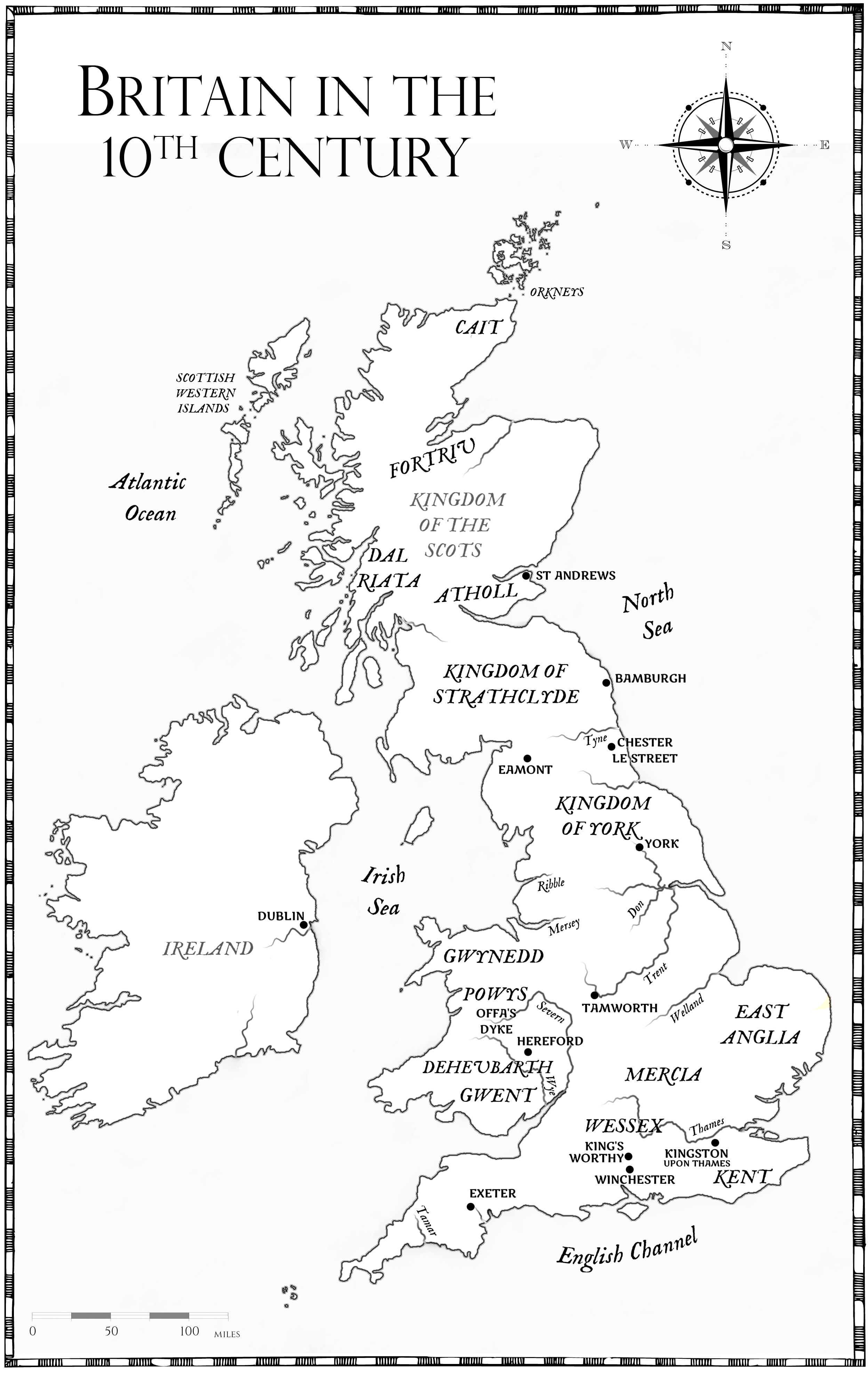
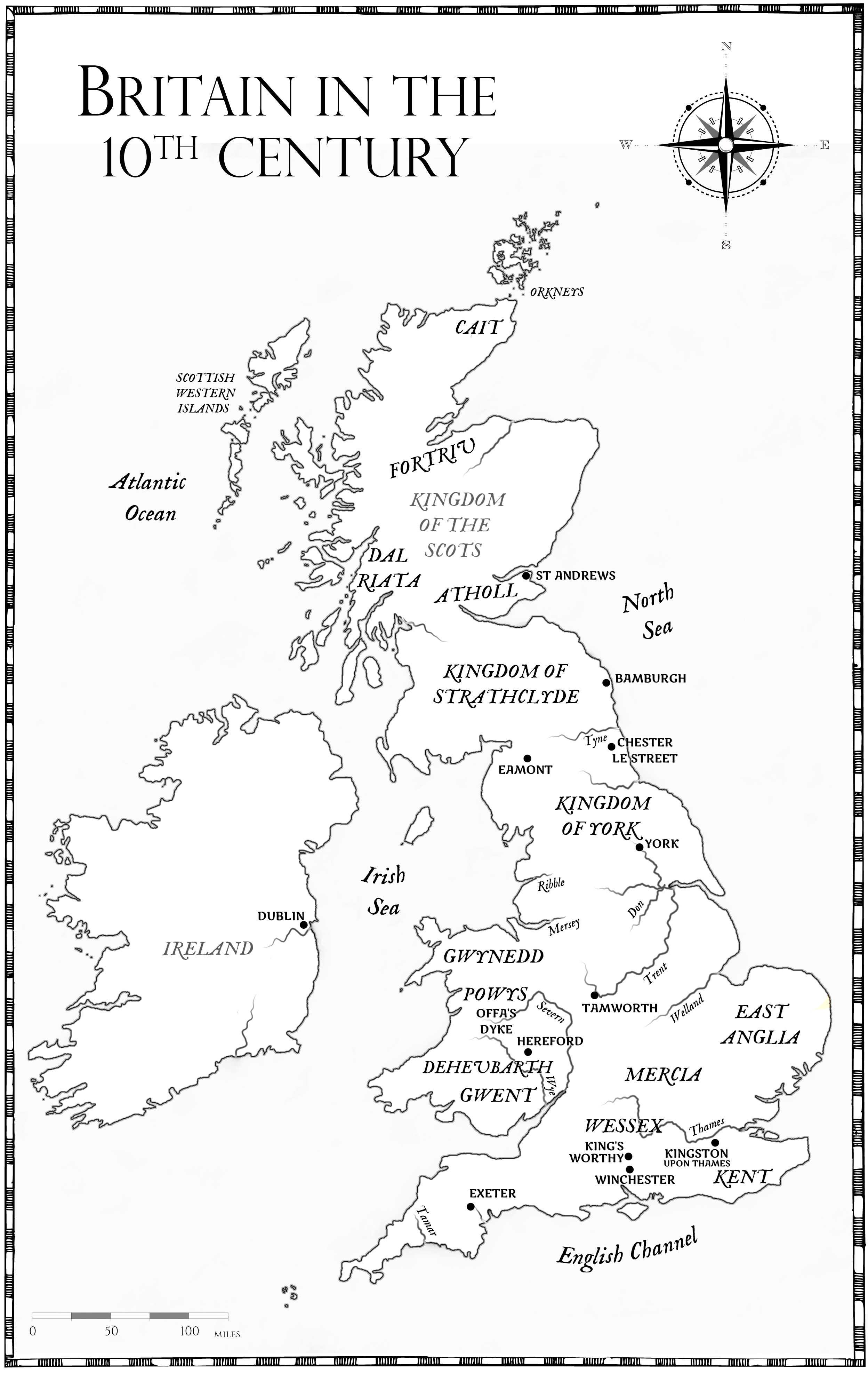
King of Kings. with its five kingdoms, and one alliance, might need some explanation. To help my readers understand who everyone is, and importantly, where everyone is, King of Kings has a map and a genealogical table, as well as a cast of characters.

Map designed by Shaun at Flintlock Covers

And because the family of King Alfred is so important to the story, I also have a genealogical table to share with my readers.

Design by Boldwood Books

I’ve written some brief introductions for the main cast of characters.

King Athelstan of the English

King Constantin of the Scots

King Hywel of the West Welsh

King Owain of Strathclyde

King Ealdred of Bamburgh

Lady Eadgifu of Wessex


Follow the blog tour with Rachel’s Random Resources

Bookish Jottings

Amy McElroy

David’s Book Blurg

Colin Garrow Blog

Beyond the Books

Ruins and Reading

Diary of a Wannabe Writer

The Magic of War(l)ds

Nerd Girl Loves Books


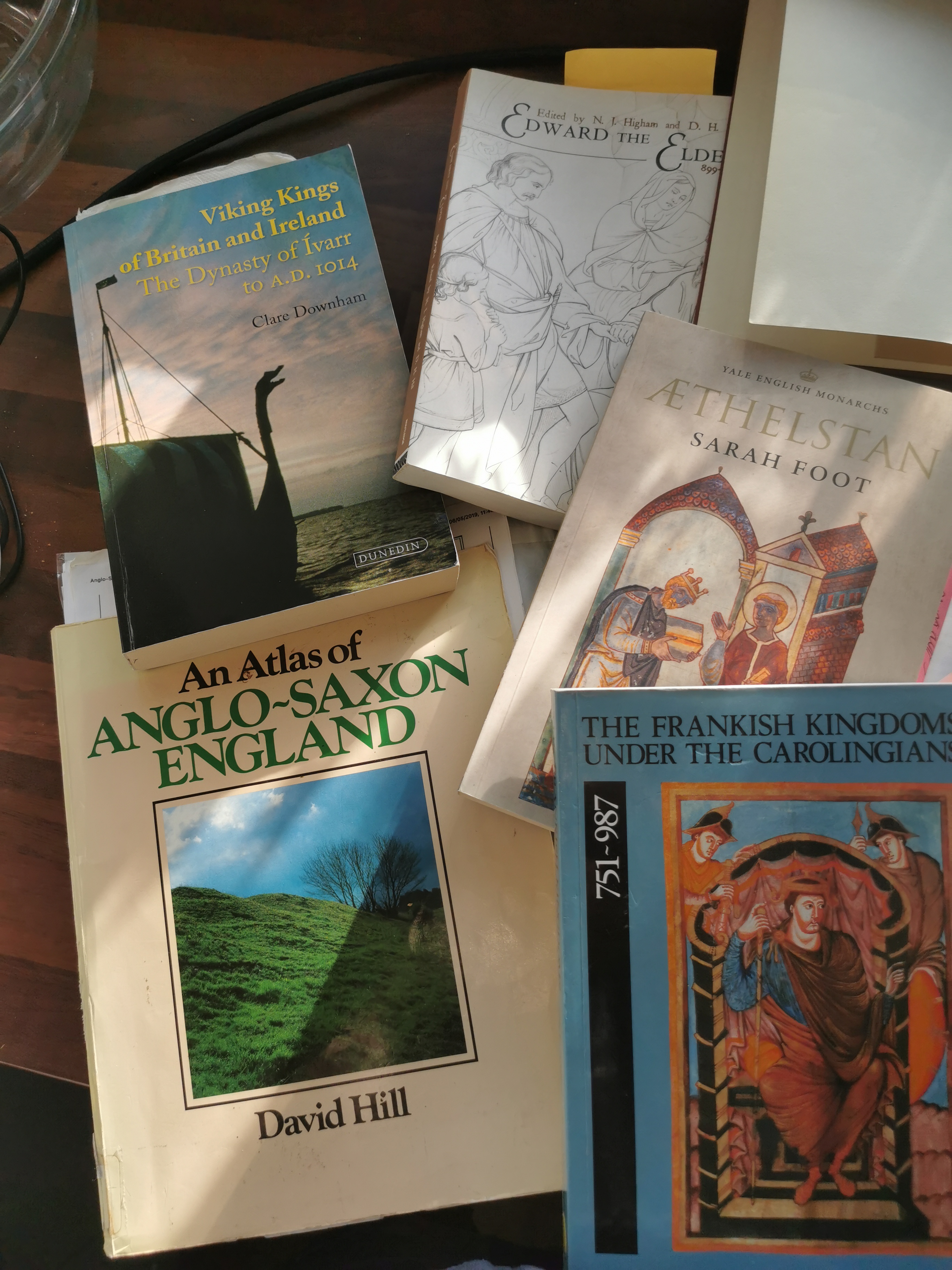
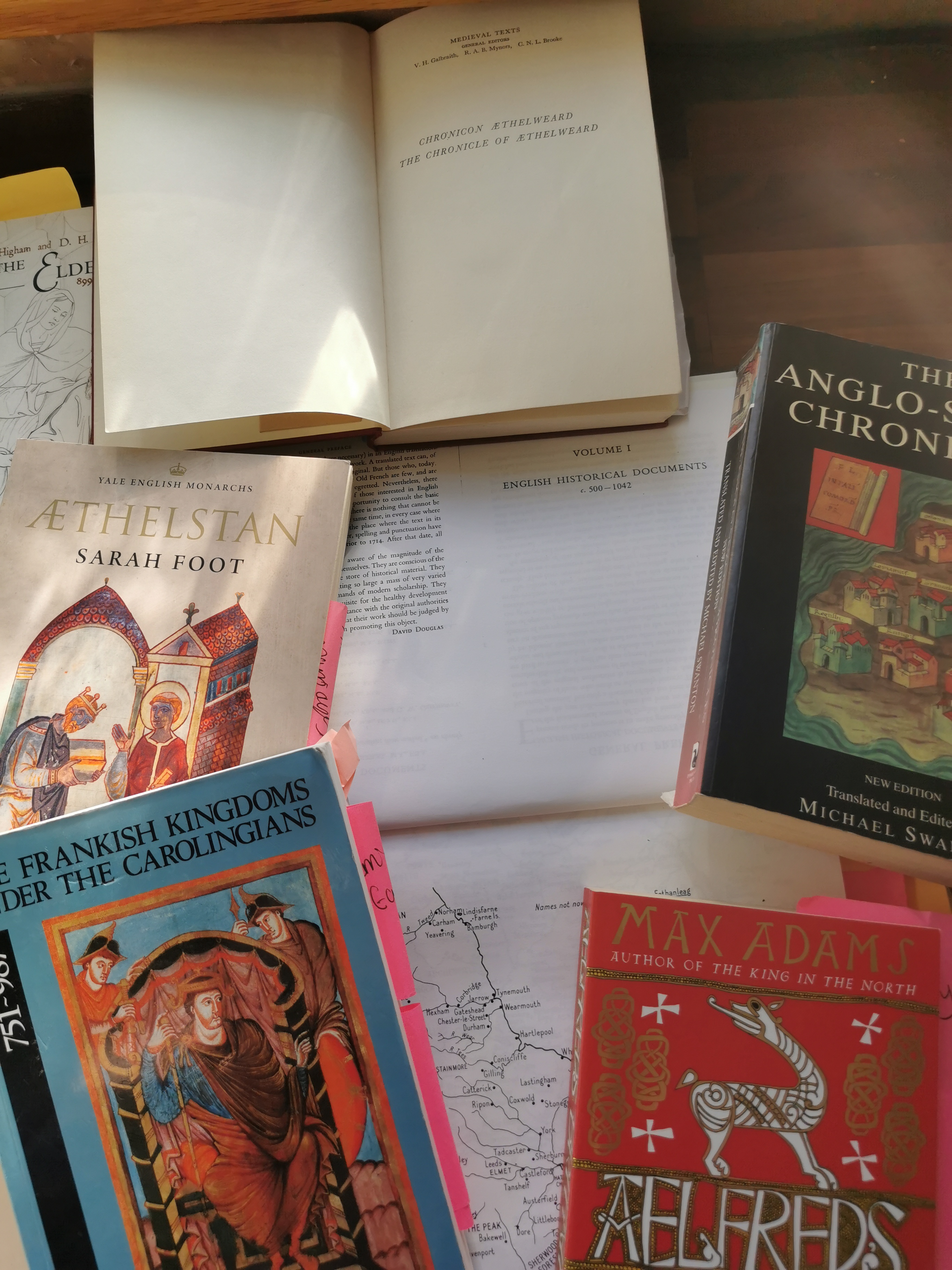
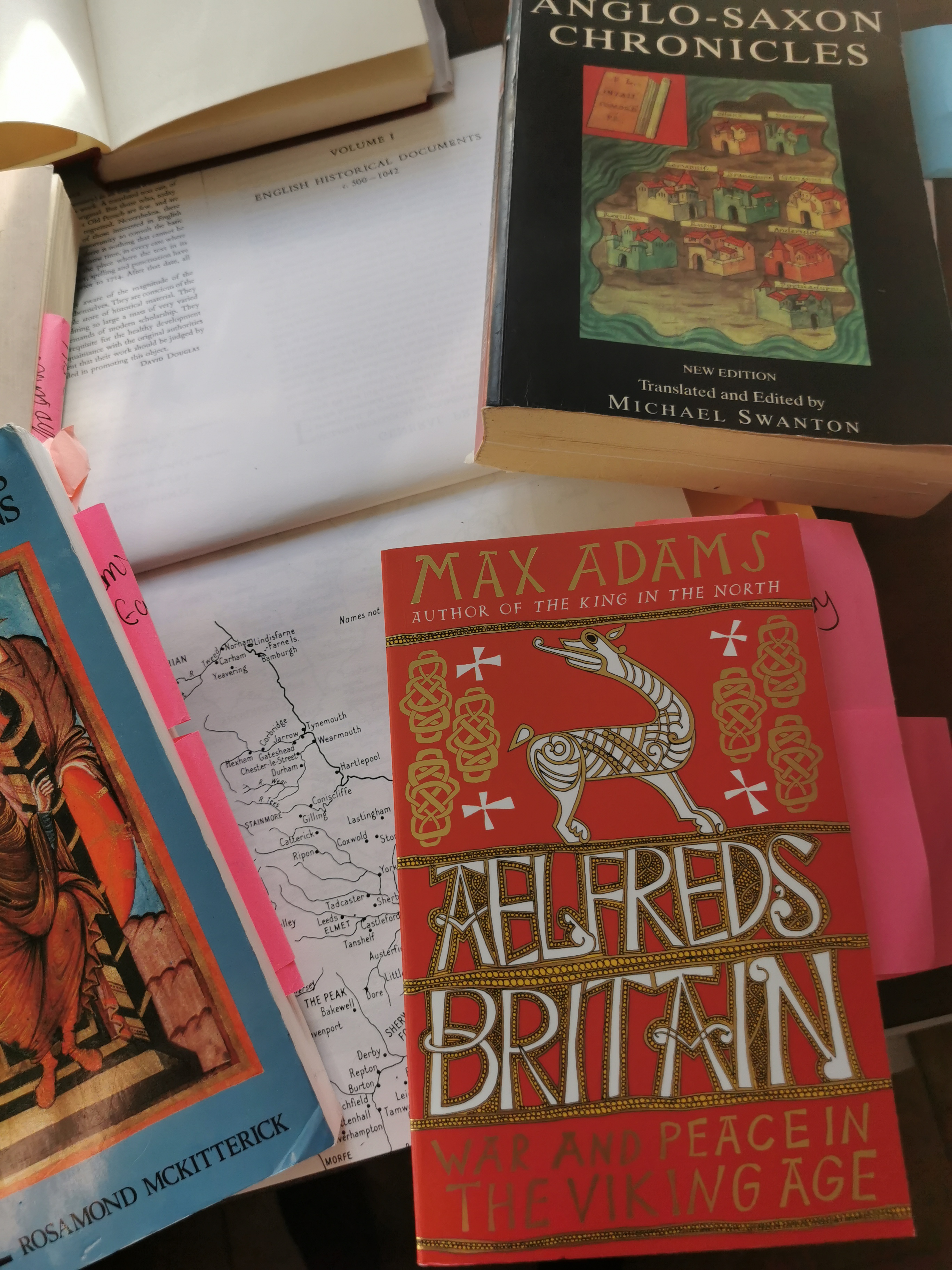
And for those who are falling in love with the period as much as I am, I wanted to share some non-fiction recommendations, and cautions.

There is no one book that will adequately cover this period (that was one of the reasons that I fictionalised it) but these books (see photos below), along with Dr. Kari Maund’s The Welsh Kings, which I have in ebook, will give you a good grounding of events in Britain and Ireland. So, these are

Alfred’s Britain by Max Adams

Athelstan by Sarah Foot

The Anglo-Saxon Chronicles ed and trans. Michael Swanton (other versions available – I like the formatting of this one -with the different recensions)

The Welsh Kings by Kari Maund

An Atlas of Anglo-Saxon England by David Hill (don’t be put off by the fact this book is from the 1970s – it is invaluable)

From Pictland to Alba 789-1070 by Alex Woolf

Viking Kings of Britain and Ireland by Claire Downham

English Historical Documents ed and trans by Dorothy Whitelock

The Frankish Kingdom under the Carolingians by R McKitterick

Edward the Elder ed. Higham and Hill (not a narrative account, but historians writing papers about their area of interest and expertise).

There are also two very important online resources.

PASE (The Prospography of Anglo-Saxon England)

Electronic Sawyer

My new book, King of Kings, has a number of main characters. Meet Lady Eadgifu. #histfic #nonfiction #Brunanburh

King of Kings has a number of characters, and some might be surprised to find Lady Eadgifu amongst them, but she was an incredibly important historical character, and I couldn’t leave her out of the narrative set at the English court.

Lady Eadgifu was the third wife of Edward the Elder (r.899-924), king of the Anglo-Saxons. Edward the Elder was the father of King Athelstan, and a whole host of daughters, as well as five sons. Lady Eadgifu would, it seems, have been young when she married the aging Edward the Elder, and that meant that she long outlived him, and also, that her three children (possibly four, but I’ve opted for three) were young when their father died. And two of these children were sons, Edmund (born c.921) and Eadred (born c.923). Her daughter, Eadburh, is thought to have been the oldest of the three children, born c.919.

While Lady Eadgifu, from what’s known (and it isn’t much, as there are few surviving charters from the end of Edward’s reign) perhaps had little role to play while her husband lived, other than wife and mother to the king’s children, following his death, she became increasingly significant. She was the daughter of an ealdorman, who perhaps died just before her birth, and her family are said to have had connections with Kent. Indeed, it’s often stated that she brought her husband Kent with their union. By that, what’s often meant, is the loyalty of the Kentish people. Remember, at this time, we’re still just before the creation of ‘England’ as we would now recognise it.

Sadly, very little is known about Lady Eadgifu (and she’s not alone in this – many of the royal women ‘disappear’ at points in the historical record, and on occasion, are entirely lost.) We know about a land dispute she was involved in, and also much more information for after Athelstan’s reign.

Indeed, it has been said that

‘Nor is it surprising that Eadgifu, as the consort of the previous king, served little role in her stepson’s court.[i]

[i] Firth, M. and Schilling, C. ‘The Lonely Afterlives of Early English Queens’, in Nephilologus September 2022, https://doi.org/10.1007/s11061-022-09739-4p.7

However, Barbara Yorke believes that,

‘the enhanced position [of Lady Eadgifu] may also have been developed specifically for the widowed Eadgifu as part of an alliance with her stepson Æthelstan [Athelstan] in which she supported his position and he recognised her sons as his heirs.’[i]


[i] Yorke, B. ‘The Women in Edgar’s Life,’ in Edgar, King of the English, 959-975 Scragg, D. ed (The Boydell Press, 2008), p.146

And it is this option that I’ve decided to explore in King of Kings. Lady Eadgifu was wife to a king. She would have known her worth, even when faced with a stepson as the king of the English, and another stepson, and stepdaughters, who perhaps didn’t share any love for their, potentially, younger stepmother. Will Lady Eadgifu work with or against Athelstan? Read on to find out.

Map design by Shaun at Flintlock Covers

books2read.com/King-of-Kings

Meet Owain, king of Strathclyde

Meet Athelstan, king of the English

Meet Constantin, king of the Scots

Meet Hywel, king of the West Welsh

Meet Ealdred, king of Bamburgh

Check out the Brunanburh Series Page

Posts