
I’m delighted to welcome Catherine Kullmann to the blog with a post about her historical fiction research and new book, The Husband Criteria, #RegencyRomance #BlogTour #TheCoffeePotBookClub

I’m delighted to welcome Catherine Kullmann to the blog with a post about her historical fiction research.

Writing Historical Fiction—The Research

Whether we talk about fictionalised history or fictional biography where the story of real-life characters is told, or genre fiction such as historical romance or historical mystery where fictional characters are placed in an historical setting, the onus is on the author to transport the reader to an unfamiliar society recreated partly from familiar facts and partly from a myriad of tiny, new details so that it seems as real as the world of today. The setting must ring true and the characters’ actions must be determined by the laws, mores and ethics of their time, not ours. Sometimes this may horrify us; at other times we find it liberating and long for more romantic, more adventurous, perhaps simpler bygone days.

Except where a real-life character such as one of the patronesses of Almack’s is introduced for authenticity, my Regency novels are pure fiction. I create the characters and the story arc but to make them and their world come to life, I must know the period inside out; not only the main facts and important dates but also the minor ones and the trivia of daily life. It is essential that I know the social structures, ethics, mores and beliefs of the period, constraints which add conflict and tension to the story and enable readers to step into the setting as easily as they step out of their front doors,

But where do I get this information? Primarily by reading. I have a large research library and a huge database of historical facts and trivia. Everything is grist to my mill—contemporary memoirs, diaries, letters, novels, plays, poetry, newspapers and magazines, etiquette and letter-writing manuals, cookery books, etc. etc. These all help me absorb peoples’ thoughts, attitudes, vocabulary and phrasing, as well as informing me first-hand about the way they lived.

Apart from the written legacy, the Regency has left us a rich legacy of images—paintings, portraits, engravings, cartoons, caricatures, fashion prints, book illustrations. I was amazed at the wealth of contemporary, hand-coloured engravings that can still be purchased at reasonable prices and that show rather than tell what Regency society was like. And finally, buildings, furniture and fittings, sculptures, gravestones and church and other monuments bear living witness to the past.

As an author, you must ask yourself constantly, if we do it this way today, how was it done in the past? You must read widely, covering every aspect of life at the time and take every opportunity to visit museums and period houses. Keep your eyes open everywhere  you go to identify what was there then. I live in Dublin which is very much a Georgian city; I went to school in Georgian houses and later worked in many of them so you could say the city architecture of the time is in my bones. Remember too that then as now, older buildings will have co-existed with new one. Guidebooks from the period are very useful as they describe places as your characters will have seen them, and frequently have maps and other illustrations that will help you plan your character’s journeys.

Image of author’s desk and bookshelves. Private photo

All this is general research that feeds into your descriptive writing without your really being aware of it. Over and above this, there is the particular research that every new work calls for. The very first thing I do is create a public time-line for the years in which a new book is set. Here I enter every date and event I find including those of Easter, university, school and law terms, parliamentary sessions, the queen’s drawing-rooms, theatre and concert dates, publication dates of new works, and any notable public events, scandals or anything else newsworthy. These are the things that shape my characters’ lives, that they talk about. They help add verisimilitude and also frequently inspire plot twists.

I start this research on the internet. Frequently I get the information I want there and sometimes it points me in the right direction e.g. to little known diaries that help me flesh out my narrative. In Lady Loring’s Dilemma, I wanted to base my main characters in Paris and Nice in 1814/15 and was delighted to discover the Diary of the Times of George the Fourth, published in 1838 by an anonymous lady who had been in Paris and Nice at just those times. Lady Loring’s Dilemma  opens in Harrogate, a well-known spa at the time, and I was thrilled to find a contemporary guide to taking the waters there which included a description of the sights in the surrounding area.

Don’t be afraid to ask the experts. For The Husband Criteria, I discovered that the Royal Academy provides a lot of information online about the years the Academy was based at Somerset House where its annual exhibition was a highlight of the Season. When I needed further information, I emailed the RA and received a prompt and helpful reply from the librarian. Similarly, when I need details of the laws of Cricket in 1814 for A Suggestion of Scandal, a query to the Marylebone Cricket Club was answered immediately and in detail by their Research Officer.

I trawl antique fairs, charity shops, second-hand book sales and flea markets for research material, whether it is books, newspapers, or old prints and engravings. As well as being a source of inspiration, I use antique prints and engravings from my collection for the covers of my books. This is generally cheaper than paying a licence fee for a stock image, it saves me hours of searching for just the right one and I have the freedom to use the image without restrictions.

All this sounds like a lot of work, but I love it. I started writing about the Regency because the period fascinates me and it still does. There is still so much to learn, I love the thrill of the hunt when I find just the right piece of trivia to spur me on.

© Catherine Kullmann 2023

Thank you so much for sharing. Good luck with your new book.

Here’s the blurb

London 1817

The primary aim of every young lady embarking on the Spring frenzy that is the Season must be to make a good match. Or must it? And what is a good match? For cousins Cynthia, Chloe and Ann, well aware that the society preux chevalier may prove to be a domestic tyrant, these are vital questions. How can they discover their suitors’ true character when all their encounters must be confined to the highly ritualised round of balls, parties and drives in the park?

As they define and refine their Husband Criteria, Cynthia finds herself unwillingly attracted to aloof Rafe Marfield, heir to an earldom, while Chloe is pleased to find that Thomas Musgrave, the vicar’s son from home, is also in London. And Ann must decide what is more important to her, music or marriage.

And what of the gentlemen who consider the marriage mart to be their hunting grounds? How will they react if they realise how rigorously they are being assessed?

A light-hearted, entertaining look behind the scenes of a Season that takes a different course with unexpected consequences for all concerned.

Buy Links:

Universal Link:  

Amazon UKAmazon US

Amazon CAAmazon AU

Meet the author

Catherine Kullmann was born and educated in Dublin. Following a three-year courtship conducted mostly by letter, she moved to Germany where she lived for twenty-five years before returning to Ireland. She has worked in the Irish and New Zealand public services and in the private sector. Widowed, she has three adult sons and two grandchildren.

Catherine has always been interested in the extended Regency period, a time when the foundations of our modern world were laid. She loves writing and is particularly interested in what happens after the first happy end—how life goes on for the protagonists and sometimes catches up with them. Her books are set against a background of the offstage, Napoleonic wars and consider in particular the situation of women trapped in a patriarchal society.

She is the author of The Murmur of MasksPerception & IllusionA Suggestion of ScandalThe Duke’s RegretThe Potential for LoveA Comfortable Alliance and Lady Loring’s Dilemma.

Catherine also blogs about historical facts and trivia related to this era. You can find out more about her books and read her blog (My Scrap Album) at her website. You can contact her via her Facebook page or on Twitter.

Author Links

Website:           Twitter:            Facebook:       

Book Bub:        Amazon Author PageGoodreads:      

Follow The Husband Criteria blog tour with The Coffee Pot Book Club

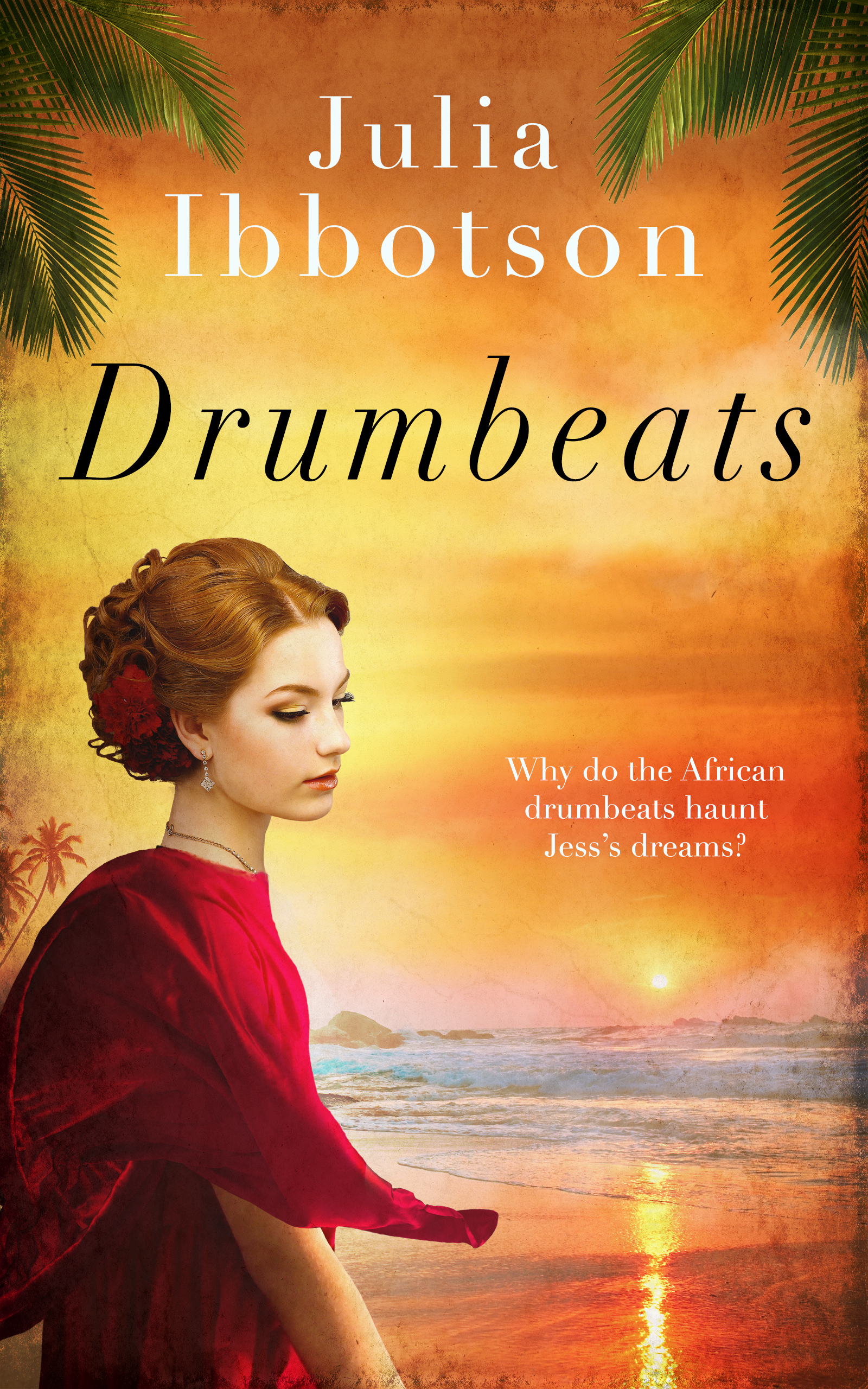
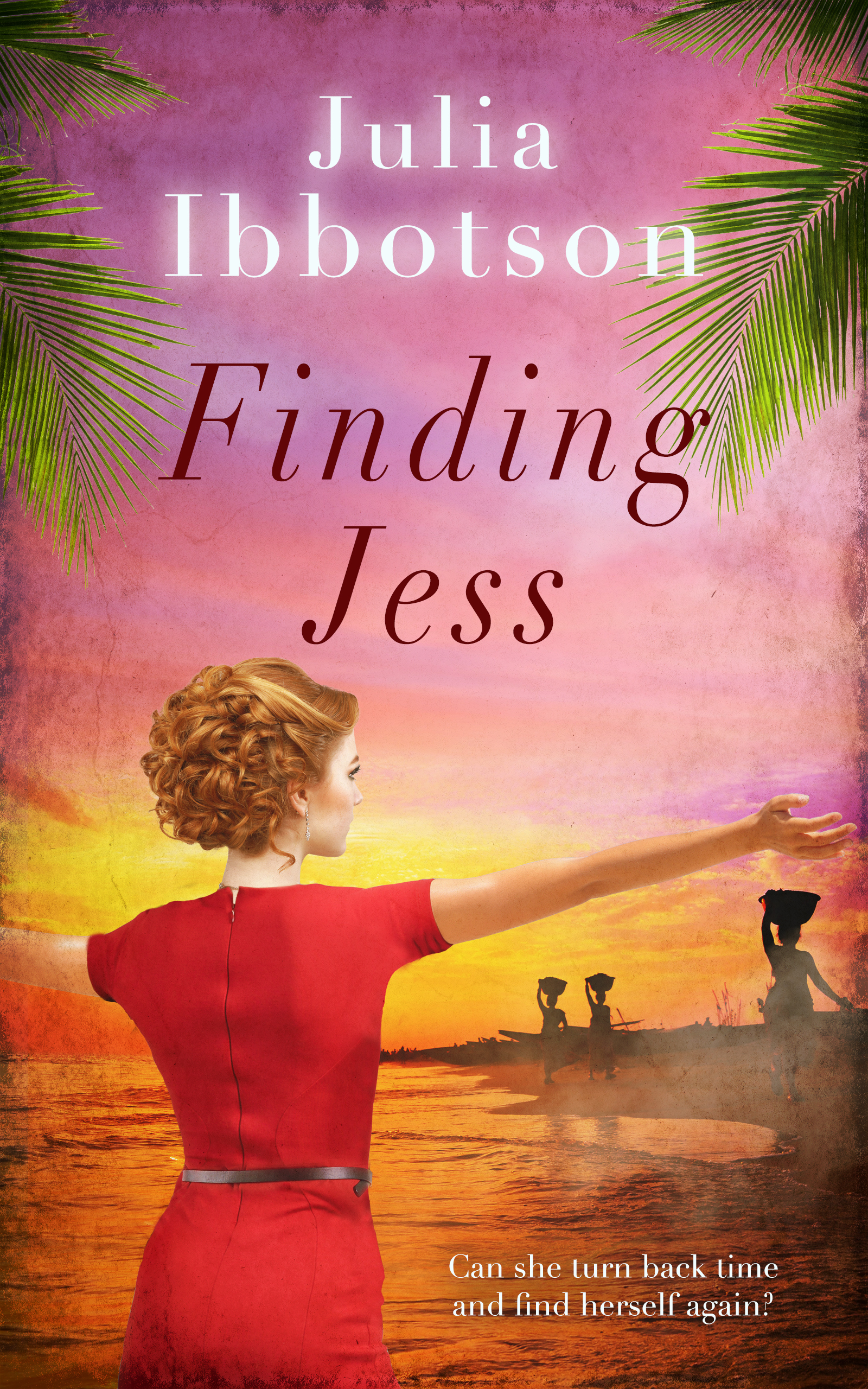
I’m excited to be revealing the covers for The Drumbeats trilogy by Julia Ibbotson on the blog today #histfic

Here’s the blurbs

Drumbeats

It’s 1965, and 18 year old Jess escapes her stifling English home for a gap year in Ghana, West Africa. But it’s a time of political turbulence across the region. Fighting to keep her young love who waits back in England, she’s thrown into the physical and emotional dangers of civil war, tragedy and the conflict of a disturbing new relationship. And why do the drumbeats haunt her dreams?

This is a rite of passage story which takes the reader hand in hand with Jess on her journey towards the complexities and mysteries of a disconcerting adult world.

This is the first novel in the acclaimed Drumbeats trilogy: Drumbeats, Walking in the Rain, Finding Jess.

For fans of Dinah Jefferies, Kate Morton, Rachel Hore, Jenny Ashcroft

Purchase Link

https://books2read.com/Drumbeats1


Walking in the Rain

Jess happily marries the love of her life. She wants to feel safe, secure and loved. But gradually it becomes clear that her beloved husband is not the man she thought him to be. 

She survived war and injury in Africa, but can she now survive the biggest challenge of her life?

Purchase Link 

https://mybook.to/WalkingintheRain1


Finding Jess

On the brink of losing everything, and still haunted by her past and the Ghanaian drumbeats that haunt her life, Jess feels that she can no longer trust anyone but herself. Then she’s mysteriously sent a newspaper clipping of a temporary job in Ghana. Could this be her lifeline? Can she turn back time and find herself again? And what, exactly, will she find?

Finding Jess is a passionate study of love and betrayal – and one woman’s bid to reclaim her self-belief and trust. It’s a feel-good story of a woman’s strength and spirit rising above adversity.

This is the finale of Jess’s story.

Purchase Link

https://myBook.to/FindingJess1


Meet the author

Award-winning author Julia Ibbotson herself spent an exciting time in Ghana, West Africa, teaching and nursing (like Jess in her books), and always vowed to write about the country and its past. And so, the Drumbeats Trilogy was born. She’s also fascinated by history, especially by the medieval world, and concepts of time travel, and has written haunting time-slips of romance and mystery partly set in the Anglo-Saxon period. She studied English at Keele University, England, specialising in medieval language, literature and history, and has a PhD in linguistics. She wrote her first novel at age 10, but became a school teacher, then university lecturer and researcher. Her love of writing never left her and to date she’s written 9 books, with a 10th on the way. She’s a member of the Romantic Novelists Association, Society of Authors and the Historical Novel Society.

Connect with the author

Author website: Facebook Author page: Twitter:

Pinterest page: includes boards with pics and images that inspired each book

Goodreads author page: Instagram:

RNA (Romantic Novelists Association) website author page

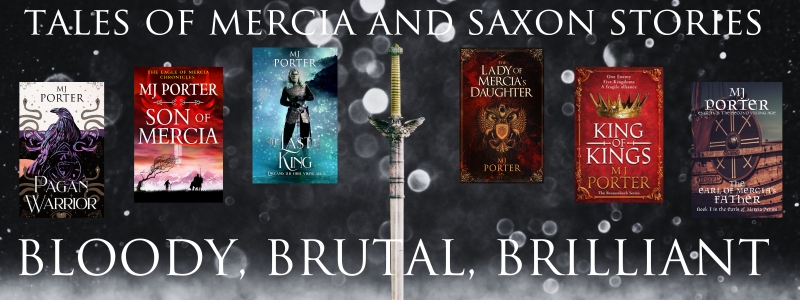
The Earl of Mercia’s Father and its book journey #histfic #nonfic

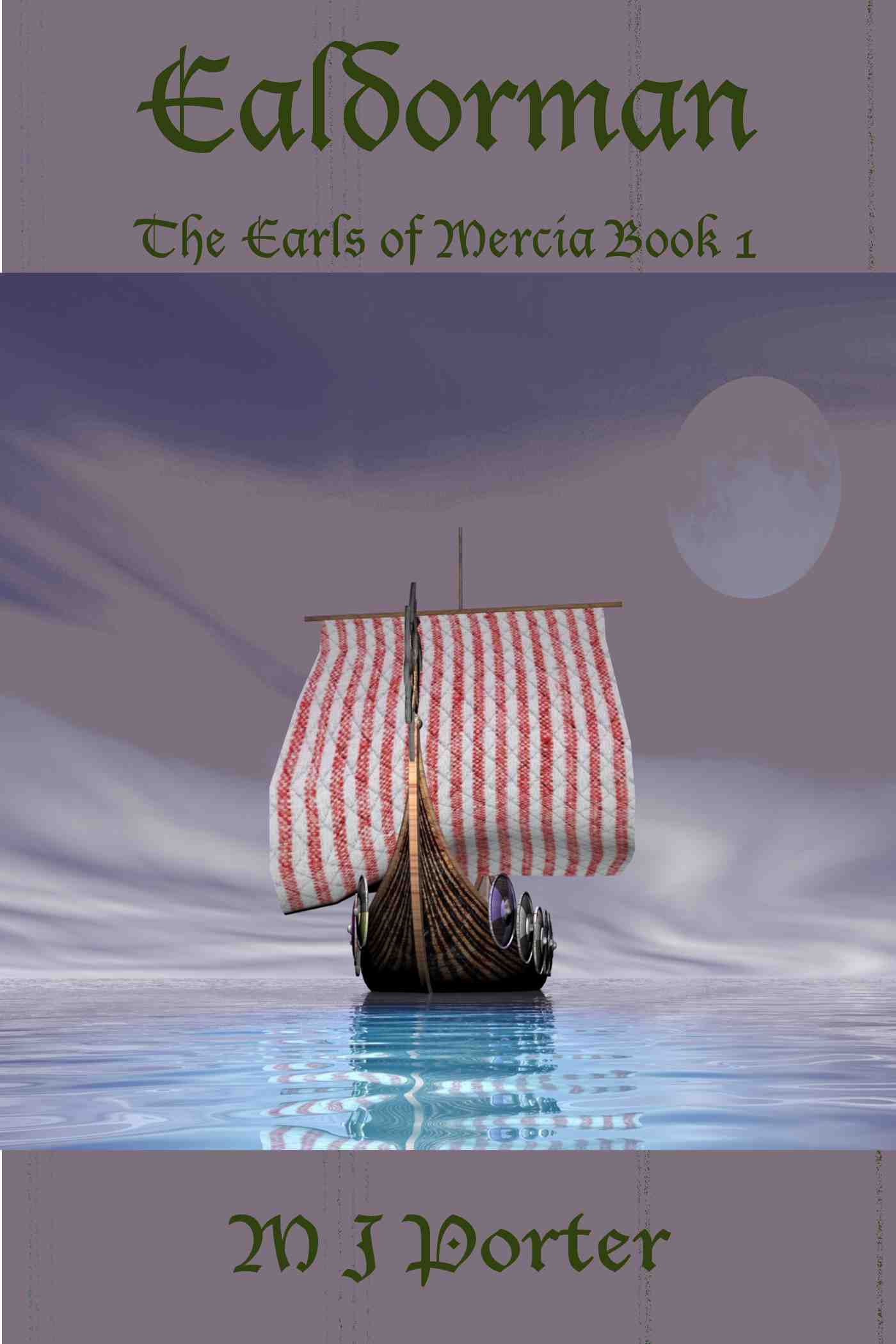
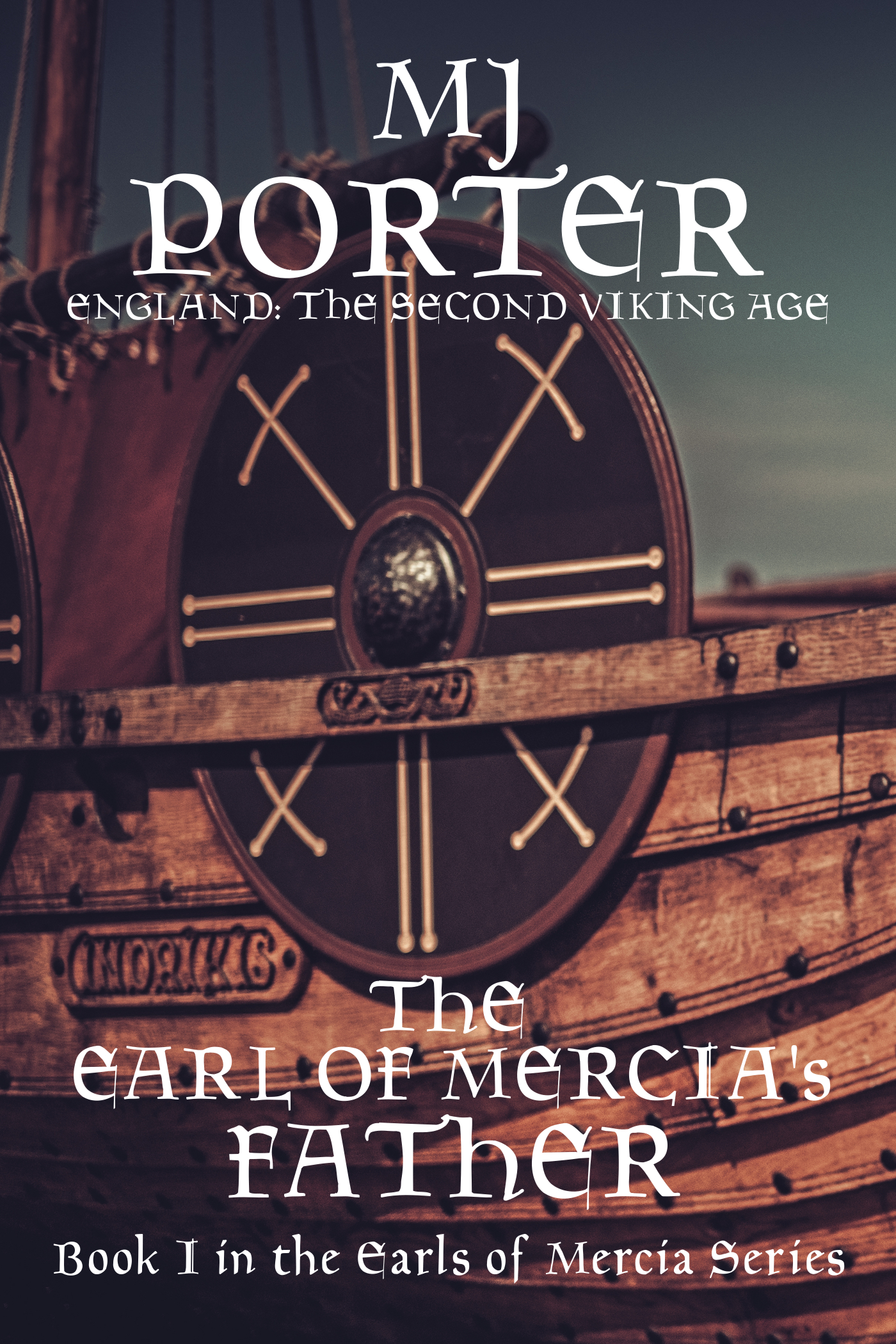
The Earl of Mercia’s Father, or Ealdorman as it was originally known, has had quite the book journey and I thought I’d share some of those details.

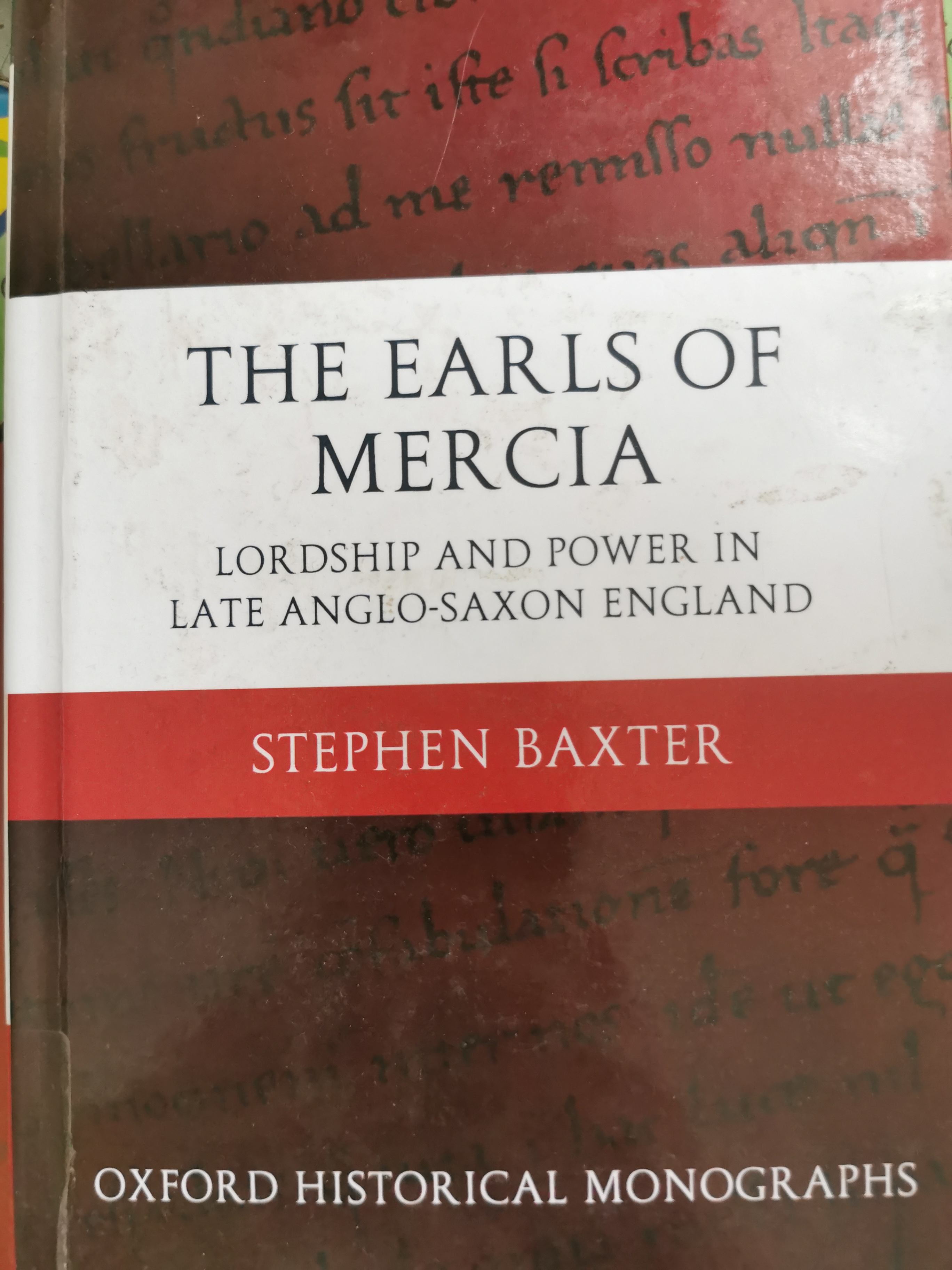
Ealdorman began life back in about 2011 when I was researching for my MA using the local university library. It didn’t have a massive Saxon section, and so I slowly worked my way through the more biographical titles. I am interested in the people and their lives, but also in the wider political events. I read all and sundry, in no particular order, and really, with no intention of doing more than learning a bit more about the era. I read about Lady Elfrida, England’s first crowned queen, I read about King Edward the Confessor, I read about the Godwines, Cnut, Æthelred (I think you’re getting the idea), and I read a book about the Earls of Mercia. And I did some more research and wrote some essays and then one day I thought, ‘wait a mo, that would be a good story.’ And so, the first Earls of Mercia story began life, the intention to offer an alternative narrative to the one often presented of the last century of Saxon England, through the eyes of the Earls of Mercia as opposed to Earl Godwine and his family.

From my research, I’d discovered Ealdorman Leofwine, an often shadowy character but one who is documented from 994 to about 1022 as one of King Æthelred II’s ealdormen (we didn’t have earls until King Cnut conquered England). But, I’ve told this story many times, my intention here is to write about that book.

It began life in 2011, but ground to a halt sometime that year, about 30,000 words in because I was a bit stuck. I wanted to take my character to Shetland, but kept confusing Orkney and Shetland. That sounds like a stupid reason to stop writing, but stop I did. And for quite a long time. Not until May 2013 did I resume my story, and only after a trip to Orkney, which, once and for all, ensured I knew the difference between Orkney and Shetland.

I hurried to finish the book, filled with enthusiasm for the project once more. I played the old ‘find an agent game’ to no avail, and decided to indie publish myself, as I’d been doing with my fantasy books. And so that should have been it. Ealdorman was out in the world.

But that wasn’t it. In fact, that was far from it. I held the rights for some years, continued writing the series, and one day, signed a publishing contract with much excitement, for book 1 and book 2. Suffice to say, it was not my best decision. So, fast forward a few years and it was mine once more, and I could republish it – with a new title and a new cover. But that wasn’t all.

In the ‘lost years’ (as I’ll term them), I’d continued writing, this series, another series, probably another series, a few side stories, etc etc. And so, the original book, Ealdorman, was no longer, in my mind at least, ‘fit for purpose.’ Being indie, knowing that one day I’d hopefully get my rights back, I both wrote out the first two books in the series (for people reading all of my series and after a chronologically sound narrative between series) and also massively edited, amended and rewrote the book as I could publish it in paperback. The one that’s now published, is not at all the book I first wrote between 2011 and 2013. There are elements that remain, and certainly Ealdorman Leofwine is still my half-blind hero, but much else has changed. It’s more exciting now. I’ve dealt with some of the ‘nerd’ elements to it, but Leofwine is still Leofwine.

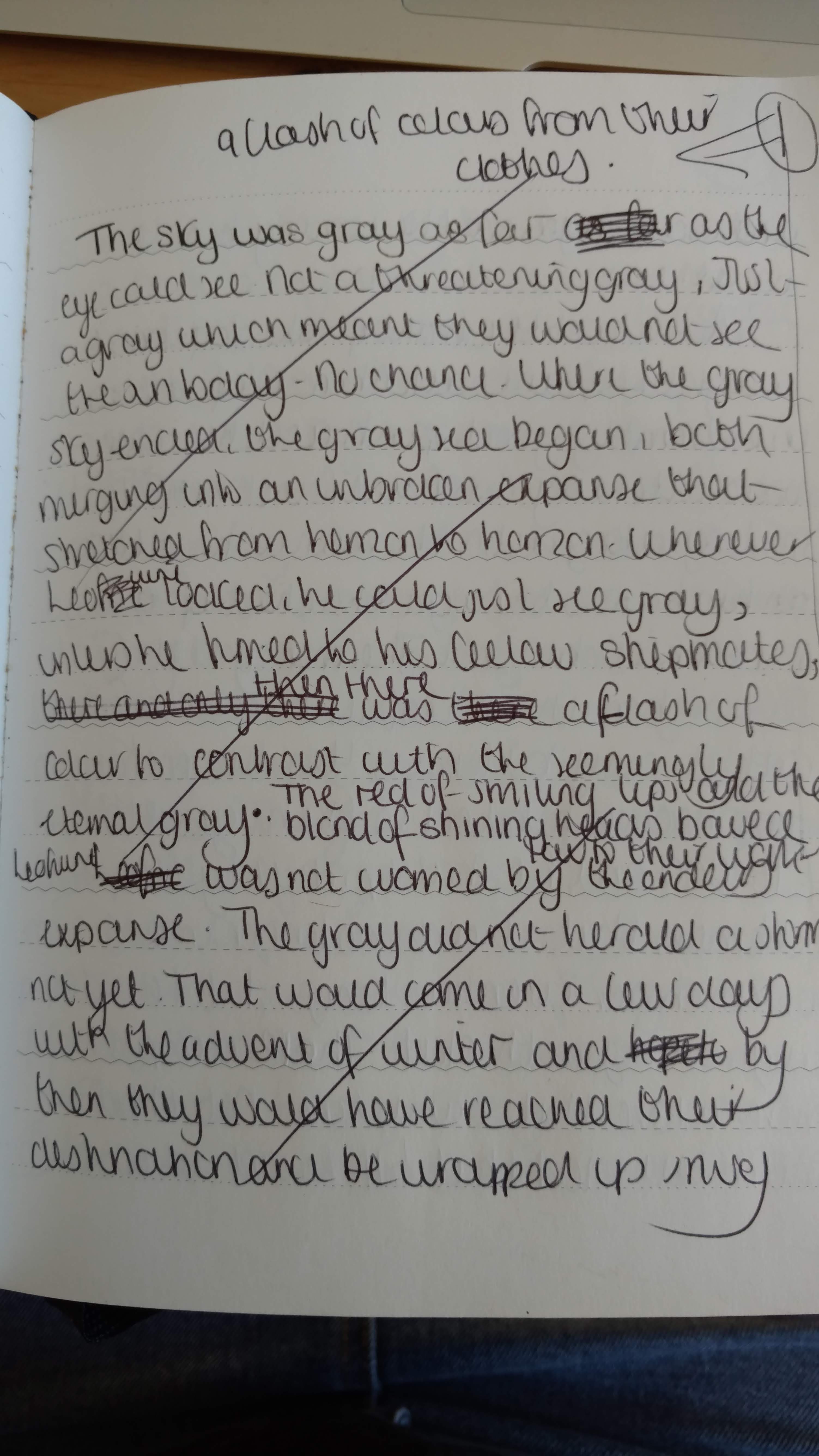
This then, is something that many writers never get to do. If Ealdorman had remained as it was, if I’d given up due to a lack of success, if I’d not written more books, if I’d not lost my rights for a few years, if I’d traditionally published it, the book that is The Earl of Mercia’s Father in its current guise wouldn’t exist. And despite it’s problems – it’s not been possible to write them all out – I’m very proud of all that this book represents, not just for me as a writer, but for the journey the book has been on, from handwritten notes, to a finished draft, to a rewritten draft, through another rewrite to what it is today. It’s been a journey and a half.

You can find out more about the entire series on my Earls of Mercia page on the blog.

https://amzn.to/4or4lM3

Posts

What’s with all the Mercian stories? Why I so often write about Saxon Mercia.

I write about the Saxon kingdom of Mercia a lot. I thought it had been entirely unintentional until now. But has it?

I grew up in an area that would one have been in Mercia. From a seemingly young age, I knew Mercia had once been a kingdom in its own right. I knew I lived in the centre of what had once been a mighty kingdom. The local church’s name, St Chad’s, was a dedication to a priest who converted the Mercians to Christianity. Tamworth, the next city along, was also a capital of Mercia (and where much of the Son of Mercia is set). Repton, a little further afield, a Mercian royal mausoleum, so when I went to university and began to study the period, I was, of course, drawn to that kingdom, to Mercia and to all it could offer me. 

The Early English kingdom of Mercia is unfortunate in having no extant records surviving from the height of its power and reach. Northumbria has the works of the Venerable Bede and his Ecclesiastical History of the English People. Wessex has the Anglo-Saxon Chronicle (ASC) – a collection of nine extant ‘versions’ of the same chronicle but with some later regional bias. Mercia has none of these things – although one of the ASC’s may be more Mercian in tone than others. Mercia also has a collection of surviving charters, and also many, many sculptures, that can be dated to this era.

It’s believed that any Mercian annalistic records that existed were destroyed by the Raider Viking attacks that gained in intensity throughout the ninth century. This is highly possible. It means that we never truly ‘hear’ the story of Mercia. We hear a Northumbrian view of Mercia. And we hear a Wessex view on Mercia. What of Mercia itself? We also hear views of Mercia from Alcuin and his collection of letters from the later eighth century.

Students of Early England are taught very much in a set chronological pattern of the Golden Age of Northumbria in the seventh century, the Supremacy of Mercia in the eighth and then the slow but seemingly unstoppable expansion of Wessex to claim all of England under one kingship so that by the time we reach 1066, England as we know it today, exists and is ruled by one king. This glosses over the fact that these kingdoms all existed simultaneously. They all fought and argued amongst one another. They all had ambitions to rule much more of modern England than their kingdom borders necessitated.

And, of course, the joy of redressing the balance a little is never far from my mind. I aim to make sure that people know of Mercia and don’t just think of its growth, supremacy and decline, as though the kingdoms of Northumbria and Wessex were more to blame for what befell Mercia than its own kings and inhabitants.

And so Mercia? What of Mercia during the Golden Age of Northumbria (the Gods and Kings trilogy)? What of Mercia through the decline of its supremacy (the Eagle of Mercia Chronicles), through the Viking Raider attacks and the growth of Wessex (the Mercian Ninth Century), after the death of Lady Æthelflæd (the Lady of Mercia’s Daughter) and what happened to Mercia during the final one hundred years of Saxon England (The Earls of Mercia series)?

What indeed? It’s not a small task, but it’s one I’ve set myself. And I’m far from finished with it. I have plans for more new titles, in time.

Check out the series pages

Gods and Kings

The Eagle of Mercia Chronicles

The Mercian Ninth Century

The Lady of Mercia’s Daughter

The Earls of Mercia

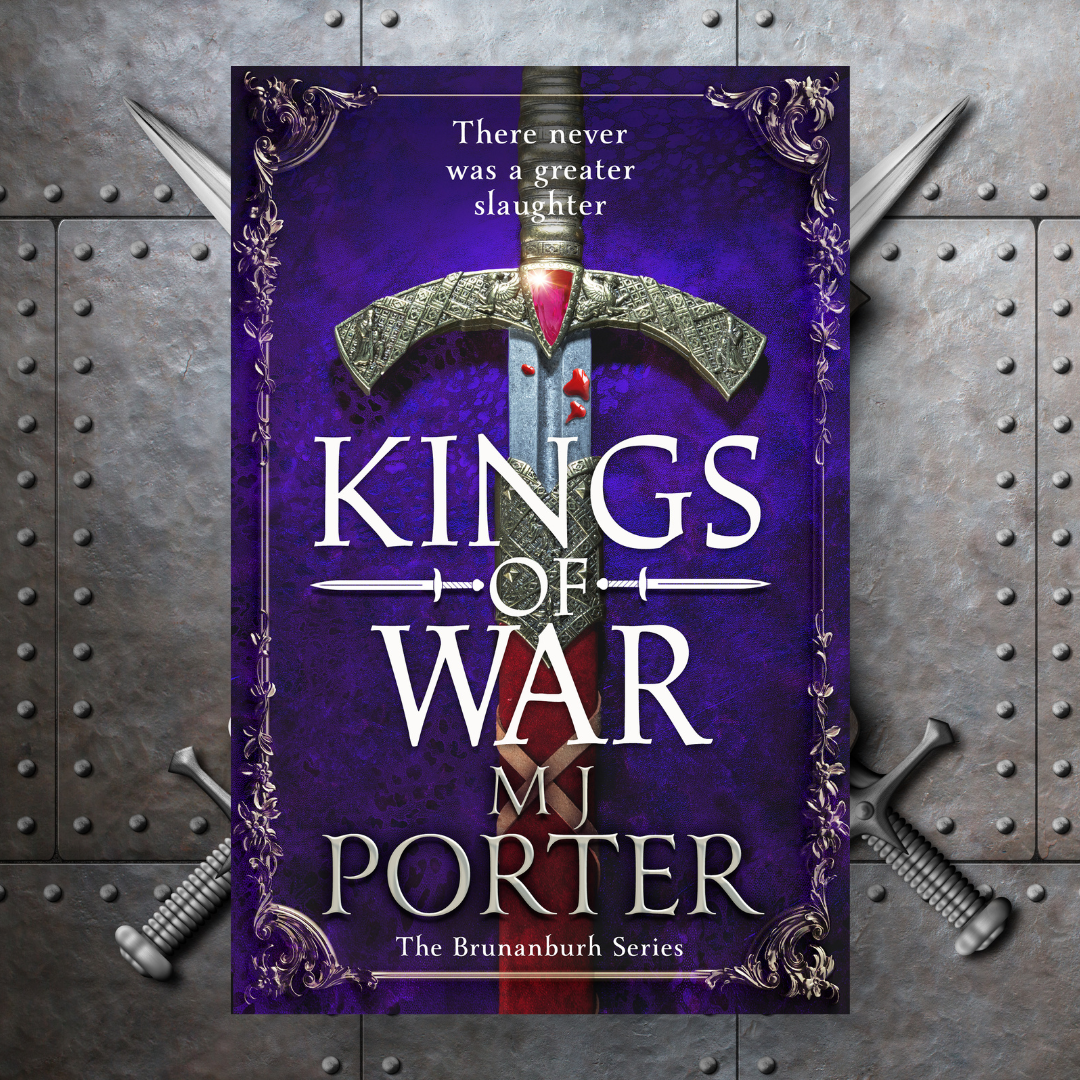
Kings of War is a month old today #histfic #history #Saxons #NewRelease

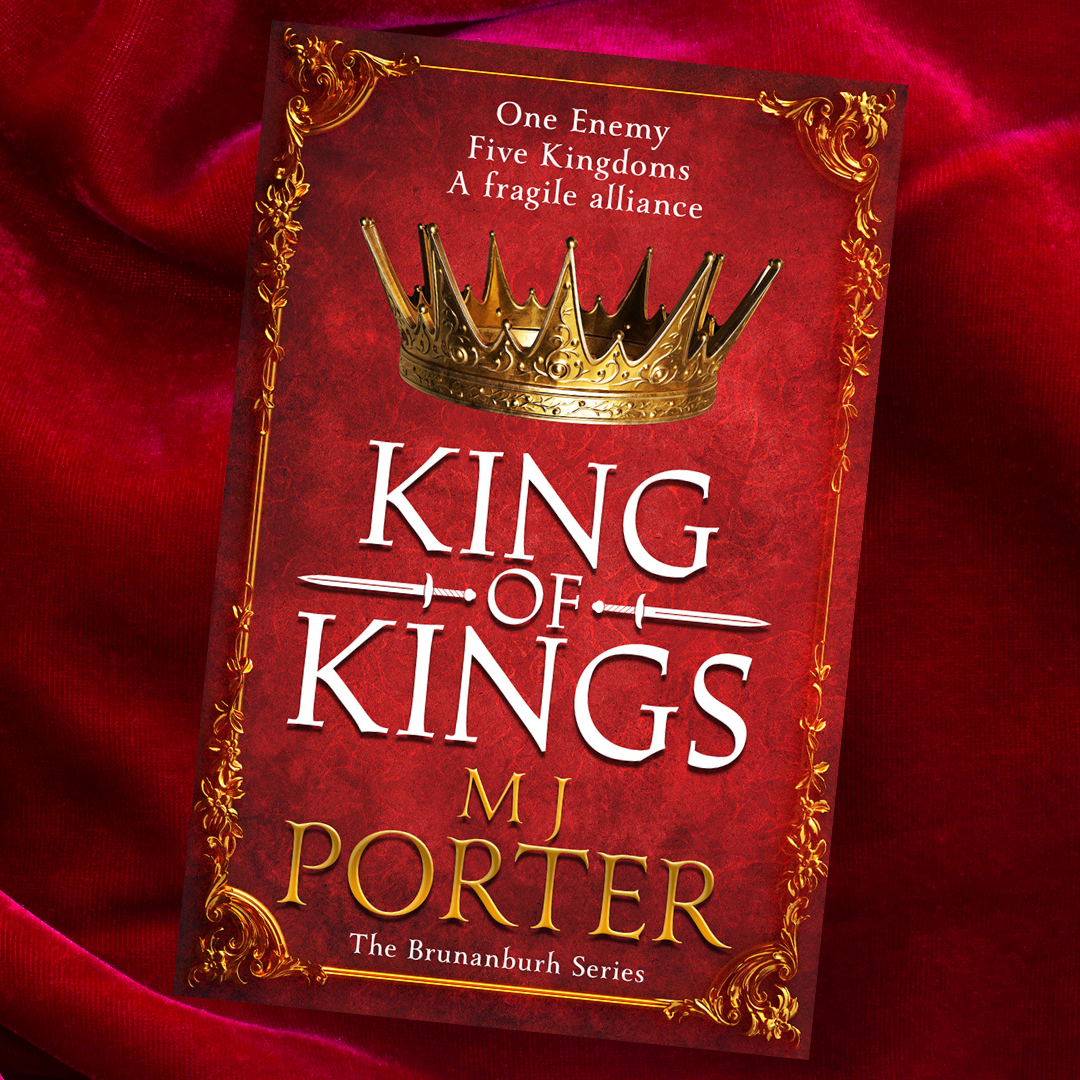
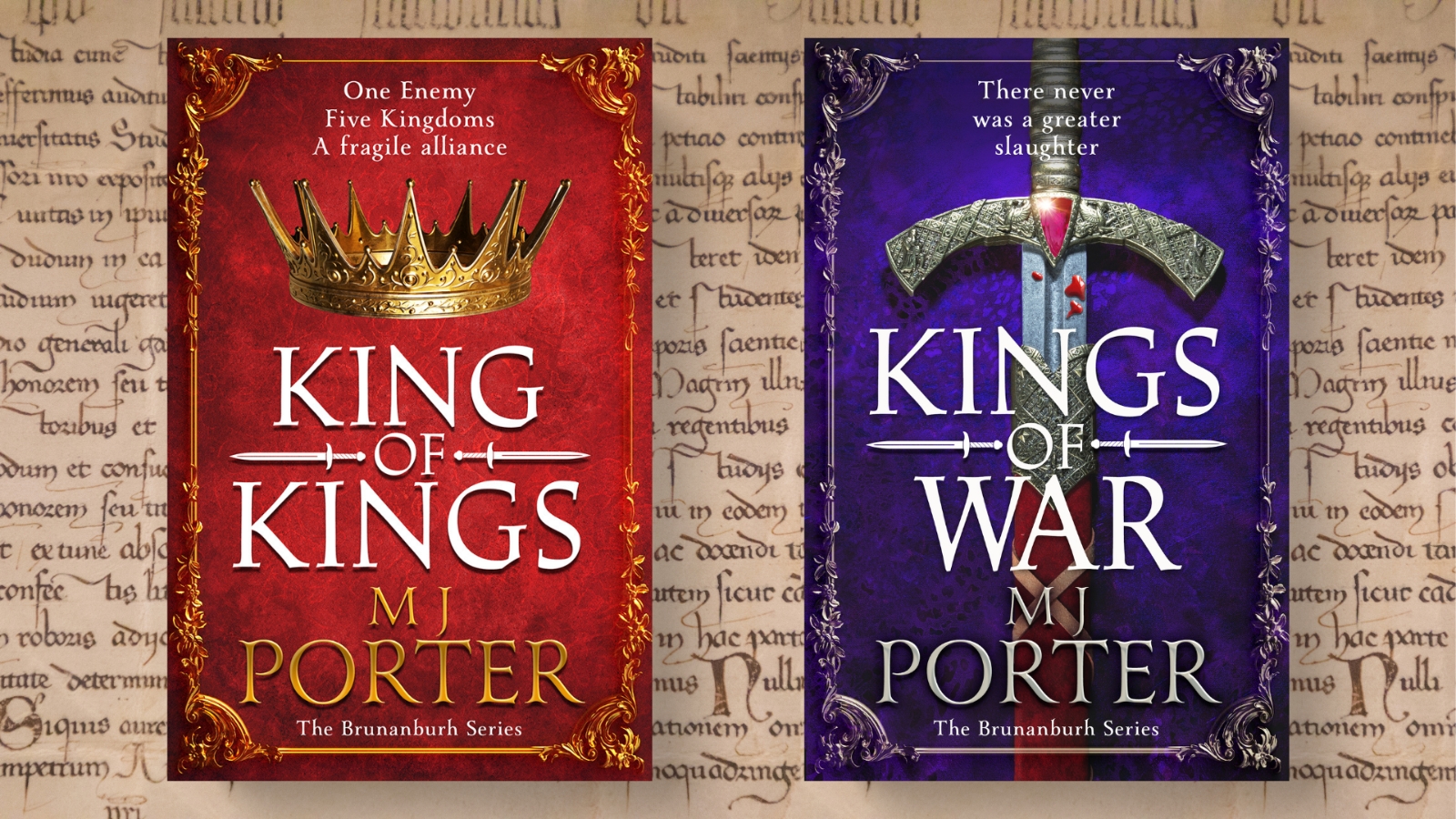
It’s been a month since the release of Kings of War, the sequel to King of Kings. This is the story of the battle of Brunanburh fought in 937. (Check out my post on where exactly Brunanburh was fought). It’s been a mad and busy month, so I thought I’d take a moment to reflect and say thank you my readers for the fab ratings/reviews and for taking a chance on my version of what led up to and happened at the battle of Brunanburh.

If you’ve not yet tried it, then King of Kings is still 99p on Amazon UK/Kobo and Kings of War is just £1.39 and both are available in ebook, audio, paperback and hardback.

Since Kings of War was released, I’ve also handed over book 3 in the series, and can reveal that the title is Clash of Kings, and it is available for preorder already.

Here’s the blurb:

Can the King of the Scots and the Dublin Norse triumph against a united England?

AD934

King Athelstan of the English has been successful in uniting the many kingdoms of Britain against one enemy, the Viking raiders.

But men who are kings don’t wish to be ruled. 

Constantin, King of the Scots, rebelled against the Imperium and was forcibly brought to bend the knee to Athelstan and England at Cirencester.

His son Ildulb seeks bloody vengeance from Athelstan following the battle at Cait and the death of his son.

Olaf Gothfrithson, king of the Dublin Norse, having asserted his power following his father’s death has his sights set on reclaiming Jorvik. 

Can the united might of the Scots and the violence of the Dublin Norse, descendants of the infamous Viking raiders, bring King Athelstan and his vision of the united Saxon English to her knees?

An epic story of kingsmanship that will result in the pivotal, bloody Battle of Brunanburh, where only one side can be victorious.

King of Kings

Kings of War

Thank you to the fabulous reviewers who shared their thoughts on Kings of War.

Leanne bookstagram

Sharon Beyond the Books

Seriesbooklover

David’s Book Blurg

Bookish Jottings

Ruins & Reading

Scrapping and Playing


And it’s not just the blog hosts sharing reviews either:) Thank you.

Amy McElroy

Terry Rudge

I’m delighted to announce the title of my new book in the Brunanburh series, and would you like to ‘meet me’ virtually?

Dun, dun, dun……………

Clash of Kings is coming soon.

Can the Norse and the Scots exact their revenge over the mighty King Athelstan of the English?  

AD937  

After the slaughter field of Brunanburh, a defeated Olaf Gothfrithson of the Dublin Norse and Constantin of the Scots narrowly escaped with their lives. In their kingdoms, failure has left them demoralised and weak.

Olaf licks his wounds in Dublin, whilst Constantin and the Welsh kingdoms who defied King Athelstan, are once more forced to bend the knee. As Athelstan’s reputation grows stronger day by day, their need to exact revenge on the overmighty and triumphant Athelstan has never been greater. 

Olaf sets his sights on reclaiming the lost kingdom of Jorvik only for tragedy to strike at the heart of England and a reluctant new King, Edmund steps into the fray.

While England mourns the death of their warrior king, her enemies gather on her borders and England stands alone against the might of the Norse, Welsh and Scots. 

Can the new king be victorious and banish her enemies once and for all or will England, and its king lose all that’s been gained and succumb to a new pretender?  

An epic tale of kinsmanship, greed and power.

Preorder now

https://books2read.com/clashofkings

There’s no cover yet but I will share once I have it:)

If you’ve not yet grabbed King of Kings and Kings of War then they are currently just 99p/£1.39 on Amazon UK and the equivalent worldwide. You can read about the series on my Brunanburh page.


I’m also asking my readers if they’d like to meet me virtually via a Zoom chat? If you think you might, then please complete the Google form. It’s just to see what readers would be interested in, their availability and timezones:) Nothing is set in stone yet.

https://forms.gle/5pZcc2niBheCLGe79

Who were the daughters of Edward the Elder who married into the ruling families of East and West Frankia? #histfic #non-fiction

Who were the many daughters of Edward the Elder who married into the ruling families in East and West Frankia?

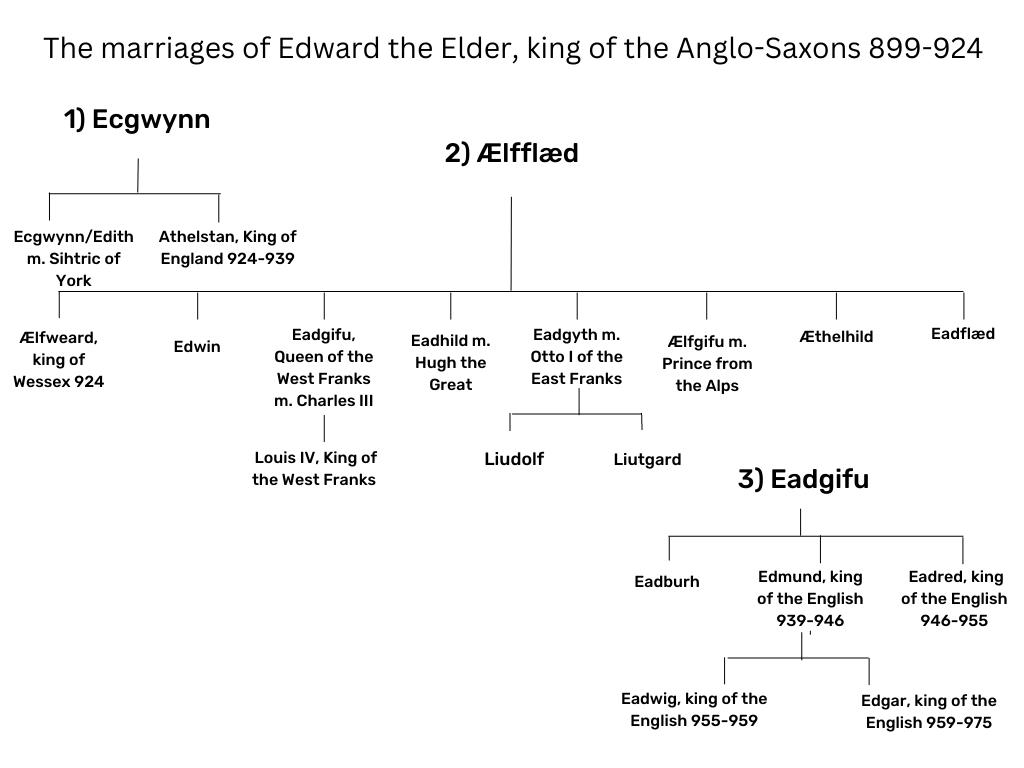
Edward the Elder was married three times, to an unknown woman- who was the mother of the future King Athelstan, to Lady Ælfflæd – who was the mother of the future, and short-lived King Ælfweard, and finally to Lady Eadgifu – who was the mother of the future kings Edmund and Eadred. But, while each woman was mother to a future kings, this story focuses on the daughters. And there were a lot of them, and their lives were either spent in making prestigious marriages, or as veiled women – whether professed religious, or merely lay women living in a nunnery or an isolated estate.


Eadgifu[i], was perhaps the oldest daughter of King Edward the Elder, and his second wife, Lady Ælfflæd. She was the first to marry, to Charles III, King of West Frankia (879-929), who ruled the kingdom from 898-922. This union is written about by the near-contemporary writer Æthelweard in the prologue to his Chronicon

‘Eadgyfu [Eadgifu] was the name of the daughter of King Eadweard [Edward], the son of Ælfred…and she was your great-aunt and was sent into the country of Gaul to marry the younger Charles.’[ii]

This was a marriage of some prestige for the granddaughter of King Alfred and one which saw her become the Queen of the West Franks.  

Charles was much her senior, and one with many illegitimate sons, born to Charles’ concubines,[iii] as well as six daughters with his first wife, Frederuna.[iv]  But, on the death of his first wife in 917, Charles had no legitimate heir to rule after him.

Eadgifu isn’t mentioned in The Anglo-Saxon Chronicle, but she does feature in The Annals of Flodoard of Reims 919-966. historian Sarah Foot maintains that as Eadgifu’s marriage isn’t mentioned in the work of Flodoard, it must have occurred before he began writing and, therefore before 919.[v] 

Yet, Charles III didn’t rule a quiet kingdom, far from it, in fact. Louis, Eadgifu and Charles’ son was born in 921-922, and his birth seems to have coincided with Charles losing control of his kingdom to an overpowerful nobleman, who ruled as Robert, King of the West Franks from 922-923 when Charles III was briefly reinstated before being deposed once more and imprisoned, where he wound remain until his death in 929. 

It is known that Louis was sent to the Wessex royal court, to be fostered firstly by her father and then by her half-brother, Athelstan.[vii] It’s likely that Louis was a similar age to Edward the Elder’s younger children. If Eadgifu returned to Wessex in 923 as well, she would have been in Wessex when her father died, her full-brother became king, albeit briefly, only for Athelstan, her half-brother, to become king.

On Charles’ death, in 929, Eadgifu was certainly once more living in England with her son Louis. And she would do so until 936 when Louis regained his kingship, and Eadgifu returned to West Frankia as the king’s mother. 

Louis’ reinstatement does seem to have had much to do with his uncle by marriage, Hugh of the Franks (c.895-956), married to his aunt Eadhild. 

We’re told by Flodoard,

‘Louis’s uncle, King Athelstan, sent him to Frankia along with bishops and others of his fideles after oaths had been given by the legates of the Franks. Hugh and the rest of the nobles of the Franks set out to meet Louis when he left the ship, and they committed themselves to him on the beach at Boulogne-sur-Mer just as both sides had previously agreed. They then conducted Louis to Laon and he was consecrated king, anointed and crowned by Lord Archbishop Artoldus (of Rheims) in the presence of the leading men of the kingdom and more than twenty bishops.’[viii]

But all might not be quite as bland as Flodoard states. Hugh might have been married to Eadhild, Louis’ aunt, but he was also an extremely powerful nobleman, brother to the previous king, Ralph. As McKitterick states, ‘No doubt Hugh calculated that he would be able to exert effective power within the kingdom as the young monarch’s uncle, chief advisor and supporter.’[ix]

 Young Louis would only have been about sixteen when he was proclaimed king of West Frankia. He was also a virtual stranger to those he now ruled, having been fostered at the Wessex/English court since 923.

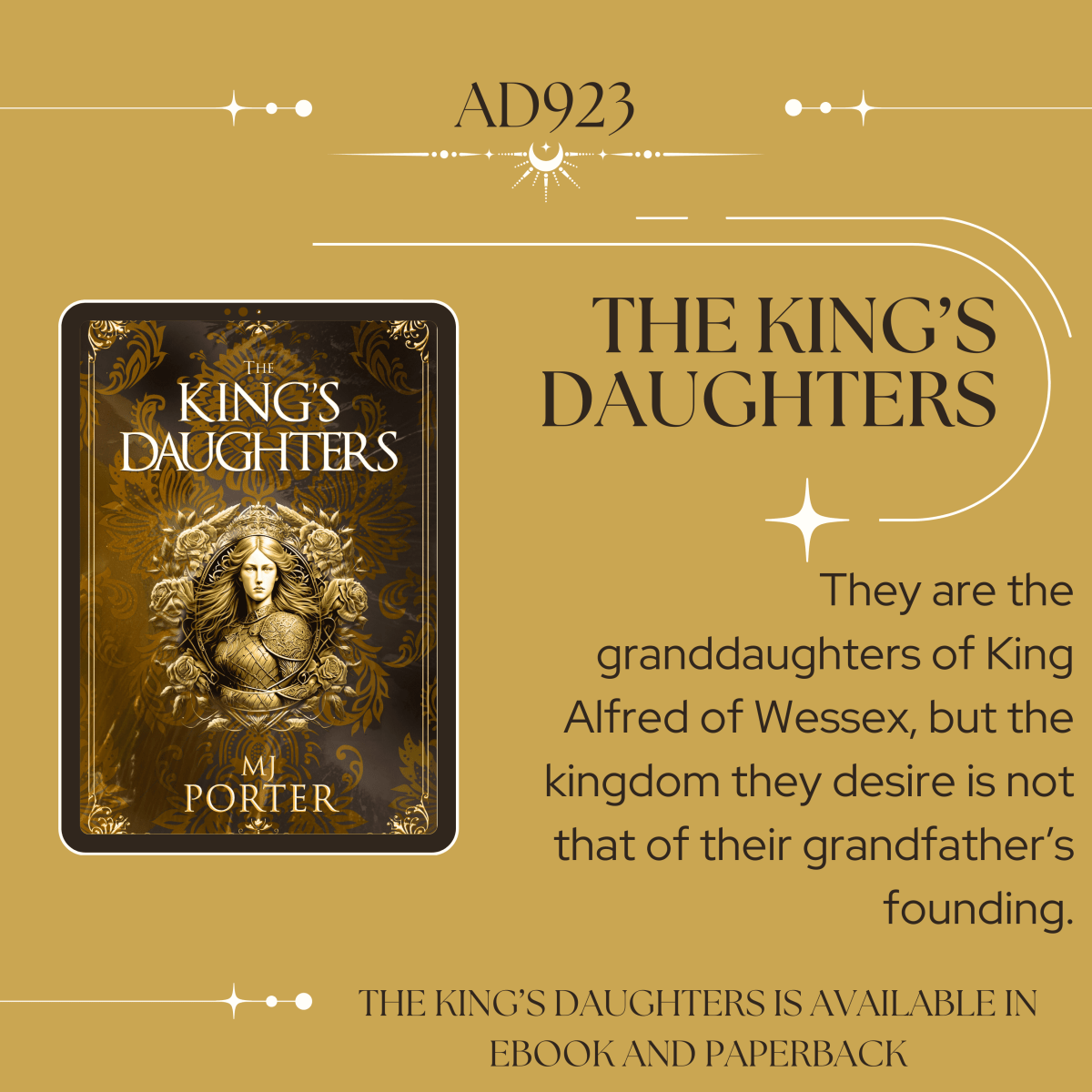
Louis was consecrated on 19th June 936. What happened during the early years of his rule is explored in The King’s Daughters, through the eyes of his mother.

(Read on below the references to find out about the other daughters).


[i] PASE Eadgifu (3) 

[ii] Campbell, A. ed The Chronicle of Æthelweard: Chronicon Æthelweardi, (Thomas Nelson and Sons Ltd, 1962), Prologue p.2

[iii] The matter of marriages, and concubinage is gathering increasing levels of interest. It is becoming apparent that the need for legitimate marriages was a matter laid down by the Church as a means to garner legitimacy. Before this, unions of concubinage may have held as firmly as church recognised marriages. 

[iv] Details taken from McKitterick, R. The Frankish Kingdoms Under The Carolingians, 751-987, (Longman, 1983), p. 365 Genealogical table

[v] Foot, S Athelstan (Yale University Press, 2011), p.46

[vi] Bachrach, B.S. and Fanning, S ed and trans, The Annals of Flodoard of Reims, 916-966 (University of Toronto Press, 2004), 20A

[vii] William of Jumieges in his Gesta Normannorum Ducum III.4 (PASE)

[viii] Bachrach, B.S. and Fanning, S ed and trans, The Annals of Flodoard of Reims, 916-966 (University of Toronto Press, 2004), 18A (936). Foot, S Athelstan (Yale University Press, 2011), p.168

[ix] McKitterick, R. The Frankish Kingdoms Under The Carolingians, 751-987, (Longman, 1983), p.315

[x] Van Houts, E. M. C., trans. The Gesta Normannorum Ducum of William of Jumieges, Orderic Vitalic, and Robert of Torigni, (Clarenden Press, Oxford, 1992) pp82-83 Book III.4

[xi] Bachrach, B.S. and Fanning, S ed and trans, The Annals of Flodoard of Reims, 916-966 (University of Toronto Press, 2004), 33G

[xii] PASE Greater Domesday Book 353 (Lincolnshire 18:25)


Eadhild[i], perhaps the second daughter of Edward the Elder and his second wife, Lady Ælfflæd, marriage Hugh the Great, later known as dux Francorum, in another continental dynastic marriage similar to that of her sister. Under 926, Flodoard of Reims states, ‘Hugh, son of Robert, married a daughter of Edward the Elder, the king of the English, and the sister of the wife of Charles.’[ii] This wasn’t Hugh’s first marriage, but that union was childless.

There’s no record of the marriage in The Anglo-Saxon Chronicle. However, once more, it is mentioned in Æthelweard’s Chronicon, ‘Eadhild, furthermore, was sent to be the wife of Hugo, son of Robert.’[iii] And also in Flodoard’s Annals, as mentioned above.

There is a later, really quite detailed account in the twelfth-century source of William of Malmesbury’s Gesta Regum Anglorum. He describes Eadhild as ‘in whom the whole mass of beauty, which other women have only a share, had flowed into one by nature,’ was demanded in marriage from her brother by Hugh of the Franks.’[v]

Hugh was a very wealthy individual. His family, ‘commanded the region corresponding to ancient Neustria between the Loire and the Seine, except for the portions ceded to the Vikings between 911 and 933. Hugh also possessed land in the Touraine, Orleanais, Berry, Autunois, Maine and north of the Seine as far as Meaux, and held the countships of Tours, Anjou and Paris. Many powerful viscounts and counts were his vassals and deputies…a number of wealthy monasteries were also in Robertian [the family named after his father] hands. Hugh himself was lay abbot of St Martin of Tours, Marmoutier, St Germain of Auxerre (after 937), St Denis, Morienval, St Riquier, St Valéry and possibly St Aignan of Orleans, St Germain-des-Pres and St Maur des Fosses.’[viii]

Eadhild, sadly died in 937, childless, and in The King’s Daughters her death sets in motion some quite catastophic family feuding.

(Read on below the references to learn more about The King’s Daughters)


[i] Eadhild (1) PASE

[ii] Foot, S Athelstan (Yale University Press, 2011), p.47.  Bachrach, B.S. and Fanning, S ed and trans, The Annals of Flodoard of Reims, 916-966 (University of Toronto Press, 2004), 926 

[iii] Campbell, A. ed The Chronicle of Æthelweard: Chronicon Æthelweardi, (Thomas Nelson and Sons Ltd, 1962), Prologue p.2

[iv] Bachrach, B.S. and Fanning, S ed and trans, The Annals of Flodoard of Reims, 916-966 (University of Toronto Press, 2004), 8E

[v] Foot, S Athelstan (Yale University Press, 2011), p.47. Mynors, R.A.B. ed and trans, completed by Thomson, R.M. and Winterbottom, M. Gesta Regvm AnglorvmThe History of the English Kings, William of Malmesbury, (Clarendon Press, 1998),ii,135,pp218-9

[vi] McKitterick, R. The Frankish Kingdoms Under The Carolingians, 751-987, (Longman, 1983), p.314

[vii] Foot, S Athelstan (Yale University Press, 2011), p.47

[viii] McKitterick, R. The Frankish Kingdoms Under The Carolingians, 751-987, (Longman, 1983), p.314


Eadgyth,[i]  has her marriage mentioned in the entry for the D text of the Anglo-Saxon Chronicle under the year 924. Alongside Athelstan’s unnamed biological sister, she’s the only one of Edward’s daughters to be mentioned in The Anglo-Saxon Chronicle. ‘..and he gave his sister across the sea to the son of the King of the Old Saxons (Henry).’[ii]Sarah Foot notes that in the Mercian Register section of The Anglo-Saxon Chronicle, this sentence in 924 is unfinished. The D text chooses to complete this sentence differently, referencing the union of Eadgyth to Otto, as opposed to the union of Athelstan’s unnamed sister to Sihtric of York. This then explains why the reference occurs in the annal entry for 924, whereas the union took place in 929/30, following a Saxon military triumph over the Slavs in the late summer of 929.[iii]

Æthelweard’s Chronicon again adds to our knowledge by informing his readers that Athelstan sent two of his sisters for Otto to choose the one he found most agreeable to be his wife. 

‘King Athelstan sent another two [of his sisters] to Otho, the plan being that he should choose as his wife the one who pleased him. He chose Eadgyth.’[v] This story is also told in Hrotsvitha’s Gesta Ottonis. ‘he bestowed great honour upon Otto, the loving son of the illustrious king, by sending two girls of eminent birth, that he might lawfully espouse whichever one of them he wished.’[vi]

Bishop Cenwald of Worcester accompanied both sisters to Saxony. The account of his visit can be witnessed in a confraternity book from St Galen, where he signed his name. Eadgyth was certainly the mother of a son and a daughter, Liudolf and Liudgar. 

Read The King’s Daughters to discover more about her story.


[i] PASE Eadgyth (2) 

[ii] Swanton, M. trans and edit The Anglo-Saxon Chronicles, (Orion Publishing Group, 2000), p105. And Foot, S Athelstan (Yale University Press, 2011), p.49 n69

[iii] Foot, S Athelstan (Yale University Press, 2011), p.48

[iv] Foot, S Athelstan (Yale University Press, 2011), p.48

[v] Campbell, A. ed The Chronicle of Æthelweard: Chronicon Æthelweardi, (Thomas Nelson and Sons Ltd, 1962), Prologue p.2

[vi] Foot, S Athelstan (Yale University Press, 2011), p.49, but Hrotsvitha, Gesta Ottonis, lines 79-82 and 95-8 ed. Berchin 278-9

[vii] Swanton, M. trans and edit The Anglo-Saxon Chronicles, (Orion Publishing Group, 2000), C p.124


King Athelstan is said to have sent two sisters to the court of Otto of Saxony, for him to determine which he would marry. This sister has vexed historians, even Æthelweard in his Chronion is unsure of her name,[i] and he wrote his text much earlier than other sources available, by c.978 at the latest. It would be hoped that a woman who left England only forty years earlier might have been remembered.  Æthelweard believed she had married, ‘a certain king near the Alps, concerning whose family we have no information, because of both distance and the not inconsiderable lapse of time.’[ii] He held out hopes that Matilda, to whom he dedicated his work, might be able to tell him more. 

‘Louis, brother of Rudolf of Burgundy, and his English wife were influential figures in that region when Rudolf died young, leaving only a child, Conrad, as heir.’[vi]

More than this, it is impossible to say. It is unsettling to realise that the daughter of one of the House of Wessex’s kings could so easily be ‘lost’ to our understanding today, and indeed, to that of her descendants only forty years later. This raises the awareness that if noble women could disappear from the written records, then so to could almost anyone. 


[i] This sister may appear as Anonymous 921 on PASE

[ii] Campbell, A. ed The Chronicle of Æthelweard: Chronicon Æthelweardi, (Thomas Nelson and Sons Ltd, 1962), Prologue p.2

[iii] Mynors, R.A.B. ed and trans, completed by Thomson, R.M. and Winterbottom, M. Gesta Regvm AnglorvmThe History of the English Kings, William of Malmesbury, (Clarendon Press, 1998), pp.199-201

[iv] Foot, S Athelstan (Yale University Press, 2011) p.51

[v] Please see Foot, S Athelstan (Yale University Press, 2011), p.51 for this fascinating discussion in its entirety. 

[vi] Foot, S ‘Dynastic Strategies: The West Saxon royal family in Europe,’ in England and the Continent in the Tenth Century: Studies in Honour of Wilhelm Levison (1876-1947) (Brepols, 2012), p.250


The King’s Daughter is the story of these women and their lives (mostly) in Continental Europe, and I hope you’ll enjoy it.

Check out The Tenth Century Royal Women page.

https://amzn.to/4ptykUl

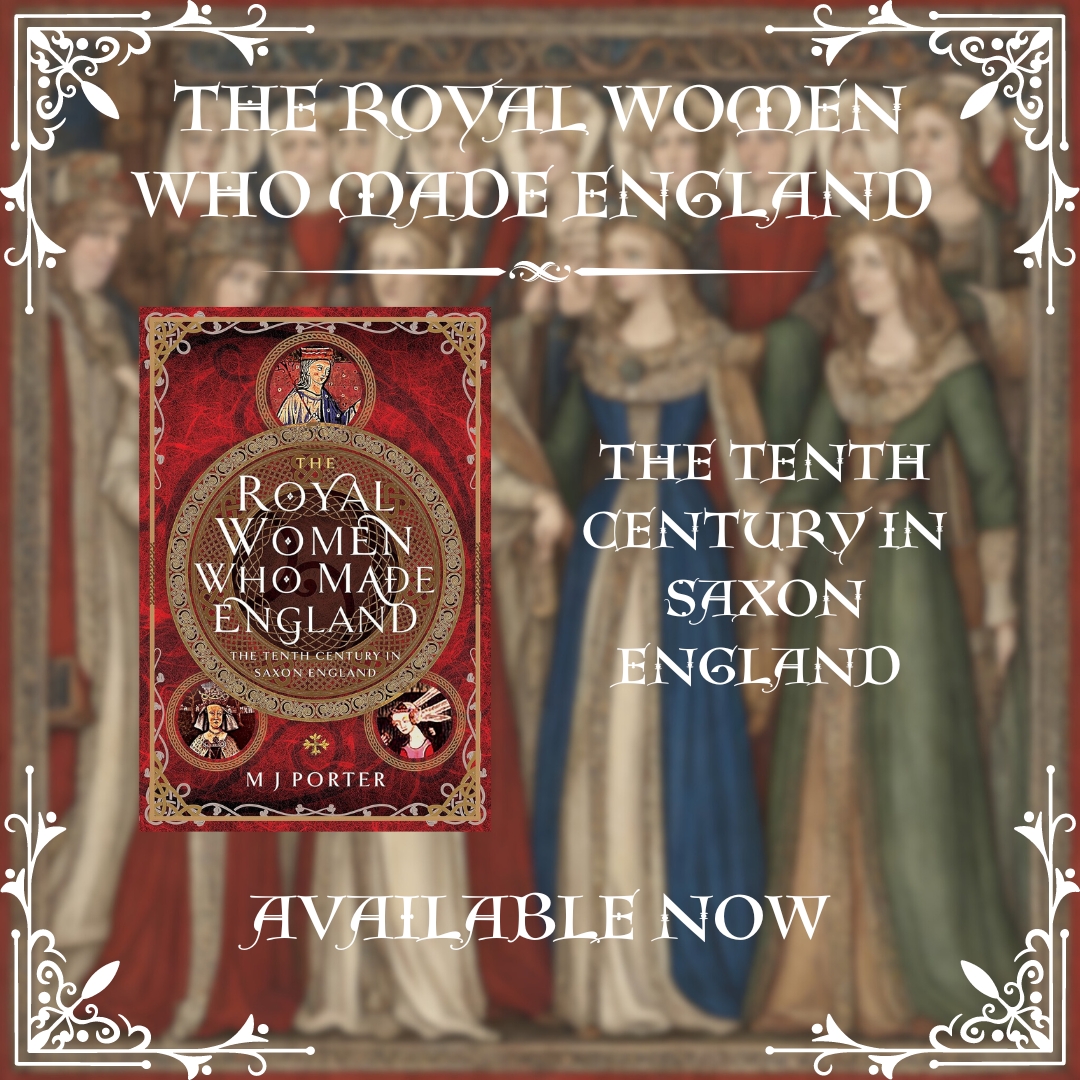
Interested in the real women? Please check out my non-fiction title, The Royal Women Who Made England.

The Royal Women Who Made England cover

Posts

The pitfalls and perils of writing about Saxon England

Sometimes, it seems to me, that fiction and non-fiction authors of the Saxon era believe the stories they’re told about Saxon England which are actually the result of much later sources. This of course, means that the later stories, more often than not the work of Norman pseudo-historians writing in the 1100s and later, grow in popularity while fewer people understand that the stories are not only not contemporary, they might have been written down hundreds of years after the events they allegedly describe and discuss.

I make no bones of the fact that understanding the sources of the Saxon period is complex and difficult. Much of it depends on what a scholar, or a reader, might take as the ‘level of credibility.’ Some people will take saints lives at face value, others will not. Some will find value in poems and some will not. Some, and I include myself in this, will misconstrue the Anglo-Saxon Chronicle and realise they were reading it all wrong.

There are really very few sources available for the modern reader. The Anglo-Saxon Chronicle is very well known, but perhaps not the bones of how it was constructed (please see Pauline Stafford’s book After Alfred for a comprehensive, and frankly, mind-blowing discussion). The words of Bede are often cited. There are charters, wills, legal documents, some poetry and saints lives, as mentioned above. This is not a huge amount to build a narrative upon, and yet historians have done this for many years – to some the increasing amount of archaeological information (often contradictory) is an annoyance, but for others, it has made the merits of the surviving written word more questionable. We should be asking, ‘why do we know what we know,’ as opposed to lapping it up and assuming its authenticity.

Another problem is the scarcity of the surviving documents, and the fact that very, very few of them survive in contemporary formats. With the best will in the world, what is copied isn’t always correct and equally, the temptation to embellish mustn’t be ignored, and that’s before we return to the heart of the problem. What was written was written for a purpose. As today, everything contains bias, it exhibits their intentions (Bede wrote an ecclesiastical history – the clue is in the name), while the Anglo-Saxon Chronicle was a Wessex based endeavour, at least in the beginning. The surviving nine recensions changed hands on more than one occasion, and the bias subsequently changed with it. We imagine monks labouriously copying out the texts, letter by letter, but what if the words were written by female religious? Or not by the religious at all? What if they were a state-sponsored endeavour to present their patron in the best possible light? Who was that patron? Was that patron always the same one? We don’t, it appears, have the ‘original’ version of the Anglo-Saxon Chronicle. The versions available to us are all copies – written out at various points from the tenth to the twelfth century, and then again, heavily annotated during the Tudor era.

And this is merely another step along the way. Few can read these precious sources in their original format or even in their original language. We rely on translations, which allow a fresh wave of bias, and also, understanding. Our world is different to the world the Saxons lived within. They had different contexts for some words. While researching for my non-fiction book, I was amazed to discover the work of Sarah Foot and the Veiled Women of England, and her assertion that the word ‘nonne‘ might not have meant a cloistered nun, as we assume from the similarity of the two words.

We don’t know far more than we do know. There is a temptation to ‘plug’ the gaps with any available knowledge. And that’s not a problem, providing the author confirms it is fiction, not non-fiction. I write fiction, but I know the non-fiction the stories are built upon (hopefully). I write extensive historical notes for all of my books. I play with the possibilities, and purposefully reinterpret the ‘gaps’ but I don’t pretend that what I write is factual.

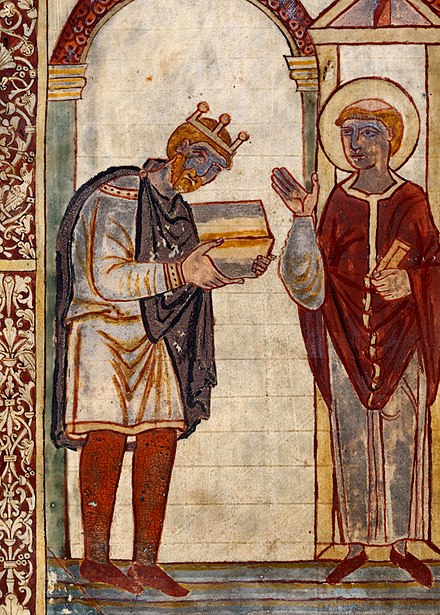
We have almost no images of anyone who lived in Saxon England. There are contemporary images of King Athelstan and his nephew, King Edgar. I can’t think of a single contemporary image of a woman. The Bayeuax Tapestry dates to after the end of Saxon England. We might have something which was held, or commissioned by a Saxon woman, and a queen, if the embroideries found in St Cuthbert’s tomb were indeed made by Lady Ælflæd, the second wife of King Edward the Elder.

We do have coins, more often than not from archaeological or metal-detecting finds. They do allow us a tangible hold on this part of history, and increasingly are adding to the need to rewrite the written words that have survived. We also have increasing archaeological finds, but again, and as no expert in archaeology, there is also a thin line. Archaeologists often set out to ‘find’ something. What they find often isn’t that ‘thing’ but in the past, the temptation to present only limited information has allowed certain narratives to stand, which are only now being understood, just as with increasing study on the written sources.

When writing about Saxon England, we must be wary of all of these things – we need to be aware that very rarely is something what we expect it to be, and equally, we must remember that the people of Saxon England were just that, people. They would have been irrational, selfish, violent, horrible, brutal, honest, religious, fervent, foolish, intelligent or not.

And so, writing Saxon England is far from a simple task. It is very rare to be able to categorically state that something is ‘wrong’. It is even rarer to be able to categorically state that something is ‘correct.’ The work of a fiction writer might be easier than that of a non-fiction writer, but the fiction writer has to recreate people as well as a coherent narrative, and there are always people who will be happy to argue with those interpretations. And that is all they are, interpretations – but so, if non-fiction writers are honest enough to admit – is much of their work as well.

(I’ve not even discussed the problems of trying to write a coherent piece on the history of the British Isles at this time – contending with Old Norse, Old Irish, Old English, Old Welsh, Latin and no doubt, other languages that I’ve failed to mention).

That said, the era is fascinating. It’s worth investing in it, and taking the time to understand the complexities.

Looking to read about Saxon England? Here are some of the primary and secondary works that I highly recommend.

PRIMARY SOURCES

The Anglo-Saxon Chronicles – translated and edited by Michael Swanton

English Historical Documents Vol 1 500-1042 – Dorothy Whitelock (a very expensive resource – perhaps best found in a library or online)

English Historical Documents Vol 2 1042-1189 – David C Douglas (as above. I was lucky to find some reasonably inexpensive copies but it took years)

An Atlas of Anglo-Saxon England – David Hill (It took me years but I eventually found a copy on Abebooks that didn’t break the bank)

The Electronic Sawyer – online catalogue of Anglo-Saxon Charters – an amazing resource once you feel confident to explore the primary sources. Used to be part of the KEMBLE online resource but this seems to have disappeared, which is a great shame.

The Prospography of Anglo Saxon England – this is a new one for me, but I wanted to share as it looks like it’s going to be extremely useful.

https://oepoetryfacsimile.org – Old English poetry collection, showing different translations, and reprints – fascinating – and revealing I’m not the only one with these concerns:)

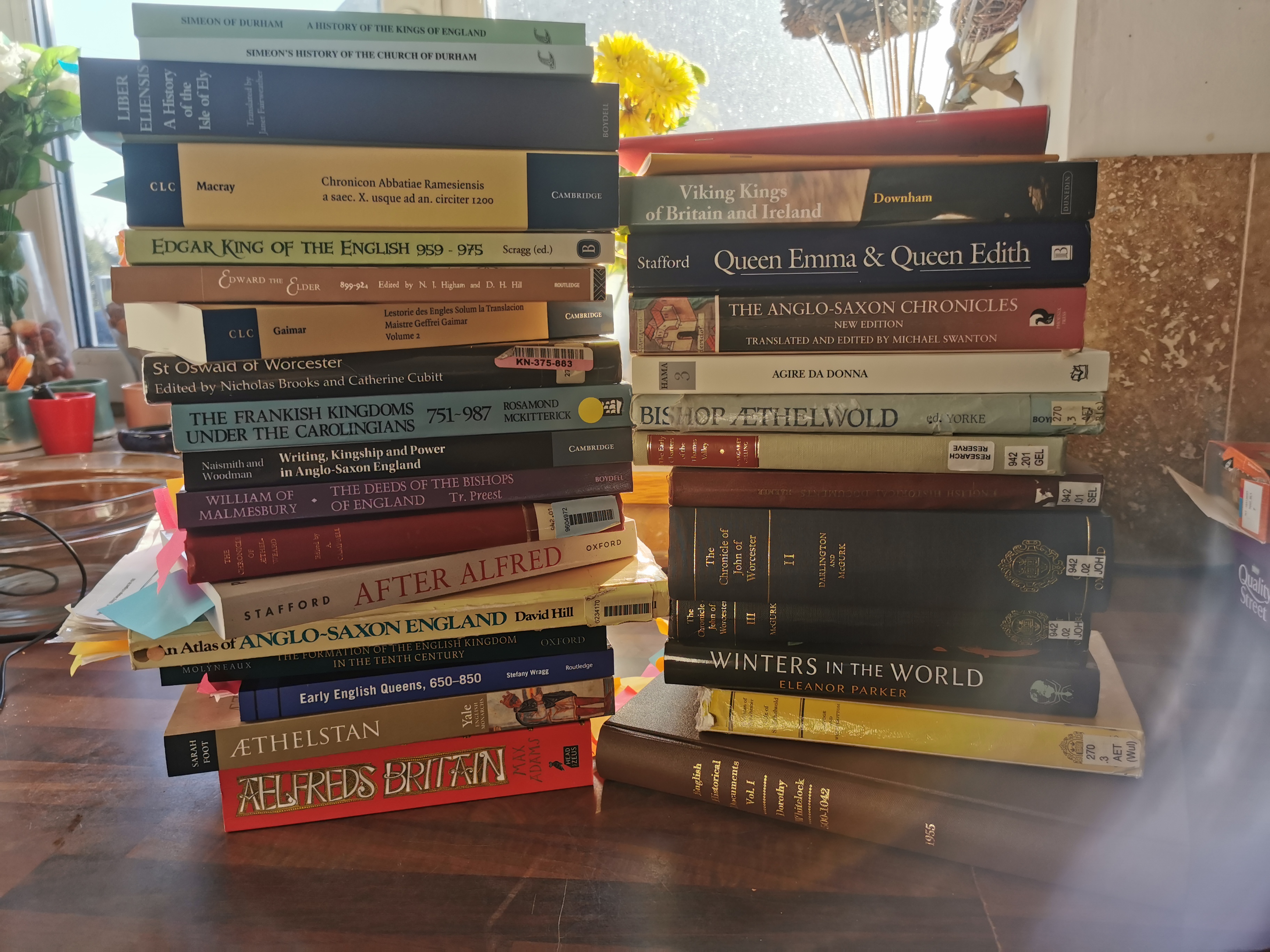
Just a few of my Saxon books (some were from the local library)

SECONDARY SOURCES

Anglo-Saxon Kingdoms by Claire Breay and Joanna Story

The First Kingdom by Max Adams

Aelfred’s Britain by Max Adams

After Alfred, Anglo-Saxon Chronicles and Chroniclers 900-1150 by Pauline Stafford, an absolute must to understand one of the most important sources for the period.

The Death of Anglo-Saxon England by N J Higham

The Diplomas of King Æthelred the Unready 978-1016 by Simon Keynes (if you can get a first edition do so, as the reprint doesn’t include the tables which is very frustrating).

Æthelred the Unready by Levi Roach

Æthelred the Unready, the ill-counselled king by Ann Williams

Cnut, England’s Viking King by M K Lawson

The Reign of Cnut: King of England, Denmark and Norway by Alexander Rumble

Cnut the Great by Timothy Bolton

Queen Emma and Queen Edith by Pauline Stafford

Edward the Confessor by Frank Barlow

Edward the Confessor by Tom Licence 

Godwins: The Rise and Fall of a Noble Dynasty by Frank Barlow

Harold The Last Anglo Saxon King by Ian W Walker

Conquered: The Last Children of Anglo-Saxon England by Eleanor Parker

As a rule of thumb, and it’s not always right – the more expensive a resource- the more academic the contents.

I recommend anything written by Max Adams, Nick Higham (sometimes uses his initials), Pauline Stafford, Ann Williams, Levi Roach and Simon Keynes, amongst many others. Once you’ve got to grips with the period/person/event you’re interested in, start to dig a little deeper with more academic articles.

This post contains Amazon affiliate links.

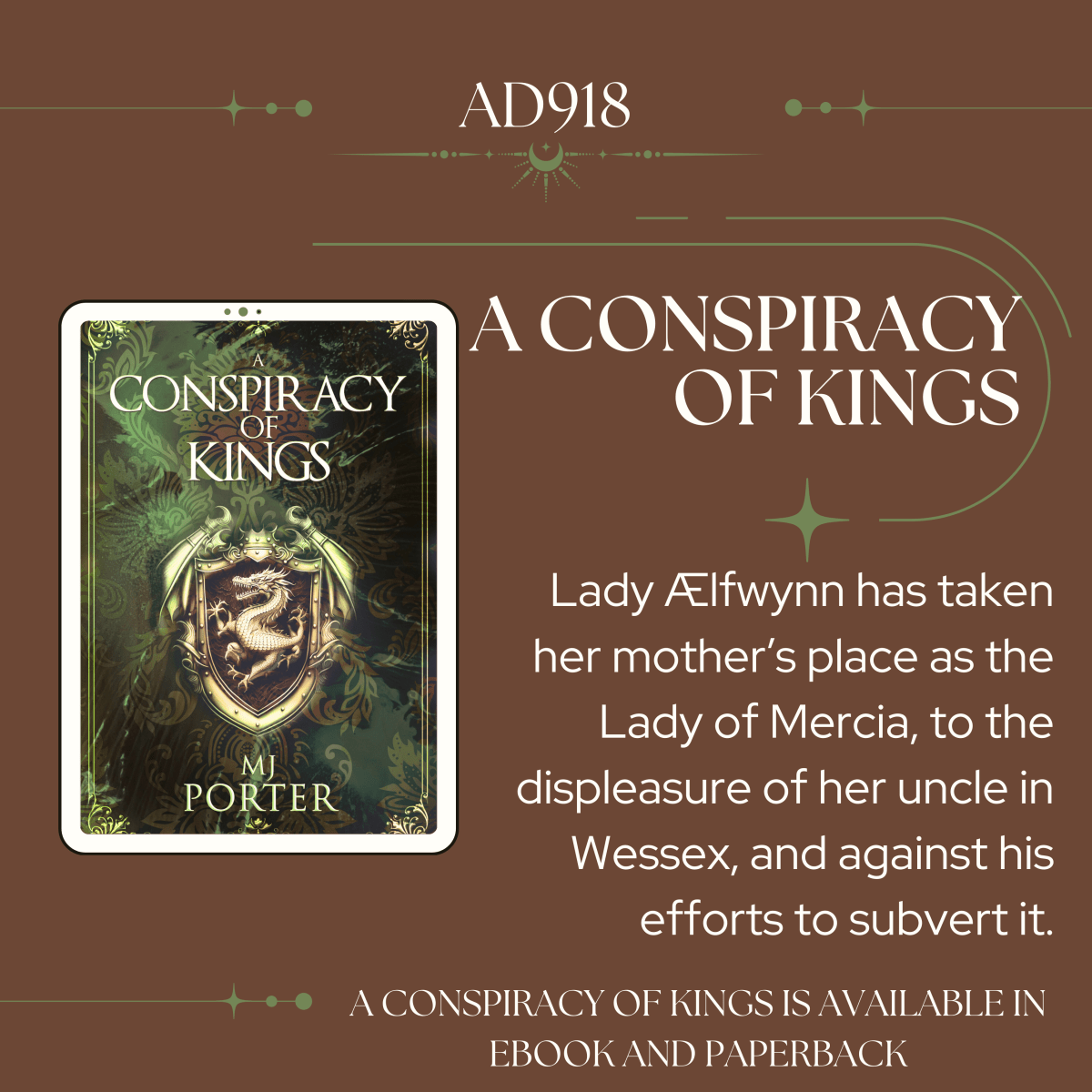
I’m sharing the first chapter from A Conspiracy of Kings #histfic #TheRoyalWomen

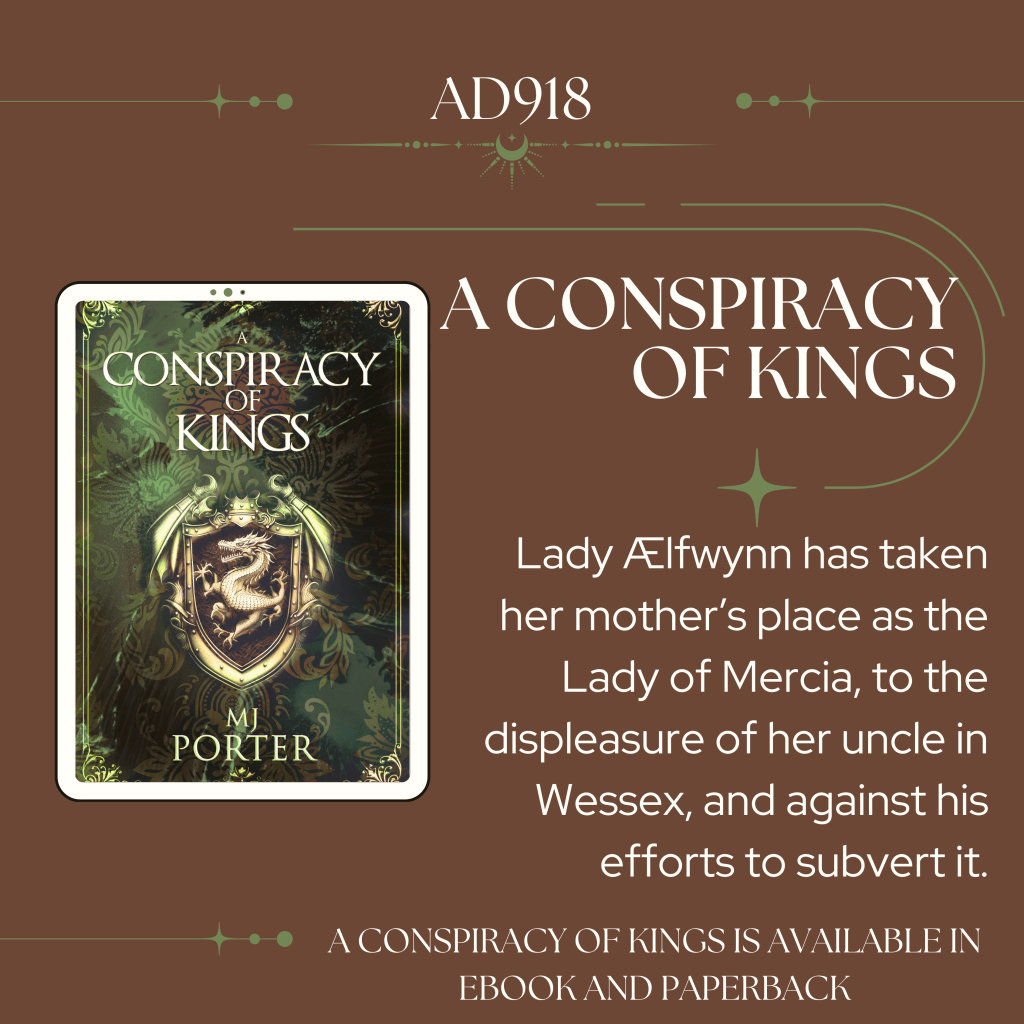
Here’s the beginning from A Conspiracy of Kings (there might be spoilers if you’ve not read The Lady of Mercia’s Daughter)

Chapter 1

Tamworth, the kingdom of Mercia, 918

We feast that night. There are smiles and tears on everyone’s faces as Tamworth’s great hall is swept clear of the men and women from Wessex. My armed guard ensures no one hurts them as the Mercians pull tables and benches to fill the vast space left behind. My servants, taken only somewhat by surprise as they were expecting a feast one way or another after the witan, rush to ensure everyone has a drink, if not food. 

Cousin Ecgwynn hurries to me as I watch the activity, questions on her lips and I throw my arms around her, unheeding her sumptuous gown while I wear the clothes of a warrior. Usually, she would protest. But not today.

‘Enough of that,’ Cousin Ecgwynn complains, batting my embrace away, and not delicately. She holds my arms away from her, glaring at me.

I can see the flicker of rage in her blue eyes and the tightness of her stance.

‘You let me believe you were dead! I’ve been mourning for you, as I would a sister, and coming so soon after the death of Lady Æthelflæd….’ Her normally serene face floods with tears as her words trail off. I thrust my arms around her again, holding her tighter, hoping to make her understand, using my strength gained on the training field to overpower hers. I absorb her scent, the familiarity of home, the reminder of all that my uncle and Archbishop Plegmund tried to take from me.

‘I’m sorry, dear Ecgwynn. It was.’ I pause, unsure what to say, speaking into her ear as I continue to hold her tight. ‘Well, in all honesty, it was all we could think of to ensure that Uncle Edward’s treachery was exposed.’

I don’t call King Edward of Wessex her father. That would be too cruel. I think that, like me, Lady Ecgwynn could happily forget that a man was even involved in her conception and birth. Certainly, he’s done little enough for her since he became the king of Wessex when she was no more than a child and banished her to Mercia alongside Cousin Athelstan.

But Cousin Ecgwynn’s not finished yet. Once more, she pulls her way clear of my embrace, determined to argue with me.

‘But my brother knew and still didn’t tell me. That’s too cruel,’ her angry voice is gaining force. I know there’s nothing to do but try and explain. I could make excuses all night long, but she’s almost my sister, and she deserves the truth.

‘He knew. But only because he came to me and saw that I still lived after the attack in the north. Admittedly, cousin Athelstan could have told you that I wasn’t dead, but then, how would you have greeted King Edward when he came to Mercia to stake his claim for it? He couldn’t know that I yet lived.’

‘I’m not a woman to have her head turned by the arrival of a man whose only call on her affection is to claim to be her father. I wouldn’t have put your scheme in peril!’ Her voice is shrill with outrage, all tears forgotten, as she chastises me, her words coming almost too fast to decipher.

To the side, cousin Athelstan hovers, and I know why. He’s not scared of facing any man on the battlefield, but his sister? Well, he’d sooner not see her angry, and certainly, he’s content for me to be the one to soothe her. 

I realise then that we erred when we made our plans.

‘No, I know you’re not. Apologies, cousin Ecgwynn. It wasn’t done because of a lack of trust. It was just better if as few as possible knew the truth.’ I can see that being so brutally honest at least pleases her, even if her forehead remains lined with anger and her lips purse tightly.

I hold my arms out once more. This time she steps into them willingly, a faint wrinkle on her nose because I smell of horse and sweat. I feel her shoulders sag, and her body trembles as though she’s going to cry. But she steps away from my embrace mere moments later, a watery smile on her face.

‘If only everyone I ever loved who died could come back to life, as you have. It would make my heart ache less.’ I nod. Abruptly, my thoughts focus on my mother, and despite my warrior’s prowess, my grief is fresh. I’d gladly step into my mother’s arms and cry away all my sorrows and disappointments at my uncle’s actions. 

‘What would your mother think?’ Lady Ecgwynn asks, her thoughts following mine as she loops her arm through mine to walk amongst the people toasting my good health and the future of Mercia. Their voices range from soft to the roar of a battle cry. I chuckle at the exuberance, aware that cousin Athelstan stays close. He and cousin Ecgwynn will need to make peace with each other at some point. But not yet.

‘I hardly know what my mother would think or do. She and Edward were never close; at least, I don’t think they were. But, I believe she understood his ambitions well, all the same.’

‘Your mother was an excellent judge of character,’ cousin Ecgwynn confirms. ‘Although she did trust Archbishop Plegmund, the poisonous snake.’ 

My voice ripples with laughter as I picture Plegmund’s face too easily as the head of a snake.

https://amzn.to/46DvlA6

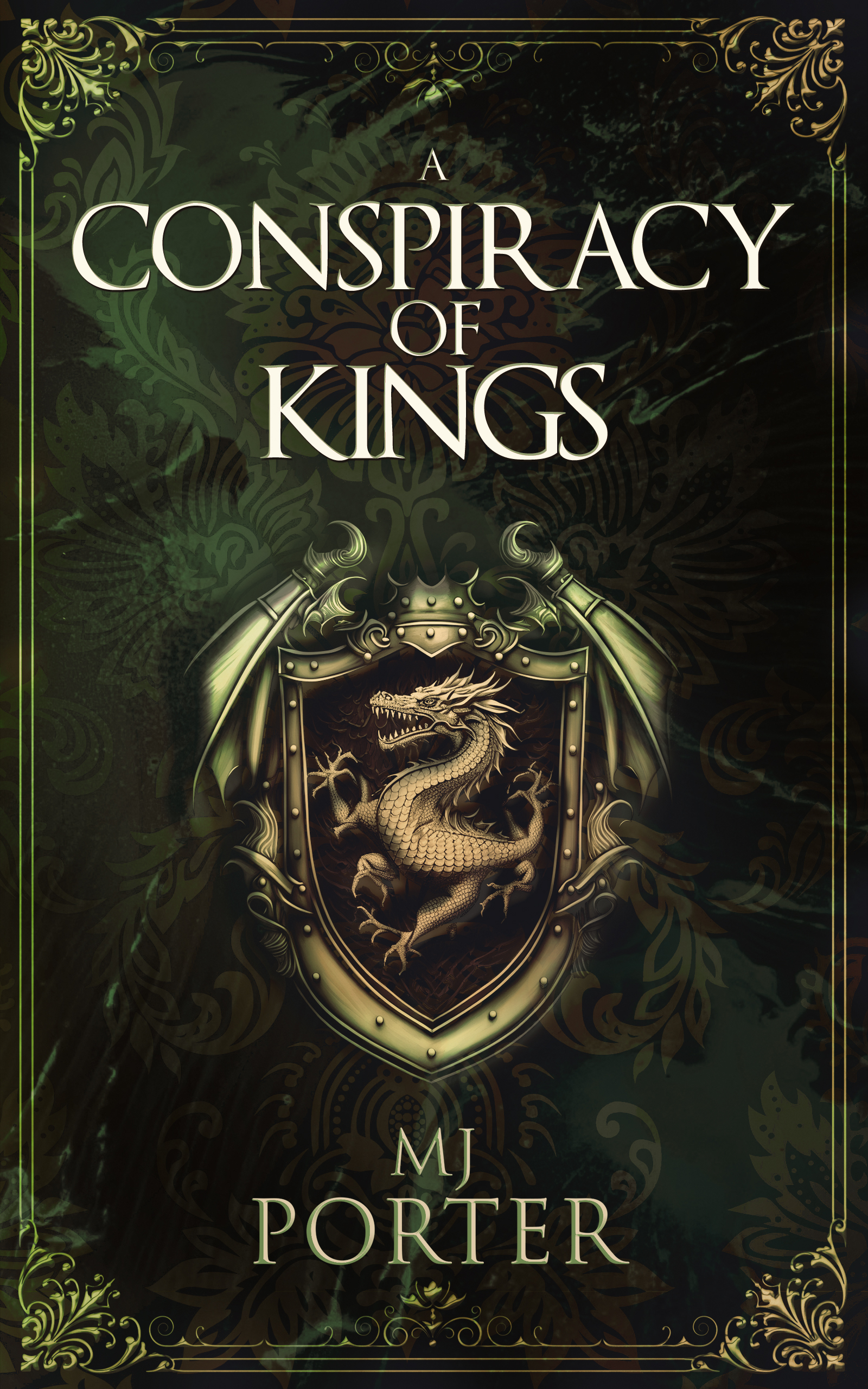
The cover for A Conspiracy of Kings

Find out who the historical Ælfwynn was here.

Visit The Tenth Century Royal Women page here.

Posts

I’m sharing my favourite #BoldDestination #Londinium in Wolf of Mercia #TheEagleOfMerciaChronicles

And here are some of my favourite moments in the novel, as Icel marvels at what’s been left behind by those who came before him.

And then we come to a stop. In front of me, there’s a structure I can hardly comprehend. All around it are smaller piles of stones, no doubt the remains of other buildings. Beneath my feet, I walk on gravel and tufted grasses. Lifting my feet to peer down, I question whether the whole place was once laid with stone upon which to walk? I pause, gaze around me. In the distance, almost further than the entire settlement of Tamworth, are hints of more walls, more random pieces of white stone, discarded and abandoned. I don’t see any crops or greenery, only shrivelled weeds and little else. If I were to live here, where would I grow my food? Where would Wynflæd harvest her herbs from? The place is dusty and barren, just as Wulfheard told me.

There’s a forest of stone plinths guiding us towards the smell of campfires, with some immobile figures on them, all missing arms, or legs, or feet or even heads, their whiteness attesting to being made from some sort of priceless stone. To me, they look so similar to the bodies of the dead that, for a moment, I can’t quite decipher the intent behind them. And Brihtwold is no help. I can hardly ask what this place is because I should already know.

‘They’re in the centre of the settlement, in a stone-built building, one of the few that still stands to two levels. We head towards the east, and it’s in the centre. It’s difficult to miss it during the daytime, what with the ruined columns that still stand, and the statues that guide our steps towards it, but in the darkness of night, it might be a little more tricky.’

Wolf of Mercia is book 2 in The Eagle of Mercia Chronicles, and I had a lot of fun thinking about what the settlement might have looked like in the 830s, hundreds of years after Londinium was abandoned.

You can read all about Londonia below.

Londonia, the setting for Wolf Of Mercia

I’ve been avoiding taking my Saxon characters to London for quite some time. Bernard Cornwell, I feel, has done a fine job of explaining London to readers of his The Last Kingdom books. I wasn’t sure I had a great deal more to offer. But how wrong I was.

Londonia, the name suggested by Rory Naismith in his Citadel of the Saxons, for the combined settlement of the seventh century, seems a neat and tidy way of referencing both settlements, the Roman Londinium, and the Saxon Lundenwic. And yet, both settlements were so very different, it seems wrong to try and make them appear unified, at a time when they really weren’t. The ‘wic’ element of the name means it refers to a market site, somewhere where trade took place.

The River Fleet, now a lost river of London, once divided these two settlements, the one built of stone with high walls that may have been as tall as six metres, and the other, built of wattle and daub, and entirely open to the River Thames. It’s believed the lost River Fleet might have been substantial enough over 1200 years ago that a bridge was built over it. And this reminds travellers to the past of the mistake of assuming landscapes haven’t altered. It’s often easy to remember that buildings and roads might have changed, even that rivers might have changed course, and that sea levels might have risen or fallen, but an entirely lost river is a new one for me. 

Neither should we consider Londinium, the Roman fort, to always have appeared as we imagine it. A brief look through the archaeological details for Roman Londinium, reveal that it changed dramatically over time. Most obviously, the walls for which it’s so famous, were not part of the original structure, they weren’t built until AD180-220. The earliest timbers so far found on the site date to nearly one hundred and fifty years earlier.

The number of inhabitants inside those stone walls seems to have waxed and waned throughout the period of Roman Britain, and there is some suggestion that it might have been abandoned as early as the fourth century, and therefore, much before the acknowledged ‘end of Roman Britain’ came in the early years of the fifth century. The bridge crossing from Londinium to Southwark, on the southern shore, may also have disappeared by the fourth century. There is therefore, a great deal to unpick. And for my characters, in the ninth century, just what would they have walked through? It’s an intriguing question. Would there have been abandoned statues, half-collapsed buildings, an eerie quiet, or would much of that have already disappeared, perhaps even been ‘robbed out’ as we know happened in other places, most notably along Hadrian’s Wall where stone often appears in the fabric of later churches.

As to Lundenwic? Are we to truly believe that it was little more than a boggy riverfront site? In fact, the location was chosen precisely to miss the boggy area from where the River Fleet would have joined the River Thames. But why move from behind those stone walls? The huge area of Londinium, was simply too vast for a much diminished population to attempt to control. The settlement that developed in Lundenwic was half as big as that of the Roman site, with a population of around 7000 (compared to an estimated 25,000-30,000 in Londinium at its peak). It consisted of small buildings, tightly packed together with small alleyways leading off from a few main roads. But, these main roads were fitted with wooden drainage ditches. While it might not have been the majestic sweep of a huge walled city, it wasn’t quite the hovel it’s often been betrayed as. 

And, these two separate settlements, didn’t last for that long individually. But, in the year AD830, it’s just possible that young Icel may have walked through a serviceable, if abandoned Roman settlement when he visited Londinium, and that was too good an opportunity not to incorporate into the new book, Wolf of Mercia. 

Check out The Eagle of Mercia Chronicles page on the blog.

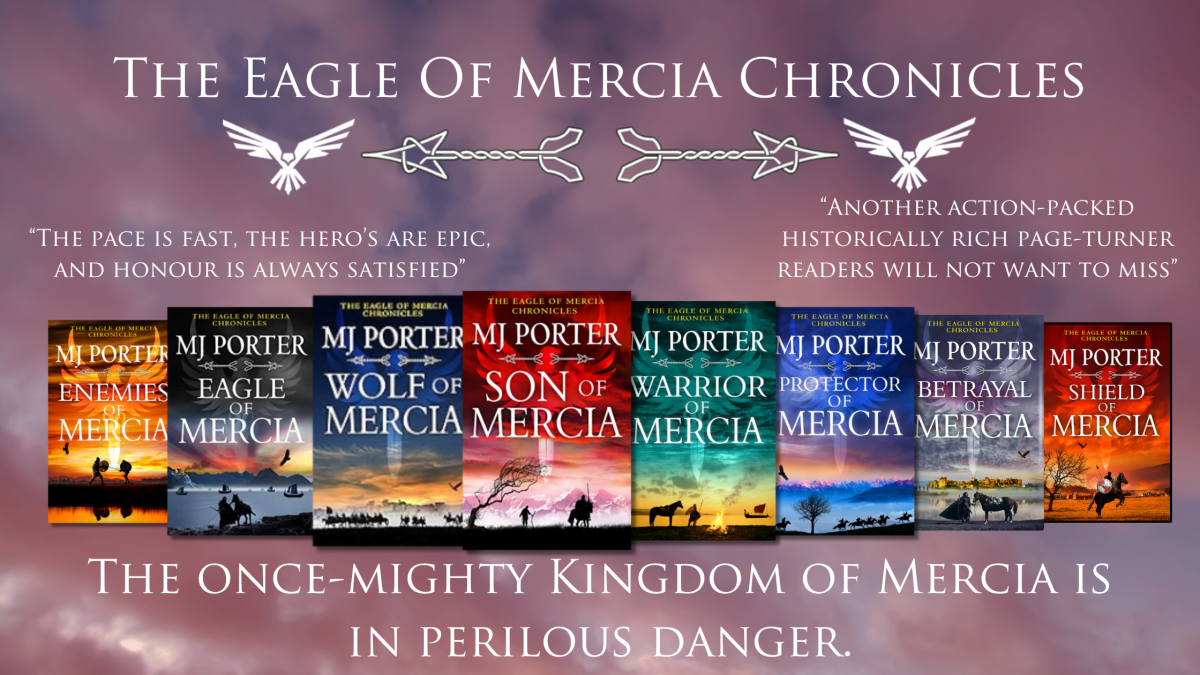
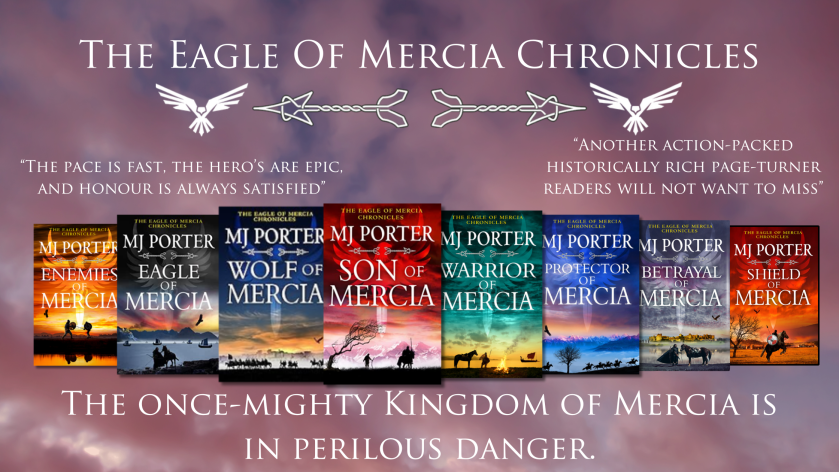
Image shows the 8 covers in the Eagle of Mercia Chronicles

Posts