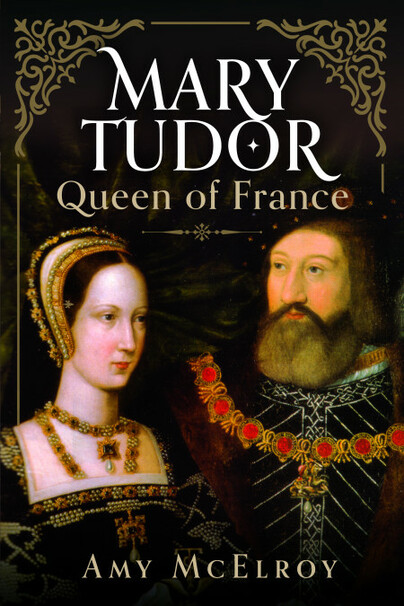
Mary Tudor, Henry VIII’s sister, lived a remarkable life. A princess, duchess and queen, she was known as the English Rose for her beauty. Mary Tudor, Queen of France, aims to explore the life of one of the few who stood up to Henry VIII and lived to tell the tale.
Henry VIII is well known, but his larger-than-life character often overshadows that of his sisters. Mary Tudor was born a princess, married a king and then a duke, and lived an extraordinary life. This book focuses on Mary’s life, her childhood, her relationship with Henry, her marriages and her relationship with her husbands.
Mary grew up in close proximity to Henry, becoming his favourite sister, and later, after her marriage to the French king, she married his best friend, Charles Brandon, 1st Duke of Suffolk. The events impacting the siblings will be reviewed to examine how they may have changed and shaped their relationship.
Mary Tudor by Amy McElroy is a fascinating biographical account of the life of Mary, Henry VIII’s sister, and not to be confused with his daughter.
The story is quite remarkable, and while I knew something about her, I didn’t know everything. The chapters, which follow her through the 3 marriage proposals she receives, which result in 2 marriages, are quite astounding. So much time and effort went into trying to wed her to Prince Charles (later Emperor Charles), and then all of a sudden, she married Louis XII of France. I found it most fascinating. If anything, her 2nd marriage seems almost anticlimatic, even though it evidently wasn’t at the time. And, with all we know about Henry and his marital difficulties, Mary appears to have been somewhat serene about everything. I imagine she perhaps had a happier life, if one often troubled by the terrible debt her brother placed upon her (families!).
I really appreciated the author’s desire to keep this narrative to Mary and not to her children and grandchildren. It seems fitting to have a title devoted exclusively to her.
A fine portrayal of Mary’s eventful, if short life, with a lovely writing style.
Meet the author
Amy was born and bred in Liverpool before moving to the Midlands to study criminal justice and eventually becoming a civil servant. She has long been interested in history, reading as much and as often as she could. Her writing journey began with her blog, sharing thoughts on books she had read before developing to writing reviews for Aspects of History. The Lives of Women in the Tudor Era is Amy’s second book. Her first, Educating the Tudors, focused on the educational opportunities of all classes, those who taught them and the pastimes enjoyed by all.
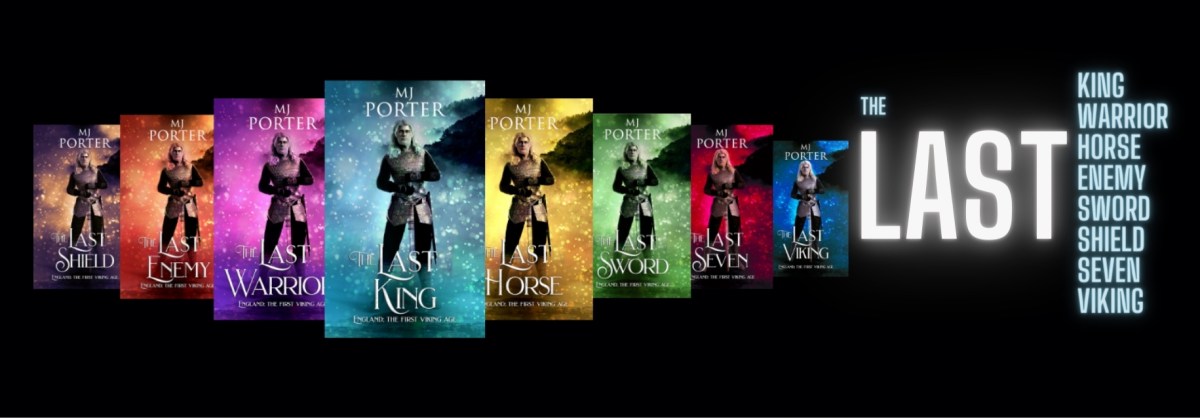
Deceit and ambition threaten to undo the most fragile alliance.
King Coelwulf of Mercia has unwillingly accepted the need to ally with the kingdom of Wessex under the command of King Alfred. But King Alfred of Wessex must still prove himself, and Coelwulf can’t remain absent from Mercia indefinitely.
Returning to London, a place holding more fascination for the West Saxons and the Viking raiders than Coelwulf and his fellow Mercians, Coelwulf sets about reinforcing the walled settlement so long abandoned by all but the most determined traders. But Coelwulf knows Jarl Guthrum has set his eyes on Canterbury, and he must protect the archbishop in Kent, nominally under the control of the West Saxon king, even if King Alfred is no warrior.
But deceit and lies run rife through the West Saxon camp and when Coelwulf believes he’s held to his oaths and alliances, an unexpected enemy might just sneak their way into Mercia. The future of Mercia remains at stake.
In The Last Deceit, I’ve included a fictional character called Ealdorman Sigehelm, who is based on a later individual that we know existed, the father of Lady Eadgifu, third wife of Edward the Elder. (By based I mean I borrowed his name and landholding).
I’ve done this because it’s fun to play around with the information I’ve learned about later in the era. It’s often one of the biggest problems in writing historical fiction. You need to know what happens before the events you’re writing about, as well as what comes after, as well as the actual events you’re depicting. And Cooling, in Kent, has an incredibly detailed history throughout the later tenth century, which we know about because of a remarkable charter. The text of which is below (it’s quite long.)
‘Eadgifu declares to the archbishop and the community of Christ Church how her estate at Cooling came [to her]. That is, that her father left her the estate and the [land]book, just as he legally acquired them and his ancestors had bequeathed to him. It happened that her father borrowed thirty pounds from Goda, and entrusted the estate to him as security for the money. And [Goda] held it for seven ‘winters’. When it came about, at around this time, that all the men of Kent were summoned to the battle at the Holme, Sighelm [Sigehelm], her father, did not want to go to the battle with any man’s account unpaid, and he repaid Goda the thirty pounds and he bequeathed the estate to his daughter Eadgifu and gave her the [land]book. After he had fallen in the battle, Goda denied the repayment of the money, and withheld the estate until six years later. Then Byrhsige Dyrincg claimed it unceasingly for so long, until the Witan of that time commanded Eadgifu that she should purge her father’s possession by [an oath equivalent to] that amount of the money. And she produced the oath in the witness of all the people at Aylesford, and there purged her father’s repayment by an oath of thirty pounds. Then she was still not able to possess the estate until her friends obtained from King Edward [the Elder] that he prohibited him [Goda] the estate, if he wanted to possess any [at all]; and so he gave it up. Then it happened in the first place that the king so strongly blamed Goda that he was deprived of all the [land] books and property, all that he owned. And the king then granted him and all his property, with [land] books and estates, to Eadgifu to dispose of as she wished. Then she said that she did not dare before God to pay him back as he had deserved of her, and she restored to him all his land except the two sulungs at Osterland, and she refused to give back the [land] books until she knew how loyally he would treat her in respect of the estates. Then, King Edward died and Æthelstan [Athelstan] succeeded to the kingdom. When Goda thought it an opportune time, he sought out King Æthelstan and begged that he would intercede on his behalf with Eadgifu, for the return of his [land] books. And the king did so. And she gave back to him all except the [land] book for Osterland. And he willingly allowed her that [land] book and humbly thanked her for the others. And, on top of that as one of twelve he swore to her an oath, on behalf of those born and [yet] unborn, that this suit was for ever settled. And this was done in the presence of King Æthelstan and his Witan at Hamsey near Lewes [Sussex]. And Eadgifu held the land with the landbooks for the days of the two kings, her sons [i.e., Edmund and Eadred]. When Eadred died and Eadgifu was deprived of all her property, then two of Goda’s sons, Leofstan and Leofric, took from Eadgifu the two afore-mentioned estates at Cooling and Osterland, and said to the young prince Eadwig who was then chosen [king] that they had more right to them than she. That then remained so until Edgar came of age and he [and] his Witan judged that they had done criminal robbery, and they adjudged and restored the property to her. Then Eadgifu, with the permission and witness of the king and all his bishops, took the [land] books and entrusted the estates to Christ Church [and] with her own hands laid them upon the altar, as the property of the community for ever, and for the repose of her soul. And she declared that Christ himself with all the heavenly host would curse for ever anyone who should ever divert or diminish this gift. In this way this property came to the Christ Church community.’ S1211[i]
To explain:
Dating to around 959, the document provides the ownership history of an estate at Cooling in Kent. Eadgifu had inherited this land from her father, who had mortgaged it for a loan of £30, which he repaid before going on the campaign on which he died. However, Goda, the man who had made the loan, claimed not to have received payment and proceeded to take practical ownership of the estate. While Eadgifu retained the landbook, or freehold record, and tried various means of asserting her ownership, it was not until Edward the Elder intervened, presumably after their marriage, that the matter was resolved to some degree. Edward seized not only the estate in question but all Goda’s lands, handing their ownership and administration over to Eadgifu. The charter indicates that Eadgifu acted magnanimously, giving almost all of these back to Goda, though her primary consideration was likely to avoid creating a powerful political enemy. Sensibly, however, she retained possessions of the landbooks to ensure Goda’s loyalty, as well as a small estate at Osterland, in addition to her hereditary holdings at Cooling. The matter was fully resolved in Æthelstan’s [Athelstan] reign when the king interceded with Eadgifu on Goda’s behalf. Eadgifu returned the landbooks, but retained the estates at Osterland and Cooling, while Goda swore an oath in Æthelstan’s presence declaring that he considered the matter to be closed … Eadwig seized his grandmother’s landholdings and, in the case of the Cooling and Osterland estates, turned them over to Goda’s sons … After Eadwig’s death in 959, Edgar restored his aging grandmother’s possessions.[ii]
It’s unusual to have so much detail about a landed estate, and so, when I took Coelwulf and his allies to Kent in The Last Deceit, I couldn’t resist embroidering this character into the tale. I imagine you can see why. To read more about Lady Eadgifu, check out The Royal Women Who Made England.
[i] Sawyer, P.H. (ed.), Anglo-Saxon charters: An annotated list and bibliography, rev. Kelly, S.E., Rushforth, R., (2022). http://www.esawyer.org.uk/ S1211
Deceit and ambition threaten to undo the most fragile alliance.
King Coelwulf of Mercia has unwillingly accepted the need to ally with the kingdom of Wessex under the command of King Alfred. But King Alfred of Wessex must still prove himself, and Coelwulf can’t remain absent from Mercia indefinitely.
Returning to London, a place holding more fascination for the West Saxons and the Viking raiders than Coelwulf and his fellow Mercians, Coelwulf sets about reinforcing the walled settlement so long abandoned by all but the most determined traders. But Coelwulf knows Jarl Guthrum has set his eyes on Canterbury, and he must protect the archbishop in Kent, nominally under the control of the West Saxon king, even if King Alfred is no warrior.
But deceit and lies run rife through the West Saxon camp and when Coelwulf believes he’s held to his oaths and alliances, an unexpected enemy might just sneak their way into Mercia. The future of Mercia remains at stake.
In The Last Deceit, reference is explicity made to a Mercian tribe known as the Gaini. It is from this obscure royal line that it’s said King Alfred’s wife, Lady Ealhswith, claimed descent. So, who were the Gaini?
The simple answer is that we don’t know. We don’t know where they were based. We don’t know any other known members of this tribe, but it’s certainly a name that survives from a period-specific resource, The Life of Alfred written by Asser in about 893, and so, some years after the events in The Last Deceit, in which he claims King Alfred’s wife was a descendant of this ruling family. Here are the details from The Royal Women Who Made England.
‘We are told by Asser, that Alfred ‘married a wife from Mercia, of noble family, namely the daughter of Æthelred “who was known as Mucil [Mucel]”, ealdorman of the Gaini. The woman’s mother was called Eadburh, from the royal stock of the king of the Mercians.’ It is possible, but cannot be confirmed that Ealhswith’s father was ealdorman in Mercia from the 820s onward when a man named Mucel is listed as attesting the surviving charters. The location of the tribal region of the Gaini has yet to be ascertained. Mercia was composed of many tribal regions; the most familiar being the Hwicce and the Mægonsate, both on the western borders with the Welsh kingdoms.
Whether Eahlswith’s mother was actually a member of the Mercian ruling family is difficult to conclude. Barbara Yorke determines she was related to King Coenwulf (796–821) and Coelwulf (821–823), two brother kings who ruled in the first quarter of the ninth century. It is impossible to confirm this either way due to a lack of available information. Mercia endured a string of kings throughout the ninth century, some more successful than others, and none of them able to offer the consistency and longevity that had been prevalent in the earlier eighth century during the long reigns of Æthelbald (716–757) and Offa (757–796).
Her possible father, Æthelred Mucel, witnesses two charters in the year of the marriage, S340, surviving in one manuscript, and S1201, surviving in two manuscripts, as well as S337, surviving in four manuscripts, in 867 and S349, surviving in two manuscripts, but deemed spurious, in 895. What is known is that the union between Lady Eahlswith and Alfred was part of an arrangement with Mercia whereby Alfred’s sister, Æthelswith, married the then king, Burgred, and Ealhswith married Alfred. Little is known of Mercia’s King Burgred (852–74), other than that he fled from Mercia in the wake of sustained Viking raider aggression in the year 874.’
Why then might this royal connection to the Gaini onle be mentioned here? I’m not sure I need to labour the point, but Asser, writing our earliest life of a pre-conquest king, had a remit to follow, and no doubt that was to make much of King Alfred, and his wife. It would have looked a little odd if King Alfred had been married to a lesser woman of Mercia, when he was desperately trying to grow his repuation by having a ‘life’ written about him.
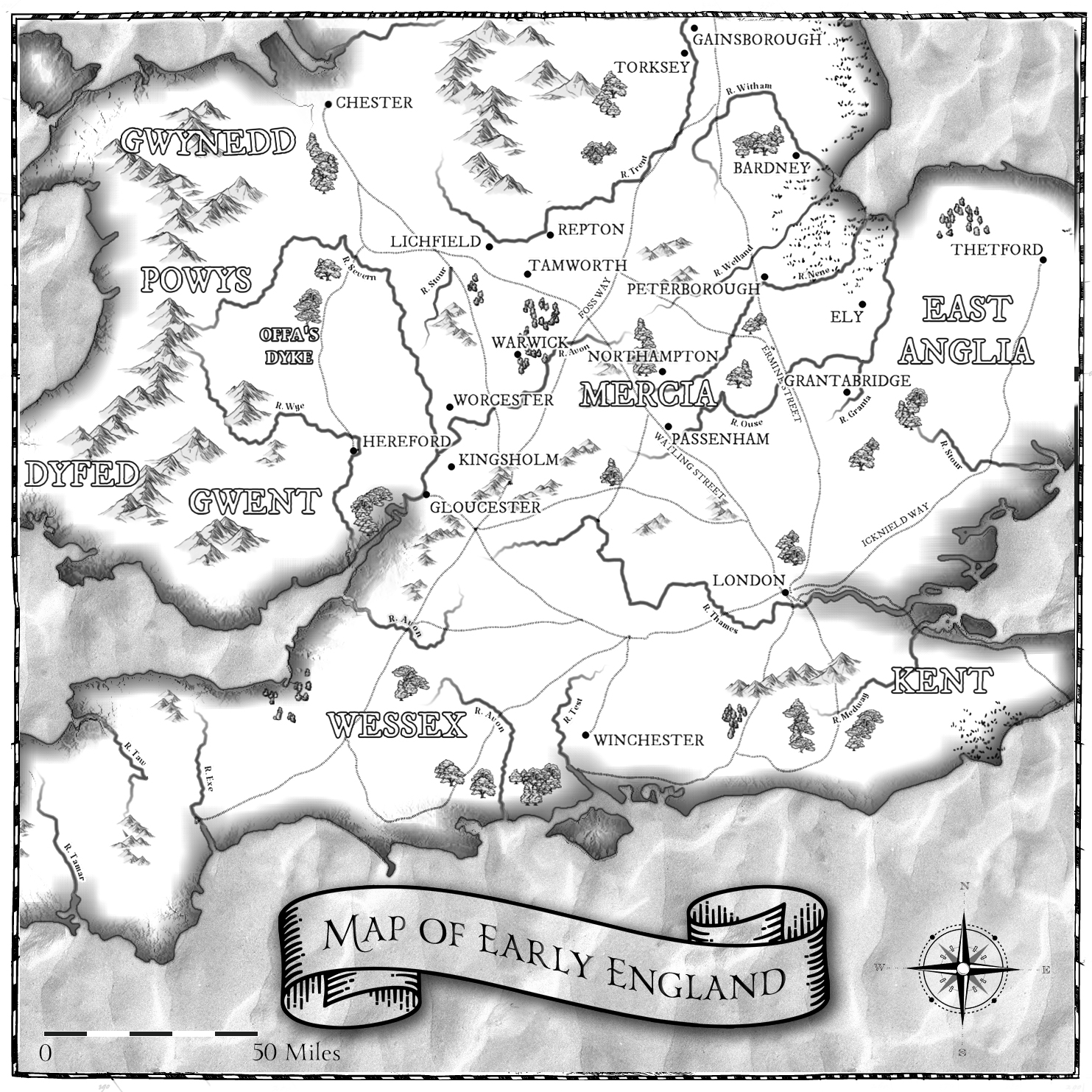
And Mercia is certainly a rich tapestry to either foist a previously unknown tribe upon, or to ‘borrow’ one for the intention of making more of someone. Mercia, ‘the kingdom on the border’ (although we don’t for sure which border this applies to), consisted of many smaller tribal areas, the names of which, if not often the location, have survived in the Tribal Hidage, an eighth-century source (which doesn’t mention the Gaini). More familiar names to travellers to the era are the Hwicce (around Gloucester), the Magonsæte (close to the Welsh border), the Tomsæte (close to Tamworth), to name but a few, have survived in charter documentation which names these distinctive areas and we often have ealdormen of these places, most famously my first historical recreation, Ealdorman Leofwine of the Hwicce of the Earls of Mercia Series.
And so, in The Last Deceit, it is Ealhswith brother, Lord Æthelwulf, who makes mention of the Gaini, as no doubt, he too would have made much of this alleged royal connection.
Deceit and ambition threaten to undo the most fragile alliance.
King Coelwulf of Mercia has unwillingly accepted the need to ally with the kingdom of Wessex under the command of King Alfred. But King Alfred of Wessex must still prove himself, and Coelwulf can’t remain absent from Mercia indefinitely.
Returning to London, a place holding more fascination for the West Saxons and the Viking raiders than Coelwulf and his fellow Mercians, Coelwulf sets about reinforcing the walled settlement so long abandoned by all but the most determined traders. But Coelwulf knows Jarl Guthrum has set his eyes on Canterbury, and he must protect the archbishop in Kent, nominally under the control of the West Saxon king, even if King Alfred is no warrior.
But deceit and lies run rife through the West Saxon camp and when Coelwulf believes he’s held to his oaths and alliances, an unexpected enemy might just sneak their way into Mercia. The future of Mercia remains at stake.
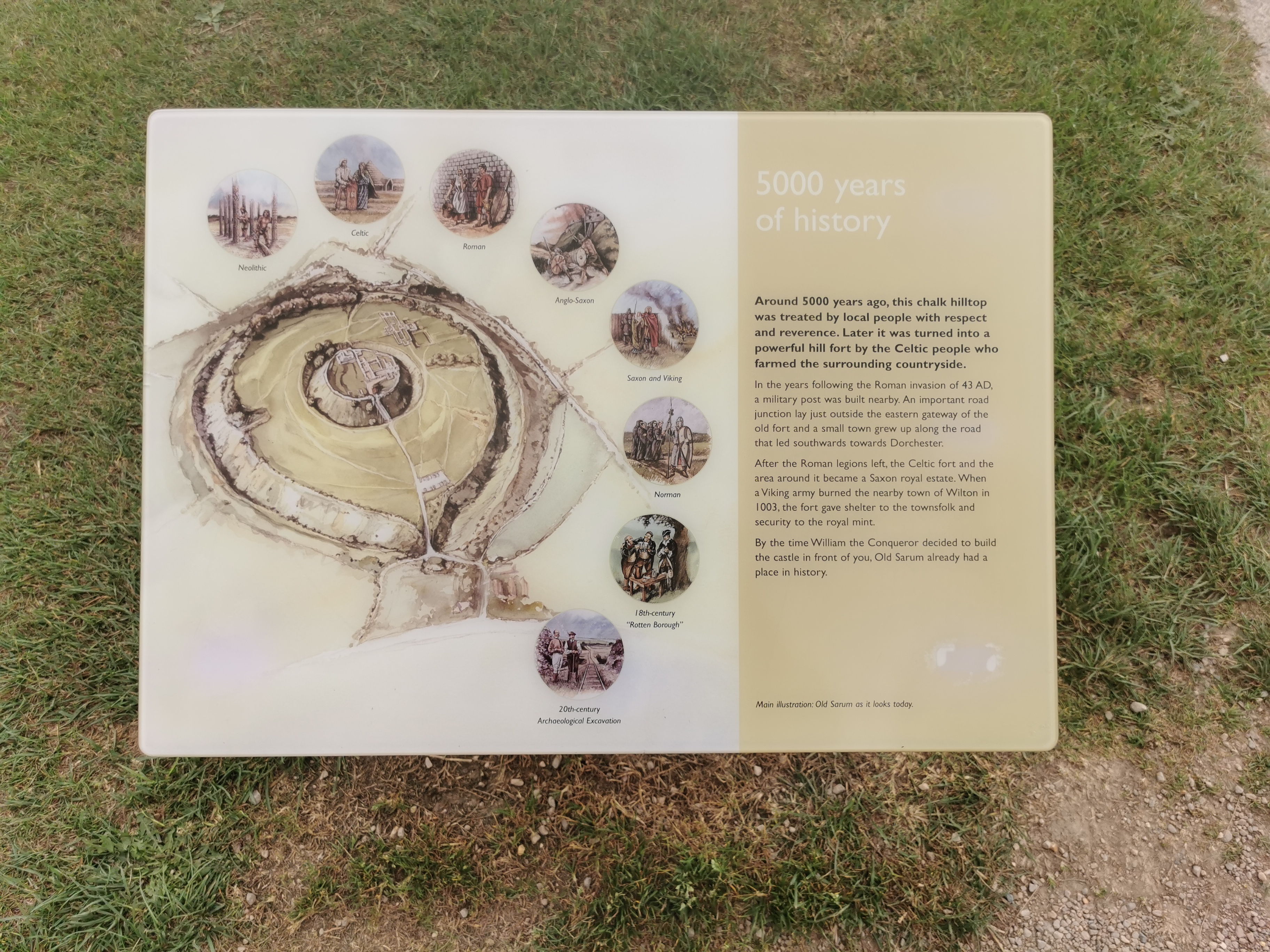
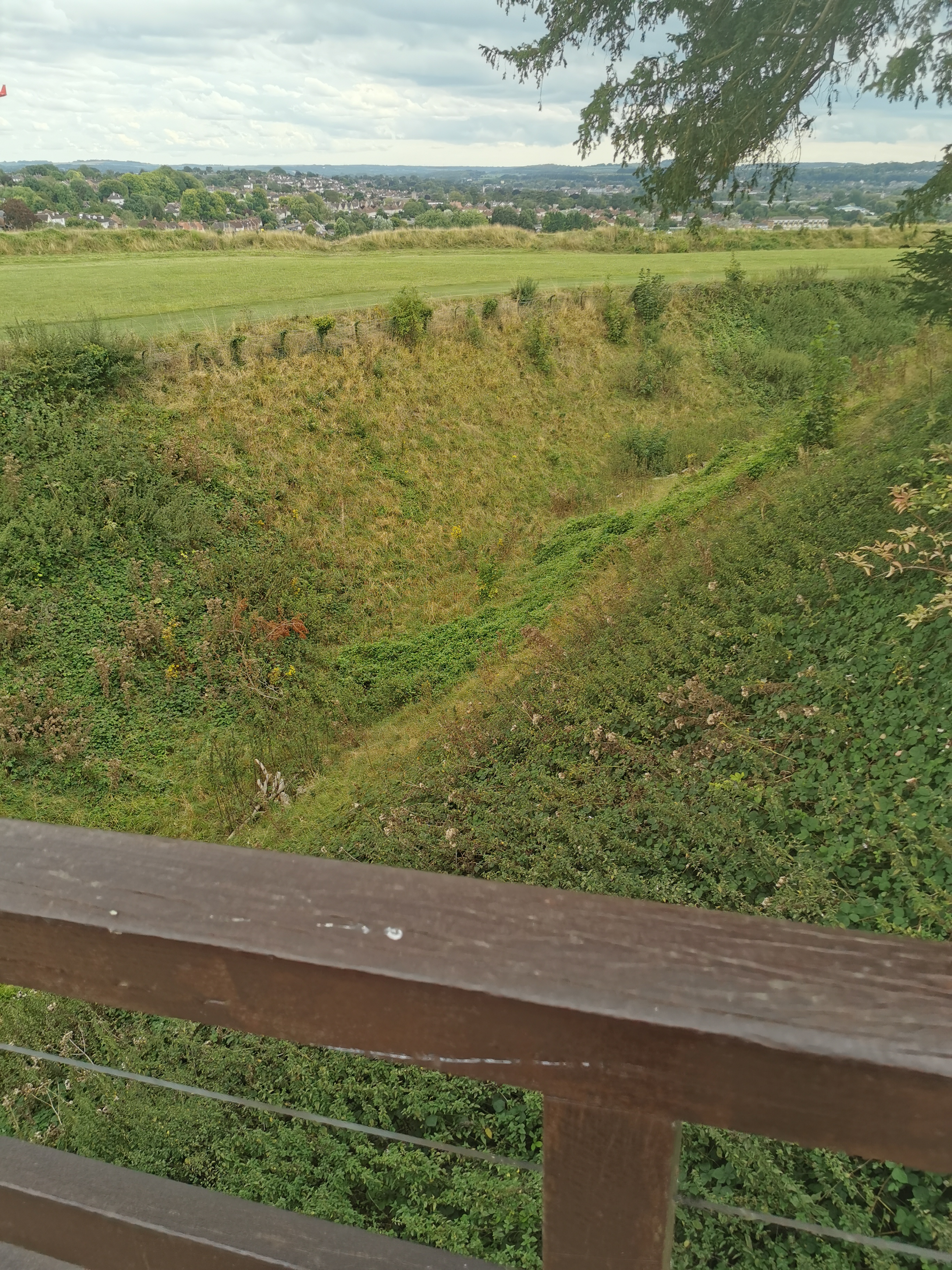
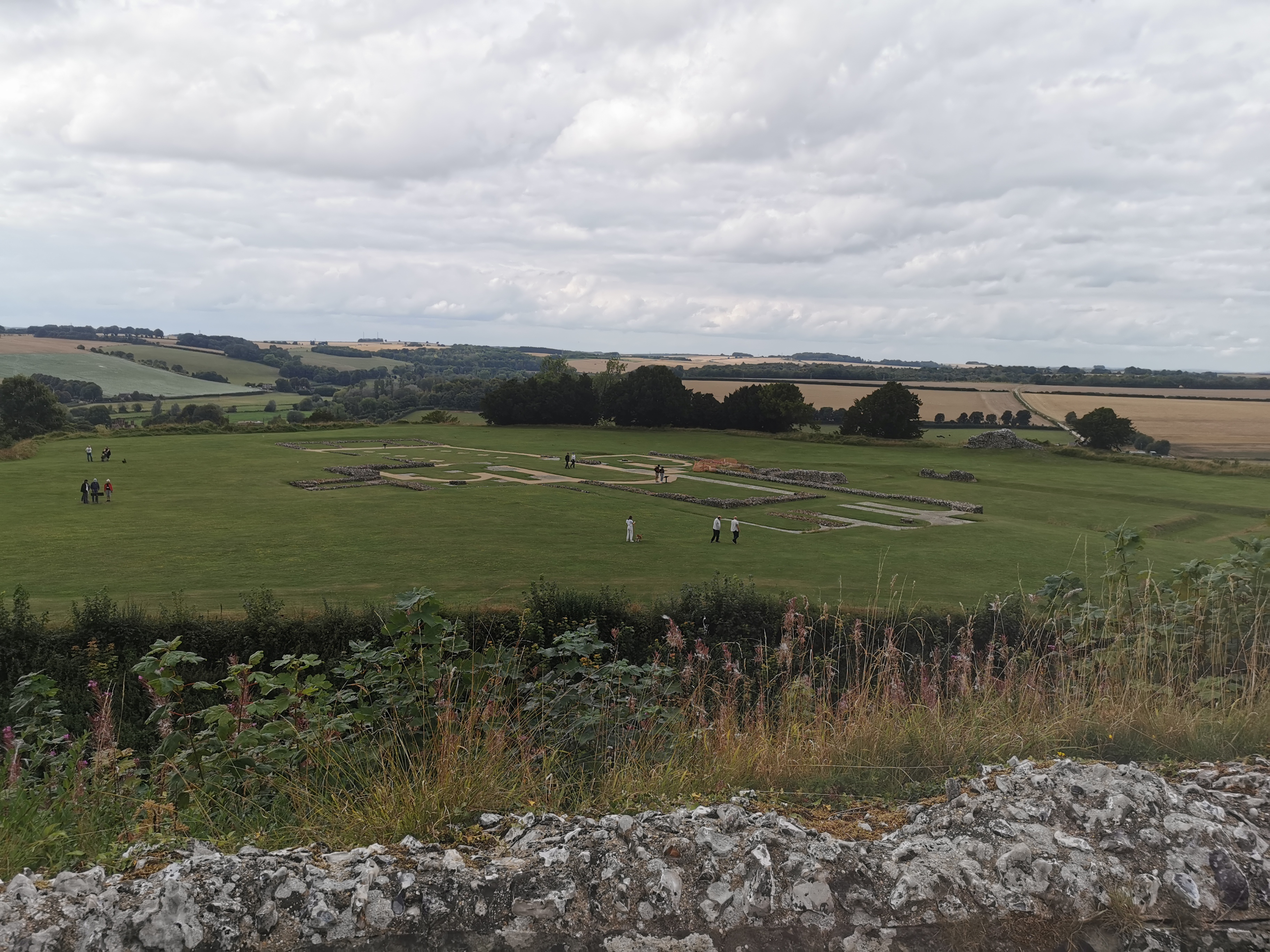
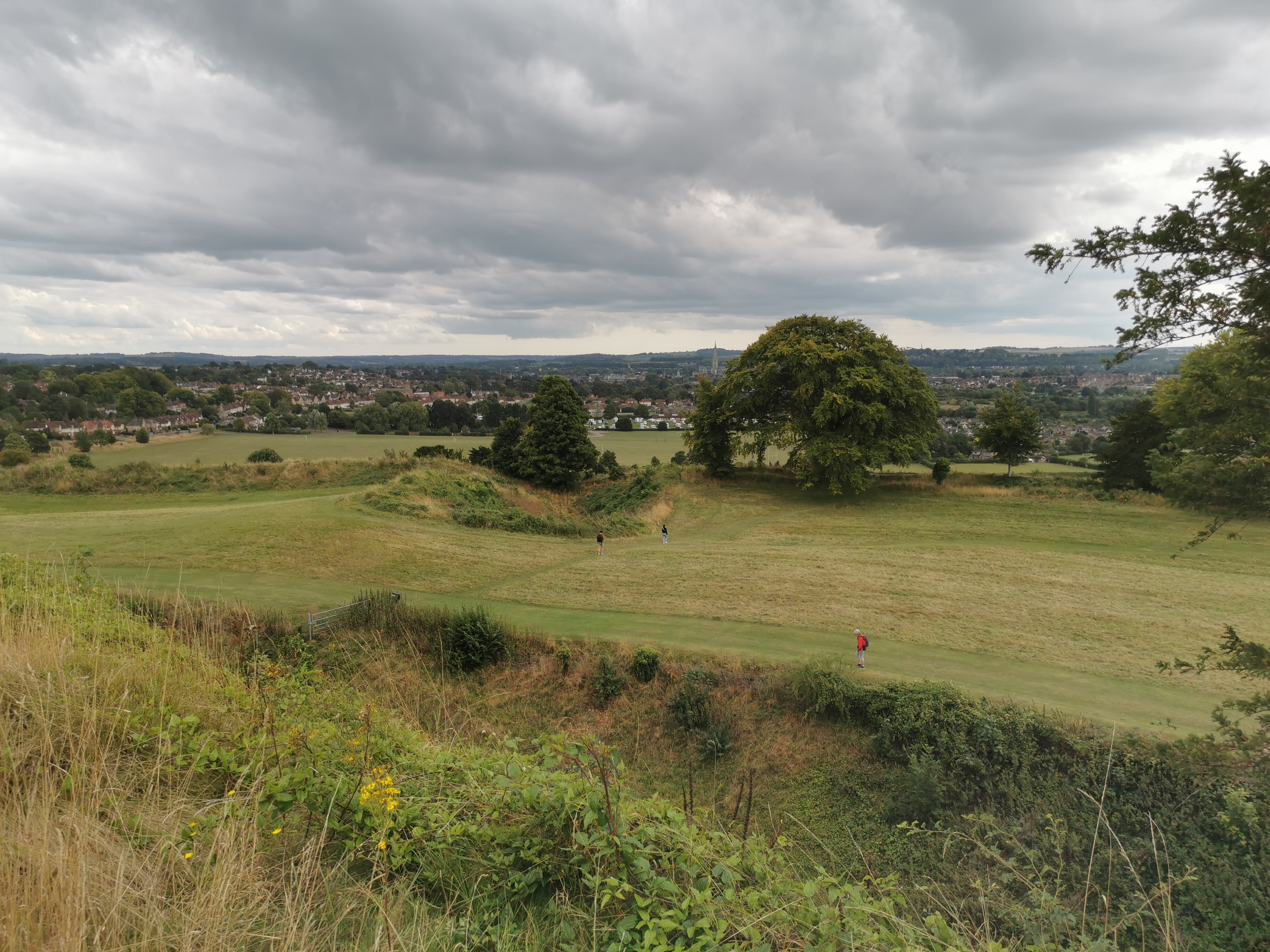
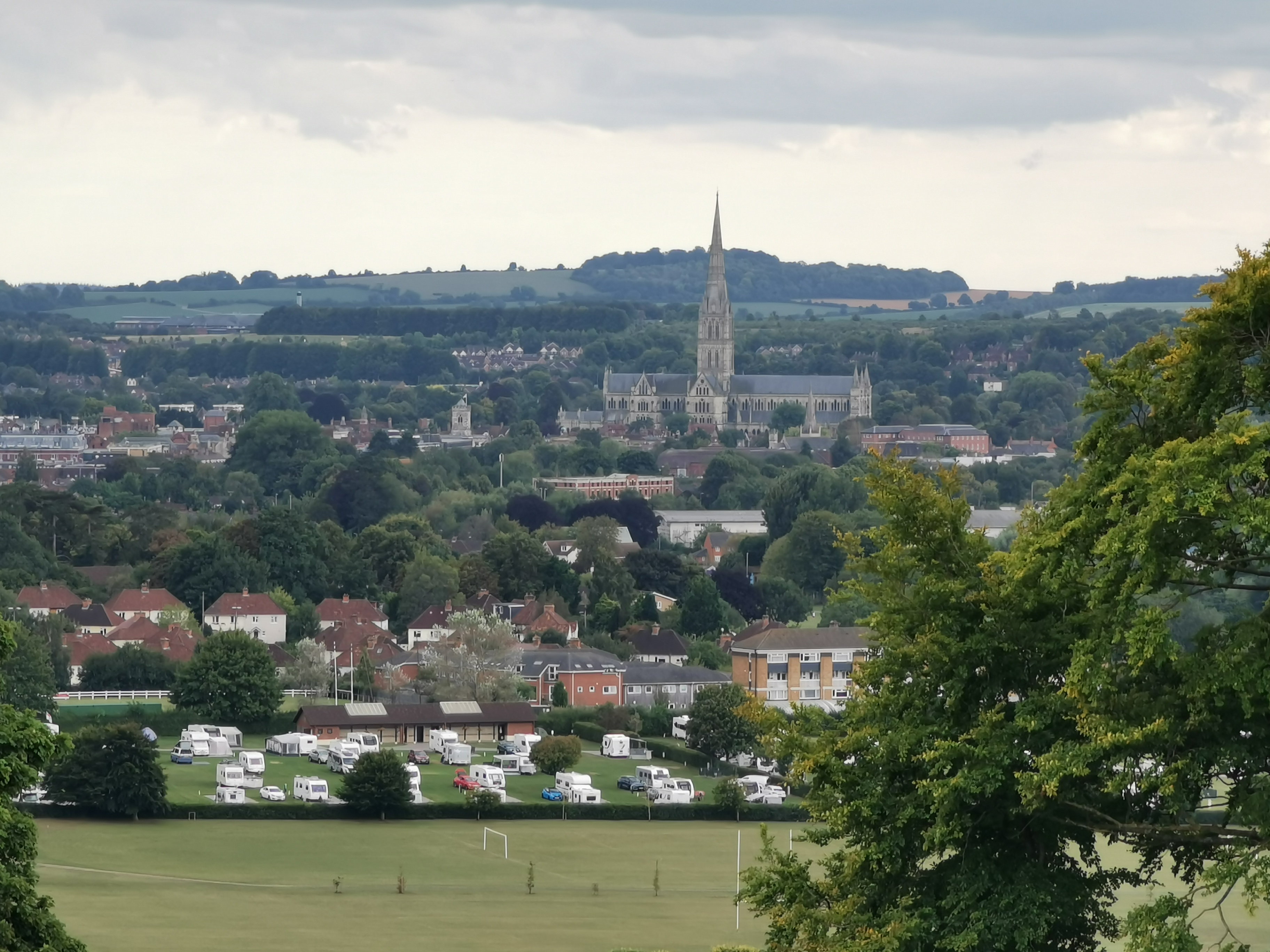
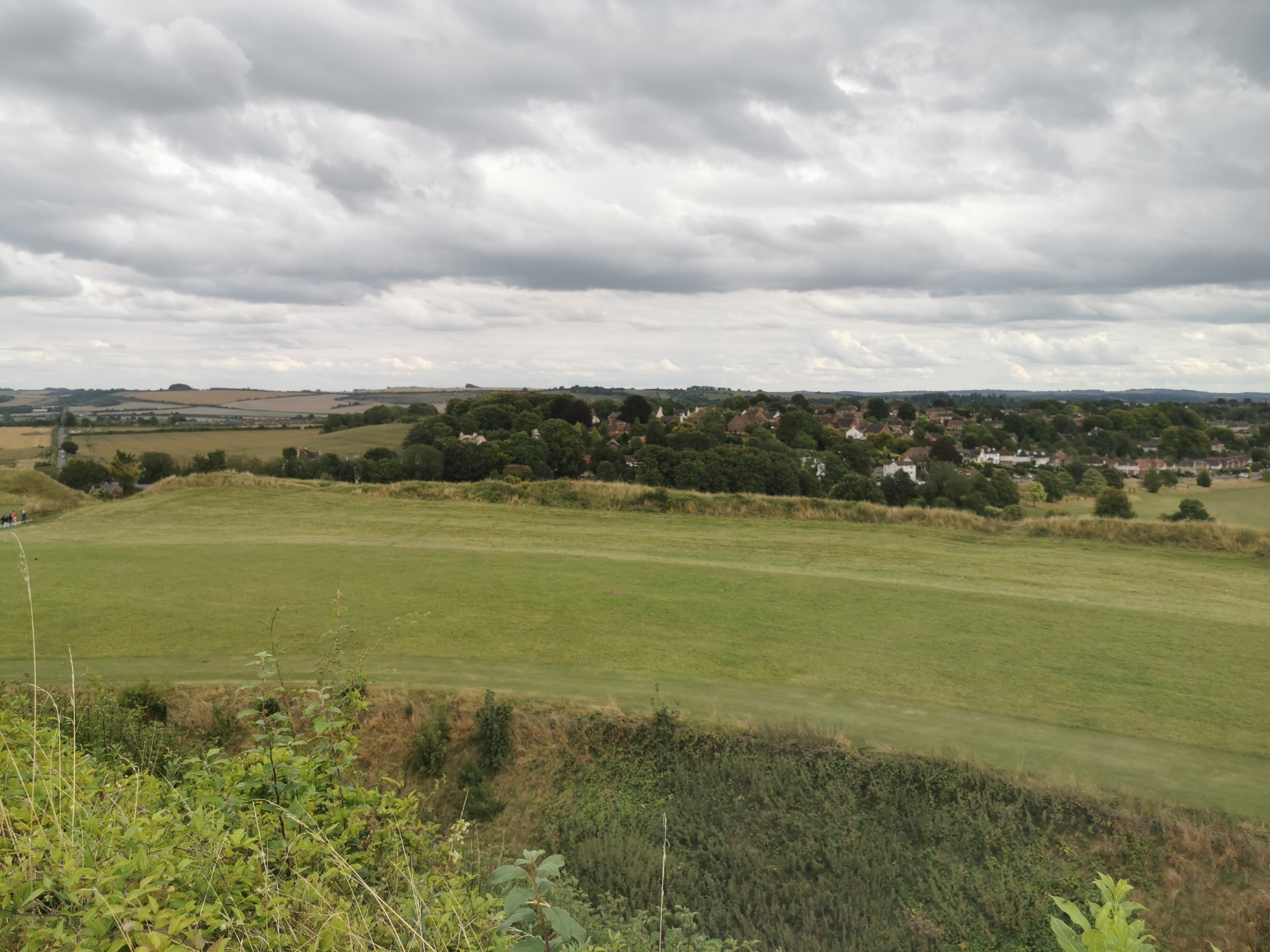
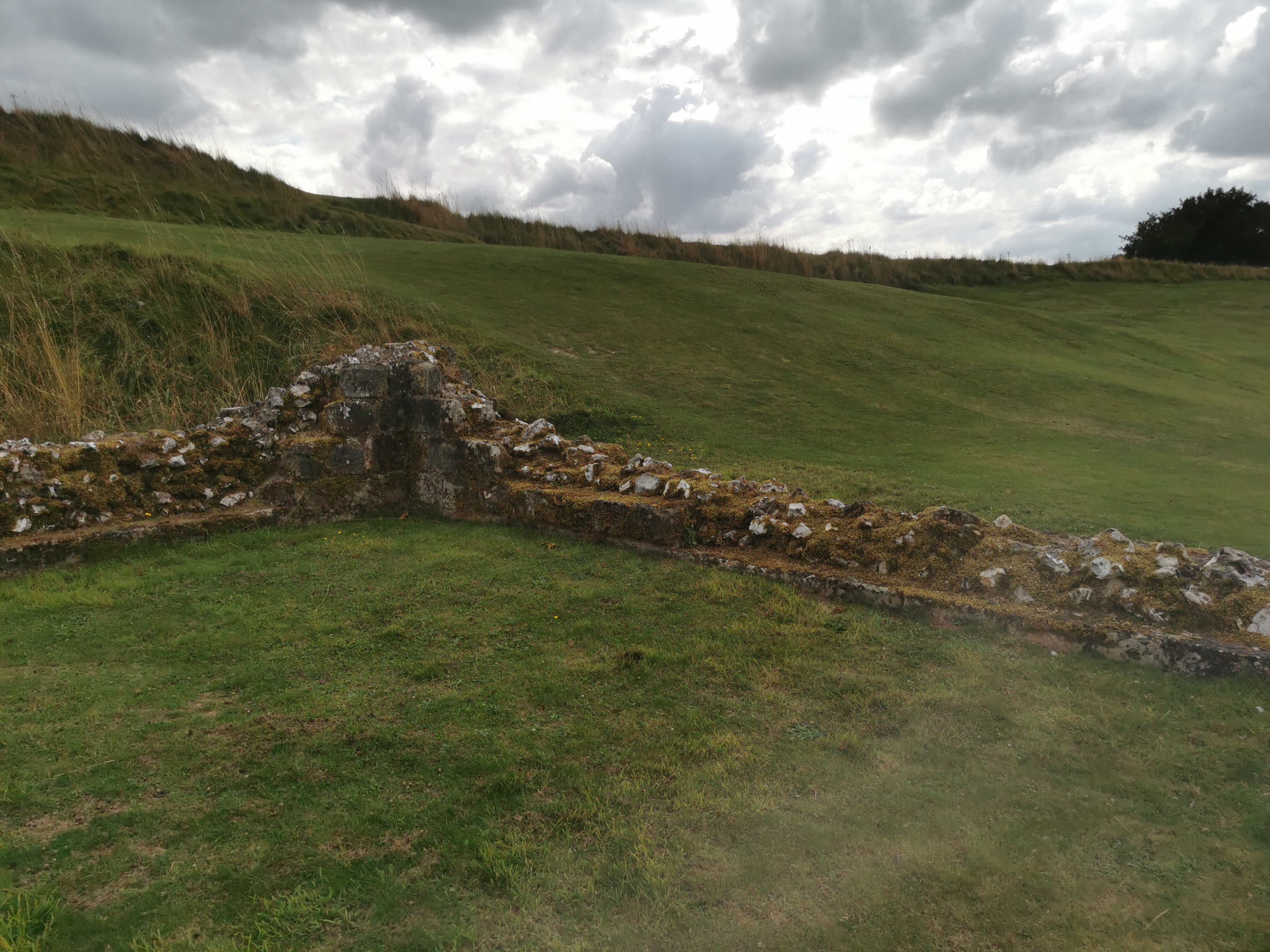
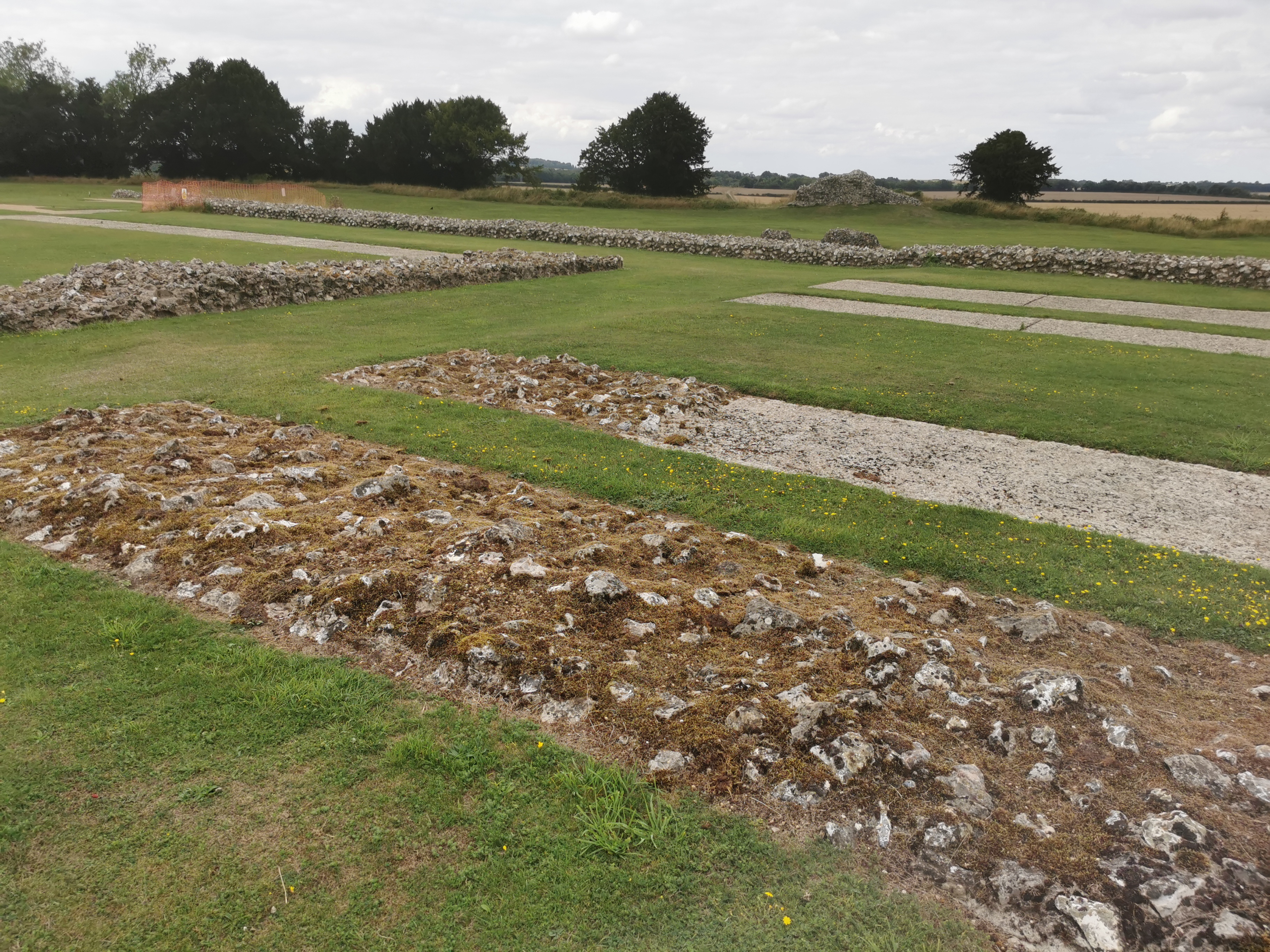
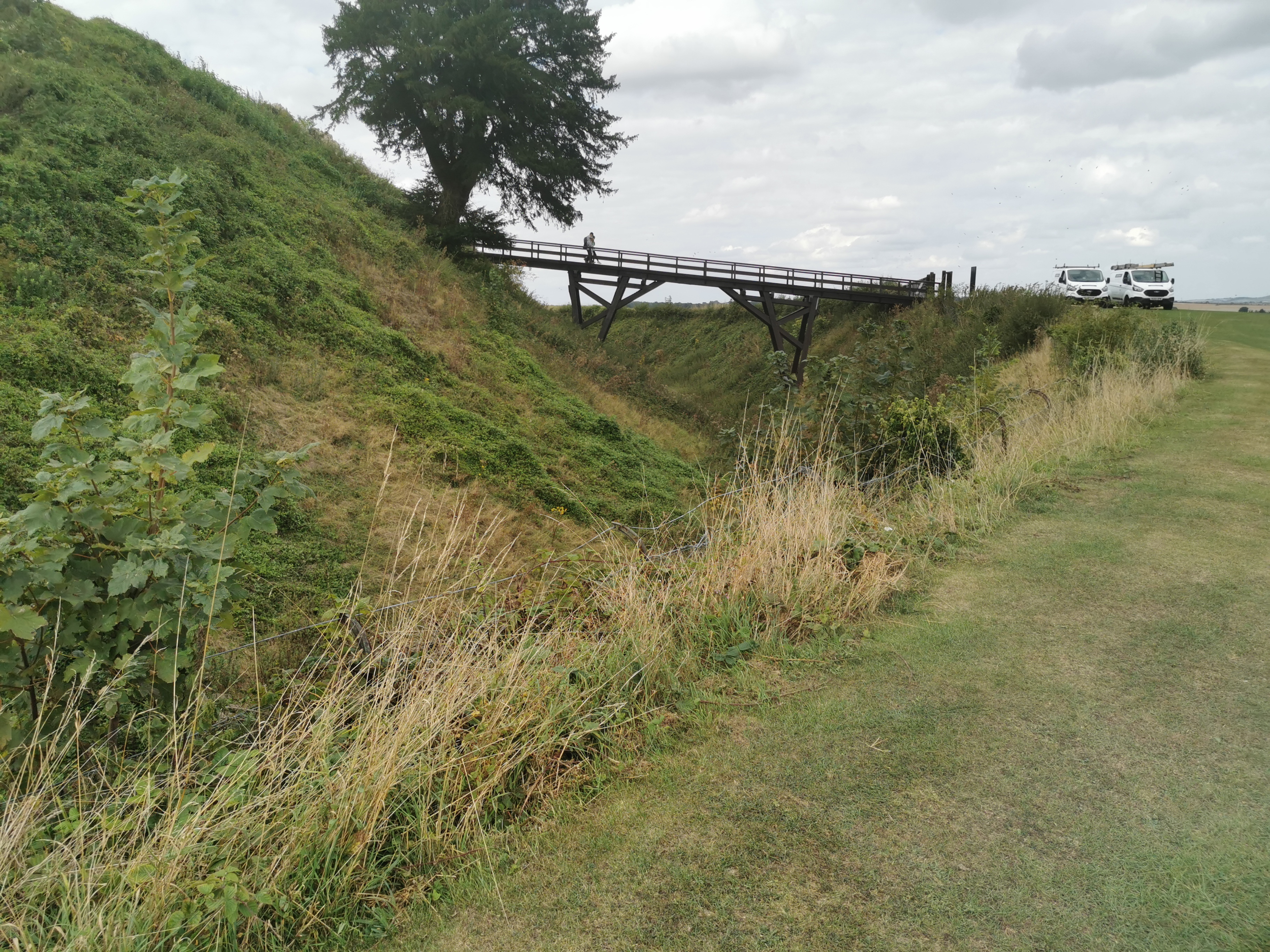
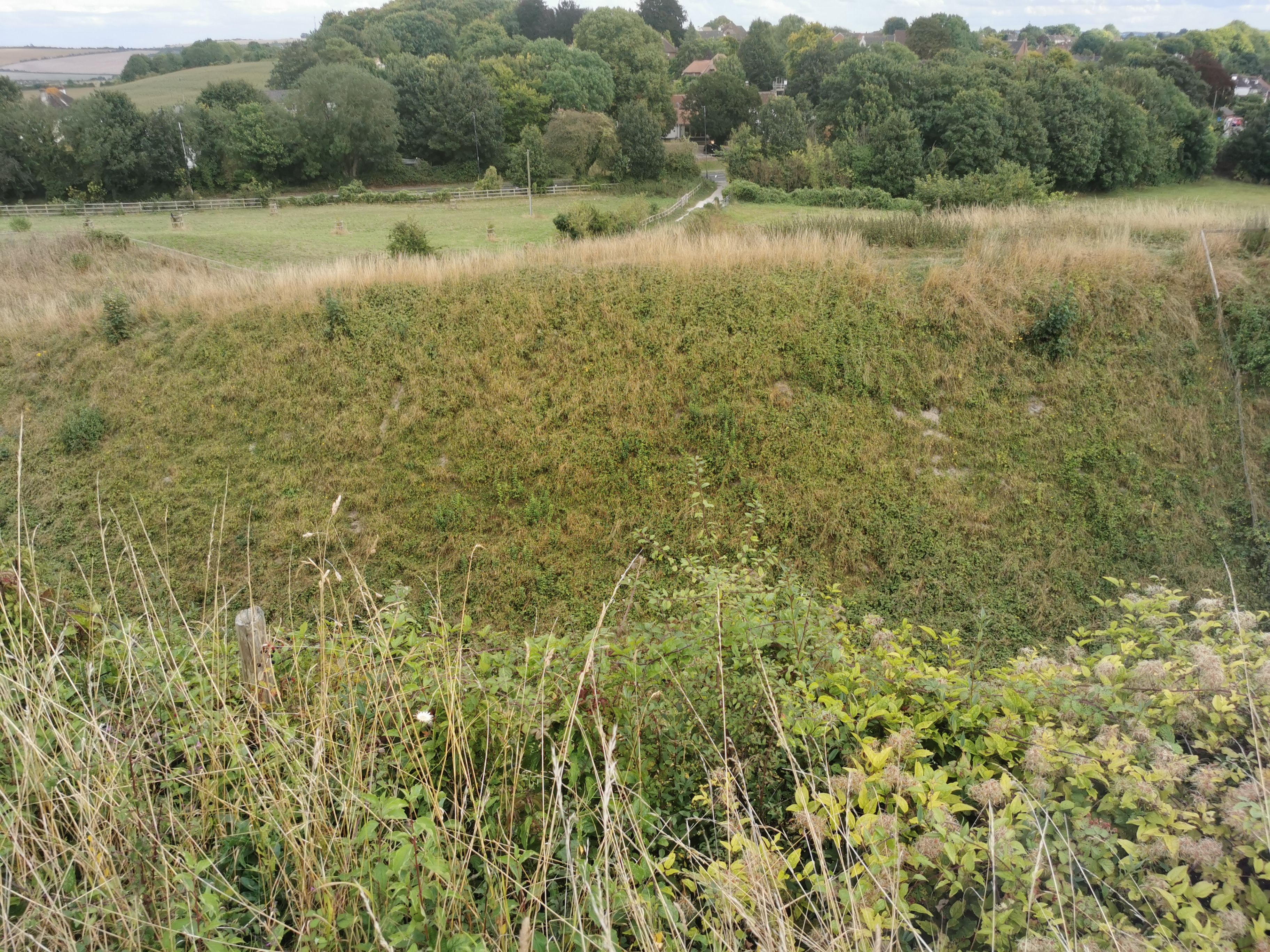
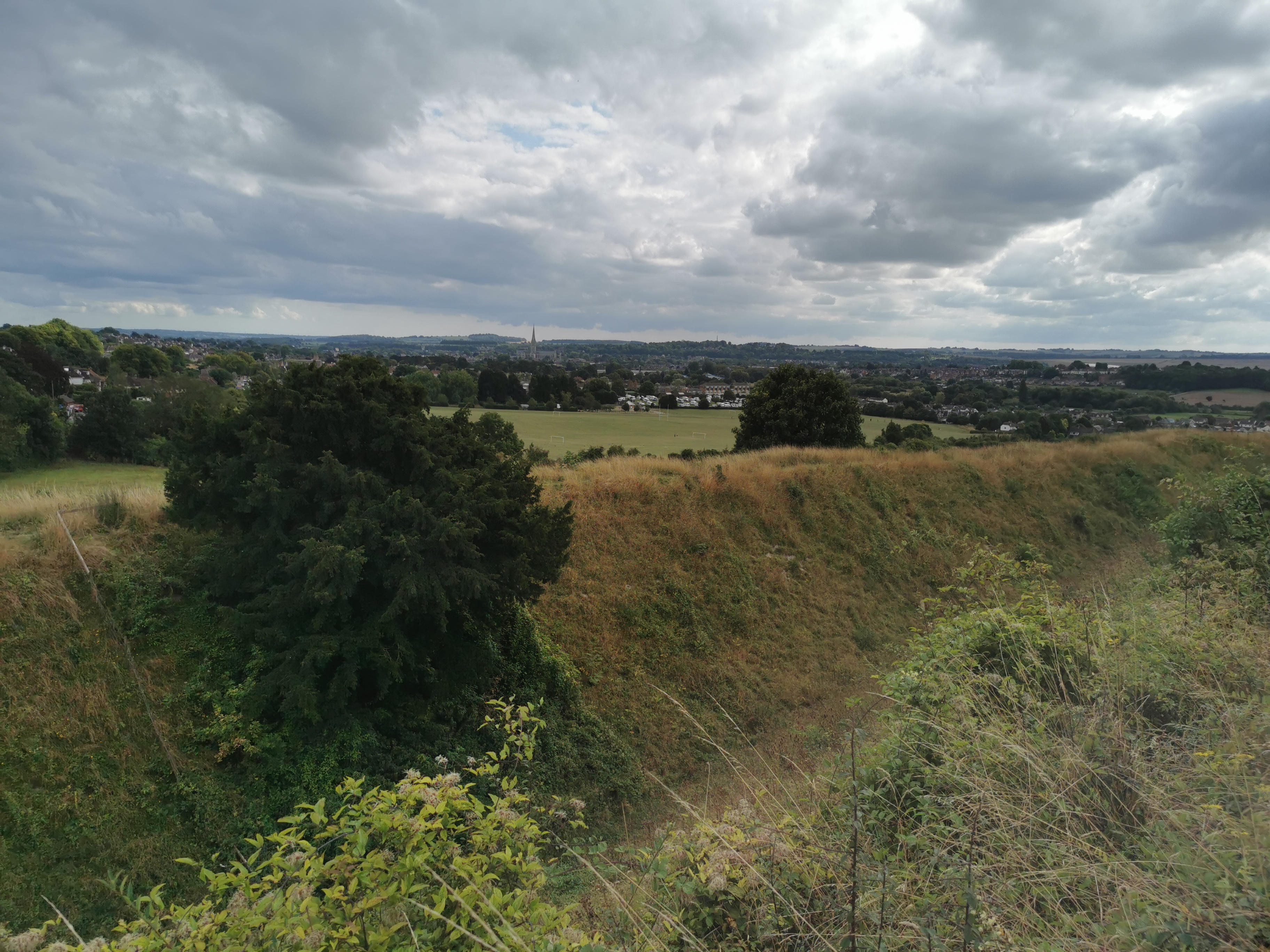
Earlier this year, I attended a virtual talk about Old Sarum which really inspired me. As such, I immediately decided I needed to take Coelwulf and his warriors there. I was really pleased to be able to visit the location on my way home from Devon earlier in the year, and it was even better than I’d imagined it. I hope the photos below will reveal it’s fabulous location and the height and width of the encircling embankments, as well as just how close it is to Salisbury, which was built to replace it.
The English Heritage information board from Old Sarum.
Old Sarum is an old Iron age hillfort, but it was repeatedly used until it was abandoned, and most people know of it because under the early Norman rulers a castle and a church were built there. But my interest is in the earlier period. Under the Romans it was called Sorviodonum, and was in use at points during the Saxon era. It did have one fatal flaw however, it relied on a single water source inside the two embankments.
You can also find the talk I attended on YouTube here.
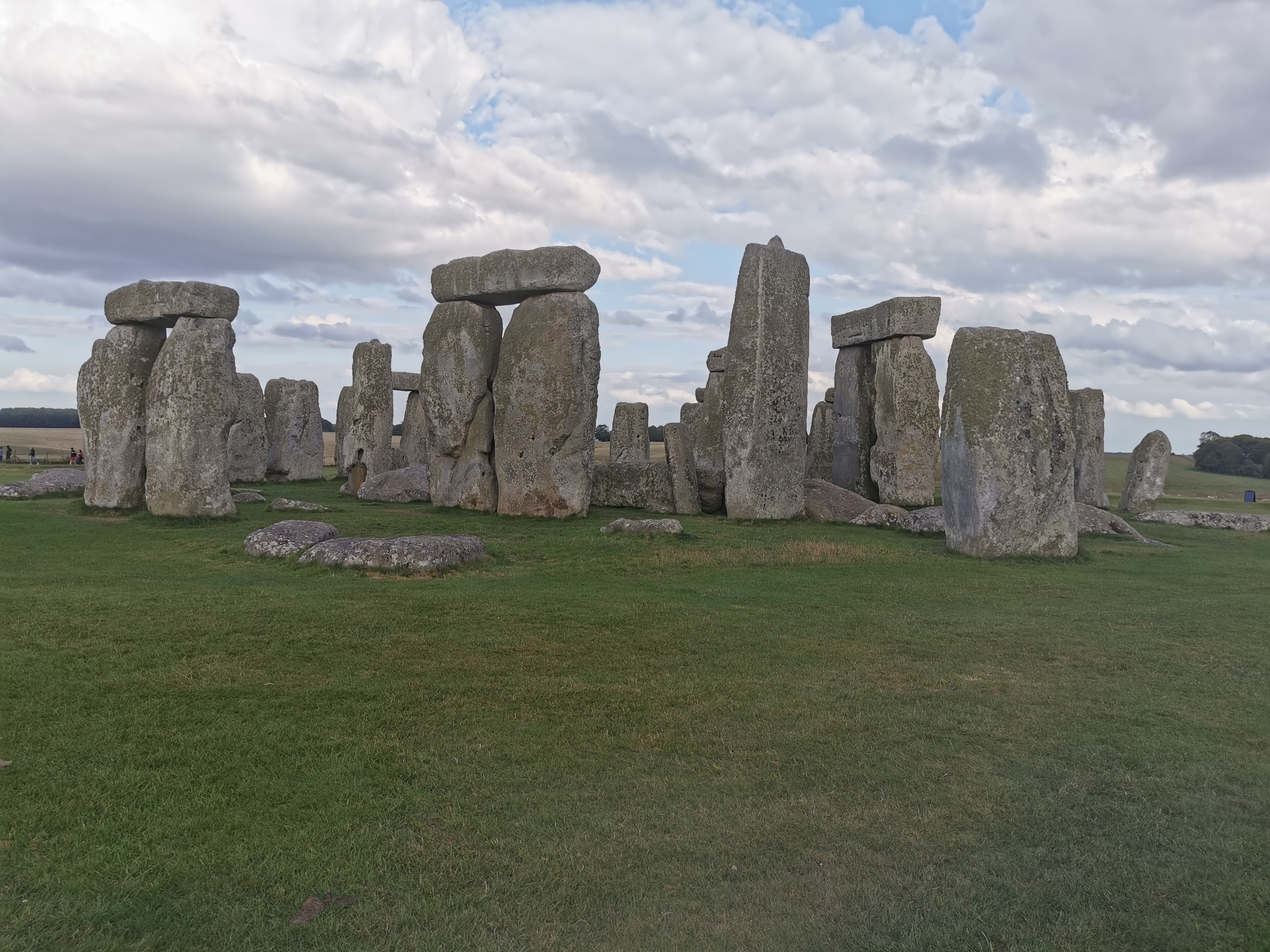
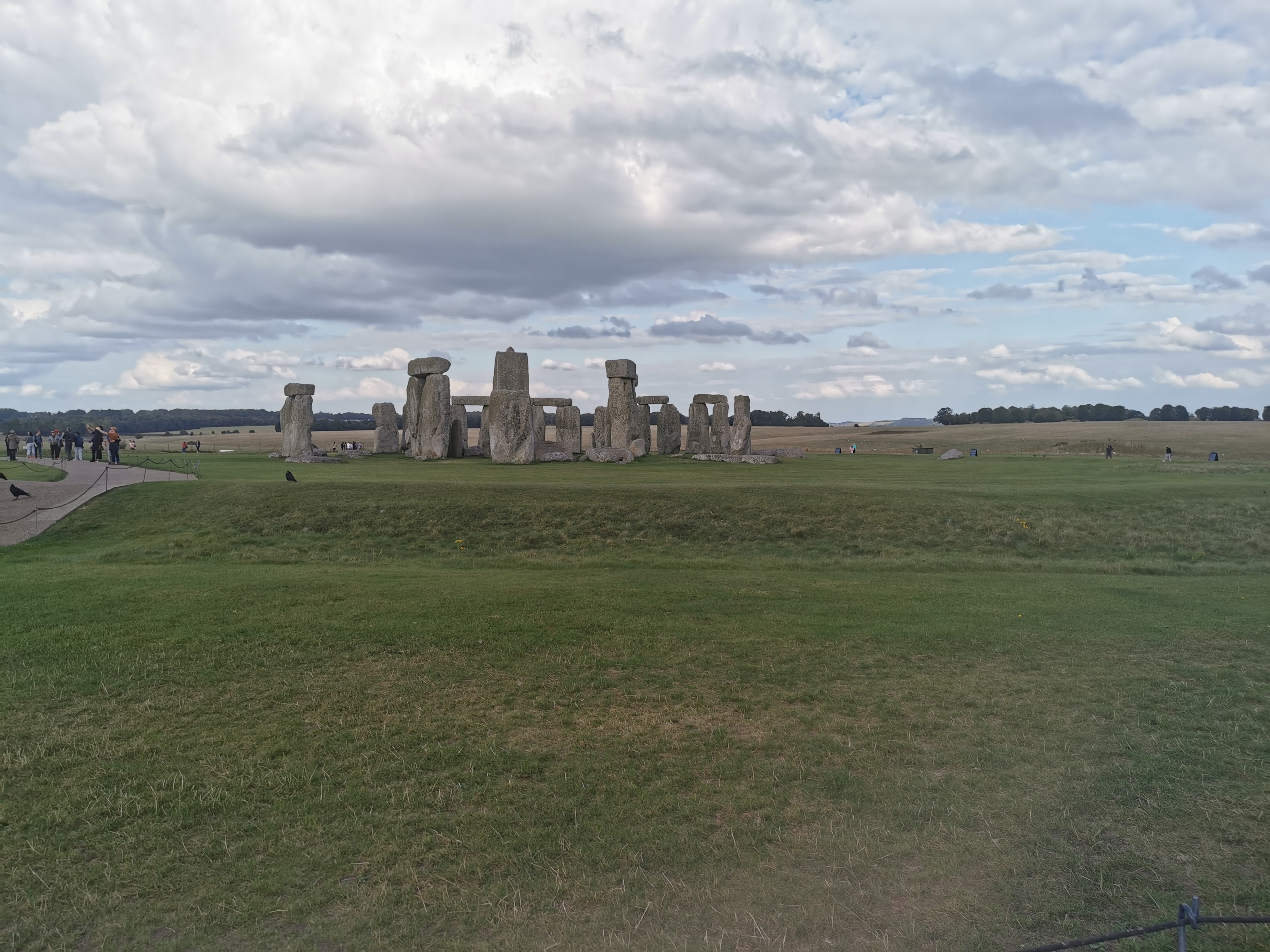
A trip to Stonehenge
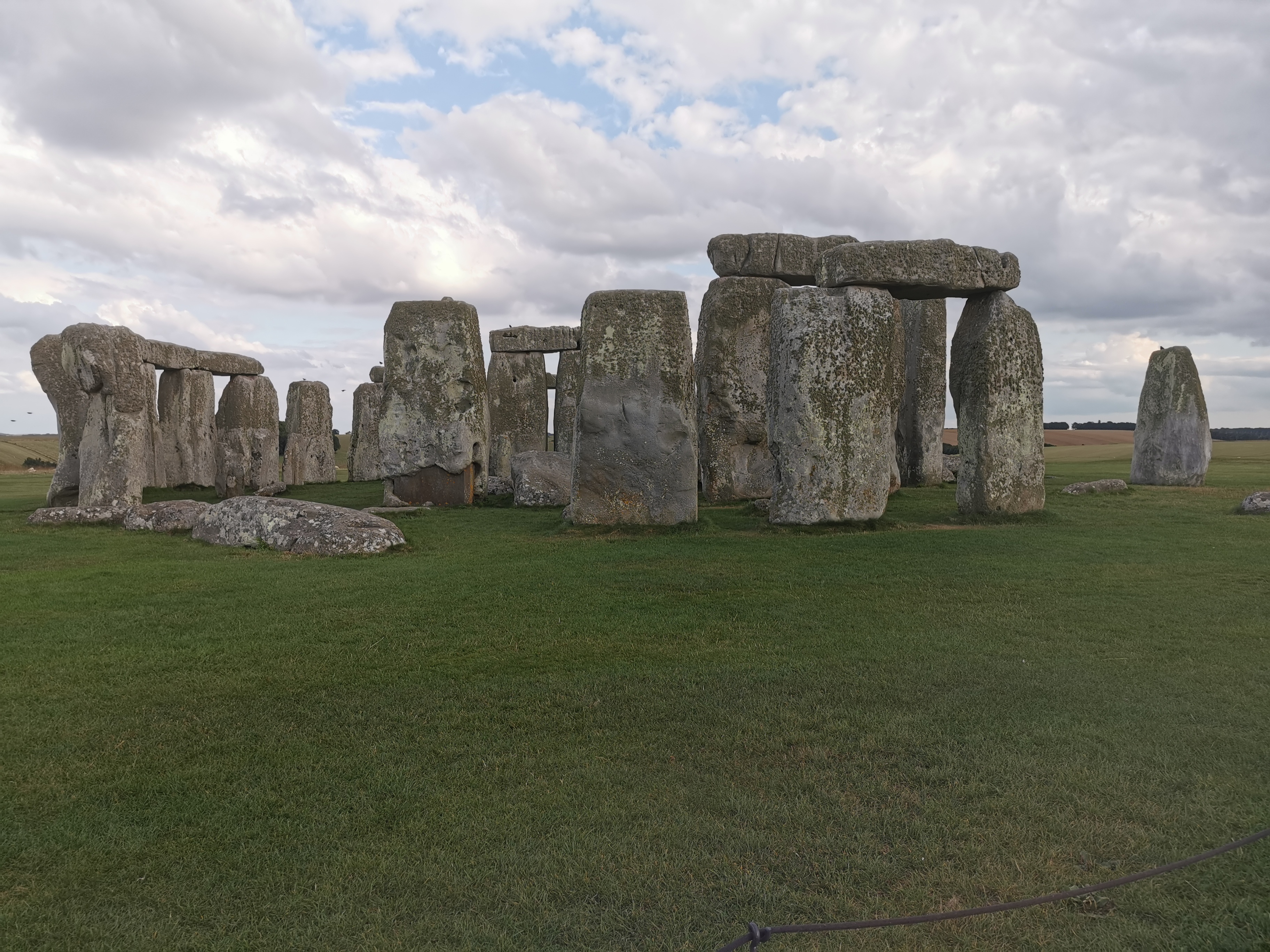
I’ve also taken Coelwulf to Stonehenge in The Last Alliance and The Last Deceit, and so I went to visit as well. I’ve had some fun deciding what my warriors think of the strange arrangement of stones. Personally, I much prefer the Ring of Brodgar and the Stones of Stenness on Mainland Orkney but that might be because you can get much closer to the stones there.
Back in the summer of 2011 (I think), I spent every evening when my children were in bed, trying to plot the possessions of the Earls of Mercia as revealed by the entries in Domesday Book (which I think is a totally normal thing to do).
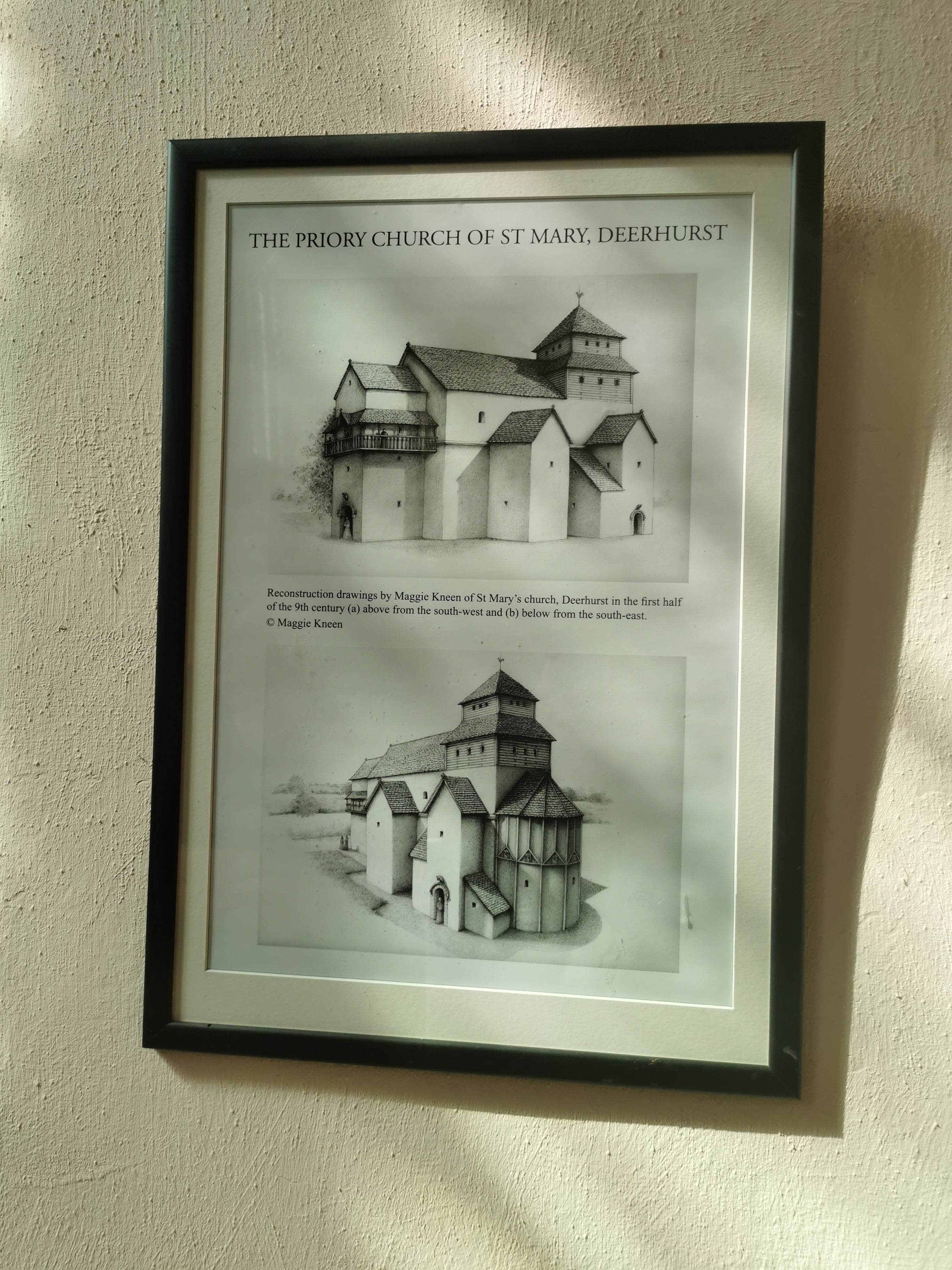
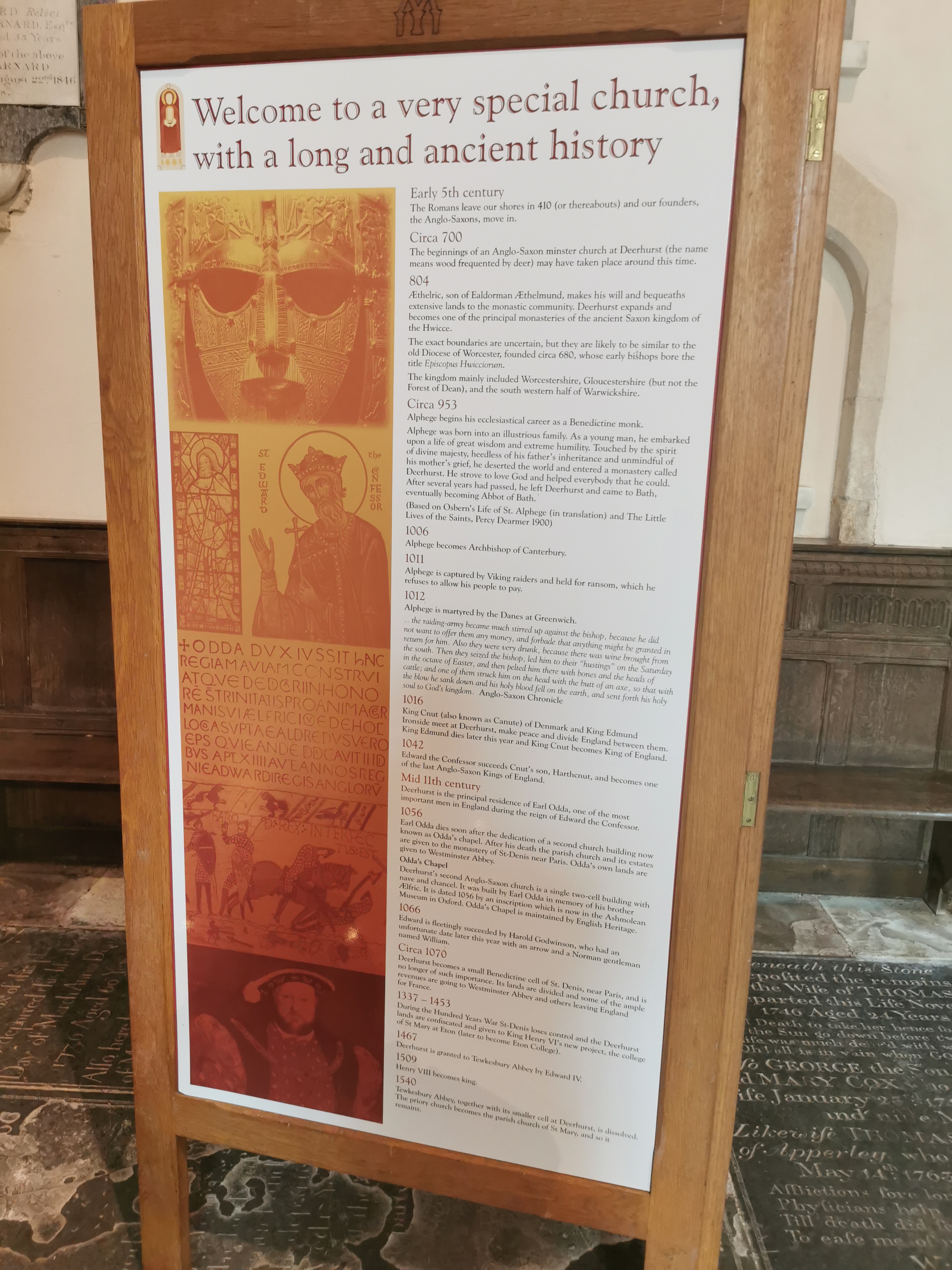
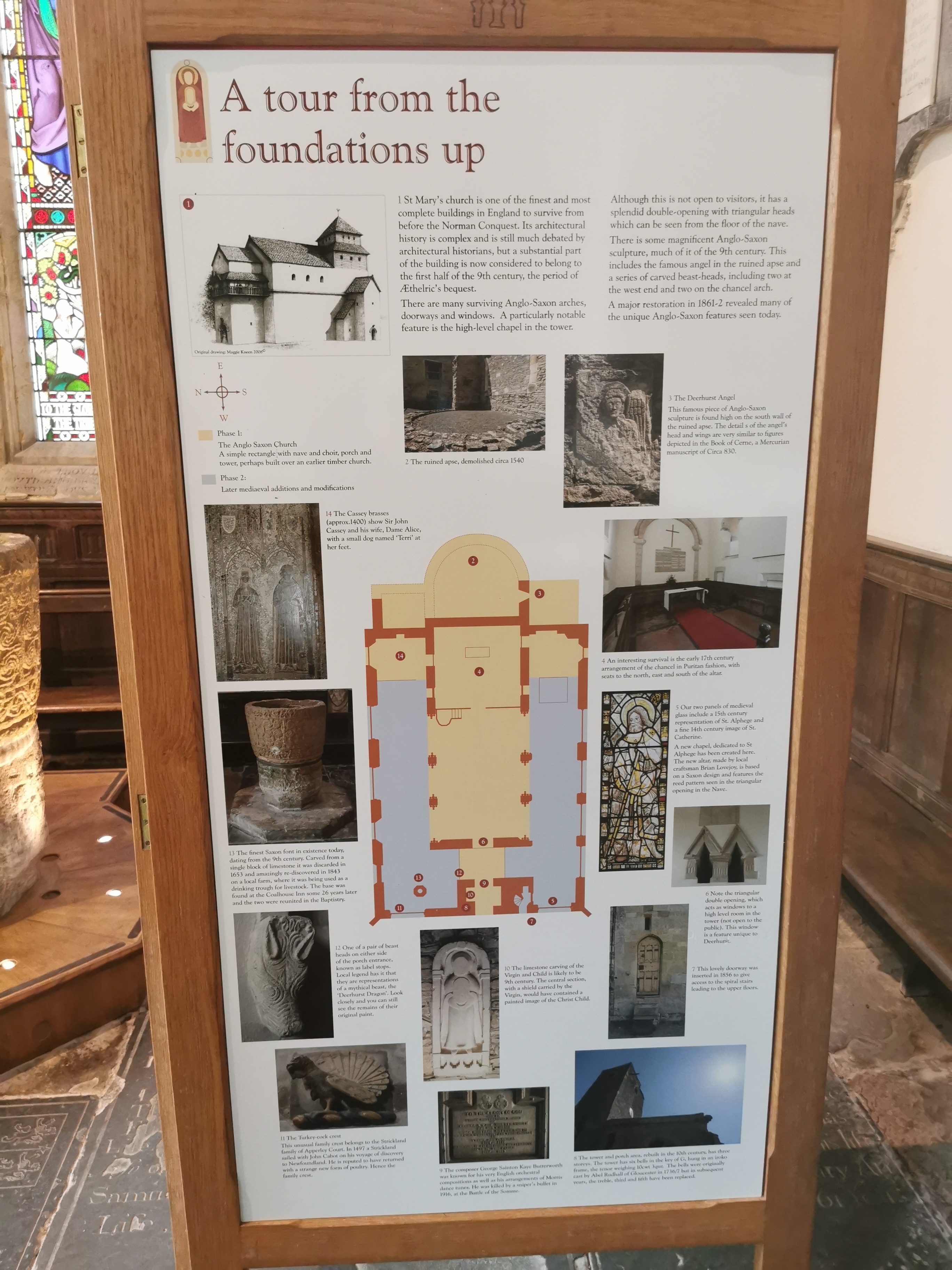
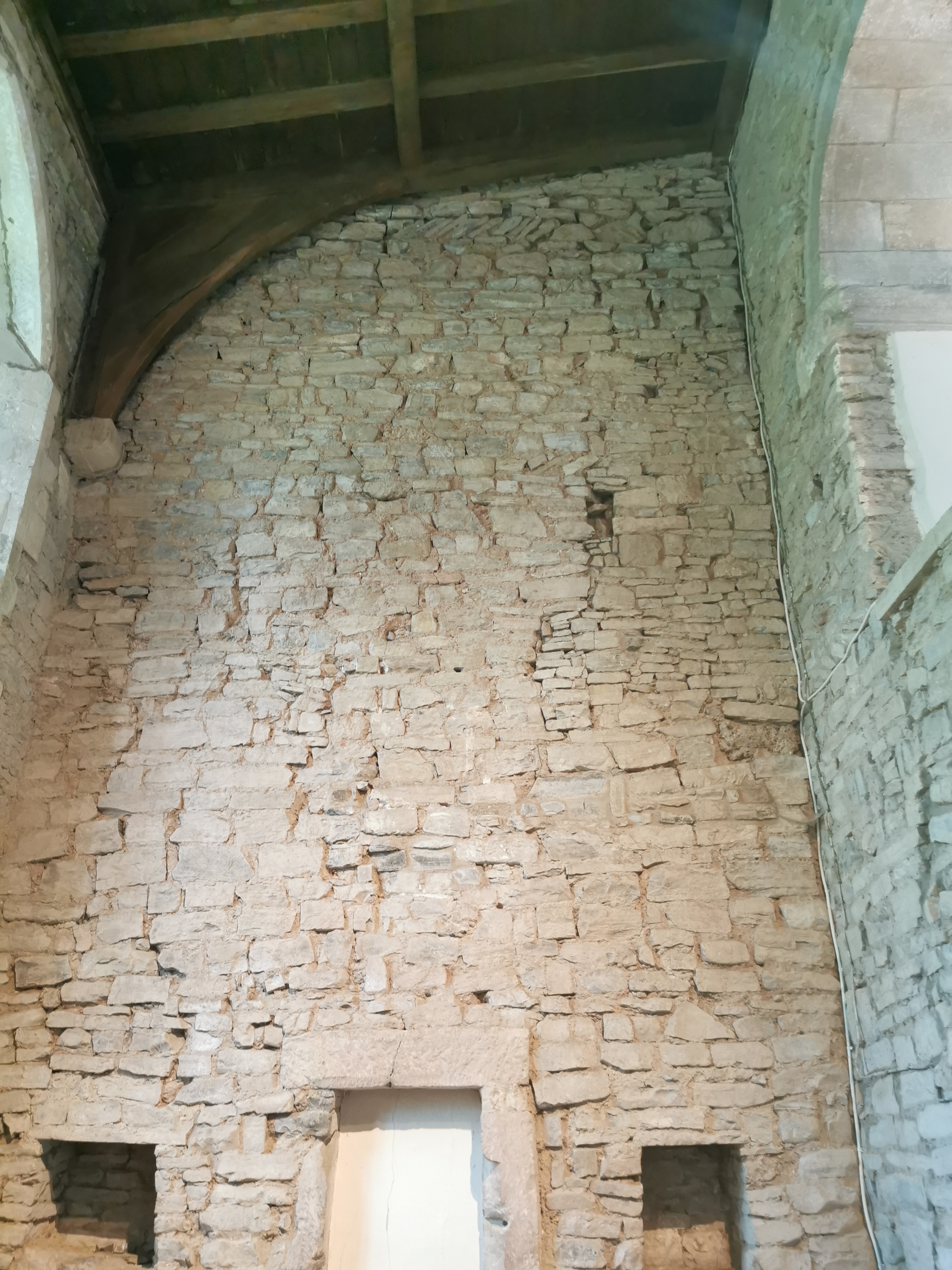
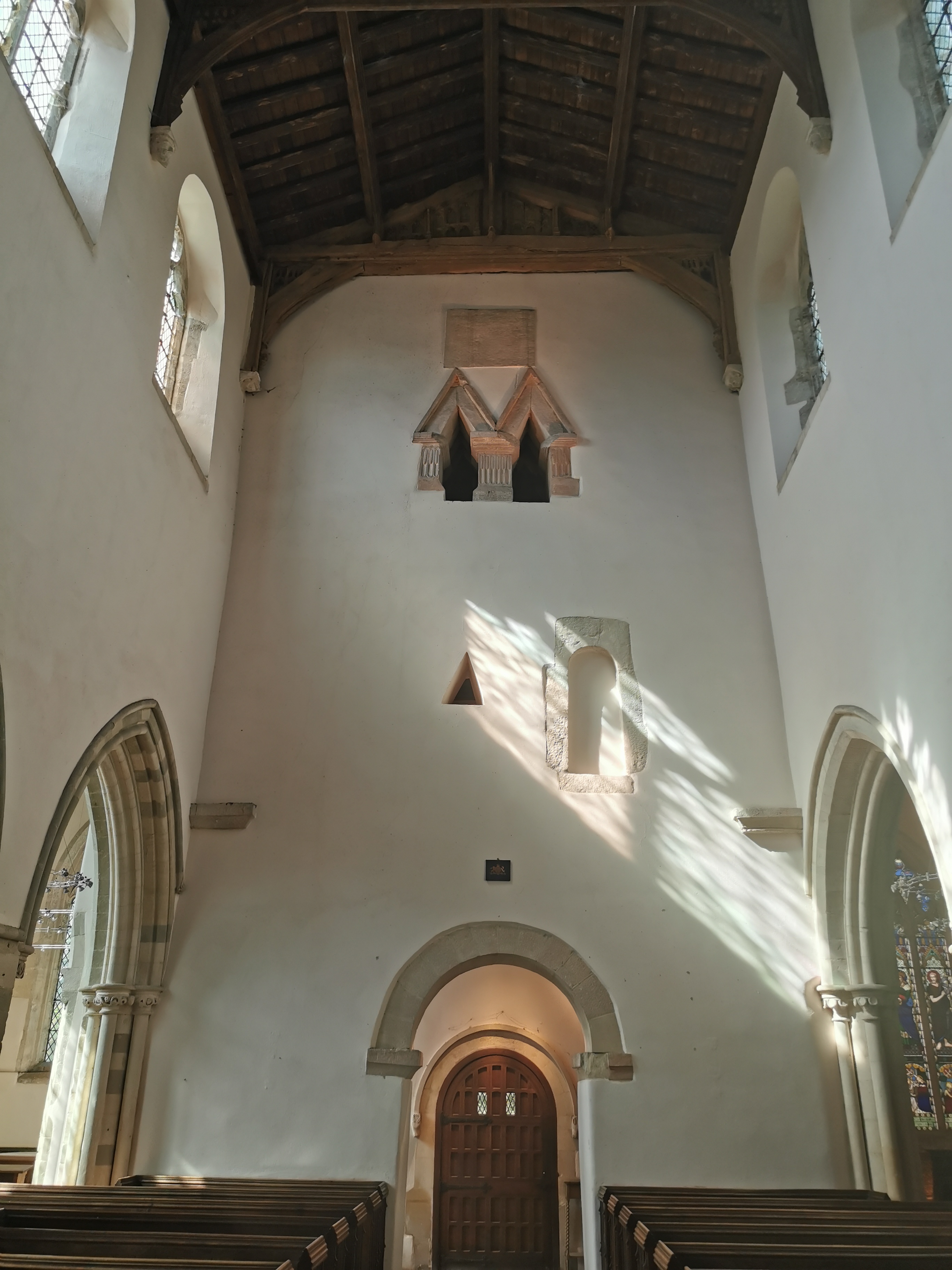
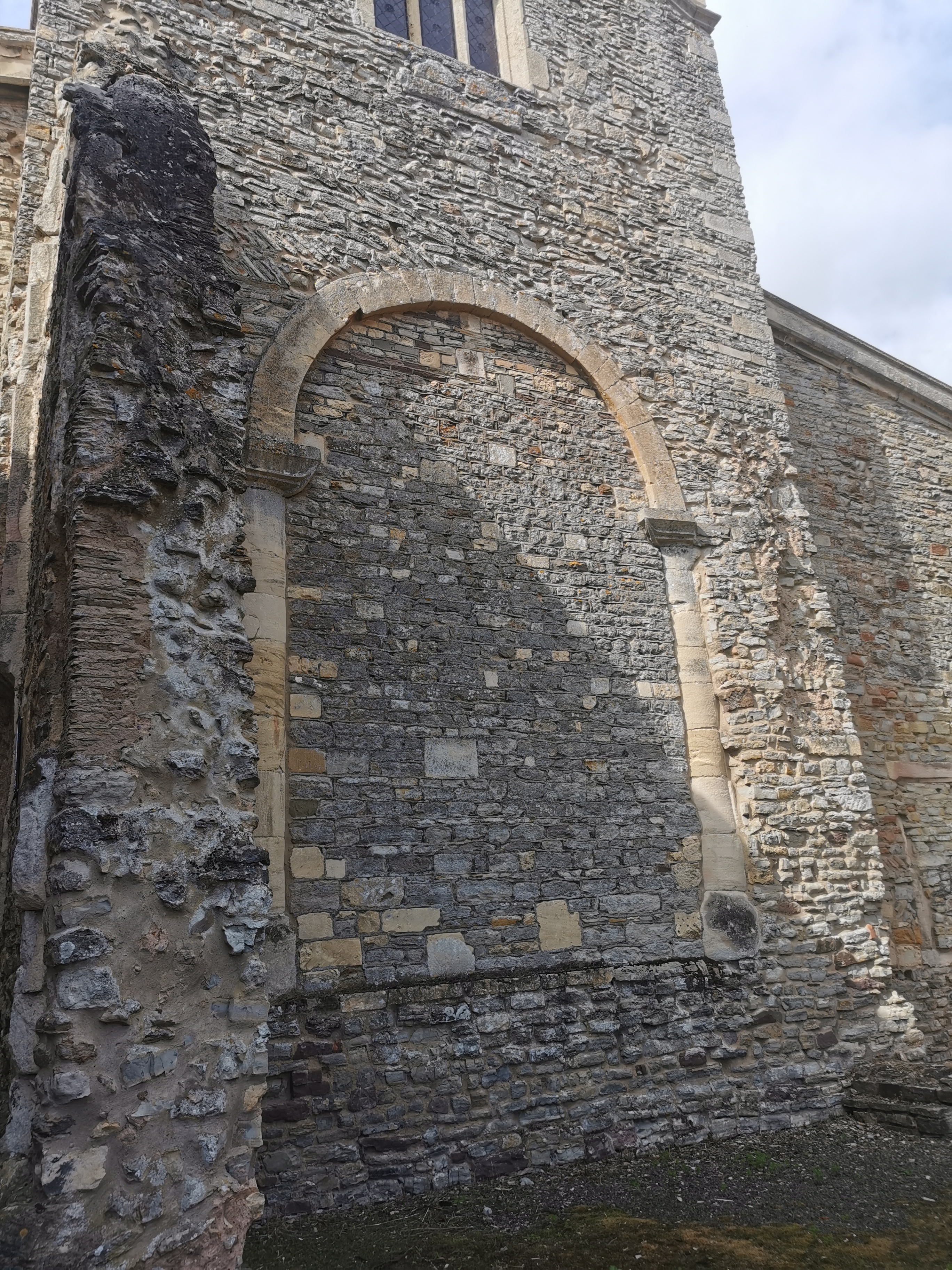
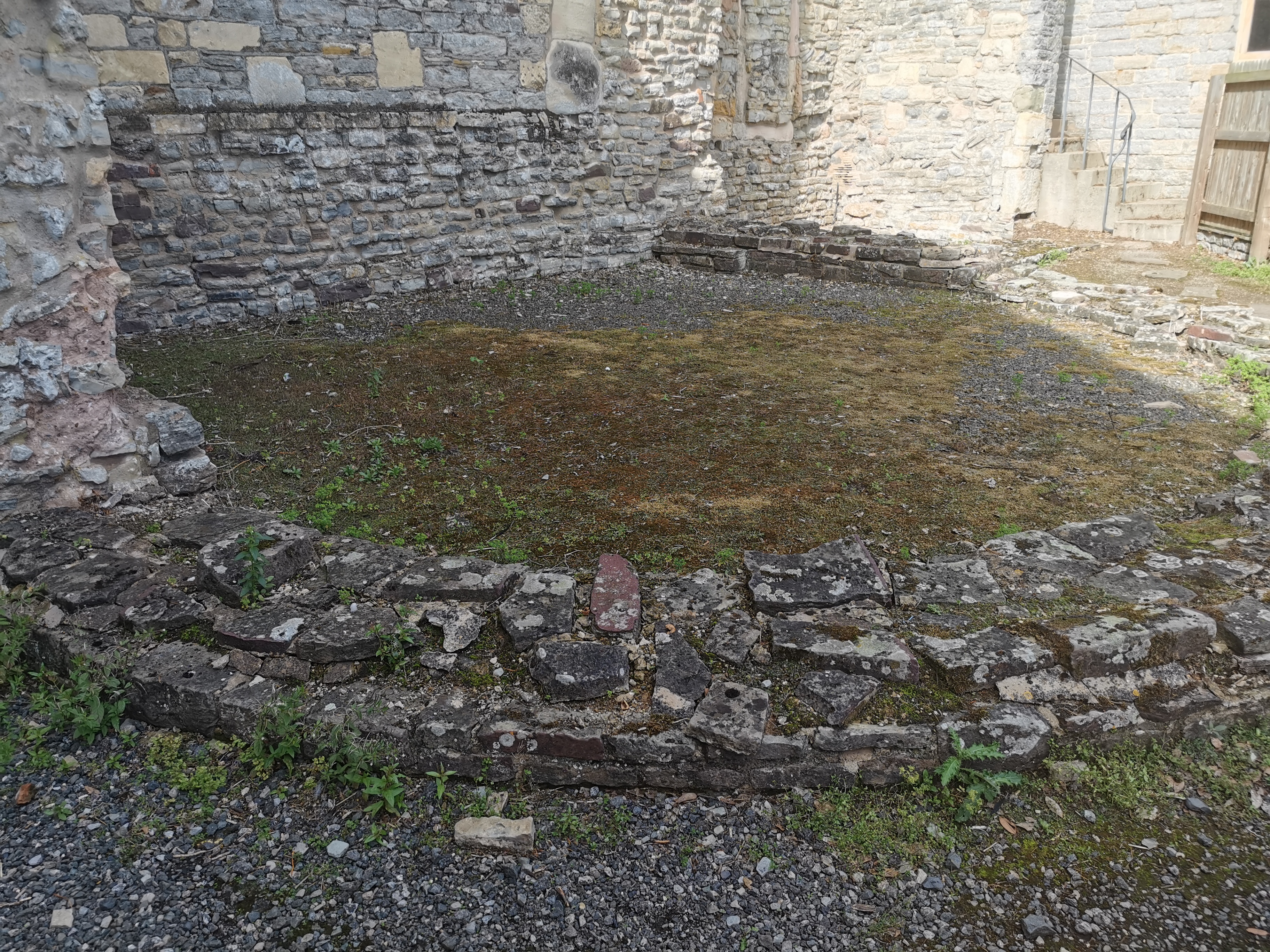
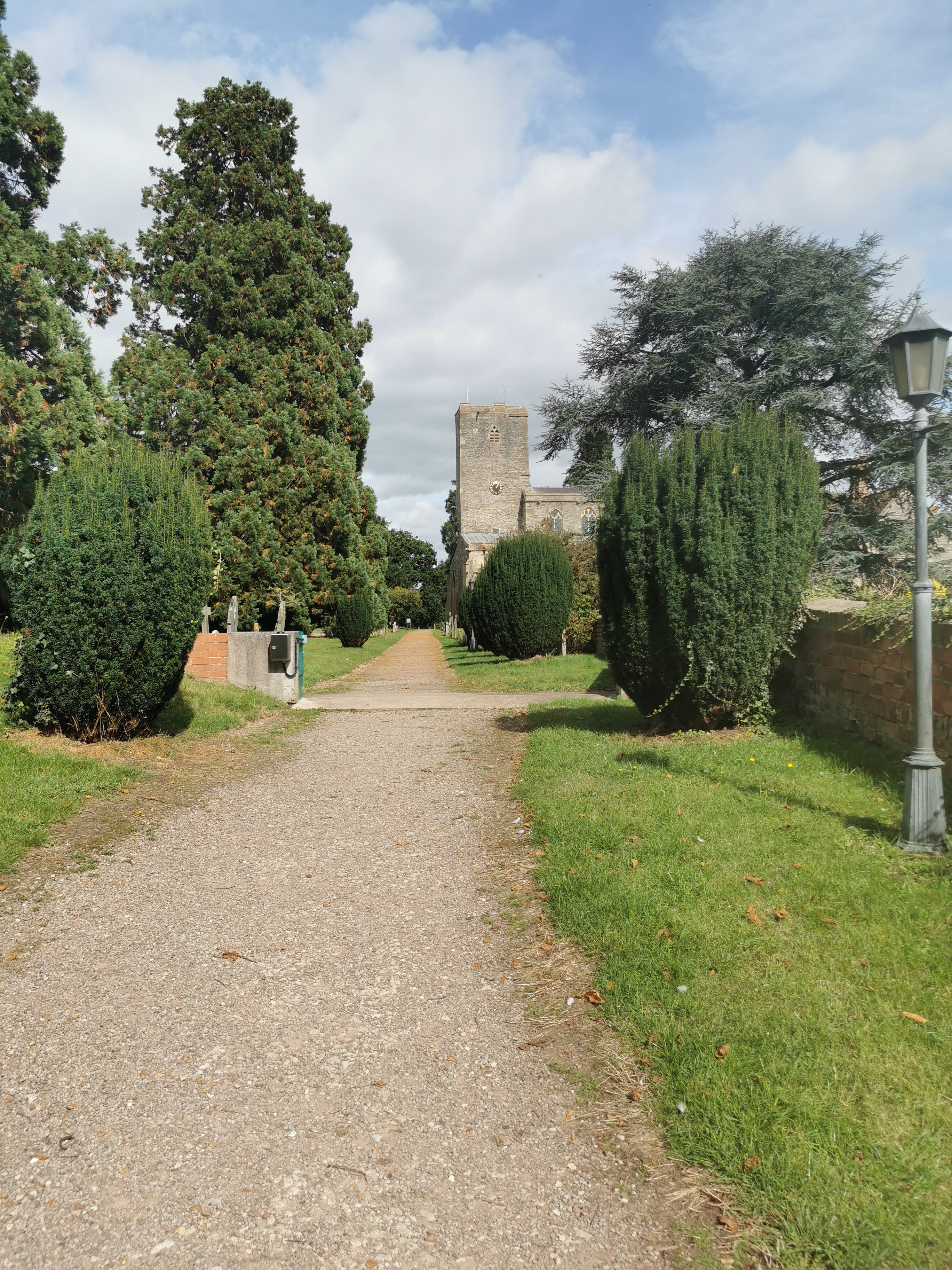
It was a tedious process, which could be achieved much more quickly these days with Google Maps, but it was what I had available to me. Somewhat frustrated with the process because by that period many of the possessions of the Earls of Mercia and their family were not located in the original area of the Hwicce (roughly Gloucestershire), and aware that Deerhurst (which is in Gloucestershire) has a long history back to the Saxon period, I eventually plonked by ealdorman, Leofwine, (of the Hwicce) close to that location, and indeed, readers of the books will know that I have his family burials there. But, I’d never actually visisted Deerhurst before. Until now.
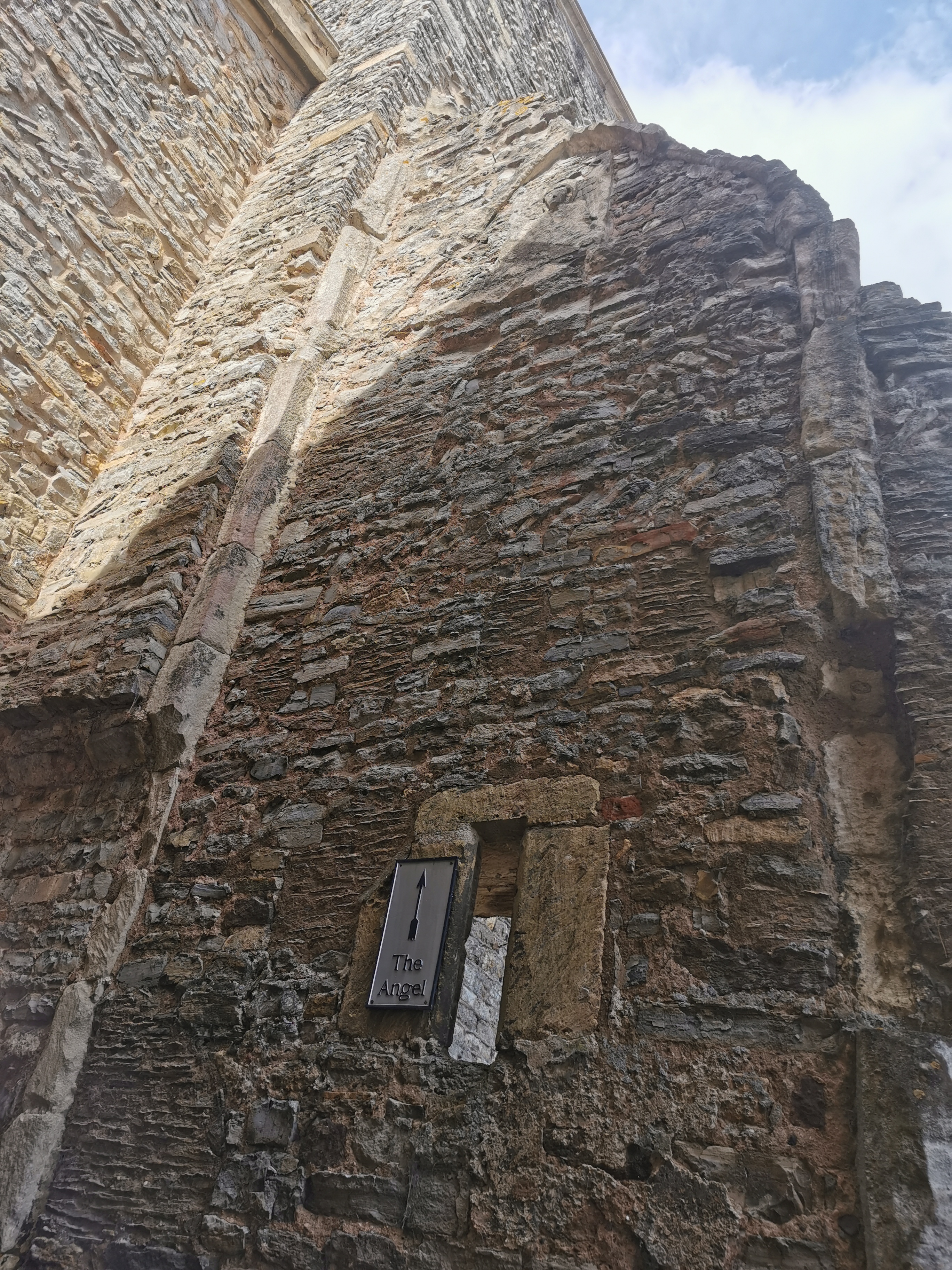
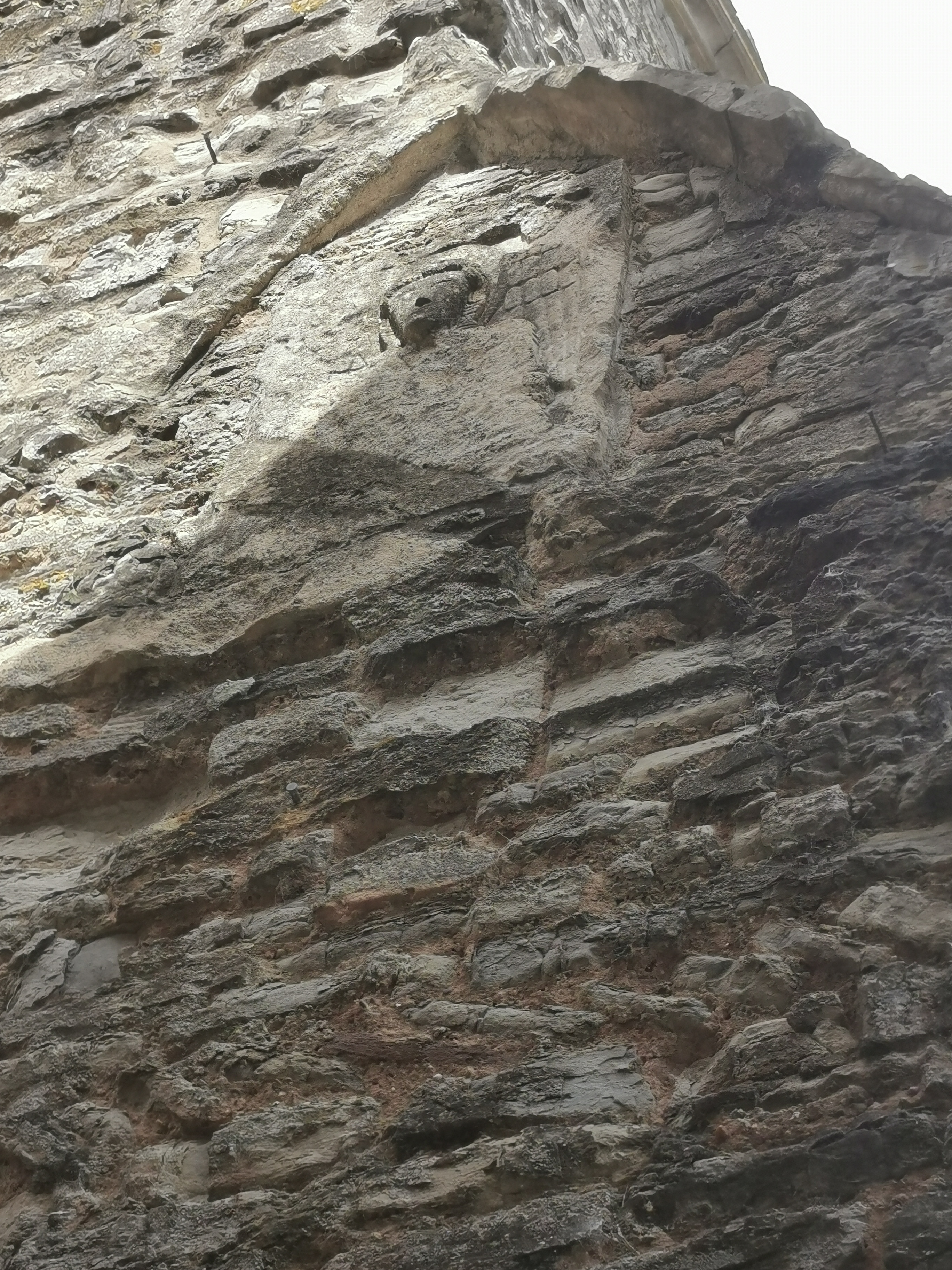
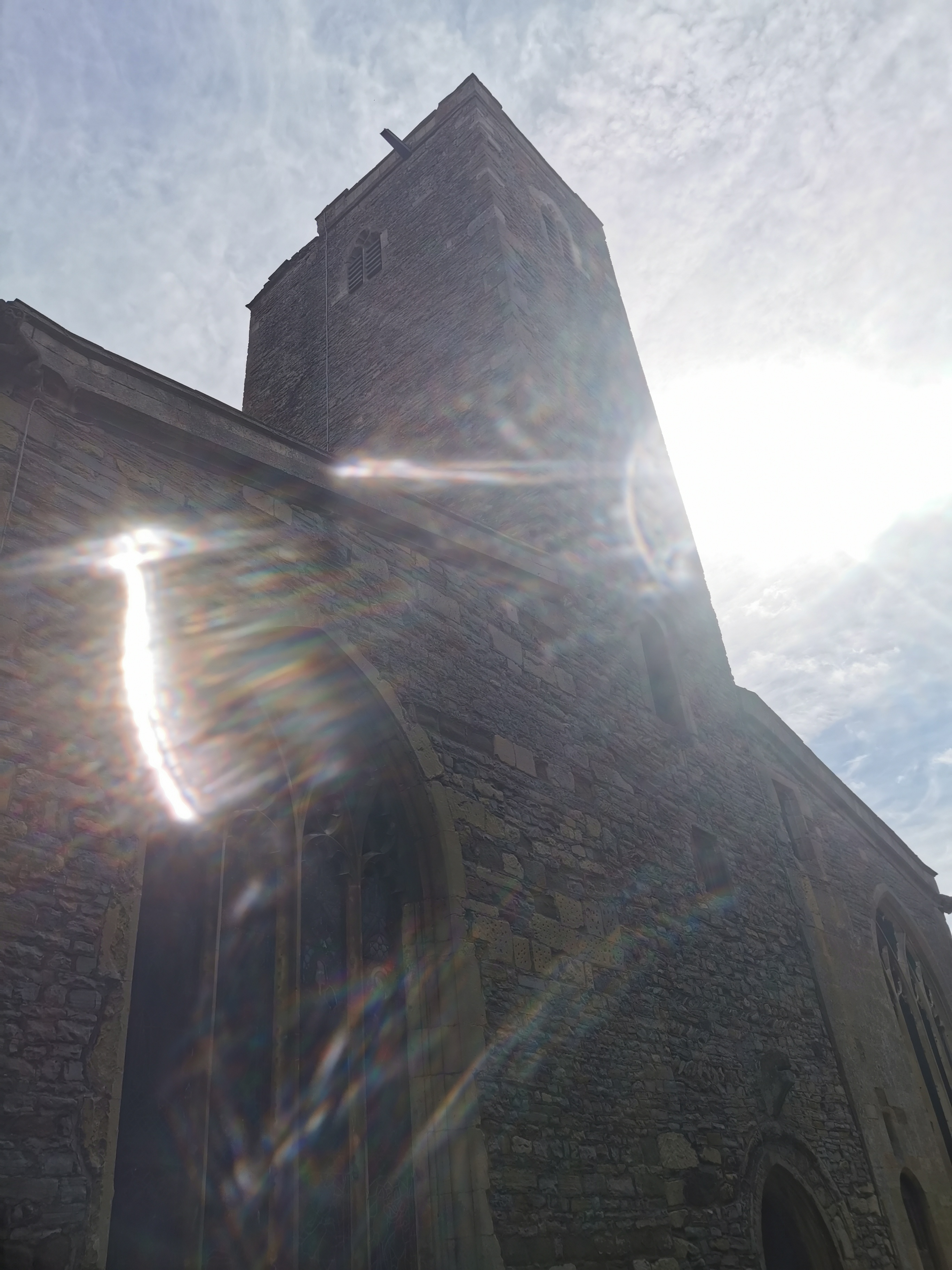
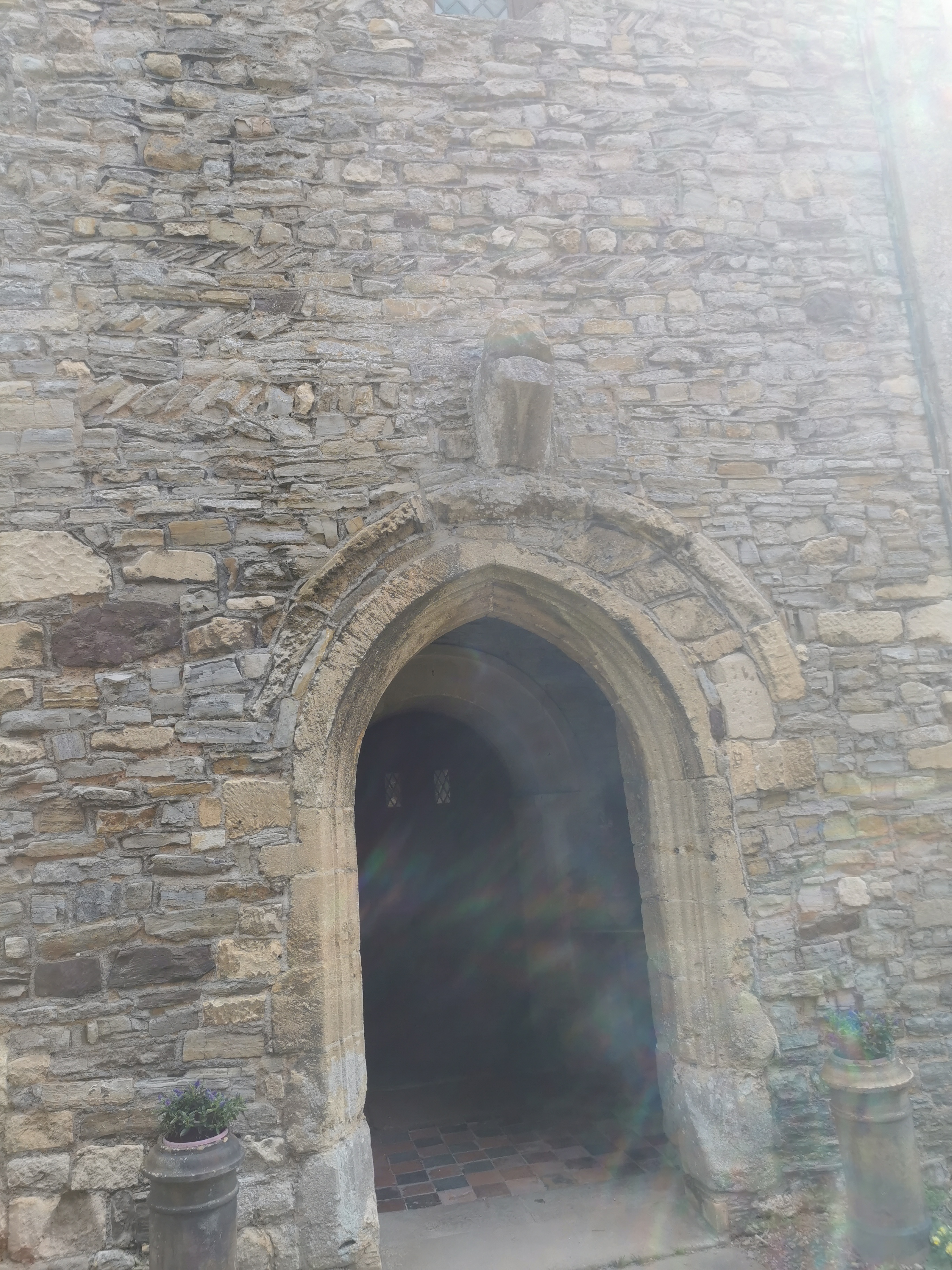
It is a beautiful location, and I’m sharing some photos from my visit, including The Angel, a surviving piece of Saxon sculpture, outside on the walls (my photos aren’t the best but it’s at a very awkward angle and quite high up the side of the building. You can find a much clearer image here https://www.flickr.com/photos/paulodykes/41119170111).
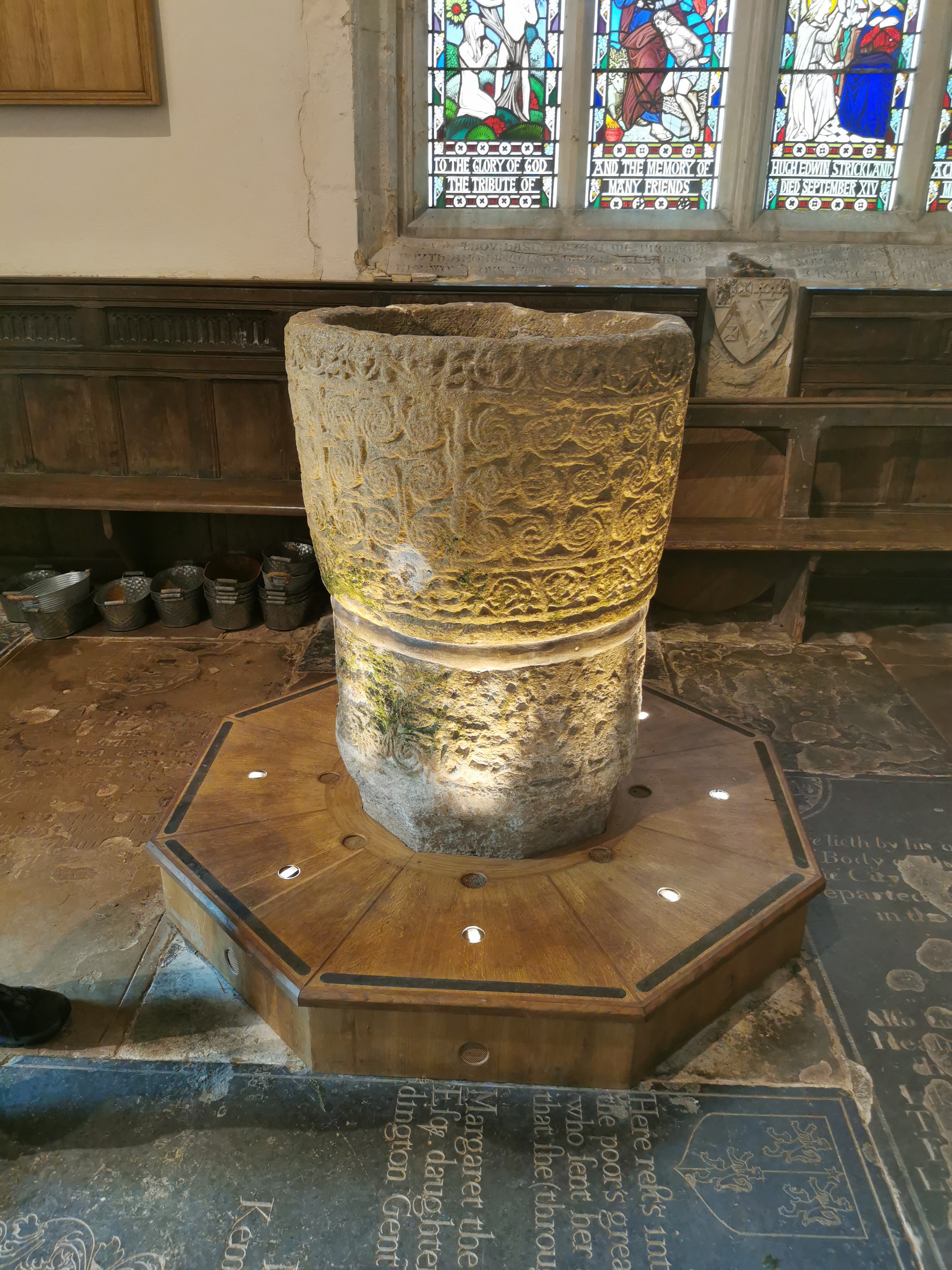
The font – not original to the church – but found in the 19th century and placed there. It is stunning.The AngelThe Angel (again)My camera lens is slightly smashed, and it’s usually fine unless it catches the sun – but sometimes the images are quite cool
Deerhurst hosts an annual lecture each year (indeed, it’s on 21st September 2024 this year), and is also open for visitors, for anyone else who fancies visiting. If you can’t make it, you can visit their website, and also order printed copies of the lectures, which I’ve done before now. https://deerhurstfriends.co.uk
And, just around the corner is Odda’s Chapel, another Saxon survivor. I will also share photos from Odda’s Chapel in a few days.
Setting for The Custard Corpses, my first foray into historical mysteries
The Custard Corpses is set during the 1920s, 1930s and 1940s. I wanted to make the book as authentic as possible, even though I’m not a historian of that time period. When I was first studying history at school, I always found it strange to think of it as history as I had grandparents who had lived through the 1920s, 1930s and 1940s (my old granny was born in 1901, my mother’s parents in 1920 and my father’s parents in 1926 and 1928). That’s probably why I’ve never written about the period before.
Getting the names right
I wanted to ensure I was using names and places that existed at the time, and I didn’t want to inadvertently make any silly mistakes – a few beta readers pointed out I was using metric measurements, when they should have been imperial in the 1940s. They thought it was sweet that I’d never known the world of imperial numbers (and money).
Maps and train routes
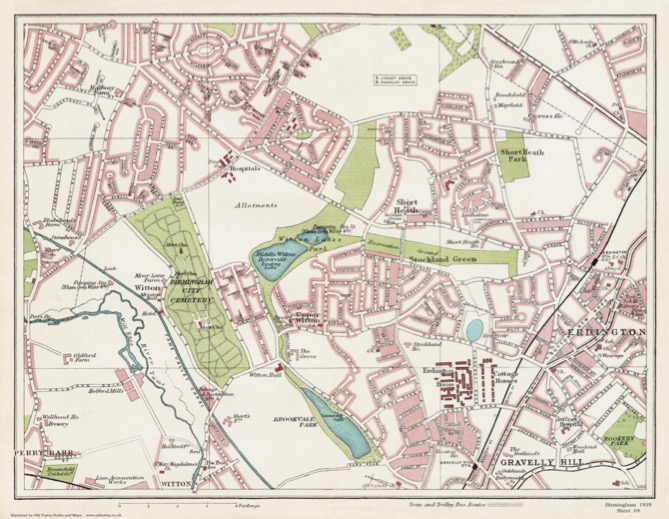
So, I spent quite a bit of time hunting down random facts; maps of the time period, tram and train routes (which you can find online, but I had some old maps), pictures of cars, police uniforms at the time, advertisements of the time and also editions of the Picture Post magazine. At one point, I wanted a celebrity scandal, and there it was, on the cover of a magazine.
Map of Erdington from the era
Newspaper Archives
I was amazed by the information that I could find by accessing archives ( and also that which I couldn’t find), and I was especially impressed by the ‘history’ section on the Birmingham.gov website, and by those local newspapers that have archives available online – such as the Inverness newspaper and the Birmingham Mail. There’s also a whole aerial photo website that I could have used, but I couldn’t quite work it out.
Family memories
I was also lucky in that I set the book somewhere I have childhood memories of, and also that a family member spent their early years in Erdington. It was funny to realise the parts that they especially remembered – such as the fact that some of the buses were still open-topped at the time, and the liveries that buses were decorated with. The Birmingham that I remember is very different to the one that exists now, and the one that existed in the 1940s. My memories of Birmingham consist of the dodgy car park we used, the train journey we used to take in the old carriages with individual doors (they were old in my day) and shopping for jeans.
I also made some use of the 1911 census records, and the Office for National Statistics spreadsheet which lists all the most popular names in decades. It made it easy to devise names for the characters. It also helped that while the 1940s is ‘history’ it’s much more relatable to me than the period before 1066, when I usually set my stories, so provided I didn’t use the internet in the story itself (and only as a research tool), or refer to cms, it was just about authentic, I hope. And did allow for the use of cars and telephones.
On this day in history was fought the second of three famous battles between Penda of Mercia and the Northumbrians kings. This battle was different in two ways to Hædfeld and Winwæd; it took place in the summer, and it occured in Mercia. (Hædfeld was an October battle near the River Don. Winwæd was a November battle fought somewhere in the north of modern-day England, it’s believed).
Warrior helms during the early Saxon era (seventh century)
Thanks to some spectacular archaeological finds, we can visualise how a Saxon warrior king might have looked. The reconstructions of the Sutton Hoo helm, and that found with the Staffordshire Horde (as well as a few others), present us with elaborate helmets crested with dyed-horse (or boar) hair in a way very reminiscent of the Roman era. They glitter, and they seem to be festooned in gold and silver work, but whether these were actually worn in battle or not is debatable.
Firstly, they would have made the kings or noblemen very noticeable to their enemy. Secondly, they were so valuable it’s impossible to consider the loss of one of them should they fall and their goods be taken by their enemy. Bad enough for their king and leader to die in battle, but to also lose such precious wealth as well seems unlikely. That said, of course, the Sutton Hoo helm was buried, and the fragments of the Staffordshire Hoard helmet were buried and lost. But the scarcity of such archaeological finds surely points to them being unusual or there would be hundreds of them.
But there is another reason why these helmets might have existed, and that’s because they were for ceremonial purposes. Kings, before the reign of Athelstan (925-937) are not known to have undergone consecration with a crown but rather with a helmet. After all, they were warrior kings. Perhaps then, these survivals are more akin to that worn by a warrior-king when appearing before his people or for ceremonial reasons.
What weapons would a ‘normal’ warrior have?
What then might have been the more usual garb for a warrior of the Saxon era, which at nearly six hundred years is bound to offer some variations? Shield, spear, seax, sword and byrnie.
We get a feel for these items and how valuable they were from wills that survive from the later Saxon era, hundreds of years after the events of Pagan Warrior. Ealdormen had horses, both saddled and unsaddled, shields, spears, swords, helmets, byrnies, seax, scabbards and spears.
The will of Æthelmær, an ealdorman in the later tenth century, records that he’s granting his king, ‘four swords and eight horses, four with trappings and four without, and four helmets and four coats of mail and eight spears and eight shields,’[1] as part of his heriot, a contentious term for something that some argue was an eleventh-century development, and others argue, is merely reflecting earlier practice on the death of a man.
There would also have been thegns and king thegns, who had their own weapons, as well as the men of the fyrd, the free-men who could be called upon to perform military service each year, as and when required. It’s often assumed they would have been less well-armed, although this begs the question of whether kings and their warrior nobility were prepared to sacrifice those they relied on to provide them with food to gain more wealth. They might have found themselves with the money to pay for food but without the opportunity to do so.
There are very few representations of warriors, but the surviving strands of the Gododdin, a sixth-century lament to the fallen of Catraeth gives an idea of how these warrior men thought of one another. There is much talk of killing many enemies, drinking mead, and being mourned by those they leave behind.
Battle tactics
Battle tactics from the period are impossible to determine fully. Before writing my books which are blood-filled and violent, I read a fascinating account, by a military historian, on how he thought the Battle of Hastings might have been won or lost. The overwhelming sense I came away with was that local features, hillocks, streams, field boundaries even perhaps the path of a sheep track might well be the very thing that won or lost a battle for these opposing sides. The land that kings chose to go to war on was incredibly important. Perhaps then, it wasn’t all about the weapons but about where they decided to fight.
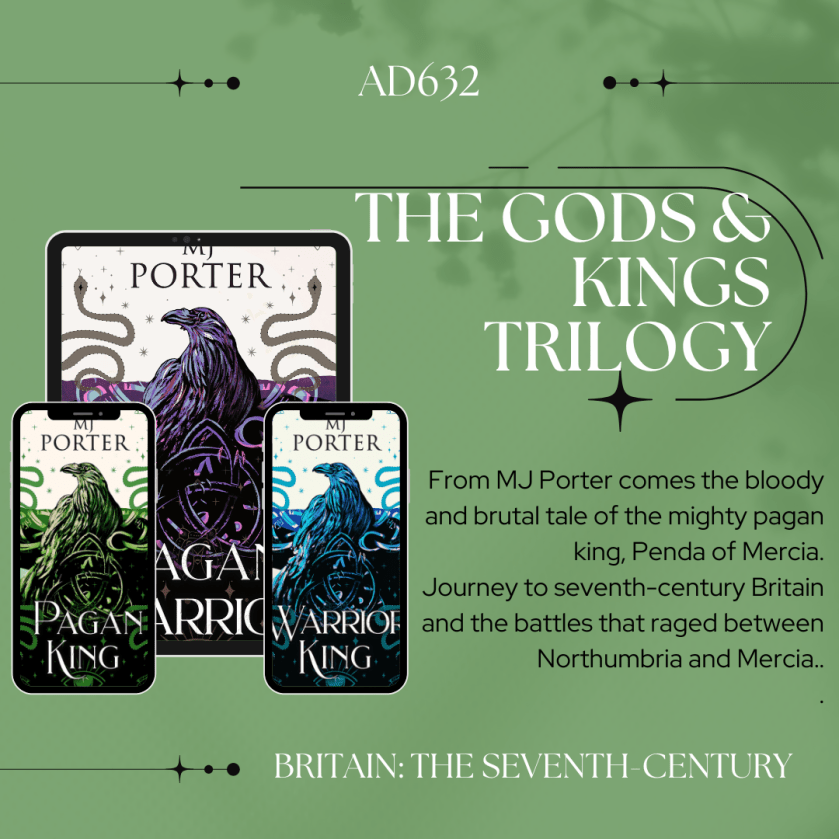
Pagan King, the story of the battle of Maserfeld
For Pagan King, the novel that tells the story of the battle of Maserfeld, I made use of some local landmarks I knew well, and for other aspects, well, that’s why I write historical fiction.
You can find out more information on the Gods and Kings page.
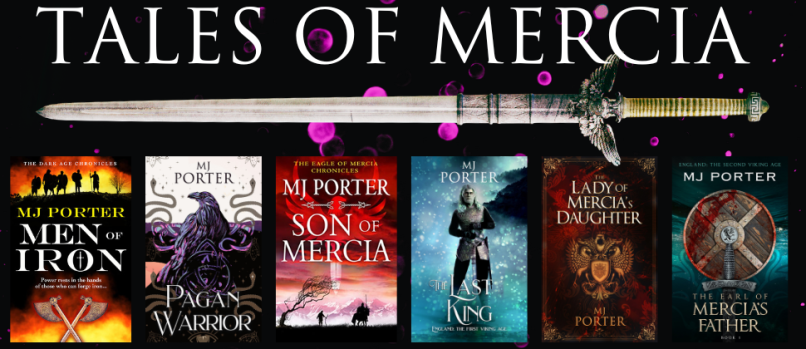
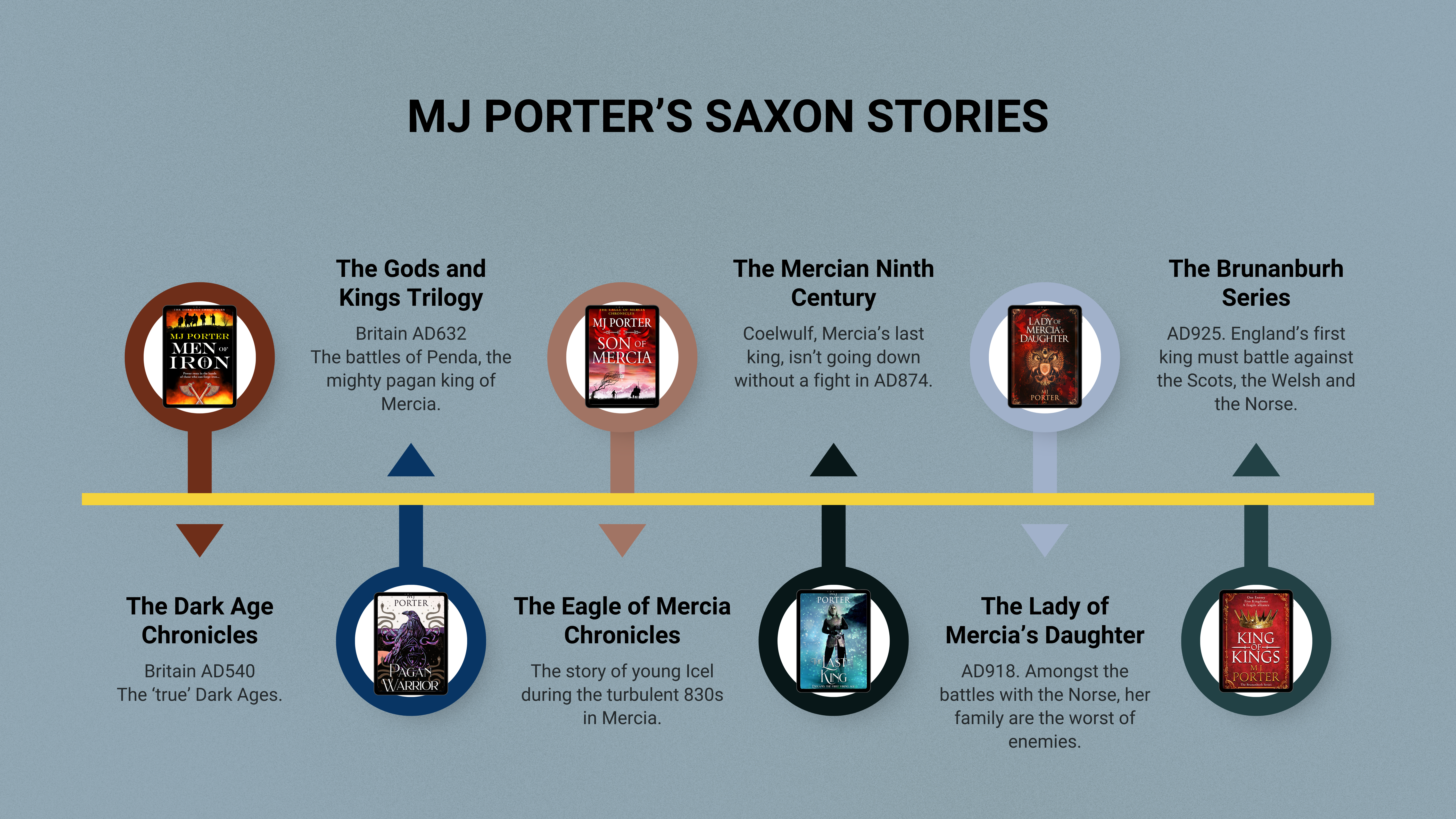
Trying to keep tabs of the chronology of my series set in Saxon England is difficult, even for me. It doesn’t help that I often work backwards, and sometimes have a tendency to skip backwards and forwards, and sometimes don’t finish things either. This might help.
Character crossovers – Ealdorman Leofwine from The Earls of Mercia series as a very young man. Lady Eadgifu from both The Tenth Century books, and The Brunanburh series in book 1.
Character crossover – Cnut, Ealdorman Leofwine, Leofric and others from The Earls of Mercia series – this book is a side-story to the main series but can be read as a standalone.
And don’t forget my non-fiction title, which is a perfect counterpart for The Tenth Century, and The Brunanburh Series, The Royal Women Who Made England
I’ve made it somewhat of a passion to study the royal women of the tenth century. What drew me to them was a realisation that while much focus has rested on the eleventh century women, most notably Queen Emma and Queen Edith, their position rests very much on growing developments throughout the tenth century. It also helps that there is a surprising concurrence of women in the tenth century, the early years of Queen Elfrida, England’s first acknowledged crowned queen, find the ‘old guard’ from previous reigns, mixing with the ‘new guard’ – a delightful mix – it must be thought – of those experienced women trying to teach the younger, less experienced women, how to make their way at the royal court, perhaps with some unease from all involved.
Lady Elfrida, or Ælfthryth (I find it easier to name her as Elfrida) was the first of these women to catch my eye. Her story, which can be interpreted as a love story if you consult the ‘right’ sources, fascinated me. The wife of a king, mother of another king, and in time, grandmother, posthumously, to two more. But, it was her possible interactions with her husband’s paternal grandmother, the aging but long-lived Lady Eadgifu, and maternal grandmother, Lady Wynflæd, as well as probable unease with her second husband’s cast-off second wife, that really sparked my imagination. I could well imagine the conversations they might share, and the dismay they might feel around one another. Lady Elfrida replaced a wife who was not crowned as queen, and also replaced a grandmother who had never been crowned as queen but had long held a position of influence for over forty years at the Wessex court.
Equally, Elfrida’s husband had been surrounded by women from his earliest days. His mother had died, perhaps birthing him, but he had two grandmothers, a step-mother, a foster-mother and his (slightly) older brother’s wife, who would have been instrumental in his life, not to mention his first two wives. As such, it was the personal interactions of the women that called to me, and the tragedy and triumphs of their lives, and, I confess, an image of Dame Maggie Smith holding sway in Downton Abbey that drew me to the women of this period.
I’ve gone on to write fictionalised accounts of many of these women, and then, frustrated by the lack of a cohesive non-fiction account, I’ve also written a non-fiction guide detailing the scant information available for these women.
I’m delighted to welcome Lynn Downey and her new book, Dude or Die, to the blog with a guest post.
Lynn Downey
I’ve been writing about the American dude ranch for the last few years. My novels, Dudes Rush In and the new sequel, Dude or Die, are set on a fictional Arizona dude ranch in the 1950s. My last nonfiction book tackled the same theme, American Dude Ranch: A Touch of the Cowboy and the Thrill of the West.
Dude ranches began in the Rocky Mountain West in the 1880s. They were originally the kind of place where men from the eastern states could go to hunt or just live like cowboys for a few weeks. It didn’t take long for women and families to start visiting these places, which opened up throughout Montana and Wyoming, and then in California and the Southwest around the time of World War I. People had experiences at dude ranches they couldn’t get anywhere else, and ranching is thriving throughout the western states today.
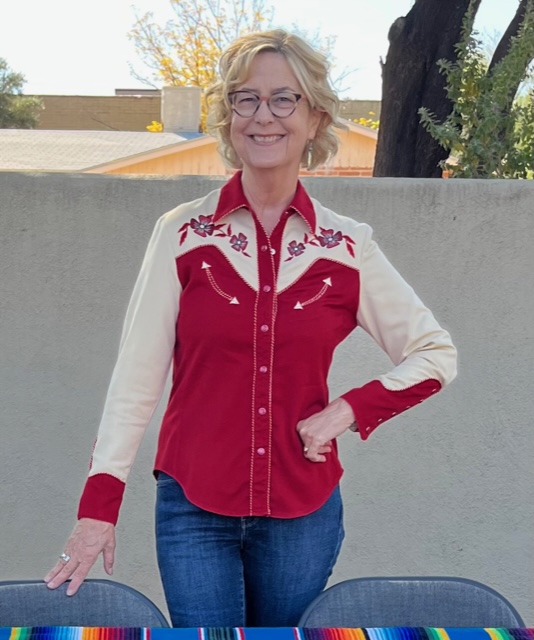
I first got interested in dude ranches when I was working as the company historian for Levi Strauss & Co. in San Francisco. There was a catalog in the archives called Dude Ranch Duds, featuring clothing specifically to be worn on dude ranches. Not just the denim jeans and jackets, but western shirts, satin shirts with embroidery, gabardine riding pants, everything that real cowboys wouldn’t actually wear. But that was the point. The guests were dudes and dudines, they came from somewhere else to immerse themselves in the cowboy West.
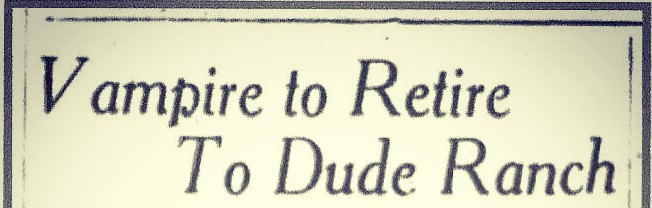
Writing about dude ranching for so many years has yielded stories I never thought I would find, and they went beyond tales of cowboys and dudes. Doing research included perusing a lot of historical newspapers, which are available and searchable online. One day I found what is probably my favorite headline of all time. It was in a number of papers in July of 1935:
“Vampire to Retire to Dude Ranch”
It seems actor Bela Lugosi, most famous for playing Count Dracula in the 1931 film Dracula, had just finished making a new movie called Murder By Television (believe it or not). The Cameo Pictures Corporation was running publicity for the film, and told Lugosi to fill out a questionnaire for readers of various movie magazines. One of the questions asked what his “Present Ambition” was. His answer: “Dude Ranch.”
Of course, I had to read that article.
This just tickled newspaper reporters. One writer for the Brooklyn Times tracked down what he thought were a few more details about Lugosi’s interesting statement.
While the second leading fiend in the United States does not find his lot an unhappy one, he would rather be a cowboy…he has no intention of retiring to a haunted castle in the mountains of his native Hungary when his days of screen acting are over. His desires are for a home on the range, preferably a dude ranch, where all the midnight shrieks, if any, will be from guests whose digestive systems have disagreed with the ranch fodder.
Well, I didn’t believe that for a minute. So, I did what any good historian would do: I tracked down Bela Lugosi’s granddaughter.
She was lovely, and intrigued by the story, which she’d never heard before. She talked to her father, Bela Lugosi, Jr. and a few days later wrote me an email. “My grandfather was an interesting person and I believe he could have thought a dude ranch was a good idea. He really loved the outdoors and especially enjoyed hiking and taking walks.”
I think Lugosi also had a great sense of humor. Because I believe he told the PR people about his dude ranch ambition purely as a joke. Perhaps he was tired of talking to the publicity folks, and wanted to have a little fun.
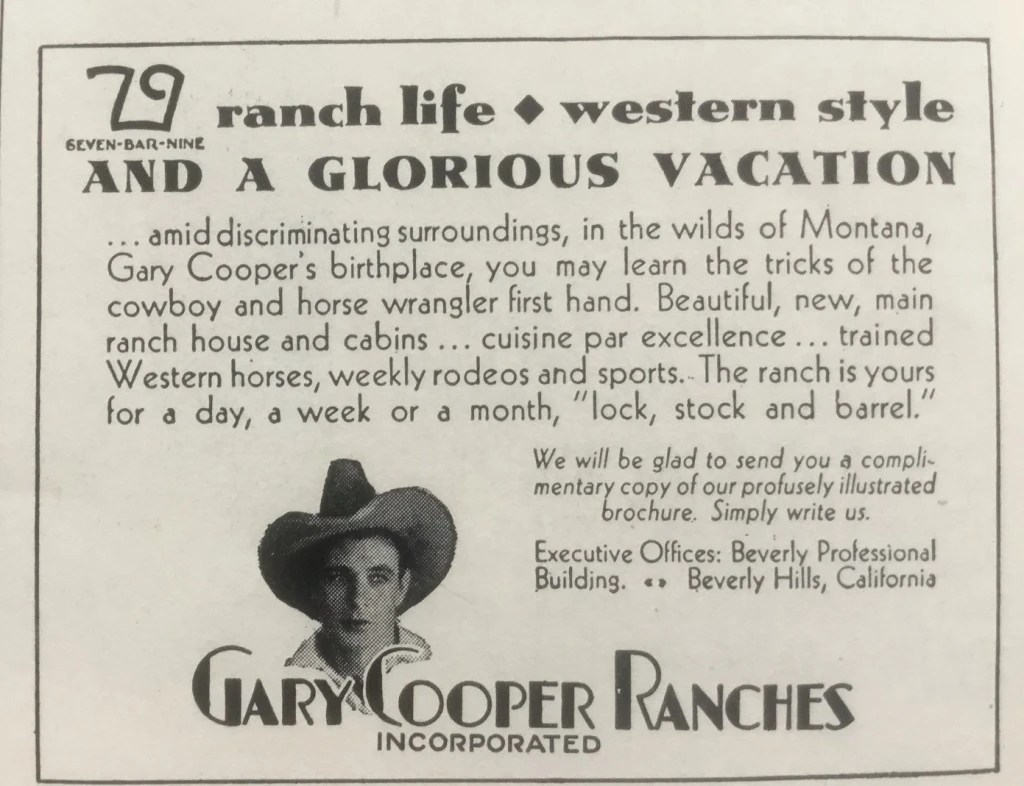
This reflects how popular dude ranches had become by the 1930s. Movie stars like Errol Flynn and Joel McCrea told reporters they planned to open ranches of their own, but they never did. Gary Cooper did have a dude ranch during this decade on the property where he grew up in Helena, Montana, but it didn’t last long. That was probably because people expected to see the movie star when they arrived, but he was rarely if ever there.
Bela Lugosi could have made up anything when the Cameo Pictures Corporation people asked him about his ambitions for the future. But he chose the dude ranch, which was deeply embedded in American culture. It was also the absolute opposite of his character, both on and off screen. And he knew it.
Here’s the blurb
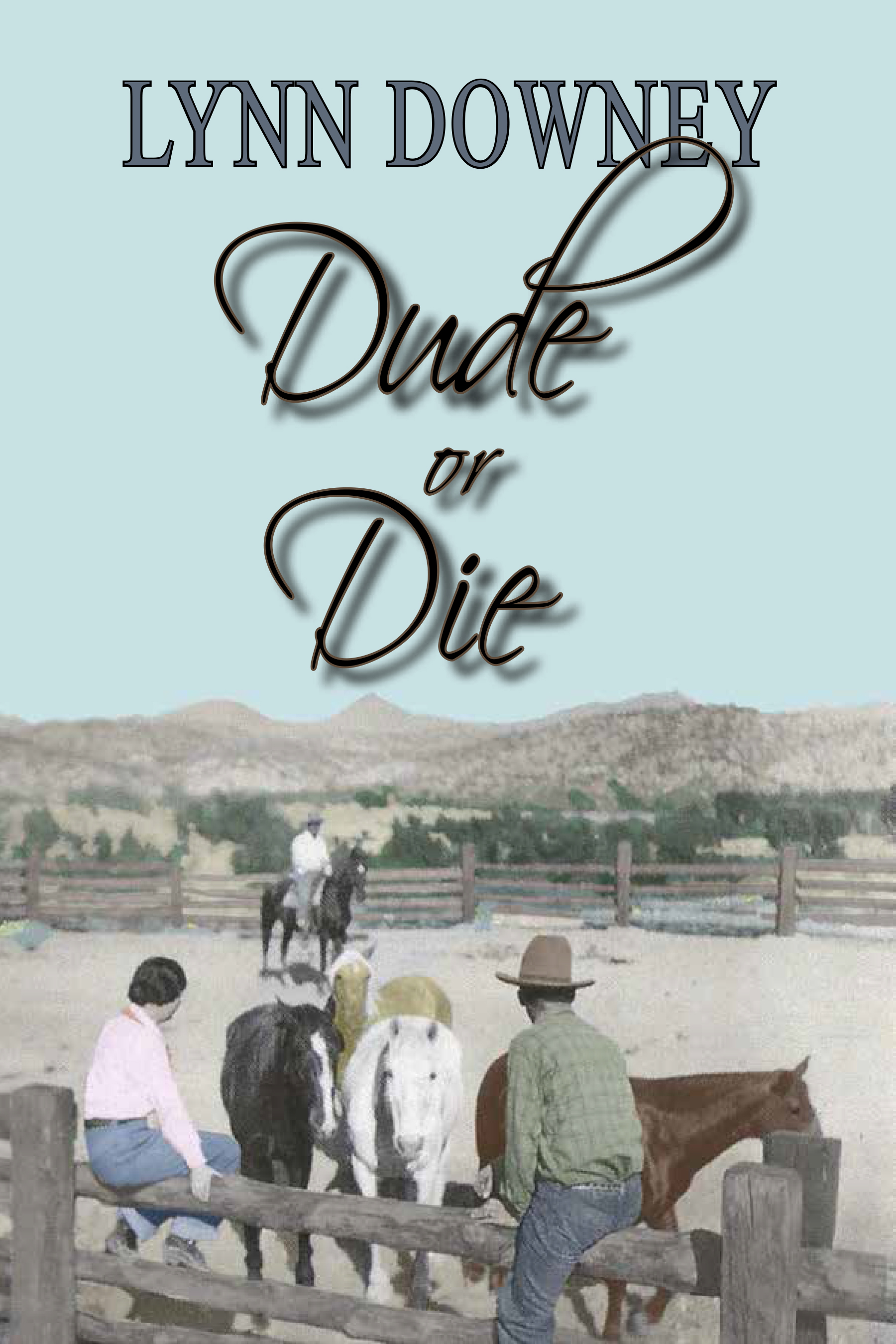
It’s 1954, and San Francisco writer Phoebe Kelley is enjoying the success of her first novel, Lady in the Desert. When Phoebe’s sister-in-law asks her to return to Tribulation, Arizona to help run the H Double Bar Dude Ranch, she doesn’t hesitate. There’s competition from a new dude ranch this year, so the H Double Bar puts on a rodeo featuring a trick rider with a mysterious past. When accidents begin to happen around the ranch, Phoebe jumps in to figure out why, and confronts an unexpected foe. And a man from her own past forces her to confront feelings long buried. Dude or Die is the second book in the award-winning H Double Bar Dude Ranch series.
She was the Historian for Levi Strauss & Co. in San Francisco for 25 years. Her adventures as ambassador for company history took her around the world, where she spoke to television audiences, magazine editors, and university students, appeared in numerous documentaries, and on The Oprah Winfrey Show. She wrote many books and articles about the history of the company and the jeans, and her biography, Levi Strauss: The Man Who Gave Blue Jeans to the World, won the Foreword Reviews silver INDIE award.
Lynn got interested in dude ranches during her time at Levi’s. Her debut historical novel, Dudes Rush In, is set on an Arizona dude ranch in the 1950s; Arizona because she’s a desert rat at heart, and the 1950s because the clothes were fabulous.
Dudes Rush In won a Will Rogers Medallion Award, and placed first in Arizona Historical Fiction at the New Mexico-Arizona book awards. The next book in this series, Dude or Die, was released in 2023. And just for fun, Lynn wrote a screenplay based on Dudes Rush In, which is currently making the rounds of reviewers and competitions.
She pens short stories, as well. “The Wind and the Widow” took Honorable Mention in the History Through Fiction story contest, and “Incident at the Circle H” was a Finalist for the Longhorn Prize from Saddlebag Dispatches. The story “Goldie Hawn at the Good Karma Café,” won second place in The LAURA Short Fiction contest from Women Writing the West, and is based on her experiences in a San Francisco religious cult in the 1970s. (That will be another book one of these days.)
Lynn’s latest nonfiction book is American Dude Ranch: A Touch of the Cowboy and the Thrill of the West, a cultural history of the dude ranch. It was reviewed in The Wall Street Journal, True West, Cowgirl, and The Denver Post, and was a Finalist for the Next Generation INDIE Award in Nonfiction. Kirkus Reviews said the book is “…deeply engaging and balances accessible writing style with solid research.”
When she’s not writing, Lynn works as a consulting archivist and historian for museums, libraries, cultural institutions, and businesses. She is the past president of Women Writing the West, a member of the Western Writers of America, and is on numerous boards devoted to archives and historic preservation.
Lynn lives in Sonoma, California, where she sometimes makes wine from the Pinot Noir grapes in her back yard vineyard.

































 MJ Porter