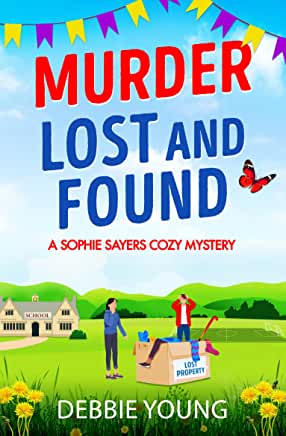
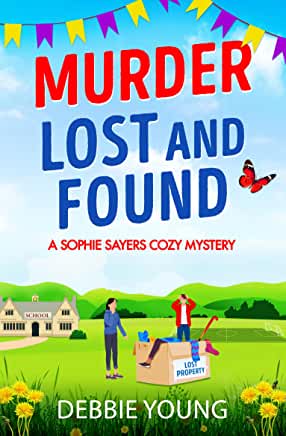
Sophie Sayers is ready for a glorious summer, but when a dead body is found in the village school’s lost property cupboard the summer holidays take an unexpected turn.
Even more shocking is when the body goes missing. Without a body, the police refuse to investigate. That’s just not good enough.
Sophie is determined to get to the bottom of the mystery. She needs to find out who has died and nab the culprit if she’s going to save the village school from the threat of closure.
My Review
Murder Lost and Found continues the Sophie Sayers Cosy Mysteries.
It’s the summer holidays, the school is empty of children, but while the caretaker and office manager try to ensure the school is prepared for the start of term, strange happenings take place.
I really enjoy this collection of stories. They’re light-hearted and a quick, pacy read, and I felt this one was particularly strong with the mystery of the lost property cupboard and the strange notes, making poor Sophie doubt herself, even while she contends with change at Horace’s bookshop.
A fun and entertaining read. Bring on book 8.
My thanks to Netgalley and the publisher for my review copy.
Debbie Young is the much-loved author of the Sophie Sayers and St Brides cosy crime mysteries. She lives in a Cotswold village where she runs the local literary festival, and has worked at Westonbirt School, both of which provide inspiration for her writing. She is bringing both her series to Boldwood in a 13-book contract. They will be publishing several new titles in each series and republishing the backlist, starting in September 2022.
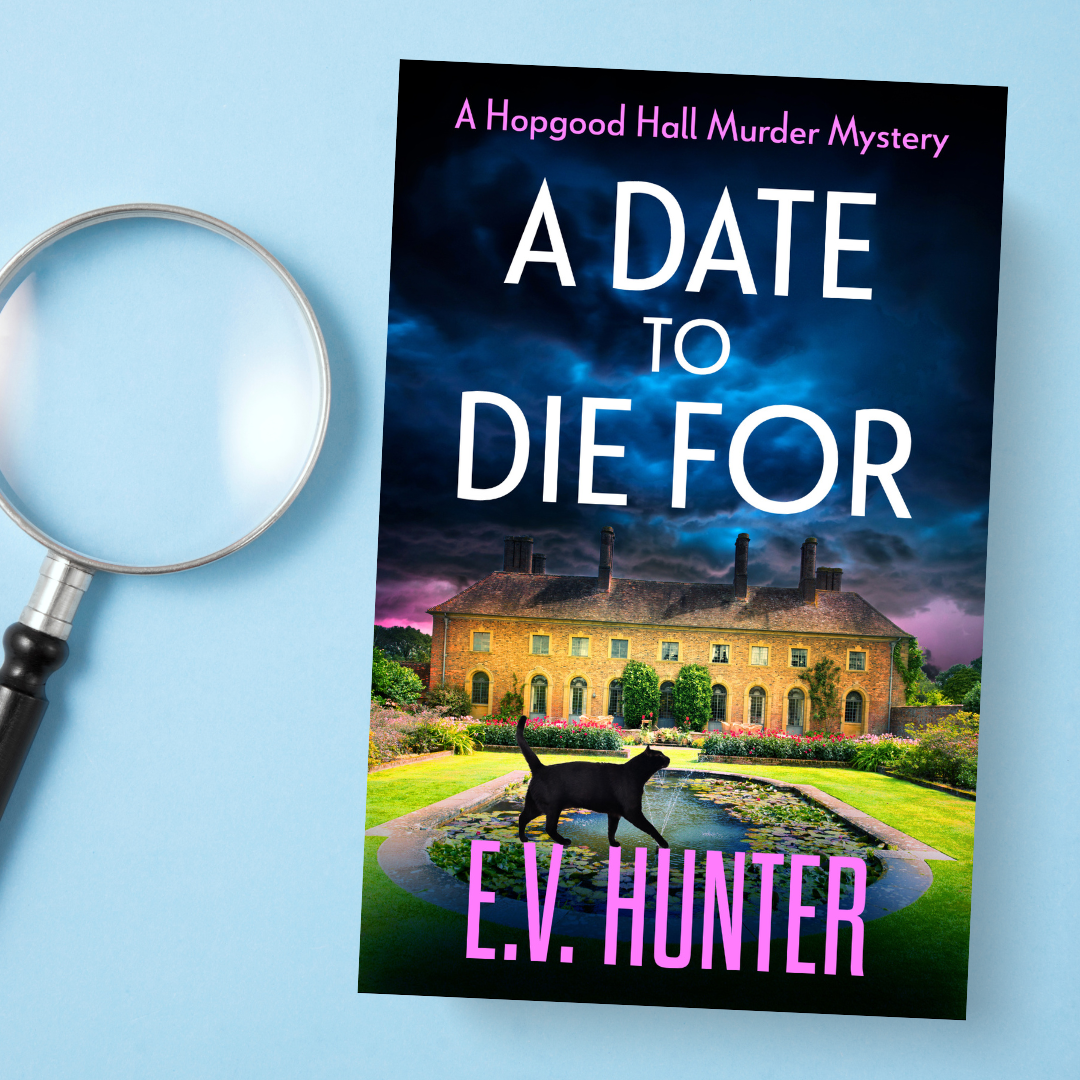
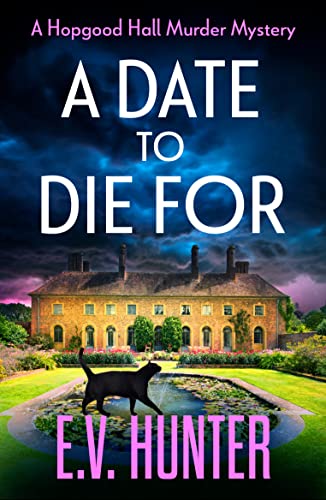
The start of a brand-new Cozy Crime series! Welcome to Hopgood Hall.
An unlikely duo…
When investigative journalist, Alexi Ellis, falls victim to cutbacks, she and Cosmo, her anti-social feral cat, head for beautiful Hopgood Hall, where they plan to lick their wounds in the boutique hotel run by her old friends, Cheryl and Drew Hopgood.
A missing woman…
But when she arrives Alexi discovers Cheryl and Drew both distraught. Their close friend, Natalie Parker, who recently settled in the area, has gone missing. Alexi’s sure the woman has just taken a trip somewhere, but she still has a nose for a story and agrees to look into it.
A case to solve!
So too does ex-Met Police detective turned private eye, Jack Maddox. Natalie Parker had been using his sister’s online dating agency and Jack needs to find her before his sister’s business is ruined.
Reluctantly, Alexi, Jack – and Cosmo! – join forces to find out what happened to Natalie. But soon they discover secrets that someone desperately wants to make sure are never revealed!
A Date to Die For by E V Hunter is a fast-paced, modern-day cosy mystery.
The two main characters, well three if we include our side-kick, Cosmo, the cat, are well-sketched. Alexi has run away from her old life in the city to her friends in the country. Jack already has a new life in the country. They’re both city bods, suddenly faced with the world of equestrian shenanigans; one a journalist and one an ex-police officer working as a private investigator. And Cosmo, is well, Cosmo. He’s an unusual cat who likes to travel and has no problem being on a leash.
The author has such an engaging writing style. I actually couldn’t believe how quickly I read the pages, the mystery burbling away as the point of view switches between the two main characters so that the reader gets to know them and begins to unravel the mystery of the disappearance of Natalie, the woman who ran a local flower delivery company, but who hasn’t been seen for days.
Events take a slightly darker turn as the story progresses. The mystery itself is well-developed, and while there is one particular scene that might have every reader shouting, ‘No, don’t do that,’ I found the resolution to be satisfying and twisty enough that I’d never have guessed it.
A twisty, tightly-plotted cosy mystery, with a fabulous writing style. Very enjoyable.
Meet the Author
E.V. Hunter has written a great many successful regency romances as Wendy Soliman and revenge thrillers as Evie Hunter. She is now redirecting her talents to produce cosy murder mysteries. For the past twenty years she has lived the life of a nomad, roaming the world on interesting forms of transport, but has now settled back in the UK.
‘It’s not a fair world I’m afraid. Beauty or fortune carries the day. You have the beauty and I the fortune, so there’s every chance we’ll succeed’
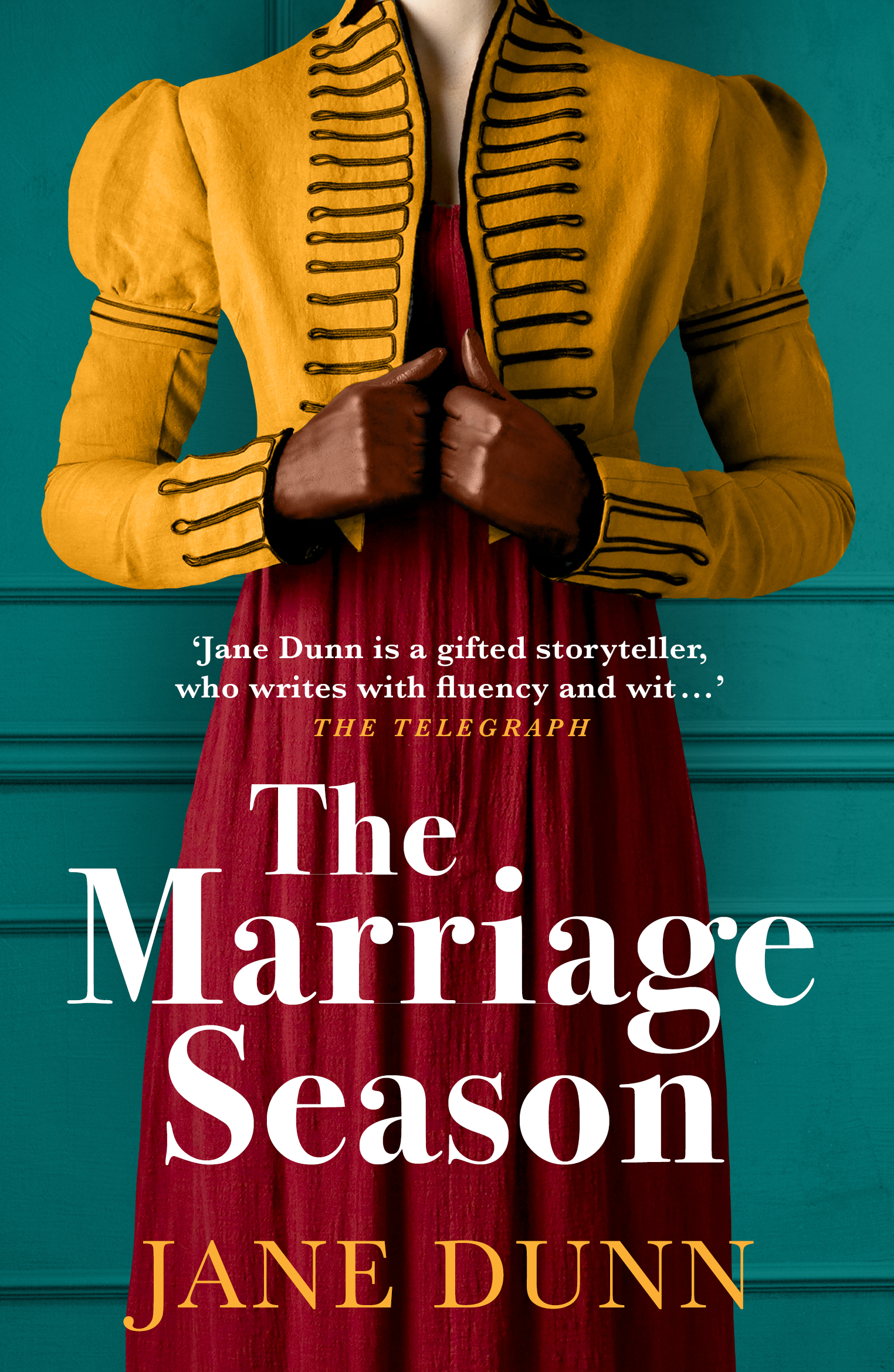
In Regency England, marriage is everything. For young widow Sybella Lovatt, the time has come to find a suitable husband for her sister and ward Lucie. Male suitors are scarce near their Wiltshire estate, so the sisters resolve to head to London in time for The Season to begin.
Once ensconced at the Mayfair home of Lady Godley, Lucie’s godmother, the whirl of balls, parties and promenades can begin. But the job of finding a husband is fraught with rules and tradition. Jostling for attention are the two lords – the charming and irresistible Freddie Lynwood and the preternaturally handsome Valentine Ravenell, their enigmatic neighbour from Shotten Hall, Mr Brabazon, and the dangerous libertine Lord Rockliffe, with whom the brooding Brabazon is locked in deadly rivalry.
Against the backdrop of glamorous Regency England, Sybella must settle Lucie’s future, protect her own reputation, and resist the disreputable rakes determined to seduce the beautiful widow. As the Season ends, will the sisters have found the rarest of things – a suitable marriage with a love story to match?
The Marriage Season by Jane Dunn is a delightful Regency romance that’s a little different to similar tales I’ve read, for the story is not just of a young woman trying to find a husband but of a widow deciding if she is perhaps prepared to love again, and her small son, James, or Jim as he likes to be called.
As much as Lucie and Sybella are fabulous creations, as are the men they encounter, it is little Jim and his love of ‘prancers’ that truly steals the show, and why not? That said, the story of Lucie and Sybella is delightful and well-told. Yes, it contains the twisting storylines we might expect, but the author has also littered the narrative with some delightful, period-specific words, which make the story really sparkle. And it’s not just young Jim and his roguish words that bring that charm.
I really adored The Marriage Season. Yes, it was fairly obvious what was going to happen, but that’s not truly the charm of the story but rather the detours the reader is taken on along the way, and of course, young Jim and his love of prancers is a true delight.
Meet the author
Jane Dunn is an historian and biographer and the author of seven acclaimed biographies, including Daphne du Maurier and her Sisters and the Sunday Times and NYT bestseller, Elizabeth & Mary: Cousins, Rivals, Queens. She comes to Boldwood with her first fiction outing – a trilogy of novels set in the Regency period, the first of which is to be published in January 2023. She lives in Berkshire with her husband, the linguist Nicholas Ostler.
The brand new instalment in bestselling author T. A. Williams’ Armstrong and Oscar cozy mystery series!
A brand new cozy crime series set in gorgeous Tuscany…It’s murder in paradise!
Murder in broad daylight…
When millionaire magnate, Rex Hunter is found with his head bashed in on the eighth hole of his prestigious golf and country club in beautiful Chianti, it’s a clear case of murder. Hunter was rich and successful and the envy of many, so retired DCI Dan Armstrong thinks the case will be a hole in one to solve….
A despised victim…
But as Dan and his trusty sidekick Oscar begin to dig deeper into Hunter’s lifestyle, they discover a man despised by many. A renowned womaniser, ruthless boss and heartless family man, it seems no one is particularly sorry to see Hunter dead. And the list of possible suspects is endless…
A murderer covering their tracks.
Dan is determined to catch this clever killer, but it seems every new lead brings another dead end. Will this be one case Dan and his canine companion won’t solve?
Murder in Chianti is the second book in the Armstrong and Oscar series of cosy crime stories set in modern-day Italy.
I thoroughly enjoyed book 1, and book 2 is even better. Now that Dan is living in Tuscany and is known as someone the local police can call on for assistance, the story can focus much more on the mystery to be solved.
And what a mystery this one is. For ages, it seemed as though no resolution could ever be found. Everything Armstrong and Oscar uncovered contradicted something else they already knew, and wow, there are many characters that the reader could suspect of the foul deed. There were several ‘big reveal’ moments, and when the ‘big reveal’ moment finally arrived for real, I was annoyed that I’d not thought of it before. After all, and looking back, the clues were certainly there, but very well concealed.
A thoroughly entertaining and well-plotted cosy mystery. Highly recommended.
My thanks to Netgalley and the publisher for my review copy.
T A Williams is the author of over twenty bestselling romances for HQ and Canelo and is now turning his hand to cosy crime, set in his beloved Italy, for Boldwood. The series will introduce us to retired DCI Armstrong and his labrador Oscar and the first book, entitled Murder in Tuscany, will be published in October 2022. Trevor lives in Devon with his Italian wife.
“Go out and tell all those you meet, Caledon has risen. Caledon will be protected and defended. And to you who would cause her harm, be prepared. A new fight has come.”
After the destruction of the Jacobite forces at Culloden, Scotland is divided, vulnerable and leaderless, with survivors from both sides seeking to make sense of the battles they have fought against their fellow Scots.
James Og flees Drumossie, seeking the protection of his uncle’s house in Sutherland. It is here that James learns that the Northern Highlands hold a secret power only he can wield: Caledon. When Ensign John Mackay begins hunting Og’s family, James realises he must harness this power to defeat the enemies of Scotland.
But, as the ageless Caledon awakes, so too does an ancient evil. When it allies with Mackay, the small Clan of Caledon faces enemies at every turn, discovering that even those closest to them may seek to destroy them.
Caledon is an intriguing work of historical fantasy set in Scotland following the battle of Culloden.
The narrative revolves around six main characters, switching between points of view, and is centred around family loyalty, distrust and the war raging between the Hanoverians and the Stuarts. There are also a few star-crossed lovers, and sadly, not everyone will get the happy ending they deserve, even with the aid of the mysterious Caledon.
With its supernatural elements it offers something a little different as the Clan of Caledon learn to trust their abilities while all those around them seek their destruction.
An enjoyable read and one sure to appeal to those with a love of a Scottish setting.
Meet the author
Virginia grew up in Orkney, using the breath-taking scenery to fuel her imagination and the writing fire within her. Her favourite genres to write are fantasy and historical fiction, sometimes mixing the two together. She enjoys swashbuckling stories such as The Three Musketeers by Alexandre Dumas and is still waiting for a screen adaption that lives up to the book!
When she’s not writing, Virginia is usually to be found teaching music. She believes wholeheartedly in the power of music, especially as a tool of inspiration. She also helps out with the John o’ Groats Book Festival which is celebrating its 4th year.
She now lives in the far-flung corner of Scotland. A doting spaniel-owner to Orlando and Jess, Virginia soaks up in inspiration from the landscape as she ventures out with her canine companions.
She loves cheese, music, and films, but hates mushrooms.
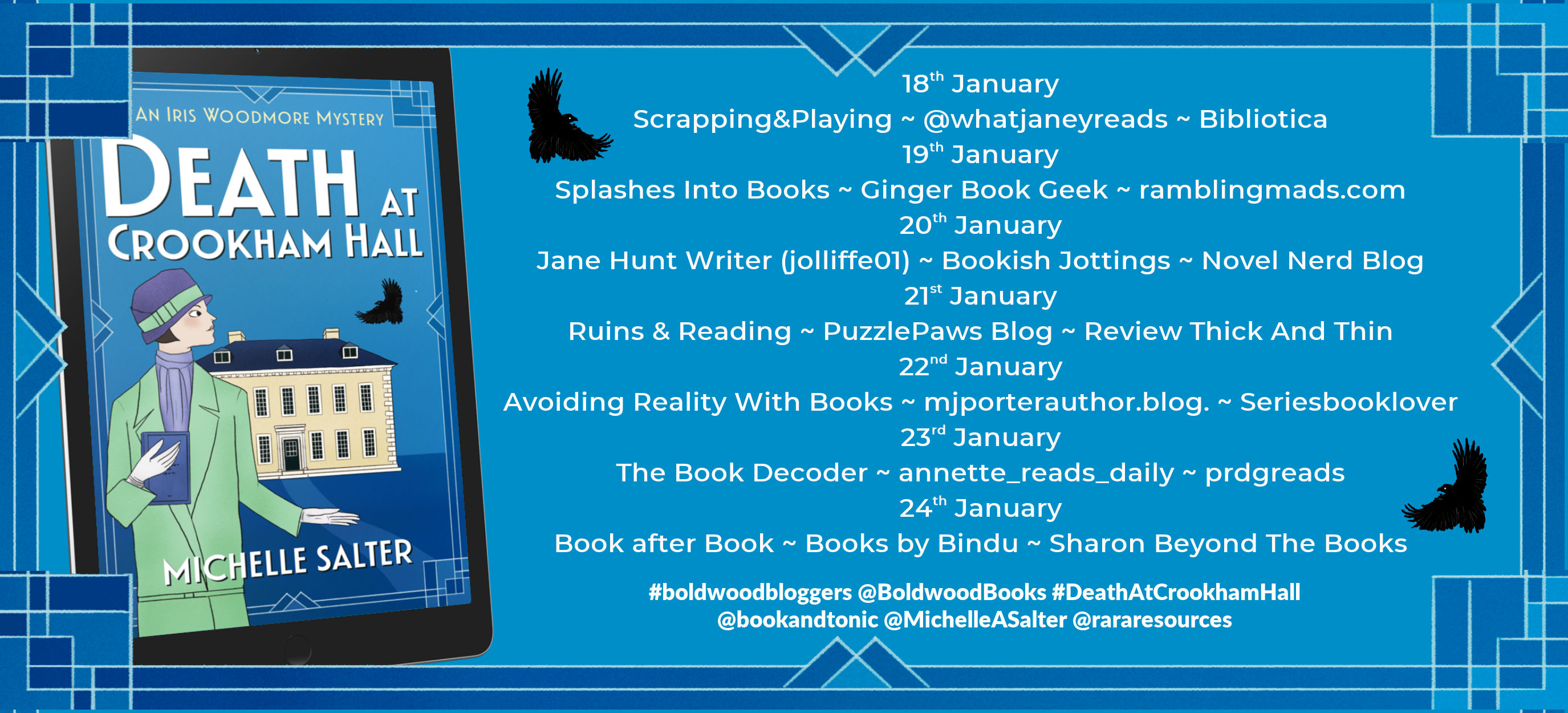
A fatal jump. A missing suffragette. An inexplicable murder.
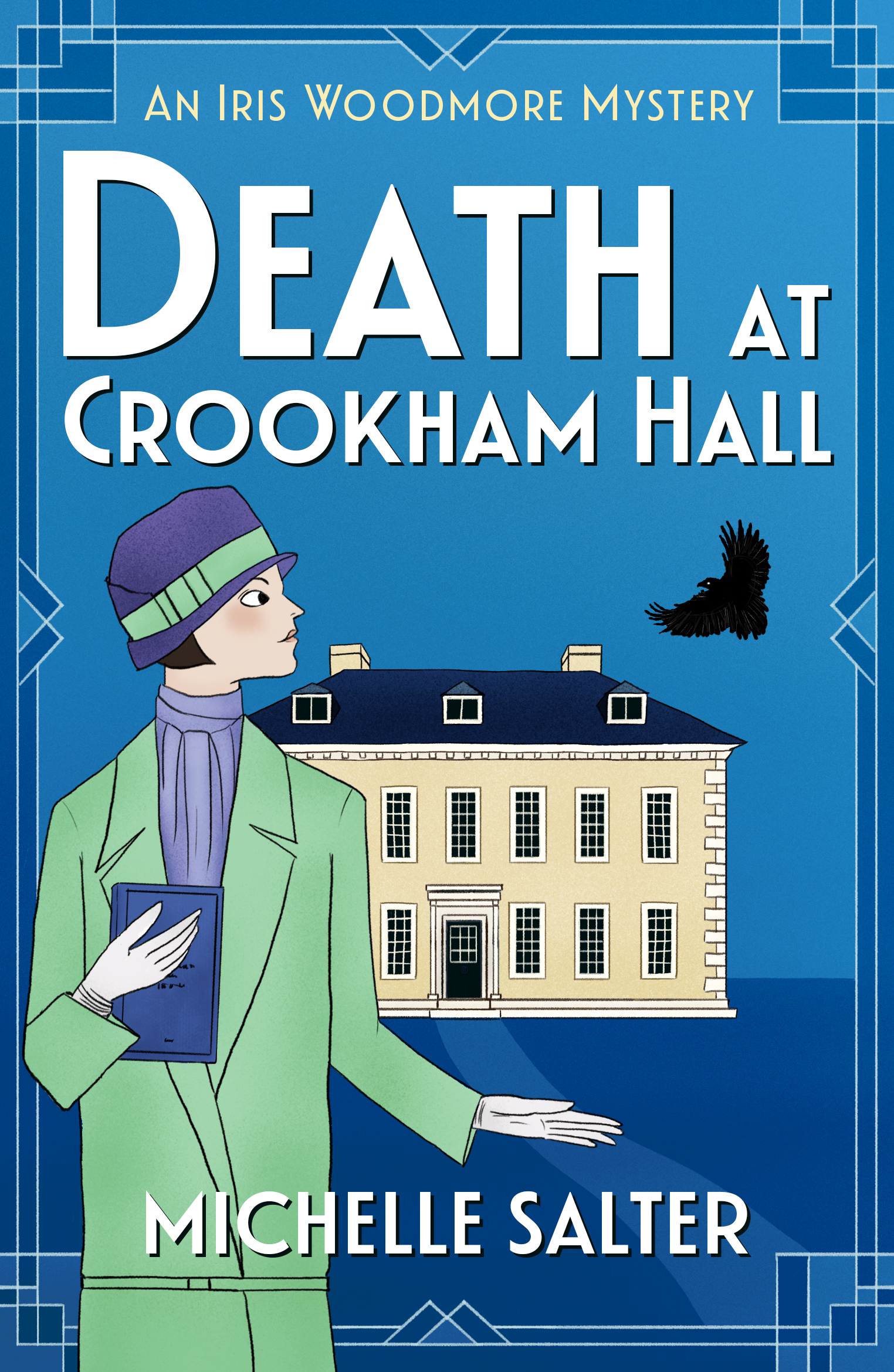
London, 1920. When she catches news of a big story, reporter Iris Woodmore rushes to the House of Commons. But it’s a place that holds painful memories. In 1914, her mother died there when she fell into the River Thames during a daring suffragette protest. But in the shadow of Big Ben, a waterman tells Iris her mother didn’t fall – she jumped.
Iris discovers that the suffragette with her mother that fateful day has been missing for years, disappearing just after the protest. Desperate to know the truth behind the fatal jump, Iris’s investigation leads her to Crookham Hall, an ancestral home where secrets and lies lead to murder…
Death at Crookham Hall is an incredibly well-written historical mystery set in 1920, both in London and Walden.
Our intrepid young report, Iris, finding work as a reporter for the local newspaper, begins to discover much she doesn’t know about her mother’s untimely death following a visit to the House of Parliament.
Iris is a great character, modern but not too modern – wearing trousers is fine, but wearing a dress short enough to show her thighs is too shocking – and she finds herself desperate to gather together the unknown strands of her mother’s death.
This is a really well-written story, interspersed with fascinating tit-bits of information both about the suffragettes and their sister organisation, the suffrage societies, and where the focus is very much on the women of their time, from the lady to the laundry-maid. It’s a very compelling tale, on occasion, fast-paced. Everything Iris does brings her some new information, and her role as a reporter means she gets to interview all of the main suspects without the narration feeling forced.
The resolution of the mystery feels particularly well constructed, and I just thoroughly enjoyed the story. A fabulous, well-written, mystery that holds all the promise of much more to come for young Iris and her fellow reporter, as well as the local policeman, Ben, and her friend, Alice, in Walden.
Meet the author
Michelle Salter is a historical crime fiction writer based in northeast Hampshire. Many local locations appear in her mystery novels. She’s also a copywriter and has written features for national magazines. When she’s not writing, Michelle can be found knee-deep in mud at her local nature reserve. She enjoys working with a team of volunteers undertaking conservation activities.
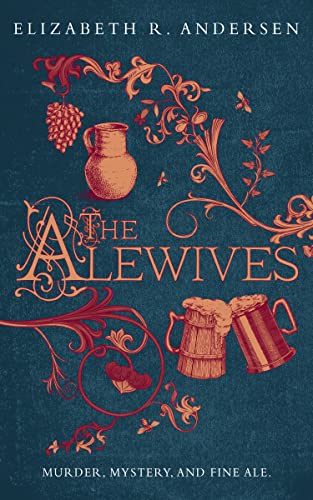
Gritta, Appel, and Efi managed to survive the Black Death, only to find that they are in desperate need of money. With limited options and lots of obstacles, they band together to become alewives – brewing and selling ale in the free Alsatian town of Colmar. But when an elderly neighbor is discovered dead in her house, the alewives cannot convince the sheriff and the town council that her death wasn’t an accident, it was murder. As the body count piles up, the ale flows and mystery is afoot!
Set in the tumultuous years after the most devastating pandemic the world has ever experienced, The Alewives is a playful romp through a dark time, when society was reeling from loss and a grieving population attempted to return to normal, proving that with the bonds of love, friendship, and humor, the human spirit will always continue to shine.
The Alewives is a fantastically well-written murder mystery set in the immediate aftermath of the Black Death, with delightful characters and a sinister murderer and thief, at the heart of all the problems. Set in the tannery area of Colmar, something smells bad.
The three main characters of Gritta, Appel, and Efi are all glorious creations – Grita with her useless husband and horde of children (she had 12, you see), Appel with her mysterious nighttime activities, and young Efi, who has the sense of a young kid goat at the beginning of the tale.
This story is immersive and filled with just enough tension and humour to make even a story about those who survived the Black Death an absolute delight to read. The humour is well constructed, the antics of the three women, acting a little outside the ‘law’ in a deeply patriarchal society that doesn’t allow women to brew their own ale for profit, artfully created, and even the Friar, Wikerus, is a sympathetic character, in the end. The three women are put upon. Society is against them, as is the sheriff (all the male characters are dismissive of the women, but they get on with it, doing all they can to circumnavigate the obstacles placed in their path), and the church, and just about everyone else, but they triumph.
The mystery itself is really well constructed, as are the red herrings. I didn’t know who the culprit(s) (no spoilers here) were until the big reveal.
A short, sharp, snappy, hugely entertaining, medieval mystery that portrays the realities of life at the time, with just the right amount of humour to make it thoroughly entertaining. A well-deserved 5/5 from me!
Meet the Author
Elizabeth R. Andersen’s debut novel, The Scribe, launched in July of 2021. Although she spent many years of her life as a journalist, independent fashion designer, and overworked tech employee, there have always been two consistent loves in her life: writing and history. She finally decided to do something about this and put them both together.
Elizabeth lives in the Seattle area with her long-suffering husband and young son. On the weekends she usually hikes in the stunning Cascade mountains to hide from people and dream up new plotlines and characters.
– Join Elizabeth’s monthly newsletter and receive the first two chapters of The Scribe for free. Sign up at https://www.elizabethrandersen.com
– Find photos of hikes and daily author life at Elizabeth’s Instagram: @elizabethrandersen
– Follow Elizabeth on Twitter for nerdy medieval history facts: @E_R_A_writes
Casual antique dealer Jake Patch picks up an unusual object and can’t put it down. Literally. His find is a time travel device, and he hatches a bold plan to acquire objects from the past and sell them at modern day prices. But when the mysterious Infinity Glass leaves Patch stranded in a dangerous past, it falls to his teen daughter Cass to save him.
With hints of The Time Traveller’s Wife and Back to the Future and a smattering of Lovejoy, Patches through Time will send you spinning headlong into the past, then spit you back into the twenty-first century.
This book contains occasional profanities. Trigger warning: bereavement (parent, spouse).
Patches Through Time is a really enjoyable novel. It hooked me from the beginning, with its premise of limited and location-specific time travel.
Patch is a great character, but the story really comes to life with the point of view switch to Cass, and having visited a handful of places in the distant past, much of the narrative revolves around events in war-torn Hastings in the early 1940s. The author does an excellent job of reconstructing the past locations, and the characters that Patch and Cass meet there are believable and all bring something new to the story.
I’m not sure if the plan is to write a sequel, but if it is, then, I’ll happily read it, as I think there’s much more that Cass and Patch can do with their time travelling device.
A thoroughly enjoyable novel.
Meet the author
Sian Turner was born in Wales, but lives in East Sussex. She has recently started learning Welsh (and can categorically testify that Welsh is difficult).
She works as a part-time volunteer in her local RSPCA cat re-homing centre, from where she keeps adopting new family members (only one or two at a time).
Sian enjoys reading and reviewing some of the many truly amazing novels by Independent Authors, and she is secretary of her local writers’ group, Shorelink Writers.
A dead body. A hoard of forged banknotes. A gangster out for blood.
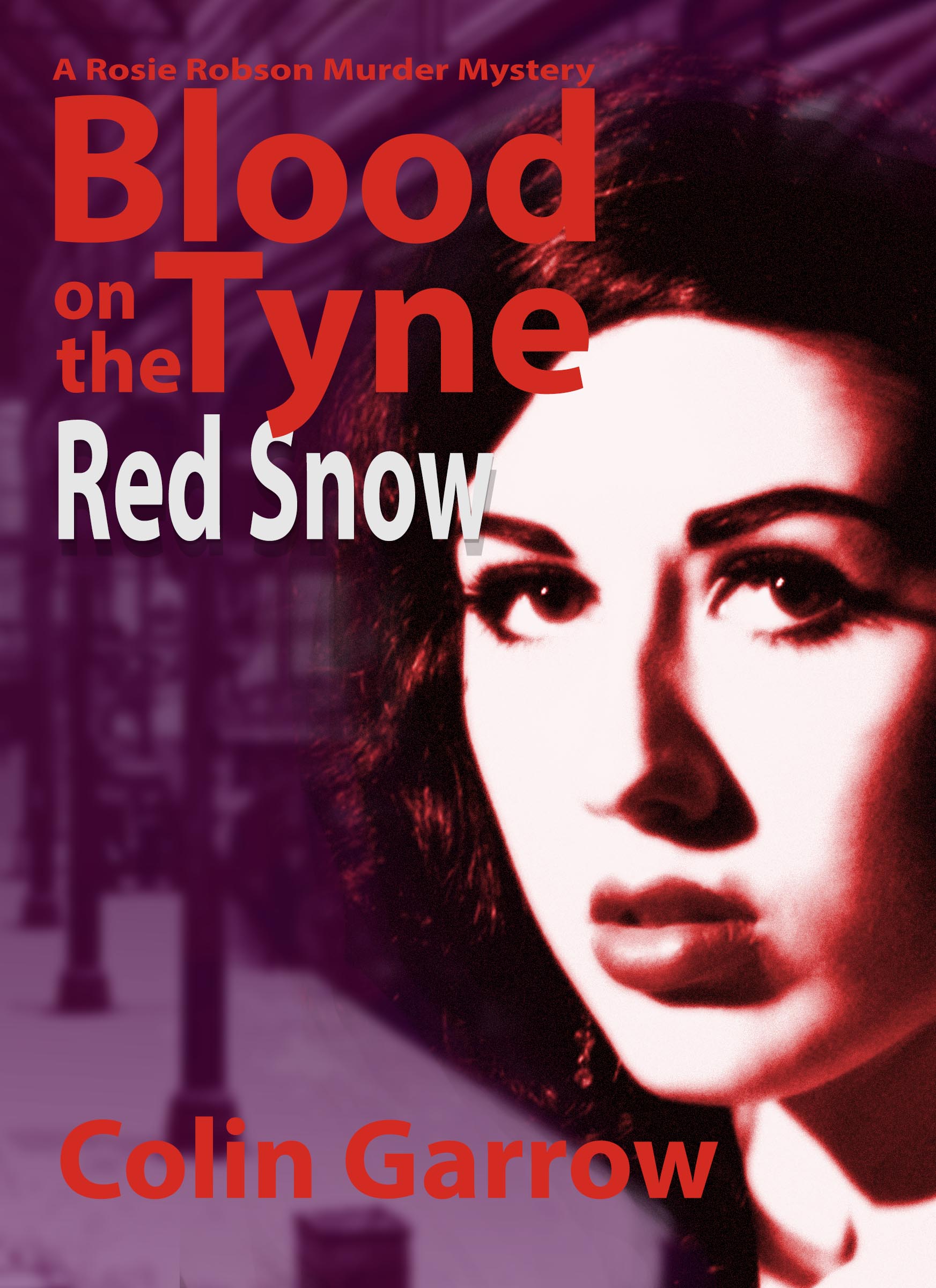
Newcastle, December 1955. Returning home after a weekend away, singer and amateur sleuth Rosie Robson discovers a man lying on a baggage trolley with his throat cut. After the police get involved, an attack on Rosie and her boss prompts Inspector Vic Walton to find a safe house for the pair. But the bad guys seem to be one step ahead of them and Rosie is forced to track down a possible witness to the murder in a bid to learn the truth. Can the canny crooner solve the mystery before a Newcastle gang boss catches up with her?
Set on Tyneside, Blood on the Tyne: Red Snow is book #3 in the Rosie Robson Murder Mysteries series.
Extract from: Blood on the Tyne: Red Snow by Colin Garrow (contains some strong language)
Having tracked down the train station porter to a Gateshead apartment, Rosie and Frankie question him about money he stole from the dead man’s pocket. Finally admitting his crime, the porter hands over the money. But a man in a trench coat is watching the building:
Frankie wandered into the kitchen while I counted the notes. Three hundred and thirty pounds. I looked up at the porter. ‘Not worth getting killed over, is it?’
He worked his mouth for a minute. ‘Ye’re sayin it belongs to that Danny Fisher, are ye?’
I nodded.
‘Fuck.’
‘Know him, do you?’
‘Only by reputation.’ He pointed to the money. ‘So are yous gonna give it him back?’
I laughed. ‘Don’t be daft. This’ll go to the police.’
Martin’s eyes widened. He stared at me. ‘But what if Fisher thinks Ah’ve still got it?’
I hadn’t considered what the consequences might be for Martin if Fisher did track him down. I studied the carpet for a moment, thinking. ‘If he didn’t suspect you’d nicked it, he’d have no reason to come visiting, would he?’
He glared at me. ‘But ye said,’ stabbing the air with a grubby finger, ‘ye said if Ah didn’t talk to yous, Ah’d have to deal with Fisher.’
I shook my head. ‘I implied that if we were able to find you, sooner or later he would too.’
His eyes almost popped out of his head. ‘Jezaz Christ. So, he might still turn up here, eh?’
‘He might. But if no-one saw you take the cash, there’s nothing to worry about.’ I looked hard at him. ‘No-one didsee you, did they?’ I’d dismissed the idea that Fisher might’ve seen something while he’d been standing by the bridge on the station platform. If he had seen the porter messing with the body, he’d have been here already, and we’d likely have another dead body to deal with.
‘Oh, Christ, man.’ Martin threw his hands up in the air. ‘When Ah found the money, Ah shook so much Ah could hardly walk. Ye could’ve driven a steam train up me arse and Ah’d not have noticed.’
I tried not to laugh. Resting a hand on his arm, I said, ‘Look. We’ll tell the police where we got it and they’ll probably come round to speak to you. If you’re worried about anything—’
Frank grabbed my shoulder. ‘We’ve got a problem, bonny lass.’
I followed him back into the kitchen. The man in the trench coat stood in the lane, looking up at the flat. Now though, he had two more men with him. Behind him, Maurice’s car had been pushed out of its hiding place.
‘Is that who I think it is?’
‘It’s not the fuckin Pied Piper, that’s for sure,’ said Frankie.
Back in the living room, I caught sight of Martin making for the front door.
‘I wouldn’t do that, Mr Sutherland,’ I called.
He turned and stared at me. ‘Well Ah’m not bloody stayin here to get me neck sliced open.’
‘No, and neither are we. Is there a fire escape?’
He paused. ‘Not from this building.’ He came back into the room. ‘If we could get onto the roof…’
‘The roof?’
‘Aye. The warehouse next door has a fire escape.’
Frankie pushed past me and opened the flat door. Me and Martin followed him. Gazing over the banister into the stairwell below, we peered into darkness. Everything seemed quiet.
‘D’you think—’
Frankie shushed me. Lowering his voice, he murmured, ‘There’s someone there.’
Turning to the porter, I whispered, ‘How do we get to the roof?’
I didn’t hear what Martin said, my attention focused on the shadowy figures sliding up the first flight of stairs towards us.
My Review
Blood on the Tyne: Red Snow by Colin Garrow is an exciting murder mystery set in and around Newcastle, Gateshead, Sunderland and Northumberland in 1955.
Many of the locations are familiar to me, and I could quite happily trace Rosie’s journey upon discovering a body at Newcastle train station on her return from York.
This really is a fast-paced tale of murder, mayhem, forgery and gangsters. Rosie is headstrong even when embroiled in something far beyond her control. She’s resourceful and determined to find out the truth and stay alive.
Surrounding her is a great cast of supporting characters, and the story takes some quite unexpected twists and turns before reaching its conclusion.
As might be expected, there is some foul language throughout the book, and the author has also done a great job of ensuring the Geordie accent is prevalent throughout. Readers will quickly come to ‘hear’ the characters as well as read about them.
An entertaining read.
Meet the Author
True-born Geordie Colin Garrow grew up in a former mining town in Northumberland and has worked in a plethora of professions including taxi driver, antiques dealer, drama facilitator, theatre director and fish processor. He has also occasionally masqueraded as a pirate. Colin’s published books include the Watson Letters series, the Terry Bell Mysteries and the Rosie Robson Murder Mysteries. His short stories have appeared in several literary mags, including: SN Review, Flash Fiction Magazine, The Grind, A3 Review, Inkapture and Scribble Magazine. These days he lives in a humble cottage in Northeast Scotland.
With his once thriving casino business now in ruins, Seb Stoker is certain about two things: One – he will rebuild bigger and better than ever. And two – someone will pay for torching his club.
But until that day comes, Seb has bigger things to worry about and a business deal that could make or break them all…
Sam Reynold knows Seb is out for revenge, and she’ll do anything she can to help him. But Sam has her own enemies and battles to fight – ones much closer to home.
With pressure mounting for both of them, tensions run high.
Payback is the fourth book in the Allegiance series, but the third one I’ve read (I know, I know, I shouldn’t do that, but it’s book 1 I’ve not read, so I feel fairly up to speed now:). Payback picks up immediately after the events of book three (check out my review here) and is a deftly and tightly plotted sequel, taking into account each and every loose end from the previous book.
It’s fast-paced and well-written, ensuring the reader doesn’t have time to catch their breath as it tumbles towards its conclusion, with the main players seemingly unable to stay away from one another, as they intersect and react, sometimes with deadly consequences, in Birmingham of the 1990s.
This is not at all my ‘usual’ read, but Edie is such a fabulous writer, and while her characters are all, in some way or other, flawed or just downright horrible (and there are many of them who are, quite frankly, evil), I find the world she’s created to be hugely entertaining. I rushed to get to the end of the novel to find out how everything was going to play out. Will Payback come or will revenge go ‘wrong?’
Payback is not for those offended by violence or foul language, but it is a very well crafted novel, and I’m really looking forward to book 5, and seeing how the Allegiance series concludes.
Connect with Edie
Edie Baylis a successful self-published author of dark gritty thrillers with violent background settings. She lives in Worcestershire, has a history of owning daft cars and several motorbikes and is licensed to run a pub. She has signed a five-book deal with Boldwood and the first book in her new ganglit series, set in Birmingham, was published in January 2022.










































 MJ Porter