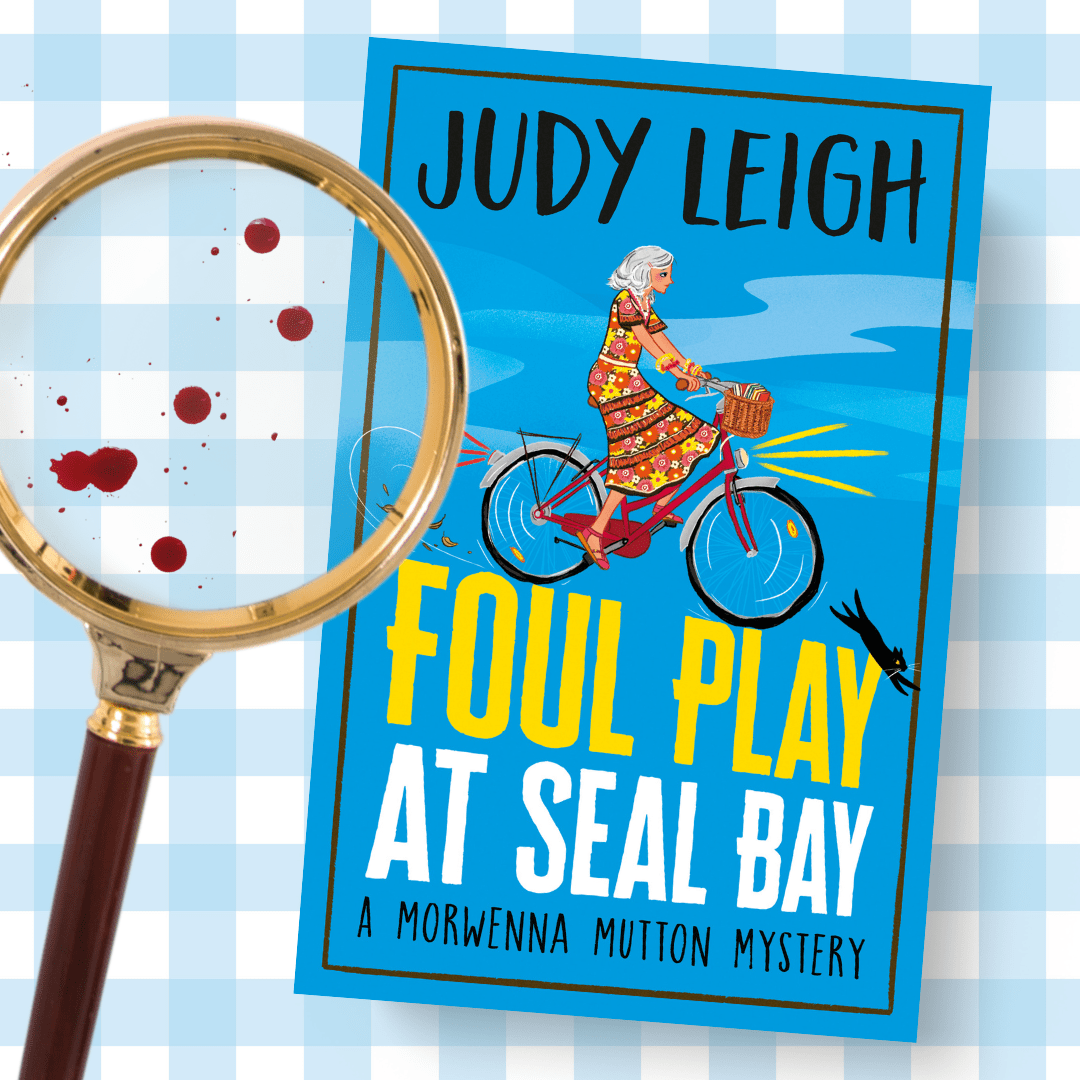
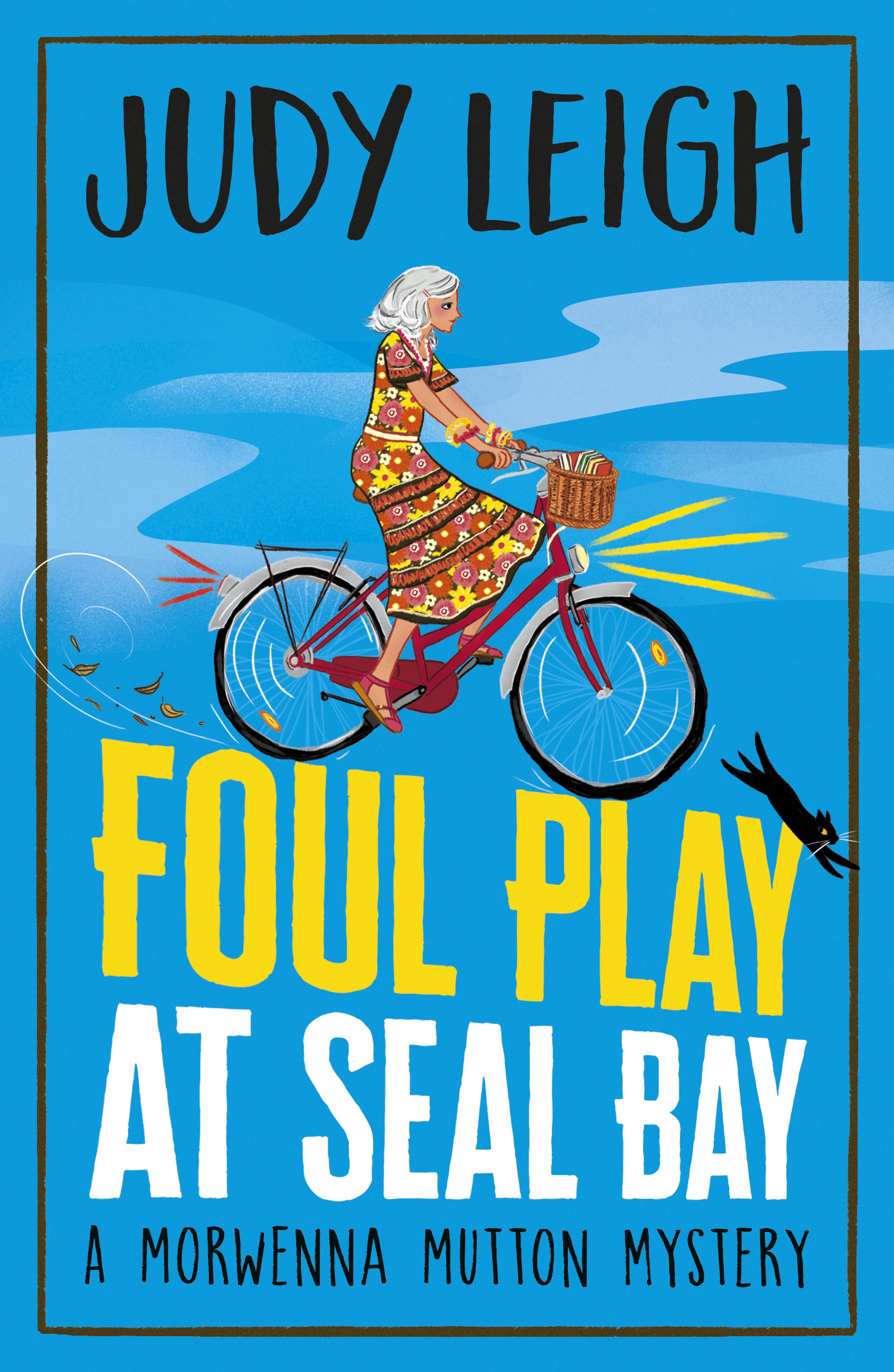
It was meant to be the start of quiet season in the sleepy Cornish village of Seal Bay, but not for sexagenarian librarian and wild swimming enthusiast Morwenna Mutton. Because when a local businessman is found on the beach with a bread knife is his back, bungling police officer DI Rick Tremayne is soon out of his depth. Morwenna knows it’s going to be down to her to crack the case.
The list of people the victim upset is long, the evidence is slight, and an arrest illusive. Morwenna has plenty to occupy her time what with ghostly goings-on at the library and skullduggery at her granddaughter’s school, but she could never resist a challenge. And even the most ruthless of murderers should quake at the sight of this amateur sleuth getting on her bike to track them down.
If you love Miss Marple and The Thursday Murder Club, then you’ll love The Morwenna Mutton mysteries.
Foul Play at Seal Bay is an intriguing cosy crime set in Cornwall, featuring our main character, Morwenna, who finds herself and her family embroiled in the murder investigation into who killed a local businessman.
Morwenna is a wild swimmer, never happier than when the bitingly cold sea works to clear her mind, which she uses to good effect to help her solve the mystery. She’s a fun character – with a rich and varied life and not at all what we might expect from our sexagenarian sleuth.
The small-town atmosphere is well-evoked, and I really enjoyed the mystery. I look forward to reading more in this series.
Meet the author
Judy Leigh is the USA Today bestselling author of The Old Girls’ Network and Five French Hens and the doyenne of the ‘it’s never too late’ genre of women’s fiction. She has lived all over the UK from Liverpool to Cornwall, but currently resides in Somerset.
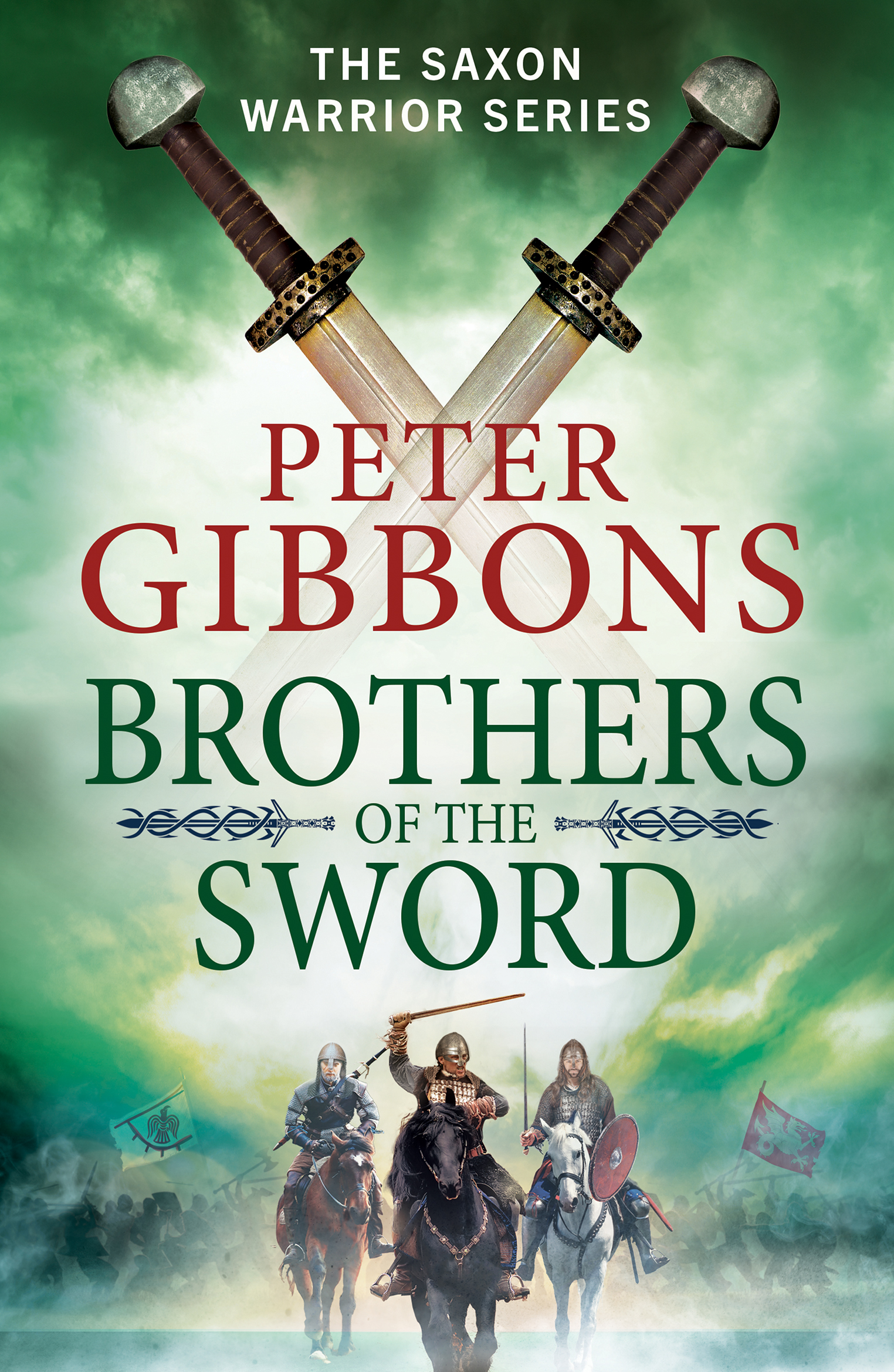
An epic battle where heroes fight and die to protect a Kingdom from Viking invasion…
991AD King Aethelred the Unready’s Kingdom of the English is threatened. Olaf Tryggvason and his fleet of Viking warships snap at the coastal edges like ravenous wolves, and Sweyn Forkbeard, King of the Danes, has landed in East Anglia with an army of battle-hardened warriors.
Ealdorman Byrhtnoth of Essex must stand against them faced with overwhelming odds, forging his legend in the blood of his deadly enemies.
By his side, his Thegn, Beornoth, a brutal warrior and savage Saxon fighter is torn between his need to protect his loved ones, and his duty to fight for his Lord.
As the Vikings raid and slaughter, Beornoth is forced to fight for the survival of his oath sworn brothers, his Lord, and the Kingdom itself when all roads lead to the fateful Battle of Maldon.
Can Beornoth protect his people and survive one of the most famous battles of the Viking Age?
A thrilling story, packed with war, vengeance and visceral combat.
Brothers of the Sword is the third book in the Saxon Warrior Series, which began with Warrior and Protector, and Storm of War set during the early 990s in Saxon England. Æthelred II is the king of the English, but the Viking raiders have begun to turn their eyes once more toward England. The second viking age is underway.
Beornoth is a man with divided loyalties, to his wife, his warriors and Ealdorman Byrhtnoth. His enemy, Olaf Tryggvason, has sworn vengeance against him, while Sweyn, king of Denmark, has also laid claim to parts of East Anglia and perhaps turned some of the English to his side as well. Worse, both enemies know of one another and might well be allies. Does the riddling contest that Beornoth loses to Sweyn portend what is to come? (I was pleased to have solved the riddles along with the characters:))
What follows is a blood drenched battle, between Vikings and the English, which, alas, is only ever going to have one outcome, but which ebbs and flows, as does the tide on Northey Island.
While the ending may never be in doubt (it can’t be, as it’s based on the surviving Battle of Maldon poem), Brothers of the Sword is sure to thrill readers as it reaches its blood-drenched finale.
Meet the Author
Peter Gibbons is a financial advisor and author of the highly acclaimed Viking Blood and Blade trilogy. He comes to Boldwood with his new Saxon Warrior series, set around the 900 AD Viking invasion during the reign of King Athelred the Unready. He originates from Liverpool and now lives with his family in County Kildare.
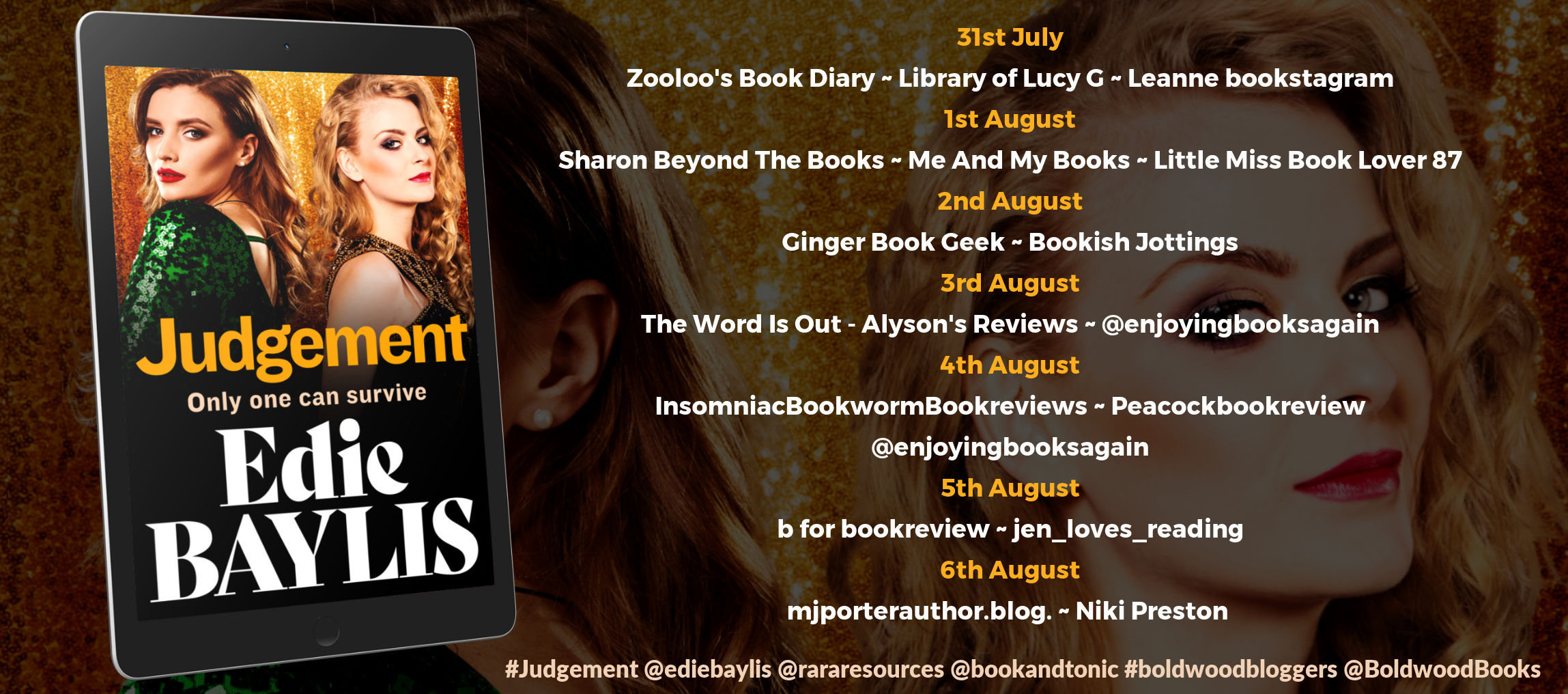
Samantha Reynold and Seb Stoker are looking forward to the future together. With all the recent trials and tribulations from the past seemingly over, their new life together looks brighter than ever…or does it?
Because unbeknownst to them both, danger is circling….
Marina Devlin wants to destroy her sister Samantha once and for all and will stop at nothing to have her revenge. And judgment day is looming. In this final encounter…only one can survive.
A gripping new gangland story perfect for fans of Kimberley Chambers, Heather Atkinson and Caz Finlay.
Judgement is book 5 in The Allegiance series. I’ve not read Book 1, but I’ve read all the subsequent books in the series. This is not at all my usual genre, but having read book 2, I was entirely hooked and have been enjoying the series ever since.
I really adore the tight plot lines and the fact that Edie so carefully lays the breadcrumbs and then leads the reader on. The premise for this one is that only one of the half-sisters can survive, and there are times when as despicable as Marina is, you’re not entirely sure you want it to be Samantha either, and that is the joy of this book and this set of characters. When I read book 2, I said that none of the characters is likeable, and they’re not – they don’t really have any redeeming qualities -supposed goodies or supposed baddies – they’re all up to no good. And yet at the same time, you can’t stop reading about them:)
A really fabulous series – even for those who wouldn’t usually read Gangland – such as me. Highly recommended. The storyline is tight and twisty, and the outcome is never assured. Great entertainment.
Edie Baylis a successful self-published author of dark gritty thrillers with violent background settings. She lives in Worcestershire, has a history of owning daft cars and several motorbikes and is licensed to run a pub. She has signed a five-book deal with Boldwood and the first book in her new ganglit series, set in Birmingham, was published in January 2022.
Can the Norse and the Scots exact their revenge over the mighty King Athelstan of the English?
AD937
After the slaughter field of Brunanburh, a defeated Olaf Gothfrithson of the Dublin Norse and Constantin of the Scots narrowly escaped with their lives. In their kingdoms, failure has left them demoralised and weak.
Olaf licks his wounds in Dublin, whilst Constantin and the Welsh kingdoms who defied King Athelstan, are once more forced to bend the knee. As Athelstan’s reputation grows stronger day by day, their need to exact revenge on the overmighty and triumphant Athelstan has never been greater.
Olaf sets his sights on reclaiming the lost kingdom of Jorvik only for tragedy to strike at the heart of England and a reluctant new King, Edmund steps into the fray.
While England mourns the death of their warrior king, her enemies gather on her borders and England stands alone against the might of the Norse, Welsh and Scots.
Can the new king be victorious and banish her enemies once and for all or will England, and its king lose all that’s been gained and succumb to a new pretender?
There’s no cover yet but I will share once I have it:)
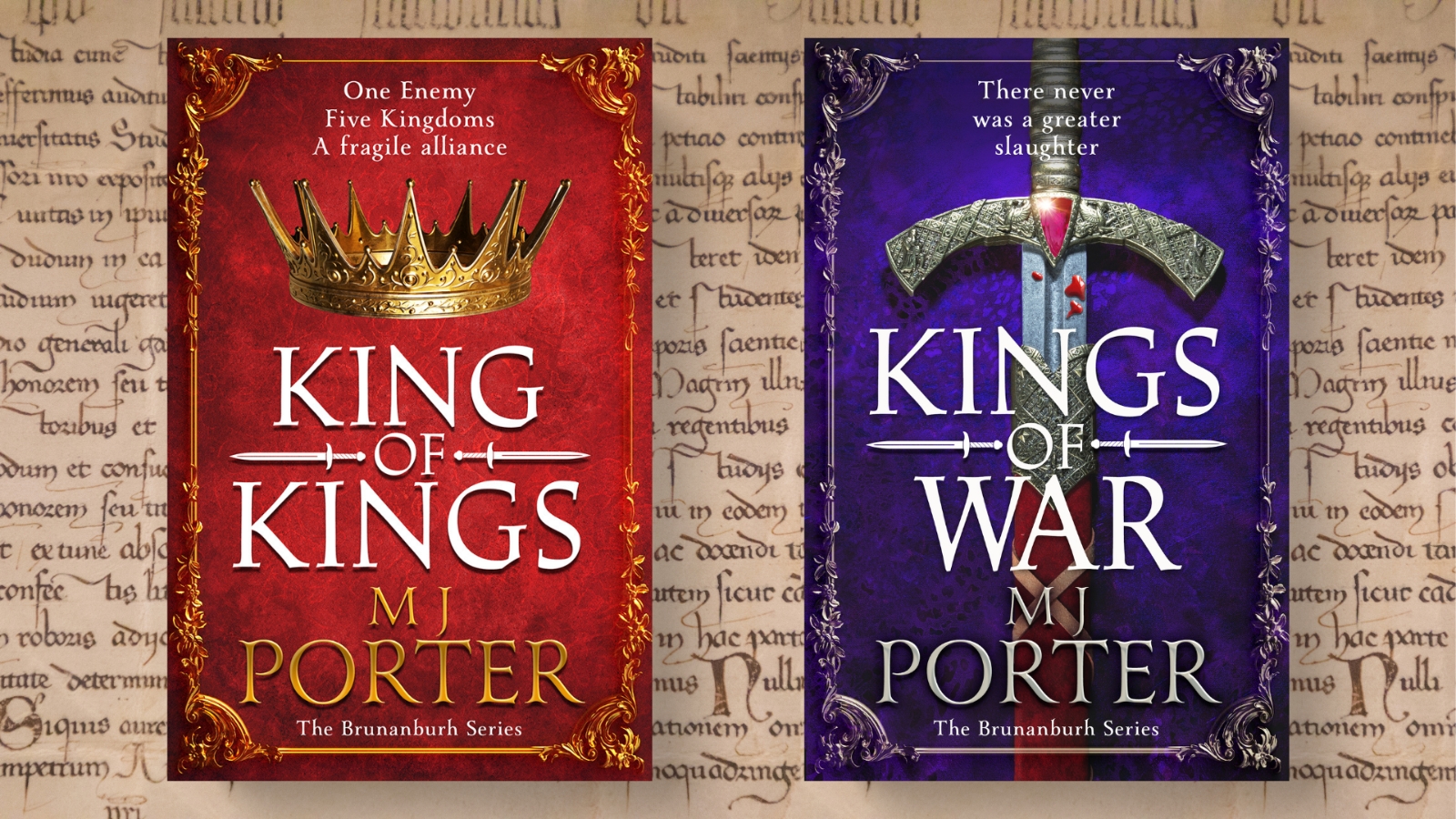
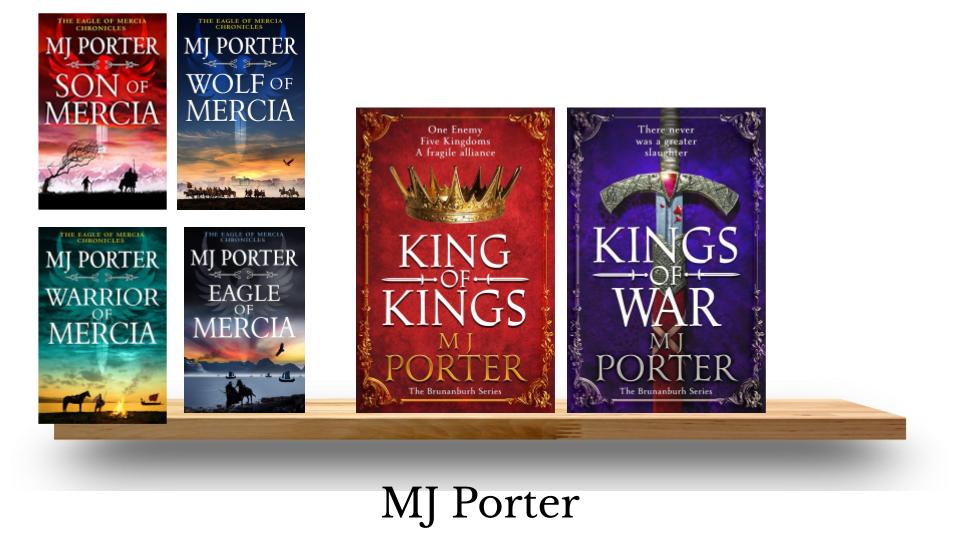
If you’ve not yet grabbed King of Kings and Kings of War then they are currently just 99p/£1.39 on Amazon UK and the equivalent worldwide. You can read about the series on my Brunanburh page.
I’m also asking my readers if they’d like to meet me virtually via a Zoom chat? If you think you might, then please complete the Google form. It’s just to see what readers would be interested in, their availability and timezones:) Nothing is set in stone yet.
A cozy crime series set in gorgeous Tuscany… It’s murder in paradise!
A lazy weekend in the country…
Dan Armstrong and the new love of his life, Anna, are heading to a hotel deep in the gorgeous Tuscan countryside for a long weekend, looking forward to some time away from the stresses of their day jobs. With the beautiful and historic city of Siena just around the corner, it promises to be relaxing and enjoyable. What could possibly go wrong?
A mutilated body…
But when a mutilated body is discovered in the hotel grounds Dan is called in to help with the investigation. But who or what could have been responsible for such a vicious attack? Was it the work of wild animals, or is there a brutal murderer at large?
A killer who cried wolf?
Dan knows he is dealing with a clever killer – whether two- or four-legged! And as he sets out to solve the case he begins to worry about his own loyal canine companion. Could Oscar be in more danger than any of the other hotel guests or is a murderer trying to cover their tracks?
It’s another case for Dan and Oscar to solve!
A gripping murder mystery series by bestselling author T.A. Williams, perfect for fans of Lee Strauss and Beth Byers.
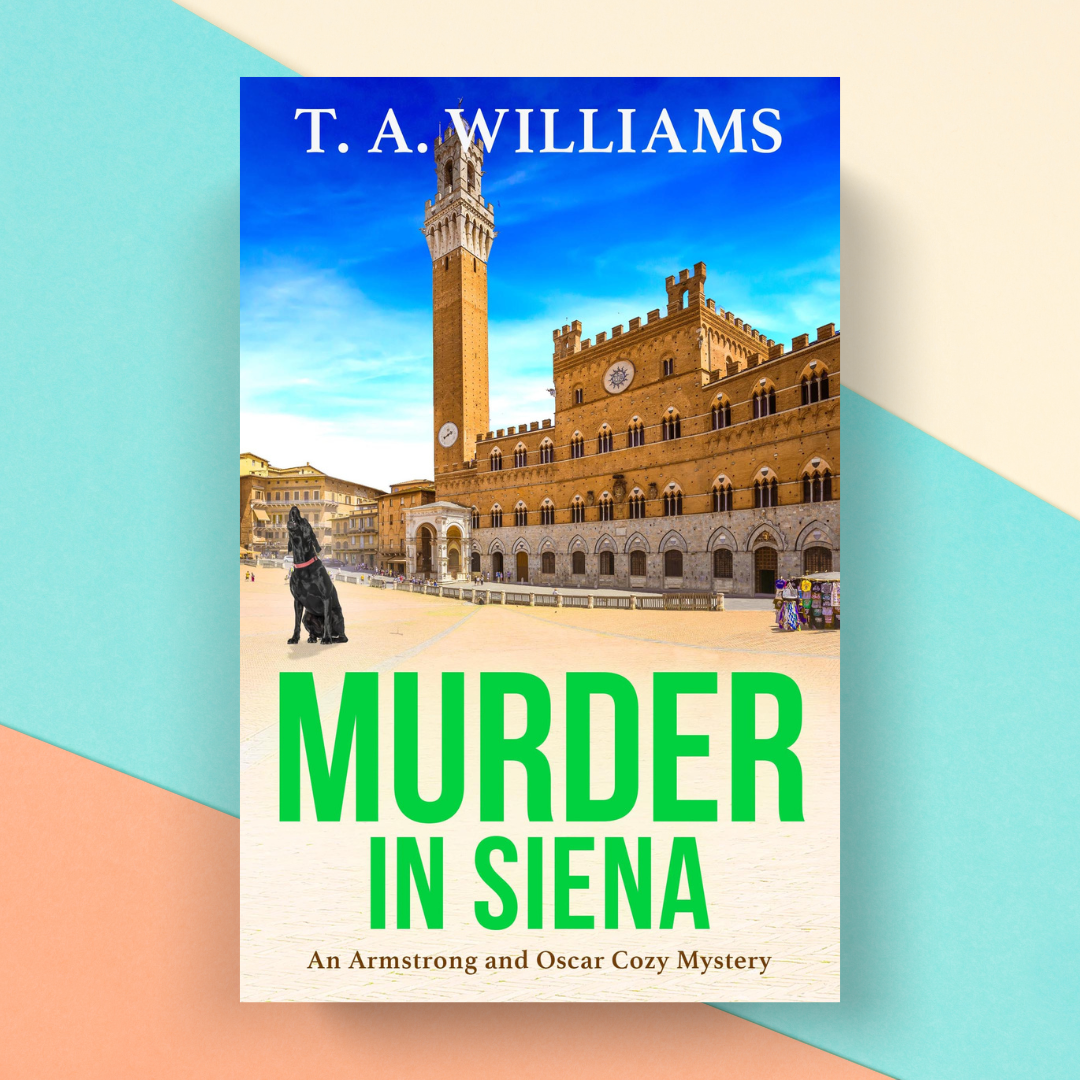
Murder in Siena is the new book in the Armstrong and Oscar series, set in Italy.
This time Dan is on holiday with his new partner, his detective friend and his wife when, you got it, a murder occurs. The two just can’t help themselves, and quickly, they’re involved, assisting local police in interviewing the attendees of the international conference taking place in the hotel.
While Dan tries not to involve himself too closely in the quest to find the murderer, he and Oscar do keep finding themselves in the right place at the wrong time,
As with the first three books in the series, the reader really is left guessing, trying to determine who the culprit is, and it’s only in the closing pages that everything starts to make sense.
I really enjoy this series of cosy crime stories. Murder in Siena is a fine addition to the previous books in the series.
T A Williams is the author of over twenty bestselling romances for HQ and Canelo and is now turning his hand to cosy crime, set in his beloved Italy, for Boldwood. The series will introduce us to retired DCI Armstrong and his labrador Oscar and the first book, entitled Murder in Tuscany, will be published in October 2022. Trevor lives in Devon with his Italian wife.
It’s a happy 4th birthday to my publisher, Boldwood Books, so I’m sharing 4 books/authors that have inspired me on my journey to becoming an author, and they might not be what you expect.
Many authors of historical adventure/historical fiction often cite the greats when talking about their influences, Bernard Cornwell, Simon Scarrow etc etc (you get the picture), but those aren’t my author heroes. My first intention was to write historical fantasy, and my literary heroes are giants of that genre ( and you might realise here why I write so many series)
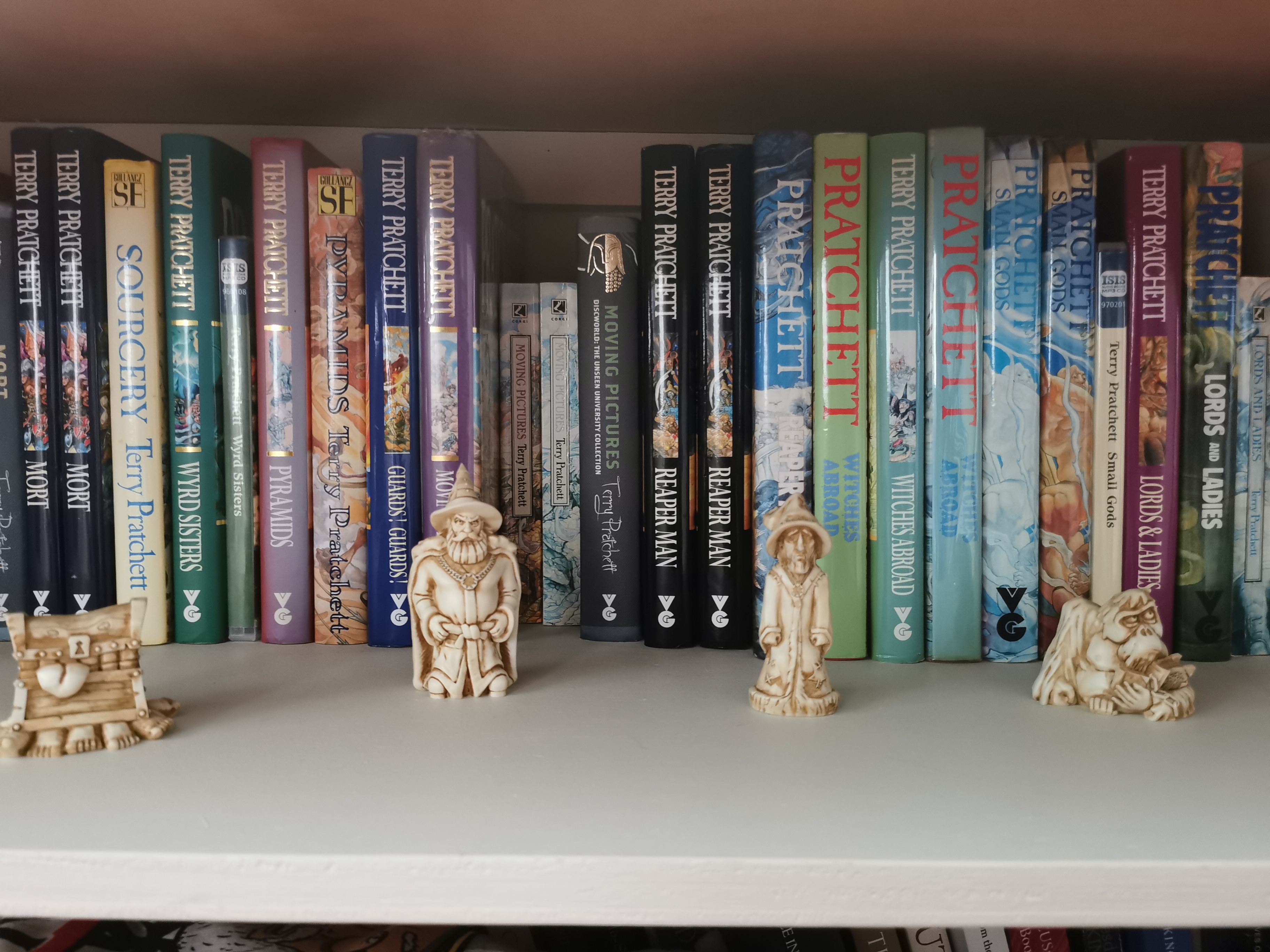
Terry Pratchett – his Discworld books, with their humour, recurring characters, and themes which are still very relevant, used to see me staying up late at night to finish them. I now listen to the audiobooks – which have luckily just been rerecorded and I adore all the versions.
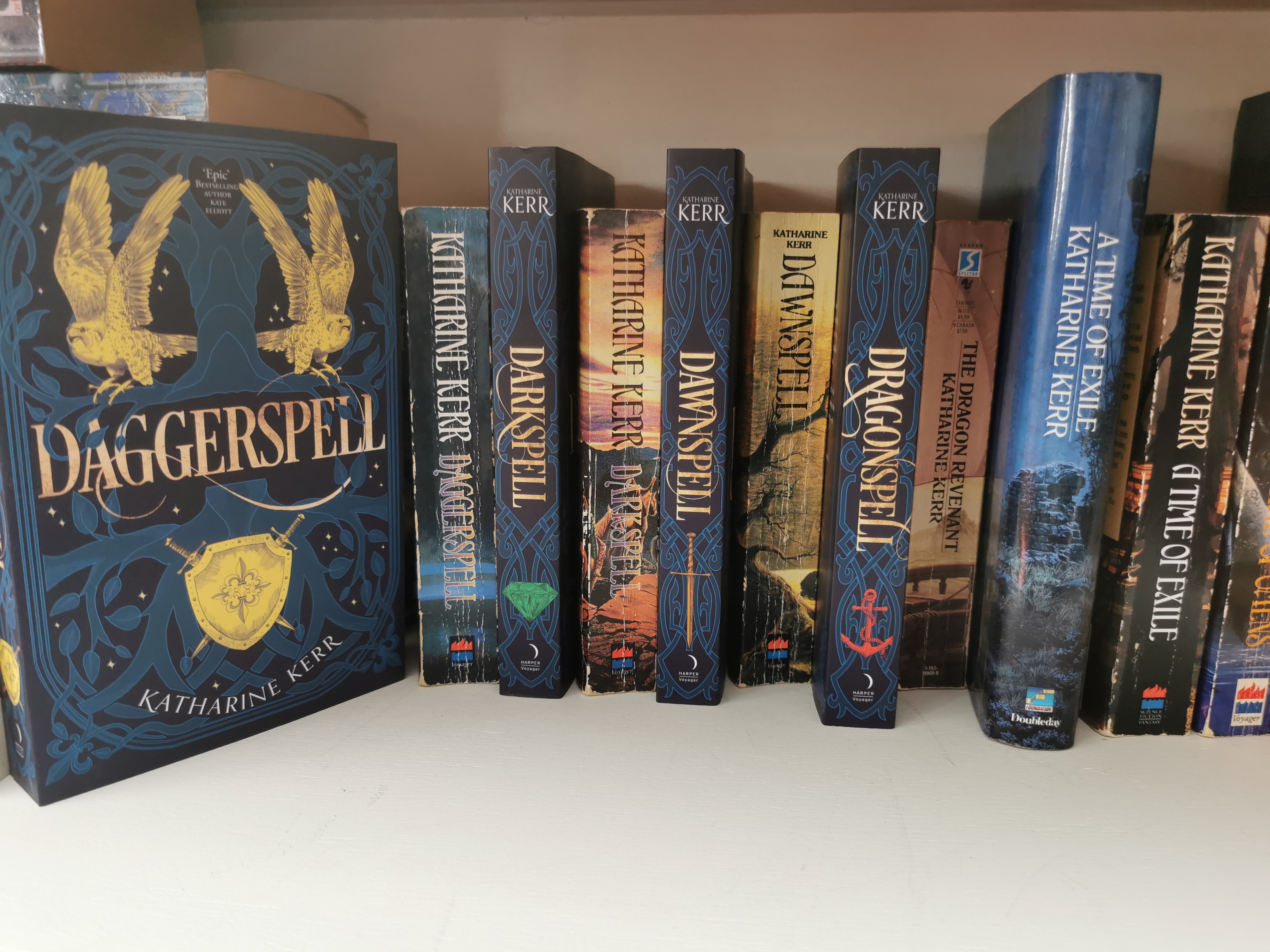
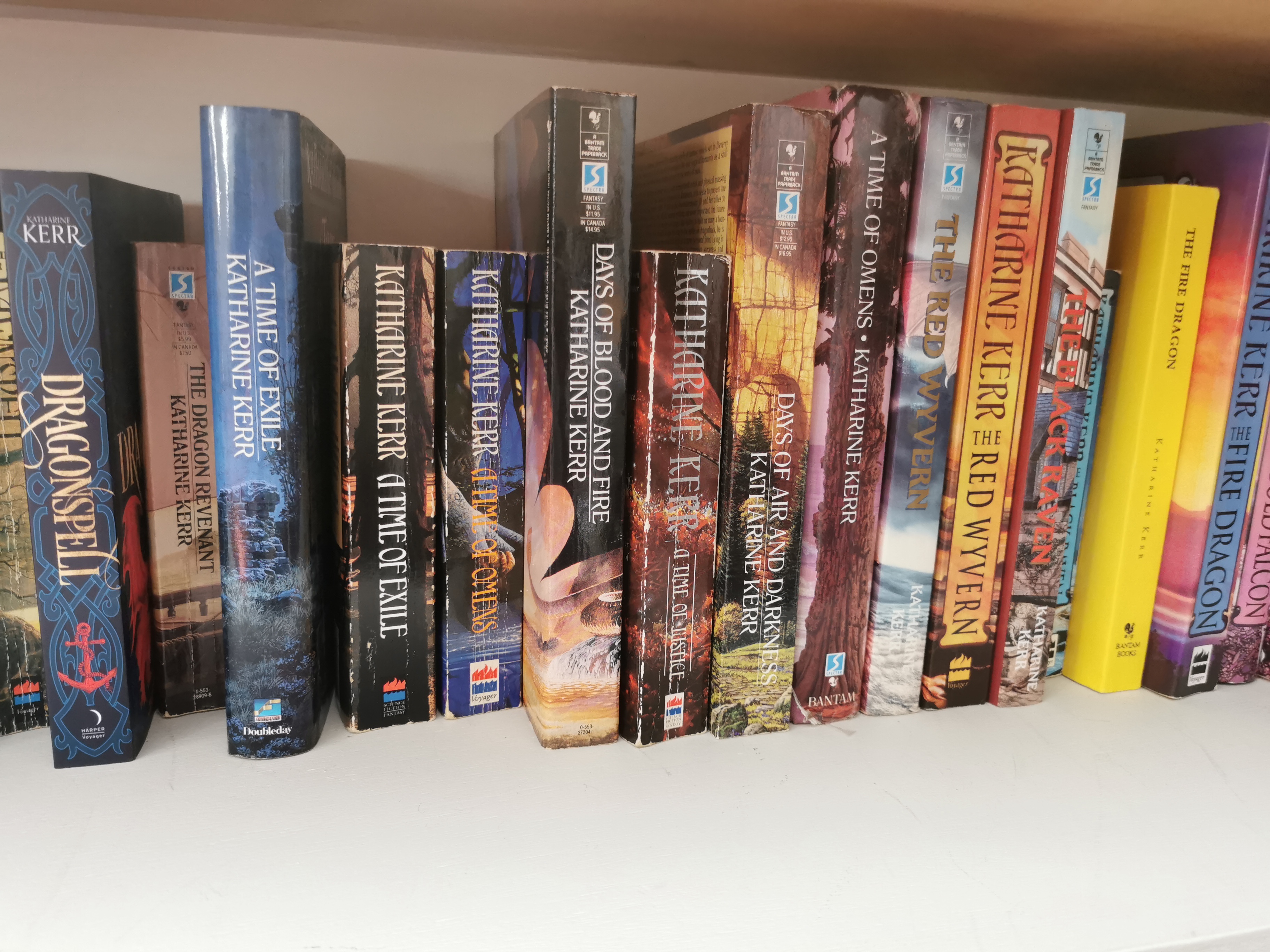
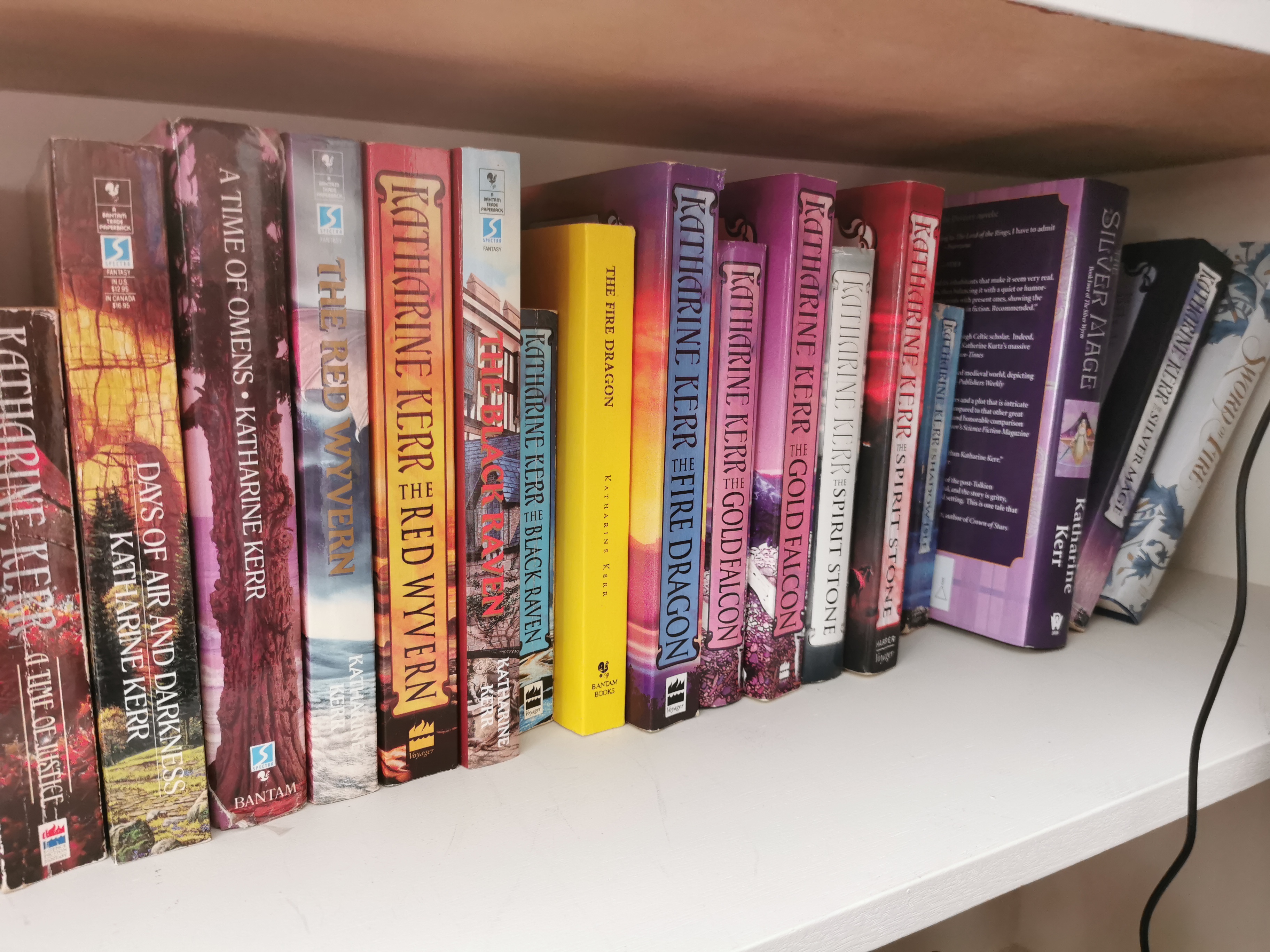
Katharine Kerr – the Deverry series. WOW. I might have told this story before, but I will never forget the day (many years ago) when I picked up my first Deverry novel. I’ve been reading them ever since. The wonderful mix of history/myth and the intertwining ‘lives’ of the characters have always thrilled me. And, on a personal note, the way that the death of one of the main characters was handled, gave me comfort when I was bereaved, many, many years ago. These things stick with us.
Anne McCaffrey – the PERN novels. I reread these books all the time. I’ve also read many of her other novels as well, but PERN were the ones for me. The timelines, the mixing of past and present, the DRAGONS. Just a fabulous set of novels. (These are still in a box somewhere from my recent move, and so I can’t share the images of my old covers, but the new ebook covers are delightful.)
Tom’s Midnight Garden – perhaps a strange one to include, but I read the book as a very young child, and I think the magic of the story, the interweaving of the narrative with past and present – certainly pushed me to seek out other novels that were very similar. At heart, I think I’ve always been intrigued by fantasy.
So yes, not many historical fiction novels there – but all of them have an element of the historical, and of course, Terry Pratchett has the humour, which I also try and incorporate into my stories these days. (Check out my new Discworld characters). And head over to my TikTok to see more of my Deverry collection. Some of these books came straight from Katharine Kerr herself (squee),and I treasure them. I also have some cards from the original UK cover illustrator.
I’ve been with Boldwood since just before their 2nd birthday – we celebrated birthday number 2 in an online Zoom. It was fab. Since then, I’ve met many of the authors and the ‘team’ behind the success of Boldwood in person. And, the other members of the Warrior Chronicles, Donovan, Peter, JC Duncan and me, try and have a chat once a month to share our knowledge, chat about random things and generally have a giggle. So, in the spirit of that, here are 4 (well 4.5) writing tips from me.
WRITE – it sounds stupid, but I do think it’s important to write, if not every day, then when you can fit it in. Routine is super important. As is setting yourself boundaries and deadlines. So, if you want to be a writer, you must write. It doesn’t have to be every day. It doesn’t have to be loads. If you’re struggling with the element of being an author that is writing, then I highly recommend taking part in NaNoWriMo in November of each year. I’ve been taking part for about ten years now. The lessons learned about routine will stay with you – and when they don’t – well, you can hop back on the NaNoWriMo train the following year.
BELIEVE IN YOUR WRITING – again, this might sound stupid, but it’s something I’m only really just starting to do. I’ve always been a little embarrassed by it all. And yes, there’s a very thin line between believing in it and being OTT about it – tread carefully.
PIVOT IF YOU MUST – my intention was always to write historical fantasy. When that didn’t work out as I quite expected, I moved to historical fiction – yes, it’s not that much of a move away, but it does mean I’ve had to stop putting dragons in my story.
NOT EVERYTHING WORKS – as I said above my first love is fantasy but that didn’t quite work out. Equally, I’ve tried to write other stories over the year and for one reason or another, they didn’t work. I have a number of unfinished manuscripts – a Tudor-esque fantasy, a sort of space-opera thing, and a more personal story – that I’ve started, many times, but for one reason or another, the time isn’t right for those stories, or the stories aren’t right for this time. As above – pivot if you must. You can, hopefully, always tell THAT story in another way, or if not, use elements of THAT story elsewhere. Which brings me to point 4.5 – never permanently delete anything:)
Happy 4th birthday Boldwood Books, and happy writing everyone!
(I’m going to share another post about my four most influential authors later today- you might not be surprised by how ‘fantasy’ they all are).
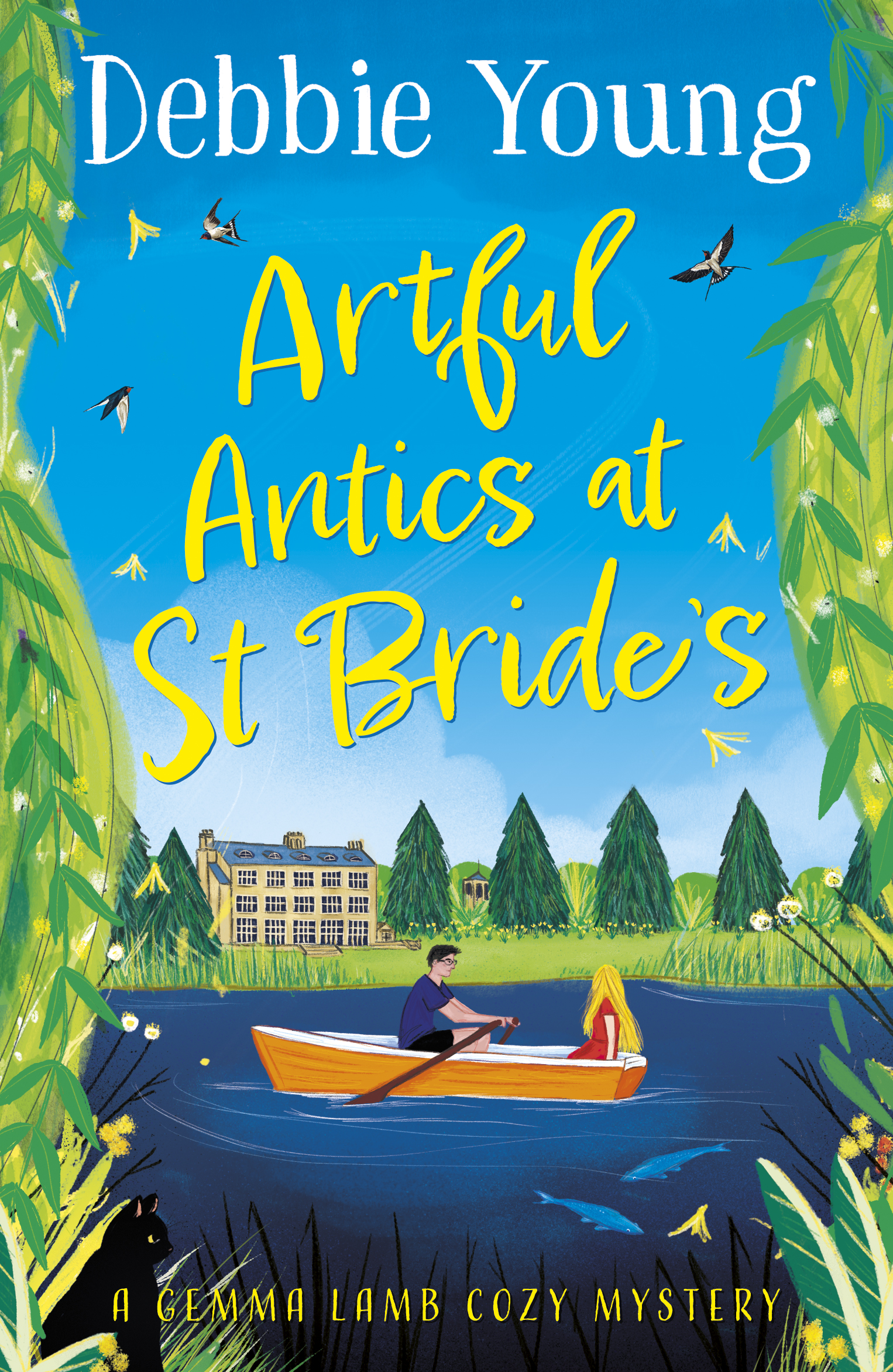
When English teacher Gemma Lamb’s school flat is wrecked by storms, maverick headmistress Hairnet insists the girls must fund its repair by setting up their own businesses – the start of a series of hilarious unintended consequences.
Meanwhile Gemma’s worries are compounded by the arrival of bossy new girl Frieda Ehrlich, sponsored by a mysterious local tycoon whose wealth is of dubious origins. Fearful for the school’s reputation, Gemma recruits an old friend to help investigate the tycoon’s credentials, jeopardising her romance with sports teacher Joe Spryke.
What is Frieda hiding? Why is her sponsor living in a derelict manor house? Why is his chauffeur such a crazed driver? And what has become of McPhee, Hairnet’s precious black cat? With a little help from her friends, Gemma is determined to solve these mysteries, restore her flat and save the school.
For anyone who loved St Trinian’s – old or new – or read Malory Towers as a kid. St Brides is the perfect read for you!
Artful Antics at St Bride’s is book four in the St Bride’s series of boarding school books for grown-ups.
Taking place immediately after the events of book 3, Gemma returns to work to find her staff flat in turmoil, and she’s not the only one. The old building is in much need of some repair work. And so sets in motion the decision to allow the students to begin their own businesses in the hope of making some money to fund the repairs. And, while that’s happening, a mysterious and rather grumpy new student arrives mid-term and causes a few problems.
What, I hear you say, does all this have to do with art? Well, the new student suggests the Sixth Form hold an art exhibition to sell their work, and of course, her father is invited, alongside the man who’s sponsoring her time at the school.
As we’ve come to expect with a St Bride’s story, not all is as it seems. Gemma is determined to get to the bottom of the story about the ruined house that the new girl’s sponsor and father are currently living in – uninhabitable is not the word – added to which, Max Security is also acting strangely, and then McPhee disappears as well.
I do love the St Bride’s series. The tales are gently told but engaging and keep the reader guessing until the end. Perfect for relaxing after a hard day at work or when you just want a bit of ‘chill time.’ They’re lovely, escapist fiction for all those who grew up on the Chalet School, Malory Towers, Trebizon and St Claires stories.
Read my reviews for the earlier books in the series
Debbie Young is the much-loved author of the Sophie Sayers and St Brides cosy crime mysteries. She lives in a Cotswold village where she runs the local literary festival, and has worked at Westonbirt School, both of which provide inspiration for her writing. She is bringing both her series to Boldwood in a 13-book contract. They will be publishing several new titles in each series and republishing the backlist, starting in September 2022.
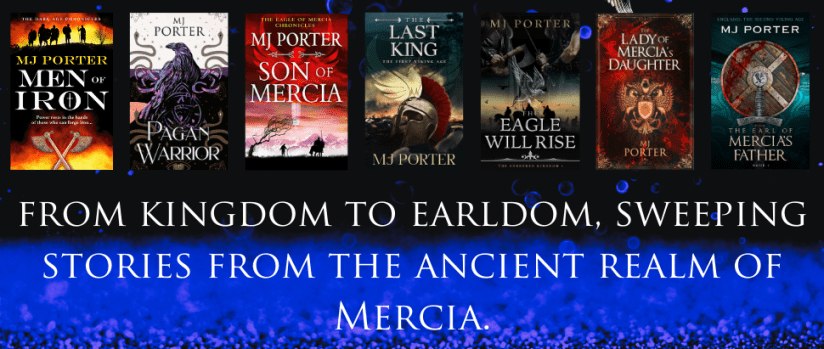
I’ve just been checking my Spotify and discovered I could share this with my readers. My books with Boldwood should be on there – the stories of young Icel and the Brunanburh series. Son of Mercia doesn’t seem to be connected to the main account, but I found it below. Enjoy.
And here are some of my favourite moments in the novel, as Icel marvels at what’s been left behind by those who came before him.
And then we come to a stop. In front of me, there’s a structure I can hardly comprehend. All around it are smaller piles of stones, no doubt the remains of other buildings. Beneath my feet, I walk on gravel and tufted grasses. Lifting my feet to peer down, I question whether the whole place was once laid with stone upon which to walk? I pause, gaze around me. In the distance, almost further than the entire settlement of Tamworth, are hints of more walls, more random pieces of white stone, discarded and abandoned. I don’t see any crops or greenery, only shrivelled weeds and little else. If I were to live here, where would I grow my food? Where would Wynflæd harvest her herbs from? The place is dusty and barren, just as Wulfheard told me.
There’s a forest of stone plinths guiding us towards the smell of campfires, with some immobile figures on them, all missing arms, or legs, or feet or even heads, their whiteness attesting to being made from some sort of priceless stone. To me, they look so similar to the bodies of the dead that, for a moment, I can’t quite decipher the intent behind them. And Brihtwold is no help. I can hardly ask what this place is because I should already know.
‘They’re in the centre of the settlement, in a stone-built building, one of the few that still stands to two levels. We head towards the east, and it’s in the centre. It’s difficult to miss it during the daytime, what with the ruined columns that still stand, and the statues that guide our steps towards it, but in the darkness of night, it might be a little more tricky.’
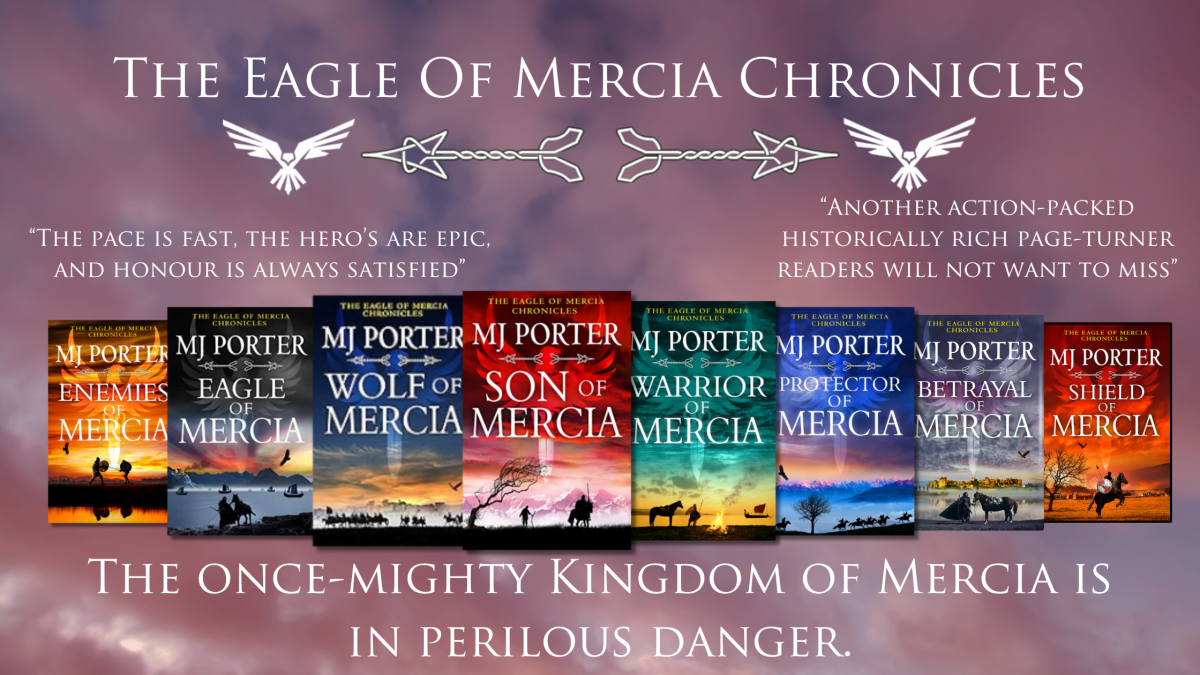
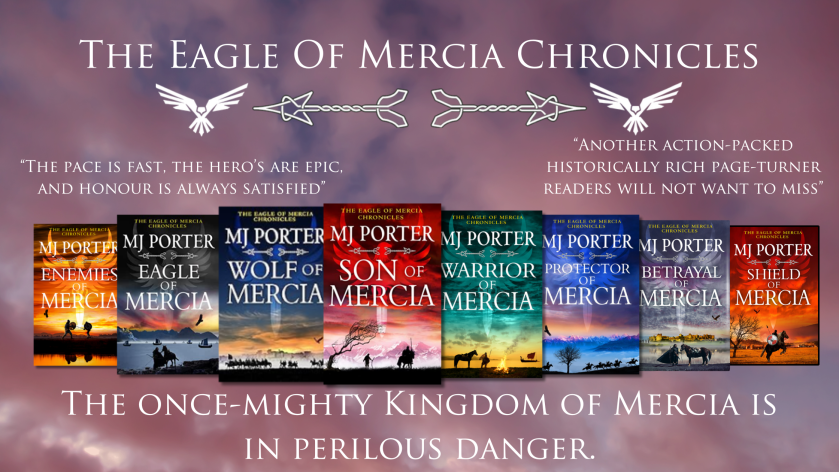
Wolf of Mercia is book 2 in The Eagle of Mercia Chronicles, and I had a lot of fun thinking about what the settlement might have looked like in the 830s, hundreds of years after Londinium was abandoned.
You can read all about Londonia below.
Londonia, the setting for Wolf Of Mercia
I’ve been avoiding taking my Saxon characters to London for quite some time. Bernard Cornwell, I feel, has done a fine job of explaining London to readers of his The Last Kingdom books. I wasn’t sure I had a great deal more to offer. But how wrong I was.
Londonia, the name suggested by Rory Naismith in his Citadel of the Saxons, for the combined settlement of the seventh century, seems a neat and tidy way of referencing both settlements, the Roman Londinium, and the Saxon Lundenwic. And yet, both settlements were so very different, it seems wrong to try and make them appear unified, at a time when they really weren’t. The ‘wic’ element of the name means it refers to a market site, somewhere where trade took place.
The River Fleet, now a lost river of London, once divided these two settlements, the one built of stone with high walls that may have been as tall as six metres, and the other, built of wattle and daub, and entirely open to the River Thames. It’s believed the lost River Fleet might have been substantial enough over 1200 years ago that a bridge was built over it. And this reminds travellers to the past of the mistake of assuming landscapes haven’t altered. It’s often easy to remember that buildings and roads might have changed, even that rivers might have changed course, and that sea levels might have risen or fallen, but an entirely lost river is a new one for me.
Neither should we consider Londinium, the Roman fort, to always have appeared as we imagine it. A brief look through the archaeological details for Roman Londinium, reveal that it changed dramatically over time. Most obviously, the walls for which it’s so famous, were not part of the original structure, they weren’t built until AD180-220. The earliest timbers so far found on the site date to nearly one hundred and fifty years earlier.
The number of inhabitants inside those stone walls seems to have waxed and waned throughout the period of Roman Britain, and there is some suggestion that it might have been abandoned as early as the fourth century, and therefore, much before the acknowledged ‘end of Roman Britain’ came in the early years of the fifth century. The bridge crossing from Londinium to Southwark, on the southern shore, may also have disappeared by the fourth century. There is therefore, a great deal to unpick. And for my characters, in the ninth century, just what would they have walked through? It’s an intriguing question. Would there have been abandoned statues, half-collapsed buildings, an eerie quiet, or would much of that have already disappeared, perhaps even been ‘robbed out’ as we know happened in other places, most notably along Hadrian’s Wall where stone often appears in the fabric of later churches.
As to Lundenwic? Are we to truly believe that it was little more than a boggy riverfront site? In fact, the location was chosen precisely to miss the boggy area from where the River Fleet would have joined the River Thames. But why move from behind those stone walls? The huge area of Londinium, was simply too vast for a much diminished population to attempt to control. The settlement that developed in Lundenwic was half as big as that of the Roman site, with a population of around 7000 (compared to an estimated 25,000-30,000 in Londinium at its peak). It consisted of small buildings, tightly packed together with small alleyways leading off from a few main roads. But, these main roads were fitted with wooden drainage ditches. While it might not have been the majestic sweep of a huge walled city, it wasn’t quite the hovel it’s often been betrayed as.
And, these two separate settlements, didn’t last for that long individually. But, in the year AD830, it’s just possible that young Icel may have walked through a serviceable, if abandoned Roman settlement when he visited Londinium, and that was too good an opportunity not to incorporate into the new book, Wolf of Mercia.







































 MJ Porter