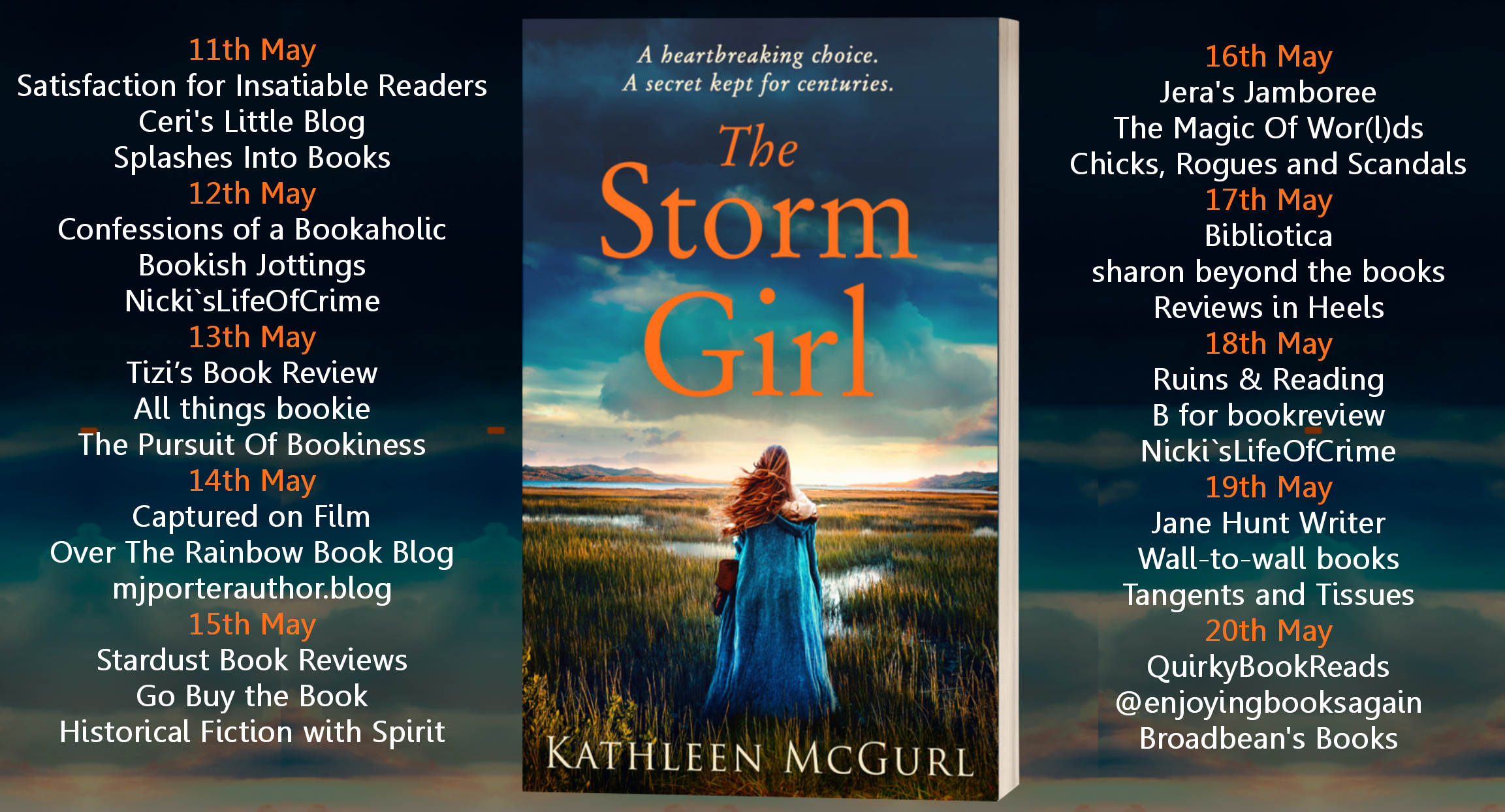
Today, I’m taking part in The Storm Girl by Kathleen McGurl blog tour with Rachel’s Random Resources.
Here’s the blurb:
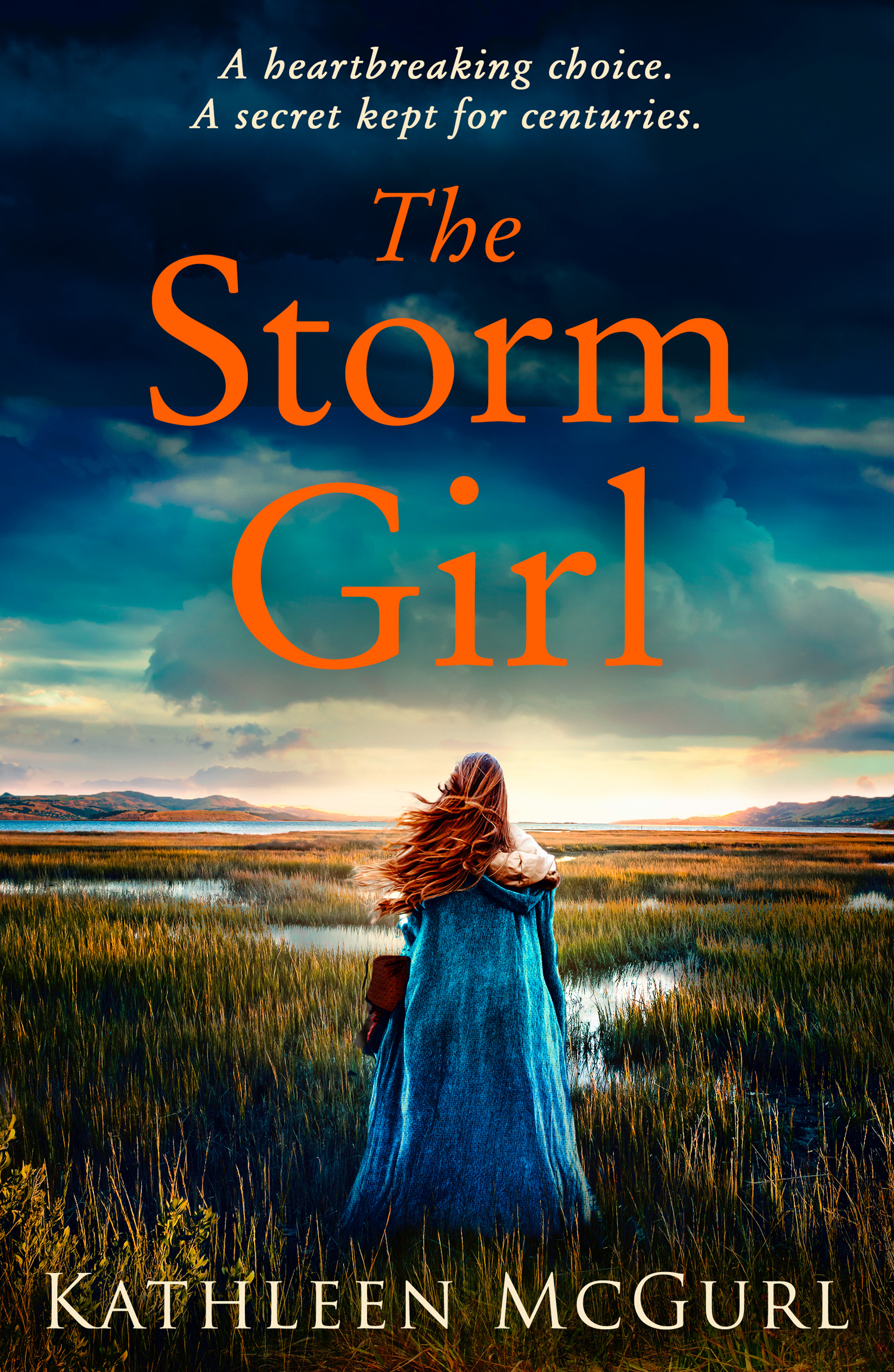
The gripping new historical novel from the USA Today bestselling author of The Girl from Bletchley Park and The Forgotten Secret.
A heartbreaking choice. A secret kept for centuries.
1784. When Esther Harris’s father hurts his back, she takes over his role helping smugglers hide contraband in the secret cellar in their pub. But when the free traders’ ships are trapped in the harbour, a battle between the smugglers and the revenue officers leads to murder and betrayal – and Esther is forced to choose between the love of her life and protecting her family…
Present day. Fresh from her divorce, Millie Galton moves into a former inn overlooking the harbour in Mudeford and plans to create her dream home. When a chance discovery behind an old fireplace reveals the house’s secret history as a haven for smugglers and the devastating story of its former residents, could the mystery of a disappearance from centuries ago finally be solved?
Sweeping historical fiction perfect for fans of Lucinda Riley, Kathryn Hughes and Tracy Rees.
My review
The Storm Girl is a dual timeline novel, and as a reader and writer of historical fiction, it was the historical storyline that captivated me far more than the modern-day tale of divorce and starting afresh.
Coming at this from a ‘newb’ point of view, I expected both storylines to have some connection, other than the most tenuous one, of them simply taking place in the same space although at different times. That wasn’t what happened, and I did encounter some problems, whereby the one storyline gave away events in the other – which was a little frustrating.
With all that said, I did enjoy this book. The historical storyline, while a little too wholesome for me, did capture my imagination and The Storm Girl is very much a competent and go-getting type of gal that a modern audience will thrill to discover.
Will I try a dual timeline novel again, that remains to be seen? I confess I would have been happy to have the story revolve only around the historical elements, and not worry about the modern-day setting at all, but I more than understand that a dual timeline narrative is extremely popular, and I’m sure fans of this genre will be captivated by this tale of a place in two different timelines, over two hundred years apart, and will, hopefully, consider learning more about their own local history as a result of reading the book.
A firm 4/5 from me – I did appreciate the historical notes at the back of the novel.
Kathleen McGurl lives near the coast in Christchurch, England. She writes dual timeline novels in which a historical mystery is uncovered and resolved in the present day. She is married to an Irishman and has two adult sons. She enjoys travelling, especially in her motorhome around Europe but home is Mudeford, where this novel is set.
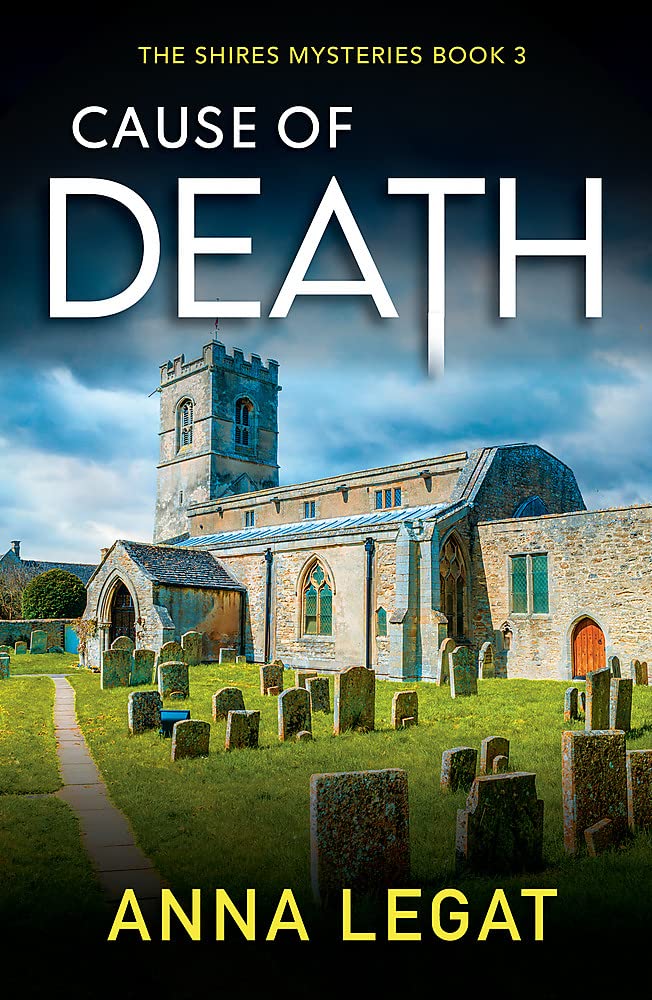
All is not well in the village. The local meadows have been the pride of Bishops Well for hundreds of years, but now they are facing the sharp blades of developers. The landowner is a rich and reclusive author who is happy to see them destroyed, but the villagers – including Sam Dee and Maggie Kaye – are fighting back.
Until, that is, someone decides to silence one of their number permanently.
As Maggie and Sam soon discover, there is more than a quick buck to be made in the developers’ plans. There are age-old secrets and personal vendettas that could have deadly repercussions in Bishops Well today.
With Sam’s legal expertise and Maggie’s… well, Maggie-ness, they delve into the past, determined to unearth the truth. And, as sparks begin to fly, could there finally be something more between this sleuthing duo?
Here’s my review
Cause of Death is the third book in The Shires Mysteries, but the first one I’d read. I think this left me at a little bit of a disadvantage to begin with as Maggie has a quirk, that I didn’t know about, and it took me a while to work out what it was. Also, and this is a very personal complaint, so I apologise – this book has two points of view, but one is told first person, one third person and then there’a also an omnipresent narrator – I really struggle with books that don’t stick to one tense, and writing style.
That said, the story is intriguing, and I did want to know who the murderer was, so I continued reading, despite all my misgivings about tenses. Maggie is an intriguing character, but rather pushy and overbearing. Sam is a milder character, and more likely to apply reason to his conclusions. The story is quite twisty and there’s a touch of humour to it in places. The author has no qualms about making the resolutions quite complex and employing a large and diverse set of characters.
Overwhelmingly, this was an enjoyable and satisfying read, and I might just go back and read books 1 and 2:)
Anna Legat is a Wiltshire-based author, best known for her DI Gillian Marsh murder mystery series. Murder isn’t the only thing on her mind. She dabbles in a wide variety of genres, ranging from dark humorous comedy, through magic realism to dystopian. A globe-trotter and Jack-of-all-trades, Anna has been an attorney, legal adviser, a silver-service waitress, a school teacher and a librarian. She has lived in far-flung places all over the world where she delighted in people-watching and collecting precious life experiences for her stories. Anna writes, reads, lives and breathes books and can no longer tell the difference between fact and fiction.
Twelve moving short stories inspired by the everyday lives of women.
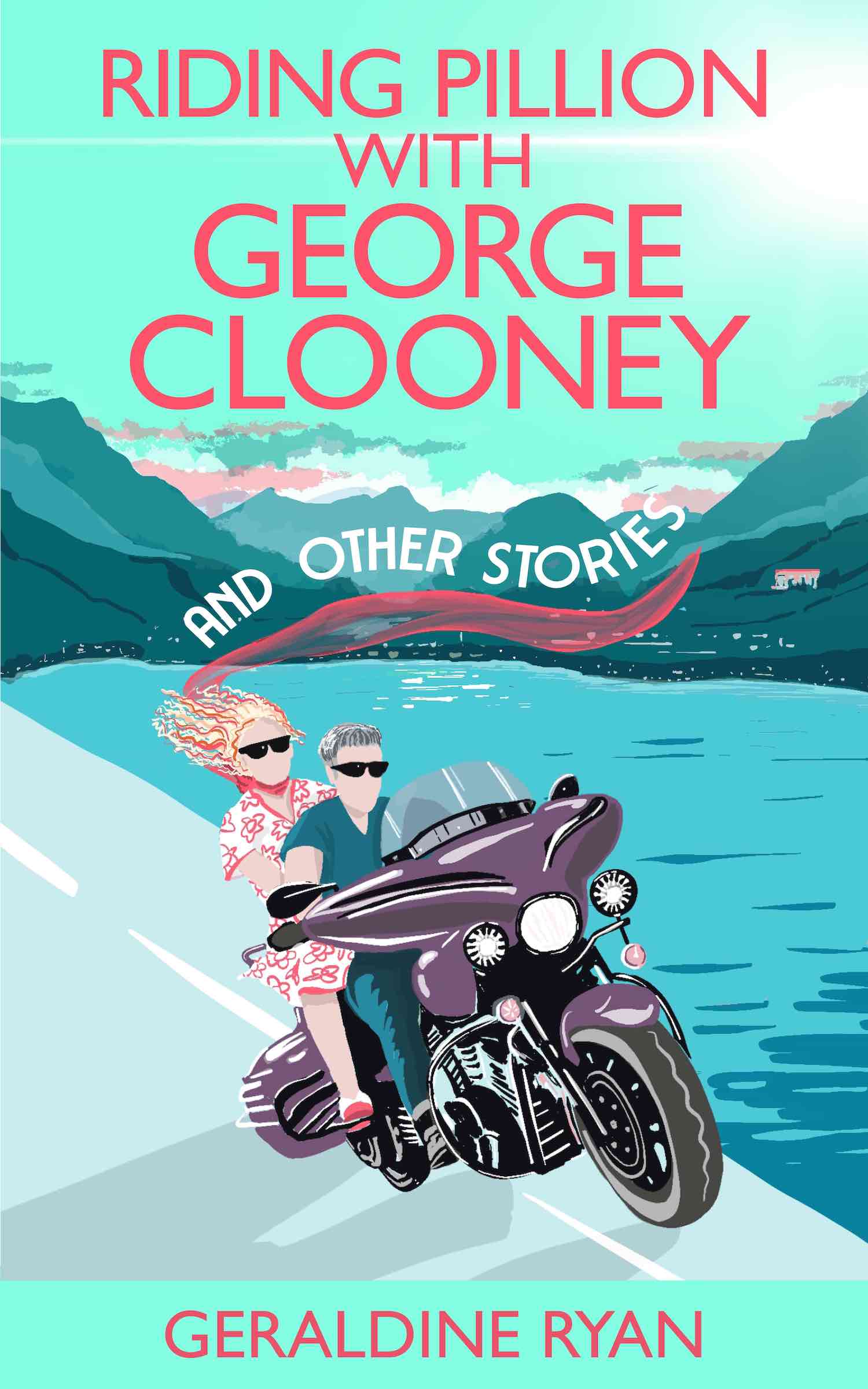
A single woman on a once-in-a-lifetime trip to the Italian lakes still dreams of adventure. Can she find it closer to home?
A grieving widow finds comfort in the company of a stray cat that bears striking similarities to her dead husband.
An estranged daughter confronts an unspeakable tragedy from her past as she attempts to reconcile with her long-lost family.
Geraldine Ryan is a prolific short-story writer whose work has appeared in Woman’s Weekly and Take a Break’s Fiction Feast magazines. The women in this, her first published anthology, may be at different stages of life but all of them are experiencing the ground shifting beneath their feet. Their tales of love, longing and redemption will touch your heart and bring a smile to your face.
Review
Riding Pillion with George Clooney and other short stories is an engaging collection of short stories of women, many of them bitter sweet, but all empowering. A particular favourite of mine was ‘After Harriet’ a story of grief, guilt and the need for forgiveness.
All of the stories are told with skill, ensuring the reading understands the characters they meet. Riding Pillion with George Clooney might well be the story that snags the attention of the reader, but all of the women we meet are endearing to the reader, highlighting struggled which many of us might understand only too well.
A delightful collection of short stories, that I highly recommend.
Geraldine Ryan is a proud Northerner who has spent most of her life in Cambridge – the one with the punts. She holds a degree in Scandinavian Studies but these days the only use she puts it to is to identify which language is being spoken among the characters of whatever Scandi drama is currently showing on TV. She worked as a teacher of English and of English as a second or foreign language for many years, in combination with rearing her four children, all of whom are now grown up responsible citizens. Her first published story appeared in My Weekly in 1993. Since then her stories have appeared in Take-a-Break, Fiction Feast and Woman’s Weekly as well as in women’s magazines abroad. She has also written 2 young adult novels- ‘Model Behaviour’ (published by Scholastic) and ‘The Lies and Loves of Finn’ (Channel 4 Books.) This anthology of previously published short stories will be, she hopes, only the first of several.
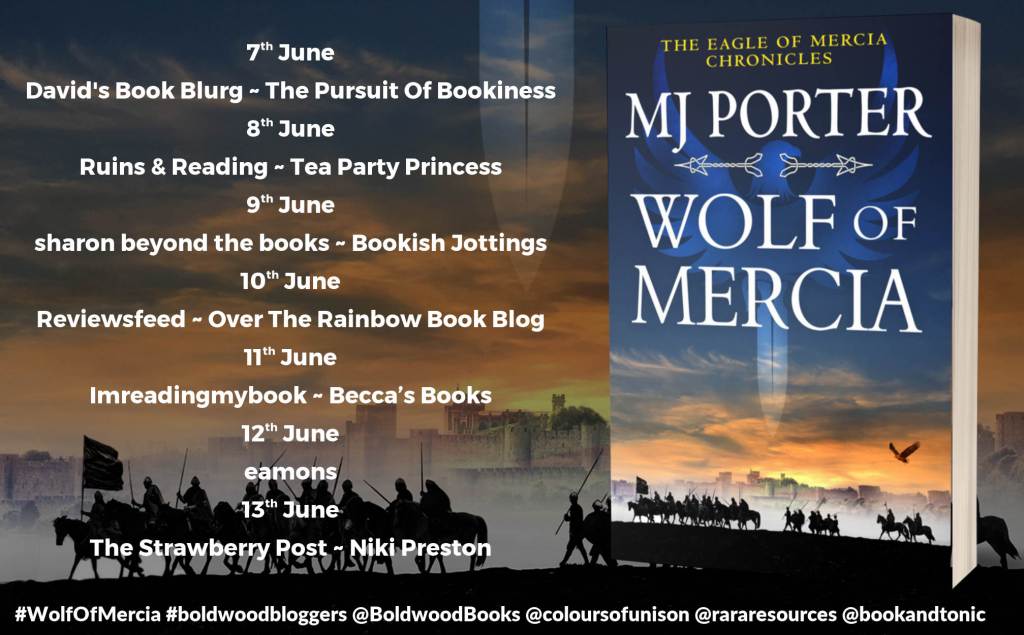
If you’ve been with Coelwulf, Rudolf, Icel, Edmund and Pybba since the beginning, then you’re probably with me in trying to work out how 2 years have gone by since the release of the first book.
I thought it worthy of a huge celebration, and so The Last King is on blog tour for today only with a whole swathe of hosts from Rachel’s Random Resources. Check out their posts and blogs, and you really might enjoy those hosts that have an excerpt from the book. When I was choosing them, it reminded me of all the things that drew me these characters, and this book, and made me write it the way that I did. The exuberance is difficult to ignore. (And remember – there are Clean(er) versions of all the books available in ebook format without the more offensive word that rhymes with something that quacks).
I’m going to pop some links here to blog posts I’ve shared in the past.
Warrior and combat medic, Titus Cervianus, must lead a legion and quell the uprisings in Egypt in a new Roman adventure from Simon Turney. Egypt. 25 BC.
Titus Cervianus and the Twenty Second Deiotariana have been sent to deal with uprisings and chaos in Egypt. Yet the Twenty Second is no ordinary legion. Founded as the private royal army of one of Rome’s most devoted allies, the king of Galatia, their ways are not the same as the other legions, a factor that sets them apart and causes friction with their fellow soldiers.
Cervianus is no ordinary soldier, either. A former surgeon from the city of Ancyra, he’s now a capsarius – a combat medic. Cervianus is a pragmatist, a scientist, and truly unpopular with his legion.
Marching into the unknown, Cervianus will find unexpected allies in a local cavalryman and a troublesome lunatic. Both will be of critical importance as the young medic marches into the searing sands of the south, finding forbidden temples, dark assassins, vicious crocodiles, and worst of all, the warrior queen of Kush…
I really enjoyed The Capsarius. I’ve read some of Simon Turney’s Roman fiction in the past, but this book, without its focus on Roman Rome, is a little different, and very enjoyable.
I didn’t read this book quickly – rather I enjoyed it slowly, taking delight in reading a small amount each day over an extended period. It’s a story rich with detail, as our main character, The Capsarius, travels through a land he is clearly excited to visit, being so very strange to his birth lands, and yet one he understands is filled with danger. The heat, the lack of water, and the need to stay close to the great river Nile, bring into play some very dangerous enemies, the crocodiles of the delta.
The Capsarius is not your usual Roman warrior. He’s a skilled and widely read individual, keen to hold on to the ideals he has as a medic in the Roman army, even though he’s pitted against just about everyone in the legion, and his superiors really don’t seem to like him a great deal – not that it worries him. He’s a man of reason, and yet one who’s thrust into a strange land, with even stranger gods, and gods who seem to speak to him. The interplay between the reasoned man forced to question his beliefs because of the pervading Egyptian religion is skillfully drawn.
This is a slow burn, which rewards the reader with two really quite different battle scenes in the second half of the book when our Roman hero finally encounters his elusive enemy, and I’m already looking forward to book 2.
A wonderful read – with just the right amount of humour and peril – set in a wonderfully drawn land of intrigue and danger.
Thank you to Netgalley and the publisher for my review copy, and for inviting me onto the new release blog tour.
Meet the author
Simon Turney is from Yorkshire and, having spent much of his childhood visiting historic sites, fell in love with the Roman heritage of the region. His fascination with the ancient world snowballed from there with great interest in Rome, Egypt, Greece and Byzantium. His works include the Marius’ Mules and Praetorian series, the Tales of the Empire and The Damned Emperor series, and the Rise of Emperors books with Gordon Doherty.
I’ve been reading Catherine Coles previous series for a while now. I do love a Golden Age mystery novel, so I was really pleased to see she was becoming a fellow Boldwood Books author, and that there was going to be a new series as well.
Here’s the blurb:
With the war finally over the residents of Westleham village are trying to reclaim a sense of normality and the upcoming village show is proving to be a popular event!
Newcomer, Martha Miller, has high hopes for the village show. Since her husband Stan left for work one day and never returned, some of the villagers have treated Martha with suspicion – why would a good man like Stan simply up and leave? Was it something Martha did?
All Martha knows is that she’s hoping that she can win people over and hopefully they’ll but her delicious homemade plum gin, too and she’ll be able to make ends meet.
But as glasses of Martha’s gin are passed around, disaster strikes. Alice Warren, Chairwoman of the village show slumps to the ground after taking a sip. It’s clear she’s been poisoned!
Martha is shocked, but not surprised, when fingers of suspicion once again point her way. Determined to prove her innocence, Martha sets about trying to find the real culprit. But who would kill Alice and why?
Ably helped by the new vicar, Luke Walker, Martha quickly tries to get to the bottom of this mystery. But with the villagers closing ranks it quickly becomes apparent that the only person with a motive is Martha herself….
Will Luke and Martha discover who is behind the poisoning before it’s too late?
Here’s my review
Poison at the Village Show is a charming mystery set in a small village in the years after the Second World War, featuring Martha Miller, her sister Ruby, and the new vicar, Luke Walker.
I’ve already read all of Catherine Coles Tommy and Evelyn books set in the aftermath of World War I and love the depictions and the characters of Tommy and Evelyn. Fans of those books will not be disappointed with Martha, Luke and Ruby. They are all excellent creations and make for an engaging read.
The story really gathers pace as it continues, and the ending is both satisfying, and I confess, slightly unexpected for me. It’s always good not to guess who the real perpetrator was.
I really look forward to reading more of this series and returning to the charming village of Westleham with its cast of eclectic busy-bodies in the years after the war when a sweet cup of tea is the solution to everything.
Thank you to the publisher and Netgalley for my review copy.
The daughter of a military father, Catherine was born in Germany and lived most of the first 14 years of her life abroad. She spent her school years devouring everything her school library had to offer! Catherine writes cosy mysteries that take place in the English countryside. Her extremely popular Tommy & Evelyn Christie mysteries are set in 1920s North Yorkshire. Catherine lives in northeast England with her two spoiled dogs who have no idea they are not human!
What better way to celebrate, nearly, two years of Coelwulf and his pals, than with a blog tour to showcase all of the books in the series (to date – I’m currently working on book 7).
What started as a bit of mad idea in The Last King has become a series featuring a cast of warriors (and horses) that my readers love reading about, and about who I love to write. Not to mention inspiring the prequel series – which begins with Son of Mercia – and tells the story of a very young Icel.
To celebrate all of this, I have three, yes three, paperback copies of the short story collection, Coelwulf’s Company, to giveaway to readers. They’ll come signed and dated, and to anywhere in the world. To enter, just follow this link to Rafflecopter, where it’ll ask you to follow me on Twitter, and you should be entered. I’ll get in touch with the winners at the end of the giveaway, which I hope is midnight on 18th March 2022 (if I’ve set it up correctly). Good luck with the prize draw and do let me know if there are any problems.
Your book, John Brown’s Women , sounds fascinating. Can you share with me what the first idea was that made you decide to write this story? It might be very different from how the story ended up being, but I am curious, if you don’t mind sharing. And, if the story is very different, would you mind sharing the process by which you ended up with your current novel?
For example, my current book started off after watching an old Pathe TV show about making motorbikes and sidecars and has ended up as a 1940s mystery involving an unidentified body!
As a writer of biographical historical fiction, I seldom think up an idea for a novel out of the blue. Rather, something I read triggers me to learn more about a historical figure. In most cases, my curiosity having been sated, I move on, but in others, the character latches on to me and won’t give me any peace until I write about him or her.
My interest in John Brown was awakened when I moved a few years ago to a town in Maryland that’s just a few miles from Harpers Ferry. (Sadly, John Brown appears to have passed it by.) I dug out the family copy of Midnight Rising, Tony Horwitz’s gripping account of the Harpers Ferry raid, and was struck by one figure in particular—Annie, John Brown’s fifteen-year-old daughter, who served as her father’s lookout at the Maryland farm that Brown rented in preparation for the raid. Although most accounts of the raid touch on Annie’s role, Horwitz gave her more sustained attention, and I determined to learn more about her. Fortunately, Bonnie Laughlin-Schultz has written a study of the Brown women, The Tie That Bound Us, and that led me to more information about Annie. Though Annie never published an account of her activities, she was generous in responding to Brown’s biographers, and her reminiscences and letters made for fascinating reading. Annie had an opinion on everything and a talent for pithy observations, and I was captivated by her. Writing to researcher Katherine Mayo in 1909, Annie spoke of her need to get off by herself in natural surroundings: “I always come back refreshed and with a better feeling towards God and the human race, for I do really sometimes get out of patience with Him and wonder why he created so many people that (it seems to me) would have been better left unborn. I have never been able to understand, why so many things, that ought not to be, exist.”

But as I began to research Annie’s story and to read more family letters: two other women intruded: Mary, John Brown’s stoic, strong wife, and refined, progressively-minded Wealthy, married to John Brown’s oldest son. They too wanted their stories told. Moreover, giving them leading roles would allow me to give a fuller view of John Brown. Mary had shared personal tragedies and financial setbacks with her husband, and Wealthy had been with the Brown men during the violent “Bleeding Kansas” years that set the stage for the Harpers Ferry raid. I ended up framing the novel so it begins and ends from Mary’s perspective, which I think worked artistically.

So Annie, no doubt to her chagrin, ended up having to share her story with others, as did Frances Brandon in my Tudor novel, Her Highness the Traitor, who found herself narrating alongside Jane Dudley. But Annie supplied me with the epigraph, giving her the first word, if not the last.
Annie Brown (Library of Congress)
Wealthy Brown (West Virginia State Archives)
Mary Brown (Library of Congress)
Thank you so much for sharing. I love it when characters have such a strong mind of their own. Good luck with the new book.
Here’s the blurb:
As the United States wrestles with its besetting sin—slavery—abolitionist John Brown is growing tired of talk. He takes actions that will propel the nation toward civil war and thrust three courageous women into history.
Wealthy Brown, married to John Brown’s oldest son, eagerly falls in with her husband’s plan to settle in Kansas. Amid clashes between pro-slavery and anti-slavery settlers, Wealthy’s adventure turns into madness, mayhem, and murder.
Fifteen-year-old Annie Brown is thrilled when her father summons her to the farm he has rented in preparation for his raid. There, she guards her father’s secrets while risking her heart.
Mary Brown never expected to be the wife of John Brown, much less the wife of a martyr. When her husband’s daring plan fails, Mary must travel into hostile territory, where she finds the eyes of the nation riveted upon John—and upon her.
Spanning three decades, John Brown’s Women is a tale of love and sacrifice, and of the ongoing struggle for America to achieve its promise of liberty and justice for all.
Trigger Warnings:
Deaths of young children through illness or accidents (not graphically described); implied heavy petting involving a willing minor.
Susan Higginbotham is the author of a number of historical novels set in medieval and Tudor England and, more recently, nineteenth-century America, including The Traitor’s Wife, The Stolen Crown, Hanging Mary, and The First Lady and the Rebel. She and her family, human and four-footed, live in Maryland, just a short drive from where John Brown made his last stand. When not writing or procrastinating, Susan enjoys traveling and collecting old photographs.
Your book, A Woman of Noble Wit , sounds fascinating. Can you share with me what the first idea was that made you decide to write this story? It might be very different from how the story ended up being, but I am curious, if you don’t mind sharing. And, if the story is very different, would you mind sharing the process by which you ended up with your current novel?
For example, my current book started off after watching an old Pathe TV show about making motorbikes and sidecars and has ended up as a 1940s mystery involving an unidentified body!
Retirement can be a wonderful thing. If you’re lucky, as I am, it can set you free and give you time to do the things you’ve always wanted to do. Since I retired I’ve been able to indulge a lifelong passion for history and I’ve also been dusting off some long-neglected dressmaking skills. I started to research and make sixteenth century clothing to wear as a volunteer at a local National Trust property. That was where I first met Katherine Champernowne, the subject of my novel. I now bring this remarkable Devon woman to life for audiences all over the county and use her clothes to open up conversations about how people like her lived. As I learned how to make her clothes I found it wasn’t enough to just look all right on the outside. I wanted to construct my costumes as accurately as possible, layer by layer, so that I could feel what it was like to dress as she did — to walk in her shoes.
Rosemary in costume
In the same way, I wanted to understand what it felt like to live through those times as an educated well-born woman far from the Royal Court. We hear a lot about the lives of King Henry and his Queens, but little about the largely unrecorded, unnoticed women, who stood behind other famous men who changed the course of history. I thought Katherine’s story deserved to be told. That germ of an idea would eventually turn into my novel.
I read every book I could find on the lives of women in sixteenth century England. I researched Katherine’s family and Devon’s Tudor history. I spent many happy hours poring over old documents in the archives. I visited the places she knew. I read biographies of her famous sons, amongst them Sir Humphrey Gilbert and, of course, Sir Walter Raleigh.
Picture from Wikimedia commons
Sir Walter was a prodigious writer. His letters, books and poems reveal a lot about his character. His deeds as Queen Elizabeth’s favourite, as a soldier, sea captain, poet and more, are well recorded. There are even descriptions of him written by his contemporaries. For Katherine herself and for some of the other people in her life there is much less to go on.
In 1538 Thomas Cromwell was behind a new law that required priests to keep a record of baptisms, marriages and burials. One of his better ideas, I think. But key events in Katherine’s early life fell well before the new system started. Record keeping was patchy at first and many registers have been lost or damaged, So tracking down the most basic details of her life — the exact date of her birth, and of her two marriages —was very difficult. We do know that she was laid to rest beside her second husband. In a letter Sir Walter wrote to his wife before his execution he said he wanted to be buried beside his parents “in Exeter church”. It’s believed that Katherine Raleigh died in 1594, shortly after she made her will. But the page that would have recorded her burial is missing from the register of St Mary Major’s in Exeter, though Walter Raleigh senior’s burial is listed there in February 1580/1581. Nor can we read her will as it was originally written. It was lost in a second world war bombing raid on Exeter in 1942 when the City Library, the repository of over a million documents and books, was completely destroyed. Only due to the diligence of a nineteenth century scholar do we have a transcript of her last wishes. We do, however, have an account of her courageous vigil in the prison cells beneath Exeter Castle with protestant martyr Agnes Prest. It was published during Katherine’s lifetime in Foxe’s Book of Martyrs, which says that Katherine Raleigh was “a woman of noble wit and godly ways.” That gave me my title.
At first I thought I would write a fully sourced academic biography, but I found that there were many gaps to fill, many areas of doubt. Scholars even remain divided about the exact dates of birth of her boys. My research fixes the birthday of only her eldest Gilbert son, John, with certainty, confirmed in his father’s Inquisition Post Mortem. For her other children the dates remain uncertain. Even the number of children she bore is open to question. For example, there may have been a second Gilbert daughter named Elizabeth, others may have died in infancy unrecorded.
I pieced together as much as I could from what was recorded about Katherine’s brothers, sisters, parents and other relatives, some of whom had close connections to the Court. I recently published a blog post setting out the research that has convinced me that the other Katherine Champernowne, the one who was known as Kat, later married John Ashley, and was governess to the young princess Elizabeth, was Katherine Raleigh’s sister.
Photo of Kat Ashley from Wikimedia Commons
Another sister, Joan wife of Sir Anthony Denny, served several of King Henry’s Queens and is recorded as a close friend of Katryn Parr. The careers of Katherine’s Carew cousins Sir George, who went down in the Mary Rose, and Sir Peter, feature often in the record.
Beyond that I started to look for clues from which I could develop plausible explanations for the missing pieces in the jigsaw of Katherine Raleigh’s life. The personalities of people who played their part in her story started to emerge of their own volition. I started to put flesh upon the bones of the bare skeleton the historical record had left me. I felt I was really getting to know Katherine and her world. The more I discovered, the more I wanted to bring her to life; to explore how she might have become the woman who inspired her sons to follow their dreams. So, my story of Katherine’s life started to evolve and take shape, a story that also did justice to the exciting events that gripped Devon in those turbulent years. Where I have found facts are backed up by reliable source documents I have respected them. But I have sought to weave those facts together with fiction to create a believable and compelling story of one woman’s life in a changing world.
Wow, thank you so much for sharing. That’s a fantastic story. Thank you so much for sharing your reasons for writing your new book. I think your Tudor dress is fantastic.
Here’s the blurb:
Few women of her time lived to see their name in print. But Katherine was no ordinary woman. She was Sir Walter Raleigh’s mother. This is her story.
Set against the turbulent background of a Devon rocked by the religious and social changes that shaped Tudor England; a Devon of privateers and pirates; a Devon riven by rebellions and plots, A Woman of Noble Wit tells how Katherine became the woman who would inspire her famous sons to follow their dreams. It is Tudor history seen though a woman’s eyes.
As the daughter of a gentry family with close connections to the glittering court of King Henry VIII, Katherine’s duty is clear. She must put aside her dreams and accept the husband chosen for her. Still a girl, she starts a new life at Greenway Court, overlooking the River Dart, relieved that her husband is not the ageing monster of her nightmares. She settles into the life of a dutiful wife and mother until a chance shipboard encounter with a handsome privateer, turns her world upside down.…..
Years later a courageous act will set Katherine’s name in print and her youngest son will fly high.
Rosemary Griggs is a retired Whitehall Senior Civil Servant with a lifelong passion for history. She is now a speaker on Devon’s sixteenth century history and costume. She leads heritage tours at Dartington Hall, has made regular costumed appearances at National Trust houses and helps local museums bring history to life.
Today, I’m delighted to welcome Meredith Allard to the blog with a fascinating post about her new, festive book, Christmas at Hembry Castle.
There’s a joke I’ve seen on Pinterest, a cartoon of a writer watching TV. The character says, “I’m researching!” to the cynical-looking people standing nearby. For those of us who write fiction, we know that watching TV or movies, listening to music, or going for walks really is research because all of it becomes part of the writing process. Writers, especially fiction writers, need their imagination fueled regularly, and it’s the little things we do, such as stealing an hour here or there to watch a favorite TV show or listen to our favorite music, that help to fill the creative well so that we have a brain full of ideas when we sit down to write.
When it comes time to write, especially if I’m writing an historical story, I try to immerse myself in the time period as much as possible. If I feel as if I’ve traveled back in time, then it’s easier for me to carry my readers along with me on the journey. Here are some of the places I found inspiration while writing my Victorian story Christmas at Hembry Castle. I wrote Christmas at Hembry Castle with the deliberate intention of putting my own spin on Dickens’ A Christmas Carol, which made the task more challenging, but it was a challenge I relished because I adore Dickens and especially A Christmas Carol. In fact, Edward Ellis, one of the main characters, is based on a young Dickens. Here are some of the resources I used for Christmas at Hembry Castle.
Books
Nonfiction:
Up and Down Stairs: The History of the Country House Servant by Jeremy Musson
What Jane Austen Ate and Charles Dickens Knew by Daniel Pool
How To Be a Victorian: A Dusk-to-Dawn Guide to Victorian Life by Ruth Goodman (one of my new favorite historians—she lives what she studies)
The Victorian City: Everyday Life in Dickens’ London and Inside the Victorian Home: A Portrait of Domestic Life in Victorian England by Judith Flanders
The Writer’s Guide to Everyday Life in Regency and Victorian England From 1811-1901 by Kristine Hughes
To Marry an English Lord by Gail MacColl and Carol McD. Wallace
Below Stairs: The Classic Kitchen Maid’s Memoir That Inspired “Upstairs, Downstairs” and “Downton Abbey” by Margaret Powell
The Essential Handbook of Victorian Etiquette by Thomas E. Hill
Fiction:
When reading novels, I look for books written during the era I’m writing about as well as novels written about the era. Other times I’ll find inspiration in a novel that isn’t necessarily set in that time but there’s something about the story that provides some ideas.
The Buccaneers and The Age of Innocence by Edith Wharton
Snobs by Julian Fellowes
The Remains of the Day by Kazuo Ishiguro
A Christmas Carol by Charles Dickens
Television and Film
For me, TV and film are the same as fiction—some of what I watch is set in the era, some is not, but all stir my imagination in one way or another.
Downton Abbey
Upstairs, Downstairs
The miniseries of The Buccaneers
North and South
Lark Rise to Candleford
Cranford
A Christmas Carol (the animated version, as well as the one with Patrick Stewart and my personal favorite—A Muppets Christmas Carol)
Music
Since my Victorian story is set in the 1870s, people were dancing to waltzes and polkas. Strauss and Chopin were favorite composers, which works well for me since I love to listen to classical music. And of course, many of our favorite Christmas carols that we sing today were quite popular during the Victorian era such as “Silent Night” and “God Rest Ye Merry Gentlemen.”
Pinterest
I adore Pinterest. For me, Pinterest isn’t social media as much as something I do for fun because I love it so much. When I needed to describe the sitting room at Hembry Castle or if I needed an idea of what a Victorian sitting room decorated for Christmas might look like, I simply needed to go onto my research board, find the pin for the photograph I wanted to use as inspiration, and describe what I saw. If you’re writing your novel on Scrivener, you can import those photos directly into your novel file so they’re readily available when you need them.
Wow, it sounds like you had great fun writing your new book. Good luck with it, and have a lovely Christmas:)
Here’s the blurb:
You are cordially invited to Christmas at Hembry Castle.
An unlikely earl struggles with his new place. A young couple’s love is tested. What is a meddling ghost to do?
In the tradition of A Christmas Carol, travel back to Victorian England and enjoy a lighthearted, festive holiday celebration.
Meredith Allard is the author of the bestselling paranormal historical Loving Husband Trilogy. Her sweet Victorian romance, When It Rained at Hembry Castle, was named a best historical novel by IndieReader. Her latest book, Painting the Past: A Guide for Writing Historical Fiction, was named a #1 new release in Authorship and Creativity Self-Help on Amazon. When she isn’t writing she’s teaching writing, and she has taught writing to students ages five to 75. She loves books, cats, and coffee, though not always in that order. She lives in Las Vegas, Nevada. Visit Meredith online at www.meredithallard.com.