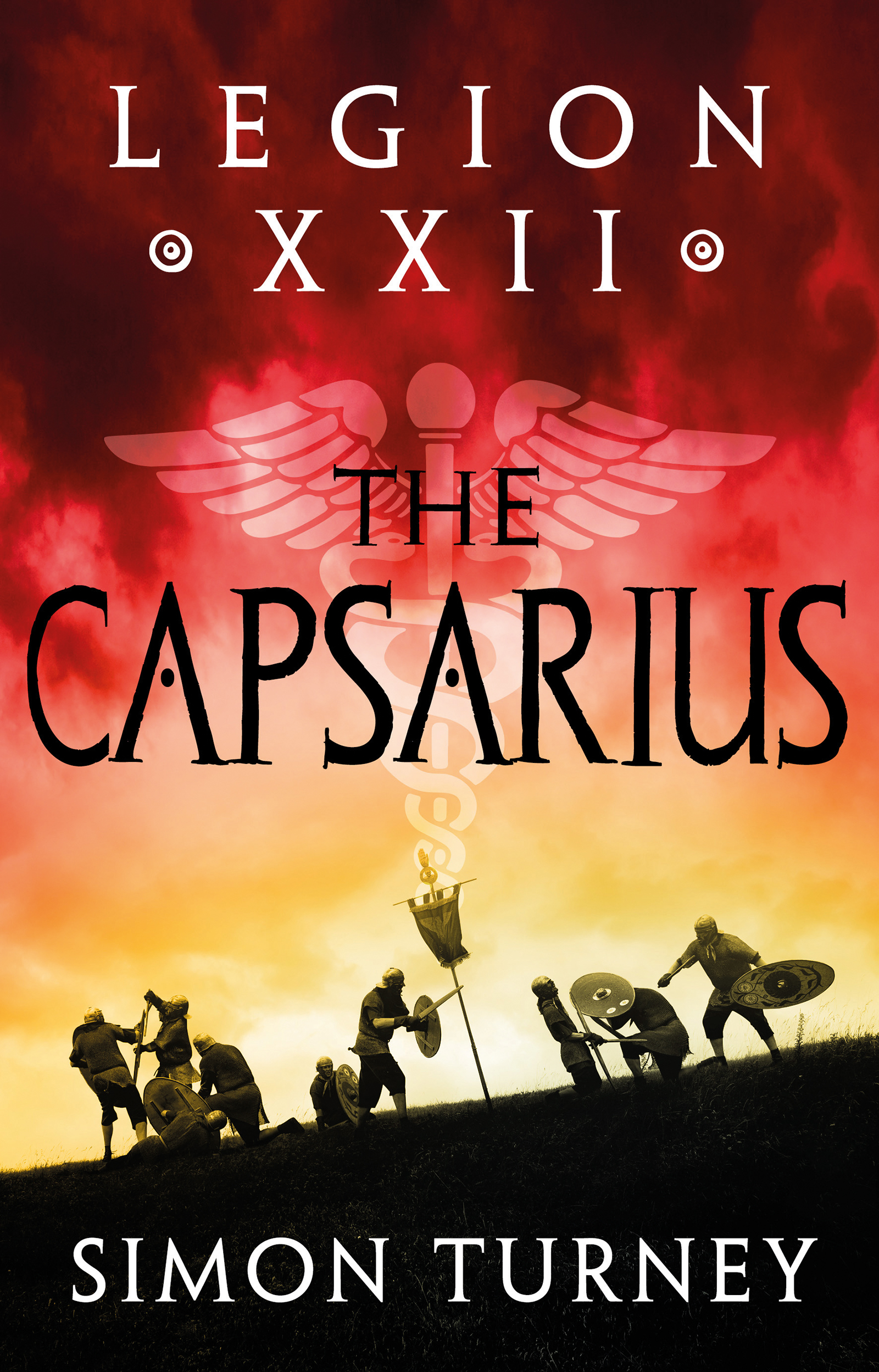

I’m sharing my review for Gods of Rome, the final book in the Rise of Emperors Trilogy by Gordon Doherty and Simon Turney #bookreview #histfic

Cor, I’ve loved all three of these books. But before I get to the nitty gritty of the review for book 3, here’s the blurb:

For one to rule, the other must die.

312 AD is a year of horrific and brutal warfare. Constantine’s northern army is a small force, plagued by religious rivalries, but seemingly unstoppable as they invade Maxentius’ Italian heartlands. These relentless clashes, incidents of treachery and twists of fortune see Maxentius’ armies driven back to Rome. 

Constantine has his prize in sight, yet his army is diminished and on the verge of revolt. Maxentius meanwhile works to calm a restive and dissenting Roman populace. When the two forces clash in the Battle of the Milvian Bridge, there are factors at work beyond their control and soon they are left with carnage. 

There is only one way Constantine and Maxentius’ rivalry will end. With one on a bloodied sword and the other the sole ruler of Rome . . .

Cover image for Gods of Rome by Doherty and Turney, published by Aries

My Review

Gods of Rome is a stunning climax to the Rise of Emperors trilogy. The reader has followed the lives of Maxentius and Constantine in the two previous books, through their childhood friendship and adult rivalries, which have resulted in them being firm enemies. In this non-stop and thrilling climax, there is all to play for, and don’t Doherty and Turney manage to ramp up the tension to unbearable heights.

I’m no expert on Roman history, and certainly not on the period leading up to AD312, but the authors manage to convey the chaos of the ruling elite without ever getting bogged down in the minutiae of all the internal power struggles. It’s a light touch that I certainly appreciate. The focus is on Constantine and Maxentius, and the men and women who stand at their side. And this is a particular strength of the book. It would be quite easy to forget about the men’s wives as the book focuses so much on warfare but Fausta and Valeria are given their own storylines, standing firm beside their men, even if they don’t always approve of what they’re doing, and not above some treachery themselves.

Maxentius and Constantine are two very different characters, grappling for the same thing, and the reader never tires of their internal monologues as they goad themselves onwards.

From about 50% through the book, I had to force myself not to turn to the back to read the historical notes, and to find out what ‘truth’ this story was based on.

I have adored this trilogy of books. It is my type of historical fiction – people who lived and breathed, brought to life and made to live their lives as opposed to authors focusing on the inevitability of what would happen, and presenting it as a fait accompli.

I can only hope that Simon Turney and Gordon Doherty are able to collaborate once more. After all, they have a lot of Roman era history they could delve into. (Hint, hint, nudge, nudge).

About the authors

Simon Turney is the author of the Marius’ Mules and Praetorian series, as well as The Damned Emperor series for Orion and Tales of the Empire series for Canelo. He is based in Yorkshire. 

Gordon Doherty is the author of the Legionary and Strategos series, and wrote the Assassin’s Creed tie-in novel Odyssey. He is based in Scotland.

Purchase link

Follow Simon

Website: http://simonturney.com/

Follow Gordon

Website: https://www.gordondoherty.co.uk/

Follow Aries

Website: http://www.headofzeus.com

Extract from Gods of Rome

1
CONSTANTINE
The Cottian Alpes, 27th January 312 ad

We moved through the mountains like winter wolves. The ferocious blizzard sped southwards with us, carried on the famous bora winds, singing a dire song. For days we marched through that driving snow, seeing nothing but great white-clad peaks either side of us; rugged, inhospitable highlands which in these frozen months soldiers were not meant to cross. All around me the gale screamed, boots crunched endlessly through the successively deeper drifts of white, men’s teeth chattered violently, mules brayed, exhausted. It felt at times as if we were wandering, snow-blind, to our deaths, but I knew what lay ahead… so close now.

I called upon my chosen men and a handful of their best soldiers – a group of thirty – and we roved ahead of the army like advance scouts. The blizzard raked through my bear cloak, the snow rattling like slingshot against my gemmed ridge helm and bronze scales as I scoured the valley route. Yet I refused to blink. When the speeding hail of white slowed and the murky grey ahead thinned a little, I saw them: a pair of stone and timber watchtowers, northern faces plastered in snow. Gateposts watching this passage between two realms. I dropped to my haunches behind the brow of a snowdrift and my chosen men hunkered down with me. I gazed over the drift’s brow, regarding the narrow gap between the towers and the valley route beyond, on through the winter-veined mountains. Thinking of the land that lay beyond these heights, my frozen lips moved soundlessly.

Italia…

Land of Roman forefathers. Home of the man I had once considered my friend… but that territory was rightfully mine. Mine! My surging anger scattered when I spotted movement atop one of the two towers: a freezing Maxentian scout blowing into his hands, oblivious to our presence. Then the blizzard fell treacherously slack, and the speeding veil of white cleared for a trice. I saw his ice-crusted eyebrows rise as he leaned forward, peering into the momentary clarity, right at us. His eyes bulged, mouth agog.

‘He is here!’ he screamed to be heard over the sudden return of the storm’s wrath. ‘Constantine is h—’

With a wet punch, an arrow whacked into the man’s chest and shuddered there. He spasmed then folded over the edge of the timber parapet and fell like a sack of gravel, crunching into a pillowy snowdrift at the turret’s foot. I glanced to my right, seeing my archer nock and draw again, shifting his bow to the heights of the other tower, his eyes narrowing within the shadow of his helm brow. He loosed, but the dark-skinned sentry up there ducked behind the parapet, screaming and tolling a warning bell. At once, three more Maxentians spilled from the door at the base of that rightmost tower, rushing south towards a simple, snow-topped stable twenty paces away, in the lee of a rocky overhang. This was one of the few gateways through the mountains – albeit the least favoured and most treacherous – and it was guarded by just five men? Instantly, suspicion and elation clashed like swords in my mind. We had no time to rake over the facts. These watchmen could not be allowed to ride south and warn the legions of Italia. They had to die.

Cover image for Gods of Rome by Gordon Doherty and Simon Turney

Check out my other reviews for Simon Turney/SJA Turney’s books

Commodus

Domitian

Sons of Rome

The Bear of Byzantium

Loki Unbound

Check out my other reviews for Gordon Doherty

Legionary: The Emperor’s Shield

Welcome to today’s stop on the Lies That Blind by E S Alexander blog tour

Today, I’m delighted to welcome E S Alexander to the blog to talk about her new book, Lies That Blind.

Your book, Lies That Blind, is deeply steeped in historical knowledge. As a historian first and foremost, and then a writer, I’m always interested in how people research their historical stories.

Can you explain your research process to me, and give an idea of the resources that you rely on the most (other than your imagination, of course) to bring your historical landscape to life? 

Do you have a ‘go’ to book/resource that you couldn’t write without having to hand, and if so, what is it (if you don’t mind sharing)?

(If this guest post is especially daunting, please don’t worry. )

MJ: This request isn’t daunting at all. In fact, I’m delighted to outline how I went about writing my debut historical novel, after 30+ years of penning non-fiction books.

In 2017 I decided to exact another major life change. I sold my house, my car, most of my possessions and moved— ‘sight unseen’—to the island of Penang, Malaysia. I knew very little about how Penang had come to be in the possession of the East India Company in 1786, until I was having coffee one morning with a publisher friend of mine. Eager to find out more about the history of my new home, he related the story of how an agent of the so-called ‘Honourable Company’ had leased the island from its owner, the Sultan of Queda (now spelled Kedah). Captain Francis Light, a Suffolk man, had for many years been a country trader, sailing from port to port in the Malay Archipelago buying and selling goods ranging from opium and tin, to condemned muskets and cloth. Extremely ambitious, Light had for at least fifteen years harboured a desire to govern his own trading settlement. After much to-ing and fro-ing with respect to a disputed treaty, he became known as the founder of Penang. 

I imagined everyone, whether Malaysian or ex-pats living here, was very familiar with the history, so it never entered my head to write a book about it. It wasn’t until my friend remarked that Light had almost lost Penang when the aggrieved sultan amassed an armada of Malays, pirates, and mercenaries to take his island back, that my interest was piqued. Having been a freelance features journalist for decades, this seemed to be the most interesting part of the story. Was this a case of a mercurial raja changing his mind about the lease, jealous of Light’s success in transforming Penang from an almost uninhabited jungle island into a thriving entrepôt? Was the sultan annoyed that he was no longer accruing the duties and taxes on trade because ships were now sailing to Penang rather than to Queda? Or had Light, whom I gathered had had no previous administrative experience, made some kind of diplomatic blunder? As I set about trying to find the answers to these questions, in the back of my mind it sparked the notion to write my first novel after 30+ years as a non-fiction author. 

GEORGE TOWN MAP

My friend’s publishing house had produced two enormous volumes—written by his business partner—entitled Penang: The Fourth Presidency of India 1805-1830 (Marcus Langdon, 2013 and 2015)—so I made a start there.  

Marcus’ books provided a wealth of source material. Not least many of the letters that Light had written to his paymasters in Calcutta, at the East India Company. I got the sense that Light was something of a double-dealer: he had obviously made promises to the sultan that he was not authorised to make, and could not keep, but managed to maintain good relations by telling the Malay raja only what he wanted to hear. 

My first port of call, after this preliminary desk research, was the National Library in Singapore. There I found a wealth of old manuscripts and books, each with their own ‘take’ on the agreement between Francis Light and the Sultan of Quedah. Now, as any good researcher should be, I was sceptical of white colonial men perpetrating the usual propaganda: Light was the good guy, the sultan an ungrateful upstart. I spent a wonderful long weekend in Singapore devouring books including Malaya’s First British Pioneer: The Life of Francis Light by Harold Parker Clodd (an obvious fan of the captain’s!), published in 1948; British Malaya: An Account of the Origin and Progress of British Influence in Malaya by Sir Frank Swettenham, a British colonial official from 1871-1904; and A History of Malaya by Sir Richard O. Winstedt, another colonial administrator from the early part of the 20th century. My story was beginning to take shape in the broadest sense—but I still didn’t have a handle on the kind of man that Francis Light truly was. The last thing I wanted to do was write yet another glowing, one-sided tale about an orang putih (white person), as we find is typically the case with Sir Stamford Raffles!

Then I stumbled upon an article by R. Bonney entitled Francis Light and Penang in the Journal of the Malaysian Branch of the Royal Asiatic Society. Almost from the first page I got the sense that Light tended to over-exaggerate situations: to make promises he could not keep, and to ‘gild the lily’ on occasions when it suited him. Here, at last, the ‘founder’ of Penang was shaping up to become a worthy antagonist in my novel. It seemed to me that the man’s past deceptions had come back to haunt him. My story just took off from there.  

TRAPAUD ILLUSTRATION OF LIGHT’S POSSESSION CEREMONY. CREDIT Division of Rare and Manuscript Collections, Cornell University Library. 

I’ll conclude with three final points. The first being that the Penang Presidency books written by Marcus Langdon provided me with such lengthy letters that I was able to take much of what Light had written and bring it to life as dialogue in my novel. No one could accuse me of slandering this great man if I was putting his own words into his mouth. 

The second point, of which I’m very proud, is that I read the English translation of The Hikayat Abdullah, said to have been completed in 1845 by Abdullah bin Abdul Kadir, which provided me with an authentic sense of the region not long after Light lived (1740-1794). Indeed, one of the Malay characters in my novel is based on Munshi Abdullah. Anyone reading the Acknowledgements Page of my book will also see the names of all the Islamic scholars and Malay historians I reached out to, to check that I wasn’t inadvertently misinterpreting something I’d read. 

Finally, I have never adhered to the philosophy ‘write about what you know’. To me, it’s always more interesting to write about what I want to know. I guess this comes from my years as a journalist when I wrote for women’s magazines, national newspapers, and trade journals focusing on topics as wide-ranging as skincare, supply chains, IT, and human resources. I discovered so many fascinating insights into the time and place during my three-and-a-half years researching this novel that they have become topics I go into more in-depth in my blog (https://www.esalexander.com/blog)

Wow, thank you so much for sharing such a great post. Light sounds like a fascinating character. Good luck with the new book.

Here’s the blurb

What would you risk to avoid obscurity?

Malaya, 1788

Aspiring journalist Jim Lloyd jeopardises his future in ways he never could have imagined. He risks his wealthy father’s wrath to ride the coat-tails of Captain Francis Light, an adventurer governing the East India Company’s new trading settlement on Penang. Once arrived on the island, Jim—as Light’s assistant—hopes that chronicling his employer’s achievements will propel them both to enduring fame. But the naïve young man soon discovers that years of deception and double-dealing have strained relations between Light and Penang’s legal owner, Sultan Abdullah of Queda, almost to the point of war. Tensions mount: Pirate activity escalates, traders complain about Light’s monopolies, and inhabitants threaten to flee, fearing a battle the fledgling settlement cannot hope to win against the Malays. Jim realises that a shared obsession with renown has brought him andLight perilously close to infamy: a fate the younger man, at least, fears more than death. Yet Jim will not leave Penang because of his dedication to Light’s young son, William, and his perplexing attraction to a mercurial Dutchman. He must stay and confront his own misguided ambitions as well as help save the legacy of a man he has come to despise.

Inspired by true events, Lies That Blind is a story featuring historical character Francis Light (1740-1794) who, in an effort to defy his mortality, was seemingly willing to put the lives and livelihoods of a thousand souls on Penang at risk.

Buy Links:

Universal Link

Amazon UKAmazon USAmazon CAAmazon AU

Meet the author

E.S. Alexander was born in St. Andrews, Scotland in 1954, although her family moved to England a few years later. Her earliest memories include producing a newspaper with the John Bull printing set she was given one Christmas. She wrote and directed her first play, Osiris, at age 16, performed to an audience of parents, teachers, and pupils by the Lower Fifth Drama Society at her school in Bolton, Lancashire. Early on in her writing career, Liz wrote several short stories featuring ‘The Dover Street Sleuth’, Dixon Hawke for a D.C. Thomson newspaper in Scotland. Several of her (undoubtedly cringe-worthy) teenage poems were published in An Anthology of Verse.

Liz combined several decades as a freelance journalist writing for UK magazines and newspapers ranging from British Airway’s Business Life and the Daily Mail, to Marie Claire and Supply Chain Management magazine, with a brief stint as a presenter/reporter for various radio stations and television channels, including the BBC. In 2001 she moved to the United States where she earned her master’s degree and Ph.D. in educational psychology from The University of Texas at Austin.

She has written and co-authored 17 internationally published, award-winning non-fiction books that have been translated into more than 20 languages.

In 2017, Liz relocated to Malaysia. She lives in Tanjung Bungah, Pulau Pinang where she was inspired to embark on one of the few forms of writing left for her to tackle: the novel.

Connect with the author
WebsiteTwitterInstagramFacebook

LinkedIn: YouTubeAmazon Author PageGoodreads

Don’t forget to check out the other stops on the Lies That Blind blog tour with The Coffee Pot Book Club

Welcome to today’s stop on the audio blog tour for Widdershins by Helen Steadman and narrated by Christine Mackie

Your audiobook, Widdershins, is deeply steeped in historical knowledge. As a historian first and foremost, and then a writer, I’m always interested in how people research their historical stories.

Thanks very much for having me along on your blog today, MJ, and I see we share a common interest in swords, as well as in writing and history! The research for Widdershins took several years, and I must say, if I’d realised at the outset how much research was involved, I probably wouldn’t have written a historical novel. That said, it was a fascinating process and I enjoyed it so much, I went on to do a PhD at the University of Aberdeen. 

Can you explain your research process to me, and give an idea of the resources that you rely on the most (other than your imagination, of course) to bring your historical landscape to life? 

First, I did an enormous amount of reading about witches, witchfinders and witch trials, and I’m reasonably certain that if I piled all the books I read on top of each other, they’d be taller than me (and I’m pretty tall). I also did a lot of online research and spent time vanishing down some very interesting rabbit holes. 

At the outset, when I thought I’d be writing something rather more magical, I joined a paranormal group and went on regular ghost-hunting expeditions. (Sadly, I never experienced any supernatural activity.) When I decided that my witches were going to be healers, I went to Dilston Physic Garden and trained in tree medicine. This helped me get under my characters’ skins and also equipped me with accurate knowledge about identifying, growing, harvesting and making herbal remedies. Back at home, I created a tea garden with a dozen or so plants that are handy to have at the kitchen door, and I still enjoy making my own herbal tea and elder linctus from garden herbs, or hedgerow pickings. 

Image 1 insert lavender and lemon balm tea andCaption/ Warning (Please seek medical advice before using herbs if you’re pregnant, breastfeeding, on any medications or have any health conditions. Also, lemon balm can act as a euphoric if you overdo it – so, all things in moderation.)

As well as all the witch-related research, I needed to make sure the book was accurate in terms of language, politics, religion, social mores, war, crime, punishment, health, medicine, childbirth, midwifery, food, clothing, etc. And I needed to do this for both England and Scotland. Widdershins and its sequel, Sunwise are both threaded through with folklore, which also required a good deal of research. All this detective work was so fascinating and enjoyable, it was almost a shame when I had to stop researching and start writing. 

What was less enjoyable was my research into witchfinders and their techniques. I read lots of first-hand accounts from witchfinders (including the self-styled witchfinder general, Matthew Hopkins and his sidekick, John Stearne, as well as a range of Scottish witchfinders). It was appalling to read about the torture and injustice they inflicted on the flimsiest of grounds, such as women giving pets odd names. There was a troubling theme of witchfinders sexually humiliating women in public during some trials, which led me down some very unsettling research pathways to help me create my own witchfinder, John Sharpe. 

John Sharpe lived in my head from 2011 when I started researching until 2019 when Sunwise came out. It was quite a relief to be rid of him, but now, as I’m working with Christine Mackie on the audiobooks, he’s back in my head again. So hopefully, once Sunwise has been recorded, I can clear him from my mind once and for all. Christine has done a fantastic job of bringing this evil man to life. (If you’d like to hear a short excerpt of her narrating Widdershins, please visit Audible, where you can hear five minutes of a Scottish girl on trial, early on in the witchfinder’s career when he’s still a boy.)

photo of Christine Mackie Caption: Christine Mackie (narrator of the Widdershins audiobook) in her role as Daphne Bryant in Downton Abbey

Do you have a ‘go’ to book/resource that you couldn’t write without having to hand, and if so, what is it (if you don’t mind sharing)?

I suppose the book that ultimately gave me the idea for my story was Ralph Gardiner’s England’s Grievance Discovered. This was published in 1655 and contains eyewitness accounts of the trials and executions. It also contains the well-known picture often used to illustrate articles about witch trials, showing the witchfinder receiving his pay. However, far from being all about witches, this book only contains a page or so on the witch trials and is mostly about the coal trade in North East England. 

Picture from Ralph Gardiner’s, England’s Grievance Discovered, showing the witchfinder (right) receiving his pay, with the Castle Keep in Newcastle on the left.

Otherwise, I don’t think I could possibly pin down one book, but on my blog, there’s a short list of online sources and non-fiction books (as well as a few novels) that are a good place to start. Of particular interest on that list is the University of Edinburgh database of Scottish witches. This contains information about age, location and occupation. I’d also strongly recommend visiting archives – whether the National Archives at Kew Gardens or local ones – and also looking through parish burial records. 

It was really informative reading trial records. As well as the Newcastle witch trials on my doorstep, there was also a later set of trials nearby in the Derwent/Tyne Valley. The transcripts from the trials can be viewed online via my blog, and they include tall tales ranging from fortune telling to demonic goings on. Many of the confessions also pick up well-known folklore and fairy tale themes (such as the devil presiding over a table that continually replenishes with food). On the face of it, they seem almost amusing, but like other witch trial confessions, these would most likely have been obtained under duress, which is always sobering.

Thank you so much for sharing all your fascinating research. Good luck with the audiobook!

Here’s the blurb:

The new audio book of Widdershins is narrated brilliantly by talented actor, Christine Mackie, from Downton Abbey, Coronation Street, Wire in the Blood, and so on.  

The first part of a two-part series, Widdershins is inspired by the Newcastle witch trials, where 16 people were hanged. Despite being the largest mass execution of witches on a single day in England, these trials are not widely known about. In August 1650, 15 women and one man were hanged as witches after a Scottish witchfinder found them guilty of consorting with the devil. This notorious man was hired by the Puritan authorities in response to a petition from the Newcastle townsfolk who wanted to be rid of their witches. 

Widdershins is told through the eyes of Jane Chandler, a young woman accused of witchcraft, and John Sharpe, the witchfinder who condemns her to death. Jane Chandler is an apprentice healer. From childhood, she and her mother have used herbs to cure the sick. But Jane soon learns that her sheltered life in a small village is not safe from the troubles of the wider world. From his father’s beatings to his uncle’s raging sermons, John Sharpe is beset by bad fortune. Fighting through personal tragedy, he finds his purpose: to become a witchfinder and save innocents from the scourge of witchcraft. 

Praise for Widdershins:

The Historical Novel Society said of Widdershins: “Impeccably written, full of herbal lore and the clash of ignorance and prejudice against common sense, as well as the abounding beauty of nature, it made for a great read. There are plenty of books, both fact and fiction, available about the witch-trial era, but not only did I not know about such trials in Newcastle, I have not read a novel that so painstakingly and vividly evokes both the fear and joy of living at that time.”

Trigger Warnings:

Domestic abuse, rape, torture, execution, child abuse, animal abuse, miscarriage, death in childbirth.

Amazon UKAmazon USAmazon CA:  Amazon AU

Audible Link: 

Blackwells:  WaterstonesKoboiBooks

iTunesFoyles:  Book DepositoryUniversal eBook link:

Meet the author


Dr Helen Steadman is a historical novelist. Her first novel, Widdershins and its sequel, Sunwise were inspired by the Newcastle witch trials. Her third novel, The Running Wolf was inspired by a group of Lutheran swordmakers who defected from Germany to England in 1687.

Despite the Newcastle witch trials being the largest mass execution of witches on a single day in England, they are not widely known about. Helen is particularly interested in revealing hidden histories and she is a thorough researcher who goes to great lengths in pursuit of historical accuracy. To get under the skin of the cunning women in Widdershins and Sunwise, Helen trained in herbalism and learned how to identify, grow and harvest plants and then made herbal medicines from bark, seeds, flowers and berries.

The Running Wolf is the story of a group of master swordmakers who left Solingen, Germany and moved to Shotley Bridge, England in 1687. As well as carrying out in-depth archive research and visiting forges in Solingen to bring her story to life, Helen also undertook blacksmith training, which culminated in making her own sword. During her archive research, Helen uncovered a lot of new material and she published her findings in the Northern History journal.

Helen is now working on her fourth novel.

Connect with Helen

WebsiteTwitter:  FacebookInstagram

Amazon Author PageGoodreadsYouTube

Meet the narrator, Christine Mackie

Christine Mackie has worked extensively in TV over the last thirty years in well-known TV series such as Downton Abbey, Wire in the Blood, Coronation Street, French & Saunders and The Grand. Theatre work includes numerous productions in new writing as well as classics, such as A Midsummer Night’s Dream, Comedy of Errors, Richard III, An Inspector Calls, and the Railway Children. In a recent all women version of Whisky Galore, Christine played three men, three women and a Red Setter dog! 

Connect with the narrator

IMDB for Christine Mackie: https://www.imdb.com/name/nm0533499/

Video of Narrator talking about audiobook: https://www.youtube.com/watch?v=_8aAAwAqrLc

Don’t forget to check out the other stops on the Widdershins blog tour with The Coffee Pot Book Club

Nick Macklin is sharing some historical research from Bloody Dominions #histfic #historicalfiction #blogtour

Today, I’m delighted to welcome Nick Macklin to the blog to talk about the research he undertook to write his new book, Bloody Dominions.

Your book, Bloody Dominions sounds fascinating. I’ve recently been enjoying a great deal of Roman era historical fiction. As a historian first and foremost, and then a writer, I’m always interested in how people research their historical stories.

Can you explain your research process to me, and give an idea of the resources that you rely on the most (other than your imagination, of course) to bring your historical landscape to life? 

Do you have a ‘go’ to book/resource that you couldn’t write without having to hand, and if so, what is it (if you don’t mind sharing)?

I have always had an interest in the ancient world and especially the Roman empire. I studied history at college, which in addition to satisfying my thirst for knowledge of the past, helped stand me in good stead during the extensive research I conducted whilst writing Bloody Dominions.

I knew when I set out that I wanted to set the story against the backdrop of a significant period in Roman history. I spent some considerable time immersed in the central and university libraries in Exeter, looking to narrow that down to something offering the potential for meaningful character and plot development, that hadn’t already received exhaustive coverage. I eventually settled on Caesar’s tumultuous occupation of Gaul, in part because I was struck by just how heavily the Roman psyche was influenced during this period by the scare they’d received 50 years earlier, when Germanic tribes invaded their territories and defeated their legions. Seeing references to the veterans of that war watching their sons and grandsons enlist for a similar campaign, I started to think about developing that link on both sides of the conflict. The prolonged clash of cultures that spanned 8 years, offered ample opportunity for the kind of dual perspective from which I was hoping to tell the story. Whilst the violent conflict provided a wealth of material to explore the changing fortunes of war and its impact at a personal level. The switching of allegiances; nations fighting for and against Rome, also provided the potential for intriguing plot lines. And so, the idea for the Conquest Trilogy was born.

Fortunately, Caesar was an almost unique example of a great general who was also a prolific writer. His ‘Commentarii de Bello Gallico, ‘Commentary on the Gallic War’ is a first-hand account of his invasion. I was grateful for the many translated versions now available as I have yet to perfect my Latin. One of the things on my to do list. It was important to recognise that this autobiographical account had a political purpose, Caesar’s audience was the Senate and the people of Rome and he wanted to justify his actions, reinforce his reputation and portray himself as a commander of courage, flair and success. As a consequence, I took some of the estimates of enemy warrior and casualty numbers with a pinch of salt but at its heart the Commentary is a straightforward narrative of the campaign Caesar fought in Gaul. As such it was an invaluable resource, providing key details in respect of the order and timing of events, the legions involved, battle plans etc. as well as some of the incredibly useful but more mundane detail that helped me to gain a sense of just how far the legions marched during a campaign season!

Whilst my three protagonists are entirely fictitious, I wanted the framework against which their stories unfold to be entirely accurate from a historical perspective, to feature actual participants in Caesar’s campaign and draw on real events as they occurred. In that respect the Commentaries also offered some intriguing opportunities to weave fact and fiction. For example, Caesar describes an ultimately unsuccessful peace conference between himself and the Germanic King Ariovistus prior to the battle of Vosges in 58 BC. He outlines how Ariovistus insisted that each side should be accompanied by mounted troops. He probably made this a condition because he knew that Caesar’s cavalry was composed mainly of Aeduian horsemen, whose loyalty to Caesar was questionable. Indeed, Caesar may not have trusted them himself. As a ruse Caesar ordered a group of his Gallic auxiliaries to dismount and had legionnaires from the Xth Legion ride in their place and accompany him to the peace conference. The incident earned the Legion its nickname ‘Equestrius’. In Bloody Dominions I took the liberty of having Caesar call for experienced riders to join his guard, hence Atticus’s involvement, a pivotal moment in the novel as this is when he and Allerix meet for the first time. 

Thereafter, as I plotted the journeys of Atticus, Allerix and Epona I consulted a variety of additional book and web-based resources to supplement my knowledge and research particular points of interest. Old enough to remember researching before the web, I never cease to be amazed at the wealth of information available at our fingertips, although I still prefer to do the bulk of my research using physical resources and pen and paper! I did however find the excellent web based military history encyclopaedia, www.HistoryofWar.org particularly helpful when looking to visualise how the battles in which my characters feature played out.

Finally, one of the earliest pieces of research I did when Bloody Dominions was still very much in its infancy, was to complete a ‘field trip’ to Europe. I can’t pretend that this visit was entirely conducted for research purposes, I had always wanted to travel around Europe by train. A nod I suspect to the inter-railing visit I never made as a teenager! However, I did make a number of detours along the way to visit museums, monuments and battlefield sites (wherever possible) in Italy, France, Germany and Belgium. I never get over the sense of standing where so many have gone before, never more so than when standing on the Ponte Pietre Bridge in Verona, recognising that it had been ‘crossed by Caesar and all of the legions travelling to Gaul. Including of course those in the XIIth on their way into the pages of Bloody Dominions. 

This is me, quite literally at the start of the Bloody Dominions Journey as I prepare to leave Exeter at the start of that European ‘research’ trip: 

Thank you so much for sharing your research journey with me. It sounds fascinating, and I wish you luck with your new book, and the rest of the books in the trilogy.

Intrigued?

Here’s the blurb:

Journey with those at the heart of the conflict as Caesar embarks on the tumultuous conquest of Gaul 58-51 BC. Book One 58-56 BC.

As Caesar’s campaign begins, tests of courage and belief will confront the three protagonists, shaping them as individuals and challenging their views of the world and each other:

Atticus – an impetuous but naturally gifted soldier, whose grandfather served with distinction in the legions;

Allerix – a Chieftain of the Aduatuci, who finds himself fighting both for and against Caesar; and

Epona – a fierce warrior and Allerixs’ adopted sister.

Experiencing the brutalities of conflict and the repercussions of both victory and defeat, Atticus, Allerix and Epona will cross paths repeatedly, their destinies bound together across time, the vast and hostile territories of Gaul and the barriers of fate that have defined them as enemies. In a twist of fate, Atticus and Allerix discover that they share a bond, a secret that nobody could ever foresee…

Trigger Warnings:

Violence, attempted rape.

Universal link

Amazon UKAmazon USAmazon CAAmazon AU

Barnes and NobleWaterstones:  KoboiBooks

Google Play:  WHSmith

Meet the Author

A history graduate, Nick enjoyed developing the skills that would stand him in good stead during the extensive research he conducted prior to writing his novel. Whilst the ancient world unfortunately didn’t feature to any extent in his history degree, (the result of failing miserably to secure the A level grades that would have permitted greater choice) he maintained a lifelong and profound interest in ancient history and especially the Roman Empire, continuing to read avidly as he embarked on a career in HR. Over the next 30 years or so Nick occupied a variety of Senior/Director roles, most recently in the NHS. Unsurprisingly, writing in these roles was largely confined to the prosaic demands of Board papers but Nick never lost the long-harboured belief, motivated by the works of writers such as Robert Fabbri, Robyn Young, Anthony Riches, Simon Scarrow, Matthew Harffy and Giles Kristian, that he too had a story to tell. When he was presented with a window of opportunity c3 years ago he took the decision to place his career on hold and see if he could convert that belief into reality. 

Nick always knew that he wanted to set the novel against the backdrop of a significant event/period in Roman history. Looking to narrow that down to something offering the potential for meaningful character and plot development, but that hadn’t already received exhaustive coverage, he settled on Caesars tumultuous occupation of Gaul. Spanning 8 years, the prolonged clash of cultures offered ample opportunity for the kind of dual perspective from which he was hoping to tell the story, whilst the violent conflict provided a wealth of exciting material to explore the changing fortunes of war and its impact at a personal level. The switching of allegiances, nations fighting for and against Rome also provided the potential for some intriguing plot lines. As his research unfolded, he was also struck by just how heavily the Roman psyche during this period was influenced by the scare they had received 50 years earlier when Germanic tribes invaded their territories and defeated their legions. Seeing references to the veterans of that war watching their sons and grandsons enlist for a similar campaign, he started to think about developing that link on both sides of the conflict. And so, the idea for the Conquest Trilogy was born.

In Bloody Dominions Nick has sought to produce a novel in which unfolding events are experienced and described from the perspective of protagonists on both sides of Caesar’s incursion into Gaul.  Conscious that the role of women in Roman fiction, Boudica aside, is largely confined to spouse, prostitute or slave, Nick wanted to ensure that one of his lead characters was female and a prominent member of the warrior clan of her tribe. The novel is driven by these characters but the framework against which their stories unfold is historically accurate, featuring actual participants in Caesar’s campaign and drawing on real events as they occurred. As such Nick is genuinely excited about his characters and the story they have to tell.

Nick lives in Exeter with his two daughters and is currently juggling work as an Independent HR Consultant with writing the second novel in the Conquest Trilogy, Battle Scars. 

Connect with Nick:

TwitterLinkedInGoodreadsBookBub

Don’t forget to check out the other stops on the Bloody Dominions Blog Tour with The Coffee pot Book Club

Heather Miller is sharing some historical research from ‘Tho I Be Mute #blogtour #historicalresearch #histfic

Today I’m delighted to welcome Heather Miller to the blog with an article about her new book ‘Tho I Be Mute.

Your book, ‘Tho I Be Mute, sounds absolutely fascinating. As a historian first and foremost, and then a writer, I’m always interested in how people research their historical stories.

Can you explain your research process to me and give an idea of the resources that you rely on the most (other than your imagination, of course) to bring your historical landscape to life? 

Thank you for saying so. Honesty, some people believe that it is not my story to tell because I am not Cherokee. It is something that weighs heavily on my heart. 

I have tried to write with sensitivity, research, persistence, perspective, and due consideration. Two “sensitivity” editors read the novel before and during the publication process. I asked myself whether I could construct this narrative through the eyes of both Cherokee, John Ridge, and his Caucasian wife, Sarah, with honesty and researched integrity. I followed the history as closely as possible. I kept the narrative’s theme very human, not singularly defined by ethnicity or identity.

David Marion Wilkinson, the author of Oblivion’s Altar (John’s father, Major Ridge’s story), said when I interviewed him, “This isn’t only a Cherokee story. It is one of courage. The Ridge family’s story is a human one, surrounded by corruption, evil, and greed.” He’s right. Although, the story is also one of love, not defined by race or cultural background. John and Sarah found a connection to one another’s character, not one another’s culture. 

So, to tell the tale, I research and continue to uncover new texts to illuminate the story from multiple perspectives. History advised each event within the novel’s pages. When there was little evidence, I worked backward from laws John Ridge submitted to the Cherokee Legislative Council. I asked myself what could have prompted him to present such and created a plausible event leading to the facts, working backward from effect to cause.  

My research began in a Special Collections Library on our local university campus during a “field trip” for a Researched Fiction course. I knew the character I wanted to begin with: an archetype of American Southern Fiction, the woman who lives alone in the hills offering medicine and life lessons to anyone who crosses her path. She is reminiscent of the “goat woman” from Charles Frazier’s Cold Mountain. She became Clarinda Ridge, John and Sarah’s daughter. 

Why was she alone? What could have happened to her to leave her with so much to teach and no one around her to share her wisdom? What kind of life could she have lived to gain such knowledge? So, I began to dig for gems and found her and her family on the pages of Thurman Wilkin’s text Cherokee Tragedy: The Ridge Family and the Decimation of a People. 

From there, I obsessed, as most historical fiction authors tend to do. I scoured the Internet and libraries for biographies, Ph.D. dissertations, archaeological reports, and historical texts on the political climate surrounding Cherokee’s removal from their ancestral lands. Several books were pivotal to plotting the manuscript: Thurman’s Cherokee TragedyCherokee Cavaliers by James Parins, John Rollin Ridge also by James Parins, Tiya Miles’ Ties That Bind: The Story of an Afro-Cherokee Family in Slavery and FreedomLiving Stories of the Cherokee, collected and edited by Barbara R. Duncan, An American Betrayal by Daniel Blake Smith, Blood Moon by John Sedgwick, To Marry an Indian: The Marriage of Harriett Gold and Elias Boudinot, 1823-1839 edited by Theresa Strouth Gaul, The Heathen School by John Demos, Sovereignty: A Play by Mary Katharyn Nagle (a Ridge descendant), and Toward the Setting Sun by Brian Hicks. My latest read is Steve Inskeeps’ Jacksonland. I have also read extensively from Theda Purdue’s body of work. In all these texts, John Ridge’s own words, primary source documents filled my ears with his voice. The manuscript contains excerpts that are his exact words.

Legend and Myth also influence the narrative, so I have read and listened to many oral stories from Cherokee Treasured Members and listened to Cherokee Native Speakers and read from a pivotal primary source, Sacred Formulas of the Cherokee by James Moody. 

Chieftain’s Museum/Major Ridge Home Picture

Field trips are exceedingly fun and widen my circle of knowledge, not only of the people but of the era (and get me away from my computer screen). My first field trip was in September of 2019 to the Chieftain’s Museum/Major Ridge Home near Rome, Georgia. The visit made it all real. To stand where these very real people lived and worked, farmed and raised children was beautiful to my soul. I used my imagination to take in the landscape, to unwind time, to shrink the massive tree trunks on the property next to the Oostanaula River. Inside the museum, there are scale models of what renovations the home underwent through its lifetime and glass covering removed walls that reveal its original log structure.

One archeologic gem made me hold my breath. John Ridge’s shoe taps lay under glass, worn on one side from his persistent limp from hip scrofula. So taken aback by their presence, I wrote a scene where he leaves his shoes in a nearby field so they could be discovered by archaeologists nearly two centuries later. 

After uncovering so much that influenced the manuscript at Chieftain’s, I widened my field trip circle, visiting: New Echota, the once Cherokee Capital, the Vann House, Red Clay, Tennessee, Ft. Mitchell, Alabama, Horseshoe Bend, Alabama, the McIntosh Reserve in Whitesburg, Georgia, and the OconalufteeVillage and the Museum of the Cherokee Indian in Cherokee, North Carolina. I have learned many historical facts from each adventure, uncovered human anecdotes, and built visions of landscapes from the past. Each of these enriching experiences makes writing this world more realistic. 

On May 29th, 2021, I travelled to Indian Springs, home to Creek Chief McIntosh’s Tavern, where he signed the Treaty of Indian Springs, selling Creek land to the American Government. His signature on that document brought his assassination. During the tour, I was able to hold a flint-lock pistol. As I am sure your readers know, rarely do these guns shoot accurately. After firing the lead ball and likely missing its target, a shooter could hold the barrel in their hand and use the stock as a club. They are exceedingly heavy. 

With permission from Ridge descendants, each purchase of ‘Tho I Be Mute will fund a future scholarship for Cherokee students planning to pursue a law degree. My husband and I plan to travel to Cherokee Nation in Oklahoma this summer to celebrate the novel’s launch. Also, the trip is to continue research for Mute’s sequel, Yellow Bird’s Song. The Ridge family saga continues. 

Thank you so much for sharing your research with me. Good luck with the new book.

Here’s the blurb:

Home. Heritage. Legacy. Legend.

In 1818, Cherokee John Ridge seeks a young man’s education at the Foreign Mission School in Cornwall, Connecticut. While there, he is overcome with sickness yet finds solace and love with Sarah, the steward’s quiet daughter. Despite a two-year separation, family disapproval, defamatory editorials, and angry mobs, the couple marries in 1824.

Sarah reconciles her new family’s spirituality and her foundational Christianity. Although, Sarah’s nature defies her new family’s indifference to slavery. She befriends Honey, half-Cherokee and half-African, who becomes Sarah’s voice during John’s extended absences.

Once arriving on Cherokee land, John argues to hold the land of the Cherokees and that of his Creek neighbors from encroaching Georgian settlers. His success hinges upon his ability to temper his Cherokee pride with his knowledge of American law. Justice is not guaranteed.

Rich with allusions to Cherokee legends, ‘Tho I Be Mute speaks aloud; some voices are heard, some are ignored, some do not speak at all, compelling readers to listen to the story of a couple who heard the pleas of the Cherokee.

Buy Links:

Universal Amazon Link:

Amazon UKAmazon USAmazon CAAmazon AU

Meet the Author

As an English educator, Heather Miller has spent twenty-three years teaching her students the author’s craft. Now, she is writing it herself, hearing voices from the past. 

Miller’s foundation began in the theatre, through performance storytelling. She can tap dance, stage-slap someone, and sing every note from Les Misérables. Her favorite role is that of a fireman’s wife and mom to three: a trumpet player, a future civil engineer, and a future RN. There is only one English major in her house. 

While researching, writing, and teaching, she is also working towards her M FA in Creative Writing. Heather’s corndog-shaped dachshund, Sadie, deserves an honorary degree.

Connecting with the author
WebsiteTwitter:  Facebook

LinkedInInstagramPinterestBookBub

Don’t forget to check out the other stop on the blog tour for ‘Tho I Be Mute with The Coffee Pot Book Club.

Faith L Justice is sharing some historical research from Dawn Empress #blogtour #historicalresearch

Today I’m delighted to welcome Faith L Justice to the blog with a post about the way she researched in order to write Dawn Empress.

Q. How Far Could a Roman Army March in a Day and Did They Wear Socks with Their Sandals?

A: 37 miles and “Yes”—Details in the post!

My mission is to tell interesting stories about little-known, but important women, while entertaining the reader. Because I write biographical historical fiction, historical accuracy is extremely important to me. For every novel, I must answer hundreds of questions like those posed in the title, so I do a tremendous amount of research beyond the facts of births, deaths, wars, etc. The sights, smells, sounds, and descriptions of clothes, food, housing, and transportation helps the reader experience a kind of time travel as they immerse themselves in a past culture. Personally, I find research the most fun part of writing my books. I get to learn new stuff, visit interesting places, and share my passions with readers. 

I ran across the empresses who are the subjects of my three-book series The Theodosian Women when I researched my first novel set in the early fifth century. Pulcheria (Dawn Empress) took over the Eastern Roman court at the tender age of fifteen and ruled as regent for her under-age brother Theodosius II. Placidia (Twilight Empress) ruled over the fading Western Empire for her under-age son Valentinian III. Athenais (work in progress), a pagan philosopher/poet married the “Most Christian Emperor” Theodosius II. These women fascinated me. I wanted to tell their stories, but I had a lot of research work to do.

This was hampered by the times. The fifth century experienced great turmoil as barbarians invaded the Roman Empire sacking cities, disrupting education and culture, and destroying records. This left only fragments of primary sources for future historians to ponder. Archaeology filled in some of the blanks, but there was lots of room for my imagination. My print resources consisted of translated copies of primary sources, general histories by well-respected historians, and a couple of obscure biographies. I still remember the unmitigated joy I felt when I found a used copy of Galla Placidia Augusta: A Biographical Essay by Stewart Irvin Oost and plunked down my money. I wrote Pulcheria’s story later when Kenneth G. Holum’s Theodosian Empresses: Women and Imperial Dominion in Late Antiquity was generally available. I’ve provided research bibliographies for each of my novels on my website but here’s a visual sample of my research book shelves. 

My first drafts are usually “white room” versions concentrating on the plot derived from the histories. I spend my second draft answering pesky questions about food, clothing, health, religion, architecture, art, technology, trade, and natural disasters—anything that adds color and context to my character’s lives. These details mostly come from specialized books and academic articles. The Handbook to Life in Ancient Rome (part of the Oxford Facts on File series) is a good place to start, but I couldn’t write with confidence without the academic articles I find at JSTOR (free with a library card) and Academia.edu.

Research has changed enormously in the past twenty-five years, making it much easier for the casual scholar. For my first two novels, I had to haunt the research branch of the New York Public Library looking up academic articles in dusty indices. About half of the journals seemed to be missing when I searched for them in the stacks. Now with a library card and a computer, anyone can access thousands of academic journals and presentations. I have over 300 titles in my miscellaneous research file alone.

The coolest new tool I’ve found is an interactive website called Orbis the Stanford Geospatial Network Model of the Roman World. Created and maintained by Stanford University, Orbis provides travel data in the Roman Empire. I fill in the details and it tells me how long it would take an army to march from Constantinople to Aquileia in January: 26.5 days, covering 1588 km (987 miles) at 60 km (37 miles) per day. Do I have a post rider carrying an important message from Rome to Toulouse in October? How about a trader moving exotic animals from Alexandria to Rome during the summer? No more looking up obscure modes of transportation, determining distance on Google Maps, and hand calculating. Magic!

My all-time favorite research technique is the site visit. I have a dozen books on Constantinople and Ravenna with gorgeous pictures and incredible diagrams, but nothing beats walking the famed walls that lasted a thousand years, feeling the weather change when a storm blows in across the Black Sea, or seeing surviving frescoes and mosaics in fifth century buildings. I took the picture of this stunning mosaic in the Mausoleum of Galla Placidia in Ravenna, Italy. 

I also do hands-on history by volunteering at archaeological digs. While working on Hadrian’s Wall in the UK, I got to visit the Vindolanda Roman Fort and see rare correspondence of a young Roman soldier asking his mother to send him knitted socks for the winter, among many other everyday artifacts, such as a doll, grocery lists, and a birthday party invitation written by the wife of the commander. In Tuscany, I helped uncover and preserve a mosaic of Medusa (pictured below) at a dig of a first century Roman villa. All this fuels a sense of awe and respect for these ordinary people who are long gone, but still very human in their needs, which I hope comes through in my writing. 

Museums come in a close second for favorite personal research. We have world-class ones here in New York. I studied 5C Roman clothing, coins, art, and jewelry at the Metropolitan Museum of Art, giving me a motherlode of detail to enrich my stories. If this pandemic we’re living through has any upside, it’s that museums around the world have made their collections available online. We can now virtually visit special exhibitions, search collections, and order previously inaccessible images and books. But I’m looking forward to going back in person.

So that’s my research process—lots of reading and note taking, punctuated with museum trips, site visits, and archaeology digs (a.k.a. vacations). After living vicariously in the fifth century for twenty-five years, I have an extensive personal library, but I want to give a hearty shout out to all the research librarians who helped me over the years. For accuracy, I trust “Ask A Librarian” over a chat room on the internet any day. Support your local libraries. They are national treasures!

On a final note, my sincere thanks to MJ Porter for hosting me on this blog tour. It’s always a privilege to meet new readers. If any of you have questions about my research process or my books, feel free to get in touch through my website or other social media. I love to hear from people. Stay safe out there!

© Faith L. Justice 2021

Thank you so much for sharing. A pleasure to have you on the blog. Note for UK readers, JSTOR offers some free articles, and others can be purchased with a subscription package:)

Here’s the blurb;

As Rome reels under barbarian assaults, a young girl must step up.

After the Emperor’s unexpected death, ambitious men eye the Eastern Roman throne occupied by seven-year-old Theodosius II. His older sister Pulcheria faces a stark choice: she must find allies and take control of the Eastern court or doom the imperial children to a life of obscurity—or worse. Beloved by the people and respected by the Church, Pulcheria forges her own path to power. Can her piety and steely will protect her brother from military assassins, heretic bishops, scheming eunuchs and—most insidious of all—a beautiful, intelligent bride? Or will she lose all in the trying?

Dawn Empress tells the little-known and remarkable story of Pulcheria Augusta, 5th century Empress of Eastern Rome. Her accomplishments rival those of Elizabeth I and Catherine the Great as she sets the stage for the dawn of the Byzantine Empire. Don’t miss this “gripping tale” (Kirkus Reviews); a “deftly written and impressively entertaining historical novel” (Midwest Book Reviews). Historical Novel Reviews calls Dawn Empress an “outstanding novel…highly recommended” and awarded it the coveted Editor’s Choice.

Ebook/Paperback

Amazon UKAmazon USAmazon CAAmazon AU

Barnes & NobleWaterstonesKobo:  Apple Books

SmashwordsBooks A MillionScribd: 

Audiobook

AudibleiTunes

Nook AudiobookGoogle Play:  Kobo Audio

BingeBooksChirp: Scribd

Meet the Author

Faith L. Justice writes award-winning historical novels, short stories, and articles in Brooklyn, New York where she lives with her family and the requisite gaggle of cats. Her work has appeared in Salon.com, Writer’s Digest, The Copperfield Review, and many more publications. She is Chair of the New York City chapter of the Historical Novel Society, and Associate Editor for Space and Time Magazine. She co-founded a writer’s workshop many more years ago than she likes to admit. For fun, she digs in the dirt—her garden and various archaeological sites.

WebsiteTwitter:   Facebook:  

LinkedInInstagramAmazon Author Page:  

Goodreads:  

Don’t forget to check out the other stops on the Dawn Empress blog tour with The Coffee Pot Book Club.

Judith Arnopp is sharing a post about the historical research for A Matter of Conscience #blogtour #historicalresearch

Today, I’m delighted to welcome Judith Arnopp to the blog with a guest post about her historical research.

A Matter of Conscience is once more set during the reign of the Tudors, a period about which I know you’ve written extensively. Do you feel comfortable in the Tudor era and can you explain your research process to me, and give an idea of the resources that you rely on the most (other than your imagination, of course) to bring the historical landscape and people of Tudor England to life?

I feel very comfortable in the Tudor era, or at least in the Tudor world I have created, peopled with characters from history. Since we can never visit the past, no author can ever be 100% certain they have got it right so I don’t worry too much, if I can convince my reader, I am happy. 
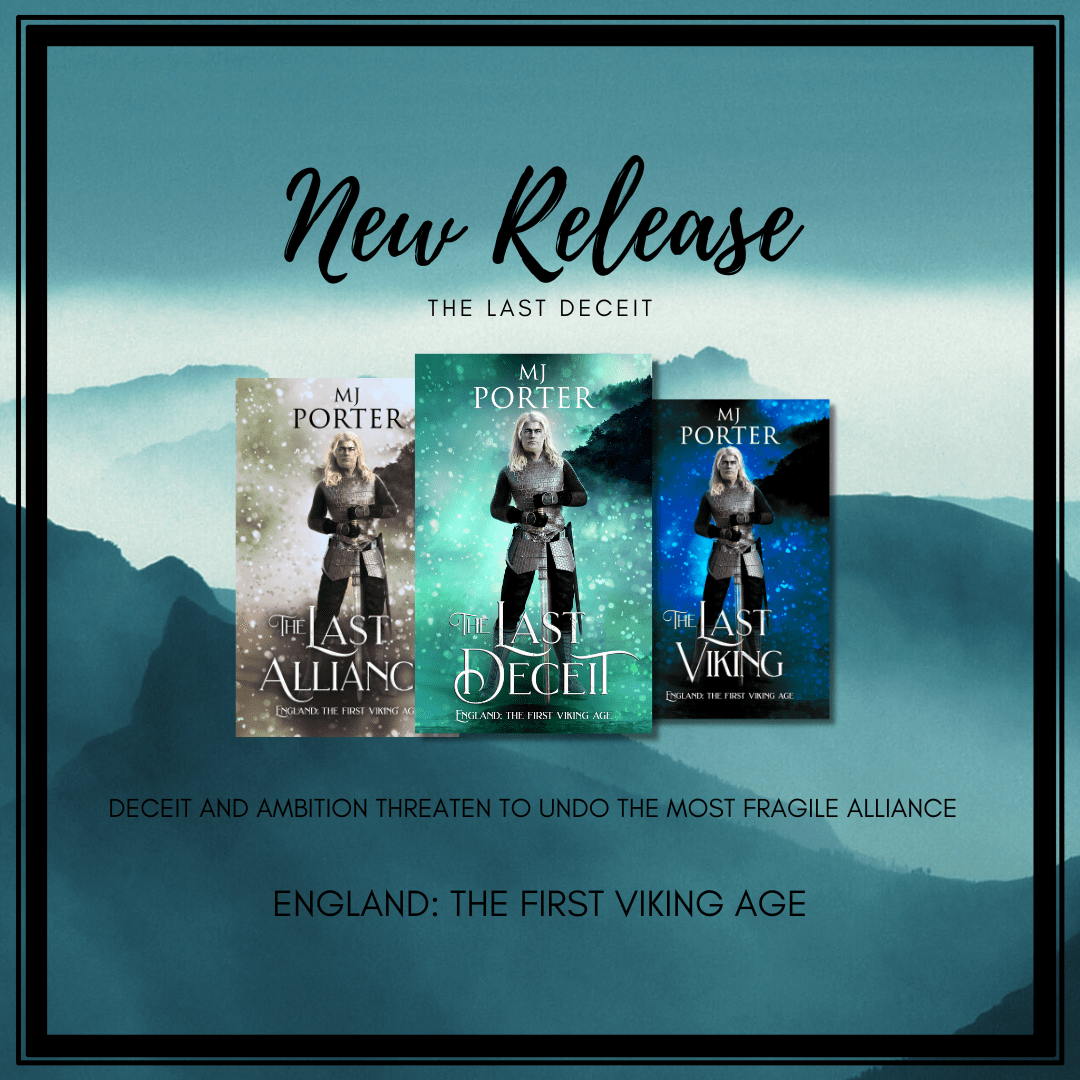
I’ve enjoyed the Tudor period since I was a young girl, some forty-five years or more. As a teenager I read all I could get my hands on, both fiction and non-fiction, and later when I went to university as a mature student, I learned the importance of thorough research. At the time, I never dreamed I’d ever write a book, let alone be published. A Matter of Conscience: Henry VIII, the Aragon Years is my thirteenth novel set in the Tudor era, so I know the setting quite well by now. 

When I wrote my first Tudor books, The Winchester Goose and The Kiss of the Concubine: the story of Anne Boleyn, I needed to research from the ground up. I examined the living conditions, the law, clothes, historical figures, customs, buildings, and court etiquette. I probably did far more research than necessary, but I wanted to get it right. I spent ages researching and still rely quite heavily on the essays and notes I made then. There is an extensive university library in Lampeter, close to where I lived at the time, and I used that a lot but now I have moved farther away, I can no longer do so. Luckily, the basics are in my head, so I only need to double check the things I am unsure of. Who was where at what time? Birth dates, death dates, things like that, or palaces or castles I’ve not researched before. 

When I wrote The Beaufort Chronicle, I became so wrapped up investigating Margaret Beaufort’s many homes, I fell behind with the rest of my work schedule and had to scramble for the deadline.

As for contemporary sources, they are much easier to get hold of than they used to be. When I first began to write I had to order them via the university library and sometimes it took weeks to get into my hands. British History Online is invaluable for documents and I recently discovered another online resource called Academia that is also proving useful.

I have many key reference books in my own library, and I can’t resist historical biographies. There are a few good historians that I trust to have researched properly and as soon as they release a new book, it goes on my pile.

Each time I begin a new project, I tell myself I will be tidier and more organised but before I am half-way through, the usual chaos has resumed. I make heaps of notes that I often cannot interpret afterwards, which often means I need to look up some things again. I seem to get there in the end though. There is always a pile of books by my favourite historians on my desk for dipping in and out of for reference and another pile I read from cover to cover. For this novel I’ve relied on biographies by Tracy Borman, Alison Weir, Eric Ives, Suzannah Lipscomb, Elizabeth Norton. I think I have all Amy Licence’s books now and her new one, 1520: The Field of the Cloth of Gold was published in timely fashion just as I began work on A Matter of Conscience, and I greatly enjoyed it.  

I also listen to Claire Ridgeway on You Tube while I am sewing in my craft room. She knows all there is to know about Anne Boleyn. There are scenes in nearly all my books of women sewing or embroidering, I can empathise with their sore fingers.

I find it best to absorb a wide variety of opinions and perspectives and then mull it all over and make my own conclusion. But not all the information ends up in the finished book because too much fact in a novel can be dull. I write first person narrative so I don’t tend to over describe the everyday objects they use simply because my character would not have found them extraordinary. My books centre on the psyche, or what I imagine might have been.

When writing in Henry’s voice I must be sure to know only what Henry knew and forget what comes after and the events that occurred behind his back. I live in each moment with Henry, as he lived it. A Matter of Conscience takes place during his childhood, adolescence, and marriage to Catherine of Aragon, so I found Henry quite an easy companion. He might, however, prove harder to live with in Book Two, which will follow shortly.

Do you have a ‘go’ to book/resource that you couldn’t write without having to hand, and if so, what is it (if you don’t mind sharing)?

I use the Tudor timeline as a skeleton so always have a print out of that to hand. Also, my Who’s Who in Tudor England is invaluable for reference. Looking at the pile on my desk at his moment, I’d say I rely on Amy Licence’s books the most. I find her very accessible, concise, and most importantly, accurate. Elizabeth Norton is another name that appears often on my shelves.

But my research isn’t all books or written sources, there are also portraits and again, thanks to technology, there is no real need to visit museums and galleries to do this. I build Pinterest boards with interesting Tudor faces and costumes which helps immensely, not just with my fiction but with my non-fiction writing and actual historical sewing too. I visit castles and monastic buildings, palaces, and manor houses. I’m not a great fan of the sites that add waxworks and reconstructed ‘rooms’. I prefer to let my imagination do the work. I am lucky to live in Wales where we have so many castles. I am a founder member of a Tudor re-enactment group called The Fyne Companye of Cambria and we love to dress up in our lovely gowns and ‘swish’ about the castles. All our events were cancelled last year, for obvious reasons and we haven’t booked any this year but are waiting to see what unfolds. We will be so glad when Covid19 restrictions end and we are able to visit them again.

Thank you so much for inviting me on to your blog. It has been lovely.

Thank you so much for sharing your research with me. I can relate to much of it – I am very untidy as well, and never reference anything correctly so always have to find it again.

So, here’s the blurb for the new book. It sounds fantastic. I’ve always been drawn to this particular episode in the Tudor saga.

‘A king must have sons: strong, healthy sons to rule after him.’

On the unexpected death of Arthur Tudor, Prince of Wales, his brother, Henry, becomes heir to the throne of England. The intensive education that follows offers Henry a model for future excellence; a model that he is doomed to fail.

On his accession, he chooses his brother’s widow, Catalina of Aragon, to be his queen. Together they plan to reinstate the glory of days of old and fill the royal nursery with boys. 

But when their first-born son dies at just a few months old, and subsequent babies are born dead or perish in the womb, the king’s golden dreams are tarnished.

Christendom mocks the virile prince. Catalina’s fertile years are ending yet all he has is one useless living daughter, and a baseborn son.

He needs a solution but stubborn to the end, Catalina refuses to step aside.

As their relationship founders, his eye is caught by a woman newly arrived from the French court. Her name is Anne Boleyn.

A Matter of Conscience: the Aragon Years offers a unique first-person account of the ‘monster’ we love to hate and reveals a man on the edge; an amiable man made dangerous by his own impossible expectation

Amazon UK Amazon US 

Meet the Author
A lifelong history enthusiast and avid reader, Judith holds a BA in English/Creative writing and an MA in Medieval Studies.

She lives on the coast of West Wales where she writes both fiction and non-fiction based in the Medieval and Tudor period. Her main focus is on the perspective of historical women but more recently is writing from the perspective of Henry VIII himself.

Her novels include:

A Matter of Conscience: Henry VIII, the Aragon Years 

The Heretic Wind: the life of Mary Tudor, Queen of England

Sisters of Arden: on the Pilgrimage of Grace

The Beaufort Bride: Book one of The Beaufort Chronicle

The Beaufort Woman: Book two of The Beaufort Chronicle

The King’s Mother: Book three of The Beaufort Chronicle

The Winchester Goose: at the Court of Henry VIII

A Song of Sixpence: the story of Elizabeth of York

Intractable Heart: the story of Katheryn Parr

The Kiss of the Concubine: a story of Anne Boleyn

The Song of Heledd

The Forest Dwellers

Peaceweaver

Judith is also a founder member of a re-enactment group called The Fyne Companye of Cambria and makes historical garments both for the group and others. She is not professionally trained but through trial, error and determination has learned how to make authentic looking, if not strictly HA, clothing. You can find her group Tudor Handmaid on Facebook. You can also find her on Twitter and Instagram.

Website • Blog • Twitter • Instagram • Amazon

Don’t forget to check out the other stops on the blog tour for A Matter of Conscience.

David Loux is sharing some historical research from Chateau Laux #blogtour #historicalresearch #histfic

Today I’m delighted to welcome David Loux to the blog to talk about the research for his new book, Chateau Laux.

Your book, Chateau Laux, is set in a time period I wouldn’t even know how to start writing about. As a historian first and foremost, and then a writer, I’m always interested in how people research their historical stories.

My research did not start out with a novel in mind.  It began with an investigation of the Laux family surname in 2005.  This research resulted in a lot of information related to the provenance of the name, which I presented in a paper addressed to a Laux family reunion in York, Pennsylvania, in 2010.  It subsequently provided the foundational material for Chateau Laux.

Can you explain your research process to me, and give an idea of the resources that you rely on the most (other than your imagination, of course) to bring your historical landscape to life? 

One of the challenges of historical research is that much valuable information is lost over the years—especially the good, warm-blooded stories of individual lives.  Fortunately, interest in the Laux name goes back many years, and I was able to benefit from genealogical publications in 1910 that provided information which would have been increasingly difficult to access over time.  Another very tangible benefit to my research was that the Laux name was of noble origin, which meant that I was able to discover information that went all the way back to the middle ages.  Some of the information was in French and some was in Latin, and the wonderful research assistants at the Bibliothèque Nationale were a big help.  I also benefited from connections made through the Center for Basque Studies at the University of Nevada in Reno, which put me in touch with researchers familiar with Occitan names and pronunciations.  Finally, and most importantly, family group members in southern France were able to provide information from archives that would have been unavailable from other sources.

Do you have a ‘go’ to book/resource that you couldn’t write without having to hand, and if so, what is it (if you don’t mind sharing)?

When I first started my research, I had very little idea of the milieu and other significant associations connected with the name, which means I had to keep an open mind and read anything I could get my hands on.  There were many false starts and dead ends.  As far as critical resources, I would have to say that Chateau Laux would not have been the same without the research assistance of the Bibliothèque Nationale, as they were able to provide context and authenticity that would otherwise have been elusive.  But then again, every resource previously referred to was essential in its own way. It helps that I was able to read French, and to a lesser extent, Spanish, as some of the information was only available in those languages.

Thank you so much for sharing the research you undertook to write your book. It’s so fascinating to find out what makes people write the stories that they do.

Here’s the blurb;

A young entrepreneur from a youthful Philadelphia, chances upon a French aristocrat and his family living on the edge of the frontier. Born to an unwed mother and raised by a disapproving and judgmental grandfather, he is drawn to the close-knit family. As part of his courtship of one of the patriarch’s daughters, he builds a château for her, setting in motion a sequence of events he could not have anticipated.

Amazon UK Amazon US Amazon CA

Amazon AU Barnes and Noble  Kobo

Meet the Author

David Loux is a short story writer who has published under pseudonym and served as past board member of California Poets in the Schools. Chateau Laux is his first novel. He lives in the Eastern Sierra with his wife, Lynn.

Website

Twitter

Goodreads

Amazon Author Page 
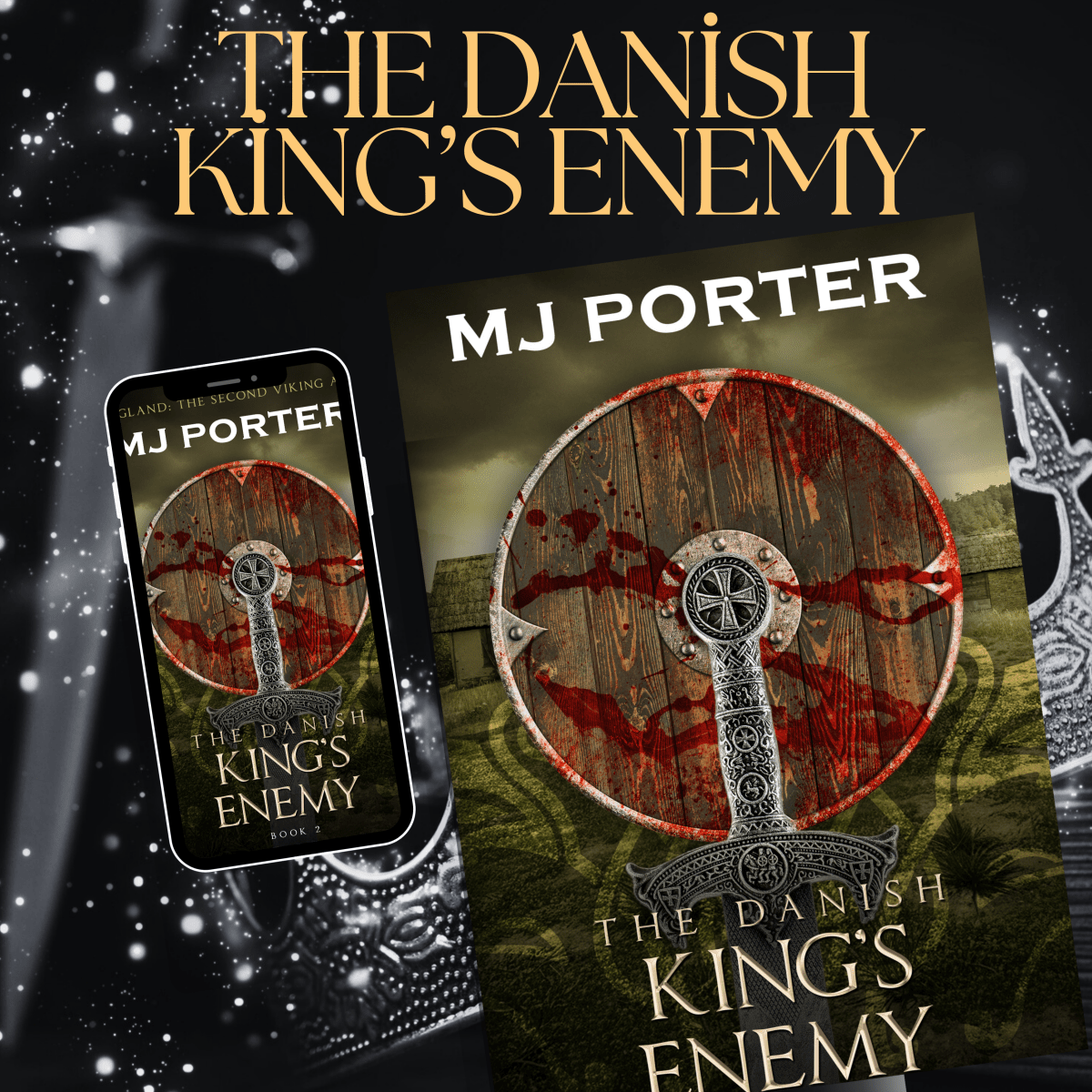
Don’t forget to check out the other stops on the Chateau Laux blog tour with The Coffee Pot Book Club.

Virginia Crow is sharing historical research from The Year We Lived #blogtour #historicalresearch #histfic

Today I’m delighted to welcome Virgina Crow to the blog with a post about the historical research she undertook to write The Year We Lived.

Hello and thank you for hosting me and my book on your blog, and for inviting me to share such a fantastic topic with your readers!
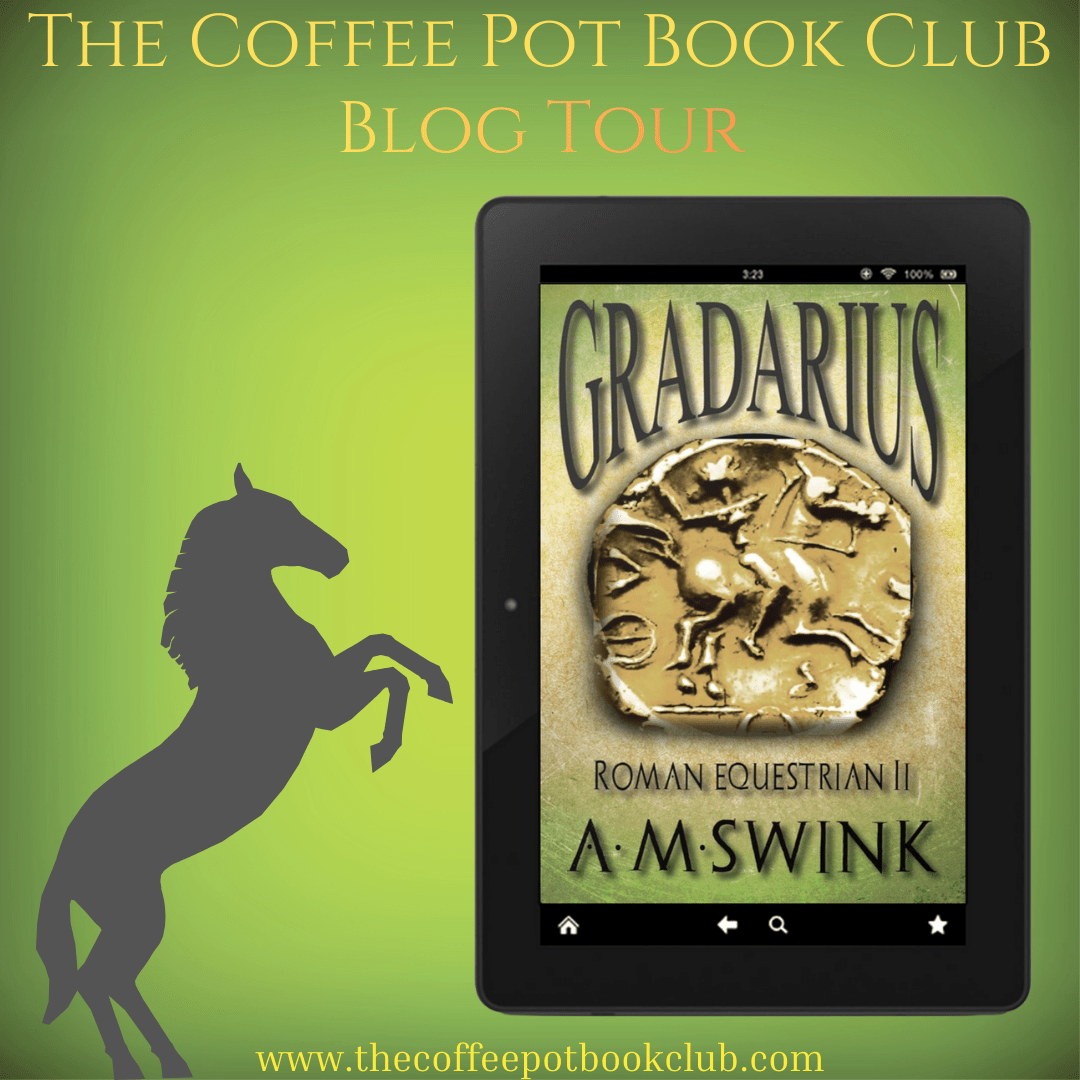
I know the research process is slightly different for different writers. The first thing I have to say is that I love research! I would say that, for every statement of historical significance in my book there is about ten-times more research which has gone into the writing of it. In fact, my editor does occasionally point out to me that my readers don’t always need quite so much historiographical details!

Researching so far back in time was quite new to me. Most of the historical fiction I’ve written before has a lot more primary sources to excavate and delve into, especially in those pre-Covid days when a trip to a museum was easily available!

The first thing I had to familiarise myself with was the landscape. I’ve always been surrounded by maps – my dad has a collection of hundreds of them – and some of my favourite books as a child were a massive geography book and the Weetabix atlas! Since my dad is an out-and-out Lincolnshire yellowbelly, I have always known the changing landscape of that particular county! To look at a map of the eleventh century fenlands my characters would have known, it is startlingly different to the lay of the land in the twenty-first century!

This landscape was full of islands, which were often indistinguishable from the rest of the boggy marshes, something which made the hidden Hall in The Year We Lived a very believable concept! When I delved deeper into the case of Hereward, I realised how paranoid William the Conqueror was about the Fens and the threat they posed. It made sense to have the brutal lordship of Henry De Bois situated here in an attempt to crush what William was led to believe were a group of Saxons ready for insurrection.

Next came the characters. For this, I knew I wanted people outside the conventional image of the Normans so, on flicking through various websites and pages about the number of non-Normans on William’s side in the Battle of Hastings, I settled on the possibility of making my French characters Burgundian instead. I loved the headstrong and stubborn trait which seemed to come hand in hand with being from Burgundy, and it’s something I tucked into each of those characters.  But the French court at this time was a topic which was totally new to me. When I was studying for my MLitt, I remember my lecturer saying that it was totally acceptable to use Wikipedia as a first port of call providing you checked out everything which was on there, so this was what I did as I researched the major players.

One of the things I love the most about writing historical fiction is how, providing you read around the family and situation, you can convince your audience – and sometimes yourself – of the existence of your characters. Every single one of my Burgundians came from a real family, all of which are referenced in some sneaky way or another. I love weaving little clues into my writing, and I think doing it in a historical setting just makes it all the more fun (but then I could be biased!).

The final thing, which I found perhaps the most fascinating of all, was exploring the superstitions of the time. These were often localised but some things were pretty generally accepted.  Having been raised on a diet of myths and legends, this was something I absolutely loved exploring. Something I discovered was that many of these superstitions made sense.  A lot of them have their roots in logic, but they were without the understanding of science which we have now.  There is no shortage of these words of wisdom, many of which are still in existence today in some shape or form. Perhaps because of the oral nature of these hand-me-downs and the weirdness they relate, these were easier to place in the map and chronology of my research. I tucked into books and theses to uncover some of the most bizarre anecdotes imaginable, and nestling them into The Year We Lived – I hope – helps the plot and characters come to life.

After all, it’s our idiosyncrasies which make us unique!

Thank you so much for sharing your research with me. It’s always fascinating to discover what prompts people to write the books they do.

Here’s the blurb;

It is 1074, 8 years after the fateful Battle of Hastings. Lord Henry De Bois is determined to find the secret community of Robert, an Anglo-Saxon thane. Despite his fervour, all his attempts are met with failure.

When he captures Robert’s young sister, Edith, events are set in motion, affecting everyone involved. Edith is forced into a terrible world of cruelty and deceit, but finds friendship there too.

Will Robert ever learn why Henry hates him so much? Will Edith’s new-found friendships be enough to save her from De Bois? And who is the mysterious stranger in the reedbed who can disappear at will?

A gripping historical fiction with an astonishing twist!

Amazon UK • Amazon US • Amazon CA • Amazon AU • Barnes and Noble • Waterstones • Kobo • Smashwords • Crowvus

Meet the Author

Virginia grew up in Orkney, using the breath-taking scenery to fuel her imagination and the writing fire within her. Her favourite genres to write are fantasy and historical fiction, sometimes mixing the two together such as her newly-published book “Caledon”. She enjoys swashbuckling stories such as the Three Musketeers by Alexandre Dumas and is still waiting for a screen adaption that lives up to the book!

When she’s not writing, Virginia is usually to be found teaching music, and obtained her MLitt in “History of the Highlands and Islands” last year. She believes wholeheartedly in the power of music, especially as a tool of inspiration. She also helps out with the John O’Groats Book Festival which is celebrating its 3rd year this April.

She now lives in the far flung corner of Scotland, soaking in inspiration from the rugged cliffs and miles of sandy beaches. She loves cheese, music and films, but hates mushrooms.

Connect with Virginia

Website • Twitter • Facebook • Instagram • Publisher • BookBub • Amazon Author Page • Goodreads

Don’t forget to check out the other stops on The Year We Lived Blog Tour.